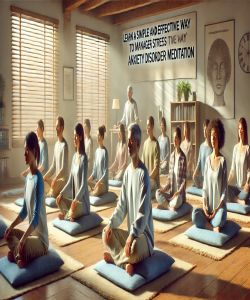
1. Overview of Anxiety Disorder Meditation
Anxiety Disorder Meditation represents a rigorous, systematic methodology of mental training specifically calibrated to address the complex symptomatology of anxiety disorders. It is not a passive pursuit of tranquility but an active and disciplined engagement with the mind's internal processes. The fundamental objective is to cultivate a state of non-reactive, present-moment awareness, thereby systematically dismantling the maladaptive cognitive and emotional patterns that fuel anxiety. This practice equips the individual with the capacity to observe thoughts, feelings, and somatic sensations as transient mental events, rather than as definitive, unassailable truths. By fostering a profound detachment from the content of anxious ideation, it fundamentally alters the individual's relationship with their own internal experience. It directly targets the core mechanisms of anxiety—such as catastrophic thinking, persistent worry, and physiological hyperarousal—by training the brain to inhibit habitual fear responses and develop more adaptive regulatory pathways. This is achieved through structured exercises that strengthen attentional control and enhance metacognitive insight, allowing the practitioner to recognise and disengage from the cyclical nature of anxious rumination. This modality, therefore, must be understood not as a simple relaxation technique, but as a robust, evidence-based psychological intervention designed to build enduring cognitive resilience. It operates on the principle that by repeatedly and intentionally guiding attention, one can recalibrate the neural circuits that underpin anxiety, leading to a demonstrable and sustainable reduction in both the intensity and frequency of symptoms. It is a demanding yet profoundly effective discipline for reclaiming executive control over one's own mental landscape.
2. What are Anxiety Disorder Meditation?
Anxiety Disorder Meditation is a structured form of contemplative practice, meticulously adapted from ancient traditions for contemporary clinical application, designed to address the specific cognitive and physiological drivers of anxiety disorders. It is a targeted intervention, not a generalised wellness activity. Its purpose is to train the mind to observe its own processes without judgement or immediate reaction, thereby interrupting the ingrained cycles of worry, fear, and avoidance that characterise these conditions. It operates on the premise that anxiety is perpetuated not by external triggers alone, but by our habitual, unexamined reactions to them.
This practice can be delineated by several key characteristics:
- A Structured Intervention: Unlike casual or unguided meditation, this is a formal protocol with specific techniques, objectives, and a clear theoretical framework. It is often delivered within a structured programme that guides the individual through a progressive curriculum of mental exercises designed to build specific psychological skills.
- A Cognitive and Attentional Tool: At its core, it is a method for developing high-level cognitive skills. These include sustained attention (the ability to hold focus on a chosen object, such as the breath), attentional switching (the ability to intentionally redirect focus away from anxious thoughts), and metacognition (the awareness of one's own thought processes).
- A Regulatory Practice: It directly engages with the autonomic nervous system. Through techniques like breath awareness and body scanning, it helps down-regulate the sympathetic nervous system's 'fight-or-flight' response and activate the parasympathetic nervous system's 'rest-and-digest' state, mitigating the physical symptoms of anxiety.
- Not a Thought-Suppression Technique: A critical misunderstanding is that meditation aims to empty the mind. On the contrary, Anxiety Disorder Meditation teaches the individual to allow thoughts and feelings to arise and pass without becoming entangled in them. It is about changing one’s relationship to thought, not eliminating it. It is a discipline of acceptance and non-engagement, not suppression.
3. Who Needs Anxiety Disorder Meditation?
- Individuals with Diagnosed Anxiety Disorders: This includes those formally diagnosed with Generalised Anxiety Disorder (GAD), Panic Disorder, Social Anxiety Disorder, and specific phobias. The practice directly targets the core features of these conditions, such as excessive worry, catastrophic thinking, and physiological hypervigilance, providing a non-pharmacological tool for symptom management and relapse prevention.
- Individuals Experiencing Sub-Clinical or Situational Anxiety: Those who do not meet the full diagnostic criteria for a disorder but suffer from significant anxiety related to professional pressures, academic stress, or personal life events. This intervention provides them with a proactive strategy to manage stress before it escalates into a more chronic condition.
- Those Seeking to Taper Off or Augment Pharmacological Treatment: Under strict medical supervision, individuals using anxiolytic medications may find this practice an effective adjunctive therapy. It equips them with coping skills that can support a gradual reduction in medication dosage or enhance the efficacy of their existing treatment regimen.
- Professionals in High-Stress Environments: Individuals in occupations characterised by high pressure, constant decision-making, and a significant risk of burnout (e.g., emergency services, corporate leadership, healthcare). The discipline enhances emotional regulation, improves focus under pressure, and mitigates the cumulative physiological impact of chronic stress.
- Individuals with a History of Anxiety Seeking Relapse Prevention: For those who have previously recovered from an anxiety disorder, the practice serves as a powerful tool for mental hygiene. Regular engagement helps maintain a state of mindful awareness, enabling the early detection and de-escalation of nascent anxious patterns before they become re-established.
- Those with Co-morbid Conditions: Individuals managing conditions that are frequently co-morbid with anxiety, such as mild to moderate depression or chronic pain. The principles of mindful acceptance and dis-identification from negative internal states are highly transferable and can provide synergistic benefits across these domains.
4. Origins and Evolution of Anxiety Disorder Meditation
The origins of meditative practices now applied to anxiety disorders are deeply rooted in ancient contemplative traditions, primarily those of Eastern philosophy, dating back millennia. Foundational concepts stem from Buddhist psychology, particularly the Vipassanā and Samatha traditions, which systematised methods for observing the nature of the mind, cultivating calm, and gaining insight into the transient nature of all phenomena, including distressing mental states. These practices were not conceived as therapies but as components of a comprehensive spiritual path aimed at alleviating existential suffering. The Stoic philosophers of ancient Greece and Rome also developed parallel concepts, such as the practice of prosoche (attention) and the disciplined distinction between external events and one's internal judgements about them, forming a Western philosophical antecedent to modern cognitive techniques.
The crucial evolutionary leap occurred in the latter half of the twentieth century with the secularisation of these practices for clinical and scientific purposes. This paradigm shift was catalysed by the pioneering work of figures like Jon Kabat-Zinn, who, in the late 1970s, developed Mindfulness-Based Stress Reduction (MBSR). This programme systematically stripped the meditative techniques of their religious dogma and integrated them into a structured, eight-week protocol designed for patients in a hospital setting. MBSR demonstrated that these ancient practices could be taught in a secular, accessible format and produce quantifiable improvements in stress and chronic pain.
Following the success and empirical validation of MBSR, the evolution continued with further specialisation. Psychologists Zindel Segal, Mark Williams, and John Teasdale adapted the MBSR framework specifically for affective disorders, creating Mindfulness-Based Cognitive Therapy (MBCT). MBCT explicitly integrates cognitive behavioural therapy (CBT) principles with mindfulness practice, teaching individuals to recognise and disengage from the automatic negative thought patterns that precipitate depressive relapse and, by extension, anxious rumination. More recently, the evolution has moved into a digital phase, with these evidence-based protocols being adapted into online platforms, mobile applications, and telehealth services, drastically increasing their accessibility whilst aiming to maintain fidelity to the core principles of the original, clinically validated interventions.
5. Types of Anxiety Disorder Meditation
- Mindfulness-Based Stress Reduction (MBSR): This is a foundational, highly structured eight-week programme that systematically cultivates mindfulness through a combination of meditation techniques. It is not exclusively for anxiety but is highly effective for it. Its core components are the body scan meditation, sitting meditation (focused on breath), and mindful movement (gentle yoga). The primary aim is to develop a non-judgemental awareness of the present moment, allowing individuals to observe anxious thoughts and sensations as they arise without being overwhelmed by them.
- Mindfulness-Based Cognitive Therapy (MBCT): A specialised adaptation of MBSR, MBCT was initially developed to prevent depressive relapse but is now widely applied to anxiety. It explicitly integrates principles from cognitive-behavioural therapy (CBT) with mindfulness practices. The core innovation is its focus on teaching individuals to recognise and alter their relationship with maladaptive thought patterns. It trains participants to de-centre from anxious thoughts, viewing them as mental events rather than as reality.
- Loving-Kindness Meditation (Metta): This practice directly targets the self-criticism and fear-based thinking common in anxiety. It involves the silent repetition of specific phrases to cultivate feelings of warmth, kindness, and compassion towards oneself and others. By systematically generating positive affective states, Metta meditation can counteract the brain's negativity bias and soothe the fear circuits implicated in anxiety disorders.
- Body Scan Meditation: This is a core technique within MBSR and other mindfulness programmes, but can be a standalone practice. It involves bringing sequential, focused attention to various parts of the body, observing any sensations (e.g., warmth, tingling, tension, pain) with a curious and non-judgemental attitude. For anxiety, this is exceptionally powerful as it grounds the individual in physical reality, interrupts ruminative thought loops, and increases awareness of how anxiety manifests somatically.
- Focused Attention Meditation: This is a broader category that involves sustaining selective attention on a single object—most commonly the physical sensation of breathing. The objective is to train the 'muscle' of attention. Each time the mind wanders into anxious worry, the instruction is to notice the wandering without judgement and gently, but firmly, return the focus to the breath. This simple, repeated action builds significant neural capacity for attentional control.
6. Benefits of Anxiety Disorder Meditation
- Enhanced Emotional Regulation: It trains the prefrontal cortex, the brain's executive control centre, to modulate activity in the amygdala, the fear centre. This neurobiological change results in a diminished physiological and emotional reactivity to perceived threats, allowing for more measured responses rather than automatic anxiety.
- Reduction in Physiological Hyperarousal: The practice directly counters the sympathetic nervous system's 'fight-or-flight' response. Techniques focused on breath and body awareness activate the parasympathetic nervous system, leading to a demonstrable decrease in heart rate, blood pressure, and muscle tension—the core physical symptoms of anxiety.
- Improved Attentional Control: Anxiety is characterised by an attentional bias towards threat and a mind that wanders into catastrophic future scenarios. Meditation is a rigorous training in attentional deployment, strengthening the ability to sustain focus on the present and disengage from unproductive and distressing mental content at will.
- Cognitive De-centering and Restructuring: It fosters the capacity to observe one's thoughts and feelings from a detached perspective, a skill known as 'de-centering'. This allows the individual to recognise that anxious thoughts are merely mental events, not objective reality, thereby stripping them of their power and believability.
- Increased Interoceptive Awareness: Practices like the body scan enhance sensitivity to internal bodily sensations. This allows for the early detection of the physical precursors of anxiety, providing a crucial window of opportunity to implement regulatory strategies before the anxiety escalates into a full-blown state of panic or distress.
- Cultivation of Self-Compassion: Many individuals with anxiety engage in harsh self-criticism. Specific meditation practices, such as Loving-Kindness Meditation, are designed to systematically cultivate an attitude of self-compassion, which acts as a powerful antidote to the internalised shame and judgement that often accompany anxiety disorders.
- Neuroplastic Changes: Consistent practice induces neuroplasticity—the brain's ability to reorganise itself. Research demonstrates increased grey matter density in brain regions associated with learning, memory, and emotional regulation, and decreased density in the amygdala, indicating lasting, structural changes that support long-term mental resilience.
7. Core Principles and Practices of Anxiety Disorder Meditation
- Non-Judgement: This is the foundational principle. It demands the observation of all internal experiences—thoughts, emotions, and bodily sensations—without labelling them as 'good' or 'bad', 'right' or 'wrong'. For anxiety, this means acknowledging the feeling of fear or panic as a raw sensation, distinct from the secondary layer of judgement that amplifies it (e.g., "I shouldn't be feeling this").
- Patience: This principle requires the understanding that this is not a quick fix. Progress is non-linear. It involves accepting that the mind will wander, that difficult emotions will arise, and that the benefits accrue through consistent, diligent practice over time. It is a commitment to the process, irrespective of immediate results.
- Beginner's Mind: One must approach each practice session as if for the first time, free from the expectations and preconceptions shaped by previous sessions. This fosters a sense of curiosity and openness, preventing the practice from becoming a rote, mechanical exercise and allowing for new insights to emerge.
- Trust: This involves cultivating trust in one's own internal experience and intuition. It also means trusting the process itself—that by consistently applying the techniques, one can develop the internal resources to navigate difficult mental states. It is a deliberate move away from seeking external validation or rescue.
- Non-Striving: Anxiety is often driven by a desperate striving to feel different—to escape discomfort. This principle paradoxically instructs the practitioner to let go of goals during the practice itself. The aim is not to achieve calmness but simply to be with whatever is present. The calmness is a frequent byproduct of this non-striving, not the goal.
- Acceptance: This is an active, not a passive, process. It means seeing things, especially uncomfortable internal states, as they are in the present moment. For anxiety, this is the radical act of allowing the sensations of fear to exist without resisting them, struggling with them, or identifying with them. This acceptance drastically reduces the secondary suffering caused by fighting reality.
- Letting Go (or Non-Attachment): This principle involves intentionally releasing one's grip on thoughts, feelings, and desired outcomes. In practice, this means observing an anxious thought arise and then allowing it to pass without following it down a rabbit hole of rumination. It is the conscious act of unhooking oneself from the mind's internal drama.
8. Online Anxiety Disorder Meditation
- Unparalleled Accessibility: Online platforms eliminate geographical, transportation, and scheduling barriers that frequently prevent individuals from accessing in-person support. This allows individuals in remote areas, those with mobility issues, or those with demanding schedules to engage with a structured, evidence-based programme that would otherwise be unavailable. The intervention is available on demand, fitting into the user’s life rather than requiring the user to rearrange their life around it.
- Anonymity and Reduced Stigma: The digital format provides a level of privacy and anonymity that can be critical for individuals hesitant to seek help for anxiety due to social or professional stigma. Engaging with a course from the privacy of one’s own home can significantly lower the threshold for entry, encouraging participation from those who would never attend a group session in person.
- Consistency and Standardisation: A high-quality online programme offers a perfectly standardised curriculum. Every participant receives the exact same core instructions, theoretical explanations, and guided practices, ensuring fidelity to the clinically validated protocol. This removes the variable of instructor style or interpretation, providing a consistent and reliable training experience that can be scaled without degradation of quality.
- Reinforcement and Repetition: Digital platforms excel at reinforcing learning. Guided meditations can be replayed as often as needed, specific concepts can be revisited, and supplementary materials can be accessed at any time. This capacity for repetition is crucial for skill acquisition in meditation, as it allows the user to solidify their understanding and deepen their practice at their own pace.
- Data-Driven Feedback and Personalisation: Sophisticated online systems can track progress, practice consistency, and user-reported outcomes. This data can be used to provide tailored feedback, reminders, and encouragement. In more advanced platforms, algorithms may even suggest specific practices or modules based on the user's reported challenges, creating a more personalised and responsive therapeutic journey than a one-size-fits-all group class might allow. This ensures the intervention remains relevant and targeted to the individual’s evolving needs.
9. Anxiety Disorder Meditation Techniques
- Preparation and Posture: Assume a dignified, stable posture. This can be seated on a cushion on the floor or upright in a chair with feet flat on the ground. The back must be erect but not rigid, allowing for free and easy breathing. The hands can rest on the lap. The eyes may be closed gently or held with a soft, unfocused gaze downwards. This posture itself is an act of intention, communicating a sense of presence and purpose to the mind.
- Establish the Attentional Anchor: Deliberately bring your full attention to the physical sensations of your own breathing. Choose a primary point of focus: the coolness of the air at the nostrils as you inhale, the warmth as you exhale, or the gentle rise and fall of the abdomen or chest. Do not attempt to control or change the breath; simply observe it as it is, moment by moment. This breath is your anchor to the present.
- Acknowledge Distraction Non-Judgementally: It is an absolute certainty that the mind will wander. It will drift into thoughts, worries, memories, or physical sensations. The instruction is not to prevent this, but to notice it when it has happened. The moment of recognition—"Ah, the mind has wandered"—is a moment of mindfulness itself. Acknowledge the distraction (e.g., "thinking," "worrying") without any self-criticism or frustration.
- Execute the Gentle Redirection: Having acknowledged the distraction, gently and firmly escort your attention back to the chosen anchor of the breath. This is the core 'repetition' or 'mental lift' of the practice. This act of returning, over and over again, is what builds the mental muscle of attentional control and weakens the habit of automatic rumination. The quality of this return should be gentle, not forceful.
- Expand Awareness and Conclude: Towards the end of the allotted time, gently expand your field of awareness from the breath to include the sensations of the whole body. Then, broaden it further to include sounds in the environment. Acknowledge these phenomena without getting lost in them. Before formally ending the practice, form a clear intention to carry a degree of this cultivated awareness with you into the next moments of your day. Open your eyes slowly and re-engage with your surroundings deliberately.
10. Anxiety Disorder Meditation for Adults
Anxiety Disorder Meditation for adults is a highly specific and potent intervention precisely because it targets the well-established cognitive and behavioural patterns that have been reinforced over years, if not decades. Adulthood is often characterised by entrenched neural pathways governing stress response and a complex web of professional, financial, and interpersonal responsibilities that serve as constant triggers for anxiety. The practice is not a simplistic escape but a rigorous re-training programme for the mature brain. It leverages the principle of neuroplasticity, demonstrating that even long-standing habits of catastrophic thinking, persistent worry, and physiological reactivity are not immutable. For the adult, this meditation provides a structured methodology to first become aware of these deeply ingrained automatic reactions and then to systematically develop the executive control necessary to interrupt them. It addresses the adult-specific manifestation of anxiety, which is often intertwined with performance expectations, existential concerns, and the cumulative weight of past experiences. By cultivating a state of de-centred awareness, an adult can learn to uncouple their sense of self from the relentless stream of anxious thoughts and emotions, a process that is critical for breaking free from chronic cycles of distress. It equips them with a portable, internal skill set to navigate the unavoidable pressures of adult life with greater equanimity, focus, and resilience, fundamentally shifting their baseline state from one of reactive vigilance to one of considered, deliberate response. This is a mature practice for a mature mind, demanding discipline but offering a profound return to a state of self-regulation and inner authority.
11. Total Duration of Online Anxiety Disorder Meditation
The optimal duration for a single, comprehensive online session of Anxiety Disorder Meditation is rigorously structured to be approximately one hour (1 hr). This specific timeframe is not arbitrary; it is designed to facilitate a complete and effective cycle of learning, practice, and integration without inducing fatigue or becoming prohibitive for the user's schedule. A session of this length allows for a structured progression through distinct, essential phases. It typically commences with a brief introductory component, where the facilitator or digital interface outlines the theoretical principle or specific technique for the day. This is followed by the core of the session: a substantial period of guided meditation practice, which must be long enough to allow the practitioner to move beyond initial restlessness and settle into a deeper state of focused awareness. Subsequently, the formal practice is followed by a crucial phase of inquiry and reflection. In a well-designed online course, this may involve journaling prompts or a structured self-assessment to help the individual process their experience and consolidate the learning. This one-hour (1 hr) container ensures there is sufficient time to not only engage in the technique but also to understand its context and begin integrating its insights into a broader psychological framework. Shorter durations risk becoming superficial, whilst significantly longer sessions can be counter-productive for beginners, leading to agitation or discouragement. Therefore, the one-hour standard represents a clinically informed balance, providing the necessary depth and structure for meaningful skill acquisition and therapeutic impact.
12. Things to Consider with Anxiety Disorder Meditation
Engaging with Anxiety Disorder Meditation requires a sober and informed perspective, as it is a potent psychological intervention, not a panacea. It is imperative to understand that this practice is not about achieving a state of perpetual bliss or eliminating all negative thoughts. Its purpose is to fundamentally alter one's relationship with internal experiences. A primary consideration is the potential for an initial, paradoxical increase in the awareness of anxiety. When one ceases external distractions and turns attention inward, the full intensity of one's inner turmoil can become more apparent. This is a normal and often necessary phase of the process, but it can be destabilising without the correct framework of understanding; it is not a sign of failure but of heightened awareness. Furthermore, the distinction between this discipline and simple relaxation techniques must be clear. Whilst relaxation may be a byproduct, the core work is active, diligent, and sometimes uncomfortable—it involves 'sitting with' and observing difficult sensations rather than immediately trying to escape them. The commitment required cannot be overstated; sporadic or half-hearted practice will yield minimal results. Consistency is more critical than intensity. Finally, one must consider the source. The proliferation of unqualified instructors and unsubstantiated applications is a significant risk. It is crucial to engage with programmes or practitioners who are grounded in evidence-based protocols, such as MBSR or MBCT, and who possess the requisite credentials to guide individuals through this powerful and sometimes challenging terrain.
13. Effectiveness of Anxiety Disorder Meditation
The effectiveness of Anxiety Disorder Meditation is not a matter of subjective opinion or anecdotal report; it is robustly supported by a substantial and growing body of rigorous, empirical evidence from the fields of neuroscience, clinical psychology, and psychiatry. Its efficacy is grounded in its demonstrable ability to induce functional and structural changes in the brain. Neuroimaging studies consistently show that sustained practice leads to a down-regulation of the amygdala, the neural seat of the fear response, whilst simultaneously increasing the density and activity of the prefrontal cortex, which is responsible for executive functions like emotional regulation and impulse control. This neurological recalibration directly correlates with a reduction in reported anxiety symptoms. On a psychological level, its effectiveness lies in its capacity to dismantle the core cognitive mechanisms of anxiety disorders. By training individuals in metacognitive awareness, it disrupts the automaticity of rumination and catastrophic thinking. It empowers individuals to de-centre from their anxious thoughts, viewing them as transient mental events rather than as accurate reflections of reality. Clinical trials on modalities like Mindfulness-Based Stress Reduction (MBSR) and Mindfulness-Based Cognitive Therapy (MBCT) have shown outcomes for anxiety disorders that are comparable to those achieved with established psychotherapies, such as Cognitive Behavioural Therapy (CBT), and in some cases, pharmacological interventions. Therefore, it is not merely a complementary wellness activity but a potent, evidence-based therapeutic intervention that targets the root neurobiological and psychological drivers of anxiety, leading to sustainable and clinically significant improvements in mental health.
14. Preferred Cautions During Anxiety Disorder Meditation
It is imperative to approach Anxiety Disorder Meditation with a high degree of caution and an unambiguous understanding of its limitations and potential contraindications. This practice is not a universal remedy and must not be engaged with indiscriminately. Under no circumstances should it be considered a substitute for necessary medical or psychiatric assessment and treatment, particularly in cases of severe, acute, or complex anxiety disorders, or where there is active suicidal ideation. For individuals with a history of significant trauma, particularly Post-Traumatic Stress Disorder (PTSD), unguided meditation can be destabilising, potentially triggering flashbacks or overwhelming dissociative states. Such individuals must only undertake this practice under the direct supervision of a trauma-informed mental health professional. Similarly, for those with active psychotic disorders, such as schizophrenia, turning attention inward without expert guidance can exacerbate symptoms and blur the line between internal experience and external reality. A further caution relates to spiritual bypassing—the misuse of meditative principles to avoid dealing with unresolved psychological issues, difficult emotions, or practical life problems. The practice is intended to help one engage with reality more skillfully, not to foster a state of detached denial. Finally, one must be wary of physical contraindications; whilst rare, certain bodily postures may need to be modified for individuals with specific physical health conditions. A disciplined and cautious approach is not a sign of weakness but a prerequisite for safe and effective practice.
15. Anxiety Disorder Meditation Course Outline
Module 1: Foundations of Mindful Awareness
Introduction to the core principles: Non-judgement, patience, acceptance.
Differentiating meditation from simple relaxation.
Guided Practice: Foundational breath awareness meditation.
Establishing a formal and informal practice routine.
Module 2: The Body as an Anchor to the Present
Exploring the mind-body connection in anxiety.
Technique Focus: The Body Scan meditation.
Developing interoceptive awareness to recognise early signs of anxiety.
Guided Practice: Integrating mindful awareness into physical sensations.
Module 3: Working with Difficult Thoughts
Understanding the nature of thoughts as transient mental events.
The principle of cognitive de-centering: You are not your thoughts.
Technique Focus: Observing thoughts without engagement or suppression.
Guided Practice: Labelling thoughts and letting them go.
Module 4: Responding to Difficult Emotions
Applying mindfulness to the emotional experience of anxiety.
The practice of 'making space' for difficult feelings without being overwhelmed.
Technique Focus: Self-compassion and Loving-Kindness Meditation (Metta).
Guided Practice: Acknowledging and softening around emotional discomfort.
Module 5: Navigating High-Stress Situations
Applying mindful awareness in real-time, challenging situations.
Technique Focus: The 'Three-Minute Breathing Space' as an emergency practice.
Strategies for responding mindfully rather than reacting automatically to triggers.
Guided Practice: Visualisation of navigating a challenging scenario.
Module 6: Integration and Sustaining Practice
Developing a personalised plan for long-term practice.
Strategies for preventing relapse and managing setbacks.
Bringing mindful awareness to communication and interpersonal relationships.
Formalising a commitment to ongoing mental hygiene and self-regulation.
16. Detailed Objectives with Timeline of Anxiety Disorder Meditation
Phase One: Establishment of Foundational Practice (Weeks 1-2)
Objective: To establish a consistent, daily formal meditation practice. The primary goal is adherence to the routine, not the quality of the sessions.
Timeline Action: The individual will successfully complete a guided meditation (e.g., breath awareness, body scan) for a designated period each day. They will learn to assume the correct posture and understand the basic instruction of returning attention to the anchor.
Phase Two: Development of Non-Reactive Awareness (Weeks 3-4)
Objective: To cultivate the ability to observe internal phenomena (thoughts, emotions, sensations) without immediate judgement or reaction.
Timeline Action: The individual will practice labelling thoughts and sensations as they arise (e.g., "thinking," "worry," "tension") and consistently return to the breath, thereby weakening the habit of automatic engagement with anxious content.
Phase Three: Application to Somatic and Emotional Experience (Weeks 5-6)
Objective: To apply mindful awareness directly to the physical and emotional components of anxiety as they manifest.
Timeline Action: The individual will engage in practices specifically designed to explore and stay present with uncomfortable bodily sensations and emotions. They will learn to "breathe into" areas of tension and cultivate self-compassion when feeling distressed, rather than resisting the experience.
Phase Four: Integration into Daily Life and Stressful Triggers (Weeks 7-8)
Objective: To transfer the skills learned in formal practice into the context of everyday life and begin applying them in real-time to anxiety-provoking situations.
Timeline Action: The individual will practice short, informal mindfulness exercises throughout the day (e.g., mindful walking, eating). They will be introduced to and practice 'on-the-spot' techniques like the Three-Minute Breathing Space to de-escalate anxiety as it arises.
Phase Five: Consolidation and Long-Term Strategy (Post-8 Weeks)
Objective: To consolidate the learned skills into a durable, long-term strategy for mental well-being and relapse prevention.
Timeline Action: The individual will develop an autonomous practice routine, identify personal anxiety signatures, and create a clear plan for how to respond mindfully when these signatures appear. The practice shifts from a learning exercise to an integrated tool for lifelong mental hygiene.
17. Requirements for Taking Online Anxiety Disorder Meditation
- Stable and Uninterrupted Internet Connectivity: A reliable, high-speed internet connection is non-negotiable. The integrity of guided sessions, instructional videos, and real-time interactions depends entirely on this. Intermittent connectivity will disrupt the practice and undermine the therapeutic process.
- A Private, Secure, and Quiet Physical Space: The individual must have access to a physical location where they will be free from interruptions or observation for the duration of each session. This space is essential for creating a safe container in which to turn attention inward and engage with potentially difficult internal material.
- Functional Digital Device: Access to a suitable device—such as a desktop computer, laptop, or tablet—with a functional screen, speakers, and microphone is a prerequisite. The device must be capable of running the specific software or platform on which the course is delivered.
- Absolute Commitment to the Schedule: Online delivery demands a high degree of self-discipline. The individual must commit unequivocally to attending all scheduled sessions and completing all assigned formal and informal practices. The absence of a physical group setting requires greater personal accountability.
- Basic Digital Literacy: The user must possess the fundamental skills required to navigate the online platform. This includes the ability to log in, access materials, operate video conferencing tools, and communicate via the required digital channels. Technical ineptitude can become a significant barrier to engagement.
- A Willingness to Engage Honestly and Patiently: This is a psychological requirement. The individual must be prepared to approach the practice with an attitude of patience and to engage honestly with the curriculum and their own internal experience, however challenging. A passive or resistant mindset will render the intervention ineffective.
- Appropriate Clinical Stability: The individual must not be in a state of acute crisis, active psychosis, or severe suicidal ideation. Online meditation is not a crisis intervention service. It requires a baseline level of psychological stability to be undertaken safely and effectively.
18. Things to Keep in Mind Before Starting Online Anxiety Disorder Meditation
Before commencing an online course in Anxiety Disorder Meditation, it is imperative to calibrate one's expectations with a high degree of realism and to understand the unique demands of the digital format. This is not a passive process of consuming content, nor is it a quick-fix promising immediate serenity. It is an active, rigorous training programme that requires unwavering self-discipline and personal accountability. The absence of a physical instructor and the peer pressure of a group setting means the locus of motivation must be entirely internal. You must be prepared to carve out and fiercely protect the time and space required for practice, free from the myriad distractions of your domestic or professional environment. Critically, you must scrutinise the credibility of the online provider. The digital marketplace is saturated with superficial, unaccredited programmes. It is your responsibility to select a course that is grounded in an evidence-based modality, such as MBSR or MBCT, and is facilitated by appropriately qualified professionals. Furthermore, understand that the journey is not always linear; you may encounter periods of frustration, restlessness, or even a temporary intensification of anxious feelings as your awareness deepens. This is a predictable part of the process, not a failure. Approaching this work requires a long-term commitment, a willingness to be patient with yourself, and the maturity to recognise that the profound benefits of this practice are earned through consistent, deliberate effort, not passively received.
19. Qualifications Required to Perform Anxiety Disorder Meditation
The facilitation of Anxiety Disorder Meditation is a professional responsibility that demands a stringent and specific set of qualifications. It is not a skill that can be acquired from casual personal practice or a brief online certificate. The authority to guide others, particularly those with clinical anxiety, rests on a foundation of deep training, professional competence, and ethical integrity. A qualified practitioner must possess a multi-faceted skill set.
Primarily, the facilitator must have undergone and received certification in a recognised, evidence-based mindfulness protocol. This is non-negotiable. Key examples of such rigorous training pathways include:
- Certification in Mindfulness-Based Stress Reduction (MBSR): This requires completing a multi-year training pathway through a reputable institution like the Brown University Mindfulness Center or the UMass Memorial Center for Mindfulness.
- Certification in Mindfulness-Based Cognitive Therapy (MBCT): This involves extensive training from organisations such as the Oxford Mindfulness Centre or other accredited bodies, focusing on the integration of mindfulness with cognitive therapy.
Beyond modality-specific certification, a strong background in mental health is critical. The ideal facilitator is a licensed mental health professional, such as a clinical psychologist, psychiatrist, or accredited psychotherapist, who has integrated mindfulness training into their clinical practice. This ensures they possess the diagnostic skills to assess a client's suitability for the practice, the clinical acumen to manage any difficult psychological material that may arise (such as trauma or severe distress), and a comprehensive understanding of the ethical boundaries and professional responsibilities involved.
Finally, a non-negotiable prerequisite is a sustained, long-term personal meditation practice. A facilitator cannot guide others to a place they have not thoroughly explored themselves. This personal practice provides the experiential depth and authenticity necessary to understand the nuances, challenges, and subtleties of the meditative path, allowing them to teach not just from theory, but from a place of embodied wisdom.
20. Online Vs Offline/Onsite Anxiety Disorder Meditation
Online
The online delivery of Anxiety Disorder Meditation offers a paradigm of accessibility and standardisation. Its primary advantage is the dissolution of geographical and temporal barriers, permitting individuals to access high-quality, evidence-based instruction irrespective of their physical location or daily schedule. This format provides a significant degree of anonymity, which can be a critical factor in reducing the stigma that prevents many from seeking support. For the self-motivated individual, the ability to revisit lessons and replay guided practices on demand facilitates a deeper, more personalised learning process. Furthermore, online platforms ensure a high degree of fidelity to the source protocol; every user receives the exact, standardised curriculum, eliminating the variability inherent in individual instructor styles. However, this modality is contingent upon the individual's self-discipline and requires a stable technological infrastructure. It lacks the immediate, nuanced feedback a live instructor can provide on matters like posture, and it forfeits the powerful sense of community and shared experience that can develop in a physical group setting. The onus of creating a safe, distraction-free practice environment falls entirely on the user.
Offline/Onsite
The traditional, offline or onsite format for Anxiety Disorder Meditation provides an immersive and interactive environment that is uniquely powerful. The direct physical presence of a qualified instructor allows for real-time, personalised feedback and subtle adjustments that are impossible to replicate digitally. The instructor can observe body language and other non-verbal cues, tailoring their guidance accordingly. A significant, and often underestimated, benefit is the power of the group dynamic. Practicing alongside others fosters a sense of shared humanity and normalises the struggle with anxiety, creating a supportive community that can be profoundly therapeutic. This collective energy can bolster motivation and commitment. The act of travelling to a dedicated space for practice also creates a powerful psychological boundary, separating the practice from the distractions and stresses of daily life. The primary limitations of the onsite model are logistical. It is constrained by geography, fixed schedules, and physical capacity. It demands travel, is often more costly, and offers less anonymity, which can be a significant barrier for some individuals. The quality of the intervention is also highly dependent on the skill of the specific facilitator.
21. FAQs About Online Anxiety Disorder Meditation
Question 1. Is this a religious practice? Answer: No. Whilst its roots are in ancient contemplative traditions, the programmes used for anxiety are entirely secular, evidence-based psychological interventions. There is no religious dogma or requirement of belief.
Question 2. Do I have to clear my mind of all thoughts? Answer: No. This is a common misconception. The goal is not to stop or clear thoughts, but to change your relationship to them by observing them without judgement and not getting carried away by them.
Question 3. What if I fall asleep during practice? Answer: This is common, especially with the body scan. It may indicate fatigue. The instruction is to simply notice it and, if possible, adjust your posture to be more alert. It is not a failure.
Question 4. How long does it take to see results? Answer: This varies. Some individuals report a greater sense of calm relatively quickly, but the more profound benefits, such as durable changes in emotional regulation, are built through consistent practice over several weeks and months.
Question 5. Can meditation make my anxiety worse? Answer: Initially, as your awareness increases, you may notice the intensity of your anxiety more acutely. This is a normal phase. With proper guidance, you learn to sit with this discomfort, which ultimately reduces its power.
Question 6. Is online meditation as effective as in-person? Answer: Research indicates that for self-motivated individuals, well-designed online programmes can be as effective as in-person equivalents for reducing anxiety symptoms.
Question 7. What is the difference between this and just relaxing? Answer: Relaxation is a passive state. Meditation is an active mental training that builds specific cognitive skills like attentional control and metacognitive awareness. Relaxation may be a byproduct, but it is not the primary objective.
Question 8. Do I need any special equipment? Answer: No. A stable internet connection, a quiet space, and a chair or cushion to sit on are all that is required.
Question 9. What if I can’t sit still? Answer: Restlessness is a manifestation of anxiety. The practice is to observe the urge to move without automatically reacting to it. Mindful movement or walking meditation can be useful alternatives.
Question 10. Can I do this if I am on medication for anxiety? Answer: Yes, it is often used as a complementary approach. However, you must never alter your medication without consulting the prescribing doctor.
Question 11. How much practice is required each day? Answer: Most structured courses recommend a formal practice of a specific duration daily, often supplemented with informal practices throughout the day. Consistency is more important than length.
Question 12. What if I have a very busy mind? Answer: A busy mind is the very reason to practice. The training is not for people who are already calm; it is for those who wish to learn how to work skillfully with a busy mind.
Question 13. Is this a cure for anxiety? Answer: It is not framed as a 'cure' but as a highly effective skill-based method for managing symptoms, building resilience, and fundamentally changing your relationship with anxiety.
Question 14. What is ‘de-centering’? Answer: It is the key skill of stepping back from your thoughts and seeing them as passing mental events, rather than as objective truth or a core part of your identity.
Question 15. Do I have to sit on the floor? Answer: No. Sitting upright in a firm chair with your feet on the floor is a perfectly acceptable and effective posture.
Question 16. What if I miss a day of practice? Answer: The instruction is to simply begin again the next day, without self-criticism or judgement.
22. Conclusion About Anxiety Disorder Meditation
In conclusion, Anxiety Disorder Meditation must be decisively understood not as a passive or gentle relaxation technique, but as an active, rigorous, and demanding form of mental discipline. It is a structured psychological intervention, grounded in robust empirical evidence, designed specifically to dismantle the ingrained neurological and cognitive habits that underpin anxiety. The practice requires unequivocal commitment, patience, and a willingness to confront internal discomfort. It operates on the fundamental principle that by systematically training attention and cultivating a non-reactive awareness, an individual can fundamentally recalibrate their relationship with their own thoughts and emotions. This is not a superficial balm but a profound re-training of the mind, which yields not a fleeting sense of calm, but a durable and lasting increase in emotional regulation, cognitive control, and psychological resilience. It empowers the individual to move from a position of being a passive victim of their anxiety to becoming an active, skillful agent in the management of their own mental state. Therefore, whilst the path of this meditation demands effort and consistency, its potential to effect meaningful, sustainable change in the experience of anxiety renders it one of the most potent non-pharmacological tools available in the modern therapeutic arsenal for those prepared to undertake the work.