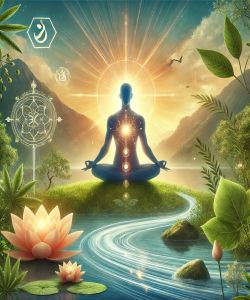
1. Overview of Body Mind Spirit Integration
Body Mind Spirit Integration represents a formidable and non-negotiable paradigm for achieving optimal human functioning and profound systemic wellbeing. It fundamentally rejects the fragmented, mechanistic models of health that have dominated Western thought, which erroneously treat the physical body, the cognitive mind, and the essential spirit as disparate, unrelated entities. This integrated framework posits that these three dimensions are inextricably linked, forming a dynamic, interdependent system where the state of one domain directly and powerfully influences the others. True vitality, resilience, and authenticity cannot be realised by addressing symptoms in isolation; they demand a holistic approach that acknowledges the complete human experience. This is not a gentle, passive philosophy but an assertive, disciplined practice of cultivating conscious awareness of the intricate interplay between somatic sensations, mental-emotive patterns, and one’s deepest sense of purpose and connection. It is the rigorous work of dismantling internal discord and forging a state of coherence where thought, feeling, physical being, and core values are brought into absolute alignment. To neglect any one aspect is to guarantee a state of perpetual imbalance and to fall short of one’s inherent potential. Therefore, engaging in this integrative process is the definitive path towards robust, embodied, and meaningful existence.
2. What are Body Mind Spirit Integration?
Body Mind Spirit Integration is a comprehensive and rigorous methodology aimed at unifying the core facets of human existence into a cohesive, functional whole. It operates on the foundational premise that the physical, psychological, and existential dimensions of a person are not separate but are in constant, dynamic interaction. It is both a philosophy and a set of disciplined practices designed to resolve the discord that arises when these aspects are misaligned or when one is prioritised to the detriment of the others. This is not merely about relaxation or positive thinking; it is a profound re-calibration of the entire human system.
To deconstruct this further:
- The Body Component: This pertains to the physical self, not just as a biological machine, but as a vessel of intelligence, memory, and sensation. Integration in this domain involves cultivating somatic awareness, addressing physical tension, improving physiological regulation, and honouring the body's intrinsic wisdom and signals. It moves beyond mere fitness to embodied presence.
- The Mind Component: This encompasses the full spectrum of cognitive and emotional life: thoughts, beliefs, memories, and feelings. Integration here demands the disciplined observation of mental patterns, the challenging of limiting beliefs, the development of emotional literacy, and the cultivation of mental clarity and focus. It is the mastery of one’s internal cognitive landscape.
- The Spirit Component: This dimension addresses the human need for meaning, purpose, connection, and transcendence. It is not necessarily religious but relates to one's core values, intuition, and sense of place within a larger context. Integration of the spirit involves clarifying what gives one’s life meaning and aligning daily actions with those foundational values, fostering a powerful sense of authenticity and direction.
Ultimately, Body Mind Spirit Integration is the active, conscious process of weaving these three threads into a single, resilient fabric of being.
3. Who Needs Body Mind Spirit Integration?
- Individuals experiencing chronic stress, burnout, or systemic dysregulation, where conventional, single-focus interventions have proven insufficient to address the pervasive nature of their condition.
- Professionals in high-stakes environments who require superior resilience, mental clarity, and emotional equilibrium to perform at peak capacity without sacrificing their long-term health.
- Persons confronting existential crises, a lack of purpose, or a profound sense of disconnection from themselves and their lives, who seek to establish a meaningful and value-aligned existence.
- Those suffering from psychosomatic conditions, where physical symptoms are deeply intertwined with unresolved emotional or mental distress, necessitating a methodology that addresses the root cause rather than just the physical manifestation.
- Individuals who feel fundamentally fragmented, living in a state of internal conflict where their actions are not aligned with their stated beliefs or their physical state is at odds with their mental intentions.
- People in recovery from trauma, for whom a purely cognitive or purely physical approach is inadequate to process the deep, embodied imprints left by overwhelming life experiences.
- High-achievers and perfectionists who, despite external success, experience a persistent inner emptiness or anxiety, indicating a neglect of the spiritual or somatic dimensions of their being.
- Anyone committed to a path of profound self-development and personal mastery, who understands that true growth is not linear or compartmentalised but requires the holistic cultivation of their entire being.
- Healthcare and wellness practitioners who must first embody the principles of holistic wellbeing themselves in order to guide others with authenticity and genuine authority.
- Individuals seeking to move beyond mere symptom management towards a state of vibrant, robust health and a deeply felt sense of wholeness, vitality, and personal power.
4. Origins and Evolution of Body Mind Spirit Integration
The conceptual roots of Body Mind Spirit Integration are ancient, deeply embedded in wisdom traditions that predate modern Western civilisation. Philosophies from Vedic India, with its sophisticated system of chakras and yogic science, and Traditional Chinese Medicine, with its focus on the flow of Qi and the balance of Yin and Yang, have always operated from a fundamentally holistic premise. These systems never countenanced the separation of mind, body, and spirit, viewing them as indivisible aspects of a single, vital life force. Similarly, pre-Socratic and Stoic philosophies in the West explored the intricate connections between virtue (a spiritual and mental concern) and a well-ordered life, which included care for the physical body.
A profound schism occurred in the 17th century, largely catalysed by the Cartesian dualism of René Descartes, who posited a stark separation between the thinking mind (res cogitans) and the physical body (res extensa). This mind-body split became a cornerstone of Western science and medicine, leading to a highly effective but fragmented approach to human health. The body became the domain of medicine, the mind the domain of psychology and philosophy, and the spirit was largely relegated to theology. This compartmentalisation dominated for centuries, creating disciplines that rarely communicated and treated the human being as a collection of isolated parts.
The 20th century witnessed the beginning of a powerful counter-movement. The emergence of humanistic and, later, transpersonal psychology began to challenge the reductive nature of behaviourism and psychoanalysis. Thinkers like Abraham Maslow and Carl Rogers re-introduced concepts of self-actualisation and the whole person. Simultaneously, the holistic health movement gained momentum, drawing inspiration from Eastern traditions and advocating for a more integrated approach to wellness.
In the contemporary era, this evolution has culminated in a sophisticated synthesis. Fields like psychoneuroimmunology provide hard scientific evidence for the profound biochemical links between mental states and physical health. Somatic psychology has established rigorous methodologies for working with the body to heal trauma stored in the nervous system. The modern paradigm of Body Mind Spirit Integration is therefore not a nostalgic return to ancient mysticism; it is a scientifically informed, psychologically sophisticated, and pragmatically grounded framework that reclaims the essential wisdom of holism and applies it with modern rigour and precision.
5. Types of Body Mind Spirit Integration
There exist numerous modalities and disciplines that facilitate Body Mind Spirit Integration, each with a distinct focus yet all sharing the core principle of holism. The following represent key types:
- Somatic Experiencing® (SE™): This is a potent, body-centric therapeutic modality for resolving trauma and stress disorders. It operates on the principle that trauma is not a purely psychological event but is trapped in the nervous system. SE™ practitioners guide individuals to gently process and release these stored survival energies by focusing on felt-sense bodily sensations, thereby integrating physical experience with emotional and psychological healing.
- Holistic Yoga Therapy: This moves beyond the common perception of yoga as mere physical exercise. It employs the full spectrum of yogic tools—postures (asana), breathwork (pranayama), meditation (dhyana), and ethical principles (yamas and niyamas)—to create profound balance. It directly addresses the physical body, calms and focuses the mind, and connects the individual to a deeper sense of self or spirit.
- Mindfulness-Based Stress Reduction (MBSR): A secular, rigorously structured programme that uses mindfulness meditation to cultivate a non-judgmental awareness of the present moment. By systematically training the mind to observe thoughts, emotions, and bodily sensations without immediate reaction, MBSR directly forges a new, integrated relationship between mind and body, reducing stress-reactivity and enhancing self-regulation.
- Transpersonal Psychology: This branch of psychology explicitly includes the spiritual, transcendent, or unitive dimensions of human experience. It integrates traditional psychological models with contemplative practices, mythology, and cross-cultural wisdom to address the individual’s search for meaning, purpose, and connection to something greater than the ego-self, thus bridging the gap between mind and spirit.
- Integrative Medicine: This is a healthcare approach that combines conventional Western medical treatments with evidence-based complementary therapies. A practitioner of Integrative Medicine considers the patient's full range of physical, emotional, mental, social, and spiritual influences, creating a personalised treatment plan that addresses the whole person, not just the disease.
6. Benefits of Body Mind Spirit Integration
- Enhanced Psycho-physiological Resilience: Develops a robust capacity to navigate stress and adversity without succumbing to systemic dysregulation, fostering faster recovery from psychological and physical challenges.
- Profound Self-Awareness and Authenticity: Cultivates a deep, unwavering understanding of one’s internal landscape, leading to a life lived in direct alignment with core values and beliefs, free from internal conflict.
- Superior Emotional Regulation: Moves beyond mere suppression or expression of emotions to a state of emotional literacy and mastery, enabling the calm navigation of feelings without being overwhelmed by them.
- Resolution of Somatic Imprints: Facilitates the release of stored trauma, chronic tension, and stress held within the body’s tissues and nervous system, alleviating a wide range of psychosomatic symptoms.
- Increased Vitality and Embodied Energy: Unlocks physical and mental energy previously consumed by internal discord and stress, leading to a tangible increase in vigour, stamina, and overall life force.
- Sharpened Mental Clarity and Focus: By calming the noise of a dysregulated nervous system and a fragmented mind, it allows for heightened concentration, improved cognitive function, and more effective decision-making.
- Establishment of Purpose and Meaning: Directly addresses the existential dimension, helping to clarify a profound sense of purpose that provides direction, motivation, and a buffer against feelings of nihilism or despair.
- Improved Interpersonal Relationships: Fosters a state of internal coherence that naturally translates into more authentic, grounded, and empathetic interactions with others, as one operates from a place of wholeness rather than need or reactivity.
- Deepened Intuitive Capacity: Strengthens the connection to one’s innate wisdom by learning to trust the signals from the body and the subtle guidance of the spirit, leading to more congruent life choices.
- Sustainable and Holistic Wellbeing: Creates a foundation for lasting health that is not dependent on external fixes, but is generated from within through a balanced and integrated system.
7. Core Principles and Practices of Body Mind Spirit Integration
- The Principle of Inextricable Holism: This is the non-negotiable foundation. It asserts that the body, mind, and spirit are not separate components but are facets of a single, unified system. Any action, thought, or experience in one domain has immediate and unavoidable repercussions in the others. Practice involves cultivating a constant awareness of this interconnectedness in all life situations.
- The Primacy of Embodied Awareness (Somatic Intelligence): The body is not a mere vehicle for the mind but a primary source of wisdom, information, and memory. The core practice is somatic tracking: the disciplined, non-judgmental attention to internal physical sensations (the 'felt sense') to gain direct insight into one's emotional and psychological state.
- The Practice of Conscious Self-Regulation: This involves developing the active capacity to modulate the state of one's nervous system. Practices include diaphragmatic breathing (pranayama), grounding techniques that connect one to the physical environment, and progressive muscle relaxation to consciously shift from a state of hyper-arousal (fight-or-flight) to one of calm equilibrium (ventral vagal state).
- The Principle of Radical Presence (Mindfulness): This demands a resolute commitment to experiencing the present moment as it is, without aversive reaction or escapist fantasy. The central practice is meditation, which trains the mind to observe the flow of thoughts, feelings, and sensations without identifying with them, thereby dismantling reactive patterns.
- The Alignment with Core Values and Purpose (Spirit): Integration is incomplete without a clear sense of direction. This principle requires a rigorous inquiry into one's most fundamental values and life purpose. The practice involves value-clarification exercises and the conscious, daily effort to ensure one's actions, from the mundane to the monumental, are in absolute congruence with this discovered purpose.
- The Practice of Dismantling Limiting Beliefs: The mind's cognitive structures dictate much of our experience. This involves the assertive identification and deconstruction of core limiting beliefs that create internal conflict and self-sabotage. The practice is a form of cognitive reframing, where outdated narratives are systematically challenged and replaced with empowering, integrated truths.
8. Online Body Mind Spirit Integration
- Systematised and Structured Delivery: The online format necessitates a highly structured and disciplined curriculum. Content is delivered in deliberate, sequential modules, ensuring that foundational principles are mastered before advancing to more complex practices. This methodical approach eliminates ambiguity and provides a clear, progressive path for the committed individual.
- Unparalleled Accessibility and Sovereignty: Geographic location ceases to be a barrier to accessing high-calibre instruction. The online model grants individuals absolute sovereignty over their learning environment, allowing them to engage with the material from a private, controlled space of their own choosing, which is often more conducive to deep inner work than a clinical setting.
- Facilitation of Personal Accountability: Without the constant direct oversight of an in-person facilitator, the onus of engagement falls squarely upon the participant. This environment rigorously cultivates self-discipline, personal responsibility, and internal motivation—qualities that are themselves central to the integrative process. One must learn to show up for oneself.
- Integration of Diverse Digital Resources: The online platform allows for a rich, multi-modal learning experience. It seamlessly integrates high-definition video instruction, guided audio meditations, comprehensive written materials, interactive workbooks, and community forums. This provides a robust and varied toolkit that caters to different learning modalities and deepens an individual's engagement with the material.
- Opportunity for Deliberate Practice and Repetition: Digital modules can be revisited as many times as necessary. This capacity for repetition is critical for the embodiment of new skills, particularly somatic and mindfulness practices. It allows the individual to practise at their own pace, ensuring that techniques are not just intellectually understood but are deeply integrated into their nervous system.
- Structured Live Interaction: High-quality online programmes do not forsake real-time connection. They incorporate scheduled live video sessions for group discussion, direct Q&A with facilitators, and guided practice. These sessions provide vital points of contact, foster a sense of community, and allow for personalised feedback within the structured online framework.
9. Body Mind Spirit Integration Techniques
This is a foundational technique for achieving immediate, in-the-moment integration. It must be practised with rigour and discipline, not as a passive exercise.
- Step 1: Assertive Physical Grounding (The Body): Cease all peripheral activity. Stand or sit with a solid, deliberate posture. Plant your feet firmly on the floor. Actively feel the points of contact between your body and the surface supporting it—the pressure, the texture, the temperature. Clench and then release your fists and jaw to discharge superficial tension. Command your physical presence in this exact space and time. Direct your full attention to the physical weight and substance of your body. This is a non-negotiable first step; without somatic anchoring, the rest is merely intellectualisation.
- Step 2: Dispassionate Mental Observation (The Mind): Close your eyes. Without judgment or analysis, become a neutral observer of your internal landscape. Acknowledge the thoughts that are present as if they are clouds passing in the sky—do not engage with them, debate them, or follow them down rabbit holes. Label them simply as "thinking." Similarly, notice any emotions present. Name the primary emotion—"anxiety," "frustration," "calm"—without attaching a story to it. This step requires the discipline to separate yourself from your mental-emotional content, viewing it as transient data rather than absolute truth.
- Step 3: Intentional Breath and Energy Focus (The Bridge): Begin a controlled, diaphragmatic breath. Inhale deeply through the nose, allowing the abdomen to expand. Exhale slowly and completely through the mouth. With each exhalation, intentionally release a layer of mental chatter or emotional intensity. The breath is the physiological bridge between body and mind; you are now actively using it to regulate your state.
- Step 4: Connection to Purpose or Intention (The Spirit): With your body grounded and your mind observed, bring to your awareness a single, core value or intention for this moment. This could be "calm," "strength," "clarity," or a deeper sense of purpose. Hold this quality or word at the centre of your awareness. As you continue to breathe, imagine this quality infusing every cell of your body and clarifying your mental space. You are no longer just a body experiencing thoughts; you are an integrated being, consciously aligning your entire system to a chosen state.
10. Body Mind Spirit Integration for Adults
The application of Body Mind Spirit Integration for adults is a matter of profound necessity, not optional self-improvement. Adulthood is characterised by the accumulation of responsibilities, ingrained behavioural patterns, and the calcification of unresolved psychological and somatic burdens. The fragmented approach of addressing career stress separately from physical ailments or existential ennui is utterly insufficient. For the adult, these are not separate issues; they are interconnected manifestations of a system in discord. The adult nervous system is often conditioned into states of chronic hyper-vigilance or shutdown from years of sustained pressure. Cognitive patterns and limiting beliefs have become deeply entrenched, operating as automatic, unconscious scripts. Furthermore, the midway point of life often forces an unavoidable confrontation with questions of meaning, mortality, and legacy—the domain of the spirit. Body Mind Spirit Integration directly confronts this complex, layered reality. It provides a robust, systematic framework for adults to deconstruct these ingrained patterns, release decades of stored somatic tension, and re-evaluate their life’s trajectory from a place of grounded, authentic self-awareness. It demands the maturity to take full responsibility for one’s own wellbeing, moving beyond blame or victimhood to a position of empowered self-regulation and conscious choice. It is the definitive methodology for navigating the complexities of adult life with resilience, purpose, and integrity.
11. Total Duration of Online Body Mind Spirit Integration
The fundamental unit of direct, interactive engagement within a structured online Body Mind Spirit Integration programme is rigorously set at the 1 hr session. This duration is not arbitrary; it is the professionally determined minimum timeframe required to facilitate meaningful therapeutic or coaching work. A period shorter than 1 hr is insufficient to move beyond superficial check-ins, establish a state of grounded presence, deeply explore a specific issue, guide a practice to completion, and properly integrate the experience before concluding. The 1 hr container ensures there is adequate time for all critical phases: initial somatic settling, focused thematic exploration, active practice of integrative techniques, and a concluding phase of consolidation and grounding. This specific duration respects the psychological and physiological processes involved, which cannot be rushed without compromising efficacy and even safety. While the overall journey of integration is a lifelong commitment, the 1 hr session serves as the potent, recurring crucible in which the focused work is performed. It is the standard, non-negotiable building block of any serious online integrative practice, forming the core of weekly or bi-weekly engagement within a broader, multi-month or ongoing curriculum.
12. Things to Consider with Body Mind Spirit Integration
Before embarking on the rigorous path of Body Mind Spirit Integration, a sober and realistic assessment of several critical factors is imperative. This is not a passive pursuit of comfort but an active and often challenging process of profound personal transformation, and it demands commensurate preparation. Firstly, one must critically evaluate their readiness for deep self-inquiry. This work will inevitably bring suppressed emotions, uncomfortable truths, and long-held defence mechanisms to the surface. An individual must possess a baseline of psychological stability and a robust willingness to confront what is revealed without resorting to old patterns of avoidance. Secondly, the credentials and suitability of the practitioner or programme are paramount. It is essential to verify their qualifications, ensuring they possess legitimate training in recognised psychological and somatic modalities, not just a superficial certification. The practitioner's own level of personal integration and professional integrity is a non-negotiable prerequisite. Finally, one must consider the practical and energetic commitment required. This is not a quick fix. It demands consistent effort, dedicated time for practice between sessions, and the courage to implement changes in one's life. A failure to appreciate the depth of commitment required is a primary cause of abandonment and will render any initial efforts futile. This path demands respect, readiness, and resolve.
13. Effectiveness of Body Mind Spirit Integration
The effectiveness of Body Mind Spirit Integration is not a matter of conjecture; it is a logical and observable consequence of its holistic and systemic methodology. Its potency stems directly from its refusal to accept the artificial divisions between the physical, mental, and existential realms of human experience. By addressing the human being as an interconnected whole, it targets the root causes of dysfunction rather than merely managing disparate symptoms. Conditions such as chronic anxiety, for example, are not treated as a purely cognitive issue but are addressed through the simultaneous regulation of the nervous system (body), the reframing of anxious thought patterns (mind), and the establishment of a grounding sense of purpose that provides a buffer against existential dread (spirit). This multi-pronged, synergistic approach creates a powerful, self-reinforcing loop of positive change. Its effectiveness is demonstrated through tangible, measurable outcomes: documented reductions in stress markers like cortisol, improved heart rate variability, enhanced emotional regulation capacities, decreased reliance on maladaptive coping mechanisms, and a profound increase in reported life satisfaction and meaning. The framework is effective precisely because it aligns with the fundamental reality of human architecture. To treat a part in isolation is to invite recurrence and imbalance; to treat the whole system is to build a foundation for robust, resilient, and sustainable wellbeing.
14. Preferred Cautions During Body Mind Spirit Integration
Engaging in this profound work necessitates an unwavering adherence to certain cautions, as the process can be intensely destabilising if undertaken without due respect for its power. It is imperative to understand that the integration process is not always one of linear progress toward blissful states. It frequently involves a 'healing crisis', where the dismantling of old structures and the release of suppressed material, such as trauma or grief, can lead to a temporary but acute increase in emotional, and even physical, discomfort. One must be prepared for this possibility and possess a stable support system outside of the therapeutic container. Furthermore, there exists a significant risk of 'spiritual bypassing'—using spiritual concepts or altered states to avoid dealing with unresolved psychological wounds, emotional issues, and practical life responsibilities. This must be vigilantly guarded against by staying grounded in somatic reality and maintaining a commitment to psychological accountability. The selection of a guide is critical; an unqualified or ungrounded facilitator can do substantial harm by pushing a client too far, too fast, or by misinterpreting complex psychological phenomena. The individual must retain their own sovereignty and discernment at all times, never surrendering their critical faculties or inner authority. This is a journey into the self, not a flight from it, and it demands groundedness, courage, and caution in equal measure.
15. Body Mind Spirit Integration Course Outline
Module 1: Foundational Principles and Systemic Orientation
Deconstruction of the fragmented self-model.
Assertion of the non-negotiable principles of holism and interconnectedness.
Introduction to the autonomic nervous system as the core regulatory system.
Establishing a baseline assessment of one’s current state of integration.
Module 2: Mastery of Somatic Intelligence and Embodiment
Intensive training in somatic tracking: learning the language of the body's felt sense.
Techniques for grounding and centring in the physical self.
Practices for identifying and beginning to release chronic muscular armoring and tension.
The role of the body in processing and storing trauma and stress.
Module 3: Deconstruction and Reframing of the Mind
Disciplined practice of mindfulness: observing thoughts and emotions without identification.
Identification and systematic dismantling of core limiting beliefs and cognitive distortions.
Cultivation of emotional literacy and advanced emotional regulation skills.
Techniques for shifting from a reactive to a responsive mental posture.
Module 4: Inquiry into Spirit and Core Purpose
Rigorous exercises in value clarification to identify one’s unshakeable core principles.
Exploration of personal meaning, legacy, and purpose.
Practices for cultivating intuition and connecting with one’s inner guidance system.
Addressing existential concerns and cultivating a transcendent perspective.
Module 5: The Practice of Synthesis and Lived Integration
Advanced techniques that simultaneously engage body, mind, and spirit.
Developing a personalised daily integration practice (Sadhana).
Strategies for applying integrative principles to relationships, work, and daily challenges.
Formulating a long-term plan for sustained, embodied, and purposeful living.
16. Detailed Objectives with Timeline of Body Mind Spirit Integration
- Phase 1 (First Month): Establishment of Foundational Stability and Somatic Awareness.
- Objective: To shift from a state of cognitive dominance to one of embodied presence. By the end of this phase, the individual will be able to consistently identify their nervous system state (sympathetic, parasympathetic, dorsal vagal) and employ at least two distinct grounding techniques to achieve a baseline of regulation. They will have initiated a daily practice of somatic tracking.
- Phase 2 (Months 2-3): Development of Emotional Literacy and Mental Discipline.
- Objective: To de-couple from reactive emotional and mental patterns. The individual will develop the capacity to observe their thoughts and emotions without immediate judgment or action. They will have identified at least two primary limiting beliefs and will be actively engaged in the process of challenging and reframing them. Proficiency in a core mindfulness practice will be established.
- Phase 3 (Months 4-5): Exploration of Purpose and Value Alignment.
- Objective: To define a clear framework of personal values and purpose. The individual will have completed a rigorous values clarification process and authored a personal purpose statement. They will be able to identify instances of incongruence between their daily actions and their stated values, and will begin implementing corrective behavioural changes.
- Phase 4 (Month 6 and Onward): Mastery of Integration and Embodiment.
- Objective: To live from a place of cohesive wholeness. The individual will be able to fluidly apply integrative techniques to real-time life stressors. They will have designed and committed to a sustainable, personalised daily practice that nourishes body, mind, and spirit. The primary objective becomes the ongoing, conscious application of these principles, turning the practice into a way of being.
17. Requirements for Taking Online Body Mind Spirit Integration
- Unyielding Personal Commitment: An absolute, non-negotiable commitment to the process. This includes punctual attendance at all scheduled sessions and the disciplined completion of all assigned practices and self-inquiry work between sessions.
- A Secure and Private Environment: Access to a physical space that is completely private, quiet, and free from any potential interruptions for the full duration of each online session. This is a non-negotiable requirement for creating a safe therapeutic container.
- Robust and Stable Technology: A reliable, high-speed internet connection, a computer or device with a high-quality camera and microphone, and proficiency in using the required video conferencing platform (e.g., Zoom). Technical failures are the participant's responsibility to mitigate.
- Psychological Readiness and Stability: A baseline of psychological stability is required. This work is not a substitute for acute psychiatric care. Individuals currently in a state of severe crisis may be deemed unsuitable for this type of deep, elective work.
- Radical Honesty and Willingness: A determined willingness to be radically honest with oneself and the facilitator. The process is rendered ineffective by evasion, intellectualisation, or the holding back of crucial information.
- Sovereignty and Self-Responsibility: The understanding that the facilitator is a guide, not a saviour. The participant must take full and complete responsibility for their own journey, their emotional responses, and the application of the teachings to their life.
- Appropriate Attire and Preparation: Participants are required to be dressed comfortably and appropriately for sessions, which may involve gentle movement or breathwork. They must be prepared and logged in ahead of the scheduled start time.
18. Things to Keep in Mind Before Starting Online Body Mind Spirit Integration
Before committing to an online Body Mind Spirit Integration programme, it is critical to grasp the unique demands and dynamics of the digital format. The absence of a shared physical space requires a heightened level of personal discipline and self-motivation. You alone are responsible for creating a sacred, focused container for your work; this means proactively eliminating all digital and domestic distractions, a task that demands vigilance and resolve. Furthermore, communication in a virtual setting requires greater precision and articulation. You must be prepared to clearly verbalise your internal experiences—subtle somatic sensations and nuanced emotional states—as the facilitator cannot rely on the full spectrum of non-verbal cues available in person. It is also vital to manage expectations regarding the therapeutic relationship. While a strong connection can be forged online, it requires a deliberate effort from both parties to build trust and rapport across the digital divide. Finally, you must prepare for the work's intensity. The comfort of your home does not diminish the power of the process. Be prepared to sit with profound discomfort and have a post-session plan for grounding and self-care, as you will be responsible for managing your own state immediately after a deep and potentially activating session concludes.
19. Qualifications Required to Perform Body Mind Spirit Integration
The safe and effective facilitation of Body Mind Spirit Integration is not a task for the amateur or the merely enthusiastic; it demands a formidable and verifiable set of qualifications. A practitioner's credentials must be rigorous, multi-disciplinary, and grounded in both extensive academic knowledge and profound practical experience. It is insufficient to hold a simple coaching certificate or to have completed a weekend workshop. The baseline requirements are stringent and must include a combination of the following:
- Advanced Academic Grounding: A Master’s degree or Doctorate in a relevant field such as clinical psychology, counselling, or medicine is a fundamental prerequisite. This ensures a deep understanding of human development, psychopathology, ethics, and the scientific principles underpinning mental and physical health.
- Specialised Certification in Somatic and/or Transpersonal Modalities: Beyond a general degree, the practitioner must possess advanced, in-depth certification from a reputable institute in specific integrative modalities. This would include formal training in areas like Somatic Experiencing (SEP), Sensorimotor Psychotherapy, Hakomi, or Transpersonal Psychology. This demonstrates mastery of the specialised techniques required to work with the body and spirit.
- Substantial Supervised Clinical Experience: There is no substitute for extensive, supervised practice. A qualified practitioner must be able to document thousands of hours of direct client work, overseen by senior mentors in the field. This experience hones their skills, judgment, and capacity to handle complex and challenging client presentations.
- A Demonstrable Commitment to Personal Practice: A facilitator can only guide others as far as they have gone themselves. It is imperative that they have their own deep, long-term, and ongoing commitment to personal integration work, including their own therapy, supervision, and daily contemplative or somatic practice. This ensures they operate from a place of embodied integrity, not just theoretical knowledge.
20. Online Vs Offline/Onsite Body Mind Spirit Integration
Online
The online delivery of Body Mind Spirit Integration is defined by its structure, accessibility, and the high degree of personal sovereignty it demands. It removes geographical constraints, granting access to elite practitioners regardless of a client’s location. The format often lends itself to a highly organised curriculum, with digital modules, workbooks, and recorded materials that allow for repetition and self-paced learning. This fosters a powerful sense of accountability, as the individual must take full ownership of their engagement and practice. The screen acts as both a connector and a boundary, which for some, can create a feeling of safety that facilitates deeper sharing. However, this modality requires explicit verbal communication of internal states, as the practitioner has limited access to subtle somatic cues. It is exceptionally effective for cognitive reframing, mindfulness training, and guided somatic work that does not require physical touch. The primary demand on the participant is one of unwavering self-discipline to create and maintain a sacred, focused environment for the work.
Offline/Onsite
Offline or onsite integration work is characterised by the immediacy and richness of co-present human interaction. The primary advantage is the unmediated transmission of information. A skilled practitioner can perceive subtle shifts in a client’s breathing, posture, muscle tone, and energy field that are simply not fully transmissible through a screen. This allows for real-time, nuanced interventions that can be profoundly effective. For modalities that involve therapeutic touch, such as certain forms of somatic work or bodywork, the onsite format is indispensable. The shared physical space inherently creates a powerful energetic container, which can accelerate the therapeutic process. The potential disadvantage can be logistical—travel, time, and geographical limitations—and for some individuals, the sheer intensity of being in the same room with a facilitator can initially feel more confronting than the buffered interaction of an online session. It excels in hands-on somatic release and in work where the energetic dynamics of the interpersonal field are a key agent of change.
21. FAQs About Online Body Mind Spirit Integration
Questions 1. Is online integration as effective as in-person? Answer: Its effectiveness is contingent on the individual's discipline and the practitioner's skill. For motivated individuals who create a focused environment, it can be equally or even more effective for certain types of cognitive and self-regulatory work due to its structured nature.
Questions 2. What technology is absolutely essential? Answer: A reliable, high-speed internet connection, a computer with a quality webcam and microphone, and a quiet, private space are non-negotiable requirements.
Questions 3. How can a practitioner work with my body if they can't touch me? Answer: Somatic work online is conducted through precise verbal guidance, self-touch instructions, and guided awareness of internal sensations (interoception). It focuses on empowering you to connect with and regulate your own body.
Questions 4. Is this process safe to do online? Answer: With a properly qualified and ethically bound practitioner, it is safe. A thorough screening process ensures suitability, and established safety protocols are maintained. It is not suitable for individuals in acute crisis.
Questions 5. What if I get highly emotional during a session? Answer: A skilled facilitator is trained to guide you through intense emotions safely. They will use grounding techniques and containment skills to ensure you feel regulated and stable before the session concludes.
Questions 6. How do I ensure my privacy? Answer: You are responsible for securing your physical environment. The practitioner is responsible for using a secure, encrypted video platform and adhering to strict professional confidentiality standards.
Questions 7. What does a typical online session look like? Answer: It usually begins with a grounding practice, moves into a focused exploration of a specific theme (mental, physical, or spiritual), incorporates a relevant practice or technique, and ends with integration and closure.
Questions 8. Is there homework? Answer: Yes. The work between sessions is critical. Expect assigned practices such as mindfulness, journaling, or somatic awareness exercises to integrate the work into your daily life.
Questions 9. Can I do this if I'm a complete beginner? Answer: Yes. Quality programmes are designed to meet individuals where they are, establishing foundational skills before moving to advanced concepts.
Questions 10. What is the difference between this and standard online therapy? Answer: While it has therapeutic elements, its scope is broader, explicitly and systematically incorporating somatic (body) and transpersonal (spirit/purpose) dimensions alongside the psychological (mind).
Questions 11. How much self-discipline is required? Answer: A significant amount. You must be your own motivator to eliminate distractions, show up on time, and complete the integration practices.
Questions 12. Can this help with chronic physical pain? Answer: It can be highly effective for pain with a psychosomatic component by addressing the underlying stress and trauma held in the nervous system and body. It is not a replacement for medical diagnosis.
Questions 13. Do I need to have a specific spiritual belief? Answer: No. The 'spirit' component is about purpose, values, and meaning, which is a universal human need. The process is secular and not aligned with any specific religion.
Questions 14. How will I know if it's working? Answer: You will notice tangible changes: improved emotional regulation, reduced reactivity to stress, a greater sense of physical ease, enhanced mental clarity, and a stronger sense of purpose.
Questions 15. What if I have technical difficulties during a session? Answer: Practitioners typically have a back-up plan, such as switching to a phone call. However, consistent technical readiness is the participant’s responsibility.
Questions 16. Can group sessions be effective online? Answer: Yes. Well-facilitated online group sessions can create a powerful sense of community and shared learning, provided all members adhere to the rules of engagement.
22. Conclusion About Body Mind Spirit Integration
In conclusion, Body Mind Spirit Integration must be understood not as a supplementary wellness trend, but as a fundamental and necessary corrective to the inadequate, fragmented models of human health that have proven insufficient. It stands as a rigorous, disciplined, and comprehensive paradigm for cultivating a state of profound wellbeing, resilience, and authentic power. The methodology's core strength lies in its uncompromising insistence on holism—the truth that our physical vitality, mental acuity, and spiritual purpose are not separate pursuits but are inextricably woven into the single fabric of our being. To engage in this work is to take absolute responsibility for the totality of one’s existence, moving beyond the passive management of symptoms to the active, conscious creation of a coherent and purposeful life. It demands courage, commitment, and a willingness to confront deep-seated patterns. The ultimate outcome is not fleeting happiness but enduring wholeness—an alignment of body, mind, and spirit that constitutes the very foundation of a life lived with integrity, power, and meaning. In an increasingly discordant world, the mastery of one’s inner system through this integrative approach is no longer a luxury; it is an imperative.