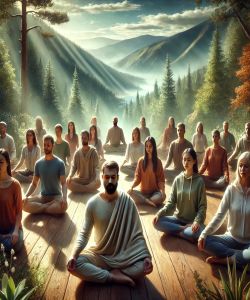
1. Overview of Breathing Meditation
Breathing meditation constitutes a formidable and foundational discipline for the systematic regulation of attention and the cultivation of mental composure. It is not a passive act of relaxation but an active, rigorous training of the mind, utilising the physiological process of respiration as a singular, unwavering anchor. The fundamental premise of this practice is its profound simplicity, which belies its powerful efficacy in modulating neurological and psychological states. By deliberately and repeatedly directing focus to the physical sensations of the breath—the ingress and egress of air, the rise and fall of the abdomen or chest—the practitioner systematically disengages from the incessant stream of discursive thought and emotional turbulence. This is not an attempt to forcibly suppress thoughts but rather to develop the capacity to observe them without attachment or reaction, thereby diminishing their command over one’s internal state. The practice establishes a direct feedback loop between mind and body, leveraging the autonomic nervous system's connection to respiration to induce a state of parasympathetic dominance, which is characterised by physiological calm and reduced stress reactivity. Ultimately, breathing meditation is an exercise in sovereign control over one’s own consciousness. It serves as a core modality for enhancing executive functions such as concentration and cognitive flexibility, whilst fostering a stable and resilient psychological foundation. It is an indispensable tool for any individual committed to achieving a high degree of self-mastery and operational effectiveness in any environment, demanding unwavering commitment and disciplined application to unlock its full potential. The practice is therefore positioned not as a remedy, but as a strategic mental conditioning programme.
2. What are Breathing Meditation?
Breathing meditation is a precise form of mental training wherein the practitioner intentionally anchors their attention to the process of breathing. Its purpose is to stabilise the mind and cultivate a state of heightened, non-judgemental awareness. This practice is fundamentally an exercise in concentration and mindfulness, where the breath serves as the object of focus, a constant and reliable physiological event that is perpetually available for observation. Unlike passive daydreaming or undirected thought, it is an active and deliberate process demanding consistent mental effort to maintain focus and gently redirect it when it inevitably wanders. The core mechanism involves detaching from the cognitive and emotional churn that typically dominates consciousness and instead grounding one's awareness in the tangible, physical sensations of the respiratory cycle.
The practice can be broken down into several key components:
- The Anchor: The breath itself is the designated anchor point. This can be the sensation of air passing through the nostrils, the movement of the chest, or the expansion and contraction of the abdomen. The choice of anchor is less important than the consistency with which attention is applied to it.
- Focused Attention: This is the primary mental muscle being trained. The practitioner makes a concerted effort to keep their awareness fixed exclusively on the chosen anchor, noting its subtle qualities without analysis or commentary.
- Mindful Redirection: The recognition that the mind has wandered is a critical moment in the practice. Instead of frustration, the protocol is to acknowledge the distraction without judgement and firmly but gently guide the attention back to the breath. This act of returning is the central training loop of the meditation.
- Non-Judgemental Stance: A rigorous principle of the practice is to observe all arising phenomena—thoughts, emotions, physical sensations—as transient events without labelling them as 'good' or 'bad'. This cultivates an objective and equanimous internal posture.
In essence, breathing meditation is a systematic procedure for reclaiming executive control over one’s own attention, thereby reducing mental noise and enhancing psychological clarity and stability.
3. Who Needs Breathing Meditation?
High-Stress Professionals and Executives: Individuals operating in high-pressure corporate, financial, legal, or medical environments require this discipline as an essential tool for mitigating the corrosive effects of chronic stress. It provides a systematic method for managing cognitive load, preventing burnout, and maintaining peak decision-making capabilities under duress. The practice directly enhances emotional regulation, which is indispensable for effective leadership and negotiation.
Individuals with Compromised Attentional Control: Those who experience significant difficulty with concentration, sustained focus, or are perpetually distracted by internal or external stimuli will find this practice non-negotiable. It is a direct and rigorous training programme for the brain's executive functions, systematically strengthening the neural pathways responsible for attentional deployment and cognitive discipline.
Athletes and Performance Artists: For individuals whose success is contingent upon supreme mind-body integration and performance under scrutiny, breathing meditation is a critical component of their mental conditioning. It enhances interoceptive awareness, regulates physiological arousal, and sharpens the focus required to enter a state of ‘flow’ or peak performance on demand.
Anyone Seeking Enhanced Emotional Regulation: Persons subject to emotional volatility, reactivity, or mood dysregulation must engage with this practice. It cultivates the psychological space between a stimulus and a response, allowing for considered action rather than impulsive reaction. It is a foundational skill for developing emotional intelligence and resilience.
Academics, Researchers, and Creatives: Those engaged in deep, intellectually demanding work require the ability to achieve and sustain profound levels of concentration. Breathing meditation serves to quiet the 'mental noise' that impedes deep thought, facilitating greater insight, problem-solving capacity, and creative output by providing a clear and stable mental canvas.
Individuals Managing Chronic Pain or Health Conditions: For those contending with persistent physical discomfort, the practice offers a powerful method to alter their relationship with pain. By focusing on the breath, one can learn to observe sensations without the secondary layer of mental and emotional suffering, thereby increasing coping capacity and improving quality of life.
5. Types of Breathing Meditation
Samatha-Vipassana (Concentration-Insight) Breathing: This is a classical Buddhist approach comprising two distinct but interconnected stages. The Samatha phase involves the cultivation of deep, unshakable concentration by focusing exclusively on the sensation of the breath at a single point, typically the nostrils or the abdomen. The objective is to quiet the mind and achieve a state of tranquil stability. The Vipassana phase then uses this stabilised mind to engage in penetrative insight, observing the impermanent, unsatisfactory, and selfless nature of all physical and mental phenomena, with the breath often remaining the primary object of observation.
Diaphragmatic Breathing (Belly Breathing): This technique focuses on the physiological mechanics of respiration, specifically engaging the diaphragm for a deeper, more efficient breath. The practitioner deliberately breathes in a way that causes the abdomen to rise on inhalation and fall on exhalation, while the chest remains relatively still. Its primary purpose is to activate the parasympathetic nervous system, directly counteracting the body’s 'fight-or-flight' stress response and inducing a state of physiological calm. It is a foundational technique for stress and anxiety management.
Box Breathing (Square Breathing): A highly structured technique valued for its simplicity and potency in regulating arousal, often employed by military personnel and first responders. It involves a four-part cycle of equal duration: inhale for a set count, hold the breath for the same count, exhale for the same count, and hold the empty lungs for the same count. This rhythmic pattern imposes a deliberate and calming cadence on the nervous system, helping to manage acute stress and maintain focus under pressure.
Pranayama: An umbrella term from the yogic tradition covering a wide variety of specific breathing exercises. Unlike passive observation, Pranayama often involves active manipulation of the breath, such as alternate nostril breathing (Nadi Shodhana), forceful exhalations (Kapalabhati), or audible breathing (Ujjayi). Each technique is designed for a specific purpose, such as balancing the body’s energy channels, increasing vitality, or calming the mind. It is a more active and prescriptive form of breathing practice.
6. Benefits of Breathing Meditation
Systematic Stress Reduction: The practice directly mitigates the physiological cascade of the stress response. By encouraging deep, diaphragmatic breathing, it stimulates the vagus nerve and activates the parasympathetic nervous system, leading to a measurable decrease in heart rate, blood pressure, and cortisol levels. This is not a passive hope for calm, but a direct biological intervention.
Enhanced Attentional Control and Concentration: Breathing meditation is a rigorous training regimen for the prefrontal cortex, the brain region responsible for executive functions. The repetitive act of focusing on the breath and redirecting attention from distractions strengthens neural circuits associated with sustained concentration, cognitive flexibility, and resistance to mental wandering.
Improved Emotional Regulation: The discipline cultivates a crucial psychological space between stimulus and response. By observing thoughts and emotions non-judgementally as they arise and pass, the practitioner learns to dis-identify from them. This diminishes emotional reactivity and impulsivity, fostering a more stable and equanimous internal state.
Increased Interoceptive Awareness: The practice sharpens one’s sensitivity to internal bodily signals (interoception). This heightened awareness of subtle physiological states provides critical data for self-regulation, allowing for earlier and more effective responses to stress, fatigue, or emotional shifts before they escalate.
Strengthened Psychological Resilience: Consistent practice builds mental fortitude. By repeatedly facing and sitting with discomfort, boredom, or mental agitation during meditation, individuals develop a greater capacity to tolerate distress and navigate life's challenges with composure and clarity, reducing vulnerability to anxiety and depression.
Augmented Cognitive Function: Beyond simple concentration, the practice has been demonstrated to improve other cognitive domains. These include working memory, problem-solving abilities, and creative thinking. By reducing mental clutter and background noise, it frees up cognitive resources for higher-order processing.
Support for Physiological Health: The downstream effects of chronic stress reduction and improved autonomic balance contribute positively to overall physical health. These benefits can include improved immune function, better sleep quality, and a reduced burden on the cardiovascular system.
7. Core Principles and Practices of Breathing Meditation
Unwavering Focus on a Singular Anchor: The foundational principle is the selection of the breath as the exclusive object of attention. The practice demands that all conscious awareness be deliberately and persistently directed towards the physical sensations of a single respiratory anchor point—be it the coolness of air at the nostrils, the rise and fall of the chest, or the expansion of the abdomen. This is non-negotiable and forms the bedrock of the entire discipline.
Rigorous Non-Judgemental Observation: It is imperative to adopt a stance of detached, impartial observation towards all mental phenomena that arise. Thoughts, emotions, and physical sensations are to be acknowledged without analysis, criticism, or emotional engagement. They are treated as transient events, mere data passing through consciousness, neither 'good' nor 'bad'. This cultivates equanimity and dismantles the habit of reactive identification.
The Imperative of Consistent Redirection: The mind will inevitably wander. This is not a failure but an expected part of the process. The core practice is the act of recognising this deviation and, without frustration or self-reproach, firmly and immediately guiding the focus back to the breath. This repetitive loop of wandering and returning is the fundamental mechanism through which attentional control is forged.
Deliberate and Stable Posture: A correct physical posture is a prerequisite for effective practice. The body must be held in a position that is both stable and alert—typically seated upright with a straight but not rigid spine. This posture facilitates unimpeded breathing and signals to the mind a state of intentionality and wakefulness, preventing sluggishness or sleep.
Commitment to Consistency and Discipline: Sporadic engagement yields negligible results. The benefits of breathing meditation are cumulative and are unlocked only through regular, disciplined practice. It must be treated as a form of mental conditioning, akin to physical training, requiring a scheduled and non-negotiable commitment to daily sessions, regardless of mood or motivation.
Clear Intention: Each session must be initiated with a clear, conscious intention. This is not a vague wish for peace but a deliberate resolution to apply oneself fully to the task at hand—to remain present, to maintain focus on the breath, and to adhere to the principles of the practice for the designated duration. This sets a professional and purposeful tone for the work to be done.
8. Online Breathing Meditation
Unparalleled Accessibility and Geographical Independence: Online platforms eliminate the physical barriers of location and transit. This provides immediate access to high-quality instruction for individuals in remote areas, those with mobility constraints, or professionals with demanding schedules who cannot accommodate travel to a physical centre. It democratises access to what was once a geographically-limited discipline.
Enhanced Scheduling Flexibility and Autonomy: The digital format offers supreme control over one's practice schedule. Practitioners can engage with guided sessions or live classes at times that integrate seamlessly with their personal and professional commitments, rather than being constrained by the fixed timetable of an offline institution. This autonomy fosters greater consistency, a critical factor for progress.
Facilitation of Anonymity and Reduced Social Pressure: For many, particularly beginners, the prospect of practising in a group setting can be intimidating. The online environment provides a private, anonymous space in which to learn and practise without the perceived scrutiny of others. This can lower the barrier to entry and allow for more authentic engagement with the practice, free from self-consciousness.
Access to a Global Roster of Instructors: Digital platforms offer a far wider selection of teachers and methodologies than would be available in any single geographic location. This allows the practitioner to vet and select an instructor whose expertise, lineage, and teaching style are precisely aligned with their specific needs and objectives, ensuring a superior and more tailored learning experience.
Availability of Extensive Resource Libraries: Online meditation programmes typically provide on-demand access to a comprehensive library of resources. This includes a variety of guided meditation lengths and types, supplementary instructional content, theoretical lectures, and progress-tracking tools. This repository allows for self-paced learning and deep-dives into specific areas of interest at any time.
Cost-Effectiveness: While not a primary driver for dedicated practitioners, online options are frequently more cost-effective than their in-person counterparts. They eliminate ancillary costs such as travel, and the subscription or course fees are often structured to be more accessible, allowing for long-term commitment without imposing a significant financial burden.
9. Breathing Meditation Techniques
Step One: Establish a Foundational Posture and Environment. Select a location that is quiet and where you will not be disturbed. Assume a stable, upright posture, typically seated on a cushion or a chair. The spine must be erect but not tense, allowing for free movement of the diaphragm. Your hands can rest on your knees or in your lap. Close your eyes or maintain a soft, unfocused gaze downwards. This physical arrangement signals an intentional shift from external activity to internal focus.
Step Two: Perform an Initial Settling and Body Scan. Begin by taking several slow, deep breaths to signal the body to relax. Then, systematically bring your awareness to the physical contact points of your body—your feet on the floor, your body on the chair. Briefly scan your awareness through the body from head to toe, acknowledging any areas of tension without needing to change them. This phase grounds you firmly in the present moment and in your physical form.
Step Three: Anchor Attention Firmly on the Breath. Direct your full and undivided attention to the physical sensations of your breath. Choose a primary anchor point: the sensation of air entering and exiting the nostrils, the rise and fall of the chest, or the expansion and contraction of the abdomen. Commit to this anchor. Observe the entire arc of each breath—the beginning of the in-breath, its middle, and its end, followed by the full duration of the out-breath. Maintain a granular focus on these raw physical sensations.
Step Four: Execute the Core Protocol for Distractions. When you notice that your mind has wandered from the breath—which it will—this is the critical point of practice. First, silently and non-judgementally acknowledge that the mind has drifted. You might mentally note "thinking" or "wandering." Second, release the distraction without pursuing its content. Third, firmly but gently escort your attention back to the physical sensations of your chosen anchor point. Repeat this process as many times as necessary. This is the central exercise.
Step Five: Conclude the Session with Intention. When your allotted time is complete, do not end abruptly. Broaden your awareness from the breath to encompass the sensations of your entire body once more. Then, slowly expand your awareness to include the sounds in your environment. Form a clear intention to carry the qualities of mindfulness and composure cultivated during the session into your next activity. When you are ready, slowly open your eyes.
10. Breathing Meditation for Adults
Breathing meditation is an indispensable discipline for the modern adult, serving as a powerful and pragmatic tool for navigating the unique complexities and pressures inherent in adult life. The responsibilities of career, family, and financial management impose a significant and sustained cognitive and emotional load. This practice provides a systematic and effective method for managing this burden, not by offering an escape, but by building the core mental capacities required to handle it with greater efficiency and less personal cost. For the professional adult, the ability to regulate one's own stress response is not a luxury but a strategic advantage, directly impacting decision-making clarity, leadership effectiveness, and long-term career sustainability. The practice actively counters the mental fragmentation caused by constant digital connectivity and multitasking, restoring the ability to engage in deep, focused work. Furthermore, adulthood often involves confronting complex emotional landscapes in relationships and personal challenges. Breathing meditation cultivates the emotional intelligence and resilience necessary to respond to these situations with wisdom and composure, rather than with conditioned reactivity. It provides a private, internal laboratory for understanding one's own mind and patterns of behaviour, fostering a degree of self-awareness that is fundamental to personal growth and maturity. It is not a juvenile exercise in calming down, but a sophisticated training programme for any adult committed to operational excellence in all facets of their life—a non-negotiable skill for achieving and maintaining psychological sovereignty in a demanding world. It is a direct investment in one's own most critical asset: a stable, clear, and resilient mind.
11. Total Duration of Online Breathing Meditation
The designated total duration for a standard online breathing meditation session is precisely 1 hr. This temporal framework is not arbitrary; it is a deliberately structured period designed to facilitate a substantive and impactful engagement with the practice, striking a critical balance between depth and practicality. A session of 1 hr provides sufficient time to move beyond superficial relaxation and engage in the more rigorous aspects of mental training. This duration allows for a structured progression within the session itself: an initial period for settling the body and mind, a substantial central phase dedicated to the core practice of focused attention on the breath, and a concluding phase for gradual re-integration and reflection. A shorter duration often proves insufficient to quiet the initial mental turbulence and achieve a state of stable concentration. Conversely, a significantly longer session can lead to fatigue or restlessness, particularly for those not yet conditioned to prolonged periods of stillness. The 1 hr commitment also serves as a potent container for the practice, demanding a level of discipline and intentionality that reinforces its importance. Within an online context, this defined duration allows for clear scheduling and integration into a professional's day, ensuring the practice is treated with the same seriousness as any other critical appointment. It represents a meaningful investment of time, sufficient to generate tangible neurological and psychological benefits without being so lengthy as to become unsustainable for consistent, daily application. The 1 hr session is the standard operational unit for effective online breathing meditation.
12. Things to Consider with Breathing Meditation
Engaging with breathing meditation demands a clear-eyed and pragmatic approach, devoid of unrealistic expectations. It is imperative to understand that this is not a panacea or a quick-fix solution for deep-seated psychological issues; it is a long-term discipline whose benefits are cumulative and contingent upon consistent, rigorous application. Practitioners must be prepared for the reality of the practice, which is often not one of blissful serenity but of confronting the mind’s habitual restlessness, boredom, and agitation. The process can, at times, bring uncomfortable thoughts and emotions to the surface. This is a normal and productive part of the training, but one must be prepared to meet it with equanimity and persistence rather than aversion. Furthermore, while the technique is simple, its mastery is not. It requires patience and a commitment to the process, especially during periods where progress seems to stall. The environment in which one practises is a critical factor; a dedicated, quiet space free from interruption is not a luxury but a necessity for effective engagement. It is also crucial to differentiate this secular practice of mental training from any specific religious or spiritual dogma, unless that is the explicit intention. For those with a history of significant trauma or severe mental health conditions, it is strongly advised to undertake this practice only with the guidance or sanction of a qualified clinical professional, as it can sometimes intensify certain symptoms if not properly managed. The commitment is not merely to the time spent on the cushion, but to a principled and informed approach.
13. Effectiveness of Breathing Meditation
The effectiveness of breathing meditation is unequivocal and substantiated by a robust convergence of contemplative tradition and modern scientific inquiry. This is not a matter of subjective belief but of demonstrable impact on human physiology and psychology. Its efficacy lies in its direct mechanism of action upon the autonomic nervous system. By consciously regulating the pace and depth of respiration, practitioners can directly influence the vagus nerve, systematically shifting the nervous system from a state of sympathetic (fight-or-flight) arousal to one of parasympathetic (rest-and-digest) dominance. This shift produces immediate and measurable reductions in stress markers such as cortisol, heart rate, and blood pressure. Neurologically, the practice is a potent form of neuroplasticity in action. Consistent training strengthens the prefrontal cortex, the seat of executive function, while down-regulating the amygdala, the brain's threat-detection centre. This re-architecting of neural pathways results in enhanced attentional control, improved emotional regulation, and a durable increase in psychological resilience. The effectiveness is therefore twofold: it provides an acute tool for managing stress in the moment, and it serves as a long-term strategic training to fundamentally alter an individual’s baseline reactivity and mental clarity. It is a reliable and powerful intervention for any individual seeking to gain sovereign control over their internal state. The results are not magical but are the predictable and replicable outcome of a disciplined and systematic application of its core principles. Its power is rooted in its direct, mechanistic leverage over the fundamental link between mind and body.
14. Preferred Cautions During Breathing Meditation
It is imperative that the practice of breathing meditation is undertaken with a stringent and informed set of cautions, as its potent effects demand responsible application. This discipline must never be viewed as a substitute for necessary medical or psychological treatment for diagnosed conditions such as severe depression, anxiety disorders, or psychosis. To use it as a means of avoiding professional intervention is both irresponsible and potentially harmful. Practitioners must remain vigilant against the tendency to use meditation as a form of experiential avoidance—a subtle strategy to bypass or suppress difficult emotions rather than mindfully acknowledging them as the practice dictates. Furthermore, individuals with a history of significant trauma must proceed with extreme caution, preferably under the guidance of a trauma-informed instructor, as the practice can sometimes trigger dissociative states or the re-experiencing of traumatic memories. It is also critical to maintain a grounded and realistic perspective; breathing meditation is not a tool for inducing perpetual bliss or eliminating all negative thoughts, but for changing one's relationship to them. An attachment to achieving specific states can create striving and frustration, which is antithetical to the practice. Finally, ensure the physical environment is safe and that the chosen posture does not exacerbate any pre-existing physical injuries or conditions. The practice is a powerful tool, and like any powerful tool, it must be handled with intelligence, respect, and a clear understanding of its appropriate use and limitations. Misapplication or a cavalier attitude can undermine its benefits and introduce unnecessary risk.
15. Breathing Meditation Course Outline
Module 1: Foundational Principles and Posture
Objective: To establish a non-negotiable theoretical and physical foundation for the practice.
Content: The rationale and core principles of breathing meditation. Instruction on establishing a stable, alert, and sustainable seated posture. Introduction to the concepts of the anchor, non-judgement, and mindful redirection. A guided session focusing exclusively on posture and initial breath awareness.
Module 2: Mastering the Anchor and Concentration
Objective: To develop the primary skill of sustained, focused attention.
Content: Detailed exploration of different anchor points (nostrils, abdomen). Techniques for sharpening and maintaining focus on the raw physical sensations of the breath. Introduction to systematic counting methods as a concentration aid. Guided practice sessions of increasing duration to build attentional stamina.
Module 3: Working with Distractions and Mental Phenomena
Objective: To learn the correct protocol for managing the inevitable wandering of the mind.
Content: The 'recognise, release, return' protocol for handling thoughts. Techniques for working with strong emotions, physical discomfort, and sensory distractions without being derailed. Cultivating the stance of the non-judgemental observer. Practice sessions focused on maintaining equanimity amidst internal and external turbulence.
Module 4: Deepening the Practice and Cultivating Insight
Objective: To move beyond basic concentration towards a more subtle and insightful awareness.
Content: Introduction to noticing the subtle characteristics of experience (impermanence, insubstantiality). Techniques for broadening awareness from the breath to the entire body and the surrounding environment. Exploration of silent, self-directed practice. Developing a more nuanced and stable mindfulness.
Module 5: Integration into Daily Life
Objective: To bridge the gap between formal practice and everyday activities.
Content: Strategies for applying mindfulness in routine situations (e.g., walking, eating, communicating). Techniques for using short 'micro-hits' of breath awareness throughout the day to manage stress and maintain presence. Formulating a personal, sustainable, long-term practice plan. Final review and commitment to ongoing discipline.
16. Detailed Objectives with Timeline of Breathing Meditation
Weeks 1-2: Foundational Establishment
Objective: To master the correct physical posture and establish the breath as a reliable anchor for attention. The practitioner will be able to sit for a designated period without physical strain and consistently identify the physical sensations of the breath. The core protocol of 'recognise, release, return' will be understood intellectually and applied in practice. Success is defined by the ability to complete scheduled sessions and articulate the foundational principles.
Weeks 3-4: Development of Sustained Concentration
Objective: To significantly increase the duration of uninterrupted focus on the breath. The practitioner will move from fleeting moments of concentration to sustained periods of stable attention. The goal is to reduce the frequency and duration of mind-wandering episodes. Success is measured by a subjective but discernible increase in mental stability and a decreased sense of struggle in returning to the anchor.
Weeks 5-8: Cultivation of Equanimity and Non-Reactivity
Objective: To develop the capacity to observe arising thoughts and emotions without judgement or engagement. The practitioner will learn to treat all mental content as transient phenomena. The aim is to notice a reduction in emotional reactivity both during and outside of formal practice. Success is marked by the ability to sit with discomfort (physical or emotional) without immediate aversion and to notice the 'space' between stimulus and response in daily life.
Weeks 9-12: Deepening Insight and Self-Directed Practice
Objective: To transition towards a more subtle observation of experience and to cultivate autonomy in practice. The practitioner will begin to notice the impermanent nature of sensations and thoughts. They will become proficient in practising without continuous guidance, relying on their own established discipline. Success is demonstrated by the ability to self-direct a full-length session and a growing intuitive understanding of their own mental landscape.
Month 4 Onwards: Integration and Habituation
Objective: To seamlessly integrate the skills of mindfulness and concentration into all facets of daily life, establishing the practice as a durable and non-negotiable personal discipline. The practice should become an ingrained habit. Success is defined by the consistent application of mindfulness in everyday situations and a resilient, self-sustaining formal practice that is no longer dependent on external course structures.
17. Requirements for Taking Online Breathing Meditation
A Reliable and Uninterrupted Digital Connection: A stable, high-speed internet connection is non-negotiable. The practitioner must also possess a functional digital device (computer, tablet, or smartphone) capable of streaming audio and video without failure for the full duration of the session. Technical difficulties are a significant impediment to practice and must be proactively eliminated.
A Dedicated and Secluded Physical Space: The practitioner is required to secure a physical location that is private, quiet, and guaranteed to be free from interruptions for the entire session. This is not a practice to be conducted amidst household or office chaos. The space must be conducive to deep, internal focus.
Unyielding Personal Discipline and Commitment: The online format necessitates a higher degree of self-motivation than in-person instruction. The individual must possess the discipline to adhere to a predetermined schedule, to eliminate distractions proactively (e.g., silencing notifications, informing others not to disturb), and to hold themselves accountable for their own engagement.
Appropriate Audio Equipment: The use of high-quality headphones or earphones is mandatory. This serves two purposes: firstly, it ensures clear reception of the instructor's guidance without distortion; secondly, and more importantly, it creates an immersive auditory environment that minimises external noise and enhances focus.
A Receptive and Coachable Mindset: The practitioner must be willing to follow instructions precisely as they are given, without alteration or resistance. A mindset of openness, patience, and willingness to engage with the prescribed techniques is a prerequisite for any meaningful progress. Scepticism is acceptable, but unwillingness to comply with the protocol is not.
Suitable Seating for Correct Posture: The individual must have access to appropriate seating—either a firm cushion for floor sitting or a straight-backed chair that allows the feet to be flat on the floor. An improper or overly comfortable seat (such as a sofa or bed) that encourages slouching or sleep is unacceptable and detrimental to the practice.
18. Things to Keep in Mind Before Starting Online Breathing Meditation
Before commencing any online breathing meditation programme, it is imperative to conduct a rigorous self-assessment and prepare one’s environment with professional diligence. The primary consideration is the inherent demand for self-discipline that the online format imposes. Without the physical presence of an instructor or the collective energy of a group, the onus of commitment falls entirely upon the individual. You must honestly evaluate your capacity to create and adhere to a strict, non-negotiable schedule for practice, and to resist the myriad digital and domestic distractions that will inevitably compete for your attention. It is crucial to vet the credibility and qualifications of the online instructor or platform with meticulous care; the digital landscape is saturated with offerings of varying quality, and selecting a programme based on robust credentials and a verifiable lineage is paramount. Furthermore, you must understand the limitations of the medium. The lack of direct, in-person feedback means you are solely responsible for monitoring your own posture and internal state. You must also proactively establish a sanctuary for your practice—a physical space that is treated as a dedicated, single-purpose environment, free from the clutter and associations of work or leisure. This act of creating a distinct zone for practice is essential for signalling to your mind that it is time for focused, internal work. Finally, approach the practice with a mature understanding that technology is merely the delivery mechanism; the true work is internal, demanding your full and unwavering presence, a quality that no software or device can supply for you.
19. Qualifications Required to Perform Breathing Meditation
The act of personally performing breathing meditation requires no formal qualifications; it is an innate capacity available to any individual with the ability to breathe and direct their attention. However, the act of teaching or guiding others in this practice is an entirely different matter, demanding a stringent and verifiable set of qualifications to ensure safety, efficacy, and ethical conduct. A credible instructor is not merely someone with a calming voice or a personal enthusiasm for the practice. Their competence must be built upon a foundation of deep, long-term personal practice. Without extensive and sustained personal experience, an instructor lacks the experiential depth to guide others through the nuances and potential difficulties of the discipline. This personal mastery must be complemented by formal training and certification. A legitimate guide will have completed a rigorous, comprehensive training programme from a recognised and reputable institution or lineage.
Key qualifications include:
- Verifiable Certification: This should come from an established body with a clear, structured curriculum, minimum contact hours, and a robust assessment process. Examples include certifications from established mindfulness organisations or recognised yogic/Buddhist lineages.
- Extensive Personal Practice: A credible instructor must have a dedicated personal practice spanning several years. This is a non-negotiable prerequisite that provides the authentic understanding necessary for effective teaching.
- Knowledge of Pedagogy: The ability to communicate complex concepts clearly and skilfully is essential. This includes structuring sessions logically, providing precise instructions, and adapting language to the audience.
- Understanding of Contraindications: A qualified instructor must be knowledgeable about the psychological and physical conditions for which this practice might be inadvisable or require modification. They must be able to screen participants appropriately and refer them to clinical professionals when necessary.
In summary, while anyone can practise, only those with a demonstrable and robust foundation in personal practice, formal training, and pedagogical skill are qualified to lead others.
20. Online Vs Offline/Onsite Breathing Meditation
Online
The online modality for breathing meditation is defined by its supreme flexibility and accessibility. Its primary advantage is the elimination of geographical and logistical constraints, allowing any individual with a digital connection to access instruction, regardless of their location or physical mobility. This format provides unparalleled autonomy in scheduling, enabling practitioners to integrate sessions into complex professional and personal lives with minimal disruption. The online environment offers a degree of privacy and anonymity that can be highly beneficial for beginners or those who feel self-conscious in a group setting, thereby lowering the barrier to entry. Furthermore, the digital realm provides access to a global marketplace of instructors and methodologies, empowering the practitioner to select a guide whose specialisation and lineage are perfectly aligned with their objectives. The primary challenge of the online format is its heavy reliance on individual self-discipline. The practitioner is solely responsible for creating a conducive environment, eliminating distractions, and maintaining the motivation to practise without the direct accountability and communal energy of an in-person group. There is also a distinct lack of personalised, physical feedback on posture from the instructor.
Offline/Onsite
The offline, or onsite, modality offers a powerful, immersive experience that is difficult to replicate digitally. The act of travelling to a dedicated physical space—a meditation centre or studio—creates a powerful psychological transition that primes the mind for practice. The presence of a qualified instructor allows for direct, immediate, and personalised feedback on posture and technique, which can be critical for foundational learning. Practising within a group fosters a palpable sense of shared purpose and collective energy (sangha), which can be highly supportive and motivating, especially during challenging periods of practice. The environment is professionally controlled to be free of distractions, removing that burden from the individual. The primary disadvantages of the onsite format are its inherent inflexibility and geographical limitation. It demands adherence to a fixed schedule and requires physical transit, which can be prohibitive for those with demanding jobs, family commitments, or who live far from a suitable centre. It can also be more costly and may present challenges for those who feel uncomfortable or intimidated in a group setting.
21. FAQs About Online Breathing Meditation
Question 1. Is online breathing meditation as effective as in-person? Answer: Its effectiveness is contingent on individual discipline. The techniques are identical; however, the online format requires greater self-motivation to achieve the same results.
Question 2. What technology is absolutely essential? Answer: A reliable internet connection, a functional streaming device (computer/tablet), and high-quality headphones are non-negotiable requirements.
Question 3. How do I choose a credible online instructor? Answer: Scrutinise their qualifications. Look for verifiable certification from reputable institutions, extensive personal practice history, and clear, professional communication.
Question 4. What if I get distracted by things at home? Answer: This is expected. Proactively create a dedicated, private space and inform others not to disturb you. The core practice is to notice the distraction and return your focus.
Question 5. Can I practise lying down? Answer: It is strongly discouraged. A seated, upright posture promotes alertness. Lying down is highly conducive to sleep, which is not the objective.
Question 6. How long should a session be? Answer: A standard, effective session duration is between 20 to 60 minutes. Consistency is more important than length.
Question 7. What if I don't feel calm immediately? Answer: The goal is not immediate calm but the training of attention. Calmness is a byproduct, not the primary objective. Persistence is key.
Question 8. Is a live class better than a pre-recorded one? Answer: Live classes offer a sense of community and real-time guidance. Pre-recorded sessions offer maximum flexibility. Both are effective tools.
Question 9. Do I need a special cushion? Answer: Not necessarily. A firm pillow or a straight-backed chair that allows for an erect spine is sufficient.
Question 10. What is the single most important factor for success online? Answer: Unwavering consistency. A disciplined, non-negotiable daily schedule is the bedrock of progress.
Question 11. How do I know if my posture is correct without a teacher present? Answer: Record yourself or use a mirror initially. The spine should be straight but not rigid, in a natural S-curve.
Question 12. Can I do this with my eyes open? Answer: Yes. Maintain a soft, unfocused gaze on a point on the floor a few feet in front of you to minimise visual distraction.
Question 13. Is this suitable for absolute beginners? Answer: Yes, provided you select a programme specifically designed for beginners that clearly explains the foundational principles.
Question 14. What if I experience strong emotions during practice? Answer: Acknowledge them without judgement, as you would a thought. If they are overwhelming, stop the session and consider seeking professional guidance.
Question 15. Does the time of day I practise matter? Answer: Early morning is often preferred for a clear mind, but the best time is the time you can consistently commit to.
Question 16. How do I manage technical issues during a live class? Answer: Prepare in advance by testing your setup. If issues arise, handle them calmly and rejoin when possible. Do not let it derail your commitment.
22. Conclusion About Breathing Meditation
In conclusion, breathing meditation stands as a discipline of unparalleled pragmatism and potency. It is not a passive retreat from the world but an active and rigorous engagement with the fundamental mechanics of one’s own consciousness. Its value is not found in esoteric belief but in its direct, mechanistic ability to regulate the nervous system, sharpen attentional faculties, and build profound psychological resilience. The practice demands commitment, consistency, and a professional, no-nonsense approach, free from the delusion of instant gratification. The simple, repetitive act of anchoring awareness to the breath is a formidable exercise in mental strength-training, forging neural pathways that support sustained focus, emotional equanimity, and lucid decision-making. Whether pursued online for its accessibility or onsite for its immersive structure, the core principles remain immutable. It is a foundational skill for any individual who seeks to operate at a high level of effectiveness and to cultivate a state of internal sovereignty amidst external chaos. The mastery of this technique is a direct investment in one's most critical asset: a stable, clear, and focused mind. It is, therefore, not merely a wellness activity but a strategic imperative for personal and professional excellence in the contemporary world. The evidence of its efficacy is robust, and its application is a hallmark of a disciplined and self-possessed individual.