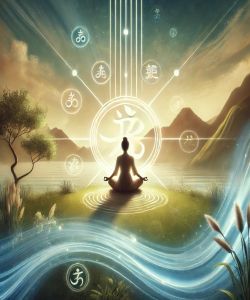
1. Overview of Chi Life Force Energy
Chi, often transliterated as Qi, represents the fundamental, ubiquitous life force energy that animates all living things. It is the vital, organising principle that underpins existence, flowing through the universe and within the human body in a constant, dynamic state of flux. This is not a metaphorical concept but is regarded within its traditional framework as a tangible, albeit subtle, substance that dictates the state of one’s health, vitality, and consciousness. The body is perceived as a microcosm of the universe, permeated by an intricate network of pathways known as meridians, through which Chi circulates to nourish organs, tissues, and the mind. The quality, quantity, and balanced flow of this energy are paramount; its unimpeded circulation ensures physiological robustness, emotional equilibrium, and mental clarity. Conversely, any disruption—be it stagnation, deficiency, or excess—is understood to be the root cause of disharmony, manifesting as physical illness, psychological distress, or spiritual malaise. The core objective of all practices related to Chi is therefore not merely the alleviation of symptoms but the fundamental correction of these energetic imbalances. Through specific disciplines such as Qigong, Tai Chi, and certain forms of meditation, an individual can learn to consciously perceive, cultivate, augment, and direct their Chi. This cultivation process is a rigorous and deliberate undertaking, aimed at strengthening the body’s innate energetic constitution, clearing blockages, and harmonising its internal environment with the external world. Mastery of Chi is the mastery of self, leading to a state of heightened awareness, profound resilience, and optimal functioning on all levels of being. It is the active engagement with the very current of life itself, a systematic methodology for enhancing vitality and achieving a state of integrated, powerful wholeness.
2. What are Chi Life Force Energy?
Chi Life Force Energy is the intrinsic, animating power that is the foundational substrate of all life forms within its philosophical and medical paradigms. It is the essential difference between a living, breathing entity and an inanimate object. This energy is not a singular, monolithic force but exists in various forms and functions, each with specific roles in maintaining health and consciousness. To comprehend Chi is to move beyond the purely biochemical model of the body and embrace a holistic view where energy and matter are inextricably linked. It is the invisible current that powers physiological processes: the beating of the heart, the firing of neurons, the process of digestion, and the immune response. In its essence, Chi is the driver of all transformation and movement.
The concept can be delineated into several key aspects:
- Source and Nature: Chi is derived from multiple sources. We inherit a finite amount of constitutional or ‘prenatal’ Chi from our parents, which is stored in the kidneys and acts as our fundamental energetic reserve. We also acquire ‘postnatal’ Chi daily from the air we breathe (Air Chi) and the food we consume (Food Chi). These are then synthesised within the body to form the functional energy that circulates through the meridian system.
- Function and Flow: The primary function of Chi is to warm, nourish, defend, and transform. It circulates ceaselessly through the twelve primary meridians and eight extraordinary vessels, ensuring every cell and organ receives the vital energy required for its function. The smooth, unobstructed flow of Chi is synonymous with health. When this flow is disrupted through physical injury, emotional trauma, poor diet, or other stressors, it leads to stagnation, which is a primary precursor to pain and disease.
- Manifestation: Though subtle, the state of one's Chi manifests in tangible ways. Abundant and balanced Chi is expressed as vibrant health, a clear mind, emotional stability, and physical strength. A deficiency or imbalance in Chi presents as fatigue, chronic illness, emotional volatility, and a weakened constitution. Practices aimed at its cultivation are designed to directly address and rectify these energetic states, restoring the body’s innate capacity for self-regulation and healing.
4. Origins and Evolution of Chi Life Force Energy
The concept of Chi is an ancient and foundational pillar of Chinese philosophy, medicine, and martial arts, with roots extending back thousands of years. Its earliest expressions can be traced to shamanistic and animistic beliefs in pre-dynastic China, where natural forces were perceived as manifestations of a universal, life-giving power. These nascent ideas were first systemised and recorded during the Shang and Zhou dynasties, where oracle bone inscriptions allude to a vital essence connected with breath and weather, influencing human fortune and health.
It was during the Warring States period and the subsequent Han Dynasty that the philosophy of Chi was rigorously developed and integrated into a coherent intellectual framework. Thinkers of the Taoist school, such as Laozi and Zhuangzi, articulated Chi as the primordial substance of the cosmos, the unceasing flow of the Tao made manifest. Simultaneously, medical pioneers, whose work was later compiled into the seminal text, the Huangdi Neijing (The Yellow Emperor's Inner Canon), meticulously mapped the flow of Chi within the human body. They established the theory of meridians, acupuncture points, and the diagnostic principles of balance and harmony, transforming Chi from an abstract philosophical idea into a cornerstone of a sophisticated and enduring medical system. This marked the formalisation of Traditional Chinese Medicine (TCM), where the manipulation of Chi became the primary therapeutic strategy.
Throughout subsequent centuries, the understanding and application of Chi continued to evolve and diversify. In the context of martial arts, practices like Tai Chi Chuan and Qigong were developed not only for combat effectiveness but as powerful methods for cultivating internal energy, or 'Neigong'. These disciplines refined the techniques for consciously directing Chi to enhance physical power, health, and longevity. Buddhist influences also integrated with Taoist practices, adding layers of meditative and spiritual depth to Chi cultivation. In the modern era, whilst facing the dominance of Western biomechanical models, the principles of Chi have persisted and are now being explored through the lens of quantum physics and bioenergetic medicine, demonstrating a remarkable resilience and capacity for adaptation. The concept has evolved from a mystical force of nature to a detailed system of internal alchemy and, now, a subject of global interest for holistic health and human potential.
5. Types of Chi Life Force Energy
The concept of Chi is not monolithic; it is a multifaceted energy that manifests in various forms, each with a distinct function and quality. A precise understanding of these types is imperative for any serious practice.
- Yuan Chi (Original or Prenatal Chi): This is the foundational, constitutional energy inherited from one’s parents at conception. It is finite and stored within the Kidneys (in the TCM sense). Yuan Chi is the catalyst for all physiological processes and the primary determinant of one's innate vitality and lifespan. Its preservation is of utmost importance, as it cannot be easily replenished, only conserved through disciplined lifestyle and practice. It is the deep reserve that fuels all other forms of Chi.
- Gu Chi (Food Chi): This is the postnatal Chi derived from the digestion and transformation of food and drink by the Spleen and Stomach. The quality of one's diet directly determines the quality of Gu Chi. It is the primary source of nourishment for the body after birth. This energy rises from the middle burner to the chest, where it combines with Air Chi to form Zong Chi.
- Kong Chi (Air Chi): This form of Chi is extracted from the air by the Lungs through the process of respiration. The quality of Kong Chi is dependent on the purity of the air one breathes and the efficacy of one's breathing technique. Proper, deep breathing is therefore not merely a respiratory function but a vital act of energy gathering.
- Zong Chi (Gathering or Pectoral Chi): Formed in the chest, Zong Chi is the synergistic combination of Gu Chi and Kong Chi. It is a powerful, functional energy that governs the circulatory and respiratory systems. It controls the rhythm of the heartbeat and the strength of the voice. A strong Zong Chi ensures robust circulation of both blood and energy throughout the entire body.
- Zhen Chi (True Chi): This is the final, refined stage of Chi that circulates through the meridians and nourishes the internal organs. Zhen Chi itself is further divided into two critical components:
- Ying Chi (Nutritive Chi): This is the aspect of True Chi that flows within the main meridians and blood vessels. Its primary role is to nourish the internal organs and the entire body, effectively functioning as the energetic counterpart to blood.
- Wei Chi (Protective or Defensive Chi): This is the more yang and dynamic aspect of True Chi. It flows on the exterior of the body, just beneath the skin, and within the muscles. Its function is to protect the body from external pathogenic factors, regulate body temperature, and control the opening and closing of pores. It is our first line of energetic defence.
6. Benefits of Chi Life Force Energy
- Augmentation of Physiological Vitality: Systematic cultivation directly enhances the body's core energy reserves. This translates into a tangible increase in stamina, a reduction in persistent fatigue, and a more robust level of day-to-day operational energy, moving beyond mere absence of illness to a state of positive, vibrant health.
- Fortification of the Immune System: The practice strengthens Wei Chi, the body’s protective energetic field. This results in a heightened resilience to external pathogenic influences, leading to a demonstrable reduction in the frequency and severity of common illnesses and a more vigorous systemic response when challenged.
- Profound Stress Reduction and Emotional Regulation: Chi cultivation directly pacifies the sympathetic nervous system and activates the parasympathetic response. This process clears energetic stagnation linked to emotional distress, fostering a state of deep calm, mental clarity, and profound emotional equilibrium, thereby building resilience against psychological stressors.
- Enhanced Cognitive Function: By improving the flow of pure energy to the brain, practitioners experience heightened focus, improved memory, and greater mental acuity. The dissipation of 'mental clutter' associated with chaotic energy allows for more precise and effective thought processes and decision-making capabilities.
- Accelerated Physical Recovery and Healing: Directing Chi to specific areas of the body enhances circulation and catalyses the body’s innate healing mechanisms. This leads to faster recovery from physical exertion, injury, and surgical procedures, as well as providing effective management for chronic pain conditions by resolving underlying energetic blockages.
- Improved Structural and Functional Integrity: Practices such as Qigong and Tai Chi, which are vehicles for Chi cultivation, improve posture, balance, flexibility, and joint health. This leads to more efficient and powerful biomechanical movement, reducing the risk of musculoskeletal injury and alleviating chronic structural issues.
- Deepened Mind-Body-Spirit Integration: The discipline transcends purely physical or mental benefits. It fosters a powerful, conscious connection between one's mind, body, and the more subtle aspects of being. This integration leads to heightened self-awareness, intuition, and a more profound sense of purpose and alignment in one's life.
7. Core Principles and Practices of Chi Life Force Energy
- The Principle of Relaxation (Song): This is the foundational state required for all effective Chi cultivation. It is not limpness but a profound, active relaxation where all unnecessary muscular and mental tension is consciously released. This state allows Chi to flow without impediment. The practice involves systematically scanning the body and letting go of tightness, creating an open and receptive vessel for energy to move.
- The Principle of Postural Alignment: The body's physical structure must be correctly aligned to facilitate optimal energy flow. This involves maintaining a straight but not rigid spine, a balanced pelvis, and open joints. Correct posture creates a direct, unimpeded channel for Chi to ascend and descend, connecting the practitioner between the energies of Heaven (Yang) and Earth (Yin).
- The Principle of Regulated Breathing: The breath is the primary vehicle for gathering postnatal Chi from the atmosphere. The core practice is deep, slow, and diaphragmatic breathing. The focus is on making the breath silent, smooth, and even. This type of respiration calms the nervous system, massages the internal organs, and powerfully draws Kong Chi (Air Chi) deep into the body to be metabolised.
- The Principle of Mindful Intent (Yi): The mind directs the Chi. Where the intention (Yi) goes, the Chi (Qi) flows. This is a non-negotiable principle. Practices involve using focused visualisation and unwavering concentration to guide the sensation of energy along the meridian pathways or to gather it in specific energy centres, most notably the lower Dantian. The mind must be both focused and quiet.
- The Practice of Movement and Stillness: Chi cultivation involves a dynamic interplay between movement and stillness.
- Movement: Practices like Qigong and Tai Chi use slow, deliberate, and flowing movements. These actions are designed to actively stretch and open the meridians, wring out energetic stagnation from the joints and tissues, and guide the flow of Chi through the body in a coordinated manner.
- Stillness: Standing (Zhan Zhuang) and seated meditation are equally critical. In stillness, the practitioner cultivates the ability to perceive the subtle flow of Chi internally, gather and store it more effectively, and achieve deep states of energetic consolidation and mental quietude.
- The Principle of the Dantian: The Dantian, located in the lower abdomen, is considered the primary energy centre and reservoir of Chi in the body. A fundamental aspect of all practice is to 'sink the Chi' to the Dantian. This anchors the practitioner, lowers the centre of gravity, and creates a powerful battery from which energy can be stored and then issued. All movements and energetic processes should originate from this core.
8. Online Chi Life Force Energy
- Accessibility and Removal of Geographical Barriers: The online modality provides immediate access to high-calibre instruction irrespective of the participant's physical location. Individuals in remote areas or those with mobility constraints, who would otherwise be excluded from specialised, in-person training, can engage fully. This democratises access to authentic practice, dismantling the geographical lottery that has historically limited such knowledge to specific locales.
- Consistency and Integration into Daily Life: Online platforms facilitate unparalleled consistency in practice. Sessions can be integrated seamlessly into a demanding daily schedule without the additional time commitment of travel. This regularity is not a matter of convenience but a critical factor for effective Chi cultivation, as sporadic practice yields minimal results. Consistent, daily engagement, even for shorter durations, builds energetic momentum far more effectively than infrequent, longer sessions.
- Focused and Controlled Learning Environment: The practitioner's own home provides a controlled, private, and distraction-free environment conducive to deep internal focus. This removes the social pressures and potential distractions of a group class, allowing the individual to concentrate entirely on their own internal sensations and the instructor's guidance. This focused solitude can significantly accelerate the development of proprioceptive and energetic sensitivity (the ability to feel one's own Chi).
- Access to a Wider Range of Specialised Instructors: The digital domain transcends local availability, offering participants a global marketplace of expertise. An individual can seek out and learn from a master practitioner who specialises in a particular lineage or application of Chi cultivation—be it for martial power, medical Qigong, or spiritual development—that would be utterly inaccessible otherwise. This ensures the participant is not limited to the generalised instruction available in their immediate vicinity.
- Resource Replay and In-depth Study: A key advantage of the online format is the ability to record and replay sessions. This allows the practitioner to review complex movements, subtle instructions, and core theoretical principles at their own pace. This capacity for repetition and detailed self-correction is a powerful pedagogical tool that is absent in a transient, one-off physical class, enabling a much deeper and more precise mastery of the techniques.
9. Chi Life Force Energy Techniques
- Step 1: Establishing the Foundation - The Wuji Stance. Begin by standing with feet shoulder-width apart, parallel. Keep the knees soft, never locked. Tuck the tailbone slightly to straighten the lower back. Allow the arms to hang loosely at the sides. The head should feel as if suspended from above, with the chin slightly tucked. This posture aligns the skeletal structure, creating an open conduit for energy flow. Close the eyes and release all superfluous physical tension from head to toe.
- Step 2: Activating the Breath - Abdominal Breathing. Place one hand on the lower abdomen (Dantian). Inhale slowly and deeply through the nose, allowing the abdomen to expand outwards as if inflating a balloon. The chest should remain relatively still. Exhale slowly and completely, also through the nose, allowing the abdomen to naturally retract. The breath must be silent, smooth, and continuous. This technique gathers Kong Chi (Air Chi) and begins to calm the mind and nervous system.
- Step 3: Awakening Sensation - The 'Embracing the Tree' Posture (Zhan Zhuang). From the Wuji stance, slowly raise the arms to chest height as if gently hugging a large tree. The palms face the chest, fingers are naturally curved and separated. Maintain a gap between the armpits. Continue the deep abdominal breathing. Hold this posture. The objective is to quiet the mind and simply observe the sensations that arise in the body, particularly in the hands and arms—tingling, warmth, coolness, or a feeling of magnetic pressure. This is the initial perception of Chi.
- Step 4: Circulating the Energy - The Microcosmic Orbit. This is an internal, visualisation-based technique. On the inhalation, use the mind's intent (Yi) to guide the sensation of energy from the Dantian down to the perineum and then up the spine to the crown of the head. On the exhalation, guide the energy from the crown down the front of the body, through the tongue (which should be lightly touching the roof of the mouth), back to the Dantian. This creates a continuous loop, circulating and refining the body's primary energy channels.
- Step 5: Gathering and Storing - Closing the Practice. After a period of circulation, bring the focus back entirely to the lower Dantian. Lower the hands and place them over the Dantian (men place the left hand first, women the right, with the other hand on top). Quiet the mind and simply feel the energy gathering and consolidating in this centre like a dense ball of light or warmth. Remain in this state for several minutes to ensure the cultivated energy is properly stored and not dissipated. This anchors the practice and consolidates its benefits.
10. Chi Life Force Energy for Adults
The application of Chi Life Force Energy principles for adults is a rigorous and pragmatic methodology for addressing the distinct challenges and potentials of mature life. For the adult practitioner, this is not a whimsical pursuit but a strategic investment in long-term vitality, resilience, and functional capacity. The cumulative stresses of career, family responsibilities, and the natural ageing process inevitably lead to a depletion of Yuan Chi (Original Chi) and the accumulation of energetic stagnation, manifesting as chronic fatigue, musculoskeletal pain, mental fog, and emotional imbalance. Chi cultivation directly confronts these issues at their energetic root. Through consistent practice of disciplines like Qigong or Tai Chi, adults can systematically clear these blockages, replenish their daily energetic reserves (Postnatal Chi), and learn to conserve their foundational energy. This results in a tangible enhancement of physical robustness, allowing for continued active engagement in life, rather than a passive acceptance of decline. Furthermore, the mental discipline required is exceptionally beneficial. The focus on mindful movement and breath control acts as a potent antidote to the fractured attention and anxiety prevalent in modern adult life. It cultivates a state of profound mental clarity and emotional equanimity, enhancing decision-making capabilities and improving interpersonal relationships. For adults, engaging with Chi is a command-and-control operation for their own well-being, a proactive means to manage health, enhance performance in all life domains, and build a deep, unshakable foundation of inner strength to navigate the complexities of their personal and professional worlds with authority and vigour.
11. Total Duration of Online Chi Life Force Energy
The standard designated duration for a single online session of Chi Life Force Energy cultivation is precisely 1 hr. This temporal framework is not arbitrary but is meticulously calibrated to achieve specific and substantive energetic objectives whilst respecting the practitioner’s capacity and integration requirements. A full hour provides the necessary time to move beyond superficial relaxation and engage in the deeper, more demanding aspects of the practice. It allows for a structured progression through several distinct phases: an initial period of physical and mental settling (Song), a substantial phase of active energy cultivation through specific movements or static postures (Qigong or Zhan Zhuang), a period dedicated to circulating the gathered Chi through key meridian pathways such as the Microcosmic Orbit, and a crucial concluding phase for gathering and storing the energy securely within the Dantian. Attempting to compress this comprehensive process into a shorter period would be counter-productive, leading to a rushed and shallow experience that fails to generate significant energetic momentum or lasting benefit. Conversely, extending the session for novices can lead to energetic depletion or an inability to maintain the requisite mental focus (Yi), which is paramount for directing Chi. The 1 hr duration is therefore the optimal container, sufficient to induce a state of profound energetic alignment and consolidation without overtaxing the practitioner's system. It represents a potent, concentrated dose of practice, designed for maximum efficacy and seamless integration into a disciplined daily or weekly regimen, ensuring that the benefits are both deep and sustainable over the long term.
12. Things to Consider with Chi Life Force Energy
Engaging with Chi Life Force Energy necessitates a disciplined and discerning approach, as it is a potent and transformative practice. It is imperative to understand that this is not a passive therapy but an active, participatory discipline that demands consistency, patience, and unwavering self-awareness. The practitioner must be prepared for a process that is often subtle and incremental, rather than one of instant, dramatic results. Progress is measured in months and years, not days, and requires a steadfast commitment to regular practice. The choice of instructor is of paramount importance; one must seek a qualified and authentic teacher with a clear lineage and a deep, embodied understanding of the principles, as incorrect practice can, at best, be ineffective and, at worst, lead to energetic imbalances. Furthermore, the practitioner must cultivate a heightened sensitivity to their own body's feedback. Pushing through sharp pain or significant discomfort is counter-productive and dangerous. The principle of 'listening' to the body and distinguishing between the discomfort of releasing a blockage and the pain of an injury is a critical skill that must be developed. One must also be prepared for the potential release of suppressed emotions, as clearing energetic stagnation can often bring latent psychological material to the surface. This is a natural part of the process and requires a stable and grounded mindset to navigate. Finally, it is crucial to approach the practice without rigid expectations or a purely intellectual framework, as the direct experience of Chi transcends conceptual understanding. It demands an open yet critical mind, willing to engage with felt sensation and subtle perception as the primary guides.
13. Effectiveness of Chi Life Force Energy
The effectiveness of Chi Life Force Energy cultivation is contingent upon the discipline and precision of the practitioner, and the authenticity of the instruction. When approached with the requisite seriousness, its efficacy is profound and multi-faceted. The system operates on the foundational principle that the body's energetic state precedes and dictates its physical and mental condition. Therefore, by directly intervening at the level of Chi, the practice produces results that are not merely palliative but genuinely corrective. Its effectiveness in enhancing physiological function is demonstrable through measurable improvements in circulatory health, respiratory capacity, and autonomic nervous system regulation. Practitioners consistently report significant reductions in chronic pain, enhanced immune response, and a marked increase in overall vitality and stamina. In the psychological domain, the practice is exceptionally effective in mitigating the corrosive effects of chronic stress, anxiety, and mental fatigue. The cultivated state of calm, focused awareness (Yi) translates directly into improved cognitive performance and greater emotional resilience. However, the measure of its true effectiveness lies in its integrative power. It does not treat the body, mind, or spirit as separate entities but addresses the human system as a whole. The ultimate outcome is a state of heightened self-regulation, where the practitioner becomes the master of their own internal environment, capable of maintaining balance and robust health in the face of external pressures. The effectiveness is not a matter of belief, but a direct consequence of a systematic application of its core principles.
14. Preferred Cautions During Chi Life Force Energy
It is imperative to approach the practice of Chi Life Force Energy with stringent discipline and an uncompromising respect for its potency. This is not a casual recreational activity; it is a form of internal alchemy that can have powerful effects. Foremost, one must never practice on a full stomach or when excessively hungry, as this disrupts the energy of the digestive system and can lead to nausea or inefficient cultivation. Similarly, practice is to be avoided when under the influence of alcohol or other intoxicants that cloud the mind and disrupt the body's subtle energetic flows. One must be acutely aware of the distinction between the dull ache of an energetic blockage beginning to release and the sharp, injurious pain of a physical strain; the former is to be worked through with gentle persistence, whilst the latter demands immediate cessation of the movement. During practice, particularly during standing meditation (Zhan Zhuang), practitioners may experience involuntary shaking or temperature fluctuations; these are typically normal phenomena of energetic adjustment and should be observed without alarm or resistance, unless accompanied by severe dizziness or distress. Post-practice, it is crucial to avoid immediate exposure to cold, wind, or cold water, as the body's pores and energetic field (Wei Chi) are open and vulnerable. Rushing into a cold shower or standing in a strong draught can allow pathogenic factors to invade the system. Finally, and most critically, one must avoid practising in a state of extreme emotional turmoil. Whilst the practice can regulate emotions, attempting it during a fit of rage or deep grief can amplify the chaotic energy, making it imperative to first achieve a baseline of calm before commencing formal cultivation.
15. Chi Life Force Energy Course Outline
Module One: Foundational Principles and Body Preparation
Introduction to the core concepts: Chi, Yin-Yang, Meridians, Dantian.
The imperative of 'Song': Techniques for systematic muscular and mental relaxation.
Establishing the Wuji Stance: Correct structural alignment for optimal energy flow.
Instruction in deep, diaphragmatic breathing for gathering Kong Chi (Air Chi).
Module Two: Awakening Energetic Awareness
Introduction to Zhan Zhuang (Standing Posture) meditation.
Focus on 'Embracing the Tree' posture to cultivate internal sensation.
Techniques for distinguishing and identifying the feeling of Chi (e.g., warmth, tingling, pressure).
The role of Yi (Mindful Intent) in perceiving and guiding energy.
Module Three: Foundational Qigong Movements
Learning a core set of 3-4 fundamental Qigong exercises (e.g., 'Lifting the Sky', 'Separating Heaven and Earth').
Detailed instruction on coordinating breath with slow, deliberate movement.
Emphasis on how each movement stretches specific meridians and resolves stagnation.
Practice in maintaining postural integrity and relaxation throughout the forms.
Module Four: Guiding and Circulating Chi
Introduction to the Microcosmic Orbit: The primary circuit for refining and circulating energy.
Step-by-step guidance on using visualisation and intent to move Chi along the Governing and Conception vessels.
The role of the tongue position in connecting the circuit.
Techniques for smoothing the flow and overcoming common sticking points.
Module Five: Consolidating and Integrating the Practice
The correct method for closing a practice session.
Techniques for gathering and storing the cultivated Chi in the lower Dantian.
Guidance on integrating short periods of practice into a daily routine.
Principles for adapting the practice to individual needs and energy levels.
Module Six: Advanced Refinements and Application
Introduction to more complex Qigong forms or deeper standing meditation.
Techniques for using Chi for self-healing by directing it to specific areas of the body.
Understanding the relationship between emotions and organ-specific Chi.
Principles for long-term, sustained practice and continued energetic development.
16. Detailed Objectives with Timeline of Chi Life Force Energy
Weeks 1-4: Establishing Foundational Embodiment.
Objective: To achieve consistent, correct physical alignment in the Wuji stance and master deep, diaphragmatic breathing. The practitioner will be able to stand for a minimum designated period in the 'Embracing the Tree' posture whilst maintaining relaxation.
Timeline Benchmark: By the end of this phase, the practitioner must be able to consciously release gross muscular tension and demonstrate stable, abdominal-focused respiration without conscious effort. They will report initial, subtle sensations of warmth or tingling in the hands and arms.
Weeks 5-8: Activating and Guiding Initial Chi Flow.
Objective: To learn and execute a basic Qigong set with fluid, coordinated movement and breath. The practitioner will begin the internal practice of the Microcosmic Orbit.
Timeline Benchmark: The practitioner will have memorised the Qigong form and can perform it without external guidance. They will be able to trace the path of the Microcosmic Orbit with their mind's intent (Yi) and may begin to feel a subtle current of warmth or energy moving along this pathway.
Weeks 9-12: Deepening Internalisation and Stamina.
Objective: To increase the duration of Zhan Zhuang (standing) practice and refine the smoothness of the Microcosmic Orbit circulation. The focus shifts from external movement to internal energetic action.
Timeline Benchmark: The practitioner will be able to hold a standing posture for an extended, specified duration with minimal mental distraction. The sensation of Chi flow will become more distinct and consistent. The ability to sink the Chi to the Dantian will be more pronounced.
Months 4-6: Consolidation and Application.
Objective: To achieve a state where the cultivated Chi can be consciously directed. The practitioner will learn to use their intent to guide energy to specific limbs or areas of the body for healing or strengthening purposes.
Timeline Benchmark: The practitioner will demonstrate the ability to intentionally create a sensation of warmth and fullness in a designated hand or foot. They will report a noticeable increase in daily vitality and a decrease in baseline stress levels.
Months 7-12: Integration and Autonomy.
Objective: To integrate the practice fully into daily life, making it an autonomous and self-regulating habit. The practitioner will have developed a strong energetic foundation and a high degree of self-awareness.
Timeline Benchmark: The practitioner can independently structure their own practice sessions, adapting them to their daily energy levels and needs. The benefits of the practice—such as mental clarity, emotional stability, and physical robustness—will be clearly established and self-evident in their life.
17. Requirements for Taking Online Chi Life Force Energy
- A Stable, High-Speed Internet Connection: This is a non-negotiable technical requirement. The connection must be robust enough to support uninterrupted, high-quality video streaming to ensure that subtle instructions and visual demonstrations from the instructor are received with perfect clarity and without latency.
- A Functional Audio-Visual Device: The participant must possess a device—be it a laptop, tablet, or desktop computer—with a high-resolution screen and a clear, functional webcam and microphone. The instructor must be able to see the participant’s posture and movement clearly to provide essential corrections.
- A Dedicated, Uncluttered Practice Space: The participant must secure a private, quiet space large enough to stand and move in all directions without obstruction. This area must be free from household traffic, noise, and other distractions for the full duration of the session to facilitate the deep concentration required.
- Appropriate, Non-Restrictive Attire: Participants are required to wear loose, comfortable clothing that does not constrict movement or circulation. Footwear should be flat-soled (or the practice can be done barefoot) to ensure proper grounding and connection with the floor.
- Unwavering Personal Discipline and Punctuality: The online format demands a higher degree of self-motivation. Participants are required to be present, prepared, and ready to begin at the designated time. A commitment to consistent, regular practice between guided sessions is mandatory for any meaningful progress.
- A Mindset of Receptivity and Self-Responsibility: The participant must be willing to follow precise instructions and be open to working with subtle, internal sensations rather than gross physical effort. They must take full responsibility for their own practice and for clearly communicating any issues or questions to the instructor.
- Physical Capacity for Standing: The participant must be physically capable of standing unaided for a designated period. Whilst modifications can be made, the foundational practices are performed in a standing posture, and a baseline ability to do so is a prerequisite.
18. Things to Keep in Mind Before Starting Online Chi Life Force Energy
Before commencing any online engagement with Chi Life Force Energy, it is imperative to adopt a mindset of rigorous self-assessment and realistic expectation. You must first ensure that your chosen physical space is not merely adequate, but sacrosanct for the duration of your practice; it must be a sanctuary free from the intrusions of daily life, as your capacity for deep focus is the primary determinant of success. Critically evaluate the quality of your technological setup, as a poor connection or inadequate camera is not a minor inconvenience but a fundamental barrier to receiving the precise postural and energetic corrections that are the hallmark of authentic instruction. Understand that the online medium places the onus of discipline squarely upon you. There is no group energy to carry you, nor the immediate physical presence of a master to command your focus. Your progress will be a direct reflection of your own internal commitment and consistency. You must be prepared to cultivate proprioceptive awareness—the ability to feel your body's position and movement from within—to a much higher degree than in an in-person class. Furthermore, vet your potential instructor with extreme diligence. The digital world is rife with unqualified individuals. Demand evidence of lineage, extensive experience, and a clear, structured curriculum. Finally, divest yourself of the expectation of immediate, spectacular phenomena. The path of Chi cultivation is one of subtle, incremental change. Your initial goal is not to perform miracles, but to master the foundations of posture, breath, and relaxation with uncompromising precision.
19. Qualifications Required to Perform Chi Life Force Energy
The qualifications required to authentically teach or perform Chi Life Force Energy as a therapeutic or developmental modality are stringent and extend far beyond a mere certificate of completion. A credible practitioner or instructor must possess a deep, multi-layered competence that is built over many years of dedicated, immersive practice. Fundamentally, they must demonstrate a clear and verifiable lineage. This means they should be able to trace their training back to a recognised master or a traditional school with an established history, ensuring the knowledge they impart is not a modern invention but part of an authentic transmission.
Within this framework, several key qualifications are non-negotiable:
- Extensive Personal Practice: A qualified individual must have a minimum of a decade, and more credibly two, of consistent, deep personal practice. They must have moved beyond theoretical knowledge to an embodied understanding of the energetic principles. Their own health, vitality, and centred presence should serve as a testament to the efficacy of their art.
- Formal and In-Depth Training: They must have completed a long-term, rigorous training programme under a senior master. This training would encompass not only the physical movements or techniques but also the underlying philosophical and medical theories, such as Yin-Yang, the Five Elements, and meridian theory.
- Proven Ability to Teach: Competence in practice does not automatically confer competence in teaching. A qualified instructor must have undergone specific pedagogical training or a lengthy apprenticeship. They must be able to break down complex concepts into understandable components, observe students with a discerning eye, and provide safe, effective corrections.
- In-depth Knowledge of Safety Protocols: They must possess an unassailable understanding of the contraindications and potential risks of the practice. This includes knowing which exercises are inappropriate for certain health conditions and how to manage common but potentially unsettling energetic phenomena (known as 'Qigong deviations').
Ultimately, the truest qualification is an intangible one: the practitioner's 'Gong,' or cultivated internal skill and energy, which can only be assessed through direct interaction.
20. Online Vs Offline/Onsite Chi Life Force Energy
Online
The online modality for Chi Life Force Energy instruction offers unparalleled accessibility and consistency. Its primary advantage is the complete negation of geographical constraints, allowing a practitioner to connect with a high-calibre instructor from anywhere in the world. This is a decisive factor for individuals living outside major metropolitan centres where such specialised teaching is unavailable. Furthermore, the online format demands and cultivates a higher degree of internal focus and self-discipline. Without the physical presence of a group, the practitioner is compelled to rely on their own proprioceptive awareness and mental concentration, which can accelerate the development of internal sensitivity. The ability to record and review sessions provides a powerful tool for self-correction and the meticulous study of complex forms and principles. It facilitates integration into a daily routine, removing the time cost of travel and making frequent, consistent practice—the cornerstone of progress—a far more achievable reality. However, it lacks the capacity for direct, hands-on correction of posture and energy flow from the instructor, and it cannot replicate the palpable group energy field (qi chang) that can support and elevate practice in a physical setting.
Offline/Onsite
Offline, or onsite, instruction represents the traditional and, in many respects, the gold standard for transmitting this knowledge. Its cardinal strength lies in the direct, physical presence of the instructor. A master can provide immediate, hands-on adjustments to a student’s posture and structure, correcting subtle misalignments that are invisible through a camera. They can also directly perceive the state of a student’s energy field and provide guidance that is precisely tailored to their immediate condition. The 'qi chang', or collective energy field of a dedicated group practicing together, is a potent force that can make it easier for beginners to feel Chi and for advanced practitioners to reach deeper states. This shared, immersive experience builds a strong sense of community and commitment. The disadvantages, however, are significant. Onsite instruction is limited by geography, time, and availability. It is often more costly and requires a greater commitment in terms of travel and scheduling. A student's choice of instructor is restricted to who is available locally, which may not be the best fit for their specific needs or goals. The transient nature of a class means that once it is over, the instruction exists only in memory.
21. FAQs About Online Chi Life Force Energy
Question 1. Can Chi energy really be transmitted and felt through an online session? Answer: Yes. Chi is not constrained by physical proximity. The instructor's guidance and the practitioner's focused intent are what activate and direct the energy, a process that is fully effective online.
Question 2. Is online learning as effective as in-person classes? Answer: It offers different advantages. Whilst it lacks hands-on correction, it demands and builds superior internal focus and discipline. For a committed student, it can be exceptionally effective.
Question 3. What technology do I absolutely need? Answer: A stable, high-speed internet connection and a device with a quality webcam and microphone are non-negotiable.
Question 4. How much space do I require for the practice? Answer: You need a private, quiet area with enough room to extend your arms fully to the front and sides without obstruction.
Question 5. What if my instructor cannot see me properly to correct me? Answer: It is your responsibility to ensure your lighting and camera angle are adequate. A professional instructor will guide you on setup before you begin.
Question 6. Is it safe to learn online without direct supervision? Answer: Yes, provided you follow instructions precisely and learn from a qualified, experienced instructor who emphasizes safety protocols. Never push through sharp pain.
Question 7. What if I do not feel anything during the sessions? Answer: Sensation varies. The primary objective is correct practice of the form and principles. Tangible feelings of Chi will develop with consistent, patient practice.
Question 8. Is this a religious or spiritual practice? Answer: No. It is a system of energy cultivation based on principles of physiology and mindfulness. It is compatible with any or no religious belief.
Question 9. How is this different from a simple online workout? Answer: The focus is internal—on breath, mindful intent, and subtle energy flow—not on external muscular exertion or cardiovascular targets.
Question 10. Can I practice if I have a serious medical condition? Answer: You must consult your physician first and inform your instructor of any health conditions before you begin. The practice can often be adapted.
Question 11. How often should I practice between online sessions? Answer: Consistency is key. A short, daily practice is mandatory for meaningful progress and is more effective than one long, weekly session.
Question 12. Will I be able to ask questions during the live session? Answer: Yes. A structured online class will have designated times for questions and clarification to ensure all participants understand the instructions.
Question 13. Are recorded sessions as good as live ones? Answer: Live sessions are superior for real-time feedback. Recorded sessions are an excellent tool for review and supplemental practice.
Question 14. What is the single most important factor for success in online Chi practice? Answer: Unwavering personal discipline and consistency.
Question 15. Can children participate in these online classes? Answer: Generally, these courses are designed for the focus and maturity level of adults. Specialised programmes exist for children.
Question 16. Will this practice make me tired? Answer: Correct practice should leave you feeling energised and calm. Feeling drained is a sign of incorrect technique or over-exertion.
Question 17. How do I find a qualified online instructor? Answer: Scrutinise their credentials, demand to know their lineage, and look for extensive experience and positive, substantive testimonials.
22. Conclusion About Chi Life Force Energy
In conclusion, Chi Life Force Energy represents a sophisticated and coherent system for the cultivation of human vitality, consciousness, and health. It is not a disparate collection of quaint exercises or esoteric beliefs, but a rigorous, principle-based discipline that demands serious and sustained application. The foundational premise—that a balanced and abundant flow of vital energy is the prerequisite for physical, mental, and emotional well-being—provides a powerful and pragmatic framework for self-mastery. To engage with Chi is to take direct, command-and-control responsibility for one's own internal state, moving beyond the passive reception of external treatments to become an active architect of one's own resilience. The practices, whether the dynamic grace of Tai Chi or the profound stillness of Zhan Zhuang, are merely the tools; the true work is internal, a meticulous process of refining breath, aligning structure, and focusing intent. This discipline offers a potent antidote to the depletion and distraction of modern existence, building a deep reservoir of energy and an unshakeable inner calm. Whilst its origins are ancient, its relevance is immediate and urgent. The mastery of Chi is nothing less than the systematic enhancement of the human organism's potential, offering a path not just to the absence of illness, but to the full and powerful expression of life itself. It is a demanding path, but one that yields returns of incalculable value in the form of integrated strength, profound awareness, and an enduring vitality that permeates every facet of one’s being.