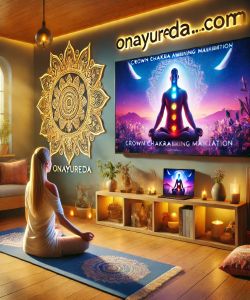
1. Overview of Crown Chakra Awakening Meditation
Crown Chakra Awakening Meditation constitutes a highly specialised and profound discipline directed towards the activation and harmonisation of the Sahasrara, the seventh primary energy centre located at the apex of the head. This practice is not a rudimentary relaxation technique; it is a rigorous spiritual technology aimed at transcending the limitations of the individual ego and fostering a direct, experiential connection to universal consciousness. The fundamental objective is to dissolve the perceived boundaries between the self and the cosmos, leading to states of enlightenment, profound insight, and spiritual liberation. Practitioners engage in focused mental exercises, including visualisation, mantra recitation, and sustained states of pure awareness, to stimulate this energetic vortex. It is the ultimate culmination of the chakra system's development, representing the point where individual consciousness merges with the boundless, undifferentiated source of all existence. This pursuit demands unwavering discipline, mental fortitude, and a sincere commitment to moving beyond materialistic and ego-centric paradigms. It is an advanced practice, serving as the capstone of energetic and spiritual development, intended for those who seek to realise the highest potentials of human consciousness. The path is demanding, requiring the practitioner to confront and dismantle deep-seated psychological constructs to access a state of pure, non-dual being.
2. What are Crown Chakra Awakening Meditation?
Crown Chakra Awakening Meditation refers to a specific set of contemplative practices engineered to stimulate and open the Sahasrara, or the thousand-petaled lotus, which is the energetic centre governing spiritual connection, enlightenment, and transcendence. Unlike meditations focused on grounding or emotional balance, these techniques are exclusively oriented towards the highest vibrational states of consciousness. The core of the practice involves systematically moving one's awareness beyond the confines of the physical body and the chatter of the thinking mind to access a state of pure, boundless awareness. This is not a passive activity but an active and deliberate engagement with the subtle energies of the psyche.
Key components of this meditative discipline include:
- Focused Visualisation: Practitioners are guided to visualise a radiant violet or white light descending into the crown of the head, infusing the entire being with its high-frequency energy. This visual anchor serves to concentrate mental energy and direct it purposefully towards the Sahasrara.
- Mantra Recitation: The use of specific sonic vibrations, most notably the mantra 'Om' (Aum), is a central technique. The resonance of the mantra is believed to harmonise the energetic field and directly stimulate the crown centre, clearing blockages and facilitating its opening.
- Cultivation of Silence (Mauna): A pivotal aspect involves entering and sustaining profound states of mental silence. This requires transcending the perpetual stream of thoughts to rest in the formless, silent awareness that is the bedrock of consciousness.
- Consciousness of Unity: The ultimate aim is to dissolve the illusion of a separate self. The meditation actively cultivates the experiential understanding that individual consciousness is an inseparable part of a greater, universal consciousness. It is a direct and uncompromising inquiry into the nature of reality itself, moving beyond belief into the realm of direct, unmediated experience.
3. Who Needs Crown Chakra Awakening Meditation?
- Individuals who have reached a distinct plateau in their personal or spiritual development, experiencing a sense of stagnation and an inability to progress further using conventional methods. They require a more potent catalyst to break through to new levels of awareness and understanding.
- Practitioners who are profoundly engaged in the process of self-inquiry and existential questioning. Those grappling with the ultimate nature of reality, consciousness, and the self will find this meditation provides a direct experiential framework, moving beyond intellectual speculation.
- Those who feel a pervasive sense of disconnection from a greater purpose or a universal source. This practice is specifically designed to rectify this spiritual alienation by forging a tangible connection to a consciousness beyond the limited ego.
- Advanced meditators and yogis who have successfully balanced the lower six chakras and are now prepared for the final stage of energetic integration and spiritual liberation (moksha). Attempting this final stage prematurely is counterproductive and ill-advised.
- Individuals who are persistently troubled by a fear of mortality and the finite nature of personal identity. This meditation directly confronts this fear by guiding the practitioner towards the experience of a timeless, formless consciousness that transcends physical death.
- Those who seek to dismantle the restrictive structures of the ego. When the ego's dominance leads to suffering, narcissism, or a limited worldview, this practice offers a direct and powerful method for transcending its grip and realising a more expansive identity.
- Healers, therapists, and spiritual guides who require a deeper reservoir of wisdom and energetic clarity to effectively serve others. Activating the Crown Chakra enhances intuition and provides access to universal insights that are indispensable in such vocations.
4. Origins and Evolution of Crown Chakra Awakening Meditation
The conceptual and practical foundations of Crown Chakra Awakening Meditation are deeply embedded in the ancient spiritual traditions of India, primarily originating from the philosophical and esoteric systems of Tantra and Yoga. The earliest articulations of the chakra system appear in texts like the Upanishads and were later systematically codified within Tantric literature. In these seminal traditions, the Sahasrara was unequivocally identified as the pinnacle of human spiritual potential, the gateway to 'Samadhi' or union with the absolute reality, Brahman. Early practices were not disseminated to the masses; they were esoteric teachings passed down directly from a qualified guru to a disciplined and dedicated disciple, often within the secluded context of an ashram. The methods were rigorous, demanding years of preliminary purification practices, ethical living (Yamas and Niyamas), and mastery over the body and breath (Asana and Pranayama) before any direct work on the higher chakras was sanctioned.
The evolution of these practices saw them integrated into various schools of yogic thought, including Hatha, Raja, and Kundalini Yoga. Each school adapted the techniques to fit its specific philosophical framework, yet the ultimate goal remained consistent: the arousal of Kundalini energy from the base of the spine to ascend through the central channel (Sushumna Nadi) and ultimately merge with the divine consciousness at the Sahasrara. This event was, and still is, regarded as the ultimate achievement of human life—a state of complete liberation and enlightenment.
In the modern era, the evolution has been marked by a significant shift in accessibility. With the transmission of yogic knowledge to the West, these once-secretive practices have been demystified, adapted, and often simplified for a global audience. The advent of digital platforms has further accelerated this process, enabling the dissemination of guided meditations and teachings on a scale unimaginable to their originators. However, this evolution presents a dual aspect: while accessibility has increased, there is a concurrent risk of dilution and misinterpretation. The challenge for the contemporary practitioner is to engage with these powerful techniques, now widely available, with the same rigour, respect, and deep intentionality that characterised their original context, ensuring that the profound purpose of the practice is not lost in its modern, more accessible form.
5. Types of Crown Chakra Awakening Meditation
- Mantra-Based Meditation (Japa/Kirtan): This type centres on the repetitive chanting of specific seed sounds or mantras, most notably the universal mantra 'Om' or 'Aum'. The practitioner focuses on the sonic vibration, allowing it to resonate at the crown of the head. In Japa, the mantra is repeated internally or quietly, fostering deep inward focus. In Kirtan, it is a call-and-response group chanting, which builds a powerful collective energy field directed towards the Sahasrara. The core principle is that sound vibration can purify and stimulate subtle energy centres.
- Visualisation-Based Meditation (Dharana): This technique demands intense concentration on a specific mental image. The practitioner visualises a radiant, thousand-petaled lotus at the crown, its petals slowly unfurling. Alternatively, one may visualise a brilliant white or violet light descending from the cosmos, entering through the crown and flooding the entire being. The objective is to use the focused power of the mind to direct prana (life force energy) to the Sahasrara, thereby activating it.
- Silent Awareness Meditation (Vipassana/Shunyata): This advanced and demanding form eschews all props like mantras or visualisations. The practitioner sits in absolute stillness and silence, observing the flow of consciousness without attachment or judgment. The goal is to transcend thought entirely and rest in the underlying, formless awareness itself. By abiding in this state of pure being or 'emptiness' (Shunyata), the illusion of the separate self dissolves, leading to a natural and spontaneous opening of the Crown Chakra.
- Kundalini Yoga Kriyas: Within the specific discipline of Kundalini Yoga, there are prescribed sets of exercises (kriyas) designed to systematically awaken the Kundalini energy at the base of the spine and guide it upwards to the Sahasrara. These kriyas are a dynamic combination of posture (asana), breathwork (pranayama), hand gestures (mudra), and internal locks (bandha), all precisely choreographed to produce a powerful energetic ascent culminating at the crown.
6. Benefits of Crown Chakra Awakening Meditation
- Transcendence of Ego and Limitation: Facilitates a profound shift in identity, moving from a limited, ego-based self-concept to an expansive awareness of being part of a universal whole. This reduces egocentric suffering and attachment.
- Attainment of Profound Inner Peace: Cultivates a state of deep, unshakable serenity that is independent of external circumstances. This is not mere relaxation but a fundamental state of being known as 'Ananda' or bliss.
- Enhanced Intuition and Wisdom: Opens a direct channel to higher consciousness, providing access to insights, clarity, and wisdom that transcend logical, linear thinking. Decision-making becomes more intuitive and aligned with a greater truth.
- Dissolution of the Fear of Death: Through the direct experience of a timeless, formless aspect of consciousness, the existential fear of physical mortality is fundamentally confronted and diminished. One realises an identity beyond the physical body.
- Experience of Unity and Oneness: Eradicates the illusion of separation, leading to the direct, experiential understanding that all things are interconnected. This fosters a deep sense of empathy and compassion for all life.
- Spiritual Liberation (Moksha/Samadhi): Represents the ultimate goal of many spiritual paths—the release from the cycle of suffering (samsara) and the attainment of a state of enlightenment or complete union with the divine source.
- Access to Unconditional Joy: Unlocks a source of joy and contentment that is not dependent on external achievements or possessions. This joy arises from the very nature of being itself.
- Complete Energetic System Harmonisation: As the culminating point of the chakra system, the activation of the Sahasrara brings the entire energetic anatomy into a state of perfect balance and alignment, optimising the flow of prana throughout the body.
7. Core Principles and Practices of Crown Chakra Awakening Meditation
- Principle of Transcendence: The fundamental aim is not to improve or manage the ego, but to transcend it entirely. All practices are oriented towards dissolving the perception of a separate self and realising a unified, universal consciousness. Practice must be approached with this ultimate goal in mind, not for egoic self-improvement.
- Practice of Focused Intention (Sankalpa): Every session must begin with a clear, unwavering intention to connect with the highest aspect of one's being. This is not a passive wish but a potent, directed command that aligns all mental and energetic resources towards the activation of the Sahasrara.
- Principle of Energetic Ascent: The work presupposes an understanding of the chakra system as a vertical axis. While the focus is on the crown, a degree of balance in the lower chakras is a non-negotiable prerequisite. The energy must have a stable and clear path to ascend.
- Practice of Visualisation (Dharana): A core practice involves the sustained visualisation of a radiant, thousand-petaled lotus (Sahasrara) at the crown of the head, or the influx of pure white or violet light. This mental discipline concentrates prana and directs it to the specific energetic centre, demanding rigorous mental focus.
- Principle of Vibrational Resonance: It is understood that consciousness and energy respond to specific frequencies. The practice therefore utilises sonic tools to stimulate the Sahasrara.
- Practice of Mantra Recitation (Japa): The disciplined, repetitive chanting of specific mantras, most universally 'Om' (Aum), is a central technique. The vibration created by the mantra is specifically attuned to the frequency of the Crown Chakra, serving to purify, energise, and awaken it.
- Principle of Stillness (Nivritti): True awakening occurs not in activity but in absolute stillness. The mind must be trained to cease its incessant chatter and rest in a state of pure, silent awareness.
- Practice of Silent Sitting (Mauna): This involves dedicating periods to complete mental and vocal silence. In this void, the practitioner moves beyond thought and identity, creating the necessary space for the experience of non-dual consciousness to emerge. This is the most advanced and most direct practice.
8. Online Crown Chakra Awakening Meditation
- Unprecedented Accessibility: Online platforms eliminate geographical barriers, granting individuals access to specialised instruction and guided practices that were previously confined to dedicated spiritual centres or ashrams. This democratises access to advanced spiritual technology, making it available to any committed practitioner with a stable internet connection.
- Structured and Consistent Guidance: High-quality online courses offer a systematically structured curriculum, ensuring that practitioners progress logically and safely. This eliminates the guesswork and provides a reliable framework for daily practice, which is imperative for achieving tangible results in such a profound discipline.
- Anonymity and Personal Space: The online format affords a degree of privacy that may be preferable for those engaged in deep inner work. It allows practitioners to navigate potentially intense emotional and energetic experiences without the self-consciousness or distraction that can arise in a group setting.
- Repeatable and On-Demand Learning: A significant benefit is the ability to revisit guided meditations, lectures, and techniques at will. This capacity for repetition is crucial for mastering the subtle and demanding aspects of Crown Chakra work, allowing concepts and practices to be integrated at the practitioner's own pace.
- Access to Elite Instructors: The digital realm allows practitioners to learn directly from highly experienced and authentic teachers from around the globe, individuals they would otherwise have no means of accessing. This provides an opportunity to receive guidance that is both potent and rooted in a deep understanding of the tradition.
- Fostering Self-Discipline and Autonomy: Without the external pressure of a physical group, the online practitioner is compelled to cultivate a higher degree of self-discipline, internal motivation, and personal responsibility for their practice. This self-reliance is a vital attribute for any serious spiritual aspirant.
9. Crown Chakra Awakening Meditation Techniques
- Step One: Preparation and Posture: Assume a stable and erect seated posture, either on a cushion on the floor (such as Siddhasana or Padmasana) or upright in a chair with a straight spine and feet flat on the ground. The spine must be absolutely straight to allow for the unimpeded flow of energy. Rest the hands in a receptive mudra, such as Jnana Mudra, on the knees. Close the eyes and take several deep, calming breaths to centre the mind.
- Step Two: Establish the Foundation of Breath: Shift your awareness to the natural rhythm of your breath. Do not control it; simply observe the cool air entering the nostrils and the warm air leaving. Use the breath as an anchor to draw your focus inward, away from external distractions and the internal chatter of the mind. Maintain this focus for several minutes until the mind becomes settled.
- Step Three: Arouse Awareness at the Crown: Deliberately and with focused intention, move your awareness from the breath to the very apex of your head, the physical location corresponding to the Crown Chakra. Attempt to feel this point. You may perceive a subtle warmth, a tingling sensation, or a feeling of pressure. Maintain your unwavering focus on this single point.
- Step Four: The Visualisation of Light: Begin to visualise a brilliant, radiant orb of white or violet light suspended directly above your head. See it pulsating with immense energy and purity. With each inhalation, visualise this light descending, entering through the crown of your head, and flooding your skull with its luminosity. With each exhalation, see this light intensifying and expanding.
- Step Five: The Thousand-Petaled Lotus: Intensify the visualisation. Imagine that at your crown is a magnificent lotus flower with a thousand petals, initially closed. As the light continues to pour in, visualise this lotus slowly, gracefully, beginning to unfurl, petal by petal. With each breath, more petals open, revealing a radiant core of pure light at its centre.
- Step Six: Integration and Silence: Release the active visualisation and simply rest in the state you have cultivated. Abide in the sensations of openness, light, and expansion at the crown. Let go of all effort and merge with the silent, expansive awareness that remains. Stay in this state of pure being for as long as is disciplined, before slowly and consciously returning your awareness to the body and the room.
10. Crown Chakra Awakening Meditation for Adults
Crown Chakra Awakening Meditation for adults is an exacting and mature spiritual discipline, fundamentally unsuitable for the dabbler or the merely curious. It demands a level of psychological stability, self-awareness, and life experience that is typically consolidated in adulthood. The practice requires a conscious decision to look beyond the immediate gratifications and anxieties of material life—career, social standing, and relationships—towards a more profound, existential inquiry. For the adult practitioner, this meditation serves as a powerful tool to contextualise a lifetime of experiences, both triumphant and challenging, within a broader spiritual framework. It is a method for transmuting accumulated life wisdom into genuine spiritual insight. The process can be intensely confronting, as it necessitates the dismantling of long-held beliefs, identities, and attachments that have been constructed over decades. Therefore, it is imperative that the adult engaging in this work possesses a robust psychological constitution and, ideally, a stable living situation. This is not a therapeutic intervention for acute crisis but a profound path of transcendence for the individual who has navigated the core challenges of adult life and now seeks an answer to the ultimate questions of existence. The commitment must be absolute, as the rewards—a state of unparalleled peace and unity—are directly proportional to the rigour and sincerity of the effort invested.
11. Total Duration of Online Crown Chakra Awakening Meditation
The requisite total duration for a single, effective session of online Crown Chakra Awakening Meditation is unequivocally established at 1 hr. This duration is not arbitrary; it is a structured necessity designed to facilitate a genuine shift in consciousness beyond superficial relaxation. The initial phase of the hour is dedicated to disengaging from external stimuli and settling the discursive mind, a process that requires a significant and uninterrupted period. The central, most substantial portion of the hour is then allocated to the intensive core practices, such as deep visualisation, mantra repetition, or sustained focus, which demand time to build energetic momentum and psycho-spiritual depth. The concluding phase of the 1 hr session is reserved for the critical process of integration, allowing the profound energetic and conscious shifts to stabilise before the practitioner returns to ordinary waking consciousness. Abridging this duration would severely compromise the efficacy of the practice, reducing it to a mere preparatory exercise and preventing the practitioner from reaching the necessary depth for any meaningful activation of the Sahasrara to occur. Therefore, the commitment to a full, uninterrupted 1 hr session is a non-negotiable prerequisite for any individual serious about pursuing this advanced meditative discipline through an online medium.
12. Things to Consider with Crown Chakra Awakening Meditation
Engaging with Crown Chakra Awakening Meditation demands sober and rigorous consideration of its profound implications. This is not a casual wellness practice but an advanced spiritual technology with the potential to fundamentally alter one's perception of self and reality. It is imperative to approach it with a foundation of psychological stability and emotional maturity. Individuals with a history of psychosis, dissociation, or severe mental health disorders must eschew this practice, as it can exacerbate such conditions. A critical consideration is the issue of grounding; intense focus on the highest chakra without a corresponding connection to the earth and the body can lead to a state of being 'ungrounded'. This manifests as spaciness, difficulty with practical tasks, and a sense of disconnection from everyday life. Therefore, this meditation must be balanced with grounding practices. Furthermore, one must be prepared to confront the dissolution of the ego, a process that can be disorienting and even terrifying if undertaken without proper preparation and guidance. The experiences that arise can be sublime, but they can also challenge one's entire conceptual framework. Sincere practitioners must consider their motivation: if the goal is egoic-aggrandisement or the pursuit of spiritual 'powers', the practice will invariably lead to delusion. The only valid intention is the sincere desire for truth and liberation.
13. Effectiveness of Crown Chakra Awakening Meditation
The effectiveness of Crown Chakra Awakening Meditation is absolute and unequivocal, provided it is undertaken with the requisite discipline, precision, and correct intention. Its potency is not a matter of belief but a direct consequence of its systematic approach to manipulating consciousness and subtle energy. When the practitioner commits fully to the prescribed techniques—be it rigorous visualisation, disciplined mantra recitation, or unwavering silent awareness—the results are predictable and profound. The practice systematically dismantles the psychological and energetic barriers that occlude the Sahasrara, leading to a verifiable and experiential opening. This is not a subtle or ambiguous outcome; its effects manifest as a fundamental shift in the practitioner's state of being, characterised by an unshakable inner peace, a dissolution of existential anxiety, and a direct, palpable sense of connection to a universal consciousness. The effectiveness is contingent not on the inherent mystery of the practice, but on the non-negotiable diligence of the practitioner. Inconsistent or half-hearted efforts will yield negligible results, whereas a sustained, daily commitment executed with focused intensity will invariably produce the transformative states of unity and enlightenment that are the hallmark of an awakened Crown Chakra. Its effectiveness is, therefore, a direct function of the practitioner's own rigour and sincerity.
14. Preferred Cautions During Crown Chakra Awakening Meditation
It is imperative to approach Crown Chakra Awakening Meditation with extreme caution and a profound sense of responsibility. This is a potent practice that can precipitate significant psychological and energetic upheaval if engaged in recklessly. A primary and non-negotiable caution is against spiritual bypassing: the misuse of spiritual concepts or states to avoid dealing with unresolved emotional issues, psychological wounds, and practical life responsibilities. The practice must not be used as an escape. Furthermore, there is a tangible risk of becoming ungrounded. Intense and exclusive focus on the higher energetic centres can detach one from the physical body and earthly reality, leading to dissociation, impracticality, and an inability to function effectively. This must be counteracted with consistent grounding exercises. Practitioners must be vigilant against the inflation of the spiritual ego, a subtle trap wherein the ego appropriates spiritual experiences for its own aggrandisement, leading to a sense of superiority and delusion. It is also critical to be prepared for the emergence of challenging psychic material from the subconscious mind. As the consciousness expands, repressed content can surface, requiring psychological maturity to process. Finally, one must never force an experience. The forceful attempt to 'blast open' the chakra can cause severe energetic and psychological damage. The process must be allowed to unfold with patience, discipline, and surrender, not aggression.
15. Crown Chakra Awakening Meditation Course Outline
- Module 1: Foundational Principles and Preparation
- Introduction to the Sahasrara and the Yogic Model of Consciousness.
- The imperative of ethical conduct (Yamas and Niyamas) as a prerequisite.
- Establishing a disciplined posture (Asana) and environment for practice.
- Techniques for grounding and balancing the lower chakras.
- Module 2: The Technology of Breath and Prana
- Mastery of diaphragmatic breathing for mental stabilisation.
- Introduction to Pranayama techniques designed to direct energy upwards (e.g., Nadi Shodhana).
- Understanding the concept of Prana and the central energy channel (Sushumna Nadi).
- Module 3: Core Techniques of Concentration (Dharana)
- Intensive training in single-pointed focus.
- Guided practice: Visualisation of the thousand-petaled lotus.
- Guided practice: Visualisation of the descending white/violet light.
- Sustaining focus amidst mental distractions.
- Module 4: The Power of Vibrational Resonance
- The theory and practice of Mantra Japa.
- Correct pronunciation and mental focus for the 'Om' (Aum) mantra.
- Techniques for feeling the mantra's vibration at the crown.
- Module 5: The Path of Silent Awareness
- Transitioning from active techniques to passive observation.
- The practice of 'Mauna' (inner silence).
- Techniques for witnessing thoughts without engagement.
- Abiding in the state of pure, formless awareness.
- Module 6: Integration and Advanced Application
- Navigating profound spiritual experiences and insights.
- The importance of integrating transcendent states into daily life.
- Practices for maintaining an open Crown Chakra.
- Addressing potential challenges: ego inflation and spiritual bypassing.
16. Detailed Objectives with Timeline of Crown Chakra Awakening Meditation
- Phase One: Foundation and Stabilisation (Weeks 1-4)
- Objective: To establish a non-negotiable daily practice and master the prerequisite physical and mental stability.
- Timeline: By the end of the first month, the practitioner must demonstrate the ability to maintain a stable, erect posture for the full duration of the session and achieve a baseline state of mental calm using foundational breath awareness techniques. Balance in the lower chakras is actively cultivated.
- Phase Two: Concentration and Energetic Direction (Weeks 5-12)
- Objective: To develop unwavering, single-pointed concentration (Dharana) and learn to consciously direct prana.
- Timeline: By the end of the third month, the practitioner must be proficient in sustaining complex visualisations (e.g., the unfurling lotus) without significant mental drift and will have mastered the 'Om' mantra, capable of feeling its resonance at the crown.
- Phase Three: Deepening and Surrender (Months 4-6)
- Objective: To transition from active techniques to states of profound inner silence and surrender.
- Timeline: During this phase, the practitioner will systematically reduce reliance on visual and sonic anchors, increasing the duration of silent sitting. The objective is to achieve sustained periods of thought-free awareness, creating the space for spontaneous insight.
- Phase Four: Breakthrough and Initial Opening (Months 7-9)
- Objective: To facilitate the initial, tangible opening of the Sahasrara.
- Timeline: Through consistent, deep practice, the practitioner is expected to experience definitive signs of activation: profound peace, states of blissful awareness (Ananda), and moments of non-dual perception. These are no longer theoretical concepts but direct experiences.
- Phase Five: Integration and Embodiment (Months 10-12 and beyond)
- Objective: To integrate the transcendent experiences into a stable, awakened state of being and embody this higher consciousness in daily life.
- Timeline: In this ongoing phase, the objective shifts from seeking experiences to living from a place of awakened awareness. The practitioner learns to maintain the 'flavour' of unity and peace throughout all activities, effectively dissolving the barrier between meditation and life.
17. Requirements for Taking Online Crown Chakra Awakening Meditation
- Unwavering Self-Discipline: The practitioner must possess a high degree of intrinsic motivation and the capacity for rigorous self-regulation. The online format demands a commitment to a strict, daily practice schedule without external supervision.
- A Dedicated and Sacrosanct Space: A physical environment that is consistently quiet, private, and free from all potential interruptions is not a recommendation, but a mandatory prerequisite. This space must be treated as a sanctuary for the duration of the practice.
- Robust and Reliable Technology: A high-speed, stable internet connection and a functional device (computer, tablet) are essential for uninterrupted access to guided sessions, instructional materials, and potential interactions with the instructor. Technical failures are the practitioner's responsibility to mitigate.
- Psychological Stability and Maturity: The practitioner must be psychologically sound, with no history of psychosis, schizophrenia, or severe dissociative disorders. This is an advanced practice for a stable mind, not a therapeutic tool for acute mental illness.
- A Foundation in Basic Meditation: It is strongly required that the practitioner has prior, consistent experience with foundational meditative practices, such as mindfulness or breath awareness. This is not a discipline for absolute beginners.
- Sincere and Pure Intention: The candidate must approach the practice with the sole intention of spiritual growth and the pursuit of truth. Any motivation rooted in ego-aggrandisement, the desire for psychic powers, or mere curiosity is an immediate disqualifier.
- Willingness to Follow Instructions Precisely: The techniques are specific and systematic. The practitioner must be willing and able to follow the guidance provided with exactitude, without deviation or personal alteration, trusting the methodology as laid out.
18. Things to Keep in Mind Before Starting Online Crown Chakra Awakening Meditation
Before embarking upon an online course for Crown Chakra Awakening Meditation, it is imperative to conduct a rigorous self-assessment and understand the gravity of the commitment. You must acknowledge that the digital medium, while convenient, places the onus of discipline, consistency, and creating a sacred environment entirely upon you. There will be no external authority to enforce your practice; your progress will be a direct mirror of your own internal fortitude. It is crucial to vet the source of the teachings with extreme diligence. The internet is rife with unqualified instructors and diluted, commercialised spirituality. Seek out lineages with authentic roots and teachers with demonstrable depth of experience, not just marketing acumen. You must be prepared for the solitude of the path; while online communities may exist, the core transformative work will happen in your own isolated space, demanding a high capacity for self-reliance. Be prepared for the practice to challenge your worldview and potentially destabilise your current sense of self. This is not a simple wellness add-on; it is a fundamental re-engineering of consciousness. Ensure you have adequate psychological support systems in your life and are prepared to balance this profound inner work with the practical demands of your worldly responsibilities, maintaining your grounding at all costs.
19. Qualifications Required to Perform Crown Chakra Awakening Meditation
The performance of Crown Chakra Awakening Meditation, especially in a guiding capacity, demands qualifications that far exceed mere intellectual knowledge or a weekend certification. The foremost requirement is direct, sustained, and verifiable personal experience. An individual who has not navigated their own profound journey of Sahasrara activation is fundamentally unqualified to guide others, regardless of any other credentials. Their guidance would be theoretical, hollow, and potentially hazardous. Beyond this primary requisite, a qualified guide must possess:
- Deep Lineage-Based Training: Authentic qualification comes from years of dedicated study and practice under the direct supervision of a master within a recognised and established spiritual tradition (e.g., specific schools of Yoga, Tantra, or Vedanta). This ensures the transmission of a time-tested, safe, and effective methodology.
- Comprehensive Knowledge of Energetic Anatomy: A thorough, practical understanding of the entire chakra and nadi system is non-negotiable. The guide must be able to diagnose energetic imbalances and understand the interplay between all chakras, not just the crown.
- Psychological Acuity and Ethical Integrity: The guide must possess a high degree of psychological insight, able to recognise potential contraindications in students, such as spiritual bypassing or emerging mental instability. They must operate under a strict ethical code, prioritising student safety and well-being above all else.
- Mastery of Grounding Techniques: A qualified instructor must not only teach the ascent to the crown but must be an expert in grounding techniques, ensuring that students remain connected to the earth and embodied throughout their transformative process.
Ultimately, the true qualification is an embodied state of wisdom, humility, and profound peace that is palpable to others. It is a state of being, not a certificate on a wall.
20. Online Vs Offline/Onsite Crown Chakra Awakening Meditation
Online
The online modality for Crown Chakra Awakening Meditation offers unparalleled convenience and accessibility, removing geographical and logistical barriers to entry. Practitioners can engage with advanced teachings from world-class instructors from the sanctity of their own private space, adhering to a schedule that integrates with their personal and professional lives. This format necessitates and therefore cultivates a high degree of self-discipline and personal responsibility, as the impetus to practice is entirely internal. The ability to replay guided sessions and review instructional materials on demand is a distinct advantage, allowing for a deeper, self-paced integration of complex techniques. However, the online environment lacks the direct energetic transmission (Shaktipat) that can occur in the physical presence of a master. The practitioner is also isolated, missing the potent, amplifying effect of a collective group energy field and the immediate, personalised feedback an instructor can provide by observing subtle physical and energetic cues. The responsibility for creating a sacred, uninterrupted environment falls solely on the individual.
Offline/Onsite
The offline or onsite approach, typically within a retreat or ashram setting, provides a uniquely powerful and immersive container for this profound work. The physical presence of a realised teacher allows for direct energetic transmission and personalised guidance that is impossible to replicate digitally. The instructor can make immediate corrections to posture and technique and respond to the student's unique energetic state in real-time. Practicing within a group of similarly dedicated individuals creates a powerful, synergistic energy field that can accelerate progress and provide a supportive matrix for navigating intense experiences. The environment is purpose-built for deep contemplation, free from the distractions and responsibilities of daily life. The primary limitations are logistical and financial, requiring significant investment in travel, time away from work, and course fees. The intensity of a retreat environment can also be overwhelming for some, and access to such specialised, in-person instruction is limited by geography.
21. FAQs About Online Crown Chakra Awakening Meditation
Question 1. What exactly is this meditation? Answer: It is a structured, online-delivered spiritual discipline focused on activating the Sahasrara, or Crown Chakra, to achieve states of higher consciousness and unity.
Question 2. Is this a religious practice? Answer: While its origins are in Eastern spiritual traditions, it is presented as a technology of consciousness. It can be practiced by individuals of any or no religious affiliation. The focus is on direct experience, not dogma.
Question 3. Is this suitable for a complete beginner in meditation? Answer: No. It is an advanced practice. A solid foundation in basic mindfulness or breath awareness meditation is a non-negotiable prerequisite.
Question 4. Can doing this online be dangerous? Answer: It can be if approached recklessly. The primary risks are becoming ungrounded or experiencing psychological distress. This is why following a structured, reputable course and prioritising grounding is imperative.
Question 5. What technology do I need? Answer: A reliable device (computer or tablet) and a stable, high-speed internet connection are essential for uninterrupted practice.
Question 6. How do I know if a course or instructor is legitimate? Answer: Scrutinise their lineage, their years of personal practice, and student testimonials. Avoid instructors who make grandiose claims or focus heavily on marketing over substance.
Question 7. What if I do not feel anything? Answer: This is common initially. The key is consistent, disciplined practice without attachment to results. The effects are cumulative. Lack of sensation does not mean lack of progress.
Question 8. What if I feel overwhelmed or scared? Answer: Immediately cease the practice and engage in grounding activities: walk barefoot on the earth, eat a solid meal, or focus on physical sensations. Contact your instructor if the course provides for it.
Question 9. What are the signs of the Crown Chakra opening? Answer: These include profound peace, a sense of timelessness, feelings of bliss (Ananda), a palpable sense of unity with everything, and a dissolution of the fear of death.
Question 10. Can this practice cure physical illness? Answer: No. It is not a substitute for professional medical or psychological treatment. Its purpose is spiritual liberation, not a physical cure.
Question 11. How often must I practice? Answer: Daily practice is mandatory for tangible results. Consistency is more important than duration, but a dedicated daily session is the standard.
Question 12. Do I need to sit on the floor? Answer: No. Sitting upright in a chair with a straight spine and feet flat on the floor is a perfectly acceptable and effective alternative to traditional floor postures.
Question 13. Is the 'thousand-petaled lotus' real? Answer: It is a symbolic and energetic reality, not a physical object. It is a powerful metaphor used in visualisation to focus the mind and direct energy.
Question 14. What is the biggest mistake people make? Answer: Approaching the practice with an egoic goal, such as seeking 'powers' or a sense of being 'special'. The correct motivation is humility and a sincere desire for truth.
Question 15. Can I fall asleep during the meditation? Answer: This can happen, especially if you are tired. It indicates a need for either more rest or a more engaged, alert posture. It is not the goal of the practice.
Question 16. Is the awakened state permanent? Answer: The initial breakthrough experiences may be temporary. The goal of sustained practice is to stabilise this awareness so it becomes a permanent, underlying feature of your consciousness.
Question 17. Does online practice work as well as in-person? Answer: It offers different advantages and disadvantages. Online practice requires more self-discipline but offers greater flexibility. Its effectiveness depends entirely on the practitioner's commitment.
22. Conclusion About Crown Chakra Awakening Meditation
In conclusion, Crown Chakra Awakening Meditation stands as the apex of contemplative spiritual practice, a rigorous and uncompromising discipline designed for the sole purpose of transcending the finite self and achieving union with universal consciousness. It is not a tool for mere relaxation or psychological comfort but a potent technology for the fundamental re-engineering of one’s being. The path demands absolute dedication, psychological fortitude, and a sincere intention devoid of egoic ambition. Whether pursued through modern online modalities or traditional in-person settings, the core principles remain immutable: discipline, focus, surrender, and a deep respect for the power being invoked. The journey through the Sahasrara is the final frontier of inner exploration, promising the ultimate liberation from suffering and the realisation of one's true nature as boundless, timeless awareness. It must be approached with the utmost seriousness and caution, for its potential to transform is matched only by its potential to destabilise the unprepared. For the mature and committed aspirant, however, it represents the most direct route to the profound peace and wisdom that is the birthright of every human being. The work is demanding, but the reward is nothing less than enlightenment itself.