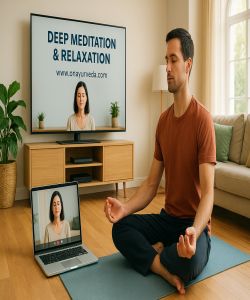
1. Overview of Deep Meditation & Relaxation
Deep meditation and relaxation constitute a rigorous and disciplined regimen designed to fortify the mind and body against the relentless pressures of a demanding existence. This is not a passive pursuit but an active and demanding practice that requires unwavering commitment and mental fortitude. It involves a structured progression through a series of mental and somatic exercises, leading to a profound state of conscious awareness and physiological calm. The objective is to command the autonomic nervous system, not merely to placate it. Through this disciplined undertaking, one cultivates a superior level of cognitive clarity, emotional resilience, and physical resilience. It serves as a foundational discipline for individuals operating in high-stakes environments, where mental precision and a robust constitution are non-negotiable. The process is one of systematic desensitisation to internal and external stressors, culminating in an enhanced capacity for focused decision-making and sustained performance under duress. This is an investment in one's core operational capabilities, demanding consistent application and an unyielding will to master one's own internal landscape. The resultant state is one of controlled stillness, a potent resource for any individual seeking to optimise their personal and professional efficacy. This is a formidable tool for mental empowerment, not a mere diversion.
2. What are Deep Meditation & Relaxation?
Deep meditation and relaxation are not synonymous with a casual unwinding; they represent a structured, deliberate discipline aimed at achieving a profound state of mental and physiological control. Deep meditation is a formidable cognitive exercise involving the sustained, non-reactive focusing of attention on a designated anchor, such as the breath or a specific sensation. The purpose is to cultivate a level of unwavering concentration that transcends transient thoughts and emotional fluctuations. It is a rigorous training of the mind to maintain a state of lucid awareness amidst internal distractions, thereby strengthening neural pathways responsible for focus and cognitive stability. Deep relaxation, in this context, is the systematic and intentional release of all muscular and neurological tension throughout the body. This is achieved through methodical techniques that command the nervous system to shift from a state of heightened alert to a state of profound rest and recovery. The synergy of these two disciplines is paramount. The disciplined mental focus of meditation provides the requisite cognitive framework to enter the deep relaxation state, while the physical release of relaxation serves to anchor the mind, preventing it from straying. The outcome is a state of controlled composure and physical repose, a vital state for both restoration and readiness. These are not merely restorative practices; they are foundational skills for enhanced mental and physical performance.
3. Who Needs Deep Meditation & Relaxation?
- Individuals operating in high-pressure professional environments, such as senior executives, financial traders, and legal professionals, who must maintain peak cognitive performance under constant strain.
- Military personnel and first responders who require superior emotional regulation and physiological resilience to execute demanding duties without faltering.
- Elite athletes and competitors who must command their nervous systems to manage pre-competition anxiety and maintain extreme focus during critical moments.
- Academics and researchers engaged in complex, long-term intellectual work demanding sustained concentration and protection against mental fatigue.
- Individuals undergoing rehabilitation who need to manage chronic discomfort and re-establish a healthy mind-body connection with uncompromising discipline.
- Professionals in the creative industries, such as architects and designers, who require uninterrupted periods of deep focus to produce their best work.
- Anyone who seeks to enhance their stress response system, moving from a reactive state to a proactive and controlled one.
- Parents and caregivers who shoulder immense responsibilities and require a formidable mental reserve to manage daily demands without burnout.
- Strategic planners and leaders who must maintain clarity of thought to make critical decisions without succumbing to external pressures.
- Individuals recovering from severe stress or burnout who need a disciplined framework to rebuild their mental and physiological fortitude from the ground up.
- Those who find their sleep quality compromised, as this discipline provides a robust mechanism for commanding the body into a state of deep rest.
- Public speakers and presenters who need to manage performance anxiety and project an aura of unshakeable confidence and composure.
- Individuals who are committed to a continuous programme of self-improvement and personal mastery, viewing mental discipline as a core competency.
- Anyone who wishes to cultivate an unwavering sense of presence and self-awareness in all aspects of their life.
4. Origins and Evolution of Deep Meditation & Relaxation
The origins of deep meditation and relaxation are not rooted in contemporary self-help trends but are intrinsically tied to ancient civilisational disciplines and spiritual practices that have been refined over millennia. Early forms can be traced back to Vedic traditions in the Indian subcontinent, where techniques for breath control (pranayama) and focused concentration (dharana) were delineated as foundational steps towards higher states of consciousness. These were not casual pursuits but rigorous practices requiring years of dedicated training under the guidance of a master. The Buddhist tradition, particularly within the framework of Vipassanā, further systematised the practice of mindfulness and body scanning, transforming focused attention into a meticulous process of observing internal phenomena without judgement, a crucial precursor to modern somatic relaxation techniques. These methods were embedded within a holistic philosophical framework, but their core principles of attention and control were universally applicable.
As these practices disseminated across the globe, they were often adapted and formalised. In the 20th century, Western psychologists and physicians began to examine these ancient methods through a secular, clinical lens. Pioneers such as Edmund Jacobson developed Progressive Muscle Relaxation, a technique that systematically contracts and releases muscle groups to induce a state of profound physical calm. This marked a pivotal shift, divorcing the relaxation component from its spiritual origins and reframing it as a quantifiable, physiological skill. Similarly, Autogenic Training, developed by Johannes Heinrich Schultz, repurposed self-suggestion and bodily awareness into a structured methodology for regulating the autonomic nervous system. This evolution represents a crucial transition from esoteric knowledge to a demonstrable, practical discipline.
In the present era, the evolution continues, with these formidable techniques now being codified into standardised, secular training programmes. The rise of neuroscience has provided empirical validation for their efficacy, demonstrating measurable changes in brain activity and physiological markers of stress. This has cemented their status as essential tools for mental fortitude and resilience, moving them from the periphery of alternative practices to the core of a professional's self-development arsenal. The discipline has evolved from a quest for spiritual enlightenment to a non-negotiable imperative for peak human performance, its historical depth providing an unshakeable foundation for its modern, assertive application.
5. Types of Deep Meditation & Relaxation
- Progressive Muscle Relaxation: This technique demands the practitioner to systematically tense and then release specific muscle groups throughout the body. The objective is to command a state of deep physical relaxation by actively contrasting tension with release, thereby heightening awareness of bodily sensations and training the body to recognise and dispel muscular rigidity on demand.
- Autogenic Training: A formidable method of self-suggestion, where the practitioner mentally repeats phrases that induce a sensation of warmth and heaviness in different parts of the body. This is a disciplined process aimed at commanding the autonomic nervous system to produce a state of deep calm, effectively acting as an assertive self-regulation protocol.
- Body Scan Meditation: This is a focused-attention exercise that requires the practitioner to systematically move their attention through every part of the body, observing sensations without reaction or judgement. It is a meticulous practice for cultivating a high degree of somatic awareness, serving as a critical tool for identifying and releasing subtle physical tension.
- Focused Breathwork (Pranayama): This involves controlled, deliberate manipulation of the breath to influence physiological and mental states. Techniques such as box breathing or deep diaphragmatic breathing are employed to regulate the heart rate and calm the nervous system, establishing the breath as a primary anchor for the mind. It is a direct command over one's internal rhythm.
- Guided Visualisation: A disciplined process where a practitioner is guided to mentally construct a specific scene or scenario. This is not passive daydreaming; it is a controlled exercise in directed imagination, designed to engage the mind in a productive, calm state and prevent it from fixating on distressing thoughts. It requires active participation and mental acuity.
- Mindfulness Meditation: While often misunderstood as a passive activity, true mindfulness requires the practitioner to maintain a state of open, non-judgemental awareness of the present moment. This includes observing thoughts, sensations, and emotions as they arise, without engaging with or reacting to them. It is a formidable training in emotional detachment and cognitive stability.
- Transcendental Meditation: A disciplined method involving the silent repetition of a specific sound or mantra. This technique is designed to settle the mind into a state of "restful alertness," allowing the practitioner to access a profound level of consciousness while maintaining full awareness. It is a precise and rigorous cognitive exercise.
6. Benefits of Deep Meditation & Relaxation
- Enhanced Cognitive Processing: The discipline cultivates superior focus and sustained attention, thereby improving the capacity for complex problem-solving and strategic thinking under pressure.
- Optimised Emotional Regulation: It provides a robust mechanism for observing and processing emotional states without becoming overwhelmed, thereby fostering a state of unflappable composure.
- Strengthened Neural Pathways: Consistent practice leads to demonstrable neuroplastic changes, reinforcing brain regions associated with executive function and self-control.
- Superior Stress Resilience: It systematically recalibrates the physiological response to stress, mitigating the corrosive effects of cortisol and adrenaline and enabling a faster return to baseline.
- Improved Physiological Health: The practice demonstrably lowers blood pressure, stabilises heart rate, and enhances immune function, thereby reinforcing the body's core systems against depletion.
- Accelerated Physical Recovery: By inducing a state of profound relaxation, it accelerates the body's natural restorative processes, aiding in muscle repair and reducing systemic inflammation.
- Increased Clarity and Presence: It sharpens one's perception of the present moment, eliminating mental clutter and enabling decisive action based on a clear assessment of reality.
- Fortified Self-Discipline: The demanding nature of the practice builds mental endurance and the requisite will to follow through on commitments, both personal and professional.
- Resolution of Sleep Deficits: It provides the user with an effective, non-pharmaceutical tool to command the body and mind into a state conducive to deep, restorative sleep.
- Augmented Creativity and Insight: By quieting the incessant internal monologue, the practice allows for the emergence of novel ideas and intuitive breakthroughs.
- Bolstered Mental Endurance: It trains the mind to resist fatigue and maintain a high level of performance for extended periods, a critical asset in any demanding pursuit.
- Reduction of Unnecessary Tension: The discipline teaches the body and mind to release chronic, debilitating tension, leading to a more efficient and less taxing physical state.
- Increased Sense of Control: The practitioner gains a formidable sense of command over their own internal state, fostering confidence and self-reliance in all circumstances.
7. Core Principles and Practices of Deep Meditation & Relaxation
- Unwavering Consistency: The discipline mandates daily, non-negotiable practice. Sporadic effort yields negligible returns. It is through relentless repetition that neural and physiological pathways are rewired.
- Disciplined Attention: The cornerstone is the ability to direct and maintain focus on a designated object—be it the breath, a sensation, or a mantra—without faltering. This requires a formidable will to resist distraction.
- Non-Reactive Observation: The practitioner must observe all internal phenomena—thoughts, emotions, bodily sensations—as transient events without attachment or resistance. This cultivates a state of emotional detachment and unflappability.
- Somatic Awareness: A core practice involves systematically scanning the body to identify and release pockets of tension. This is a deliberate command, not a passive observation, aimed at achieving total physical repose.
- Commanded Breath Control: The breath is leveraged as a primary tool for regulating the nervous system. The practitioner learns to use specific breathing techniques to deliberately influence heart rate, mental state, and physiological response.
- Establishment of a Dedicated Space: The practice requires a designated environment free from external interruption. This physical boundary reinforces the mental discipline and commitment required for the session.
- Reverence for the Present Moment: The discipline demands a full and total immersion in the present, eliminating all rumination on the past or anxieties about the future. The only reality is the here and now.
- Rejection of Passivity: This is not about 'clearing the mind' but about actively training it. Every session is a rigorous workout for the mind and body, requiring constant application of will and focus.
- Integration into Daily Function: The ultimate objective is to carry the state of disciplined calm cultivated during practice into all aspects of one’s daily life, thereby enhancing performance in real-world scenarios.
- Austerity of Position: The practitioner maintains a posture of dignified stillness and alertness, whether seated or reclining, reflecting the mental state being cultivated.
8. Online Deep Meditation & Relaxation
- Uninterrupted Access to Expertise: The online format grants practitioners immediate access to globally recognised instructors and structured programmes, eliminating geographical limitations and the need for physical travel. This ensures continuity and the highest calibre of instruction is always available.
- Structured Self-Paced Progression: Online platforms provide a modular, on-demand curriculum that empowers the individual to progress at a pace dictated by their own schedule and commitment. This requires immense self-discipline but allows for a highly personalised and efficient training trajectory.
- Elimination of Geographical Constraints: A demanding schedule often precludes travel to physical centres. The online environment removes this barrier, enabling committed individuals to maintain a rigorous practice from any location with a stable internet connection.
- Maintenance of Personal Discipline: Practising in a private, self-directed environment cultivates a superior level of personal accountability. There is no external pressure to perform; success is wholly dependent on one's own unwavering commitment. This builds true resilience.
- Adaptable to Demanding Lifestyles: The online format integrates seamlessly with a complex professional or personal schedule. A dedicated practitioner can execute their daily regimen without disruption, ensuring consistency remains uncompromised.
- Secure and Private Environment: The online setting allows the practitioner to cultivate their practice in a secure and private space of their choosing, free from the distractions and potential interruptions of a group setting. This fosters deeper concentration and a more potent experience.
- Immediate Access to Guided Sessions: On-demand access to guided sessions allows for the immediate mitigation of stress in a real-time scenario. A practitioner can initiate a session at a moment's notice to regain composure and mental acuity.
- Cost-Effective and Efficient: Without the overhead of physical facilities, online programmes can offer a more efficient investment for a superior, structured training experience, ensuring the focus remains on the discipline itself, not logistics.
9. Deep Meditation & Relaxation Techniques
- Establish a Command Posture: Begin by assuming a seated or reclined position with an upright and dignified posture. Ensure the spine is straight and the body is still but not rigid. This physical stance is a deliberate command to the nervous system, signalling the start of a serious exercise.
- Anchor the Attention: Select a primary anchor for your attention, typically the breath. Focus exclusively on the sensation of the breath entering and leaving the body through the nostrils or at the abdomen. Do not alter its rhythm; simply observe it with unwavering focus.
- Conduct a Body Scan: Systematically direct your attention to each part of the body, starting from the feet and moving upwards. As you focus on each region, deliberately tense the muscles for a moment, then consciously and completely release all tension, commanding it to dissolve. This is an assertive act of bodily control.
- Observe the Mental Landscape: As thoughts inevitably arise, do not engage with them. Acknowledge their presence, but do not follow them. They are transient events. Return your attention to the anchor with resolve, repeatedly and without judgement. This is a core exercise in mental discipline.
- Utilise Command Phrases: For deep relaxation, incorporate phrases of self-suggestion. Mentally repeat phrases such as "My limbs are heavy and warm" or "My breathing is calm and steady." These are not requests; they are assertive commands to your nervous system.
- Engage Diaphragmatic Respiration: Deliberately shift your breathing to your diaphragm. Inhale so that your abdomen expands, and exhale so that it contracts. This deep, controlled breathing directly stimulates the vagus nerve, initiating a state of physiological calm.
- Conclude the Session with Deliberation: Do not abruptly end the session. Gradually return your attention to the external environment. Take a few deeper breaths, acknowledge the state you have cultivated, and then, with intention, open your eyes and re-engage with your surroundings.
- Integrate the Practice: A brief period of reflection is mandatory after each session. Consider how the state of mind and body cultivated can be carried forward into the immediate tasks of the day. This reinforces the discipline’s practical application.
10. Deep Meditation & Relaxation for Adults
Deep meditation and relaxation, when structured as a disciplined programme, are indispensable for adults navigating the relentless complexities of modern professional and personal life. This is not a trivial pursuit but a foundational skill for maintaining peak performance and cognitive longevity. For adults, the practice serves as a strategic intervention against the pervasive chronic stress that erodes both physical and mental capital. It provides a robust, self-managed mechanism for regulating the autonomic nervous system, a crucial competency for anyone whose work or life demands sustained mental acuity and emotional stability. The discipline cultivates an unyielding ability to focus, to compartmentalise stressors, and to make precise decisions without succumbing to external noise or internal distraction. It is a formidable tool for fortifying one's executive function and preventing the onset of burnout. By systematically releasing deep-seated muscular tension and commanding a state of physiological calm, it also serves as a potent physical recovery protocol, enabling the body to repair and restore itself effectively after periods of intense physical or mental exertion. This is not a passive escape from reality but an active, assertive engagement with one's internal resources to better command one's external reality. The consistent application of these techniques establishes a mental and physical baseline of composure, from which one can operate with superior efficiency and a heightened sense of control. For any adult serious about optimising their performance and preserving their well-being, this discipline is a non-negotiable component of a serious personal development agenda.
11. Total Duration of Online Deep Meditation & Relaxation
The total duration of a structured online deep meditation and relaxation session is strictly demarcated as 1 hr. This precise allocation is not arbitrary; it is the minimum requisite timeframe to progress from an initial state of preparation to a profound, cultivated state of deep concentration and somatic release. The initial phase of the session is dedicated to establishing the correct posture and commanding the mind to settle. This preparatory period is essential for a successful outcome and cannot be rushed. The core of the 1 hr session is then dedicated to a sustained, uninterrupted period of disciplined focus, whether on the breath, a body scan, or a guided visualisation. This demands the full attention of the practitioner for the entire duration. The final phase involves a gradual and deliberate return to a state of alert awareness, ensuring the benefits of the session are integrated effectively rather than dissipating in an abrupt conclusion. A shorter duration would be insufficient to achieve the necessary depth of engagement and subsequent physiological reset. The 1 hr commitment is a non-negotiable requirement for anyone serious about achieving tangible results from this demanding discipline. It mandates a clear boundary for the practice, ensuring it is given the requisite time and focus to be genuinely effective. This is a rigorous training period, not a casual interlude.
12. Things to Consider with Deep Meditation & Relaxation
Before committing to a programme of deep meditation and relaxation, a practitioner must undertake a rigorous self-assessment. Firstly, one must consider the commitment required. This is not a casual hobby but a demanding discipline that mandates unwavering consistency. The efficacy of the practice is directly commensurate with the practitioner's discipline. Sporadic or half-hearted attempts will yield minimal returns. Secondly, the environment in which the practice will be conducted must be inviolable. A dedicated, quiet, and private space is not a preference but a necessity. The integrity of the session depends on the elimination of external interruptions and distractions. Thirdly, the practitioner must confront their own psychological state with candour. While this discipline is an exceptional tool for resilience, it is not a substitute for clinical psychological intervention. Individuals with severe, unmanaged mental health conditions must seek professional counsel before embarking on this journey. Fourthly, one must understand that initial attempts may be challenging. The mind will resist this enforced stillness with a torrent of thoughts and distractions. This resistance is a natural component of the process, and one must possess the fortitude to persist. The initial phases are a test of one's will. Finally, the practitioner must recognise that this is a journey of self-mastery, not instant gratification. Results manifest over time and through dedicated effort. The pursuit of this discipline requires a long-term perspective and an unyielding commitment to personal growth.
13. Effectiveness of Deep Meditation & Relaxation
The effectiveness of deep meditation and relaxation as a tool for mental and physiological fortification is unquestionably demonstrable and has been validated by extensive professional and empirical observation. It is not predicated on faith or belief but on the quantifiable recalibration of core biological systems. The practice exerts a profound influence on the autonomic nervous system, systematically shifting its dominance from a sympathetic 'fight-or-flight' state to a parasympathetic 'rest-and-digest' state. This is a deliberate and commanded process that, over time, mitigates the corrosive impact of chronic stress on the body and mind. The discipline demonstrably reduces heart rate, lowers blood pressure, and decreases the systemic production of cortisol, the primary stress hormone. On a neurological level, consistent practice strengthens the prefrontal cortex, the brain's executive control centre, while reducing the hyperactivity of the amygdala, the brain's alarm centre. This results in a superior capacity for rational thought and a reduced susceptibility to emotional reactivity, even in high-stakes scenarios. The effectiveness is measured in tangible outcomes: enhanced cognitive clarity, superior emotional regulation, and an accelerated physiological recovery from exertion. This is a foundational discipline for cultivating a state of peak performance, providing a practitioner with the immutable mental and physical resources required to operate at their absolute best. The results are not hypothetical; they are a direct consequence of disciplined application.
14. Preferred Cautions During Deep Meditation & Relaxation
While engaging in the rigorous discipline of deep meditation and relaxation, a practitioner must observe several key cautions to ensure the integrity of the process and their own well-being. It is imperative that this practice is not viewed as a replacement for conventional medical or psychological treatment. For individuals with pre-existing or severe mental health conditions, such as acute anxiety disorders, psychosis, or significant trauma, it is a non-negotiable requirement to consult with a qualified medical professional before commencing this demanding regimen. The intense inward focus can be destabilising for an untrained mind in a compromised state. Furthermore, a practitioner must strictly avoid multitasking or allowing any form of external stimuli to compromise the session. The use of a mobile telephone, checking notifications, or engaging in any other activity during the dedicated session is strictly prohibited and will render the practice entirely ineffective. The integrity of the discipline depends on undivided attention. One must also exercise extreme caution to avoid over-exertion or forcing a state of relaxation. This is a process of disciplined surrender, not aggressive struggle. Pushing too hard can lead to frustration and tension, which is counterproductive to the objective. Finally, it is crucial to remain vigilant for any physical discomfort or pain. While some initial stiffness may be present, persistent or sharp pain should not be ignored. The session should be terminated or adjusted accordingly. This is a robust discipline, but it demands both commitment and a judicious awareness of one's own physical and psychological boundaries.
15. Deep Meditation & Relaxation Course Outline
Module 1: Foundations of Mental Fortitude
- Introduction to the Discipline: An uncompromising overview of the demanding nature of the practice, establishing clear expectations for commitment and consistency.
- Commanding the Breath: Foundational techniques of diaphragmatic and controlled breathing to establish the breath as a primary anchor for the mind.
- Establishing the Sanctuary: The protocol for selecting and preparing a dedicated, inviolable space for practice.
- The Art of Non-Reactive Observation: Initial exercises in observing thoughts and sensations without engagement, a critical skill for mental detachment.
- Posture and Stance: The physical fundamentals of a stable and alert posture for extended periods of stillness.
Module 2: Advanced Somatic and Cognitive Techniques
- Systematic Body Scan Protocol: A detailed, step-by-step guide to conducting a full-body scan to identify and command the release of tension.
- Autogenic Training Masterclass: The application of self-suggestion phrases to induce a state of profound physiological calm.
- Focused Visualisation: A disciplined practice of mentally constructing and maintaining a calm scene to direct the mind's focus.
- Navigating Mental Resistance: Strategies for confronting and overcoming the mind's inherent resistance to stillness and focus.
Module 3: Integration and Application
- Integrating the Practice into Daily Life: Techniques for carrying the state of disciplined calm and focus into high-pressure professional and personal situations.
- Sleep Command Protocol: Leveraging the discipline to systematically prepare the body and mind for deep, restorative sleep.
- Stress Response Recalibration: Advanced methods for using the practice to manage real-time stressors and regain composure in moments of crisis.
- Sustaining the Discipline: Strategies for maintaining a lifelong commitment to the practice and preventing regression.
Module 4: Culmination and Mastery
- The Unflappable State: Deepening the practice to cultivate a permanent state of composure and mental clarity.
- Review and Final Protocol: A comprehensive review of all techniques and the establishment of a personalised lifelong practice regimen.
16. Detailed Objectives with Timeline of Deep Meditation & Relaxation
- Initial Phase (Weeks 1-4):
- Objective: Establish a non-negotiable daily practice routine of 1 hr.
- Objective: Master the foundational breathing techniques to reliably anchor attention.
- Objective: Successfully conduct an initial full-body scan to identify primary areas of tension.
- Objective: Recognise and return from mental distractions within a disciplined timeframe, a foundational test of will.
- Intermediate Phase (Weeks 5-8):
- Objective: Progressively extend the period of uninterrupted focus to 30 minutes without significant mental wandering.
- Objective: Begin to utilise Autogenic Training phrases to induce a state of physiological heaviness and warmth.
- Objective: Develop the ability to observe challenging thoughts and emotions without reacting or engaging with them.
- Objective: Note a measurable reduction in general feelings of physical and mental tension.
- Advanced Phase (Weeks 9-12):
- Objective: Achieve a state of deep, conscious relaxation within the first 15 minutes of the session.
- Objective: Seamlessly transition between different techniques, such as breath focus and body scanning, within a single session.
- Objective: Begin to integrate the state of calm into demanding daily tasks, utilising the breath as a real-time anchor.
- Objective: Observe a significant improvement in sleep quality and the time taken to fall asleep.
- Integration Phase (Weeks 13-16):
- Objective: Successfully deploy the techniques in a moment of real-time stress or anxiety to regain composure.
- Objective: Cultivate a continuous, background state of somatic awareness, identifying and releasing tension throughout the day.
- Objective: Report a demonstrable improvement in cognitive clarity, focus, and decision-making capacity under pressure.
- Objective: Establish the practice as an immutable part of one's daily routine, solidifying a lifelong commitment to mental mastery.
17. Requirements for Taking Online Deep Meditation & Relaxation
- An Unwavering Commitment: This is the paramount requirement. The discipline demands a resolute will to commit to daily practice without exception.
- A Reliable Internet Connection: A stable and high-speed internet connection is mandatory to ensure uninterrupted access to guided sessions and instructional content.
- A Dedicated, Private Space: The practitioner must designate a physical location that is entirely free from interruptions, noise, and distractions for the entire duration of each session. This space must be an inviolable sanctuary for the practice.
- A Suitable Device: A computer, tablet, or smartphone with a reliable audio output is required to access the online platform and listen to guided instructions with absolute clarity.
- A Chair or Mat: A sturdy chair with back support or a comfortable mat on the floor is necessary to maintain a disciplined and comfortable posture for the duration of the session.
- Quality Audio Equipment: A pair of high-quality headphones or earbuds is strongly recommended to eliminate external noise and ensure the clarity of the guided instruction is paramount.
- Sufficient Time: The practitioner must allocate a non-negotiable 1 hr block of time each day, free from other commitments or demands, to dedicate to the discipline.
- Physical and Mental Readiness: A baseline level of physical and mental stability is required. This is a demanding discipline, not a therapeutic intervention for a compromised state.
- No Distractions: All other electronic devices must be deactivated or removed from the practice space to eliminate any potential for interruption. The environment must be austere.
18. Things to Keep in Mind Before Starting Online Deep Meditation & Relaxation
Before embarking on an online programme for deep meditation and relaxation, it is imperative to confront several critical realities. Firstly, this is not a shortcut to a tranquil existence. It is a demanding, rigorous discipline that will test your mental fortitude. The initial phases are often challenging, as the mind will rebel against the enforced stillness with a torrent of incessant thoughts. This resistance is a natural component of the training; it is a test of your will to persist. One must be prepared to confront this internal friction with unyielding resolve. Secondly, the online format demands a superior level of personal accountability. There is no instructor present to ensure your compliance or hold you to task. Success is wholly dependent on your self-discipline and the integrity with which you approach each session. You must be your own commanding officer. Thirdly, the practice is not a passive activity but an active exercise in conscious control. You are commanding your attention and your physiological state, not merely letting go. This requires constant, deliberate effort. Fourthly, this is not a substitute for clinical psychological intervention. If one is dealing with a severe or unmanaged mental health condition, it is a non-negotiable requirement to seek professional medical advice before commencing. This discipline is a tool for fortification, not a cure for a compromised state. Finally, the returns are directly proportional to the investment. Consistent, daily practice will yield profound benefits in resilience and performance. Sporadic, half-hearted attempts will produce nothing of consequence. Be prepared to commit fully or do not commit at all.
19. Qualifications Required to Perform Deep Meditation & Relaxation
The capacity to perform and instruct in the discipline of deep meditation and relaxation is not a matter of casual interest but requires a formidable combination of formal qualifications and extensive personal mastery. Firstly, an individual must possess a robust educational background in a relevant field, such as psychology, neuroscience, or a related physiological science. This provides the requisite theoretical framework to understand the neurological and somatic underpinnings of the practice. Mere anecdotal knowledge is insufficient. Secondly, and most critically, the individual must have undertaken an extensive and rigorous personal practice over a protracted period, often spanning several years. This is not a discipline that can be taught from a textbook alone; it must be embodied through direct, lived experience. A prospective instructor must have personally navigated the challenges of a wandering mind, overcome the resistance to stillness, and cultivated the state of disciplined calm in their own being. This personal command is non-negotiable.
Furthermore, a qualified practitioner must hold:
- Formal Certification: A certification from a recognised and accredited institution that provides structured training in meditation instruction and relaxation techniques. This ensures adherence to a standardised and professional curriculum.
- Demonstrable Experience: A documented history of successfully guiding other individuals through the practice, with testimonials and verifiable results. This proves a capacity to transmit the discipline effectively.
- Anatomical and Physiological Knowledge: A deep understanding of human anatomy and physiology, particularly the autonomic nervous system, is imperative to guide participants safely and effectively. This mitigates risk and enhances the efficacy of somatic techniques.
Ultimately, the most essential qualification is the possession of an unshakeable personal composure and a commanding presence that inspires confidence and trust in the practitioner's ability to guide others through a demanding regimen. The performer of this discipline must be a living embodiment of the principles they profess.
20. Online Vs Offline/Onsite Deep Meditation & Relaxation
Online Deep Meditation & Relaxation The online format for this discipline is defined by its austere independence and structured autonomy. It is a platform that demands a superior level of self-discipline from the practitioner. The primary advantage is the elimination of geographical and logistical constraints, granting uninterrupted access to world-class instruction from any designated location. There is no reliance on a physical centre's operating hours or proximity; the programme is available on demand, demanding the practitioner to take full ownership of their training schedule. The environment is entirely self-managed, requiring the individual to establish and protect their own private sanctuary, free from external influence. This cultivates a more robust sense of personal accountability. The experience is individualised, allowing for highly focused, private sessions that can be tailored to the practitioner's pace and personal needs without the potential for comparison or distraction inherent in a group setting. It is a formidable programme for those who seek to build a foundation of self-reliance and mental resilience, where success is a direct function of one's own disciplined effort, unassisted by the physical presence of others.
Offline/Onsite Deep Meditation & Relaxation Offline or onsite practice is defined by its structured environment and the tangible presence of a commanding instructor. The experience is anchored to a specific location and a predetermined schedule, providing an external framework that can be beneficial for novices who require a measure of supervision. The physical presence of a qualified instructor allows for immediate and direct guidance, correcting posture and technique in real time. This can be crucial for establishing proper form from the outset. Furthermore, a group setting can provide a powerful, shared energetic environment, fostering a sense of collective discipline and commitment that can reinforce individual practice. The act of travelling to a dedicated centre itself can serve as a powerful mental cue, delineating the practice as a serious commitment outside of one's daily routine. The drawbacks are the logistical demands of travel, the fixed scheduling, and the potential for interruptions or distractions from other participants. The onsite format is a formidable entry point for those who require an external structure to initiate and maintain a disciplined programme.
21. FAQs About Online Deep Meditation & Relaxation
Question 1. Is this programme suitable for a complete novice with no prior experience? Answer: This programme is designed for individuals with a steadfast commitment and a willingness to learn. It is not predicated on prior experience but on an unyielding discipline. The foundational modules are structured to build from a novice level, but they require a serious mindset from the outset.
Question 2. How can I ensure I will not be disturbed during a session? Answer: You must establish a non-negotiable protocol for your dedicated practice space. This includes turning off all electronic notifications, informing any co-habitants of your strict boundary, and securing the room to prevent all interruptions for the duration of the session.
Question 3. What if my mind continues to race with thoughts during the practice? Answer: The mind will inevitably produce thoughts. The discipline is not to eliminate them but to observe them without engagement and return your attention to your anchor with resolve. This is the core exercise and a measure of your mental fortitude.
Question 4. Can this discipline be used as a substitute for medication or therapy? Answer: This discipline is not a substitute for professional medical or psychological care. It is a formidable tool for mental fortification but should be viewed as a complementary practice and not a replacement for clinical intervention.
Question 5. How long will it take before I see tangible results? Answer: Results are directly commensurate with the consistency of your practice. Measurable changes in your state of mind and body will manifest over a period of weeks, provided you adhere to the daily regimen without exception.
Question 6. What is the optimal posture for the practice? Answer: A dignified, upright posture, either seated on a chair or a cushion, is recommended. The spine should be straight, not rigid, to allow for focused attention and prevent physical discomfort.
Question 7. Are there any physical contraindications to the practice? Answer: Individuals with chronic physical pain or mobility issues should consult with a medical professional. The discipline requires the ability to remain still for an extended period.
Question 8. How do I maintain discipline when I do not feel motivated? Answer: The practice is not dependent on motivation but on discipline. You must adhere to the regimen regardless of your state of mind. Motivation is transient; discipline is a foundational habit.
Question 9. Is it necessary to wear specific attire for the sessions? Answer: Comfortable, non-restrictive clothing is advised to eliminate any physical distractions. The focus must be entirely on the practice itself, not on your physical state.
Question 10. Can I practice with background music or sounds? Answer: It is strictly recommended to practice in silence to eliminate all external distractions. The purpose is to command your attention, and music can serve as a form of distraction.
Question 11. What if I fall asleep during a session? Answer: Falling asleep indicates a lack of mental alertness. This should be addressed by adjusting your posture or the time of day you practice to ensure a state of restful alertness, not repose.
Question 12. Can this be done in a public space, such as on public transport? Answer: The integrity of the discipline requires an inviolable, private space. Public environments are rife with distractions and are unsuitable for a serious practice session.
Question 13. Is there a specific time of day that is best for practice? Answer: The most effective time is when you can ensure a full 1 hr of uninterrupted solitude. Consistency of timing reinforces the habit.
Question 14. What if I miss a day of practice? Answer: Missing a day undermines the consistency required for neuroplastic change. You must recommit with renewed resolve the following day and strive to not let it happen again.
Question 15. Is a guided session better than a self-guided one? Answer: For the initial and intermediate phases, a guided session is imperative to establish the correct technique and maintain focus. A self-guided practice is for advanced practitioners.
Question 16. How do I measure my progress in this discipline? Answer: Progress is measured in your enhanced capacity for focus, your unflappable composure in stressful situations, and a measurable reduction in your physiological stress response.
22. Conclusion About Deep Meditation & Relaxation
In conclusion, deep meditation and relaxation do not represent a benign hobby but a formidable and essential discipline for any individual who seeks to fortify their mental and physical constitution. This is a robust training protocol that cultivates a state of controlled composure and uncompromising cognitive clarity. Through disciplined practice, one ceases to be a passive observer of their own internal state and becomes its commanding officer. The benefits are not abstract; they are tangibly manifested in a superior capacity to perform under pressure, a recalibrated stress response, and a fortified sense of self-control. This is a mandatory component of a serious self-development agenda, a non-negotiable investment in one's core operational capabilities. To dismiss it as a trivial pursuit is to surrender a vital strategic advantage. The discipline demands unwavering commitment, consistent application, and a resolute will to master one's own internal landscape. Those who embrace this challenge will discover an inexhaustible reservoir of resilience and focus, a foundational asset for peak performance in any high-stakes environment. This is the definitive path to achieving an unflappable state of mind and body, a necessary condition for excellence in a demanding world.