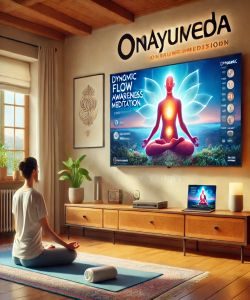
1. Overview of Dynamic Flow Awareness Meditation
Dynamic Flow Awareness Meditation represents a sophisticated and exacting mental discipline, engineered specifically for the cultivation of high-performance consciousness. It is fundamentally distinct from conventional meditation practices that often prioritise tranquility or the cessation of thought. Instead, this methodology is built upon the rigorous and continuous observation of the mind’s operational process, focusing on the perpetual flux of sensory, emotional, and cognitive phenomena. The core objective is not to achieve a static state of peace, but to develop a robust, dynamic equilibrium within the ceaseless stream of experience. Practitioners are trained to perceive their internal and external worlds not as a series of discrete events, but as a unified, seamless, and constantly transforming flow. This requires the development of a panoramic and non-reactive awareness, a capacity to witness the arising and passing of all mental content without being captured or controlled by it. It is, in essence, a form of advanced mental conditioning, designed to forge a mind that is both exceptionally agile and profoundly stable. This discipline is not for the passive seeker of relaxation; it is a demanding path for individuals committed to the formidable task of mastering their own perceptual and cognitive faculties. Through its systematic techniques, it aims to deconstruct ingrained, reactive patterns and replace them with a mode of being characterised by unshakeable composure, heightened situational awareness, and the ability to enter states of optimal performance at will. It is the application of unwavering mental discipline to the art of perception itself, transforming the mind from a chaotic internal environment into a precision instrument of awareness and action. The ultimate aim is operational excellence in any field of endeavour, achieved through the profound and direct mastery of one's own inner world.
2. What are Dynamic Flow Awareness Meditation?
Dynamic Flow Awareness Meditation is not a singular technique but a comprehensive system of mental training designed to re-engineer the practitioner’s relationship with their own consciousness. At its core, it is a practice of meta-awareness—the ability to observe the processes of the mind as they unfold in real time. Unlike static mindfulness which may focus on a single anchor like the breath, this discipline embraces the entirety of the experiential field, treating every thought, sensation, and emotion as a transient event within a continuous, flowing stream. Its constituent elements are precise and systematically cultivated.
Dynamic Observation: This is the foundational practice. It involves directing attention not to the content of a thought or feeling, but to its dynamic properties: its arising, its intensity, its duration, and its eventual dissolution. The focus is on the process of consciousness, not its products. By observing this constant flux, the practitioner learns to de-identify from transient mental states.
Flow State Cultivation: The system incorporates specific techniques aimed at deliberately inducing what is known as a ‘flow state’. This is a state of complete absorption in an activity, where action and awareness merge, and performance becomes effortless and optimal. The training makes this state accessible by design, rather than by chance.
Sensory Integration: Practitioners are trained to move beyond a narrow, focal attention and to cultivate a panoramic awareness that integrates all sensory inputs—auditory, visual, somatic, and cognitive—into a single, unified field of experience. This holistic perception enhances situational awareness and reduces the cognitive load of processing competing stimuli.
Non-Reactive Framing: A core tenet is the development of non-reactivity. This is the capacity to experience potent stimuli, whether internal emotional turmoil or external pressure, without an immediate, habitual, and often counter-productive reaction. It creates a critical space between stimulus and response, allowing for more considered and strategic action.
3. Who Needs Dynamic Flow Awareness Meditation?
High-Stakes Decision-Makers and Leaders. Executives, strategists, and commanders operating in volatile, high-consequence environments require the unshakeable mental clarity and emotional regulation this discipline provides. It enables them to process complex, conflicting information under extreme pressure, maintain strategic oversight, and make superior judgments without being swayed by cognitive biases or emotional reactivity.
Elite Athletes and High-Performance Artists. Performers at the pinnacle of their fields, including surgeons, concert musicians, and elite athletes, require a seamless integration of mind and body. This practice trains the capacity to enter and sustain the ‘flow state’ or ‘the zone’, where action becomes fluid, intuitive, and perfectly attuned to the present moment, leading to peak performance.
Specialist Tactical and Emergency Operators. First responders, military special forces, pilots, and intelligence analysts face environments where a fraction of a second of lapsed attention can have catastrophic consequences. This training builds superior situational awareness, accelerates decision-making cycles, and inoculates the nervous system against the debilitating effects of acute stress.
Creative and Intellectual Professionals. Innovators, scientists, engineers, and writers often contend with mental blocks, information overload, and the need for sustained deep focus. This discipline systematically dismantles rigid thinking patterns, fosters cognitive agility, and creates the mental conditions necessary for profound insight and breakthrough creativity.
Individuals in High-Stimulus or High-Stress Professions. Professionals such as trial lawyers, air traffic controllers, and traders who are constantly bombarded with intense stimuli need a robust framework for managing cognitive load. This practice prevents burnout by training the mind to process information as a neutral flow of data, rather than an overwhelming assault.
Practitioners of Advanced Contemplative Disciplines. For individuals who have established a foundation in basic mindfulness and seek a more challenging and dynamic form of mental training, this system offers a logical and powerful next step. It moves beyond simple presence into the sophisticated territory of process-awareness and cognitive mastery.
4. Origins and Evolution of Dynamic Flow Awareness Meditation
The conceptual roots of Dynamic Flow Awareness Meditation can be traced to certain esoteric streams within Eastern contemplative traditions, particularly those schools that diverged from mainstream doctrine to explore the fluid, process-based nature of reality. Unlike more orthodox systems focused on achieving states of absolute stillness or emptiness, these lesser-known monastic orders and hermetic philosophical circles posited that true mastery lay not in stopping the flow of the mind, but in learning to navigate it with supreme skill and unwavering awareness. Their practices, often transmitted orally and shrouded in abstruse language, focused on moment-to-moment phenomenological tracking and the deconstruction of the illusion of a solid, enduring self.
The evolution into its modern, secular form occurred as a synthesis with Western psychological and philosophical thought in the twentieth century. Key concepts from Gestalt psychology, which emphasised the holistic nature of perception, and phenomenology, which focused on the structures of experience, provided a new, non-metaphysical language to describe these ancient practices. This critical juncture saw the discipline begin its migration from the monastery to the laboratory and the seminar room, stripped of its spiritual and cultural baggage and re-examined through the lens of cognitive science. It was no longer about enlightenment in a religious sense, but about the optimisation of human consciousness.
The final and most significant stage of its evolution has been its recent codification into a structured, replicable training system for high-performance contexts. Driven by a demand from the corporate, military, and elite athletic sectors for practical, results-oriented mental conditioning, the practice was systematised and refined. Ambiguous instructions were replaced with precise, operational techniques. Its objectives were clearly defined in terms of measurable improvements in cognitive agility, emotional regulation, and attentional control. This modern iteration is a pragmatic and powerful discipline, forged from ancient wisdom but sharpened on the whetstone of contemporary performance science, designed for individuals who demand tangible results in the mastery of their own minds.
5. Types of Dynamic Flow Awareness Meditation
The practice of Dynamic Flow Awareness Meditation is not monolithic; it comprises several distinct yet interconnected modalities, each designed to cultivate a specific facet of high-performance awareness.
Cognitive Transition Mapping (CTM): This is a highly analytical and advanced practice focused on the meticulous observation of the precise moments of change within the mind. The practitioner trains their attention to pinpoint the ‘seam’ between one thought ending and another beginning, or the subtle shift from one emotional state to another. The objective is to gain a direct, experiential understanding of the discontinuous, process-based nature of cognition, thereby dismantling the powerful illusion of a continuous, solid stream of thought and a static ‘self’.
Sensory Stream Integration (SSI): This type moves beyond a single point of focus to embrace the entire sensory field. The practitioner learns to hold all incoming sensory data—auditory, visual, tactile, olfactory, and proprioceptive—in a state of open, panoramic awareness. The goal is not to focus on any one sensation, but to perceive the entire sensory landscape as a single, unified, and constantly fluctuating field. This directly enhances situational awareness and the ability to process complex environments holistically.
Kinetic Flow Synchronisation (KFS): This modality integrates the principles of the practice with deliberate, often slow, physical movement. The practitioner’s awareness is directed to the seamless, continuous flow of motion, breath, and the internal sensations of the body (proprioception). The objective is to dissolve the perceived separation between mind and body, achieving a state of unified, embodied presence where action and awareness are one. This is the direct pathway to cultivating the ‘flow state’ in physical activities.
Environmental Immersion Protocol (EIP): This is the application of the practice in real-world, high-stimulus conditions. After developing foundational skills in a controlled setting, the practitioner deliberately exposes themselves to chaotic environments—such as a crowded public space or a high-pressure workplace. The goal is to maintain a state of internal dynamic equilibrium and panoramic awareness amidst external turmoil, effectively stress-inoculating the nervous system and proving one’s mastery of the discipline under operational conditions.
6. Benefits of Dynamic Flow Awareness Meditation
Superior Attentional Control: The development of an executive-level ability to direct, sustain, and shift focus at will. Practitioners gain mastery over their attention, enabling them to remain locked on to critical tasks and filter out irrelevant distractions in even the most demanding environments.
Enhanced Cognitive Agility: A marked increase in mental flexibility. The practice systematically dismantles rigid, habitual thought patterns, fostering the ability to approach problems from multiple perspectives, adapt rapidly to new information, and generate innovative solutions.
Profound Emotional Regulation: The cultivation of a non-reactive posture towards one’s own emotional states. Practitioners learn to experience emotions fully without being controlled or overwhelmed by them, leading to unshakeable composure and clear-headedness under pressure.
Accelerated Access to Flow States: A trained, deliberate capacity to enter states of peak performance, or ‘flow’, where action and awareness merge. This results in heightened performance, increased creativity, and a sense of effortless execution in any given task.
Heightened Global Situational Awareness: An expansion of perception from a narrow, tunnel-vision focus to a wide, panoramic awareness. This allows for the simultaneous processing of multiple streams of information, leading to a more holistic understanding of complex situations and an enhanced ability to anticipate future events.
Increased Resilience to Stress and Cognitive Burnout: By framing internal and external stressors as transient data points within the flow of awareness, practitioners build robust psychological armour against the cumulative impact of chronic stress, thereby preventing cognitive fatigue and burnout.
Deconstruction of the Reactive Self: A fundamental shift in the sense of self, from a solid, fixed entity that is at the mercy of its thoughts and feelings, to a more fluid, process-based awareness that is the master of its own internal domain. This reduces ego-driven errors in judgment and action.
7. Core Principles and Practices of Dynamic Flow Awareness Meditation
The Principle of Universal Flux: The foundational axiom is that all phenomena, both internal (thoughts, emotions) and external (sights, sounds), are not static entities but are in a constant state of flux. The practice is to attune awareness directly to this dynamic, ceaseless process of change, rather than attempting to grasp at or analyse the transient content.
The Practice of Non-Preferential Observation: This is a rigorous training in applying an equanimous and impartial awareness to all arising experiences. No thought is labelled ‘good’ or ‘bad’; no sensation is sought after or rejected. All data entering the field of consciousness are treated with the same objective, dispassionate attention. This starves habitual reactivity at its root.
The Principle of Dynamic Equilibrium: The goal is not a state of inert, lifeless calm. It is the cultivation of a stable, highly alert, and responsive composure that is maintained within the flow of life’s challenges. This is the equilibrium of a top-tier athlete in motion, not the stillness of a stone. It is stability combined with readiness and agility.
The Practice of Systematic De-Identification: This involves the deliberate practice of viewing thoughts and emotions as impersonal, transient events occurring in the space of awareness, rather than as defining characteristics of ‘me’ or ‘mine’. This creates a critical buffer of psychological space, enabling objective analysis and preventing emotional hijacking.
The Principle of Holistic Field Awareness: This mandates a shift from narrow, spotlight attention to a broad, panoramic awareness. The practitioner trains to apprehend the entire perceptual field—all that is seen, heard, felt, and thought—as a single, integrated, and simultaneously occurring event. This is the basis of superior situational awareness.
The Practice of Transition Point Focus: A specific and demanding technique where attention is precisely directed to the junction points between phenomena—the gap between breaths, the moment a sound ceases, the instant a new thought arises. This practice sharpens perceptual acuity to an extraordinary degree and directly reveals the process-nature of experience.
8. Online Dynamic Flow Awareness Meditation
Enforced Methodological Purity: The online format delivers the curriculum through a structured, non-negotiable pathway. This digital framework prevents deviation from the core methodology, ensuring that every practitioner builds their skills upon a solid and correct theoretical and practical foundation, eliminating the risk of idiosyncratic misinterpretation common in less structured settings.
Global Access to Elite Instruction: Geographical location ceases to be a barrier to entry. The online modality provides professionals and dedicated individuals, regardless of their physical location, with direct access to a small, vetted cadre of qualified instructors. This democratises access to what is otherwise a highly specialised and geographically concentrated discipline.
Cultivation of Extreme Self-Discipline: The onus of engagement rests entirely with the practitioner. Without the social pressure of a physical group, the online format demands and therefore forges a higher level of intrinsic motivation and personal accountability. Success in this format is a clear indicator of the self-discipline required for mastery.
Controlled Environmental Stress-Testing: The practitioner’s own environment becomes the training ground. This unique advantage allows for the deliberate and systematic management of distractions. One can begin in a controlled, silent space and gradually introduce stimuli, providing a tailored, real-world laboratory for stress-inoculation and focus-training.
Intensified Introspective Focus: The relative anonymity and solitude of the online experience can facilitate a more profound and uninhibited form of introspection. Free from the subtle distractions of group dynamics or social comparison, the practitioner is able to engage more directly and honestly with the challenging terrain of their own mind.
On-Demand Didactic Reinforcement: All theoretical lectures, core principles, and guided instructional recordings are archived and accessible at any time. This allows the practitioner to review and reinforce complex concepts on their own schedule, ensuring a deeper and more lasting integration of the discipline’s sophisticated framework. This is crucial for a practice that relies on precise conceptual understanding.
9. Dynamic Flow Awareness Meditation Techniques
Step One: Assume the Position of Readiness. Adopt a formal, upright posture, typically seated on a cushion or a chair with a straight back. The spine must be erect but not rigid, the head balanced, and the hands resting in a stable position. This posture is not for relaxation; it is a physical expression of alertness, dignity, and unwavering intent. It is the mandatory foundation.
Step Two: Open the Aperture of Awareness. Begin by deliberately expanding your awareness to encompass the totality of the present moment’s sensory input. Actively resist the mind’s tendency to latch onto a single object. Acknowledge the simultaneous presence of all sounds, all physical sensations in the body, and the visual field (whether eyes are open or closed) as one unified, dynamic field.
Step Three: Isolate and Track a Dominant Phenomenon. Without judgment or analysis, identify the most prominent event currently in your field of awareness. This could be a persistent thought, an external noise, or a strong bodily sensation. Your task is not to engage with its story or meaning, but to lock onto it as an object of observation.
Step Four: Observe its Energetic Signature. Maintain unwavering focus on this chosen phenomenon and meticulously track its life cycle. Observe its arising, how it swells in intensity, persists for a time, and then inevitably subsides and dissolves. Note its texture and rhythm. This is the practice of observing process over content.
Step Five: Target the Transitional Moment. This is the crucial and most advanced step in the initial sequence. As the observed phenomenon fades, direct your full attentional power to the precise moment of its disappearance and the arising of the next dominant event. The objective is to witness the seamless, gapless nature of the flow of consciousness itself.
Step Six: Progress to Multi-Stream Tracking. As proficiency grows, the technique evolves. You will move from tracking single phenomena sequentially to holding multiple streams in your awareness concurrently. The goal becomes the ability to track the flow of thought, the flow of sound, and the flow of bodily sensation all at once, as parallel but interconnected currents within a single river of experience.
10. Dynamic Flow Awareness Meditation for Adults
Dynamic Flow Awareness Meditation is a discipline unequivocally architected for the cognitive and emotional architecture of a mature adult. Its inherent rigour, intellectual depth, and demand for unwavering self-regulation presuppose a level of life experience and psychological development that is simply not present in younger individuals. This is not a simplistic technique for managing transient moods; it is a profound operational system for re-engineering the very foundations of one’s perceptual world. Adults, particularly those navigating the high-stakes complexities of professional careers and significant personal responsibilities, possess the necessary context to grasp the immense practical value of such a discipline. They have confronted the limitations of reactive, habit-driven thinking and have experienced the tangible costs of emotional dysregulation. This lived experience provides the potent motivation required to undertake the arduous but transformative work of cultivating detached, panoramic awareness. The practice demands that one confronts the unvarnished reality of one’s own mental habits, a task that requires the psychological resilience and stability forged through adult life. Moreover, its premier benefits—enhanced strategic thinking, unshakeable composure under fire, and formidable resilience to burnout—are directly and immediately applicable to the core challenges that define adult existence. It is a discipline designed not for the novice in life, but for the seasoned individual who has recognised the imperative of mental sovereignty and is prepared to engage in the formidable, high-stakes work of achieving it. The practice meets the adult mind where it is, offering not comfort, but a powerful set of tools for command and control over its own intricate processes.
11. Total Duration of Online Dynamic Flow Awareness Meditation
The non-negotiable, standard duration for each formal online session of Dynamic Flow Awareness Meditation is precisely 1 hr. This specific timeframe is a cornerstone of the discipline's methodology, deliberately engineered to facilitate a genuine shift in cognitive state. A period of this length is required to push the practitioner beyond the superficial layers of mental chatter and distraction that dominate shorter sittings. The initial portion of any session is invariably a contest with the mind's habitual restlessness; only by persisting through this phase can one access the deeper states of absorbed, flowing awareness. The 1 hr mandate serves as a crucible for building mental stamina and volitional control. It is an intentional challenge, compelling the practitioner to confront and process waves of boredom, agitation, and discomfort, thereby transforming these obstacles from interruptions into objects of the meditation itself. This extended duration creates the necessary conditions for the nervous system to settle and for the practitioner to transition from the effortful, directed attention of the initial stages to the effortless, panoramic awareness that is the hallmark of the practice. Furthermore, the unwavering consistency of the 1 hr session establishes a powerful rhythm of practice, conditioning the mind and body for high performance through disciplined repetition. Any reduction of this duration is considered a fundamental compromise of the technique's integrity. The 1 hr standard is not a flexible guideline but an essential structural component, without which the profound and lasting effects of the training cannot be reliably achieved. It is the required investment of time to do the work properly.
12. Things to Consider with Dynamic Flow Awareness Meditation
An individual considering this path must first conduct a stark and honest assessment of their own capacity and intent. Dynamic Flow Awareness Meditation is an exacting and often arduous mental discipline, fundamentally distinct from any passive pursuit of relaxation or therapeutic comfort. It is an active, rigorous system of cognitive re-engineering. Prospective practitioners must possess, or be willing to cultivate, a high degree of self-discipline, mental fortitude, and a significant tolerance for the psychological discomfort that can arise when one’s foundational perceptual habits are systematically challenged and deconstructed. One must be prepared to encounter the raw, unfiltered stream of consciousness—including difficult thoughts, deeply ingrained biases, and volatile emotions—without the customary buffers of distraction or intellectualisation. This is not a practice for the intellectually incurious or the emotionally brittle. A critical consideration is the absolute necessity of guidance from a legitimately qualified instructor, particularly in the initial phases. Misunderstanding or misapplying the core principles, such as non-reactivity, can lead to counterproductive states like dissociation or emotional suppression, which are antithetical to the goal of integrated awareness. Finally, it must be understood that the profound benefits of this practice are not delivered swiftly or easily. They are earned through consistent, diligent, and often challenging effort over a significant period. Those seeking a simple technique for immediate stress relief will be disappointed; this is a demanding, long-term commitment for individuals who are serious about the formidable work of achieving genuine mastery over their own minds.
13. Effectiveness of Dynamic Flow Awareness Meditation
The effectiveness of Dynamic Flow Awareness Meditation is not a matter of subjective opinion or vague spiritual benefit; it is measured in tangible, operational terms and is directly proportional to the rigour with which it is practised. When the discipline is engaged with the requisite seriousness and consistency, its efficacy is absolute. Its primary effect is a radical enhancement of cognitive control. Practitioners develop a demonstrably superior ability to direct and sustain their attention, to filter out distracting stimuli, and to perform complex mental tasks with greater precision and endurance. This is not mere stress reduction; it is a fundamental upgrade of the mind's executive functions. The practice is exceptionally effective at cultivating cognitive agility, enabling individuals to break free from ingrained, linear thinking and to generate novel, creative solutions to complex problems. By training the mind to observe its own processes without reactive entanglement, it builds a profound and robust emotional equilibrium, allowing the practitioner to remain calm, clear-headed, and operationally effective in situations of extreme pressure that would incapacitate an untrained individual. Furthermore, its effectiveness is evident in the cultivation of a heightened, panoramic situational awareness, a critical advantage in any competitive or high-stakes environment. The system works because it is a direct intervention at the level of core mental processing. It systematically dismantles inefficient, reactive habits and installs a new, high-performance operating system for the mind. For those willing to meet its demands, its effectiveness is not incremental; it is transformative, leading to a sustainable state of mental mastery.
14. Preferred Cautions During Dynamic Flow Awareness Meditation
It is imperative that any practitioner approaches this advanced discipline with a high degree of caution and a clear understanding of its potential psychological risks. The foremost caution is against undertaking this practice without a pre-existing and stable foundation in basic mindfulness or a similar contemplative discipline. To attempt to deconstruct the mechanics of consciousness without first having the ability to ground oneself in simple, stable present-moment awareness is to court psychological destabilisation, which can manifest as heightened anxiety, depersonalisation, or a profound and distressing sense of unreality. Secondly, a critical warning must be issued regarding the principle of ‘non-reactivity’. This must never be misinterpreted as a directive for emotional suppression or the cultivation of a cold, psychopathic detachment. The aim is to experience the full spectrum of human emotion with clarity and intelligence, free from neurotic compulsion, not to eradicate feeling itself. Misapplication can lead to affective blunting and a disconnection from one’s own humanity. Furthermore, individuals with a personal or family history of serious mental illness, especially psychotic disorders or severe trauma (PTSD), must not engage with this practice without the explicit consent and ongoing supervision of a qualified clinical psychologist or psychiatrist. The intense introspection and perceptual shifts involved can potentially exacerbate latent conditions. Finally, practitioners must remain vigilant against the trap of ‘spiritual bypassing’—using the sophisticated concepts of the practice to avoid facing and integrating unresolved psychological issues. This is a tool for sharpening awareness, not for evading life. Adherence to these cautions is a non-negotiable requirement for safe and effective practice.
15. Dynamic Flow Awareness Meditation Course Outline
Module I: Theoretical Foundations and Postural Protocol. This initial, mandatory module establishes the unshakeable bedrock of the entire discipline. It involves intensive instruction on the core principles: universal flux, non-preferential observation, and dynamic equilibrium. A significant portion is dedicated to the precise, non-negotiable physical posture of alert readiness, as improper form compromises the entire practice.
Module II: Single-Stream Phenomenological Tracking. Practitioners are rigorously trained in the fundamental technique of isolating a single, dominant stream within their awareness (e.g., auditory, somatic, or cognitive) and tracking its complete energetic lifecycle from arising to dissolution. The objective is to cultivate unwavering, non-analytical focus.
Module III: Mastery of Transitional Awareness. This pivotal module introduces the more demanding practice of directing focused attention onto the very moment of transition between distinct phenomena. This sharpens perceptual acuity to an exceptional degree and provides direct, experiential insight into the process-nature of consciousness, dismantling the illusion of solid, separate events.
Module IV: Panoramic Field Integration. Building on prior skills, this module trains the practitioner to expand their attentional field from a single stream to a global, holistic awareness. The goal is to hold the totality of sensory and cognitive input in consciousness simultaneously, as a unified, interconnected field, without privileging any single component.
Module V: Applied Practice in High-Stimulus Environments. This advanced module moves the practice from the controlled setting into the chaos of the real world. Practitioners learn to maintain their state of dynamic equilibrium amidst deliberately introduced or naturally occurring high-stress, high-distraction environments, thereby stress-inoculating the nervous system.
Module VI: Kinetic Synchronisation and Embodied Flow. The culminating module integrates the mental discipline with physical form. Awareness, breath, and deliberate movement are synchronised into a seamless unity. This is the direct cultivation of the flow state, where the distinction between observer and actor dissolves into effortless, high-performance action.
16. Detailed Objectives with Timeline of Dynamic Flow Awareness Meditation
Months 1-2: Foundational Discipline and Conceptual Mastery. The primary objective is to establish an inviolable and consistent daily practice routine. By the end of this period, the practitioner must demonstrate mastery of the correct physical posture and be able to articulate the core theoretical principles with precision. The goal is the successful installation of the habit and framework of the discipline.
Months 3-4: Proficiency in Single-Stream Tracking and De-Identification. The objective is to achieve the ability to sustain non-judgmental, focused awareness on a single internal or external phenomenon for extended periods. The practitioner will be able to observe the flow of thoughts as objective events, demonstrating a clear reduction in automatic, reactive identification with their content.
Months 5-6: Competence in Transitional Awareness. The central objective for this phase is the consistent ability to perceive and maintain focus on the transitional spaces between thoughts, sounds, and sensations. Achieving this marks a critical developmental milestone, indicating a fundamental shift in perception from static content to dynamic process.
Months 7-8: Attainment of Integrated Field Awareness. The practitioner’s objective is to move from serial attention to parallel, holistic awareness. They will be able to maintain a broad, open, and panoramic perceptual field, holding multiple data streams (somatic, auditory, cognitive) in consciousness simultaneously without becoming overwhelmed or fragmented.
Months 9-10: Demonstration of Environmental Resilience. The objective is the successful application of the practice in high-stimulus, real-world environments. The practitioner must demonstrate the ability to maintain a state of calm, dynamic equilibrium and focused awareness when faced with significant external pressures and distractions, proving the robustness of their training.
Months 11-12: Emergence of Spontaneous Flow and Integration. The culminating objective for the first year is the transition of the practice from a formal, timed event into a continuous, default mode of being. The practitioner will report the spontaneous emergence of flow states in their professional and personal lives, indicating the deep integration of the discipline.
17. Requirements for Taking Online Dynamic Flow Awareness Meditation
Uncompromising Technical Infrastructure: A high-speed, stable, and wired internet connection is mandatory. Wireless connections are unreliable and unacceptable. Any failure of the practitioner's technology is their sole responsibility and will not be grounds for remediation.
Professional-Grade Audio-Visual Equipment: A high-definition webcam and a clear, high-quality microphone are required. The instructor must be able to observe subtle postural cues and hear verbal feedback with absolute clarity. Substandard equipment is not permissible.
A Sanctified and Inviolable Practice Space: The practitioner must designate and maintain a physical space exclusively for their training. This area must be impeccably clean, free of all clutter, and guaranteed to be private and silent for the entire duration of every session.
Absolute Punctuality and Unwavering Attendance: The online sessions will commence at the exact scheduled time. Late entry is disruptive and prohibited. Consistent attendance is the bare minimum expectation; the cumulative nature of the course is unforgiving of absenteeism.
Demonstrable Psychological Maturity and Self-Reliance: All participants must possess a high degree of emotional stability and self-discipline. The online format necessitates an individual who can manage their own internal state and engage with challenging material without needing constant external validation or support.
Implicit Adherence to Digital Etiquette: This includes maintaining the mandated posture on camera at all times, ensuring the microphone is muted unless permission to speak is granted, and refraining from any and all digital multitasking. The session is a formal training ground, not a passive webinar.
Pre-existing Foundational Competence: While not always mandatory, a verifiable background in basic mindfulness or a related contemplative discipline is strongly preferred. This ensures the practitioner is not starting from a position of complete ignorance regarding introspective practice.
18. Things to Keep in Mind Before Starting Online Dynamic Flow Awareness Meditation
Before embarking upon an online course in this demanding discipline, a candidate must engage in a frank and rigorous self-appraisal. It is imperative to understand that the digital format, far from diluting the practice’s intensity, actually amplifies the need for absolute personal accountability and unwavering internal resolve. You must be prepared to architect and defend a sacrosanct container for your practice within your own environment, immunising it from the incessant demands of professional and domestic life. This requires a level of self-regulation far greater than that needed in a dedicated retreat setting. You must disabuse yourself of the notion that the screen acts as a comfortable buffer; you will be confronting the raw, unfiltered processes of your own mind in solitude, a prospect that can be intensely challenging. Evaluate your capacity to absorb and integrate complex, abstract philosophical and psychological principles through a remote interface, which demands proactive engagement rather than passive reception. Critically, you must interrogate your motivations. If you are seeking a simple palliative for stress or a casual self-improvement hobby, you are profoundly mistaken in your choice. This is a formidable system for individuals who have already decided that mental mastery is a non-negotiable personal objective. If your commitment is conditional, your focus divided, or your intention weak, you will inevitably fail to meet the standards of the practice and your investment of time and effort will be wasted. Approach this decision with the seriousness it deserves.
19. Qualifications Required to Perform Dynamic Flow Awareness Meditation
The authority to instruct others in the formidable discipline of Dynamic Flow Awareness Meditation is not a self-appointed title but a credential earned through years of rigorous training, deep personal practice, and formal validation. An individual qualified to perform this role as an instructor must embody a specific and non-negotiable set of attributes that guarantee both the efficacy and safety of the transmission. Anything less is a dangerous dilution of the practice. The essential qualifications include:
Extensive and Verifiable Personal Mastery: The instructor must have a deeply integrated personal practice spanning many years, far beyond mere intellectual understanding. They must have navigated the full spectrum of the discipline’s challenges and subtleties under the guidance of their own senior teacher. This embodied wisdom is the primary source of their authority.
Formal Certification from an Authentic Lineage: Legitimate instructors will hold a formal certification from a recognised and established school or accrediting body for this specific practice. This credential signifies that they have completed a structured, multi-year teacher training program, have been assessed on their pedagogical skill, and are authorised to represent the discipline accurately.
Advanced Knowledge of Ancillary Fields: A comprehensive, academic-level understanding of relevant areas of cognitive science, neuropsychology, and comparative contemplative philosophy is required. The instructor must be able to articulate the 'why' behind the 'how', grounding the practice in a rational, evidence-informed framework.
Exceptional Pedagogical and Diagnostic Skill: The ability to communicate complex, abstract concepts with absolute precision is paramount. A qualified instructor must also possess the diagnostic acumen to identify subtle errors in a student’s practice—whether postural, attentional, or conceptual—and provide firm, corrective guidance.
An individual lacking any one of these core qualifications is categorically unfit to lead others in this demanding and potentially destabilising work.
20. Online Vs Offline/Onsite Dynamic Flow Awareness Meditation
Online
The online modality of Dynamic Flow Awareness Meditation is optimised for discipline, autonomy, and global accessibility. Its foremost advantage is the elimination of geographical barriers, granting determined individuals access to elite-level instruction that would otherwise be unavailable. This format inherently demands and cultivates a superior level of self-discipline, as the practitioner is solely responsible for creating and maintaining the requisite environment and focus, free from the external pressures of a physical cohort. This fosters a resilient and self-reliant practice. The online environment provides a unique laboratory for stress inoculation; the practitioner can learn to apply the techniques within their own, real-world setting, incrementally managing known distractions. Furthermore, the relative solitude of online training facilitates a more potent and uninhibited form of introspection, as the social dynamics of a group are removed, allowing for a direct and unmediated confrontation with one’s own mind. It is the ideal format for the mature, self-motivated individual who requires a rigorous yet flexible protocol that can be integrated into a demanding professional life. The emphasis is on internal accountability and the forging of mental fortitude in the context of one's own lived reality.
Offline/Onsite
The offline, or onsite, training modality offers an immersive, high-intensity experience characterised by direct transmission and collective focus. The principal benefit is the physical presence of a master instructor, who can offer immediate, subtle, and nuanced corrections to posture and technique that are impossible to convey with the same fidelity through a digital interface. The focused energy of a dedicated group, all engaged in the same demanding work in a shared space, creates a powerful container that can significantly amplify individual concentration and motivation. Onsite training, particularly in a retreat format, allows for a complete psychological and environmental break from the practitioner’s daily life, facilitating a depth of immersion and a freedom from distraction that is difficult to achieve at home. This format also allows for rich, spontaneous, and in-depth group dialogue that can illuminate complex aspects of the practice. It is best suited for individuals who thrive in a structured, group-oriented environment and who seek the accelerated learning that comes from concentrated, full-time immersion and the direct, unmediated presence of an authentic teacher. The emphasis is on deep absorption and the synergistic power of a focused group.
21. FAQs About Online Dynamic Flow Awareness Meditation
Question 1. Is this a form of therapy? Answer: No. This is a high-performance mental training discipline. It is not a substitute for clinical therapy and is not designed to treat mental health conditions.
Question 2. What is the primary difference between this and standard mindfulness? Answer: Standard mindfulness often seeks calm and focuses on a single anchor. This discipline focuses on tracking the dynamic process of all phenomena to build cognitive agility and control.
Question 3. Is the online course self-paced? Answer: No. It is a structured, instructor-led course with a fixed schedule and a cumulative curriculum. It is not a collection of videos to be watched at your leisure.
Question 4. Must I be a high-level executive or athlete to benefit? Answer: No, but you must possess the mindset of one. It is for anyone with a serious commitment to achieving peak mental performance and self-mastery.
Question 5. What if my internet connection fails during a session? Answer: It is your sole responsibility to ensure a stable, robust connection. Technical failures on your end are not the responsibility of the instructor or the program.
Question 6. Is there any physical component to the practice? Answer: Yes. Mastering the correct, alert, and stable posture is a mandatory and foundational component of the discipline. Advanced modules also integrate movement.
Question 7. How much interaction is there with the instructor? Answer: Interaction is formal, structured, and focused on direct instruction, feedback, and clarification of the techniques. It is not an open discussion forum.
Question 8. Can I practice this with my eyes open? Answer: Certain techniques, particularly those involving environmental immersion, require an eyes-open practice. This will be specified by the instructor.
Question 9. Will this make me less emotional? Answer: No. It will make you less controlled by your emotions. The aim is emotional regulation and intelligence, not suppression.
Question 10. How much daily practice is required outside of the sessions? Answer: A consistent, daily personal practice is a non-negotiable requirement for making any meaningful progress. The specific duration will be mandated by the course.
Question 11. Is this practice difficult to learn? Answer: The concepts are sophisticated, and the practice is demanding. It is designed to be challenging in order to forge mental strength.
Question 12. Can I record the sessions for my own review? Answer: No. Unauthorized recording of sessions is strictly prohibited to protect the integrity of the training and the privacy of all participants.
Question 13. What is the single most important quality for success in this training? Answer: Unwavering self-discipline.
Question 14. Are there any books I should read beforehand? Answer: All required theoretical material will be provided within the course. Approaching the training with a beginner’s mind, free of preconceptions, is often more beneficial.
Question 15. Will this help me sleep better? Answer: While improved sleep may be a secondary benefit due to reduced mental agitation, it is not a primary objective. This is not a relaxation technique.
Question 16. Is there a money-back guarantee if I am not satisfied? Answer: No. Your results are a function of your effort. The program delivers the instruction; you are responsible for the outcome.
Question 17. Can this practice feel destabilising at times? Answer: Yes. The process of deconstructing ingrained mental habits can be psychologically challenging. This is a known part of the advanced path.
22. Conclusion About Dynamic Flow Awareness Meditation
In conclusion, Dynamic Flow Awareness Meditation must be understood not as a gentle contemplative pastime, but as a rigorous and elite system of mental conditioning. It is architected for a specific purpose: the forging of a superior cognitive and perceptual capability. The discipline eschews the pursuit of simple tranquility in favour of the far more ambitious goal of achieving dynamic, stable mastery amidst the inherent chaos of existence. Its core practices—the meticulous tracking of phenomenal flux, the cultivation of panoramic, non-preferential awareness, and the development of unshakeable non-reactivity—are not abstract ideals but concrete, operational skills for high-stakes environments. The path is unequivocally demanding, requiring a profound investment of discipline, fortitude, and time, and it offers no concessions to those seeking facile solutions. However, for the individual who is truly committed to the formidable work of mastering the internal domain, the rewards are both profound and pragmatic. The outcome is a fundamental upgrade to the mind’s operating system, resulting in heightened cognitive agility, superior attentional control, and an extraordinary resilience to pressure. It is the definitive methodology for the strategist, leader, or creator who recognises that ultimate performance advantage is not found in external tools, but in the precise and powerful wielding of a finely-honed consciousness. This discipline is, in its essence, the translation of awareness into power.