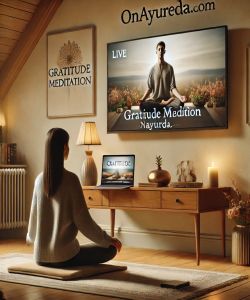
1. Overview of Gratitude Meditation
Gratitude meditation is a rigorous and structured mental discipline designed to cultivate a profound and intentional state of appreciation. It is not a passive reflection but an active, focused practice that directs the practitioner’s attention towards the positive aspects of their existence, both tangible and intangible. This modality operates on the foundational principle that a deliberate shift in perspective, away from deficit and towards abundance, can fundamentally alter one's psychological and emotional landscape. The practice mandates a systematic contemplation of benefits, kindnesses, and fortunate circumstances that are often overlooked in the course of daily life. This is not about inducing a superficial sense of happiness, but rather about building a resilient and stable internal framework grounded in a factual recognition of what one possesses. It involves a conscious effort to acknowledge sources of goodness, whether they originate from other people, from nature, or from personal strengths and opportunities. The objective is to rewire ingrained patterns of negative bias, complaint, and entitlement, replacing them with a robust and enduring sense of thankfulness. This disciplined focus serves to diminish the psychological weight of stressors and perceived hardships by contextualising them within a broader, more positive reality. It is a formidable tool for mental fortification, demanding consistency and intellectual engagement to yield its full, transformative potential. Through its structured application, individuals develop a heightened awareness of the interconnectedness of their wellbeing with the world around them, fostering a state of mind that is both grounded and appreciative, regardless of external conditions. This is a practice of strength, not sentimentality.
2. What are Gratitude Meditation?
Gratitude meditation constitutes a specific category of mental training focused squarely on the intentional cultivation of thankfulness. It is a deliberate cognitive exercise, distinct from general mindfulness, that guides the practitioner to identify and deeply contemplate various aspects of their life for which they can be grateful. This process is systematic and methodical, moving beyond a fleeting or casual acknowledgement of good fortune. At its core, it is an intervention designed to counteract the human brain's inherent negativity bias—the tendency to focus more on adverse experiences than positive ones. The practice involves actively bringing to mind specific people, events, opportunities, or even simple sensory experiences and examining the benefits derived from them. This can be structured as a silent, internal reflection, a guided auditory exercise, or a written task such as a gratitude journal. The emphasis is on specificity; rather than a vague feeling of "being lucky," the practitioner is required to pinpoint precise reasons for their gratitude. For example, instead of being thankful for "friends," one would focus on a specific friend and a particular instance of their support or kindness. This depth of focus is what differentiates it from mere positive thinking. It is an analytical process that builds a compelling, evidence-based case for a more appreciative worldview. It is not about ignoring life's difficulties but about consciously balancing the cognitive scales, ensuring that the positive elements receive the deliberate attention they merit, thereby fostering profound psychological resilience and emotional regulation.
3. Who Needs Gratitude Meditation?
Individuals exhibiting a pervasive pattern of cynicism or pessimism, for whom a negative outlook has become a default cognitive state. This practice provides a direct, structured counter-mechanism to challenge and reframe such ingrained negativity.
Professionals in high-stress, demanding occupations who are susceptible to burnout, compassion fatigue, or a sense of futility. It serves as a potent tool for psychological restoration and perspective recalibration.
Persons experiencing chronic dissatisfaction or a persistent feeling that their life is lacking, despite objective evidence to the contrary. The meditation forces a factual inventory of existing assets, both material and non-material.
Those navigating significant life transitions, loss, or personal setbacks. It provides a stable anchor, reminding them of enduring sources of support and strength amidst turmoil and change.
Individuals struggling with entitlement or a tendency to take people and circumstances for granted. The practice systematically dismantles this mindset by demanding a conscious acknowledgement of external contributions to one's wellbeing.
People seeking to deepen their interpersonal relationships. By focusing on the positive attributes and actions of others, it cultivates genuine appreciation and can transform the quality of social interactions.
Anyone aiming to enhance their mental resilience and emotional regulation. The discipline builds a psychological buffer against life's inevitable adversities by strengthening a positive internal locus of control.
Individuals prone to anxiety or ruminative thought patterns. Directing focus towards gratitude interrupts the cycle of worry and redirects mental energy towards constructive and stabilising thoughts.
Those who feel disconnected from themselves or their environment. The practice fosters a greater sense of connection and belonging by highlighting the network of support and fortune in which they exist.
All persons committed to rigorous self-development and the optimisation of their mental state, who understand that a disciplined mind is the foundation of a well-lived life.
4. Origins and Evolution of Gratitude Meditation
The conceptual underpinnings of gratitude meditation are ancient, with roots embedded deeply in both philosophical traditions and major world religions. Long before its codification by modern psychology, the deliberate practice of thankfulness was championed as a cornerstone of wisdom and virtuous living. The Stoic philosophers of ancient Greece and Rome, for instance, advocated for reflecting on what one possesses as an antidote to desire and dissatisfaction. Figures like Cicero wrote extensively on gratitude as the "parent of all other virtues," whilst Marcus Aurelius' Meditations are replete with exercises in appreciating one's present circumstances. Similarly, theistic traditions have universally incorporated gratitude as a central tenet, framing it as a devotional duty owed to a divine creator for the gifts of life and existence. This historical context established gratitude not as a fleeting emotion, but as a disciplined, essential practice for a well-ordered soul.
The transition from a purely philosophical or spiritual concept to a secular, psychological intervention began to accelerate in the twentieth century. However, it was the advent of the positive psychology movement at the turn of the millennium that marked the most significant evolutionary leap. This new field shifted the focus of psychological research away from pathology and dysfunction towards the study of human flourishing, strengths, and wellbeing. Within this framework, gratitude was no longer just a virtue to be extolled; it became a psychological construct to be scientifically investigated, measured, and systematically cultivated. Researchers began to design and test specific interventions, such as gratitude journaling and gratitude-focused meditations, demonstrating their empirical effectiveness in enhancing happiness and reducing symptoms of depression.
In its most recent evolution, gratitude meditation has been integrated into the broader mindfulness movement and adapted for the digital age. It has been stripped of unnecessary sentimentality and presented as a pragmatic tool for mental optimisation and resilience. Its techniques have been refined for clarity and efficacy, making them accessible to a global audience through online platforms and applications. This evolution reflects a journey from ancient wisdom to a scientifically validated, highly structured mental discipline. The practice today stands as a powerful synthesis of timeless philosophical insight and modern psychological rigour, engineered for tangible, real-world impact on an individual's cognitive and emotional state.
5. Types of Gratitude Meditation
Gratitude Journaling Meditation: This is a written, reflective practice. The individual is mandated to dedicate a specific time to write down, with deliberate thought and detail, several things for which they are grateful. The power of this type lies in the act of transcribing thought into concrete language, which forces clarity and specificity. It is not a diary but a structured ledger of positive assets.
Gratitude Contemplation (Naikan-Inspired): Derived from the Japanese practice of Naikan, this introspective meditation involves a rigorous self-reflection focused on one's relationships with others. It is structured around three uncompromising questions directed towards a specific person: What have I received from this person? What have I given to this person? What troubles and difficulties have I caused this person? This fosters a profound, non-sentimental gratitude by revealing the imbalance of support one often receives.
Guided Gratitude Meditation: This form involves following verbal instructions from an audio recording or a live facilitator. The guide systematically directs the practitioner's attention towards different domains of life—such as health, relationships, nature, or personal abilities—prompting them to feel and acknowledge gratitude for each. This type is highly effective for beginners as it provides structure and prevents the mind from wandering.
Gratitude Letter/Visit: This is a highly active and targeted form of the practice. It requires the practitioner to compose a detailed letter to a specific individual who has had a significant positive impact on their life, but whom they have never properly thanked. The letter should explicitly state the actions of the person and the subsequent benefits. The pinnacle of this practice involves delivering and reading the letter in person, creating a powerful experience for both parties.
Gratitude Body Scan: This variation merges the traditional body scan meditation with a focus on gratitude. As the practitioner brings awareness to each part of their body, from their feet to their head, they deliberately cultivate appreciation for the function and health of that part. It is a powerful method for grounding oneself in the physical reality of one's own existence and appreciating the body as a functioning system.
6. Benefits of Gratitude Meditation
Enhanced Psychological Resilience: Systematically builds a cognitive buffer against adversity. By training the mind to focus on existing positives, it diminishes the psychological impact of negative events and fosters a more rapid recovery from setbacks.
Reduction in Ruminative and Anxious Thought Patterns: The act of focusing intently on specific points of gratitude actively interrupts and displaces the cyclical, unproductive thought patterns characteristic of anxiety and worry. It provides a constructive alternative for mental energy.
Improved Interpersonal Relationships: Fosters genuine appreciation for the contributions of others, leading to more positive social interactions. Acknowledging the value others bring to one's life can dismantle resentment and strengthen bonds of loyalty and affection.
Increased Emotional Regulation: Cultivates a more stable and less reactive emotional state. A baseline of gratitude makes one less susceptible to being overwhelmed by fleeting frustrations, irritations, and disappointments.
Diminished Materialism and Envy: Shifts focus from what is lacking to what is already possessed. This inherently reduces the corrosive emotions of envy and the perpetual striving associated with materialism, leading to greater contentment with present circumstances.
Improved Physical Wellbeing: Correlates with better self-care. Individuals who practise gratitude are more likely to engage in health-promoting behaviours, and research suggests links to improved sleep quality and reduced stress-related physiological symptoms.
Heightened Sense of Purpose and Connection: By recognising the network of support and opportunity surrounding them, practitioners often report a greater sense of connection to others and to the world at large, which can contribute to a more meaningful existence.
Counteraction of the Negativity Bias: Directly challenges the brain's innate tendency to give more weight to negative experiences. This cognitive retraining creates a more balanced and realistic perspective on life as a whole.
Increased Prosocial Behaviour: A grateful disposition is a powerful motivator for altruism and reciprocity. Feeling thankful encourages a desire to "pay it forward," leading to acts of kindness and generosity.
7. Core Principles and Practices of Gratitude Meditation
Intentionality and Deliberateness: This is not a passive or accidental state of mind. The practice must be undertaken with clear, conscious intent. One must actively choose to engage in the meditation and dedicate focused mental effort to it. Casual or half-hearted attempts will yield no meaningful results.
Specificity over Generality: The power of the practice lies in detail. Vague statements of thankfulness like "I am grateful for my family" are insufficient. The practitioner must identify a specific person, a specific event, a specific object, or a specific opportunity and contemplate the precise benefits derived from it. For example, "I am grateful to my colleague, John, for his assistance with the report yesterday, which saved me considerable time."
Consistency as a Non-Negotiable: Sporadic practice is ineffective. Gratitude meditation is a discipline that requires regular, scheduled engagement to rewire neural pathways. Whether daily or several times a week, a consistent routine must be established and adhered to without exception. It is a mental training regimen, not an occasional tonic.
Focus on People over Things: Whilst it is acceptable to be grateful for material possessions or circumstances, the most profound impact comes from focusing on the people in one's life. Contemplating the kindness, support, and sacrifices of others generates a deeper and more socially connected form of gratitude.
Acknowledgement of 'Subtractive' Realities: A potent practice involves the "mental subtraction" of a positive event or person from one's life. By imagining life without a specific benefit, its true value becomes starkly and powerfully apparent. This prevents the practitioner from taking their good fortune for granted.
Authenticity of Feeling: The goal is not to feign happiness or force an emotion that is not present. The practice is an intellectual and cognitive one first. By focusing on the factual evidence of a benefit, genuine feelings of gratitude will arise naturally. The focus is on the object of gratitude, not on manufacturing a feeling.
Expansion Beyond the Self: The practice should ultimately extend outwards. This involves feeling grateful not only for what one has personally received but also for the good fortune of others and for the existence of beauty, art, and nature in the world, independent of any personal gain. This cultivates a less self-centred and more expansive worldview.
8. Online Gratitude Meditation
Unparalleled Accessibility and Immediacy: Online platforms remove all geographical and logistical barriers to entry. Access to high-quality guided meditations, structured courses, and expert instruction is available instantly, requiring only a stable internet connection. This democratises access, making the discipline available to individuals who would otherwise be excluded due to location, mobility, or scheduling conflicts.
Structured Guidance and Progression: Reputable online programmes provide a systematic, curriculum-based approach. They guide the user from foundational techniques to more advanced practices in a logical, progressive manner. This structure is imperative for building a robust and sustainable practice, preventing the aimless and often ineffective dabbling that can result from self-directed efforts.
Anonymity and Private Reflection: The online environment affords a degree of privacy that is not possible in a group or classroom setting. This is particularly beneficial for individuals who may initially feel self-conscious or vulnerable when exploring emotions related to gratitude. It allows for a more honest and uninhibited internal examination without the perceived judgement of others.
Flexibility and Personalisation: Online resources offer supreme flexibility. The practitioner can engage with the material at any time of day or night, fitting the practice into their own unique schedule. Furthermore, a wide variety of sessions, instructors, and styles are typically available, allowing the user to select the approach that is most resonant and effective for them personally.
Reinforcement and Consistency: Many online platforms incorporate features designed to foster adherence and consistency, such as progress trackers, daily reminders, and community forums. These tools provide the necessary scaffolding to transform an occasional activity into a non-negotiable daily discipline, which is the key to unlocking its long-term benefits.
Cost-Effectiveness: Whilst not a primary consideration over quality, online options are frequently more financially accessible than in-person workshops, retreats, or one-to-one coaching. This significantly lowers the barrier to entry, allowing a wider demographic to engage with this powerful mental training without significant financial outlay.
Access to a Global Community: Although the practice is often solitary, online platforms can connect practitioners to a global community of like-minded individuals. This sense of shared purpose and collective engagement can be highly motivating and provides a forum for sharing insights and overcoming common challenges, mitigating any sense of isolation.
9. Gratitude Meditation Techniques
Preparation and Environment Selection: Identify a time and place where you will not be disturbed. This is a non-negotiable prerequisite. The environment must be conducive to focused concentration. Assume a comfortable but upright posture, either seated on a chair with feet flat on the floor or cross-legged on a cushion. This posture signals to the body and mind that a deliberate task is being undertaken.
Initial Grounding and Breath Focus: Close your eyes or adopt a soft, unfocused gaze. Begin by bringing your full attention to the physical sensation of your breath. Notice the air entering your nostrils, filling your lungs, and then leaving your body. Do not alter your breathing; simply observe it. This initial phase serves to quiet the mind and anchor your awareness in the present moment. Persist with this for several minutes until a sense of calm and focus is established.
Bringing a Specific Object of Gratitude to Mind: Shift your focus from the breath to a specific object of gratitude. Do not begin with a vague concept. Select one single, concrete item. This could be a person, a recent positive event, a personal skill, or even a simple physical object. For instance, focus on a supportive conversation you had yesterday, or the simple function of your hands.
Deep and Detailed Contemplation: Hold this single object of gratitude in your mind. Now, begin a systematic examination of it. If it is a person, recall their specific actions, their words, and the positive impact they had on you. If it is an object, consider its usefulness, its origins, and the labour that went into its creation. The objective is to explore every facet of this item, acknowledging all the benefits it confers.
Connecting with the Feeling of Gratitude: As you conduct this detailed contemplation, allow the authentic feeling of appreciation to arise naturally. Do not force it. Notice the subtle emotional and physical sensations that accompany this feeling. It may be a warmth in the chest, a sense of lightness, or simply a quiet, internal acknowledgement of value. Remain with this feeling, immersing your awareness in it.
Expansion and Repetition: Once you have fully explored one object of gratitude, you may gently release it and select another. Repeat steps three to five with a new specific item. A typical session may involve contemplating three to five distinct objects of gratitude in this deep, methodical manner.
Conclusion and Transition: To conclude the session, gently release your focus on the objects of gratitude and return your awareness to your breath for a few moments. Then, slowly bring your attention back to your physical surroundings. Open your eyes and take a moment to carry the cultivated sense of appreciation with you as you transition back into your daily activities.
10. Gratitude Meditation for Adults
Gratitude meditation for adults is a commanding and pragmatic discipline, far removed from any juvenile or sentimental notions of mere positive thinking. It is a rigorous cognitive tool engineered specifically for the mature mind, which has inevitably been conditioned by life's complexities, responsibilities, and disappointments. For an adult, this practice is not about ignoring the harsh realities of existence, but about developing the mental fortitude to contextualise them. It demands an intellectual honesty that acknowledges both life's burdens and its understated benefits with equal clarity. The adult practitioner engages in a systematic audit of their life, identifying and appreciating the complex web of support systems, personal competencies, hard-won successes, and simple functional realities that are all too easily taken for granted amidst the relentless pressures of career, family, and finance. It serves as a powerful antidote to the creeping cynicism and hedonic adaptation that can erode wellbeing over time. The practice requires a level of self-awareness and introspection that is the hallmark of maturity. It is about consciously choosing to shift one's cognitive focus away from perpetual problem-solving and towards a deliberate recognition of existing assets. This is not a passive reflection; it is an active, strategic mental exercise designed to build resilience, deepen relational intelligence, and foster a stable, self-possessed internal state that is not dependent on external validation or ceaseless acquisition. For the adult, gratitude meditation is a non-negotiable component of a sophisticated self-management strategy.
11. Total Duration of Online Gratitude Meditation
The standard and most effective duration for a single, focused session of online gratitude meditation is unequivocally established as one hour. This 1 hr timeframe is not arbitrary; it is a meticulously calibrated duration designed to facilitate a complete and profound psychological process. A shorter period risks being superficial, allowing the practitioner to merely skim the surface of their thoughts without achieving the necessary depth of contemplation. Conversely, a significantly longer session can lead to mental fatigue and a loss of focus, diminishing the returns on the time invested. Within this 1 hr structure, there is sufficient time for a proper introductory phase of grounding and mental settling, a substantial core period for the deep, specific contemplation of multiple objects of gratitude, and a concluding phase for integration and a smooth transition back to a state of normal waking consciousness. This duration allows the practitioner to move beyond initial mental chatter and resistance, enabling a genuine shift in perspective to occur. It provides the necessary space to conduct a thorough and meaningful inventory of gratitude without feeling rushed or constrained. Therefore, whilst shorter "maintenance" sessions may have their place, the foundational, transformative work of this discipline is optimally and most authoritatively conducted within a dedicated 1 hr session. This is the professional standard for achieving tangible and lasting results from the practice.
12. Things to Consider with Gratitude Meditation
Engaging with gratitude meditation necessitates a clear-eyed and pragmatic approach, devoid of unrealistic expectations. It is imperative to understand that this is a mental discipline, not a panacea. Results are not instantaneous; they are the cumulative product of consistent, rigorous practice over time. One must be prepared for sessions where the feeling of gratitude is elusive or absent altogether; this is not a sign of failure but a normal part of the process. The objective on such days is to persist with the cognitive exercise of identifying reasons for gratitude, regardless of the emotional output. Furthermore, it is critical to avoid "gratitude bypassing"—the toxic misuse of the practice to suppress or invalidate legitimate negative emotions such as grief, anger, or sadness. Gratitude is not a tool for denial; it is a tool for balance. One must allow space for all emotions whilst concurrently building a foundation of appreciation. Practitioners should also be wary of turning the practice into another form of competitive self-improvement or a mere checklist item. The goal is authentic internal change, not the performance of a task. The focus must remain on the quality and depth of contemplation, not the quantity of items listed. Finally, one should recognise that the practice may initially feel unnatural or even forced, particularly for those with a deeply ingrained cynical mindset. This initial resistance is to be expected and must be met with resolute and patient persistence.
13. Effectiveness of Gratitude Meditation
The effectiveness of gratitude meditation is not a matter of conjecture or anecdotal sentiment; it is a demonstrable reality, robustly supported by a substantial body of empirical research within the field of psychology. This practice operates as a direct and potent intervention, yielding tangible and measurable outcomes in an individual's psychological and emotional wellbeing. Its efficacy lies in its direct mechanism of action: it systematically counteracts the human brain's inherent negativity bias. By compelling the practitioner to deliberately focus on positive inputs, it actively rewires neural pathways, fostering a more balanced and less threat-sensitive cognitive architecture. The result is a marked increase in subjective happiness, life satisfaction, and optimism, coupled with a significant reduction in the prevalence and intensity of depressive symptoms and anxiety. Furthermore, its effectiveness extends into the social domain, reliably enhancing feelings of connection and improving the quality of interpersonal relationships. It is not a passive or weak intervention. When practised with the requisite consistency and rigour, its effects are profound and enduring. It builds psychological capital, enhancing resilience and equipping the individual with a formidable internal resource for navigating life's inevitable challenges. The evidence is unequivocal: gratitude meditation is a highly effective, evidence-based strategy for the fundamental enhancement of the human experience. Its utility is not in question; the only variable is the commitment of the practitioner.
14. Preferred Cautions During Gratitude Meditation
One must approach gratitude meditation with a stern awareness of its potential for misuse and misapplication. It is absolutely imperative to guard against the phenomenon of "toxic positivity," wherein the practice is warped into a tool for emotional suppression. Acknowledging gratitude must never serve as a pretext to deny or invalidate legitimate feelings of anger, grief, or despair. These emotions demand their own processing and to paper over them with a veneer of forced thankfulness is both psychologically damaging and a complete perversion of the practice's intent. Furthermore, a practitioner must be cautious of developing a "gratitude superiority" complex, subtly judging others for their perceived lack of appreciation. This is a corruption of the discipline, which should foster humility, not arrogance. There is also a risk, particularly in cases of trauma or significant hardship, that a premature or clumsily applied focus on gratitude can feel invalidating and alienating. In such circumstances, the practice must be approached with extreme care, possibly under professional guidance, ensuring it does not become a form of self-blame for one's emotional state. Finally, the practice should not be allowed to foster passivity or complacency. Gratitude for what one has should not extinguish the drive for necessary change or the pursuit of legitimate goals. It is a tool for perspective, not a justification for inaction in the face of injustice or personal stagnation. These cautions are not suggestions; they are commands for safe and effective practice.
15. Gratitude Meditation Course Outline
Module 1: Foundational Principles and The Cognitive Mandate
Introduction to the rationale: Gratitude as a disciplined cognitive skill, not a fleeting emotion.
Deconstruction of the negativity bias and the imperative for active countermeasures.
Establishing the non-negotiable requirements: consistency, specificity, and intentionality.
Initial Practice: The Three Good Things exercise.
Module 2: Core Technique and Deepening the Practice
Mastering the structure of a formal gratitude meditation session: posture, breath anchoring, and focused contemplation.
The principle of specificity: Moving from generalities to granular, detailed appreciation.
Technique Focus: The Gratitude Body Scan.
Introduction to Gratitude Journaling as a supplementary discipline.
Module 3: Gratitude Towards Others and Relational Dynamics
Shifting focus from circumstantial to interpersonal gratitude.
Advanced Technique: The Naikan-inspired self-reflection on giving and receiving.
Practical Application: The composition of a formal Gratitude Letter.
Addressing challenges: Cultivating gratitude for difficult relationships.
Module 4: Advanced Concepts and Psychological Fortification
The "Mental Subtraction" technique: Understanding value through imagined loss.
Expanding gratitude beyond the self: Appreciating beauty, nature, and the good fortune of others.
Integrating gratitude into daily life beyond formal practice sessions.
Dealing with resistance, cynicism, and "gratitude fatigue."
Module 5: Integration, Resilience, and Sustained Practice
Synthesising all learned techniques into a personalised, sustainable routine.
Using gratitude as a primary tool for emotional regulation and resilience in the face of adversity.
Avoiding common pitfalls: Toxic positivity and gratitude bypassing.
Formulating a long-term commitment and strategy for lifelong practice.
16. Detailed Objectives with Timeline of Gratitude Meditation
Initial Phase (Weeks 1-2): Establishment of Foundational Discipline.
Objective: To establish a non-negotiable, consistent daily practice. The primary goal is adherence to the schedule, not the quality of the experience.
Timeline Action: The practitioner will successfully complete a guided or self-directed gratitude meditation of a minimum prescribed duration every day, without exception. They will also master the basic structure of the Three Good Things journaling exercise.
Developmental Phase (Weeks 3-4): Cultivation of Specificity and Depth.
Objective: To move beyond generalised statements of thanks towards highly specific and detailed contemplation.
Timeline Action: Within each meditation session, the practitioner will be able to identify and deeply analyse at least three distinct, specific objects of gratitude, exploring the precise benefits of each. Journal entries will reflect this increased granularity.
Interpersonal Phase (Weeks 5-6): Expansion to Relational Gratitude.
Objective: To shift the primary focus of the practice towards interpersonal relationships, both easy and challenging.
Timeline Action: The practitioner will dedicate the majority of their practice time to contemplating the contributions of others. By the end of this phase, they will have composed one formal, detailed Gratitude Letter to a person of significance in their life.
Advanced Phase (Weeks 7-8): Integration of Advanced Techniques.
Objective: To incorporate more cognitively demanding techniques to deepen the impact of the practice.
Timeline Action: The practitioner will demonstrate proficiency in using the "Mental Subtraction" technique during their sessions. They will also begin to expand their focus to include abstract concepts such as beauty, knowledge, or societal structures.
Consolidation Phase (Weeks 9-12): Autonomous Practice and Resilience Building.
Objective: To internalise the practice to the point where it becomes a natural and autonomous cognitive habit, used proactively to manage stress and regulate emotion.
Timeline Action: The practitioner will be able to initiate and sustain the practice without external guidance, effectively using it as a real-time tool to reframe negative situations and bolster psychological resilience. They will have a robust, personalised practice plan for long-term continuation.
17. Requirements for Taking Online Gratitude Meditation
Unwavering Personal Commitment: An absolute, non-negotiable commitment to consistent practice is the foremost requirement. The individual must possess the self-discipline to adhere to a regular schedule without excuse or deviation.
A Stable and Private Digital Environment: Access to a reliable, high-speed internet connection and a functional digital device (computer, tablet, or smartphone) is mandatory. The physical space where the practice occurs must be private, quiet, and entirely free from interruptions for the full duration of the session.
Intellectual Openness: The practitioner must be willing to engage with the concepts intellectually, even in the face of initial scepticism or cynicism. A predisposition to dismiss the practice without rigorous personal trial is an immediate disqualifier.
Emotional Honesty: A capacity for frank self-assessment is essential. The individual must be willing to confront their own thought patterns and be honest about their internal state, avoiding the temptation to perform or feign emotions.
Technological Competence: Basic proficiency in using online platforms, navigating websites, and operating audio/video streaming services is required. The focus must be on the practice itself, not on struggling with the delivery technology.
Patience and Long-Term Perspective: The individual must understand that this is not a quick fix. They must possess the maturity to persist through periods of perceived low progress, trusting in the cumulative effect of the discipline over time.
Ability to Follow Structured Instruction: The online format relies on the user's capacity to listen to, comprehend, and accurately implement verbal or written instructions without direct, in-person supervision or correction. A lack of focus or an unwillingness to adhere to the prescribed techniques will render the practice ineffective.
18. Things to Keep in Mind Before Starting Online Gratitude Meditation
Before embarking upon an online gratitude meditation regimen, it is imperative to adopt a mindset of rigorous self-discipline and realistic expectation. Understand unequivocally that the online format places the burden of responsibility squarely upon you. There is no external authority to enforce your attendance or monitor your focus; success is contingent entirely upon your own internal resolve. You must proactively schedule your sessions as non-negotiable appointments and architect an environment that is hermetically sealed from the distractions endemic to the digital world. This means silencing all notifications, closing irrelevant browser tabs, and communicating to others that you are unavailable. Furthermore, recognise that the sheer volume of online options can be paralysing. It is your duty to conduct due diligence, selecting a reputable, structured programme over a random assortment of free, low-quality content. Do not mistake quantity for quality. Be prepared for the inherent lack of personalised feedback that distinguishes online from in-person instruction; you must become your own sternest critic, honestly assessing your level of engagement and focus during each session. Finally, accept that technology can and will fail. Have contingency plans in place and do not allow a minor technical glitch to become an excuse for abandoning your commitment. This is a serious undertaking, and the digital medium demands an even higher degree of personal accountability than a traditional setting. Approach it with the gravity it deserves.
19. Qualifications Required to Perform Gratitude Meditation
The performance of gratitude meditation, as a personal practice, demands no external certification or formal academic qualification. It is a discipline of the self, accessible to any individual who possesses the requisite internal attributes. The essential qualifications are not found on a certificate, but are instead forged in character. They are:
A fundamental capacity for introspection: The ability to turn one's attention inward and honestly examine one's own thoughts and feelings is the absolute bedrock of the practice.
A baseline of cognitive function: The practitioner must be able to focus their attention deliberately, follow a logical sequence of thought, and engage in basic memory recall.
An unyielding self-discipline: This is the most critical qualification. The individual must possess the willpower to establish and adhere to a consistent practice schedule, even in the face of internal resistance or external inconvenience.
A modicum of patience: The understanding that meaningful psychological change is a gradual, cumulative process is non-negotiable.
However, when considering the qualifications required to facilitate or teach gratitude meditation to others, the standards become far more stringent and formal. A credible facilitator must possess a deep and long-standing personal practice of their own; one cannot teach what one does not intimately know. Beyond this, a formal qualification in a relevant field such as psychology, counselling, or mindfulness-based stress reduction (MBSR) is strongly indicated. Verifiable certification from a reputable meditation teacher training programme is the minimum professional standard. This ensures the facilitator has a robust understanding of the psychological principles at play, is trained in group dynamics, and is equipped to handle the sensitive emotional issues that can arise during practice. To guide others in this work without such a foundation is both irresponsible and professionally negligent.
20. Online Vs Offline/Onsite Gratitude Meditation
Online
Online gratitude meditation is defined by its supreme accessibility and flexibility. It leverages digital platforms to deliver instruction and guided practice directly to the individual, irrespective of their geographical location or daily schedule. This modality's primary strength is its convenience; it removes nearly all logistical barriers to entry. The practitioner can engage at a time and place of their choosing, integrating the discipline seamlessly into their life. It also offers a degree of anonymity and privacy that can be highly conducive to uninhibited self-reflection, particularly for beginners. However, this autonomy is a double-edged sword. The online environment demands an exceptionally high level of self-discipline, as there is no external accountability structure. The practitioner is solely responsible for maintaining focus and consistency amidst a sea of digital distractions. Furthermore, the experience is inherently less personal, lacking the direct feedback, nuanced guidance, and shared energy of a live, in-person group. It is a highly efficient, scalable, but fundamentally solitary pursuit.
Offline/Onsite
Offline, or onsite, gratitude meditation is a more traditional and corporately structured experience. It takes place in a dedicated physical space, such as a meditation centre, workshop, or retreat, under the direct supervision of a qualified facilitator. Its principal advantage lies in the power of the shared environment and direct human connection. The group setting fosters a powerful sense of community and collective intention, which can be highly motivating. The immediate presence of a teacher allows for real-time, personalised feedback, clarification of techniques, and skilled handling of any emotional difficulties that may arise. The physical separation from one's daily environment also creates a sanctuary-like space, minimising distractions and allowing for deeper immersion. The primary drawbacks are logistical. Onsite sessions are bound by a fixed schedule and location, demanding a greater commitment of time and travel. They are typically less frequent and may involve a greater financial investment than online alternatives. It is a more intensive, personally guided, but less flexible approach to the discipline.
21. FAQs About Online Gratitude Meditation
Question 1. Is this a religious practice? Answer: No. Whilst gratitude is a component of many world religions, online gratitude meditation is presented as a secular, evidence-based psychological technique. It requires no adherence to any faith or deity.
Question 2. Do I need any special equipment? Answer: No. A quiet space, a comfortable place to sit, and a digital device with an internet connection are the only requirements. No special clothing, cushions, or paraphernalia are necessary.
Question tabular What if I do not feel grateful during the practice? Answer: This is normal and expected. The objective is the cognitive act of searching for and focusing on reasons for gratitude, not forcing an emotion. The feeling is a byproduct, not the goal. Persist with the mental exercise.
Question 4. How is this different from just thinking positive thoughts? Answer: It is a structured, disciplined practice focused on specific, existing positives in your life. Positive thinking can be vague and aspirational. Gratitude meditation is grounded in the factual reality of what you already have.
Question 5. How long until I see results? Answer: This varies, but do not expect immediate transformation. Consistent practice yields cumulative benefits. Some may notice subtle shifts in a few weeks, whilst for others it may take longer. Patience is mandatory.
Question 6. Can I do this if I am feeling very angry or sad? Answer: Yes, but with caution. It can provide perspective, but it must not be used to suppress or deny valid negative emotions. Allow those feelings to exist alongside the practice.
Question 7. Is it suitable for extreme cynics? Answer: Yes. In fact, it is an ideal tool for cynics, provided they are willing to engage with the exercise intellectually as a hypothesis to be tested, rather than dismissing it out of hand.
Question 8. Must I close my eyes? Answer: It is recommended to minimise visual distraction, but not mandatory. A soft, unfocused gaze directed downwards is an acceptable alternative if closing your eyes is uncomfortable.
Question 9. What is the best time of day to practise? Answer: The best time is the time you can consistently commit to. Many find the morning effective for setting a positive tone for the day, whilst others prefer the evening for reflection.
Question 10. Is a guided or unguided meditation better? Answer: Beginners should start with guided meditations to learn the structure and technique. More experienced practitioners may move towards unguided, silent practice.
Question 11. Does online meditation work as well as in-person? Answer: It can be highly effective, but it places the full responsibility for discipline and focus on the individual. Its effectiveness is directly proportional to your commitment.
Question 12. What if my mind wanders constantly? Answer: This is the nature of the mind. The practice is not about having a perfectly still mind, but about repeatedly and gently returning your focus to the object of gratitude each time you notice it has wandered.
Question 13. Do I have to share my thoughts with anyone? Answer: No. The online format is entirely private. Your reflections are for you alone unless you choose to participate in an optional community forum.
Question 14. Can this practice make me complacent? Answer: It should not. True gratitude fosters energy and a desire to act positively. It is about appreciating your foundation, not becoming passive upon it.
Question 15. What if I cannot think of anything to be grateful for? Answer: Start smaller. The functioning of your lungs. The chair supporting you. The technology allowing you to access the session. There is always a starting point if you are rigorous in your search.
Question 16. Is it just for people with problems? Answer: No. It is a tool for optimisation and mental fortification for everyone, regardless of their current life circumstances. It is proactive mental training.
22. Conclusion About Gratitude Meditation
In conclusion, gratitude meditation must be understood not as a gentle, passive sentiment but as a formidable and strategic mental discipline. It is a rigorous, structured intervention designed to systematically re-engineer an individual's default cognitive and emotional patterns. The practice commands a deliberate and sustained focus on the factual evidence of positive elements within one's life, serving as a powerful and direct countermeasure to the pervasive human tendency towards a negativity bias. Its efficacy is not a matter of faith or anecdote but is grounded in solid psychological principles and supported by empirical validation. To engage with this practice is to make a non-negotiable commitment to the active cultivation of mental resilience, emotional stability, and profound self-awareness. It demands consistency, intellectual honesty, and a refusal to succumb to cynicism or superficiality. Whether pursued through the flexible and autonomous medium of online platforms or the structured environment of an onsite setting, the core mandate remains the same: to build a robust internal framework of appreciation that can withstand and contextualise life's inevitable adversities. It is, in its purest form, an exercise in mental strength, a testament to the power of a disciplined mind to shape its own reality. This is not a mere technique for feeling good; it is a fundamental strategy for being better.