1. Overview of Hindu Bhakti Meditation
Hindu Bhakti Meditation is a profound spiritual practice rooted in the devotional traditions of Hinduism. It centers on the cultivation of unwavering love and devotion (Bhakti) towards a chosen deity, transcending the self to achieve union with the divine. This practice integrates mantra recitation, visualization, and heartfelt prayer, fostering emotional and spiritual purification. Its essence lies in surrendering the ego, thereby attaining inner peace and divine grace. As a cornerstone of Hindu spirituality, Bhakti Meditation offers a structured yet deeply personal path to transcendence, making it a timeless and universally accessible practice for seekers of divine connection.
2. What are Hindu Bhakti Meditation?
Hindu Bhakti Meditation is a devotional practice within Hinduism that focuses on cultivating profound love and surrender to a chosen deity. It involves:
- Mantra Recitation: Repeating sacred names or hymns of the deity to maintain focus and devotion.
- Visualization: Mentally envisioning the deity’s form to deepen emotional connection.
- Prayer and Surrender: Offering heartfelt prayers and surrendering the ego to the divine will.
- Emotional Engagement: Expressing love, gratitude, and humility through songs, chants, or silent contemplation.
This practice aims to dissolve the sense of separateness from the divine, fostering spiritual fulfillment and inner peace.
3. Who Needs Hindu Bhakti Meditation?
- Spiritual Seekers: Individuals pursuing a deeper connection with the divine.
- Stress-Affected Individuals: Those seeking emotional relief and mental clarity.
- Devotees of Hinduism: Practitioners aiming to strengthen their devotion to a deity.
- Emotionally Turbulent Persons: Individuals needing emotional stability and inner peace.
- Meditation Enthusiasts: Those exploring diverse meditation techniques for spiritual growth.
4. Origins and Evolution of Hindu Bhakti Meditation
Hindu Bhakti Meditation traces its roots to ancient India, emerging prominently during the Bhakti movement between the 7th and 17th centuries. This movement emphasized personal devotion over ritualistic practices, democratizing spirituality across castes. Early Bhakti saints like Mirabai and Tulsidas popularized the practice through hymns and poetry, making it accessible to the masses. Over centuries, it evolved into structured techniques, integrating mantra-based meditation and deity visualization. Today, it remains a vital component of Hindu spirituality, adapting to modern contexts while retaining its core principles of love, surrender, and divine union.
5. Types of Hindu Bhakti Meditation
- Mantra-Based Meditation: Focusing on repetitive chanting of sacred names or hymns.
- Visualisation Meditation: Envisioning the deity’s form to deepen devotion.
- Kirtan Meditation: Engaging in devotional singing and music to express love for the divine.
- Prayerful Contemplation: Silent, heartfelt prayer to foster surrender and connection.
- Scriptural Meditation: Reflecting on sacred texts like the Bhagavad Gita to internalize divine teachings.
6. Benefits of Hindu Bhakti Meditation
- Deepens Spiritual Connection: Fosters a profound bond with the divine.
- Reduces Stress: Promotes emotional calm and mental clarity.
- Enhances Emotional Well-being: Cultivates love, gratitude, and humility.
- Improves Focus: Trains the mind through mantra repetition and visualization.
- Encourages Selflessness: Dissolves ego-centric tendencies through surrender.
7. Core Principles and Practices of Hindu Bhakti Meditation
- Devotion (Bhakti): Unwavering love and surrender to the deity.
- Mantra Recitation: Repetition of sacred names or hymns to maintain focus.
- Visualization: Mental imagery of the deity to deepen connection.
- Surrender: Letting go of the ego and accepting divine will.
- Consistency: Regular practice to cultivate spiritual growth.
8. Online Hindu Bhakti Meditation
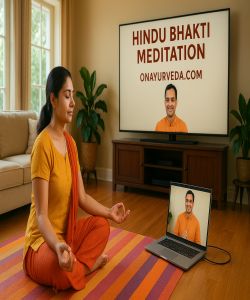
Online Hindu Bhakti Meditation offers structured sessions led by qualified instructors via digital platforms. Participants engage in guided mantra recitation, visualization, and prayer, facilitated through video conferencing tools. This format ensures accessibility, allowing individuals to practice from any location. Interactive elements, such as live Q&A sessions, enhance engagement, while recorded sessions provide flexibility for self-paced learning. Despite the virtual setting, the practice retains its spiritual depth, fostering devotion and inner peace.
9. Hindu Bhakti Meditation Techniques
- Select a Deity: Choose a deity for focused devotion.
- Prepare a Sacred Space: Create a quiet, clean area for practice.
- Recite Mantras: Repeat sacred names or hymns rhythmically.
- Visualize the Deity: Mentally envision the deity’s form.
- Offer Prayers: Express heartfelt devotion and surrender.
- Conclude with Gratitude: End with gratitude for the divine connection.
10. Hindu Bhakti Meditation for Adults
Hindu Bhakti Meditation is particularly suited for adults seeking spiritual depth and emotional stability. Its structured techniques, such as mantra recitation and deity visualization, provide a focused path to inner peace. Adults benefit from its stress-relieving qualities, which counteract the pressures of modern life. The practice fosters self-awareness and humility, essential for personal growth. Moreover, its adaptability allows adults to integrate it into their routines, making it a sustainable and transformative spiritual discipline.
11. Total Duration of Online Hindu Bhakti Meditation
Online Hindu Bhakti Meditation sessions typically span 1 hr, encompassing guided mantra recitation, visualization, and prayer. This duration ensures a balanced practice, allowing participants to engage deeply without overextension. Shorter sessions of 30 minutes are also available for beginners or those with time constraints. The structured format maximizes focus and spiritual immersion within the allocated time, making it effective for both novice and experienced practitioners.
12. Things to Consider with Hindu Bhakti Meditation
Before engaging in Hindu Bhakti Meditation, ensure a quiet, sacred space free from distractions. Select a deity that resonates with your spiritual inclinations to deepen devotion. Maintain consistency in practice to cultivate meaningful progress. Be mindful of physical comfort, adopting a posture that supports prolonged focus. Approach the practice with humility and openness, allowing for emotional and spiritual transformation. Lastly, seek guidance from a qualified instructor to refine techniques and align with traditional principles.
13. Effectiveness of Hindu Bhakti Meditation
Hindu Bhakti Meditation is highly effective in fostering spiritual growth and emotional well-being. Its structured techniques, such as mantra recitation and deity visualization, create a focused pathway to divine connection. Regular practice reduces stress, enhances mental clarity, and cultivates profound devotion. The surrender of the ego promotes selflessness and inner peace. Its adaptability to individual needs ensures accessibility, making it a powerful tool for achieving spiritual fulfillment and emotional stability.
14. Preferred Cautions During Hindu Bhakti Meditation
During Hindu Bhakti Meditation, avoid excessive emotional intensity, as it may lead to mental fatigue. Maintain a balanced approach, ensuring the practice remains sustainable. Refrain from comparing your progress with others, as devotion is a deeply personal journey. Be cautious of physical strain by adopting a comfortable posture. Avoid distractions by creating a dedicated sacred space. Lastly, seek guidance from a qualified instructor to prevent misinterpretation of techniques and ensure alignment with traditional principles.
15. Hindu Bhakti Meditation Course Outline
- Introduction to Bhakti: Understanding the philosophy and history.
- Mantra Techniques: Learning and practicing sacred chants.
- Deity Visualization: Guided exercises to deepen connection.
- Prayer and Surrender: Techniques for heartfelt devotion.
- Integration and Practice: Applying teachings in daily life.
16. Detailed Objectives with Timeline of Hindu Bhakti Meditation
- Week 1: Understand Bhakti principles and select a deity.
- Week 2: Master mantra recitation techniques.
- Week 3: Develop deity visualization skills.
- Week 4: Practice surrender and prayerful contemplation.
- Week 5: Integrate Bhakti Meditation into daily routines.
17. Requirements for Taking Online Hindu Bhakti Meditation
- Stable Internet Connection: Ensure uninterrupted access to sessions.
- Quiet Space: A distraction-free environment for practice.
- Digital Device: Computer, tablet, or smartphone for virtual sessions.
- Commitment: Dedication to regular practice for optimal results.
- Open Mind: Willingness to engage deeply with spiritual principles.
18. Things to Keep in Mind Before Starting Online Hindu Bhakti Meditation
Before beginning online Hindu Bhakti Meditation, ensure your digital setup is reliable to avoid disruptions. Create a serene, dedicated space for practice, free from distractions. Familiarize yourself with the platform and tools to maximize engagement. Approach the sessions with an open heart and mind, ready to embrace devotion. Lastly, commit to regular participation to fully experience the transformative benefits of this ancient practice.
19. Qualifications Required to Perform Hindu Bhakti Meditation
To perform Hindu Bhakti Meditation, no formal qualifications are necessary, as it is accessible to all. However, a genuine desire for spiritual growth and devotion is essential. Knowledge of basic Hindu principles and familiarity with mantras can enhance the practice. Guidance from a qualified instructor ensures alignment with traditional techniques. Dedication and consistency are paramount, as they foster deep spiritual connection and transformation.
20. Online Vs Offline/Onsite Hindu Bhakti Meditation
Online:
Offers flexibility, allowing practice from any location. Provides access to recorded sessions for self-paced learning. Facilitates global participation, connecting diverse practitioners. Requires reliable internet and digital devices. May lack the personal touch of in-person guidance.
Offline/Onsite:
Provides direct interaction with instructors for personalized feedback. Creates a communal atmosphere, enhancing collective devotion. Requires physical presence, limiting accessibility. Offers immersive experiences through sacred environments.
21. FAQs About Online Hindu Bhakti Meditation
Questions 1. What is Online Hindu Bhakti Meditation?
Answer: A virtual practice focusing on devotion to a deity through guided sessions.
Questions 2. How long are the sessions?
Answer: Typically 1 hr, with shorter options available.
Questions 3. Do I need prior experience?
Answer: No, it is suitable for all levels.
Questions 4. What equipment is required?
Answer: A digital device and stable internet connection.
Questions 5. Can I practice at my own pace?
Answer: Yes, recorded sessions allow self-paced learning.
Questions 6. Is it religiously exclusive?
Answer: Rooted in Hinduism but accessible to all seekers.
Questions 7. How do I choose a deity?
Answer: Select one that resonates with your spiritual inclinations.
Questions 8. Are live interactions available?
Answer: Yes, many courses include live Q&A sessions.
Questions 9. What if I miss a session?
Answer: Recorded sessions are typically available for review.
Questions 10. Can children participate?
Answer: Suitable for adults; children may require adapted guidance.
Questions 11. How soon will I see benefits?
Answer: Consistent practice yields results over time.
Questions 12. Is it physically demanding?
Answer: No, it focuses on mental and spiritual engagement.
Questions 13. Can I practice with others online?
Answer: Group sessions are often available.
Questions 14. What if I have technical issues?
Answer: Support is usually provided by the platform.
Questions 15. How do I ensure authenticity?
Answer: Choose courses led by qualified instructors.
Questions 16. Can I combine it with other practices?
Answer: Yes, but maintain focus on Bhakti principles.
22. Conclusion About Hindu Bhakti Meditation
Hindu Bhakti Meditation stands as a profound and accessible pathway to spiritual fulfillment and inner peace. Rooted in ancient traditions, it offers a structured yet deeply personal approach to divine connection. Through mantra recitation, visualization, and surrender, practitioners cultivate devotion, emotional stability, and selflessness. Whether pursued online or onsite, its timeless principles remain potent, guiding seekers toward transcendence. As a practice, it not only enriches individual lives but also bridges the sacred and the mundane, affirming its enduring relevance in the modern world.