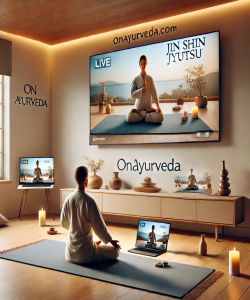
1. Overview of Jin Shin Jyutsu
Jin Shin Jyutsu is a sophisticated and ancient physio-philosophy, a non-invasive art of harmonising the body's life energy to promote optimal health and well-being. It is unequivocally not a medical treatment, a massage, or a religious practice, but rather a profound discipline that functions as a powerful complement to conventional healthcare by addressing the energetic foundations of being. Its core tenet posits that a universal, intelligent life force flows through specific pathways within the body, and that any disruption or blockage in this flow results in disharmony, which may manifest as physical, mental, or emotional distress. The practice itself is executed through the gentle application of the hands to specific locations on the body known as Safety Energy Locks. There are 26 such energetic centres located on each side of the body, and each corresponds to a particular function and dimension of our being. By holding these points in specific combinations, known as 'flows', the practitioner acts as a 'jumper cable', re-establishing the smooth, unimpeded circulation of energy. This process is subtle yet powerful, inviting the body to engage its own innate healing capacities. The art can be applied by a trained practitioner during a dedicated session or, most significantly, it can be learned and utilised as a potent self-help tool, empowering individuals to take direct responsibility for their own energetic balance on a daily basis. It is a discipline of profound simplicity and depth, accessible to all regardless of age or physical condition, requiring nothing more than one's own breath and hands to unlock a state of deep equilibrium and vitality. Its purpose is not to diagnose or cure, but to restore the foundational harmony from which true health originates.
2. What is Jin Shin Jyutsu?
Jin Shin Jyutsu is an ancient Japanese art of harmonising life energy within the body. The name itself translates to "The Art of the Creator through the person of compassion," a title that encapsulates its philosophical foundation as a benevolent practice aimed at restoring the body’s innate equilibrium. It is predicated on the existence of a universal life energy that circulates through the body along distinct pathways. When this energy flows freely and without obstruction, a state of health and well-being prevails. However, the stresses and demands of daily life can cause this flow to become blocked or stagnant, leading to a state of disharmony that can manifest on a physical, emotional, or mental level. The primary mechanism through which Jin Shin Jyutsu addresses these blockages is by interacting with 26 specific energetic points on the body, which are known as Safety Energy Locks (SELs). These SELs are not abstract concepts but tangible locations, found in pairs on both the left and right sides of the body. They function as energetic 'circuit breakers'; when overloaded with tension, they effectively shut down to protect the system from further damage, but in doing so, they disrupt the overall energy flow. The practice involves the gentle, non-invasive application of the fingertips and hands to these SELs in specific sequences or 'flows'. This touch is not manipulative or forceful; rather, the practitioner's hands act as 'jumper cables', providing a connection that encourages the blocked energy to release and resume its natural, harmonious pathway. By re-establishing this circulation, Jin Shin Jyutsu invites the body to engage its own profound capacity for healing and self-correction, addressing the root energetic cause of imbalance rather than merely its symptoms.
3. Who Needs Jin Shin Jyutsu?
- Individuals Experiencing High Levels of Stress and Tension. Those subjected to persistent occupational, emotional, or environmental pressures will find this art directly addresses the energetic signature of stress. It provides a methodical approach to discharging accumulated tension from the system, promoting a state of profound relaxation and mental quietude that is often elusive in modern life.
- Persons Seeking to Enhance Overall Vitality and Well-being. For individuals who are not necessarily unwell but who aspire to a higher state of health and energy, Jin Shin Jyutsu serves as a powerful preventative and optimising discipline. It works to maintain the clear and robust flow of life energy, bolstering the body’s natural resilience and fostering a sustained sense of vibrancy.
- Those Navigating Chronic Discomfort or Fatigue. Individuals contending with long-term physical discomfort or persistent states of exhaustion can utilise the practice to address underlying energetic stagnation. By harmonising the pathways that support the body's functions, it can assist in alleviating the energetic burden associated with chronic conditions.
- Clients Undergoing Conventional Medical Treatment. Jin Shin Jyutsu is a formidable complementary modality. For those receiving medical care for serious conditions, it can help to mitigate the energetic side effects of treatments, support the body's recovery processes, and provide crucial emotional and mental fortitude during challenging health journeys. It does not interfere with, but rather supports, standard medical protocols.
- Individuals Aiming for Greater Emotional and Mental Equilibrium. The art is exceptionally effective for those seeking to manage emotional volatility, anxiety, or depressive states. By clearing the energetic blockages associated with specific emotional attitudes, it facilitates greater clarity, emotional stability, and a more resilient psychological outlook.
- Practitioners of Self-Development and Mindfulness. For those on a path of personal growth and increased self-awareness, Jin Shin Jyutsu offers a tangible, physical practice to complement and deepen their journey. It bridges the gap between mind and body, providing a direct experience of the energetic underpinnings of consciousness.
4. Origins and Evolution of Jin Shin Jyutsu
The origins of Jin Shin Jyutsu are rooted in deep antiquity, an art of harmonising life energy passed down through oral tradition for generations in Japan. While its exact genesis is shrouded in history, ancient texts, including the Kojiki (Record of Ancient Matters), contain esoteric knowledge that is understood to allude to the core principles of this physio-philosophy. For centuries, however, this profound wisdom remained largely forgotten by the general populace, existing only as an esoteric knowledge held by a select few, its widespread practice having fallen into disuse.
The modern revival and systematic formulation of Jin Shin Jyutsu are credited entirely to the dedicated efforts of Master Jiro Murai in the early twentieth century. After being diagnosed with a terminal illness, Murai retreated to his family's mountain cabin to meditate and experiment with ancient esoteric practices. Through intense study and the application of specific hand mudras and holds on his own body, he made a complete recovery. This profound personal experience ignited a lifelong quest to understand and resurrect the art that had saved him. He dedicated the remainder of his life to exhaustively researching its principles, studying ancient texts, and engaging in deep self-study to rediscover the locations of the 26 Safety Energy Locks and the intricate pathways of the energy flows.
The art’s transmission to the Western world was facilitated by Mary Burmeister, a Japanese-American woman who met Master Murai in Japan in the late 1940s. Impressed by her sincere desire to learn, he chose her as his dedicated student. For many years, she studied directly under his tutelage, meticulously documenting his teachings and gaining a profound understanding of the art's depth and complexity. Upon her return to the United States, Mary Burmeister committed her life to preserving and sharing this knowledge. She began teaching in the 1960s, translating the Japanese concepts into a format accessible to a Western audience and establishing the structured curriculum that now forms the basis of Jin Shin Jyutsu education worldwide. Her unwavering dedication ensured that this ancient art was not only preserved but evolved into a globally recognised discipline, accessible to all who seek its wisdom.
5. Types of Jin Shin Jyutsu
- Practitioner-Applied Jin Shin Jyutsu: This is the formal application of the art, where a qualified practitioner administers a session to a fully clothed recipient who is lying down. The practitioner utilises their extensive knowledge of the energy pathways and the 26 Safety Energy Locks to assess the recipient’s energetic needs, often through the subtle art of pulse listening. Based on this assessment, a specific, targeted 'flow'—a sequence of holds—is applied. This type of session is designed to address deep-seated energetic blockages and promote profound relaxation and harmonisation, as the recipient can passively receive the work without any effort.
- Jin Shin Jyutsu Self-Help: This is arguably the most empowering aspect of the art. It involves the individual applying the holds to their own body. The techniques are simple to learn and can be applied anywhere, at any time, to address daily stresses, discomforts, or to simply maintain a state of energetic balance. Self-help is the cornerstone of the practice, providing a tool for immediate self-care and fostering a heightened sense of personal responsibility for one’s own well-being. It is the foundation upon which deeper study is built.
- Specialised and Intensive Flows: Within the broader practice, there are specific and highly targeted energy patterns or 'flows' that form a specialised area of study and application. These include the Main Central Vertical Flow, a primary harmonising current; the Supervisor and Mediator Flows, which govern major circulatory patterns; and the 12 Organ Function Flows, which relate to the energetic function of the body's organs. Practitioners and advanced students study these distinct flows to address particular dimensions of energetic disharmony with precision.
- Jin Shin Jyutsu for Animals: An extension of the core principles, this application adapts the art for use on animals. Practitioners learn to locate the equivalent Safety Energy Locks and apply the same gentle holds to support the well-being of animal companions. It operates on the identical premise that all living beings possess these energetic pathways and can benefit from their harmonisation, requiring a heightened sense of intuition and sensitivity from the practitioner.
6. Benefits of Jin Shin Jyutsu
- Profound Stress and Tension Reduction: Systematically dismantles the energetic patterns of stress held within the body. The gentle application of holds on the Safety Energy Locks facilitates the release of deep-seated muscular and nervous tension, inducing a state of calm and mental quietude that profoundly counteracts the effects of chronic stress.
- Enhancement of the Body’s Natural Healing Capacities: By clearing blockages and restoring the harmonious flow of life energy, Jin Shin Jyutsu supports and revitalises the body's innate intelligence and self-correcting mechanisms. It does not impose a cure but creates the optimal energetic environment for the body to perform its own restorative functions more effectively.
- Increased Vitality and Reduction of Fatigue: Addresses the root causes of energetic depletion by unblocking stagnant energy pathways. The restoration of smooth circulation revitalises the entire system, leading to a tangible increase in physical energy, stamina, and a reduction in persistent feelings of fatigue or exhaustion.
- Promotion of Mental Clarity and Focus: The harmonisation of bodily energy has a direct and clarifying effect on the mind. The practice helps to dissipate mental fog, quieten incessant thought patterns, and improve concentration. This leads to enhanced cognitive function, better decision-making, and a more focused mental state.
- Attainment of Emotional Equilibrium: Directly addresses the energetic underpinnings of emotional distress such as anxiety, anger, and grief. By applying flows that correspond to these emotional states, the practice facilitates their release and processing, fostering a greater sense of emotional stability, resilience, and inner peace.
- Empowerment Through Self-Care: One of its most significant benefits is the provision of a potent self-help tool. Learning to apply the holds on oneself instils a sense of agency and self-reliance, empowering individuals to manage their own well-being on a daily basis and become active participants in their health maintenance.
- Support During Health Challenges: As a complementary practice, it offers powerful support for individuals navigating serious health issues or undergoing rigorous medical treatments. It can help to strengthen the constitution, alleviate discomfort, and provide the deep rest necessary for the body to cope with and recover from medical interventions.
7. Core Principles and Practices of Jin Shin Jyutsu
- The Existence of a Universal Life Energy: The foundational principle is the recognition of a pervasive, intelligent life force that animates all of creation. This energy is not an abstract metaphysical concept but a tangible, circulating current that flows through the body in specific, organised pathways. The health of the individual is a direct reflection of the harmony and unimpeded flow of this fundamental energy.
- The 26 Safety Energy Locks (SELs): Central to the practice is the understanding of 26 distinct, concentrated spheres of energy, located in pairs on the left and right sides of the body. These SELs act as fuses or 'circuit breakers' for the body's energetic system. When subjected to stress, they 'lock' to contain the disharmony and prevent it from overwhelming the entire system. However, this locking action creates blockages. The practice of Jin Shin Jyutsu is the art of unlocking these points.
- The Application of 'Flows': The primary practice involves applying the hands to the SELs in specific, predetermined sequences known as 'flows'. A flow is a recipe of holds that traces an energetic pathway, systematically opening a series of locked SELs to restore circulation. The practitioner's hands act as 'jumper cables', connecting two SELs at a time to re-establish the energetic current between them.
- The Power of Breath as 'The Purifier': The breath is recognised as a critical tool for releasing stagnant energy. The practitioner and recipient are encouraged to exhale deeply, letting go of accumulated tension, and to inhale fully, receiving new, clean energy. The breath is the vehicle that carries the revitalised energy throughout the system once the SELs are opened.
- The Trinity of Body, Mind, and Spirit: Jin Shin Jyutsu operates on the principle of holism, acknowledging the indivisible connection between the physical body, mental attitudes, and the spiritual essence. It understands that a blockage can originate from a physical injury, a persistent negative thought pattern, or an emotional trauma, and it addresses the disharmony on all levels simultaneously.
- The Art of Non-Forcible 'BE-ing': The practitioner does not impose their will, manipulate tissue, or force energy to move. The role is simply to 'BE' the catalyst—to place the hands gently on the SELs and wait with patient awareness. The body's own innate wisdom performs the work of re-harmonisation. It is an art of surrender and allowing, not of active intervention.
8. Online Jin Shin Jyutsu
- Unparalleled Accessibility and Geographical Independence: The online modality decisively removes all geographical barriers to entry. Individuals in remote locations or those with mobility constraints, who would otherwise be unable to access a qualified practitioner, can receive expert instruction and guidance directly in their own homes. This democratises access to the art, making it available to a global audience without the prerequisite of travel.
- Fostering Profound Self-Reliance and Empowerment: Online Jin Shin Jyutsu is, by its very nature, centred on the teaching of self-help techniques. The practitioner acts as an instructor and guide, verbally directing the participant to apply the holds on their own body. This model fundamentally empowers the individual, shifting the dynamic from passive recipient to active participant and instilling a powerful sense of agency and responsibility for one's own energetic well-being.
- Structured and Systematic Learning Programmes: The digital platform is an exceptionally effective medium for delivering structured educational content. Online courses, seminars, and workshops allow students to progress systematically through the official curriculum, from foundational principles to advanced topics. This format supports methodical learning with access to digital charts, recorded sessions for review, and supplementary materials that enhance the educational experience.
- Real-Time, Guided Practice Sessions: Through live video conferencing, practitioners can lead individuals or groups through complete self-help flows. This provides the benefit of expert guidance, ensuring the correct placement of hands and timing of holds, while allowing the participant to experience the effects in real time. It combines the convenience of remote access with the precision of a practitioner-led session.
- Access to a Global Community and Support Network: Engaging with Jin Shin Jyutsu online connects individuals with a diverse, international community of fellow students and practitioners. This fosters a rich environment for shared learning, discussion, and mutual support, which can be crucial for maintaining motivation and deepening one's understanding of the art's subtleties and philosophical underpinnings. The collective experience of the group enhances the individual's journey.
9. Techniques Used in Jin Shin Jyutsu
- Assessment Through Body Reading and Pulse Listening: The practitioner initiates the process not with immediate action, but with careful observation. This involves 'body reading'—visually and intuitively assessing the client’s posture and energetic state—and, more formally, the art of 'pulse listening'. By gently feeling the pulses at the wrists, a trained practitioner can discern which energetic pathways are in disharmony, providing a precise roadmap for the session.
- Selection of the Appropriate Energetic 'Flow': Based on the assessment, the practitioner selects a specific 'flow' or sequence of holds. The art contains a vast repository of these flows, each designed to address a particular energetic imbalance, from general harmonising sequences like the Main Central Vertical Flow to highly specific flows for individual organ functions or emotional states. The selection is a critical step that requires extensive knowledge.
- The Gentle Application of 'Jumper-Cabling': The core technique is the placement of the hands on two distinct Safety Energy Locks (SELs) simultaneously. The hands are not used to apply pressure or manipulate tissue. Instead, they act as 'jumper cables'. The practitioner's fingertips and palms create a stable, energetic connection that allows the blocked or stagnant energy at one SEL to reconnect with the main circulatory pathway via the other SEL.
- Maintaining a Patient, Non-Invasive Hold: Once the hands are in place, the technique is one of stillness and patience. The hold is maintained with a light, yet definite, contact for several minutes or until an energetic shift is perceived. The practitioner remains a neutral, observant catalyst, allowing the recipient's body to use the connection to re-establish its own inherent harmony. There is no rubbing, stroking, or physical manipulation involved.
- Perceiving the Rhythmic Pulsation: A key technical skill is the ability to feel the subtle energetic pulse at each SEL. Initially, the pulses at the two points being held may feel faint, erratic, or asynchronous. As the blockage releases and energy begins to flow freely between them, the pulses will strengthen, synchronise, and settle into a balanced, rhythmic beat. This sensory feedback informs the practitioner that the connection has been successfully re-established.
- Systematic Progression Through the Flow Sequence: Once the pulses at one pair of SELs have synchronised, the practitioner moves one hand to the next SEL in the prescribed sequence of the chosen flow, while the other hand may remain as an anchor. This methodical progression continues until the entire energetic pathway has been cleared and harmonised, completing the circuit.
10. Jin Shin Jyutsu for Adults
The application of Jin Shin Jyutsu for adults is a matter of profound relevance and necessity in the context of modern existence. Adulthood is invariably characterised by the accumulation of stress—be it physical, mental, emotional, or environmental—which systematically disrupts the body’s natural energetic equilibrium. These disruptions, if left unaddressed, compound over time, leading to deep-seated patterns of disharmony that can manifest as chronic fatigue, persistent discomfort, emotional instability, and a general decline in vitality. Jin Shin Jyutsu provides a direct, methodical, and non-invasive means of dismantling these accumulated energetic burdens. It is a sophisticated tool for managing the complexities of adult life, offering a way to actively discharge daily tensions before they become embedded in the physiology. Furthermore, for the adult dealing with established health challenges or the natural processes of ageing, the practice serves as a powerful modality for supporting the body's resilience, strengthening its constitution, and promoting the deep rest required for cellular repair and regeneration. It is also an art of profound self-discovery; through the practice of self-help, adults can cultivate a heightened awareness of the intricate connection between their thoughts, emotions, and physical state, fostering a greater sense of self-mastery. It empowers the individual to move beyond being a passive victim of their circumstances and to become the active custodian of their own health and well-being, providing a tangible method for maintaining balance amidst the inevitable demands and pressures of life.
11. Total Duration of Jin Shin Jyutsu
A standard, professional Jin Shin Jyutsu session administered by a qualified practitioner is rigorously structured to last for approximately 1 hr. This duration is not arbitrary but is established as the optimal timeframe required for the art to be applied effectively and for the recipient's energetic system to respond fully. Within this 1 hr period, the practitioner has sufficient time to conduct an initial energetic assessment, typically through pulse listening, to identify the priority pathways for harmonisation. It allows for the comprehensive application of a complete 'flow', which involves holding a sequence of several Safety Energy Locks in succession. Each hold must be maintained for a number of minutes to allow the energy to release the blockage and for the pulses to synchronise, a process which cannot be rushed. Furthermore, this 1 hr duration is conducive to the recipient achieving a state of profound physiological and mental relaxation, moving beyond the superficial release of tension into a deeper parasympathetic state where the body's self-healing mechanisms are most active. While informal self-help applications can be performed for any length of time—from a few minutes of holding a single point to a longer, more meditative practice—the professional standard for a complete, practitioner-facilitated session remains firmly at 1 hr to ensure the integrity, depth, and efficacy of the work.
12. Things to Consider with Jin Shin Jyutsu
It is imperative to approach Jin Shin Jyutsu with a clear and realistic understanding of its scope and purpose. This art is a complementary modality designed to harmonise the body's energy; it must never be regarded as a substitute for conventional medical diagnosis, advice, or treatment. Any individual with a medical condition or health concern has a primary responsibility to consult a qualified medical doctor. Practitioners of Jin Shin Jyutsu are strictly prohibited from diagnosing illnesses or prescribing treatments, and any who attempt to do so are operating outside the established ethical boundaries of the practice. Furthermore, the experience of receiving a session is highly subjective and the results are cumulative. One should not expect instant or miraculous cures for long-standing conditions. The process of energetic re-harmonisation is often subtle and gradual, requiring patience and a commitment to receiving a series of sessions or engaging in consistent self-help. The selection of a practitioner is also a critical consideration; it is incumbent upon the individual to verify that the practitioner has completed the required level of training through the official, recognised instructional body. Finally, one must be prepared for the practice to work on all levels of being—physical, mental, and emotional. The release of an energetic blockage can sometimes bring suppressed emotions to the surface, which is a natural part of the harmonising process and should be approached with awareness and acceptance.
13. Effectiveness of Jin Shin Jyutsu
The effectiveness of Jin Shin Jyutsu must be assessed strictly within the parameters of its own stated purpose: the harmonisation of the body’s life energy. Within this framework, its efficacy is exceptionally well-established, substantiated by decades of extensive global practice and a vast body of consistent, qualitative feedback from recipients. Its effectiveness is not claimed in the language of medical cures or the treatment of specific diseases, but in its demonstrable ability to restore a state of energetic equilibrium. The tangible results of this harmonisation are consistently reported as a profound reduction in stress and anxiety, a significant increase in physical vitality and the alleviation of fatigue, enhanced mental clarity, greater emotional stability, and a marked improvement in overall well-being. The success of the practice is observed in the body’s increased capacity to manage its own health and to engage its innate restorative powers more efficiently. For individuals navigating health challenges, its effectiveness is seen in its ability to support the body, mitigate the energetic side effects of conventional treatments, and provide the deep rest necessary for recovery. The ultimate proof of its efficacy lies in the empowerment it offers through self-help, providing any individual with a reliable and immediately accessible tool to manage their own energy and maintain a state of balance. The enduring, worldwide adoption of this art is a powerful testament to its perceived effectiveness by those who practice and receive it.
14. Preferred Cautions During Jin Shin Jyutsu
An uncompromising adherence to professional ethics and boundaries is the paramount caution in the practice of Jin Shin Jyutsu. This art is exclusively a gentle-touch modality and must be rigorously distinguished from massage therapy or any form of physical manipulation. Sessions are always performed on a fully clothed recipient; no disrobing, oils, or lotions are ever required, and any suggestion to the contrary constitutes a severe breach of protocol. The practitioner's touch must remain non-invasive, steady, and devoid of any pressure or force. A fundamental and non-negotiable caution is that practitioners must never diagnose medical conditions, offer prognoses, or advise clients to alter or discontinue any prescribed medical treatment. To do so is irresponsible, unethical, and dangerously outside the scope of practice. The role of the practitioner is to harmonise energy, not to practice medicine. For the recipient, caution should be exercised in being clear about their comfort and boundaries throughout the session. In the context of self-help, individuals should apply holds with gentle awareness, listening to their body's feedback and never forcing a position that causes discomfort. The most critical caution for all involved—practitioners and recipients alike—is to maintain the clear understanding that Jin Shin Jyutsu is a complementary art, designed to work alongside, and never as a replacement for, professional medical care.
15. Jin Shin Jyutsu Course Outline
- Module One: Introduction to the Physio-Philosophy. This foundational module establishes the core theoretical framework. It covers the history of the art, from its ancient origins to its rediscovery by Jiro Murai and transmission by Mary Burmeister. Key concepts such as the Universal Life Energy, the principle of harmonisation, and the holistic connection between body, mind, and spirit are defined and explored in detail.
- Module Two: The 26 Safety Energy Locks (SELs). This constitutes an in-depth study of the 26 pairs of energetic centres. For each SEL, the curriculum details its precise anatomical location, its specific meaning and function, the bodily systems it governs, and the symptoms of disharmony that arise when it is 'locked'. Students learn to locate all 26 SELs on their own bodies with absolute accuracy.
- Module Three: The Primary Harmonising Flows. This practical module focuses on learning the application of key, foundational energy patterns. It begins with the Main Central Vertical Flow, the primary source of our life energy. It then progresses to the major Supervisor and Mediator flows, which govern the circulation of energy on the left and right, and front and back, sides of the body.
- Module Four: The Concept of the 'Depths'. This section introduces a more advanced understanding of the different layers or dimensions of energy within the body. Students learn how the SELs and flows relate to these specific Depths, providing a more sophisticated framework for understanding the source and manifestation of disharmony.
- Module Five: Introduction to Pulse Listening and Body Reading. This module provides the initial training in the art of energetic assessment. Students are taught the fundamental techniques for listening to the wrist pulses to identify areas of imbalance. Basic skills in body reading—observing posture and other physical cues to understand energetic patterns—are also introduced.
- Module Six: Practical Application and Hands-On Practice. Throughout the course, theoretical learning is consistently reinforced with extensive hands-on application. This module is dedicated to guided practice, where students apply the learned flows on themselves (self-help) and work with partners to practice giving and receiving sessions under the direct supervision of the instructor.
16. Detailed Objectives with Timeline of Jin Shin Jyutsu
- Initial Integration Phase (First 1–3 Months):
- Objective: To achieve a comprehensive theoretical understanding of the fundamental principles of Jin Shin Jyutsu. To memorise the precise location, name, and primary function of all 26 Safety Energy Locks (SELs). To master the daily application of the Main Central Vertical Flow on oneself as a foundational self-care practice.
- Timeline: This period is dedicated to attending a 5-Day Basic Seminar and beginning a consistent, daily self-help routine.
- Foundational Competency Phase (First Year):
- Objective: To gain proficiency in applying the primary Supervisor and Mediator flows, as well as several key organ function flows, on both oneself and others. To develop a basic sensitivity to the energetic pulse at the SELs. To complete a second 5-Day Basic Seminar to deepen and reinforce initial learning.
- Timeline: Within the first twelve months, the student should be comfortable and confident in giving basic, full-length sessions to family and friends for practical experience.
- Intermediate Development Phase (Years 2–3):
- Objective: To expand knowledge by attending Special Topic Classes that focus on specific aspects of the art, such as the 'Depths' or advanced flows. To refine the skill of pulse listening, moving from basic detection to more nuanced interpretation. To have established a regular practice of giving sessions, thereby building a substantial body of practical experience. To complete a third 5-Day Basic Seminar.
- Timeline: This two-year period is focused on moving beyond mechanical application to a more intuitive and fluid understanding of how to tailor sessions to individual needs.
- Advanced Practitioner Phase (Years 4+):
- Objective: To attain a level of mastery where the application of the art becomes second nature. To integrate the physio-philosophy fully into one's daily life and perspective. To be eligible for and pursue practitioner certification through the official governing body, demonstrating a commitment to professional and ethical standards.
- Timeline: This is an ongoing phase of continuous learning, practice, and refinement. It involves attending advanced seminars, mentoring others, and contributing to the community, signifying a lifelong commitment to the art.
17. Requirements for Practicing Jin Shin Jyutsu
- A High-Integrity, Uninterrupted Internet Connection: A stable, high-bandwidth connection is a non-negotiable prerequisite. The transmission of precise instruction and the ability to follow guided sessions in real-time demand a connection free from lag, buffering, or disconnection to maintain the integrity of the learning environment.
- A High-Functionality Audio-Visual Device: Participants must possess a computer, laptop, or tablet equipped with a high-quality webcam and microphone. Visual clarity is essential for the instructor to observe hand placements, and clear audio is critical for understanding detailed verbal instructions without distortion or ambiguity.
- A Dedicated, Private, and Silent Environment: The practice requires absolute concentration and a state of receptivity. Participants must secure a physical space that is free from all intrusions, interruptions, and background noise. This sanctuary is essential for both focused learning during instructional phases and deep relaxation during guided self-help sessions.
- Appropriate, Non-Restrictive Attire: Participants must wear loose, comfortable clothing. The need to easily and accurately access all 26 Safety Energy Lock locations on one's own body is paramount. Restrictive or cumbersome garments that impede movement or access to points on the torso, arms, legs, or head are unsuitable.
- An Unconditional Willingness for Self-Application: The online modality is fundamentally predicated on self-practice. The participant is not a passive recipient but an active agent. A committed willingness to follow instructions and apply the holds to one's own body is the central requirement for any meaningful engagement.
- Possession of Official Course Materials: Participants are required to have the official textbooks and charts as specified by the course provider. These materials are not optional supplements but essential reference tools that are actively used during instruction and are necessary for correct and safe practice.
- Absolute Commitment to Punctuality and Full Engagement: A rigorous adherence to the schedule is mandatory. Participants must be present and fully prepared at the designated start time and must remain actively engaged for the entire duration of the session. This discipline is a mark of respect for the instructor, fellow participants, and the art itself.
18. Things to Keep in Mind Before Starting Jin Shin Jyutsu
Before commencing any engagement with Jin Shin Jyutsu, it is imperative to recalibrate one's expectations and adopt a mindset conducive to the art's subtle yet profound nature. One must fundamentally understand that this is a discipline of patience and process, not a modality of immediate, symptomatic relief. It operates at the deep, causal level of the body’s energetic architecture, and its effects, while powerful, are often cumulative and unfold over time. The expectation of a 'quick fix' is a barrier to genuine progress. Therefore, an attitude of detached observation and receptivity is required, rather than an anxious striving for a specific outcome. Furthermore, the commitment to personal responsibility is paramount. While receiving sessions from a practitioner is deeply beneficial, the true power of Jin Shin Jyutsu is unlocked through the consistent, daily practice of self-help. It is a participatory art that demands engagement. One must be prepared to integrate this practice into one's life as a discipline of self-care. Finally, it is crucial to hold this art in its proper context: it is a potent system for energetic harmonisation that complements, but never replaces, the diagnostic and therapeutic authority of conventional medicine. Approaching it with this informed, patient, and responsible perspective is the absolute prerequisite for a meaningful and effective journey.
19. Qualifications Required to Perform Jin Shin Jyutsu
The authority to perform Jin Shin Jyutsu professionally is not conferred by governmental licensure but is earned through rigorous adherence to a comprehensive educational standard established and maintained by the official international organising body headquartered in Scottsdale, Arizona. This ensures a consistent, global standard of excellence and ethical practice. A practitioner who is genuinely qualified has demonstrated a profound, long-term commitment to the art that goes far beyond casual study. The minimum criteria universally recognised for a certified practitioner are demanding and multi-faceted, reflecting the depth of the discipline. Essential qualifications include:
- Completion of a Minimum of Three Official 5-Day Basic Seminars: This is the non-negotiable foundation. Attending the same seminar three times is a requirement, as each repetition allows for a deeper layer of understanding and integration of the complex material.
- Substantial Attendance at Advanced Topic Seminars: A qualified practitioner must demonstrate a commitment to continuous learning by attending numerous specialised classes. These advanced courses delve into more intricate aspects of the physio-philosophy, such as the 'Depths', pulse listening, and body reading.
- Extensive Documented Practical Experience: Theoretical knowledge is insufficient. A practitioner must have a significant log of hands-on hours, documenting the application of the art on a wide variety of individuals. This practical application is where true understanding is forged.
- A Formal Declaration of Adherence to the Code of Ethics: All certified practitioners must formally agree to abide by a strict code of professional conduct, which includes maintaining client confidentiality, respecting professional boundaries, and never misrepresenting Jin Shin Jyutsu as a substitute for medical treatment.
Only through the fulfilment of these stringent requirements can an individual be considered qualified to offer Jin Shin Jyutsu to the public in a professional capacity.
20. Online Vs Offline/Onsite Jin Shin Jyutsu
Online
The online delivery of Jin Shin Jyutsu is fundamentally an educational and empowering modality. Its primary function is to transmit knowledge and guide individuals in the art of self-application. In this format, the practitioner serves as an expert instructor, verbally directing the student or client through the precise locations of the Safety Energy Locks and the sequences of self-help holds. The core advantage is accessibility; it eradicates geographical limitations, allowing anyone with an internet connection to learn from a qualified teacher. The dynamic is active, requiring the full participation of the individual, thereby fostering a powerful sense of self-reliance and personal agency in managing one's own well-being. It is the preeminent method for learning the art as a life skill. However, this format inherently lacks the element of passive reception. The individual does not receive the direct, hands-on application from another person, nor do they experience the subtle energetic exchange that occurs when a seasoned practitioner applies their focused, intuitive presence to the session. The emphasis is on learning and self-practice, not on the deep, restorative surrender of being worked on.
Offline/Onsite
An offline, or onsite, session represents the traditional and therapeutic application of Jin Shin Jyutsu. Here, the recipient is entirely passive, lying fully clothed on a treatment table while the practitioner performs the complete session. The paramount advantage of this format is the depth of relaxation and healing it facilitates. Freed from the need to concentrate or physically apply holds, the recipient can surrender completely, allowing their system to enter a deep parasympathetic state where the body’s self-correcting mechanisms are optimally engaged. The practitioner brings their full arsenal of skills to bear, including nuanced pulse listening and intuitive body reading, to tailor the session with a precision that cannot be achieved remotely. The direct, non-invasive touch of the practitioner's hands acts as a potent catalyst for energetic release. This modality is not primarily about learning; it is about receiving. It is the preferred method for addressing deep-seated energetic blockages, recovering from significant stress or illness, and experiencing the full, profound harmonising power of the art as administered by an expert.
21. FAQs About Jin Shin Jyutsu
Question 1. Is Jin Shin Jyutsu a form of massage?
Answer: No. It is a non-invasive, gentle-touch art. There is no manipulation of muscles or soft tissue, no pressure, and no oils are used. The recipient remains fully clothed.
Question 2. Is the practice painful?
Answer: Absolutely not. The touch is light and gentle. The objective is to harmonise, not to force, and any discomfort is counterproductive to the process.
Question 3. What should I wear for a session?
Answer: Loose, comfortable clothing made from natural fibres is recommended. You will remain fully clothed throughout the entire session.
Question 4. Do I need to believe in it for it to be effective?
Answer: No. Jin Shin Jyutsu works with the body's physical energy system. It does not require a specific belief system, only a willingness to receive the session.
Question 5. What are the 'Safety Energy Locks'?
Answer: They are 26 pairs of specific energetic points on the body that act as 'circuit breakers'. When they become blocked due to stress, they disrupt energy flow. The practice unlocks them.
Question 6. What is a 'flow'?
Answer: A 'flow' is a specific sequence of holding two or more Safety Energy Locks to restore the harmonious circulation of energy along a particular pathway.
Question 7. How is an online session different from an in-person one?
Answer: Online sessions focus on teaching you self-help techniques that you apply to your own body. In-person sessions involve a practitioner applying the holds to you while you relax.
Question 8. Is this a religious or spiritual practice?
Answer: No. It is a physio-philosophy. While it promotes a sense of well-being and connection, it is not aligned with any religion and requires no spiritual belief.
Question 9. Can Jin Shin Jyutsu interfere with my medical treatment?
Answer: No. It is a gentle, complementary modality that does not interfere with conventional medical care. It often helps to support the body during such treatments.
Question 10. Can it be used on children and animals?
Answer: Yes. The principles are universal, and the gentle nature of the art makes it perfectly suitable for children, infants, and animals.
Question 11. How will I feel after a session?
Answer: Most people report a state of profound relaxation, mental clarity, and a greater sense of well-being. Experiences are individual.
Question 12. Must I have a specific problem to have a session?
Answer: No. Jin Shin Jyutsu is an excellent art for general maintenance, stress prevention, and optimising overall health and vitality.
Question 13. How many sessions will I need?
Answer: This is highly individual and depends on your goals and current state of energetic balance. This would be discussed with your practitioner.
Question 14. What is 'pulse listening'?
Answer: It is a refined diagnostic technique where the practitioner feels the energetic pulses at your wrists to determine which pathways are in disharmony.
Question 15. Is a practitioner diagnosing me?
Answer: No. A practitioner is not a medical doctor and does not diagnose disease. They are simply assessing the state of your energetic flow.
Question 16. Can I learn to do this myself?
Answer: Yes. Self-help is a core component and is highly encouraged. Basic self-help courses are widely available.
22. Conclusion About Jin Shin Jyutsu
In conclusion, Jin Shin Jyutsu stands as a profound, coherent, and sophisticated physio-philosophy dedicated to the simple yet powerful principle of energetic harmony. It is unequivocally not a fringe therapy but a disciplined art, meticulously rediscovered and structured for modern application. Its methodology, rooted in the gentle unlocking of 26 Safety Energy Locks to restore the unimpeded flow of life force, is both elegant and effective within its stated scope. The practice makes no false claims of medical cures; rather, its strength and integrity lie in its clearly defined role as a complementary modality that supports the body’s innate wisdom and self-correcting capacities. The dual approach of practitioner-led sessions for deep, restorative work and the empowerment of the individual through a robust system of self-help makes it a uniquely versatile and accessible tool for well-being. It provides a tangible, methodical pathway for dismantling the energetic consequences of stress, promoting physical vitality, and cultivating mental and emotional equilibrium. As a discipline, it demands patience, and as a practice, it delivers a quiet power that reminds us that the foundation of true health is balance, and that we hold the keys to that balance in our very own hands