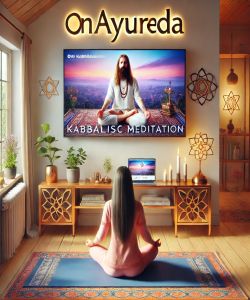
1. Overview of Kabbalistic Meditation
Kabbalistic meditation constitutes a profound esoteric discipline, fundamentally distinct from and far exceeding the scope of contemporary mindfulness or relaxation techniques. It is not an exercise in psychological quietude but a rigorous, theurgic practice aimed at achieving a state of Devekut, or ‘cleaving’ to the Divine. This ancient methodology, rooted in the mystical traditions of Judaism, operates on the premise that the human soul is a microcosm of the divine macrocosm, and that through specific contemplative and visualizational techniques, the practitioner can directly engage with the supernal structures of reality. The objective is ontological alignment, a process wherein the individual consciousness is systematically purified and elevated to resonate with the celestial emanations known as the Sefirot. This is not a passive reception of insight but an active, assertive ascent through the metaphysical architecture of creation. Practitioners do not merely observe their thoughts; they actively utilise them, alongside sacred names, divine letter combinations, and potent visual symbols, to traverse spiritual worlds and draw down divine influx. The ultimate goal is nothing less than the rectification of the self and, by extension, a contribution to Tikkun Olam, the restoration of cosmic harmony. This practice demands immense discipline, intellectual rigour, and a deep commitment to its foundational principles, positioning it as a formidable path for those who seek not comfort, but transformation. It is a direct confrontation with the hidden dynamics of existence, requiring the practitioner to become a conscious and willing participant in the ongoing dialogue between the Creator and Creation. The path is arduous, the requirements absolute, but the purpose is the attainment of the highest possible state of human consciousness: a unified awareness with the Divine source of all being. This is the uncompromising and singular pursuit of Kabbalistic meditation.
2. What are Kabbalistic Meditation?
Kabbalistic meditation refers to a corpus of advanced contemplative practices derived from the esoteric heart of Jewish mysticism. Unlike secular meditation forms that focus on stress reduction or mental clarity for their own sake, Kabbalistic meditation is inherently theistic and goal-oriented, aimed at facilitating a direct, experiential apprehension of the Divine. Its methods are not uniform but comprise a spectrum of sophisticated techniques designed to guide the consciousness beyond the phenomenal world into the supernal realms. At its core, this practice is an operational system for engaging with the metaphysical blueprint of reality as described in Kabbalistic texts, most notably the structure of the ten Sefirot or divine emanations.
The core methodologies can be categorised thus:
- Contemplation on the Sefirot: This involves deep, sustained meditation on the attributes and symbolic meanings of each of the ten Sefirot (e.g., Chesed - Loving-kindness, Gevurah - Strength/Judgement). The practitioner endeavours to internalise these divine qualities, thereby rectifying their own character and aligning their soul with the cosmic order.
- Tzeruf (Letter Permutation): A highly advanced technique, developed by figures such as Abraham Abulafia, which involves the methodical permutation and chanting of Hebrew letters, particularly those forming the sacred names of God. This practice is believed to untie the knots of the soul and induce a prophetic or ecstatic state, dissolving the ordinary structures of consciousness and opening the mind to a direct divine influx.
- Yichudim (Unifications): These are complex visualizational practices wherein the practitioner mentally unites specific divine names or concepts, intending to draw down a specific spiritual energy or effect a particular cosmic rectification. Each Yichud is a precise formula designed for a specific purpose, acting as a spiritual technology to influence the flow of divine energy between worlds.
These are not passive techniques; they are active, volitional engagements with the fundamental forces of creation. The practitioner is not a mere observer but a spiritual artisan, employing sacred tools to refine the soul and participate in the cosmic drama.
3. Who Needs Kabbalistic Meditation?
- Individuals Engaged in Profound Metaphysical Inquiry: Those who have moved beyond superficial spiritual questions and are grappling with the fundamental nature of existence, consciousness, and the Divine require this discipline. It is for the seeker who finds conventional religious dogma or secular philosophy insufficient, and who demands a direct, experiential path to apprehending the hidden structures of reality rather than merely theorising about them. This practice provides a rigorous, systematic framework for such exploration.
- Scholars and Students of Esoteric Texts: Individuals who have dedicated themselves to the intellectual study of Kabbalah but feel a disconnect between theoretical knowledge and lived reality need this practice. Kabbalistic meditation is the praxis that animates the theory. It provides the essential bridge to move from understanding the map of the spiritual worlds to actually traversing the territory, transforming abstract concepts into palpable, internalised truths.
- Practitioners Seeking to Rectify Character Flaws at Their Root: For those who have recognised deep-seated imbalances within their personality—such as an excess of anger, passivity, or pride—and have found conventional psychological methods wanting, this provides a powerful alternative. By meditating on the Sefirot, the divine archetypes of emotional and ethical qualities, the individual can work to re-calibrate their inner constitution, addressing not just the symptoms but the spiritual source of the imbalance in a process known as Tikkun ha-Middot (rectification of character traits).
- Persons Confronting a Pervasive Sense of Existential Void: This meditation is for the individual who experiences a profound sense of spiritual alienation or purposelessness in a mundane world. It is not a palliative but a direct antidote, designed to re-establish the soul’s connection to its divine source. The practice is engineered to fill this existential vacuum with a palpable sense of meaning, purpose, and participation in a greater cosmic narrative, thereby achieving Devekut (cleaving to God).
4. Origins and Evolution of Kabbalistic Meditation
The origins of Kabbalistic meditation are deeply embedded within the mystical strata of Judaism, representing an esoteric tradition that has evolved over millennia. Its earliest discernible roots can be traced to the visionary practices of the biblical prophets and the Merkabah (Chariot) mystics of the Talmudic era. These early adepts engaged in intense contemplative exercises, involving hymns and the recitation of divine names, to induce ecstatic states and achieve visions of the Divine Throne. These were not meditative practices for public consumption but were guarded secrets, transmitted orally from master to disciple, forming the nascent stages of a formal meditative technology.
The formalisation of Kabbalistic meditation began in earnest during the medieval period. In 13th-century Spain, the Gerona school of Kabbalists, including figures like Rabbi Azriel, began to systematise the contemplation of the ten Sefirot. They developed methods for meditating upon these divine emanations to understand their interplay and internalise their attributes. This marked a shift from purely ecstatic goals to a more structured, theurgic approach aimed at personal and cosmic rectification. However, it was Abraham Abulafia who, in the late 13th century, founded what became known as "Prophetic" or "Ecstatic Kabbalah." Abulafia engineered a radical meditative system based on Tzeruf, the permutation and combination of Hebrew letters, particularly the divine names. His explicit goal was to deconstruct the practitioner's normative consciousness, liberating the soul to attain a state of prophetic union with the Divine.
The Lurianic Kabbalah of 16th-century Safed, developed by Rabbi Isaac Luria (the "Arizal"), represents the next major evolutionary leap. Luria introduced highly complex and dynamic meditative techniques known as Yichudim (unifications) and Kavvanot (intentions). These practices were not merely for personal enlightenment but were designed as potent theurgic operations. The practitioner was tasked with mentally manipulating divine names and visualising the flow of energy through the Sefirot to actively participate in Tikkun Olam—the restoration of a fractured cosmos. This Lurianic system became the dominant paradigm, profoundly influencing subsequent Hasidic meditative practices, which sought to democratise and internalise these esoteric techniques for achieving a constant state of Devekut in daily life.
5. Types of Kabbalistic Meditation
- Sefirotic Contemplation: This is a foundational and widely practised form. It involves deep, focused contemplation on the attributes, colours, divine names, and symbolic imagery associated with each of the ten Sefirot on the Tree of Life. The practitioner systematically meditates on each emanation, from Keter (Crown) to Malkhut (Kingdom), seeking not only to understand its intellectual meaning but to internalise its quality. For instance, meditating on Chesed (Loving-kindness) aims to cultivate that attribute within the self, whilst contemplating Gevurah (Severity/Discipline) aims to instil discernment and strength. The goal is a balanced integration of all ten divine qualities within the psyche, leading to personal rectification (Tikkun ha-Nefesh).
- Tzeruf (Letter Permutation): Developed by the 13th-century Kabbalist Abraham Abulafia, this is a highly advanced and ecstatic form of meditation. It involves the methodical manipulation and vocalisation of Hebrew letters, particularly those constituting the sacred names of God. Practitioners follow complex formulae to permute the letters, combining them in non-semantic ways whilst coordinating breath and head movements. This intense practice is designed to dismantle the ordinary, language-based structures of the mind, thereby breaking down the barriers of the ego and inducing a pre-rational, prophetic state of consciousness that allows for a direct influx of divine energy.
- Yichudim (Unifications): This theurgic type of meditation, central to Lurianic Kabbalah, involves complex visualisations intended to create unions between different divine names or aspects of the Sefirot. Each Yichud is a specific formula designed for a precise purpose, such as drawing down a particular type of divine influx, elevating fallen sparks of holiness, or rectifying a specific cosmic imbalance. The practitioner becomes an active agent in cosmic repair (Tikkun Olam), using their consciousness as a conduit to forge metaphysical connections and restore harmony to the supernal worlds. This demands immense concentration and a deep understanding of Kabbalistic cosmology.
6. Benefits of Kabbalistic Meditation
- Attainment of Metaphysical Insight: The primary benefit is not psychological comfort but the acquisition of direct, experiential knowledge of the underlying structure of reality. The practice facilitates a profound understanding of the self, the cosmos, and the nature of the Divine, moving beyond mere faith or belief into a state of lived, Gnostic apprehension.
- Profound Character Rectification: Through sustained contemplation on the Sefirot, the divine archetypes of all ethical and emotional qualities, the practitioner can systematically identify and correct imbalances within their own personality. This process, known as Tikkun ha-Middot, enables the transformation of negative traits such as anger, arrogance, or apathy into their holy counterparts, leading to a refined and harmonised character.
- Enhanced Mental and Spiritual Discipline: The rigorous techniques, particularly those involving letter permutation (Tzeruf) and complex visualisations (Yichudim), demand and cultivate an extraordinary level of mental focus, concentration, and willpower. This disciplined state of mind extends beyond the meditative practice itself, fortifying the individual against distraction and spiritual torpor in all aspects of life.
- Achievement of Devekut (Cleaving to God): The ultimate aim and paramount benefit is the cultivation of a persistent state of conscious union with the Divine. This is not a fleeting emotional high but a stable, abiding awareness of the divine presence that permeates all of existence, dissolving feelings of alienation and existential dread.
- Active Participation in Cosmic Restoration: In the Lurianic tradition, the practitioner is not a passive recipient of benefits but an active agent in Tikkun Olam (the restoration of the world). The meditations are understood to have a real, theurgic effect, elevating fallen sparks of holiness and helping to restore divine harmony, thereby imbuing the individual's life with ultimate purpose and significance.
- Liberation from Ego-Centric Consciousness: The ecstatic and deconstructive techniques are specifically designed to dismantle the rigid structures of the ego. This liberation from a limited, self-centred perspective allows for a more expansive, selfless, and authentic mode of being, aligned with the will of the soul rather than the demands of the ego.
7. Core Principles and Practices of Kabbalistic Meditation
- Theocentric Focus: The foundational principle is that all meditation is directed towards the Divine. Unlike humanistic or secular approaches, the focus is never solely on the self. The goal is Devekut (cleaving to God), and every practice, intention, and visualisation is calibrated to bridge the perceived gap between the human and the Divine. The self is seen as a vessel to be purified and prepared for divine influx, not an end in itself.
- The Doctrine of the Sefirot: The practice is inextricably linked to the metaphysical model of the ten Sefirot. These divine emanations form the map and the very substance of the meditation. Practitioners must possess a working knowledge of the Tree of Life, as meditations involve systematically ascending, descending, or balancing the energies of these ten divine attributes within one's own consciousness.
- The Power of Sacred Language: The Hebrew language, particularly its twenty-two letters, is considered not merely symbolic but as the very building blocks of creation. Meditative practices, therefore, heavily utilise the chanting, permutation (Tzeruf), and visualisation of Hebrew letters and divine names (Shemot). This is a precise spiritual technology, not a vague mantra, believed to have a direct effect on the structure of consciousness and the fabric of reality.
- Kavvanah (Directed Intention): No practice is to be performed mechanically. Kavvanah, the focused, conscious intention behind every meditative act, is paramount. Before and during the meditation, the practitioner must hold a clear and precise intention, whether it be to internalise a Sefirotic quality, achieve a state of prophecy, or perform a specific cosmic rectification (Tikkun). The intention is the steering mechanism for the spiritual energy invoked.
- The Practice of Hitbodedut (Seclusion): A preparatory and ongoing practice of seclusion and self-isolation is essential. This involves setting aside dedicated time to converse with the Divine in one's own words, to clear the mind of mundane distractions, and to create a sanctified mental and physical space in which the formal, structured meditations can be effectively performed.
- Body and Breath Coordination: The physical body is not ignored but is utilised as a tool in the meditative process. Specific techniques, especially within the Abulafian school, require coordinated breathing patterns and controlled head movements that correspond to the vocalisation of divine names. This integration of body, breath, and mind is crucial for shifting consciousness from its ordinary state.
- Ethical Purity as a Prerequisite: Kabbalistic meditation is not a morally neutral technique. It is taught that access to higher spiritual states is contingent upon a foundation of ethical purity and the observance of divine commandments (Mitzvot). The refinement of character is not just a goal of the meditation but a strict prerequisite for safe and effective practice.
8. Online Kabbalistic Meditation
- Democratisation of Esoteric Access: The online modality removes geographical and institutional barriers, granting access to this profound discipline to serious practitioners worldwide. Individuals who are not located near established centres of learning can now engage directly with authentic teachings and guided practices, provided they possess the requisite discipline and sincerity. This platform transcends physical locality, creating a global conclave of dedicated seekers.
- Structured and Consistent Guidance: Online courses and sessions provide a highly structured and repeatable learning environment. Unlike sporadic workshops, a digital platform allows for the methodical delivery of complex concepts and techniques. The practitioner can revisit lessons, review guided meditations, and engage with material at a pace conducive to deep integration, ensuring that the foundational principles are thoroughly absorbed before advancing to more complex practices.
- Creation of a Focused, Non-Physical Sacred Space: The online environment necessitates that the practitioner takes absolute responsibility for sanctifying their own physical space. This act of consciously creating a personal sanctuary, free from interruption, fosters a powerful internal discipline. The sacred space is not external but is built within the practitioner's own consciousness and immediate surroundings, a skill that is fundamental to advanced spiritual work and is rigorously cultivated through this medium.
- Anonymity and Reduced Social Pressure: Engaging in deep, often emotionally and spiritually intense, meditative work can be inhibited by the social dynamics of a physical group. The relative anonymity of an online setting allows the practitioner to engage with the material with greater honesty and vulnerability, free from the self-consciousness or competitive pressures that can arise in an in-person environment. The focus remains squarely on the internal work.
- Access to Specialised Expertise: The digital realm allows practitioners to connect with highly specialised and authentic instructors, regardless of their location. A seeker is no longer limited to the teachers available in their immediate vicinity but can seek out and learn from a guide whose expertise precisely matches their spiritual needs, whether it be in Lurianic Yichudim, Abulafian Tzeruf, or Sefirotic contemplation. This ensures a higher calibre of instruction and guidance.
9. Kabbalistic Meditation Techniques
- Step One: Preparation and Sanctification of Space: Before commencing any formal meditation, the practitioner must ensure their physical environment is clean, quiet, and free from all potential disturbances. One must perform a ritual ablution or washing of the hands, symbolising a purification of action. It is imperative to state a clear Kavvanah (intention) for the session, dedicating the practice to a higher purpose, such as personal rectification or the elevation of divine sparks.
- Step Two: Foundational Relaxation and Centring: Sit in a dignified, upright posture, either on a chair with the feet flat on the floor or in a cross-legged position. Close the eyes and focus on the breath. Breathe deeply and rhythmically, consciously releasing physical tension and mental clutter with each exhalation. This is not the goal but a necessary preliminary phase to quiet the ‘noise’ of the mundane world and achieve a baseline state of receptivity.
- Step Three: Invocation and Focusing on a Sacred Object: Verbally or mentally invoke a divine name or attribute relevant to the meditation's objective. This could be a name of God, such as Eh-heh-yeh Asher Eh-heh-yeh (I Am That I Am), or the name of a Sefirah like Chesed (Loving-kindness). The object of focus now becomes this sacred concept. For Sefirotic work, one may visualise the associated colour, symbol, and Hebrew letters of the chosen Sefirah.
- Step Four: The Core Contemplative Practice:
- For Sefirotic Meditation: Deeply contemplate the meaning and essence of the chosen Sefirah. Ask how this quality manifests in the cosmos and how it is either lacking or present in your own life. Feel the quality of this divine energy as if it were flowing into you, purifying and rectifying your corresponding inner attribute.
- For Tzeruf (Letter Permutation): Begin the systematic chanting and permutation of the chosen Hebrew letters according to a prescribed formula. Coordinate the chanting with specific breathing patterns and, if instructed, head movements. The focus must be absolute, allowing the rational mind to be submerged by the vibratory power of the sounds.
- Step Five: Integration and Grounding: After the designated period for the core practice, cease the activity and sit in silence for several minutes. Allow the insights and energies invoked to integrate into your consciousness. Do not analyse immediately. Simply be present with the after-effects. Following this silence, consciously bring your awareness back to your physical body and your surroundings. Perform a concluding prayer or statement of gratitude, and then slowly open your eyes. It is crucial to re-engage with the physical world deliberately and not abruptly.
10. Kabbalistic Meditation for Adults
Kabbalistic meditation is an exclusively adult discipline, demanding a level of psychological maturity, intellectual rigour, and existential fortitude that is simply not present in youth. This is not a recreational spiritual hobby; it is a formidable undertaking into the deepest strata of the psyche and the metaphysical structure of existence. An adult practitioner is expected to possess a stable sense of self, one that is robust enough to withstand the deconstructive and transformative pressures inherent in the practice. The techniques, particularly ecstatic methods like Tzeruf or the complex theurgic visualisations of Yichudim, can be profoundly disorienting to a psyche that is not yet fully formed or is prone to instability. Furthermore, the abstract and highly sophisticated concepts underpinning the practice, such as the dynamics of the Sefirot, the doctrine of cosmic shattering and restoration (Shevirat ha-Kelim and Tikkun Olam), and the theology of divine names, require a developed capacity for abstract thought and sustained intellectual effort. The practice also presupposes a significant degree of life experience. The process of character rectification (Tikkun ha-Middot) is meaningless without an adult's self-awareness of their own ingrained character flaws, patterns, and life challenges. It is through the lens of lived experience—of success, failure, love, and loss—that the esoteric teachings gain their traction and relevance. An adult brings to the meditation a history of personal struggles and triumphs, providing the raw material upon which the transformative alchemy of Kabbalah can work. The commitment required is total, and only an adult, with full autonomy over their time, energy, and spiritual direction, can make such an uncompromising commitment. It is a path for those who are done with simple answers and are prepared to engage in the demanding work of radical self-transformation.
11. Total Duration of Online Kabbalistic Meditation
The designated total duration for a single, focused session of online Kabbalistic meditation is meticulously calibrated to be precisely 1 hr. This specific timeframe is not arbitrary but is a functional necessity dictated by the psychospiritual arc of the practice itself. A shorter period would be insufficient to move the practitioner beyond the initial layers of mental distraction and into the deeper states of consciousness required for meaningful engagement with the supernal realms. The initial phase of any session is consumed by the necessary work of calming the body, focusing the mind, and consciously disengaging from the incessant demands of mundane awareness. To truncate the practice before this foundation is firmly established would be to render the entire exercise superficial. Conversely, for a practitioner who is not a seasoned adept, extending the session significantly beyond the 1 hr mark risks psychic fatigue and spiritual destabilisation. The powerful energies and altered states of consciousness invoked during authentic Kabbalistic meditation require a controlled and structured container. The 1 hr duration provides an optimal window to perform the ascent into the contemplative state, engage in the core practice—be it Sefirotic contemplation, Tzeruf, or a Yichud—and, critically, to execute a safe and gradual descent back into normative consciousness. This structured re-entry is paramount to ensure that the profound experiences are properly integrated rather than causing psychological fragmentation. Thus, the 1 hr session represents a complete, self-contained ritual cycle, engineered for maximum efficacy and safety within the digital framework, demanding and respecting the practitioner's full and undivided attention for its entire length.
12. Things to Consider with Kabbalistic Meditation
Engaging with Kabbalistic meditation demands a sober and comprehensive consideration of its profound nature and stringent requirements. This is not a casual therapeutic modality but a potent spiritual technology with transformative, and potentially destabilising, effects. A primary consideration must be the practitioner's own psychological stability and maturity. This path is entirely unsuitable for individuals with a history of serious mental illness, psychosis, or a tenuous grip on reality, as the practices are designed to alter consciousness in ways that could exacerbate such conditions. One must possess a robust and well-integrated ego structure before attempting practices specifically designed to transcend it. Secondly, the necessity of authentic guidance cannot be overstated. The complexities of the Kabbalistic map of consciousness and the power of its techniques, especially those involving divine names, require the oversight of a qualified and experienced teacher. To embark on this path in isolation, armed only with books, is an act of extreme hubris and is fraught with peril, risking misinterpretation, psychological inflation, or misapplication of powerful spiritual forces. Furthermore, the practitioner must honestly assess their own motivation. If the goal is merely to acquire spiritual powers, impress others, or escape from personal problems, the practice will inevitably lead to failure and disillusionment. The only valid motivation is a sincere, selfless desire for Devekut (union with the Divine) and a commitment to personal and cosmic rectification (Tikkun). Finally, one must be prepared for a long-term, arduous commitment. There are no shortcuts in this work. It requires immense patience, discipline, and a willingness to confront one's own deepest flaws and limitations. This is a marathon, not a sprint, and any expectation of rapid, spectacular results is a delusion that must be relinquished before one even begins.
13. Effectiveness of Kabbalistic Meditation
The effectiveness of Kabbalistic meditation is absolute, provided its conditions are rigorously met. Its efficacy is not a matter of subjective feeling or psychological relief, but of objective transformation measured against its own profound goals: the rectification of character, the attainment of metaphysical insight, and the achievement of Devekut, or cleaving to God. When pursued with unwavering discipline, correct technique, and pure intention, under the guidance of an authentic teacher, the practice is a direct and potent mechanism for re-engineering the human consciousness. Its effectiveness lies in its precision. Unlike vague contemplative styles, Kabbalistic meditation employs a specific technology—the Sefirot as a map of consciousness, sacred Hebrew letters as creative energy, and Kavvanot as the focusing lens—to enact definite changes within the practitioner's soul. The system is designed to systematically dismantle the ego's illusory constructs and align the individual's will with the Divine will. Its effectiveness is therefore contingent upon the practitioner’s total commitment. Half-measures, intellectual dabbling, or a lack of ethical preparation will yield no results, or worse, negative ones. The practice is a spiritual crucible; it effectively burns away dross and purifies the essential self. For those who enter into it with the requisite seriousness and integrity, the outcome is not merely a calmer mind but a fundamentally transformed state of being—one that is aligned with the cosmic order, imbued with profound purpose, and consciously connected to the source of all existence. Its effectiveness is therefore not a variable to be debated but a consequence to be earned through absolute dedication. The system does not fail the practitioner; the practitioner can only fail the system by not meeting its uncompromising demands.
14. Preferred Cautions During Kabbalistic Meditation
It is imperative to approach the practice of Kabbalistic meditation with the utmost caution and sobriety, recognising it as a potent spiritual discipline, not a therapeutic pastime. A paramount caution is against undertaking this work without authentic, qualified guidance. The esoteric teachings and powerful techniques, particularly those involving the permutation of divine names (Tzeruf) or complex theurgic visualisations (Yichudim), can be profoundly dangerous if misinterpreted or misapplied. Attempting such practices in isolation is an act of spiritual recklessness that can lead to severe psychological imbalance, messianic delusion, or psychic fragmentation. One must exercise extreme caution against spiritual pride or ego-inflation. As one begins to experience altered states or gain deeper insights, the temptation to view oneself as spiritually superior is a significant trap. This must be aggressively counteracted with humility and a constant remembrance that any attainment is a gift from the Divine, not a product of personal greatness. Furthermore, a strict caution must be observed against using this practice for selfish or manipulative ends. Attempting to use Kabbalistic techniques to gain power over others, acquire material wealth, or for any ego-driven purpose is a perversion of their sacred intent and will inevitably backfire, creating negative karmic and psychological consequences. Practitioners must also be cautious about over-exertion. Meditating for excessive lengths of time or pushing into advanced practices prematurely can overwhelm the psychic circuitry, leading to burnout or destabilisation. The practice must be built gradually upon a solid foundation. Finally, one must remain grounded in reality. It is crucial to maintain one's responsibilities in the world, not using spirituality as an escape. The goal is to bring the divine light into this world, not to flee from it.
15. Kabbalistic Meditation Course Outline
Module One: Foundational Principles and Metaphysical Framework
Introduction to the Kabbalistic worldview: God, Creation, and the purpose of existence.
The Doctrine of the Four Worlds (Atzilut, Beriah, Yetzirah, Assiah).
The structure and dynamics of the Tree of Life and the ten Sefirot.
The concepts of Tikkun Olam (Cosmic Rectification) and Devekut (Cleaving to God).
The imperative of Kavvanah (Intention) and ethical purity (Mitzvot).
Module Two: Preparatory Practices and Mental Discipline
Techniques for sanctifying physical and mental space.
Mastering foundational breath control for spiritual practice.
The practice of Hitbodedut: Establishing a personal dialogue with the Divine.
Developing unwavering concentration and mental focus.
Introduction to Hebrew letters and their sacred significance.
Module Three: Contemplation of the Lower Sefirot
Guided meditation on Malkhut (Kingdom): Grounding in reality and purpose.
Guided meditation on Yesod (Foundation): Rectifying the subconscious and personal integrity.
Guided meditation on Hod (Splendour) and Netzach (Victory): Balancing intellect and emotion.
Guided meditation on Tiferet (Beauty/Harmony): Integrating the heart centre.
Module Four: Contemplation of the Upper Sefirot and Emotional Rectification
Guided meditation on Gevurah (Severity/Discipline): Cultivating discernment and strength.
Guided meditation on Chesed (Loving-kindness): Cultivating boundless compassion.
The dynamic balance: Uniting Chesed and Gevurah within the self.
Introduction to Tikkun ha-Middot (Rectification of Character Traits) through Sefirotic meditation.
Module Five: Introduction to Advanced Techniques
Overview of the principles of Yichudim (Unifications) and their purpose.
Introduction to the theory of Tzeruf (Letter Permutation) as per the Abulafian school.
A simple, guided meditation involving a divine name.
Ethical considerations and safeguards for advanced practice.
Module Six: Integration and Application
Techniques for integrating meditative states into daily consciousness.
Maintaining a state of Devekut amidst mundane activity.
The role of the practitioner as an agent of Tikkun.
Formulating a sustainable, long-term personal practice.
Final review and commitment to the path.
16. Detailed Objectives with Timeline of Kabbalistic Meditation
Initial Phase (First Quartile of Engagement): Foundational Grounding and Discipline.
Objective: To establish a non-negotiable, disciplined daily practice. The practitioner will master basic concentration techniques and demonstrate the ability to achieve a state of mental quietude preparatory to deeper work.
Objective: To acquire and internalise the fundamental theoretical framework of the Kabbalah, including the Four Worlds and the structure of the ten Sefirot, moving from rote memorisation to conceptual understanding.
Objective: To demonstrate proficiency in Hitbodedut, establishing a personal and sincere channel of communication with the Divine as a foundation for all subsequent formal meditation.
Developmental Phase (Second Quartile): Sefirotic Internalisation and Character Work.
Objective: To systematically engage in contemplative meditation on each of the lower seven Sefirot. The practitioner will be able to articulate the meaning of each Sefirah and identify its corresponding quality within their own psyche.
Objective: To actively utilise Sefirotic meditation for Tikkun ha-Middot (character rectification). The practitioner will identify a key character flaw and apply the corresponding meditative practice to begin its transmutation, documenting the process.
Objective: To achieve a palpable sense of the Sefirotic energies, moving from purely intellectual contemplation to an experiential sensing of these divine qualities.
Advanced Phase (Third Quartile): Engagement with Higher Concepts and Techniques.
Objective: To begin contemplative work on the upper three "intellectual" Sefirot (Binah, Chokhmah, Keter), approaching the limits of conceptual thought.
Objective: Under strict guidance, to be introduced to the theory and basic practice of either a simple Yichud (unification) or a foundational Tzeruf (letter permutation) exercise, focusing on safety and precision over intensity.
Objective: To cultivate a consistent state of Kavvanah (focused intention) that permeates not only the meditation session but begins to inform daily actions.
Integration Phase (Final Quartile): Unification of Practice and Life.
Objective: To seamlessly integrate the insights and states achieved in meditation into everyday life, breaking down the barrier between the sacred and the mundane.
Objective: To formulate a personalised, sustainable, and advanced daily practice that addresses the practitioner's unique spiritual constitution and goals.
Objective: To achieve a stable, foundational state of Devekut (cleaving to God), wherein the awareness of the Divine presence is a constant, underlying reality in the practitioner's consciousness.
17. Requirements for Taking Online Kabbalistic Meditation
- Unwavering Personal Discipline: The practitioner must possess a high degree of self-motivation and discipline. The online format removes the external pressure of a physical group, placing the full responsibility for consistent practice, study, and attendance squarely on the individual. Procrastination or a lack of self-control is an immediate disqualifier.
- Psychological Stability and Maturity: A robust and stable psychological disposition is non-negotiable. Applicants must be emotionally mature and free from any current or recent history of severe mental health disorders. The practice is transformative, not therapeutic, and requires a strong psychic container to handle the profound shifts in consciousness it induces.
- A Dedicated and Sanctified Physical Space: The practitioner must be able to secure a private, quiet space for the duration of each session, guaranteed to be free from any interruptions. This space must be treated as a sanctuary, kept clean and orderly, reflecting the seriousness of the work being undertaken. A chaotic or shared environment is unsuitable.
- Reliable and Uninterrupted Technology: A high-speed, stable internet connection is an absolute necessity. Technical failures are not an acceptable excuse for absence or disruption. The practitioner must possess and be proficient in using a computer or device with a functioning webcam and microphone, as visual and auditory presence may be mandated for certain guided sessions to ensure safety and engagement.
- Commitment to Preparatory Study: The practitioner is required to engage in significant theoretical study prior to and concurrent with the meditative practices. This includes reading assigned texts on Kabbalistic cosmology and philosophy. A refusal to engage with the intellectual underpinnings of the practice demonstrates a lack of the requisite seriousness.
- Sincerity of Intent: The sole acceptable motivation is a genuine and profound desire for spiritual growth and union with the Divine (Devekut). Individuals seeking spiritual powers for egoic purposes, mere intellectual curiosity, or as a form of entertainment will not be admitted or will be swiftly removed. A rigorous and honest self-assessment of one's intentions is the first and most critical requirement.
- Absolute Confidentiality: The practitioner must commit to maintaining the absolute confidentiality of the teachings, the identity of other participants, and any personal experiences shared within the group context. This is a matter of sacred trust and respect for the integrity of the spiritual container created online.
18. Things to Keep in Mind Before Starting Online Kabbalistic Meditation
Before embarking upon the formidable path of online Kabbalistic meditation, a period of rigorous self-examination is not merely advisable but essential. One must first disabuse oneself of any romantic or superficial notions about the practice. This is not a quick fix for worldly problems or a gentle path to relaxation; it is a demanding esoteric discipline requiring total commitment. You must honestly assess your capacity for sustained, solitary work. The online format, whilst offering accessibility, places the onus of discipline entirely upon you. There will be no external authority compelling your attendance or ensuring your focus; your progress will be a direct function of your own internalised resolve. It is imperative to understand that technology, while a facilitator, can also be a barrier. You must ensure your technical setup is flawless and that you have created a physical sanctuary impervious to the distractions of the digital and domestic worlds. This requires a level of environmental control and personal authority that many underestimate. Furthermore, you must be prepared to confront the deepest, most challenging aspects of your own psyche. This meditation will dredge up hidden patterns, fears, and character flaws. The screen will offer no buffer from this internal confrontation. You must be ready to face what you find with courage and humility, without the immediate physical comfort of a guide or group. Finally, acknowledge that this path demands a synthesis of heart and mind. You must be willing to engage in rigorous intellectual study of its complex cosmology whilst simultaneously cultivating a state of profound faith and surrender. If you are unwilling to engage fully on both fronts—the intellectual and the devotional—your journey will be incomplete and ultimately unsuccessful. This is a total commitment of your being, not a partitioned activity.
19. Qualifications Required to Perform Kabbalistic Meditation
The authority to guide others in the profound and perilous practice of Kabbalistic meditation is not conferred by any standard academic degree or secular certification. It is earned through a rigorous and extensive apprenticeship within an authentic, living tradition. The primary qualification is a demonstrable, long-term commitment to the path, evidenced by years, if not decades, of personal practice and dedicated study under a recognised master. The guide must have traversed the very terrain they intend to map for others, having personally grappled with the techniques, confronted the psychological and spiritual challenges, and achieved a stable, integrated state of higher consciousness. Theoretical knowledge, while essential, is grossly insufficient on its own. The qualified individual must possess not only an intellectual mastery of Kabbalistic texts but also a deep, experiential understanding of their application.
Key, non-negotiable qualifications include:
- A Valid Lineage (Shalshelet ha-Kabbalah): The guide must be able to trace their teaching authority back through a recognised chain of transmission. This ensures the methods and interpretations are not of their own invention but are part of an authentic, time-tested esoteric tradition. Self-proclaimed experts operating outside a lineage are to be regarded with extreme suspicion.
- Demonstrable Ethical Integrity: The guide must be a living exemplar of the ethical principles (Middot) that the practice seeks to cultivate. They must exhibit humility, integrity, and a life dedicated to service rather than to the accumulation of wealth, fame, or followers. Their personal life must be in alignment with the sacred teachings they purport to represent.
- Psychological Acumen: A qualified guide must possess a sharp and discerning understanding of human psychology. They must be able to accurately assess a student's readiness for advanced practices, recognise signs of spiritual crisis or ego-inflation, and provide firm, compassionate, and effective counsel to navigate the inevitable challenges of the path.
Ultimately, the true qualification is a palpable spiritual presence, a state of Devekut that can be sensed by the sincere student. This is the intangible but most critical credential of all.
20. Online Vs Offline/Onsite Kabbalistic Meditation
Online
The online modality for Kabbalistic meditation presents a distinct set of advantages and challenges, defined by its removal of geographical constraints. Its primary strength lies in its accessibility. It grants serious practitioners, irrespective of their physical location, access to authentic, high-calibre teachers who would otherwise be unreachable. This democratisation of esoteric knowledge allows for the formation of a global community of seekers, united by purpose rather than proximity. The online environment demands a higher degree of personal discipline and self-motivation, as the practitioner is solely responsible for creating and maintaining their own sacred space and adhering to the schedule. This can forge a stronger internal resolve. Furthermore, the relative anonymity can facilitate a more focused, introverted practice, free from the social distractions or performance anxieties that can arise in a physical group. However, the critical limitation is the absence of direct, unmediated energetic transmission from teacher to student. The subtle, non-verbal guidance and the powerful, stabilising aura of a master are inevitably filtered and diminished through a digital interface. The risk of misunderstanding or psychological distress without immediate, in-person intervention is also heightened. The online path is therefore best suited for disciplined, self-reliant individuals with a stable psychological foundation.
Offline/Onsite
The traditional, offline or onsite method of learning Kabbalistic meditation offers an irreplaceable depth of experience. Its core advantage is the direct presence of the teacher. The student benefits not only from the spoken word but from the master's entire being—their subtle energetic influence, their immediate corrective feedback, and the stabilising atmosphere they create. This unmediated transmission (Shefa) is considered essential in many traditional lineages for safely navigating advanced states of consciousness. The collective energy of a dedicated group, meditating together in a consecrated space, creates a powerful spiritual container that can support and elevate the individual practitioner in ways that solitary online practice cannot. The commitment is made tangible by the physical act of travelling to a specific location, which reinforces the seriousness of the undertaking. The primary disadvantage is its inherent exclusivity; it is limited to those who are geographically proximate to a centre of learning or who have the resources to travel. The social dynamics of a group can also become a distraction for some. The offline path is the classical and arguably the most potent form of instruction, providing a holistic and immersive spiritual environment that is impossible to replicate fully through digital means.
21. FAQs About Online Kabbalistic Meditation
Question 1. Is online Kabbalistic meditation less effective than in-person? Answer: It is different, not inherently less effective. Its effectiveness is contingent upon your discipline. Whilst it lacks direct physical presence, it demands and builds a stronger internal resolve and responsibility.
Question 2. Is this practice safe to learn online? Answer: It is safe provided it is undertaken with an authentic guide and you are psychologically stable. Reputable courses will have screening processes and safety protocols. Avoid any programme that promises instant results without rigorous preparation.
Question 3. What technology is absolutely required? Answer: A reliable, high-speed internet connection, a computer with a functional webcam and microphone, and a quiet, private space are non-negotiable.
Question 4. Must I have my camera on during sessions? Answer: Yes, in most authentic guided sessions. It is a critical tool for the instructor to assess your state and ensure you are practising correctly and safely. It is a matter of accountability.
Question 5. What if I lose my internet connection mid-session? Answer: You are expected to have a stable connection. In the event of a failure, the protocol is usually to ground yourself, conclude your practice quietly, and reconnect if possible. Consistent technical issues are not tolerated.
Question 6. How can a sacred space be created online? Answer: The sacred space is not the internet; it is the physical room you are in, which you must personally sanctify. The online platform is merely the conduit for instruction.
Question 7. Can I truly achieve Devekut through a screen? Answer: Devekut is an internal state of consciousness. The screen is irrelevant. If your intention is pure and your practice is correct, the connection you forge is with the Divine, not with your computer.
Question 8. Is prior knowledge of Hebrew necessary? Answer: While highly beneficial, it is not always a strict prerequisite for introductory courses, which will teach the necessary letters and names. However, a commitment to learning is expected for advancement.
Question 9. Is this a religious practice? Must I be Jewish? Answer: It is a practice rooted in Jewish mysticism. Whilst some courses may be open to sincere seekers from any background, you must be willing to engage respectfully with its theistic and Judaic framework.
Question 10. How is an online teacher's authenticity verified? Answer: Scrutinise their lineage, their long-term commitment, and the sobriety of their teachings. Authentic teachers emphasise discipline, humility, and long-term work, not spiritual entertainment or quick fixes.
Question 11. What is the difference between this and mindfulness? Answer: They are fundamentally different. Mindfulness is about passive observation of the mind. Kabbalistic meditation is an active, theurgic practice to engage with Divine reality.
Question 12. Can this be combined with other spiritual practices? Answer: Generally, no. It is a complete and demanding system. Attempting to mix it with other paths often leads to confusion and dilutes its efficacy.
Question 13. Is there a risk of psychological distress? Answer: Yes, as with any potent consciousness-altering practice, especially if undertaken without proper guidance or psychological readiness. This is why screening and caution are paramount.
Question 14. Will this help me predict the future? Answer: No. That is a gross misunderstanding of its purpose. Its goal is divine union and self-rectification, not psychic parlour tricks.
Question 15. What if I feel overwhelmed during a meditation? Answer: A proper guide will provide instructions for safely grounding yourself, which typically involves focusing on the breath, the physical body, and gently disengaging from the practice.
Question 16. How much time commitment is required outside of sessions? Answer: Significant. Daily personal practice and theoretical study are mandatory for any meaningful progress.
Question 17. Can I record the sessions for later review? Answer: Almost universally, no. Recording is forbidden to protect the confidentiality and sacredness of the live session.
22. Conclusion About Kabbalistic Meditation
In conclusion, Kabbalistic meditation stands as a formidable and uncompromising spiritual discipline, a world away from the palliative spiritualism of the modern era. It is not a path of comfort but one of profound challenge and radical transformation. Its entire architecture—from the contemplation of the Sefirot to the ecstatic permutation of sacred letters—is engineered for a single, ultimate purpose: to shatter the mundane confines of the ego and achieve Devekut, a conscious and abiding union with the Divine. This pursuit demands nothing less than the total commitment of the individual: their intellectual rigour, their emotional honesty, and their unyielding will. The path requires a foundation of ethical purity and is contingent upon the guidance of an authentic teacher within a valid lineage, for to walk it alone is to court peril. The practitioner is not a passive recipient of bliss but an active participant in Tikkun Olam, the cosmic process of restoration, using their own refined consciousness as the instrument of repair. Whether pursued through the focused discipline of an online modality or the immersive environment of a physical setting, the core demands remain absolute. It is a path for the spiritual warrior, for the seeker who is no longer satisfied with borrowed truths and who has the courage to undertake the arduous work of forging their soul into a clear vessel for divine light. It offers no simple answers or easy consolations, but for those who meet its stringent requirements, it provides a direct and verifiable means of experiencing the deepest truths of existence and fulfilling the ultimate purpose of a human life.