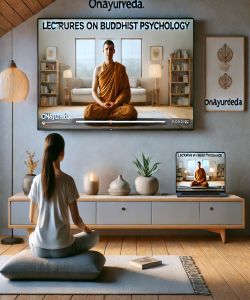
1. Overview of Lectures on Buddhist Psychology
Lectures on Buddhist Psychology constitute a rigorous and systematic exploration of the nature of consciousness, perception, and the human condition, derived from a philosophical tradition spanning millennia. This is not a passive spiritual discourse but an assertive intellectual and practical framework designed to deconstruct the mechanisms of mental suffering and cultivate profound psychological equilibrium. These lectures methodically dissect the intricate interplay between thought, emotion, and behaviour, presenting a cohesive model of the mind that stands as a potent alternative and complement to conventional Western psychological paradigms. The discipline eschews dogma in favour of direct phenomenological inquiry, demanding that participants engage in a critical examination of their own subjective experience. It is predicated on the foundational premise that distress, or Dukkha, is not an immutable facet of existence but a contingent state arising from specific, identifiable cognitive and affective patterns. Consequently, the curriculum is geared towards providing the analytical tools and contemplative techniques necessary to recognise, interrupt, and ultimately transform these patterns. It is a demanding field of study that requires intellectual commitment and a willingness to confront deeply ingrained assumptions about the self and reality. The ultimate objective is not mere academic understanding but the cultivation of an enduring mental resilience, clarity, and an authentic sense of well-being, achieved through the disciplined application of its core principles. This framework offers a comprehensive cartography of the inner world, guiding the individual from a state of reactive turmoil to one of deliberate, conscious agency. It is, in essence, a profound training in the art and science of mind mastery, demanding rigour, discipline, and an uncompromising commitment to self-inquiry. The insights offered are not consolations but functional instruments for radical personal transformation.
2. What are Lectures on Buddhist Psychology?
Lectures on Buddhist Psychology are structured, didactic presentations that elucidate the sophisticated psychological models embedded within Buddhist philosophy. Far from being religious sermons, they are analytical examinations of the mind, its functions, and its potential for transformation. These lectures function as a comprehensive educational programme, translating ancient Pali and Sanskrit concepts into a coherent, applicable framework for understanding mental processes. They systematically unpack the architecture of human experience, detailing the causal relationships between sensory input, perception, feeling, and cognitive reaction. The core subject matter is the analysis of consciousness itself, exploring how mental states arise, persist, and cease. A central focus is the delineation of wholesome and unwholesome mental factors, providing a precise taxonomy of the mind’s contents and their impact on an individual’s well-being.
The lectures serve several distinct functions:
- Epistemological Framework: They provide a unique lens through which to investigate the nature of knowledge and reality, challenging conventional, subject-object dichotomies and proposing a model based on interdependent co-arising.
- Diagnostic Tool: They offer a detailed map of psychological distress, identifying the root causes—typically articulated as greed, hatred, and delusion—and their manifold expressions in anxiety, depression, and existential unease.
- Prescriptive Guide: Beyond diagnosis, these lectures prescribe a clear, methodical path for mental cultivation. This includes the development of ethical conduct (Sīla), mental discipline (Samādhi), and wisdom (Paññā).
- Practical Instruction: They are inextricably linked to contemplative practices. The theoretical knowledge imparted in a lecture is designed to be directly investigated and verified through meditation, mindfulness, and sustained introspection.
In essence, Lectures on Buddhist Psychology represent a form of psycho-education that is both profoundly philosophical and eminently practical. It is a system designed not for passive belief, but for active investigation and personal verification, equipping individuals with the conceptual clarity and practical skills required to navigate their inner world with heightened awareness and sovereign control.
3. Who Needs Lectures on Buddhist Psychology?
- Mental Health Professionals: Psychologists, therapists, counsellors, and psychiatrists seeking to augment their clinical toolkit with sophisticated, non-pharmacological approaches to mental and emotional regulation. This framework provides profound insights into the nature of suffering and offers time-tested methods for cultivating mindfulness, compassion, and cognitive clarity, which can be integrated into existing therapeutic modalities.
- Academics and Students: Scholars and students in the fields of psychology, philosophy, religious studies, and neuroscience who require a rigorous, in-depth understanding of a major non-Western system of thought. These lectures provide the essential theoretical foundation for research and comparative analysis.
- Corporate Leaders and Executives: Senior managers and decision-makers operating in high-stress environments who need to develop superior emotional resilience, focus, and strategic foresight. The principles taught enhance leadership capacity by fostering equanimity, improving interpersonal dynamics, and clarifying decision-making processes.
- Individuals Experiencing Existential Disquiet: Persons grappling with fundamental questions of meaning, purpose, and the nature of existence, who find conventional answers inadequate. The lectures offer a structured, logical framework for self-inquiry that directly addresses these profound human concerns without recourse to dogma.
- Practitioners of Contemplative Disciplines: Individuals already engaged in meditation or mindfulness practices who seek to deepen their understanding of the underlying psychological theory. The lectures provide the essential conceptual map that gives context, direction, and depth to their experiential practice.
- Those Seeking Mastery Over Emotional Reactivity: Anyone who feels governed by reactive emotional states such as anger, anxiety, or despondency. The lectures provide the analytical tools to deconstruct these emotional patterns and the practical techniques to interrupt their habitual momentum, leading to greater self-possession.
- Educators and Coaches: Teachers, life coaches, and mentors responsible for the development of others. The insights into motivation, behaviour, and mental well-being provide a powerful foundation for more effective and impactful guidance and instruction.
4. Origins and Evolution of Lectures on Buddhist Psychology
The origins of what is now termed Buddhist Psychology are rooted directly in the teachings of Siddhartha Gautama, the historical Buddha, over two and a half millennia ago. The foundational texts are not a single treatise but are found within the Tripitaka, or the three baskets of canonical scripture. Specifically, the Abhidhamma Pitaka stands as the most systematic and analytical compilation of this psychological framework. It provides an extraordinarily detailed classification of mental states, consciousness, and the elemental components of existence. For centuries, these teachings were preserved and studied almost exclusively within monastic institutions across Asia, representing a scholastic and contemplative tradition far removed from the public domain. The transmission was oral and textual, demanding immense dedication and intellectual rigour from its monastic custodians.
The evolution from a cloistered scholastic tradition to a subject of global academic and therapeutic interest began in the late 19th and early 20th centuries. This shift was catalysed by the initial encounters between Asian Buddhist scholars and Western intellectuals, philosophers, and early psychologists like William James, who recognised the profound psychological sophistication within the teachings. However, it was not until the latter half of the 20th century that a more formalised dialogue and integration began. The diaspora of Tibetan masters following the Chinese invasion of Tibet, and the increasing travel of Westerners to Asia to study in Zen and Theravada traditions, were pivotal. These events brought the living practice and its detailed psychological models directly into contact with Western scientific and therapeutic communities.
The contemporary form of "Lectures on Buddhist Psychology" is a product of this synthesis. Visionary teachers and scholars began the arduous task of translating abstruse philosophical concepts and Pali/Sanskrit terminology into a language accessible to a modern, secular audience without sacrificing intellectual depth. This process involved stripping away cultural and religious ornamentation to reveal the universal psychological principles at the core. The development of programmes such as Mindfulness-Based Stress Reduction (MBSR) marked a watershed moment, demonstrating the clinical efficacy of these practices in a secular context. Today, lectures on the subject are delivered in universities, clinical settings, and online platforms, representing a fully evolved discipline that bridges ancient contemplative science with modern psychological inquiry, continuing to evolve as it interfaces with neuroscience and global mental health challenges.
5. Types of Lectures on Buddhist Psychology
- Academic and Scholastic Lectures: These are highly rigorous, text-based expositions primarily concerned with the philosophical and doctrinal underpinnings of Buddhist psychology. Delivered in university settings or specialised institutes, they focus on the critical analysis of primary source materials, such as the Abhidhamma Pitaka or Mahayana treatises on mind-only (Yogācāra) philosophy. The objective is intellectual mastery of the subject, including its historical development, complex taxonomies of mental factors (cetasikas), and intricate causal models like Dependent Origination (Paticcasamuppāda). The language is technical and precise, intended for scholars, graduate students, and serious practitioners seeking profound theoretical depth.
- Clinical and Therapeutic Application Lectures: This type focuses on the practical integration of Buddhist psychological principles into modern therapeutic contexts. Lecturers, often clinical psychologists or psychiatrists with deep contemplative training, translate core concepts like mindfulness, equanimity, and compassion into actionable techniques for addressing specific clinical conditions such as anxiety, depression, trauma, and addiction. These lectures bridge the gap between ancient theory and contemporary evidence-based practice, often referencing neuroscientific correlates and clinical trial outcomes. The emphasis is on utility and efficacy in a healing context.
- Tradition-Specific Lectures: Buddhist psychology is not monolithic; lectures can be specific to a particular lineage. Theravada-based lectures emphasise the analytical methods of the Abhidhamma and the practice of Vipassanā (insight meditation). Zen (Chán) lectures might focus on non-duality, sudden awakening, and the nature of mind as revealed through zazen. Tibetan (Vajrayana) lectures often present the complex cartographies of mind and consciousness from the tantric and Dzogchen traditions. Each type offers a unique vocabulary, set of practices, and philosophical orientation.
- Secular Mindfulness-Based Lectures: These lectures are deliberately stripped of religious and cultural context to provide a universally accessible entry point. They centre on the core practice of mindfulness (Sati) and its direct application to stress reduction, emotional regulation, and attentional training. Often associated with programmes like MBSR or MBCT (Mindfulness-Based Cognitive Therapy), these presentations are pragmatic and experience-oriented, focusing on the observable effects of practice on mental and physical well-being. The primary goal is to impart a practical skill set for modern life.
6. Benefits of Lectures on Buddhist Psychology
- Enhanced Metacognitive Awareness: Participants develop the capacity to observe their own thought processes without immediate identification or judgement. This ability to witness the mind's activity creates a crucial space between stimulus and response, forming the foundation for all subsequent emotional and behavioural regulation.
- Superior Emotional Regulation: The lectures provide a sophisticated framework for understanding the genesis and mechanics of emotions. By learning to deconstruct emotional states into their constituent parts—physical sensations, cognitive labels, and reactive impulses—individuals gain a profound ability to modulate their emotional responses rather than being dominated by them.
- Increased Psychological Resilience: Through an understanding of impermanence (Anicca) and the nature of suffering (Dukkha), individuals cultivate a robust psychological fortitude. They learn to navigate life's inevitable adversities with greater equanimity and composure, reducing the impact of setbacks and accelerating recovery from distress.
- Reduced Mental Proliferation and Rumination: The teachings directly target the habit of papañca—the obsessive, compulsive, and often negative conceptual proliferation that fuels anxiety and worry. Participants learn techniques to arrest this process, leading to a quieter, more focused, and less agitated mind.
- Cultivation of Pro-Social Qualities: The curriculum invariably includes the systematic development of compassion (Karunā), loving-kindness (Mettā), and altruistic joy (Muditā). This is not a sentimental exercise but a rigorous mental training that enhances empathy, improves interpersonal relationships, and fosters a genuine sense of connection.
- Sharpened Cognitive Function: The emphasis on sustained attention and mindfulness translates directly into improved concentration, memory, and executive function. The mental training inherent in applying the principles acts as a form of cognitive enhancement, benefiting professional and personal tasks.
- Profound Existential Clarity: The lectures confront fundamental questions about the nature of self, consciousness, and existence. This engagement provides a durable sense of meaning and purpose that is not dependent on external circumstances, thereby mitigating existential anxiety and fostering a stable inner foundation.
7. Core Principles and Practices of Lectures on Buddhist Psychology
- The Four Noble Truths: This is the foundational diagnostic and prescriptive framework.
- The Truth of Dukkha: A rigorous acknowledgement of the pervasive nature of suffering, dissatisfaction, and stress in unexamined existence.
- The Truth of Samudāya: The identification of the origin of Dukkha, which is craving (Taṇhā) and clinging, rooted in fundamental ignorance (Avijjā).
- The Truth of Nirodha: The assertion that the cessation of Dukkha is possible through the complete eradication of its causes.
- The Truth of Magga: The delineation of the path to this cessation—the Noble Eightfold Path.
- The Noble Eightfold Path: This is the active, practical methodology for transformation, comprising three divisions:
- Wisdom (Paññā): Right Understanding and Right Intention.
- Ethical Conduct (Sīla): Right Speech, Right Action, and Right Livelihood.
- Mental Discipline (Samādhi): Right Effort, Right Mindfulness, and Right Concentration.
- The Three Marks of Existence (Tilakkhana): These are the three fundamental characteristics of all phenomenal reality, understanding which is key to wisdom.
- Anicca (Impermanence): The principle that all conditioned things are in a constant state of flux and are transient.
- Dukkha (Unsatisfactoriness): The inherent stress and inability of conditioned phenomena to provide lasting, ultimate satisfaction.
- Anattā (No-Self): The doctrine that there is no permanent, unchanging, independent self or soul in any phenomenon; experience is an impersonal process.
- Dependent Origination (Paticcasamuppāda): This is the core model of causality, explaining how suffering arises and ceases through a chain of twelve interconnected links. Understanding this process is central to interrupting the cycle of reactive existence.
- Mindfulness (Sati) and Clear Comprehension (Sampajañña): The primary practice is the cultivation of present-moment awareness, coupled with a clear understanding of what is occurring as it occurs. This is the principal tool for direct investigation of the mind and body.
- The Brahmavihāras (The Four Immeasurables): The systematic cultivation of four sublime mental states as an antidote to negative emotions and a basis for pro-social behaviour:
- Mettā (Loving-Kindness)
- Karunā (Compassion)
- Muditā (Sympathetic Joy)
- Upekkhā (Equanimity)
8. Online Lectures on Buddhist Psychology
- Unrestricted Geographical Accessibility: The primary and most formidable advantage of the online format is its complete dissolution of geographical barriers. It grants individuals access to world-class instructors and specialised programmes regardless of their physical location, democratising access to highly niche and advanced knowledge that was previously confined to specific academic or monastic institutions.
- Enhanced Didactic Flexibility: Online lectures offer unparalleled flexibility in learning. Participants can engage with the material at their own pace, accommodating professional and personal schedules. The ability to pause, rewind, and re-watch complex segments of a lecture is a significant pedagogical advantage, allowing for a deeper and more thorough assimilation of intricate psychological concepts than is possible in a live, one-time presentation.
- Creation of a Permanent Learning Resource: Upon completion, the recorded lectures and supplementary materials constitute a permanent, personal digital library. This resource can be revisited indefinitely, enabling participants to refresh their understanding, deepen their insights over time, and apply the principles to new life challenges as they arise. This longitudinal engagement is crucial for the genuine integration of the teachings.
- Facilitation of Focused, Private Contemplation: The online environment provides a private, controlled space for learning and practice. This can be particularly beneficial for the introspective work required by Buddhist psychology, free from the social pressures or distractions of a group setting. It allows for a more intimate and honest self-inquiry, which is the bedrock of the discipline.
- Access to a Global Peer Community: While seemingly isolating, online platforms often foster diverse international communities through forums, discussion boards, and dedicated social channels. This allows participants to engage with a wide spectrum of perspectives from different cultures and backgrounds, enriching their understanding and providing a global network of fellow practitioners.
- Cost-Effectiveness and Efficiency: By eliminating the substantial costs and time associated with travel, accommodation, and physical venue logistics, online lectures present a more economically efficient and sustainable model for both providers and participants. This lowered barrier to entry makes profound psychological education more widely attainable.
9. Lectures on Buddhist Psychology Techniques
The techniques imparted within these lectures are not abstract theories but practical, systematic instructions for training the mind. The core method is the cultivation of meditative awareness, often broken down into the following operational steps:
- Establishment of Posture and Intention: The initial step is to assume a stable and dignified posture, whether seated on a cushion or a chair. This physical stability provides a foundation for mental stability. An explicit intention is then formulated: to remain present and observe experience without judgement for the duration of the session. This sets the psychological tone for the practice.
- Anchoring Attention to a Primary Object: The faculty of attention is deliberately directed and anchored to a single, chosen object. Most commonly, this is the physical sensation of the breath at the nostrils or the rise and fall of the abdomen. This act of anchoring serves to stabilise and unify the mind, pulling it back from a state of dispersal.
- Recognition of Distraction (Mind-Wandering): It is an inevitability that the mind will wander. The crucial technique here is not to suppress thoughts but to develop the metacognitive ability to recognise the moment attention has drifted from the primary object. This moment of recognition is a moment of mindfulness itself.
- Non-Judgemental Release of the Distraction: Upon recognising that the mind has wandered, the next step is to gently and non-judgementally release the distracting thought, emotion, or sensation. There is no self-criticism. The distraction is simply acknowledged as a mental event, without being followed or elaborated upon.
- Gentle Redirection of Attention: Following the release of the distraction, the attention is then gently and deliberately guided back to the primary object (e.g., the breath). This is the fundamental 'push-up' of mental training, strengthening the 'muscle' of attention and executive control.
- Expansion of Awareness (Body Scan/Open Monitoring): Once a degree of stability is achieved, the technique can be expanded. A body scan involves systematically moving the focus of attention through different parts of the body, observing sensations with neutral awareness. In open monitoring, the scope of attention is widened to include any and all phenomena—sounds, thoughts, feelings, sensations—as they arise and pass away in the field of consciousness, without a primary anchor.
10. Lectures on Buddhist Psychology for Adults
Lectures on Buddhist Psychology for adults are specifically calibrated to address the complex challenges and existential concerns inherent in mature life. Unlike programmes aimed at a younger demographic, this instruction presumes a developed life history, with its attendant responsibilities, ingrained habits, and often, a history of accumulated stress and disappointment. The content is therefore presented not as an introductory philosophy but as a pragmatic and potent toolkit for navigating the high-stakes domains of career, relationships, health, and personal legacy. It directly confronts the psychological friction generated by professional ambition, interpersonal conflict, the anxieties of ageing, and the search for durable meaning in a world of transient rewards. The framework is compelling for the adult intellect because it offers a logical, coherent, and non-dogmatic system for self-analysis and mastery. It provides a sophisticated language to articulate and deconstruct the subtle forms of dissatisfaction that often accompany adult life, moving beyond simplistic notions of happiness. The emphasis is on cultivating resilience, emotional intelligence, and a profound sense of equanimity that can be maintained amidst the pressures of mortgages, parenting, and workplace politics. For adults, these lectures are not an escape from reality but a rigorous method for engaging with it more skilfully, consciously, and effectively. They offer a path to transform the weight of experience from a source of burden into a source of wisdom, providing the means to achieve a mature and authentic well-being that is robust, self-generated, and independent of external validation.
11. Total Duration of Online Lectures on Buddhist Psychology
The standard duration for a single, focused module within a comprehensive online programme of Lectures on Buddhist Psychology is precisely one hour (1 hr). This specific duration is not arbitrary but is a deliberately chosen metric, engineered to optimise pedagogical effectiveness and participant engagement. A 1 hr session is sufficiently long to permit a thorough and in-depth exploration of a single, complex psychological concept—such as the nature of a specific mental aggregate (khandha) or a link in the chain of Dependent Origination—without exceeding the average adult's capacity for sustained, high-level concentration in a digital environment. This timeframe allows for a structured presentation of theoretical material, followed by a period for guided contemplation or a brief practice designed to experientially ground the topic, and concludes with an essential segment for questions and answers. This interactive component is critical for clarifying nuances and ensuring correct comprehension, a process that would be compromised in a shorter session. Conversely, sessions longer than one hour risk cognitive fatigue, diminishing the capacity for information retention and critical analysis. The one-hour block is also a practical unit that can be integrated into the demanding schedules of professionals and other adult learners, representing a significant yet manageable commitment of time. It provides a robust, contained learning experience that is both deep and digestible, ensuring that each lecture serves as a potent and complete unit of instruction. This temporal discipline underpins the structure of the entire curriculum, enabling a methodical and cumulative acquisition of knowledge and skill over the course of a programme.
12. Things to Consider with Lectures on Buddhist Psychology
Engaging with Lectures on Buddhist Psychology is a serious undertaking that demands careful consideration prior to commencement. It is imperative to understand that this is not a passive form of entertainment or a simple self-help programme offering superficial affirmations. It is an intellectually and emotionally demanding discipline that requires active participation, rigorous self-inquiry, and a steadfast commitment to both theoretical study and practical application. Prospective participants must assess their own psychological readiness. The process of examining one's own mind can uncover uncomfortable truths and bring latent emotional difficulties to the surface. Therefore, individuals with a history of severe mental health conditions must proceed with caution and preferably with the concurrent support of a qualified clinical professional. The calibre of the instructor is paramount. One must rigorously vet the credentials of any lecturer, ensuring they possess not only deep scholastic knowledge but also extensive, long-term personal practice and the pedagogical skill to transmit this knowledge safely and effectively. The risk of misinterpretation is significant; concepts such as 'no-self' (anattā) or 'emptiness' (śūnyatā) can be intellectually and existentially destabilising if taught or understood incorrectly. Furthermore, a purely intellectual engagement is insufficient. The true value of the lectures is realised only when the principles are integrated into one’s life through consistent contemplative practice. Without this practical component, the knowledge remains sterile and academic, failing to produce the profound psychological transformation that is the discipline's ultimate objective. This is a path of active cultivation, not passive consumption.
13. Effectiveness of Lectures on Buddhist Psychology
The effectiveness of Lectures on Buddhist Psychology is not a matter of passive absorption but is directly contingent upon the participant's active engagement and the calibre of the instruction. When these conditions are met, the framework is exceptionally effective in catalysing profound and durable psychological transformation. Its efficacy lies in its systematic, multi-pronged approach. It does not merely offer coping mechanisms; it provides a root-cause analysis of mental distress and a clear, actionable methodology for its cessation. The effectiveness is first demonstrated in the cultivation of metacognitive awareness—the ability to observe one’s own mental processes. This single skill fundamentally alters an individual’s relationship with their thoughts and emotions, shifting them from a position of being controlled to one of being in control. The consistent application of its principles, particularly mindfulness and analytical meditation, has been shown to re-pattern neural pathways associated with emotional reactivity and executive function. The framework’s effectiveness is further evidenced by its ability to foster superior emotional regulation, enhance resilience in the face of adversity, and reduce ruminative thought patterns. However, its ultimate effectiveness is measured by the degree to which it fosters a stable, authentic well-being that is independent of external conditions. It is a system that empowers individuals to become their own therapists, equipping them with the tools to navigate the entirety of human experience with greater wisdom, compassion, and equanimity. The system works, but it demands work from the participant. Its potency is realised not in the lecture hall, but in the laboratory of one's own mind and life.
14. Preferred Cautions During Lectures on Buddhist Psychology
It is imperative to approach Lectures on Buddhist Psychology with a disciplined and cautious mindset, as the material, while profoundly beneficial, is not without its potential hazards if engaged with improperly. A primary caution is against the pitfall of "spiritual bypassing"—using the sophisticated concepts of the discipline to avoid or suppress unresolved psychological issues. The goal is to confront and transform distress, not to overlay it with a veneer of pseudo-spiritual equanimity. Secondly, one must guard against pure intellectualisation. The framework is not merely a philosophical system to be debated or admired; it is a practical guide for inner work. Treating it as a purely academic exercise without committing to the associated contemplative practices renders it sterile and ineffective. Participants must be warned against developing what is known as a "Teflon mind," where profound teachings are heard but fail to adhere and make any meaningful impact on behaviour. A further, more serious caution relates to the potential for psychological destabilisation, particularly for individuals with pre-existing vulnerabilities. Concepts like 'no-self' or 'emptiness' can be deeply disorienting if misinterpreted or confronted without adequate preparation and guidance. It is therefore crucial that the learning environment be managed by a qualified instructor who can provide safe and skilful support. Finally, avoid the trap of striving. While the path requires effort, an aggressive, goal-oriented striving for "enlightenment" or immediate results can become a significant obstacle, creating tension and reinforcing the very egoic structures the practice seeks to deconstruct. The work must be undertaken with patience, persistence, and a mature understanding of its gradual, developmental nature.
15. Lectures on Buddhist Psychology Course Outline
Module I: Foundational Principles and a New Paradigm of Mind
- Point 1: Introduction to Buddhist Psychology vs. Western Psychology: Core Distinctions.
- Point 2: The First Noble Truth: A Deep Analysis of Dukkha (Unsatisfactoriness).
- Point 3: The Second Noble Truth: The Origin of Dukkha - Taṇhā (Craving) and Avijjā (Ignorance).
- Point 4: The Third and Fourth Noble Truths: Cessation (Nirodha) and The Path (Magga).
Module II: The Architecture of Experience: Deconstructing the Self
- Point 5: The Five Aggregates (Khandhas): Unpacking Form, Feeling, Perception, Mental Formations, and Consciousness.
- Point 6: The Doctrine of Anattā (No-Self): A Practical and Philosophical Investigation.
- Point 7: Karma as Psychological Causality: The Law of Action and Consequence.
- Point 8: Dependent Origination (Paticcasamuppāda): The Twelve Links of a Reactive Existence.
Module III: The Technology of Transformation: Core Practices
- Point 9: The Noble Eightfold Path: A Detailed Guide to Ethical Conduct, Mental Discipline, and Wisdom.
- Point 10: Samatha Meditation: Techniques for Cultivating Calm, Stability, and Concentration.
- Point 11: Vipassanā Meditation: The Practice of Insight and Direct Seeing into the Nature of Reality.
- Point 12: The Role of Sati (Mindfulness) as the Unifying Factor in Practice.
Module IV: Cultivating Wholesome States and Emotional Mastery
- Point 13: The Brahmavihāras: Systematic Cultivation of Loving-Kindness, Compassion, Sympathetic Joy, and Equanimity.
- Point 14: Working with Hindrances: Strategies for Overcoming Sensual Desire, Ill-Will, Sloth, Restlessness, and Doubt.
- Point 15: The Psychology of a Transformed Mind: An Exploration of the Factors of Awakening.
Module V: Integration and Application in Modern Life
- Point 16: Applying Principles to Relationships, Work, and Conflict.
- Point 17: Neuropsychology and Buddhist Practice: The Scientific Correlates of Contemplative Training.
- Point 18: Establishing a Sustainable, Lifelong Practice Beyond the Course.
16. Detailed Objectives with Timeline of Lectures on Buddhist Psychology
- Objective 1 (Initial Phase: Modules I-II): By the conclusion of the initial phase, participants will have mastered the foundational vocabulary and core diagnostic framework of Buddhist psychology. They will be able to articulate the Four Noble Truths with precision, differentiate between Buddhist and Western psychological models, and deconstruct their own subjective experience using the model of the Five Aggregates. This phase establishes the essential theoretical groundwork.
- Objective 2 (Intermediate Phase: Module III): Within the intermediate modules, the primary objective is to transition from theory to practice. Participants will have established a regular, disciplined meditation practice, demonstrating proficiency in both concentration (Samatha) and insight (Vipassanā) techniques. They will be capable of applying mindfulness (Sati) not only in formal practice but also in daily activities, and can describe the function of each factor of the Noble Eightfold Path.
- Objective 3 (Advanced Phase: Module IV): During the advanced phase of the timeline, participants will move beyond foundational practices to the active cultivation of wholesome mind-states. The objective is to demonstrate a measurable reduction in reactivity to mental hindrances and an increased capacity for compassion, equanimity, and loving-kindness through the systematic practice of the Brahmavihāras. Participants will be able to identify and counter unwholesome mental states as they arise.
- Objective 4 (Integration Phase: Module V): In the final phase, the objective is the seamless integration of all learned principles and practices into the fabric of everyday life. Participants will be able to apply the psychological framework to analyse and resolve interpersonal conflicts, manage workplace stress, and make decisions aligned with ethical principles. They will formulate a personal plan for continued, self-directed practice, ensuring the sustainability of the benefits accrued.
- Objective 5 (Overall Programme Objective): The overarching objective across the entire timeline is to empower participants with the complete intellectual and practical toolkit required to act as their own mental custodians. By the programme's conclusion, individuals will have shifted from a reactive mode of existence to a proactive, conscious, and self-regulated one, possessing the resilience and clarity to navigate life's challenges effectively.
17. Requirements for Taking Online Lectures on Buddhist Psychology
- Technical Infrastructure: A reliable, high-speed internet connection is non-negotiable to ensure uninterrupted participation in live sessions and smooth streaming of recorded materials. Access to a functional computing device (desktop, laptop, or tablet) equipped with a working webcam and microphone is mandatory for any interactive components.
- Dedicated and Private Environment: Participants must secure a quiet, private physical space for the duration of each lecture and for personal practice. This environment must be free from interruptions and distractions to facilitate the deep concentration and introspection that the subject matter demands.
- Unyielding Personal Commitment: A serious and unwavering commitment to attend all sessions and engage fully with the material is required. This is not a passive learning experience. It requires a commitment to completing all assigned readings and contemplative exercises between sessions.
- Emotional and Psychological Stability: Participants must possess a baseline of psychological stability. While the course is therapeutic, it is not a substitute for clinical therapy. Individuals currently in acute psychological distress must seek professional clearance before enrolling.
- Intellectual Rigour and Open-mindedness: A capacity for abstract thought and a willingness to engage with complex, and at times counter-intuitive, philosophical concepts are essential. Participants must be prepared to have their fundamental assumptions about self and reality challenged.
- Self-Discipline and Autonomy: The online format necessitates a high degree of self-discipline. Participants are responsible for managing their own learning schedule, maintaining the motivation for daily practice, and proactively seeking clarification when needed. There is no external authority to enforce engagement.
- Proficiency in English: A strong command of formal British English is required to comprehend the nuanced and precise language used in the lectures and supplementary texts.
18. Things to Keep in Mind Before Starting Online Lectures on Buddhist Psychology
Before commencing an online programme in Buddhist Psychology, it is crucial to approach the decision with deliberation and a clear understanding of the commitment involved. This is not a casual intellectual pursuit to be undertaken lightly. You must first rigorously vet the source of the lectures. Investigate the credentials, lineage, and reputation of the instructors and the institution offering the course. The digital world is replete with unqualified individuals; ensure you are learning from an authentic and deeply knowledgeable source. Secondly, you must honestly assess your own motivation and capacity. This discipline demands sustained effort, self-discipline, and a willingness to confront uncomfortable aspects of your own mind. It is a long-term training programme, not a quick fix. Be prepared to dedicate consistent time not only to the lectures themselves but, more importantly, to the daily contemplative practices they prescribe. The online format requires a proactive, not a passive, stance. You are responsible for creating a conducive learning environment, minimising digital and physical distractions, and taking ownership of your progress. Finally, set realistic expectations. Transformation is a gradual, non-linear process. There will be periods of great clarity and periods of difficulty and doubt. Understanding this from the outset will foster the patience and perseverance required to navigate the path effectively and derive its profound, lasting benefits. This is an investment in the deepest level of your own being; treat it with the seriousness it deserves.
19. Qualifications Required to Perform Lectures on Buddhist Psychology
The authority to deliver Lectures on Buddhist Psychology is not conferred by mere academic qualification or enthusiastic personal interest; it demands a rare and rigorous combination of three distinct domains of expertise. Failure to possess all three renders an instructor fundamentally unqualified.
First and foremost is deep scholastic and textual mastery. A qualified lecturer must possess a profound and nuanced understanding of the primary canonical texts, particularly the Abhidhamma Pitaka and key Mahayana sutras, as well as the commentarial traditions. This requires:
- An advanced academic degree (MA or PhD) in a relevant field such as Buddhist Studies, Philosophy, or Religious Studies.
- Proficiency, or at least a working knowledge, of primary languages like Pali or Sanskrit is highly desirable to ensure an accurate interpretation, free from the distortions of translation.
Second, and equally non-negotiable, is extensive and long-term personal contemplative experience. Theoretical knowledge without the grounding of deep, sustained practice is hollow. A qualified instructor must have:
- A consistent, daily meditation practice maintained over many years.
- Substantial experience in intensive, silent meditation retreats, often accumulating to months or even years of dedicated retreat time under the guidance of a qualified teacher. This experiential depth is what allows them to teach from a place of authentic understanding, not just intellectual recitation.
Third, the lecturer must possess demonstrable pedagogical skill. The ability to translate complex, culturally specific, and often abstruse concepts into clear, accessible, and secular language without oversimplifying or distorting them is a rare talent. This includes the ability to create a safe and supportive learning environment, to handle difficult questions with wisdom and compassion, and to guide students through the potential psychological challenges that can arise during intensive self-inquiry. In essence, a truly qualified lecturer is a scholar, a deep practitioner, and a skilled teacher, embodying the very principles they profess to teach.
20. Online Vs Offline/Onsite Lectures on Buddhist Psychology
Online Online lectures offer a distinct modality characterised by unparalleled accessibility and flexibility. The primary advantage is the removal of all geographical constraints, allowing participants to access elite-level instruction from globally recognised experts without the need for travel or relocation. This format is inherently self-paced; learners can review complex theoretical material multiple times, ensuring a thorough and deep assimilation of intricate concepts like the twelve links of Dependent Origination or the taxonomy of mental factors. This capacity for repetition is a significant pedagogical strength. The online environment can also foster a unique form of focused introspection, as the individual learns and practises within their own private space, free from the social dynamics and potential distractions of a group setting. It demands a high degree of self-discipline and autonomy, placing the onus of engagement squarely on the participant. The resources, once provided, typically remain accessible, creating a permanent digital library for long-term study and reference.
Offline/Onsite Offline, or onsite, lectures provide an immersive and immediate learning experience that cannot be fully replicated digitally. The core strength lies in the direct, personal presence of the teacher. This allows for real-time, nuanced feedback, subtle energetic transmission (darshan), and the ability for the instructor to perceive and respond to the specific needs of the group and individuals within it. The power of the sangha, or community of fellow practitioners, is a critical component. Learning within a group fosters a collective energy of commitment and inquiry, providing mutual support and a shared sense of purpose that can be highly motivating. The environment is contained and dedicated, removing individuals from their daily routines and distractions, which can facilitate deeper and more rapid breakthroughs in practice and understanding. The structure is more rigid, which can provide a valuable discipline for those who struggle with self-regulation. Spontaneous, organic discussions and a deeper sense of interpersonal connection are hallmarks of the onsite experience.
21. FAQs About Online Lectures on Buddhist Psychology
Question 1. Do I need to be a Buddhist to take these lectures? Answer: No. These lectures are presented as a psychological and philosophical system. They are secular in their approach and do not require any religious affiliation or conversion.
Question 2. Is this a form of therapy? Answer: No. While highly therapeutic in its effects, it is an educational programme, not a clinical treatment. It is not a substitute for professional mental healthcare for acute conditions.
Question 3. What is the main difference between this and Western psychology? Answer: Western psychology often focuses on the health of the ego and managing dysfunction. Buddhist psychology challenges the very notion of a solid self and aims to uproot the fundamental causes of suffering at their core.
Question 4. How much time commitment is required outside of the lectures? Answer: A significant commitment is required. Expect to dedicate time daily for contemplative practice (meditation) and for assigned readings to fully benefit from the programme.
Question 5. What if I find the concepts too difficult or abstract? Answer: This is a common concern. A well-structured course will introduce concepts gradually, and the practical exercises are designed to make the abstract experiential and understandable.
Question 6. What technology do I need? Answer: A stable internet connection, a computer or tablet, and a working webcam and microphone for any interactive sessions are the standard requirements.
Question 7. Are the lectures live or pre-recorded? Answer: This varies by programme. Many offer a combination of live, interactive sessions for Q&A and pre-recorded materials for flexible study.
Question 8. Will I have direct contact with the instructor? Answer: Reputable courses will provide structured opportunities for direct contact, typically through live Q&A sessions, forums, or dedicated office hours.
Question 9. Is there any scientific evidence for these principles? Answer: Yes. A vast body of neuroscientific research has validated the positive effects of practices taught, such as mindfulness, on brain structure, emotional regulation, and attention.
Question 10. What is 'mindfulness' in this context? Answer: It is the specific mental faculty of paying attention, on purpose, in the present moment, and non-judgementally. It is a core skill trained throughout the lectures.
Question 11. Will this help with my anxiety and stress? Answer: The explicit goal of the framework is to understand and alleviate mental distress. Many participants report significant reductions in anxiety and stress through systematic application of the principles.
Question 12. Is there a danger of becoming detached or emotionless? Answer: This is a common misconception. The goal is not suppression of emotion but equanimity, which allows for feeling emotions fully without being controlled by them. It cultivates compassion, not indifference.
Question 13. What if I can't sit still to meditate? Answer: This is precisely the challenge the training addresses. The lectures provide techniques to work with restlessness. Walking meditation and other dynamic practices are also taught.
Question 14. How do I choose a reputable online course? Answer: Scrutinise the instructor's qualifications: their academic background, their years of personal practice, and their teaching lineage. Look for testimonials and transparency.
Question 15. What does 'no-self' (Anattā) mean? Answer: It does not mean you do not exist. It is a precise doctrine stating that there is no permanent, independent, unchanging entity that constitutes a 'self'. Experience is a dynamic, interdependent process.
Question 16. Can I take this course if I am of a different faith? Answer: Absolutely. The principles are presented as universal psychological laws, and participants of all faiths or no faith are welcome and can benefit without conflict.
22. Conclusion About Lectures on Buddhist Psychology
In conclusion, Lectures on Buddhist Psychology represent far more than a mere academic subject or a collection of esoteric doctrines. They constitute a formidable, coherent, and empirically verifiable science of the mind, offering a powerful and pragmatic path to profound psychological freedom. This discipline provides a precise diagnostic framework for identifying the root causes of human suffering and a rigorous, systematic methodology for its ultimate cessation. It challenges the passive acceptance of mental and emotional turmoil, asserting instead that qualities such as equanimity, compassion, and unwavering clarity are not innate gifts but skills that can be deliberately and methodically cultivated through disciplined training. The lectures demand intellectual seriousness and a courageous commitment to self-inquiry, moving beyond superficial remedies to address the fundamental structures of perception and identity. By integrating sophisticated philosophical analysis with direct contemplative practice, this system empowers individuals to deconstruct their habitual reactivity and build a resilient and authentic sense of well-being from the inside out. It is a tough, exacting, and profoundly transformative education in self-mastery, equipping one with the essential tools not merely to cope with existence, but to navigate it with sovereign awareness, purpose, and unshakeable inner peace. The path it illuminates is not for the complacent, but for those who demand a genuine and lasting solution to the predicament of the human condition.