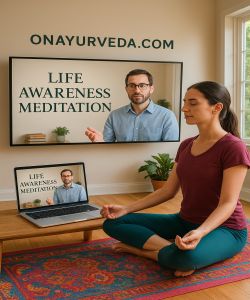
1. Overview of Life Awareness Meditation
Life Awareness Meditation represents a formidable and systematic training of the mind, engineered not for placid escapism but for the cultivation of profound, unshakeable clarity. It is a rigorous discipline demanding absolute commitment, designed to deconstruct the chaotic stream of consciousness and replace it with a state of high-fidelity awareness. This practice is not a passive pursuit of tranquillity; it is an active, strategic engagement with the raw data of existence as it unfolds moment by moment. Through its structured protocols, the practitioner learns to observe thoughts, emotions, and sensory inputs with surgical objectivity, refusing to be commandeered by habitual reactions or cognitive distortions. The fundamental objective is to establish an internal locus of control that is impervious to external volatility and internal turbulence. It is a method for forging mental resilience, sharpening cognitive acuity, and developing a command over one’s inner world that is both absolute and empowering. This is not a therapeutic modality in the conventional sense, but a proactive regimen for achieving peak mental performance and an unyielding grasp on reality. It systematically dismantles the autopilot mode of human functioning, forcing a direct and unfiltered confrontation with the mechanisms of one's own mind. The outcome is not mere relaxation, but a state of heightened alertness and powerful self-possession, enabling the individual to navigate the complexities of life with decisive intelligence and an unwavering core. The practice is, in essence, the ultimate exercise in self-mastery, demanding discipline and delivering dominion over the faculty of attention, the very currency of conscious experience.
2. What are Life Awareness Meditation?
Life Awareness Meditation is a structured mental discipline focused on the direct, non-judgemental observation of one's own consciousness and lived experience in real-time. It is fundamentally an empirical process of self-investigation, where the mind itself is both the subject and the instrument of inquiry. The practice operates on the premise that the majority of human suffering and inefficiency stems from a lack of awareness—an automated, reactive engagement with thoughts, emotions, and external stimuli. This form of meditation provides a systematic methodology to interrupt this automation and cultivate a state of clear, continuous, and objective perception. It is not affiliated with any religious dogma or spiritual belief system; its framework is secular, pragmatic, and grounded in the mechanics of cognition and attention. The core activity involves anchoring the attention to a neutral focal point, such as the breath, and then expanding that awareness to encompass the full spectrum of conscious experience without analysis or identification.
This discipline can be broken down into several key components:
- Attentional Control Training: The foundational skill of sustaining focus on a chosen object and recognising when the mind has wandered, followed by the firm but non-critical act of returning the attention. This builds the ‘muscle’ of focus.
- Sensory Acuity Development: A deliberate practice of observing sensory inputs—sights, sounds, physical sensations—as raw data, stripped of the layers of interpretation and judgement that the mind typically adds.
- Cognitive and Emotional Dis-identification: The process of learning to view thoughts and emotions as transient mental events rather than defining aspects of the self. One observes their arising and passing without becoming entangled in their narrative.
- Cultivation of Radical Objectivity: An advanced stage where the practitioner develops an unwavering capacity to witness all internal and external phenomena with equanimity, enabling clear-headed decision-making and profound mental stability irrespective of circumstances.
3. Who Needs Life Awareness Meditation?
High-Performance Professionals and Executives: Individuals operating in high-stakes, high-pressure environments who require superior cognitive function, emotional regulation, and decisive clarity. This practice equips them to manage extreme stress, prevent burnout, and maintain strategic focus amidst chaos.
Individuals Experiencing Cognitive Fog or Attentional Deficits: Those who find their mental acuity diminished, their focus scattered, and their ability to concentrate compromised. The discipline serves as a rigorous training regimen to restore and fortify attentional control and mental clarity.
Leaders and Decision-Makers: Anyone in a position of authority whose decisions carry significant weight. The cultivated objectivity and emotional detachment enable them to make rational, unbiased choices, free from the influence of reactive emotional states or cognitive biases.
Practitioners of Demanding Disciplines: Athletes, surgeons, artists, and others whose performance relies on a state of deep concentration and mind-body integration. The practice enhances their ability to enter and sustain a state of 'flow' and perform with precision under pressure.
Individuals Seeking Mental Fortitude and Resilience: Those who wish to proactively build the psychological capacity to withstand life’s adversities. This is not a remedial tool, but a pre-emptive strategy for forging an unshakeable inner core.
Persons Prone to Habitual Negative Thought Patterns: Individuals trapped in cycles of rumination, anxiety, or self-criticism. The practice provides the tools to dis-identify from these patterns, observe them as transient mental events, and break their compulsive hold.
Anyone Committed to Radical Self-Mastery: Individuals who are not content with living on autopilot and seek to gain conscious, deliberate control over their inner world. They are driven by a desire to understand and command the mechanisms of their own mind.
4. Origins and Evolution of Life Awareness Meditation
The conceptual roots of Life Awareness Meditation can be traced to a confluence of ancient contemplative traditions and modern secular inquiry. Its earliest philosophical underpinnings are found in certain tenets of Stoicism, which emphasised the distinction between external events and one's internal response to them, advocating for a disciplined mind as the key to navigating life with virtue and tranquillity. Similarly, elements of its methodology echo the rigorous attentional training found in Eastern practices such as Vipassanā and Zazen, which have for millennia explored the nature of consciousness through direct observation. These traditions provided the foundational blueprint for systematically training the mind to observe reality without distortion.
However, the modern incarnation of Life Awareness Meditation represents a significant evolution, deliberately stripping away the religious, cultural, and metaphysical frameworks of its predecessors. This secularisation began in earnest during the latter half of the twentieth century, driven by a growing interest from the scientific and psychological communities. Researchers and practitioners sought to distil the core, replicable techniques from these ancient systems and re-situate them within a rational, evidence-based context. The focus shifted from spiritual liberation to tangible, observable outcomes: enhanced cognitive function, improved emotional regulation, and greater psychological resilience.
This evolution was not merely a process of simplification but one of refinement and strategic adaptation. The language was changed from spiritual to psychological and cognitive. The goals were redefined from enlightenment to high-performance awareness. The practice was structured into standardised, accessible protocols that could be implemented and studied in clinical and professional settings. The emphasis moved firmly towards a pragmatic application of attentional control as a master skill for navigating the complexities of contemporary life. Thus, Life Awareness Meditation as it is constituted today is a thoroughly modern discipline—a product of a historical synthesis, refined and honed for a secular world that demands empirical validation and practical results over faith-based assertions. It stands as a testament to the timeless efficacy of its core principles, re-engineered for maximum impact in the modern era.
5. Types of Life Awareness Meditation
Foundational Stillness Practice: This is the bedrock of all Life Awareness Meditation. The practitioner assumes a stable, dignified posture and anchors their attention to a single, neutral point, most commonly the physical sensations of the breath. The sole objective is to develop unwavering attentional stability. Every time the mind wanders, it is recognised without judgement and firmly returned to the anchor. This type builds the fundamental 'muscle' of concentration and mental discipline.
Dynamic Sensory Mapping: An expansion of the foundational practice, this type involves systematically sweeping one’s awareness through the entire body, observing all physical sensations—contact, pressure, temperature, tingling—as pure, objective data. The aim is to refine sensory acuity and to experience the body directly, free from conceptual overlays or emotional reactions. This practice dismantles the abstract idea of 'the body' and replaces it with a high-resolution awareness of its living, dynamic reality.
Cognitive Deconstruction Practice: A more advanced technique where the focus of observation shifts to the cognitive stream itself. The practitioner learns to witness the arising and passing of thoughts, mental images, and internal dialogues without identifying with them. Thoughts are labelled neutrally (e.g., "planning," "judging," "remembering") and allowed to dissipate. This practice systematically severs the automatic link between having a thought and believing it to be true or important, revealing the impersonal and transient nature of mental content.
Affective Observation Practice: This discipline targets the direct experience of emotions. Instead of being consumed by an emotional state, the practitioner turns their awareness towards its raw physical components in the body. They observe the heat of anger, the constriction of anxiety, or the heaviness of sadness as pure somatic events. This deconstructs the emotion into manageable sensations, preventing emotional hijacking and cultivating a profound capacity for equanimity.
6. Benefits of Life Awareness Meditation
- Superior Attentional Control: Development of a formidable ability to direct and sustain focus at will, actively resisting distractions and mental wandering. This translates directly into enhanced productivity and performance in any task undertaken.
- Enhanced Cognitive Acuity: A marked improvement in mental clarity, memory recall, and problem-solving capabilities. The reduction of mental 'noise' allows for more efficient and precise cognitive processing.
- Profound Emotional Regulation: The capacity to observe emotional states without being commandeered by them. This leads to a significant reduction in reactivity, enabling calm and rational responses even in highly charged situations.
- Increased Psychological Resilience: The cultivation of an inner fortitude that allows the practitioner to withstand stress, adversity, and uncertainty without significant psychological degradation. It builds a stable internal foundation.
- Dismantling of Habitual Reactivity: The systematic interruption and de-conditioning of ingrained, automatic behavioural and cognitive patterns. This frees the individual to make conscious, deliberate choices rather than being driven by past conditioning.
- Heightened Sensory Clarity: An amplified awareness of one's physical and environmental surroundings. The world is perceived with greater vividness and fidelity, stripped of dulling habituation.
- Radical Self-Accountability: A direct and honest confrontation with one's own mental processes, fostering a powerful sense of ownership over one's internal state and subsequent actions.
- Reduction in Ruminative Tendencies: A significant decrease in the tendency to become trapped in repetitive, negative thought loops. The practice provides the skill to step outside of these cycles.
- Improved Decision-Making: By fostering objectivity and reducing the influence of cognitive biases and emotional impulses, the practice leads to more strategic, effective, and well-reasoned decisions.
7. Core Principles and Practices of Life Awareness Meditation
Principle of Unwavering Objectivity: The foundational tenet is to observe all internal and external phenomena as they are, without the distortion of judgement, preference, or analysis. Reality is to be witnessed, not interpreted. The practice is to systematically strip away layers of subjective commentary to perceive the raw data of experience.
Principle of Non-Identification: One must rigorously cultivate the understanding that one is not one's thoughts, emotions, or sensations. These are transient events passing through awareness. The practice involves severing the habitual fusion with mental content, thereby establishing a stable, observant self that is distinct from the fluctuating stream of consciousness.
Principle of Deliberate Attention: Attention is treated as a finite and trainable resource. The core practice is the deliberate and sustained placement of this attention on a chosen object. Every deviation is an opportunity to strengthen mental discipline by firmly and consciously redirecting focus back to the intended target.
Practice of Postural Integrity: A stable, upright, and dignified posture is non-negotiable. It is not for comfort but to embody alertness and intention. The physical form reflects and reinforces the mental state of disciplined awareness. Slouching or collapsing the posture is a failure of intention.
Practice of The Breath Anchor: The physical sensation of breathing serves as the primary, neutral anchor point for the attention. It is always present, providing a constant and reliable focus to which the mind can be returned whenever it wanders. Its rhythm is observed without any attempt to control or alter it.
Practice of Systematic Labelling: To maintain objectivity and prevent entanglement, mental events are neutrally labelled as they arise. A thought about the future is noted simply as "planning." A bodily itch is noted as "sensation." This act of labelling frames the experience as an object of observation rather than an immersive reality.
Practice of Consistent Application: Discipline is paramount. The practice is not a casual activity but a structured training regimen. It must be undertaken with rigorous consistency, establishing a non-negotiable space for formal practice to ensure cumulative and lasting results.
8. Online Life Awareness Meditation
Uncompromised Accessibility: The online format removes all geographical and logistical barriers to entry. It provides immediate access to high-calibre instruction and structured practice for any individual with a stable internet connection, irrespective of their location. This democratises access to a formidable mental discipline that was previously confined to physical centres.
Cultivation of Self-Discipline: The online environment places the onus of commitment squarely on the practitioner. Without the external pressure of a group setting, the individual must generate their own motivation and accountability. This fosters a more robust and self-reliant form of discipline, which is a core objective of the practice itself.
Controlled, Distraction-Free Environment: The practitioner has absolute control over their practice space. They can engineer an environment free from the subtle social dynamics, ambient noises, and visual distractions inherent in a group setting. This allows for a deeper and more focused immersive experience, essential for rigorous self-observation.
Structured and Replicable Learning: High-quality online programmes deliver the curriculum in a systematic, modular format. Lessons, guided practices, and theoretical concepts can be reviewed repeatedly until they are fully integrated. This ensures a consistent and precise transmission of the technique, preventing the dilution or misinterpretation that can occur in live, unrecorded sessions.
Anonymity and Private Inquiry: The online space affords a degree of anonymity that encourages a more honest and unflinching self-investigation. Practitioners may feel more comfortable confronting difficult thoughts and emotions without the perceived judgement of others, facilitating a more authentic and challenging practice.
Flexible Integration into Daily Life: The practice can be scheduled to fit the demanding timetables of professionals and others with significant commitments. This flexibility ensures that the discipline can be maintained with the consistency required for tangible results, rather than being abandoned due to scheduling conflicts.
9. Life Awareness Meditation Techniques
Step One: Establish the Posture: Assume a formal, dignified sitting position. This can be on a cushion on the floor with legs crossed, or upright in a chair with feet flat on the ground. The spine must be straight but not rigid, the head balanced atop the spine, and the hands resting comfortably on the lap. This posture is an active expression of alertness and intention.
Step Two: Set the Intention: Formally and silently articulate the purpose of the session. This is not a passive relaxation but an active training of awareness. The intention is to remain present, to observe reality as it is, and to return to the object of focus every time the mind wanders, without exception.
Step Three: Anchor the Attention: Close the eyes or adopt a soft, unfocused gaze downwards. Bring the full scope of your attention to the physical sensations of your breath at a single point, such as the nostrils or the abdomen. Do not control the breath; simply observe the raw, physical data of its natural rhythm—the in-breath, the out-breath, and the pauses between.
Step Four: Acknowledge and Release Distractions: Inevitably, the mind will wander into thought, memory, planning, or sensory distraction. The moment you realise you are no longer observing the breath, the instruction is twofold. First, neutrally acknowledge the distraction (e.g., mentally label it "thinking"). Second, gently but firmly release the distraction and immediately escort your attention back to the breath anchor.
Step Five: Expand the Field of Awareness (Optional/Advanced): Once stability on the breath is established, you may systematically widen the field of awareness to include all bodily sensations, then sounds in the environment, and finally the arising and passing of thoughts and emotions themselves, all while maintaining the core state of objective, non-identified observation.
Step Six: Conclude the Practice: At the end of the allotted time, formally conclude the session. Broaden your awareness back to the room, move the body gently, and carry the cultivated state of clarity and presence into your next activity.
10. Life Awareness Meditation for Adults
Life Awareness Meditation is a discipline uniquely and powerfully suited to the adult mind. The mature brain, while possessing immense capacity, is often heavily conditioned, operating on deeply ingrained neural pathways of habit, reaction, and cognitive bias. Adulthood is frequently characterised by a state of 'cognitive clutter'—a relentless internal dialogue of worries, plans, and ruminations that obscures clarity and drains mental energy. This practice provides a direct, systematic methodology for intervening in this state of affairs. It is not about adding more information but about developing the skill to see through the existing mental noise. It requires a level of self-reflection and a motivation for self-mastery that is typically more developed in adults who have experienced the limitations of a reactive, untrained mind. For the adult, the practice is a tool for radical de-conditioning. It allows for the conscious examination and dismantling of lifelong patterns of thought and emotional response that may be suboptimal or detrimental. The discipline demands patience and fortitude, qualities that are often forged through adult life experience. It offers a path to reclaim the sovereignty of one's own mind from the automated scripts that govern so much of adult life, transforming a cluttered internal landscape into one of order, clarity, and deliberate purpose. It is, in essence, an advanced operational manual for the adult human consciousness, enabling a shift from being a passenger driven by habit to a commander in full control of their mental faculties.
11. Total Duration of Online Life Awareness Meditation
The prescribed duration for a core session of online Life Awareness Meditation is unequivocally one hour. This 1 hr period is not an arbitrary figure but a strategically determined timeframe essential for the efficacy of the practice. A shorter duration is insufficient to move beyond the initial surface-level mental chatter that dominates the untrained mind. The initial phase of any session is dedicated to settling the body and stabilising the attention, a process that requires a substantial investment of time to overcome the mind's habitual restlessness. It is only after this initial stabilisation that the practitioner can progress into the deeper states of focused observation and insight that are the true objectives of this discipline. The commitment to a full 1 hr session is in itself a critical aspect of the training, representing a non-negotiable act of discipline and intention. It signals a serious commitment to the process, forcing the individual to carve out and protect a significant period dedicated solely to this rigorous mental work. The online format, while flexible, does not dilute this requirement; it merely facilitates its integration into a daily schedule. Therefore, the standard unit of practice remains a complete one-hour block. Abbreviating this timeframe fundamentally compromises the potential for profound results and reduces the practice to a mere superficial exercise in relaxation, which is antithetical to its purpose. The one-hour duration is the necessary crucible within which the transformative work of building unwavering awareness is accomplished.
12. Things to Consider with Life Awareness Meditation
Embarking on the practice of Life Awareness Meditation necessitates a frank and clear-eyed assessment of one's own commitment and psychological readiness. This is not a passive, feel-good activity; it is a demanding and often uncomfortable process of radical self-confrontation. Prospective practitioners must understand that the initial stages frequently involve an increase in the awareness of mental distress, not a decrease. As the faculty of attention is sharpened, one becomes acutely conscious of the chaos, negativity, and compulsive patterns that may have previously operated just below the threshold of awareness. This can be unsettling, and a robust willingness to face this internal reality without flinching is a prerequisite. Furthermore, the discipline demands rigorous consistency. Sporadic or half-hearted engagement will yield negligible results and lead to frustration. It requires the establishment of a non-negotiable routine, a protected time carved out for practice, irrespective of mood or external pressures. One must also consider the purpose of their engagement. If the goal is simple stress relief or escapism, this method is likely ill-suited and may even be counterproductive. The aim of this practice is to engage with reality more fully and clearly, not to retreat from it. It is a tool for building strength, not a sanctuary for weakness. Therefore, a sober consideration of one's capacity for discipline, tolerance for psychological discomfort, and clarity of intention is absolutely essential before commencing.
13. Effectiveness of Life Awareness Meditation
The effectiveness of Life Awareness Meditation is direct, tangible, and profound, contingent entirely upon the diligence and precision of its application. Its efficacy is not a matter of belief but of observable and verifiable outcomes in the practitioner's cognitive and behavioural functioning. When practised with rigorous consistency, it systematically re-engineers the mind's default mode of operation from one of chaotic reactivity to one of controlled, deliberate awareness. The primary domain of its effectiveness lies in the cultivation of attentional command. This sharpened focus translates into a marked improvement in performance across all professional and personal domains, as the ability to concentrate is a foundational skill for any complex task. Furthermore, its effectiveness is powerfully demonstrated in the realm of emotional regulation. The practice creates a crucial "space" between stimulus and response, allowing the practitioner to observe an emerging emotion without being immediately subsumed by it. This results in a dramatic reduction in impulsive actions and volatile emotional displays, replaced by calm, rational, and strategic responses. The discipline is also exceptionally effective at dismantling ingrained, maladaptive thought patterns, such as rumination and catastrophic thinking. By training the mind to see thoughts as transient mental events rather than absolute truths, it systematically strips them of their power. The ultimate proof of its effectiveness is a transformed relationship with oneself and the world: one characterised by clarity, resilience, and an unshakeable sense of internal command.
14. Preferred Cautions During Life Awareness Meditation
A practitioner must approach Life Awareness Meditation with a mindset of rigorous vigilance, understanding that its potent techniques can be misapplied. The primary caution is against using the practice as a sophisticated form of dissociation or experiential avoidance. Its purpose is to engage more fully with the totality of one’s experience, including the unpleasant, not to create a tranquil bubble of detachment from life's difficulties. A state of detached observation must not curdle into cold indifference or a refusal to engage with personal responsibilities. Another significant caution relates to the interpretation of insights. The practice can reveal uncomfortable truths about one's own character and conditioning; these revelations must be met with radical accountability, not with self-flagellation or spiritual egoism. There is a risk of developing a subtle sense of superiority based on one's perceived level of awareness, which is a perversion of the practice’s intent. Furthermore, practitioners must be wary of 'meditation-shopping' or diluting the core technique with other modalities. This discipline's strength lies in its focused, systematic nature; mixing it with incompatible methods will compromise its integrity and effectiveness. For individuals with a history of severe trauma or certain psychological conditions, undertaking this intense self-inquiry without the guidance of a qualified professional is strongly discouraged, as the unfiltered confrontation with internal states could be destabilising. This is a powerful tool, and like any such tool, it demands respect, precision, and a clear understanding of its proper application.
15. Life Awareness Meditation Course Outline
- Module 1: Foundational Principles and Posture
- Point 1.1: Introduction to the secular, pragmatic framework of Life Awareness.
- Point 1.2: The non-negotiable role of intention and discipline.
- Point 1.3: Detailed instruction on establishing postural integrity (seated on cushion/chair).
- Point 1.4: The core principles: Objectivity, Non-Identification, and Deliberate Attention.
- Module 2: The Mechanics of Attentional Control
- Point 2.1: Mastering the Breath Anchor: technique and common difficulties.
- Point 2.2: The process of recognising mental wandering without judgement.
- Point 2.3: The firm and precise act of returning attention.
- Point 2.4: Building attentional stamina through consistent practice.
- Module 3: Sensory and Somatic Awareness
- Point 3.1: Introduction to Dynamic Sensory Mapping.
- Point 3.2: Technique for systematically observing bodily sensations as raw data.
- Point 3.3: Differentiating between direct sensation and mental interpretation.
- Point 3.4: Cultivating a high-fidelity awareness of the physical self.
- Module 4: Deconstructing the Cognitive Stream
- Point 4.1: The theory and practice of observing thoughts.
- Point 4.2: The technique of neutral labelling to dis-identify from thought content.
- Point 4.3: Recognising and working with common cognitive patterns (planning, worrying, judging).
- Point 4.4: Understanding the impersonal, transient nature of thought.
- Module 5: Engaging with Affective and Emotional States
- Point 5.1: The principles of observing emotions as somatic events.
- Point 5.2: Locating and staying with the physical correlates of emotion.
- Point 5.3: The practice of allowing emotional energy to arise and pass without reactivity.
- Point 5.4: Developing profound equanimity in the face of emotional turbulence.
- Module 6: Integration into Daily Life
- Point 6.1: Strategies for maintaining awareness outside of formal practice.
- Point 6.2: Applying principles of objectivity in professional and personal interactions.
- Point 6.3: Establishing a sustainable, long-term personal practice.
16. Detailed Objectives with Timeline of Life Awareness Meditation
- Weeks 1-2: Foundational Establishment
- Objective: To establish a non-negotiable daily practice of a set duration.
- Objective: To achieve proficiency in establishing and maintaining postural integrity for the entire session.
- Objective: To master the basic technique of anchoring attention to the breath, successfully identifying and returning from at least dozens of instances of mind-wandering per session.
- Weeks 3-4: Consolidation of Attentional Control
- Objective: To significantly increase the stability of attention on the breath anchor, with longer sustained periods of focus.
- Objective: To develop speed and neutrality in the process of labelling distractions and returning to the anchor, removing any self-criticism.
- Objective: To begin the practice of Dynamic Sensory Mapping, successfully scanning the entire body with awareness at least once per session.
- Month 2: Cognitive and Somatic Deconstruction
- Objective: To achieve proficiency in the neutral labelling of thoughts, consistently observing them as separate mental events rather than identifying with their content.
- Objective: To apply the principles of somatic observation to minor physical discomforts (e.g., an itch) without physical reaction.
- Objective: To begin to notice the subtle interplay between thoughts and bodily sensations.
- Month 3: Advanced Affective Regulation
- Objective: To begin applying observational skills to low-to-medium intensity emotional states.
- Objective: To successfully identify the primary physical location and characteristics of an emotion (e.g., heat in the chest, tension in the jaw).
- Objective: To maintain the observer's stance for brief periods during an emotional experience without being completely subsumed by it.
- Months 4-6: Integration and Autonomy
- Objective: To consistently apply the principles of awareness in everyday situations, noticing reactive patterns as they occur in real-time.
- Objective: To achieve a baseline state of calm, clear awareness that persists outside of formal practice sessions.
- Objective: To have developed a fully autonomous and self-sufficient practice, no longer dependent on guided instruction for core techniques.
17. Requirements for Taking Online Life Awareness Meditation
- Absolute Personal Commitment: A non-negotiable, self-generated resolve to engage with the practice consistently and rigorously. This is the primary requirement, without which all others are irrelevant.
- A High-Speed, Stable Internet Connection: Uninterrupted connectivity is mandatory to ensure seamless access to instructional materials, guided sessions, and any live components without technical disruption.
- A Dedicated, Private, and Silent Practice Space: A physical location that is guaranteed to be free from interruptions by other people, pets, or ambient noise for the full duration of the practice. This space is sacred to the discipline.
- A Functional Digital Device: A reliable computer, tablet, or smartphone capable of streaming video and audio content clearly and consistently. The device must be positioned securely during practice to avoid distraction.
- High-Quality Headphones: These are essential for immersive audio guidance and for blocking out minor environmental sounds, thereby creating a controlled auditory field for practice.
- Appropriate Seating: A dedicated meditation cushion (zafu) or a firm, upright chair that allows for the spine to be held in a straight, dignified posture for an extended period without physical strain or slouching.
- Psychological Robustness: The capacity to confront uncomfortable mental and emotional content without being overwhelmed. This includes a willingness to experience boredom, restlessness, and difficult realisations.
- An Attitude of Rigorous Honesty: The willingness to be completely honest with oneself about the nature of one's own mind, including its distractions, biases, and habitual patterns, without excuse or justification.
- Capacity for Self-Directed Discipline: The ability to adhere to a structured schedule and complete practice sessions without external supervision or enforcement.
18. Things to Keep in Mind Before Starting Online Life Awareness Meditation
Before initiating an online course in Life Awareness Meditation, it is imperative to conduct a stern self-appraisal. You must understand that convenience does not imply ease. The online format demands a higher calibre of self-discipline than a group setting, as you alone are responsible for showing up and performing the work. The screen is a portal to the discipline, but it is also a gateway to infinite digital distractions; your resolve to remain focused must be absolute. You must be prepared for the stark reality of solitary practice. There is no group energy to draw upon, no instructor to physically correct your posture. Your progress rests solely on your own unflinching commitment and your ability to be a rigorous taskmaster to yourself. It is crucial to internalise that the objective is not to achieve a "blank mind"—a common and destructive misconception. The objective is to cultivate a clear and unwavering awareness of the mind's actual activity, however chaotic. Expect to confront the full force of your mental habits. You must also establish firm boundaries around your designated practice time and space, treating it with the same seriousness as a critical professional appointment. This is not a hobby to be fitted in when convenient; it is a fundamental training regimen that demands a place of priority in your schedule. Approach this endeavour with the gravity it deserves, or do not approach it at all.
19. Qualifications Required to Perform Life Awareness Meditation
The authority to guide others in Life Awareness Meditation is not granted lightly and extends far beyond mere personal enthusiasm for the practice. A qualified facilitator or instructor must possess a formidable combination of deep experiential knowledge and formal intellectual training. This is not a role for amateurs or self-proclaimed gurus. The foundational requirement is an extensive and long-standing personal practice of the discipline itself. The instructor must have spent years rigorously applying the techniques to their own mind, navigating its challenges and developing a profound, embodied understanding that cannot be gleaned from books alone. This personal depth must be complemented by a strong academic or professional background in a relevant field. Key qualifications include:
- Formal Credentials: A degree or advanced certification in psychology, cognitive science, neuroscience, or a closely related discipline. This provides the necessary theoretical framework to understand the mechanisms of attention, emotion, and behaviour and to communicate them with precision and without recourse to mystifying language.
- Pedagogical Training: Demonstrable skill in teaching and instruction. The ability to break down complex concepts into clear, actionable steps and to guide practitioners through the practice with clarity, authority, and safety is paramount.
- Ethical Scrutiny: A thorough grounding in professional ethics, particularly concerning the responsibilities of a guide or teacher. This includes understanding boundaries, managing the power dynamic, and recognising when a practitioner may require referral to a clinical professional.
- Supervised Experience: A history of having guided others under the supervision of a more senior, established instructor. This period of apprenticeship is crucial for refining instructional technique and learning to handle the diverse challenges that arise when teaching.
In essence, a legitimate performer of this meditation is a rare hybrid: a disciplined contemplative and a sharp-witted intellectual, capable of leading others with both profound insight and professional rigour.
20. Online Vs Offline/Onsite Life Awareness Meditation
Online
The online modality for Life Awareness Meditation offers a distinct set of advantages rooted in autonomy, precision, and accessibility. Its primary strength is the cultivation of unwavering self-discipline. With no external group pressure, the practitioner is forced to rely solely on their own internal commitment, forging a more robust and self-reliant practice. The environment is entirely within the practitioner's control, allowing for the creation of a truly silent and distraction-free space, which is often impossible to guarantee in a group setting. This sterile environment can facilitate deeper levels of concentration. Furthermore, online programmes provide a highly structured, replicable curriculum. Each lesson and guided practice can be reviewed repeatedly, ensuring that the nuances of the technique are understood and integrated with a high degree of fidelity. This format eliminates the variability of live instruction and ensures a consistent standard of teaching. It also offers a level of privacy that can encourage a more honest and unflinching confrontation with one's inner world, free from the perceived observation or judgement of others. The inherent flexibility allows this rigorous training to be integrated into even the most demanding of professional or personal schedules, making sustained practice feasible.
Offline/Onsite
The offline, or onsite, approach to Life Awareness Meditation provides a different, though equally valid, set of benefits centred on direct human interaction and shared environmental energy. The physical presence of a qualified instructor allows for immediate, personalised feedback. Subtle errors in posture or misunderstandings of a concept can be corrected in real-time, which can accelerate the initial learning curve. Practising within a group creates a palpable sense of shared purpose and collective energy. This can be highly motivating, particularly in the early stages when individual discipline may be wavering. The formal setting of a dedicated meditation centre inherently removes one from the distractions of their daily environment—work, family, and digital devices are left behind, creating a container solely for practice. The direct question-and-answer sessions that are possible in an onsite setting allow for a more dynamic and organic exploration of the practice's challenges. However, the onsite format is also subject to disadvantages, including the logistical challenges of travel, fixed schedules, the potential for social distraction within the group, and the financial cost often associated with physical centres.
21. FAQs About Online Life Awareness Meditation
Question 1. Is this a religious practice? Answer: No. It is a secular, pragmatic mental discipline. It is stripped of all religious dogma, ritual, and metaphysical belief systems, focusing exclusively on the trainable mechanics of attention and awareness.
Question 2. What if I cannot quiet my mind? Answer: The objective is not to quiet the mind but to become acutely aware of its activity without judgement. An active mind is the very material you will work with. The practice is in observing the noise, not eliminating it.
Question 3. How is this different from simple relaxation? Answer: Relaxation is a passive state and often a byproduct, but it is not the goal. This is an active, rigorous training of focus and clarity. It demands effort and alertness, whereas relaxation implies a release of effort.
Question 4. Is this a form of therapy? Answer: It is not therapy and is not a substitute for professional psychological treatment. It is a skills-based training for high-performance awareness. Individuals with serious mental health conditions should consult a clinician.
Question 5. How long until I see results? Answer: Results are contingent on the rigour of your practice. Subtle shifts in awareness can be noticed early, but substantial, lasting changes in cognitive and emotional regulation require months of consistent, daily commitment.
Question 6. What is the single most important part of the practice? Answer: The act of returning. Every time you notice your mind has wandered and you firmly bring it back to your anchor, you are strengthening the core 'muscle' of awareness. This moment is the fundamental exercise.
Question 7. Can I practise for shorter periods than the prescribed duration? Answer: While any practice is better than none, the prescribed duration is set for optimal efficacy. Shorter sessions often fail to move beyond surface-level distraction and compromise the depth of the training.
Question 8. Do I need special equipment? Answer: The only essential items are a stable internet connection, a quiet space, and a place to sit upright (cushion or chair). Specialised equipment is not necessary.
Question 9. What if I fall asleep during practice? Answer: This indicates a failure in alertness. Re-evaluate your posture to ensure it is upright and dignified, not overly comfortable. If fatigue is persistent, assess your overall sleep quality outside of practice.
Question 10. Can this practice make me less emotional? Answer: It does not eliminate emotions. It changes your relationship with them. You will learn to experience them fully without being controlled by them, leading to greater emotional intelligence, not emotional absence.
Question 11. Is there a 'correct' way to feel during meditation? Answer: No. The instruction is to be aware of however you are feeling, whether it is boredom, frustration, calm, or agitation. All states are valid objects of observation.
Question 12. Why the focus on the breath? Answer: The breath is a neutral, universally available, and ever-present anchor. Its physical sensation provides a reliable, non-conceptual point of focus to which the attention can be tethered.
Question 13. Can I practise with my eyes open? Answer: Yes, a soft, unfocused downward gaze is an acceptable alternative to closed eyes, particularly if sleepiness is an issue. The key is to minimise visual distraction.
Question 14. What if I have a physical condition that makes sitting difficult? Answer: The principle is postural integrity, not a specific position. The practice can be adapted to lying down or other supported postures, provided the intention of alertness is maintained.
Question 15. Is it necessary to follow a guided meditation every time? Answer: Initially, yes. As you master the techniques, you must progress to silent, self-directed practice to cultivate true autonomy and internalise the discipline.
Question 16. How does this help with work performance? Answer: By radically improving your ability to focus, manage stress, regulate emotional responses to workplace events, and make clearer, more objective decisions.
22. Conclusion About Life Awareness Meditation
In conclusion, Life Awareness Meditation stands apart as a formidable and uncompromising discipline for the modern mind. It is not a palliative measure for the weary, nor is it a gentle path to fleeting moments of peace. It is, instead, a rigorous, systematic, and secular protocol for the total reclamation of one's own consciousness. Its principles and practices are engineered for a singular, powerful purpose: to forge an unwavering, high-fidelity awareness that can cut through the noise of internal chaos and external distraction. The commitment it demands is absolute, but the rewards it confers are commensurate. The practitioner does not merely learn to relax; they learn to command. They develop the capacity to observe the torrent of thoughts and emotions without being swept away, to face reality without the filters of bias and habit, and to act with a clarity and decisiveness born of a truly mastered mind. This is not a path of escapism but one of total engagement. It is the ultimate exercise in cognitive sovereignty, providing the tools not to retreat from the complexities of life, but to meet them with superior mental fortitude and an unshakeable inner authority. The final outcome is not a fragile state of bliss, but a robust and resilient state of powerful, perceptive presence.