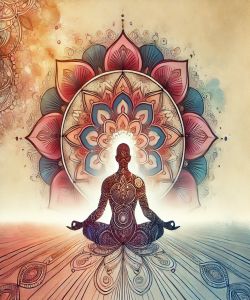
1. Overview of Mandala Meditation
Mandala Meditation is a rigorous and profound discipline, not a mere recreational pastime. It is an advanced contemplative practice that utilises a complex geometric configuration, the mandala, as a focal point for achieving heightened states of awareness, mental clarity, and profound psychological integration. The practice is fundamentally rooted in the principle that the external creation or contemplation of a structured, symmetrical design mirrors and facilitates the internal ordering of the psyche. Practitioners engage with the mandala not simply as an object of art, but as a symbolic map of the cosmos and the self, a sacred space wherein the chaotic energies of the mind can be contained, organised, and understood. This process demands absolute concentration and a disciplined commitment to the present moment, systematically guiding the individual away from distracting thoughts and anxieties towards a centred state of being. Its application transcends simple stress reduction; it is a formidable tool for self-excavation, compelling the practitioner to confront and integrate disparate aspects of their personality. The act of creating a mandala—through drawing, colouring, or visualisation—or the intense contemplation of an existing one, becomes a non-verbal dialogue with the subconscious. This dialogue facilitates the emergence of insights that are often inaccessible through conventional analytical thought. It is, therefore, a structured journey inward, designed to restore psychological balance, fortify mental resilience, and unlock a deeper understanding of one’s place within the broader schema of existence. This is not a passive activity but an active, assertive engagement with the innermost structures of consciousness, demanding focus, patience, and an unwavering intent to achieve mental sovereignty. The mandala serves as both the crucible and the guide in this transformative process, a testament to the power of structured focus in mastering the internal landscape.
2. What are Mandala Meditation?
Mandala Meditation constitutes a sophisticated form of active meditation centred on the creation, colouring, or focused contemplation of a mandala. The term 'mandala' itself is a Sanskrit word meaning 'circle', but in this context, it refers to a specific type of intricate, symbolic diagram that represents the universe, the self, or a sacred space. Far from being arbitrary patterns, these designs are deliberate compositions of geometric shapes, symbols, and figures arranged concentrically around a central point. The practice is predicated on the profound psychological and spiritual principle that engaging with these ordered patterns can induce a corresponding state of order and coherence within the practitioner's mind. It is a methodical discipline that operates on multiple levels simultaneously.
Its core components are as follows:
The Object of Focus (The Mandala): This is the visual anchor for the meditation. Its symmetrical and harmonious structure is inherently calming to the nervous system and provides a non-threatening container for complex emotions and thoughts. The central point, or 'bindu', represents the beginning and end of all things, the unified self from which all multiplicity arises and to which it returns. The surrounding geometry symbolises the architecture of reality and the psyche.
The Meditative Process (The Action): This involves the active engagement with the mandala. It can take the form of meticulously drawing the geometric patterns, systematically colouring in the predefined sections, or maintaining an unwavering gaze upon a completed design. This action occupies the conscious mind, preventing it from drifting into habitual patterns of worry or distraction, and thereby allowing deeper layers of consciousness to surface.
The Objective (Internal Integration): The ultimate purpose is not to produce a beautiful piece of art, but to facilitate a state of 'flow' and deep introspection. As the practitioner becomes absorbed in the task, the boundaries between the self and the object of focus begin to blur. This process quiets the internal chatter of the ego, promotes a state of profound calm, and allows for the emergence of significant personal insights and a feeling of wholeness.
3. Who Needs Mandala Meditation?
- Professionals in High-Pressure Environments: Executives, surgeons, legal professionals, and emergency service personnel who operate under constant duress require a robust mechanism for mental decompression and cognitive recalibration. This practice provides a structured method to discharge accumulated stress, restore focus, and enhance decision-making clarity, thereby fortifying their mental resilience against burnout.
- Individuals Experiencing Cognitive Overload: Those perpetually inundated with information and digital stimuli, leading to fragmented attention and mental exhaustion, need this discipline. It forcefully retrains the brain to maintain a singular point of focus, counteracting the detrimental effects of constant multitasking and re-establishing a state of mental order and quietude.
- Persons Undergoing Emotional Turmoil or Transition: Individuals navigating grief, relationship breakdowns, or significant life changes find in this practice a non-verbal outlet for processing complex and overwhelming emotions. The structured nature of the mandala provides a safe container for chaotic feelings, allowing them to be acknowledged and integrated without verbal analysis.
- Practitioners of Advanced Mindfulness and Meditation: For those who have mastered basic mindfulness techniques and seek a more profound and challenging discipline, Mandala Meditation offers a direct pathway to deeper states of concentration (Dhyana). It serves as a sophisticated tool for exploring the intricate architecture of consciousness itself.
- Individuals Seeking Creative Re-engagement: Artists, writers, and designers experiencing creative blocks require a method to bypass the critical, analytical mind. The process of engaging with a mandala stimulates right-hemispheric brain activity, dissolving rigid thought patterns and facilitating the re-emergence of intuitive and creative impulses.
- Those on a Path of Self-Inquiry and Spiritual Development: Individuals committed to understanding the deeper structures of their own psyche and their connection to the wider cosmos need this practice. The mandala acts as a symbolic mirror, reflecting the practitioner's inner state and serving as a map for their journey toward self-realisation and wholeness, as conceptualised in various spiritual traditions and Jungian psychology.
4. Origins and Evolution of Mandala Meditation
The origins of Mandala Meditation are ancient and deeply embedded in the spiritual bedrock of Eastern traditions, primarily Hinduism and Buddhism. In these early contexts, the mandala was not a therapeutic tool but a sacred and complex cosmological diagram. It was revered as a visual representation of the universe, a palace for deities, and a map for the spiritual journey of the adept. Creating or contemplating a mandala was a highly ritualised and demanding practice reserved for initiated monks and practitioners. These designs were meticulously constructed from coloured sand, painted on scrolls (thangkas), or built as architectural marvels, each element saturated with profound symbolic meaning. The purpose was purely soteriological: to aid the practitioner in achieving enlightenment by visualising themselves at the centre of this divine map, thereby realising their own inherent Buddha-nature or unity with the divine.
The evolution of the mandala into a Western psychological and therapeutic practice is largely attributable to the pioneering work of the Swiss psychiatrist Carl Gustav Jung. In the early 20th century, Jung encountered mandalas during his extensive study of Eastern religions and independently began to sketch circular drawings to document his own internal psychological states. He recognised these spontaneous creations as expressions of the self, the archetype of wholeness and order. Jung posited that the creation of mandalas was a natural, instinctual process for the psyche to seek balance and integration, especially during times of personal turmoil or psychic fragmentation. He introduced the mandala to Western psychology not as a religious icon, but as a powerful tool for self-exploration and a visual manifestation of an individual's journey toward individuation.
In the contemporary era, the practice has undergone a further, more secularised evolution. Whilst its spiritual and Jungian roots remain significant, Mandala Meditation is now widely adopted as a mindfulness and stress-reduction technique, accessible to a general audience. The focus has shifted from complex theological symbolism to the psychological benefits of the process itself: the concentration, the rhythmic action of colouring, and the calming effect of symmetry. Modern applications in art therapy, corporate wellness programmes, and self-help contexts utilise simplified mandala templates. This democratisation has made the practice more widespread, yet it is imperative to acknowledge that this modern iteration is a distinct evolution from its deeply sacred and psychologically profound origins. The practice has thus traversed a path from sacred ritual to psychological tool to a widely accessible contemplative exercise.
5. Types of Mandala Meditation
The practice of Mandala Meditation is not monolithic; it encompasses several distinct types, each with a specific purpose and methodology. A precise understanding of these forms is essential for correct application.
- Teaching Mandalas: These are mandalas wherein each shape, line, and colour corresponds to a specific tenet of a philosophical or religious system. The mandala is effectively a symbolic, visual textbook. The student learns by constructing the mandala from memory or by contemplating its components, with each element reinforcing a particular lesson or aspect of a doctrine. The value lies not in aesthetic expression but in the cognitive and spiritual internalisation of a complex body of knowledge.
- Healing Mandalas: This type is created with the deliberate intention of facilitating psychological or spiritual healing. These are often more intuitive and less doctrinally rigid than teaching mandalas. The practitioner creates the design to channel and focus healing energy, meditate upon a specific ailment or emotional wound, or restore a sense of inner balance. The belief is that the focused intention, combined with the organising power of the circular form, can bring about a state of wholeness and well-being.
- Sand Mandalas: A highly ritualised and transient form, most famously associated with Tibetan Buddhism. Monks painstakingly create vast, intricate mandalas from millions of grains of coloured sand over several days or weeks, a process which is itself a profound meditation on patience and focus. Upon completion, after a period of public viewing and associated ceremonies, the mandala is ritually dismantled and the sand is swept up and dispersed into a body of water. This final act is a powerful, non-negotiable lesson in the impermanence of all things and the principle of non-attachment.
- Architectural Mandalas: These are three-dimensional representations of the mandala, most notably seen in the design of stupas and temples throughout the Hindu and Buddhist world. A structure like the Borobudur temple in Indonesia is a monumental mandala that a pilgrim physically enters and moves through. The journey to the structure's centre is a physical and spiritual pilgrimage, symbolising the path to enlightenment. The meditation here involves physically traversing a sacred, symbolic space.
- Creative or Contemplative Mandalas: This is the most common form in modern, secular practice. It involves either the spontaneous drawing of a personal mandala or the colouring of a pre-designed template. The primary focus here is on the process itself—the act of creation or colouring—as a form of active mindfulness to quiet the mind, reduce stress, and allow for personal expression and insight without adherence to strict traditional symbolism.
6. Benefits of Mandala Meditation
- Enhanced Concentration and Attentional Control: The practice demands a sustained, singular focus on the intricate details of the mandala. This rigorously trains the prefrontal cortex, systematically improving one's ability to direct and maintain attention, resist distractions, and combat the mental fragmentation common in modern life.
- Systematic Stress and Anxiety Alleviation: The combination of rhythmic, repetitive action (colouring or drawing) and engagement with a harmonious, symmetrical pattern has a direct down-regulating effect on the amygdala, the brain's fear centre. This physiological response interrupts the cycle of anxiety, lowers cortisol levels, and induces a state of profound calm.
- Facilitation of Non-Verbal Emotional Processing: It provides a structured, non-confrontational a venue for processing complex or suppressed emotions. The choice of colours and the energy of the marks made can act as a direct expression of one's inner state, allowing for emotional release and integration without the requirement for verbal articulation.
- Promotion of Psychological Integration and Self-Awareness: As conceived by Jung, the mandala acts as a mirror to the psyche. The process of engaging with it can bring unconscious content to the surface in a contained and symbolic form, fostering a deeper understanding of one's own internal dynamics and promoting the integration of disparate parts of the personality into a more cohesive whole.
- Stimulation of Creativity and Intuitive Thinking: The practice bypasses the linear, critical faculties of the conscious mind, which often inhibit creative flow. By engaging the brain's more intuitive and holistic processing centres, it can dissolve creative blocks, inspire new perspectives, and unlock latent imaginative potential.
- Induction of a Meditative 'Flow' State: The deep absorption required by the practice frequently leads to a state of 'flow', where the sense of time dissipates, self-consciousness vanishes, and the action feels effortless and intrinsically rewarding. This state is highly conducive to mental well-being and peak performance.
- Cultivation of Patience and Non-Attachment: The meticulous, often time-consuming nature of creating or colouring a mandala instils a powerful sense of patience. Furthermore, particularly in traditional forms like sand mandalas, the emphasis on the process over the final product teaches the critical principle of non-attachment to outcomes.
7. Core Principles and Practices of Mandala Meditation
- The Principle of the Centre (Bindu): All mandala practice originates from and returns to a central point. This centre symbolises the origin, the unified Self, and the point of ultimate convergence. The practice requires the practitioner to consistently orient their focus towards this centre, both visually on the page and metaphorically within their own consciousness. It is a constant return to a state of inner balance and singularity amidst external complexity.
- Symmetry and Order as a Psychic Organiser: The mandala’s structure is inherently symmetrical and ordered. This is not merely an aesthetic choice but a core functional principle. The human brain is hardwired to recognise and respond to pattern and order. Engaging with the mandala's predictable, harmonious geometry imposes a state of external order that is mirrored internally, calming a chaotic or fragmented mind and providing a sense of containment and stability.
- The Practice of Unwavering Presence: Mandala Meditation is an exercise in radical present-moment awareness. The practitioner must anchor their entire attention to the immediate action: the tip of the pencil meeting the paper, the selection of a colour, the filling of a shape. Any deviation into past regrets or future anxieties is to be noticed and firmly but non-judgementally redirected back to the task at hand. It is a rigorous training in mindfulness.
- Process Over Product: The ultimate goal is not the creation of a museum-quality artwork. The value is embedded entirely within the process of creation or contemplation. Obsession with the final aesthetic outcome is a distraction of the ego and must be relinquished. The practice is the meditation; the finished mandala is merely a residual artefact of that meditative journey.
- Non-Attachment and Impermanence: This principle, most powerfully demonstrated in the creation and destruction of sand mandalas, is crucial. The practitioner must cultivate an attitude of non-attachment to the creation. It is a tool for a specific moment in time. This teaches a profound lesson in letting go, accepting the transient nature of all phenomena, including one's own thoughts and feelings.
- Symbolic Dialogue with the Unconscious: The mandala is a vessel for symbolic expression. The colours chosen, the pressure of the strokes, and the shapes that emerge (in spontaneous creation) are not random. They are a non-verbal language of the subconscious. The practice involves allowing this dialogue to unfold without premature analysis, and later reflecting on the patterns and feelings that arose, leading to potent self-insight.
8. Online Mandala Meditation
The provision of Mandala Meditation through an online modality offers distinct and compelling advantages that mandate serious consideration. Its utility is not diminished by the digital format but is, in many respects, strategically enhanced.
- Unconditional Accessibility: The primary and most formidable benefit is the dissolution of geographical barriers. Individuals in remote locations, those with mobility constraints, or professionals with prohibitive schedules can access high-calibre instruction without the need for physical travel. This democratises access to a powerful practice that would otherwise be restricted to those in proximity to specialised centres.
- Controlled and Private Environment: An online setting grants the participant absolute control over their practice environment. They can curate a space that is genuinely private, secure, and free from the potential social anxieties or distractions of a group setting. This level of personal sanctuary is paramount for the deep introspective work that Mandala Meditation demands, fostering a more profound and uninhibited engagement with the process.
- Enhanced Resource Availability: Digital platforms facilitate the immediate provision of a vast array of resources. This includes an infinite supply of downloadable mandala templates of varying complexity, curated colour palettes, instructional videos, and guided audio meditations. This instant access to a rich library of tools far exceeds what is typically available in a single physical session.
- Facilitation of Anonymity and Uninhibited Expression: For many, the perceived judgement of others is a significant barrier to authentic self-expression. The relative anonymity of an online course allows individuals to engage with the creative process, particularly in choosing colours and making marks, with a level of freedom and honesty that might be suppressed in a face-to-face group setting.
- Flexible Pacing and Repeatability: Online sessions can be recorded and revisited. This allows the practitioner to engage with the material at their own pace, pausing instruction where necessary or repeating specific guided meditations to deepen their understanding and experience. This capacity for repetition reinforces learning and allows for a more personalised and thorough integration of the techniques.
- Structured, Focused Guidance: A well-designed online course provides a highly structured and sequential learning path. Each module builds logically on the last, ensuring a systematic development of skills and understanding. The digital format can enforce this structure more rigidly than a fluid, in-person class, ensuring that foundational principles are mastered before advancing to more complex concepts.
9. Mandala Meditation Techniques
The execution of Mandala Meditation is a structured, multi-stage process. Adherence to these steps is not optional; it is essential for moving beyond mere colouring into a state of genuine contemplative depth.
- Step One: Preparation of the Sanctum: One must first establish a dedicated, inviolable space for the practice. This environment must be free from all potential interruptions—digital notifications, ambient noise, and human traffic. The physical space must be prepared as a sacred container for the mental work to follow. This is a non-negotiable prerequisite.
- Step Two: Intention Setting: Before any action is taken, the practitioner must formulate a clear and concise intention. This is not a vague wish, but a focused objective for the session. Examples include: "I will achieve mental clarity," "I will process this specific emotion," or "I will remain fully present." This intention acts as the rudder for the entire meditative journey.
- Step Three: Selection of the Mandala and Tools: Choose a mandala design. For beginners, a pre-printed template with moderate complexity is optimal. For advanced practitioners, a blank page for spontaneous creation may be used. Select the tools—pencils, markers, or paints. The choice is not arbitrary; the tactile feedback of the chosen medium is part of the sensory focus.
- Step Four: The Initial Centering: Before applying colour, sit with the blank mandala for several moments. Breathe deeply and systematically. Gaze at the central point (the bindu) and allow the mind to settle. This act establishes the initial connection between the internal centre and the external focal point.
- Step Five: The Active Meditation – Colouring from the Outside In: Begin colouring the mandala. The prescribed technique is to work from the outermost layers and systematically move inward towards the centre. This action is symbolic of gathering the scattered, peripheral aspects of the self and bringing them back to a unified core. Focus entirely on the physical sensation: the texture of the paper, the movement of the hand, the meeting of colour and line.
- Step Six: The Practice of Non-Judgemental Redirection: The mind will inevitably wander. This is not a failure but an expected event. The technique is to notice the distraction without self-criticism, acknowledge it, and then deliberately and firmly return the focus to the physical act of colouring. This is the core mental discipline being trained.
- Step Seven: Contemplation and Integration: Upon completion, do not immediately discard the work. Spend a period in silent contemplation of the finished mandala. Observe the interplay of colours and shapes. Notice any feelings or insights that arise without analysing them. This final phase allows the work of the session to integrate into the psyche.
10. Mandala Meditation for Adults
For the modern adult, life is a relentless exercise in managing complexity, navigating pressure, and confronting existential questions. In this context, Mandala Meditation is not a whimsical escape but a strategic and potent tool for psychological survival and mastery. It directly confronts the signature challenges of adulthood: mental fragmentation from professional and personal demands, emotional exhaustion from relentless responsibilities, and the creeping sense of meaninglessness that can accompany a routine-driven existence. The practice imposes a necessary and powerful antidote. By demanding absolute focus on a singular, structured task, it provides a sanctuary from the cacophony of endless to-do lists, digital notifications, and competing priorities. This enforced mental quietude allows for a profound recalibration of the nervous system, systematically reducing the chronic stress that erodes both physical and mental health.
Furthermore, it offers a mature, non-verbal method for emotional regulation. Adults are often conditioned to suppress or intellectualise their feelings. Mandala Meditation provides a direct, somatic channel for these emotions to be expressed and processed through the symbolic language of colour and form, bypassing the often-ineffectual loop of analytical thought. It becomes a private dialogue with the self, a space to confront anxieties, grief, or frustration in a contained and constructive manner. The finished mandala then serves as a tangible record of this internal process, a snapshot of the psyche at a particular point in time, offering powerful insights upon reflection. It is a discipline that cultivates patience, resilience, and a deeper sense of inner authority, qualities essential for navigating the inevitable challenges of adult life with competence and grace. It is, in essence, a sophisticated training ground for the mind, equipping adults with the skills to impose order on their inner world, and by extension, to engage with the outer world from a position of centred strength.
11. Total Duration of Online Mandala Meditation
The standard, prescribed duration for a single, complete session of guided online Mandala Meditation is precisely 1 hr. This specific timeframe is not arbitrary; it is a deliberately structured period designed for optimal psychological and neurological impact. A duration shorter than this is often insufficient to guide the practitioner past superficial mental chatter and into the deeper, more beneficial states of focused 'flow' and contemplation. Conversely, a session extending significantly beyond this point for an untrained individual can lead to mental fatigue, frustration, and a diminished quality of focus, thereby negating the intended benefits. The 1 hr structure is meticulously allocated. It typically includes an initial period for settling in, setting a clear intention, and guided breathing exercises to prepare the mind. The central, most substantial portion of the hour is dedicated to the active meditation itself—the focused process of creating or colouring the mandala. This is followed by a crucial concluding phase for silent contemplation of the completed work, guided reflection to surface insights, and a grounding practice to ensure the individual is fully integrated and prepared to return to their daily activities. This one-hour container is thus a complete therapeutic and meditative arc, engineered to be long enough for profound work to occur, yet concise enough to remain accessible and sustainable for regular practice within a demanding adult schedule.
12. Things to Consider with Mandala Meditation
Before embarking upon the practice of Mandala Meditation, it is imperative to approach it with a clear and disciplined mindset, fully cognisant of its nature and demands. This is not a passive diversion but an active and sometimes challenging engagement with the self. One must first disabuse oneself of the notion that the objective is to create a beautiful picture. The aesthetic quality of the final product is irrelevant; its value lies solely in the quality of presence and attention brought to the process. An obsession with perfection or a fear of ‘making a mistake’ is a manifestation of the ego and directly counterproductive to the meditative goal. The practitioner must be prepared to relinquish judgement and embrace the process as it unfolds. Furthermore, patience is a non-negotiable requirement. The benefits of this practice are cumulative and often subtle. Expecting instantaneous epiphanies or a complete cessation of mental noise is a pathway to certain frustration. The discipline is in the consistent, patient returning of the mind to the task at hand, again and again. It is also crucial to understand that whilst Mandala Meditation is a powerful tool for self-regulation and insight, it is not a substitute for professional medical or psychological treatment. It can be a potent adjunct to therapy, but it must not be used to bypass or avoid addressing severe mental health conditions. Finally, one must be prepared for the emergence of unexpected emotions or uncomfortable thoughts. The practice can bring suppressed material to the surface. The correct approach is to observe this content without attachment, allowing it to pass through the container of the mandala, rather than becoming entangled in it.
13. Effectiveness of Mandala Meditation
The effectiveness of Mandala Meditation is not a matter of subjective belief but is substantiated by its direct impact on neurological and psychological processes. Its efficacy stems from a powerful confluence of focused attention, repetitive motor activity, and engagement with structured, symbolic imagery. The practice functions as a sophisticated cognitive training exercise. By demanding sustained concentration on the intricate patterns of the mandala, it actively engages the prefrontal cortex, the brain region responsible for executive functions like planning, decision-making, and emotional regulation. This sustained engagement strengthens neural pathways associated with attentional control, effectively enhancing one’s ability to resist distractions and maintain focus in other areas of life. Simultaneously, the rhythmic, predictable act of colouring or drawing has a demonstrably calming effect on the sympathetic nervous system. It reduces the activity of the amygdala, the brain’s alarm system, thereby lowering the physiological markers of stress, such as heart rate, blood pressure, and cortisol levels. This induces a state of deep relaxation that is distinct from mere idleness. The process facilitates a shift from the brain’s default mode network, which is associated with mind-wandering and self-referential rumination, to a state of 'flow' or deep absorption. In this state, the practitioner experiences a temporary cessation of the inner critic and a sense of unity with the activity, which is profoundly restorative. The effectiveness, therefore, lies in its capacity to simultaneously quiet the mind, regulate the body’s stress response, and strengthen the cognitive faculties of focus and control, making it a formidable tool for mental fortification.
14. Preferred Cautions During Mandala Meditation
It is imperative to engage in Mandala Meditation with a robust awareness of its potential misapplications and psychological risks. This is a potent practice and must be treated with due diligence and caution. Firstly, it must never be utilised as a replacement for necessary professional psychiatric or medical intervention. For individuals grappling with severe depression, psychosis, or trauma, this practice alone is insufficient and can, in some cases, be counterproductive if it leads to an avoidance of clinically-proven treatments. It is an adjunct, not a cure. Secondly, one must guard against the phenomenon of 'spiritual bypassing'—using the calm state induced by the meditation to avoid confronting and working through difficult life problems or unresolved emotional issues. A sense of peace that is used to numb or escape reality is a fragile and dangerous illusion. The purpose is to build resilience to face reality, not to retreat from it. Furthermore, practitioners must be cautioned against forcing insights or chasing profound experiences. The process must be allowed to unfold organically. A desperate search for epiphanies will only create more mental tension and is a function of the ego, which the practice is designed to quiet. There is also a risk, particularly when engaging with complex traditional symbolism without proper guidance, of misinterpretation or psychological overwhelm. The practitioner should remain grounded, focusing on the sensory experience of the process itself rather than getting lost in elaborate, unguided symbolic analysis. Strict adherence to these cautions is not a sign of weakness but of disciplined, intelligent, and safe engagement with a powerful internal tool.
15. Mandala Meditation Course Outline
Module One: Foundational Principles and Mental Preparation
Deconstruction of the Mandala: Understanding the Centre, Symmetry, and Boundaries.
The Psychology of the Practice: Differentiating from Art and Mere Colouring.
Techniques for Establishing a Sanctum and Eliminating Distractions.
The Critical Role of Intention-Setting: Formulating a Clear Objective.
Module Two: The Mechanics of Active Meditation
Mastering Attentional Control: The Art of Non-Judgemental Redirection.
Breathwork as an Anchor: Synchronising Breath with Action.
Prescribed Technique: The Rationale for Working from the Outside In.
The Sensory Focus: Engaging Fully with Colour, Texture, and Movement.
Module Three: Colour Theory and Symbolic Language
Introduction to the Psychology of Colour: How Colour Choices Reflect and Influence Inner States.
Utilising Colour Intentionally to Work with Specific Emotions.
Spontaneous Creation vs. Template Colouring: Methods and Objectives.
Beginning to Read the Language of Your Own Mandala: Identifying Personal Symbols and Patterns.
Module Four: Deepening the Practice and Navigating Challenges
Advanced Focus Techniques for Entering a 'Flow' State.
Managing the Emergence of Difficult Emotions and Unconscious Material.
The Principle of Non-Attachment: Working with the Finished Product.
Techniques for Post-Meditation Contemplation and Insight Integration.
Module Five: Integration into Daily Life and Advanced Application
Strategies for Carrying the Qualities of Focus and Calm into Daily Activities.
The Practice of 'Micro-Mandalas' for In-the-Moment Stress Regulation.
Exploration of Different Mandala Types (e.g., Healing, Spontaneous).
Developing a Sustained, Self-Directed Personal Mandala Practice.
16. Detailed Objectives with Timeline of Mandala Meditation
- Weeks 1-2: Establishment of Foundational Discipline
- Objective: To master the fundamental mechanics of the practice and establish a consistent routine. By the end of this period, the practitioner shall be able to complete a full session without significant interruption, successfully utilising breathwork to anchor attention and consistently redirecting a wandering mind back to the task. The primary goal is behavioural consistency and the development of basic attentional muscle.
- Weeks 3-4: Development of Emotional Awareness
- Objective: To move beyond mechanical action and begin using the practice as a tool for emotional exploration. The practitioner will focus on intentional colour selection to correspond with their emotional state and will learn to observe the feelings that arise during the process without judgement. The objective is to cultivate a non-verbal emotional literacy and to recognise the mandala as a mirror of the inner world.
- Month 2: Attainment of Sustained 'Flow' States
- Objective: To achieve a state of deep absorption, or 'flow', during the practice. Having mastered the basics, the practitioner will now aim for seamless integration of mind and action, where self-consciousness diminishes and the process becomes effortless. The timeline objective is to experience this state with increasing frequency and duration, signifying a deeper level of meditative attainment.
- Month 3: Cultivation of Insight and Integration
- Objective: To learn to extract and integrate the insights gained during the practice. The focus shifts to the post-meditation contemplation phase. The practitioner will develop the skill of reflecting on their completed mandalas as symbolic documents, identifying recurring patterns and themes, and consciously applying the resultant insights to real-world challenges.
- Months 4-6: Autonomy and Advanced Application
- Objective: To achieve full autonomy in the practice and begin exploring more advanced forms. The practitioner shall be capable of initiating and sustaining their practice without external guidance, including the spontaneous creation of personal mandalas. The objective is the full internalisation of Mandala Meditation as a lifelong tool for self-regulation, insight, and psychological integration.
17. Requirements for Taking Online Mandala Meditation
Successful and effective participation in an online Mandala Meditation course is contingent upon the fulfilment of several strict, non-negotiable requirements. Failure to meet these prerequisites will compromise the integrity of the practice and hinder any potential benefits.
- A Stable and Uninterrupted High-Speed Internet Connection: The connection must be robust enough to stream video and audio without buffering or disconnection. Any technical disruption fragments the meditative state and invalidates the session's purpose.
- A Functional Digital Device: A laptop, desktop computer, or tablet with a sufficiently large screen is mandatory. The screen must be large enough to view the instructional material and the intricate details of the mandala without causing eye strain. A smartphone is considered inadequate for this purpose. The device must have functional audio output.
- A Private, Dedicated, and Inviolable Physical Space: The participant must secure a physical location where they will be completely undisturbed for the entire duration of the session. This space must be free from the possibility of intrusion by family members, colleagues, or pets. It must be a controlled, silent environment.
- Commitment to Eliminating All Digital Distractions: Prior to the session, the participant must disable all notifications on the device being used and remove any other potential digital interferences, such as mobile phones or open email tabs. The online session must be treated with the same focus as a physical-world appointment.
- Possession of Required Physical Materials: Unless the course is purely digital, the participant is responsible for procuring all necessary materials in advance. This includes printing the mandala templates on suitable paper and having a full set of colouring tools (pencils, markers) ready for use.
- Unwavering Commitment to Full, Punctual Attendance: The practitioner must commit to attending each session in its entirety, from the first moment to the last. Arriving late or leaving early disrupts the carefully constructed arc of the session for both the individual and, in a group context, the facilitator.
- A Mindset of Discipline and Receptivity: The participant must approach the course not as a passive consumer of content but as an active practitioner. This requires a willingness to follow instructions precisely and to engage with the techniques with discipline, patience, and an open, non-judgemental attitude.
18. Things to Keep in Mind Before Starting Online Mandala Meditation
Before committing to an online Mandala Meditation course, it is crucial to conduct a rigorous self-assessment and prepare the necessary internal and external conditions for success. The digital format, whilst offering convenience, presents its own unique set of challenges that must be proactively managed. You must understand that the responsibility for creating a sacred, contemplative space rests entirely upon your shoulders. Unlike an offline studio, your home or office is filled with inherent distractions and associations. You must possess the self-discipline to consciously designate a physical area and a block of time as inviolable, shielding them from the encroachment of daily life. This requires a level of personal authority and commitment far greater than simply showing up to a pre-prepared location. Furthermore, you must be prepared to engage with a screen for a contemplative practice, which can seem counter-intuitive. It is essential to approach the device not as a source of distraction but as a focused portal for instruction, and to resist the conditioned urge to multitask or check other applications. You must also be realistic about the nature of guided practice in a virtual setting. The facilitator's ability to offer personalised feedback is limited. Therefore, a higher degree of self-awareness and honesty is required from you to monitor your own internal state, to notice when your focus has drifted, and to apply the techniques for redirection without external prompting. This demands a mature and self-reliant approach to the practice, acknowledging that the online format places the locus of control and discipline squarely with the practitioner.
19. Qualifications Required to Perform Mandala Meditation
Whilst any individual can engage in the personal practice of Mandala Meditation for their own benefit, the act of facilitating this practice for others is a serious responsibility that demands a specific and robust set of professional qualifications. It is wholly insufficient to have merely a personal enthusiasm for the subject. A qualified facilitator must possess a verifiable and multi-faceted expertise to guide others safely and effectively through this potent psychological process. The mandatory qualifications include:
- Formal Certification in Meditation and Mindfulness Instruction: The facilitator must hold a credible certification from a recognised institution. This ensures they have a thorough grounding in the core principles of meditation, understand the neuro-psychology of contemplative states, and are skilled in guiding individuals with diverse levels of experience.
- A Substantive Understanding of Relevant Psychological Principles: A deep knowledge of psychological frameworks, particularly Jungian psychology concerning archetypes and the process of individuation, is critical. The mandala is a powerful psychological tool, and a facilitator without this background is ill-equipped to handle the symbolic and emotional material that can surface for participants. Training or a strong background in art therapy is also highly advantageous.
- Demonstrable and Extensive Personal Practice: A facilitator cannot lead others where they have not journeyed themselves. They must have a long-standing, disciplined personal practice of Mandala Meditation. This personal experience provides the authentic understanding and intuitive insight necessary to guide others through common challenges and deeper experiences.
- Adherence to a Strict Professional Code of Ethics: The facilitator must operate within a clear ethical framework that prioritises participant safety, confidentiality, and professional boundaries. They must be capable of recognising when a participant's issues are beyond the scope of the practice and require referral to a qualified mental health professional.
Simply being an artist or a long-time colourist confers no authority whatsoever to lead others in this practice. The qualifications are not about artistic skill but about psychological safety, contemplative depth, and pedagogical competence.
20. Online Vs Offline/Onsite Mandala Meditation
A clear differentiation between the online and offline modalities of Mandala Meditation is essential for any prospective practitioner to make an informed decision aligned with their specific needs and disposition.
Online
The online delivery of Mandala Meditation is defined by its unparalleled accessibility and flexibility. It eradicates geographical limitations, offering access to expert instruction regardless of the participant's physical location. This format provides absolute control over the practice environment, allowing the individual to create a deeply private and personalised sanctuary, free from the social pressures or perceived judgement of a group setting. This can foster a more uninhibited and authentic engagement with the creative and emotional aspects of the process. The digital medium also allows for a wealth of resources, such as unlimited downloadable templates and the ability to record and revisit sessions, facilitating self-paced learning and repetition. However, this modality demands a high degree of self-discipline from the practitioner. They are solely responsible for eliminating distractions and maintaining focus without the immediate physical presence of a facilitator to provide grounding and direct correction. The sensory experience is also mediated through a screen, lacking the full tactile and energetic components of an in-person session.
Offline/Onsite
The offline, or onsite, modality provides a tangible, multi-sensory experience that cannot be replicated digitally. The practitioner benefits from the palpable energy of a shared, dedicated space and the collective focus of a group, which can amplify the meditative state. The physical presence of a skilled facilitator allows for immediate, nuanced feedback and personalised guidance based on direct observation of the practitioner’s posture, breath, and engagement. The experience of working with physical materials in a curated environment offers a more profound grounding in the present moment. The ritual of travelling to a specific location for the practice can also help to mentally separate it from the routines and stresses of daily life. The primary limitations of the offline model are its inherent rigidity in terms of scheduling and location, which can be prohibitive for many. It may also present challenges for individuals who feel self-conscious or inhibited when creating or expressing themselves in the presence of others.
21. FAQs About Online Mandala Meditation
Question 1. Do I need to be an artist to do this? Answer: No. Artistic skill is entirely irrelevant. The practice is not about the aesthetic quality of the final product but about the internal process of focus and contemplation.
Question 2. What if I cannot quiet my mind? Answer: The mind is not expected to be silent. The discipline is in noticing when the mind has wandered and firmly but non-judgementally returning your focus to the task. This is the core practice.
Question 3. Is this a religious practice? Answer: Whilst it has origins in spiritual traditions, modern online courses are presented as a secular psychological and mindfulness technique. Its purpose is mental and emotional well-being, not religious conversion.
Question 4. How is this different from an adult colouring book? Answer: The intention and structure are entirely different. Adult colouring is a relaxing diversion. Mandala Meditation is a structured, active meditation with a specific methodology, intention, and psychological objective.
Question 5. What materials do I absolutely need? Answer: A stable internet connection, a suitable device, printed templates on quality paper, and a set of colouring tools like pencils or fine-tipped markers.
Question 6. Can I use a digital app instead of paper? Answer: Whilst apps exist, the physical, tactile process of using paper and pencils is strongly recommended as it provides a more grounding, sensory anchor for the meditation.
Question 7. What if I choose the ‘wrong’ colours? Answer: There are no 'wrong' colours. The colours you are drawn to are considered a reflection of your inner state and are part of the process of self-discovery.
Question 8. How will I know if it is working? Answer: The primary indicators are not dramatic epiphanies but subtle, cumulative shifts: an improved ability to focus in daily life, a decreased reactivity to stress, and a greater sense of inner calm.
Question 9. What happens if I do not finish the mandala in one session? Answer: This is perfectly acceptable. The objective is the quality of your presence during the process, not the completion of the image. You can return to it in a subsequent session.
Question 10. Can this practice make me feel worse? Answer: It can sometimes bring suppressed emotions to the surface, which may feel uncomfortable. This is a normal part of the process of psychological integration. A qualified facilitator will guide you on how to manage this.
Question 11. Is a live online class better than a pre-recorded one? Answer: A live class offers real-time guidance and a sense of shared purpose. A pre-recorded course offers greater flexibility. The choice depends on your personal discipline and scheduling needs.
Question 12. Must I work from the outside in? Answer: This is the standard, prescribed technique as it is symbolically potent. Following this instruction is a key part of the discipline, especially for beginners.
Question 13. How important is the final contemplation phase? Answer: It is critical. Skipping this phase is like cooking a meal and not eating it. This is where the insights from the active meditation are allowed to surface and integrate.
Question 14. Can I listen to music while I do it? Answer: It is strongly discouraged. The practice is designed to cultivate internal focus. External music acts as another layer of stimulus and distraction.
Question 15. What if I dislike my finished mandala? Answer: This is a valuable opportunity to practise non-judgement and non-attachment. The feeling of dislike is simply more information about your inner state to be observed.
Question 16. How often should I practise? Answer: Consistency is more important than duration. A regular practice of one or two sessions per week will yield more significant results than sporadic, lengthy sessions.
22. Conclusion About Mandala Meditation
In conclusion, Mandala Meditation must be understood and respected not as a frivolous pastime or a simple relaxation method, but as a formidable and disciplined technology of the self. Its power lies in the unwavering application of its core principles: the establishment of a centre, the engagement with order and symmetry, and the rigorous cultivation of present-moment awareness. The practice serves as a direct and potent antidote to the mental fragmentation, chronic stress, and attentional deficit that characterise modern existence. By forcing the chaotic mind to submit to the structured geometry of the mandala, it facilitates a profound internal re-ordering. It is a crucible wherein distracting thoughts are quieted, emotional turbulence is contained and processed, and a deeper, more resilient sense of self is forged. The benefits are not passive gifts but are earned through discipline, patience, and a steadfast commitment to the process over the outcome. Whether engaged in its ancient spiritual context or its modern therapeutic application, the mandala remains a powerful symbol and tool for integration. It is a map for the journey inward, a mirror reflecting the state of the psyche, and a training ground for achieving mental sovereignty. To dismiss it as mere colouring is to fundamentally misunderstand its purpose and to ignore a proven, sophisticated methodology for mastering the inner landscape.