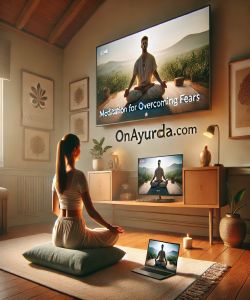
1. Overview of Meditation for Overcoming Fears
Meditation for the explicit purpose of overcoming fear is not a passive retreat from reality but a rigorous and systematic mental training discipline. It is a proactive methodology designed to deconstruct the cognitive and physiological architecture of fear, anxiety, and phobic responses. This practice mandates that the individual turns their attention directly towards the source of their apprehension, not in a confrontational manner, but with a detached and analytical curiosity. The fundamental premise is that fear is a conditioned reaction, a pattern of thought and bodily sensation that can be observed, understood, and ultimately disempowered through sustained, focused awareness. It operates by severing the automatic link between a trigger and the subsequent fear response. Instead of being ensnared by the narrative of fear, the practitioner learns to witness it as a transient mental event, akin to observing clouds passing in the sky. This process cultivates a profound internal locus of control, shifting the individual from a state of reactivity to one of composed responsiveness. It is not about eradicating fear entirely, as fear can be a necessary survival instinct, but about neutralising its irrational and debilitating manifestations. Through disciplined practice, one develops the mental fortitude to remain stable and clear-minded, even when faced with stimuli that previously induced panic or distress. This is achieved by systematically altering the brain's neural pathways, a phenomenon known as neuroplasticity, thereby building resilience and diminishing the habitual grip of fear. It is, in essence, the strategic application of metacognitive skill to reclaim authority over one’s own psychological landscape, transforming fear from an unassailable master into a manageable and understood phenomenon. This demanding process requires commitment and courage, offering not a simple cure but a powerful, lifelong tool for mental sovereignty and emotional regulation.
2. What are Meditation for Overcoming Fears?
Meditation for overcoming fears constitutes a targeted set of contemplative practices aimed at fundamentally altering an individual's relationship with fear-inducing thoughts, emotions, and physical sensations. It is not a singular technique but an umbrella term for various structured mental exercises that share a common objective: to dismantle the neurological and psychological underpinnings of chronic fear, anxiety, and phobias. At its core, this form of meditation is an active training in non-reactive observation. Rather than suppressing, avoiding, or struggling against fearful stimuli, the practitioner is guided to observe them with a steady and dispassionate awareness. This approach is built upon the principle that the suffering associated with fear arises not from the initial stimulus itself, but from our subsequent cognitive and emotional entanglement with it.
The practice can be broken down into several key components:
- Mindfulness of Fear: This involves paying precise, moment-to-moment attention to the emergence of fear. The practitioner learns to notice the specific thoughts, the exact location and quality of bodily sensations (e.g., a tightening in the chest, a knot in the stomach), and the emotional tone of the experience without being overwhelmed by it.
- Decentering: This is the critical skill of separating oneself from one's thoughts and emotions. Through meditation, one learns to see "the feeling of fear" as a temporary event in consciousness, rather than an all-encompassing truth about oneself or the situation. It fosters the understanding that "I am having a thought about fear," not "I am a fearful person."
- Exposure through Imagination: Some advanced practices involve visualising a feared object or situation in a controlled, meditative state. This allows the practitioner to work with the fear response in a safe environment, gradually desensitising the nervous system and building confidence.
- Cultivation of Equanimity: This is the development of a balanced and stable mind that is not easily disturbed by either pleasant or unpleasant experiences. By repeatedly observing fear without reacting, the mind becomes more resilient and less susceptible to its disruptive power.
Ultimately, this meditative approach is a strategic re-education of the mind and nervous system, teaching it to respond to perceived threats with clarity and composure instead of automatic, counterproductive alarm.
3. Who Needs Meditation for Overcoming Fears?
- Individuals diagnosed with specific anxiety disorders, including but not limited to Generalised Anxiety Disorder (GAD), Panic Disorder, and Social Anxiety Disorder. These persons require a systematic method to manage and reduce the pervasive and often overwhelming sense of apprehension that characterises their condition.
- Sufferers of specific phobias, such as arachnophobia, claustrophobia, or aviophobia. Meditation provides a structured internal environment to work with the phobic response, gradually de-sensitising the individual to the trigger through mindful exposure and emotional regulation.
- Persons experiencing Post-Traumatic Stress Disorder (PTSD). For these individuals, meditation can be a vital tool for managing intrusive memories, hypervigilance, and the intense physiological reactions associated with their trauma, provided it is undertaken with professional guidance.
- Professionals in high-stress, high-stakes occupations, such as emergency services personnel, military members, or corporate executives. These roles demand exceptional mental resilience and the ability to perform under pressure, making the capacity to manage fear and stress a critical operational asset.
- Athletes and other competitive performers who are debilitated by performance anxiety or a fear of failure. Meditation helps in cultivating focus and maintaining composure, allowing them to access their skills without being hindered by psychological interference.
- Individuals grappling with existential dread or a generalised fear of the unknown, death, or life transitions. The practice provides a framework for confronting these profound and often abstract fears, fostering a sense of inner stability and acceptance.
- Anyone whose quality of life, decision-making capabilities, or personal and professional relationships are being negatively impacted by irrational or excessive fear. This includes those who engage in avoidance behaviours that limit their experiences and potential.
- Individuals seeking to enhance their overall emotional intelligence and resilience. Proactively developing the skills to manage fear is a cornerstone of robust mental health and is not solely reserved for those with a clinical diagnosis. It is a fundamental component of psychological fortitude.
4. Origins and Evolution of Meditation for Overcoming Fears
The origins of using meditative practices to address fear are deeply embedded in ancient Eastern contemplative traditions, particularly within Buddhism. The core teachings, articulated over two and a half millennia ago, extensively addressed the nature of suffering (Dukkha) and its roots in attachment and aversion, with fear being a primary manifestation of aversion. Practices such as Vipassanā (insight meditation) and Samatha (concentration meditation) were not designed as therapeutic interventions in the modern sense, but as components of a comprehensive system for spiritual liberation. The central aim was to understand the impermanent and impersonal nature of all mental phenomena, including fear. By observing the arising and passing of fearful thoughts and sensations with unwavering equanimity, practitioners sought to sever their identification with these states, thereby liberating themselves from their control. The Anapanasati Sutta, for instance, provides a foundational guide to using the breath as an anchor to steady the mind, a technique now central to modern fear-management protocols.
The evolution of these practices into a targeted, secular tool for overcoming fear is a distinctly 20th and 21st-century phenomenon. The major turning point was the migration of these concepts into Western psychology and medicine. Pioneers like Jon Kabat-Zinn were instrumental in this transition. In the late 1970s, he developed the Mindfulness-Based Stress Reduction (MBSR) programme, stripping the practices of their religious context and applying them to patients with chronic pain and stress. This secularisation made meditation palatable and accessible to a Western audience and the scientific community.
Subsequently, cognitive-behavioural therapists began to integrate mindfulness principles into their own established frameworks, leading to the development of therapies like Mindfulness-Based Cognitive Therapy (MBCT) and Acceptance and Commitment Therapy (ACT). These modern iterations specifically target the mechanisms of fear and anxiety. They retain the ancient core principle of non-judgemental observation but combine it with contemporary psychological concepts like cognitive defusion—the process of separating from one's thoughts. The evolution has therefore been one of translation and integration: from a spiritual path aimed at ultimate liberation to a precise, evidence-based clinical tool designed to alleviate specific psychological distress and enhance mental resilience in a secular world. The focus has shifted from metaphysics to neurobiology, with modern research validating the profound effects of these ancient practices on the brain's fear centres, such as the amygdala.
5. Types of Meditation for Overcoming Fears
- Mindfulness Meditation: This is the foundational practice for addressing fear. Its primary technique involves anchoring one's attention, typically to the physical sensation of the breath. When the mind wanders, or when a fearful thought or sensation arises, the instruction is to note its presence without judgement and gently guide the attention back to the anchor. The objective is not to eliminate fear but to change one's relationship to it, observing it as a transient mental event rather than an overwhelming reality. This cultivates dispassionate awareness and de-identifies the practitioner from the content of their fear.
- Vipassanā Meditation: A more rigorous and analytical form of insight meditation, Vipassanā requires the practitioner to systematically scan the body and mind, observing all sensations and mental phenomena with precision and equanimity. When fear manifests, it is scrutinised in detail—its physical location, its intensity, its texture—until its impermanent nature is directly perceived. This deep, investigative process dismantles the solidity of the fear response, revealing it to be a dynamic and constantly changing process.
- Walking Meditation: This practice involves bringing mindful awareness to the physical act of walking. It is particularly effective for those who find sitting meditation aggravates restlessness and anxiety. By focusing on the sensations in the feet and the movement of the body, the practitioner grounds themselves in the present moment. When fear arises, the physical anchor of walking provides a powerful and immediate point of return, preventing the mind from being carried away by anxious thought-streams.
- Loving-Kindness Meditation (Metta): This technique directly counteracts the constrictive and self-focused nature of fear by cultivating feelings of warmth, goodwill, and compassion. The practice involves the silent repetition of specific phrases directed towards oneself and then progressively towards others. By generating a powerful, positive emotional state, Metta can soothe the nervous system and create a sense of safety and connection, which is fundamentally antithetical to the isolating experience of fear.
- Body Scan Meditation: The practitioner systematically sweeps their attention through the entire body, from the toes to the head, noticing any and all physical sensations with impartial curiosity. This practice is exceptionally useful for fear, as it heightens awareness of how fear manifests physically. By learning to sit with these sensations (e.g., tightness, tingling, heat) without reacting, the practitioner breaks the habitual cycle of physical tension fuelling anxious thoughts, and vice versa.
6. Benefits of Meditation for Overcoming Fears
- Enhanced Emotional Regulation: Develops the capacity to manage and modulate emotional responses, particularly the fight-or-flight reaction. It allows for a pause between a fear-inducing stimulus and the habitual reaction, creating an opportunity for a more measured and rational response.
- Reduced Amygdala Reactivity: Neurological studies demonstrate that consistent meditation practice can decrease the size and activity of the amygdala, the brain's primary fear centre. This leads to a less intense and less frequent physiological and emotional response to perceived threats.
- Increased Prefrontal Cortex Activity: Strengthens the prefrontal cortex, the region of the brain responsible for executive functions like rational thinking, decision-making, and impulse control. A more dominant prefrontal cortex can effectively override the primitive, fear-based signals from the amygdala.
- Cognitive Defusion and De-identification: Fosters the crucial skill of observing thoughts and feelings from a distance, rather than being fused with them. One learns to see "a feeling of fear" as a temporary mental event, not as a core part of one's identity, which dramatically reduces its power.
- Decreased Physiological Symptoms of Stress: Systematically calms the sympathetic nervous system and activates the parasympathetic nervous system, leading to a lower heart rate, reduced blood pressure, and decreased levels of the stress hormone cortisol. This alleviates the physical manifestations of chronic fear.
- Improved Attentional Control: The practice is a rigorous training for the mind, enhancing the ability to direct and sustain focus. This improved concentration allows an individual to disengage from ruminative, fear-based thought loops and redirect attention to the present moment or a chosen task.
- Increased Self-Awareness (Interoception): Cultivates a heightened sensitivity to internal bodily signals. This allows for the early detection of the physical precursors to a fear response, enabling proactive management before the emotion escalates and becomes overwhelming.
- Cultivation of Psychological Resilience: By repeatedly and safely exposing oneself to the discomfort of fear within a meditative state, one builds mental fortitude and a tolerance for distress. This makes the individual less susceptible to being destabilised by future challenges and uncertainties.
7. Core Principles and Practices of Meditation for Overcoming Fears
- Non-Judgemental Awareness: This is the paramount principle. It mandates the observation of all arising mental and physical phenomena—including thoughts of fear, feelings of panic, and associated bodily sensations—without labelling them as 'good' or 'bad'. The practice is to simply note their presence with impartial, scientific curiosity. Judgement fuels the emotional reaction; its absence starves it.
- The Anchor of Attention: A stable, neutral point of focus, most commonly the physical sensation of the breath entering and leaving the body, is established. This anchor serves as a home base for the mind. Its purpose is to provide a constant, reliable point to return to when the mind is inevitably distracted by fearful thoughts, thus preventing descent into ruminative spirals.
- Direct Observation of Impermanence (Anicca): The practitioner is instructed to observe fear not as a static, monolithic entity but as a dynamic, fluctuating process. By paying close attention, one directly perceives that the sensations and thoughts of fear are in constant flux—arising, intensifying, weakening, and eventually passing away. This insight dismantles the illusion of fear's permanence and power.
- De-identification from Mental Content: A critical principle is the cultivation of a clear distinction between the observer (consciousness) and the observed (thoughts and emotions). The practice trains the individual to recognise that "I am not my fear; I am the one who is aware of fear." This cognitive shift, known as decentering or defusion, is fundamental to breaking the grip of fear.
- Radical Acceptance: This is not resignation or approval but the clear-eyed acknowledgement of present-moment reality. Instead of resisting, fighting, or suppressing fear, the practice is to allow it to be present in one's field of awareness without demanding it be different. This non-resistance paradoxically reduces the tension and suffering associated with the fear.
- Intentional and Consistent Practice (Discipline): The benefits are not derived from a single session but from disciplined, regular engagement. The practice is a form of mental conditioning. Daily, structured sessions are required to forge new neural pathways and weaken the old, habitual, fear-based ones. Consistency is non-negotiable for tangible results.
- Embodied Presence: The practice demands a shift in focus from abstract, future-oriented worries to the concrete, tangible sensations of the present moment within the body. By grounding awareness in physical sensations, the practitioner anchors themselves in reality, moving out of the hypothetical scenarios where fear thrives.
8. Online Benefits of Meditation for Overcoming Fears
- Absolute Discretion and Privacy: The online format provides a level of anonymity that is impossible in a group setting. Individuals dealing with fears that may carry social stigma, such as social anxiety or specific phobias, can engage in the practice from the security and privacy of their own homes without fear of judgement or exposure.
- Unparalleled Accessibility: Geographic location, mobility issues, and restrictive schedules cease to be barriers to entry. High-calibre instruction is made available to individuals in remote areas or those who are housebound due to physical or psychological conditions, including severe agoraphobia, for whom attending an in-person session would be impossible.
- Controlled Environment: The practitioner has complete authority over their physical space. They can eliminate potential distractions, adjust lighting and temperature, and use personal items (cushions, blankets) to create an optimal environment for confronting difficult emotions. This control can foster a crucial sense of safety when beginning to work with fear.
- Consistency and Repetition: Online platforms frequently offer recorded sessions and extensive libraries of guided meditations. This allows the user to repeat specific exercises as often as necessary to master a technique or to work through a particularly challenging emotion. This ability to practise on-demand is a significant advantage for reinforcing learning and building momentum.
- Access to Specialised Expertise: The digital landscape transcends local limitations, providing access to world-renowned instructors and programmes specifically designed for fear and anxiety. An individual is no longer limited to the expertise available in their immediate vicinity but can connect with leading specialists from across the globe.
- Self-Paced Learning: Online courses are often structured to allow individuals to progress at their own speed. This is critically important when dealing with fear, as practitioners can spend more time on modules they find challenging and move more quickly through those they grasp easily, ensuring a personalised and effective learning trajectory.
- Integration into Daily Life: The convenience of the online format makes it easier to integrate the practice into a daily routine. A session can be completed before work, during a lunch break, or late at night, making consistent practice more sustainable. This seamless integration helps to bridge the gap between formal practice and real-world application of the skills.
9. Meditation for Overcoming Fears Techniques
- Preparation and Posture: Select a quiet location where you will not be disturbed. Assume a dignified, stable posture, either seated on a cushion on the floor or upright in a chair with both feet flat on the ground. The spine must be straight but not rigid, allowing for alertness and ease. The hands can rest on the lap. Close the eyes or maintain a soft, unfocused gaze downwards.
- Establish the Anchor: Bring your full attention to the physical sensation of your breath. Do not alter its rhythm; simply observe it. Notice the feeling of the air entering your nostrils, the expansion of the chest and abdomen, and the subsequent release. This is your anchor, your point of return. Remain with this for several moments to stabilise the mind.
- Permit the Arising of Fear: Intentionally shift your focus from the breath to the subject of your fear. You may gently bring to mind the feared object, situation, or the generalised feeling of anxiety. Do not force it, but create an open, receptive space in your awareness for the fear to manifest naturally.
- Observe without Reaction: As the fear emerges—as a thought, an image, or a physical sensation (e.g., tightness in the chest, rapid heartbeat, churning stomach)—your sole task is to observe it. Adopt the mindset of a neutral scientist examining a phenomenon. Note its location, intensity, and quality without getting caught in the narrative.
- Apply Mental Labelling: Silently and calmly, label the experience. If you feel tightness, label it "tightness." If a thought of panic arises, label it "thought." This is not an intellectual exercise but a tool to create a sliver of space between you and the experience. It reinforces the fact that you are the observer, not the experience itself.
- Investigate the Sensation: Lean into the physical sensation with your awareness. Where does it begin and end? Is it constant, or does it pulsate? Is it hot or cold? By examining it so closely, you strip it of its emotional charge and witness its impermanent, fluctuating nature directly.
- Return to the Anchor: When you notice your mind has been carried away by a story about the fear, or if the intensity becomes overwhelming, gently and firmly redirect your full attention back to the physical sensation of the breath. Rest there until the mind stabilises, then you may repeat the process of observing the fear.
- Conclude with Intention: After a predetermined period, release the focus on both the fear and the breath. Bring your awareness back to the entire body, the room you are in, and the sounds around you. Before opening your eyes, silently acknowledge your courage for having faced the discomfort.
10. Meditation for Overcoming Fears for Adults
The application of meditation for overcoming fear in adults demands a mature and disciplined approach, acknowledging the complex and deeply entrenched nature of adult anxieties. Unlike the more transient fears of youth, adult fears are often interwoven with significant life responsibilities, career pressures, financial obligations, and existential concerns. These are not fleeting shadows but structured anxieties built upon years of conditioning, past failures, and future-oriented worries. Consequently, the meditative practice for an adult must be robust and pragmatic, moving beyond simple relaxation to become a rigorous tool for mental deconstruction and re-engineering. It requires the adult to confront the sophisticated narratives they have constructed around their fears—narratives about inadequacy, security, and mortality. The process involves systematically dismantling these cognitive edifices by observing them with an unflinching, dispassionate awareness. The adult practitioner learns to differentiate between a genuine, present-moment threat and the catastrophic projections of a worried mind. This is particularly critical in contexts such as professional performance anxiety, where the fear of failure can be paralysing, or in relationship anxieties, where past hurts project fear onto current interactions. Meditation equips the adult with the metacognitive ability to step back from these ingrained patterns, to witness the automated chain reaction of trigger-thought-emotion-sensation, and to consciously uncouple the links. It is not an escape but a direct engagement. It demands that the individual takes full responsibility for their internal state, cultivating an unshakeable inner locus of control that is impervious to the inevitable uncertainties and pressures of adult life. The practice becomes a foundational skill for navigating complexity with composure, resilience, and clarity, transforming fear from a debilitating liability into a source of information that can be managed with wisdom and authority.
11. Total Duration of Online Meditation for Overcoming Fears
The determination of an appropriate duration for an online meditation session dedicated to overcoming fear is a matter of strategic precision, not arbitrary choice. For a single, focused engagement, a total duration of 1 hr is a well-established and effective standard. This period is not monolithic but must be structured internally to maximise its utility. An allocation of 1 hr allows for a necessary preparatory phase, where the practitioner can settle into their environment, disengage from external demands, and establish a baseline of mental calm. This is typically followed by the core practice itself, the intensive work of observing and deconstructing the fear response, which requires a substantial, uninterrupted block of time to be effective. A period of less than 1 hr often proves insufficient, as the mind may only begin to settle as the session is concluding, preventing any deep, transformative work. Conversely, extending much beyond this timeframe for an unguided session can lead to mental fatigue, restlessness, and a diminished capacity for focused attention, particularly for those new to the discipline. Within the 1 hr framework, the formal guided meditation may last for a significant portion of this time, followed by a crucial concluding period for integration. This final phase allows the practitioner to process the experience, gently return to a normal state of awareness, and reflect on any insights gained without immediately rushing back into daily activities. Thus, the 1 hr duration serves as a complete, self-contained module of practice. It is long enough to facilitate profound psychological work yet concise enough to be integrated into a demanding adult schedule, thereby promoting the consistency required to achieve tangible, lasting results in the management and mastery of fear. This duration respects the gravity of the work while acknowledging the practical constraints of modern life.
12. Things to Consider with Meditation for Overcoming Fears
Engaging with meditation as a tool to overcome fear necessitates a sober and realistic appraisal of its nature and demands. This is not a panacea or a passive relaxation technique; it is an active, and at times profoundly challenging, mental discipline. One must consider that the initial stages of practice may lead to a temporary intensification of anxiety. As one’s awareness sharpens, the sheer volume and intensity of fearful thoughts and sensations, previously suppressed or ignored, can become more apparent and distressing. This is a normal, albeit uncomfortable, phase of the process, akin to turning up the lights in a previously dark room. It requires perseverance and the understanding that this heightened awareness is a prerequisite for change, not a sign of failure. Furthermore, individuals with a history of severe trauma, psychosis, or dissociation must approach this practice with extreme caution and exclusively under the guidance of a qualified mental health professional who is also an experienced meditation instructor. For these individuals, unguided meditation can risk destabilisation or the re-traumatising recall of past events. The expectation of immediate results must be relinquished. The neural pathways and cognitive habits that underpin chronic fear have been forged over years or decades; their reconfiguration is a gradual process that demands unwavering consistency and patience. There will be sessions that feel unproductive or frustrating, and progress will likely be non-linear. Acknowledging this from the outset prevents disillusionment and abandonment of the practice. Finally, one must consider that meditation does not eliminate the external sources of stress or threat, but rather re-engineers one's internal response to them. It is about building psychological resilience and sovereignty, not about creating a life devoid of challenges. A clear understanding of these realities is crucial for undertaking the practice effectively and safely.
13. Effectiveness of Meditation for Overcoming Fears
The effectiveness of meditation for overcoming fear is not a matter of conjecture but is substantiated by a robust and expanding body of clinical and neuroscientific evidence. Its efficacy lies in its direct and systematic impact on the fundamental mechanisms of the human fear response. The practice functions as a targeted cognitive and neurological intervention, fundamentally re-wiring the brain’s circuitry to favour rational assessment over reactive panic. Neuroimaging studies consistently demonstrate that dedicated meditation practice leads to a measurable decrease in the grey matter density and hyperactivity of the amygdala, the brain’s primary alarm system. Concurrently, it strengthens the neural pathways connecting to the prefrontal cortex, the seat of executive function, emotional regulation, and considered judgement. This structural and functional shift empowers the individual to consciously override the primitive, automatic fear signals emanating from the amygdala, replacing them with a composed and clear-headed analysis of the situation. On a psychological level, its effectiveness is rooted in the principle of exposure and habituation. By repeatedly and intentionally turning awareness towards the sensations of fear in a controlled, non-reactive manner, the practitioner desensitises their nervous system. The fear response, when met with calm observation rather than resistance or panic, gradually loses its potency. It is transformed from an overwhelming tidal wave into a manageable and temporary ripple in consciousness. The practice dismantles the cognitive distortions that fuel anxiety—such as catastrophising and rumination—by cultivating the skill of metacognitive awareness. This allows the individual to de-fuse from their fearful thoughts, recognising them as transient mental events rather than objective reality. The result is not the absence of fear, but a profound and lasting increase in resilience, self-regulation, and the sovereign ability to function effectively, even in the presence of fear-inducing stimuli.
14. Preferred Cautions During Meditation for Overcoming Fears
It is imperative to approach the practice of meditation for overcoming fear with rigorous discipline and a clear understanding of potential contraindications. This is not a benign activity to be undertaken lightly, especially when dealing with deeply ingrained phobias or trauma. The primary caution is against a naive or forceful confrontation with fear. The objective is detached observation, not a brutish internal battle. Attempting to suppress or aggressively eliminate fear will invariably backfire, intensifying the very state one seeks to alleviate. The mind must be approached with strategic patience, not blunt force. A critical danger lies in what is known as 'spiritual bypassing'—using the meditative state to dissociate from or avoid the legitimate emotional work required. The practitioner must remain grounded and willing to feel the discomfort of fear, not float above it in a state of feigned equanimity. For individuals with a history of significant psychological trauma, particularly Post-Traumatic Stress Disorder, unguided practice is strongly contraindicated. The process of turning inward can precipitate flashbacks or overwhelming emotional abreactions without the necessary support structure to manage them, potentially leading to re-traumatisation. Therefore, such individuals must only proceed under the strict supervision of a trauma-informed clinician. Furthermore, one must be wary of expecting linear progress. There will be periods of apparent regression, and these must be met with resolute perseverance, not self-recrimination. The misguided belief that every session should feel peaceful is a direct path to failure. The work is often arduous, and embracing this reality is a prerequisite for success. Lastly, avoid practising to the point of extreme mental exhaustion; the goal is to build fortitude, not to break the mind. Recognise the signs of over-exertion and have the discipline to conclude the session gracefully.
15. Meditation for Overcoming Fears Course Outline
- Module 1: Foundational Principles and Posture
- Point 1.1: Introduction to the secular, psychological basis of mindfulness for fear.
- Point 1.2: Establishing a dignified and stable posture for formal practice (seated and lying down).
- Point 1.3: The core principle of non-judgemental awareness and radical acceptance.
- Point 1.4: Initial guided practice: establishing the breath as a primary anchor of attention.
- Module 2: The Architecture of Fear
- Point 2.1: Understanding the cognitive, emotional, and physiological components of the fear response (the 'fear triad').
- Point 2.2: Introduction to the Body Scan technique to map the physical landscape of fear and anxiety.
- Point 2.3: Guided practice: a full Body Scan meditation, noting sensations with impartial curiosity.
- Point 2.4: The practice of mental labelling to create distance from overwhelming sensations.
- Module 3: Working with Fearful Thoughts
- Point 3.1: The nature of thoughts as transient mental events, not facts.
- Point 3.2: Introduction to the principle of cognitive defusion: "seeing" thoughts rather than "seeing from" them.
- Point 3.3: Guided practice: observing the arising and passing of thoughts without engagement or suppression.
- Point 3.4: Techniques for unhooking from ruminative, fear-based thought loops.
- Module 4: Direct Engagement and Desensitisation
- Point 4.1: Introduction to controlled, imaginal exposure to feared stimuli within a meditative state.
- Point 4.2: Guided practice: mindfully bringing a mild fear to awareness and observing the response with the support of the anchor.
- Point 4.3: The "RAIN" technique (Recognise, Allow, Investigate, Nurture) for working with intense fear.
- Point 4.4: Cultivating self-compassion as an antidote to the self-criticism that often accompanies fear.
- Module 5: Integration into Daily Life
- Point 5.1: Strategies for applying mindful awareness in real-world, fear-inducing situations.
- Point 5.2: Introduction to informal practices: walking meditation and mindful pauses.
- Point 5.3: Developing a sustainable, lifelong personal practice plan.
- Point 5.4: Final review of core principles and consolidating resilience.
16. Detailed Objectives with Timeline of Meditation for Overcoming Fears
- Phase One: Foundation and Stabilisation (Initial Weeks)
- Objective 1: To establish a consistent daily meditation practice of a minimum specified duration. This is a non-negotiable behavioural goal.
- Objective 2: To master the ability to maintain a stable, upright posture without significant physical distraction for the duration of the practice.
- Objective 3: To develop proficiency in using the physical sensation of the breath as a primary anchor of attention, capable of returning focus to the anchor within moments of recognising distraction.
- Objective 4: To understand and begin applying the principle of non-judgemental awareness to all sensory and mental experiences during formal practice.
- Phase Two: Interoceptive Awareness and Deconstruction (Intermediate Period)
- Objective 5: To complete a full Body Scan meditation without falling asleep, accurately identifying and labelling physical sensations in at least 80% of body regions.
- Objective 6: To be able to identify and track the primary physical manifestations of one's specific fear (e.g., chest tightness, stomach tension) as they arise and pass during meditation.
- Objective 7: To demonstrate the ability to de-identify from fearful thoughts by successfully applying mental labelling techniques, recognising them as transient mental events.
- Objective 8: To intentionally hold a mildly uncomfortable physical sensation in awareness for a sustained period without reacting, demonstrating nascent equanimity.
- Phase Three: Direct Engagement and Resilience Building (Advanced Period)
- Objective 9: To successfully conduct a controlled, imaginal exposure to a low-level feared stimulus, maintaining conscious awareness of the breath as an anchor throughout the process.
- Objective 10: To apply the RAIN (Recognise, Allow, Investigate, Nurture) model to an episode of emergent fear during a session, moving through all four steps methodically.
- Objective 11: To report a subjective decrease in the believability of habitual fearful thought patterns.
- Phase Four: Integration and Autonomy (Consolidation and Beyond)
- Objective 12: To successfully apply a "mindful pause" in a real-world situation that would previously have triggered an automatic fear response.
- Objective 13: To formulate and commit to a personalised, sustainable long-term practice schedule, independent of external guidance.
- Objective 14: To articulate a clear, personal understanding of one's own fear architecture and the meditative strategies most effective for its management.
17. Requirements for Taking Online Meditation for Overcoming Fears
- Unyielding Personal Commitment: The foremost requirement is a resolute, self-motivated commitment to consistent practice. Online learning removes external accountability structures; success is therefore entirely dependent on the individual's personal discipline and unwavering intention to complete the programme as designed.
- A Dedicated and Sacrosanct Space: Participants must designate a specific physical location for their practice. This space must be consistently available, private, and free from potential interruptions from other people, pets, or ambient noise. It must be treated as a serious, single-purpose environment for the duration of each session.
- Reliable High-Speed Internet Connection: A stable, uninterrupted internet connection is a non-negotiable technical requirement. Fluctuations in connectivity, buffering, or dropouts during a guided session, particularly when working with intense fear, can be profoundly disruptive and counter-productive.
- Functional Digital Hardware: The individual must possess and be proficient in the use of a suitable device—such as a laptop, tablet, or desktop computer—with a functioning screen, speakers, and, if required for interactive sessions, a microphone and camera. The hardware must be reliable and free from technical faults.
- Technological Proficiency: A baseline competence in operating the necessary software, applications, or web platforms is essential. The participant must be able to navigate the course interface, access materials, and troubleshoot minor technical issues independently to avoid frustration and disruption to the learning process.
- Emotional and Psychological Stability: The participant must possess a sufficient degree of psychological stability to engage with potentially distressing emotions. The course is not a substitute for acute psychiatric care. Individuals currently in a state of crisis or with a history of severe, unmanaged mental illness must seek professional clearance before enrolling.
- A Suitable Chair or Cushion: To facilitate the correct posture required for practice, the individual must have access to an upright chair that allows the feet to be flat on the floor or appropriate meditation cushions (zafu, zabuton) that allow for a stable, comfortable, and alert seated position.
- Willingness to Endure Discomfort: A fundamental requirement is the psychological preparedness to sit with and mindfully observe uncomfortable and unpleasant feelings and sensations. An unwillingness to face this discomfort directly will render the entire practice ineffective.
18. Things to Keep in Mind Before Starting Online Meditation for Overcoming Fears
Before commencing an online meditation programme for overcoming fear, it is crucial to adopt a mindset of stern realism and strategic preparation. This is not a passive consumption of content; it is an active, demanding training regimen. You must understand that the digital format places the onus of discipline squarely upon your shoulders. There is no instructor physically present to correct your posture or a group to provide ambient accountability. Your success or failure will be a direct result of your own self-governance. It is therefore imperative to schedule your sessions with the same unyielding gravity as a critical business appointment and to fiercely protect this time from all encroachments. Furthermore, you must meticulously prepare your physical environment. A cluttered, noisy, or insecure space will sabotage your efforts before they even begin. You are responsible for creating a sanctuary, however modest, that is conducive to deep introspective work. Be prepared for the technology to fail at some point; have a backup plan or, at the very least, the mental resilience not to let a technical glitch derail your commitment. Critically, you must manage your expectations. The promise of online learning is access and convenience, not instantaneous transformation. The process of re-patterning the brain’s response to fear is arduous and incremental. There will be sessions where you feel you are making no progress or even regressing. This is an expected part of the journey. You must enter this endeavour with the long-term perspective of a marathon runner, not a sprinter, equipped with patience, perseverance, and the sober understanding that you alone are responsible for applying the techniques and doing the work. This is not a service being rendered to you; it is a skill you must forge for yourself.
19. Qualifications Required to Perform Meditation for Overcoming Fears
The authority to guide others in meditation, particularly for the specific and sensitive application of overcoming fear, is not conferred by mere personal experience or casual interest. It demands a rigorous and verifiable set of qualifications that ensure both competence and safety. The facilitator must possess a deep, lived understanding of the practice, which extends far beyond theoretical knowledge. This is typically evidenced by years of their own dedicated, consistent, and disciplined personal meditation practice, often under the mentorship of a seasoned teacher within a recognised lineage or tradition. However, personal practice alone is insufficient.
A qualified instructor must have completed a formal, structured, and comprehensive teacher training programme from a reputable institution or organisation. Such programmes provide essential pedagogical skills and a thorough grounding in the psychological and neurological principles underpinning the practice. The qualifications should explicitly include:
- Certification from a Recognised Body: This would be a formal certification in mindfulness instruction, such as those modelled on the Mindfulness-Based Stress Reduction (MBSR) or Mindfulness-Based Cognitive Therapy (MBCT) protocols. These are internationally recognised standards that require hundreds of hours of training, supervised teaching, and silent retreat experience.
- Trauma-Informed Training: When addressing fear, it is absolutely essential that the instructor has specific training in trauma-sensitive or trauma-informed mindfulness. This equips them to recognise the signs of traumatic activation, manage abreactions safely, and modify practices to prevent re-traumatisation. A lack of this specific qualification is a major disqualifier.
- Knowledge of Psychological Contraindications: The instructor must be thoroughly versed in the psychological conditions for which meditation can be contraindicated or requires significant adaptation, such as psychosis, severe dissociation, or acute suicidality. They must be competent in screening participants and referring them to appropriate clinical care when necessary.
In essence, a qualified performer is a dual professional: a deeply experienced practitioner and a trained educator. They possess the wisdom born of personal practice and the technical skill and ethical framework conferred by rigorous professional training. Anything less represents an unacceptable risk to the participant.
20. Online Vs Offline/Onsite Meditation for Overcoming Fears
Online
The online modality for learning meditation to overcome fear is characterised by its clinical efficiency, accessibility, and demand for high personal autonomy. Its primary advantage is the removal of geographical and logistical barriers, granting access to specialised instruction irrespective of the participant's location or physical mobility. This is particularly crucial for individuals with conditions like agoraphobia or severe social anxiety, for whom attending an in-person class would be a prohibitive obstacle. The online environment offers absolute privacy, allowing the practitioner to engage with deeply personal fears without the perceived scrutiny of a group. It also affords total control over the practice environment, enabling the individual to optimise conditions for safety and focus. However, this model's strength is also its weakness. It lacks the immediate, tangible presence of a teacher who can offer real-time postural corrections or nuanced, non-verbal support. The 'sangha', or community aspect, which can provide vital encouragement, is diluted into a digital format. The onus of discipline, motivation, and creating a sacred space falls entirely and unforgivingly upon the individual. It is a path that suits the self-motivated, the disciplined, and those for whom privacy and convenience are paramount concerns.
Offline/Onsite
The offline, or onsite, approach provides a powerful, embodied learning experience that is fundamentally different from its digital counterpart. The physical presence of a qualified instructor is its most significant asset. A teacher can provide subtle, in-the-moment guidance, correct posture, and gauge the emotional temperature of the room, offering support that cannot be replicated through a screen. The energy of a dedicated physical space, used exclusively for practice, can significantly aid in settling the mind. Furthermore, the presence of a 'sangha'—a community of fellow practitioners—fosters a profound sense of shared purpose and accountability. Witnessing others engage with their own difficulties can be deeply validating and inspiring, reducing the sense of isolation that often accompanies fear. This modality, however, is constrained by geography, fixed schedules, and a lack of privacy. The practitioner must travel to a specific location at a specific time, and must be willing to practise in the presence of others. It is the superior choice for those who thrive on structure, community support, and direct, personal mentorship, and for whom the logistical commitment is not a prohibitive factor.
21. FAQs About Online Meditation for Overcoming Fears
Question 1. Is this a religious practice? Answer: No. The methods taught are secular, evidence-based psychological techniques for mental training, stripped of any religious dogma or affiliation.
Question 2. Will meditation make my fear disappear completely? Answer: The objective is not eradication but mastery. It re-engineers your response, reducing irrational fear's power and giving you control over it.
Question 3. How is this different from simple relaxation? Answer: Relaxation is passive. This is an active, rigorous mental discipline of focused attention and non-reactive observation. It is a skill, not a state.
Question 4. Can the practice make my anxiety worse at first? Answer: Yes. Increased awareness can initially amplify the perception of fear. This is a normal, necessary phase of the process.
Question 5. How long until I see results? Answer: This is not a quick fix. Tangible changes in neural pathways require consistent, disciplined practice over weeks and months.
Question 6. Do I need special equipment? Answer: No. A quiet space, a stable internet connection, and an upright chair or cushion are the only absolute requirements.
Question 7. What if I have a history of trauma? Answer: You must proceed with extreme caution and only with the guidance of a trauma-informed instructor. Unsupervised practice is contraindicated.
Question 8. Can I do this if I am on medication for anxiety? Answer: Yes. This practice can be a powerful complement to medication and therapy. Never alter your medication without consulting your physician.
Question 9. What if I cannot clear my mind of thoughts? Answer: The goal is not to clear the mind. The goal is to notice the thoughts without being controlled by them.
Question 10. Is an online course as effective as an in-person one? Answer: It can be, provided you supply the personal discipline that an in-person setting enforces. The effectiveness depends entirely on you.
Question 11. What if I fall asleep during the practice? Answer: This indicates either fatigue or avoidance. Assess your physical rest and practise with more alert intention.
Question 12. Must I sit on the floor in a lotus position? Answer: No. An upright chair that keeps your spine straight and feet flat on the floor is perfectly acceptable and often preferable.
Question 13. How much practice is required each day? Answer: Consistency is more important than duration. A disciplined daily session of a specified length is the standard for achieving results.
Question 14. What is the single most important principle? Answer: Non-judgemental awareness. Observing your fear without criticism or resistance is the core mechanism of the entire practice.
Question 15. Can this help with a fear of public speaking? Answer: Yes. It provides the tools to manage the physiological panic and negative self-talk associated with performance anxiety.
Question 16. What if I find the silence uncomfortable? Answer: The discomfort with silence is often part of what needs to be investigated. Stay with the practice.
22. Conclusion About Meditation for Overcoming Fears
In conclusion, meditation for the purpose of overcoming fear stands as a formidable and empirically validated discipline of mental conditioning. It is not a gentle palliative or a fleeting escape, but a rigorous, proactive strategy for fundamentally re-architecting the mind's relationship with anxiety and apprehension. The practice demands courage, for it requires turning towards the very sources of discomfort that one instinctively avoids. It mandates discipline, as its profound benefits are yielded only through consistent, unwavering application. The core mechanism is one of radical transformation: shifting the individual from a state of helpless reactivity to one of empowered, non-reactive observation. Through the systematic cultivation of mindfulness, equanimity, and insight, the practitioner learns to de-fuse from the content of their fears, observing them as transient, impersonal phenomena rather than all-consuming personal truths. This process dismantles the neurological and psychological structures of chronic fear, diminishing the hyper-reactivity of the amygdala and strengthening the regulatory control of the prefrontal cortex. It is, therefore, the ultimate reclamation of psychological sovereignty. It does not promise a life devoid of fear—an unrealistic and undesirable aim—but rather instils the unshakeable capacity to meet fear with composure, wisdom, and strength. For the individual willing to undertake this demanding inner work, it offers not a temporary solution, but a permanent and invaluable asset: a resilient mind, capable of navigating the inherent uncertainties of existence with authority and grace.