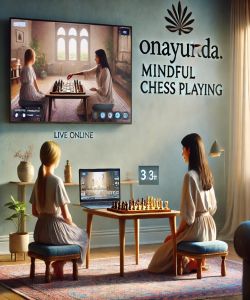
1. Overview of Mindful Chess Playing
Mindful Chess Playing represents a formidable synthesis of ancient contemplative disciplines and the rigorous intellectual demands of chess. It is not merely a method of playing the game but a comprehensive system for cultivating a superior state of cognitive and emotional command. This practice fundamentally reframes the contest from a simple external battle of wits to an internal conquest of one's own psychological limitations. At its core, it posits that the most significant opponent a player faces is not the individual across the board, but the internal cacophony of distraction, emotional reactivity, and ego-driven impulses. By integrating principles of focused attention, present-moment awareness, and non-judgemental observation, the practitioner learns to dismantle these internal obstacles. The objective is to achieve a state of 'flow', wherein strategic calculation, tactical awareness, and intuitive insight operate in seamless harmony, unhindered by performance anxiety or the frustration of a losing position. This discipline moves beyond conventional chess training, which often prioritises pattern recognition and opening theory, to address the very foundation of mental performance: the player’s internal state. It is an exacting art that demands absolute commitment, transforming the 64 squares into a crucible for developing unwavering concentration, psychological resilience, and a profound, unshakeable mental fortitude. The ultimate aim is not just to win more games, but to master the self, achieving a level of performance where every move is an expression of clear, composed, and purposeful thought. This is the unequivocal standard of Mindful Chess Playing, a path for the serious strategist dedicated to achieving absolute peak performance through the deliberate and disciplined mastery of the mind.
2. What are Mindful Chess Playing?
Mindful Chess Playing constitutes a structured and systematic methodology for integrating mindfulness principles directly into the cognitive processes of chess. It is an advanced mental conditioning programme designed to elevate a player's performance by enhancing their psychological resilience and sharpening their focus to an exceptional degree. This is not a passive or abstract philosophy; it is an active, applied discipline. The practice can be delineated into several core components.
It is, first and foremost, a form of attention control training. Practitioners are rigorously schooled in maintaining a single-pointed focus on the board state, the unfolding tactical possibilities, and their own thought processes, without succumbing to internal or external distractions. This involves a conscious and continuous redirection of the mind back to the present moment of the game.
Secondly, it is a framework for emotional regulation. Chess is a psychologically demanding game that can provoke intense frustration, anxiety, and overconfidence. Mindful Chess Playing provides concrete techniques to observe these emotional responses as they arise, acknowledge them without judgement, and prevent them from corrupting strategic decision-making. The player learns to act from a place of calm objectivity rather than emotional reactivity.
Furthermore, it is a process-oriented approach. Traditional chess can become excessively outcome-focused, leading to a fear of losing. This practice shifts the emphasis to the quality of the process: the clarity of thought, the rigour of calculation, and the commitment to each move. By focusing on executing the process flawlessly, the outcome of winning becomes a natural consequence rather than an anxiety-inducing goal.
In essence, Mindful Chess Playing is the deliberate cultivation of a mental state optimised for strategic conflict. It is the art of weaponising stillness, transforming the mind from a chaotic battleground of competing thoughts and emotions into a calm, clear, and decisive instrument of will.
3. Who Needs Mindful Chess Playing?
- Competitive Tournament Players: Individuals competing in high-stakes environments where psychological endurance is as critical as tactical skill. This practice provides the tools to manage tournament pressure, combat mental fatigue during long matches, and recover composure after a tactical blunder or a difficult loss, ensuring peak performance is maintained throughout an entire event.
- Ambitious Amateurs and Club Players: Players who have reached a plateau in their development where improvement in pure chess knowledge yields diminishing returns. For them, the primary barrier to advancement is often psychological, such as inconsistent focus or susceptibility to "chess blindness." This discipline directly targets and rectifies these mental weaknesses.
- Strategic Professionals and Executives: Leaders in business, law, finance, and military strategy who use chess as an analogue for real-world decision-making. They require this discipline not just to improve their game, but to cultivate the mental clarity, emotional detachment, and foresight essential for making critical decisions under pressure in their professional lives.
- Individuals Prone to Performance Anxiety: Those who possess considerable theoretical knowledge of chess but consistently underperform in actual games due to stress, a fear of making mistakes, or an intense fear of their opponent. The practice provides a direct antidote, deconstructing the psychological mechanisms of anxiety.
- Chess Coaches and Tutors: Educators who seek to provide a more holistic training programme for their students. By mastering these principles, they can teach not only the 'what' of good chess (strategy and tactics) but the 'how' of high-level performance (focus, resilience, and emotional control).
- Individuals Seeking Cognitive Enhancement: People using chess as a tool for mental exercise to improve concentration, memory, and problem-solving skills. Mindful Chess Playing accelerates these benefits by systematically training the core faculties of attention and executive function, making the cognitive workout more potent and effective.
4. Origins and Evolution of Mindful Chess Playing
The conceptual underpinnings of Mindful Chess Playing are not a recent invention but a modern synthesis of two ancient and powerful traditions: the strategic rigour of chess and the introspective disciplines of Eastern contemplative practices. Its origins are twofold, drawing from distinct yet complementary streams of human development that have only recently been formally integrated.
The first stream is the long and storied history of chess itself. For centuries, grandmasters and champions have implicitly understood the necessity of supreme concentration and emotional control. The writings and anecdotes of players like Emanuel Lasker, José Raúl Capablanca, and Mikhail Botvinnik are replete with references to psychology, nerve, and the ability to maintain composure under extreme pressure. They were, in effect, practitioners of a raw, intuitive form of mindfulness, developing immense powers of focus through the sheer force of will and thousands of hours of intense competitive experience. However, their methods were often idiosyncratic and not codified into a teachable system. They knew what was required, but a universal 'how' remained elusive.
The second, and more formal, stream flows from meditative traditions such as Zen Buddhism and Samatha-vipassana. These ancient systems developed highly sophisticated, systematic techniques for training the mind, cultivating stable attention, and observing mental phenomena without attachment. For millennia, their application was primarily spiritual or philosophical. The goal was enlightenment or liberation, not victory over a chessboard. They provided a precise, replicable technology for mastering the mind, but its application to a competitive, secular domain like chess was not an explicit aim.
The evolution into the modern discipline of Mindful Chess Playing occurred at the confluence of these two streams, spurred by the rise of sports psychology in the latter part of the twentieth century. Researchers and performance coaches began to recognise that the systematic mental training techniques from contemplative traditions could be adapted to provide a decisive edge in high-performance fields. They began to codify the intuitive practices of past chess champions, structuring them with the proven methodologies of mindfulness. This formalisation transformed a set of disparate insights into a coherent, teachable, and highly effective training doctrine, creating the formidable discipline known today.
5. Types of Mindful Chess Playing
The practice of Mindful Chess Playing is not a monolithic entity but can be categorised into distinct types, each with a specific focus and application. Mastery of the discipline requires an understanding of these variations.
- Process-Focused Mindfulness: This is the foundational type. The practitioner's primary objective is to maintain unwavering attention on the immediate process, not the potential outcome. This involves a granular focus on the current board position, the candidate moves being calculated, and the physical sensations of playing. The goal is to detach completely from anxieties about winning or losing and to immerse the self entirely in the act of making the best possible move in the present moment.
- Emotional Regulation Mindfulness: This type specifically targets the management of psychological states that arise during a game. The practitioner is trained to recognise the emergence of emotions such as frustration after a mistake, anxiety when under attack, or complacency in a winning position. Instead of suppressing or acting on these feelings, the player learns to acknowledge them non-judgementally, allowing them to pass without influencing critical decision-making. It is the practice of maintaining a 'cool' cognitive state irrespective of emotional turbulence.
- Somatic Mindfulness in Chess: This advanced practice involves extending awareness to the physical body during play. Practitioners monitor their posture, breathing rate, and areas of physical tension. The principle is that the mind and body are inextricably linked; physical tension can signal and exacerbate mental stress. By consciously relaxing the body and maintaining controlled, steady breathing, the player can directly pacify the mind and enhance cognitive function.
- Post-Game Reflective Mindfulness: This practice occurs after the game has concluded, regardless of the result. It involves a non-judgemental review of critical moments, not just from a tactical perspective, but from a psychological one. The player asks: "In which moments did my focus waver? When did emotion cloud my judgement?" This transforms every game into a lesson in self-awareness, accelerating the development of mental fortitude for future contests.
6. Benefits of Mindful Chess Playing
- Enhanced Concentration and Focus: Systematically trains the mind to resist distractions, both internal (e.g., intrusive thoughts, anxieties) and external (e.g., environmental noise). This results in a sustained, single-pointed focus on the chessboard for prolonged periods, drastically reducing the frequency of tactical oversights and blunders.
- Superior Emotional Regulation: Provides the practitioner with robust tools to manage the intense psychological pressures inherent in competitive chess. It neutralises the debilitating effects of performance anxiety, frustration after a mistake, and the fear of losing, allowing for clear and rational decision-making under duress.
- Reduction in "Chess Blindness": Directly combats the phenomenon of failing to see obvious moves or threats. By cultivating a state of calm, present-moment awareness, the mind is less cluttered with distracting thoughts, allowing for a clearer and more accurate perception of the board and its possibilities.
- Improved Decision-Making Quality: By detaching the ego from the outcome and focusing purely on the objective reality of the position, players make choices based on sound strategic and tactical reasoning rather than emotional impulse, hope, or fear. This leads to a higher calibre of strategic play.
- Increased Mental Endurance: Just as physical training builds stamina, this practice builds psychological resilience. Practitioners can endure long, gruelling matches without a significant drop-off in cognitive performance, providing a decisive advantage in the later stages of games and tournaments.
- Accelerated Learning and Improvement: Through post-game reflective mindfulness, every game becomes a richer learning experience. It allows players to identify not just their tactical errors, but the underlying psychological root causes, leading to more profound and lasting improvement.
- Transferable Cognitive Skills: The discipline's benefits extend beyond the chessboard. The cultivated skills of intense focus, emotional control, and clear thinking are directly applicable to academic, professional, and personal challenges, enhancing overall life effectiveness.
7. Core Principles and Practices of Mindful Chess Playing
- The Primacy of the Present Moment: The only reality that matters is the current board position. All mental energy must be directed towards understanding and acting within this moment. Ruminating on past mistakes or fantasising about future victory is a tactical error of the highest order and must be ruthlessly eliminated. The practice involves continuously and forcefully returning one's attention to the 'now' of the game.
- Non-Judgemental Observation: Thoughts and emotions (fear, hope, anger) will inevitably arise during a game. The principle is not to suppress them, but to observe their arising and passing without judgement or attachment. They are to be treated as transient mental events, like clouds passing in the sky, and not as valid inputs for decision-making. This practice cultivates a detached, objective mindset.
- Commitment to Process, Detachment from Outcome: The practitioner's sole responsibility is to execute the process of finding the best move to the best of their ability. The final result of the game—win, lose, or draw—is accepted with equanimity. This principle dismantles the ego's investment in victory, which is the primary source of performance anxiety and flawed, emotional play.
- Unified Mind-Body Awareness (Somatic Grounding): The state of the body directly impacts the state of the mind. The core practice is to maintain awareness of one's physical state during play—noticing posture, muscle tension, and especially the rhythm of the breath. Deliberately maintaining a calm, stable breath is a primary tool for grounding the mind and maintaining composure under pressure.
- Beginner's Mind (Shoshin): This principle demands that the player approaches each position with fresh eyes, free from the baggage of preconceived notions, assumptions, or overconfidence. It is the practice of looking at the board as if for the first time, which opens the mind to creative and unexpected solutions that a stale, habituated mind would miss.
- Deliberate Attention Shifting: Advanced practice involves the conscious and purposeful shifting of the focus of attention. This could be a broad, open awareness of the entire strategic landscape, followed by a narrow, intense focus on a specific tactical sequence, and then a shift to internal somatic awareness. This is the masterful control of the mind's 'spotlight'.
8. Online Mindful Chess Playing
- Structured Environmental Control: The online environment, whilst potentially rife with digital distractions, allows for unparalleled control. The practitioner is mandated to construct an austere and dedicated digital and physical space. This means closing all other applications, silencing notifications, and ensuring the physical room is free from interruption. Online practice forces a deliberate and conscious act of creating a sanctuary for focus, a skill in itself.
- Enhanced Accessibility to Guided Practice: Digital platforms provide immediate access to structured, guided mindfulness exercises specifically designed for chess. Audio cues can prompt the player to check their posture, regulate their breathing, or return their focus to the board at pre-determined intervals, serving as a digital training partner that enforces discipline.
- Objective Performance Metrics: Online interfaces can track data beyond simple win/loss records. Time usage per move, fluctuation in move quality, and other analytics can be correlated with periods of reported high or low mindfulness. This provides objective, data-driven feedback on the effectiveness of one's mental state control, something far more difficult to quantify in an over-the-board setting.
- Anonymity as a Tool for Ego-Detachment: Playing against anonymous opponents online provides a unique opportunity to practise detachment from the ego. Without the physical presence of an opponent, their rating, or their reputation to contend with, the player is forced to confront their own internal processes more directly. The game becomes a purer reflection of one's own mental state, free from social pressures.
- Training Against Distraction: The internet is the ultimate training ground for distraction management. Successfully practising Mindful Chess online requires a higher level of directed attention than in a quiet tournament hall. Mastering focus in this challenging environment builds a more robust and resilient faculty of concentration that will prove exceptionally formidable in the less distracting conditions of offline play.
9. Mindful Chess Playing Techniques
- Pre-Game Grounding Ritual: Before commencing the game, engage in a mandatory two-minute grounding exercise. Sit upright in your chair, feet flat on the floor. Close your eyes and take three deep, deliberate breaths. With each exhalation, consciously release any pre-game tension or expectation. Bring your full attention to the physical sensation of the breath entering and leaving your body. This establishes a calm and focused baseline state before the first move is made.
- The 'Anchor' Breath: Designate the physical sensation of your breath as your mental anchor. At any point during the game when you notice your mind wandering, becoming agitated, or lost in complex but unproductive calculation, immediately bring your attention back to a single, full cycle of breath. Feel the air enter your nostrils and fill your lungs. Feel it exit. This action serves as a mental reset, instantly cutting through mental noise and returning you to the present moment.
- Move-by-Move Sensation Awareness: After your opponent makes a move, and before you begin your own calculation, take one second to notice a physical sensation. It could be the feeling of your hands on the table, your feet on the floor, or the weight of your body in the chair. This practice, known as 'somatic checking', grounds you in the present physical reality of the game and prevents you from being immediately swept away by a torrent of reactive thoughts.
- Labelling Mental Events: When strong emotions or thoughts arise (e.g., "I am going to lose," "My opponent is an idiot," "I am a genius"), do not engage with them. Instead, mentally and neutrally label the event. For example, "A thought of fear has arisen," or "A feeling of frustration is present." This act of labelling creates a space between you and the mental event, objectifying it and stripping it of its power to control your actions.
- The 'Clean Slate' Visualisation: After you make a move and press the clock, mentally visualise a slate being wiped clean. This symbolises the completion of that cycle of thought and action. Your opponent's time is now their own; your mind is to remain still and observant, not frantically re-checking your last move or worrying about their reply. You only re-engage your calculation engine when it is your turn to move again, ensuring maximum cognitive efficiency.
10. Mindful Chess Playing for Adults
Mindful Chess Playing offers a uniquely potent developmental pathway for adults, addressing cognitive and psychological challenges pertinent to mature life. For the adult mind, often burdened by ingrained thought patterns, professional responsibilities, and the cumulative stress of daily life, this discipline serves as both a formidable mental gymnasium and a sanctuary. It is not about learning a new hobby; it is about forging a more resilient and effective mental operating system. Adults, unlike younger learners, bring a lifetime of cognitive habits to the board—some beneficial, many detrimental. The practice forces a direct confrontation with these habits, such as a tendency towards mental rigidity, impatience, or an ego-driven need to be right. By systematically applying principles of present-moment focus and emotional detachment, adults can learn to dismantle these counterproductive mental structures. The chessboard becomes a controlled laboratory for practising skills with direct real-world transference: maintaining composure during high-pressure negotiations, making clear-headed decisions amidst informational chaos, and cultivating the patience to see long-term strategies through to fruition. Furthermore, for adults concerned with cognitive longevity, the dual-layered challenge of chess and mindfulness provides an exceptionally rigorous workout for executive functions, memory, and fluid intelligence. It is a demanding, sophisticated practice perfectly suited to the adult who is not merely seeking diversion, but a robust method for sharpening the mind, mastering emotional reactivity, and cultivating a profound sense of inner command that extends far beyond the 64 squares of the game.
11. Total Duration of Online Mindful Chess Playing
The standard, foundational unit for a single session of dedicated Online Mindful Chess Playing is rigorously structured to last for precisely one hour. This 1 hr duration is not an arbitrary measure but a deliberately calibrated timeframe designed to maximise cognitive engagement whilst mitigating the risk of mental fatigue and diminished returns. Within this one-hour block, a disciplined practitioner can integrate the essential components of the practice without compromise. A typical session allocates an initial period for pre-game grounding and intention-setting, followed by the core period of one or more focused games, during which the techniques of mindful attention and emotional regulation are actively applied. The session concludes with a mandatory period of post-game reflection, where the psychological as well as tactical elements of the game are reviewed. The one-hour framework is considered optimal as it is substantial enough to allow for deep immersion and the tangible practice of mental endurance, yet concise enough to be integrated into a demanding adult schedule. It respects the limits of peak concentration, ensuring that the quality of mindfulness does not degrade towards the end of the session. Longer, unstructured periods of play often lead to a decline in mental discipline, whereas this defined 1 hr block enforces a high level of intensity and purpose from start to finish, making every minute a component of a deliberate training regimen.
12. Things to Consider with Mindful Chess Playing
Engaging with Mindful Chess Playing demands a clear understanding of its rigorous and uncompromising nature. This is not a casual therapeutic exercise or a simple relaxation technique; it is a high-performance discipline requiring significant mental effort and unwavering commitment. A primary consideration must be the practitioner's willingness to confront their own psychological weaknesses directly. The practice will inevitably illuminate ingrained habits of impatience, ego, anxiety, and distraction. The process of observing these traits without judgement can be unsettling, and true progress requires the fortitude to face these internal failings without retreat. Furthermore, one must accept that initial progress may manifest as a perceived decline in playing strength. As the mind learns to slow down and detach from habitual, reactive move generation, a player might lose games they feel they "should" have won. This is a critical phase of un-learning bad mental habits, and it requires patience and a firm belief in the long-term process. It is also imperative to understand that this discipline is a supplement to, not a replacement for, traditional chess study. A calm and focused mind is a formidable weapon, but it is useless without a solid arsenal of tactical patterns, strategic principles, and opening knowledge. The two streams of development—psychological and technical—must be pursued in parallel. Finally, the practitioner must be prepared for the solitude of the path; it is an internal journey whose victories are often invisible to the outside world, measured not in rating points alone but in an enhanced state of inner command.
13. Effectiveness of Mindful Chess Playing
The effectiveness of Mindful Chess Playing is unequivocal and profound, operating on multiple levels to forge a superior class of strategist. Its primary impact lies in the systematic reduction of unforced mental errors. The vast majority of games between well-matched opponents are not decided by strokes of genius, but by blunders and oversights born from lapses in concentration, emotional reactivity, or mental fatigue. This discipline directly targets these root causes, cultivating a state of sustained, high-fidelity focus that dramatically curtails such errors. By training the mind to remain anchored in the present reality of the board, free from the corrupting influence of fear or overconfidence, the practitioner's decisions become consistently more objective and precise. The effectiveness is also evident in the realm of psychological warfare. A player grounded in these principles becomes impervious to the opponent's attempts at intimidation or psychological destabilisation. Their composure is not a fragile facade but a deeply rooted state of being, which can itself be a potent weapon, often inducing frustration and errors in the opponent. Moreover, its effectiveness is cumulative. Each game, win or lose, becomes a training exercise in self-awareness, leading to an accelerated curve of improvement in both mental fortitude and strategic insight. The result is not merely a player who knows more chess, but a player whose mind has been tempered into a calm, resilient, and highly efficient instrument for navigating strategic complexity. The practice's efficacy is measured not just in an increased win rate, but in the quality and clarity of thought behind every single move.
14. Preferred Cautions During Mindful Chess Playing
It is imperative that the practitioner approaches Mindful Chess Playing with a robust and cautious mindset, as misapplication of its principles can be counterproductive. A primary caution is against the trap of 'passive observation', where mindfulness is misinterpreted as a state of detached apathy. The objective is not to become so placid that one loses the will to win; it is to channel competitive drive through a lens of supreme calm and clarity. The fighting spirit must be retained, refined, and sharpened, not extinguished. Another significant danger is the development of 'meta-awareness' obsession, where the player becomes more focused on monitoring their own state of mindfulness than on the chess game itself. The practice must become an automatic, background process that supports, rather than distracts from, strategic calculation. The goal is to be mindful, not to be thinking about being mindful. One must also guard against using mindfulness as an excuse for poor results. Attributing a loss to a "lapse in focus" can become a convenient way to avoid the hard work of analysing one's tactical and strategic shortcomings. Psychological and technical improvement are two separate but equally critical pillars of mastery. Finally, avoid spiritual bypassing—the act of using these principles to prematurely claim a state of enlightened detachment from results. True equanimity is earned through rigorous practice and confronting the ego, not by simply declaring that "the result does not matter" as a defence mechanism against the sting of defeat.
15. Mindful Chess Playing Course Outline
Module 1: Foundational Principles
Introduction to the core tenets: The synthesis of mindfulness and chess strategy.
The dichotomy of internal versus external opponents.
Establishing the principles of present-moment focus and process-orientation.
Initial guided practice: The 'Anchor Breath' technique.
Module 2: Attention Control and Focus Training
Techniques for sustaining single-pointed concentration on the board.
Drills for recognising and disengaging from internal and external distractions.
The 'Clean Slate' method for managing cognitive load between moves.
Practical application: Executing short tactical puzzles with full attentional control.
Module 3: Emotional Regulation and Psychological Resilience
Identifying common emotional triggers in chess: fear, anger, anxiety, elation.
The 'Labelling' technique for objectifying and neutralising emotional responses.
Strategies for maintaining composure after making a tactical blunder.
Practical application: Playing games from deliberately inferior positions to practise resilience.
Module 4: Somatic Awareness and Body-Mind Integration
The role of posture, breathing, and physical tension in cognitive performance.
Somatic grounding exercises for use during live play.
Utilising controlled breathing to manage heart rate and stress under pressure.
Practical application: Maintaining conscious somatic awareness throughout a full-length game.
Module 5: Advanced Practices and Integration
The concept of 'Shoshin' (Beginner's Mind) to combat cognitive rigidity.
Techniques for Post-Game Reflective Mindfulness for accelerated learning.
Developing a personalised pre-game mental preparation ritual.
Capstone exercise: A tournament-condition game utilising the full suite of learned techniques, followed by a comprehensive psychological and tactical debrief.
16. Detailed Objectives with Timeline of Mindful Chess Playing
Phase One: Foundation (Weeks 1-2)
Objective: To establish a baseline understanding and practice of foundational mindfulness. The participant shall master the 'Anchor Breath' and 'Pre-Game Grounding' techniques.
Timeline: By the end of the second week, the practitioner must be able to consistently perform the grounding ritual before every game and use the anchor breath at least five times during a single game to consciously reset focus.
Phase Two: Attention Mastery (Weeks 3-4)
Objective: To develop robust control over the faculty of attention. The participant shall demonstrate a measurable reduction in simple blunders caused by distraction.
Timeline: By the end of the fourth week, the practitioner will engage in sessions where all external digital and physical distractions are eliminated for a full hour. They must be able to articulate, post-game, specific moments where focus was lost and consciously regained.
Phase Three: Emotional Neutralisation (Weeks 5-6)
Objective: To achieve proficiency in observing and detaching from emotional responses during play. The participant shall learn to treat emotions as transient data, not as decision-making drivers.
Timeline: By the end of the sixth week, the practitioner must successfully use the 'Labelling' technique in live play to neutralise at least one significant emotional event (e.g., frustration after a blunder) per game, maintaining stable, logical play thereafter.
Phase Four: Full Integration (Weeks 7-8)
Objective: To synthesise attention control, emotional regulation, and somatic awareness into a seamless, unified practice. The discipline should begin to feel less like a series of techniques and more like a natural state of being during play.
Timeline: By the end of the eighth week, the practitioner shall be able to play a full tournament-length game while maintaining a consistent state of mindful awareness, subsequently providing a detailed post-game analysis of both the tactical and psychological dimensions of the contest.
17. Requirements for Taking Online Mindful Chess Playing
- Unwavering Commitment to the Process: The foremost requirement is not technical skill but an absolute, non-negotiable commitment to rigorous and consistent mental training. The participant must be prepared to engage with the exercises diligently, even when they are challenging or seem counter-intuitive.
- A Stable, High-Speed Internet Connection: Online practice is impossible without a reliable connection. Intermittent connectivity issues will shatter the state of focus that the practice is designed to build, rendering the exercise futile. A hardwired connection is strongly preferred over wireless.
- A Controlled and Isolated Environment: The participant must have access to a physical space where they can guarantee they will not be interrupted for the entire duration of the session. This space must be free of background noise, conversation, and other potential distractions.
- Dedicated Hardware and Software: A computer or device capable of running a standard chess interface without performance lag is mandatory. The use of headphones is required to block out ambient noise and for engagement with any guided audio exercises. All non-essential software, notifications, and browser tabs must be closed.
- A Webcam and Microphone: For any guided or coached sessions, functional audio-visual equipment is non-negotiable. This is essential for the instructor to provide real-time feedback on posture, visible signs of tension, and to conduct post-session debriefs effectively.
- Prerequisite of Basic Chess Competency: This is not a programme for absolute beginners to the rules of chess. The participant must possess a solid understanding of the game's fundamentals, including basic tactics and strategic concepts. The discipline is designed to refine an existing player's mind, not to teach the game from scratch.
- A Journal for Reflective Practice: A physical or digital journal is a mandatory tool. The practitioner is required to log their experiences after each session, detailing moments of success and failure in maintaining mindfulness, as a core component of the learning process.
18. Things to Keep in Mind Before Starting Online Mindful Chess Playing
Before embarking upon the path of Online Mindful Chess Playing, it is imperative to internalise several hard truths to set a realistic and productive course. Understand that this is a discipline of subtraction, not addition. You will not be given secret strategies or tactical tricks; you will be taught to strip away the layers of mental noise, ego, and emotional reactivity that currently obscure your true chess-playing potential. This process of subtraction can be uncomfortable and initially disorienting. Be prepared for a potential short-term dip in performance as your mind recalibrates from rapid, intuitive, and often flawed thinking to a more deliberate, methodical, and calm approach. This is a necessary phase of rewiring your mental circuitry. You must also recognise that the online environment is a double-edged sword. Whilst it offers convenience, it is also a fertile ground for distraction. Your success will be directly proportional to your ability to enforce an iron-clad discipline upon your digital space, ruthlessly eliminating every potential interruption. This is not a passive activity you can engage in whilst multitasking. It demands your full, undivided attention. Finally, abandon any notion of a quick fix. This is not a hack. It is a long-term conditioning programme for the mind. Progress is not linear and is measured in subtle shifts in awareness and composure long before it manifests as a significant change in your rating. True commitment means valuing the internal mastery of self just as much, if not more, than the external validation of victory.
19. Qualifications Required to Perform Mindful Chess Playing
The authority to guide others in the discipline of Mindful Chess Playing is not conferred lightly and demands a rigorous, dual-pronged qualification. The qualified practitioner must demonstrate proven expertise in two distinct and demanding fields: chess and mindfulness. Mere proficiency in one area is wholly insufficient.
Firstly, the individual must possess demonstrable chess mastery. This is typically evidenced by:
- A recognised, high-level chess title, such as International Master (IM) or Grandmaster (GM), or at a minimum, a FIDE rating that places them in the upper echelons of competitive play.
- Extensive tournament experience, proving they have personally navigated the high-pressure environments they are teaching others to master.
- A deep and nuanced understanding of advanced chess strategy, tactics, and theory, ensuring their guidance is grounded in sound chess principles.
Secondly, and equally important, the individual must have formal and extensive training in mindfulness or a related contemplative discipline. This is not a matter of casual personal interest but of professional qualification. Essential credentials include:
- Certification as a mindfulness instructor from a reputable, established institution (e.g., MBSR or MBCT programmes).
- A documented, long-term personal meditation and contemplative practice, ensuring their teaching is rooted in authentic, lived experience.
- A thorough academic and practical understanding of the psychological principles underpinning attention control, emotional regulation, and cognitive science.
A practitioner lacking the requisite chess strength cannot comprehend the specific mental pressures of the game. Conversely, a strong chess player without formal mindfulness training lacks the systematic methodology to teach mental discipline effectively and may inadvertently offer simplistic or even harmful advice. The qualified individual therefore stands at the intersection of these two domains, possessing both the strategic mind of a chess master and the pedagogical rigour of a trained mindfulness instructor.
20. Online Vs Offline/Onsite Mindful Chess Playing
Online
The online modality for Mindful Chess Playing offers a distinct set of advantages and challenges centred on accessibility and environmental control. Its primary strength lies in its capacity to transcend geographical limitations, providing access to elite-level instruction and practice opportunities for any individual with a stable internet connection. The environment, whilst potentially distracting, can be meticulously controlled by a disciplined practitioner, forcing the development of a more robust and self-reliant form of focus. Online platforms facilitate objective data collection on performance metrics, allowing for a granular analysis of how one's mental state correlates with move quality and time management. Furthermore, the inherent anonymity of online play can be a powerful tool, stripping away the social pressures and ego-related anxieties of a face-to-face encounter, thereby forcing a more direct confrontation with one's own internal processes. The challenge, however, is significant. It demands a higher degree of self-motivation and discipline to resist digital distractions and to synthetically create the focused intensity that an offline setting naturally provides. The lack of physical presence removes the subtle, non-verbal feedback that can be crucial in a coaching relationship.
Offline/Onsite
Offline, or onsite, practice provides an unparalleled level of intensity and sensory richness. The physical presence of an opponent, the tangible weight of the pieces, and the shared silence of a playing hall create a potent atmosphere that cannot be replicated digitally. This environment makes the psychological pressures of the game more immediate and palpable, offering a rawer and more direct training ground for emotional regulation. An instructor can offer immediate, nuanced feedback based on observing the practitioner's posture, breathing, and other physical tells—data that is largely lost online. The ritualistic nature of setting up a board and shaking an opponent's hand can itself be a powerful grounding exercise. The primary limitation of offline practice is logistical. It is constrained by geography, scheduling, and the availability of suitable venues and opponents. It lacks the convenience and vast pool of potential competitors offered by online platforms. The focus is less on data-driven analytics and more on the qualitative, experiential aspects of mental and physical presence during the contest.
21. FAQs About Online Mindful Chess Playing
Question 1. Is this suitable for a complete chess beginner? Answer: No. This is a performance enhancement discipline for those who already possess a solid, functional understanding of chess rules and basic strategy.
Question 2. Is a webcam mandatory for all online sessions? Answer: For coached or guided sessions, it is non-negotiable. For solo practice, it is not required but recommended for self-review.
Question 3. How is progress measured other than by winning more games? Answer: Progress is measured by a reduction in blunders, improved time management, a self-reported decrease in in-game anxiety, and the ability to maintain composure after a losing move.
Question 4. What if I do not have a completely silent environment? Answer: You are required to create one. The use of high-quality, noise-cancelling headphones is a minimum standard. The discipline is about controlling your environment and your focus within it.
Question 5. Will this make me a Grandmaster? Answer: This discipline maximises your existing potential. It removes mental barriers but does not replace the need for immense talent and thousands of hours of traditional chess study.
Question 6. Do I need to know how to meditate? Answer: No. You will be taught the specific, applied mindfulness techniques required for the practice from first principles.
Question 7. Can I listen to music during practice? Answer: Absolutely not. Music is a cognitive distraction that is fundamentally incompatible with the goal of single-pointed focus.
Question 8. How long does it take to see results? Answer: Initial shifts in awareness can occur within weeks. Tangible, consistent improvements in game performance require months of dedicated, rigorous practice.
Question 9. Is this a form of therapy? Answer: No. It is a high-performance mental training system. Whilst it may have therapeutic side-effects, its purpose is performance enhancement, not clinical treatment.
Question 10. What if I find the practice frustrating? Answer: Frustration is an expected emotional response. The practice is to notice this frustration, label it, and not allow it to dictate your actions. This is a core part of the training.
Question 11. Can I use my phone for online practice? Answer: It is strongly discouraged. A phone is a device designed for distraction. A dedicated computer in a controlled setting is the required standard.
Question 12. Is it necessary to play long games? Answer: Yes. The practice is most effective in longer time controls (e.g., Rapid or Classical) where mental endurance and sustained focus are critical.
Question 13. What is the single most important skill this teaches? Answer: The ability to control your own attention.
Question 14. Does this involve any religious or spiritual beliefs? Answer: No. The techniques are derived from contemplative traditions but are presented in a purely secular, psychological, and performance-oriented framework.
Question 15. How does this differ from standard sports psychology? Answer: It is a specialised application of sports psychology, integrating the specific, systematic techniques of mindfulness meditation as its core methodology.
Question 16. Can I practise this with fast-paced Blitz chess? Answer: Whilst possible for advanced practitioners, it is not recommended for learners. The fast pace hinders the deliberate application of the techniques.
Question 17. What if I feel my rating drops initially? Answer: This is a common and often necessary phase of un-learning poor mental habits. Commitment to the process is required to push through this stage.
22. Conclusion About Mindful Chess Playing
In conclusion, Mindful Chess Playing must be recognised for what it is: an elite, formidable discipline for the serious strategist seeking total mastery over their cognitive and psychological faculties. It unequivocally rejects the notion that chess proficiency is solely a matter of tactical knowledge and pattern recognition. Instead, it posits with unyielding certainty that the true bottleneck to peak performance lies within the mind of the player. By systematically integrating the rigorous, time-tested principles of mindfulness, this practice provides a direct and potent methodology for dismantling that bottleneck. It is a path of deliberate self-confrontation, demanding a ruthless commitment to observing and mastering one's own internal landscape of distraction, emotional turmoil, and ego. This is not a shortcut or a simple technique, but a fundamental re-engineering of one's entire approach to strategic conflict. The practitioner learns to wield focus as a weapon, to find strength in stillness, and to make decisions from a place of unshakeable calm. The benefits, though forged in the crucible of the 64 squares, extend far beyond, cultivating a quality of mind that is decisive, resilient, and formidable in any field of human endeavour. For those with the requisite discipline and ambition, Mindful Chess Playing offers nothing less than the key to unlocking their ultimate potential, transforming the game of chess into an arena for the perfection of the will.