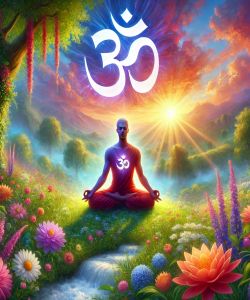
1. Overview of Om Meditation
Om meditation constitutes a formidable and ancient discipline, centred upon the vocal and mental intonation of the sacred syllable ‘Om’. This is not a passive relaxation technique but an active, rigorous practice of concentration and vibrational alignment aimed at mastering the faculties of the mind and attuning the individual to the fundamental frequencies of existence. The practice is predicated on the philosophical assertion that the Om sound, or Aum, represents the primordial vibration from which the entire cosmos emanated. It is considered the ultimate mantra, encapsulating the cyclical nature of creation, preservation, and dissolution. Practitioners engage in this discipline to transcend the incessant chatter of the conscious mind, thereby accessing deeper strata of awareness and achieving a state of profound mental stillness and clarity. The resonance produced by the chant is not merely auditory; it is a palpable physical and energetic phenomenon designed to purify the practitioner’s physiological and subtle-body systems. Through systematic and disciplined application, Om meditation serves as a powerful instrument for developing unwavering focus, emotional equanimity, and a direct, experiential understanding of consciousness itself. It is a path of self-mastery, demanding consistency, intent, and a resolute commitment to exploring the inner dimensions of being. The objective extends far beyond transient stress relief; it is the deliberate cultivation of a stable, resilient, and highly coherent mental state, capable of navigating complexity with unshakable composure and insight. This practice is therefore a foundational pillar for any serious pursuit of mental and spiritual development, providing a direct method for interfacing with the core mechanics of awareness and perception, ultimately leading to a state of integrated and commanding self-possession. It is an exercise in sovereign control over one’s internal environment.
2. What is Om Meditation?
Om meditation is a specific and highly structured form of mantra meditation that utilises the sound and vibration of the syllable ‘Om’ as its single point of focus. This practice is rooted in the Vedic traditions of ancient India and is considered one of the most powerful and fundamental meditative techniques. The syllable itself, often phonetically rendered as A-U-M, is not a mere word but is held to be the sonic representation of ultimate reality, the primordial sound that initiated the universe and continues to sustain it. The practice involves the deliberate and controlled chanting of this sound, allowing its vibrations to permeate the physical body and the consciousness of the practitioner.
The process is methodical. It begins with audible chanting (Vaikhari Japa), where the sound is produced externally. This physical act serves to engage the body and breath, focusing the otherwise scattered attention of the mind. The vibrations generated within the chest, throat, and cranial regions are integral to the experience, serving to calm the nervous system and harmonise bodily functions. As the practitioner gains proficiency, the practice can transition to subtler forms:
- Upamshu Japa: This involves whispering the mantra, internalising the sound whilst maintaining a minimal physical expression. This stage requires a greater degree of concentration and begins the process of withdrawing the senses from external stimuli.
- Manasika Japa: This is the most advanced stage, involving the purely mental repetition of Om. Here, the sound is no longer physically produced but is instead contemplated silently within the mind. This form of the practice demands absolute concentration and is considered the most potent for achieving deep meditative states.
Ultimately, Om meditation is a systematic process of using sound as a vehicle to transcend sound itself. The practitioner follows the vibration from its gross, physical manifestation to its subtlest mental form, and finally to the silence that follows, which is regarded as the source of the sound—a state of pure, undifferentiated consciousness. It is a discipline of focus, resonance, and transcendence.
3. Who Needs Om Meditation?
- Executives and Strategic Leaders: Individuals in high-stakes leadership roles who must maintain exceptional clarity, decisiveness, and emotional composure under immense pressure. The practice cultivates a state of mental stillness, enabling superior strategic thinking and resilience against the corrosive effects of corporate stress and decision fatigue. It is a tool for sharpening the executive mind.
- Individuals in High-Pressure Professions: Professionals such as surgeons, barristers, emergency service personnel, and financial traders whose performance depends on unwavering focus and the ability to operate effectively in critical situations. Om meditation trains the mind to remain centred and functional amidst external chaos, reducing the margin for error and enhancing professional efficacy.
- Academics and Intellectual Workers: Scholars, researchers, and analysts who require profound levels of concentration to engage with complex data and abstract concepts. This discipline strengthens the cognitive faculties, improves memory retention, and fosters the mental environment necessary for deep, insightful work and breakthrough thinking, cutting through intellectual clutter.
- Creative Professionals: Artists, writers, and designers who seek to access deeper wells of creativity and overcome mental blocks. The practice quietens the critical, analytical mind, allowing more intuitive and innovative ideas to surface from the subconscious. It is a method for systematically clearing the channel for creative inspiration.
- Practitioners of Advanced Physical Disciplines: Elite athletes, martial artists, and yogis who understand that peak physical performance is inextricably linked to mental mastery. Om meditation provides the mental conditioning necessary to achieve a state of ‘flow’, enhancing coordination, focus, and the mind-body connection required for superior performance.
- Individuals Seeking Self-Mastery and Spiritual Insight: Those on a dedicated path of personal or spiritual development who require a robust and proven method for exploring the nature of consciousness. This is not for the casual seeker but for the disciplined individual committed to transcending limiting mental patterns and achieving a direct, experiential understanding of the self.
4. Origins and Evolution of Om Meditation
The origins of Om meditation are deeply embedded in the ancient spiritual and philosophical traditions of the Indian subcontinent, with its earliest documented references found in the Vedic texts, specifically the Upanishads, which date back several millennia. These seminal scriptures, which form the theoretical basis of Hinduism, present ‘Om’ not merely as a chant but as the ultimate metaphysical reality. The Mandukya Upanishad, in particular, is dedicated entirely to its exposition, meticulously dissecting the syllable A-U-M to correspond with the three states of ordinary human consciousness—waking (Vaishvanara), dreaming (Taijasa), and deep sleep (Prajna). The silence that follows the chant is identified as the fourth state, Turiya, representing pure, transcendent consciousness, the ultimate goal of spiritual practice.
In its nascent form, the practice was an esoteric discipline, transmitted directly from guru to disciple within cloistered spiritual communities. It was an integral part of ritual, prayer, and advanced yogic techniques, designed to prepare the mind for profound states of contemplation and self-realisation. The sound itself was considered a sacred tool, a direct vibrational key to unlocking higher states of awareness and aligning the individual with the cosmic order. The emphasis was less on psychological well-being, as it is often framed today, and more on metaphysical liberation (Moksha)—the complete release from the cycle of birth and death.
Over the centuries, as these philosophical systems evolved and branched into various schools of thought, including Vedanta, Yoga, and Tantra, the application of Om meditation diversified. The Patanjali Yoga Sutras codified it as a direct means to overcome obstacles on the yogic path and attain Samadhi, or meditative absorption. In Tantric traditions, it was incorporated into complex visualisations and energy-work practices (chakras), using its vibration to activate and purify the subtle body.
The evolution into the modern era has seen a significant shift in its interpretation and application. With its transmission to the West in the late 19th and 20th centuries, Om meditation was often stripped of its deep metaphysical context and repackaged as a secular technique for stress reduction and mental wellness. Whilst this has made the practice more accessible, it often dilutes its original potency and purpose. The contemporary form, particularly online, must therefore be understood as an adaptation, one that continues to evolve whilst retaining the core mechanism of its ancient and formidable origins.
5. Types of Om Meditation
The practice of Om meditation, whilst centred on a single mantra, can be categorised into distinct types based on the method of its intonation and the context of its performance. These types are not mutually exclusive but often represent a progression from gross to subtle levels of practice.
- Vaikhari Japa (Audible Chanting): This is the most external and physically engaging form of the practice. The practitioner chants the syllable ‘Om’ aloud, with a clear and resonant voice. The focus is placed on the physical sensation of the vibration as it originates in the lower abdomen, moves up through the chest and throat, and culminates in the cranial region. This audible method is highly effective for beginners as the external sound provides a tangible anchor for the wandering mind. It actively engages the breath and the vocal cords, making it a powerful tool for calming the nervous system and purifying the physical environment through sound.
- Upamshu Japa (Whispered Chanting): This represents an intermediate stage of practice, requiring a greater degree of internal focus. The practitioner intones the ‘Om’ mantra in a low whisper, audible only to themselves. The physical effort is significantly reduced, and the emphasis shifts from external sound to the subtle movement of the lips and the internal resonance. This method cultivates a deeper level of concentration and begins the process of withdrawing the senses (Pratyahara), drawing the practitioner’s awareness inward and away from external distractions.
- Manasika Japa (Mental Chanting): This is the most advanced and subtle form of Om meditation. The mantra is repeated purely within the mind, without any vocalisation or movement of the lips. This silent repetition demands supreme concentration and mental discipline, as there is no external sound to hold the attention. The practitioner focuses entirely on the mental concept and the subtle energetic vibration of the sound. Manasika Japa is considered the most potent form for achieving deep meditative states (Dhyana) and is the ultimate aim for a serious practitioner seeking to transcend the limitations of the ordinary mind.
- Likhita Japa (Written Chanting): A less common but valid form, this involves the repeated writing of the ‘Om’ symbol or word. This practice engages the mind and body through a different modality, requiring focus, precision, and rhythmic action. It serves as a powerful method for instilling the mantra into the subconscious mind and is often used as a supplementary discipline to reinforce the effects of vocal or mental chanting.
6. Benefits of Om Meditation
- Cultivation of Profound Mental Focus: The practice systematically trains the mind to maintain a single point of concentration, strengthening the practitioner’s ability to direct their attention at will and resist distractions. This results in a marked improvement in cognitive tasks requiring deep work and sustained mental effort.
- Regulation of the Autonomic Nervous System: The resonant vibrations produced during chanting have a direct and measurable effect on the vagus nerve, stimulating the parasympathetic nervous system. This induces a state of calm, counteracts the physiological markers of stress, and promotes systemic homeostasis.
- Enhanced Emotional Equanimity: By providing a stable anchor for the mind, the practice reduces reactivity to emotional triggers. It creates a mental space between stimulus and response, allowing for more measured and controlled emotional expression rather than impulsive reactions. Over time, this fosters a durable state of inner composure.
- Improved Respiratory Function: The controlled and deep breathing required for proper chanting strengthens the diaphragm and increases lung capacity. This leads to more efficient oxygenation of the blood and a slower, more regular resting heart rate, contributing to overall cardiovascular health.
- Harmonisation of Cerebral Hemispheres: The nature of sound and vibration is understood to promote greater synchronisation between the left and right hemispheres of the brain. This integration facilitates a more holistic mode of thinking, balancing analytical-logical processes with intuitive-creative insights.
- Access to Deeper States of Consciousness: The ultimate objective of the practice is to use the sound of Om as a vehicle to transcend ordinary thought patterns. Disciplined and consistent practice can lead to profound meditative states, offering direct, experiential insights into the nature of the self and consciousness.
- Increased Self-Awareness: The process of focusing inward reveals the habitual patterns and subconscious chatter of the mind. By observing these patterns without engagement, the practitioner develops a clear and objective understanding of their own mental landscape, which is the first and most critical step towards genuine self-mastery.
7. Core Principles and Practices of Om Meditation
- Sankalpa (Intention and Resolve): The practice must commence with a clear and unwavering intention. This is not a passive activity but a deliberate engagement. The practitioner must establish a resolute purpose for their session, whether it be to achieve mental clarity, cultivate focus, or explore deeper consciousness. This initial resolve provides the necessary directive force for the mind.
- Asana (Stable and Erect Posture): A correct posture is non-negotiable. The practitioner must be seated, typically in a cross-legged position such as Sukhasana or Padmasana, with the spine fully erect, from the base to the neck. This physical alignment is critical for ensuring the unimpeded flow of breath and subtle energy (prana) and for maintaining alertness. A slumped posture induces lethargy and is counterproductive.
- Pranayama (Controlled and Conscious Breathing): The breath is the engine of the chant. Before commencing, several rounds of deep, diaphragmatic breathing are essential to centre the mind and calm the body. During the chant, the breath must be regulated, with the exhalation synchronised precisely with the intonation of the A-U-M syllables, ensuring the sound is sustained and controlled.
- Mantra Uchcharana (Correct Pronunciation and Vibration): The pronunciation of ‘Om’ as A-U-M is of paramount importance. The ‘A’ sound must originate from the naval region, resonating in the abdomen and chest. The ‘U’ sound transitions upward, resonating in the throat and upper chest. The ‘M’ sound is a deep, humming vibration felt in the cranial region. The focus is on feeling these distinct vibrations physically.
- Dharana (Unwavering Concentration): The mind must be resolutely fixed upon the sound and sensation of the mantra. Every mental faculty is to be directed towards this single point of focus. When the mind inevitably wanders—as it will—it must be brought back, firmly and without self-recrimination, to the object of meditation. This constant retrieval is the core of the mental training.
- Pratyahara (Withdrawal of the Senses): As concentration deepens, awareness is systematically withdrawn from external sensory input—sights, sounds, and physical sensations. The practice becomes an entirely internal process. The aim is to create a state of sensory quiescence where the mind is no longer disturbed by the external world.
- Laya (Absorption and Dissolution): The final principle involves allowing the mind to become completely absorbed in the vibration of the mantra. The distinction between the practitioner, the act of chanting, and the sound itself begins to dissolve. The practice culminates in the silence that follows the final chant, where the practitioner rests in a state of pure, objectless awareness.
8. Online Om Meditation
- Absolute Locational Independence: An online modality eradicates all geographical constraints. It grants practitioners access to expert guidance and structured sessions regardless of their physical location, democratising a discipline that was once restricted to specific ashrams or centres. This allows for unwavering consistency in practice, even whilst travelling or in remote areas.
- Unprecedented Scheduling Autonomy: Practitioners are no longer bound by the rigid timetables of a physical establishment. Online platforms offer the flexibility to engage in sessions at times that are precisely aligned with the individual’s professional and personal commitments, thereby removing a significant barrier to sustained, long-term practice.
- Creation of a Controlled, Personalised Environment: The practitioner has absolute control over their meditative space. They can eliminate potential disturbances, optimise lighting, temperature, and acoustics, and ensure complete privacy—factors that are often compromised in a shared, physical group setting. This personal sanctuary is more conducive to deep, introverted practice.
- Access to a Global Cadre of Instructors: An online framework provides access to a diverse and international pool of highly qualified instructors. Practitioners are not limited to local expertise but can select a guide whose lineage, style, and philosophical approach are in perfect alignment with their specific objectives, ensuring a superior quality of instruction.
- Reinforced Self-Discipline and Accountability: Without the external pressure of a physical group, the onus of commitment falls squarely upon the individual. This environment actively cultivates a higher degree of self-discipline, internal motivation, and personal accountability—qualities that are indispensable for any serious meditative practice and for life itself.
- Cost and Time Efficiency: Engaging in the practice online eliminates the significant overheads of time and financial resources associated with commuting to a physical location. This redirection of resources allows for a more focused and efficient application of one’s energy directly into the practice itself, maximising the return on investment.
- Anonymity for Focused Internal Work: The relative anonymity of an online session can be highly beneficial. It removes the social pressures and self-consciousness that can arise in a group setting, allowing the practitioner to focus entirely on their internal process without concern for external observation or judgement, fostering a more authentic and uninhibited practice.
9. Techniques Used in Om Meditation
The execution of Om meditation is a precise, multi-stage process. The following steps must be followed with discipline and exactitude to ensure the technique’s full efficacy.
- Establish the Foundation (Asana and Pranayama): Assume a stable, seated posture with the spine held erect. The hands should rest on the knees, typically in Jnana Mudra (thumb and index finger touching). Close the eyes. Commence with five to ten rounds of deep, diaphragmatic breathing. Inhale slowly to fill the lungs completely, and exhale fully to empty them. This initial stage is non-negotiable; it serves to quieten the nervous system and prepare the mind for concentration.
- Initiate the Audible Chant (Vaikhari): Take a deep, controlled inhalation. On the subsequent exhalation, begin the vocalisation of ‘Om’. The sound must be broken down into its three constituent parts: A-U-M.
- A (Akaara): The sound must originate deep within the abdomen, near the navel. It should be an open, resonant sound that vibrates palpably in the solar plexus and chest. The mouth should be wide open.
- U (Ukaara): As the exhalation continues, smoothly transition the sound to ‘U’. The mouth should become more rounded. This sound must be felt vibrating in the throat and upper chest area.
- M (Makaara): Conclude the chant with the ‘M’ sound, produced by closing the lips and creating a deep, humming resonance. This vibration should be focused and felt distinctly in the head, particularly in the centre of the forehead.
- Master the Duration and Ratio: The duration of the A-U-M chant should be as long as is comfortable on a single exhalation. A common ratio is to have the ‘A’ and ‘U’ sounds be of equal, shorter duration, while the ‘M’ humming sound is extended for longer, perhaps double the length of the preceding two combined. The critical element is consistency from one chant to the next.
- Embrace the Silence (Turiya): After the ‘M’ sound fades completely, do not immediately begin the next inhalation. There must be a deliberate pause. In this intervening silence, maintain absolute stillness and alertness. This silence is not empty; it is the culmination of the practice. Focus the mind intensely within this silent space.
- Transition to Mental Repetition (Manasika): After a set number of audible chants (e.g., seven, eleven, or twenty-one), cease vocalisation entirely. Continue the process purely in the mind. Mentally ‘hear’ and ‘feel’ the A-U-M and its corresponding vibrations. This internalised practice requires a far greater degree of concentration.
- Conclude with Stillness: Upon completing the planned duration, cease all chanting, both audible and mental. Remain seated in absolute silence and stillness for several minutes, simply observing the state of the mind and body. This allows the effects of the practice to be fully integrated.
10. Om Meditation for Adults
Om meditation for adults is a rigorous and commanding discipline, fundamentally distinct from simplistic mindfulness or relaxation exercises. It is a systematic tool for the deliberate re-engineering of the adult mind, which is often entrenched in rigid patterns of thought, emotional reactivity, and chronic stress accumulated over years of professional and personal responsibilities. For the adult practitioner, this is not a passive retreat but an active engagement with the core mechanics of their own consciousness. The practice demands and cultivates a high degree of maturity, self-discipline, and introspection. It directly confronts the psychological and physiological consequences of adult life—mental clutter, diminished focus, and a nervous system conditioned for a constant state of high alert. The deep, resonant vibrations of the chant are a powerful counter-agent to this chronic agitation, inducing a state of parasympathetic dominance that facilitates genuine mental and physical restoration. Furthermore, the practice offers a structured method for gaining objective insight into one's own ingrained belief systems and behavioural triggers. By focusing on the singular, neutral point of the Om mantra, the adult practitioner can observe the relentless stream of thoughts and emotions without being swept away by them. This process of detached observation is the foundation of emotional intelligence and self-mastery. It empowers the individual to move beyond conditioned reactions and to respond to life's challenges with clarity, composure, and strategic intent. For adults navigating the complexities of career, family, and personal growth, Om meditation is therefore not an esoteric indulgence but a pragmatic and potent methodology for enhancing performance, resilience, and overall psychological sovereignty in a demanding world.
11. Total Duration of Om Meditation
The total duration of a formal online Om meditation session is structured to be precisely 1 hr. This specific timeframe is not arbitrary; it is a deliberately calibrated period designed to facilitate a complete and effective meditative cycle without inducing mental or physical fatigue. The 1 hr duration allows for a systematic progression through the essential phases of the practice. It allocates sufficient time for initial settling and breath regulation (pranayama), ensuring the practitioner is adequately prepared for deep concentration. A substantial portion of the 1 hr is then dedicated to the core practice of chanting, moving from audible intonations to subtler, mental repetitions, allowing for a profound immersion in the sound’s vibration. Crucially, the 1 hr structure also incorporates a concluding period of absolute silence and stillness. This final phase is indispensable for the integration of the meditative experience, allowing the practitioner to absorb the benefits and transition smoothly back to a state of normal waking consciousness. A shorter duration would truncate this process, preventing the practitioner from moving beyond superficial levels of relaxation into the deeper states of absorption that are the true objective of this discipline. Conversely, a significantly longer session, particularly for those not yet conditioned for it, could lead to restlessness and diminish the quality of focus. The 1 hr session is therefore the optimal duration, providing a robust and comprehensive framework that respects the practitioner’s time whilst demanding the necessary commitment to achieve a tangible and meaningful outcome. It represents a complete, self-contained unit of potent mental and spiritual work. The expectation is that the practitioner commits fully to this entire 1 hr period, without interruption, to honour the integrity of the process.
12. Things to Consider with Om Meditation
Engaging with Om meditation requires a clear and pragmatic understanding of its nature and demands. This is not a passive or whimsical activity; it is a structured discipline with specific operational parameters that must be respected. Foremost among these is the imperative for consistency. Sporadic or infrequent practice will yield negligible results. The benefits of this technique are cumulative, accruing only through disciplined, regular application. A practitioner must be prepared to commit to a consistent schedule, integrating the practice into their daily life as a non-negotiable routine. Secondly, one must consider the environment. The space chosen for meditation must be quiet, clean, and free from potential interruptions. This is a non-negotiable prerequisite for achieving the necessary depth of concentration. Attempting to practise in a chaotic or distracting environment is a futile exercise. Furthermore, the practitioner’s physical state is a critical factor. It is inadvisable to practise on a full stomach, as this induces lethargy. Equally, practising in a state of extreme physical exhaustion is counterproductive. A state of relative physical comfort and alertness is essential. One must also approach the practice with a mindset of non-attachment to results. Chasing specific experiences or becoming frustrated by a lack of perceived progress are significant obstacles. The work is in the consistent application of the technique itself; the results will manifest in their own time. Finally, whilst the practice is powerful, it is a tool, not a panacea. It must be approached with realistic expectations, as a method for training the mind, rather than an instant solution to complex life problems. It requires patience, rigour, and a mature perspective.
13. Effectiveness of Om Meditation
The effectiveness of Om meditation is contingent not upon belief or esoteric faith, but upon the disciplined and precise application of its core mechanics. Its potency lies in its direct engagement with the fundamental systems of the human organism: the breath, the nervous system, and the cognitive faculty of attention. The practice operates through the principle of resonant frequency. The controlled, deep vibration of the Om chant acts as a powerful modulating force upon the body’s physiological state. It stimulates the vagus nerve, directly activating the parasympathetic nervous system and thereby inducing a state of profound calm that countermands the chronic stress response prevalent in modern life. This is not a subjective feeling but a measurable physiological shift. On a neurological level, the technique is a formidable exercise in concentration (Dharana). By compelling the mind to remain fixed on a single, repetitive auditory and somatic anchor, it strengthens the prefrontal cortex, the seat of executive function. This results in a demonstrably enhanced capacity for sustained focus, emotional regulation, and impulse control. The effectiveness of the practice, therefore, is directly proportional to the rigour with which it is performed. For the practitioner who engages with consistency, correct posture, controlled breathing, and unwavering focus, the results are tangible and profound. It systematically de-clutters the mind, stabilises emotional volatility, and cultivates a state of heightened awareness and mental clarity. Its efficacy is not a matter of speculation; it is the predictable outcome of a well-defined psychophysical process, a testament to a technology of consciousness refined over millennia.
14. Preferred Cautions During Om Meditation
A tough-minded and cautious approach is mandatory when engaging in Om meditation to ensure safety and maximise efficacy. This is a potent technique and must not be undertaken lightly. Firstly, practitioners with a history of severe mental health conditions, such as schizophrenia or psychosis, must not engage in this practice without explicit approval and direct supervision from a qualified medical professional. The deep, introspective states it can induce may exacerbate certain pre-existing conditions. Secondly, the physical posture is not a matter of comfort but of structural integrity. Maintaining a straight spine is paramount. A slumped or incorrect posture will not only impede the flow of breath and energy but can also lead to musculoskeletal strain over time. If a traditional seated posture causes significant pain, modifications must be used, but the principle of an erect spine remains non-negotiable. Furthermore, one must never force the breath. The chanting should be synchronised with the natural exhalation; gasping for air or straining the vocal cords is counterproductive and harmful. The duration of the chant should be determined by one’s comfortable lung capacity, which will increase naturally with practice. A critical caution concerns the psychological aspect: do not engage in this practice with the intent of inducing spectacular visions or esoteric experiences. Chasing such phenomena is a dangerous diversion that can lead to mental imbalance. The focus must remain steadfastly on the sound, the vibration, and the subsequent silence. Any experiences that arise must be observed with detachment and then dismissed. Finally, avoid practising when in a state of extreme emotional turmoil or physical illness. The practice requires a stable baseline from which to work. Attempting to use it as a desperate fix in a crisis is an incorrect and potentially destabilising application of the technique.
15. Om Meditation Course Outline
- Module 1: Foundational Principles and Postural Alignment
- Introduction to the philosophical and scientific basis of Om meditation.
- Detailed instruction on establishing a correct and sustainable meditative posture (Asana).
- The critical role of spinal alignment for energetic and respiratory flow.
- Techniques for overcoming common physical discomforts.
- Module 2: The Science of Breath and Mantra
- Mastery of diaphragmatic breathing (Pranayama) as the engine for the practice.
- Deconstruction of the Om mantra: The distinct vibrations of A-U-M.
- Practical drills in correct pronunciation (Uchcharana) to maximise somatic resonance.
- Synchronisation of breath with the three phases of the mantra.
- Module 3: The Technique of Audible Chanting (Vaikhari Japa)
- Structured practice sessions focusing on external, resonant chanting.
- Developing vocal control, projection, and consistent tone.
- Cultivating awareness of the physical vibrations in the abdomen, chest, and head.
- Techniques for using the audible sound as an unwavering anchor for the mind.
- Module 4: Concentration and Managing Distractions
- The principle of single-pointed focus (Dharana).
- Systematic strategies for identifying and managing mental wandering.
- The technique of non-judgmental re-engagement with the mantra.
- Building mental stamina for longer periods of sustained concentration.
- Module 5: Transitioning to Subtle Practice (Upamshu and Manasika Japa)
- Introduction to whispered chanting (Upamshu) as a bridge to internalisation.
- The advanced technique of purely mental chanting (Manasika).
- Exercises to maintain focus without the aid of external sound.
- Exploring the power and potency of silent, internal repetition.
- Module 6: The State of Silence and Integration
- Understanding the significance of the silence between chants (Turiya).
- Techniques for maintaining alert awareness in the silent phase.
- Methods for integrating the meditative state into daily activity.
- Developing a sustainable, independent, and long-term personal practice.
16. Detailed Objectives with Timeline of Om Meditation
- Weeks 1-2: Establishment of Foundational Discipline
- Objective: To master the correct, erect meditative posture (Asana) and sustain it without significant discomfort. To establish a non-negotiable daily practice schedule.
- Timeline: By the end of week 2, the practitioner shall be able to sit with a straight spine for the full session duration and will have completed the practice daily without omission.
- Weeks 3-4: Mastery of Breath-Mantra Synchronisation
- Objective: To achieve seamless synchronisation between the exhalation and the full A-U-M chant. To correctly produce the three distinct vibrational sounds (Akaara, Ukaara, Makaara) and identify their corresponding somatic locations.
- Timeline: By the end of week 4, the audible chant (Vaikhari Japa) shall be smooth, controlled, and resonant, with a clear awareness of the physical vibrations.
- Weeks 5-6: Development of Unwavering Concentration
- Objective: To significantly reduce the frequency and duration of mental wandering during the practice. To develop the ability to bring the mind back to the mantra swiftly and firmly.
- Timeline: By the end of week 6, the practitioner will be able to maintain focus on the chant for progressively longer intervals, demonstrating enhanced control over their attention (Dharana).
- Weeks 7-8: Transition to Internalised Practice
- Objective: To begin the transition from audible chanting to the subtler forms of whispered (Upamshu) and mental (Manasika) repetition. To maintain the same intensity of focus without the anchor of external sound.
- Timeline: By the end of week 8, the practitioner will be proficient in practising Manasika Japa for a significant portion of the session, demonstrating a deeper level of introversion.
- Weeks 9-10: Deepening the Experience of Silence
- Objective: To cultivate a state of alert, conscious awareness in the silent interval between chants. To begin experiencing this silence not as an absence of sound, but as a state of profound stillness and presence.
- Timeline: By the end of week 10, the practitioner will be able to maintain focus within the silence, using it as a primary object of meditation itself.
- Weeks 11-12: Integration into Daily Life
- Objective: To integrate the qualities cultivated during meditation—calmness, focus, and self-awareness—into daily professional and personal activities. To be able to use the mental imprint of the mantra as a tool for re-centring during stressful situations.
- Timeline: By the end of week 12, the practitioner will report tangible improvements in their ability to manage stress, maintain focus, and regulate emotional responses outside of formal practice.
17. Requirements for Practicing Om Meditation
- A High-Speed, Stable Internet Connection: This is a non-negotiable technical prerequisite. The online session requires an uninterrupted data stream to ensure clear audio instruction and a seamless experience. Any latency or connection loss compromises the integrity of the practice.
- A Functional Audio-Visual Device: A computer, tablet, or smartphone with a reliable microphone and speakers is essential. The ability to hear the instructor’s guidance with absolute clarity and, if required, to receive feedback, is paramount. Visuals may be less critical but a functional camera is often required for initial setup and verification.
- A Dedicated, Uninterrupted Space: The practitioner must secure a physical location where they will be completely free from interruptions for the entire duration of the session. This space must be private, quiet, and removed from the flow of household or office traffic.
- Appropriate Seating Apparatus: A firm meditation cushion (zafu), bench, or a straight-backed chair that allows the practitioner to maintain an erect spine without strain is mandatory. Sitting on a soft sofa or bed is unacceptable as it promotes poor posture and lethargy.
- Unwavering Commitment to the Schedule: The practitioner must possess the self-discipline to adhere to the appointed time without exception. Punctuality is not a suggestion; it is a requirement that demonstrates respect for the process and for the instructor.
- A Mindset of Receptivity and Discipline: The practitioner must enter the session with a willingness to follow instructions precisely and without deviation. Scepticism must be set aside for the duration of the practice. An attitude of rigorous application, not passive observation, is required.
- Appropriate, Non-Restrictive Clothing: Attire should be clean, comfortable, and allow for a full range of movement and deep breathing. Restrictive or formal clothing is unsuitable as it impedes both physical comfort and the flow of circulation.
- Abstention from Intoxicants: The practitioner must be in a clear and sober state of mind. Engaging in the practice under the influence of alcohol or other psychoactive substances is strictly forbidden, as it corrupts the process and is potentially harmful.
18. Things to Keep in Mind Before Starting Om Meditation
Before embarking on the discipline of online Om meditation, it is imperative to adopt a mindset of rigorous realism and unwavering commitment. This is not a passive pursuit of relaxation but an active and demanding training of the mind. You must be prepared for the internal resistance that will inevitably arise; the mind is a creature of habit and will fight against the imposition of a new, focused discipline. Expect restlessness, boredom, and a torrent of distracting thoughts, especially in the initial stages. These are not signs of failure but are the very phenomena that the practice is designed to address and master. You are required to approach this not as a hobby, but as a serious personal project demanding consistency and punctuality. The online format, while convenient, requires a higher degree of self-discipline than in-person sessions. You alone are responsible for creating a sanctified, interruption-free environment and for showing up, fully present, at the appointed time. It is also crucial to divest yourself of any romantic or esoteric expectations. You are not starting this to have mystical visions or to achieve enlightenment overnight. The objective is the methodical cultivation of focus, emotional stability, and self-awareness. The results are cumulative and subtle, manifesting over time through persistent, diligent effort. Understand that what you are learning is a skill—the skill of directing your own consciousness. Like any high-level skill, it requires dedication, patience, and a willingness to work through periods of perceived stagnation. Your commitment must be to the process itself, not to a fantasised outcome.
19. Qualifications Required to Perform Om Meditation
The authority to guide others in the profound practice of Om meditation is not conferred by mere enthusiasm or a superficial certificate. It demands a deep and verifiable grounding in both theoretical knowledge and extensive personal practice. A qualified instructor must possess a comprehensive understanding of the philosophical underpinnings of the mantra, rooted in seminal texts such as the Upanishads and the Yoga Sutras of Patanjali. They must be capable of articulating the significance of Om not as a simple sound, but as a complex metaphysical concept. This theoretical knowledge, however, is insufficient on its own. It must be validated by a long-term, dedicated, and personal meditation practice. An authentic guide teaches from a place of direct, lived experience, not from academic study alone.
The specific qualifications one must demand from an instructor include:
- Direct Lineage or Recognised Certification: The instructor should have received training from a reputable, established school or a recognised lineage of yoga and meditation. This ensures they have been taught a systematic and safe methodology. Certifications from well-regarded bodies (e.g., Yoga Alliance at an advanced level, or specific accreditations from traditional Indian institutions) provide a baseline measure of competence.
- Substantial Teaching Experience: A record of sustained teaching experience is non-negotiable. An instructor must have honed their ability to communicate complex instructions with clarity and precision, to observe students (even remotely), and to address common difficulties with authority and insight.
- Deep Personal Practice: The instructor must be able to speak credibly about their own long-standing personal practice. This is the source of their authentic understanding and their capacity to guide others through the subtle challenges of the meditative path.
- Anatomical and Physiological Knowledge: A firm grasp of basic human anatomy and physiology, particularly concerning the respiratory and nervous systems, is essential. This knowledge ensures they can provide safe and effective guidance on posture and breathing techniques, preventing potential strain or injury.
In essence, a qualified performer of Om meditation is a seasoned practitioner who has formalised their deep, experiential knowledge through rigorous training and extensive teaching, embodying the discipline they seek to impart.
20. Online Vs Offline/Onsite Om Meditation
Online
The online modality for Om meditation is defined by its absolute efficiency and autonomy. It surgically removes the logistical barriers of geography and time, granting the practitioner unparalleled access to instruction and a consistent practice schedule. The primary advantage is the cultivation of supreme self-discipline; without the social pressure of a physical group, the impetus to practise is entirely internal, forging a more robust and self-reliant commitment. The practitioner operates within a personally controlled environment, optimised for silence and focus, free from the unpredictable distractions of a public space or the subtle social dynamics of a group. This format allows access to a global pool of elite instructors, rather than being limited to local availability. It is a sterile, focused, and highly efficient container for the work, demanding accountability and rewarding it with flexibility. The interaction is direct and purposeful, stripped of extraneous social elements, focusing entirely on the transmission of the technique and its disciplined application. It is the preferred method for the self-motivated individual who values precision, autonomy, and the efficient use of their time and resources.
Offline
Offline, or onsite, practice is characterised by the power of collective energy and direct physical presence. The primary strength of this modality lies in the palpable atmosphere of a shared, dedicated space. The group’s collective intention and resonance can create a powerful energetic field (satsang) that can deepen and support an individual's practice, particularly for novices. The instructor’s physical presence allows for immediate, hands-on postural adjustments and a more nuanced reading of a student’s state, offering a level of personalised feedback that is more challenging to replicate remotely. The act of travelling to a specific location creates a powerful psychological ritual, marking a clear demarcation between ordinary life and a period of dedicated practice. This format fosters a sense of community and shared purpose, which can be a significant motivational factor. However, it is inherently inefficient, demanding travel time and adherence to a rigid schedule set by the institution. It is subject to the distractions of other participants and the limitations of the physical environment. It is the ideal choice for those who require external structure, community support, and direct physical guidance to maintain their discipline.
21. FAQs About Om Meditation
Question 1. Is online Om meditation as effective as in-person?
Answer: Yes. Effectiveness is determined by the practitioner's discipline and the quality of instruction, not the medium. The online format demands higher self-accountability, which can lead to a stronger practice.
Question 2. Do I need any prior experience?
Answer: No. A structured online course is designed to guide absolute beginners through the foundational principles and techniques systematically.
Question 3. What technology is essential?
Answer: A stable internet connection and a device with clear audio are non-negotiable.
Question 4. Must I have my camera on?
Answer: This depends on the instructor's protocol. It is often required for initial postural checks but may be optional during the meditation itself to ensure privacy.
Question 5. How do I create a suitable space at home?
Answer: Select a quiet, private area. Inform others not to disturb you. Ensure the space is clean and uncluttered.
Question 6. What if I cannot sit cross-legged?
Answer: Sitting on a straight-backed chair is a perfectly acceptable alternative. The critical element is an erect spine, not the leg position.
Question 7. Is it affiliated with a specific religion?
Answer: Its origins are in Hindu and Yogic philosophy, but the practice itself is a universal technique of sound and focus that can be undertaken by anyone, regardless of their belief system.
Question 8. What if I fall asleep?
Answer: This indicates either physical exhaustion or a slumped posture. Correct your posture to maintain alertness. If fatigue persists, practise at a time when you are more awake.
Question 9. I feel self-conscious chanting. How do I overcome this?
Answer: This is common. Practising alone in a private online session is the ideal environment to overcome this. The focus is on the internal vibration, not the quality of the sound.
Question 10. How long before I see results?
Answer: This is a discipline, not a quick fix. Consistent practice will yield noticeable changes in calmness and focus within a few weeks. Profound results are the product of long-term commitment.
Question 11. Is it safe for everyone?
Answer: It is safe for most. However, individuals with severe mental health conditions should consult a medical professional before starting.
Question 12. Can I practise on my own between guided sessions?
Answer: This is not only permitted but strongly encouraged. The guided session provides the framework; daily personal practice solidifies the skill.
Question 13. What is the main difference between Om and other mantras?
Answer: Om is considered the primordial, or Bija (seed), mantra from which all other sounds and mantras are said to emerge. It is the most fundamental.
Question 14. Should I feel the vibrations physically?
Answer: Yes. A key part of the technique is to focus on the palpable resonance of the A-U-M sounds in the abdomen, chest, and head.
Question 15. What if my mind is too busy?
Answer: This is the normal state of an untrained mind. The technique is the tool to manage this. Each time you notice the mind has wandered, you firmly bring it back. This is the practice.
Question 16. Can I practise after a heavy meal?
Answer: It is strongly advised against. Practise on a relatively empty stomach to avoid lethargy and discomfort.
22. Conclusion About Om Meditation
In conclusion, Om meditation stands as a formidable and uncompromising discipline for the cultivation of mental mastery. It is not a passive relaxation method but an active, structured, and demanding technique designed to systematically harness the power of sound, breath, and concentration. Its foundations are not in modern therapeutic trends but in ancient, time-tested principles of consciousness engineering. The practice requires and builds unwavering self-discipline, compelling the practitioner to move beyond the superficial chatter of the mind to engage with deeper, more stable strata of awareness. Its efficacy is not a matter of belief but a direct consequence of its precise psychophysical mechanics—regulating the nervous system through controlled vibration and strengthening the executive functions of the brain through single-pointed focus. To engage with this discipline is to make a definitive statement of intent: a commitment to gaining sovereign control over one’s internal state. It is a pragmatic and powerful tool for anyone in a position of responsibility or for any individual serious about their personal and professional development. The path is rigorous, the demands are high, and the results are profound. It is, in its purest form, a direct and potent methodology for forging a mind that is clear, resilient, and unconditionally centred, irrespective of external circumstance. The practice of Om meditation is, therefore, an investment in the most critical asset an individual possesses: their own consciousness