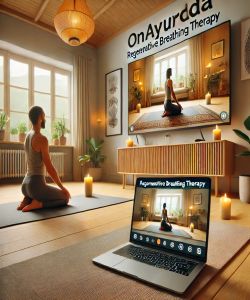
1. Overview of Regenerative Breathing Therapy
Regenerative Breathing Therapy is a rigorous and highly structured psychophysiological modality designed to catalyse profound states of healing and personal transformation. It operates on the foundational premise that the human respiratory system is not merely a mechanism for oxygen exchange but a powerful, direct conduit to the autonomic nervous system and the deeper strata of the psyche. Through the disciplined application of specific, conscious, and connected breathing patterns, this therapy facilitates access to and the subsequent release of suppressed emotional material, somatic blockages, and ingrained neuromuscular tension. It is not a passive relaxation exercise; it is an active, dynamic process of engagement with one’s own inner landscape. The methodology is built upon a sophisticated understanding of how trauma and chronic stress become encoded within the body’s tissues and nervous system, creating patterns of dysfunction and limitation. By systematically altering breathing rhythms, practitioners guide individuals to bypass the analytical constraints of the conscious mind, thereby allowing for the emergence and integration of subconscious content. This process fosters a state of heightened somatic awareness, enabling the participant to process and resolve historical imprints that manifest as physical ailments, psychological distress, or behavioural patterns. The ultimate objective is not merely symptomatic relief but a fundamental re-patterning of the individual’s entire being towards a state of greater coherence, resilience, and vitality. It is a demanding yet exceptionally potent therapeutic discipline for those committed to substantive and lasting change, requiring both courage from the participant and unimpeachable expertise from the facilitator. This therapy stands as a testament to the body’s innate capacity for self-regulation and regeneration when provided with the correct stimuli and a secure therapeutic container.
2. What are Regenerative Breathing Therapy?
Regenerative Breathing Therapy constitutes a specific category of somatic intervention that utilises controlled and continuous respiration to induce non-ordinary states of consciousness for therapeutic purposes. It is fundamentally a process-oriented discipline, meaning its focus is on the emergent experience of the individual rather than a predetermined outcome. The core of the practice involves a circular or connected breathing technique where the pause between the inhalation and exhalation is eliminated. This deliberate method of hyper-oxygenation and altered carbon dioxide balance shifts the body’s biochemistry, which in turn profoundly impacts neurological and psychological states. This is not simply deep breathing; it is a meticulously applied technique intended to stir the very foundations of an individual’s psychophysical structure.
This therapeutic modality can be understood through its primary components:
A Physiological Intervention: It directly manipulates the autonomic nervous system. The technique typically upregulates the sympathetic nervous system initially, creating an energetic charge that brings suppressed material to the surface. This is followed by a profound parasympathetic release, which facilitates integration, healing, and a deep sense of peace. This controlled activation and subsequent resolution are critical to its regenerative effect, recalibrating the body’s baseline stress response.
A Somatic Unwinding Process: The therapy operates on the principle that the body stores memories and emotions. The altered state induced by the breathing allows these stored energies, often referred to as ‘somatic armouring,’ to be accessed and released through involuntary movements, temperature shifts, and emotional expression. It is a direct dialogue with the body’s cellular memory.
A Psychological Integration Tool: By lowering the defences of the egoic mind, the therapy allows for insights and perspectives to emerge from deeper levels of consciousness. This enables individuals to re-contextualise past events, resolve internal conflicts, and access a more authentic sense of self. The facilitator’s role is to ensure these emergent insights are safely integrated into the individual’s everyday life, transforming a powerful experience into lasting change.
3. Who Needs Regenerative Breathing Therapy?
Individuals presenting with intractable symptoms of chronic stress, burnout, and adrenal fatigue. This therapy is directly indicated for those whose nervous systems are perpetually locked in a state of hyper-arousal and who have found insufficient relief through conventional stress-management techniques. It offers a direct physiological reset mechanism.
Persons grappling with the long-term somatic and psychological sequelae of trauma, including post-traumatic stress disorder (PTSD). The modality provides a non-verbal pathway to process traumatic imprints held within the body, circumventing the limitations of traditional talk therapies for experiences that defy linguistic expression.
Adults experiencing significant life transitions or existential crises who seek to gain deeper self-awareness and clarify their purpose. The process facilitates a profound connection to one’s inner guidance system, offering clarity and a renewed sense of direction.
Individuals suffering from psychosomatic conditions, where psychological distress manifests as chronic physical symptoms such as tension headaches, digestive issues, or unexplained pain. The therapy directly addresses the mind-body interface where these conditions originate.
High-performance professionals, athletes, and creatives seeking to dismantle subconscious limitations, overcome performance anxiety, and unlock higher levels of potential. By clearing underlying psycho-emotional blockages, it liberates substantial energy and focus.
Those engaged in long-term personal development or spiritual practice who have encountered plateaus. Regenerative Breathing Therapy can serve as a powerful catalyst to break through stagnant patterns and deepen their introspective work.
Individuals struggling with emotional suppression or dysregulation. The practice provides a safe and structured container to experience, express, and integrate a full spectrum of emotions, thereby enhancing emotional intelligence and resilience.
Persons seeking to resolve entrenched, self-limiting belief systems and behavioural patterns. By accessing the subconscious roots of these patterns, the therapy enables a fundamental re-scripting of one’s core beliefs about self and the world. It is for those who are prepared to engage in profound and substantive self-enquiry.
4. Origins and Evolution of Regenerative Breathing Therapy
The conceptual underpinnings of Regenerative Breathing Therapy, whilst codified in the latter half of the twentieth century, draw from a deep well of historical precedent. Ancient wisdom traditions across the globe have long recognised the profound link between breath, consciousness, and vitality. Yogic practices of Pranayama in India and Taoist breathing exercises in China, for instance, were sophisticated systems designed to manipulate life force energy—or prana and qi respectively—through disciplined respiratory control. These were not merely relaxation techniques but potent tools for spiritual development and self-mastery. However, these ancient practices form the philosophical ancestry, not the direct lineage, of the modern therapeutic modality.
The direct genesis of contemporary breathwork therapies emerged from the paradigm-shifting work of early twentieth-century psychotherapists, most notably Wilhelm Reich. A student of Freud, Reich broke away from purely psychoanalytic methods, positing that unresolved psychological conflicts and trauma were physically stored in the body as chronic muscular tension, which he termed ‘character armour’. His therapeutic approach involved using physical pressure and expressive exercises, including deep breathing, to release this armour and liberate suppressed emotions. This radical integration of the body—the soma—into psychotherapy laid the essential groundwork for all subsequent somatic therapies.
This foundation was built upon during the human potential movement of the 1960s and 1970s. Pioneers such as Stanislav Grof (Holotropic Breathwork) and Leonard Orr (Rebirthing-Breathwork) systematically developed specific, continuous breathing techniques designed to induce non-ordinary states of consciousness for therapeutic and spiritual exploration. They discovered that by removing the pause between breaths, they could reliably guide individuals into profound introspective journeys without the use of psychedelic substances. Their work established the core techniques and safety protocols that define the field. In recent decades, the evolution has been marked by an integration with contemporary neuroscience, particularly the insights of Polyvagal Theory, which provides a robust scientific framework for understanding how these breathing techniques directly regulate the autonomic nervous system to resolve trauma and foster resilience. This has elevated the practice from a fringe modality to a respected and evidence-informed therapeutic discipline.
5. Types of Regenerative Breathing Therapy
The umbrella term ‘Regenerative Breathing Therapy’ encompasses several distinct, yet related, modalities. Each type employs the core principle of conscious, connected breathing but may differ in its specific technique, theoretical framework, and intended focus. A precise understanding of these distinctions is imperative.
Integrative Breathwork: This is a comprehensive and therapeutically-oriented approach. It combines the core connected breathing technique with a strong emphasis on psychological integration. Sessions are typically longer and are facilitated within a robust therapeutic framework that includes preparatory counselling and post-session integration support. The focus is on resolving deep-seated psychological patterns, trauma, and developmental issues. It is a structured, in-depth process demanding a high level of facilitator skill in both breathwork and psychotherapy.
Holotropic Breathwork: Developed by Stanislav and Christina Grof, this specific modality combines accelerated breathing with evocative music in a group setting. Participants work in pairs, alternating between the roles of ‘breather’ and ‘sitter’. The theoretical framework is transpersonal, aiming to facilitate access to all levels of human experience, including biographical, perinatal, and transpersonal realms. It is a powerful method for profound self-exploration, often resulting in intense, cathartic experiences.
Rebirthing-Breathwork: This is the original form of conscious, connected breathing, pioneered by Leonard Orr. Its primary technique involves a gentle, circular breathing pattern that is less intense than Holotropic Breathwork. The foundational theory centres on resolving the supposed trauma of birth and negative core beliefs, or ‘personal lies,’ adopted early in life. It places a strong emphasis on spiritual purification and the power of affirmative thinking during the integration phase.
Clarity Breathwork: A derivative and evolution of Rebirthing-Breathwork, Clarity Breathwork places a significant emphasis on somatic awareness and the counsellor-client relationship. It is a gentle yet profound practice that supports individuals in exploring and releasing stored emotional energy and restrictive patterns from the body and mind. It is often described as a more feminine, intuitive, and client-led approach compared to more intense, cathartic styles.
Somatic Release Breathwork: This type focuses explicitly on the physiological and somatic aspects of release. The facilitator is highly trained in tracking the client’s nervous system and bodily cues. The primary objective is the discharge of trapped survival stress from the body through tremoring, vocalisation, and other involuntary movements. It is heavily influenced by trauma resolution models and is less concerned with transpersonal or mystical experiences, prioritising nervous system regulation and completion of thwarted biological stress responses.
6. Benefits of Regenerative Breathing Therapy
Profound Stress and Anxiety Reduction: Directly calms the central nervous system by facilitating a shift from sympathetic (fight-or-flight) dominance to parasympathetic (rest-and-digest) activation. This process results in a tangible and lasting decrease in baseline levels of physiological and psychological stress.
Resolution of Somatic Trauma: Provides a direct, non-cognitive pathway to access and release traumatic imprints, muscular armouring, and chronic tension patterns stored within the body’s tissues, allowing for the completion of interrupted survival responses.
Enhanced Emotional Regulation and Resilience: Increases an individual’s capacity to experience, process, and integrate a full spectrum of emotions in a contained manner. This builds emotional intelligence and fosters a more robust and flexible response to life’s challenges.
Release of Suppressed Emotions: Facilitates the safe emergence and expression of deeply held emotions such as grief, anger, and fear that may have been repressed for years, leading to a significant sense of internal lightness and liberation.
Dismantling of Limiting Belief Systems: By accessing subconscious levels of the mind, the therapy allows for the identification and fundamental re-patterning of negative core beliefs that dictate behaviour and limit potential.
Increased Vitality and Physical Wellbeing: The deep, oxygenating nature of the practice enhances cellular respiration, boosts the immune system, improves circulation, and can lead to a marked increase in physical energy and overall vitality.
Heightened Self-Awareness and Insight: Induces a state of expanded consciousness that provides profound clarity on personal history, relational dynamics, and life purpose, fostering a stronger connection to one’s authentic self.
Improved Sleep Quality: By recalibrating the autonomic nervous system and releasing stored tension, the therapy often leads to a significant and sustained improvement in sleep patterns, addressing underlying causes of insomnia.
Fostering of Mind-Body Connection: Cultivates a deep, intuitive understanding of the body’s signals and wisdom, transforming the body from a source of problems into a source of guidance and intelligence.
Catalyst for Personal and Spiritual Growth: Serves as a powerful accelerator for individuals on a path of self-development, breaking through psychological and spiritual plateaus to open up new levels of awareness and consciousness.
7. Core Principles and Practices of Regenerative Breathing Therapy
The Primacy of the Breath: The foundational principle is that conscious, connected breathing is the primary agent of change. The breath is not merely a tool but the very engine of the therapeutic process, acting as a direct bridge between the conscious and subconscious mind, and between the psychological and physiological realms. All practices are oriented around this central axiom.
The Principle of Conscious Connection: The core practice involves maintaining a continuous, circular breathing rhythm without any pause between the inhalation and exhalation. This unbroken loop of breath is what systematically alters physiological and neurological states, allowing suppressed material to surface. Mastery of this technique is non-negotiable.
The Principle of Non-Interference: Once the breathing process is initiated, the facilitator and the participant must adopt an attitude of radical acceptance and trust in the individual’s innate healing intelligence. The directive is to allow the process to unfold organically without judgment, analysis, or attempts to control the experience. The body knows what it needs to release and in what order.
Creation of a Safe and Sacred Container: The therapeutic environment, whether physical or virtual, must be impeccably managed to ensure absolute safety, confidentiality, and support. This ‘container’ is crucial for the participant to feel secure enough to surrender to the often intense and vulnerable experiences that can emerge.
The Practice of Somatic Awareness: Participants are rigorously trained to direct their attention inwards, focusing on bodily sensations, energetic shifts, and emergent emotions. The practice is to stay present with the physical experience, as this is the primary domain where healing and release occur. This is a discipline of embodied presence.
The Principle of Integration: The experience generated during a breathing session is not an end in itself. A critical part of the practice is the post-session integration phase, where the participant, with the facilitator's guidance, makes sense of the experience. This involves grounding, reflection, and discerning how to carry the insights and shifts into daily life to create lasting transformation.
Trust in the Inner Healer: The therapy operates from the profound belief that every individual possesses an innate capacity and intelligence for healing. The facilitator's role is not to ‘fix’ the client, but to skilfully guide and support them in accessing this powerful inner resource. The process is internally directed and self-empowering.
8. Online Regenerative Breathing Therapy
Uncompromised Accessibility and Reach: The online modality demolishes geographical barriers, granting individuals access to highly specialised facilitators irrespective of their physical location. This democratises access to a potent therapeutic tool, making it available to those in remote areas or with mobility constraints who would otherwise be excluded.
Enhanced Sense of Safety and Control: By participating from their own chosen environment, individuals often experience a heightened sense of security and personal agency. The familiarity of one’s own space can lower psychological defences, potentially allowing for a deeper and more rapid surrender to the therapeutic process. The participant retains ultimate control over their physical domain.
Absolute Privacy and Discretion: Online sessions offer a level of confidentiality that is structurally superior to group settings or even travel to a clinic. This is a critical factor for individuals dealing with highly sensitive personal issues or those in public-facing roles who require absolute discretion in their therapeutic engagements.
Deepening of Internal Reference and Self-Reliance: The absence of a physically present facilitator necessitates that the participant cultivate a more profound level of internal focus and self-reliance. This fosters a stronger connection to their own somatic cues and inner guidance, accelerating the development of self-facilitation skills and personal empowerment.
Seamless Transition to Integration: The session concludes with the participant already situated in their personal environment. This eliminates the disorienting effect of travelling after a profound inner experience, allowing for a more seamless and immediate transition into the crucial integration phase of rest and reflection. The therapeutic benefits can be more effectively consolidated.
Focused and Undistracted Dyadic Connection: In a one-to-one online session, the therapeutic container is exclusively between the facilitator and the participant. All attentional resources are directed through the digital interface, creating a highly focused and potent energetic connection, free from the external distractions or group dynamics of an in-person setting.
Increased Consistency and Commitment: The logistical ease of attending online sessions reduces barriers to participation such as travel time and scheduling conflicts. This facilitates greater consistency in undertaking the therapeutic work, which is a critical factor in achieving substantive and lasting outcomes.
9. Regenerative Breathing Therapy Techniques
The execution of a Regenerative Breathing Therapy session is a structured, multi-stage process that must be followed with precision and discipline. Each step is designed to build upon the last, guiding the participant safely and effectively through the experience.
Step One: Preparation and Intention Setting. The session commences with a focused dialogue between the facilitator and participant. This involves establishing a clear intention for the session, which acts as a guiding principle for the subconscious mind. The facilitator will also reiterate the process, establish safety protocols, and ensure the participant is in a comfortable, secure, and reclining position, free from any potential disturbances. This phase is critical for creating the therapeutic container.
Step Two: Induction and Body Scan. The participant is guided through a brief relaxation and somatic awareness exercise, such as a body scan. This serves to shift attention from the external world to the internal landscape and to begin cultivating the state of embodied presence required for the work ahead. The focus is on arriving fully in the present moment and in the physical body.
Step Three: Initiation of the Conscious Connected Breath. The facilitator instructs the participant to begin the core breathing technique. This typically involves a full, deep inhalation into the diaphragm and chest, followed by a relaxed, surrendered exhalation. Crucially, there is no pause between the inhale and the exhale, creating a continuous, circular rhythm. The mouth is usually kept open to facilitate a high volume of air exchange.
Step Four: The Active Breathing Phase. The participant maintains the connected breathing pattern for a sustained period. During this phase, the facilitator provides minimal verbal cues, primarily focused on encouraging the continuation of the breath. The altered physiological state begins to emerge, potentially bringing forth physical sensations (tetany, temperature changes), emotional release (crying, laughing), and imaginal content. The directive is to breathe into and through all emergent experiences without resistance.
Step Five: The Integration and Stillness Phase. After the active breathing cycle concludes, the participant ceases the conscious technique and allows their breath to return to a natural rhythm. They remain in a state of stillness and deep relaxation. This is a profoundly important phase where the nervous system recalibrates and the insights, releases, and energetic shifts of the session are assimilated on a deep, cellular level. The participant is encouraged to simply be with the after-effects, observing the inner state of peace and clarity. This period of stillness is non-negotiable for effective integration.
10. Regenerative Breathing Therapy for Adults
Regenerative Breathing Therapy is a uniquely potent and appropriate modality for adults due to its direct engagement with the cumulative complexities of an adult life. Adulthood is invariably characterised by the accumulation of stress, responsibility, and often, unresolved emotional and psychological burdens from the past. These experiences become deeply embedded within the nervous system and somatic structure, manifesting as chronic tension, emotional dysregulation, limiting belief systems, and a general diminishment of vitality. This therapy does not offer superficial coping mechanisms; it provides a direct, physiological means to access and discharge these deeply ingrained patterns. It respects the adult’s capacity for profound introspection, demanding a level of maturity and courage to face one’s own history as it presents itself not as a story, but as a felt, bodily experience. The non-verbal nature of the core process allows adults to bypass their own highly developed cognitive defences and intellectual rationalisations, which so often act as sophisticated barriers to genuine change. It is precisely because an adult has a longer and more complex personal history that a tool capable of addressing pre-verbal trauma, developmental deficits, and long-held somatic armouring is so effective. Furthermore, the therapy’s emphasis on self-empowerment and the cultivation of an internal locus of control resonates strongly with the adult desire for autonomy and self-mastery. It is a process that trusts the individual's innate intelligence to heal itself, positioning the adult not as a passive patient, but as the active agent in their own transformation. It is a rigorous undertaking, suited for the adult who is no longer interested in merely managing symptoms but is committed to a fundamental and lasting overhaul of their psychophysical operating system.
11. Total Duration of Online Regenerative Breathing Therapy
The standard, professionally mandated duration for a single, complete online Regenerative Breathing Therapy session is precisely calibrated. It is understood that a full therapeutic arc, encompassing all critical phases from preparation to integration, requires a dedicated and uninterrupted container of time. Consequently, a typical one-to-one online session is structured to last for a total duration that can extend beyond a preliminary engagement. A core, active component, however, is often framed around a central period of approximately 1 hr. This 1 hr timeframe is not an arbitrary figure; it is a clinical and practical necessity. It allocates sufficient time for the initial dialogue and intention setting, ensuring the participant is psychologically prepared and aligned for the work. It then allows for a sustained period of active, connected breathing, which is essential to move beyond initial resistance and access deeper layers of the psyche and soma. Rushing this active phase would be counterproductive and could prevent the full expression of the therapeutic process. Following the active breathing, this duration provides an indispensable window for the crucial integration phase, where the individual rests in stillness, allowing the nervous system to recalibrate and the profound shifts to settle. Truncating this final stage would be a serious professional failing, as it is where much of the lasting regenerative effect is consolidated. Therefore, whilst the entire engagement may be longer, the central working period of around 1 hr is considered the minimum viable and effective duration to ensure safety, depth, and proper therapeutic closure within the online context. This structure is non-negotiable for any practitioner adhering to rigorous professional standards.
12. Things to Consider with Regenerative Breathing Therapy
Engaging with Regenerative Breathing Therapy demands careful and serious consideration. This is not a passive or recreational activity; it is a potent, deep-acting therapeutic modality with the capacity to induce profound and sometimes challenging experiences. Prospective participants must understand that the process is designed to bring suppressed material to the surface. This can include intense emotional releases, uncomfortable physical sensations such as cramping or temperature fluctuations (tetany), and the emergence of vivid, sometimes disturbing, memories or imagery. Whilst these are considered productive elements of the healing process within a controlled therapeutic context, one must be psychologically prepared to meet them. The choice of a facilitator is of paramount importance. It is imperative to select a practitioner who is not only certified but also possesses extensive experience, psychological maturity, and a deep understanding of trauma-informed care. An unqualified facilitator can do significant harm. Furthermore, individuals must assess their own physical and psychological readiness. There are specific contraindications, including certain cardiovascular conditions, severe psychiatric disorders, epilepsy, or pregnancy, where this therapy is not advised. Full disclosure of one’s medical and psychological history to the facilitator is a non-negotiable prerequisite for ensuring safety. One must also consider the need for adequate integration support following a session. The experience does not end when the breathing stops; the subsequent days can involve continued processing. Having the time and space for rest, reflection, and journaling is not an indulgence but a necessary component of the therapeutic arc. This is a commitment to a deep, transformative process, and it must be approached with the respect, preparation, and seriousness it deserves.
13. Effectiveness of Regenerative Breathing Therapy
The effectiveness of Regenerative Breathing Therapy is rooted in its direct and uncompromising engagement with the human autonomic nervous system and the principles of somatic psychology. Its potency does not rely on belief or suggestion, but on a predictable series of psychophysiological responses to the sustained practice of conscious, connected breathing. By inducing a state of voluntary and temporary hyper-arousal, the therapy systematically activates the sympathetic nervous system, bringing the body’s stored survival stress and unresolved traumatic energy to the forefront of conscious awareness. This is the critical first step: making the unconscious, embodied material available for processing. The true measure of its effectiveness lies in the subsequent phase of the process. As the breathing continues or transitions into stillness, a profound parasympathetic rebound occurs. This is not merely relaxation; it is a deep, systemic reset of the nervous system. This powerful shift allows for the completion of thwarted fight-or-flight responses and the discharge of long-held neuromuscular tension. From a neurobiological perspective, the experience can foster neuroplasticity, allowing for the creation of new, healthier neural pathways for stress response and emotional regulation. The therapy’s effectiveness is therefore twofold: it is highly effective at purgative release, clearing out historical somatic and emotional debris, and it is profoundly effective at re-patterning, training the nervous system to return to a state of balance and safety more efficiently. For individuals whose conditions are rooted in nervous system dysregulation and somatic armouring—a vast range of modern ailments—this modality offers a direct, powerful, and remarkably effective pathway to fundamental, lasting change.
14. Preferred Cautions During Regenerative Breathing Therapy
Utmost caution must be rigorously exercised by both the facilitator and the participant during any Regenerative Breathing Therapy session. This is a powerful process, and safety is the paramount, non-negotiable priority. A thorough screening process is the first line of defence; the facilitator must obtain a comprehensive medical and psychological history to identify any absolute contraindications. These include, but are not limited to, a history of cardiovascular disease, aneurysm, severe hypertension, glaucoma, retinal detachment, severe osteoporosis, recent surgery, or major communicable diseases. Likewise, individuals with a history of psychosis, bipolar disorder, or other severe psychiatric conditions require careful assessment, and this therapy may be inappropriate without the concurrent supervision of their primary mental health professional. Pregnancy is another absolute contraindication. During the session itself, the facilitator must remain hyper-vigilant, continuously monitoring the participant’s state. Whilst intense emotional and physical releases are expected, the practitioner must be skilled in distinguishing between productive catharsis and genuine distress or re-traumatisation. The primary directive is to ensure the participant feels safe enough to surrender, and this trust is earned through unwavering, competent presence. The participant has a duty of care to themselves; they must honour their own boundaries and communicate immediately if the experience becomes unmanageable. The goal is release, not endurance. Over-breathing to the point of extreme distress is not therapeutic. A professionally conducted session is a finely calibrated process, not a brute-force ordeal. Any deviation from these stringent safety protocols constitutes a serious breach of professional ethics and places the participant at unacceptable risk.
15. Regenerative Breathing Therapy Course Outline
A comprehensive training course in Regenerative Breathing Therapy is structured as a progressive, multi-module curriculum. It is designed to build knowledge and practical skill sequentially, ensuring a foundation of safety and theoretical understanding before advancing to complex facilitation techniques.
Module 1: Foundational Principles and Ethical Framework
History and Evolution of Therapeutic Breathwork.
The Core Principles: Conscious Connection, Non-Interference, and the Inner Healer.
The Role of the Facilitator: Presence, Ethics, and Professional Boundaries.
Creating the Therapeutic Container: Safety Protocols, Screening, and Contraindications.
Module 2: The Psychophysiology of Breath
Anatomy and Physiology of the Respiratory System.
The Autonomic Nervous System: Sympathetic and Parasympathetic Dynamics.
Polyvagal Theory as a Map for Trauma Resolution.
The Biochemistry of Connected Breathing: Effects of Altered O2/CO2 Levels.
Module 3: The Art and Science of Facilitation
Guiding the Breathing Session: Induction, Pacing, and Verbal Cues.
Music and its Role in Shaping the Experience.
Managing Common Phenomena: Tetany, Emotional Catharsis, and Somatic Release.
Techniques for Grounding and Presence.
Module 4: Somatic Psychology and Trauma
Understanding Trauma and its Impact on the Body and Psyche.
The Concept of Somatic Armouring and its Release.
Working with Different Categories of Trauma: Shock, Developmental, and Relational.
Preventing Re-traumatisation in a Session.
Module 5: The Integration Process
The Critical Importance of the Post-Session Phase.
Techniques for Facilitating Integration: Journaling, Art, and Embodiment Practices.
Helping Clients Translate Insights into Lasting Life Changes.
Recognising the Need for a Referral to Other Therapeutic Modalities.
Module 6: Supervised Practicum and Self-Experience
Requirement for Extensive Personal Breathwork Sessions.
Facilitating Sessions Under Direct Supervision of Senior Trainers.
Case Study Presentations and Peer Review.
Ongoing Personal Development and Self-Care for the Facilitator.
16. Detailed Objectives with Timeline of Regenerative Breathing Therapy
The therapeutic process of Regenerative Breathing Therapy unfolds across distinct phases, each with specific objectives. This timeline is process-oriented, not calendar-bound, and progress is determined by the individual's unique journey.
Phase 1: Foundation and Safety (Initial Sessions)
Objective 1: To establish a secure and trusting therapeutic alliance with the facilitator. The primary goal is for the participant to feel unequivocally safe within the therapeutic container.
Objective 2: To master the fundamental technique of conscious, connected breathing. The participant will learn to maintain the circular breath and become familiar with the initial physiological shifts.
Objective 3: To cultivate somatic awareness. The participant will practice turning their attention inward and developing the capacity to track bodily sensations without judgment.
Objective 4: To navigate initial releases of surface-level tension and emotional charge in a contained and manageable way.
Phase 2: Deepening and Exploration (Intermediate Sessions)
Objective 1: To surrender more deeply to the process and trust the body's innate healing intelligence. This involves moving beyond conscious control and allowing the ‘inner healer’ to guide the session.
Objective 2: To access and process deeper layers of stored emotional material and traumatic imprints. The participant will be supported in meeting and moving through more intense states of catharsis and release.
Objective 3: To identify and begin to challenge core limiting belief systems as they emerge during the process. Insights gained in the altered state are brought into conscious awareness.
Objective 4: To develop greater emotional resilience and the capacity to be present with a wider range of internal experiences.
Phase 3: Integration and Autonomy (Advanced Sessions)
Objective 1: To integrate the insights and shifts from the sessions into daily life, leading to tangible changes in behaviour, relationships, and overall wellbeing.
Objective 2: To achieve a state of profound nervous system regulation and a new, healthier physiological baseline. Symptoms of chronic stress and dysregulation are significantly diminished.
Objective 3: To connect with a deeper sense of self, purpose, and inner wisdom. The focus shifts from healing deficits to accessing and expressing one's full potential.
Objective 4: To cultivate the skills for self-facilitation, empowering the individual to use the breath as a lifelong tool for self-regulation and continued personal growth.
17. Requirements for Taking Online Regenerative Breathing Therapy
To engage in Online Regenerative Breathing Therapy safely and effectively, a specific set of non-negotiable requirements must be met by the participant. These requirements span technological, environmental, and personal domains.
A Stable, High-Speed Internet Connection: The integrity of the therapeutic container is dependent on an uninterrupted audio-visual link. A weak or intermittent connection is not merely an inconvenience; it is a safety risk that can disrupt the process at a critical juncture.
A High-Quality Audio-Visual Device: The participant must use a device (such as a laptop or tablet) with a clear camera and a high-fidelity microphone. The facilitator must be able to see the participant’s face and upper body clearly and hear their breath and voice distinctly to monitor their state effectively. The use of headphones is mandatory to ensure audio clarity and immersion.
A Private, Secure, and Undisturbed Physical Space: The participant must secure a location where they will be completely alone and free from any possibility of interruption for the entire duration of the session. This includes intrusions from other people, pets, or distracting noises. This space is the physical anchor for the therapeutic container.
A Comfortable Setup for Reclining: The practice requires the participant to lie down. A comfortable surface such as a yoga mat, mattress, or sofa must be arranged, with blankets and pillows available for support and to manage temperature fluctuations.
A Commitment to Full, Undistracted Participation: The participant must commit to turning off all other notifications and devices. This is not a multi-tasking activity. Full presence and focus are required. The participant must agree to remain for the entire session duration, including the vital integration phase.
Psychological and Emotional Readiness: The participant must be in a stable enough psychological state to engage with potentially intense emotional material. They must possess a willingness to be vulnerable and a commitment to self-exploration. This is not suitable for individuals in acute crisis.
Sufficient Physical Health: The participant must truthfully disclose their physical health status, as certain conditions are contraindicated. They must be physically capable of undergoing the physiological shifts associated with the practice.
Adherence to Pre-Session Protocols: This includes abstaining from heavy meals, alcohol, or non-prescribed psychoactive substances prior to the session, as instructed by the facilitator.
18. Things to Keep in Mind Before Starting Online Regenerative Breathing Therapy
Before embarking on Online Regenerative Breathing Therapy, it is imperative to adopt a mindset of rigorous self-responsibility and conscious preparation. This is a profound undertaking, and the digital medium introduces unique considerations that must be proactively managed. You are not merely a passive recipient of a service; you are an active co-creator of the therapeutic space. Therefore, you are solely responsible for ensuring your chosen physical environment is not just private, but that it feels and is genuinely safe. This space must become your sanctuary, a container robust enough to hold whatever emerges. You must also recognise that the digital interface, while offering connection, places a greater onus on you to cultivate internal awareness. Without the physical presence of a facilitator to co-regulate your nervous system, you must be doubly committed to staying present with your own somatic experience. This demands a higher degree of personal discipline. It is crucial to understand that technology, while enabling, can also fail. Mentally prepare a contingency plan with your facilitator for what to do in case of a lost connection. This foresight prevents panic and preserves the integrity of the process. Furthermore, you must schedule your sessions with a buffer of unstructured time afterwards. The notion of finishing a deep session and immediately returning to work or domestic duties is antithetical to the entire principle of integration. To do so would be to discard the most valuable phase of the work. You must plan to rest, to be still, and to allow the process to settle within your system. Approaching this work online requires maturity, foresight, and an unwavering commitment to honouring the process from beginning to end.
19. Qualifications Required to Perform Regenerative Breathing Therapy
The performance of Regenerative Breathing Therapy is a professional discipline that demands rigorous, specialised qualifications. It is emphatically not a practice to be facilitated by untrained or self-proclaimed guides. The potential for psychological and physiological harm necessitates that practitioners meet stringent standards of training, experience, and ethical conduct. A qualified facilitator must possess a formal certification from a reputable, established breathwork training institute or school. Such certification is not merely a certificate of attendance but the culmination of a comprehensive and lengthy training programme.
The essential components of a credible qualification include:
Extensive Supervised Training: This must encompass hundreds of hours of theoretical instruction and hands-on, supervised practice. The curriculum must cover psychophysiology, neurobiology (especially Polyvagal Theory), somatic psychology, trauma theory, ethics, and contraindications.
Significant Personal Experience: A legitimate facilitator must have undertaken extensive personal work with the modality themselves. They must have navigated their own deep processes and understand the territory from the inside out. This personal experience is non-negotiable for developing the empathy, intuition, and groundedness required to hold space for others.
Trauma-Informed Competency: Given that this work frequently unearths trauma, a practitioner must be explicitly trained in trauma-informed principles. This includes understanding how to create safety, prevent re-traumatisation, and recognise when a client’s needs exceed the scope of breathwork and require a referral to a licensed psychotherapist.
Adherence to a Professional Code of Ethics: The facilitator must be bound by a strict ethical code that governs confidentiality, professional boundaries, scope of practice, and a commitment to ongoing professional development.
Mentorship and Ongoing Supervision: Qualification is not an end point. Reputable practitioners engage in ongoing supervision or mentorship with senior colleagues to discuss cases, refine their skills, and ensure they are practicing safely and effectively.
Any individual offering these services without this level of robust qualification should be regarded as a serious risk. Prospective clients have a right and a responsibility to demand proof of such credentials.
20. Online Vs Offline/Onsite Regenerative Breathing Therapy
The modality of Regenerative Breathing Therapy can be delivered through two distinct formats: online and offline/onsite. Each presents a unique set of characteristics, and the optimal choice depends on the individual's needs, circumstances, and disposition. A direct comparison illuminates their respective strengths and limitations.
Online
The primary advantage of the online format is its unparalleled accessibility. It removes all geographical constraints, enabling a client to connect with a premier facilitator from anywhere in the world. This format offers a heightened degree of privacy and environmental control; the participant engages from a space of their own choosing, which can foster a profound sense of safety and reduce inhibitions. The logistical simplicity—no travel, no external scheduling conflicts—often leads to greater consistency in practice. Furthermore, the online dyad creates a uniquely focused container. Without external physical cues or group dynamics, the connection between facilitator and participant can become intensely concentrated. This environment also demands greater self-reliance from the participant, compelling them to cultivate a deeper internal reference and somatic awareness, which is a therapeutic benefit in itself. The seamless transition from the session's end to a period of rest in one's own home is a significant advantage for effective integration.
Offline/Onsite
The offline, or in-person, format offers the irreplaceable element of physical presence. The facilitator’s ability to co-regulate the client’s nervous system through their own grounded presence is a powerful, albeit subtle, therapeutic force. For certain types of breathwork, this format allows for the possibility of supportive, non-intrusive therapeutic touch, which can be profoundly effective in helping to release deep somatic armouring. The energetic quality of a shared physical space can create a powerful, palpable field that many find supportive and amplifying for the work. In a group setting, the collective energy and the shared experience of witnessing and being witnessed can foster a deep sense of connection and normalisation of the process. The facilitator also has a more complete sensory intake of the client’s state—observing subtle body language and physiological shifts that may be less apparent through a screen—allowing for exceptionally nuanced interventions. The risk of technological failure is entirely eliminated, guaranteeing an uninterrupted therapeutic container.
21. FAQs About Online Regenerative Breathing Therapy
Question 1. Is online Regenerative Breathing Therapy as effective as in-person? Answer: Yes. For many individuals, it is equally or even more effective due to the heightened sense of safety, privacy, and control experienced in their own environment, which can facilitate deeper surrender. The effectiveness is contingent on the participant’s ability to create a secure, uninterrupted space.
Question 2. Is it safe to do this online? Answer: Yes, provided it is conducted by a certified, trauma-informed facilitator who performs a thorough intake screening for contraindications. Safety protocols, including contingency plans for technological failure, are a mandatory part of a professional online session.
Question 3. What technology do I need? Answer: You require a stable high-speed internet connection, a device with a quality camera and microphone (laptop or tablet is ideal), and headphones to ensure clear audio and an immersive experience.
Question 4. What if I feel overwhelmed during the session? Answer: A qualified facilitator is trained to help you modulate the intensity. They will provide verbal guidance to help you ground yourself and navigate the experience safely. You are always in control and can stop the active breathing at any time.
Question 5. What is the tingling and cramping sensation (tetany)? Answer: Tetany is a common and harmless physiological response to changes in blood chemistry (specifically CO2 levels) during connected breathing. It indicates the body is entering an altered state and energy is moving. It subsides completely after the active breathing phase.
Question 6. Do I need any prior experience? Answer: No. A professional facilitator will guide you through the entire process, regardless of your experience level. A willingness to follow instructions and trust the process is all that is required.
Question 7. Will I lose consciousness? Answer: No. You will remain conscious throughout, though you will enter a non-ordinary state of consciousness where your awareness is expanded and internally focused. You are not asleep.
Question 8. What should I do to prepare for a session? Answer: Prepare your space to be comfortable and private. Avoid heavy meals, caffeine, or alcohol for several hours beforehand. Set an intention for your session.
Question 9. What if I do not have a big emotional release? Answer: Every session is different. The goal is not forced catharsis. Some sessions are deeply peaceful and insightful, whilst others are more physically or emotionally expressive. Trust that your system will process what it needs to.
Question 10. Can this therapy bring up past trauma? Answer: Yes, that is one of its functions. It is designed to allow for the safe processing of stored traumatic energy. This is why it is critical to work with a trauma-informed facilitator.
Question 11. How will I feel after the session? Answer: Most people report feeling calm, clear, grounded, and deeply relaxed. It is also normal to feel tired as the nervous system has done significant work. An integration period of rest is essential.
Question 12. Is this the same as meditation? Answer: No. While both promote inner awareness, this is an active, dynamic, and often cathartic process designed for release and re-patterning, whereas most meditation is focused on stillness and observation.
Question 13. How do I choose a qualified online facilitator? Answer: Demand proof of certification from a reputable breathwork school. Enquire about their experience, their specialisation in trauma, and their adherence to a code of ethics. Conduct a consultation call to assess your rapport.
Question 14. What if my internet connection drops? Answer: A professional facilitator will establish a clear contingency plan beforehand, which usually involves reconnecting immediately or transitioning to a phone call to guide you through the remainder of the session safely.
Question 15. Is this therapy suitable for everyone? Answer: No. There are specific physical and psychological contraindications, such as severe cardiovascular issues or active psychosis, which must be screened for by the facilitator.
Question 16. Can I do this by myself from a recording? Answer: It is strongly advised against, especially for beginners. The presence of a live, trained facilitator is a critical safety component for navigating the powerful states that can emerge.
22. Conclusion About Regenerative Breathing Therapy
In conclusion, Regenerative Breathing Therapy stands as a formidable and uncompromisingly direct modality for profound personal transformation. It is not a gentle palliative but a rigorous discipline that leverages the elemental power of the human breath to instigate deep and lasting change at a cellular and psychic level. Its methodology is grounded in the undeniable connection between respiration, the autonomic nervous system, and the stored imprints of an individual’s life history. By systematically engaging the body’s innate intelligence, it bypasses the limitations of the intellect to address the root causes of distress, dysfunction, and limitation where they reside: in the soma. The practice demands courage from the participant and an impeccable standard of skill, maturity, and ethical integrity from the facilitator. Its effectiveness is not a matter of conjecture but a direct consequence of its psychophysiological impact, offering a robust pathway to resolve trauma, recalibrate the nervous system, and dismantle entrenched patterns. Whether delivered online or in person, its core principles remain steadfast. It is a testament to the fact that the most powerful tool for healing and regeneration is not external, but is already present within us, waiting to be consciously activated. For those who are genuinely prepared to engage in the substantive work of self-reclamation, this therapy offers not just relief, but a fundamental and empowered re-patterning of one’s entire way of being. It is, in essence, a direct path to reclaiming vitality, resilience, and authenticity.