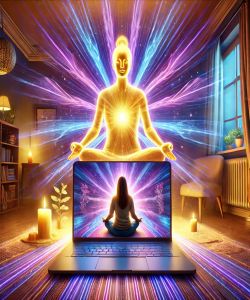
1. Overview of Reiki Healing
Reiki Healing is a sophisticated and disciplined form of energy therapy that originates from Japan. Its fundamental premise is the systematic channelling of universal life force energy, a concept referred to as 'Ki' or 'Qi', from the practitioner to the recipient to facilitate holistic balance and promote the body's innate healing capabilities. This modality operates on the principle that disruptions or blockages in an individual's energy field can manifest as physical, emotional, or psychological distress. A certified Reiki practitioner acts not as a source of energy, but as a precise conduit, drawing upon this universal energy and directing it through their hands to the recipient's body. The process is non-invasive and is typically administered by placing the hands lightly on or just above specific points on the body, corresponding to major energy centres, or chakras. Its application is not intended to replace conventional medical treatment but to serve as a powerful complementary therapy. The ultimate objective of a Reiki session is to restore equilibrium within the recipient's energetic system, thereby inducing a state of profound relaxation, alleviating stress, and creating an optimal internal environment for healing to occur. It is a structured practice grounded in a lineage of teaching and a set of core ethical principles, demanding rigorous training and a deep commitment from the practitioner to maintain the integrity and efficacy of the discipline. It addresses the individual as an integrated whole—mind, body, and spirit—aiming to resolve the root energetic imbalances that underpin various states of ill-health and psychological turmoil, rather than merely addressing superficial symptoms. This holistic and foundational approach distinguishes Reiki as a significant and respected modality within the broader field of complementary and alternative medicine, demanding serious consideration for its role in comprehensive wellness strategies.
2. What is Reiki Healing?
Reiki is a meticulously structured system of energy healing, the name of which is derived from two Japanese words: 'Rei', meaning "universal" or "higher power," and 'Ki', which translates to "life force energy." Consequently, Reiki is understood as "spiritually guided life force energy." It is a therapeutic practice wherein a trained practitioner facilitates the flow of this energy to a recipient to enhance their physical, emotional, mental, and spiritual well-being. The core tenet of this discipline is that all living beings possess a life force energy that flows through them. When this energy is low, imbalanced, or obstructed, the individual is more susceptible to illness and stress. Conversely, when the energy is high and flowing freely, they are more capable of maintaining health and happiness. The practitioner, having undergone a series of attunements or initiations from a Reiki Master, becomes a channel for this universal energy.
The practice itself does not involve the transference of the practitioner's personal energy. Instead, they serve as a passive yet focused conduit, allowing the Reiki energy to be drawn by the recipient to the areas where it is most needed. This intelligent energy works to restore balance and harmony within the recipient's system. Key characteristics of this modality include:
- Non-Invasiveness: The technique is administered either through light, non-manipulative touch or with the hands held slightly above the body. It does not involve any form of physical manipulation, pressure, or massage.
- Holistic Approach: Reiki treats the entire person—including body, emotions, mind, and spirit—and is not directed at specific symptoms in isolation. It seeks to address the underlying energetic cause of a condition.
- Complementary Nature: It is a supportive therapy that works in conjunction with all other medical or therapeutic techniques to relieve side effects and promote recovery. It is not a substitute for professional medical care.
- Spiritual Foundation: Whilst not a religion, Reiki is spiritual in its nature, founded on principles of universal connection, compassion, and the promotion of inner peace and balance for the highest good of all.
3. Who Needs Reiki Healing?
- Individuals experiencing high levels of chronic stress, anxiety, or psychological burnout who require a non-pharmacological method to induce profound relaxation and restore emotional equilibrium.
- Patients undergoing conventional medical treatments, such as chemotherapy or surgery, who seek a complementary therapy to mitigate side effects, manage pain, and support the body’s natural recovery processes.
- Persons suffering from chronic pain conditions, including fibromyalgia, arthritis, or migraines, for whom Reiki can offer symptomatic relief by altering pain perception and reducing inflammation-related tension.
- Individuals contending with emotional trauma, grief, or depression, who can benefit from the gentle yet powerful release of energetic blockages associated with these deeply held emotional states.
- Professionals in high-pressure environments who need to maintain mental clarity, enhance focus, and prevent the cumulative negative impact of occupational stress on their physical and mental health.
- Individuals on a path of personal or spiritual development who wish to deepen their self-awareness, clear energetic impediments to growth, and foster a stronger connection to their inner selves.
- Those experiencing sleep disturbances or insomnia, as the deep state of relaxation facilitated by Reiki can help to regulate sleep patterns and improve the overall quality of rest.
- Anyone feeling energetically depleted, stagnant, or "stuck" in life, who seeks to revitalise their personal energy system, boost vitality, and regain a sense of forward momentum and purpose.
- Individuals preparing for or recovering from significant life events, such as childbirth, examinations, or major transitions, who require energetic support to navigate these periods with resilience and balance.
- Sceptics and analytically-minded individuals who, despite their reservations, are open to exploring alternative modalities for wellness and stress management, providing them with a direct, tangible experience of energetic principles.
4. Origins and Evolution of Reiki Healing
The system known today as Reiki has its definitive origins in early 20th-century Japan, founded by a spiritual seeker named Mikao Usui. Following a period of extensive study of various spiritual and healing traditions, Usui embarked upon a 21-day meditative retreat on Mount Kurama in 1922. It was during this profound spiritual experience that he is said to have been gifted with the understanding and methodology for channelling universal life force energy for healing. This was not a rediscovery of an ancient text but a direct, intuitive revelation that formed the basis of his system, which he named Shinshin Kaizen Usui Reiki Ryoho, or "The Usui Reiki Treatment Method for Improving Body and Mind."
Following this experience, Usui established a clinic and school in Tokyo, the Usui Reiki Ryoho Gakkai, to practise and teach his methods. His primary focus was not merely on physical healing but on spiritual development, encapsulated by the Five Reiki Precepts (Gokai), which form the ethical and spiritual foundation of the practice. He trained a number of students to continue his work, including Dr. Chujiro Hayashi, a retired naval officer. Hayashi was instrumental in the evolution of Reiki, as he systematised Usui's teachings, developing a more structured set of hand positions and a formalised attunement process. His focus was more clinical, adapting the practice for treating specific physical ailments and meticulously documenting case studies.
The global expansion of Reiki is almost entirely attributable to Hawayo Takata, a Japanese-American woman who sought treatment at Hayashi's clinic in Tokyo. After being healed of serious ailments, she trained extensively with Hayashi, becoming a Reiki Master in 1938. Upon her return to Hawaii and later mainland America, she began to teach Reiki, adapting its concepts and terminology for a Western audience. She simplified some of the teachings and emphasised the narrative of its origins, which was crucial for its acceptance outside of Japan. It was through Takata's lineage of 22 masters that Reiki proliferated throughout the Western world. Since her passing, Reiki has continued to evolve, branching into numerous different styles and schools, from those attempting to restore the original Japanese practices (Jikiden Reiki) to more contemporary forms that integrate other spiritual concepts (Karuna Reiki, Holy Fire Reiki). This evolution reflects its dynamic nature and its adaptation to diverse cultural and spiritual contexts.
5. Types of Reiki Healing
- Usui Reiki Ryoho: This is the original and traditional form of Reiki as established by Mikao Usui in Japan. It places a strong emphasis on spiritual development and self-healing as the primary path to well-being. The system is deeply rooted in Japanese cultural and spiritual concepts, incorporating practices such as meditation, chanting the Five Precepts, and intuitive hand placements guided by 'Byosen Reikan-ho' (a technique for sensing energetic imbalances). Its core purpose is achieving 'Anshin Ritsumei', or a state of complete inner peace.
- Western Usui Reiki (Usui Shiki Ryoho): This is the lineage that descended through Chujiro Hayashi and Hawayo Takata. It is the most widely practised form of Reiki in the Western world. Takata adapted the system for a Western mindset, simplifying some of the original Japanese techniques and creating a more structured, standardised system of hand positions and three levels of training (First Degree, Second Degree, and Master). The focus is often more on hands-on healing for others as a therapeutic modality.
- Jikiden Reiki: This branch, meaning "directly taught" Reiki, was founded by Chiyoko Yamaguchi and her son, Tadao Yamaguchi. Chiyoko Yamaguchi was a student of Dr. Hayashi. Jikiden Reiki aims to preserve and teach the Usui Reiki system exactly as it was taught by Hayashi in the 1930s, free from any Western modifications. It retains the original Japanese terminology and places a strong emphasis on the therapeutic application of Reiki for treating specific physical and psychological conditions.
- Karuna Reiki: Developed by William Lee Rand, Karuna Reiki is an advanced system available only to those who are already Reiki Masters. 'Karuna' is a Sanskrit word meaning "compassionate action." This system incorporates a new set of symbols that are said to be of a higher vibrational frequency, targeting more specific healing issues such as healing past trauma, releasing karmic patterns, and grounding. It is considered a powerful extension for experienced practitioners.
- Holy Fire Reiki: Another system developed by William Lee Rand, Holy Fire Reiki is described as a new form of Reiki energy that is noticeably more refined and comes from a higher level of consciousness. It is both powerful and gentle, providing purification, healing, empowerment, and guidance. It is introduced during the attunement process (referred to as 'placements' and 'ignitions') and is designed to work continuously, even when not formally channelling it.
6. Benefits of Reiki Healing
- Promotes a state of profound relaxation and calm, directly counteracting the physiological and psychological effects of chronic stress by activating the parasympathetic nervous system.
- Alleviates physical pain and discomfort associated with a wide range of acute and chronic conditions by reducing muscular tension and shifting the recipient's perception of pain signals.
- Enhances the body's natural self-healing capabilities by clearing energetic blockages and restoring the harmonious flow of life force energy, creating an optimal internal environment for recovery.
- Supports the emotional body by facilitating the safe release of suppressed feelings, traumas, and negative emotional patterns, leading to greater emotional stability and resilience.
- Improves mental clarity, focus, and concentration by calming a turbulent mind, thereby reducing anxiety, mental chatter, and feelings of being overwhelmed.
- Accelerates recovery post-surgery or illness by reducing stress, managing pain, and providing energetic support to the body's regenerative processes.
- Complements conventional medical treatments, such as chemotherapy and radiation, by mitigating adverse side effects like nausea, fatigue, and anxiety, thereby improving the patient's quality of life.
- Balances the body’s energy centres, or chakras, ensuring that vital energy is distributed evenly throughout the system, which is fundamental to maintaining holistic health.
- Fosters a deeper sense of spiritual connection and self-awareness, providing individuals with insights into their life purpose and strengthening their connection to their inner wisdom.
- Improves sleep quality and helps to resolve patterns of insomnia by inducing deep relaxation and calming the nervous system, allowing for more restorative rest.
- Strengthens the immune system by reducing the debilitating impact of stress, which is a known suppressor of immune function, thus enhancing the body's ability to defend against pathogens.
- Cultivates an overall sense of well-being, peace, and security, leaving the recipient feeling grounded, centred, and more capable of navigating life's challenges with composure.
7. Core Principles and Practices of Reiki Healing
- The Five Precepts (Gokai): These are the ethical and spiritual pillars of the Reiki system, established by Mikao Usui to guide practitioners towards a balanced and harmonious life. They are to be contemplated and embodied daily. The precepts are: "Just for today, do not anger. Just for today, do not worry. Just for today, be grateful. Just for today, do your work honestly. Just for today, be kind to every living thing." Adherence to these principles is considered fundamental to purifying the practitioner's own energy, making them a clearer channel for Reiki.
- The Attunement Process (Reiju/Denju): A practitioner cannot simply learn Reiki from a book; they must be formally initiated by a qualified Reiki Master. This sacred process, known as an attunement, opens and aligns the student's energy channels, connecting them to the universal life force energy. This procedure is what distinguishes Reiki from other forms of energy work and empowers the individual to channel the specific vibrational frequency of Reiki energy.
- The Practitioner as a Channel: A central tenet is that the Reiki practitioner is not the source of the healing energy. They do not use their own personal energy reserves. Instead, they act as a passive, neutral conduit or channel through which the universal life force energy flows. The energy is drawn by the recipient's body to where it is needed, not pushed or directed by the practitioner's will. This principle protects both practitioner and client from energetic depletion or transference.
- Hands-On (and Off-Body) Healing: The primary method of application is the placement of the practitioner's hands on or slightly above the recipient's body. A sequence of standardised hand positions is typically used to cover all major organs, endocrine glands, and energy centres (chakras). The practitioner's hands are kept still in each position for several minutes, allowing the energy to flow uninterruptedly.
- Use of Sacred Symbols (Shirushi): At the second level of Reiki training (Okuden) and beyond, practitioners are taught specific sacred symbols. These symbols are ancient Sanskrit-derived characters that act as keys to activate different aspects and frequencies of the Reiki energy. They are used to enhance the power of the energy, to focus it for mental and emotional healing, and to facilitate distant healing across time and space.
- Distant Healing (Enkaku Chiryo): A core practice taught in Second Degree Reiki is the ability to send healing energy to a person, place, or situation regardless of physical proximity. This is accomplished through focused intention and the use of a specific distant healing symbol, which acts as a bridge to connect the practitioner's energy field with that of the recipient. This practice underscores the non-local nature of the energy involved.
8. Online Reiki Healing
- Principle of Non-Locality: Online, or distant, Reiki operates on the fundamental quantum principle of non-locality and energetic interconnection. It posits that universal life force energy is not bound by the physical constraints of time and space. A trained practitioner can connect with a recipient's energy field through focused intention, regardless of their geographical location, making the online modality as valid and potent as an in-person session.
- The Role of Symbols: The efficacy of online Reiki is critically dependent on the practitioner's mastery of the sacred symbols taught in Second Degree (Okuden) training. Specifically, the distant healing symbol acts as an energetic bridge or a "dialling code," allowing the practitioner to establish a clear and stable connection with the recipient. This symbol transcends physical distance, enabling the precise transmission of Reiki energy to the intended individual.
- Methodology of Transmission: The practitioner typically uses a proxy, such as a photograph, a written name, or a visualisation of the recipient, to focus their intention and direct the flow of energy. They will then conduct a full session as if the person were physically present, moving through the standard hand positions on the proxy or in their mind's eye. This focused protocol ensures a comprehensive and structured energy transmission.
- Recipient's Active Participation: In an online session, the recipient's role is imperative. They must consciously agree to receive the energy and prepare a quiet, private space where they can lie down and remain undisturbed for the duration of the session. This act of creating a receptive state and a sacred space significantly enhances the effectiveness of the transmitted energy, as it minimises distractions and opens their system to the healing process.
- Technological Interface: While the energy itself is non-physical, technology facilitates the human connection. A video or audio call is typically used at the beginning and end of the session for consultation and feedback. This allows the practitioner to understand the client's needs and the client to share their experience, maintaining the professional and personal container of the therapeutic relationship despite the physical distance. This professional framework is non-negotiable.
- Accessibility and Convenience: The online format removes geographical barriers, granting individuals access to highly qualified practitioners anywhere in the world. It provides a vital service for those who are housebound, hospitalised, or live in remote areas. Furthermore, it allows the recipient to integrate the experience in the comfort and privacy of their own home, avoiding the need for travel immediately after a deeply relaxing session.
9. Techniques Used in Reiki Healing
- Centring and Preparation (Gassho Meiso): Before commencing any session, the practitioner must first prepare their own energetic state. This is achieved through a meditative practice, often involving placing the palms together in a prayer position (Gassho) at the heart centre. The practitioner focuses on their breath, quiets their mind, and sets a clear intention to act as a pure and open channel for the highest good of the recipient. This step is non-negotiable for establishing a clear energetic field.
- Connecting and Invoking the Energy (Reiji-ho): Following centring, the practitioner formally connects to the Reiki source. This involves a silent or spoken invocation or prayer, asking the universal life force energy to flow through them for healing purposes. This technique elevates the practitioner's consciousness from a personal to a transpersonal state, ensuring the energy being channelled is universal Reiki and not their own personal energy.
- Scanning the Body (Byosen Reikan-ho): This is a critical intuitive technique where the practitioner slowly passes their hands over the recipient's body, a few inches above the surface. They are scanning the recipient's energy field (aura) to detect any areas of imbalance, congestion, or depletion. These imbalances, known as 'Byosen', may be felt as sensations of heat, cold, tingling, or pressure in the practitioner's hands, guiding them to areas that require specific attention.
- Standard Hand Positions: The core of the treatment involves the systematic placement of the practitioner’s hands on or slightly above the body. A sequence of 12 to 20 standard hand positions is used, covering the head, torso, back, knees, and feet. These positions correspond with the major chakras, organs, and endocrine glands. Each position is held for several minutes, allowing the Reiki energy to flow deeply into the area.
- Mental and Emotional Healing (Sei He Ki): When addressing psychological or emotional issues, a specific Reiki symbol is employed. The practitioner mentally draws or visualises this symbol and directs the energy to clear negative thought patterns, heal emotional trauma, and restore mental balance. This technique is often focused on the head and heart areas.
- Clearing and Smoothing the Aura: Towards the end of the session, the practitioner performs sweeping motions with their hands over the recipient's body. This technique is designed to clear any residual negative or stagnant energy that has been dislodged during the session. It also serves to smooth and seal the recipient's aura, leaving their energy field balanced, protected, and integrated.
- Grounding and Closing: The final step involves techniques to ensure both the recipient and practitioner are fully grounded and back in their bodies. This may involve placing hands on the recipient's feet or shoulders. The practitioner then performs a silent prayer of gratitude and formally disconnects the energetic link, closing the session with professional integrity.
10. Reiki Healing for Adults
The application of Reiki Healing for adults addresses the complex and multifaceted challenges inherent to modern life with a profound and targeted efficacy. For the professional adult, it serves as a potent antidote to the chronic stress, mental fatigue, and incipient burnout that pervade high-pressure corporate and entrepreneurial environments. By inducing a state of deep relaxation that transcends conventional methods, Reiki systematically dismantles the physiological stress response, promoting mental clarity, enhancing cognitive function, and restoring the emotional resilience necessary to navigate demanding professional landscapes. Furthermore, it is an invaluable tool for processing the accumulated emotional baggage of adulthood. Unresolved grief, past traumas, relationship difficulties, and ingrained negative thought patterns manifest as energetic blockages that can precipitate physical and psychological illness. Reiki works at the causal level of the energy body to gently dissolve these blockages, facilitating a cathartic release and fostering a state of emotional equilibrium and psychological well-being. Physically, it provides substantial support for managing the chronic conditions and persistent pain that often accompany adult life, acting as a complementary therapy to alleviate symptoms and improve quality of life. For adults on a journey of self-discovery or spiritual exploration, Reiki acts as a catalyst, clearing the energetic noise that obscures inner wisdom and deepening their connection to their authentic self. It is a mature, sophisticated modality that respects the autonomy of the individual, empowering adults to take an active role in their own health and well-being by activating their innate capacity for healing and self-regulation. It is not a passive treatment but a dynamic collaboration in the restoration of holistic balance.
11. Total Duration of Reiki Healing
The standard and professionally accepted duration for a single, comprehensive Reiki healing session is unequivocally 1 hr. This specific timeframe is not arbitrary; it is a structural necessity dictated by the requirements of the modality itself to ensure thoroughness and efficacy. The initial portion of this hour is dedicated to a focused consultation, wherein the practitioner assesses the client's current physical, emotional, and mental state and establishes a clear intention for the session. This professional dialogue is critical for creating a therapeutic container of trust and clarity. The subsequent and most substantial part of the hour is allocated to the hands-on treatment. This duration allows the practitioner to move systematically through the complete sequence of standard hand positions, which cover all the major energy centres (chakras), organs, and endocrine glands of the body. Each position must be held for a sufficient period—typically three to five minutes—to allow the Reiki energy to penetrate deeply, clear blockages, and saturate the area. Rushing this process would compromise the treatment's integrity. The final segment of the 1 hr period is reserved for grounding the client and for a brief post-session discussion. This allows the individual to gently return to full awareness, integrate the energetic shifts that have occurred, and receive any necessary aftercare advice from the practitioner. Therefore, the 1 hr duration is the minimum professional standard required to facilitate a complete energetic cycle of assessment, comprehensive treatment, and safe, grounded integration, ensuring the client receives the full and undiluted benefit of the therapeutic intervention. Anything less constitutes an incomplete and unprofessional application of the discipline.
12. Things to Consider with Reiki Healing
Engaging with Reiki Healing demands a discerning and informed approach from any prospective recipient. It is imperative to understand that Reiki is a complementary, not an alternative, therapy. It must never be used as a substitute for conventional medical diagnosis or treatment prescribed by a qualified physician. Practitioners are ethically bound not to diagnose conditions or offer medical advice, and any who do so must be regarded with extreme caution. The selection of a practitioner is of paramount importance. One must conduct thorough due diligence, verifying the individual's credentials, which must include certification from a reputable Reiki Master and a clear, traceable lineage back to the founder, Mikao Usui. Enquire about their level of training, years of experience, and professional affiliations. Furthermore, it is crucial to manage one's expectations. Reiki does not offer miraculous, instantaneous cures; its effects can be subtle and cumulative. The experience is highly individual, ranging from profound emotional releases to simple feelings of deep relaxation. A commitment to a series of sessions is often necessary to address chronic or deep-seated issues effectively. The recipient's own mindset is also a significant factor; while belief is not a prerequisite for the energy to work, a state of openness and receptivity will invariably enhance the therapeutic outcome. Finally, one must be prepared for a potential "healing crisis," where symptoms may temporarily intensify as suppressed energies are brought to the surface for release. This is a normal part of the cleansing process and should be discussed with the practitioner.
13. Effectiveness of Reiki Healing
The effectiveness of Reiki Healing must be appraised within its own operational paradigm, which is that of a biofield therapy focused on the restoration of energetic balance. From this perspective, its efficacy is primarily demonstrated through its profound impact on the autonomic nervous system. Reiki consistently and reliably induces the relaxation response, shifting the body from a state of sympathetic nervous system dominance (the "fight-or-flight" response characteristic of stress) to one of parasympathetic dominance (the "rest-and-digest" state). This physiological shift is the bedrock of its effectiveness, as it directly mitigates the deleterious effects of chronic stress, which is a known contributor to a vast array of modern ailments. Consequently, its primary and most verifiable outcomes are subjective yet significant: a marked reduction in perceived stress, anxiety, and depression; improved mood and emotional regulation; and an enhanced sense of overall well-being. In the context of pain management, its effectiveness lies not in curing the underlying pathology but in altering the individual's perception of pain and reducing the muscular tension that often exacerbates it. As a complementary modality, its utility is substantial, with documented evidence showing it can reduce the side effects of aggressive medical treatments like chemotherapy, improve post-operative recovery times, and enhance the patient's quality of life. While large-scale, double-blind clinical trials remain challenging due to the nature of the intervention, the vast body of anecdotal evidence, positive case studies, and its increasing integration into hospital and hospice settings provide a compelling testament to its value as a potent, non-invasive, and supportive therapy for holistic health management.
14. Preferred Cautions During Reiki Healing
It is mandatory for any Reiki practitioner to operate within a strict framework of professional and ethical cautions to ensure client safety and maintain the integrity of the discipline. The foremost caution is the unequivocal prohibition against medical diagnosis and prescription. Under no circumstances may a practitioner identify a specific medical condition, suggest a medical prognosis, or recommend or contraindicate any form of medication or conventional medical treatment. To do so constitutes a dangerous and unethical overreach of their professional scope. The practitioner’s role is strictly limited to the assessment and balancing of the client's energy field. Secondly, promising specific outcomes or guaranteeing a cure is an absolute contravention of ethical practice. Reiki's effects are individual and cannot be predetermined. The practitioner must communicate this clearly, managing client expectations with honesty and professionalism. Furthermore, extreme care must be taken with physical touch. While Reiki is a hands-on modality, practitioners must always obtain explicit consent before touching a client and must remain acutely sensitive to the client's comfort and personal boundaries, avoiding all private or sensitive areas of the body. The practice of working slightly above the body is always a valid and respectful alternative. Finally, practitioners must maintain unwavering client confidentiality and create a safe, non-judgemental therapeutic space. They must also recognise the limits of their own competence and be prepared to refer a client to a medical or mental health professional when their issues fall outside the scope of energy work. Adherence to these cautions is not optional; it is the fundamental responsibility of every credible practitioner.
15. Reiki Healing Course Outline
- Level I Certification (Shoden - First Teachings):
- Module 1: History and Origins: Detailed exploration of Mikao Usui's life, his spiritual quest, the founding of Usui Reiki Ryoho, and the lineage through Hayashi and Takata.
- Module 2: The Five Precepts (Gokai): In-depth study and practical application of the ethical and spiritual principles that form the foundation of the practice.
- Module 3: Energy Body Anatomy: Introduction to the concepts of Ki (life force energy), the chakra system, and the human aura.
- Module 4: Level I Attunement: The formal initiation process performed by the Reiki Master to open the student's energy channels to channel Reiki.
- Module 5: Self-Healing Protocol: Instruction and practice of the complete sequence of hand positions for conducting a comprehensive self-treatment.
- Module 6: Treating Others: Instruction on providing a basic Reiki session for friends and family, including hand positions, session protocol, and ethical considerations.
- Level II Certification (Okuden - Inner Teachings):
- Module 1: The Sacred Symbols: Introduction to the three primary Reiki symbols: the Power Symbol, the Mental/Emotional Symbol, and the Distant Healing Symbol. Detailed instruction on their meaning, form, and application.
- Module 2: Level II Attunement: The second initiation, which deepens the student's connection to the Reiki source and attunes them to the vibrational frequency of the symbols.
- Module 3: Advanced Healing Techniques: Application of the symbols to enhance the power of a session, perform targeted mental and emotional healing, and clear negative energy.
- Module 4: Distant Healing (Enkaku Chiryo): Comprehensive training in the theory and practice of sending Reiki across time and space to people, places, and situations.
- Module 5: Professional Practice: Guidance on establishing a professional Reiki practice, including ethics, record-keeping, insurance, and client management.
- Level III / Master Practitioner & Teacher Certification (Shinpiden - Mystery Teachings):
- Module 1: The Master Symbol: Introduction to the Usui Master Symbol, its meaning, and its use in healing and attunements.
- Module 2: Master Level Attunement: The final initiation that attunes the student to the Master level energy frequency.
- Module 3: Advanced Meditations and Techniques: Instruction in advanced spiritual practices and healing techniques used by Reiki Masters to further their own development.
- Module 4: The Attunement Process: Meticulous instruction on how to perform the sacred attunements for all three levels of Reiki, thereby empowering the new Master to teach others.
- Module 5: Teaching Methodology: Guidance on structuring and delivering Reiki courses, creating manuals, and mentoring students with integrity and responsibility.
16. Detailed Objectives with Timeline of Reiki Healing
- Level I (Shoden) Objectives (To be achieved by the conclusion of the initial training course, typically an intensive two-day period):
- The student will be able to articulate the complete history and lineage of Usui Reiki with precision.
- The student will have memorised and integrated the Five Reiki Precepts into their daily contemplation.
- The student will have successfully received the Level I attunement and be able to perceive the flow of Reiki energy through their hands.
- The student will demonstrate full competence in the complete sequence of hand positions for a comprehensive self-treatment session.
- The student will demonstrate the ability to conduct a basic, full-body Reiki session on another person, adhering to professional protocol and hand positions.
- Level II (Okuden) Objectives (To be achieved by the conclusion of the Level II training, undertaken after a minimum period of practice and integration following Level I):
- The student will be able to draw the three Level II symbols from memory with perfect accuracy.
- The student will articulate the specific function and application of each of the three symbols.
- Following the Level II attunement, the student will demonstrate the ability to integrate the symbols into a hands-on healing session to amplify energy and address specific mental/emotional issues.
- The student will demonstrate proficiency in multiple methods for conducting a distant healing session, including the use of proxies and visualisation.
- The student will be able to outline the core ethical and professional requirements for establishing a public Reiki practice.
- Level III Master (Shinpiden) Objectives (To be achieved by the conclusion of the Master training, undertaken after a significant period of dedicated practice as a Level II practitioner):
- The student will have memorised and be able to draw the Usui Master symbol with precision.
- The student will demonstrate a deep understanding of the spiritual responsibilities and commitments inherent in the Master level.
- The student will demonstrate complete mastery of the process for conducting attunements for Reiki Level I, II, and III.
- The student will have developed a comprehensive curriculum and teaching materials for conducting their own Reiki courses.
- The student will embody the qualities of a Reiki Master, demonstrating deep compassion, integrity, and a commitment to their own ongoing spiritual development.
17. Requirements for Taking Reiki Healing
- A Stable and Uninterrupted Internet Connection: For any online engagement, a high-speed, reliable internet connection is non-negotiable. This ensures clear audio and video communication for the consultation and feedback phases, and prevents disruptions that would compromise the integrity of the energetic connection during the session itself.
- Appropriate Technological Hardware: The participant must possess a functional desktop computer, laptop, or tablet equipped with a working webcam and microphone. This facilitates the necessary face-to-face interaction that frames the distant healing session, maintaining a professional and personal therapeutic container.
- A Private and Secure Environment: It is imperative that the recipient allocates a physical space where they will be completely alone and undisturbed for the entire duration of the session. This space must be quiet, comfortable, and free from potential interruptions from family members, pets, or electronic notifications. This sanctity of space is critical for achieving a receptive state.
- A Receptive and Open Mindset: The individual must possess a genuine willingness to engage with the process. While absolute belief is not a prerequisite, a disposition of openness, curiosity, and a commitment to receiving the energy is essential. Scepticism is permissible, but active resistance or hostility will create an energetic barrier, impeding the effectiveness of the treatment.
- Commitment to the Agreed Time: The participant must demonstrate the discipline and respect to be present and ready at the scheduled appointment time. Punctuality is a reflection of the seriousness with which they approach their own healing journey and shows respect for the practitioner's professional time and energetic preparation.
- Physical Comfort and Preparation: The recipient should be in a comfortable position, typically lying down, with supportive pillows and a blanket if desired. They should be wearing loose, comfortable clothing. It is their responsibility to ensure their physical comfort is met so that it does not become a distraction during the session.
18. Things to Keep in Mind Before Starting Reiki Healing
Before commencing a course of Reiki healing, it is imperative for the prospective client to adopt a mindset of informed and proactive engagement. The primary consideration must be the rigorous vetting of the practitioner. Do not proceed without first verifying their specific lineage, level of certification, and professional experience. A credible practitioner will provide this information transparently and without hesitation. Secondly, one must approach the session with realistic and clearly defined intentions, whilst simultaneously releasing rigid expectations about the outcome. Understand that healing is a process, not an event, and the effects may manifest in subtle and unexpected ways. Be prepared for a spectrum of experiences, from intense emotional release to a simple, profound sense of peace; there is no single "correct" response. It is also crucial to recognise your own active role in the therapeutic partnership. This involves creating a state of receptivity, being honest during the initial consultation about your needs, and taking responsibility for integrating the energetic shifts after the session. This may involve gentle self-care, hydration, and reflection. Finally, be aware that Reiki is a process of energetic detoxification. It can sometimes bring suppressed emotional or physical symptoms to the surface for clearing. This is a positive sign of deep healing, not a negative side effect, but it is essential to be mentally prepared for this possibility and to communicate with your practitioner if it occurs. Undertaking Reiki is a commitment to one's holistic well-being and demands a commensurate level of personal responsibility and discernment.
19. Qualifications Required to Perform Reiki Healing
The performance of professional Reiki Healing is a serious responsibility that demands specific, verifiable qualifications, even in the absence of a single, overarching governmental regulatory body. A practitioner's credibility is not self-proclaimed but is built upon a foundation of rigorous training and ethical commitment. The absolute, non-negotiable requirements for any individual offering Reiki services to the public are as follows:
- Formal Certification: The practitioner must hold a certificate for each level of Reiki they have completed, issued by a verifiable Reiki Master Teacher. At a minimum, a professional practitioner must be certified to Level II (Okuden), which is the level at which distant healing and the use of the primary symbols are taught. To teach Reiki, one must hold a Master Teacher (Shinpiden) certification.
- Traceable Lineage: The practitioner must be able to provide their direct spiritual lineage, tracing their training back in an unbroken line to the founder, Mikao Usui. This lineage chart is a testament to the authenticity and purity of the teachings they have received and are qualified to transmit. A practitioner without a clear lineage lacks fundamental credibility.
- Professional Insurance: All professional practitioners must hold valid professional indemnity and public liability insurance. This is a hallmark of professionalism, providing protection for both the practitioner and the client and demonstrating a serious commitment to safe and ethical practice.
- Membership in a Professional Association: While not always mandatory, membership in a recognised professional body or federation, such as The Reiki Association or the UK Reiki Federation, is a strong indicator of a practitioner's commitment to upholding a shared code of conduct, ethical standards, and continuing professional development.
These qualifications collectively ensure that the practitioner has not merely learned a technique but has been properly attuned, has received the correct teachings, and is operating within a framework of professional accountability and safety.
20. Online Vs Offline/Onsite Reiki Healing
Online
Online Reiki, also known as distant or remote healing, is an advanced application of the discipline that transcends physical limitations. Its primary advantage lies in its absolute accessibility; it removes all geographical barriers, allowing a client to receive treatment from a master practitioner anywhere in theworld. This is particularly crucial for individuals who are hospitalised, immobile, or reside in areas with no local practitioners. The online modality operates on the sophisticated principle that universal life force energy is not constrained by space, with the practitioner using specific symbols and focused intention to establish a powerful energetic link with the recipient. The experience for the recipient can be equally, if not more, profound than an in-person session, as they are situated in the comfort and security of their own environment, which can foster a deeper state of relaxation and receptivity. However, the efficacy of this method is entirely contingent on the practitioner's skill and mastery of Second Degree techniques and the recipient's ability to create a quiet, sacred space free from distractions. It lacks the element of direct physical touch, which some individuals may find reassuring, and places a greater emphasis on the client’s self-discipline in preparing for and committing to the session.
Offline/Onsite
Offline, or in-person, Reiki represents the traditional and most widely understood application of the practice. Its distinct advantage is the tangible presence of the practitioner, which creates a potent, contained therapeutic environment. The use of light, non-invasive physical touch can be deeply comforting and grounding for many clients, enhancing their sense of safety and allowing for a more immediate release of tension. The practitioner can utilise intuitive scanning techniques (Byosen) with greater physical proximity, potentially discerning subtle energetic fluctuations more directly. The entire session is held within a space professionally prepared by the practitioner, eliminating any responsibility or potential for distraction on the client's part. This controlled environment ensures an optimal state for healing. However, this modality is inherently limited by geography, requiring the client to travel to the practitioner's location. This can be a significant barrier for those with mobility issues, time constraints, or a lack of local, qualified professionals. The need to travel immediately after a deeply relaxing and energetically shifting session can also be jarring for some, potentially diminishing the immediate post-treatment integration period that an online session at home naturally affords.
21. FAQs About Reiki Healing
Question 1. What is Reiki?
Answer: Reiki is a Japanese energy healing technique wherein a practitioner channels universal life force energy to a recipient to promote relaxation, reduce stress, and facilitate holistic healing.
Question 2. Is Reiki a religion?
Answer: No. Reiki is a spiritual practice but is not a religion. It has no dogma and does not require any specific belief system. It is compatible with all religious and spiritual paths.
Question 3. What does a Reiki session feel like?
Answer: Experiences are highly individual. Common sensations include deep relaxation, feelings of warmth, coolness, or tingling in certain areas of the body, and a sense of profound peace. Some people see colours or have emotional releases.
Question 4. Do I have to believe in it for it to work?
Answer: No. Belief is not a prerequisite. The energy works regardless of your intellectual stance. However, a state of openness and receptivity can enhance the experience.
Question 5. Can Reiki cure my illness?
Answer: Reiki practitioners are prohibited from claiming to cure any condition. Reiki supports the body's own healing capabilities and is a complementary therapy, not a replacement for medical treatment.
Question 6. Is online Reiki as effective as in-person?
Answer: Yes. Energy is not limited by distance. A properly trained practitioner can facilitate a session of equal potency online using specific distant healing techniques.
Question 7. Is Reiki safe?
Answer: Yes. Reiki is a non-invasive and gentle practice with no known contraindications. It is safe for all ages and conditions.
Question 8. How many sessions will I need?
Answer: This depends entirely on the individual and their reasons for seeking treatment. A single session can be beneficial for relaxation, but a series of sessions is often recommended for chronic issues.
Question 9. What should I do to prepare for a session?
Answer: Wear comfortable clothing. Avoid caffeine and heavy meals beforehand. For an online session, ensure you have a quiet, private space where you will not be disturbed.
Question 10. Can Reiki be performed on animals and plants?
Answer: Yes. The universal life force energy is beneficial to all living things.
Question 11. What are the 'attunements'?
Answer: Attunements are a sacred process performed by a Reiki Master that opens a student's energy channels, enabling them to permanently channel Reiki energy.
Question 12. Can anyone learn Reiki?
Answer: Yes. The ability to channel Reiki is not a special gift but is transferred from Master to student through the attunement process.
Question 13. What are the Five Precepts of Reiki?
Answer: They are the ethical and spiritual foundation of Reiki: Just for today, do not anger, do not worry, be grateful, do your work honestly, and be kind to every living thing.
Question 14. Will I feel emotional during a session?
Answer: It is possible. Reiki can bring suppressed emotions to the surface for release and healing. This is a normal and healthy part of the process.
Question 15. What is a 'healing crisis'?
Answer: Occasionally, after a session, symptoms can temporarily worsen as the body detoxifies and releases stagnant energy. This is a positive sign of deep cleansing.
Question 16. What is the difference between Reiki and massage?
Answer: Massage is physical manipulation of soft tissues. Reiki is a non-manipulative energy therapy where the practitioner's hands are held still, on or above the body.
22. Conclusion About Reiki Healing
In conclusion, Reiki Healing must be recognised as a legitimate, disciplined, and significant complementary therapy within the modern wellness landscape. Its value is anchored in its systematic approach to addressing energetic imbalances, which are increasingly understood to be the precursors to physical and psychological distress. As a non-invasive modality, it offers a powerful yet gentle method for inducing profound relaxation, directly counteracting the pervasive and damaging effects of chronic stress on the human system. The practice, grounded in a clear historical lineage and a robust set of ethical principles, demands rigorous training and unwavering integrity from its practitioners. It does not purport to be a panacea or a replacement for conventional medicine; rather, its strength lies in its ability to work in concert with other treatments, supporting the body's innate healing intelligence and enhancing the overall quality of life. Whether experienced in-person or through the sophisticated application of distant healing techniques, Reiki provides a unique and vital tool for individuals to restore holistic balance, foster emotional resilience, and deepen their own self-awareness. Its enduring and expanding global presence is a testament to its efficacy in meeting the fundamental human need for peace, balance, and profound, restorative care in a complex world. Its position is not one of alternative curiosity but of a serious therapeutic discipline