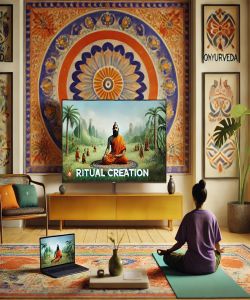
1. Overview of Ritual Creation
Ritual Creation is a rigorous and deliberate discipline concerned with the strategic design and implementation of structured, symbolic actions to effect profound psychological, behavioural, and cultural change. It stands in stark opposition to arbitrary custom or inherited ceremony, instead championing the conscious construction of meaningful practices tailored to specific, predetermined objectives. This methodology operates on the fundamental principle that human beings are neurologically and culturally hardwired to respond to ritual, and that this innate responsivity can be harnessed as a powerful tool for focused transformation. It is not an esoteric art but a pragmatic science, drawing upon principles from psychology, anthropology, neuroscience, and organisational behaviour to forge potent frameworks for personal development, team cohesion, and corporate identity. The practice demands intellectual rigour, emotional clarity, and an unwavering commitment to the intended outcome, moving beyond mere performance to the intentional cultivation of new mindsets, habits, and realities. Within this framework, every element—from the sequence of actions to the symbolic artefacts employed—is meticulously selected and integrated to create a cohesive, impactful experience. It is a system for engineering meaning, providing a tangible structure through which individuals and groups can navigate transitions, embed new values, and assert control over their own narratives, transforming abstract goals into lived, repeatable experiences. The ultimate aim is to create rituals that are not only effective but also resonant and sustainable, becoming integrated components of an individual’s or an organisation’s operational toolkit for excellence and resilience. This is the definitive architecture of intentional change.
2. What are Ritual Creation?
Ritual Creation is the methodical process of designing and executing bespoke rituals to achieve specific, targeted outcomes. It is a formalised practice that transforms abstract intentions into concrete, symbolic actions, thereby creating powerful psychological and behavioural shifts. This is not about empty ceremony; it is a strategic tool. At its core, Ritual Creation involves the deconstruction of a desired goal into its essential components and the subsequent construction of a sequence of actions, gestures, and symbolic elements that embody and reinforce that goal. These creations can be understood through several key facets:
- A Tool for Transformation: Rituals serve as a bridge between a current state and a desired future state. They provide a structured pathway for navigating change, whether it be shedding an old identity, embedding a new corporate value, or solidifying a personal commitment. They make the intangible process of change tangible.
- A Framework for Meaning: In environments often stripped of deep meaning, created rituals inject purpose and significance. By associating specific actions with higher values or objectives, they elevate mundane activities into meaningful practices, fostering greater engagement and motivation.
- -A Psychological Lever: The practice leverages established psychological principles. The use of symbolism taps into the subconscious, whilst the repetition of structured actions creates new neural pathways. This combination makes ritual an exceptionally efficient mechanism for belief and behaviour modification.
- A Performance Technology: For groups and organisations, rituals act as a performance technology. They align teams, signal cultural priorities, and create a shared experiential language. A well-designed ritual can onboard new members, celebrate successes, and reinforce collective identity far more effectively than a memorandum or a standard meeting.
Essentially, Ritual Creation is the architecture of intentional living and structured management. It provides a robust, repeatable, and highly effective methodology for anyone serious about instigating and sustaining meaningful change in themselves or their organisation.
3. Who Needs Ritual Creation?
- Corporate Leaders and Executives: Senior management personnel tasked with steering organisational culture, embedding new strategic visions, or improving team cohesion require this discipline. Rituals provide a tangible mechanism to translate abstract corporate values into lived, daily practices, ensuring that strategic initiatives are not merely discussed but are actively and consistently performed by the workforce.
- Individuals Navigating Significant Life Transitions: Persons experiencing profound life changes such as bereavement, divorce, career shifts, or recovery from illness need structured methods to process their experience. Ritual Creation offers a framework to formally acknowledge the end of one chapter and the deliberate, intentional beginning of another, providing psychological closure and forward momentum.
- High-Performance Professionals and Athletes: Individuals operating in high-stakes environments must cultivate extreme mental discipline and focus. Custom-designed rituals for preparation, performance, and recovery are non-negotiable tools for managing pressure, entering a state of flow, and ensuring consistent excellence under demanding conditions.
- Therapists, Coaches, and Human Development Practitioners: Professionals dedicated to facilitating change in others must possess a sophisticated toolkit. Ritual Creation provides them with a powerful, non-prescriptive modality to help clients externalise internal struggles, solidify therapeutic breakthroughs, and build scaffolding for new, healthier behaviours.
- Creative Professionals and Innovators: Writers, artists, and designers who face creative blocks or the challenge of sustaining innovation benefit immensely. A structured ritual can act as a powerful trigger to enter a creative mindset, breaking through inertia and establishing a reliable gateway to productive and imaginative work.
- Educational Institutions and Training Bodies: Organisations responsible for imparting knowledge and skills can use rituals to mark stages of learning, foster a strong cohort identity, and celebrate the mastery of complex subjects. This enhances the learning experience and reinforces the value of the educational journey.
4. Origins and Evolution of Ritual Creation
The origins of Ritual Creation are as old as humanity itself, rooted in the earliest anthropological evidence of structured, symbolic behaviour. Early human societies instinctively developed rituals for hunting, harvest, initiation, and burial, recognising their power to impose order on a chaotic world, bind communities together, and mediate the relationship between the known and the unknown. These primordial rituals were not consciously ‘designed’ in the modern sense but evolved organically, their efficacy proven through generations of social cohesion and survival. They formed the bedrock of culture, law, and religion, demonstrating an innate human need for structured, meaningful action.
The evolution from these inherited, communal rites to the modern, deliberate practice of Ritual Creation marks a significant intellectual shift. This transition began in earnest during the 20th century, spurred by seminal work in anthropology, sociology, and psychology. Thinkers like Émile Durkheim identified the function of ritual in generating ‘collective effervescence’ and social solidarity, whilst Victor Turner’s work on liminality detailed the transformative power of ritual processes. These academic insights began to deconstruct ritual, moving it from the realm of the sacred and unanalysable to an object of scientific inquiry.
The contemporary discipline of Ritual Creation represents the final stage of this evolution, where analysis has given way to synthesis and application. It moves beyond simply observing rituals to actively engineering them. This modern practice strips away the dogmatic or superstitious accretions of historical rites, focusing instead on the core psychological and neurological mechanisms that make them effective. It synthesises findings from behavioural psychology on habit formation, neuroscience on focus and attention, and organisational theory on culture building. The evolution is thus a journey from unconscious, collective practice to conscious, individualised or organisational design. It is the transformation of ritual from a cultural artefact to be studied into a high-performance technology to be deployed for specific, secular, and strategic ends. The focus has shifted from appeasing gods to programming minds and shaping behaviour with precision and intent.
5. Types of Ritual Creation
The discipline of Ritual Creation is not monolithic; it encompasses several distinct types, each designed for a specific purpose and context. A precise understanding of these categories is fundamental to their effective application.
- Rituals of Transition and Transformation: These are designed to navigate significant life changes. They provide a structured process for marking an ending and intentionally beginning a new phase. Examples include rituals for leaving a long-term career, processing grief after a loss, or formalising the end of a significant relationship. Their function is to provide psychological closure and grant permission to move forward, transforming a potentially disorienting experience into a meaningful, managed passage.
- Rituals of Enhancement and Performance: This category focuses on optimising a specific state or activity. Commonly used by athletes, executives, and artists, these rituals are designed to trigger a state of peak performance, focus, or creativity. They involve a precise sequence of actions—physical, mental, or environmental—that act as a reliable gateway into a desired mindset, ensuring consistency and excellence under pressure.
- Rituals of Connection and Cohesion: Deployed within groups, teams, or organisations, these rituals serve to build and reinforce social bonds and collective identity. Examples include unique onboarding processes for new employees, regular team check-ins that go beyond mere status updates, or project kick-off ceremonies. Their objective is to generate a sense of shared purpose and mutual accountability, transforming a collection of individuals into a unified, high-functioning entity.
- Rituals of Integration and Embodiment: This type is designed to embed a new belief, value, or habit into one’s core being. Where a decision might remain an abstract intellectual concept, an integration ritual makes it a physical, lived reality. This could involve a daily practice that reinforces a commitment to health, or a weekly action that embodies a new company value. The goal is to close the gap between knowing and doing.
6. Benefits of Ritual Creation
- Enhanced Focus and Psychological Priming: Deliberately created rituals act as powerful psychological triggers, signalling to the brain that a shift in state is required. This primes the individual for the task at hand, whether it be deep creative work, a high-stakes negotiation, or a critical athletic performance, thereby minimising distraction and maximising cognitive resources.
- Accelerated Behavioural Change: By linking a desired new behaviour to a structured, repeatable sequence of actions, Ritual Creation bypasses the limitations of willpower alone. The ritual provides a scaffold that supports the formation of new habits, making the desired behaviour more automatic and less reliant on conscious effort, leading to faster and more sustainable change.
- Increased Resilience in the Face of Adversity: Rituals provide a stabilising anchor during periods of uncertainty, stress, or transition. The certainty and predictability of a personal ritual offers a locus of control when external circumstances are chaotic, fostering psychological resilience and reducing the debilitating effects of anxiety and ambiguity.
- Strengthened Group Cohesion and Identity: Within organisations and teams, shared rituals build a unique and powerful cultural language. They foster a sense of belonging and shared purpose that transcends job titles and hierarchies, aligning individuals towards a common goal and significantly improving collaboration, trust, and collective morale.
- Tangible Manifestation of Abstract Goals: Goals and values often remain as abstract, powerless concepts. Ritual Creation translates these intentions into concrete, physical actions. This process of embodiment makes the goal real, tangible, and actionable, dramatically increasing the likelihood of its achievement.
- Creation of Deliberate Meaning and Significance: Rituals infuse actions with a layer of chosen meaning. This combats the sense of monotony or meaninglessness that can pervade both personal and professional life. By performing actions that are symbolically linked to a greater purpose, individuals experience a heightened sense of engagement and fulfilment.
7. Core Principles and Practices of Ritual Creation
- Absolute Clarity of Intent: The foundational principle is an uncompromisingly clear and specific objective. Before any action is designed, the precise outcome must be defined. Vague goals such as "be more confident" are insufficient. The intent must be distilled to a sharp point, for example, "to embody unwavering authority during client presentations." Without this precision, the ritual will lack direction and power.
- Deliberate Symbolic Association: Every element within a ritual must be chosen for its symbolic resonance with the stated intent. Objects, colours, gestures, and words are not arbitrary; they are carriers of meaning. The practice involves selecting symbols that have a potent personal or cultural connection to the desired outcome, ensuring the entire ritual communicates a single, coherent message to the subconscious mind.
- Structured and Sequenced Action: A ritual is not a random collection of acts but a meticulously ordered sequence. It has a distinct beginning, a middle, and an end. This structure creates a psychological container for the experience, guiding the participant from their ordinary state, through a transformative process, and into a new, desired state. The sequence itself must be logical and reinforcing.
- Full Sensory Engagement: Effectiveness is magnified when the ritual engages multiple senses. It should not be a purely intellectual exercise. The inclusion of specific sounds, scents, tastes, textures, and visual cues anchors the experience more deeply in memory and the nervous system. This multi-sensory immersion makes the ritual more profound and its effects more lasting.
- Designated Time and Space: The ritual must be demarcated from ordinary life. This is achieved by assigning it a specific, protected time and a dedicated space. The space can be a physical location or a temporary, consecrated area. This practice signals to the psyche that a special, focused activity is about to occur, heightening its significance and impact.
- Consistent and Disciplined Repetition: For rituals aimed at habit formation or state management, repetition is non-negotiable. The power of the ritual is amplified through consistent practice. This discipline forges and strengthens new neural pathways, transforming the ritual from a conscious effort into an automatic, ingrained response. The practice is one of doing, not merely thinking.
8. Online Ritual Creation
- Democratised Access and Global Reach: The online modality removes all geographical barriers, making the discipline of Ritual Creation accessible to individuals and organisations regardless of their physical location. This allows for the engagement of world-class facilitators and enables disparate teams or international clients to participate in a unified, cohesive experience without the prohibitive logistics and costs of travel.
- Intensified Personal Control and Environmental Curation: Operating online grants the participant absolute authority over their immediate environment. Unlike a shared physical space, the individual can meticulously curate their own setting—controlling lighting, sound, scent, and eliminating distractions—to create a space that is maximally resonant and conducive to the ritual’s purpose. This level of personalisation can significantly deepen the experience.
- Enhanced Focus through a Constrained Medium: The digital interface, often perceived as a limitation, can be leveraged as a tool for intense focus. By stripping away extraneous sensory data present in a physical group setting, the online format channels all attention through a single focal point—the screen. This can lead to a more direct and potent engagement with the facilitator and the ritual’s core symbolic elements.
- Leveraging Digital Tools for Structure and Documentation: Online platforms offer unique tools that can be integrated into the ritual itself. Digital whiteboards can be used for symbolic mapping, private chat functions can allow for discreet personal reflection, and the entire session can be recorded (with consent) for future review and reinforcement. This creates a digital artefact of the transformative process.
- Psychological Safety and Reduced Inhibition: For many, the perceived distance of an online interaction fosters a greater sense of psychological safety. This can lower inhibitions and encourage a more honest and vulnerable engagement with the ritual process, particularly when dealing with sensitive personal or professional topics. The participant is secure in their own territory, which can facilitate deeper work.
9. Ritual Creation Techniques
- Step One: Intent Declaration and Distillation: Begin by articulating the objective with brutal precision. Write down the desired outcome. Then, relentlessly refine this statement, stripping away all ambiguity until you are left with a single, powerful, and actionable sentence. This is the unshakeable foundation. For example, "I wish to feel less stressed" becomes "I will command a state of unshakeable calm before every board meeting."
- Step Two: Symbolic Identification and Gathering: Brainstorm and identify symbols that personally and powerfully represent the distilled intent. These can be physical objects (a stone for stability), colours (blue for calm), sounds (a specific piece of music), or written words. Gather these symbolic elements. They will be the tangible vocabulary of your ritual.
- Step Three: The Architecture of Action: Design a clear, sequential flow for the ritual. This must include a distinct opening, a core action, and a definitive closing.
- The Opening: A formal act that signals the beginning, separating the ritual from ordinary time. This could be lighting a candle, striking a chime, or stating the intent aloud.
- The Core Action: The central part of the ritual where you actively engage with your symbols to embody the intent. This might involve holding the stone whilst visualising success, or writing down and then ceremonially burning a limiting belief.
- The Closing: A formal act that concludes the ritual and signals a return to ordinary reality, but in a changed state. This could be extinguishing the candle or uttering a closing statement of commitment.
- Step Four: Environmental Consecration: Prepare the physical or digital space. Remove all distractions. Ensure you will not be interrupted. Arrange your symbolic objects with intention. This act of preparing the space is part of the ritual itself, reinforcing its importance and focusing the mind.
- Step Five: Embodied Execution and Repetition: Perform the ritual. Engage with it fully, not as a passive observer but as an active participant. Involve your body; your posture and breath must align with your intent. For rituals designed to build new states or habits, commit to a schedule of repetition. Execute it with discipline until the desired outcome is integrated and automatic.
10. Ritual Creation for Adults
Ritual Creation for adults is a sophisticated and pragmatic psychological tool, fundamentally distinct from childhood ceremonies or inherited religious practices. It is the conscious and strategic application of structured, symbolic action to navigate the complex challenges and transitions inherent in adult life. For the mature individual, this practice serves as a powerful mechanism for self-regulation, personal development, and the deliberate management of one's own psychology. It provides a robust framework for processing significant life events such as career changes, relationship dissolutions, or bereavement, transforming these potentially destabilising experiences into structured, meaningful passages. In the professional sphere, it is a high-performance methodology. Adults employ ritual to prime their minds for critical tasks, to build resilience against chronic stress, and to systematically dismantle limiting beliefs that hinder career progression. The process demands intellectual maturity; it requires the ability to identify a precise goal, to select symbols that resonate on a deep, personal level without resorting to superstition, and to commit to the disciplined execution of the designed practice. It is an act of profound self-sovereignty—a declaration that one is not a passive recipient of circumstance but an active architect of one's own reality. By creating and enacting these personal rituals, adults assert agency over their inner world, embedding intentions not merely in thought, but in tangible, repeatable action. This is not play; it is the serious and focused work of shaping the self, building discipline, and engineering a life of purpose and intention.
11. Total Duration of Online Ritual Creation
The standard, mandated duration for a single, focused session of Online Ritual Creation is precisely 1 hr. This temporal framework is not arbitrary; it is a deliberately engineered constraint designed to maximise efficacy and impact. A duration of 1 hr strikes a critical balance, providing sufficient time for deep, substantive work whilst respecting the cognitive limits of the digital environment and the demanding schedules of professional participants. It is long enough to establish a secure psychological container, articulate a clear intent, execute the core symbolic actions, and formally conclude the process without inducing digital fatigue or mental exhaustion. This strict time boundary forces a level of preparation and clarity that a more open-ended session would fail to elicit. The client and facilitator must enter the session with a sharpened focus, knowing that every minute is allocated to purposeful action, thereby eliminating preamble and irrelevant discourse. The 1 hr container ensures a concentrated intensity, preventing the energy of the ritual from dissipating over an extended period. It demands efficiency and precision, mirroring the very principles of focus and intent that the ritual itself seeks to cultivate. This is not a casual conversation; it is a structured, high-impact intervention. The sixty-minute parameter is a core component of the methodology’s design, ensuring that the engagement remains potent, respectful of the participant's time and energy, and rigorously directed towards the stated objective without deviation or dilution.
12. Things to Consider with Ritual Creation
Engaging with Ritual Creation demands a sober and strategic mindset, free from whimsical notions or unrealistic expectations. It is imperative to recognise that this is a psychological and behavioural technology, not a form of magic. Its effectiveness is contingent upon the participant's clarity, commitment, and psychological readiness. One must consider the absolute precision of the intended outcome; a vaguely defined goal will invariably lead to a weak and ineffective ritual. The selection of symbols is another critical consideration; they must possess genuine personal or cultural resonance for the individual, as arbitrarily chosen items will fail to activate the necessary subconscious associations. Furthermore, the participant must assess their own capacity for disciplined practice. A ritual designed for daily repetition is useless if the individual lacks the self-governance to execute it consistently. The context in which the ritual will be performed is also paramount. Issues of privacy, potential for interruption, and the psychological safety of the environment must be rigorously evaluated, particularly for rituals dealing with sensitive or transformative themes. Finally, one must maintain a clear distinction between the symbolic act and the real-world action it is designed to support. The ritual is a catalyst, a primer, and a reinforcing mechanism—it is not a substitute for the necessary hard work, difficult conversations, or strategic decisions that must be made in one’s personal or professional life. It is a powerful tool to prepare for the battle, not the battle itself.
13. Effectiveness of Ritual Creation
The effectiveness of Ritual Creation is not a matter of belief but a demonstrable outcome of its basis in established psychological and neurological principles. Its power lies in its capacity to systematically align intention, emotion, and action into a single, focused vector. When executed with rigour, a well-designed ritual directly influences the autonomic nervous system, capable of down-regulating anxiety and triggering states of calm and focus. This is achieved through the structured, repetitive nature of the practice, which provides a sense of predictability and control, thereby reducing cortisol levels associated with stress. Furthermore, the practice leverages the brain's neuroplasticity. By repeatedly performing a sequence of actions linked to a specific goal, new neural pathways are forged and strengthened. This process effectively 'hardwires' the desired behaviour or mindset, making it more accessible and automatic over time, moving it from a state of conscious effort to one of subconscious competence. The use of potent, personally meaningful symbols serves to bypass the critical factor of the conscious mind, communicating directly with the subconscious to embed new beliefs and attitudes. For groups, the effectiveness is seen in the generation of what anthropologists term 'collective effervescence'—a shared emotional state that builds powerful social bonds, aligns purpose, and fosters a unified cultural identity. The efficacy of Ritual Creation is therefore not mystical; it is a direct consequence of its strategic manipulation of the core mechanisms of human psychology, attention, and behaviour.
14. Preferred Cautions During Ritual Creation
Extreme caution must be exercised to maintain the integrity and safety of the Ritual Creation process. Firstly, there must be an absolute and unyielding boundary against psychological overreach. A ritual must never be designed to manipulate another individual or to force an outcome beyond one’s personal sphere of control; its focus is strictly on self-regulation and personal transformation. Any attempt to use this technology for coercion is a perilous misuse of the practice. Secondly, individuals dealing with severe psychological trauma or diagnosed mental health conditions must not use Ritual Creation as a substitute for professional clinical treatment. Whilst it can be a powerful adjunct to therapy under the guidance of a qualified practitioner, it is not a standalone cure and attempting to use it as such can be profoundly destabilising. Thirdly, one must guard against the slide into empty superstition. The power of ritual lies in its psychological and symbolic function, not in any inherent magical property of the objects or words used. The practitioner must remain grounded in the understanding that it is a tool for focusing their own intent, not for petitioning external, supernatural forces. Lastly, when designing rituals for groups, the facilitator carries a heavy responsibility to ensure psychological safety, avoiding any elements that could induce shame, exclusion, or unhealthy competitive dynamics. The ritual must unify, not divide. A failure to observe these cautions transforms a potent tool for growth into a potential instrument of harm.
15. Ritual Creation Course Outline
Module 1: The Theoretical Foundations of Ritual
Defining Ritual: Distinguishing between arbitrary ceremony and deliberate, strategic ritual.
Historical and Anthropological Context: Understanding the innate human response to ritual.
The Psychology of Ritual: Exploring the neurological and behavioural mechanisms of action (neuroplasticity, focus, state management).
Module 2: The Core Principle of Intent
The Art of Precision: Techniques for distilling broad goals into sharp, actionable intentions.
Intent Statement Workshop: Practical exercises in formulating powerful, unambiguous objective statements.
Avoiding Common Pitfalls: Recognising and correcting weak or misguided intentions.
Module 3: The Vocabulary of Symbolism
Understanding Symbolic Language: How objects, colours, and gestures communicate with the subconscious.
Personal Symbol Mapping: A guided process for identifying and curating a personal lexicon of potent symbols.
Application in Practice: Selecting appropriate symbols that directly correlate with the declared intent.
Module 4: The Architecture of Ritual Design
Structuring the Experience: The non-negotiable three-part sequence (Opening, Core Action, Closing).
Sensory Integration: Techniques for layering sensory elements (sound, scent, touch) to enhance impact.
Crafting the Action: Designing the central performance of the ritual for maximum psychological effect.
Module 5: Execution and Integration
The Role of Space and Time: Consecrating the environment and scheduling the practice.
Embodied Performance: The importance of physical posture, breath, and full engagement.
Repetition and Adaptation: Strategies for disciplined practice and for evolving rituals as goals are met.
Module 6: Advanced Applications and Ethics
Group Ritual Design: Principles for creating cohesive and powerful team or organisational rituals.
Rituals for High-Stakes Performance: Specific techniques for athletes, executives, and artists.
Ethical Boundaries and Safeguards: A mandatory review of cautions, contraindications, and responsible practice.
16. Detailed Objectives with Timeline of Ritual Creation
- Phase 1: Foundation and Intent Clarification (Initial Consultation)
- Objective: To deconstruct the client's presenting issue or goal into a single, precise, and actionable statement of intent. The facilitator will guide the client to move beyond vague desires to a definitive, measurable outcome.
- Timeline: The entirety of this phase must be completed within the first quarter of the initial session.
- Phase 2: Symbolic Lexicon Development (Initial Consultation)
- Objective: To collaboratively identify and select a concise set of symbols (objects, words, gestures) that hold maximum personal resonance for the client and are directly aligned with the clarified intent. This is a process of mapping, not invention.
- Timeline: This is conducted immediately following Phase 1 and must be concluded by the midpoint of the initial session.
- Phase 3: Ritual Architecture Design (Initial Consultation)
- Objective: To structure the precise sequence of the ritual, including a distinct opening, a core transformative action, and a formal closing. Each step will be logically connected to the next, creating a coherent and powerful flow.
- Timeline: This constitutes the third quarter of the initial session, resulting in a complete, documented ritual script.
- Phase 4: Guided Inaugural Execution (Initial Consultation)
- Objective: To lead the client through a first, fully embodied performance of the newly designed ritual. The facilitator’s role is to hold the space, ensure correct sequencing, and model the required level of focus and solemnity.
- Timeline: This takes place in the final quarter of the initial session, solidifying the practice.
- Phase 5: Independent Practice and Integration (Inter-sessional Period)
- Objective: For the client to execute the ritual independently according to a pre-agreed schedule. The goal is to embed the practice and begin the process of neurological and behavioural integration.
- Timeline: This occurs daily or weekly, as prescribed, between the initial session and the follow-up.
- Phase 6: Review, Refinement, and Conclusion (Follow-up Session)
- Objective: To critically assess the ritual's effectiveness, troubleshoot any challenges, and make necessary refinements. The ultimate goal is to either formalise the ritual as a permanent tool or to decommission it upon successful achievement of the initial intent.
- Timeline: Conducted in a dedicated follow-up session after a predetermined period of independent practice.
17. Requirements for Taking Online Ritual Creation
- Unyielding Commitment to the Process: The participant must possess a serious and unwavering commitment to engaging fully with the discipline. This is not a passive experience. It requires active participation, intellectual honesty, and a genuine desire for the stated outcome.
- Stable, High-Speed Internet Connection: A reliable and uninterrupted internet connection is a non-negotiable technical requirement. Any instability compromises the integrity of the session, disrupts focus, and undermines the psychological container essential for effective ritual work.
- A Private, Controlled, and Uninterrupted Environment: The participant is solely responsible for securing a physical space where they will not be seen, heard, or interrupted for the entire duration of the session. This includes silencing all notifications and ensuring family members or colleagues will not enter the space.
- Functional Audio-Visual Equipment: A high-quality webcam and microphone are mandatory. The facilitator must be able to clearly see and hear the participant to guide the process effectively. Poor audio-visual quality creates a barrier to the precise communication required.
- Capacity for Self-Directed Action: The participant must be prepared to procure any simple, symbolic items discussed and agreed upon prior to the session. This demonstrates initiative and an investment in the co-creative process.
- Intellectual and Emotional Readiness: The participant must be in a stable psychological state and possess the cognitive ability to grasp abstract concepts and engage in symbolic thinking. This is not suitable for individuals in acute crisis without concurrent support from a clinical professional.
- Absolute Punctuality: Adherence to the scheduled start time is imperative. Lateness is not tolerated as it disrespects the process and curtails the time available within the strictly defined session container. The session will begin precisely at the agreed time.
18. Things to Keep in Mind Before Starting Online Ritual Creation
Before embarking upon Online Ritual Creation, it is crucial to adopt a mindset of rigorous self-assessment and realistic expectation. Understand that this is a collaborative but ultimately self-directed discipline. The facilitator is an architect and a guide, but you, the participant, are the builder and the one who must inhabit the structure. Your results will be directly proportional to the clarity of your intent and the discipline of your engagement. You must be prepared to be radically honest with yourself during the initial phase of goal clarification; any self-deception or vagueness will poison the well from the outset. Technologically, you must take full responsibility for your environment. Do not assume your connection or equipment will simply work; test them beforehand. The sanctity of the online session space is your domain to protect—a sudden interruption from a family member or a pet is a failure on your part to adequately prepare and will shatter the necessary focus. Furthermore, be ready to engage with symbolism in a mature, psychological context, setting aside both scepticism and a naive belief in magic. The symbols are tools to focus your own mind, nothing more. Acknowledge that the online format, while convenient, demands an even higher degree of personal discipline to remain present and resist the temptation of digital distractions. Your screen must be a sacred portal for the duration of the session, not a window to other tasks. Finally, commit to the follow-through. The ritual designed in the session is a blueprint; its power is only unlocked through consistent execution in your own time.
19. Qualifications Required to Perform Ritual Creation
The performance of Ritual Creation for others is a significant responsibility that demands a sophisticated, multi-disciplinary qualification profile, not merely a single certification. A credible practitioner must possess a robust foundation in the behavioural sciences. This includes, at a minimum:
- A Formal Education in Psychology or a Related Field: A degree in psychology, sociology, or anthropology is fundamental. This provides the essential theoretical understanding of human behaviour, symbolic systems, and the cognitive processes that underpin the effectiveness of ritual.
- Certified Training in Coaching or Counselling: Professional certification from a recognised, accredited body in a discipline such as executive coaching, life coaching, or counselling is non-negotiable. This ensures the practitioner is skilled in client communication, goal setting, ethical practice, and maintaining professional boundaries.
It is insufficient to merely understand the theory; a qualified performer must have proven, practical expertise. This is demonstrated through extensive, documented experience in facilitating transformative processes for individuals and groups. They must be able to articulate a clear, coherent methodology that is grounded in established psychological principles rather than vague, esoteric claims. Furthermore, a superior practitioner will exhibit a high degree of personal integrity and self-awareness, having engaged deeply in their own developmental work. They must be able to hold a strong, safe, and impartial space for clients, free from their own biases or personal agenda. The ability to command respect and authority, balanced with empathy and astute listening skills, is paramount. In essence, the qualification is a synthesis of academic rigour, professional accreditation in a helping profession, demonstrable practical experience, and unimpeachable personal character. Anything less represents a significant risk to the client and a debasement of the discipline.
20. Online Vs Offline/Onsite Ritual Creation
Online
The online modality of Ritual Creation is defined by its accessibility and precision. Its primary advantage is the complete negation of geographical constraints, allowing any individual or organisation to engage with a premier facilitator regardless of location. This format demands and fosters a unique form of focus. With sensory input channelled exclusively through the screen and headset, distractions inherent in a shared physical space are eliminated, creating a highly concentrated and intense psychological container. The participant maintains absolute control over their personal environment, enabling them to curate a space that is maximally conducive to their specific ritual without compromise. Furthermore, the digital medium offers tools for documentation and symbolic representation—such as shared whiteboards or private text—that are not available offline. However, the online format presents a distinct challenge in generating a shared, embodied sense of presence, particularly for groups. The creation of deep, multi-sensory immersion requires greater intentionality and creativity from both the facilitator and the participant, as the visceral connection of physical co-location is absent.
Offline/Onsite
Offline, or onsite, Ritual Creation is characterised by its immediacy and somatic depth. The power of this modality lies in the unmediated physical presence of the participants and facilitator. This allows for a rich, multi-sensory experience that is more organic and often more potent, particularly for group rituals. The shared breath in a room, the tangible quality of physical artefacts, and the subtle, non-verbal communication between individuals create a powerful field of collective energy that is difficult to replicate online. Team cohesion rituals, in particular, benefit immensely from this physical co-presence. The primary limitation of the onsite format is logistical. It is constrained by geography, requiring travel, dedicated physical space, and coordinated scheduling, all of which incur significant time and financial costs. There is also less control over the individual’s comfort and a higher potential for personal inhibition in a group setting compared to the privacy of one’s own space in an online session.
21. FAQs About Online Ritual Creation
Question 1. Is online Ritual Creation as effective as in-person? Answer: Yes. Effectiveness is determined by the clarity of intent and the discipline of execution, not the medium. The online format offers unique advantages in focus and environmental control that can enhance the experience.
Question 2. What technology do I need? Answer: A computer with a high-quality webcam and microphone, and a stable, high-speed internet connection. Nothing more.
Question 3. Will the session be recorded? Answer: No. To ensure absolute confidentiality and psychological safety, sessions are never recorded.
Question 4. Is this a religious or spiritual practice? Answer: No. It is a secular, psychological methodology based on principles from neuroscience and behavioural science. It is free of any dogma.
Question 5. Do I need to be creative to do this? Answer: No. This is a structured, logical process. The facilitator guides the design phase; your role is to provide honest input, not to be inventive.
Question 6. What if I feel awkward or self-conscious? Answer: This is a common initial feeling. The professional structure of the session and the focus on a clear objective quickly supersede any initial awkwardness.
Question 7. How do I prepare for my session? Answer: Test your technology, ensure your space will be private and uninterrupted for the full hour, and reflect on your primary objective with as much clarity as possible.
Question 8. Can this be done for a team online? Answer: Yes. Group rituals for teams are highly effective online, provided every member adheres to the technical and environmental requirements.
Question 9. What is the role of the facilitator? Answer: The facilitator is an architect and a guide. They provide the framework, ensure psychological safety, and direct the process, but you provide the content and intent.
Question 10. Do I need to buy expensive props? Answer: No. Any symbolic objects required will be simple, everyday items that you likely already possess or can easily acquire.
Question 11. Is this a form of therapy? Answer: No. It is a high-performance coaching and developmental tool. It is not a substitute for clinical therapy for mental health conditions.
Question 12. How is privacy maintained? Answer: Through strict confidentiality agreements, unrecorded sessions, and the professional ethics of the facilitator.
Question 13. What if I don't have a private space? Answer: Securing a private space is a non-negotiable prerequisite. A session cannot proceed without it.
Question 14. How long does it take to see results? Answer: You will have a fully formed, actionable ritual by the end of the first session. The tangible results in your life depend on your disciplined application of it.
Question 15. Can I design a ritual to change someone else? Answer: Absolutely not. The practice is strictly for self-regulation and personal transformation.
Question 16. What if I am a complete sceptic? Answer: Scepticism is welcome. The process is based on observable psychological mechanics, not belief. Engage with the process as a structured experiment.
Question 17. How is a ritual different from just setting a goal? Answer: A goal is an abstract target. A ritual is the embodied, symbolic practice that neurologically and behaviourally aligns you with achieving that target.
Question 18. What happens if we get disconnected? Answer: The facilitator will provide a protocol for immediately re-establishing the connection. A stable connection is your responsibility.
22. Conclusion About Ritual Creation
In conclusion, Ritual Creation stands as a formidable and intensely practical discipline for the modern world. It is the definitive methodology for moving beyond passive wishing and into the realm of active, intentional change. By systematically harnessing the deep-seated human response to structured, symbolic action, it provides a powerful technology for shaping psychology, modifying behaviour, and building resilient cultures. This is not a relic of an ancient past but a cutting-edge application of principles from neuroscience, psychology, and strategic management. Its value lies in its precision, its adaptability to both individual and organisational needs, and its unwavering focus on tangible outcomes. The practice demands intellectual rigour, personal accountability, and a disciplined commitment to the process, offering in return a potent tool for navigating transitions, enhancing performance, and embedding meaning into our professional and personal lives. Whether deployed in the boardroom to forge a unified team or in private to conquer a personal demon, Ritual Creation offers a robust, repeatable, and effective framework for those who are serious about engineering their own reality. It is the science of making intentions manifest, providing a structured pathway for anyone determined to close the gap between who they are and who they are resolved to become. It is the architecture of deliberate and lasting transformation.