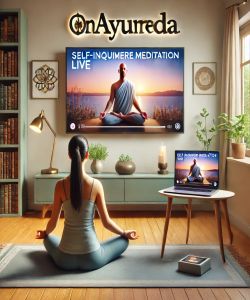
1. Overview of Self-Inquiry Meditation
Self-Inquiry Meditation constitutes a direct and uncompromising method of introspection aimed not merely at calming the mind but at a fundamental investigation into the very nature of the self. Unlike practices that focus on breath, mantras, or sensory observation as a primary anchor, this discipline employs the faculty of attention to turn inward and scrutinise the origin of the "I"-thought, the foundational sense of personal existence. It is a rigorous and often intellectually demanding path that posits the egoic structure—the composite of thoughts, memories, and identity—is not the ultimate reality of one's being. The core objective is to dismantle this constructed self through persistent questioning, thereby revealing the underlying substratum of pure consciousness, often referred to as the Self or Awareness. This is not a passive contemplation but an active, sustained investigation into the question "Who am I?". The practice demands a radical form of honesty, compelling the practitioner to discard all conceptual answers and instead seek the direct, non-conceptual experience of their true nature. It operates on the principle that liberation from suffering is achieved not by modifying external circumstances or managing psychological states, but by realising that the entity which claims to suffer is itself an illusion. This method bypasses gradualist approaches in favour of a direct assault on the root of ignorance, seeking to sever the identification with the transient mind-body complex. It is, therefore, a profound philosophical and existential undertaking, designed for those who seek not comfort, but unvarnished truth, and who are prepared to confront the very foundations of their perceived identity in pursuit of ultimate freedom and clarity. The process is one of relentless deconstruction, where every assumption about oneself is brought under intense scrutiny until only that which is irreducible and irrefutably real remains.
2. What are Self-Inquiry Meditation?
Self-Inquiry Meditation, at its core, is a direct investigative practice aimed at discerning the fundamental nature of consciousness. It is predicated on the foundational question, "Who am I?", or similar interrogative probes designed to trace the sense of individual selfhood back to its source. This form of meditation is distinct from many others in that its primary tool is not observation of phenomena (like breath or bodily sensations) but the faculty of focused attention directed upon the subject, the "I" who perceives. It is an active, cognitive process of investigation rather than a passive state of relaxation or mental quietude.
The practice can be delineated by several key characteristics:
Subject-Oriented Focus: The entire exercise is oriented towards the subject, the perceiver, rather than the objects of perception (thoughts, emotions, external stimuli). The aim is to shift attention from what is being experienced to who is experiencing it.
Deconstruction of the Ego: The method systematically deconstructs the conventional sense of self, which is understood as a composite of thoughts, beliefs, memories, and bodily identification. By repeatedly questioning the validity of this composite "I", the practitioner seeks to uncouple awareness from it.
Negation and Elimination: A principal technique within self-inquiry involves a process of negation, often termed 'Neti-Neti' ('not this, not this'). The practitioner examines each arising thought, feeling, or identity marker and concludes, "I am not this body, I am not this thought, I am not this emotion," thereby isolating consciousness from its transient contents.
Direct Path to Realisation: It is considered a direct path (jnana yoga) because it aims to cut through delusion at its root rather than purifying the mind gradually. The goal is not merely psychological improvement but a radical shift in identity from the personal to the universal.
Abiding in the Source: The ultimate aim of the inquiry is to locate the source from which the "I"-thought arises and to abide there. This "source" is posited to be pure, undifferentiated consciousness, free from the limitations of the individual persona.
3. Who Needs Self-Inquiry Meditation?
Individuals who have exhausted the utility of conventional psychological and spiritual methods and still feel a profound sense of existential incompletion. They seek not palliation but a final resolution to the fundamental questions of existence and identity.
Practitioners possessing a robust intellectual and philosophical disposition, who are not satisfied with faith-based assertions or purely experiential practices that lack a rigorous framework of inquiry. They are driven by a need for clarity and verifiable truth.
Those who intuit that the source of their suffering is not located in external events or circumstantial deficiencies but in a fundamental misidentification with a limited, personal self. They are ready to challenge the very structure of their ego.
Persons experiencing a state of deep disillusionment with the transient nature of worldly achievements and sensory pleasures. They seek a stable, enduring reality that is not subject to the fluctuations of the mind or external conditions.
Individuals with a high degree of mental fortitude and self-discipline, capable of sustaining a focused, persistent, and often arduous internal investigation without yielding to distraction, emotional turbulence, or intellectual fatigue.
Those who are prepared to confront uncomfortable truths about themselves and the nature of their identity. This path is not for the faint-hearted or for those seeking mere comfort; it demands a willingness to dismantle cherished beliefs and self-concepts.
Philosophers, thinkers, and seekers who are engaged in a serious quest for self-knowledge (gnosis) and understand that such knowledge cannot be acquired from external sources but must be realised through direct, internal discovery.
Individuals who feel an innate pull towards non-dual teachings and philosophies, such as Advaita Vedanta, and wish to move beyond theoretical understanding to the direct, lived experience of non-dual reality. They require a practical methodology to actualise this understanding.
4. Origins and Evolution of Self-Inquiry Meditation
The conceptual roots of Self-Inquiry Meditation, known in Sanskrit as Atma Vichara, are deeply embedded in the ancient philosophical traditions of India, most notably within the Upanishads and the school of Advaita Vedanta. These foundational texts, dating back millennia, articulate a profound non-dualistic worldview, positing that the individual soul (Atman) is ultimately identical with the ultimate reality (Brahman). The Upanishads repeatedly urge the seeker to turn their gaze inward to realise this truth directly, laying the philosophical groundwork for a practice centred on discerning the nature of the self. Thinkers like Adi Shankara, the great 8th-century philosopher, systematised Advaita Vedanta, emphasising the path of knowledge (Jnana Yoga) as the direct means to liberation, with inquiry into the self as its central pillar.
While the principles are ancient, the practice was crystallised and brought to prominence in the modern era largely through the life and teachings of the 20th-century sage, Sri Ramana Maharshi. Residing at the holy hill of Arunachala in Southern India, Ramana Maharshi presented Self-Inquiry not as a complex philosophical doctrine but as a simple, yet profoundly potent, practical method accessible to all. He distilled the essence of Atma Vichara into the core question, "Who am I?". He taught that by persistently tracing the "I"-thought—the root of all other thoughts—back to its source, the mind would subside, and the true Self, pure awareness, would shine forth. His teachings demystified the process, removing it from the exclusive domain of renunciates and scholars and making it a living, dynamic practice.
The evolution of Self-Inquiry in the West began as spiritual seekers and intellectuals travelled to India and encountered these teachings. As it was translated and interpreted for a Western audience, it was often contextualised within the language of psychology and secular philosophy, sometimes divested of its devotional and cultural Hindu framework. This adaptation made the practice more accessible but also risked diluting its uncompromising nature. Contemporary forms of Self-Inquiry may be integrated with mindfulness practices or psychotherapeutic modalities, representing a further evolution. However, its core—the direct, unyielding investigation into the subject of experience—remains the defining characteristic, a testament to the enduring power of its ancient origins and the clarity of its most prominent modern exponent.
5. Types of Self-Inquiry Meditation
Direct Path Inquiry (Vichara Marga): This is the classical and most renowned form, heavily popularised by Sri Ramana Maharshi. Its singular focus is the relentless investigation of the "I"-thought. The practitioner holds the question "Who am I?" not as a mantra to be repeated, but as a tool to direct attention. Whenever a thought, emotion, or sensation arises, the inquiry is immediately applied: "To whom has this thought arisen?". The answer is invariably "To me." The inquiry then turns back upon this "me" with the question, "Who am I?". The objective is to trace this root "I"-thought back to its source, causing it to subside into the heart-centre, revealing the underlying Self.
Negation Inquiry (Neti-Neti): Translating to "not this, not this," this is an analytical and eliminative approach rooted in the Upanishads. The practitioner systematically examines every object of consciousness—the physical body, the vital energies, the mind, the intellect, and all sensory experiences—and negates them as the true Self. By concluding "I am not the body; I am not the mind; I am not these feelings," the practitioner dis-identifies from all transient phenomena. This process of elimination is designed to isolate what remains when all that is objective and changing has been discarded, leaving only the subjective, unchanging witness-consciousness.
Koan-Based Inquiry: While most associated with the Rinzai school of Zen Buddhism, this method shares the core principle of using a paradoxical question to break down the conceptual mind. A koan, such as "What was your original face before your parents were born?", is a non-rational problem given by a master to a student. The student must "become" the question, holding it continuously in their awareness. The intense mental pressure generated by this impossible intellectual task is intended to exhaust the rational mind, forcing a sudden breakthrough into non-conceptual insight (satori or kensho), which is a direct experience of one's true nature, akin to the goal of Vichara Marga.
Open Awareness Inquiry: This is a more subtle and less structured form of inquiry. Instead of focusing on a single question, the practitioner rests in a state of open, objectless awareness. Whenever any phenomenon (a thought, sound, or sensation) appears in consciousness, it is used as a pointer back to the awareness that is perceiving it. The implicit inquiry is, "What is this awareness that is conscious of this object?". It is a practice of recognising the ever-present, silent backdrop of consciousness amidst the play of transient experiences, thereby shifting identification from the content of consciousness to consciousness itself.
6. Benefits of Self-Inquiry Meditation
Fundamental Shift in Identity: The primary benefit is not mere psychological relief but a radical and permanent shift in the locus of identity. It facilitates the dis-identification from the limited, problem-ridden egoic self and the realisation of one's true nature as unbounded, peaceful awareness.
Dissolution of Existential Fear: By investigating and realising the illusory nature of the personal self, the practice directly targets the root of all fear, particularly the fear of death. The realisation that one is not the perishable body-mind complex leads to an unshakable sense of security and fearlessness.
Spontaneous Reduction of Mental Agitation: As the "I"-thought, the root of all subsequent thoughts, is continuously investigated, its power diminishes. This leads to a natural and spontaneous quieting of the mind, without the need for forceful suppression of thoughts. Mental turbulence subsides as its source is undermined.
Enhanced Clarity and Discernment (Viveka): The practice cultivates a powerful capacity for discernment, the ability to distinguish the real from the unreal, the permanent from the transient. This clarity permeates all aspects of life, leading to more effective and decisive action, free from emotional confusion.
Eradication of the Root of Suffering: Self-inquiry posits that all psychological suffering arises from the mistaken belief that one is a separate, limited individual. By severing this root of misidentification, the practice aims not just to manage suffering but to eradicate it completely, leading to a state of enduring peace (Ananda).
Increased Autonomy and Inner-Directedness: The practitioner ceases to be a victim of their own thoughts and emotions. By understanding the mechanics of the mind from the standpoint of the witness, one gains profound mastery over internal states, becoming inwardly directed rather than reactive to external stimuli.
Direct Realisation of Truth: Unlike methods that provide temporary states or rely on belief, self-inquiry is a path of direct knowledge (Jnana). It offers the potential for a non-conceptual, direct, and irrefutable experience of reality, which is self-validating and transformative.
7. Core Principles and Practices of Self-Inquiry Meditation
The Primacy of the "I"-Thought: The foundational principle is that the sense of "I" or "me" is the very first and most fundamental thought from which all other thoughts, emotions, and perceptions arise. It is the linchpin of the entire egoic structure. Therefore, to resolve all mental afflictions, one must address this single root thought.
Attention as the Sole Instrument: The primary and only tool required for this practice is focused, one-pointed attention. The practice involves withdrawing attention from the objects of perception (the external world, bodily sensations, mental content) and directing it relentlessly toward the subject, the source of the "I"-thought.
Inquiry, Not Affirmation: This is a practice of questioning, not of repeating affirmations or mantras. The question "Who am I?" is not meant to be answered intellectually with a verbal or conceptual response. Its purpose is to act as a tool to turn the mind back upon itself and to hold it at its source.
The Subject-Object Dichotomy: The practice operates on the clear distinction between the subject (the seer, the witness) and the object (the seen, the experienced). The core effort is to cease identification with all objects and to remain as the pure subject, which is unchanging consciousness.
Abiding in the Source: The ultimate practice is to locate the source from which the "I"-thought emerges—often referred to as the spiritual heart or pure consciousness—and to abide there. When the inquiry is successful, the individual "I"-thought subsides into its source, resulting in a state of silent, thought-free awareness. The effort is to stabilise this state.
Effortful Stillness: Contrary to passive meditation, self-inquiry demands continuous and vigilant effort. It is the effort to keep attention fixed on the sense of self and to prevent it from wandering off and attaching to other thoughts. This effort is maintained until it becomes effortless, as one rests naturally in the Self.
Rejection of Conceptual Answers: The practitioner must develop the discipline to reject all answers that arise from the mind. Any answer, such as "I am consciousness" or "I am a soul," is still a thought, an object. The inquiry must persist beyond all concepts until a direct, non-dual realisation occurs.
Integration into Daily Life: The practice is not confined to formal sitting periods. The inquiry "To whom do these thoughts/feelings arise?" can and must be applied amidst daily activities. This transforms every moment of life into an opportunity for self-investigation, preventing the re-establishment of the ego.
8. Online Self-Inquiry Meditation
Unprecedented Accessibility: The online modality removes geographical and logistical barriers, making profound teachings on Self-Inquiry accessible to a global audience. Individuals who lack access to qualified, in-person instructors or centres can engage with this demanding practice from any location, provided they possess a stable internet connection. This democratises access to what was once a geographically constrained discipline.
Structured Guidance and Discipline: High-quality online courses and guided sessions provide the structure and discipline that are imperative for this rigorous practice. A digital format allows for the systematic delivery of foundational principles, guided inquiry sessions, and supplementary materials, ensuring the practitioner follows a coherent and methodologically sound path, which can be difficult to maintain in solitary practice.
Environment Control and Anonymity: Practising online grants the individual complete control over their environment, allowing them to create a space free from external distractions, which is conducive to deep introspection. Furthermore, the relative anonymity of online platforms can be beneficial for those who may feel self-conscious or inhibited when practising in a physical group setting, allowing for a more unreserved internal investigation.
Facilitation of Consistency: Online platforms often provide recorded sessions and on-demand content, enabling the practitioner to maintain consistency in their practice, which is paramount for progress in Self-Inquiry. The ability to revisit specific teachings or guided meditations reinforces learning and supports the practitioner in overcoming periods of doubt or stagnation, ensuring the momentum of the inquiry is not lost.
Access to a Global Sangha (Community): Digital forums, live Q&A sessions, and virtual communities connected to online courses provide a modern form of 'sangha'. This allows practitioners to connect with like-minded individuals across the globe, share challenges, and gain insights from the experiences of others on the same path. This sense of shared purpose can be a powerful motivator and a crucial support system for a path that can feel isolating.
Direct but Remote Teacher Interaction: Live-streamed sessions, webinars, and one-on-one video calls enable direct interaction with experienced teachers. This allows for the clarification of doubts and the receiving of personalised guidance, which are critical components for navigating the subtleties and potential pitfalls of Self-Inquiry, thereby bridging the gap between remote learning and traditional teacher-student dynamics.
9. Self-Inquiry Meditation Techniques
Establish a Stable Foundation: Assume a formal meditation posture, seated with an erect but not rigid spine. This physical stability and stillness are prerequisites for the mental stability required for deep inquiry. Close your eyes and allow the initial flurry of mental activity to settle for a few moments without engaging or resisting it. The body must be disciplined before the mind can be.
Isolate the "I"-Thought: Bring your full, undivided attention to the felt sense of your own existence, the inner feeling of "I" or "I am". This is not a thought about yourself, but the raw, non-verbal sensation of being. Isolate this sense from all other perceptions—bodily sensations, sounds, and the stream of thoughts. This root feeling of "I" is the object of your investigation.
Initiate the Inquiry: Mentally pose the question, "Who am I?". This question is not to be answered verbally or conceptually. Its function is to act as a sharp tool to turn your attention forcefully back onto the source of the "I"-sensation you isolated in the previous step. The question serves to interrupt the mind's habitual outward flow.
Trace Arising Thoughts to Their Source: As other thoughts inevitably arise, do not suppress them or get carried away by them. Instead, immediately challenge each thought with the inquiry: "To whom has this thought appeared?". The immediate and obvious answer will be, "To me."
Re-engage the Primary Inquiry: Upon the recognition "To me," immediately pivot your attention back to the core investigation by asking again, with renewed intensity, "Who is this 'I' to whom the thought has appeared?". This action relentlessly pulls the attention away from the content of the mind (the objects) and back to the subject.
Persist and Deepen the Focus: Repeat this cycle with unwavering persistence. Every distraction becomes fuel for the inquiry. The entire technique consists of refusing to grant reality to any arising thought and instead using its appearance as a trigger to investigate its source. This continuous effort to hold attention at the source of the "I"-thought will gradually cause the mind's activity to subside.
Abide in the Resultant Stillness: As the "I"-thought is held under scrutiny, it begins to lose its power and will eventually, if momentarily, subside back into its source. This results in a gap—a moment of pure, thought-free, silent awareness. The final stage of the technique is to make no effort other than to remain in this stillness, to abide as this awareness.
10. Self-Inquiry Meditation for Adults
Self-Inquiry Meditation is a discipline exceptionally suited to the adult intellect and emotional maturity. It presupposes a level of life experience that often leads to fundamental questions about identity, purpose, and the nature of suffering—questions that may not hold the same urgency for the younger mind. Adulthood frequently brings an encounter with the limitations of the ego and the insufficiencies of worldly pursuits, creating fertile ground for a practice that directly confronts these structures. The adult practitioner is typically better equipped to grasp the abstract principles underpinning the inquiry and possesses the cognitive discipline necessary to sustain a focused, internal investigation. Unlike practices that may rely on pliability or uncritical belief, Self-Inquiry demands intellectual rigour, self-honesty, and the courage to dismantle long-held personal narratives. It is a path for those who are no longer content with received wisdom and seek to verify truth through their own direct experience. The method requires one to stand apart from their own thoughts and emotions, a capacity for metacognition that develops and strengthens with age. It is, therefore, not a soothing balm for life's difficulties but a scalpel for dissecting the very entity that experiences them. This uncompromising approach resonates with adults who are weary of superficial solutions and are prepared to undertake the serious, and at times arduous, work of genuine self-discovery. The practice provides a structured method for channelling the existential unrest that can characterise mature adulthood into a productive and ultimately liberating pursuit, transforming a potential crisis of meaning into an opportunity for profound realisation. It is the definitive adult spiritual practice: direct, logical, and transformative.
11. Total Duration of Online Self-Inquiry Meditation
The optimal and standard duration for a single, focused session of online Self-Inquiry Meditation is precisely 1 hr. This timeframe is not arbitrary; it is structured to facilitate a complete and effective practice cycle. A shorter duration often proves insufficient for the practitioner to move beyond the initial stages of mental distraction and physical restlessness, which are prerequisites for achieving the depth of concentration required for genuine inquiry. The mind requires a period to settle before it can be effectively turned inward. Conversely, extending a single session significantly beyond this duration without substantial prior training can lead to mental fatigue, torpor, or a loss of investigative sharpness, rendering the practice counterproductive. The 1 hr session allows for a brief preparatory phase of settling and stabilisation, followed by a sustained and rigorous period of active inquiry lasting approximately forty to fifty minutes. This core period is long enough to build investigative momentum and challenge the habitual patterns of the mind. The final portion of the hour is essential for a gradual return to normal awareness, allowing the practitioner to integrate any insights and to transition smoothly from a state of deep introspection back to engagement with external activities. This structure ensures that the practice is both deep enough to be transformative and contained enough to be sustainable as a regular, disciplined part of one's daily or weekly routine. Therefore, the 1 hr duration is established as the benchmark for a complete, impactful, and professional online guided session, balancing rigour with practicality.
12. Things to Consider with Self-Inquiry Meditation
Engaging with Self-Inquiry Meditation demands a serious and sober assessment of one's psychological readiness and philosophical orientation. This is not a palliative technique for stress reduction; it is a radical deconstruction of the self. Prospective practitioners must consider that the inquiry can precipitate profound existential crises as foundational beliefs about identity and reality are systematically dismantled. It is imperative to have a robust psychological constitution or adequate support structures in place to navigate the potential emergence of suppressed emotional content or intense feelings of disorientation and groundlessness. Furthermore, one must be prepared for a path that offers no immediate consolations. The process can be arduous, dry, and intellectually frustrating, demanding a high degree of perseverance in the face of apparent non-progress. It requires an unshakeable commitment to truth above comfort. One should also consider the source of their instruction. The purity and clarity of this teaching can be easily distorted; therefore, vetting the lineage and authenticity of a guide or course is not merely advisable but essential. Finally, the practitioner must understand that this is not a part-time hobby. To be effective, the spirit of inquiry must eventually permeate all aspects of daily life, transforming it into a continuous, moment-to-moment meditation. A failure to appreciate these considerations can lead to disillusionment, psychological distress, or the trivialisation of a profoundly transformative discipline into a mere intellectual exercise. This path is a total commitment.
13. Effectiveness of Self-Inquiry Meditation
The effectiveness of Self-Inquiry Meditation is absolute and unparalleled for its specific objective: the direct and permanent realisation of one's true nature as pure consciousness. Its potency lies in its directness. Unlike gradualist paths that aim to purify the mind or accumulate positive states, Self-Inquiry strikes at the very root of ignorance and suffering—the mistaken identification with the egoic self. Its effectiveness is therefore not measured in terms of transient feelings of peace or happiness, but in the fundamental and irreversible shift of identity that it can precipitate. The method is effective precisely because it does not attempt to improve or fix the ego, but to see it for the illusion that it is. This renders all the problems of the ego null and void. The practice is a process of relentless subtraction, not addition. Its efficacy is directly proportional to the earnestness, sincerity, and persistence of the practitioner. For a practitioner who is fully committed and applies the inquiry with unwavering rigour, the method is a guaranteed means to cut through the veils of illusion. However, its effectiveness is contingent upon this total commitment. For the dabbler or the intellectually curious who lack the requisite courage for radical self-honesty, the practice will remain a mere philosophical concept, yielding little to no transformative fruit. When undertaken with the correct understanding and unyielding tenacity, its effectiveness is not a matter of probability but of certainty, leading to the ultimate cessation of psychological suffering and the discovery of an unshakeable, innate peace that is one's own being.
14. Preferred Cautions During Self-Inquiry Meditation
It is imperative to approach the practice of Self-Inquiry Meditation with a disciplined and cautious mindset, as its potent nature can precipitate significant psychological upheaval if engaged with carelessly. The primary caution is against mistaking the practice for an intellectual exercise. The inquiry "Who am I?" is not a philosophical riddle to be solved by the mind; any conceptual answer is, by definition, incorrect and must be discarded. Allowing the mind to spin theories is a diversion that completely subverts the practice. Secondly, one must be vigilant against the premature assumption of attainment. Experiencing moments of stillness or insight does not equate to full realisation. The ego is exceptionally subtle and can appropriate spiritual experiences to reinforce its own sense of specialness, a pitfall that must be guarded against with rigorous honesty. Furthermore, practitioners must be cautioned against forceful suppression of thoughts or emotions. The inquiry is not about creating a blank mind but about investigating the source of mental phenomena. Forceful suppression leads to internal conflict and tension, not clarity. It is also crucial to avoid undertaking this practice from a state of severe emotional instability or psychological crisis without the guidance of a qualified teacher who is also versed in psychological support. The deconstruction of the ego can exacerbate pre-existing conditions if not properly containerised. Finally, a practitioner must guard against nihilism. Realising the illusory nature of the ego is not a descent into meaninglessness but an opening to a more profound reality. Misinterpreting the teachings can lead to a state of apathy or disconnection, which is a perversion of the practice's ultimate aim of revealing the fullness of Being.
15. Self-Inquiry Meditation Course Outline
Module 1: Foundational Principles of Non-Duality and Inquiry
Introduction to Advaita Vedanta: The concepts of Atman and Brahman.
Delineating the Subject and Object: Understanding the Seer and the Seen.
The Nature of the Ego: Defining the "I"-thought as the root of the mind.
Distinguishing Self-Inquiry from other meditation techniques.
Module 2: The Core Technique of Atma Vichara
Establishing a Posture and Stable Practice Environment.
The Mechanics of the "Who Am I?" Inquiry.
Practical Instruction: Tracing thoughts back to their source.
Guided Session: Initial practice in holding the inquiry.
Module 3: Overcoming Obstacles and Deepening the Practice
Managing Distraction, Drowsiness (Tamas), and Restlessness (Rajas).
The Role of 'Neti-Neti' (Not this, not this) as a supportive practice.
Navigating Emotional Upheaval and Psychological Resistance.
The Fallacy of Conceptual Answers: Moving beyond the intellect.
Module 4: The Role of the Heart and Surrender
Understanding the Spiritual Heart as the Seat of the Self.
The Complementary Path of Surrender (Bhakti): Letting go of the "doer".
Deepening Practice: Moving from effortful inquiry to effortless abiding.
Guided Session: Focusing on the felt sense of the Heart-centre.
Module 5: Integration and Living the Inquiry
Applying Self-Inquiry in Daily Life: Transforming activity into practice.
The Nature of Realisation: Differentiating between temporary states and permanent shifts.
Living as Awareness: The practical implications of non-dual understanding.
Concluding Q&A Session and establishing a sustained personal practice.
16. Detailed Objectives with Timeline of Self-Inquiry Meditation
Weeks 1-2: Establishment of Foundational Knowledge and Practice Stability.
Objective: To achieve a firm intellectual grasp of the core principles of Self-Inquiry, including the distinction between the Self and the ego. The practitioner must successfully establish a consistent daily sitting practice, mastering the physical posture and the initial technique of turning attention inward.
Timeline Benchmark: By the end of this period, the practitioner must be able to sit for a minimum designated duration without significant physical discomfort and can consistently initiate the "Who am I?" inquiry without conceptual confusion.
Weeks 3-4: Development of Investigative Potency.
Objective: To move beyond rote questioning to a potent, dynamic investigation. The practitioner must learn to use every arising thought as a trigger to re-engage the primary inquiry, thereby cutting off the mind's momentum.
Timeline Benchmark: The practitioner will demonstrate the ability to remain focused on the inquiry for sustained periods and can proficiently challenge and dismiss distracting thoughts by tracing them to their source, the "I"-thought.
Months 2-3: Navigating and Transcending Psychological Obstacles.
Objective: To develop the fortitude to face and move through the inevitable psychological resistance, such as doubt, fear, and emotional release, that arises when the ego is challenged.
Timeline Benchmark: The practitioner no longer identifies with or is derailed by emotional turbulence during practice, instead viewing such phenomena as objects for investigation. A palpable sense of detachment from mental content begins to stabilise.
Months 4-6: Deepening into Abiding Stillness.
Objective: To shift from effortful inquiry to periods of effortless, silent abiding in the source of the "I"-thought. The practice becomes less about active questioning and more about resting in the background of pure awareness.
Timeline Benchmark: The practitioner regularly experiences moments or periods of thought-free silence (the 'gap' between thoughts) during formal sessions and begins to recognise this underlying stillness even amidst daily activity.
Month 6 and Beyond: Integration and Stabilisation.
Objective: To integrate the insights from formal practice into all aspects of daily life, dismantling the distinction between meditation and life. The goal is the stabilisation of the recognition of one's true nature as unchanging awareness.
Timeline Benchmark: The sense of being a separate "doer" diminishes. Actions become more spontaneous and harmonious. The background peace and clarity realised in meditation remain as a constant, unshakable foundation.
17. Requirements for Taking Online Self-Inquiry Meditation
Unyielding Personal Commitment: The foremost requirement is a non-negotiable commitment to the practice. The participant must be prepared to dedicate consistent, disciplined time for both formal sessions and self-study, and possess the resolve to persist through periods of difficulty and apparent lack of progress.
Reliable Technological Infrastructure: The participant must possess a stable, high-speed internet connection, a functional computer or tablet with a camera and microphone, and proficiency in using the specified online platforms (e.g., video conferencing software, course portals). Technical failures cannot be an excuse for inconsistent participation.
A Dedicated and Sacrosanct Practice Space: It is mandatory to designate a physical space that is private, quiet, and free from all potential interruptions during online sessions. This space must be treated as a formal meditation environment, respected by the practitioner and any other household members.
Intellectual and Psychological Readiness: The candidate must possess the cognitive capacity to understand abstract, non-dual concepts and the psychological robustness to confront challenging internal states. This is not a therapeutic intervention; a baseline of psychological stability is a firm prerequisite.
Absolute Self-Honesty and Openness to Instruction: The practitioner is required to approach the teachings with an attitude of rigorous self-honesty, willing to examine and discard cherished beliefs. A resistance to core instructions or a tendency towards intellectual debate over sincere practice is unacceptable.
Discipline of Confidentiality: When participating in group sessions or forums, an absolute commitment to the confidentiality of all personal shares and interactions is required. This fosters a secure container for all participants to engage in vulnerable and honest inquiry.
Willingness to Disconnect: During the designated practice time, the practitioner must commit to disconnecting completely from all other digital distractions. This includes silencing mobile phones, closing unrelated browser tabs, and disabling all notifications. The online session must be treated with the same sanctity as an in-person retreat.
18. Things to Keep in Mind Before Starting Online Self-Inquiry Meditation
Before embarking on the path of Online Self-Inquiry Meditation, it is imperative to conduct a rigorous self-assessment and understand the profound nature of the commitment. This is not a casual self-help program to be consumed passively. You must recognise that the online format, while convenient, demands an even greater degree of self-discipline and personal responsibility than in-person instruction. The absence of a physical teacher and group environment means the onus is entirely on you to create a sacred space, to eliminate distractions, and to hold yourself accountable for consistent practice. Be prepared for the inherent limitations of the digital medium; subtle energetic transmissions and nuanced, in-person feedback are necessarily absent. You must therefore cultivate immense trust in the process itself and in the verbal instructions provided. Critically evaluate your motivation: if you are seeking mere relaxation or a quick fix for psychological distress, this path is inappropriate and may even be counterproductive. The inquiry is designed to dismantle the ego, not to comfort it, a process that can be intensely disorienting. Ensure you have a stable life situation and, if necessary, access to psychological support independent of the course. The journey is internal and can feel profoundly isolating at times. You must be prepared to stand alone with your own mind, armed only with the inquiry. This is a commitment to a fundamental re-ordering of your reality, and it must be approached with the gravity and sobriety that such a profound undertaking commands.
19. Qualifications Required to Perform Self-Inquiry Meditation
The authority to guide others in Self-Inquiry Meditation is not conferred by conventional academic certification or institutional accreditation. It is a qualification born of direct, profound, and stable realisation, authenticated by a recognised lineage. The primary and non-negotiable qualification is that the guide or teacher must themselves have successfully trodden the path to its conclusion. This implies they are firmly established in the Self, living from a place of non-dual understanding rather than merely possessing a theoretical knowledge of it. Their state of being is the true qualification.
However, for a practitioner to discern such a guide, certain observable markers are essential:
Deep Grounding in a Recognised Lineage: A qualified guide will almost invariably be connected to an established, authentic spiritual lineage, such as that stemming from Sri Ramana Maharshi or other recognised masters of Advaita Vedanta. They should be able to articulate their connection to this stream of teaching clearly.
Clarity and Precision in Communication: They must demonstrate an ability to communicate the subtle and often paradoxical principles of non-duality with exceptional clarity, precision, and consistency, avoiding jargon, ambiguity, or self-contradiction.
Personal Integrity and Egolessness: The teacher's conduct must be impeccable and congruent with their teachings. They should exhibit qualities of humility, compassion, and a palpable absence of personal ego, self-interest, or the need for adoration. Their life must be a demonstration of the teachings.
Ability to Point, Not Prescribe: A true guide does not provide answers but skilfully points the student back to their own direct experience. They are adept at dismantling the student's conceptual frameworks and redirecting their attention to the inquiry itself, rather than fostering dependence.
While supplementary knowledge in comparative religion, philosophy, or even psychology can be beneficial for communication, these are strictly secondary. The core qualification is an unshakeable and lived realisation of the Self, without which any attempt to teach Self-Inquiry is illegitimate and potentially harmful.
20. Online Vs Offline/Onsite Self-Inquiry Meditation
Online The online modality for Self-Inquiry Meditation offers unparalleled accessibility and convenience, removing all geographical constraints. Practitioners can access high-calibre instruction from globally recognised teachers without the need for travel or relocation. This format facilitates a high degree of personal control over the practice environment, allowing an individual to create a perfectly silent and private space tailored to their specific needs. Online courses often provide a wealth of recorded materials, enabling students to revisit complex teachings and guided sessions at their own pace, thereby reinforcing the learning process. The inherent anonymity can also be an advantage, permitting a more uninhibited and honest internal inquiry without the social pressures of a physical group. However, this modality demands immense self-discipline. The practitioner is solely responsible for maintaining focus and resisting the myriad digital and domestic distractions. Furthermore, it lacks the subtle but powerful energetic field (satsang) generated by a group practising in physical proximity with a realised teacher, and the opportunity for nuanced, in-the-moment personal feedback is significantly limited.
Offline/Onsite The traditional offline or onsite approach, typically in a retreat or ashram setting, provides a totally immersive and contained environment, which is its primary strength. Distractions are systematically removed, and the entire schedule is oriented towards supporting deep introspection. The physical presence of a qualified teacher is a critical factor; it allows for direct, personal guidance, subtle energetic transmission, and the immediate clarification of doubts in a way that online communication cannot fully replicate. The collective energy of a group (sangha) practising together creates a powerful, supportive field that can help individuals sustain their efforts through difficult periods. This immersive context accelerates the deepening of the practice. The disadvantages, however, are significant. Onsite instruction is geographically exclusive, often requiring substantial investment in travel and time away from personal and professional responsibilities. It is inherently less accessible and flexible. The presence of others can also be a source of distraction for some, and the rigid structure of a retreat may not suit every temperament.
21. FAQs About Online Self-Inquiry Meditation
Question 1. Is online self-inquiry as effective as in-person practice? Answer: Its effectiveness is contingent upon the practitioner's discipline. While lacking the physical presence of a teacher, the core methodology is identical. For a self-motivated individual, it can be equally transformative.
Question 2. What technology is absolutely necessary? Answer: A reliable internet connection, a functioning computer or tablet with a webcam and microphone, and the ability to use standard video-conferencing software.
Question 3. How do I deal with technical issues during a live session? Answer: Prepare in advance by testing your setup. If issues arise, follow the provider's pre-stated protocol discreetly. The primary focus must remain on the practice, not the technology.
Question 4. How can I ensure my practice space at home is suitable? Answer: Choose a room where you can guarantee absolute privacy and silence. Inform others in the household that you are not to be disturbed under any circumstances. Remove all clutter and digital devices not essential for the session.
Question 5. What if I feel strong emotions or anxiety during an online session? Answer: This is a normal part of the process. The technique is to apply the inquiry to the emotion: "To whom does this anxiety appear?". Do not resist the feeling; use it as fuel for the inquiry.
Question 6. How do I get personalised feedback from the teacher? Answer: Utilise the designated Q&A portions of live sessions. Formulate your questions clearly and concisely. Some programmes may offer separate one-on-one video consultations.
Question 7. Is it possible to feel a connection with the teacher and group online? Answer: Yes, a sense of community and connection can be fostered through shared focus and respectful interaction in live sessions and dedicated forums, though it differs from in-person connection.
Question 8. Without a teacher present, how do I know if I am doing the inquiry correctly? Answer: The primary indicator is that your attention is being consistently drawn away from the objects of thought and back towards the subject ("I"). The aim is to weaken the grip of thoughts, not to produce a specific experience.
Question 9. Can I practise with my camera off? Answer: This depends on the specific rules of the course. Generally, having the camera on is required to foster accountability and a sense of shared presence.
Question 10. How important is a consistent schedule for online practice? Answer: It is paramount. The discipline of a fixed schedule replicates the structure of an in-person retreat and is essential for building momentum.
Question 11. What is the main challenge of online self-inquiry? Answer: Self-discipline. The practitioner must single-handedly overcome the temptations of domestic and digital distractions.
Question 12. Can I combine online self-inquiry with other meditation practices? Answer: It is generally advised to focus exclusively on self-inquiry to avoid methodological confusion, at least initially. Consult your teacher for specific guidance.
Question 13. How is progress measured in this practice? Answer: Progress is measured by a decreasing identification with thoughts and emotions, and a growing stability in the underlying sense of peaceful awareness, not by accumulating special experiences.
Question 14. Is there a risk of psychological harm from practising alone online? Answer: If you have a history of severe mental illness, this practice should only be undertaken with professional guidance. For a stable individual, the risk is minimal if instructions are followed precisely.
Question 15. What if I fall asleep during an online session? Answer: This indicates either physical fatigue or a subtle mental resistance known as 'tamas'. Ensure you are well-rested. If it persists, practise with a more alert posture or slightly open eyes.
Question 16. How long before I see results? Answer: This question arises from the ego. The practice is about inquiring into the one who seeks results. Abandon the timeline and focus on the integrity of the inquiry itself.
22. Conclusion About Self-Inquiry Meditation
In conclusion, Self-Inquiry Meditation stands apart as a discipline of supreme rigour and profound consequence. It is not a method among many but a direct, unyielding assault on the fundamental illusion of the separate self, which is the singular source of all human psychological suffering. Its methodology—the persistent, focused investigation of the "I"-thought—is uncompromising, demanding a practitioner's total commitment, intellectual honesty, and unshakeable courage. This is not a path for the dilettante or for one seeking mere palliatives for life's discomforts. It is a radical and definitive undertaking for those who are compelled by a need for ultimate truth over provisional comfort. The aim is nothing less than the complete and permanent dissolution of egoic identity and the corresponding realisation of one's true nature as timeless, boundless, and inherently peaceful awareness. While the journey can be arduous and may involve confronting the deepest strata of one's existential fears and assumptions, its terminus is freedom itself. Whether practised in a traditional setting or through the disciplined application of modern online modalities, the essential power of the inquiry remains unchanged. It offers a final answer to the most fundamental question of existence, an answer found not in concept or belief, but in the silent, irrefutable authority of direct experience. Self-Inquiry is, therefore, the ultimate expression of the human quest for self-knowledge, a path that begins and ends with the Self.