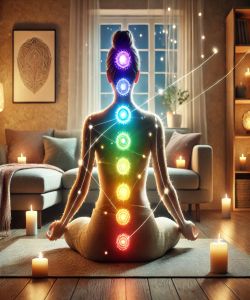
1. Overview of Seven Chakra Meditation
Seven Chakra Meditation is a rigorous and systematic discipline rooted in ancient esoteric traditions, engineered to diagnose, cleanse, and harmonise the principal energetic centres within the human subtle body. This practice is not a passive relaxation technique but an active engagement with the body's vital life force, or prana. It operates on the foundational premise that seven primary chakras, arranged vertically along the spinal column from the perineum to the crown of the head, govern the entirety of our physiological, emotional, mental, and spiritual well-being. When these vortices of energy are obstructed, imbalanced, or functioning sub-optimally, the consequences manifest as tangible distress, disease, and psychological turmoil. The meditation, therefore, serves as a powerful modality for systemic recalibration. Through focused attention, specific visualisations, breath control, and often the use of sound vibrations known as bija mantras, the practitioner methodically addresses each chakra in turn. The objective is to dissolve energetic blockages, regulate the flow of prana, and ultimately achieve a state of integrated equilibrium. This alignment facilitates not merely a transient sense of peace, but a profound and enduring state of vitality, clarity, and heightened consciousness. It is a demanding internal practice that commands discipline and consistency, promising a fundamental transformation of one's entire energetic architecture and, by extension, one's experience of reality itself. It is the conscious and deliberate mastery of the self at its most fundamental energetic level, moving beyond symptomatic relief to address the core root of systemic imbalance.
2. What are Seven Chakra Meditation?
Seven Chakra Meditation is a specialised form of contemplative practice focused exclusively on the energetic anatomy of the subtle body. It is a structured methodology designed to purify, balance, and activate the seven primary chakras. Unlike general mindfulness, which cultivates non-judgemental awareness of the present moment, this discipline is targeted and interventional. It requires the practitioner to direct their consciousness to specific locations along the spine and to engage in prescribed mental and somatic exercises to influence the state of each energy centre. These chakras are understood not as physical structures but as spinning vortices of bioenergetic activity that interface with the physical body through the endocrine and nervous systems. An imbalance in any chakra is believed to precipitate corresponding physical, emotional, or psychological dysfunction. The practice, therefore, is a form of energetic hygiene and maintenance.
The seven primary chakras addressed are:
- Muladhara (Root Chakra): Located at the base of the spine, it governs survival instincts, security, and our fundamental connection to the physical world.
- Svadhisthana (Sacral Chakra): Situated in the lower abdomen, it is the centre of creativity, emotion, and sexuality.
- Manipura (Solar Plexus Chakra): Found in the upper abdomen, it is the seat of personal power, self-esteem, and metabolic control.
- Anahata (Heart Chakra): Located in the centre of the chest, it presides over love, compassion, and interpersonal connection.
- Vishuddha (Throat Chakra): Situated at the throat, it governs communication, self-expression, and authenticity.
- Ajna (Third Eye Chakra): Located between the eyebrows, it is the centre of intuition, insight, and psychic perception.
- Sahasrara (Crown Chakra): Situated at the very top of the head, it represents our connection to universal consciousness, wisdom, and spiritual enlightenment.
The meditation methodically progresses through these centres, utilising techniques to restore their optimal spin, colour, and vibrational frequency.
3. Who Needs Seven Chakra Meditation?
- Individuals exhibiting symptoms of pronounced energetic stagnation. This includes persistent lethargy, a lack of creative impulse, and a pervasive sense of being 'stuck' in life patterns, indicating blockages within the lower chakras that govern vitality and forward momentum.
- Professionals in high-stress environments who contend with cognitive fog, decision-making paralysis, or a compromised ability to assert themselves. Such challenges are frequently linked to imbalances in the Solar Plexus and Third Eye chakras, which govern personal power and clarity of insight.
- Those experiencing significant emotional dysregulation. This encompasses uncontrolled emotional outbursts, an inability to form meaningful connections, or a deep-seated sense of alienation, pointing towards dysfunction within the Sacral and Heart chakras.
- Individuals struggling with authentic self-expression and communication. A blockage in the Throat Chakra manifests as fear of public speaking, an inability to voice one's needs and truths, or a tendency towards dishonest or manipulative communication.
- Persons grappling with psychosomatic conditions, where physical ailments lack a clear medical diagnosis and are suspected to originate from unresolved emotional or psychological trauma stored within the body's energy field.
- Practitioners of other spiritual or self-development disciplines who have reached a plateau. Seven Chakra Meditation provides a foundational framework to clear underlying energetic debris, enabling deeper access to higher states of consciousness.
- Those feeling a profound sense of disconnection from their purpose or a higher spiritual reality. This existential distress often signals an underactive Crown Chakra, and the practice is required to re-establish this vital spiritual link.
- Individuals seeking to move beyond superficial behavioural changes to address the root energetic imprints that dictate their thoughts, feelings, and actions, thereby achieving a more fundamental and lasting personal transformation.
4. Origins and Evolution of Seven Chakra Meditation
The conceptual framework of the chakra system, upon which Seven Chakra Meditation is built, has its origins in the ancient spiritual traditions of India. The earliest mentions are not explicit, but are alluded to in the sacred Vedic texts, particularly the Upanishads, composed between 800 and 500 BCE. These texts discuss prana (vital energy) and the nadis (energetic channels) through which it flows, laying the philosophical groundwork for the later, more systematised chakra models. The system was more formally articulated within the traditions of Tantra, which flourished from the 5th century CE onwards. Texts such as the Sat-Cakra-Nirupana and the Padaka-Pancaka provided detailed descriptions of the chakras, their locations, associated elements, deities, and bija mantras, solidifying them as central to certain yogic and meditative practices.
Historically, this knowledge was esoteric, guarded within specific spiritual lineages and transmitted directly from guru to disciple. It was not a practice for the masses but a sophisticated tool for spiritual adepts aiming for liberation (moksha). The objective was to awaken the dormant Kundalini energy at the base of the spine and guide it upwards through each chakra, culminating in a state of union with the divine at the Crown Chakra. The focus was unequivocally spiritual, rather than therapeutic in the modern sense.
The evolution into its contemporary form began in the early 20th century with the translation of key Sanskrit texts into English, most notably by Sir John Woodroffe (under the pseudonym Arthur Avalon). His work, The Serpent Power, introduced the chakra system to a Western audience. However, it was the subsequent rise of the New Age movement and humanistic psychology that stripped the system of much of its complex religious context. The chakras were reinterpreted through a psychological lens, associating them with developmental stages, emotional states, and physical health. This Westernised adaptation shifted the focus from spiritual liberation to personal growth, healing, and holistic well-being. Consequently, modern Seven Chakra Meditation is a hybrid practice, blending ancient energetic principles with contemporary therapeutic goals, making it accessible but fundamentally different from its original Tantric form.
5. Types of Seven Chakra Meditation
The practice of Seven Chakra Meditation, whilst unified in its core objective of energetic alignment, is executed through several distinct methodologies. The choice of method depends on the practitioner's disposition, training, and specific intent.
- Visualisation-Based Meditation: This is the most prevalent form, requiring the practitioner to focus their mind's eye on the physical location of each chakra. The process involves visualising a spinning wheel or orb of light, concentrating on the chakra's traditionally associated colour (e.g., red for the Root, orange for the Sacral). The intensity, clarity, and stability of the visualisation are used as levers to cleanse and energise the centre.
- Bija Mantra Meditation: This auditory technique utilises the power of sound vibration. Each of the seven chakras has a corresponding one-syllable seed sound, or bija mantra (e.g., 'LAM' for the Root, 'VAM' for the Sacral). The practitioner chants these mantras aloud or internally, allowing the specific vibrational frequency of each sound to resonate with and recalibrate its corresponding energy centre. This is considered a highly direct and potent method.
- Mudra and Asana-Based Meditation: This somatic approach integrates physical postures (asanas) and hand gestures (mudras) with focused awareness on the chakras. Specific yoga poses are designed to stimulate the physical region associated with a chakra, whilst hand mudras are used to direct the flow of prana. This method physically engages the body to facilitate energetic release and activation.
- Guided Journey Meditation: In this type, a facilitator or recording leads the practitioner through a structured narrative. The guidance provides detailed instructions for relaxation, breathing, and directing attention to each chakra, often incorporating elements of visualisation and affirmation. This is particularly effective for novices who require external structure to maintain focus.
- Crystal-Assisted Meditation: This method incorporates the use of specific crystals or gemstones that are believed to have vibrational frequencies corresponding to each chakra. The crystals are placed on the body over the relevant chakra locations during meditation to amplify the practitioner's intention and assist in clearing energetic blockages.
6. Benefits of Seven Chakra Meditation
- Enhanced Emotional Regulation: Systematically addresses the Sacral and Heart chakras, dismantling energetic blockages related to past trauma and fostering a state of emotional equilibrium, reducing reactivity and promoting compassion.
- Increased Vitality and Physical Stamina: By clearing and activating the Root and Solar Plexus chakras, the practice optimises the body's foundational energy reserves and metabolic functions, resulting in a tangible increase in physical energy and resilience.
- Improved Cognitive Function and Clarity: The purification of the Throat and Third Eye chakras directly impacts mental processes. It dispels cognitive fog, enhances focus, sharpens intuition, and facilitates clearer, more decisive thinking.
- Strengthened Personal Power and Self-Esteem: Balancing the Solar Plexus chakra (Manipura) is central to cultivating a robust sense of self. This leads to increased confidence, assertiveness, and the ability to establish and maintain healthy personal boundaries.
- Facilitated Authentic Self-Expression: An open Throat Chakra (Vishuddha) empowers individuals to communicate their truth with clarity, conviction, and integrity, overcoming fear of judgement and fostering more honest and effective interpersonal dynamics.
- Deepened Spiritual Connection: Activating the Crown Chakra (Sahasrara) facilitates access to higher states of consciousness, fostering a sense of purpose, connection to a universal intelligence, and a more profound understanding of one's place in the cosmos.
- Reduction in Psychosomatic Symptoms: By releasing stored energetic imprints of stress and emotional pain from the subtle body, the practice can lead to a significant alleviation of physical symptoms that lack a clear medical cause.
- Holistic Systemic Alignment: The primary benefit is not isolated but systemic. The practice harmonises the entire mind-body-spirit complex, creating a synergistic state where all aspects of the self function in a coherent and integrated manner, leading to profound overall well-being.
7. Core Principles and Practices of Seven Chakra Meditation
- Principle of Energetic Anatomy: The foundational principle is the acknowledgement of the subtle body, an energetic matrix coexisting with the physical form. This meditation operates directly upon this matrix, specifically targeting the seven primary chakras as command centres of vital life force (prana).
- Practice of Focused Intention (Sankalpa): The practitioner must begin with a clear, unwavering intention. This is not a passive observation but a directive from the will. The mind is actively used as a tool to direct energy, cleanse blockages, and restore balance within each specific chakra.
- Principle of Correspondence: This holds that the state of each chakra directly corresponds to specific physiological, emotional, and psychological functions. A blockage in the Throat Chakra, for instance, corresponds to an inability to communicate effectively. The practice is thus a direct intervention based on these correspondences.
- Practice of Sequential Progression: The meditation must be conducted in a structured, sequential manner, typically ascending from the Root Chakra (Muladhara) to the Crown Chakra (Sahasrara). This systematic progression ensures a stable and grounded foundation before activating the higher, more subtle centres, preventing energetic instability.
- Principle of Vibration and Resonance: Every chakra possesses a unique optimal vibrational frequency. The practice utilises tools that create resonance with these frequencies. This is not metaphorical; it is a core operational mechanic of the discipline.
- Practice of Sensory Engagement (Visualisation and Sound): The practitioner must actively engage the senses in an internal capacity. This involves vivid visualisation of the chakra's location, colour, and spin, and/or the internal or external vocalisation of its specific bija mantra (seed sound) to stimulate it through sonic vibration.
- Principle of Integration: The work done during meditation is not isolated. The final phase of any session must be dedicated to integrating the newly balanced energy throughout the entire system, allowing the recalibrated chakras to function cohesively as a unified whole.
- Practice of Disciplined Consistency: Sporadic engagement yields negligible results. The core principles can only be effectively applied through regular, disciplined practice. It is the cumulative effect of consistent application that produces profound and lasting transformation in the energetic system.
8. Online Seven Chakra Meditation
- Unparalleled Accessibility and Autonomy: The online modality removes all geographical and logistical barriers. It grants practitioners absolute autonomy over their schedule, enabling the integration of this demanding practice into any lifestyle without the constraints of a physical studio's timetable. This fosters self-reliance and personal discipline, which are cornerstones of the practice itself.
- Controlled and Personalised Environment: Practitioners can create a completely controlled and private sanctuary for their meditation, free from the potential distractions or perceived judgements of a group setting. This privacy is paramount for deep introspective work, allowing individuals to engage with sensitive emotional and energetic material without inhibition.
- Access to Elite Global Instructors: The digital platform transcends local limitations, providing access to highly specialised and authoritative instructors from anywhere in the world. A practitioner is no longer limited by their immediate vicinity but can seek out guidance from a lineage or teacher that resonates most profoundly with their personal objectives.
- Resource Repetition and Reinforcement: Online courses provide enduring access to materials. Guided meditations, instructional videos, and theoretical lectures can be reviewed repeatedly. This capacity for repetition is critical for mastering the nuanced techniques of visualisation and mantra, allowing the practitioner to deepen their understanding and execution at their own pace.
- Cost and Time Efficiency: By eliminating the need for travel and the associated overheads of a physical location, the online format presents a more efficient deployment of personal resources. The time saved from commuting is substantial and can be reinvested directly into the practice itself, increasing its overall effectiveness.
- Structured and Progressive Learning Modules: Professionally designed online courses offer a meticulously structured curriculum. They break down complex concepts and techniques into digestible modules, ensuring a systematic and logical progression from foundational principles to advanced applications. This structured approach prevents overwhelm and builds a solid, coherent understanding of the chakra system and its practical manipulation.
9. Seven Chakra Meditation Techniques
- Preparation and Grounding: Assume a comfortable but erect seated posture, spine straight. Close your eyes. Take several deep, diaphragmatic breaths to centre yourself and signal the transition from external activity to internal focus. Establish a clear intention (sankalpa) for the session, such as balance, clarity, or healing.
- Root Chakra (Muladhara) Activation: Direct your awareness to the base of your spine, the perineum. Visualise a vibrant, spinning red orb of energy at this location. Feel a connection extending from this point deep into the earth, establishing a sense of profound security and stability. Internally or aloud, chant the bija mantra 'LAM' repeatedly, feeling the vibration resonate in this area.
- Sacral Chakra (Svadhisthana) Activation: Move your focus up to the lower abdomen, just below the navel. Visualise a bright, fluid orange wheel of energy. Allow feelings of creativity, flow, and healthy emotional expression to surface. Chant the mantra 'VAM', letting the sound wash over this region.
- Solar Plexus Chakra (Manipura) Activation: Shift your attention to the upper abdomen, above the navel and below the ribcage. Visualise a brilliant, sun-like yellow energy centre, radiating power and confidence. Affirm your personal strength and will. Chant the mantra 'RAM', feeling a sense of inner fire and purpose.
- Heart Chakra (Anahata) Activation: Bring your focus to the centre of your chest. Visualise a luminous, expanding green sphere of energy. Cultivate feelings of unconditional love, compassion, and forgiveness for yourself and others. Chant the mantra 'YAM', allowing the vibration to open your heart centre.
- Throat Chakra (Vishuddha) Activation: Move your awareness to the hollow of your throat. Visualise a clear, sky-blue spinning vortex. Focus on the power of authentic communication and self-expression. Chant the mantra 'HAM', feeling the area open and clear.
- Third Eye Chakra (Ajna) Activation: Direct your focus to the point between your eyebrows. Visualise a deep indigo or violet light. Open yourself to intuition, insight, and wisdom beyond the ordinary senses. Chant the mantra 'OM' (or 'KSHAM'), stimulating this centre of higher perception.
- Crown Chakra (Sahasrara) Activation: Finally, bring your awareness to the very top of your head. Visualise a brilliant, thousand-petaled lotus or a sphere of pure white or violet light opening upwards. Feel your connection to universal consciousness and boundless intelligence. Remain in silent meditation, absorbing this state.
- Integration and Conclusion: Gently bring your awareness back to your entire body. Visualise a waterfall of white light flowing down from the crown, harmonising all seven chakras into a single, unified column of light. Slowly bring your focus back to your breath and the physical room before gently opening your eyes.
10. Seven Chakra Meditation for Adults
Seven Chakra Meditation for adults is a demanding and sophisticated practice for psychological and energetic maturation. It is not a whimsical pursuit but a direct confrontation with the accumulated energetic imprints of one's life experience. For the adult, the chakras are not pristine theoretical constructs; they are repositories of past traumas, limiting beliefs, emotional scars, and ingrained behavioural patterns. The meditative process, therefore, becomes a form of profound self-excavation. It requires the practitioner to revisit and process the roots of their insecurities (Muladhara), their unresolved emotional conflicts (Svadhisthana), their struggles with personal power and victimhood (Manipura), their griefs and failures in love (Anahata), the times their voice was silenced (Vishuddha), their distrust of intuition (Ajna), and their existential disillusionment (Sahasrara). This is not a comfortable process. It demands a level of emotional resilience and psychological robustness that is typically absent in younger individuals. The adult practitioner engages with this discipline not for novelty, but out of a pressing need for fundamental change—a need born from the tangible consequences of long-standing energetic imbalances. The benefits are commensurately profound: reclaiming personal authority, healing deep-seated emotional wounds, and forging a mature, integrated sense of self. It is a tool for transcending the default programming of the past and consciously re-engineering one's internal reality for a more empowered and authentic future. It is, in essence, the adult's work of taking full and radical responsibility for their own energetic and psychological state.
11. Total Duration of Online Seven Chakra Meditation
The prescribed total duration for a single, comprehensive online Seven Chakra Meditation session is rigorously set at one hour. This specific timeframe is not arbitrary; it is a structural necessity dictated by the methodical nature of the practice itself. A full 1 hr is required to ensure that each phase of the meditation is executed with the requisite depth and focus, rather than being rushed or superficial. This duration allocates sufficient time for an initial period of physiological and mental settling, where the practitioner transitions from external awareness to a state of deep internal focus. Following this, the core of the session demands a dedicated interval for each of the seven chakras. This allows for the proper establishment of visualisation, the resonant chanting of bija mantras, and the conscious processing of any sensations or emotions that arise. Rushing this sequential progression would compromise its efficacy and could even lead to energetic instability. Finally, the one-hour structure reserves a crucial period at the conclusion for integration, where the newly balanced energy of all seven centres is harmonised into a single, coherent field. It also allows for a gradual and grounded return to normal waking consciousness. Any duration less than this would constitute an incomplete and potentially disruptive practice, failing to honour the complexity and depth of the work being undertaken. The one-hour standard ensures a complete, safe, and effective energetic recalibration.
12. Things to Consider with Seven Chakra Meditation
Engaging with Seven Chakra Meditation demands a high degree of psychological preparedness and a robust understanding of its potential effects. This is not a benign wellness trend; it is a potent form of energetic intervention that can catalyse profound and sometimes unsettling changes. Practitioners must be prepared for the possibility of a 'healing crisis', where the process of clearing energetic blockages brings suppressed emotions, traumatic memories, or uncomfortable physical sensations to the surface. This cathartic release is a necessary part of the process but can be destabilising if one is not mentally and emotionally equipped to navigate it. It is imperative to approach the practice with respect and patience, understanding that lasting change is incremental and not the result of a single, dramatic session. The temptation to force or rush the activation of higher chakras without first establishing a solid, grounded foundation in the lower chakras is a common and dangerous error, potentially leading to energetic imbalances, spaciness, and a disconnect from reality. Furthermore, one must be discerning about the source of their instruction. The proliferation of unqualified 'gurus' necessitates a critical evaluation of a teacher's lineage, experience, and integrity. Finally, practitioners should understand that meditation is a complementary practice. It is not a substitute for professional medical or psychological treatment when such interventions are warranted. It is a powerful tool for self-mastery, but it must be wielded with intelligence, caution, and a mature respect for its inherent power.
13. Effectiveness of Seven Chakra Meditation
The effectiveness of Seven Chakra Meditation is contingent upon the discipline, intention, and consistency of the practitioner, not on the practice as a passive panacea. When executed with rigour and precision, its efficacy is profound and systemic. Its primary strength lies in its holistic and causal approach. Instead of merely managing symptoms of distress—be they physical, emotional, or mental—it targets the underlying energetic blueprint from which these symptoms arise. By methodically clearing, balancing, and harmonising each of the seven primary energy centres, the practice facilitates a cascade of positive effects throughout the entire human system. Its effectiveness is observed in a marked increase in emotional stability, as the root causes of reactivity stored in the lower chakras are addressed. It is evident in enhanced cognitive clarity and intuition, as the higher chakras are opened and refined. Tangible improvements in vitality and physical well-being are also a direct consequence of unblocking the flow of prana through the body's energetic channels. However, its effectiveness is directly proportional to the practitioner's commitment. Sporadic or half-hearted attempts will yield negligible results. For those who engage with it as a serious, long-term discipline, Seven Chakra Meditation proves to be an exceptionally effective and transformative technology for self-mastery, personal evolution, and the cultivation of a resilient, integrated, and high-functioning state of being. It works because it addresses the human system at its most fundamental energetic level.
14. Preferred Cautions During Seven Chakra Meditation
It is imperative that any engagement with Seven Chakra Meditation be undertaken with stringent caution and a mature awareness of its potency. This practice actively manipulates the subtle energy systems of the body, and improper application can lead to adverse effects. Foremost, one must never force the process. Any attempt to violently push through energetic blockages or to prematurely awaken the Kundalini energy can result in severe psychological distress, emotional upheaval, or physical discomfort, including headaches, heart palpitations, and intense anxiety. The progression through the chakras must be gradual and systematic, beginning with a solid foundation in the lower three centres before proceeding to the upper four. Neglecting the grounding work of the Root Chakra in a rush to experience the perceived 'spiritual' states of the higher chakras is a critical error that can lead to a dangerous disconnect from reality, spaciness, and an inability to function effectively in the world. Individuals with a history of severe mental health conditions, such as psychosis or bipolar disorder, should not undertake this practice without explicit guidance and approval from both a qualified meditation instructor and their primary mental healthcare provider. The powerful energetic shifts can potentially exacerbate pre-existing conditions. Finally, it is crucial to conclude every session with a dedicated grounding and integration phase, ensuring that the energy is balanced and the practitioner is fully returned to a normal state of consciousness before resuming daily activities. Disregarding these cautions is irresponsible and risks turning a potent tool for healing into a source of harm.
15. Seven Chakra Meditation Course Outline
Module 1: Foundational Principles and Energetic Anatomy
Introduction to the Subtle Body: Prana, Nadis, and the Chakra System.
The Doctrine of Correspondence: Linking Chakras to Physical, Emotional, and Psychological States.
Establishing a Disciplined Practice: Posture, Breath (Pranayama), and Intention (Sankalpa).
Safety Protocols and Energetic Grounding Techniques.
Module 2: The Lower Triad - Foundation and Power
In-depth Study of Muladhara (Root Chakra): Security, Survival, and Earth Connection.
Techniques for Activating Muladhara: Visualisation, 'LAM' Mantra, and Grounding Exercises.
In-depth Study of Svadhisthana (Sacral Chakra): Emotion, Creativity, and Flow.
Techniques for Activating Svadhisthana: Visualisation, 'VAM' Mantra, and Fluidity Practices.
In-depth Study of Manipura (Solar Plexus Chakra): Personal Will, Power, and Self-Esteem.
Techniques for Activating Manipura: Visualisation, 'RAM' Mantra, and Empowerment Affirmations.
Module 3: The Bridge and The Voice - Connection and Expression
The Anahata (Heart Chakra): The Fulcrum of the System.
Techniques for Balancing Anahata: 'YAM' Mantra, Compassion Practices (Metta), and Forgiveness Work.
The Vishuddha (Throat Chakra): The Centre of Truth and Communication.
Techniques for Clearing Vishuddha: 'HAM' Mantra, Authentic Voice Exercises, and Conscious Listening.
Module 4: The Higher Triad - Insight and Transcendence
In-depth Study of Ajna (Third Eye Chakra): Intuition, Perception, and Wisdom.
Techniques for Activating Ajna: 'OM' Mantra, Focused Gaze (Trataka), and Intuitive Development.
In-depth Study of Sahasrara (Crown Chakra): Universal Consciousness and Spiritual Connection.
Techniques for Opening Sahasrara: Silent Meditation, Non-dual Awareness, and Surrender.
Module 5: Integration and Advanced Practice
Full Chakra System Meditation: Ascending and Descending Energy Flow.
Techniques for System-Wide Integration and Harmonisation.
Diagnosing and Addressing Specific Imbalances.
Maintaining Energetic Hygiene in Daily Life.
16. Detailed Objectives with Timeline of Seven Chakra Meditation
- Weeks 1-2: Objective - Establish Foundational Stability.
- Master the correct meditative posture and foundational diaphragmatic breathing techniques.
- Develop unwavering focus on the Muladhara (Root) Chakra, cultivating a tangible sense of physical and emotional security.
- Achieve consistent proficiency in the 'LAM' mantra and grounding visualisations. The timeline demands this base be non-negotiably solid before any ascent.
- Weeks 3-4: Objective - Cultivate Emotional Fluidity and Personal Power.
- Shift focus to the Svadhisthana (Sacral) Chakra to release emotional rigidity and unlock creative flow, utilising the 'VAM' mantra.
- Progress to the Manipura (Solar Plexus) Chakra, confronting and dismantling limiting beliefs around personal power and self-worth through 'RAM' mantra work.
- By the end of this period, the practitioner must demonstrate increased emotional self-awareness and a nascent sense of inner authority.
- Weeks 5-6: Objective - Open the Heart Centre and Liberate Authentic Expression.
- Concentrate exclusively on the Anahata (Heart) Chakra, engaging in practices of compassion and forgiveness to dissolve energetic armouring.
- Transition to the Vishuddha (Throat) Chakra, working to clear communicative blockages and fostering the capacity for authentic self-expression.
- The timeline requires a demonstrable shift towards more open-hearted and truthful interpersonal engagement.
- Weeks 7-8: Objective - Awaken Higher Perception and Spiritual Connection.
- Focus on the Ajna (Third Eye) Chakra to sharpen intuition and cultivate a state of clear inner seeing, moving beyond reliance on purely rational thought.
- Begin to gently open the Sahasrara (Crown) Chakra, fostering a connection to a wider field of consciousness through silent, receptive meditation.
- The objective is not full enlightenment but the establishment of a clear and stable channel to higher insight.
- Weeks 9-12: Objective - Achieve Systemic Integration and Autonomous Practice.
- Practice full-system meditation, smoothly moving consciousness up and down the spinal column, harmonising all seven chakras.
- Develop the ability to self-diagnose minor energetic imbalances and apply the correct techniques for recalibration.
- By the end of this timeline, the practitioner must be capable of conducting a full, effective, and self-directed Seven Chakra Meditation session autonomously.
17. Requirements for Taking Online Seven Chakra Meditation
- A Secure, Private, and Uninterrupted Physical Space: You must designate a physical area where you will be completely undisturbed for the full duration of each session. This is a non-negotiable requirement for achieving the necessary depth of focus.
- A Stable, High-Speed Internet Connection: The integrity of the instructional flow depends on a reliable connection. Intermittent connectivity will disrupt the meditative state and severely compromise the effectiveness of the guidance.
- Functional Audio and Video Equipment: You require a device with a clear screen and functional speakers or headphones. The auditory guidance, particularly for mantra work, is critical and must be received without distortion.
- Unyielding Personal Discipline and Commitment: The online format necessitates a high degree of self-motivation. You must possess the internal discipline to adhere to the schedule, complete the modules, and practice consistently without external enforcement. Procrastination is the primary obstacle to success in this modality.
- Psychological and Emotional Robustness: You must be prepared to confront and process potentially uncomfortable thoughts, memories, and emotions that surface during the practice. A baseline of psychological stability is a prerequisite.
- A High Degree of Receptivity and Coachability: You must be willing to suspend disbelief and follow the instructor's guidance with precision and without resistance. Scepticism must be set aside during the practice itself for the techniques to be effective.
- An Erect but Comfortable Seating Arrangement: You must have access to a meditation cushion, bench, or a straight-backed chair that allows you to maintain an alert, upright posture for an extended period without physical strain or slouching. Lying down is generally not permitted as it promotes sleep rather than focused awareness.
18. Things to Keep in Mind Before Starting Online Seven Chakra Meditation
Before embarking upon an online Seven Chakra Meditation course, it is critical to engage in a rigorous self-assessment and to set realistic, mature expectations. Understand that this is not a passive digital entertainment but an active, demanding discipline that requires your full participation and unwavering commitment. The autonomy of the online format is a double-edged sword; it offers flexibility but removes the accountability structure of a physical class, placing the onus of discipline squarely upon your shoulders. You must honestly evaluate your capacity for self-motivation. Furthermore, be prepared for the reality that progress is not linear. There will be sessions of profound insight and others of frustrating distraction or emotional turmoil; this is the nature of authentic inner work. You must vet your chosen instructor with extreme diligence. Investigate their lineage, their experience, and testimonials from previous students. The digital marketplace is saturated with unqualified individuals, and selecting an authoritative, responsible guide is paramount for a safe and effective journey. Finally, divest yourself of the notion of a 'quick fix'. Seven Chakra Meditation is a long-term practice of energetic hygiene and personal evolution. It requires patience, consistency, and a profound respect for the process. Approaching it with anything less than this serious, committed mindset is to set yourself up for failure and disappointment before you have even begun.
19. Qualifications Required to Perform Seven Chakra Meditation
The authority to guide others through Seven Chakra Meditation is not conferred by a simple weekend workshop certificate; it is earned through deep, long-term personal practice and rigorous, specialised training. A qualified practitioner, or instructor, must possess a comprehensive and nuanced understanding of esoteric anatomy, including the chakras, nadis, and the flow of prana. This knowledge must be more than theoretical; it must be experiential, forged through years of their own dedicated and disciplined meditation.
Key qualifications include:
- Extensive Personal Practice: A credible guide must have a personal practice spanning several years, if not decades. They must have navigated their own energetic blockages, cathartic releases, and states of higher consciousness. Without this lived experience, their guidance is hollow and potentially dangerous.
- Verifiable Lineage or Training: They should be able to point to a recognised tradition, school, or senior teacher from whom they received their training. This provides a framework of accountability and ensures the knowledge has been transmitted with integrity. Self-proclaimed gurus without a clear lineage must be viewed with extreme scepticism.
- Proficiency in Diagnostic Skills: An expert practitioner can often perceive or intuit the energetic state of their students. They possess the skill to identify which chakras are blocked, overactive, or deficient, and can tailor their guidance accordingly.
- Psychological Maturity and Ethical Integrity: They must have a strong psychological grounding and a clear understanding of professional boundaries. They must be capable of holding a safe space for students experiencing intense emotional releases and must know when to refer a student to a mental health professional.
- Mastery of a Range of Techniques: A qualified instructor is not a one-trick pony. They are proficient in various methods—visualisation, mantra, breathwork, mudra—and know which technique to apply for a specific individual or situation to achieve the desired energetic shift.
In essence, the primary qualification is embodied wisdom, not a mere accumulation of information. It is the palpable result of having walked the path themselves.
20. Online Vs Offline/Onsite Seven Chakra Meditation
Online
The online modality for Seven Chakra Meditation prioritises accessibility, autonomy, and privacy. Its primary advantage is the complete dissolution of geographical and temporal constraints, allowing any individual with an internet connection to access instruction, often from world-class practitioners who would otherwise be unreachable. This format demands and cultivates a high degree of self-discipline, as the practitioner is solely responsible for maintaining a consistent practice schedule. The environment is entirely within the practitioner's control, enabling the creation of a personalised, private sanctuary free from the social dynamics or potential distractions of a group setting. This privacy can be crucial for confronting sensitive personal material. Furthermore, online platforms offer the benefit of resource repetition; guided sessions and instructional materials can be revisited indefinitely to reinforce learning and deepen understanding. The inherent structure of a digital course often provides a more systematic, module-by-module progression through complex material than a drop-in class might.
Offline/Onsite
In contrast, the offline or onsite experience offers benefits that are fundamentally communal and somatic. The presence of a live instructor allows for immediate, personalised feedback on posture, breath, and energy. A skilled teacher can directly perceive a student's energetic state and offer real-time adjustments, an advantage that online formats cannot fully replicate. There is also the significant factor of group energy, or satsang. Practising within a dedicated group can create a powerful, amplified energetic field that can support and deepen individual meditation in ways that solitary practice cannot. The controlled environment of a dedicated studio or retreat centre is specifically designed to facilitate deep states of consciousness, free from the domestic distractions that can intrude upon an online session at home. The physical presence of the teacher and fellow practitioners fosters a sense of community and shared purpose, which can be a powerful motivator and source of support on what can be a challenging inner journey.
21. FAQs About Online Seven Chakra Meditation
Question 1. Is prior meditation experience mandatory? Answer: It is not. A structured online course is designed to be accessible to novices, providing foundational instruction whilst also offering sufficient depth for experienced practitioners.
Question 2. Can this practice be dangerous if done online without direct supervision? Answer: If you choose a reputable instructor and follow safety protocols meticulously, the risks are minimal. The primary danger lies in ignoring guidance, forcing the process, or choosing an unqualified teacher.
Question 3. How do I know if the online instructor is qualified? Answer: Investigate their lineage, years of personal practice, student testimonials, and professional demeanour. A credible guide will be transparent about their training and experience.
Question 4. Is the online version as effective as an in-person class? Answer: Its effectiveness is different. It can be more effective for those who thrive on autonomy and privacy, but less so for those who require the energy and direct feedback of a group setting. Efficacy depends on the individual.
Question 5. What technology is absolutely essential? Answer: A stable internet connection, a device with a clear screen, and functional audio (headphones recommended).
Question 6. Can I lie down during the meditation? Answer: No. An erect seated posture is required to maintain alertness and facilitate the correct vertical flow of energy. Lying down encourages sleep, not focused meditation.
Question 7. What if I feel intense emotions or discomfort during a session? Answer: This can be a sign of energetic release. A good course will provide instructions on how to ground yourself and process these experiences safely. Do not force through intense pain.
Question 8. How long until I see results? Answer: This is not a quick fix. Subtle shifts may be noticed within weeks, but profound and lasting change is a result of consistent, long-term practice over months and years.
Question 9. Can this cure physical diseases? Answer: No. It is a complementary practice for holistic well-being and is not a substitute for professional medical diagnosis and treatment.
Question 10. Must I believe in the chakras for this to work? Answer: A degree of receptivity is required. You must be willing to engage with the framework as an operational map. Absolute belief is not a prerequisite for experiencing its effects.
Question 11. Is chanting the mantras out loud necessary? Answer: It is highly recommended for its vibrational effect, but silent, internal repetition can also be effective, especially if privacy is a concern.
Question 12. How do I choose the right course for me? Answer: Research the instructor's style and philosophy. Choose a course that resonates with your personal goals, whether they are more therapeutic, psychological, or spiritual.
Question 13. What if I miss a scheduled live session? Answer: Most reputable online courses provide recordings of live sessions, allowing you to catch up at your convenience.
Question 14. Can I practice more than the course prescribes? Answer: It is advisable to stick to the prescribed structure initially to avoid energetic overload. Consult your instructor before significantly increasing your practice time.
Question 15. Is it necessary to visualise the colours? Answer: Visualisation is a key technique. If you struggle, focus on the physical location and the feeling or sensation in that area. The ability to visualise improves with practice.
Question 16. Will this conflict with my religious beliefs? Answer: The practice is a form of energetic and psychological self-exploration. Most modern courses are presented in a secular, non-dogmatic framework, but you must make that determination for yourself.
22. Conclusion About Seven Chakra Meditation
In conclusion, Seven Chakra Meditation stands as a formidable and highly structured discipline for profound personal transformation, not as a passive modality for simple relaxation. Its methodology is rooted in the sophisticated understanding that the human experience is inextricably linked to the state of our subtle energetic anatomy. The practice demands rigour, consistency, and an uncompromising commitment from the individual, offering in return a direct pathway to addressing the causal roots of physical, emotional, and psychological imbalance. It is a system of radical self-responsibility, empowering the practitioner to move beyond the role of a passive victim of circumstance and to become the active architect of their own internal reality. Whether pursued in a traditional setting or through a modern online platform, its core tenets remain unchanged: focused intention, systematic progression, and disciplined practice. The ultimate goal is not a fleeting state of peace but the establishment of a resilient, integrated, and harmonised energetic system—the very foundation upon which a life of vitality, clarity, and authentic power is built. It is, therefore, a serious and potent tool for any individual who is prepared to undertake the demanding but deeply rewarding work of mastering themselves from the inside out.