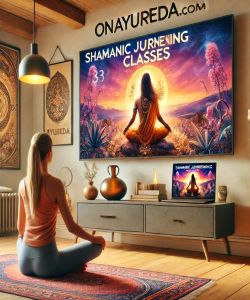
1. Overview of Shamanic Journeying Classes
Shamanic journeying classes represent a structured and rigorous framework for learning the foundational techniques of shamanism, a discipline predicated on the intentional alteration of consciousness to interact with non-ordinary reality for purposes of healing, information retrieval, and personal empowerment. These instructional programmes are not casual spiritual explorations; they are demanding courses of study that require discipline, focus, and a profound commitment to self-exploration. The central practice taught is the shamanic journey, a visionary method wherein the participant, typically aided by a consistent rhythmic sound such as drumming or rattling, enters a deep state of consciousness akin to a waking dream. Within this state, the practitioner navigates the symbolic landscapes of the shamanic cosmos—commonly referred to as the Lower, Middle, and Upper Worlds. The objective is to establish direct, experiential contact with compassionate spirit allies, including power animals and spiritual teachers, who provide guidance, wisdom, and healing energies. A professionally conducted class ensures this process is undertaken within a safe, contained, and ethically sound environment. The facilitator's role is not to interpret the journey for the participant, but to teach the precise methodology, hold a secure energetic space, and guide the integration of the profound insights gained. Consequently, these classes are a disciplined system for accessing one’s own innate spiritual authority and developing a personal, unmediated relationship with the spirit world. They are designed to equip individuals with a reliable and repeatable toolkit for navigating their inner lives and addressing complex personal and spiritual challenges with clarity and strength. The ultimate aim is the cultivation of spiritual autonomy and a deeper, more resilient connection to the fabric of existence.
2. What are Shamanic Journeying Classes?
Shamanic journeying classes are formal, instructional environments designed to systematically teach the principles and techniques of the shamanic journey. They are predicated on the understanding that the ability to enter a shamanic state of consciousness and navigate non-ordinary reality is not an esoteric gift reserved for a select few, but a learnable skill rooted in ancient, cross-cultural methodologies. These classes demystify the process by breaking it down into a series of repeatable steps and core concepts, enabling participants to develop proficiency and confidence in their own practice. The curriculum is meticulously structured to provide a safe and coherent learning trajectory, moving from foundational theory to direct, experiential practice.
Core components of these classes typically include:
- Theoretical Foundation: A robust introduction to the shamanic worldview, including the cosmology of the three worlds (Lower, Upper, and Middle), the nature of spirit allies such as power animals and teachers, and the ethical considerations fundamental to responsible practice. This knowledge provides the essential map for navigation.
- Practical Instruction: Explicit, step-by-step guidance on the mechanics of the journey itself. This covers the preparation of a sacred space, the formulation of a clear and potent intention, the role of sonic driving (typically a drum or rattle) in inducing the altered state, and the techniques for returning fully and grounding oneself in ordinary reality.
- Guided Experiential Practice: The central element where participants undertake actual shamanic journeys under the guidance and protection of an experienced facilitator. These initial journeys are typically focused on foundational tasks, such as meeting a power animal or spirit teacher for the first time.
- Integration and Application: Dedicated time and instruction on how to interpret, understand, and integrate the wisdom, healing, and guidance received during a journey into one’s daily life. This is a critical component that transforms visionary experience into tangible personal growth and practical problem-solving.
In essence, these classes provide the essential toolkit and operational manual for accessing direct revelation and personal spiritual authority, empowering individuals to move beyond belief and into the realm of direct experience.
3. Who Needs Shamanic Journeying Classes?
- Individuals Seeking Profound Self-Discovery and Personal Growth: Those who have reached the limits of conventional self-help, therapeutic, or religious frameworks and demand a more direct, experiential path to understanding their own psyche, purpose, and untapped potential. They require a methodology for accessing their own inner wisdom rather than relying on external dogma or authority.
- Practitioners of Healing and Therapeutic Arts: Professionals such as therapists, counsellors, bodyworkers, and coaches who seek to deepen their practice and intuition. They need a robust tool for accessing non-linear, symbolic information that can provide clients with profound insights and facilitate healing at a soul level, complementing their existing professional skills.
- Creative Professionals and Artists: Writers, artists, musicians, and innovators who find themselves at a creative impasse or wish to connect with a deeper, more primal source of inspiration. They require a reliable technique to bypass the critical, conscious mind and tap into the archetypal and symbolic wellsprings from which true creativity flows.
- Individuals Facing Existential or Spiritual Crises: Those grappling with fundamental questions of meaning, purpose, mortality, and their place in the cosmos. They need a practical, non-dogmatic spiritual framework that provides direct, personal answers and fosters a tangible sense of connection to the greater web of life, offering solace and direction.
- Persons Seeking to Heal Personal and Ancestral Trauma: Individuals who recognise that certain patterns of suffering or dysfunction are not fully explained by personal life events alone. They require a method for accessing and healing wounds at the soul level, including those inherited through their lineage, by working directly with spirit allies in non-ordinary reality.
- Students of Comparative Religion, Mythology, and Anthropology: Academics and researchers who wish to move beyond theoretical study and engage with the experiential reality that underpins the world’s oldest spiritual traditions. They need a practical understanding of the altered states of consciousness from which these mythologies and cosmologies originated.
- Individuals Seeking a Deeper Connection to Nature: People who feel disconnected from the natural world and wish to re-establish a meaningful, reciprocal relationship with the earth and its inhabitants. They require a technique to perceive the spiritual intelligence inherent in nature and to communicate directly with the spirits of plants, animals, and landscapes.
4. Origins and Evolution of Shamanic Journeying Classes
The origins of shamanic practice are ancient and universal, rooted in the Palaeolithic era and emerging independently across every inhabited continent. For millennia, shamanism was not taught in a formal, class-based structure but was transmitted through rigorous, long-term apprenticeships within specific indigenous cultures. A prospective shaman was often 'called' to the path through a spontaneous visionary experience, illness, or hereditary lineage, and would then undergo years of intense, one-on-one training with an elder shaman. This training was deeply embedded in the specific cosmology, mythology, and social fabric of their tribe. The knowledge was considered sacred, proprietary, and inextricably linked to the survival and well-being of the community it served. The transmission was holistic, encompassing not just the journeying technique but also herbalism, ritual, storytelling, and complex social responsibilities.
The evolution towards the modern, Westernised "class" format is a relatively recent phenomenon, catalysed in the mid-to-late twentieth century. A pivotal shift occurred as anthropologists and scholars, most notably individuals like Michael Harner, began to study shamanic practices from a cross-cultural perspective. They identified a set of core, universal techniques—such as the use of sonic driving and the intentional journey to the Lower and Upper Worlds—that appeared to transcend specific cultural contexts. This distillation of practices led to the development of "core shamanism," a system designed to be taught to Westerners outside of a specific indigenous cultural framework. The intention was to make the potent healing and wisdom of the shamanic journey accessible to a modern world perceived as spiritually impoverished.
This development gave rise to the workshop and class model. Initially conducted in person, these classes offered a structured, time-bound, and accessible format for individuals to learn the foundational mechanics of shamanic journeying in a group setting. The rise of the internet marked the next significant evolutionary leap, allowing these classes to be delivered online. This digital transition democratised access on an unprecedented scale, removing geographical barriers and enabling individuals worldwide to learn these techniques from their own homes. Whilst this evolution has made the practice widely available, it also brings forth a robust and necessary debate regarding authenticity, appropriation, and the critical distinction between learning a technique and embodying the full, life-long commitment of a traditional shaman. The modern class is therefore a distinct entity, an adaptation of an ancient practice for a contemporary audience.
5. Types of Shamanic Journeying Classes
- Foundational or Introductory Classes: This is the mandatory entry point for any serious practitioner. Its singular focus is to establish the core skills and conceptual understanding necessary for safe and effective journeying. The curriculum is rigorously focused on the fundamental mechanics: mastering the journey to the Lower World to meet a power animal and the journey to the Upper World to connect with a spirit teacher. It provides the essential, non-negotiable toolkit of techniques, including intention setting, interpretation of symbolic language, and grounding practices.
- Advanced Shamanic Healing Modules: These classes are strictly for participants who have demonstrated proficiency in the foundational course. They delve into specific, complex healing modalities that require a strong, established relationship with one's spirit allies. Sub-types include:
- Soul Retrieval: Training focused on the diagnosis and recovery of lost soul parts, which are believed to fragment from a person due to trauma. This is a highly sensitive and powerful form of spiritual healing.
- Shamanic Extraction Healing: Instruction on how to identify and safely remove spiritual intrusions or misplaced energy from a person's energetic field. This practice requires immense precision and strong spiritual protection.
- Classes on Divination and Information Retrieval: These specialised courses concentrate on using the shamanic journey as a tool for acquiring specific, practical information and insight. The focus moves beyond personal healing to problem-solving. Participants learn advanced techniques for journeying on behalf of others or their community to diagnose issues, find lost objects, or gain clarity on complex situations in the Middle World.
- Nature and Land-Focused Shamanism Classes: This type of class centres on re-establishing a deep, working relationship with the spiritual intelligence of the natural world. Journeys are directed towards connecting with the spirits of plants, animals, mountains, rivers, and the land itself. The objective is to learn directly from nature, perform healing work for the environment, and understand one’s place within the living ecosystem.
- Ancestral Healing and Lineage Work Classes: A specialised and often emotionally intense area of practice. These classes guide participants in journeying to connect with their own ancestral lines. The purpose is to identify and heal inherited traumas, release negative patterns passed down through generations, and reclaim the dormant strengths and wisdom of one’s lineage, thereby healing both past and future.
6. Benefits of Shamanic Journeying Classes
- Development of Spiritual Autonomy: Participants are equipped with a direct, repeatable method for accessing spiritual guidance, thereby reducing reliance on external authorities, dogma, or intermediaries. This fosters a robust sense of personal sovereignty and inner authority.
- Access to Profound Healing: The practice facilitates engagement with the root causes of emotional and spiritual distress. By working with compassionate spirit allies, individuals can address deep-seated trauma, limiting beliefs, and soul-level wounds that are often inaccessible to the conscious mind or conventional therapies.
- Enhanced Intuition and Perceptual Acuity: Regular journeying strengthens the intuitive faculties. Participants learn to trust their inner knowing and perceive the world with greater depth and clarity, recognising the symbolic and energetic patterns that underpin ordinary reality.
- Resolution of Complex Problems: The shamanic journey provides a unique vantage point for problem-solving. By seeking guidance from spirit allies, individuals can receive unconventional, highly effective solutions to personal, professional, and creative challenges that have resisted logical analysis.
- Cultivation of Personal Power and Resilience: The act of retrieving one’s own power animal and integrating its qualities builds a profound sense of inner strength and resilience. This connection provides a constant source of support, protection, and wisdom for navigating life’s difficulties.
- Deepened Connection to Nature and the Web of Life: Shamanism is fundamentally an earth-honouring practice. Journeying fosters a tangible, experiential understanding of the interconnectedness of all things, leading to a more respectful and reciprocal relationship with the natural world.
- Release of Fear, Particularly Regarding Mortality: By directly experiencing the reality of the soul and the continuity of consciousness beyond the physical body, participants often report a significant reduction or complete dissolution of the fear of death. This leads to a more courageous and present-oriented way of living.
- Unlocking of Creative Potential: The journeying process bypasses the linear, critical mind and accesses the vast, symbolic reservoir of the subconscious and superconscious realms. This is an extremely potent method for breaking through creative blocks and channelling novel ideas and inspiration.
7. Core Principles and Practices of Shamanic Journeying Classes
- The Principle of Non-Ordinary Reality: The fundamental assertion that reality is multi-layered. Beyond the ordinary, consensus reality perceived by our everyday senses, there exist vast, unseen realms—often termed non-ordinary reality or the spirit world—which can be accessed through disciplined practice. All shamanic work is predicated on this principle.
- The Practice of the Intentional Journey: The core technique is the shamanic journey, a voluntary and purposeful shift in consciousness. It is not a passive daydream but a focused, disciplined expedition into non-ordinary reality with a clear, pre-determined objective or question.
- The Principle of Compassionate Spirits: The shamanic cosmos is understood to be populated by a multitude of spiritual intelligences. The work taught in classes is exclusively focused on engaging with spirits that are unequivocally compassionate, wise, and dedicated to healing and evolution, such as power animals and spiritual teachers.
- The Practice of Sonic Driving: The primary method for inducing the shamanic state of consciousness is through a monotonous auditory stimulus, most commonly a steady, repetitive drumbeat or the sound of a rattle. This consistent rhythm facilitates the necessary shift in brainwave patterns from the ordinary waking state (Beta) to a deeper, meditative state (Theta).
- The Principle of the Three Worlds: A cosmological map that structures non-ordinary reality for navigational purposes. The Lower World is typically a realm of nature and earth-magic, the home of power animals. The Upper World is a celestial, often crystalline realm of enlightened beings and spiritual teachers. The Middle World is the spiritual counterpart of our own ordinary reality.
- The Practice of Establishing Spirit Allies: A non-negotiable initial step is to journey to find and cultivate strong, lifelong relationships with one's personal spirit helpers. The primary allies are the power animal, which provides protection and instinctual wisdom, and the spirit teacher, which offers higher guidance and instruction. All subsequent work depends on the strength of these alliances.
- The Principle of Direct Revelation: Shamanism is a path of direct, unmediated experience. The authority lies not in a sacred text or a guru, but in one's own direct encounters with the spirits. The purpose of a class is to teach the method, not to dictate the content or interpretation of the experience.
- The Practice of Meticulous Integration: The wisdom and power gained in non-ordinary reality are useless unless they are brought back and applied effectively in ordinary reality. A core practice is the diligent recording of journey experiences and the conscious, practical application of the guidance received to enact tangible change in one’s life.
8. Online Shamanic Journeying Classes
- Unparalleled Accessibility and Inclusivity: The online format decisively removes geographical barriers, granting access to high-calibre instruction to individuals irrespective of their physical location. This democratises a practice that was once limited to those who could travel to specific in-person workshops, making it available to individuals in remote areas, those with mobility issues, or those with demanding schedules.
- Creation of a Controlled and Private Sacred Space: Participants engage from the security and comfort of their own homes. This allows for absolute control over the environment, ensuring it is private, quiet, and free from the potential distractions or social anxieties of a group setting. This personal sanctuary can significantly enhance the depth and focus of the journeying experience.
- Provision of Replicable and Permanent Resources: Online classes typically provide recorded audio journeys, lecture materials, and written guides. This repository of resources is a significant advantage, allowing participants to revisit lessons and repeat guided journeys as often as necessary to deepen their practice and master the techniques at their own pace, a benefit not available in a one-off, in-person event.
- Focused and Undistracted Individual Experience: The online modality inherently fosters a more inward-focused experience. Without the physical presence of other participants, the practitioner is compelled to engage more directly and deeply with their own inner landscape and spirit allies. The journey becomes a purely personal and unmediated dialogue between the individual and their spirits.
- Structured Learning with Global Community: Modern online platforms provide a sophisticated and structured learning environment with clear modules, assignments, and progress tracking. Simultaneously, they facilitate community through dedicated forums, discussion boards, and live video calls, allowing participants to connect with a diverse, global cohort, share experiences, and receive support without leaving their homes. This blends the benefit of solitary practice with the power of a shared community container.
- Facilitation of Consistency and Discipline: Learning online often requires a greater degree of self-discipline. The structure of a well-designed online course, with its regular sessions and expected participation, instils a consistent practice rhythm that is essential for building a strong and reliable shamanic skill set over time. This structure supports the long-term integration of the practice into daily life.
9. Shamanic Journeying Classes Techniques
- Preparation of Self and Space: This initial step is non-negotiable and foundational to safe practice. The practitioner must first establish a sacred and protected physical space, ensuring it is clean, quiet, and will remain undisturbed for the duration of the journey. This involves setting the clear intention that the space is to be used only for compassionate and healing spiritual work. Preparation of the self involves a period of quiet contemplation to calm the mind and disconnect from the concerns of the ordinary world.
- Formulation of a Precise Intention: A shamanic journey is not a passive drift; it is a mission. Before beginning, the practitioner must formulate a clear, concise, and specific question or intention for the journey. Vague intentions yield vague results. The intention must be phrased as a request for information, healing, or insight, such as "Show me what I need to know to resolve this conflict," or "Please take me to my power animal."
- Finding a Starting Point and Inducing the Altered State: The practitioner lies down or sits comfortably, often covering their eyes to eliminate external visual stimuli. They visualise a familiar entry point into the earth—a hole at the base of a tree, a cave, a spring—which will serve as their consistent portal to the Lower World. The sonic driving, typically a monotonous drumbeat at a frequency of three to four beats per second, commences. The practitioner focuses entirely on the sound, allowing it to carry their consciousness into the non-ordinary reality.
- Navigation within Non-Ordinary Reality: Guided by the sound and their intention, the practitioner travels through their starting portal and into the landscapes of the shamanic realms. Navigation is experiential and intuitive. The key is to be an observant witness, engaging with the scenery, beings, and events as they unfold, whilst consistently holding the original intention in mind. The practitioner must learn to distinguish authentic spiritual contact from personal psychological projections.
- The Disciplined Return: The signal for the return is a distinct change in the rhythm of the drumming. Upon hearing this call-back signal, the practitioner must immediately and without delay begin their journey back, retracing their steps through the portal and returning to their physical body. This is a critical discipline that ensures a clean and complete return to ordinary consciousness.
- Grounding and Immediate Record-Keeping: Upon full return to the body, the first action is to ground oneself firmly in ordinary reality, for instance, by drinking water or touching the floor. The second, and equally critical, action is to immediately write down every detail of the journey in a dedicated journal, using the present tense. This act solidifies the experience and prevents the ephemeral details from fading, which is essential for the final, crucial step of integration.
10. Shamanic Journeying Classes for Adults
Shamanic journeying classes are pre-eminently suited for adults due to the profound levels of psychological maturity, self-awareness, and life experience the practice demands and builds upon. The adult mind, having navigated years of complex relationships, career challenges, and existential questions, possesses the necessary context to formulate potent, meaningful intentions for journeying. The discipline required to sit in stillness, focus the mind, and navigate the subtle yet powerful currents of non-ordinary reality is one that is cultivated through adult discipline. Furthermore, the content encountered within a shamanic journey is often deeply symbolic, archetypal, and at times, confronts the practitioner with unresolved aspects of their own psyche, including past traumas and shadow material. An adult participant is generally better equipped to process such potent information without becoming overwhelmed, and to distinguish between psychological projection and authentic spiritual guidance. The core purpose of shamanic work—to reclaim personal authority, heal deep-seated wounds, and find one's true purpose—resonates most powerfully with individuals who have lived long enough to feel the weight of these questions. It is not a practice for the emotionally or psychologically fragile, nor is it a whimsical flight of fancy. It is a rigorous, demanding discipline of consciousness. Therefore, the structured environment of a class provides a necessary container for adults to engage with this formidable work, offering a framework that respects their intelligence and life experience whilst providing the essential tools for safe navigation and meaningful integration of the profound wisdom that the practice makes available.
11. Total Duration of Online Shamanic Journeying Classes
A typical live session within an online shamanic journeying class is meticulously structured to fit within a total duration of approximately one hour, often designated as "1 hr" in programme schedules. This timeframe is not arbitrary; it is designed to be potent and focused, providing sufficient time for all critical components of the practice without leading to mental fatigue or spiritual overwhelm. The allocation of this 1 hr period is systematic. It commences with a preparatory phase, where the facilitator sets the context, reviews the theoretical underpinnings of the session's objective, and guides participants in collectively establishing a sacred and secure virtual space. This is followed by the crucial step of intention-setting, where individuals are guided to formulate a clear and powerful question for their journey. The central part of the hour is dedicated to the shamanic journey itself, which is typically powered by a live or recorded sonic-driving audio track lasting for a specific, predetermined length. Following the journey and the formal call-back signal, the remainder of the 1 hr session is dedicated to the vital processes of grounding and integration. This involves participants diligently recording their experiences in their journals immediately upon return, followed by a structured opportunity for sharing and debriefing within the group, should they choose. This final segment allows the facilitator to provide clarification, address immediate questions, and ensure that all participants are fully present and grounded before the session concludes. The entire 1 hr structure is thus a complete ritual arc, from preparation to practice and finally, to integration.
12. Things to Consider with Shamanic Journeying Classes
It is imperative for any prospective participant to engage in rigorous due diligence before committing to a shamanic journeying class. The primary consideration must be the integrity, experience, and lineage of the facilitator. One must aggressively investigate the teacher's background: where did they train, for how long, and with whom? A credible instructor will be transparent about their own extensive practice and the tradition from which they teach, and will operate within a clear ethical code. One must also critically assess the curriculum's structure and focus. A legitimate foundational class will concentrate unequivocally on teaching the core method and establishing connections with one's own spirit allies, not on the personality of the teacher or promises of instant, miraculous cures. Participants must manage their own expectations; shamanic journeying is a discipline, not a passive panacea. It demands active participation, courage, and a willingness to confront difficult personal material. Furthermore, an individual’s psychological readiness is a paramount consideration. This work is not advisable for those with a history of severe mental instability, such as psychosis or schizophrenia, as the deep-level consciousness alteration can be destabilising. One must possess a solid foundation of self-awareness and psychological resilience. Finally, one must understand the profound distinction between learning a technique and cultural appropriation. A responsible class will teach with the utmost respect for the indigenous origins of these practices, encouraging participants to develop their own direct spiritual authority rather than mimicking the trappings of a specific culture.
13. Effectiveness of Shamanic Journeying Classes
The effectiveness of shamanic journeying classes is not a matter of passive reception but is contingent upon a trinity of critical factors: the integrity of the instruction, the discipline of the participant, and the clarity of the intention. When these three elements are aligned, the methodology is exceptionally potent. A well-structured class taught by an experienced and ethical facilitator provides a safe and reliable container for learning the precise techniques required to enter and navigate non-ordinary reality. Its effectiveness lies in its ability to empower the individual, teaching a repeatable skill rather than creating dependency on the teacher. The participant’s commitment is non-negotiable; effectiveness is directly proportional to the rigour with which they practise, the courage with which they face the material that arises, and the diligence they apply to integrating the insights into their daily life. A journey undertaken with a lazy or vague intention will yield commensurately vague and ineffective results. However, when a clear, focused intention is brought to the practice, the shamanic journey becomes a remarkably effective tool for diagnostic insight, profound emotional and spiritual healing, and creative problem-solving. It consistently provides access to information and perspectives unavailable to the rational, conscious mind. Therefore, the effectiveness of these classes is not measured by a single, dramatic outcome, but by the gradual and solid cultivation of a practitioner’s spiritual autonomy, resilience, and capacity to navigate their life with wisdom sourced directly from within. It is a highly effective system for those prepared to do the work.
14. Preferred Cautions During Shamanic Journeying Classes
Engaging in shamanic journeying necessitates a posture of extreme caution and unwavering respect for the power of the work. It is absolutely imperative that participants do not undertake this practice whilst under the influence of alcohol or psychoactive substances; the journey requires a clear and sober mind to navigate its complexities and maintain spiritual protection. A primary caution is against spiritual inflation or ego-aggrandisement. The profound experiences of non-ordinary reality can lead an undisciplined individual to believe they have achieved special status, a dangerous delusion that corrupts the practice and severs the connection to genuinely compassionate spirits. One must remain humble. Furthermore, participants must exercise extreme discernment regarding the spirits they encounter. Any being that promotes fear, flatters the ego, gives commands, or claims to be a famous historical or religious figure should be regarded with profound suspicion and disengaged from immediately. The work is exclusively with unequivocally compassionate helpers. It is also crucial to avoid "spiritual bypassing"—using shamanic experiences to avoid dealing with difficult real-world problems or psychological issues. The journey is a tool to better engage with life, not escape it. Finally, and most critically, the practice of grounding after every single journey is not optional; it is a mandatory safety protocol. Failure to ground properly can leave one feeling dissociated, emotionally volatile, or psychically porous. This is a formidable discipline, not a spiritual diversion, and it must be approached with the utmost seriousness and caution at all times.
15. Shamanic Journeying Classes Course Outline
Module One: Foundational Principles and The Shamanic Cosmos
Introduction to the core shamanic worldview.
Detailed exploration of the three-world cosmology: Lower, Upper, and Middle Worlds.
The nature of consciousness and the shamanic state.
Ethics of shamanic practice and the principle of direct revelation.
Instruction on creating sacred space and the role of sonic driving.
Module Two: The Lower World Journey and The Power Animal
Technique and practice for the journey to the Lower World.
Guided experiential journey to meet and establish a relationship with a personal power animal.
Understanding the role of the power animal in protection, grounding, and personal power.
Methods for dancing or moving one's power animal to integrate its energy.
Module Three: The Upper World Journey and The Spirit Teacher
Technique and practice for the journey to the Upper World.
Guided experiential journey to meet a spiritual teacher in human form.
Understanding the role of the spirit teacher in providing wisdom, guidance, and higher perspective.
Protocols for asking questions and receiving clear guidance from one’s teacher.
Module Four: The Practice of Shamanic Divination
Introduction to the principles of shamanic divination for problem-solving.
Techniques for formulating precise divination questions.
Practical journeys with one's spirit allies to seek answers to personal questions.
Introduction to Middle World journeying for information retrieval about ordinary reality.
Module Five: Integration, Application, and Continued Practice
Advanced techniques for interpreting symbolic journey language.
Systematic methods for integrating journey guidance into daily life for tangible results.
Establishing a disciplined and consistent personal practice.
Troubleshooting common challenges in journeying.
Concluding overview and next steps in the shamanic path.
16. Detailed Objectives with Timeline of Shamanic Journeying Classes
- Weeks 1-2: Establishing Foundational Competency.
- Objective: By the end of this period, the participant will be able to articulate the core principles of the shamanic worldview, including the three-world cosmology. They will have successfully established a personal ritual for creating sacred space and will demonstrate a theoretical understanding of the role of sonic driving in altering consciousness. They will have completed their first diagnostic journey to the Lower World under strict guidance.
- Weeks 3-4: Securing Primary Spiritual Alliance.
- Objective: The participant will have successfully journeyed to the Lower World with the specific intention of meeting their power animal and will be able to identify it. They will have practised communicating with this ally and will begin the physical integration practice of "power animal dancing." They will be able to articulate the functions of a power animal in providing protection and personal power.
- Weeks 5-6: Expanding Spiritual Alliances and Accessing Higher Wisdom.
- Objective: The participant will master the technique for journeying to the Upper World. They will have successfully met a compassionate spirit teacher and established a protocol for respectful communication. They will demonstrate the ability to ask their teacher a clear question and receive guidance, and will practise recording that guidance with precision.
- Weeks 7-8: Application of Journeying for Divination.
- Objective: The participant will be able to formulate a well-defined question for a divination journey. They will demonstrate the ability to journey on their own behalf to their spirit allies to seek and retrieve an answer to a significant personal question. They will be introduced to the concept of Middle World journeying for practical information.
- Weeks 9-10: Mastering Integration and Establishing Personal Practice.
- Objective: The participant will have developed a systematic method for analysing their journey records and extracting actionable steps. They will create a personal, disciplined plan for continuing their practice beyond the formal class structure. By the conclusion of the course, the participant will function as an autonomous practitioner of foundational shamanic journeying, capable of seeking and applying their own spiritual guidance safely and effectively.
17. Requirements for Taking Online Shamanic Journeying Classes
- A High-Fidelity, Stable Internet Connection: A non-negotiable technical requirement. The connection must be robust enough to support live video and high-quality audio streaming without interruption, which is critical for maintaining the integrity of the sacred space and receiving clear instruction.
- A Private, Secure, and Undisturbed Physical Space: The participant must have access to a room where they can be completely alone and guaranteed not to be disturbed for the full duration of each class session. This is an absolute requirement for safety and focused concentration.
- High-Quality Headphones: Essential for the practice of sonic driving. Headphones, particularly over-ear models, are required to block out ambient noise and deliver the rhythmic sound directly and immersively, which is crucial for facilitating the shift into the shamanic state of consciousness.
- A Dedicated Journal and Writing Instrument: A physical notebook and pen or pencil are mandatory. The immediate, manual recording of journey experiences upon return is a core discipline of the practice. Digital devices are generally discouraged for this task due to their distracting nature.
- An Eye Covering or Blindfold: To eliminate all external visual stimuli and facilitate a deeper inward focus, an eye covering is a standard requirement. This simple tool dramatically enhances the ability to perceive the inner landscapes of non-ordinary reality.
- A Willingness to Be Seated or Lying on the Floor: Participants must have a comfortable space, such as a yoga mat or blankets, where they can lie down or sit comfortably for extended periods without physical strain.
- Absolute Commitment and Personal Responsibility: A fundamental personal requirement is the commitment to attend all sessions, complete all assigned practices, and take full responsibility for one's own experiences. This is a rigorous discipline, not a passive entertainment.
- Psychological Stability: Participants must confirm they have a solid baseline of mental and emotional health and are not currently experiencing acute psychological crisis. The practice can be intensely cathartic and requires a stable personality structure to process the material that arises.
18. Things to Keep in Mind Before Starting Online Shamanic Journeying Classes
Before embarking upon an online shamanic journeying class, it is crucial to conduct a stern self-assessment of one’s readiness and intentions. This is not a casual online course to be passively consumed; it is an active and demanding engagement with the deepest parts of your psyche and with the spirit world. You must be prepared to confront uncomfortable truths and take absolute responsibility for your own healing and growth. The online format requires a higher degree of self-discipline than in-person training. You alone are responsible for creating your sacred space, eliminating distractions, and committing to the practice with rigour. Understand unequivocally that shamanic practice is not a substitute for psychotherapy. While profoundly therapeutic, it is a spiritual discipline, not a clinical treatment for mental illness. You must be prepared to hold a clear boundary between these modalities. Scrutinise your motivations: are you seeking spectacle and spiritual entertainment, or are you genuinely committed to a path of self-discovery, healing, and service? The spirits do not respond to triviality. Finally, recognise that the screen is a portal, but the work is real. You must approach the virtual classroom with the same solemnity, respect, and seriousness you would bring to a physical sacred circle. Your commitment level will directly determine the depth and authenticity of your experience. Enter with humility, a clear mind, and the unwavering intention to do the hard work required.
19. Qualifications Required to Perform Shamanic Journeying Classes
There exists no single, legally mandated, or universally recognised governing body that accredits shamanic practitioners. Therefore, the qualifications for teaching are not based on conventional certifications but on a far more rigorous and demonstrable set of criteria rooted in experience, integrity, and lineage. A credible and qualified teacher of shamanic journeying must possess the following, and it is the prospective student's absolute responsibility to verify them:
- Extensive and Long-Term Personal Practice: The foremost qualification is a deep and sustained personal history of shamanic practice. The teacher must not merely be someone who has taken a few workshops, but an individual who has dedicated years, if not decades, to their own journeying, healing, and integration. Their knowledge must be embodied and experiential, not merely theoretical.
- Direct Training within a Verifiable Lineage: A qualified teacher must have undergone rigorous, long-term training themselves. They should be able to clearly articulate their lineage—naming their primary teachers and the specific traditions or methodologies in which they were trained. This demonstrates a respect for the transmission of knowledge and accountability to a recognised body of practice.
- Demonstrable Skill in Holding Safe Space: Teaching a group, whether online or in person, requires a specific skill set beyond personal practice. A qualified facilitator must be an expert in creating and maintaining a safe, potent, and ethically sound energetic container. They must be able to manage group dynamics, handle unexpected emotional releases, and ensure all participants are properly grounded.
- Unyielding Adherence to a Strict Ethical Code: The facilitator must operate within a clear and explicit ethical framework. This includes unwavering confidentiality, clear boundaries, a commitment to empowering students rather than creating dependency, and a profound respect for the indigenous origins of the practices. They must never make grandiose claims, guarantee specific results, or abuse their position of authority.
The absence of these core qualifications should be considered an unequivocal red flag, and such an instructor must be avoided at all costs.
20. Online Vs Offline/Onsite Shamanic Journeying Classes
Online
The primary advantage of online shamanic journeying classes is their radical accessibility. They eliminate the constraints of geography, time, and travel costs, making high-quality instruction available to a global audience. This format demands and cultivates a high degree of personal responsibility and self-discipline, as the participant is solely responsible for creating and maintaining their own sacred space. The inherent privacy of learning from home can be a significant benefit, allowing for a deeply personal and introspective experience free from the social pressures or energetic distractions of a physical group. Participants often find they can go deeper into their journeys without the self-consciousness that can arise in the presence of others. Furthermore, online courses typically provide a wealth of digital resources—recorded journeys, video lectures, and written materials—that can be accessed repeatedly, facilitating learning at one’s own pace and reinforcing the core techniques over time. The experience is inherently focused inward, forcing a direct and unmediated relationship with one's own spirit allies.
Offline/Onsite
Offline, in-person classes offer a uniquely powerful and visceral experience that cannot be perfectly replicated online. The potency of being in a shared, physical sacred space, held directly by the facilitator, is palpable. The live, acoustic sound of a drum or rattle reverberating through the room and the collective body creates a powerful energetic field that can greatly facilitate the shift into a shamanic state of consciousness. The group dynamic itself becomes a powerful container for the work; witnessing the courage and process of others can be profoundly affirming and inspiring. Immediate, direct interaction with the facilitator is a key benefit. The teacher can observe participants directly, offer immediate feedback, provide personal support during intense emotional releases, and ensure that every individual is fully grounded in a tangible, physical way. The sensory richness of in-person ritual—the smell of incense, the physical presence of the circle, the shared meal afterwards—fosters a deep sense of community and embodied connection that is fundamental to the holistic nature of traditional shamanic work.
21. FAQs About Online Shamanic Journeying Classes
Question 1. What is a shamanic journey? Answer: It is a disciplined, intentional practice of altering consciousness, typically using rhythmic sound, to access non-ordinary reality for healing, guidance, and information.
Question 2. Is this a religion? Answer: No. It is a spiritual methodology or technique. It does not require adherence to any dogma and can be practised alongside any or no religious belief.
Question 3. Do I need special abilities to do this? Answer: No. The capacity to journey is an innate human ability. A class teaches the technique to awaken and control it.
Question 4. Is it dangerous? Answer: When taught correctly by a qualified facilitator and practised with discipline and respect, it is a safe methodology. The danger lies in undisciplined practice or learning from unqualified sources.
Question 5. What if I cannot visualise or "see" anything? Answer: Shamanic perception is not limited to sight. Information is often received through other senses: feeling, hearing, or a simple, direct knowing. This is a normal part of the process.
Question 6. What is a power animal? Answer: A power animal is a compassionate spirit ally in animal form that provides protection, assistance, and personal power to a practitioner.
Question 7. Will I lose control? Answer: No. Unlike a trance, the practitioner remains conscious and in control throughout the journey and can choose to end it at any time.
Question 8. Is this cultural appropriation? Answer: A responsible class teaches "core shamanism," the universal techniques, with deep respect for their indigenous origins, and explicitly avoids mimicking specific, closed cultural rituals.
Question 9. Can I learn this from a book? Answer: Whilst books provide theory, the direct guidance and safe container provided by an experienced teacher in a class setting is essential for effective and safe learning.
Question 10. What is the purpose of the drum? Answer: The monotonous, repetitive beat of the drum serves as a "sonic driver," facilitating the shift in brainwaves necessary to enter the shamanic state of consciousness.
Question 11. What if I encounter a frightening spirit? Answer: A core part of the training is learning how to discern compassionate spirits from others and how to disengage safely. You always journey under the protection of your power animal.
Question 12. How is this different from meditation? Answer: Meditation often aims for stillness or emptiness of mind. A shamanic journey is an active, purposeful expedition with a clear intention to seek information.
Question 13. Can I journey for other people? Answer: That is an advanced practice. Foundational classes focus strictly on journeying for oneself. Working for others requires further training and strict ethical protocols.
Question 14. Is the online format less powerful? Answer: The power comes from your connection to spirit, not the location. For many, the privacy and focus of the online format can lead to even deeper experiences.
Question 15. What if I fall asleep? Answer: This can happen initially. It often indicates a need for rest or can be a way the conscious mind resists the process. The facilitator can provide guidance on this.
Question 16. How do I know the experience is "real"? Answer: The reality of the experience is validated by its results. When the guidance received proves effective and transformative in your ordinary life, its authenticity is affirmed.
Question 17. Do I have to share my journey with the group? Answer: No. Sharing is always optional and voluntary. Your experiences are your own.
22. Conclusion About Shamanic Journeying Classes
In conclusion, shamanic journeying classes constitute a formal, rigorous, and highly structured system for acquiring one of the most ancient and potent methodologies for human consciousness exploration. They stand in stark opposition to vague, unstructured spiritual pursuits, demanding instead discipline, integrity, and an unwavering commitment from the participant. By providing a safe, ethically-bound container and a systematic curriculum, these classes empower individuals to move beyond belief and into the realm of direct, unmediated experience. The core achievement of such a programme is the cultivation of spiritual autonomy, equipping the practitioner with a reliable and repeatable toolkit for accessing their own innate wisdom, healing deep-seated wounds, and navigating the complexities of life with clarity and power. The practice is not a panacea, nor is it an escape from the demands of ordinary reality. On the contrary, it is a formidable discipline designed to enhance one's engagement with life, fostering resilience, creativity, and a profound, experiential connection to the fabric of existence. Whether undertaken online or in person, a properly conducted shamanic journeying class provides the essential map, compass, and operational manual for the deliberate and purposeful exploration of non-ordinary reality, reaffirming its place as a relevant and powerful path for the modern individual seeking authentic self-knowledge and empowerment.