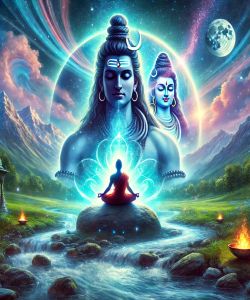
1. Overview of Shiva Meditation
Shiva Meditation constitutes a formidable and profound spiritual discipline, fundamentally distinct from contemporary mindfulness practices aimed merely at stress reduction or mental quietude. It is an uncompromising path of self-inquiry rooted in the deepest traditions of Shaivism and Tantra, designed not for casual dabbling but for the serious aspirant committed to the ultimate dissolution of the ego. The core philosophical premise of this meditative science is the radical realisation of the individual self, or Atman, as being non-different from the supreme, all-pervading consciousness, symbolised by the archetypal figure of Shiva. This is not a practice of pacification but one of potent transformation, a direct confrontation with the fundamental structures of perception and identity. It demands that the practitioner move beyond the phenomenal world of names and forms to apprehend the noumenal reality, the formless, timeless substratum of all existence. Through rigorous techniques involving intense concentration, breath control, mantra, and the contemplation of the void, the individual systematically dismantles the illusion of a separate, limited self. The objective is not comfort but truth; not relaxation but liberation (Moksha). It is a path of fire, intended to burn away all that is false, transient, and constructed, leaving only the immutable, silent, and sovereign awareness that is Shiva. This meditative tradition, therefore, represents one of the most direct and powerful methodologies ever devised for the exploration of consciousness and the attainment of non-dual reality. It is a call to awaken from the dream of mundane existence and to realise one's own inherent divinity, a process that requires unparalleled courage, discipline, and an unyielding commitment to self-transcendence. The path is arduous, the demands are absolute, but the goal is nothing less than the complete and irreversible realisation of one's true nature.
2. What are Shiva Meditation?
Shiva Meditation is not a singular, monolithic technique but rather a comprehensive classification of advanced contemplative practices originating from the esoteric traditions of Hindu Shaivism. These practices are fundamentally concerned with the direct experience of consciousness in its purest state, a state personified by the deity Shiva, who represents the unmanifest, silent, and formless ground of all being. Unlike methods that focus on calming the mind for therapeutic benefit, Shiva Meditation employs rigorous, and often challenging, techniques to deconstruct the very framework of the ego and perceived reality. The objective is to transcend the ordinary mind and its limitations to attain a state of non-dual awareness, or the realisation that the individual consciousness is identical to the universal consciousness.
The methodologies employed are diverse and potent, each designed to pierce the veil of phenomenal existence. They can be broadly understood through the following applications:
Dhyana upon Form (Saguna): This involves intense, one-pointed concentration on the iconographic form of Shiva. Practitioners meditate upon his attributes—the third eye representing higher perception, the serpent symbolising dormant kundalini energy, the trident signifying the overcoming of the three gunas (qualities of nature). The purpose is to internalise these archetypal qualities of transcendence, discipline, and mastery over the lower self.
Dhyana upon the Formless (Nirguna): This is a more advanced practice that involves meditation on Shiva as the attributeless, absolute reality (Brahman). It is a direct inquiry into the nature of the self, often using the contemplation of emptiness (Shunyata) or the silent space between thoughts as a gateway to the unconditioned awareness that lies beyond all mental constructs.
Mantra Japa: The systematic and disciplined repetition of specific Shiva mantras, most notably "Om Namah Shivaya," is a core practice. This is not a mindless chant but a powerful sonic tool used to reorganise the practitioner’s psychic energy, quiet the discursive mind, and attune the consciousness to the vibrational frequency of the divine.
Techniques from the Vijnana Bhairava Tantra: This seminal text outlines 112 distinct meditative techniques (dharanas) that use breath, sensory experience, and awareness itself as tools for immediate spiritual insight. These are direct, practical methods for turning everyday perceptions into gateways for profound realisation.
In essence, Shiva Meditation is a sophisticated spiritual science for the dedicated seeker, a direct path to self-realisation through the systematic and disciplined exploration of consciousness itself.
3. Who Needs Shiva Meditation?
The rigorous discipline of Shiva Meditation is not universally suitable, nor is it intended for the casual seeker. Its application is specific, and its necessity arises in individuals who have reached a particular threshold of psychological and spiritual maturity. The following categories of individuals are those for whom this path is not merely beneficial, but imperative.
Individuals Seeking Fundamental Truth over Palliative Comfort: This practice is for those who are no longer satisfied with superficial answers to existential questions. It is for the person who demands to know the nature of reality, consciousness, and the self, and is willing to dismantle their most cherished beliefs to arrive at direct, experiential knowledge.
Spiritual Aspirants on the Path of Jnana Yoga (The Path of Knowledge): Practitioners who are intellectually and temperamentally inclined towards the path of wisdom and self-inquiry will find Shiva Meditation to be its most potent practical application. It is the laboratory in which the high philosophy of Vedanta and Shaivism is tested and realised.
Those Seeking to Overcome Existential Fear, Particularly the Fear of Annihilation: The core of this meditation is a voluntary and conscious "dying before you die." It is for individuals who wish to confront and transcend the primal fear of death and nothingness by directly experiencing the deathless, timeless nature of pure awareness.
Practitioners Requiring a Method to Dismantle a Rigid Ego Structure: Individuals who recognise that their own ego—their sense of a separate, enduring self—is the primary source of their suffering and limitation require a powerful tool for its deconstruction. Shiva Meditation is precisely that tool.
Individuals Possessing a High Degree of Self-Discipline and Mental Fortitude: This path is not for the faint of heart or the undisciplined. It is for those who possess an innate strength of will and are prepared to face intense internal resistance, psychological upheaval, and the profound solitude that serious contemplative practice entails.
Those Who Aspire to Move Beyond Religious Dogma to Direct Spiritual Experience: This meditative science is for the person who has outgrown the need for intermediaries and external religious structures and seeks a direct, unmediated connection with the ultimate reality. It is a path of radical self-reliance and sovereign inquiry.
4. Origins and Evolution of Shiva Meditation
The origins of Shiva Meditation are deeply embedded in the ancient soil of the Indian subcontinent, predating much of what is commonly understood as classical Hinduism. Its earliest roots can be traced to the pre-Vedic Indus Valley Civilisation, where proto-Shiva figures suggest the existence of yogic and contemplative traditions focused on a powerful, ascetic deity. In the Vedic period, this figure evolved into Rudra, a formidable god associated with storms, wilderness, and fierce independence. While the early Vedas were primarily concerned with external ritual (Yajna), the later texts, particularly the Upanishads, marked a significant philosophical shift. This "forest tradition" turned inward, prioritising direct experience and knowledge (Jnana) over ritual action. It was within this fertile ground of introspective inquiry that the foundational principles of meditation began to be systematically articulated, laying the philosophical groundwork for what would become Shiva Meditation.
The practice crystallised and achieved its most sophisticated expression within the Tantric traditions, particularly through the Shaiva Agamas. These scriptures, considered by their adherents to be direct revelations from Shiva himself, provided the detailed technical and philosophical frameworks for the meditative path. Unlike the more world-negating streams of thought, Tantra, especially in its non-dual schools like Kashmir Shaivism, viewed the world not as an illusion to be escaped but as a direct manifestation of divine consciousness. Shiva Meditation, within this context, evolved into a means of recognising this divine play (Lila) in every aspect of existence.
A pivotal text in this evolution is the Vijnana Bhairava Tantra, a dialogue between Shiva and his consort Parvati, which outlines 112 concise and powerful meditative techniques (dharanas). These methods represent a radical departure from formulaic, step-by-step meditation, instead offering direct gateways to enlightenment through the focused awareness of breath, sensory experience, sound, and even the voids between thoughts and moments. The influence of great philosopher-sages like Abhinavagupta further refined the tradition, synthesising its various streams into a coherent and profound philosophical system. Thus, the evolution of Shiva Meditation is not a simple linear history but a rich tapestry woven from ascetic practices, Upanishadic philosophy, and the life-affirming, consciousness-centric revelations of Tantra, culminating in a powerful and direct science of self-realisation.
5. Types of Shiva Meditation
The term ‘Shiva Meditation’ encompasses a range of sophisticated and potent contemplative techniques derived from Shaivite and Tantric traditions. These are not homogenous practices but distinct methodologies, each with a specific focus and operational principle designed to facilitate the realisation of the Shiva-consciousness. The primary types are as follows:
Shiva Dhyana (Meditation on Form): This is a Saguna (with form) practice involving intense, one-pointed concentration on the anthropomorphic or symbolic form of Shiva. The practitioner visualises every detail of Shiva’s iconography—the crescent moon signifying mastery over the mind, the third eye representing the fire of knowledge, the serpent Vasuki denoting control over primal energy, and the river Ganga symbolising the flow of purifying wisdom. The objective is not idol worship but the internalisation of these archetypal qualities of transcendence, detachment, and supreme awareness, using the form as a powerful anchor for the mind.
Nirguna Dhyana (Meditation on the Formless): A more advanced and abstract practice, this involves meditating on Shiva as the absolute, attributeless (Nirguna) reality. The focus is on the nature of consciousness itself—silent, empty, and all-pervading. Practitioners may use concepts like the void (Shunyata), the silent witness (Sakshi), or the infinite space of awareness (Chidakasha) as the object of meditation. This technique is a direct inquiry into the non-dual truth, aiming to dissolve the mind into its source.
Vijnana Bhairava Tantra Dharanas: This seminal text presents 112 distinct dharanas, or concentration techniques, that use immediate sensory and cognitive experiences as doorways to heightened awareness. These are not prolonged meditations but rather flashes of insight. Examples include focusing intently on the space between breaths, merging awareness with a sound until only the hearing remains, or contemplating the body as an empty shell. Each dharana is a precise tool for shattering ordinary perception.
Mantra Japa and Ajapa Japa: The use of a Shiva mantra, such as the Panchakshari Mantra ‘Om Namah Shivaya,’ is a central practice. In Japa, the mantra is repeated audibly or mentally with focused intention. In the more subtle Ajapa Japa, the practitioner becomes aware of the mantra’s natural, spontaneous resonance with the inhalation and exhalation of the breath (So-ham). This transforms the simple biological act of breathing into a constant, effortless meditation.
Laya Yoga (Yoga of Dissolution): This involves techniques specifically designed to dissolve the individual mind (Manas) and ego (Ahamkara) into the object of meditation, which is the supreme consciousness, or Shiva. It often employs focus on internal sounds (Nada) and energy centres (Chakras) to systematically withdraw the mind from external phenomena and merge it with the inner reality.
6. Benefits of Shiva Meditation
The outcomes of a dedicated and disciplined practice of Shiva Meditation are profound and transformative, extending far beyond the superficial benefits of simple relaxation or stress management. They constitute a fundamental reordering of the practitioner's consciousness and relationship with reality. The primary benefits are as follows:
Cultivation of Unshakeable Mental Fortitude: The practice demands and develops an extraordinary level of concentration and mental resilience. Practitioners learn to maintain a stable and focused mind amidst both internal psychological turmoil and external disturbances, leading to a state of profound inner stillness and strength.
Development of Dispassionate Witness-Consciousness (Sakshi Bhava): One of the most significant outcomes is the ability to observe one's own thoughts, emotions, and physical sensations without identification or judgment. This detachment creates a powerful inner freedom, as the practitioner is no longer a slave to reactive emotional states.
Systematic Dissolution of the Ego (Ahamkara): Shiva Meditation is a direct assault on the constructed identity of the ego. Through consistent practice, the illusion of being a separate, limited individual begins to break down, leading to the direct experience of a more expansive, universal identity.
Transcendence of the Fear of Death: By contemplating Shiva as the Lord of Dissolution (Mahakala) and by directly experiencing the timeless, formless nature of consciousness, the practitioner confronts and systematically dismantles the primal fear of personal annihilation.
Access to Higher States of Consciousness: The practice is designed to move awareness beyond the ordinary states of waking, dreaming, and deep sleep into the fourth state, Turiya. This is a state of pure, non-dual consciousness, which is the ultimate goal of the meditative path.
Awakening of Dormant Inner Energies (Kundalini): Many Shiva-centric practices, particularly those from Tantric lineages, are designed to awaken the potent spiritual energy coiled at the base of the spine. When guided and channelled correctly, this awakening leads to profound spiritual insight and the opening of higher psychic centres.
Realisation of Non-Dual Reality: The ultimate benefit is the direct, experiential realisation (Anubhava) of the central tenet of non-dual philosophy: that the individual self (Atman) is identical to the ultimate reality (Brahman). This is liberation (Moksha), the final and irreversible release from the cycle of suffering and ignorance.
7. Core Principles and Practices of Shiva Meditation
The entire edifice of Shiva Meditation rests upon a set of uncompromising principles and is executed through specific, rigorous practices. These are not suggestions but operational necessities for any individual who seeks to engage with this formidable path.
Core Principles:
Stillness (Sthirata): The absolute, non-negotiable foundation of the practice. This entails not only physical immobility in a stable, erect posture (Asana) but also a profound mental stillness. The mind’s incessant chatter must be confronted and subdued, not through force, but through persistent, one-pointed focus.
Awareness (Prajna): A sharp, penetrating, and non-judgmental awareness is the primary tool. The practitioner must cultivate the ability to observe all phenomena—thoughts, sensations, emotions, and external stimuli—as they arise and pass away, without becoming entangled in their content. This is the cultivation of the inner witness (Sakshi).
Detachment (Vairagya): This principle demands the cultivation of a profound sense of indifference towards the fruits of the practice and the experiences that arise within it. Whether blissful or terrifying, all experiences are to be observed with equanimity, recognised as transient manifestations of consciousness, and let go of. Attachment to any state, however sublime, is a barrier to further progress.
Dissolution (Laya): The ultimate aim is not observation but dissolution. The practice is geared towards the systematic dissolving of the limited ego-identity into the vast, formless consciousness of Shiva. This requires a courageous willingness to surrender control and let go of the very sense of being a separate "doer."
Inquiry (Vichara): This is the active, investigative aspect of the meditation. The practitioner constantly inquires into the nature of the self, asking "Who am I?" or "From where does this 'I'-thought arise?". This self-inquiry is a sharp blade used to cut through the layers of conditioning and false identification.
Core Practices:
Asana (Postural Discipline): The establishment of a firm, comfortable, and perfectly erect seated posture. The spine must be straight to allow for the free flow of prana (life force energy).
Pranayama (Breath Regulation): The breath is used as a primary anchor for the mind. Practices may involve simple observation of the natural breath or more complex techniques to control its rhythm, ultimately leading to its suspension in higher states.
Pratyahara (Sensory Withdrawal): The conscious and deliberate withdrawal of attention from the external sense organs and their objects. The focus of awareness is turned inward, creating a state of internalisation that is prerequisite for deep meditation.
Dharana (Concentration): The binding of the mind to a single point or object of meditation, be it a mantra, a visualised form, the breath, or the concept of the void. This one-pointedness is the gateway to Dhyana (meditation).
8. Online Shiva Meditation
The provision of Shiva Meditation through an online modality represents a modern adaptation of an ancient discipline, demanding specific considerations while offering distinct advantages. It is a format that necessitates an even greater degree of personal responsibility and commitment from the practitioner. The benefits and operational realities of this format are as follows:
Geographical Transcendence and Access to Authenticity: The primary advantage of the online format is its dissolution of geographical barriers. Aspirants are no longer constrained by their physical location and can receive instruction from highly qualified, lineage-based teachers from anywhere in the world. This democratises access to authentic teachings that might otherwise be confined to remote ashrams or specific regions.
The Imperative of Self-Discipline: Without the physical presence of a teacher and the supportive energy of a group (Satsang), the onus of discipline falls squarely upon the individual. The practitioner must be capable of creating a sacred, inviolable space for practice within their own environment and possess the internal fortitude to maintain consistency without external supervision. The online format is, therefore, a crucible for forging self-reliance.
Structured and Methodical Curriculum Delivery: Online platforms facilitate the delivery of a highly structured and sequential curriculum. Modules can be presented in a logical progression, with access to recorded sessions, supplementary texts, and support materials. This ensures that the practitioner can review complex philosophical concepts and technical instructions at their own pace, reinforcing learning and ensuring methodological precision.
Creation of a Virtual Community of Practice: While lacking physical proximity, online courses can foster a powerful global community of serious practitioners. Through dedicated forums, live Q&A sessions, and interactive discussions, individuals can connect with a cohort of peers who share a common purpose. This creates a sense of accountability and shared endeavour, mitigating the potential isolation of a solitary home practice.
Enhanced Focus on Internalisation: The very nature of practising alone in one's own space can compel a deeper level of internalisation. Stripped of the potential distractions of a group setting—the movements of others, social dynamics—the practitioner is forced into a more direct and unmediated confrontation with their own mind. The online environment, when properly managed, can become a potent laboratory for profound self-inquiry.
9. Shiva Meditation Techniques
The following is a foundational technique derived from the principles of Shiva Meditation, designed to cultivate stillness and one-pointed awareness. This is not a passive exercise but an active process of concentration and mental command. Execute each step with precision and unwavering focus.
Step 1: Establishment of a Sovereign Posture (Asana) Sit on a cushion or firm surface. The posture must be absolutely stable and erect. The spine, neck, and head must be aligned in a single, straight line, as if suspended from above. The hands rest on the knees, palms facing upwards in a gesture of receptivity (Jnana Mudra). The body must be held motionless, a living statue. Any impulse to shift, twitch, or adjust must be ruthlessly observed and denied. This physical stillness is non-negotiable; it is the bedrock of the practice.
Step 2: Regulation of the Visual Field The eyes are to be gently closed. The focus is then turned inward, towards the space between the eyebrows, known as the Bhrumadhya or Ajna Chakra. Do not strain the eyes; this is a soft, internal gaze. This act immediately begins the process of sensory withdrawal (Pratyahara), cutting off the primary source of external distraction and turning the awareness inward.
Step 3: Observation of the Breath (Vayu Dharana) Bring your full and undivided attention to the natural flow of your breath. Do not control or alter it in any way. Simply observe the sensation of the cool air entering the nostrils on the inhalation, and the warm air leaving on the exhalation. Anchor your entire consciousness to this single, repetitive process. The breath is the thread that connects you to the present moment. Cling to it.
Step 4: Introduction of the Silent Mantra (Ajapa Japa) Begin to mentally associate the sound ‘So’ with the inhalation and the sound ‘Ham’ with the exhalation. ‘So-Ham’ translates to ‘I am That,’ a constant, silent affirmation of your identity with the supreme consciousness. Let this mental chant become one with the rhythm of your breath. The mind now has a precise task: to follow the breath and the silent mantra.
Step 5: Confronting and Dissolving Distractions Thoughts, sounds, and sensations will inevitably arise to disturb your focus. Do not fight them. Do not engage with them. Acknowledge their presence with detached awareness, and then firmly but gently return your focus to the So-Ham of the breath. Each time you return your attention, you are strengthening the muscle of concentration. This is the core work. Persist without compromise. The goal is to progressively lengthen the periods of unbroken focus until the mind becomes utterly absorbed in the object of meditation.
10. Shiva Meditation for Adults
Shiva Meditation is a discipline pre-eminently suited to the psychological and existential disposition of the mature adult. It is fundamentally not a practice for the unformed mind or the emotionally volatile temperament of youth, as its methods and objectives demand a level of introspection and resilience that is typically forged only through significant life experience. For the adult, who has likely contended with the realities of worldly ambition, attachment, loss, and the subtle yet persistent awareness of mortality, the promises of superficial happiness or mere stress relief ring hollow. Shiva Meditation offers no such palliatives. Instead, it provides a rigorous, systematic framework for confronting the fundamental questions that emerge after the initial passions and distractions of life have subsided. It is a path for the individual who has begun to sense the inherent limitations of the ego-construct and the ultimate futility of seeking lasting security in a transient world. The practice requires an unflinching honesty to look at one's own conditioned patterns, deep-seated fears, and the very structure of the personal narrative that one has built. This level of self-confrontation is often too formidable for a younger mind but becomes a compelling necessity for the adult seeking authentic meaning. The discipline’s emphasis on dissolution, detachment, and the transcendence of personal identity resonates with an individual who has already experienced the rise and fall of various life chapters and is thus prepared to investigate that which is permanent and unchanging beneath the flux of personal history. It is, therefore, a spiritual science for those who are finished with games and are ready to engage in the ultimate work: the direct, unmediated inquiry into the nature of existence itself.
11. Total Duration of Online Shiva Meditation
The standardised duration for a single, guided online session of Shiva Meditation is rigorously set at one hour (1 hr). This specific timeframe is not arbitrary but is a deliberately structured container designed to maximise efficacy while respecting the practicalities of remote practice. The one-hour duration is architected to facilitate a complete meditative cycle, ensuring that the practitioner is guided through a full arc of experience from initial preparation to deep immersion and safe re-integration into ordinary awareness. A typical session is methodically partitioned: the initial phase is dedicated to establishing the correct physical posture (Asana) and achieving a state of preliminary stillness, a process that requires focused instruction and self-correction. Following this, a significant portion of the hour is devoted to the core meditative technique, be it mantra recitation, formless awareness, or a specific dharana from the scriptural tradition. This central period is of sufficient length to allow the practitioner to move beyond surface-level mental chatter and enter a state of profound one-pointed concentration (Dharana), which is the necessary precursor to true meditation (Dhyana). The final segment of the one-hour session is reserved for a gradual and controlled withdrawal from the meditative state. This is a critical safety measure, preventing the psychological jarring that can occur from an abrupt transition back to sensory awareness. The instructor guides the practitioner to slowly re-engage with the body and the external environment. This structured one-hour format provides the necessary depth for meaningful practice, while remaining a manageable commitment that can be integrated into a consistent daily or weekly discipline without inducing the excessive physical or mental fatigue that longer, unguided sessions might provoke. It represents a potent balance of rigour and sustainability.
12. Things to Consider with Shiva Meditation
Engaging with the discipline of Shiva Meditation demands a sober and comprehensive assessment of several critical factors before one commits to the path. This is not a recreational activity or a therapeutic modality to be adopted lightly; it is a profound spiritual technology with the power to fundamentally alter one’s perception of reality and self. The foremost consideration must be the practitioner's own psychological stability. These techniques are designed to deconstruct mental and emotional patterns, and in doing so, they can bring suppressed psychological material to the surface with considerable force. Individuals with a history of serious mental instability should not undertake this practice without explicit clearance from a qualified medical professional and the close supervision of an experienced meditation master. Furthermore, one must scrutinize the intention behind seeking out this path. If the goal is to acquire spiritual powers (siddhis), to bolster the ego with a new "spiritual" identity, or to escape from worldly responsibilities, the practice will inevitably become distorted and potentially harmful. The only valid intention is the sincere and humble desire for self-realisation and liberation from suffering. The importance of authentic guidance cannot be overstated. Embarking on this journey without a qualified teacher from a recognised lineage is an act of extreme recklessness. An authentic guide provides the correct technical instruction, the necessary context, and the crucial support needed to navigate the often-challenging inner landscapes that the practice reveals. Finally, the aspirant must be prepared for a long-term, arduous commitment. Profound results are not achieved overnight; they are the fruit of patient, persistent, and disciplined effort sustained over many years. This is a path of fire that demands everything, and one must be willing to offer it.
13. Effectiveness of Shiva Meditation
The effectiveness of Shiva Meditation must be measured not by conventional metrics of well-being, such as happiness or relaxation, but by its own stated and formidable objectives: the systematic deconstruction of the ego and the direct realisation of non-dual consciousness. Its efficacy is, therefore, a function of its capacity to deliver upon this ultimate promise of liberation (Moksha). From this perspective, its effectiveness is absolute, yet it is directly and uncompromisingly proportional to the discipline, sincerity, and capacity of the practitioner. The techniques themselves are potent and proven, refined over millennia and validated by generations of adepts. They are a precise science of the interior world. However, like any powerful tool, their result depends entirely on the skill and intention of the user. For the dedicated individual who approaches the practice with unwavering commitment, rigorous honesty, and the requisite courage to face their own inner darkness, the effectiveness is profound. It manifests as a demonstrable increase in mental fortitude, a radical detachment from the vicissitudes of fortune, and a deep-seated inner peace that is not dependent on external conditions. The ultimate proof of its effectiveness, however, lies beyond observable psychological traits. It is found in the direct, unmediated experience of Turiya, the state of pure witness-consciousness that transcends the ordinary states of waking, dreaming, and deep sleep. The scriptural traditions and the testimony of realized masters attest to the power of these methods to utterly transform an individual's perception of self and cosmos. In the final analysis, the effectiveness of Shiva Meditation is not a matter for academic debate or empirical study; it is a reality to be validated directly in the crucible of one’s own consciousness.
14. Preferred Cautions During Shiva Meditation
It is imperative to approach the practice of Shiva Meditation with the utmost seriousness and an acute awareness of its potential psychic force. This is not a benign relaxation exercise; it is an engagement with the fundamental energies of consciousness, and certain cautions are not merely preferred but mandatory. One must exercise extreme vigilance against spiritual ambition and the inflation of the ego. The experience of unusual states of consciousness, blissful sensations, or psychic phenomena can become a dangerous trap, feeding the very egoic structure the practice is designed to dismantle. All such experiences must be treated with profound detachment, recognised as transient phenomena on the path, and neither clung to nor sought after. Furthermore, the practitioner must ensure their lifestyle is congruent with the demands of the practice. The consumption of intoxicants, engagement in chaotic or emotionally draining social dynamics, and a lack of physical discipline will create a volatile and unstable foundation, rendering the practice ineffective at best and psychologically hazardous at worst. Advanced techniques, particularly those involving intense breath retention (Kumbhaka) or the deliberate awakening of kundalini energy, must never be attempted without the direct, in-person supervision of a master who has traversed that territory themselves. To experiment with such potent methods based on books or online instruction is to invite psychic and physiological catastrophe. The practitioner must maintain a grounded connection to mundane reality and responsibilities. Spiritual practice should not become a justification for withdrawal or the neglect of one’s duties. An inability to function effectively in the world is a sign not of spiritual progress, but of imbalance. This is a path of fire and transformation; approach it with the respect and caution a bomb disposal expert affords their work.
15. Shiva Meditation Course Outline
A comprehensive course in Shiva Meditation must be structured to guide the practitioner systematically from foundational principles to the most profound levels of practice. The following outline represents a logical and robust curriculum designed for this purpose.
Module 1: Philosophical Foundations and Preparatory Discipline
Unit 1.1: An uncompromising introduction to the core metaphysics of non-dual Shaivism: The concepts of Shiva (Absolute Consciousness), Shakti (Creative Power), Atman (the Individual Self), and Maya (the veil of illusion).
Unit 1.2: The imperative of ethical and lifestyle preparations (Yamas and Niyamas) as the bedrock for advanced practice.
Unit 1.3: Mastery of a stable and sustainable meditative posture (Asana) to ensure physical stillness.
Module 2: The Science of Breath and Sensory Withdrawal
Unit 2.1: Foundational Pranayama techniques for calming the nervous system and focusing the mind.
Unit 2.2: Introduction to Pratyahara: The theory and practice of consciously withdrawing awareness from the five senses to achieve profound internalisation.
Module 3: Techniques of Concentration (Dharana)
Unit 3.1: Saguna Dhyana: The practice of one-pointed focus on the form and attributes of Shiva to internalise the qualities of transcendence.
Unit 3.2: Mantra Japa: The systematic and disciplined use of the Panchakshari Mantra ("Om Namah Shivaya") as a tool for mental purification and concentration.
Unit 3.3: Introduction to Ajapa Japa: The awareness of the natural mantra of the breath (So-Ham).
Module 4: Advanced Meditation (Dhyana) and Inquiry
Unit 4.1: Nirguna Dhyana: Techniques for meditating on the formless, attributeless nature of Shiva as pure consciousness.
Unit 4.2: Introduction to select Dharanas from the Vijnana Bhairava Tantra, using immediate experience as a gateway to insight.
Unit 4.3: The practice of Self-Inquiry (Atma Vichara): The direct investigation into the source of the "I"-thought.
Module 5: Integration and Sustained Practice (Sadhana)
Unit 5.1: Strategies for integrating the state of witness-consciousness (Sakshi Bhava) into the activities of daily life.
Unit 5.2: Navigating common obstacles and plateaus in long-term meditation.
Unit 5.3: Establishing a sovereign, self-sufficient, and lifelong personal practice.
16. Detailed Objectives with Timeline of Shiva Meditation
The progression through Shiva Meditation is a systematic process with clearly defined objectives for each phase. The timeline provided is a general framework, as individual progress is contingent upon personal discipline and capacity.
Phase 1: Foundation and Stabilisation (Initial 1-3 Months)
Objective: To establish an unshakeable daily practice routine. The primary goal is to achieve absolute physical stillness in a chosen Asana for the full duration of the session.
Objective: To gain mastery over foundational breath awareness, successfully anchoring the mind to the breath and significantly reducing the frequency and duration of mental wandering.
Objective: To develop the rudimentary capacity for witness-consciousness, beginning to observe thoughts and sensations as separate from the self without immediate identification.
Timeline Benchmark: By the end of this phase, the practitioner must be able to sit for a minimum specified duration without physical or significant mental distraction, maintaining consistent focus on the object of meditation (e.g., breath or mantra).
Phase 2: Deepening Concentration and Internalisation (Months 4-12)
Objective: To transition from simple awareness (mindfulness) to sustained, one-pointed concentration (Dharana). The mind should remain fixed on the meditative object for extended periods without deviation.
Objective: To achieve proficiency in Pratyahara (sensory withdrawal), where external stimuli no longer easily penetrate or disturb the field of concentration. The inner world becomes more real and vivid than the outer.
Objective: For practitioners of mantra, the objective is to move from mechanical repetition to a state where the mantra resonates with deep feeling and absorption.
Timeline Benchmark: The practitioner experiences periods where the sense of being a "doer" of the meditation begins to fade, replaced by a sense of effortless absorption.
Phase 3: Advanced Practice and Insight (Year 2 and Beyond)
Objective: To make the transition from concentration (Dharana) to true meditation (Dhyana), where the flow of attention becomes continuous and unbroken, like the pouring of oil.
Objective: To begin having direct, albeit fleeting, experiences of the state beyond the mind (Turiya) or profound insights into the nature of the self and reality.
Objective: To stabilise the state of witness-consciousness (Sakshi Bhava) so that it begins to persist not only in meditation but also during daily activities.
Timeline Benchmark: The fundamental sense of a separate, egoic self is significantly challenged and loosened. The practitioner abides more and more in a state of quiet, detached presence, independent of external circumstances.
17. Requirements for Taking Online Shiva Meditation
Participation in an online Shiva Meditation course is contingent upon the fulfilment of specific, non-negotiable technical and personal requirements. These prerequisites are in place to ensure the integrity of the practice and the practitioner’s ability to engage fully with the demanding curriculum.
A Private and Sacrosanct Environment: The practitioner must designate a physical space that is dedicated solely to the practice during sessions. This area must be absolutely private, silent, and guaranteed to be free from any and all interruptions from family members, pets, or electronic notifications. This is not a casual activity to be performed amidst household chaos.
Robust and Uninterrupted Internet Connectivity: A stable, high-speed broadband internet connection is mandatory. Fluctuations, buffering, or loss of connection disrupt the meditative state and break the continuity of instruction. Reliance on unstable mobile data or public Wi-Fi is unacceptable.
High-Fidelity Audio-Visual Equipment: A functional computer or tablet equipped with a high-quality webcam and microphone is required. The instructor must be able to clearly see the practitioner's posture for potential correction, and communication must be clear and intelligible. Poor quality equipment that hinders this interaction is not permissible.
Correct Postural Support: The practitioner must possess either a dedicated meditation cushion (zafu), a meditation bench, or a firm, upright chair that allows the spine to be held perfectly erect without strain for the entire duration of the session. Slouching on a sofa or bed is forbidden.
Unwavering Punctuality and Commitment: The online format demands an even higher degree of personal discipline. The practitioner is required to be logged in and settled in their designated space several minutes before the session begins. Chronic tardiness or absenteeism demonstrates a lack of seriousness and is grounds for dismissal from a formal course.
Sufficient Technical Proficiency: The individual must possess the basic technical skills to operate the required online platform (e.g., Zoom, Skype) without needing constant technical support. An inability to manage one's own technical setup is a distraction to both the individual and the group.
Absolute Adherence to Course Protocol: The practitioner must commit to following the instructor's directions precisely and without deviation. This includes maintaining silence when required, keeping the camera on for accountability, and respecting the virtual sacred space created for the practice.
18. Things to Keep in Mind Before Starting Online Shiva Meditation
Before embarking on the rigorous path of Shiva Meditation within an online framework, it is crucial for the prospective practitioner to engage in a period of stark and honest self-assessment. The digital environment, while offering unprecedented access, simultaneously removes the external support structures and accountability inherent in a physical ashram or centre. Therefore, one must first critically evaluate one’s own capacity for unwavering self-discipline. Without a teacher physically present to correct posture or a group energy to buoy one’s efforts, the motivation to practice consistently and with intensity must come entirely from within. Secondly, the vetting process for an online instructor demands heightened scrutiny. The internet is rife with self-proclaimed gurus and unqualified individuals. It is the aspirant’s absolute responsibility to investigate the teacher’s lineage, their depth of personal practice, and the authenticity of their teachings before committing. One must also meticulously prepare a dedicated physical space that can be treated with the same reverence as a temple. This space must be inviolable, a sanctuary from the distractions and profanity of daily life. Finally, it is essential to approach the practice with realistic expectations. The online format does not accelerate the process of spiritual realisation. It is a long, arduous journey marked by periods of apparent stagnation and intense challenge. The pursuit of spectacular experiences or rapid results is a form of spiritual materialism that will only lead to frustration. One must begin with the sober understanding that this is a profound, lifelong commitment to self-inquiry, demanding patience, courage, and a sanctity of purpose that transcends the digital medium.
19. Qualifications Required to Perform Shiva Meditation
The authority to guide others in the profound and potent discipline of Shiva Meditation is not a qualification that can be acquired through a weekend workshop or a simple certification programme. It is a profound responsibility that demands a rare combination of deep personal experience, scholarly knowledge, and direct lineage transmission. An individual authorised to teach this meditative science must possess a specific and non-negotiable set of credentials, which are not merely symbolic but are essential for the safe and effective guidance of students. The foremost requirement is that of an authentic lineage. The instructor must be part of an unbroken Guru-Shishya Parampara (teacher-disciple succession), having received the teachings directly from a recognised master. This ensures the purity and integrity of the methods being transmitted. Beyond this, the following qualifications are absolute necessities:
Extensive and Prolonged Personal Sadhana: The instructor must have dedicated many years, if not decades, to intensive personal practice of the very techniques they purport to teach. They must have traversed the inner landscapes, confronted the obstacles, and stabilised the realisations of the path within their own being. This lived experience is the true source of their authority and ability to guide others.
Profound Philosophical Grounding: A teacher of Shiva Meditation must have a deep and nuanced understanding of the philosophical underpinnings of the tradition. This includes a thorough knowledge of key texts such as the Shaiva Agamas, the Upanishads, the Yoga Sutras, and the core tenets of non-dual philosophies like Kashmir Shaivism or Advaita Vedanta. They must be able to provide the essential context for the practices.
Psychological Maturity and Stability: The guide must be a person of exceptional psychological stability and emotional maturity. They must be capable of holding a safe and sacred space for students who may undergo intense psychological and emotional experiences. They must be free from the need for adulation and able to guide without projecting their own ego or unresolved issues onto their students.
Without this confluence of lineage, deep personal practice, scholarly depth, and psychological integrity, an individual is not merely unqualified but potentially a danger to those they attempt to lead.
20. Online Vs Offline/Onsite Shiva Meditation
The method of delivery for Shiva Meditation, whether online or offline, fundamentally alters the practitioner's experience and demands different capacities. A clear differentiation is essential for any serious aspirant.
Online
The online modality is defined by its transcendence of geographical limitations. It offers unparalleled access, enabling a practitioner in any part of the world to receive instruction from a highly authentic, lineage-based teacher who might otherwise be inaccessible. The curriculum is often highly structured, with digital resources allowing for repeated review of complex concepts. However, this format places an enormous demand on the individual’s self-discipline and motivation. The practitioner is solely responsible for creating and maintaining a sacred, distraction-free environment. The absence of direct physical presence removes the subtle but powerful element of group energy (Satsang) and the immediate, in-person correction of posture or technique by the instructor. The potential for technical failure—an unstable internet connection or equipment malfunction—is a constant variable that can shatter the integrity of a session. The online path is therefore one of radical self-reliance, best suited for the highly disciplined individual who requires access to a specific teacher irrespective of location. It is a test of inner commitment, stripped of external supports.
Offline/Onsite
The traditional offline, or onsite, method of instruction offers an immersive and controlled environment. Practising within a dedicated ashram, temple, or meditation centre immediately removes the practitioner from the distractions and responsibilities of their daily life. The collective energy of a group of serious practitioners creates a powerful, supportive field that can accelerate progress and bolster individual effort during challenging periods. The physical presence of a qualified master is a paramount advantage; it allows for subtle, energetic transmission (Shaktipat) and precise, hands-on adjustments that are impossible to replicate digitally. The master can observe the student's state directly, offering guidance tailored to their immediate needs. The structure and discipline are externally imposed, which can be highly beneficial for those still developing their inner fortitude. The primary limitation is accessibility; it requires the practitioner to travel, often at significant expense and for extended periods, and to physically be where the teacher is. It is a path of total immersion, demanding a surrender to an external structure for the sake of profound internal transformation.
21. FAQs About Online Shiva Meditation
Question 1. Do I need to be a Hindu to practise Shiva Meditation? Answer: No. Shiva Meditation is a spiritual science concerning the nature of consciousness, not a religious practice requiring adherence to Hindu dogma. Shiva is approached as an archetype of pure awareness, not as a deity demanding worship.
Question 2. Is this practice safe to do online? Answer: It is safe under the strict condition that you are guided by a qualified, authentic teacher and that you adhere scrupulously to their instructions and the stated cautions.
Question 3. What is the difference between this and mindfulness? Answer: Mindfulness is primarily about non-judgmental awareness for psychological well-being. Shiva Meditation is a rigorous, transformative discipline aimed at the complete dissolution of the ego and realisation of the absolute.
Question 4. I cannot sit still for long. Can I still do it? Answer: The inability to sit still is the first obstacle the practice is designed to confront and overcome. Discipline in posture is the non-negotiable foundation.
Question 5. Will this cure my anxiety? Answer: It is not a medical treatment for clinical anxiety. However, the cultivation of mental fortitude and detachment are direct consequences of the practice, which can fundamentally alter your relationship with anxious states.
Question 6. What kind of technology do I absolutely need? Answer: A stable high-speed internet connection, a computer with a functional webcam and microphone, and a private, silent space. These are not negotiable.
Question 7. How do I find an authentic teacher online? Answer: Investigate their lineage (Parampara). A genuine teacher will be transparent about who their teacher was. Scrutinise their depth of knowledge and avoid those focused on commercialism or self-promotion.
Question 8. What if I have a profound or scary experience? Answer: An authentic teacher is qualified to help you navigate such experiences. This is precisely why practising without proper guidance is cautioned against.
Question 9. Is there chanting involved? Answer: Mantra Japa, or the disciplined repetition of a mantra like 'Om Namah Shivaya', is a core component of many, but not all, Shiva Meditation techniques.
Question 10. Can I practise from a chair? Answer: Yes, provided it is a firm, upright chair that allows your spine to be held perfectly straight. You cannot practise slouching on a sofa.
Question 11. How long until I see results? Answer: This question reveals a goal-oriented mindset that is an obstacle. Focus on the discipline of the practice itself; results are a byproduct, not a target.
Question 12. Must my camera be on during the session? Answer: Yes. For any serious online course, the camera must be on for instructor supervision and to ensure accountability and commitment.
Question 13. Can I mix this with other meditation techniques? Answer: It is strongly advised against. Each path has its own integrity and energy. Mixing techniques often leads to confusion and dilutes the effectiveness of both.
Question 14. What does "ego dissolution" actually mean? Answer: It means the dismantling of the belief that you are a separate, limited personality. It is the realisation that your true nature is boundless awareness.
Question 15. Is this a practice of worship? Answer: It is a practice of inquiry and realisation. Any "worship" is directed towards the supreme consciousness that is your own true self.
Question 16. What if I fall asleep? Answer: Drowsiness is a common obstacle known as 'laya'. It must be fought with heightened alertness. An erect spine is the primary defence against it.
Question 17. Is it suitable for beginners to meditation? Answer: It is suitable for serious beginners who possess a high degree of maturity and commitment. It is not for the casual or merely curious.
22. Conclusion About Shiva Meditation
In conclusion, Shiva Meditation must be understood not as a mere technique for relaxation or a therapeutic intervention, but as one of the most direct and formidable paths to ultimate truth available to humanity. It is a complete spiritual science, a rigorous and systematic discipline designed for the sole purpose of dismantling the illusion of the separate self and realising one’s own intrinsic identity with the absolute, unconditioned consciousness that is Shiva. The path is uncompromising, demanding total commitment, unshakeable discipline, and the courage to confront the deepest structures of one’s own mind and the very nature of existence. It offers no platitudes and makes no false promises of easy comfort. Instead, it provides a time-tested and potent methodology for the dedicated aspirant who is no longer content with relative knowledge or transient states of peace and who seeks the final, irreversible liberation from ignorance and suffering. The principles of stillness, awareness, detachment, and dissolution are not philosophical ideals but practical, operational commands for re-engineering one’s own consciousness. Whether practised in the traditional setting of an ashram or through the disciplined application of modern online modalities, its core purpose remains unchanged: to burn away all that is false in the fire of inquiry, revealing the timeless, immutable, and sovereign reality of the Self. It is, in its final analysis, a call to awaken from the dream of individuality and to assume one’s rightful place as the silent, all-perceiving witness of the cosmic play.