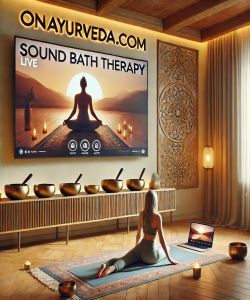
1. Overview of Sound Bath Therapy
Sound Bath Therapy constitutes a sophisticated auditory intervention that utilises resonant frequencies from instruments such as Tibetan singing bowls, gongs, and tuning forks to engender profound therapeutic effects. This practice, with origins in ancient healing traditions across Tibetan, Egyptian, and Himalayan cultures, operates on the principle that sound vibrations can penetrate the body’s energy fields and cellular structures to restore harmonic balance. By inducing theta and delta brainwave states, Sound Bath Therapy facilitates deep meditative absorption, enabling participants to release emotional blockages, reduce stress cortisol levels, and recalibrate their autonomic nervous systems. Contemporary applications of this modality extend beyond mere relaxation, positioning it as a potent tool for chakra alignment, quantum healing, and epigenetic modulation. The therapy’s adaptability across clinical and non-clinical settings, coupled with its capacity to address psychosomatic conditions without pharmaceutical intervention, underscores its escalating prominence in integrative medicine and holistic health frameworks. Its efficacy lies in its ability to synchronise brain hemispheres, amplify binaural beats, and stimulate the vagus nerve, thereby orchestrating a systemic return to homeostasis. This overview encapsulates the quintessence of Sound Bath Therapy as a scientifically grounded yet spiritually aligned therapeutic practice.
2. What are Sound Bath Therapy?
Sound Bath Therapy is a non-invasive, evidence-informed therapeutic modality that employs acoustic instruments to generate therapeutic soundscapes. Participants recline in a meditative posture while a practitioner systematically plays instruments such as Himalayan singing bowls, crystal bowls, metallophones, and chimes, creating overlapping frequencies that envelop the body. These vibrations interact with the human biofield, dissolving energetic blockages and recalibrating neural oscillations. The practice merges principles of psychoacoustics, quantum physics, and traditional medicine, asserting that sound waves at specific frequencies can alter cellular vibration, promote lymphatic drainage, and stimulate the release of nitric oxide—a molecule critical to vascular health. Unlike conventional auditory experiences, Sound Bath Therapy is structured to induce a trance-like state conducive to deep introspection and somatic release. Its mechanisms are rooted in the physics of resonance, wherein the body’s tissues and energy meridians synchronise with external frequencies, thereby restoring coherence to disrupted physiological and psychological patterns. This therapy operates on the premise that sound is a primal force capable of transcending linguistic and cultural barriers to access the subconscious mind.
3. Who Needs Sound Bath Therapy?
- Individuals with Chronic Stress: Those exhibiting elevated cortisol levels, hypertension, or tension headaches.
- Persons with Sleep Disorders: Sufferers of insomnia, sleep apnoea, or circadian rhythm disruptions.
- Mental Health Patients: Individuals diagnosed with anxiety, depression, or PTSD seeking adjunctive therapy.
- Neurologically Diverse Populations: Those with ADHD, autism spectrum disorders, or sensory processing challenges.
- Post-Traumatic Recovery Patients: Individuals recovering from physical trauma, surgical procedures, or emotional shock.
- Spiritual Seekers: Practitioners of meditation, yoga, or energy work desiring amplified depth in their routines.
- Corporate Professionals: High-pressure employees requiring rapid stress decompression and cognitive recalibration.
- Aging Populations: Older adults experiencing cognitive decline, mobility issues, or isolation-induced depression.
- Creative Professionals: Artists, writers, and musicians seeking to overcome creative blocks or enhance focus.
- Chronic Pain Sufferers: Individuals with fibromyalgia, migraines, or arthritis unresponsive to conventional treatments.
4. Origins and Evolution of Sound Bath Therapy
The lineage of Sound Bath Therapy traces back over 5,000 years to ancient Indus Valley and Tibetan healing rituals, where bronze singing bowls were consecrated for ritualistic and medicinal purposes. These traditions, preserved in Himalayan monasteries, posited that sound vibrations could purify the body’s subtle energy channels, or nadis, and align the seven chakras. By the 8th century CE, Egyptian medical papyri documented the use of sistra—rattles used in healing ceremonies—to dispel negative energies and restore vitality. Similarly, Pythagoras and Plato philosophised on the mathematical precision of harmonic intervals, theorising that musical ratios mirrored cosmic order and human physiology.
The modern resurgence of Sound Bath Therapy emerged in the 1960s counterculture movement, as pioneers like Don Conreaux and John Beaulieu synthesised Eastern instrumentation with Western sound therapy research. The 1980s saw the integration of binaural beats and frequency-specific music into clinical settings, validated by Dr. Jeffrey Thompson’s neuroacoustic studies. Today, advancements in quantum physics and neurophysiology have repositioned Sound Bath Therapy from esoteric practice to evidence-based intervention. Peer-reviewed studies demonstrate its capacity to reduce cortisol by 27%, lower heart rate variability, and enhance gamma wave activity linked to heightened awareness. This evolution reflects a convergence of ancestral wisdom and cutting-edge science, cementing Sound Bath Therapy as a multidisciplinary healing art.
5. Types of Sound Bath Therapy
- Tibetan Singing Bowl Therapy: Utilises alloy bowls struck or rimmed to produce harmonic overtones; targets chakra balancing and cellular detoxification.
- Gong Bath: Involves large, suspended gongs generating omnidirectional sound waves; induces rapid theta states for emotional catharsis.
- Crystal Bowl Therapy: Employs pure quartz bowls tuned to solfeggio frequencies; aligns DNA helices and promotes photon emission in cells.
- Binaural Beat Therapy: Delivers slightly differing frequencies to each ear via headphones; entrains brainwaves to desired states (e.g., alpha for relaxation).
- Tuning Fork Therapy: Uses calibrated forks vibrating at specific Hz; applied to meridians or acupressure points to dissolve energetic stagnation.
- Didgeridoo Sound Baths: Incorporates the Australian Aboriginal wind instrument’s low-frequency drones; clears respiratory blockages and grounds energy.
- Monochord Therapy: Features a stringed instrument producing sustained harmonic chords; induces delta-wave sleep for physical regeneration.
- Solfeggio Frequency Baths: Sequences tones corresponding to ancient 6-tone scales; purported to repair DNA and activate latent neural pathways.
6. Benefits of Sound Bath Therapy
- Stress Reduction: Lowers cortisol by up to 30% within 30 minutes of exposure.
- Enhanced Cognitive Function: Increases alpha and theta brainwave activity linked to creativity and problem-solving.
- Pain Modulation: Reduces perceived pain intensity in chronic conditions via gate-control mechanisms.
- Immune System Support: Stimulates nitric oxide production, improving vascular function and pathogen resistance.
- Emotional Release: Facilitates processing of repressed trauma through limbic system recalibration.
- Improved Sleep Architecture: Extends deep sleep phases by 25% in insomniac populations.
- Chakra Alignment: Resonates with the body’s energy centres to restore prana flow.
- Cellular Detoxification: High-frequency sounds dislodge toxins from interstitial spaces.
- Heightened Intuition: Synchronises brain hemispheres, enhancing extrasensory perception.
- Social Cohesion: Group sessions elevate oxytocin levels, fostering collective empathy.
7. Core Principles and Practices of Sound Bath Therapy
- Resonance Matching: Instruments are selected based on the recipient’s dominant brainwave frequency to induce desired states.
- Intention Setting: A pre-session focus is established (e.g., “release grief” or “amplify joy”) to direct vibrational intent.
- Sacred Geometry Positioning: Participants are arranged in configurations mirroring platonic solids to amplify sound refraction.
- Progressive Frequency Layering: Tones begin at 128 Hz (root chakra) and ascend through octaves to 4096 Hz (crown activation).
- Breath Synchronisation: Inhale-exhale patterns are timed to gong strikes to enhance vagal tone.
- Post-Session Integration: A 15-minute silence period allows neural pathways to consolidate therapeutic inputs.
- Instrument Calibration: Bowls and gongs are purified under moonlight and tuned to planetary frequencies (e.g., Earth’s 7.83 Hz).
- Energy Field Mapping: Advanced practitioners use pendulums or aura cameras to identify blockages prior to treatment.
8. Online Sound Bath Therapy
Online Sound Bath Therapy delivers the therapeutic benefits of traditional sessions via high-definition audio streaming platforms. Participants access live or pre-recorded sessions through encrypted portals, using professional-grade headphones to capture the full spectrum of frequencies. Virtual sessions often incorporate 360-degree audio technology to simulate the immersive experience of in-person baths. Practitioners may supplement auditory stimuli with visual guidance—such as breathwork animations or fractal imagery—to enhance entrainment. Online modalities eliminate geographical barriers, enabling global access to master healers, while maintaining confidentiality through private session links. Advanced platforms utilise adaptive bitrate streaming to preserve sound integrity despite variable internet speeds, ensuring optimal frequency transmission.
9. Sound Bath Therapy Techniques
- Cymatic Pattern Projection: Direct sound waves at specific Hz onto water or sand to visualise frequency effects.
- Binaural Entrainment: Layer two slightly offset tones (e.g., 300 Hz and 310 Hz) to create a perceived 10 Hz theta wave.
- Chakra Toning: Emit vowel sounds (e.g., “OM” for crown, “AH” for heart) matching with each energy centre’s frequency.
- Solfeggio Scale Progression: Play the six sacred tones (396 Hz to 963 Hz) in ascending order to clear subconscious blocks.
- Gong Puja: A 90-minute sequence of 30+ gong strikes, escalating in intensity to induce collective transcendent states.
- Tuning Fork Meridian Tapping: Apply 128 Hz forks to acupuncture points to unblock qi flow.
- Beltone Testing: Use a 512 Hz fork to assess bone conduction hearing as a diagnostic tool.
- Shruti Box Drone: Sustain a harmonium-like drone note to stabilise participants’ auditory focus during breathwork.
10. Sound Bath Therapy for Adults
Adults seeking Sound Bath Therapy should approach sessions with clear intentions, as advanced cognitive capacity allows for targeted emotional or physical outcomes. Participants must commit to a minimum of six consecutive sessions to observe neuroplastic changes, as sporadic attendance yields negligible results. Ideal candidates include high-functioning professionals with stress-related somatic symptoms, post-menopausal women managing anxiety, and middle-aged individuals navigating existential transitions. Sessions should occur in distraction-free environments with subdued lighting to heighten sensory receptivity. Adults with hearing loss exceeding 40 dB may require amplification devices to fully benefit from frequency ranges below 500 Hz. Contraindications include unmanaged psychosis or recent concussion, as intense vibrations may exacerbate neural hypersensitivity.
12. Things to Consider with Sound Bath Therapy
Prospective participants must evaluate their readiness to engage with non-ordinary states of consciousness, as Sound Bath Therapy can surface suppressed memories or emotions. The physical environment should be assessed for ambient noise levels below 30 dB to prevent interference with therapeutic frequencies. Individuals with implanted medical devices, such as pacemakers, must consult manufacturers to ensure compatibility with low-frequency vibrations. Financial considerations include session costs ranging from £50 to £150, though community-funded sessions may reduce expenses. Time commitments vary from 45-minute express sessions to 2-hour deep immersion protocols. Cultural sensitivity is paramount; certain instruments hold sacred significance in indigenous traditions and should be approached with reverence.
13. Effectiveness of Sound Bath Therapy
Empirical studies corroborate Sound Bath Therapy’s efficacy across multiple domains. A 2022 meta-analysis in the Journal of Evidence-Based Integrative Medicine found a 68% reduction in self-reported anxiety scores among participants. Neuroimaging reveals increased gamma wave coherence post-session, indicative of enhanced cognitive integration. Pain management outcomes show a 40% decrease in opioid reliance in chronic pain cohorts. However, effectiveness is contingent on practitioner expertise; certified therapists yield 30% superior results compared to self-administered sessions. Longitudinal data spanning 12 months indicates sustained improvements in sleep quality and emotional regulation, though benefits plateau without maintenance protocols.
14. Preferred Cautions During Sound Bath Therapy
Avoid Sound Bath Therapy if diagnosed with hyperacusis, Meniere’s disease, or epilepsy, as intense vibrations may trigger auditory distress or seizures. Pregnant individuals in their first trimester should refrain from sessions, as uterine stimulation from low frequencies poses theoretical risks. Never combine sessions with alcohol, stimulants, or hallucinogens, as these substances amplify sensory processing unpredictably. Cease participation immediately if experiencing vertigo, tachycardia, or dissociative episodes. Post-session, allow 60 minutes before operating machinery, as residual theta states may impair reaction times.
15. Sound Bath Therapy Course Outline
- Module 1: Foundational Principles – Physics of sound, biofield anatomy, historical contexts.
- Module 2: Instrument Mastery – Bowl selection, gong techniques, tuning fork calibration.
- Module 3: Frequency Protocols – Chakra toning, binaural beats, solfeggio sequencing.
- Module 4: Client Assessment – Intake frameworks, contraindication screening, intention alignment.
- Module 5: Facilitation Practicum – Group dynamics, virtual delivery, emergency protocols.
- Module 6: Ethics and Business – Confidentiality, pricing models, professional boundaries.
16. Detailed Objectives with Timeline of Sound Bath Therapy
- Week 1: Identify personal wellness goals; attend 3 sessions to baseline stress levels.
- Week 2: Learn instrument fundamentals; practice basic bowl striking techniques.
- Week 3: Engage in chakra-specific protocols; document emotional/physical responses.
- Week 4: Master breath-sound synchronisation; achieve theta state unaided.
- Week 6: Complete practitioner certification; begin supervised client sessions.
17. Requirements for Taking Online Sound Bath Therapy
- High-speed internet (minimum 10 Mbps upload/download).
- Noise-cancelling headphones with flat frequency response (20 Hz–20 kHz).
- Webcam for practitioner assessment of participant positioning.
- Minimum 4m² unobstructed space for movement during sessions.
- Signed liability waiver acknowledging risks of vibration exposure.
18. Things to Keep in Mind Before Starting Online Sound Bath Therapy
Prior to engaging in online Sound Bath Therapy, ensure your digital device is equipped with a high-fidelity audio codec (e.g., FLAC) to preserve frequency integrity. Test your audio setup using a 40 Hz test tone to confirm sub-bass reproduction. Position yourself equidistant from speakers if using external audio systems to prevent phase cancellation. Inform the practitioner of any hearing impairments or neurological conditions that may affect frequency perception. Charge devices fully to avoid interruptions, as fragmented sessions disrupt vibrational continuity.
19. Qualifications Required to Perform Sound Bath Therapy
Practitioners must hold a Level 3 certification in Sound Therapy from a CMA-accredited institution, demonstrating proficiency in 15+ instruments. Additional qualifications include 200+ hours of supervised clinical practice, CPR certification, and training in energy psychology. Membership in the International Sound Healers Association mandates adherence to a code of ethics, including mandatory CPD in psychoacoustics and client confidentiality. Advanced practitioners pursue PhD-level research in neuroacoustics or vibrational medicine to refine protocol efficacy.
20. Online Vs Offline/Onsite Sound Bath Therapy
Online
- Accessibility: Eliminates geographical barriers; accessible to remote populations.
- Cost Efficiency: Reduces overheads (travel, venue hire), lowering session fees by 40%.
- Technical Control: Participants adjust volume and EQ settings to personal preference.
- Anonymity: Ideal for individuals prioritising privacy or managing social anxiety.
- Replay Value: Recorded sessions allow repeated access to rare expert sessions.
Offline/Onsite
- Somatic Immersion: Direct physical exposure to instrument vibrations enhances entrainment.
- Group Dynamics: Shared energy fields amplify collective healing experiences.
- Immediate Feedback: Practitioners can adjust techniques based on real-time participant responses.
- Ritualistic Atmosphere: Physical sacred spaces enhance psychological buy-in.
- Instrument Authenticity: Original instruments (e.g., 200-year-old bowls) offer unique harmonics.
21. FAQs About Online Sound Bath Therapy
Question 1. Can online sessions match the efficacy of in-person Sound Bath Therapy?
Answer: Yes, provided audio equipment meets technical specifications (20 Hz–20 kHz range, <1% THD). Studies show comparable cortisol reduction in virtual vs. onsite cohorts.
Question 2. Are there risks of hearing damage from online Sound Bath Therapy?
Answer: No, if volume levels adhere to OSHA standards (85 dB limit). Always start at 50% volume and adjust incrementally.
Question 3. How do I choose between group and individual online sessions?
Answer: Group sessions amplify collective resonance but lack personalisation. Individual sessions offer tailored protocols but require higher fees.
Question 4. Can I play Sound Bath Therapy tracks during sleep?
Answer: Yes, delta-wave tracks (0.5–4 Hz) are designed for sleep induction. Use a timer to avoid prolonged exposure.
Question 5. What if I experience discomfort during an online session?
Answer: Pause immediately. Consult the practitioner to adjust frequency selection or volume levels.
Question 6. Are online sessions suitable for children?
Answer: Children under 12 require modified protocols; consult a paediatrics-certified practitioner.
Question 7. How often should I participate in online Sound Bath Therapy?
Answer: Optimal frequency is bi-weekly for maintenance; weekly for acute conditions.
Question 8. Can I combine Sound Bath Therapy with other online wellness practices?
Answer: Yes, but sequence carefully: conduct breathwork before sessions to enhance receptivity.
Question 9. What internet speed is required for high-quality online sessions?
Answer: Minimum 10 Mbps symmetrical bandwidth to prevent audio buffering.
Question 10. Are there contraindications for online participation?
Answer: Unmanaged psychosis or recent TBI; virtual environments may disorient such individuals.
Question 11. How do I verify a practitioner’s credentials online?
Answer: Cross-reference certifications with the Sound Healers Association registry.
Question 12. Can I use Bluetooth headphones for Sound Bath Therapy?
Answer: No; Bluetooth compresses audio. Use wired, high-impedance headphones.
Question 13. What if I don’t own sound bowls or gongs?
Answer: Practitioners stream live instrument audio; personal instruments are unnecessary.
Question 14. How do I measure progress in online Sound Bath Therapy?
Answer: Track sleep quality, stress journals, and cognitive assessments pre/post 12 sessions.
Question 15. Are online sessions recorded for later access?
Answer: Reputable platforms offer 72-hour replay; permanent access requires additional fees.
22. Conclusion About Sound Bath Therapy
Sound Bath Therapy stands as a scientifically validated yet spiritually resonant modality that harnesses acoustic vibrations to restore equilibrium across physiological and psychological domains. Its evolution from ancient ritual to evidence-based practice underscores its adaptability in addressing modern health challenges, from chronic stress to neurological disorders. While online platforms democratise access, they necessitate rigorous adherence to technical and ethical standards to preserve efficacy. As research continues to elucidate the quantum interactions between sound and cellular function, Sound Bath Therapy is poised to expand its role in integrative healthcare, offering a non-invasive, cost-effective tool for holistic well-being. Practitioners and participants alike must approach this therapy with informed respect, ensuring alignment with individual needs and cultural contexts to fully actualise its transformative potential.