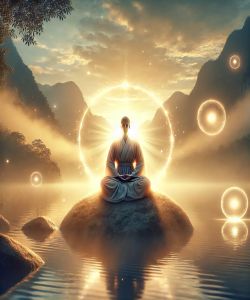
1. Overview of Spiritual Meditation
Spiritual meditation represents a rigorous and profound discipline, fundamentally distinct from secular mindfulness or mere relaxation techniques. Its central objective is not the simple calming of the mind but the deliberate cultivation of a connection with a higher consciousness, the divine, or the innermost self. This practice is predicated on the understanding that ordinary human awareness is limited and that a deeper, more expansive reality is accessible through disciplined interior exploration. It is an assertive journey inwards, designed to transcend the ego’s confines and grapple with existential questions concerning purpose, meaning, and the nature of existence itself. This is not a passive undertaking; it demands unwavering focus, sustained effort, and a willingness to confront uncomfortable truths about oneself and one’s place in the cosmos. The practitioner is not merely observing thoughts but is actively engaging with spiritual concepts, archetypes, or sacred energies to foster transformation. Unlike therapeutic modalities aimed at symptom reduction, spiritual meditation’s goal is complete metaphysical realignment. It operates on the principle that true peace and enlightenment are not found by rearranging external circumstances but by fundamentally altering one’s internal state of being. The framework of this practice is inherently structured, demanding adherence to established protocols that have been refined across millennia. It requires practitioners to move beyond the superficial chatter of daily life and enter a state of heightened awareness and receptivity, where direct, unmediated experience of the spiritual dimension becomes possible. This is a path of self-mastery and transcendence, requiring commitment, courage, and an uncompromising dedication to exploring the ultimate nature of reality.
2. What are Spiritual Meditation?
Spiritual meditation constitutes a specific class of contemplative practices aimed squarely at fostering a direct, experiential connection to a spiritual dimension, a deity, or a concept of ultimate reality. It is a purposeful and structured endeavour that moves beyond the psychological benefits of stress reduction to engage with the core of one's being and its relationship to the universe. This form of meditation is not monolithic; it encompasses a diverse array of techniques and philosophical underpinnings drawn from numerous world traditions, yet it is unified by its transcendent goal.
At its core, spiritual meditation is characterised by several key elements:
- Intentionality: The practice is initiated with a clear spiritual intention. This may be to commune with God, to realise one's True Self (Atman), to achieve enlightenment, or to align with a universal consciousness. This intention distinguishes it from secular practices that may have no defined higher purpose.
- Focus on the Transcendent: The focal point of the meditation is not merely the breath or bodily sensations for their own sake, but rather as anchors to access a state beyond the mundane. The focus may be a sacred mantra, a visualisation of a divine figure, a profound question (koan), or the cultivation of a specific spiritual quality such as unconditional love or compassion.
- Transformative Goal: The ultimate aim is not temporary relief but permanent transformation. This involves the purification of the mind, the dissolution of the ego, and the development of virtues such as wisdom, humility, and inner strength. It is a process of spiritual alchemy, turning the base consciousness into a refined and enlightened state.
- Framework of Belief: Spiritual meditation almost invariably operates within a specific cosmological or theological framework. This provides the context and meaning for the experiences that arise during practice. Whether it is Vedantic philosophy, Christian mysticism, Sufism, or Kabbalah, the tradition provides the map for the practitioner's inner journey.
Therefore, spiritual meditation is an active, demanding, and goal-oriented discipline for those seeking to explore realities beyond the five senses.
3. Who Needs Spiritual Meditation?
- Individuals Seeking Profound Existential Answers: Those who are no longer satisfied with superficial explanations for life's fundamental questions require this discipline. It is for the person grappling with the nature of existence, consciousness, and their ultimate purpose, providing a direct, experiential methodology for inquiry rather than relying solely on intellectual or dogmatic acceptance.
- Practitioners Aiming to Deepen Existing Faith: Adherents of established religious traditions who wish to move beyond ritual and doctrine into a direct, personal communion with the divine will find this practice indispensable. It offers the means to internalise one's faith, transforming it from a set of inherited beliefs into a vibrant, living reality.
- Those Navigating a Spiritual Crisis or Awakening: Individuals undergoing a spontaneous or challenging spiritual emergence need a structured framework to integrate their experiences. Spiritual meditation provides the necessary discipline and grounding to navigate intense states of consciousness, preventing disorientation and fostering meaningful growth.
- Persons Feeling a Sense of Emptiness or Disconnection: For those who feel alienated from themselves, from others, and from the world at large, this practice offers a direct path to re-establishing a sense of profound connection and belonging. It addresses the root cause of existential isolation by fostering a link to a reality greater than the individual ego.
- Individuals Committed to Radical Self-Transformation: This is not for the faint of heart. It is for those who are prepared to undertake the rigorous work of dismantling limiting self-concepts, confronting inner darkness, and systematically cultivating higher states of being. It is a path for spiritual warriors committed to achieving self-mastery.
- Creative and Intellectual Professionals Seeking Deeper Inspiration: Artists, philosophers, and thinkers who rely on insight and intuition can use spiritual meditation to access deeper wells of creativity and understanding. It facilitates a move beyond the rational mind into a state of receptive genius, where novel ideas and profound insights can emerge.
4. Origins and Evolution of Spiritual Meditation
The origins of spiritual meditation are ancient and deeply embedded within the dawn of human consciousness and organised religion, most notably in the Eastern traditions. The practice’s earliest systematic codification can be traced to the Vedic traditions of ancient India, thousands of years ago. The Upanishads, sacred Hindu texts, contain some of the first written elaborations on meditation (Dhyāna) as a means to realise Brahman (the ultimate reality) and Atman (the individual self or soul). These early forms were highly ritualised and esoteric, typically reserved for a priestly class and focused on complex internal visualisations and mantra recitations to achieve unity with the divine.
With the rise of Buddhism and Jainism around the 6th century BCE, spiritual meditation underwent a significant evolution. Gautama Buddha democratised the practice, detaching it from rigid Brahmanical ritual and presenting it as a direct path to enlightenment (Nirvana) accessible to anyone willing to undertake the discipline. Buddhist meditation diversified into numerous schools, from the focused calm of Samatha-Vipassana to the non-dual awareness of Zen (Zazen) and the intricate visualisations of Tibetan Vajrayana. The emphasis shifted from merging with a creator God to the direct perception of the nature of reality and the cessation of suffering through self-realisation.
During the medieval period, similar contemplative practices flourished independently in other parts of the world. Within Christianity, the Desert Fathers practised a form of repetitive prayer (hesychasm) to still the mind and achieve a state of union with God. In Islam, Sufi mystics developed practices like Dhikr (remembrance of God) and Muraqaba (observation) to annihilate the ego and experience divine presence. Jewish Kabbalah also contains its own complex meditative techniques aimed at comprehending the divine emanations (Sefirot) and ascending the metaphysical planes.
In the modern era, the evolution of spiritual meditation has been characterised by cross-pollination and secularisation. The transmission of Eastern philosophies to the West led to a synthesis of different approaches. Whilst many practitioners continue to follow traditional, lineage-based paths, a new, more eclectic form of spiritual meditation has emerged, often stripped of its deep-rooted religious dogma to appeal to a "spiritual but not religious" demographic. This contemporary evolution prioritises personal experience and psychological well-being, yet it still retains the core objective of its ancient predecessors: the quest for transcendent meaning and connection.
5. Types of Spiritual Meditation
The methodologies of spiritual meditation are diverse, each rooted in a distinct philosophical or theological framework. A clear understanding of these types is essential for any serious practitioner.
- Vipassanā Meditation: Originating from the Theravada Buddhist tradition, Vipassanā means "insight" or "clear-seeing." This is a rigorous and systematic practice of observing reality as it is. The meditator uses disciplined attention, often anchored to the breath, to scan the body and mind, noting all physical and mental phenomena without attachment or aversion. The spiritual goal is the direct, experiential understanding of the three marks of existence: impermanence (anicca), unsatisfactoriness (dukkha), and non-self (anattā), leading ultimately to liberation.
- Zazen Meditation: Central to Zen Buddhism, Zazen translates to "seated meditation." The primary instruction is "shikantaza," or "just sitting." Practitioners assume a precise, stable posture and allow thoughts to arise and pass without being engaged or judged. It is an act of pure presence and awareness. The spiritual objective is not to achieve a particular state but to realise one's inherent Buddha-nature, a state of enlightened awareness that is already present beneath the surface of the thinking mind.
- Vedic and Transcendental Meditation (TM): This type originates from the ancient Vedic tradition of India. Practitioners are given a specific mantra, a meaningless sound vibration, which they are instructed to repeat silently. The mantra serves as a vehicle to allow the mind to settle down effortlessly and experience quieter, more subtle levels of thought, ultimately transcending thought altogether to arrive at a state of pure, silent awareness or "Transcendental Consciousness." The spiritual aim is contact with the "source of thought," a field of creative intelligence.
- Contemplative Prayer/Christian Meditation: Rooted in Christian mysticism, this practice involves quieting the mind to rest in the presence of God. Unlike petitionary prayer, it is a silent, receptive state. Techniques may involve focusing on a single sacred word (such as "Maranatha") or simply maintaining a silent, loving attention towards the divine. The goal is transformative union with God, moving beyond intellectual concepts to a direct, heart-centred experience of divine love and presence.
- Sufi Meditation (Muraqaba): Within the mystical branch of Islam, Muraqaba involves focused contemplation on God, His attributes, or the relationship between God and the practitioner. It is a state of watchful awareness, waiting for divine illumination. The objective is to purify the self (nafs) and dissolve the ego in the divine presence, a state known as "fana" or annihilation, leading to "baqa" or subsistence in God.
6. Benefits of Spiritual Meditation
- Cultivation of Profound Inner Peace: Beyond mere stress reduction, this practice systematically dismantles the deep-seated mental and emotional structures that generate turmoil. It fosters a stable, resilient state of equanimity that remains unshaken by external circumstances, providing a sanctuary of stillness amidst life's inherent volatility.
- Development of Existential Clarity and Purpose: Spiritual meditation directly confronts the fundamental questions of meaning, identity, and purpose. It provides a structured methodology for moving beyond intellectual speculation to achieve direct, intuitive insight into one's place in the cosmos, leading to a life guided by unwavering conviction.
- Transcendence of the Ego: The practice is designed to expose the illusory and restrictive nature of the ego-construct. Through disciplined observation and inquiry, the practitioner learns to disidentify from the limited, fear-based self, paving the way for the experience of a more expansive, unified, and authentic identity.
- Enhanced Intuition and Wisdom: By quieting the incessant noise of the rational mind, spiritual meditation opens a channel to deeper, intuitive faculties. This facilitates access to a form of wisdom that is not based on accumulated knowledge but on direct, holistic insight, enabling more discerning and effective decision-making.
- Forging a Direct Connection to the Transcendent: The primary benefit is the establishment of a direct, experiential relationship with whatever the practitioner defines as the ultimate reality—be it God, Brahman, Universal Consciousness, or the True Self. This transforms faith from a belief system into a lived, palpable reality.
- Increased Compassion and Empathy: As the practitioner's perspective expands beyond the narrow confines of the self, a natural and profound sense of compassion for all beings arises. The recognition of a shared, underlying consciousness fosters a deep sense of interconnectedness, reducing judgement and promoting genuine empathy.
- Mastery Over Mental and Emotional States: This discipline imparts the ability to observe and regulate one's thoughts and emotions without being controlled by them. It is the ultimate form of mental self-mastery, granting the practitioner sovereignty over their internal landscape and freeing them from reactive patterns.
7. Core Principles and Practices of Spiritual Meditation
- Unwavering Intention (Sankalpa): Every session must be initiated with a clearly defined spiritual purpose. This is not a vague hope for relaxation but a powerful, focused resolve. The intention might be to realise one's true nature, to commune with the divine, or to cultivate a specific spiritual virtue. This principle frames the entire practice and directs the consciousness towards a transcendent goal.
- Disciplined Posture (Asana): A stable, upright, and still physical posture is non-negotiable. The spine must be erect to facilitate the optimal flow of energy and maintain alertness. This physical stillness mirrors and cultivates the required mental stillness. The body is not an inconvenience; it is a tool for the practice and must be held with disciplined respect.
- Conscious Breath Regulation (Pranayama): The breath is the critical link between the body, mind, and spirit. The practice demands conscious, deliberate control or observation of the breath. This serves to calm the nervous system, gather scattered mental energy, and anchor the awareness in the present moment, creating the necessary stability for deeper exploration.
- Systematic Withdrawal of the Senses (Pratyahara): The practitioner must learn to deliberately withdraw attention from external sensory stimuli. This is an active process of turning the consciousness inwards, away from the distractions of the outside world. This internalisation is a prerequisite for any meaningful spiritual inquiry, as the focus must be entirely on the inner landscape.
- Single-Pointed Concentration (Dharana): The mind must be trained to rest its full attention on a single object without deviation. This object may be a mantra, a visualised image, a spiritual concept, or the breath itself. This practice of sustained focus builds the mental muscle necessary to penetrate deeper states of consciousness and prevent the mind from wandering aimlessly.
- Witnessing Consciousness (Sakshi Bhava): A fundamental principle is the cultivation of a detached, non-judgemental observer. The practitioner learns to watch the flow of thoughts, emotions, and sensations as if they were clouds passing in the sky. This disidentification from mental content is the key to realising that one is not the mind, but the awareness that perceives it.
- Surrender and Receptivity: After establishing focus and detachment, the ultimate practice involves a state of surrender. This is a letting go of all effort and control, allowing the practitioner to become a receptive vessel for insight, grace, or divine communication. It is a transition from active doing to a state of profound, aware being.
8. Online Spiritual Meditation
- Unprecedented Accessibility: The online format eradicates geographical and logistical barriers. It provides immediate access to high-calibre instruction and established traditions that would otherwise be inaccessible to individuals living in remote areas or those with mobility or scheduling constraints. This democratises access to profound spiritual teachings.
- Cultivation of Supreme Self-Discipline: Without the external structure of a physical centre, the practitioner is compelled to cultivate an uncompromising level of self-discipline. The responsibility for creating a sacred space, eliminating distractions, and adhering to the practice schedule rests solely with the individual. This forges a powerful inner resolve and commitment that is fundamental to spiritual progress.
- A Controlled and Personalised Environment: The practitioner has absolute control over their environment. They can tailor the physical space—lighting, temperature, and silence—to their precise requirements, creating an optimal sanctuary for deep inner work. This eliminates the potential distractions and discomforts of a shared public space, allowing for a more focused and personalised experience.
- Anonymity and Reduced Self-Consciousness: The online medium can provide a veil of anonymity that encourages vulnerability and honesty in practice. Individuals may feel less self-conscious or judged than they might in a physical group setting. This can facilitate a deeper and more authentic engagement with the practice, free from the social pressures of performance or comparison.
- Access to a Global Community and Niche Traditions: Digital platforms connect practitioners with a global community, fostering a sense of shared purpose that transcends national borders. Furthermore, it allows individuals to find and engage with highly specific or niche spiritual traditions and teachers that would be impossible to locate locally, ensuring a perfect alignment of practice with personal inclination.
- Cost and Time Efficiency: By eliminating the need for travel and the associated costs of commuting and accommodation for retreats, online spiritual meditation presents a more efficient model. The time saved can be reinvested directly into the practice itself, allowing for greater consistency and depth of engagement without the logistical overhead of in-person attendance.
- Direct Integration into Daily Life: Practising within one's own home environment facilitates a seamless integration of meditative states into daily living. The boundary between the formal practice session and the rest of the day becomes more porous, encouraging the practitioner to carry the qualities of mindfulness, peace, and awareness into all their activities.
9. Spiritual Meditation Techniques
The execution of spiritual meditation is a structured process, not an arbitrary reverie. The following steps provide a robust framework for a practitioner to follow with disciplined precision.
- Step One: Preparation of the Sanctum: Designate and prepare a physical space dedicated solely to this practice. It must be clean, silent, and free from all potential interruptions. This act of preparation is a ritual in itself, signalling to the mind that a transition from the mundane to the sacred is about to occur. Eliminate all digital devices and ensure you will not be disturbed.
- Step Two: Assumption of the Posture (Asana): Seat yourself on a cushion or chair. The primary requirement is an erect, unsupported spine. The posture must be stable, firm, and yet relaxed. The hands can be placed in a specific mudra or rested comfortably on the lap. The body is to remain as motionless as possible throughout the session. This physical discipline is fundamental to mental discipline.
- Step Three: Invocation and Intention Setting (Sankalpa): Verbally or mentally state your precise spiritual intention for the practice. This is a command to your consciousness. It might be to connect with the divine, to seek insight into a specific spiritual question, or to cultivate a particular quality like compassion. This sets the trajectory for the entire meditation.
- Step Four: Anchoring Awareness with Breath (Pranayama): Bring your full and undivided attention to the process of breathing. Observe the natural inhalation and exhalation without controlling it. Use the sensation of the breath as an anchor to hold your awareness in the present moment. Each time the mind wanders, firmly but gently return it to the breath. This builds foundational concentration.
- Step Five: Engagement with the Spiritual Focus: Once a degree of stability is achieved, transition your focus from the breath to your chosen spiritual object. This could be the silent repetition of a mantra, the detailed visualisation of a sacred form or symbol, or deep contemplation on a spiritual concept. Immerse your entire being in this focal point, allowing it to saturate your consciousness.
- Step Six: Deepening into Receptive Stillness: After a period of intense focus, release the effort. Let go of the technique and simply rest in the state of awareness that has been cultivated. This is a phase of silent, open receptivity. It is in this stillness that insights emerge, and a deeper connection can be experienced. Be a witness to whatever arises, without judgement or analysis.
- Step Seven: Grounding and Integration: Gently bring your awareness back to the body and the breath. Slowly re-engage the senses. Conclude the practice with a moment of gratitude or a dedication of any merit gained from the practice. It is imperative to transition back into worldly activity slowly and mindfully, carrying the state of peace with you.
10. Spiritual Meditation for Adults
Spiritual meditation for adults is a mature and demanding undertaking, fundamentally different from the simplified techniques often taught to younger demographics. It presupposes a level of life experience that gives rise to the profound existential questions that this practice is designed to address. For the adult practitioner, meditation is not an escape from the pressures of career, family, and societal obligations, but a direct and courageous confrontation with the core anxieties and aspirations that define adult life. It is a tool for navigating the complexities of responsibility, mortality, and the search for enduring meaning in a world that often seems devoid of it. The practice demands a robust intellectual and emotional constitution, as it frequently involves dismantling long-held beliefs, egoic structures, and defence mechanisms that have been constructed over decades. This is not a gentle pastime but a rigorous form of inner work that requires the discipline and resilience that adulthood should ideally confer. It calls upon the adult to move beyond the reactive patterns of their youth and to cultivate a sovereign internal state, one that is not dictated by external validation or transient emotional states. The aim is the development of unshakeable inner authority, wisdom, and a compassionate perspective that can only be forged in the crucible of sustained, disciplined self-inquiry. The adult practitioner engages with spiritual meditation not as a curiosity, but as an essential strategy for living a conscious, purposeful, and integrated life in the face of its inevitable challenges. It is the ultimate commitment to personal evolution, undertaken with the full weight of one's life experience and a serious intent to realise one's highest potential.
11. Total Duration of Online Spiritual Meditation
The standardised total duration for a formal online spiritual meditation session is rigorously set at 1 hr. This specific timeframe is not arbitrary; it is a deliberately structured period designed to facilitate a complete and effective cycle of practice, from initial settling to deep immersion and final integration. A shorter duration often proves insufficient for moving beyond the superficial chatter of the mind, whilst a significantly longer period can be unsustainable for consistent daily practice and may lead to fatigue or agitation for those not accustomed to prolonged stillness. Within this 1 hr container, a precise architecture is typically observed. The initial phase is dedicated to settling the body and mind, transitioning from external activity to internal focus. The central, most substantial portion of the hour is reserved for the core meditation technique itself, allowing ample time for the practitioner to achieve depth and stability. The final part of the hour is critically important, allocated for a gradual return to ordinary awareness, grounding, and the mindful integration of the meditative state. Adherence to the full 1 hr duration is a non-negotiable aspect of the discipline. It cultivates stamina, focus, and a profound respect for the practice. Cutting the session short compromises its integrity and transformative potential. This structure ensures that the practitioner engages in a comprehensive and balanced session that honours the gravity of the work being undertaken, making the 1 hr commitment a cornerstone of serious online spiritual practice and a testament to the individual's dedication to their inner development.
12. Things to Consider with Spiritual Meditation
Engaging with spiritual meditation necessitates a sober and comprehensive consideration of its profound implications and demanding nature. This is not a casual endeavour to be undertaken lightly; it is a transformative path that will fundamentally challenge one's perception of self and reality. Prospective practitioners must first assess their own psychological stability. This discipline can bring suppressed emotional and psychological material to the surface, and it requires a robust and resilient mental framework to process what arises without becoming destabilised. It is not a substitute for professional mental health treatment. Furthermore, one must carefully scrutinise the chosen tradition and teacher. The spiritual path is fraught with potential for misguidance and exploitation. It is imperative to select a lineage with a verifiable history of ethical conduct and a teacher who embodies the qualities they purport to teach. A critical mind must be maintained. Blind faith is a liability; the practice should encourage direct experience and discerning wisdom, not mindless subservience. The practitioner must also be prepared for periods of dryness, doubt, and difficulty, known in mystical traditions as "dark nights." Progress is rarely linear, and the path often involves confronting one's own shadow, a process that requires immense courage and perseverance. Finally, one must consider the impact of a deepening practice on one's life and relationships. As perception shifts and priorities change, it can create friction with existing social and familial structures. A commitment to spiritual meditation is a commitment to a radical reordering of one's life from the inside out, a fact that must be faced with clarity and resolve before the journey begins.
13. Effectiveness of Spiritual Meditation
The effectiveness of spiritual meditation is contingent upon a triad of non-negotiable factors: the practitioner's sincerity, the rigour of the practice, and the authenticity of the guiding tradition. When these three elements are aligned, the practice is unequivocally effective in achieving its stated aims of spiritual transformation and transcendent connection. Its efficacy is not measured by the fleeting standards of stress reduction or mood enhancement, but by a fundamental and permanent shift in the practitioner’s baseline state of consciousness. This is evidenced by the cultivation of unshakeable equanimity, the dissolution of egoic fixation, and the emergence of profound insight and compassion. The effectiveness is directly proportional to the effort invested; it yields results for those who approach it with the same seriousness and discipline as they would any other high-stakes endeavour. The practice works by systematically deconditioning the mind from its habitual patterns of distraction, reactivity, and negativity, creating an internal space for a deeper reality to be perceived. It is a direct, empirical methodology. Its results are not a matter of belief but of direct, repeatable experience for the dedicated individual. To question its effectiveness is to misunderstand its nature; it is a tool, and like any powerful tool, its utility is determined entirely by the skill and commitment of the user. For the committed practitioner who follows the prescribed techniques with precision and unwavering dedication, spiritual meditation is not merely effective; it is the most direct and potent means available for exploring the ultimate nature of the self and reality.
14. Preferred Cautions During Spiritual Meditation
It is imperative to approach spiritual meditation with a robust awareness of its potential hazards, applying rigorous caution throughout the practice. The primary danger lies in spiritual bypassing: the misuse of spiritual concepts and practices to avoid confronting unresolved psychological issues, emotional wounds, and essential life responsibilities. The practitioner must remain vigilant against the tendency to retreat into a pseudo-serene state as an escape, rather than as a foundation from which to engage with life more fully. A second critical caution concerns ego inflation. Early experiences of blissful states or minor insights can be co-opted by the ego, leading to a sense of spiritual superiority, specialness, or "enlightenment" that is merely a more subtle form of self-aggrandisement. This is a significant trap that arrests genuine progress. Therefore, humility and a constant self-interrogation of motives are non-negotiable. Furthermore, one must be cautious of becoming ungrounded. Intense focus on higher or subtle realms without a corresponding connection to the physical body and practical reality can lead to dissociation, spaciness, and an inability to function effectively in the world. Regular grounding practices are not optional but essential. Finally, there must be extreme caution regarding interpretation of experiences. The inner world is complex, and not every vision or energy shift is a sign of divine communication or progress. Without a seasoned guide and a healthy dose of scepticism, it is easy to become lost in a self-created fantasy. Unwavering discernment is the practitioner's most vital shield.
15. Spiritual Meditation Course Outline
A structured course in spiritual meditation must follow a logical, progressive framework. The following outline constitutes a comprehensive and rigorous curriculum.
Module 1: Foundational Principles and Preparation
- Point 1.1: The Philosophical Underpinnings: A rigorous examination of the tradition's core concepts regarding consciousness, reality, and the ultimate goal of the practice.
- Point 1.2: The Imperative of Intention (Sankalpa): Training in the formulation of a clear, potent spiritual objective to guide the practice.
- Point 1.3: Establishing the Sanctum: Practical instruction on creating a dedicated, consecrated space for meditation that is free from all distractions.
- Point 1.4: The Science of Posture (Asana): Detailed guidance on achieving a stable, erect, and sustainable seated posture for prolonged practice.
Module 2: The Gateway of Breath and Senses
- Point 2.1: Breath as Anchor (Pranayama): Core techniques for using the breath to calm the nervous system and achieve single-pointed concentration.
- Point 2.2: The Discipline of Sensory Withdrawal (Pratyahara): Systematic methods for turning the awareness inward and disengaging from external sensory input.
Module 3: Core Techniques of Concentration and Contemplation
- Point 3.1: Mastery of Focus (Dharana): Intensive training in maintaining unbroken attention on a chosen meditative object (e.g., mantra, visualisation).
- Point 3.2: Deep Contemplation (Dhyāna): Transitioning from forced concentration to an effortless, sustained flow of awareness on the spiritual object or theme.
- Point 3.3: Introduction to Non-Dual Awareness: Exploring practices that point towards the recognition of a unified field of consciousness, beyond the subject-object split.
Module 4: Navigating the Inner Landscape
- Point 4.1: The Art of Witnessing (Sakshi Bhava): Cultivating the impartial observer of thoughts and emotions without identification.
- Point 4.2: Confronting the Shadow: Guidance on how to skillfully meet and integrate challenging psychological material that may arise.
- Point 4.3: Discerning Inner States: Differentiating between genuine insight, psychological projection, and spiritual bypassing.
Module 5: Integration and Embodiment
- Point 5.1: The Art of Surrender and Receptivity: Techniques for letting go of effort and entering a state of open awareness (Samadhi).
- Point 5.2: Grounding and Returning: Proper protocol for concluding the practice and transitioning back to daily activity.
- Point 5.3: Living the Practice: Strategies for integrating meditative insights and qualities into every aspect of one's life, ensuring the practice does not remain isolated on the cushion.
16. Detailed Objectives with Timeline of Spiritual Meditation
The objectives of a structured spiritual meditation programme are achieved through a phased, disciplined timeline. Progress is systematic, not haphazard.
Phase 1: Foundation (Initial Period)
- Objective 1: Establish an Unbroken Daily Practice. The practitioner will achieve absolute consistency, meditating at the designated time each day without fail. This establishes the bedrock of discipline.
- Objective 2: Master Postural Stability. The practitioner will be able to hold a correct and motionless meditation posture for the full duration of the session without significant physical distraction.
- Objective 3: Achieve Basic Concentration. The practitioner will be able to maintain focus on the primary object of meditation (e.g., the breath) for sustained periods, consistently returning the mind from distraction.
Phase 2: Deepening (Intermediate Period)
- Objective 4: Cultivate Sensory Withdrawal (Pratyahara). The practitioner will demonstrate the ability to significantly reduce the impact of external sensory stimuli and maintain a predominantly internal focus during the session.
- Objective 5: Develop Witness Consciousness. The practitioner will be able to observe the arising and passing of thoughts and emotions from a detached perspective, reducing identification with mental content.
- Objective 6: Access Initial States of Profound Calm. The practitioner will consistently experience periods of deep mental silence and stillness, transcending the surface-level chatter of the mind.
Phase 3: Insight and Transformation (Advanced Period)
- Objective 7: Experience Direct Insight (Prajñā/Gnosis). The practitioner will begin to have non-conceptual, intuitive insights into the core spiritual teachings of their chosen path (e.g., impermanence, non-self, the nature of consciousness).
- Objective 8: Foster Spiritual Qualities. The practitioner will exhibit a measurable increase in qualities such as equanimity, compassion, and patience, not just during meditation but in daily life. This demonstrates genuine integration.
- Objective 9: Stabilise the Meditative State. The practitioner will develop the ability to access and sustain a meditative state of awareness with increasing ease, both in formal practice and during everyday activities.
Phase 4: Integration (Ongoing Practice)
- Objective 10: Dissolve the Subject-Object Duality. The practitioner will have experiences, however fleeting, of non-dual awareness, where the sense of a separate "meditator" observing an "object" dissolves.
- Objective 11: Live from a Place of Inner Authority. The practitioner’s actions and decisions will be guided increasingly by inner wisdom and a connection to a deeper purpose, rather than by external pressures or reactive impulses.
17. Requirements for Taking Online Spiritual Meditation
Participation in a serious online spiritual meditation course is contingent upon meeting a set of stringent, non-negotiable requirements.
- An Unwavering Commitment to Self-Discipline: The candidate must possess and demonstrate a high degree of intrinsic motivation and personal accountability. The online format offers no external enforcement; therefore, the discipline to practise daily, without fail, must be absolute and internally generated.
- A Dedicated and Sacrosanct Physical Space: The practitioner must designate a specific, private physical location for their practice. This space must be guaranteed to be silent and free from any form of interruption—from other people, pets, or notifications—for the entire duration of the session.
- Stable, High-Speed Internet Connectivity: Technical reliability is paramount. A consistent and robust internet connection is required to ensure uninterrupted participation in live sessions, instruction, and discourse. Technical failures are the practitioner’s responsibility to mitigate.
- Appropriate Technical Hardware: A functional computer or tablet with a quality webcam and microphone is mandatory. This is not for socialising but for enabling clear communication with the instructor for guidance, clarification of technique, and essential feedback when required by the course structure.
- A Foundational Level of Psychological Stability: The candidate must be in a state of sound mental health. This practice is for spiritual development, not a substitute for clinical therapy. Individuals currently in acute psychological distress are not suitable candidates until stability is achieved.
- A Sincere and Clearly Articulated Intention: The applicant must be able to articulate a clear and serious reason for undertaking this path. A vague interest in "relaxation" is insufficient. The intention must be rooted in a genuine desire for spiritual growth, self-inquiry, and transformation.
- Willingness to Follow Instruction Precisely: The practitioner must agree to follow the techniques and protocols of the chosen tradition exactly as they are taught, without deviation or personal modification. The course is a structured system, not a buffet of options.
- Commitment to the Full Duration: The individual must commit to attending all sessions in their entirety and completing the full duration of the course. Sporadic attendance or partial engagement is unacceptable and counterproductive.
18. Things to Keep in Mind Before Starting Online Spiritual Meditation
Before embarking on the path of online spiritual meditation, it is imperative to conduct a rigorous self-assessment and understand the gravity of the commitment. This is not a digital wellness application to be casually sampled. You must recognise that the screen is merely a conduit; the actual work is profoundly internal, demanding a level of solitude and self-reliance far greater than in-person settings. You are solely responsible for creating your own container of silence and sanctity. There will be no teacher to physically adjust your posture, no communal energy to uplift you when your motivation wanes. Your resolve must be unshakeable. It is critical to investigate the lineage and qualifications of the online instructor with uncompromising scrutiny, as the digital veil can easily obscure a lack of depth or authenticity. Be prepared for the unique challenge of digital fatigue; you must learn to engage with the screen as a portal for sacred practice, not as a source of information or entertainment. You must also be brutally honest about your own psychological state. The isolation of online practice can amplify latent emotional difficulties, and you must have the internal resources or external support systems in place to manage this. Finally, understand that authentic spiritual progress is slow, arduous, and often non-linear. Do not expect instant enlightenment or dramatic experiences. Your primary commitment must be to the discipline of the process itself, regardless of immediate results. This is a marathon of the soul, not a sprint, and it must be approached with the utmost seriousness, discipline, and sobriety.
19. Qualifications Required to Perform Spiritual Meditation
The ability to "perform" spiritual meditation in the sense of guiding others is not conferred by mere personal enthusiasm or a certificate from a weekend workshop. It demands a profound and multifaceted set of qualifications rooted in deep personal practice, scholarly knowledge, and unimpeachable ethical standing. The foundational requirement is an extensive and long-term personal immersion in a specific, authentic contemplative tradition. The guide must have spent years, not months, engaged in rigorous daily practice and multiple intensive, silent retreats. This personal experience is non-negotiable; one cannot lead others where one has not travelled oneself.
Beyond personal practice, a comprehensive intellectual understanding is required. This includes:
- Deep Scholarly Knowledge: A thorough grasp of the philosophical, psychological, and cosmological framework of the tradition they teach. They must be able to articulate complex concepts with precision and clarity.
- Comparative Understanding: Familiarity with other contemplative traditions and psychological models is essential to understand the unique position of their own system and to address questions from students from diverse backgrounds.
Furthermore, the individual must possess specific pedagogical skills and personal qualities:
- Pedagogical Skill: The ability to break down complex techniques into clear, accessible instructions and to create a structured, safe, and supportive learning environment, even in an online context.
- Psychological Acuity: The capacity to discern the psychological states of students and to offer guidance that is appropriate and safe. This includes knowing the limits of their competence and when to refer a student to a mental health professional.
- Ethical Integrity: The guide must embody the virtues that the practice is meant to cultivate, such as humility, compassion, patience, and honesty. Their life must be a testament to the teachings. There must be an absolute commitment to ethical conduct, including maintaining professional boundaries and avoiding any form of exploitation.
In essence, a qualified guide is a rare combination of dedicated practitioner, rigorous scholar, skilled teacher, and ethical exemplar. Anything less is a disservice and a potential danger to the student.
20. Online Vs Offline/Onsite Spiritual Meditation
A clear differentiation between online and offline modalities is critical for any prospective practitioner. Each format presents a distinct set of advantages and challenges that must be weighed carefully.
Online
The online environment offers unparalleled accessibility and convenience, removing geographical and temporal barriers to entry. It allows an individual to access elite-level instruction from globally recognised teachers without the need for travel. This modality demands an exceptional degree of self-discipline, as the entire onus of creating a sacred space and maintaining a consistent practice schedule falls upon the practitioner. The inherent solitude of the online format can be a powerful catalyst for inner work, fostering self-reliance and minimising the social distractions or performance pressures that can arise in a group setting. It provides a level of privacy and anonymity that may encourage deeper, more honest self-exploration. However, it lacks the tangible element of communal energy (satsang) and the immediate, nuanced feedback that an in-person teacher can provide through direct observation of posture and subtle energetic cues. The practitioner must be vigilant against the potential for digital fatigue and the blurring of boundaries between sacred practice and mundane screen time.
Offline
The offline, or onsite, modality provides an immersive and contained environment that is specifically designed to support deep practice. The physical presence of a qualified teacher allows for direct, hands-on adjustments and personalised guidance that is impossible to replicate digitally. The collective energy of a group practising together creates a powerful, supportive field that can amplify focus and motivation, particularly during challenging periods. The structure is externally imposed, which can be beneficial for those who struggle with self-discipline. Retreat settings, in particular, enforce a complete withdrawal from worldly distractions. Conversely, this format is geographically limiting and often entails significant investment in travel and accommodation. It can introduce elements of social comparison or self-consciousness, and the practitioner must adapt to a communal schedule and environment that may not be perfectly tailored to their individual needs. The transition back to daily life from an intensive onsite retreat can also be jarring and requires careful management.
21. FAQs About Online Spiritual Meditation
Question 1. Is online spiritual meditation less effective than in-person? Answer: Its effectiveness is not inherently lesser, but different. It depends entirely on the practitioner's discipline. Online practice demands greater self-reliance, which can forge a stronger internal commitment.
Question 2. How do I choose a credible online teacher? Answer: Scrutinise their lineage, their years of personal practice, their reputation within their tradition, and their adherence to ethical guidelines. Seek testimonials from long-term students, not just beginners.
Question 3. What technology is essential? Answer: A reliable computer or tablet, a stable high-speed internet connection, and a functional webcam and microphone. Non-negotiable for any serious interactive course.
Question 4. Can I really find silence for practice at home? Answer: You must engineer it. This requires communicating firm boundaries with cohabitants, silencing all devices, and choosing a time of day with minimal external noise. It is your responsibility.
Question s5. What if I experience disturbing emotions or thoughts? Answer: This is a normal part of the process. A qualified teacher will provide guidance on how to witness these experiences without being overwhelmed. If they are severe, you must consult a mental health professional.
Question 6. How important is a live component versus pre-recorded materials? Answer: A live component is critical for accountability, real-time guidance, and asking pertinent questions. Pre-recorded materials are useful supplements, not substitutes.
Question 7. Will I miss the 'energy' of a group? Answer: You will miss the physical group energy, yes. However, a dedicated online group can cultivate a powerful sense of shared purpose and connection that transcends physical proximity.
Question 8. Is it suitable for absolute beginners? Answer: Yes, provided the course is specifically structured for beginners and the teacher is skilled in providing clear, foundational instruction.
Question 9. How do I maintain motivation on my own? Answer: Through radical discipline. Connect with your core intention daily. Treat your practice time as an unbreakable appointment.
Question 10. What about posture? How do I know if I am doing it correctly? Answer: A good online course will include detailed postural instruction and may use the webcam for initial checks. The key principles are an erect spine and stability.
Question 11. Is there a risk of becoming more isolated? Answer: Only if you misuse the practice to withdraw from life. Correct practice should lead to more meaningful connection with others, not less.
Question 12. How much interaction with the teacher should I expect? Answer: This varies. A quality course should have designated times for Q&A and discourse. It is not a 24/7 support service.
Question 13. What is the difference between this and a wellness app? Answer: The difference is depth, lineage, and intention. This is a rigorous spiritual discipline for transformation, not a tool for temporary mood management.
Question 14. How do I avoid digital distractions during the session? Answer: Close all other applications and tabs. Turn off all notifications on your device and phone. Treat your computer as a single-purpose tool for the duration of the practice.
Question 15. Can I practise different traditions at once? Answer: It is strongly advised against, especially for beginners. Choose one authentic path and commit to it fully to achieve depth.
Question 16. What if I fall asleep? Answer: This typically indicates insufficient sleep or a dull mental state. Check your posture is upright. If it persists, discuss it with your teacher.
22. Conclusion About Spiritual Meditation
In conclusion, spiritual meditation stands as a formidable and uncompromising discipline for the individual who is resolutely committed to transcending the superficialities of ordinary existence. It is not a panacea for life’s difficulties nor a casual hobby for the merely curious. It is a rigorous, systematic, and often arduous path of inner transformation, demanding unwavering dedication, courage, and a capacity for brutal self-honesty. The practice is predicated on the foundational principle that the ultimate source of meaning, peace, and freedom lies not in the external world, but within the deepest strata of one's own consciousness. Its diverse techniques, inherited from ancient traditions of profound wisdom, are not arbitrary rituals but precise instruments for deconstructing the ego, purifying the mind, and forging a direct, experiential connection with a higher reality. To engage with this work is to declare war on one’s own limitations, ignorance, and reactive patterns. The path requires the practitioner to become a spiritual warrior—disciplined, discerning, and resilient. The ultimate outcome of such sustained effort is not merely a calmer mind, but a fundamentally reoriented state of being, one characterised by unshakeable equanimity, profound compassion, and an abiding sense of purpose that illuminates every aspect of life. It is, therefore, the most serious and consequential undertaking a human being can choose.