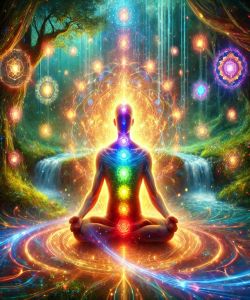
1. Overview of Tantra Meditation
Tantra Meditation constitutes a profound and comprehensive spiritual system, fundamentally distinct from ascetic traditions that advocate for the renunciation of the world. It is an assertive path of radical inclusion, positing that every facet of human experience—from the mundane to the sublime, the sensory to the spiritual—can be harnessed as a vehicle for ultimate liberation. This discipline is not merely a collection of relaxation techniques; it is a rigorous methodology for expanding consciousness and unifying the dualistic forces within existence. At its core, Tantra operates on the principle of weaving together (the literal meaning of the Sanskrit root tan) the immanent and the transcendent, the energetic and the conscious, often symbolised as the divine interplay of Shakti and Shiva. Practitioners are not taught to suppress or deny their innate energies, including powerful emotions and primal drives, but are instead provided with a sophisticated framework to transmute them into higher states of awareness. This transformative process mandates an unwavering commitment to presence, demanding that the individual engage directly and consciously with the fabric of reality as it presents itself. Consequently, Tantra Meditation is an advanced spiritual technology, designed to deconstruct conditioned patterns of the mind and facilitate a direct, non-conceptual experience of a unified reality, where the practitioner recognises their own nature as inseparable from the universal consciousness. It is, therefore, a path for the spiritually audacious, for those who seek enlightenment not by escaping life, but by engaging with it fully, consciously, and with unwavering intent.
2. What are Tantra Meditation?
Tantra Meditation represents a sophisticated corpus of spiritual practices originating from the Indian subcontinent, engineered to facilitate the expansion of consciousness and the integration of mind, body, and spirit. It is not a singular, monolithic technique but rather a diverse array of methods that utilise the full spectrum of human experience as a medium for spiritual realisation. The fundamental premise is one of transformation rather than transcendence; instead of seeking to rise above worldly existence, the practitioner learns to engage with it directly, transmuting ordinary sensory and emotional energies into potent vehicles for enlightenment. These meditations often involve a multi-faceted approach, incorporating various elements to achieve a holistic effect.
Key components of these practices include:
- Breath and Energy Control (Pranayama): Specific breathing techniques are employed not merely for relaxation, but to consciously direct the flow of vital life force, or prana, throughout the body’s subtle energy channels (nadis). This mastery of breath is considered foundational for stabilising the mind and awakening higher states of awareness.
- Visualisation and Focus (Dharana): Practitioners are trained to hold complex internal visualisations, often of deities, sacred geometry (yantras), or internal energy centres (chakras). This intense focus disciplines the mind, moving it from a state of scattered thought to one of powerful, one-pointed concentration.
- Mantra and Sound (Japa): The use of sacred syllables or phrases (mantras) is central. The vibratory quality of sound is leveraged to alter consciousness, purify the subtle body, and invoke specific divine energies, thereby aligning the practitioner with cosmic forces.
- Bodily Presence and Ritual (Nyasa): Unlike purely contemplative practices, Tantra Meditation deeply honours the physical body as a sacred temple. Techniques may involve ritual gestures (mudras) or the conscious placement of divine energies onto different parts of the body (nyasa), affirming the divinity inherent in the physical form.
3. Who Needs Tantra Meditation?
- Individuals Seeking Profound Self-Integration: Those who experience a disconnect between their mind, emotions, and physical body will find this discipline exceptionally potent. It is designed for practitioners who are no longer satisfied with purely intellectual or abstract spiritual pursuits and demand a methodology that unifies all aspects of their being into a coherent, functioning whole.
- Practitioners Stagnated in Other Spiritual Paths: Individuals who have reached a plateau in more ascetic or renunciate traditions can utilise Tantra Meditation to break through spiritual inertia. Its principles of embracing and transmuting energy provide a powerful alternative to suppression, offering a new dimension of growth for the seasoned spiritual seeker.
- Those Desiring to Master Emotional and Psychic Energy: This is not a path for the emotionally timid. It is specifically for those who wish to move beyond being controlled by powerful emotions like anger, desire, and fear. Tantra provides the requisite tools to face these energies directly, understand their roots, and transmute their raw power into creative force and heightened awareness.
- Individuals Aiming to Spiritualise Daily Life: Persons who find it difficult to reconcile their spiritual practice with the demands of their daily responsibilities—work, relationships, and worldly engagement—require this path. Tantra teaches that liberation is not found in withdrawal from life, but in the conscious, sacred engagement with every moment and every action.
- Couples and Partners Seeking Deeper Connection: For partners who wish to elevate their relationship beyond the mundane, this practice offers a framework for profound intimacy. It provides techniques for conscious connection that synchronise partners on physical, energetic, and spiritual levels, transforming the relationship into a shared path of growth.
4. Origins and Evolution of Tantra Meditation
The origins of Tantra are ancient and esoteric, with roots extending deep into the pre-Vedic civilisations of the Indian subcontinent. It emerged not as a codified, monolithic religion, but as a heterodox undercurrent of spiritual technology, an alternative to the orthodox, ritual-centric Brahmanical traditions. Early Tantric thought, found in texts known as the Agamas and Tantras, presented a world-affirming cosmology. It posited that the material world was not an illusion to be escaped, but a direct manifestation of divine consciousness, or Shakti. This radical philosophy mandated an equally radical spiritual practice, one that embraced the body, the senses, and all life energies as legitimate tools for achieving enlightenment.
Over the centuries, Tantra evolved and branched into numerous schools, profoundly influencing the development of Hinduism, Buddhism, and Jainism. The most significant divergence occurred between the so-called "right-hand path" (Dakshinachara) and "left-hand path" (Vamachara). The Dakshinachara schools pursued a more conservative and symbolic interpretation of Tantric principles, utilising internal meditations, mantras, and yantras. In stark contrast, the Vamachara path engaged in more literal and transgressive practices, deliberately confronting societal taboos to shatter mental conditioning and accelerate spiritual progress. This path, though often misunderstood, was a highly disciplined and esoteric tradition reserved for advanced initiates under the strict guidance of a guru.
The influence of Tantra was particularly transformative for Buddhism, leading to the development of the Vajrayana or "Diamond Vehicle," most prominently preserved today in Tibetan Buddhism. Here, Tantric methods of rapid transformation were integrated with Buddhist philosophy. In the modern era, the migration of Tantra to the West has been fraught with misinterpretation. It has frequently been stripped of its profound philosophical and spiritual context, reduced to a simplistic focus on sacred sexuality. However, a countervailing movement of authentic practitioners and scholars is now working to reclaim Tantra’s heritage, presenting it once more as a complete and formidable system for human transformation, relevant to the contemporary spiritual seeker who refuses to dichotomise the sacred and the profane.
5. Types of Tantra Meditation
- Mantra Meditation (Japa Yoga): This practice involves the continuous, focused repetition of a specific Sanskrit syllable, word, or phrase known as a mantra. The objective is not mindless chanting but the generation of a specific psychic vibration that attunes the practitioner’s consciousness to a particular divine energy or aspect of reality. The sound current produced purifies the subtle nervous system and disciplines the mind, leading it from discursive thought into a state of deep, resonant stillness.
- Yantra Meditation (Yantra Dharana): This is a powerful form of visual concentration meditation. The practitioner fixes their gaze and mental focus upon a yantra, a complex and sacred geometric diagram that serves as a visual representation of a deity or a specific cosmic energy structure. By holding the form of the yantra in the mind's eye, the practitioner internalises its energetic pattern, restructuring their own consciousness to reflect the harmony, balance, and power embodied by the diagram.
- Chakra Meditation (Chakra Dhyana): This meditation focuses on the body's subtle energy centres, or chakras. The practice involves directing breath, awareness, and sometimes specific seed mantras (bija mantras) into each chakra in a sequential manner. The goal is to purify, balance, and awaken these vital centres, thereby liberating the flow of Kundalini-Shakti, the dormant spiritual energy believed to reside at the base of the spine, and allowing it to ascend to the crown.
- Nyasa Meditation: A quintessential Tantric practice, Nyasa involves the ritualistic placement (nyasa literally means "placing") of divine energies onto various parts of one's own body. This is achieved by touching specific body parts whilst reciting corresponding mantras. The practice is a profound affirmation that the physical body is not mere flesh but a microcosm of the divine universe, a sacred temple capable of housing the entirety of cosmic consciousness.
- Kriya Yoga: Often considered a sophisticated form of Tantra, Kriya Yoga is an active meditation involving a specific series of pranayama (breath control), mudra (gestures), and bandha (body locks). These techniques are designed to directly manipulate the flow of prana (life force) within the spinal column, rapidly accelerating the practitioner's spiritual evolution by purifying the energy channels and calming the fluctuations of the mind.
6. Benefits of Tantra Meditation
- Profound Psycho-Spiritual Integration: Facilitates the dissolution of the perceived schism between mind, body, and spirit. This practice mandates a holistic engagement with one’s being, leading to an integrated sense of self where emotional, physical, and mental energies function in coherent harmony rather than in conflict.
- Transmutation of Negative Emotional States: Provides a robust framework for confronting and transforming powerful, often disruptive, emotions such as anger, fear, and shame. Instead of suppression, practitioners learn to harness the raw energy of these states, converting them into constructive forces for personal growth, creativity, and spiritual awareness.
- Heightened Sensory Acuity and Presence: Cultivates a state of intense, moment-to-moment awareness. The discipline demands full presence in sensory experience, leading to a richer, more vibrant perception of reality. The mundane becomes sacred as the practitioner learns to perceive the divine in every sight, sound, and sensation.
- Mastery Over Subtle Body Energetics: Develops a sophisticated awareness and control over the body’s subtle energy systems, including the prana (life force), nadis (energy channels), and chakras (energy centres). This mastery is foundational for stabilising the mind and unlocking higher states of consciousness.
- Increased Vitality and Embodiment: Reconnects the practitioner with the innate intelligence and vitality of the physical body. By treating the body as a sacred instrument rather than an obstacle, this meditation enhances physical well-being, increases energy levels, and fosters a powerful sense of being grounded and fully present in one's physical form.
- Deconstruction of Limiting Mental Constructs: The direct and often confrontational nature of Tantric practices effectively dismantles ingrained psychological conditioning, limiting beliefs, and egoic structures. This process clears the way for a more authentic and liberated expression of the self, free from the constraints of past programming.
- Deepening of Relational Intimacy: Offers powerful tools for creating conscious and profound connections with others. The principles of presence, energetic awareness, and sacred regard can be applied to relationships, transforming them from sources of conflict into opportunities for mutual spiritual growth and deep, authentic intimacy.
7. Core Principles and Practices of Tantra Meditation
- The Principle of Immanence (Sarvam Khalvidam Brahman): The foundational axiom of Tantra is that the entire universe, in all its manifestations, is a direct expression of a single, unified Divine Consciousness. Nothing is considered inherently profane or separate from the sacred. This principle mandates that spiritual practice must occur within the world, not in rejection of it.
- The Unity of Shiva and Shakti: This core metaphysical concept posits that reality is a dynamic interplay between two fundamental principles: Shiva, representing pure, unmanifest consciousness, and Shakti, representing the active, creative energy that manifests as the universe. The ultimate goal of Tantra Meditation is to realise the indivisible union of these two principles within one's own being.
- The Body as a Microcosm (Pindanda): Tantra holds the human body in the highest regard, viewing it not as a source of sin or a cage for the soul, but as a perfect microcosm of the macrocosmic universe. The body is a sacred temple containing all the gods, goddesses, sacred rivers, and energy centres of the cosmos. Practices are therefore deeply embodied and designed to awaken the divinity within the physical form.
- The Utilisation of All Energies: Unlike ascetic paths that advocate for suppression or renunciation of desire and other powerful energies, Tantra advocates for their conscious engagement and transmutation. It provides the technology to harness the immense power of emotions, sexuality, and other primal drives, redirecting this energy upwards to fuel spiritual awakening. As the saying goes, "One must rise by that by which one falls."
- The Centrality of the Guru: Authentic Tantric transmission is considered impossible without the guidance of a qualified living master, or Guru. The Guru is not merely a teacher but an embodiment of the teaching who provides initiation (diksha), transmits spiritual energy, and guides the disciple through the complex and potentially perilous terrain of Tantric practice, ensuring safety and correct application.
- The Practice of Nyasa and Mudra: Nyasa involves the ritualistic placing of mantras on different parts of the body to sacralise the physical form. Mudras are specific hand gestures and body postures that seal and direct the flow of prana (life force). Both are integral practices for cultivating a felt sense of the body's divinity and for manipulating subtle energies.
- The System of Chakras and Nadis: Tantra provides a detailed map of the subtle body, comprising energy channels (nadis) and psycho-energetic centres (chakras). A significant portion of Tantra Meditation involves practices—such as pranayama, mantra, and visualisation—designed to purify these channels and awaken the chakras, culminating in the ascent of Kundalini-Shakti.
8. Online Tantra Meditation
- Accessibility and Anonymity: The online modality removes geographical barriers, granting access to instruction that might otherwise be unavailable. It provides a level of privacy and anonymity that can be crucial for individuals broaching a subject as profound and personal as Tantra. This controlled environment allows practitioners to engage with the material at their own pace, free from the potential self-consciousness of a group setting.
- Structured and Consistent Learning: Online courses mandate a highly structured format. Modules are presented in a logical, sequential manner, ensuring that foundational principles are mastered before more advanced concepts are introduced. This systematic approach prevents the haphazard learning that can occur in less formal settings and ensures a comprehensive understanding of the theory and practice.
- Integration into Daily Life: Engaging with the practice from within one's own domestic environment forces an immediate integration of Tantric principles into daily life. There is no separation between the "ashram" and the "real world." The practitioner is compelled to apply the lessons of presence, awareness, and energy management amidst the realities of their personal and professional life, which is a core tenet of the Tantric path itself.
- Focus on Individual Experience: Without the physical presence of a group or a teacher, the onus of the practice falls squarely on the individual. This cultivates a powerful sense of self-responsibility and internal authority. The practitioner must learn to become their own inner guide, attuning to their unique bodily sensations and energetic shifts, thereby developing a robust and self-reliant practice.
- Necessity of Self-Discipline: The online format is an uncompromising test of a practitioner's commitment and self-discipline. Success is entirely contingent on the individual's ability to allocate time, create a sacred space, and engage with the material without external enforcement. This challenge, when met, forges a strength of will and dedication that is indispensable for any serious spiritual path.
9. Tantra Meditation Techniques
- Establish a Sacred Space and Intention: Before commencing, it is imperative to designate a physical space that is clean, quiet, and free from interruption. This act is not merely logistical but symbolic, marking a deliberate transition from the profane to the sacred. Articulate a clear, concise intention (sankalpa) for the practice. This intention must be an unwavering command to the subconscious mind, focusing the entire session's energy towards a specific outcome, be it clarity, transmutation, or presence.
- Activate the Breath (Pranayama): Begin by assuming a stable, upright posture, ensuring the spine is erect to facilitate optimal energy flow. Engage in a foundational pranayama technique. A simple yet potent method is balanced breathing (sama vritti), inhaling for a count of four, holding for four, exhaling for four, and holding for four. Execute this with absolute precision. The breath is the primary tool for commanding the mind; control the breath, and you begin to control consciousness.
- Body Awareness Scan: With the breath stabilised, direct your full, uncompromising attention to the physical body. Starting from the toes and moving systematically upwards to the crown of the head, scan every part of your anatomy. Do not merely think about the body part; inhabit it with your awareness. Feel the sensations, the temperature, the subtle pulse of life within it. This practice grounds your consciousness firmly within the physical form, the sacred vessel for this work.
- Energy Centre Focus (Chakra Dhyana): Direct your awareness to the base of your spine, the location of the root chakra (Muladhara). Visualise a vibrant, red, four-petalled lotus. As you breathe, feel or imagine energy being drawn into this centre, vitalising it. Hold this focus with unyielding concentration for several minutes before systematically moving your awareness up the spine to each subsequent chakra, using its corresponding colour and form. This is not a passive visualisation; it is an active direction of prana.
- Integration and Grounding: Following the peak of the practice, do not abruptly exit the meditative state. Gently release all specific focuses. For several minutes, simply sit in a state of open, receptive awareness, allowing the energies and insights to integrate throughout your being. Conclude by placing your hands on your heart, acknowledging the practice, and then slowly and deliberately re-engage with your external environment, carrying the state of presence with you
10. Tantra Meditation for Adults
Tantra Meditation, when approached with maturity and serious intent, offers adults a formidable methodology for navigating the complexities of modern existence. It is not an escape from adult responsibilities but a means of engaging with them from a position of heightened power, presence, and psycho-spiritual integration. For the adult practitioner, who is often encumbered by years of social conditioning, psychological patterning, and emotional armouring, this discipline provides a direct and uncompromising means of deconstruction and reclamation. It demands a confrontation with the totality of one's being—the cultivated persona and the repressed shadow, the intellectual achievements and the primal drives. The practices, which synthesise breath, visualisation, sound, and embodied awareness, work to dismantle the rigid structures of the adult ego. They compel the individual to move beyond conceptual understanding into a felt, visceral experience of reality. This is particularly crucial for adults who may have become disconnected from their physical and emotional bodies due to professional demands or societal pressures. Tantra insists on a radical re-inhabitation of the self, teaching one to harness the very energies—be they relational, professional, or creative—that define adult life, and transmute them into fuel for profound spiritual growth. It is, therefore, an exceptionally pragmatic path for the adult who seeks not to retreat from the world, but to master the art of living within it consciously and with absolute integrity. It is a path of radical self-ownership and empowerment.
11. Total Duration of Online Tantra Meditation
The standardised duration for a single, focused session of online Tantra Meditation is unequivocally established at one hour. This specific timeframe is not arbitrary; it is a precisely calibrated duration designed to maximise efficacy whilst respecting the practical constraints of the practitioner's life and attentional capacity. A session of less than this duration is often insufficient to move the practitioner beyond superficial mental chatter and into the deeper states of consciousness that the practice demands. The initial phase of any session requires time for settling, establishing sacred space, and engaging in foundational breathwork to still the mind. The core practices, whether they involve chakra visualisation, mantra recitation, or energetic movement, necessitate a substantial period of uninterrupted focus to be impactful. This central phase is where the transformative work occurs. Subsequently, a crucial period is required for integration, allowing the potent energies that have been awakened to settle and harmonise within the practitioner’s system before they re-engage with their external environment. Attempting to truncate this process is counterproductive. The one-hour structure provides a robust and reliable container for the full arc of a potent meditative experience: a clear beginning for preparation, a substantial middle for deep practice, and a definitive end for consolidation and grounding. This disciplined adherence to the one-hour session ensures consistency, fosters ritual, and respects the profound nature of the work being undertaken, making it the required standard for serious online engagement with this path.
12. Things to Consider with Tantra Meditation
Engaging with Tantra Meditation necessitates a robust and unflinching psychological disposition. This is not a passive or gentle path; it is an active and often confrontational spiritual technology designed to dismantle the ego and its ingrained defence mechanisms. Prospective practitioners must possess a high degree of self-honesty and a willingness to encounter uncomfortable aspects of their own psyche, including repressed emotions, shadow material, and deep-seated conditioning. The path demands a radical commitment to personal responsibility, as its techniques can unleash powerful psychic and emotional energies. Without a stable psychological foundation and a mature capacity for self-regulation, these energies can be destabilising rather than liberating. Furthermore, it is imperative to discern authentic teachings from the widespread and diluted misinterpretations that focus predominantly on sexuality. True Tantra is a comprehensive spiritual system in which sexuality is but one facet of a much larger energetic reality. One must rigorously investigate the lineage and qualifications of any guide or teacher. The absence of a qualified guide to provide context, containment, and correction presents a significant risk. The practitioner must therefore proceed with immense discernment, discipline, and a clear understanding that they are undertaking a formidable process of psycho-spiritual alchemy that requires unwavering inner strength and clarity of purpose. This is not a discipline to be trifled with or explored casually.
13. Effectiveness of Tantra Meditation
The effectiveness of Tantra Meditation is contingent upon the unwavering commitment, discipline, and psychological maturity of the practitioner. When undertaken with the requisite seriousness and correct guidance, its efficacy is formidable and direct. The system is engineered for transformation, not mere relaxation or intellectual insight. Its multi-pronged approach, which simultaneously engages the physical body, the energetic system, the emotional landscape, and the focused mind, produces results that are holistic and deeply integrated. Unlike practices that create a dichotomy between the spiritual and the worldly, Tantra's effectiveness lies in its capacity to bridge this gap. Practitioners report a tangible increase in vitality, a heightened sense of presence in daily activities, and a significantly enhanced ability to manage and transmute powerful emotional states. The discipline's core techniques, such as chakra work and pranayama, directly impact the subtle nervous system, leading to a demonstrable stabilisation of the mind and an expansion of consciousness. The effectiveness is not abstract or postponed to a future state of enlightenment; it manifests as a progressive increase in personal power, clarity, and an embodied sense of wholeness. However, its effectiveness is directly proportional to the rigour of its application. Casual or inconsistent practice will yield negligible results. For the dedicated individual, Tantra Meditation is a potent and efficient vehicle for profound and lasting personal and spiritual evolution.
14. Preferred Cautions During Tantra Meditation
It is imperative to approach Tantra Meditation with a disposition of profound respect and unwavering caution. This is not a recreational pursuit; it is a powerful spiritual technology capable of catalysing immense psychic and energetic shifts. The primary caution is against proceeding without a stable psychological foundation. Individuals with a history of serious mental instability or unresolved trauma must exercise extreme prudence, as these practices can activate latent material in a manner that may be overwhelming without expert therapeutic support. A second critical caution concerns the common misinterpretation of Tantra as being solely about sexual practices. Engaging with so-called "Tantric" techniques focused on sexuality without the comprehensive spiritual framework of authentic Tantra is not only a distortion but can lead to energetic imbalances, emotional confusion, and the inflation of the ego. Furthermore, the practitioner must be vigilant against spiritual bypassing—the use of spiritual concepts to avoid dealing with unresolved personal issues. Tantra is about confronting reality, not escaping it. One must also be wary of self-proclaimed gurus who lack a verifiable lineage or who exploit the esoteric nature of the teachings for personal gain. Finally, the energy-raising techniques, particularly those related to Kundalini, must be approached with immense care and preferably under qualified guidance. Forcing these processes can be damaging to the nervous system. Discipline, discernment, and humility are not optional; they are essential safeguards on this potent path.
15. Tantra Meditation Course Outline
Module One: Foundational Principles and Establishing the Ground
Core Philosophy: Understanding the non-dualistic worldview of Tantra.
The Concepts of Shiva, Shakti, and the Body as a Microcosm.
Establishing a Sacred Practice Space and Setting a Clear Intention (Sankalpa).
Introduction to Posture (Asana) and the Importance of an Erect Spine.
Module Two: The Science of Breath and Prana
The Theory of Prana, Nadis, and the Subtle Body.
Mastery of Foundational Pranayama: Balanced Breathing (Sama Vritti) and Victorious Breath (Ujjayi).
Techniques for Directing Prana with Conscious Intent.
The Relationship between Breath, Mind, and Consciousness.
Module Three: Introduction to the Chakra System
Detailed Exploration of the Seven Primary Chakras: Location, Function, and Psychological Correlates.
Introduction to Seed Mantras (Bija Mantras) for Each Chakra.
Guided Meditation for Sensing and Activating the Lower Three Chakras (Muladhara, Svadhisthana, Manipura).
Module Four: Deepening Chakra Awareness
Advanced Visualisation Techniques for the Chakra System.
Guided Meditation for Sensing and Activating the Upper Four Chakras (Anahata, Vishuddha, Ajna, Sahasrara).
Practices for Balancing the Entire Chakra System.
Module Five: The Power of Mantra and Yantra
The Theory of Sound Vibration and Its Effect on Consciousness.
Practice of a Universal Mantra for Focus and Purification.
Introduction to Yantra Meditation: The Technique of Trataka (Gaze Fixation) on a Simple Yantra.
Module Six: Integration and Embodiment
Techniques for a Safe and Gradual Return from Deep Meditative States.
Practices for Integrating Meditative Awareness into Daily Activities.
The Art of Maintaining Presence and Embodiment Throughout the Day.
Formulating a Sustainable, Long-Term Personal Practice.
16. Detailed Objectives with Timeline of Tantra Meditation
Weeks 1-2: Establishment of Foundational Discipline.
Objective: To master the physical and mental prerequisites for safe and effective practice. The practitioner shall establish a non-negotiable daily practice time and a dedicated sacred space. They will achieve proficiency in maintaining a stable, erect meditation posture for extended periods and master the basic technique of balanced breathing (Sama Vritti), demonstrating the ability to regulate the breath and calm the nervous system at will.
Weeks 3-4: Activation of Bodily and Energetic Awareness.
Objective: To move beyond conceptual understanding to a felt sense of the body and its subtle energies. The practitioner shall be able to conduct a full-body scan with deep, unwavering focus, identifying areas of tension and numbness. They will be introduced to the concept of prana and will begin to direct it consciously using the breath, achieving a tangible sense of energetic flow.
Weeks 5-8: Mapping and Energising the Chakra System.
Objective: To gain a working knowledge of the lower three chakras and begin their purification. The practitioner will be able to locate, visualise, and direct energy to the Muladhara, Svadhisthana, and Manipura chakras. They will learn and correctly pronounce the corresponding bija mantras and will document any psychological or emotional shifts related to this work.
Weeks 9-12: Ascent and Refinement of Consciousness.
Objective: To continue the work of purification through the upper chakras and begin to integrate the energetic system. The practitioner will systematically work with the Anahata, Vishuddha, and Ajna chakras. The objective is to cultivate qualities associated with these centres: compassion, clear communication, and sharpened intuition. The practitioner shall demonstrate increased focus and mental clarity in daily life.
Weeks 13-16: Synthesis of Techniques and Embodiment.
Objective: To synthesise the practices of breath, chakra focus, and mantra into a unified personal meditation. The practitioner will be able to fluidly move through their practice without constant external guidance. The primary objective is integration: to carry the heightened state of awareness from the meditation cushion into the complexities of daily life, demonstrating presence and composure in challenging situations.
17. Requirements for Taking Online Tantra Meditation
- Unyielding Personal Commitment: The foremost requirement is an absolute and non-negotiable commitment to the practice. This is not a casual interest; it is a rigorous discipline. The participant must be prepared to dedicate consistent, scheduled time daily without exception or excuse.
- A Secluded and Stable Practice Environment: The participant must have access to a private, quiet space where they can remain completely undisturbed for the full duration of each session. This space must be consistently available and treated as a sacred sanctuary for the work.
- Robust and Reliable Technology: A high-speed, stable internet connection is mandatory. The participant must possess a functioning device (computer or tablet) with a quality camera and microphone. Technical failures are the responsibility of the participant and cannot be allowed to disrupt the integrity of the learning environment.
- Psychological Stability and Self-Responsibility: Participants must be in a state of sound psychological health. This course is not a substitute for therapy. A high degree of self-awareness and the capacity for emotional self-regulation are essential. The participant must take full responsibility for their own emotional and psychological experiences during the course.
- A Mindset of Discipline and Coachability: An attitude of humility, respect for the teachings, and a willingness to follow instructions precisely is required. The participant must be prepared to set aside pre-existing notions and engage with the material as presented, demonstrating the discipline to follow a structured curriculum.
- Physical Capacity for Stillness: The participant must be physically capable of sitting in a stable, upright posture (either on a cushion or a chair) for the duration of the one-hour session. Whilst minor adjustments are permissible, a fundamental capacity for physical stillness is a non-negotiable requirement for deep meditation.
18. Things to Keep in Mind Before Starting Online Tantra Meditation
Before embarking upon an online course in Tantra Meditation, it is imperative to conduct a rigorous self-assessment and prepare accordingly. This is not a passive learning experience; it is an active, demanding engagement that requires significant inner resources. You must understand that the online format places the burden of discipline squarely upon your shoulders. There will be no external authority to enforce your practice; your progress will be a direct reflection of your own self-mastery and commitment. You are required to create and defend your own sacred space against the intrusions of daily life, a task that demands firm boundaries and resolve. Be prepared for the practice to stir latent emotional and psychological content. You must possess the maturity to navigate these experiences with equanimity and without projecting them onto the course or the instructor. It is also crucial to manage your expectations. Transformation is a gradual process, not an instant event. The allure of quick fixes, prevalent in modern spiritual consumerism, has no place here. You must cultivate patience and trust in the systematic unfolding of the practice. Finally, investigate the legitimacy and lineage of the online offering. The digital world is rife with superficial and distorted versions of Tantra. Ensure your chosen path is rooted in authentic tradition and presented with integrity. Your preparation is not merely logistical; it is a mental and spiritual fortification for the formidable journey ahead.
19. Qualifications Required to Perform Tantra Meditation
The authority to guide others in the formidable discipline of Tantra Meditation is not conferred by mere academic study or a weekend workshop certificate. It is earned through a rigorous and prolonged process of dedicated personal practice, direct transmission, and explicit sanction from a qualified, lineage-based Guru. The foundational qualification is one’s own deep and sustained immersion in the practices. A guide must have navigated the very energetic and psychological terrain they intend to lead others through; their teaching must emanate from a place of direct, embodied experience, not from theoretical knowledge alone.
Beyond personal sadhana, the following qualifications are non-negotiable:
- Initiation (Diksha) within an Authentic Lineage: The guide must have received formal initiation from a recognised master within an established Tantric tradition (parampara). This initiation is a critical transmission of spiritual energy and authority that empowers the individual to practice and, eventually, to teach. It connects them to a living stream of knowledge and spiritual power.
- Explicit Permission to Teach: It is not sufficient to be an advanced practitioner. The guide must have been explicitly authorised to teach by their own Guru. This sanction signifies that the Guru has judged them to be sufficiently mature, stable, and knowledgeable to guide others safely and effectively.
- Profound Knowledge of Scripture and Philosophy: An authentic guide must possess a deep and nuanced understanding of Tantric philosophy, cosmology, and key scriptural texts (such as the Agamas and Tantras). This knowledge provides the essential context for the practices and prevents misinterpretation.
- Psychological Maturity and Integrity: The guide must exhibit unquestionable personal integrity, emotional stability, and psychological maturity. They must be free from the desire to manipulate or control students and must possess the wisdom to handle the powerful psychic dynamics that can arise in a teacher-student relationship.
Without these stringent qualifications, an individual is merely a performer or a theorist, lacking the essential energetic authority and deep wisdom required to guide others on this sacred and potent path.
20. Online Vs Offline/Onsite Tantra Meditation
Online
The online modality for Tantra Meditation offers distinct advantages centred on accessibility, autonomy, and controlled exposure. It eradicates geographical limitations, providing practitioners access to specialised instruction irrespective of their physical location. This format affords a degree of anonymity and privacy that can be essential for individuals who are initially hesitant to explore such a deeply personal practice in a group setting. The structured, modular nature of many online courses enforces a systematic progression, ensuring that foundational concepts are thoroughly grasped before advancing. Furthermore, practicing within one’s own environment necessitates an immediate and practical integration of Tantric principles into the fabric of daily life, dissolving the artificial barrier between spiritual practice and worldly responsibility. The primary demand of the online format is on the individual's self-discipline. Success is entirely contingent on one's personal commitment to creating a sacred space and adhering to a rigorous practice schedule without external supervision. This fosters a powerful sense of self-reliance and internal authority, which are themselves core objectives of the Tantric path. It is an ideal format for the self-motivated, disciplined individual who seeks a structured and private entry point into these profound teachings.
Offline/Onsite
Offline, or onsite, Tantra Meditation within a physical setting with a qualified guide offers a dimension of practice that is impossible to replicate digitally. The primary and most critical element is the potential for direct energetic transmission (shaktipat) from a living Guru. The physical presence of an accomplished master creates a powerful energetic field that can profoundly accelerate a student's progress and catalyse deep states of consciousness. Group practice in an onsite environment generates a collective energetic field, or egregore, that can support and amplify the individual's efforts. The subtle, non-verbal cues and direct, in-person corrections from a guide provide a level of nuanced feedback that is unattainable through a screen. The immersive nature of a retreat or workshop environment removes the practitioner from the distractions of their daily life, allowing for a deeper and more concentrated dive into the practices. This format is superior for handling the intense energetic and emotional phenomena that can arise, as the guide is physically present to provide immediate containment, context, and support. Onsite practice is the traditional and most potent form of transmission, indispensable for advanced stages of the path and for those who require the direct presence of a master to navigate this formidable terrain.
21. FAQs About Online Tantra Meditation
Question 1. Is online Tantra Meditation as effective as in-person? Answer: It is a different modality. Online practice excels in accessibility and fostering self-discipline. In-person practice offers direct energetic transmission from a guide. Effectiveness depends on the practitioner's commitment.
Question 2. Do I need a partner for online Tantra Meditation? Answer: No. The vast majority of foundational Tantra Meditation is a solo practice focused on your own internal energetic and conscious integration.
Question 3. Is this just about sacred sexuality? Answer: Unequivocally, no. Authentic Tantra is a complete spiritual system for expanding consciousness. Sexuality is one small aspect of the vast spectrum of human energy it addresses.
Question 4. What technology do I absolutely need? Answer: A stable, high-speed internet connection, a computer or tablet with a functioning camera and microphone, and a quiet, private space.
Question 5. Is it safe to practice alone at home? Answer: Reputable online courses begin with foundational, safe techniques. Adhering strictly to the guided instructions is paramount for safety.
Question 6. How do I know if a course is authentic? Answer: Investigate the teacher's lineage, their own training, and their explicit permission to teach from their Guru. Authentic paths are transparent about their origins.
Question 7. What if I have a strong emotional reaction during practice? Answer: This is expected. A key part of the practice is to learn to witness these emotions without judgement. A good course will provide tools for this.
Question 8. How much time must I commit daily? Answer: A non-negotiable commitment to the duration of the guided session, typically one hour, plus the discipline to maintain this schedule is required.
Question 9. Can I do this if I am not flexible? Answer: Yes. The requirement is a stable, upright posture, which can be achieved on a chair if floor sitting is not possible. It is not yoga asana.
Question 10. Will this conflict with my existing religious beliefs? Answer: Tantra is a spiritual technology, not a religion. It can complement many belief systems, but this is a matter of personal discernment.
Question 11. What is the main goal of this meditation? Answer: The ultimate goal is the expansion of consciousness and the realisation of the unity of energy and consciousness within your own being.
Question 12. Is there chanting involved? Answer: Yes, the use of mantra (sacred sound) is a core component of many Tantric practices.
Question 13. Do I need any previous meditation experience? Answer: While helpful, it is not strictly required for a foundational course. A willingness to learn and be disciplined is more important.
Question 14. How long does it take to see results? Answer: This is not a quick fix. Some benefits like increased presence can be felt early, but profound transformation requires sustained, long-term practice.
Question 15. Will I be asked to do anything I am uncomfortable with? Answer: A professional course will never compel you to violate your personal boundaries. You always maintain personal autonomy.
Question 16. Is a webcam required to be on during sessions? Answer: This depends on the course format. For interactive sessions, it is often mandatory to ensure engagement and provide feedback.
Question 17. What if I miss a live session? Answer: Professional courses often provide recordings for a limited time, but consistent live attendance is strongly encouraged for accountability.
22. Conclusion About Tantra Meditation
In conclusion, Tantra Meditation stands as a formidable and sophisticated spiritual science, radically distinct from world-denying traditions. It is a path of uncompromising engagement, positing that enlightenment is not achieved by escaping from life, but by consciously and masterfully navigating its every current. Its core premise—that all energy, from the most primal to the most sublime, can be transmuted into a vehicle for liberation—demands a level of courage, discipline, and psychological maturity that is not for the faint of heart. This is not a system of simple relaxation techniques or feel-good aphorisms; it is a rigorous methodology for deconstructing the conditioned ego and awakening the divine consciousness inherent within the human form. The path requires a holistic commitment, integrating the physical, emotional, energetic, and mental facets of one's being into a unified and potent whole. Whether approached through the accessible yet demanding modality of online learning or the direct transmission of an onsite setting, its principles remain the same: unwavering presence, radical self-responsibility, and the courageous embrace of one's total reality. Tantra Meditation is, therefore, the definitive path for the modern spiritual warrior—the individual who seeks not to retreat from the world, but to engage with it fully, powerfully, and with the ultimate aim of realising their own divine nature.