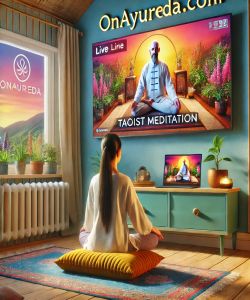
1. Overview of Taoist Meditation
Taoist meditation represents a formidable and ancient system of internal cultivation, fundamentally distinct from contemporary Western interpretations of mindfulness or relaxation. It is not a passive exercise in stress reduction but an active, rigorous discipline aimed at the profound transformation of the practitioner’s entire being. The ultimate objective is to harmonise the self with the Tao—the fundamental, ineffable principle that underpins the cosmos. This pursuit is intensely practical, involving the systematic cultivation and refinement of the Three Treasures: Jing (essence), Qi (vital energy), and Shen (spirit). Through a diverse array of techniques, ranging from silent, empty-mind stillness to complex internal alchemical visualisations, the practitioner learns to regulate the body, discipline the breath, and command the mind. The core purpose is to dissolve energetic blockages, restore the body’s innate vitality, and achieve a state of integrated consciousness that transcends the mundane. This is not a path for the dilettante; it demands unwavering commitment, iron-willed discipline, and a sincere intention to engage with the deepest currents of one's own life force. The practice is predicated on the understanding that the human body is a microcosm of the universe, and by mastering its internal landscape, one can achieve resonance with the macrocosmic order. It is, therefore, a sophisticated spiritual technology designed to facilitate a return to a primordial state of wholeness, vitality, and effortless alignment with the natural flow of existence. This journey requires the practitioner to confront and transmute internal discord, ultimately leading to a state of profound equilibrium and spiritual insight that is both potent and enduring.
2. What are Taoist Meditation?
Taoist meditation is not a singular technique but an extensive and sophisticated collection of internal arts and contemplative practices developed over millennia. Its central purpose is the cultivation, circulation, and transmutation of Qi, the vital life force energy that animates all things. Unlike practices that focus solely on mental quietude, Taoist methods are deeply somatic, engaging the physical body as the primary vessel for spiritual and energetic work. The methodologies are diverse and can be broadly categorised. One fundamental approach is ‘Emptiness’ or ‘Stillness’ meditation (Jingzuo), which seeks to quiet the ceaseless activity of the conscious mind to allow the practitioner’s original nature, or Shen, to emerge. This is achieved through disciplined posture and breath control, creating a state of profound internal silence. A second major category involves concentration and visualisation (Cunxiang). Here, the practitioner focuses their awareness on specific energy centres (Dantians) or visualises deities, colours, or energetic flows within the body to purify and strengthen the internal systems. The most advanced form is Neidan, or Internal Alchemy, a complex system that uses the concepts of yin and yang and the Five Elements to transmute the body’s fundamental energies—Jing into Qi, and Qi into Shen—in a process aimed at spiritual immortality or profound longevity. These practices are underpinned by the principle of Wu Wei, or effortless action, where mastery leads to a state where circulation and transformation occur naturally and spontaneously, without conscious strain. Taoist meditation is therefore a comprehensive system for mastering one’s inner world, treating the body, mind, and spirit not as separate entities but as an integrated, dynamic whole. It is a rigorous path of self-cultivation, demanding discipline, patience, and precise application of its core techniques.
3. Who Needs Taoist Meditation?
- Individuals Seeking Profound Internal Equilibrium: Those who have exhausted superficial wellness modalities and require a robust framework for harmonising the fundamental energies of the body and mind. This practice is for practitioners demanding tangible, systemic change, not temporary relief from external pressures.
- Practitioners of Martial and Healing Arts: Martial artists, acupuncturists, and bodyworkers who understand the theoretical basis of Qi but lack the direct, experiential mastery of its cultivation and circulation. This meditation provides the internal engine required to elevate their external practice from mere technique to a potent art form.
- Those Confronting Energetic Depletion: Individuals experiencing chronic fatigue, diminished vitality, or what Taoist medicine terms ‘Jing leakage’. The practice directly addresses the root cause by providing systematic methods for conserving, gathering, and refining the body’s core energetic reserves, rebuilding one's constitutional foundation from within.
- The Intellectually Overstimulated and Mentally Fractured: Professionals, academics, and individuals whose cognitive functions are in a state of perpetual overdrive. The discipline of stillness and focused awareness provides a powerful antidote, forcing the "monkey mind" into submission and restoring clarity, focus, and cognitive power.
- Seekers of Authentic Spiritual Development: Individuals who are disillusioned with abstract spiritual philosophies and demand a practical, embodied path. Taoist meditation offers a direct, non-sectarian methodology for exploring consciousness and achieving higher states of awareness grounded in the tangible reality of one's own physical and energetic system.
- Adults Navigating the Aging Process: Those who refuse to accept age-related decline as inevitable and instead seek proactive methods to maintain physical vigour, mental acuity, and spiritual purpose throughout life. The focus on preserving Jing and circulating Qi is explicitly aimed at promoting longevity and robust health.
4. Origins and Evolution of Taoist Meditation
The origins of Taoist meditation are deeply embedded in the philosophical soil of ancient China, predating its codification as a formal religious or monastic practice. The foundational texts of philosophical Taoism, the Tao Te Ching attributed to Laozi and the writings of Zhuangzi, laid the groundwork. These works championed principles such as Ziran (naturalness), Wu Wei (effortless action), and the importance of returning to the Tao, the ineffable source of all existence. Early practices were likely shamanistic and focused on achieving states of ecstatic trance and communion with nature.
With the emergence of organised religious Taoism around the 2nd century CE, these nascent contemplative ideas began to be systematised. Early schools like the Way of the Celestial Masters integrated meditation with ritual and moral codes. It was during this period that visualisation techniques (Cunxiang), where practitioners would visualise deities within the body’s “internal landscape,” became prominent. This marked a significant shift towards internalising spiritual practice, viewing the body itself as a sacred space and a laboratory for transformation.
The Tang dynasty (618–907 CE) witnessed a flourishing of meditative theory and practice, with figures like Sima Chengzhen developing sophisticated treatises on Zuowang, or “sitting and forgetting.” This method emphasised a radical emptying of the mind to allow one’s innate spiritual nature to manifest. However, the most profound evolution occurred during the Song dynasty (960–1279 CE) with the full development of Neidan, or Internal Alchemy. Influenced by external alchemy (Waidan), which sought physical immortality through elixirs, Neidan internalised this quest. It created a complex symbolic and practical system for transmuting the body’s own energies—Jing, Qi, and Shen—to cultivate a spiritual embryo, aiming for profound longevity and spiritual liberation. Schools like the Quanzhen (Complete Reality) school further refined and disseminated these practices, integrating elements from Buddhism and Confucianism and establishing the rigorous monastic framework that has preserved these teachings to the present day.
5. Types of Taoist Meditation
- Jingzuo (Quiet Sitting) and Zuowang (Sitting and Forgetting): This is the foundational practice of stillness meditation. Jingzuo focuses on maintaining a correct posture, regulating the breath, and calming the mind’s incessant chatter. Zuowang is its more advanced expression, where the objective is to "forget" sensory input, intellectual concepts, and even the sense of a separate self, thereby entering a state of profound emptiness (Xu) where one merges with the Tao. The method is one of radical letting go, dissolving the ego through unwavering stillness.
- Neidan (Internal Alchemy): A highly complex and systematic form of meditation that treats the practitioner's body as a crucible. It uses elaborate visualisation and breath control to guide the Three Treasures (Jing, Qi, Shen) through a transformative process. The initial stage involves converting Jing (sexual/creative essence) into Qi (vital energy). Subsequently, Qi is refined and raised to nourish Shen (spirit). The ultimate goal is the creation of a "spiritual embryo" or "immortal body," representing a state of profound spiritual integration and transcendence.
- Cunxiang (Visualisation Meditation): This practice involves focused mental visualisation of specific energies, colours, deities, or cosmic phenomena within the body. Practitioners might visualise the sun and moon entering their energy centres or picture divine beings residing in their internal organs. The purpose is to purify the body’s energetic systems, harmonise the internal organs according to Five Element theory, and establish a connection with celestial and natural forces for protection and empowerment.
- Zhan Zhuang (Standing Stake/Standing Meditation): A physically demanding yet profoundly powerful practice of holding a static posture for extended periods. Superficially, it appears to be a physical exercise, but its primary purpose is internal. Zhan Zhuang unifies the body’s structure, opens energetic pathways (meridians), and cultivates a deep, rooted sense of Qi. It builds immense internal strength and stability, forcing the practitioner to confront and release physical and energetic blockages.
6. Benefits of Taoist Meditation
- Cultivation and Regulation of Qi (Vital Energy): Provides a direct and systematic methodology for increasing the body's store of vital energy. The practice not only generates Qi but also teaches its conscious circulation, dissolving blockages and ensuring a smooth, powerful flow throughout the meridian system, which is the foundation of all physical and mental health.
- Harmonisation of the Three Treasures (Jing, Qi, Shen): Restores the correct physiological and energetic relationship between essence (Jing), vitality (Qi), and spirit (Shen). This internal integration is considered the cornerstone of robust health, mental clarity, and spiritual maturity, rectifying imbalances that lead to aging and disease.
- Profound Stress Annihilation: Goes beyond mere stress management by addressing the root energetic and mental patterns that produce anxiety and tension. Through disciplined stillness and breath control, it recalibrates the autonomic nervous system, inducing a state of deep calm that is resilient to external pressures.
- Enhanced Mental Clarity and Focus: The rigorous discipline of commanding the mind—whether through stillness or focused visualisation—shatters mental fog and distraction. It cultivates a state of sharp, single-pointed concentration and perceptual acuity that translates directly into improved cognitive function and decision-making.
- Strengthening of Physical Constitution: Practices such as Zhan Zhuang and the circulation of Qi have a direct, tangible impact on the physical body. They strengthen tendons and ligaments, improve posture and balance, boost immune function, and regulate the internal organs, fostering a state of exceptional physical resilience and vitality.
- Development of Emotional Equanimity: By observing the rise and fall of emotions without attachment, the practitioner learns to uncouple from reactive emotional states. This fosters a stable, centred disposition, allowing one to navigate life’s challenges with composure and wisdom, free from the tyranny of emotional volatility.
- Deepening of Spiritual Connection: Provides a practical, non-dogmatic pathway to experiencing a direct connection with the Tao, or the fundamental nature of reality. It moves spirituality from the realm of abstract belief into a lived, embodied experience of wholeness, purpose, and integration with the cosmos.
7. Core Principles and Practices of Taoist Meditation
- Wu Wei (Effortless Action): This is the principle of acting in complete harmony with the natural flow of the Tao, without conscious striving or internal resistance. In meditation, it manifests as allowing energetic processes to unfold naturally once the correct conditions are set, rather than forcing them. Mastery is achieved when the practice becomes spontaneous and self-regulating, free from the interference of the egoic will.
- Ziran (Naturalness/Spontaneity): Closely related to Wu Wei, Ziran is the state of being one's authentic, original self, unburdened by social conditioning or artificial constructs. The practice aims to strip away these layers, revealing the practitioner's innate, primordial nature. This requires absolute honesty with oneself and the courage to release all pretense.
- Jing (Stillness/Quiescence): The active cultivation of profound internal stillness is paramount. This is not a passive state but a dynamic and powerful one. By stilling the body, silencing the breath, and calming the mind’s "chattering," a space is created for Qi to gather and for Shen (spirit) to emerge. Stillness is the gateway to the deeper energetic and conscious realms.
- Song (Relaxation/Release): This refers to a deep, active release of physical and mental tension. It is not limpness but a state of alert relaxation where the body is free of unnecessary muscular contraction and the mind is unconstrained by rigid thoughts. Proper Song is essential for the free circulation of Qi; without it, energy remains blocked and stagnant.
- Ding (Concentration/Focus): This is the practice of single-pointed awareness. Whether the focus is on the breath, an energy centre (Dantian), or a visualised image, the ability to hold the mind steady and unwavering is a critical skill. Ding gathers scattered consciousness into a coherent, powerful force, which is the prerequisite for all advanced internal work.
- Shou Yi (Guarding the One): This principle involves maintaining focus on a single point or concept to unify the mind. Often, this means "guarding" the Dantian, the body's primary energy centre. By consistently returning awareness to this single point, the practitioner integrates mind and body, consciousness and energy, preventing mental dissipation and cultivating a powerful internal centre.
8. Online Taoist Meditation
- Imperative of Self-Discipline: The online environment removes the external pressure of a physical group and the immediate presence of an instructor. This places the entire onus of discipline squarely on the practitioner. Success is contingent upon an unwavering personal commitment to maintain a rigorous and consistent practice schedule without direct supervision. This format inherently selects for the most serious and self-motivated individuals.
- Creation of a Sanctified Space: The practitioner is mandated to transform a mundane physical location into a dedicated space for profound internal work. This requires the conscious and deliberate removal of all distractions—digital and physical. The environment must be treated with the same reverence as a traditional temple or meditation hall, as its energetic quality directly impacts the depth and safety of the practice.
- Critical Selection of Authentic Instruction: The digital world is saturated with unqualified and commercialised spiritual instruction. It is therefore essential for the practitioner to exercise extreme discernment in selecting a teacher. A credible online instructor must demonstrate a verifiable lineage, extensive personal experience, and a deep understanding of the classical principles, not a modern, diluted interpretation.
- Mastery of Asynchronous Learning: Much of the online engagement will occur outside of live sessions. The practitioner must develop the capacity to absorb, integrate, and apply teachings independently. This involves dedicated study of provided materials, meticulous practice of techniques, and the cultivation of self-awareness to track one's own progress and challenges between guided sessions.
- Energetic Transmission in a Digital Medium: While direct physical transmission of Qi from a master is a hallmark of traditional teaching, the online format necessitates a different approach. The transmission occurs through precise verbal instruction, guided visualisation, and the focused intent of the teacher. The practitioner must cultivate heightened sensitivity to perceive and integrate these more subtle energetic cues across the digital interface.
9. Taoist Meditation Techniques
- Establish the Foundation: Posture and Alignment. Assume a stable, seated position, either on a cushion on the floor with legs crossed or on the edge of a straight-backed chair with feet flat on the floor. The spine must be erect but not rigid, as if suspended from the crown of the head. The chin is slightly tucked to align the cervical vertebrae. The hands rest comfortably on the lap, often with one palm over the other. The eyes are gently closed or held half-open with the gaze resting softly a few feet ahead. This posture is non-negotiable; it aligns the body’s energetic channels.
- Regulate the Breath: The Abdominal Method. Place your full, undivided attention on the breath. Do not force it. Begin by simply observing its natural rhythm. Gradually, encourage the breath to become deep, slow, and silent. Inhale through the nose, allowing the lower abdomen to expand naturally. Exhale slowly through thenose, allowing the abdomen to gently contract. The chest and shoulders must remain still. This technique, known as abdominal breathing, begins to draw Qi down from the head and chest into the lower Dantian, the body's primary energy reservoir.
- Centre the Awareness: Guarding the Dantian. Once the breath is stable, shift your focused awareness from the breath itself to the physical location of the lower Dantian. This point is located approximately two inches below the navel and one-third of the way into the body. Rest your mental focus in this region. Do not strain or create tension. Simply "rest" or "listen" in this area. When the mind wanders—and it will—gently but firmly return your awareness to this anchor point.
- Cultivate Stillness: Entering the Void. As you maintain focus on the Dantian, allow thoughts, emotions, and sensations to arise and pass without engagement. Observe them as clouds passing in the sky. Do not analyse, judge, or follow them. Your sole task is to maintain the stillness of your posture and the focus of your awareness. Over time, the gaps between thoughts will lengthen, leading to periods of profound mental silence. This is the state of Jing (quiescence), the fertile ground for all deeper energetic work.
10. Taoist Meditation for Adults
Taoist meditation is a discipline uniquely suited to the adult practitioner, demanding a level of maturity, self-possession, and existential inquiry that is often absent in youth. It is not a path of quick fixes or superficial platitudes; it is a rigorous, lifelong engagement with the fundamental energies of one’s own being. Adults, having navigated the complexities and disillusionments of life, are better positioned to appreciate the profound pragmatism of this system. They have experienced the tangible costs of energetic depletion, mental distraction, and emotional reactivity, and are therefore more motivated to undertake the disciplined work required to reverse these trends. The practice demands a confrontation with one's own mortality and the limitations of the physical body, concepts that an adult mind can grasp with the necessary gravity. Furthermore, the principles of conserving Jing (essence) and cultivating Qi (vitality) hold immediate and practical relevance for adults seeking to maintain vigour, mental acuity, and a robust state of health in the face of the aging process. The methodical, systematic nature of practices like Neidan (Internal Alchemy) appeals to a mature intellect capable of sustained focus and long-term commitment. It requires patience and an understanding that genuine transformation is a gradual, incremental process, not an instantaneous event. For the adult who has moved beyond the search for external validation and seeks authentic self-mastery, Taoist meditation offers a formidable and time-tested framework for achieving profound internal harmony and spiritual autonomy. It is, in essence, a sophisticated art for the serious cultivator of life.
11. Total Duration of Online Taoist Meditation
The standard, effective duration for a single, structured online Taoist meditation session is precisely one hour (1 hr). This specific timeframe is not arbitrary; it is predicated on the physiological and energetic requirements of the practice. A period shorter than this is generally insufficient to move the practitioner beyond superficial mental chatter and into the deeper states of quiescence required for meaningful energetic work. The initial phase of any session is dedicated to settling the body, regulating the breath, and calming the conscious mind. This preparatory stage can itself demand a significant portion of the hour. The central part of the session is for the core practice, whether that is stillness meditation, visualisation, or Qi circulation. This requires a sustained period of uninterrupted focus to allow energetic phenomena to stabilise and deepen. Finally, the concluding phase is essential for gently re-emerging from the meditative state, grounding the energy, and ensuring a smooth transition back to normal waking consciousness. Abruptly ending a deep practice can be jarring and counter-productive. Therefore, the 1 hr structure provides a complete and balanced container for the entire process: preparation, deep practice, and integration. It is a duration that is substantial enough to yield profound results yet practical enough to be integrated into a consistent daily or weekly schedule without imposing an unsustainable burden on the practitioner. This commitment of one hour is a non-negotiable investment for those serious about cultivating the internal arts in a digital format.
12. Things to Consider with Taoist Meditation
Engaging with Taoist meditation necessitates a number of serious considerations that must be addressed with uncompromising diligence before and during the practice. This is not a casual hobby but a potent system for altering consciousness and physiology, and it must be approached with commensurate respect and caution. Foremost is the absolute requirement of finding a qualified and authentic teacher. The subtle and powerful nature of internal energy work means that incorrect practice, guided by an inexperienced or fraudulent instructor, can lead to significant physical and psychological harm, a state known as Qi deviation. One must rigorously investigate a potential teacher’s lineage, depth of personal practice, and character. Secondly, the practitioner must be prepared for a long-term commitment. The profound benefits of Taoist meditation do not manifest overnight; they are the cumulative result of patient, consistent, and disciplined daily effort over months and years. A lack of perseverance is a guarantee of failure. Furthermore, one must be willing to confront uncomfortable psychological material. As energetic blockages dissolve, suppressed emotions and memories can surface with unexpected intensity. The practitioner must possess the emotional maturity and stability to navigate this internal purification process without being overwhelmed. Finally, it is crucial to maintain a grounded perspective and avoid the pitfalls of spiritual ego, where one becomes attached to special states or imagined powers. The true goal is balance, harmony, and integration with the Tao, not the acquisition of supernatural abilities or a sense of spiritual superiority. This path demands humility, discernment, and an iron will.
13. Effectiveness of Taoist Meditation
The effectiveness of Taoist meditation is not a matter for subjective debate or provisional belief; it is a direct and verifiable consequence of disciplined, correct, and sustained application. Its efficacy is rooted in a sophisticated, time-tested understanding of human physiology, energetics, and consciousness. When the core techniques of posture, breath control, and mental focus are rigorously implemented, the results are tangible and reproducible. On a physiological level, the practice systematically regulates the autonomic nervous system, shifting it from a state of stress-dominant sympathetic arousal to one of restorative parasympathetic activity. This directly impacts hormonal balance, immune function, and cardiovascular health. Energetically, the methodical cultivation and circulation of Qi dissolves stagnation within the meridian system, which traditional Chinese medicine identifies as the root cause of disease. This leads to a palpable increase in vitality, resilience, and overall well-being. On a psychological and spiritual level, the unwavering discipline of stilling the mind cultivates profound states of mental clarity, emotional equanimity, and focused awareness. The effectiveness is not magical but mechanical; it is a direct result of cause and effect. However, this efficacy is entirely contingent upon the practitioner. Inconsistent practice, incorrect technique, or a lack of sincere intention will yield precisely zero results. The system is potent and effective, but it grants its benefits only to those who earn them through unwavering commitment and precise execution. The responsibility for its effectiveness rests solely with the individual.
14. Preferred Cautions During Taoist Meditation
It is imperative that the practitioner adheres to a strict set of cautions to ensure both safety and efficacy in Taoist meditation. This is a powerful discipline, and negligence carries significant risk. The foremost caution is to never force any phenomenon. Whether it is the breath, the circulation of Qi, or the attainment of a particular mental state, all striving must be abandoned. Forcing energy can lead to severe imbalances, headaches, and a dangerous condition known as Qi deviation, where energy becomes chaotic and damages the system. The principle of Wu Wei (effortless action) must be paramount. Secondly, one must avoid practising on a full stomach or when emotionally agitated. The body’s energy should be available for internal work, not diverted for digestion, and a turbulent emotional state makes true stillness impossible and can amplify negativity. It is also critical to practise in a safe, temperate, and draft-free environment to prevent the invasion of pathogenic factors when the body's energetic pores are open. A sudden chill or wind can cause illness. Furthermore, one must be vigilant against the inflation of the ego. Experiencing unusual sensations or states of consciousness can lead to feelings of spiritual superiority, which is a poison to genuine progress. All experiences must be observed with detachment. Finally, and most critically, avoid instruction from unqualified sources. The guidance of a genuine master is the ultimate safeguard. Without it, the practitioner navigates a potent but perilous internal landscape alone and unprotected.
15. Taoist Meditation Course Outline
Module One: Foundational Principles and Body Alignment.
Core Concepts: Introduction to Tao, Qi, Jing, Shen, Yin-Yang, and Wu Wei.
The Imperative of Posture: Detailed instruction on correct seating and standing postures (Zhan Zhuang).
The Art of Song: Techniques for achieving deep, active muscular and energetic relaxation.
Establishing a Practice: The non-negotiable discipline of creating a daily routine.
Module Two: Regulation of the Breath and Mind.
Abdominal Breathing: Mastery of deep, slow, and natural diaphragmatic breathing.
Mind-Calming Techniques: Introduction to Jingzuo (Quiet Sitting).
Guarding the One (Shou Yi): The technique of focusing awareness on the Lower Dantian.
Overcoming Distraction: Strategies for managing the "monkey mind" with firm discipline.
Module Three: The Energetic Body and Qi Sensation.
Mapping the Internal Landscape: An overview of the Dantians and major energy meridians.
Waking the Qi: Specific exercises to generate tangible sensations of heat, tingling, or fullness.
Qi Gathering and Storage: Techniques for consolidating energy within the Lower Dantian.
Preventing Qi Deviation: Essential safety protocols for all energetic work.
Module Four: Introduction to the Microcosmic Orbit.
Theory of the Orbit: Understanding the Du (Governing) and Ren (Conception) vessels.
Activating the Orbit: Step-by-step guided practice to circulate Qi up the spine and down the front of the body.
Refining the Flow: Smoothing and strengthening the circulation without force.
Integration: Blending the Microcosmic Orbit practice with foundational stillness.
Module Five: Advanced Principles and Lifestyle Integration.
Introduction to Neidan: The theoretical basis of Internal Alchemy.
Emotional Transmutation: Using meditative awareness to process and refine emotional energy.
Diet and Lifestyle: Aligning daily habits with Taoist principles for health and longevity.
Sustaining a Lifelong Practice: Strategies for deepening commitment and navigating advanced stages.
16. Detailed Objectives with Timeline of Taoist Meditation
- Initial Phase (Weeks 1-4): Establishment of Foundational Discipline.
- Objective: To establish an unshakable daily practice routine of at least 20 minutes. The practitioner will achieve mastery of the correct seated posture, demonstrate consistent abdominal breathing, and develop the ability to maintain focus on the Lower Dantian for sustained periods. Tangible relaxation (Song) in the body must be achieved.
- Developmental Phase (Months 2-3): Cultivation of Qi and Deep Stillness.
- Objective: To extend practice duration to 30-45 minutes. The practitioner will begin to experience consistent and tangible sensations of Qi (e.g., warmth, vibration) in the Lower Dantian. The mind will exhibit significantly longer periods of silence (Jing), and the ability to observe thoughts without engagement will be firmly established.
- Consolidation Phase (Months 4-6): Mastery of the Microcosmic Orbit.
- Objective: To successfully and consistently circulate Qi through the Microcosmic Orbit without force or excessive visualisation. The practitioner must be able to initiate, sustain, and smoothly conclude the energetic flow. The objective is for the orbit to begin to feel natural and semi-automatic, indicating a significant harmonisation of the primary Yin and Yang channels.
- Integration Phase (Months 7-12): Embodiment and Lifestyle Alignment.
- Objective: To extend practice duration to one hour daily. The benefits of the practice—increased vitality, mental clarity, and emotional stability—must be clearly evident in the practitioner’s daily life, not just during meditation. The practitioner will demonstrate an understanding of how to integrate Taoist principles of balance, diet, and energy conservation into their overall lifestyle.
- Advanced Phase (Year 2 and Beyond): Exploration of Deeper Practices.
- Objective: To have a fully autonomous and self-regulating practice. The practitioner will be prepared for instruction in more advanced Neidan or visualisation techniques, having built the necessary energetic and mental foundation. The objective is to move from consciously 'doing' the techniques to 'being' in a state of continuous internal harmony.
17. Requirements for Taking Online Taoist Meditation
- Unwavering Personal Commitment: An absolute, non-negotiable resolve to dedicate oneself to a consistent and rigorous practice. This is not a casual undertaking; it demands significant personal investment of time and effort. A vacillating or half-hearted attitude is a guarantee of failure.
- A Private and Sanctified Practice Space: A dedicated physical area that is quiet, clean, and entirely free from interruptions. This space must be treated as a sacred container for internal work, devoid of household clutter, pets, family members, and digital distractions during the practice period.
- Robust and Reliable Technology: A high-speed, stable internet connection is mandatory. A computer or device with a functional webcam and microphone is required for live, interactive sessions to allow for visual feedback on posture and real-time verbal guidance. Technological failure is not an acceptable excuse for non-participation.
- Emotional and Psychological Maturity: The capacity to confront one’s own internal states—including boredom, frustration, and uncomfortable emotions—with composure and discipline. The practice can unearth suppressed psychological material, and the practitioner must possess the stability to navigate this without constant external reassurance.
- An Attitude of Respect and Humility: A sincere respect for the tradition, the teachings, and the instructor is essential. The practitioner must be coachable and willing to set aside pre-existing notions and egoic resistance in order to follow precise instructions without deviation.
- Physical Capacity for Stillness: The ability to sit or stand in a fixed posture for the duration of the session. While perfect comfort is not the goal, the practitioner must be able to maintain structural integrity without excessive fidgeting or complaint. Minor physical discomfort is a part of the discipline.
- Financial and Time Resources: The ability to commit the necessary funds for authentic instruction and to carve out a protected, non-negotiable block of time from one's daily schedule for the practice itself.
18. Things to Keep in Mind Before Starting Online Taoist Meditation
Before embarking upon the disciplined path of online Taoist meditation, it is imperative to conduct a rigorous self-assessment and set realistic, uncompromising expectations. Understand clearly that this is not a passive consumption of digital content; it is an active, demanding, and often solitary discipline. The online format, while convenient, places an immense burden of responsibility squarely upon your shoulders. You are your own primary warden. There will be no teacher physically present to correct your posture or a group to provide ambient motivation. Your progress will be a direct function of your own iron will and self-discipline. You must be prepared to create and defend a sacred space within your own home, making it impervious to the constant incursions of the modern world. This requires a level of intentionality that many find challenging. Furthermore, you must honestly evaluate your reasons for starting. If you are seeking a quick fix for stress or a novel wellness trend, you are destined for disappointment. This practice is a profound, long-term system of self-cultivation designed to fundamentally re-engineer your energetic and conscious constitution. It will test your patience, challenge your ego, and demand a level of commitment that extends far beyond the scheduled one-hour session. Acknowledge that authentic progress is slow, subtle, and measured in years, not weeks. You must be prepared to work diligently in the absence of dramatic results, trusting the process and the cumulative power of consistent effort. This path is for the serious practitioner, not the curious dabbler.
19. Qualifications Required to Perform Taoist Meditation
The qualifications required to authentically teach or perform Taoist meditation as an instructor are stringent and extend far beyond mere academic knowledge or a weekend certification. This is a tradition of direct transmission, and the legitimacy of an instructor is paramount for the safety and progress of the student. The absolute, non-negotiable requirement is direct lineage transmission. A qualified instructor must have received their training from a verifiable master within a recognised Taoist lineage. This ensures that the teachings are undiluted and have been passed down through a chain of experienced practitioners. Beyond lineage, several other qualifications are mandatory:
- Extensive Personal Practice: The instructor must have dedicated many years, if not decades, to their own deep, personal practice. They must have personally navigated the various stages of development and confronted the challenges inherent in the training. Their teaching cannot be theoretical; it must be born from embodied experience and genuine self-cultivation.
- Deep Understanding of Taoist Philosophy: A comprehensive grasp of the foundational texts and principles—such as the Tao Te Ching, the works of Zhuangzi, and the theories of Yin-Yang and the Five Elements—is essential. The practice is inseparable from its philosophical context, and the instructor must be able to articulate this with depth and clarity.
- Proven Ability to Manage Qi: An instructor must possess a palpable and well-regulated energetic system. They must be able to demonstrate energetic skill and, more importantly, be able to perceive and diagnose energetic states and blockages in their students, even in an online setting.
- Unimpeachable Character: The instructor must embody the virtues of humility, integrity, and compassion. They must be free from the desire for self-aggrandisement and be genuinely dedicated to the student’s welfare, not their own financial gain or egoic satisfaction. The role carries significant responsibility, and ethical conduct is paramount.
20. Online Vs Offline/Onsite Taoist Meditation
Online
The online modality for Taoist meditation presents a distinct set of advantages and challenges, demanding a high degree of self-reliance from the practitioner. Its primary advantage is accessibility; it removes geographical barriers, allowing a student to connect with a genuine master located anywhere in the world. This is a critical benefit, as authentic teachers are exceedingly rare. The format also forces the development of formidable self-discipline, as the practitioner must cultivate the internal motivation to practise consistently without the external structure of a physical class. It necessitates the creation of a personal sanctuary, compelling the student to take full ownership of their practice environment. However, the online format has inherent limitations. The potential for direct, hands-on postural correction is diminished. More significantly, the subtle, direct energetic transmission (Qi) from master to student, a cornerstone of traditional teaching, is more difficult to achieve and perceive. The student must cultivate a heightened sensitivity to receive guidance that is primarily verbal and intentional, rather than palpably physical. It is a path that privileges internal rigour over external support.
Offline/Onsite
Offline, or onsite, instruction represents the traditional and arguably most potent method of learning Taoist meditation. Its foremost advantage is the direct, physical presence of the master. This allows for immediate, precise correction of posture and technique, which is critical in the foundational stages. Furthermore, the master can directly transmit energetic information and assist in clearing the student’s blockages in a way that is difficult to replicate remotely. Practising within a group in a dedicated space (a gong or training hall) creates a powerful collective energy field, or "qi field," which can significantly accelerate the progress of all participants. The immersive environment, free from worldly distractions, facilitates a deeper and more focused state of practice. The primary disadvantage is accessibility. It requires the student to be in physical proximity to a qualified teacher, which can be a significant logistical and financial barrier. The reliance on the group and teacher can also, in some cases, create a dependency that may hinder the development of absolute self-reliance if not managed correctly by the instructor.
21. FAQs About Online Taoist Meditation
Question 1. Is this a religion? Answer: No. While its origins are in Taoist philosophy and religion, the meditation practices themselves are a non-sectarian system of internal energy cultivation. They can be practised by anyone, regardless of their beliefs.
Question 2. Do I need any prior meditation experience? Answer: No. A genuine course will begin with foundational principles suitable for absolute beginners. A willingness to learn and apply instructions precisely is more important than prior experience.
Question 3. What technology is essential? Answer: A stable internet connection, a computer with a webcam and microphone, and a quiet space are non-negotiable requirements for effective online learning.
Question 4. How will my posture be corrected online? Answer: Through direct visual feedback via webcam. An experienced instructor can identify subtle misalignments and provide precise verbal cues for correction.
Question 5. What should I wear? Answer: Loose, comfortable clothing made from natural fibres that does not restrict breathing or movement.
Question 6. Is it safe to practise alone after an online class? Answer: Yes, provided you strictly adhere to the safety guidelines given by a qualified instructor and never force any part of the practice.
Question 7. What if I feel nothing? Answer: This is common initially. The purpose is not to "feel" something but to perform the technique with precision. Tangible sensations of Qi will develop over time with consistent, correct practice. Patience is mandatory.
Question 8. Can this practice be dangerous? Answer: If practised incorrectly or without qualified guidance, yes. It can lead to energetic imbalances. This is why selecting an authentic teacher is paramount.
Question 9. How long until I see benefits? Answer: Subtle benefits like improved calm may appear quickly. Profound, lasting changes to vitality and health are the result of months and years of dedicated practice.
Question 10. Can I mix this with other types of meditation? Answer: It is strongly advised against, especially for beginners. Taoist meditation is a complete system. Mixing techniques can create energetic conflicts.
Question 11. What is the Lower Dantian? Answer: It is the primary energy centre of the body, located in the lower abdomen. It is the focal point for much of the foundational practice.
Question 12. Is online learning as effective as in-person? Answer: It can be highly effective for a disciplined student, but it is different. It lacks direct physical correction but builds immense self-reliance.
Question 13. Will I have to change my diet? Answer: While not always mandatory at the start, aligning your diet with principles of balance and moderation will significantly enhance your progress.
Question 14. What is Qi deviation? Answer: A serious condition caused by incorrect practice where energy flows chaotically, potentially causing physical or psychological harm. It is the primary risk of unguided practice.
Question 15. Do I need to learn Chinese? Answer: No. A qualified instructor will teach the necessary concepts and terms in English with clarity.
Question 16. How much should I practise daily? Answer: Follow your instructor's guidance. Typically, a consistent daily practice of 20-30 minutes is a solid foundation.
22. Conclusion About Taoist Meditation
In conclusion, Taoist meditation stands as a formidable and profoundly pragmatic system of self-transformation. It must be unequivocally understood not as a passive wellness activity, but as a rigorous, lifelong discipline demanding absolute commitment, unwavering diligence, and uncompromising precision. Its methodologies, refined over centuries, provide a direct, embodied path to cultivating vital energy, harmonising the mind and body, and achieving a state of profound integration with the natural order of the cosmos. The practice forces the individual to move beyond abstract spiritual concepts and engage directly with the tangible realities of their own internal landscape. It is a path of radical self-responsibility, where progress is earned, not given, and where the efficacy of the system is a direct reflection of the practitioner’s own effort. Whether pursued online or in person, its core imperatives remain the same: find an authentic teacher, cultivate an iron will, and approach the work with humility and respect. For those who possess the requisite maturity and seriousness of purpose, Taoist meditation offers not a promise of ease, but a powerful and time-tested technology for forging a life of exceptional vitality, clarity, and deep, abiding strength. It is, ultimately, the art of mastering oneself.