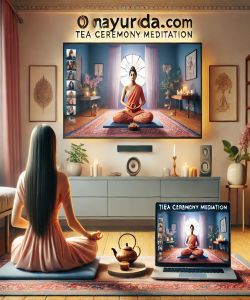
1. Overview of Tea Ceremony Meditation
Tea Ceremony Meditation is not a recreational pursuit nor a casual method of relaxation; it is a rigorous and profound discipline dedicated to the cultivation of inner stillness and heightened awareness through a highly structured, ritualised practice. This tradition, known in its Japanese form as Chanoyu or Chado (The Way of Tea), transcends the mere act of preparing and consuming a beverage. Instead, it transforms this process into a powerful meditative vehicle. At its core, the practice is an uncompromising demand for total presence. Every gesture, from the purification of the utensils to the whisking of the powdered green tea (matcha) and the final, deliberate act of drinking, is executed with absolute mindfulness and precision. It is a holistic system that integrates aesthetic appreciation, social etiquette, and deep philosophical principles derived from Zen Buddhism. The objective is to achieve a state of tranquil clarity, where the mind is freed from the incessant clutter of daily existence and anchored firmly in the present moment. The ceremony’s environment, the tools employed, and the sequence of actions are all meticulously orchestrated to foster the four guiding principles: harmony (wa), respect (kei), purity (sei), and tranquillity (jaku). This is not an act of performance but an internalised journey, a moving meditation where the practitioner learns to find the extraordinary within the ordinary, disciplining the mind and spirit through a framework of unyielding formality and grace. It is, in essence, a formidable pathway to self-mastery, demanding complete commitment and offering profound insight in return.
2. What are Tea Ceremony Meditation?
Tea Ceremony Meditation constitutes a formalised practice wherein the methodical preparation and presentation of tea serve as a direct conduit for meditative discipline. It is a sophisticated synthesis of art, philosophy, and mental training, fundamentally distinct from the simple act of brewing tea. The practice is predicated on the principle that focused attention on a sequence of deliberate, prescribed actions can quiet the discursive mind and cultivate a state of profound mindfulness. This is not a passive experience; it is an active engagement with the present moment, guided by a rigorous and unyielding structure. The key components that define this discipline are:
- The Ritualised Sequence (Temae): This refers to the specific, unchanging set of procedures for handling the tea utensils, purifying the space, and preparing the tea. Each movement is precise, economical, and imbued with meaning, compelling the practitioner to abandon mental distractions and focus entirely on the physical task at hand. The rigidity of the sequence is its strength, providing a reliable framework for entering a meditative state.
- Sensory Immersion: The practice is designed to engage all senses fully. The sound of the water, the feel of the ceramic bowl, the aroma of the steam, the vibrant green colour of the matcha, and its complex, umami taste are all integral. This total sensory immersion anchors the practitioner in the immediate reality of the experience, preventing the mind from wandering into past regrets or future anxieties.
- Philosophical Underpinnings: Deeply rooted in Zen Buddhist thought, Tea Ceremony Meditation is an expression of core principles such as ichigo ichie (one time, one meeting), which emphasises the unique, unrepeatable nature of every moment. It also embodies the ideals of simplicity, humility, and an appreciation for the imperfect, transient beauty of wabi-sabi.
- The Shared Atmosphere: In a traditional setting, the practice cultivates a sense of shared presence and mutual respect between host and guest. This interaction, governed by strict etiquette, further reinforces the principles of harmony and mindfulness, making the ceremony a collective as well as an individual meditative experience.
3. Who Needs Tea Ceremony Meditation?
- Individuals seeking to cultivate profound mental discipline and unwavering focus. The rigorous, step-by-step nature of the ceremony compels the mind to abandon its habitual patterns of distraction, systematically training the faculty of attention. This is essential for those whose cognitive performance is paramount.
- Professionals operating in high-stress, high-stakes environments. Executives, leaders, and decision-makers who are constantly assailed by demands and information overload will find the practice a powerful tool for developing composure, clarity of thought, and emotional resilience under pressure. It provides a structured method for achieving mental quietude.
- Practitioners of other meditative disciplines who wish to explore a more embodied, active form of mindfulness. For those accustomed to static, seated meditation, the ceremony offers a dynamic alternative where stillness of mind is achieved through deliberate, graceful movement, integrating mind and body in a unified, focused state.
- Individuals grappling with chronic anxiety or an overactive mind. The ceremony's unyielding structure and sensory focus provide a powerful anchor to the present moment, offering a practical and effective antidote to the cycle of worry, rumination, and future-oriented fear. It forces a cognitive reset.
- Artists, designers, and creatives seeking to heighten their sensory perception and aesthetic sensibilities. The deep attention paid to the texture of a bowl, the colour of the tea, and the sound of the whisk fosters a refined appreciation for subtlety and detail, which can directly enrich their own creative work.
- Anyone committed to the serious pursuit of self-awareness and personal development. The practice is a mirror that reflects one's own impatience, lack of presence, and internal turmoil. By adhering to its discipline, one directly confronts and works to refine these aspects of the self, fostering humility, grace, and inner strength.
- Individuals looking to establish a meaningful personal ritual. In a world of fleeting digital interactions, the ceremony provides a tangible, grounding practice that can be integrated into daily or weekly life, serving as a consistent sanctuary for introspection and mental recalibration.
4. Origins and Evolution of Tea Ceremony Meditation
The origins of Tea Ceremony Meditation are deeply entwined with the history of Zen Buddhism and the cultural transmission of tea from China to Japan. The practice did not emerge fully formed but evolved over centuries, shaped by monks, warriors, and aesthetes into the rigorous discipline known today. Its earliest roots can be traced to the Tang dynasty in China, where powdered tea was prepared and consumed in Buddhist monasteries as an aid to long periods of seated meditation. The stimulating properties of the tea helped monks maintain wakefulness and focus, embedding the beverage within a spiritual context from its inception.
It was the Buddhist monk Eisai who is credited with reintroducing both powdered green tea (matcha) and the Rinzai school of Zen to Japan in the late 12th century. Initially, the consumption of tea in Japan remained a practice largely confined to the monastic and aristocratic elite. It was valued for its medicinal properties and as a sophisticated social pastime. During the subsequent centuries, particularly the Muromachi period, the practice began to be codified and imbued with a distinct aesthetic and philosophical character under the influence of Zen masters like Murata Jukō and Takeno Jōō. They sought to strip the tea gathering of its ostentatious and worldly trappings, steering it towards the Zen ideals of simplicity, rustic beauty (wabi), and the discovery of profound meaning in the mundane.
The evolution of the tea ceremony reached its apotheosis in the 16th century with the seminal figure of Sen no Rikyū. A master of unparalleled influence, Rikyū crystallised the practice into what is now considered its classical form, Chado, or "The Way of Tea." He established the core principles of harmony (wa), respect (kei), purity (sei), and tranquillity (jaku) as the unshakable foundation of the ceremony. Rikyū championed a radically simple aesthetic, favouring humble, imperfect, and locally crafted utensils over expensive imported Chinese wares. He designed smaller, more intimate tea houses to foster a sense of direct, heartfelt connection. It was Rikyū who definitively transformed the tea gathering from a social event into a profound meditative and spiritual discipline, a pathway to enlightenment accessible through the rigorous practice of preparing and receiving a single bowl of tea. His legacy continues to dominate the practice, with the major schools of tea ceremony today tracing their lineage directly back to him.
5. Types of Tea Ceremony Meditation
The practice of Tea Ceremony Meditation is not monolithic; it encompasses several distinct types and formats, each with its own level of formality, duration, and purpose. Understanding these distinctions is critical for any serious practitioner.
- The Formal Tea Gathering (Chaji): This represents the zenith of the discipline. A Chaji is a complete, highly formal event that lasts for several hours. It is an immersive experience that includes a full multi-course meal (kaiseki), the service of both thick tea (koicha) and thin tea (usucha), and the appreciation of meticulously selected utensils and art scrolls. The Chaji is the most rigorous expression of the principles of Chado, demanding immense preparation from the host and deep understanding from the guests. It is not merely a ceremony but a comprehensive aesthetic and spiritual event designed to transport participants beyond the mundane. Its purpose is to create a singular, profound moment of shared presence and tranquillity.
- The Informal Tea Gathering (Chakai): A Chakai is a more accessible and less time-intensive event. It typically involves the service of sweets (wagashi) and thin tea (usucha) only, omitting the full meal and thick tea portions of a Chaji. While still governed by the rules of etiquette and mindfulness, its atmosphere is comparatively lighter. A Chakai is often held to introduce newcomers to the Way of Tea or as a larger, more public demonstration. Despite its relative informality, it remains a serious meditative practice, demanding the same level of presence and respect from all participants.
- Thick Tea Ceremony (Koicha Temae): This is the most solemn and central element within a formal Chaji. Koicha is made from the highest quality tea leaves, resulting in a very thick, viscous blend, almost like a purée. It is traditionally shared by all guests from a single bowl, a powerful symbol of unity and shared experience. The preparation and consumption of koicha are conducted with extreme reverence and quietude. This part of the ceremony is considered the most spiritually significant, representing the deepest level of communion and meditative depth.
- Thin Tea Ceremony (Usucha Temae): This involves the preparation of a lighter, frothier tea served in individual bowls to each guest. Usucha is the type of tea preparation most commonly practised and demonstrated, both within a Chaji (after the koicha) and as the sole focus of a Chakai. The atmosphere during an usucha service is slightly more relaxed, allowing for quiet conversation. It serves as a perfect vehicle for practising the fundamental movements and cultivating mindfulness in a less intense format than the koicha ceremony.
6. Benefits of Tea Ceremony Meditation
- Cultivation of Profound Mental Focus: The unyielding, step-by-step procedure of the ceremony demands absolute concentration. This rigorous training systematically strengthens the practitioner's ability to direct and sustain attention, a skill directly transferable to all other areas of professional and personal life.
- Systematic Stress and Anxiety Reduction: By forcing complete immersion in the present moment through sensory engagement and deliberate action, the practice effectively severs the debilitating loop of rumination over past events and anxiety about future outcomes. It provides a structured sanctuary for the mind.
- Enhanced Emotional Regulation: The discipline requires the cultivation of a calm, composed, and non-reactive demeanour, regardless of internal or external disturbances. Regular practice builds emotional resilience and equips the individual to face adversity with equanimity and poise.
- Heightened Sensory Acuity: The ceremony is a masterclass in paying attention. It trains the practitioner to notice the subtle nuances of taste, scent, texture, sound, and sight, awakening a richer and more detailed perception of the world that is often dulled by a hurried, modern existence.
- Development of Patience and Perseverance: The meticulous and often slow pace of the ritual is a direct challenge to the modern predilection for instant gratification. Mastery requires dedication and the acceptance that progress is incremental, thereby fostering a deep sense of patience.
- Embodiment of Grace and Deliberateness: Every movement in the tea ceremony is economical, precise, and devoid of haste. This physical training in mindful action translates into a more graceful and deliberate way of moving through the world, replacing frantic energy with composed efficiency.
- Deepened Appreciation for Simplicity and the Present Moment: The philosophy underpinning the ceremony, particularly ichigo ichie (one time, one meeting), instils a profound respect for the uniqueness and value of each moment. It teaches one to find immense beauty and meaning in the simplest of objects and actions.
- Strengthened Interpersonal Respect and Harmony: The etiquette of the tea room, which dictates every interaction between host and guest, is founded on the principle of mutual respect. This fosters an authentic sense of connection and harmony that is based on genuine consideration for others.
7. Core Principles and Practices of Tea Ceremony Meditation
- Harmony (Wa): This is the foundational principle, representing a state of profound accord between individuals, nature, and the utensils themselves. In practice, it demands the creation of a seamless and tranquil atmosphere. The host selects implements that complement each other and the season, and the guests conduct themselves with a quiet grace that contributes to the collective serenity. Wa is the conscious cultivation of a non-confrontational, unified environment where the ego is subdued for the benefit of the shared experience.
- Respect (Kei): This principle extends beyond simple politeness. It is a deep, sincere reverence for all things. The practitioner must show respect for the host, the other guests, the tea, and every single utensil, no matter how humble. This is demonstrated through specific actions, such as the careful handling of the tea bowl and the formal bows exchanged. Kei fosters humility and an awareness of the interconnectedness of all elements within the ceremony and, by extension, within life itself.
- Purity (Sei): This refers to both physical and spiritual cleanliness. Physically, it is manifest in the immaculate state of the tea room and the ritual purification of the utensils with a silk cloth (fukusa). Spiritually, it demands that the practitioner approach the ceremony with a pure heart and a clear mind, leaving behind the dust and clutter of worldly concerns at the threshold of the tea room. Sei is the act of cleansing the self to become a worthy vessel for the experience.
- Tranquillity (Jaku): This is the ultimate attainment, the state that arises when the first three principles are fully realised and internalised. Jaku is a profound, unshakable quietude of the mind and spirit. It is not a temporary state of relaxation but a deep, abiding stillness that the practitioner carries with them even after the ceremony has concluded. It is the point at which the discipline of the practice blossoms into effortless serenity and true enlightenment.
- The Ritual Sequence (Temae): This is the practical, physical embodiment of the four principles. Temae is the rigorously defined, unchangeable sequence of movements for conducting the ceremony. It includes the precise folding of the fukusa, the specific way water is ladled, the exact method for whisking the tea, and the formal presentation of the bowl. Adherence to the temae is not restrictive; it is liberating. By entrusting the body to this learned sequence, the mind is freed from the burden of decision-making and can achieve a state of active, flowing meditation.
8. Online Tea Ceremony Meditation
An online modality for Tea Ceremony Meditation presents a formidable and highly effective framework for mastering this profound discipline. It leverages technology not as a distraction, but as a tool for focused, individualised instruction and practice. The benefits of this approach are distinct and compelling.
- Unwavering Accessibility and Geographic Independence: The online format eradicates all geographical barriers. It grants access to authoritative instruction to individuals anywhere in the world, democratising a practice that was once confined to specific cultural centres and physical dojos. This allows committed practitioners to learn regardless of their location or proximity to a traditional tea school.
- Structured, Self-Paced Mastery: Digital platforms permit the delivery of a meticulously structured curriculum that can be engaged with at the practitioner's own pace. Complex sequences can be reviewed repeatedly until they are perfectly internalised, a luxury not always afforded in a group setting. This ensures a thorough, unhurried absorption of both technique and philosophy, building a foundation of true competence.
- Cultivation of Supreme Self-Discipline: The online environment places the onus of commitment squarely on the practitioner. Without the physical presence of a master or fellow students, the individual must cultivate an iron will to create a sacred space, eliminate distractions, and adhere to the rigorous schedule of practice. This fosters a powerful sense of autonomy and self-reliance, which are central to the spirit of Zen.
- Focused Individual Practice and Introspection: The solitary nature of online practice enhances the meditative aspect of the ceremony. Free from the social dynamics of a group class, the practitioner can turn their attention entirely inward. The ceremony becomes a pure, unadulterated dialogue between the self and the ritual, intensifying the introspective journey and accelerating the development of inner stillness.
- Direct and Precise Visual Instruction: High-definition video allows for unparalleled visual clarity in demonstrating the intricate hand movements (temae) of the ceremony. The ability to zoom, slow down, and replay instruction ensures that every subtle detail of handling the utensils is conveyed with a precision that can sometimes be missed in a larger, physical class. This meticulous visual guidance is paramount for achieving technical correctness, which is the gateway to meditative depth.
9. Tea Ceremony Meditation Techniques
The execution of Tea Ceremony Meditation is contingent upon a precise and unyielding sequence of techniques. Each step is a deliberate action designed to focus the mind and body, leading the practitioner toward a state of meditative calm. The following represents a foundational, step-by-step framework.
- The Preparation of Self and Space (Jumbi): Before the first utensil is touched, the practitioner must prepare their inner and outer environment. This involves ensuring the practice space is immaculately clean, uncluttered, and silent. Internally, one must consciously set aside the concerns of the day, taking several deep, centering breaths to quiet the mind and signal the formal commencement of the practice. This initial step is non-negotiable.
- The Ritual Purification of Utensils (Kiyomeru): The practitioner methodically purifies the key utensils, notably the tea caddy (natsume) and the tea scoop (chashaku), using a folded silk cloth (fukusa). This is not a perfunctory cleaning. Each fold and wipe of the fukusa is a prescribed, graceful movement. This act symbolises the purification of the mind and heart, preparing them for the sacred act of making tea.
- The Warming and Purification of the Bowl (Chawan o Kiyomeru): Hot water is ladled into the tea bowl (chawan). The bamboo whisk (chasen) is inspected and warmed in the water. The water is then discarded, and the bowl is meticulously wiped dry with a linen cloth (chakin). This sequence warms the vessel to receive the tea and represents a final act of purification before consumption.
- The Placement and Whisking of the Tea (Matcha o Ireru): A precise measure of powdered green tea (matcha) is scooped from the caddy into the bowl. The correct amount of hot, but not boiling, water is ladled over the tea. The practitioner then employs the whisk in a rapid, vigorous "m" or "w" motion, ensuring the wrist, not the arm, drives the action. The goal is to dissolve the tea completely and create a thick, stable head of fine foam. This action demands intense focus.
- The Presentation and Consumption (Dasu to Itadaku): The prepared bowl of tea is presented with reverence. If one is serving oneself, the bowl is placed formally before one's own position. The bowl is picked up with the right hand and placed in the palm of the left. It is rotated clockwise twice before drinking, so as to avoid drinking from its decorated "front." The tea is consumed in three to four deliberate sips, with a final, audible sip to signal that one has finished. This act is performed with gratitude and complete presence.
10. Tea Ceremony Meditation for Adults
Tea Ceremony Meditation offers a uniquely potent path for adults navigating the complexities and pressures inherent in modern life. It is not a simplistic hobby but a sophisticated discipline exceptionally well-suited to the mature mind. For adults, the ceremony provides a structured antidote to the pervasive chaos of professional obligations, familial responsibilities, and the ceaseless digital inundation that fragments attention. The unyielding ritual demands a level of focus and commitment that directly counters the habit of multitasking, forcing the practitioner into a singular, present-moment awareness that is both restorative and deeply clarifying. The philosophical underpinnings of the practice—harmony, respect, purity, and tranquillity—resonate profoundly with the adult search for meaning beyond material success. It offers a tangible framework for cultivating virtues such as patience, humility, and grace, which are often eroded by the relentless pace of contemporary existence. Furthermore, the embodied nature of the practice, which synchronises mind and body through deliberate, graceful movement, provides a powerful means of grounding for individuals who may feel disconnected or live predominantly in their heads. It is a form of active meditation that does not require the complete cessation of thought but rather the channelling of mental energy into a beautiful and meaningful form. For the adult practitioner, the tea ceremony is a sanctuary, a training ground for resilience, and a mirror that reflects one's own internal state, offering a direct and uncompromising path toward self-knowledge and inner peace. It is a serious engagement with the self, demanding maturity and offering profound rewards in return.
11. Total Duration of Online Tea Ceremony Meditation
The prescribed total duration for a standard online Tea Ceremony Meditation session is rigorously set at 1 hr. This temporal framework is not an arbitrary or flexible guideline; it is an essential component of the discipline, meticulously designed to facilitate a complete and effective meditative arc. The 1 hr duration is structured to allow the practitioner to move through the distinct phases of the practice without haste, which is the absolute antithesis of the ceremony's ethos. It allocates sufficient time for the crucial initial phase of mental and environmental preparation, where the individual must consciously disengage from the external world and cultivate a state of inner readiness. Following this, the central portion of the 1 hr is dedicated to the unwavering, step-by-step execution of the tea preparation sequence (temae). This demands unhurried precision, and the allotted time ensures that each movement can be performed with the full, mindful attention it requires. The final segment of the 1 hr session is reserved for the act of consumption and a period of quiet reflection, allowing the effects of the practice—the heightened awareness and inner stillness—to be fully absorbed and integrated. Any attempt to truncate this 1 hr duration would fundamentally compromise the integrity of the experience, reducing a profound meditative discipline to a mere perfunctory task. It would rob the practitioner of the very spaciousness required for the mind to settle and for the principles of harmony and tranquillity to manifest. Therefore, adherence to the full 1 hr is imperative for anyone serious about engaging with the practice authentically and reaping its transformative benefits.
12. Things to Consider with Tea Ceremony Meditation
Engaging with Tea Ceremony Meditation demands far more than a passing interest; it requires a sober and realistic assessment of one's own commitment and readiness. This is not a practice to be approached lightly or as a fashionable wellness trend. It is imperative to consider that the discipline is, at its heart, a form of rigorous training. One must be prepared to embrace repetition, meticulous detail, and a pace that deliberately counters modern impatience. The acquisition of the correct utensils is a significant consideration. While one does not need the most expensive implements, a complete and authentic set is non-negotiable for proper practice. Substituting with everyday kitchenware fundamentally violates the spirit and method of the ceremony. Furthermore, the practitioner must be willing and able to designate a physical space that can be kept impeccantly clean, quiet, and free from all distractions. This sanctuary is not a luxury but a prerequisite. One must also consider the philosophical dimension. To engage with the ceremony merely as a set of mechanical actions is to miss its entire point. A willingness to study and reflect upon the core principles of harmony, respect, purity, and tranquillity is essential for the practice to move from a physical exercise to a transformative spiritual discipline. Lastly, prospective practitioners must be honest about their capacity for self-direction and patience. Mastery is a slow, incremental process. There are no shortcuts. A genuine commitment to long-term, consistent practice is the only path to internalising the deep sense of peace and clarity that the Way of Tea offers.
13. Effectiveness of Tea Ceremony Meditation
The effectiveness of Tea Ceremony Meditation as a tool for mental and spiritual cultivation is absolute and profound, deriving its power from the unyielding synthesis of ritual, mindfulness, and philosophical depth. Its efficacy is not a matter of subjective belief but a direct consequence of its rigorous structure. The practice works because it systematically dismantles the architecture of a distracted mind. By demanding total focus on a precise sequence of physical actions—the folding of a cloth, the ladling of water, the whisking of tea—it leaves no cognitive capacity for anxiety, rumination, or mental clutter. This forced immersion in the present moment is a powerful and immediate form of mental discipline. The effectiveness is further amplified by its holistic, sensory nature. The practitioner is anchored in reality through the sound of the water, the feel of the ceramic, the aroma of the tea, and the intensity of its taste. This sensory grounding provides a powerful antidote to the disembodied and abstract nature of modern anxieties. The ceremony's foundation in the principles of harmony, respect, purity, and tranquillity provides a moral and ethical compass that guides the practitioner toward a more balanced and composed state of being. It is effective because it is not merely a technique to be applied, but a complete worldview to be embodied. The result of dedicated practice is not a fleeting sense of calm, but a fundamental and lasting shift in one's baseline mental state, fostering resilience, clarity, and an unwavering inner stillness that permeates all aspects of life.
14. Preferred Cautions During Tea Ceremony Meditation
It is imperative that the practitioner approaches Tea Ceremony Meditation with a disciplined and reverent mindset, and actively avoids certain behaviours and attitudes that would undermine its integrity and effectiveness. One must absolutely refrain from treating the practice as a means to an end, specifically the mere consumption of a beverage. The tea is the vehicle, not the destination; the focus must remain steadfastly on the process. Any sense of impatience or a desire to rush through the sequence to "get it over with" is a fundamental violation of the ceremony's spirit and must be rigorously self-corrected. The practitioner must guard against the intrusion of the ego. This is not a performance to be judged on aesthetic merit, but an internal discipline. Concerns about appearing graceful or executing a movement perfectly for an imaginary audience are distractions that must be consciously abandoned. Furthermore, the sanctity of the practice space and time is non-negotiable. Allowing digital notifications, external conversations, or any form of multitasking to encroach upon the ceremony is an act of profound disrespect to the practice and to oneself. One must also be cautious of over-intellectualising the experience whilst it is underway. The philosophical principles are to be studied before and reflected upon after, but during the ceremony itself, the mind should be surrendered to the simple, direct experience of the actions. Finally, a casual or flippant handling of the utensils is unacceptable. Each object must be treated with the utmost respect and care, as if it were an extension of a living entity, for in the context of the ceremony, it is precisely that.
15. Tea Ceremony Meditation Course Outline
- Module 1: Foundational Philosophy and Principles This initial module establishes the unshakeable theoretical groundwork. It provides a rigorous examination of the Four Core Principles: Harmony (Wa), Respect (Kei), Purity (Sei), and Tranquillity (Jaku). It also introduces key Zen concepts such as Ichigo Ichie and Wabi-Sabi, ensuring the practitioner understands the profound "why" before learning the "how."
- Module 2: The Arsenal of the Way: Utensils and Their Significance A detailed, systematic introduction to each essential utensil (dogu). This includes the tea bowl (chawan), tea whisk (chasen), tea scoop (chashaku), tea caddy (natsume), silk cloth (fukusa), and water ladle (hishaku). The focus is not only on nomenclature but on the specific function, symbolic meaning, and correct, respectful handling of each item.
- Module 3: The Grammar of Movement: Foundational Temae This module constitutes the primary practical training. It focuses on the precise, step-by-step sequence of movements (temae) for preparing thin tea (usucha). Instruction will cover the correct methods for entering the tea space, ritual purification of utensils, handling the ladle, whisking the tea to the correct consistency, and formally presenting the bowl.
- Module 4: The Role of the Recipient: Etiquette of Receiving A critical module focusing on the practitioner as a guest. It details the correct etiquette for receiving and drinking the tea. This includes the proper way to hold the bowl, the three rotations before drinking, the manner of consumption, and the protocol for admiring the utensils after the tea is finished.
- Module 5: Integration and Practice: The Solo Ceremony This section synthesises all previous learning. The practitioner is guided through conducting a complete, albeit simplified, solo tea ceremony from start to finish. The emphasis is on achieving a smooth, uninterrupted flow and beginning the process of internalising the movements so that the mind can focus on achieving a meditative state.
- Module 6: Deepening the Practice: Cultivating Stillness The final module moves beyond mechanics to focus on the internal experience. It provides techniques for deepening mindfulness during the ceremony, managing distractions, and beginning to cultivate the state of Jaku (tranquillity). It will address how to transition the discipline from a learned sequence into a truly embodied meditative practice.
16. Detailed Objectives with Timeline of Tea Ceremony Meditation
- Within the Initial Phase (First Quartile of Study):
- Objective: Achieve complete conceptual mastery of the four core principles (Wa, Kei, Sei, Jaku). The practitioner must be able to articulate the meaning and practical application of each.
- Objective: Correctly identify and name all primary tea utensils (dogu) and demonstrate the proper, respectful manner of handling each item when not in active use.
- Objective: Execute the ritual folding of the fukusa (silk cloth) with precision and without hesitation, internalising it as a foundational motor skill.
- By the Midpoint of Study (Second Quartile):
- Objective: Perform the complete sequence (temae) for purifying the natsume (tea caddy) and chashaku (tea scoop) in a fluid, continuous motion.
- Objective: Demonstrate competence in whisking usucha (thin tea) to create a consistent, fine foam, mastering the correct wrist action and pressure.
- Objective: Exhibit flawless execution of the etiquette for receiving a bowl of tea, including the proper grip, rotation, and manner of drinking.
- Within the Advanced Phase (Third Quartile of Study):
- Objective: Execute a full, uninterrupted usucha temae from initial purification to final presentation, with all steps performed in the correct sequence and with deliberate, unhurried grace.
- Objective: Begin to shift focus from the mechanics of the sequence to the cultivation of a mindful, present-moment awareness during the practice. The practitioner should report a decreased need to consciously recall each step.
- Objective: Successfully establish and maintain a dedicated, clean, and tranquil space for regular, independent practice, demonstrating a commitment to the discipline beyond guided sessions.
- Upon Completion of the Formal Course:
- Objective: Attain a state of proficiency where the execution of the temae becomes second nature, allowing the practice to function as a genuine moving meditation.
- Objective: Internalise the principles of the ceremony to the extent that they begin to inform one's conduct and mindset outside of the formal practice, fostering greater calmness and deliberateness in daily life.
- Objective: Possess the foundational competence and understanding required to continue a lifelong, self-directed study and deepening of the Way of Tea.
17. Requirements for Taking Online Tea Ceremony Meditation
- A Stable and Uninterrupted High-Speed Internet Connection: This is a non-negotiable technical prerequisite. The transmission of precise visual instruction is paramount. Any latency, buffering, or connection failure will severely disrupt the focused learning environment and compromise the integrity of the practice.
- A Dedicated, Quiet, and Uncluttered Physical Space: The practitioner must designate a specific area solely for the purpose of the ceremony during the online session. This space must be free from all potential interruptions—including other people, pets, and background noise—and must be kept immaculately clean.
- Acquisition of a Complete and Authentic Set of Utensils (Dogu): Prospective participants are required to procure their own set of essential implements. This must include, at a minimum: a proper tea bowl (chawan), bamboo whisk (chasen), tea scoop (chashaku), tea caddy (natsume), and a linen cloth (chakin). Using makeshift substitutes is unacceptable.
- A Device with High-Quality Video and Audio Capability: A computer, tablet, or other device with a clear camera and microphone is necessary. The camera must be positioned to provide the instructor with a clear view of the practitioner's hands, utensils, and workspace for the purpose of providing direct, corrective feedback.
- An Unwavering Personal Commitment to Uninterrupted Practice: The participant must commit to the full duration of each session without distraction. This means silencing all other electronic devices, closing extraneous applications, and ensuring one’s schedule is clear of any other obligations during the allotted time.
- Appropriate Attire: Whilst formal kimono is not required for online practice, participants must wear modest, clean, and comfortable clothing that allows for freedom of movement. Jewellery, strong perfumes, and nail varnish must be avoided as they interfere with the handling of utensils and the sensory purity of the experience.
- A Mindset of Discipline and Receptivity: The practitioner must approach the course with the understanding that this is a rigorous discipline, not a casual class. A willingness to receive direct, formal instruction and to engage in repetitive, detailed practice is essential for progress.
18. Things to Keep in Mind Before Starting Online Tea Ceremony Meditation
Before embarking on the rigorous path of Tea Ceremony Meditation through an online medium, it is crucial to internalise a number of realities to ensure the endeavour is both successful and authentic. One must fundamentally understand that the digital interface does not dilute the discipline required; in fact, it amplifies the need for personal accountability. You are solely responsible for creating and defending the sanctity of your practice space. The convenience of learning from home must not be mistaken for an invitation to casualness. You must actively combat the pervasive culture of digital distraction, cultivating an iron will to silence notifications, close irrelevant tabs, and resist the urge to multitask. This is a battle you must be prepared to win repeatedly. Furthermore, recognise that the tactile and atmospheric elements of a traditional tea room cannot be perfectly replicated. Therefore, you must work harder to cultivate the sensory and spiritual dimensions of the practice through heightened personal focus and imagination. This demands a proactive, not a passive, engagement. You must also procure the correct, authentic utensils in advance. To attempt this practice with a coffee mug and a kitchen whisk is not just ineffective; it is an act of disrespect to the tradition you seek to learn. Finally, be prepared for a journey that prizes incremental progress over instant results. The online format allows you to review and repeat, and you must embrace this opportunity for meticulous refinement. This path requires patience, self-motivation, and a solemn commitment to upholding the standards of a centuries-old discipline within a modern context.
19. Qualifications Required to Perform Tea Ceremony Meditation
The authority to perform, and more importantly to teach, Tea Ceremony Meditation is not a qualification that is lightly earned or self-proclaimed. It is the result of a lifetime of unwavering dedication, rigorous training, and profound immersion within a recognised lineage or school of tea. An individual qualified to guide others in this discipline, typically holding the title of Sensei or Master, embodies a synthesis of technical skill, historical knowledge, and deep spiritual insight. This is not a role that can be achieved through a short course or academic study alone.
The fundamental qualifications are uncompromising and include:
- Decades of Dedicated Study: A true master will have spent a significant portion of their life in continuous practice under the direct tutelage of their own qualified master. This long apprenticeship ensures the correct transmission of not only the techniques (temae) but also the subtle, unspoken spirit of the Way of Tea.
- Licensure from a Recognised School: The major schools of Japanese tea ceremony, such as Urasenke, Omotesenke, or Mushakōjisenke, have highly structured systems of certification. A qualified instructor will hold a series of licenses or diplomas from one of these established institutions, which attest to their level of mastery and grant them permission to teach.
- Profound Understanding of Associated Arts: The Way of Tea does not exist in a vacuum. A master is expected to have a deep, practical knowledge of related fields such as Zen philosophy, calligraphy (shodo), flower arranging (ikebana), ceramics, and traditional architecture. This holistic understanding is essential to creating an authentic and meaningful tea experience.
- An Embodied Demonstration of Core Principles: The ultimate qualification is not a piece of paper but the individual's own being. A master must be a living embodiment of harmony, respect, purity, and tranquillity. Their every movement, word, and interaction must reflect the profound inner peace and discipline that the practice is designed to cultivate. It is a state of being, not merely a set of skills.
20. Online Vs Offline/Onsite Tea Ceremony Meditation
A comparative analysis of online and offline modalities for Tea Ceremony Meditation reveals distinct characteristics and trade-offs. Neither is inherently superior; rather, they serve different needs and contexts for the serious practitioner.
Online The primary strength of the online format is its radical accessibility. It removes all geographical and logistical barriers, allowing a dedicated individual to receive instruction from a qualified master regardless of physical location. This modality excels in its capacity for focused, individualised learning. The practitioner can review recorded sessions, allowing for the meticulous, repetitive study of intricate movements (temae) at their own pace, which is a significant advantage for internalising complex sequences. The online environment also forces the cultivation of supreme self-discipline. Without the external structure of a physical dojo and the presence of fellow students, the onus is entirely on the individual to create a sacred space, eliminate distractions, and maintain a rigorous practice schedule. This fosters a powerful sense of autonomy and inner resolve. However, the online format is inherently limited in its ability to convey the subtle, atmospheric qualities of a traditional tea room—the specific scent of the tatami, the shared energy of the group, and the immediate, tactile feedback from a master adjusting one's posture.
Offline/Onsite The traditional, offline experience offers an irreplaceable richness and depth. The primary advantage is the direct, unmediated transmission of knowledge and spirit (ishin-denshin) from master to student. The master can provide immediate, physical corrections to posture and movement, a level of feedback that is difficult to replicate through a screen. The practitioner is fully immersed in a meticulously curated environment, where every element—from the art in the alcove to the sound of the water—is designed to facilitate a meditative state. This holistic, sensory immersion is powerful and profound. Furthermore, the practice within a group setting cultivates the principle of harmony (wa) in a very tangible way. Learning to move and act in concert with others, sharing a single bowl of koicha, and engaging in the formal etiquette between host and guest are integral aspects of the discipline that are most fully realised in person. The primary limitation of the onsite modality is its exclusivity, demanding physical proximity to a qualified school and adherence to a fixed schedule, which may not be feasible for all.
21. FAQs About Online Tea Ceremony Meditation
Question 1. Is prior experience in meditation or tea required? Answer: No. The course is structured to be a rigorous introduction for complete novices. A disciplined mindset is the only prerequisite.
Question 2. Must I purchase expensive equipment? Answer: You must purchase an authentic set of essential utensils. Whilst master-grade items are not required, substitutes like coffee mugs are unacceptable and will prevent proper practice.
Question 3. How is the sanctity of the ceremony maintained online? Answer: Sanctity is maintained through the unwavering discipline of the practitioner. You are required to create a dedicated, quiet, and clean space and commit to uninterrupted focus for the entire session.
Question 4. What kind of tea is used? Answer: The practice exclusively uses high-quality Japanese powdered green tea, known as matcha. Guidance on sourcing appropriate ceremonial-grade matcha will be provided.
Question 5. Can I receive personalised feedback? Answer: Yes. The use of a camera is mandatory, allowing the instructor to observe your movements and provide direct, corrective feedback on your technique.
Question 6. Is this practice religious? Answer: The practice is rooted in Zen Buddhist philosophy, but it is not a religion. It is a meditative discipline open to individuals of any or no faith.
Question 7. What is the difference between usucha and koicha? Answer: Usucha is thin, frothy tea served individually and is the focus of foundational training. Koicha is a very thick tea, often shared from one bowl in more advanced, formal ceremonies.
Question 8. Will I learn about the history and philosophy? Answer: Yes. A significant portion of the curriculum is dedicated to the core principles and historical context, as understanding them is essential to the practice.
Question 9. How much space do I need for practice? Answer: You need a small, clear floor space large enough for you to kneel or sit comfortably and lay out your utensils in front of you without being cramped. A space of approximately 1.5 by 1.5 metres is sufficient.
Question 10. Is kneeling for a long time required? Answer: Whilst the traditional posture is kneeling (seiza), accommodations can be made. The primary requirement is a stable, dignified posture that can be maintained. This can be achieved using a small stool or cushion.
Question 11. Can I interact with other students? Answer: Interaction is generally minimised during the formal practice to maintain meditative focus. Some formats may include separate, dedicated time for group discussion.
Question 12. What if I miss a live session? Answer: Many online courses provide recordings of the sessions, allowing you to review the material at your own pace. However, live attendance is strongly encouraged for direct feedback.
Question 13. Is the online course as effective as an in-person one? Answer: The modalities are different, not inferior or superior. Online practice excels at developing self-discipline and allows for detailed review, whilst in-person practice offers a unique atmospheric immersion. Effectiveness depends on the practitioner's commitment.
Question 14. What do I wear? Answer: Wear clean, modest, and comfortable clothing that allows for free movement. Avoid jewellery, strong scents, and restrictive garments.
Question 15. How is respect (kei) shown in an online setting? Answer: Respect is shown through punctuality, having your space and utensils prepared in advance, maintaining a dignified posture, listening attentively, and refraining from any and all digital distractions.
Question 16. What is temae? Answer: Temae is the Japanese term for the specific, unchangeable, and highly detailed sequence of movements used to prepare the tea. It is the core of the physical practice.
22. Conclusion About Tea Ceremony Meditation
In conclusion, Tea Ceremony Meditation stands as a formidable and uncompromising discipline for the cultivation of the self. It must be unequivocally understood not as a quaint cultural custom or a simple relaxation technique, but as a rigorous, structured path toward achieving profound mental clarity, emotional equanimity, and an unshakable inner stillness. The practice systematically dismantles the habits of a distracted mind by demanding absolute presence and deliberate action within a framework of profound philosophical principles. Every element, from the purification of the utensils to the whisking of the tea, is a tool for honing focus and embodying the ideals of harmony, respect, purity, and tranquillity. Whether pursued in a traditional, onsite setting or through the focused, self-reliant medium of online instruction, its core demand remains the same: total commitment. It is a practice that offers no shortcuts and tolerates no half-measures. For those willing to submit to its exacting standards, the Way of Tea provides not merely a skill, but a transformative art form for living—a method for finding the extraordinary in the ordinary, for mastering the internal world, and for moving through life with purpose, grace, and a deep, abiding sense of peace. It is, in its truest sense, a way of forging a resilient and tranquil spirit.