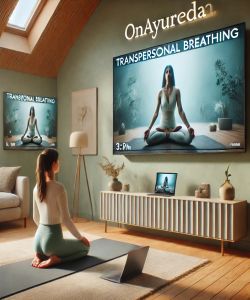
1. Overview of Transpersonal Breathing
Transpersonal Breathing constitutes a rigorous and potent methodology for accessing non-ordinary states of consciousness to facilitate profound psychological and spiritual exploration. It is an advanced somatic practice, fundamentally predicated on the principle that controlled, accelerated respiration can catalyse a process of deep internal healing and self-discovery. This modality operates beyond the confines of conventional talk therapy, engaging the individual’s innate capacity for self-regulation and a direct experience of the psyche's deeper strata. The process is not undertaken for mere relaxation but is a deliberate, structured endeavour to confront and integrate suppressed emotional material, perinatal memories, and archetypal content. It is unequivocally a form of depth psychology, grounded in the theoretical framework of transpersonal studies, which acknowledges the spiritual, transcendent, and mystical dimensions of human experience as integral to complete well-being. The practice mandates a secure, professionally held environment where the breather can safely surrender to the unfolding inner process, which is often intense and cathartic. The core mechanism involves a temporary and intentional alteration of body chemistry through hyperventilation, which lowers carbon dioxide levels and induces a physiological shift that corresponds with a profound shift in consciousness. This allows for the emergence of repressed psychic material from the individual, collective, and transpersonal unconscious. The ultimate objective is not merely the alleviation of symptoms but the fundamental integration of fragmented aspects of the self, leading to a more coherent, authentic, and expanded sense of identity. It is, therefore, a demanding yet transformative discipline reserved for individuals committed to a serious path of personal development and psychospiritual maturation. The practice asserts that within every individual lies a powerful inner healing intelligence, and the breath is the most direct and potent key to unlocking it.
2. What are Transpersonal Breathing?
Transpersonal Breathing refers to a category of powerful therapeutic and experiential techniques that utilise accelerated and conscious, connected breathing patterns to induce altered states of consciousness. These states are then harnessed for the purpose of profound psychological exploration, emotional release, and spiritual emergence. The fundamental premise is that the breath acts as a bridge between the conscious and unconscious mind, providing direct access to layers of the psyche that are typically inaccessible through conventional means. Unlike simple relaxation or mindfulness breathing, Transpersonal Breathing is an active and often physically demanding process designed to bypass the ego's ordinary defensive structures.
This modality is defined by several key characteristics:
Induced Altered States: The primary mechanism is intentional hyperventilation, which alters the body's biochemistry, leading to significant shifts in perception, emotion, and somatic awareness. These non-ordinary states are considered therapeutic, not pathological, providing a gateway to deeper self-understanding.
Focus on Inner Experience: The practice is profoundly internal. Participants are guided to surrender to their own unfolding process, trusting the "inner healer" or the innate wisdom of their psyche to bring forward whatever material is most pertinent for healing and integration. The facilitator’s role is to hold a safe space, not to direct the content of the experience.
Integration of Transpersonal Dimensions: The term "transpersonal" signifies that the experiences catalysed by the breath often extend beyond the individual's personal biography. Participants may encounter perinatal memories (related to birth), ancestral or collective unconscious material, archetypal imagery, and mystical or unitive states of consciousness.
Somatic and Cathartic Release: The process is deeply embodied. Emotional and psychological blockages are often experienced and released through physical sensations, movements, and vocalisation. This catharsis is considered a vital part of clearing old traumas and energetic imprints.
In essence, Transpersonal Breathing is a form of experiential psychotherapy that uses the body's own respiratory system as the primary tool for navigating the full spectrum of human consciousness, from the personal to the transcendent. It is a rigorous discipline aimed at holistic integration of mind, body, and spirit.
3. Who Needs Transpersonal Breathing?
Individuals who have reached a plateau with conventional talk therapies and require a more somatic and experiential approach to break through persistent psychological barriers, ingrained behavioural patterns, or chronic emotional stagnation.
Those actively engaged in a path of significant personal or spiritual development who seek direct, experiential access to deeper layers of their own consciousness, rather than relying solely on intellectual or conceptual understanding.
Persons processing deep-seated trauma, including developmental, relational, or shock trauma, where the memories and associated energies are held within the body and are not fully accessible through cognitive recall alone.
Adults experiencing existential crises, a lack of meaning or purpose, or a spiritual emergency, who require a structured and safe container to explore these profound questions and integrate transformative spiritual experiences.
Individuals grappling with psychosomatic conditions or unexplained physical tensions that are suspected to have emotional or psychological origins, providing a direct method to access and release the underlying energetic blockages.
Therapists, counsellors, and other healing professionals who wish to deepen their own inner work, expand their understanding of the human psyche, and gain firsthand experience of non-ordinary states of consciousness to better serve their clients.
Those seeking to overcome creative blocks or unlock greater personal potential by moving beyond the limitations of the rational mind and tapping into the vast, often untapped resources of the unconscious and superconscious mind.
Individuals who feel disconnected from their bodies, their emotions, or their sense of aliveness, and who are seeking a powerful method to reclaim their vitality, emotional range, and embodied presence.
Persons who are committed to a rigorous process of self-exploration and are prepared to confront and work through challenging psychological material in a contained and professionally supervised setting for the purpose of profound and lasting transformation.
Those who have a specific interest in exploring the perinatal and biographical realms of the unconscious, as delineated in the work of Stanislav Grof, as a means of understanding the fundamental roots of their current psychological makeup.
4. Origins and Evolution of Transpersonal Breathing
The origins of Transpersonal Breathing are twofold, drawing from ancient spiritual traditions and the crucible of twentieth-century psychological research. For millennia, cultures worldwide have recognised the profound link between respiration and consciousness. Shamanic practices, yogic pranayama, and various forms of meditative discipline have long utilised breath control as a primary vehicle for inducing altered states, facilitating healing, and achieving spiritual insight. These ancient roots provide the foundational, albeit non-clinical, precedent for modern breathwork practices, establishing the breath as a potent tool for navigating the inner world.
The direct lineage of modern Transpersonal Breathing, however, emerged from the pioneering consciousness research of the 1950s and 1960s. Psychologists and psychiatrists, notably Dr. Stanislav Grof, were investigating the therapeutic potential of psychedelic substances like LSD to provide access to the deeper domains of the psyche. This research revealed a vast cartography of the unconscious, extending beyond the Freudian personal-biographical level to include what Grof termed the perinatal (related to the trauma and ecstasy of birth) and the transpersonal (archetypal, mystical, and collective experiences). When legal and political pressures severely restricted psychedelic research, Grof and his contemporaries sought a non-pharmacological method to access these same profound states.
This imperative led directly to the development of what Grof and his late wife, Christina, would formalise as Holotropic Breathwork. Through experimentation, they discovered that a specific combination of accelerated breathing, evocative music, and focused bodywork in a safe, supportive setting could reliably induce the full spectrum of experiences previously observed in psychedelic sessions. Simultaneously, and in a parallel development, Leonard Orr developed Rebirthing-Breathwork, a technique focused on a gentler, connected breathing rhythm aimed at releasing the trauma of one's own birth and resolving negative core beliefs.
From these two primary wellsprings, the field has evolved and diversified. Numerous schools and modalities of "conscious connected breathing" have emerged, each with its own specific emphasis and theoretical framework. However, they all share the core principle established by the pioneers: that the breath, when consciously and systematically engaged, is a powerful, autonomous, and legitimate tool for psychological healing and the exploration of the transpersonal dimensions of existence. The evolution continues as these practices gain wider acceptance and are integrated into broader therapeutic and wellness paradigms, though their core identity remains that of a rigorous depth-psychological method.
5. Types of Transpersonal Breathing
The field of Transpersonal Breathing, while unified by the core principle of using breath to access non-ordinary states of consciousness, encompasses several distinct and formalised modalities. Each type possesses a unique methodology, theoretical framework, and therapeutic emphasis.
Holotropic Breathwork™: Developed by Dr. Stanislav Grof and Christina Grof, this is arguably the most researched and structured form. It involves a triad of components: deeper, faster, connected breathing; evocative, powerful music played in a specific sequence; and focused energy-release bodywork when required. Sessions are typically conducted in a group setting with participants working in pairs of "breather" and "sitter." The theoretical underpinning is Grof's extensive cartography of the psyche, including the biographical, perinatal, and transpersonal realms. The emphasis is on surrendering to the "inner healer" and allowing whatever emerges to be fully experienced and integrated.
Rebirthing-Breathwork: Originated by Leonard Orr, this modality focuses on a technique called "conscious connected circular breathing." The breathing is typically more relaxed and less intense than in Holotropic Breathwork, and is often done without the use of loud music. The primary theoretical tenet of Rebirthing is the resolution of birth trauma and the dismantling of negative core beliefs or "personal lies" formed in early life. It often incorporates principles of "spiritual purification," including the use of fire, water, and earth.
Vivation®: Developed by Jim Leonard and Phil Laut from the Rebirthing lineage, Vivation refines the breathing process with a specific focus on what they term the "Five Elements." This is not a reference to classical elements but a set of practical skills for integrating any feeling or sensation that arises during a session into a state of pleasure or bliss. The core skill is "circular breathing," but the emphasis is on acceptance and detailed awareness of the physical sensations of emotion, with the goal of complete integration in the present moment.
Shamanic Breathwork: Created by Linda Star Wolf, this modality explicitly weds conscious breathing techniques with shamanic principles. It uses a circular breathing pattern and powerful, chakra-attuned music similar to Holotropic Breathwork, but it overlays the experience with the framework of the shamanic journey. The process is designed to help individuals connect with their inner shaman or healer, retrieve lost soul parts, and connect with spirit guides and power animals. It is a highly ritualised and ceremonial form of breathwork.
6. Benefits of Transpersonal Breathing
Profound Emotional Catharsis and Release: Facilitates the direct release of suppressed or repressed emotions, such as grief, anger, and fear, which are often stored somatically. This process provides a deep and lasting liberation from the burden of past emotional baggage.
Resolution of Deep-Seated Trauma: Offers a powerful, non-cognitive pathway to access and process traumatic imprints, including pre-verbal, developmental, and perinatal trauma, which are often inaccessible through conventional talk-based therapies.
Access to Transpersonal and Spiritual States: Provides direct, experiential access to mystical, archetypal, and unitive states of consciousness, fostering a profound sense of connection, meaning, and purpose that transcends the personal ego.
Alleviation of Psychosomatic Symptoms: By addressing the root psychological and emotional causes of physical tension and dis-ease, the practice can lead to a significant reduction or complete resolution of various psychosomatic complaints and chronic stress-related conditions.
Dismantling of Limiting Beliefs and Patterns: The altered state induced by the breath allows for the identification and deconstruction of deeply ingrained, self-sabotaging belief systems and compulsive behavioural patterns at their unconscious source.
Enhanced Creativity and Intuition: By bypassing the critical, rational mind, the practice opens up channels to the vast resources of the unconscious, leading to significant breakthroughs in creativity, problem-solving, and intuitive clarity.
Increased Self-Awareness and Personal Integration: Promotes a holistic integration of mind, body, and spirit. Participants gain a much deeper understanding of their own psyche and achieve a more coherent and authentic sense of self.
Greater Embodiment and Vitality: The intense physical and energetic nature of the practice helps to dissolve bodily armouring, leading to a tangible increase in physical vitality, sensory aliveness, and a feeling of being more present and grounded in one's own body.
Cultivation of Inner Authority and Trust: The process mandates a deep surrender to one’s own inner healing intelligence. Successfully navigating the experience builds profound trust in one's own capacity for healing and self-regulation, fostering inner authority.
Reduction in Anxiety and Existential Dread: By confronting and integrating unconscious fears, including the fear of death, participants often report a significant and lasting decrease in general anxiety and existential dread, replacing it with a sense of inner peace and resilience.
7. Core Principles and Practices of Transpersonal Breathing
The Primacy of the Inner Healer: The fundamental principle is that the psyche possesses an innate, autonomous intelligence with the capacity to guide the individual towards wholeness. The facilitator’s role is not to direct or interpret, but to trust and support this internal wisdom as it directs the process from within the breather.
Conscious Connected Breathing: The core practice involves a specific breathing technique, which is typically faster and deeper than normal, without any pause between the inhale and the exhale. This continuous, circular breathing pattern is the primary catalyst for inducing the non-ordinary state of consciousness required for the work.
The Importance of Set and Setting: The psychological and emotional state of the participant ("set") and the physical and interpersonal environment ("setting") are considered critical determinants of the experience. The setting must be physically safe, emotionally supportive, and free from interruption. A clear intention is often established as part of the set.
Total Surrender and Non-Interference: Participants are rigorously instructed to surrender completely to the unfolding experience, whatever its content. This includes allowing any physical movements, sounds, or emotions to emerge without judgement or censorship. The principle of non-interference applies equally to the facilitator, who intervenes only when necessary for safety.
The Use of Evocative Music: In many modalities, such as Holotropic Breathwork, a carefully curated soundscape of powerful, evocative music is used. The music serves to deepen the experience, help bypass the rational mind, and guide the breather through different energetic phases of the internal journey.
The Centrality of Integration: The experience itself is only one part of the process. Equal, if not greater, importance is placed on the integration of the material that has emerged. This is typically facilitated through expressive arts (such as mandala drawing), journaling, group sharing, and ongoing self-reflection in the days and weeks following a session.
Somatic Focus and Bodywork: The body is viewed as the repository of unconscious memories and emotions. The practice is deeply somatic, and attention is paid to physical sensations as gateways to psychological material. Focused energy-release bodywork may be applied by a trained facilitator to help the breather move through physical or energetic blockages.
The Non-Directive Approach: The facilitator does not lead the breather with suggestions, visualisations, or agendas. The content of the session is generated entirely by the breather's own psyche. This non-directive stance is paramount to ensuring the authenticity and integrity of the individual's process.
8. Online Transpersonal Breathing
Unprecedented Accessibility: The online modality removes geographical barriers, making this potent therapeutic work accessible to individuals irrespective of their physical location. This democratises access for those in remote areas or with mobility constraints, who would otherwise be excluded from participating in specialised, in-person workshops.
Sovereignty Over Personal Environment: Conducting a session from one's own home provides the participant with complete control over their physical setting. They can meticulously curate the space for optimal comfort, privacy, and security, using their own familiar items—blankets, pillows, and sound systems—to create a personal sanctuary conducive to deep inner work. This level of environmental control is impossible to replicate in a group setting.
Enhanced Privacy and Reduced Social Apprehension: For many, the prospect of undergoing intense emotional and physical catharsis in the presence of strangers is a significant deterrent. The online format offers absolute privacy, eliminating performance anxiety or self-consciousness, thereby enabling a deeper and less inhibited surrender to the process.
Seamless Transition to Integration: The post-session integration phase is critical. The online format allows for an immediate and seamless transition from the breathing session into a period of quiet contemplation in one's own private space. There is no disruptive travel, no abrupt shift back into a social environment, allowing the insights and energetic shifts to settle more organically and profoundly.
Increased Personal Responsibility and Empowerment: The online breather is required to take a more active role in co-creating their experience—preparing the space, managing the technology, and holding their own container. This fosters a greater sense of self-reliance, empowerment, and ownership over their personal healing journey.
Direct and Focused Facilitator Attention: In a one-to-one online session, the participant receives the undivided attention of the facilitator for the entire duration. Unlike in a group workshop where a facilitator's attention is divided among many, the online breather benefits from a highly focused, personalised container of support tailored exclusively to their process.
Consistency and Regularity of Practice: The convenience of the online format facilitates more consistent and regular engagement with the practice. Eliminating the logistical complexities of travel and scheduling associated with in-person events makes it more feasible for individuals to integrate this work into their lives on an ongoing basis, leading to more cumulative and sustained benefits.
9. Transpersonal Breathing Techniques
The execution of a Transpersonal Breathing session is a structured process, demanding adherence to a clear sequence of steps to ensure both safety and efficacy. The technique is not merely about breathing fast; it is a controlled protocol.
Preparation of the Set and Setting: This initial step is non-negotiable. The "setting" involves creating a physically safe, private, and comfortable space, free from any potential interruptions. This includes dim lighting, a comfortable mat or bed, and blankets. The "set" involves a mental and emotional preparation, typically through a brief consultation with the facilitator to clarify intentions for the session and address any immediate concerns.
Induction via Conscious Connected Breathing: The participant lies down comfortably, closes their eyes, and begins the core technique. They are instructed to breathe more deeply and faster than usual, focusing on a full, deep inhalation into the belly and chest, followed by a relaxed, surrendered exhalation. Critically, there must be no pause between the inhale and the exhale, creating a continuous, circular rhythm. This is maintained with focused determination.
Surrender to the Unfolding Process: As the connected breathing continues, physiological and psychological shifts will begin to occur. The participant’s primary task is to abandon control and surrender completely to the experience. This means allowing any physical sensations (tingling, tetany, temperature changes), emotional waves (sadness, joy, anger), or emergent imagery to manifest without resistance or judgement. The instruction is to amplify and stay with whatever arises.
Navigation of the Non-Ordinary State: This is the core of the session. Guided by their own inner healing intelligence and, in some modalities, by evocative music, the breather navigates the internal landscape. This may involve reliving biographical memories, experiencing somatic releases, encountering archetypal content, or entering mystical states. The technique is to keep breathing and remain radically open.
The Integration Phase: Once the energetic peak of the session has passed, the breathing naturally slows and returns to normal. This marks the beginning of the crucial integration phase. The participant is encouraged to rest in a state of quiet contemplation, allowing the experience to settle. This is not a time for analysis but for silent absorption.
Post-Session Expressive Work: Following the period of rest, the participant is guided to externalise their inner experience. This is most commonly done through non-analytical, expressive means such as drawing a mandala or journaling. This practice helps to ground the experience and create a tangible record of the internal journey, which serves as a powerful tool for ongoing integration.
10. Transpersonal Breathing for Adults
Transpersonal Breathing is a discipline exclusively suited for adults who possess a requisite level of psychological maturity and a serious commitment to rigorous self-exploration. This is not a recreational activity or a casual wellness trend; it is a profound and often challenging journey into the deepest recesses of the psyche. The intensity of the process demands a stable ego structure, one that is robust enough to withstand the temporary dissolution of ordinary consciousness and the emergence of powerful, often suppressed, emotional and archetypal material. Adults considering this work must be prepared to confront the totality of their being, including unresolved traumas, existential anxieties, and the shadow aspects of their personality. The practice requires a capacity for self-responsibility, as the individual is ultimately accountable for integrating the insights and experiences gained during a session into their daily life. It is particularly potent for adults who find themselves at a crossroads, questioning their life's purpose, or seeking to break free from deeply entrenched patterns of behaviour and belief that have hindered their personal and professional growth. The work is predicated on the adult's ability to form a clear intention, to consent to a process of profound surrender, and to engage with the facilitator in a relationship of trust and co-creation. It offers a direct, experiential path to maturation, moving beyond intellectual understanding to a deeply embodied wisdom. For the adult who is no longer satisfied with superficial answers and is willing to engage in the demanding work of authentic self-realisation, Transpersonal Breathing provides a powerful and effective vehicle for transformation. It is a modality for those who are ready to take full ownership of their inner world and consciously participate in their own evolution.
11. Total Duration of Online Transpersonal Breathing
The total duration of a standard online Transpersonal Breathing session is rigorously structured and non-negotiable, established to ensure both the depth of the experience and the thoroughness of the subsequent integration. A complete session is precisely demarcated, lasting for a period that accommodates all essential phases of the work. While preliminary consultations or post-session follow-ups may extend the overall engagement, the core experiential process itself has a defined timeframe. The central, active breathing portion is intensive, designed to be sustained long enough to reliably catalyse a shift into a non-ordinary state of consciousness. This is not a process that can be truncated or hurried without severely compromising its integrity and therapeutic potential. Following the active phase, a critical period is allocated for the initial, immediate integration, where the breather rests and allows the energetic and psychological shifts to settle without analytical interference. The total duration of this core online session is fixed at 1 hr, encompassing the induction, the main experiential journey, and the immediate post-session resting phase. This one-hour container is considered the minimum effective dose to move beyond superficial catharsis and access the deeper, transformative layers of the psyche. The structure is deliberate: it provides sufficient time for the ego's defences to relax and for the individual's inner healing intelligence to guide the journey, while also ensuring the process remains contained and manageable within a secure, professionally held timeframe. Any deviation from this established duration would fundamentally alter the nature of the work, reducing its efficacy and potentially leaving the participant in an unintegrated state. The one-hour duration is therefore a critical parameter of the professional protocol for online Transpersonal Breathing, reflecting a balance between depth, safety, and practicality in a remote setting.
12. Things to Consider with Transpersonal Breathing
Engaging with Transpersonal Breathing demands rigorous and sober consideration of several critical factors. This is a potent and demanding modality, and suitability is a primary, non-negotiable concern. Prospective participants must undergo a thorough screening process to identify any physiological or psychological contraindications. These include, but are not limited to, cardiovascular conditions, severe hypertension, glaucoma, recent surgery or injuries, epilepsy, and a history of psychosis or certain psychiatric conditions. A transparent and honest disclosure to the facilitator is an absolute imperative for safety. Furthermore, one must consider the psychological preparedness required. This work is not a panacea or a quick fix; it is a deep dive into the unconscious that can be intensely challenging. Individuals must possess a stable support system and a degree of emotional resilience to navigate the powerful feelings and memories that may surface. The choice of facilitator is of paramount importance. It is incumbent upon the participant to verify the practitioner's qualifications, training lineage, and experience. A competent facilitator provides a safe, non-judgmental container, adheres to a strict ethical code, and possesses the skill to manage a wide range of intense experiences. Finally, one must be prepared for the commitment to integration. The profound insights and energetic shifts that occur during a session are of little value unless they are consciously integrated into one's life. This requires time, self-reflection, and often changes in lifestyle or perspective. Neglecting the integration phase is a common pitfall that can lead to confusion or psychological distress. Embarking on this path is a significant decision that requires forethought, courage, and a profound commitment to one's own healing journey.
13. Effectiveness of Transpersonal Breathing
The effectiveness of Transpersonal Breathing as a therapeutic and transformative modality is unequivocally potent, though it operates on principles distinct from conventional, cognitively-based interventions. Its efficacy lies in its capacity to facilitate direct, unmediated contact with the deep psyche, bypassing the ego's analytical and defensive structures. This direct access allows for the processing and resolution of psychological material at its somatic and energetic root, rather than merely addressing its cognitive or behavioural symptoms. The practice has demonstrated significant effectiveness in catalysing profound emotional release, particularly of deeply held grief, anger, and fear that have become somatised as chronic tension or physical ailments. In the realm of trauma, its power is substantial. By enabling a controlled regression to pre-verbal, biographical, and even perinatal traumatic imprints, it provides a unique pathway for their completion and integration in a way that talk therapy cannot achieve. Participants consistently report a marked reduction in anxiety, depression, and addictive behaviours, alongside a significant increase in self-esteem, vitality, and a sense of meaning and purpose. The effectiveness is not merely anecdotal; it is rooted in its ability to induce a state of profound psychospiritual integration. By bridging the conscious and unconscious, and the personal and transpersonal, the practice fosters a more whole and resilient sense of self. The ultimate measure of its effectiveness is not just symptom relief but a fundamental and lasting shift in an individual's core state of being—a shift towards greater authenticity, connectedness, and inner authority. It is, therefore, a highly effective tool for those prepared to engage in a rigorous process of deep, experiential self-exploration.
14. Preferred Cautions During Transpersonal Breathing
It is imperative to approach Transpersonal Breathing with a profound and unwavering respect for its potency and the potential for intense, challenging experiences. The primary caution is against undertaking this practice without the supervision of a certified and experienced facilitator. Self-administration, particularly for novices, is strictly contraindicated and poses significant psychological and physiological risks. The facilitator’s presence is a non-negotiable safety parameter, providing the necessary container to navigate difficult material, including intense emotional catharsis or challenging physical manifestations such as tetany. A second critical caution pertains to psychological fragility. Individuals with a history of psychosis, bipolar disorder in a manic phase, or other severe psychiatric conditions for which this work is contraindicated must not participate. The process can exacerbate such conditions. A thorough and honest screening process is not a formality; it is an essential safeguard. Furthermore, participants must be cautioned against holding specific expectations or agendas for a session. The attempt to control or direct the experience will invariably create resistance and block the authentic unfolding of the psyche's own healing intelligence. The correct posture is one of radical surrender. Participants should also be cautioned about the potential for strong physical sensations, including cramping in the hands and feet (tetany) due to changes in blood chemistry. While a normal part of the process and not dangerous, it can be alarming if unexpected. Finally, a stern caution must be issued regarding post-session integration. Leaving a session without a clear plan for grounding and integrating the experience is irresponsible. The work does not end when the breathing stops; one must allocate time for rest, reflection, and self-care to responsibly process the profound shifts that have occurred.
15. Transpersonal Breathing Course Outline
A structured Transpersonal Breathing course is designed to provide a comprehensive theoretical and experiential immersion into the practice. The outline is sequential and cumulative, ensuring participant safety and maximizing therapeutic potential.
Module 1: Foundational Principles and Safety Protocols
Point 1.1: Introduction to the theory and history of Transpersonal Breathing.
Point 1.2: Detailed exploration of the cartography of the psyche: biographical, perinatal, and transpersonal realms.
Point 1.3: Rigorous instruction on medical and psychological contraindications.
Point 1.4: Establishment of the principles of ‘Set and Setting’ and the role of intention.
Point 1.5: The role and ethical responsibilities of the facilitator and the participant.
Module 2: The Core Technique and Experiential Journey
Point 2.1: Practical demonstration and guided practice of the conscious connected breathing technique.
Point 2.2: The First Supervised Breathing Session: Full-duration experiential journey.
Point 2.3: Understanding the spectrum of potential experiences: somatic, emotional, and imaginal.
Point 2.4: Introduction to the use of evocative music as a catalyst for the inner journey.
Module 3: Navigating Challenging Experiences
Point 3.1: Recognising and working with physical blocks and somatic armouring.
Point 3.2: Techniques for managing intense emotional catharsis (grief, anger, fear).
Point 3.3: Understanding and navigating birth memories and perinatal matrices.
Point 3.4: The role of focused bodywork in releasing energetic blockages (for facilitator training).
Module 4: Integration and Embodiment
Point 4.1: The critical importance of the post-session integration phase.
Point 4.2: Techniques for integration: mandala drawing, journaling, and group sharing.
Point 4.3: Strategies for grounding the experience and applying insights to daily life.
Point 4.4: Developing a sustainable personal practice and recognising the need for ongoing work.
Module 5: Advanced Concepts and Application
Point 5.1: Exploration of archetypal and mythological themes in breathwork sessions.
Point 5.2: Understanding spiritual emergence and emergency within the context of the practice.
Point 5.3: The application of Transpersonal Breathing for specific issues (e.g., addiction, depression).
Point 5.4: Final experiential session and developing a long-term plan for personal evolution.
16. Detailed Objectives with Timeline of Transpersonal Breathing
The objectives of a structured engagement with Transpersonal Breathing are sequenced to build upon one another, moving from foundational safety to deep experiential work and finally to robust integration.
Objective 1: Establish Foundational Knowledge and Safety (Initial Phase: Session 1)
By the end of the first engagement, the participant will articulate a clear understanding of the core principles of the practice, including the role of the inner healer and the importance of surrender.
The participant will confirm their understanding of all safety protocols and contraindications and will have established a clear, well-defined intention for their work.
Objective 2: Achieve Competency in the Core Breathing Technique (Inductive Phase: Session 1-2)
Within the first two sessions, the participant will demonstrate the ability to sustain the conscious, connected breathing pattern without direct prompting, allowing the induction of a non-ordinary state of consciousness.
Objective 3: Facilitate a Major Cathartic Release (Core Experiential Phase: Sessions 2-4)
During this period, the primary objective is for the participant to access and process at least one significant layer of suppressed emotional or somatic material, resulting in a tangible sense of release and energetic shift.
Objective 4: Access and Engage with Biographical and Perinatal Material (Deep Exploration Phase: Sessions 3-6)
With an established practice, the objective is to move beyond immediate catharsis to explore the roots of current patterns by accessing and working through significant biographical memories and/or perinatal imprints.
Objective 5: Develop Proficiency in Self-Regulation and Integration (Integration Phase: Ongoing from Session 1)
Continuously throughout the process, the participant will develop and demonstrate proficiency in using integration tools such as mandala drawing and journaling to ground their experiences. By session 5, they should be able to articulate key insights from their sessions.
Objective 6: Encounter Transpersonal Content (Advanced Phase: Sessions 6+)
In the advanced stages of the work, the objective is to open to the transpersonal dimensions of consciousness, which may include experiencing archetypal energies, collective unconscious phenomena, or mystical states, and to begin integrating these experiences into a wider worldview.
Objective 7: Achieve Sustained Integration and Embodiment (Consolidation Phase: Post-formal sessions)
The ultimate, long-term objective is for the participant to have successfully integrated the key learnings and energetic shifts into their daily life, demonstrating measurable changes in behaviour, emotional regulation, and overall well-being.
17. Requirements for Taking Online Transpersonal Breathing
Participation in online Transpersonal Breathing is contingent upon the fulfilment of several strict, non-negotiable requirements designed to ensure the safety, integrity, and efficacy of the process for all involved.
Mandatory Health Screening: All prospective participants must complete a comprehensive health declaration form and undergo a screening interview with the facilitator. This is to rigorously exclude individuals with absolute contraindications such as severe cardiovascular disease, glaucoma, epilepsy, recent major surgery, or a history of psychosis.
Stable and Secure Internet Connection: A high-speed, reliable, and uninterrupted internet connection is an absolute prerequisite. Any potential for connection loss during a session compromises the safety container and is an unacceptable risk. A wired ethernet connection is strongly preferred over Wi-Fi.
High-Quality Audio and Video Equipment: The participant must possess a computer or device with a high-quality webcam and microphone. The facilitator must be able to clearly see and hear the participant at all times to monitor their process and provide support. The use of high-quality headphones is also mandated to ensure full immersion in the soundscape and to block out external noise.
A Completely Private and Secure Physical Space: The participant must guarantee a physical environment that is 100% private, secure, and free from any possibility of interruption for the entire duration of the session. This includes intrusions from other people, pets, or phone calls. The space must be locked or otherwise secured.
Appropriate Physical Setup: A comfortable space on the floor with a mat, pillows, and blankets is required. The participant must have enough room to move freely without risk of injury. The area must be cleared of any sharp or hard objects.
Psychological Stability and Maturity: Participants must possess a baseline of psychological stability and the capacity for self-responsibility. This is not a service for individuals in acute crisis. An ability to follow instructions and a sincere commitment to deep inner work are essential.
Sober State: The participant must be completely free from the influence of alcohol or any psychoactive substances (unless prescribed by a doctor and disclosed to the facilitator) before, during, and immediately after the session.
Commitment to Integration: The participant must agree to allocate protected time immediately following the session for rest and integration activities, such as journaling or drawing, as instructed by the facilitator.
18. Things to Keep in Mind Before Starting Online Transpersonal Breathing
Before embarking on an online Transpersonal Breathing journey, it is imperative to adopt a mindset of rigorous preparation and sober self-assessment. This is not a passive experience; it is a co-created, dynamic process that demands your active engagement and responsibility. You must first fundamentally understand that the online environment shifts a greater degree of responsibility for the 'setting' onto you. Your commitment to creating an absolutely secure, private, and uninterrupted space is not a suggestion—it is a non-negotiable prerequisite for your own safety and the integrity of the work. Any compromise in this area is a compromise of the entire process. You must also conduct a frank and honest evaluation of your technological setup. A poor connection or failing equipment is not merely an inconvenience; it is a critical rupture of the therapeutic container. You must also be prepared for a different kind of intensity. While the inner experience is just as profound as in-person work, the external container is different. You will be physically alone, which requires a heightened level of self-reliance and trust in your own process and in the remote guidance of your facilitator. This demands a certain psychological robustness. Critically, you must disabuse yourself of any notion that this is a 'lighter' or less potent version of the practice. The depth of the journey is determined by your breath and your psyche, not the physical proximity of the facilitator. Finally, understand that the commitment extends beyond the scheduled session time. You are responsible for clearing your schedule afterwards to allow for a period of quiet, uninterrupted integration. Rushing back into daily demands will shatter the fragile, emergent new state of being. Approach this with the gravity it deserves.
19. Qualifications Required to Perform Transpersonal Breathing
The facilitation of Transpersonal Breathing is a position of profound trust and responsibility, demanding a rigorous and specific set of qualifications that extend far beyond a casual interest in alternative modalities. It is an absolute imperative that a facilitator possesses formal certification from a recognised and reputable training organisation or lineage, such as the Grof Transpersonal Training for Holotropic Breathwork or equivalent bodies for other established modalities. This certification is not a mere formality; it represents the successful completion of a comprehensive and lengthy programme that includes:
Extensive Didactic Training: A deep, theoretical understanding of the psychological model underpinning the specific breathwork modality. This includes a thorough knowledge of the cartography of the psyche, contraindications, the dynamics of non-ordinary states, and the principles of holding a safe therapeutic space.
Substantial Experiential Work: A certified facilitator must have undertaken a significant number of their own breathwork sessions as a breather. This firsthand, embodied knowledge is non-negotiable. One cannot guide others through territories one has not navigated oneself. This ensures an empathetic and grounded presence.
Supervised Facilitation Practice: Trainees must complete a substantial number of hours facilitating sessions under the direct supervision of senior trainers. This apprenticeship model is critical for developing the practical skills to manage a wide range of intense emotional and physical releases, to know when to intervene, and, more importantly, when not to.
Ethical Training: Formal instruction in the ethical guidelines of the practice is essential. This covers issues of boundaries, transference and countertransference, confidentiality, and the profound responsibility of working with individuals in vulnerable, altered states of consciousness.
Beyond formal certification, a competent facilitator must demonstrate psychological maturity, personal integrity, emotional stability, and a deep, ongoing commitment to their own personal work and supervision. They must possess profound humility, recognising that their role is to be a guardian of the process, not its director. The absence of these qualifications renders an individual unfit and unsafe to facilitate this powerful work.
20. Online Vs Offline/Onsite Transpersonal Breathing
A critical differentiation exists between the online and offline modalities of Transpersonal Breathing, each offering a distinct container with specific advantages and considerations. Neither is inherently superior; their suitability depends on the individual's needs, circumstances, and psychological disposition.
Online
The online modality is defined by sovereignty, privacy, and accessibility. Its primary strength lies in empowering the individual to control their own environment, creating a personalised sanctuary that can foster a profound sense of safety. This eliminates the potential for social anxiety or self-consciousness that can arise in a group setting, often allowing for a less inhibited and deeper level of surrender. The logistical convenience is a major factor, removing geographical and travel-related barriers and facilitating more consistent practice. The transition from the intense experiential state to the crucial integration phase is seamless, as the breather is already in their own private space, free from the social and logistical disruption of leaving a workshop venue. However, this modality demands a higher degree of personal responsibility. The participant is solely responsible for ensuring the sanctity and security of their space and technology. The energy of a group is absent, and the facilitator’s support, while focused, is remote, requiring a greater capacity for self-reliance from the breather.
Offline/Onsite
The offline, or onsite, modality is traditionally conducted in a group workshop setting and is defined by communal energy, direct physical presence, and a powerful, shared container. The palpable energy of a group breathing together can be a potent catalyst, amplifying the experience and providing a sense of shared humanity and support. The physical presence of the facilitator allows for a different level of support, including the potential for hands-on, focused bodywork to help release deep physical and energetic blockages—a component that cannot be fully replicated online. Participants also benefit from the structured group sharing and community bonding that occurs before and after sessions. The primary trade-off is a loss of privacy and personal control over the environment. The participant must be comfortable with intense emotional and physical expression in the presence of others and must travel to a specific location, which involves greater logistical and financial commitment. The transition to integration can also be more abrupt, involving travel immediately after a profound inner experience.
21. FAQs About Online Transpersonal Breathing
Question 1. Is online Transpersonal Breathing as effective as in-person sessions? Answer: Yes. The effectiveness is contingent on the breather's commitment and the facilitator's skill, not the physical location. The breath is the mechanism of action, and it is equally potent whether engaged in at home or in a workshop.
Question 2. Is it safe to do this alone at home? Answer: You are not alone. You are under the direct, live supervision of a trained facilitator via high-quality video for the entire session. Self-facilitation is unsafe and is not what is being offered.
Question 3. What technology do I need? Answer: A reliable computer with a high-speed, stable internet connection, a quality webcam, a microphone, and high-quality headphones are all non-negotiable requirements.
Question 4. What if my internet connection fails during the session? Answer: This is a critical risk. A contingency plan, such as having a phone available for the facilitator to call, must be established beforehand. A stable, wired connection is strongly mandated to minimise this risk.
Question 5. What is the facilitator’s role in an online session? Answer: The facilitator's role is identical to an in-person session: to hold a safe container, provide guidance at the beginning and end, monitor your process for safety, and offer verbal support if needed. Their primary role is to be a vigilant, supportive presence.
Question 6. Can I be heard by the facilitator if I am making sounds? Answer: Yes. The required high-quality microphone ensures the facilitator can hear your breathing patterns and any vocalisations, which are important indicators of your process.
Question 7. What if I need physical support or bodywork? Answer: Direct physical bodywork is not possible online. The facilitator may verbally guide you to use your own hands to apply pressure to certain areas to help release energy, but this is a key difference from in-person sessions.
Question 8. What are the main contraindications for online sessions? Answer: They are the same as for in-person work: severe cardiovascular issues, glaucoma, epilepsy, recent surgery, pregnancy, and a history of psychosis or bipolar disorder. A thorough screening is mandatory.
Question 9. How do I prepare my space? Answer: You must ensure absolute privacy and security. Use a comfortable mat, have blankets and pillows ready, dim the lights, and eliminate all potential distractions like phones and notifications.
Question 10. What is 'tetany' and will I experience it? Answer: Tetany is muscle cramping, often in the hands and feet, caused by a temporary drop in CO2 levels. It is a common, normal physiological response and is not dangerous. Many, but not all, people experience it.
Question 11. Can I just stop if it gets too intense? Answer: While you are always in control, the instruction is to breathe through the intensity, as this is where the therapeutic breakthroughs occur. The facilitator is there to help you navigate these moments safely.
Question 12. How will I feel afterwards? Answer: Responses vary. Most feel a sense of clarity, peace, and deep relaxation. Others may feel tired or emotionally sensitive. It is crucial to have a clear schedule afterwards to rest and integrate.
Question 13. What is the purpose of the music? Answer: A curated musical soundscape is used to help bypass the analytical mind, deepen the emotional experience, and guide the energetic arc of the journey.
Question 14. Do I have to share my experience with the facilitator afterwards? Answer: While sharing is encouraged as part of the integration process, it is not mandatory. The primary integration tool is often non-verbal, such as drawing, followed by your own journaling.
Question 15. How do I find a qualified online facilitator? Answer: Seek practitioners who are certified by a major, reputable training body (e.g., Grof Transpersonal Training) and who can provide clear evidence of their qualifications and experience specifically in facilitating online.
Question 16. What if I live with other people? Answer: You must communicate your need for absolute, uninterrupted privacy for the scheduled duration. This may involve them leaving the house or staying in a separate, sound-proofed area. This is a non-negotiable safety requirement.
22. Conclusion About Transpersonal Breathing
In conclusion, Transpersonal Breathing stands as a formidable and legitimate modality within the landscape of depth psychology and somatic therapy. It is an uncompromisingly direct method for accessing and integrating the vast, often uncharted territories of the human psyche. The practice is predicated on the scientifically validated principle that controlled, accelerated respiration can reliably induce non-ordinary states of consciousness, which serve as a potent catalyst for profound healing and self-discovery. This is not a passive or gentle intervention; it is a rigorous, active, and often cathartic process that demands courage, commitment, and a high degree of personal responsibility from the participant. Its efficacy lies in its ability to bypass cognitive defences and engage with trauma, suppressed emotion, and limiting beliefs at their energetic and somatic source. Furthermore, its 'transpersonal' designation is earnt through its capacity to open individuals to the archetypal, mystical, and unitive dimensions of existence, thereby fostering a more expansive and integrated sense of self and purpose. The modality mandates a container of absolute safety, held by a facilitator with rigorous training and unimpeachable integrity. Whether conducted online or in person, the core principles of surrender to the inner healing intelligence, a non-directive approach, and a steadfast commitment to integration remain paramount. Transpersonal Breathing is, therefore, not for the curious dilettante but for the serious seeker—the individual who is prepared to confront the totality of their being in the pursuit of authentic transformation and psychological wholeness.