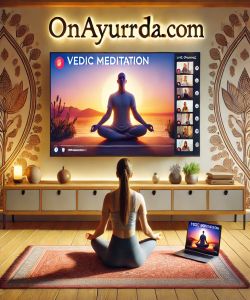
1. Overview of Vedic Meditation
Vedic Meditation is a simple, natural, and effortless mental technique that allows the active, thinking mind to settle down to its own least excited state. It is not a religion, a philosophy, or a change in lifestyle, and it requires no belief, concentration, or control of the mind. This practice originates from the Veda, the most ancient body of knowledge from India, and has been preserved and passed down through a long tradition of masters. The technique involves the use of a mantra, which is a specific sound or vibration selected for its suitability to the individual's nervous system. When used correctly, the mantra functions as a vehicle, allowing the mind’s attention to turn inwards and experience progressively finer, quieter levels of thought. Ultimately, the mind transcends thought altogether, arriving at a state of pure, silent, unbounded awareness. This unique state of restful alertness is profoundly restorative for both mind and body. While the mind is deeply settled, the body gains a state of rest significantly deeper than that achieved during conventional sleep. This profound rest allows the nervous system to dissolve deep-rooted stress, fatigue, and accumulated tensions that encumber physiological and psychological function. The practice is performed for a designated period, typically twice daily, while sitting comfortably with the eyes closed. Its effects are cumulative, leading to greater clarity, energy, creativity, and resilience in daily life. It is a mechanical process whose efficacy is not dependent on one’s state of mind or external circumstances, rendering it a highly reliable tool for enhancing human performance and well-being in the context of modern, demanding environments. It is a direct and systematic method for accessing the full reservoir of intelligence and energy latent within every individual, leading to a more integrated and capable state of being.
2. What are Vedic Meditation?
Vedic Meditation represents a specific category of mental practice distinguished by its effortlessness and its origin in the Vedic tradition of India. It is fundamentally a technique of transcendence, designed to allow the practitioner’s mind to move from a state of dynamic activity to one of profound stillness and silence. To understand what this practice constitutes, several components must be examined.
First, it is a mantra-based technique. The mantra is not a word with a specific meaning intended for contemplation, nor is it a point of focus for concentration. It is a 'bija' or seed sound, a specific vibration chosen for its resonant qualities, which, when used properly, has a natural tendency to turn the mind’s awareness inwards. The selection and instruction in the use of this mantra are critical and must be delivered by a properly qualified teacher.
Second, the core principle is effortlessness. Unlike concentration or contemplation techniques that require active mental engagement, Vedic Meditation is predicated on the absence of trying. The practitioner learns to introduce the mantra gently and to adopt an attitude of innocent non-interference, allowing the mind to follow its natural inclination towards quieter, more satisfying states of awareness. This lack of mental effort is precisely what facilitates the deep physiological rest that accompanies the practice.
Third, the result of the practice is a unique fourth state of consciousness, distinct from waking, dreaming, and deep sleep. This state, known as Transcendental Consciousness, is characterised by silent alertness—the mind is awake but devoid of thought, and the body is in a state of profound metabolic rest. The regular experience of this state systematically purifies the nervous system of accumulated stress, which is the root cause of much dysfunction. Therefore, Vedic Meditation is a mechanical process for stress reduction and personal development, not a belief system or a philosophy to be intellectually adopted.
3. Who Needs Vedic Meditation?
- High-Pressure Professionals and Executives. Individuals operating in relentlessly demanding corporate or entrepreneurial environments require this technique to mitigate the severe physiological and psychological toll of chronic stress. It provides a systematic method for enhancing cognitive function, improving decision-making clarity under pressure, and fostering the resilience necessary to sustain peak performance without burnout.
- Individuals Suffering from Stress-Related Disorders. Those experiencing the direct somatic consequences of stress, such as hypertension, insomnia, anxiety, and compromised immune function, need a practical, non-pharmaceutical intervention. Vedic Meditation directly addresses the root cause by allowing the nervous system to dissolve the deep-rooted physiological stress that underpins these conditions.
- Creative Professionals and Artists. Writers, designers, musicians, and other creatives who depend on innovation and fluid access to inspiration require this practice. It works to dismantle mental blocks, quieten the 'inner critic', and open a direct channel to the field of unbounded creativity and intelligence that is accessed when the thinking mind settles down.
- Students and Academics. Those engaged in rigorous intellectual pursuits need a tool to manage academic pressure, enhance memory retention, and improve the capacity for focused learning. The practice cultivates a state of restful alertness, which is the optimal neuro-physiological condition for assimilating and integrating complex information.
- Parents and Carers. Individuals with significant domestic and familial responsibilities face constant demands on their energy and patience. Vedic Meditation provides a reliable means to replenish internal resources, improve emotional regulation, and engage with their duties from a place of greater calm, stability, and presence.
- Athletes and Physical Performers. Those who demand optimal performance from their bodies require this technique to accelerate recovery, improve mind-body coordination, and enhance mental focus during competition. The deep rest afforded by the practice is critical for cellular repair and for maintaining the mental fortitude essential for elite performance.
- Anyone Seeking Greater Self-Awareness and Personal Growth. Individuals on a path of personal development who desire a deeper connection to their authentic self, beyond the noise of the ego and conditioned thought patterns, need this method. It is a direct, mechanical path to experiencing the stable, silent core of one’s own being.
4. Origins and Evolution of Vedic Meditation
The origins of Vedic Meditation are rooted in the Veda, the ancient and comprehensive body of knowledge that emerged from the Indian subcontinent thousands of years ago. The Veda is not a single text but a vast collection of hymns, rituals, and profound philosophical treatises detailing the nature of consciousness and the universe. Within this extensive wisdom tradition, specific techniques were cognised by Rishis, or seers, for the direct experience of the fundamental reality described in the texts. These techniques were designed for human development, allowing an individual to realise their full potential by accessing the most fundamental level of their own awareness.
For millennia, this knowledge was meticulously preserved and passed down through a strict oral tradition of masters, known as a 'guru-parampara'. This unbroken chain of succession ensured the purity and efficacy of the teachings were maintained without deviation or dilution. The knowledge was often held within cloistered monastic orders, most notably the tradition of Adi Shankara, who established four principal seats of learning in India to systematise and protect Vedic wisdom. The meditation practice was considered an advanced and essential component of this wisdom, taught only to dedicated disciples who had undergone significant preparation.
The evolution of this technique into a practice accessible to the general public represents a significant development in its history. This shift was catalysed in the mid-twentieth century by a master from the Shankaracharya tradition who recognised that the unprecedented levels of stress in the modern world necessitated a wider dissemination of this powerful tool for stress release. He systemised the teaching methodology to make it easily learnable by householders—individuals with jobs, families, and active lives in the world—without compromising its essential principles. This modern iteration maintains the core mechanics of the ancient practice: personal instruction, the correct use of a mantra, and the principle of effortlessness. The evolution has therefore not been one of changing the technique itself, but of creating a standardised, replicable framework for its transmission, allowing it to be taught effectively and on a global scale while honouring its profound and ancient lineage.
5. Types of Vedic Meditation
While "Vedic Meditation" is often used to describe a specific, highly systemised technique, the term can also encompass a family of mantra-based practices derived from the Vedic tradition. These are distinguished by their reliance on sound (mantra) and the principle of effortless transcendence, rather than concentration. The key variations are defined by the nature of the mantra used and the specific context of their instruction.
The Bija Mantra Technique. This is the most widely known form, often referred to simply as Vedic Meditation or Transcendental Meditation. The core of this practice is the use of a 'bija' or 'seed' mantra. These are not words with translatable meanings but are primordial sounds cognised in deep states of meditation for their specific vibrational quality. The sound is chosen for the individual by a qualified teacher and is designed to resonate with their nervous system, effortlessly turning the mind inward towards quieter levels of functioning. The technique is mechanical, and its efficacy rests on the correct, innocent use of this specific sound.
Soham Meditation. This is another ancient technique from the Vedic and Yogic traditions, sometimes taught as a preliminary or alternative practice. It utilises the universal mantra "Soham," which translates to "I am That." The mantra is typically coordinated with the natural rhythm of the breath—'So' on the inhalation and 'Ham' on the exhalation. While it involves the breath, the emphasis remains on a gentle, non-forced awareness of the sound, allowing the mind to settle. It is considered a more universal practice as it does not require a personalised mantra.
Vedic Chanting (Mantra Japa). This is a broader category that involves the audible or sub-vocal repetition of longer Vedic hymns or specific mantras for a set number of repetitions, often using a 'mala' (meditation beads) to keep count. While this can be a meditative practice, its primary purpose is often devotional or aimed at invoking specific qualities or energies associated with the hymn. It differs from the silent Bija Mantra technique in that the goal is not necessarily to transcend thought but to saturate the mind with the vibration of the mantra, thereby purifying consciousness and the environment.
6. Benefits of Vedic Meditation
Systematic Dissolution of Deep-Rooted Stress. The practice induces a state of profound physiological rest, significantly deeper than sleep. This unique state allows the body’s innate healing mechanisms to activate, systematically dissolving the cumulative backlog of stress and fatigue stored in the nervous system. This is the foundational benefit from which all others stem.
Enhanced Cognitive Function and Mental Clarity. By reducing neural noise and improving coherence in brain functioning, the practice leads to a measurable increase in mental clarity, creativity, and problem-solving ability. Practitioners report sharper focus, improved memory, and a broader comprehension in their professional and personal lives.
Improved Physiological Health and Resilience. The reduction of chronic stress directly mitigates its harmful effects on the body. This leads to the normalisation of blood pressure, a reduction in stress-related hormones like cortisol, improved immune function, and better sleep quality. The body becomes more resilient and less susceptible to illness.
Greater Emotional Stability and Regulation. The practice cultivates a state of inner calm and equilibrium. This reduces emotional reactivity, anxiety, and depressive tendencies. Individuals find they are less perturbed by external challenges and can respond to situations with greater patience, compassion, and poise.
Increased Energy and Dynamism. By eliminating the constant drain of stress and fatigue, the body and mind have access to a greater reservoir of natural energy. This results in increased dynamism and vitality for daily activities, reducing the reliance on stimulants and combating feelings of lethargy.
Development of Higher States of Consciousness. Regular practice of transcending thought stabilises the experience of pure awareness. This gradually infuses daily life, leading to the development of a more integrated state of being where the inner silence and stability are maintained even during dynamic activity. This is the ultimate goal of the practice: the full realisation of human potential.
Improved Interpersonal Relationships. With increased inner stability and reduced stress, individuals naturally become more present, patient, and empathetic. This leads to more harmonious and fulfilling interactions with family, friends, and colleagues, as one is acting from a foundation of fullness rather than from a state of lack or stress.
7. Core Principles and Practices of Vedic Meditation
The Principle of Effortlessness. This is the absolute, non-negotiable foundation of the practice. Vedic Meditation is not an exercise in concentration or mental control. Any attempt to force, focus, or control the mind is counterproductive. The technique is learned in a way that allows the mind to settle down spontaneously and naturally, without trying. This innocence of approach is paramount for transcending thought.
The Use of a Specific Mantra. The practice utilises a ‘bija’ mantra, a meaningless sound vibration chosen by a qualified instructor for its suitability to the individual. The mantra acts as a vehicle, not a point of focus. Its inherent quality is to attract the mind and guide it to finer, quieter levels of awareness. The mantra is used silently and is thought without any effort to pronounce or analyse it.
Twice-Daily Practice. Consistency is critical for cumulative results. The standard practice involves two sessions per day, one in the morning and one in the late afternoon or early evening. Each session lasts for a designated period. This regular alternation between deep rest and dynamic activity systematically purifies the nervous system and integrates the benefits into daily life.
The Process of Transcending. The primary aim of the technique is to allow the mind to transcend, or go beyond, the subtlest level of thought to experience a state of pure, unbounded awareness. This is not something the practitioner does; it is something that happens naturally when the correct conditions are met through effortless use of the mantra. This experience provides the profound rest that dissolves stress.
Comfortable, Seated Posture. The practice is performed while sitting comfortably in a chair with the back supported and feet on the floor. There are no difficult physical postures or 'asanas' required. The key is that the body must be comfortable and at ease, so it does not distract the mind. The eyes are kept gently closed.
Instruction from a Qualified Teacher. The technique cannot be learned from a book, application, or recording. It requires personal, one-to-one instruction from a certified teacher who has undergone rigorous training within a recognised lineage. This ensures the correct mantra is given and the nuances of the effortless practice are properly conveyed and understood. This direct transmission of knowledge is an integral part of the tradition.
8. Online Vedic Meditation
Uncompromised Integrity of Instruction. The successful delivery of Vedic Meditation online is predicated on maintaining the inviolable principles of the tradition. Instruction is not pre-recorded but is conducted live, in real-time, with a certified instructor. This ensures the critical component of personal, one-to-one transmission of the mantra and technique is preserved with absolute fidelity, mirroring the structure of an in-person course.
Enhanced Accessibility and Geographic Freedom. The online format dismantles geographical barriers, allowing individuals to learn from a qualified teacher regardless of their physical location. This is particularly crucial for those in remote areas or regions without a local instructor. It democratises access to authentic instruction without demanding travel or relocation.
Structured and Disciplined Learning Environment. A professionally administered online course provides a highly structured learning pathway. Sessions are scheduled and delivered with precision, requiring the same level of commitment and punctuality as an in-person course. The format demands that the student creates a dedicated, sacred space for learning, fostering a high degree of personal discipline and responsibility from the outset.
Ongoing Support and Community Integration. Effective online programmes extend far beyond the initial course. They incorporate a robust system of follow-up, including live group meditations, advanced knowledge sessions, and direct Q&A access to the instructor. This digital infrastructure creates a virtual community, ensuring that practitioners receive continuous guidance and support to sustain their practice over the long term.
The Requirement of Personal Accountability. While an instructor provides the knowledge, the online modality places a heightened emphasis on the student's accountability. The individual is solely responsible for creating a quiet, private, and interruption-free environment for every session. This act of preparation is in itself a powerful part of the learning process, reinforcing the seriousness and commitment required for the practice.
Technological Facilitation, Not Substitution. Technology serves as the conduit, not the source, of the teaching. High-quality video and audio are used to ensure clear and direct communication. The focus remains on the human interaction between teacher and student. The online platform is merely a tool to facilitate an ancient and proven methodology of knowledge transfer, not to replace it with an automated, impersonal system.
9. Vedic Meditation Techniques
The technique of Vedic Meditation is a precise, systematic procedure designed for effortlessness and effectiveness. The following steps outline the formal process as it is typically practised after receiving proper instruction.
Step One: Assume a Comfortable Position. The first action is to sit down in a quiet place where you will not be disturbed. The ideal posture is upright in a chair with the back supported, feet flat on the floor, and hands resting comfortably in the lap. The body must be at ease. There are no specific physical contortions or demanding postures; comfort is the priority to prevent physical distractions.
Step Two: Close the Eyes and Rest. After settling into your chair, you gently close the eyes. You then take a moment, perhaps half a minute to a minute, to allow the mind and body to begin to settle. There is no specific breathing technique involved; you simply sit quietly and allow the system to come to a state of rest naturally.
Step Three: Introduce the Mantra. At this point, you begin to think the mantra silently, easily, and without effort. The mantra is introduced gently, as if it were a faint, subtle thought. There is no attempt to control its rhythm, its clarity, or its volume. It is a completely innocent and mechanical process. The mantra should not be whispered, vocalised, or coordinated with the breath.
Step Four: Adopt an Attitude of Non-Interference. This is the most crucial step. As you repeat the mantra, thoughts will inevitably arise. The correct procedure is to not resist them, indulge them, or even notice them in a judgmental way. When you realise you have drifted away from the mantra into a chain of thought, you simply, gently, and without any sense of failure, return your attention to the mantra. You allow the mantra to change, become fainter, or even disappear. You do not try to "get it right." The attitude is one of perfect acceptance of whatever experience is happening.
Step Five: Concluding the Meditation. After the designated period of meditation has passed, you stop thinking the mantra. It is critical not to open the eyes immediately. You remain sitting quietly with eyes closed for a few minutes. This allows the mind to gradually return to full waking-state activity, integrating the deep silence of the meditation with the dynamism of the outside world. Abruptly ending the session is to be avoided. After this transition period, you may slowly open the eyes and resume your activity.
10. Vedic Meditation for Adults
Vedic Meditation is exceptionally well-suited to the complex demands and accumulated burdens of adult life. For adults, life is no longer a theoretical construct but a landscape of tangible responsibilities, entrenched patterns, and physiological wear and tear. The technique directly addresses this reality not through philosophical discourse or behavioural modification, but through a direct, mechanical intervention at the neurophysiological level. The adult nervous system is invariably carrying a significant load of accumulated stress from years of professional pressure, financial concerns, interpersonal challenges, and familial duties. This stress manifests as anxiety, fatigue, poor sleep, emotional reactivity, and a general decline in vitality. Vedic Meditation provides a systematic and reliable tool for reversing this accumulation. By inducing a state of rest deeper than sleep, it allows the body’s innate repair mechanisms to dissolve these deep-seated stresses, effectively rebooting the entire system. This is not a superficial relaxation but a profound purification process. Furthermore, the adult mind is often caught in rigid thought patterns and limiting beliefs developed over decades. The practice of transcending thought introduces a new experience—that of a silent, stable, unbounded self that exists prior to the turbulent stream of consciousness. Regular access to this inner reservoir of calm and clarity empowers adults to break free from reactive conditioning, make more intelligent and less fear-based decisions, and engage with their responsibilities from a position of strength and equanimity. It is a pragmatic tool for enhancing performance, restoring health, and fostering the maturity and wisdom that should rightfully accompany the adult phase of life. It provides a direct means to reclaim the energy, creativity, and resilience required to navigate modern adulthood successfully and with a sense of purpose and fulfilment.
11. Total Duration of Online Vedic Meditation
The total duration of online Vedic Meditation instruction is structured to be comprehensive and definitive, ensuring the practitioner becomes a self-sufficient meditator for life. The initial training course is typically delivered over four consecutive days, with each session lasting between sixty and ninety minutes. This concentrated learning period is essential for the correct transmission of the technique and for solidifying the practitioner’s understanding and experience. However, this initial course is merely the gateway. The practice itself is a lifelong commitment, performed twice daily. Ongoing support is an integral part of the complete programme. Follow-up sessions, which are critical for refining the practice and clarifying understanding, are often structured to last for approximately 1 hr. These sessions, available online, provide a focused container for group meditation and direct interaction with the instructor. Therefore, while the core knowledge transfer happens in a compact, initial phase, the "total duration" extends indefinitely through a lifetime of personal practice and a structured, ongoing support system. The commitment is not just to a four-day course, but to a permanent addition to one's daily routine. The one-hour online follow-up meetings serve as regular, manageable touchpoints that reinforce the initial training and foster a community of practice, ensuring long-term success and deepening of benefits. This model recognises that while learning the technique is a finite process, mastering it and integrating its benefits is a continuous, lifelong journey. The structure is designed to support that entire journey, not just the first few steps. It is a complete system, not a one-off event.
12. Things to Consider with Vedic Meditation
Before embarking on Vedic Meditation, several critical factors demand rigorous consideration to ensure the practice is undertaken correctly and its benefits are fully realised. Primarily, one must scrutinise the credentials and lineage of the instructor. This technique is not generic; it is transmitted through a specific tradition. A legitimate teacher must have undergone an intensive, residential teacher training programme and be authorised to teach by a recognised master from an established lineage. Self-proclaimed instructors or those with dubious qualifications must be unequivocally avoided, as improper instruction can be ineffective at best and potentially disorienting at worst. Secondly, the prospective practitioner must honestly assess their commitment. Vedic Meditation is not a quick fix or a casual hobby. Its profound, cumulative benefits are contingent upon consistent, twice-daily practice. It requires carving out two specific periods each day, without fail. An ambivalent or intermittent approach will yield commensurately weak results. One must be prepared to integrate this practice as a non-negotiable part of their daily routine. Furthermore, it is essential to understand that Vedic Meditation is a mechanical process, not a belief system. Its efficacy is not dependent on faith, mood, or lifestyle. One must be willing to approach it as a scientific technique, following the instructions precisely as given, without adding personal embellishments or intellectual analysis during the practice itself. Finally, one should be prepared for the phenomenon of "un-stressing," where the dissolution of deep-seated tensions can sometimes lead to a temporary increase in physical or emotional sensations. This is a positive sign of purification and must be understood as such, rather than being misinterpreted as a negative side effect of the practice.
13. Effectiveness of Vedic Meditation
The effectiveness of Vedic Meditation is not a matter of subjective belief or placebo effect; it is rooted in a demonstrable and predictable physiological mechanism. Its potency lies in its unique ability to induce a fourth major state of consciousness, distinct from waking, dreaming, and deep sleep. This state, known as Transcendental Consciousness, is characterised by an extraordinary combination of deep physical rest and heightened mental alertness. During the practice, the body’s metabolic rate, oxygen consumption, and heart rate decrease significantly, indicating a state of rest far deeper than that achieved during even the most profound sleep. It is this unparalleled level of rest that serves as the primary agent of its effectiveness. This deep rest allows the body’s innate homeostatic, or self-repair, mechanisms to function with maximum efficiency. The nervous system, freed from the demands of sensory processing and active thought, begins to systematically dissolve the deep-rooted stresses, traumas, and physiological imbalances that have accumulated over a lifetime. This process of "normalisation" is the source of the wide-ranging benefits associated with the practice. The result is a more resilient, balanced, and orderly functioning of the entire mind-body system. Therefore, improved health, enhanced cognitive function, greater emotional stability, and increased energy are not incidental outcomes; they are the direct and logical consequence of regular exposure to this unique state of restful alertness. The effectiveness is mechanical and cumulative, meaning that with consistent, correct practice, the positive results are not only achievable but inevitable.
14. Preferred Cautions During Vedic Meditation
A practitioner must adhere to a strict set of cautions to preserve the integrity and effortlessness of the practice, as any deviation compromises its efficacy. The foremost caution is against trying. Any iota of effort, concentration, or mental control is antithetical to the technique. The mind’s natural tendency is to settle down to a field of greater charm, and the mantra is merely the vehicle; forcing the process is like trying to push a river. One must remain vigilant against the impulse to "do it right" or to achieve a specific outcome. Secondly, one must exercise caution against analysing the experience while it is happening. The quality of a meditation session is irrelevant. Thoughts, sensations, or periods of blankness are all part of the normalising process of stress release. Judging a meditation as "good" or "bad" is a function of the active intellect, the very faculty that must be transcended. This intellectual oversight must be abandoned in favour of innocent acceptance. Another critical caution is to avoid any modification of the technique. The instructions provided by a qualified teacher are precise and complete. There is nothing to add or subtract. Introducing other practices, such as breathing exercises or visualisations, during the allotted time for Vedic Meditation contaminates the process and dilutes its unique mechanics. Finally, the transition out of meditation demands caution. Abruptly opening the eyes and jumping into activity can be jarring to the nervous system. A period of a few minutes of quiet rest after the practice is not optional; it is an integral part of the procedure, allowing the deep silence to be smoothly integrated into dynamic wakefulness. Disregarding these cautions is to fundamentally misunderstand the nature of the practice and to obstruct its profound benefits.
15. Vedic Meditation Course Outline
A standard, certified Vedic Meditation course is delivered through a structured, progressive framework designed to ensure complete competence and self-sufficiency for the practitioner. The outline is as follows:
Introductory Lecture. This preliminary session, often held in a group setting, provides the essential theoretical foundation. It details the nature of the technique, its origins, the mechanics of stress and its release, and the comprehensive benefits. It addresses all intellectual questions, ensuring the student understands the rationale before learning the practice itself. This session does not involve any meditation.
Personal Instruction and Mantra Initiation. This is a private, one-on-one session between the student and the certified instructor. It is here that the technique is formally taught. The student receives their specific, personalised mantra and is guided through their first meditation. This direct transmission of knowledge is the cornerstone of the teaching tradition and cannot be substituted.
Day Two: The Mechanics of Correct Practice. The first of three consecutive group follow-up sessions. This meeting takes place the day after personal instruction. It involves a group meditation followed by a detailed discussion on the mechanics of the practice. Key topics include the principle of effortlessness, the nature of thoughts during meditation, and how to correctly interpret experiences. The aim is to verify and stabilise the correctness of the practice.
Day Three: The Mechanics of Stress Release and States of Consciousness. The second group follow-up session. Following another group meditation, the lecture focuses on the physiological effects of the technique, specifically how the body dissolves deep-rooted stress during the practice. It explains the "un-stressing" process and its various manifestations. The session also introduces the model of seven states of consciousness, placing the meditation experience within a broader map of human development.
Day Four: Integration and Vision of Future Growth. The final formal session of the course. After the group meditation, the discussion centres on how to successfully integrate the twice-daily practice into a busy modern life. It covers the long-term development of the practitioner and the vision of realising one’s full potential through regular practice. The session concludes by outlining the lifetime of ongoing support and follow-up that is available to all graduates of the course.
16. Detailed Objectives with Timeline of Vedic Meditation
The objectives of Vedic Meditation are realised progressively over time, contingent upon the unwavering consistency of twice-daily practice. The timeline is not rigid but follows a predictable trajectory of development.
Initial Phase (First 1-3 Months): Stabilisation and Normalisation.
Objective: To establish an unshakable, non-negotiable twice-daily practice routine. The primary goal is consistency.
Timeline Outcome: Practitioners will begin to experience the initial effects of stress release, such as improved sleep quality, a subtle but noticeable decrease in baseline anxiety, and moments of greater calm during daily activity. The body’s physiology begins its process of normalisation.
Intermediate Phase (3-12 Months): Enhanced Function and Resilience.
Objective: To move beyond basic stress reduction towards tangible improvements in performance and well-being.
Timeline Outcome: Cognitive benefits become more pronounced: increased mental clarity, sharper focus, and enhanced creativity. Emotional reactivity is significantly diminished; the practitioner finds they are less perturbed by external stressors and can respond more calmly and effectively. A marked increase in energy and vitality is common.
Consolidation Phase (1-3 Years): Deepening of Integration.
Objective: To integrate the qualities of the meditative state into the waking state. The inner silence and stability start to become a permanent feature of one’s awareness.
Timeline Outcome: The "self" is increasingly identified with the silent, stable field of pure consciousness rather than the fluctuating thoughts and emotions. This results in greater intuition, improved interpersonal relationships, and a more profound sense of inner security and contentment, independent of external circumstances.
Advanced Phase (3+ Years): Cultivation of Higher States of Consciousness.
Objective: The systematic development and stabilisation of higher states of consciousness as described in the Vedic tradition.
Timeline Outcome: The state of Transcendental Consciousness is no longer just an experience within meditation but coexists with waking, dreaming, and sleeping. This leads to the growth of Cosmic Consciousness, where the unbounded, silent Self is experienced as a constant, underlying reality amidst all activity. This represents the full flowering of human potential, where one lives in a state of enlightenment.
17. Requirements for Taking Online Vedic Meditation
To successfully undertake Vedic Meditation instruction in an online format, the prospective student must meet a series of non-negotiable requirements. These are not mere suggestions but prerequisites for maintaining the integrity and efficacy of the teaching process.
A Stable, High-Bandwidth Internet Connection. The instruction is live and interactive. A weak or unreliable connection that causes freezes, dropouts, or poor audio-visual quality will compromise the transmission of knowledge and disrupt the learning environment for both the student and instructor.
A Functional Computing Device with Camera and Microphone. The student must possess a laptop, desktop, or tablet equipped with a fully operational camera and microphone. The use of a smartphone is strongly discouraged due to its small screen size and propensity for interruptions. The ability for the instructor to see and hear the student clearly is paramount.
A Guaranteed Private and Silent Environment. The student must secure a physical space where they can be completely alone and free from any possibility of interruption for the full duration of each session. This means no family members, colleagues, pets, or background noise. This creates the necessary container for confidential instruction and focused learning.
An Unconditional Commitment to Punctuality and Full Attendance. The online course follows a strict schedule over several consecutive days. The student must commit to being present, online, and ready before the scheduled start time for every single session. Missing a session is not an option, as the knowledge is sequential and cumulative.
A Chair that Allows for Correct Posture. The student must have access to a comfortable, upright chair that provides back support and allows their feet to rest flat on the floor. Lying down or sitting in an inappropriate posture is not permitted, as the correct physical setup is essential for the technique.
A Willingness to Follow Instructions Precisely. The student must enter the course with an unambiguous commitment to follow the teacher’s instructions exactly as they are given, without intellectual debate or modification. The online format requires a high degree of trust and receptivity.
18. Things to Keep in Mind Before Starting Online Vedic Meditation
Before committing to an online Vedic Meditation course, it is imperative to approach the decision with rigorous diligence and a clear understanding of what the format entails. The convenience of learning from home must not be mistaken for a casual or less serious engagement. First and foremost, the vetting of the instructor's credentials becomes even more critical in the digital realm. You must verify their direct lineage, their certification from a recognised and legitimate Vedic Meditation or Transcendental Meditation organisation, and the intensive nature of their own teacher training. Do not proceed without this absolute certainty. Secondly, recognise that the online modality demands a superior level of personal discipline. You are solely responsible for creating and defending your learning sanctuary. This means proactively managing your environment to eliminate all potential distractions—phones must be silenced and out of reach, family members briefed not to interrupt under any circumstances, and notifications on your computer disabled. This is not a passive webinar; it is an active, live transmission of a profound technique that requires your full, undivided presence. Furthermore, understand that the financial investment is for a lifetime of knowledge and support, not merely for a few hours of instruction. You are not purchasing a product but enrolling in a lifelong programme. Finally, you must be prepared to trust the process and the instructor, even through the medium of a screen. The efficacy of online instruction rests on the student’s ability to be receptive, follow instructions precisely, and engage with the same respect and gravity as one would in a physical setting.
19. Qualifications Required to Perform Vedic Meditation
The authority to teach Vedic Meditation is not self-appointed nor is it casually acquired. It is bestowed only upon individuals who have completed a rigorous and highly demanding training process within a recognised lineage, ensuring the purity and efficacy of the technique are preserved. An individual qualified to instruct, often titled an Initiator or Teacher of Vedic Meditation, must satisfy several stringent criteria. The foundational requirement is the completion of an intensive, residential Teacher Training Programme. These programmes are not short courses; they are immersive, multi-month undertakings that involve deep personal practice, extensive study of Vedic knowledge, and meticulous training in the art of teaching the technique with absolute precision.
Within this framework, several specific qualifications are mandatory:
- Direct Lineage: The instructor must have been trained and personally approved by a master who is part of an unbroken lineage of teachers, tracing back to the source of the tradition. This ensures the teaching is authentic and not a modern invention or a diluted interpretation.
- Personal Mastery: A qualified teacher must be a long-term, dedicated practitioner of the technique themselves. They must have demonstrated not only intellectual understanding but also a deep, integrated experience of the practice and its effects on consciousness. They teach from a place of personal realisation, not just theoretical knowledge.
- Authorisation to Instruct: Upon successful completion of the training programme, the individual receives formal authorisation from their training organisation or master. This certification is a declaration that they have met all the stringent standards and are deemed competent and trustworthy to guide others.
- Commitment to Ongoing Knowledge: A genuine teacher remains a student for life. They are expected to continue their own development, attend advanced courses and retreats, and stay connected to their teaching tradition to refine their knowledge and understanding.
Therefore, teaching Vedic Meditation is a profound responsibility, reserved only for those who have proven their dedication, competence, and integrity through an arduous and comprehensive qualification process.
20. Online Vs Offline/Onsite Vedic Meditation
A clear differentiation must be made between the online and offline modalities for learning Vedic Meditation. Neither is inherently superior, but they offer distinct experiences and logistical considerations that will suit different individuals. The core technique being taught remains identical in both formats.
Online
The primary advantage of the online format is its unparalleled accessibility. It removes all geographical constraints, allowing a student to learn from a highly qualified teacher anywhere in the world without the need for travel, accommodation, or taking extended time away from work or family. This democratises access to authentic instruction. The learning occurs within the student's own environment, which can be an advantage in that the practice is immediately integrated into the very space where it will be continued daily. This format demands a high degree of personal discipline and accountability from the student, who is solely responsible for creating a quiet, dedicated space free from interruption. The structure is often more flexible, yet the live, real-time interaction ensures that the personal one-to-one instruction, mantra transmission, and follow-up Q&A sessions are conducted with complete integrity, mirroring the in-person experience via a technological medium. It is an excellent choice for self-motivated individuals, those with demanding schedules, or those living in areas without a local certified teacher.
Offline/Onsite
The traditional offline, or onsite, course provides a uniquely immersive learning environment. By physically removing oneself from daily routines and distractions, the student can focus entirely on the learning process. The group dynamic is a significant component; being in a room with other new meditators creates a palpable shared energy and a sense of community from the outset. Direct, in-person interaction with the instructor allows for a different quality of connection and immediate, nuanced feedback. The teacher has complete control over the environment, ensuring it is perfectly conducive to learning and meditation. This format is ideal for those who thrive in a group setting, who find it challenging to create a distraction-free space at home, or who simply prefer the tangible experience of learning in a shared physical space. The commitment of travelling to a specific location for the course can also serve to deepen the perceived significance and value of the undertaking for some individuals.
21. FAQs About Online Vedic Meditation
Question 1. Is online instruction as effective as in-person? Answer: Yes. The core methodology, personal mantra instruction, and live follow-up are transmitted with complete fidelity. Efficacy is dependent on the quality of the teacher and the consistency of the student's practice, not the medium.
Question 2. How is my personal mantra given online? Answer: The mantra is given during a private, one-on-one video session with your certified instructor, ensuring confidentiality and correct, personal transmission.
Question 3. What technology do I need? Answer: You require a stable internet connection and a device (preferably a laptop or desktop) with a working camera and microphone.
Question 4. Are the online courses pre-recorded? Answer: No. All sessions, including the initial instruction and all follow-ups, are conducted live and in real-time to facilitate direct interaction.
Question 5. Can I miss a session and catch up later? Answer: No. The course is sequential and cumulative. Full, live attendance at all scheduled sessions is mandatory.
Question 6. How do I create a suitable environment at home? Answer: You must secure a private, quiet room where you will not be seen, heard, or interrupted by anyone for the duration of each session.
Question 7. What if I have technical problems? Answer: You are responsible for ensuring your technology is functional beforehand. Instructors will provide clear guidelines but cannot offer individual technical support.
Question 8. Is the online course cheaper? Answer: Course fees are for the lifelong knowledge and support, not the delivery method. Prices are set by the independent teacher and reflect this value.
Question 9. Do I get lifetime support with an online course? Answer: Yes. Graduates of a certified online course are entitled to the same lifetime support programme as in-person graduates.
Question 10. How is this different from a meditation app? Answer: This is live, personal instruction in a specific, proven technique with a certified teacher. Apps provide generic, guided recordings and lack the essential element of correct, personalised instruction.
Question 11. Can my family be in the room if they are quiet? Answer: No. The space must be exclusively for you to ensure privacy and focus.
Question 12. How long is each online session? Answer: Sessions typically last between sixty and ninety minutes, over four consecutive days.
Question 13. Is it difficult to learn online? Answer: No. The instructions are simple and clear. The online format requires discipline but does not add complexity to the technique itself.
Question 14. How do I know if the teacher is legitimate? Answer: Verify their certification and lineage through a recognised, official Vedic Meditation or Transcendental Meditation organisation.
Question 15. Can I use my phone for the course? Answer: It is strongly discouraged. A larger, more stable device like a laptop is required for the optimal experience.
Question 16. What if I feel I’m not “getting it”? Answer: This is precisely what the live follow-up sessions are for. You have direct access to your teacher to ask questions and receive guidance.
22. Conclusion About Vedic Meditation
In conclusion, Vedic Meditation stands apart as a uniquely powerful, systematic, and non-dogmatic technology for human development. It is not a philosophy to be debated or a belief to be adopted, but a practical, mechanical procedure for accessing and cultivating the most profound and orderly state of human consciousness. Its core function is the systematic dissolution of accumulated stress from the nervous system, a process which serves as the foundation for its extensive and well-documented benefits. By providing the body with a state of rest far deeper than sleep, it initiates a powerful and natural process of healing and normalisation, leading to enhanced physiological health, greater emotional equilibrium, and superior cognitive function. The practice requires neither concentration nor control of the mind, rendering it accessible to anyone regardless of their background or mental disposition. Its strength lies in this very simplicity and effortlessness. The unwavering consistency of a twice-daily practice is the sole prerequisite for unlocking a cascade of positive transformations that permeate every aspect of an individual's life. In a world defined by relentless demand, chronic stress, and pervasive distraction, Vedic Meditation offers a reliable and time-tested means of cultivating inner stability, resilience, and clarity. It is a direct path to reclaiming one's innate potential for creativity, intelligence, and fulfilment, making it an indispensable tool for navigating the complexities of modern existence with greater capability and grace.