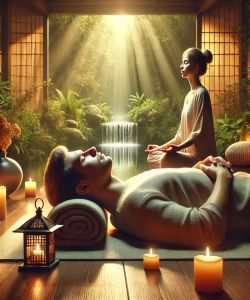
1. Overview of Yoga Nidra Meditation
Yoga Nidra meditation is a profound and systematic method of inducing complete physical, mental, and emotional relaxation. It is not merely a practice of guided visualisation or deep breathing; it is a structured, state-altering technique derived from the ancient tantric practice of nyasa. The objective is to guide the practitioner into a liminal state of consciousness, a threshold state between wakefulness and sleep, where the mind remains alert and aware whilst the body enters a state of deep, restorative rest. This unique condition, often termed ‘psychic sleep’, allows for the systematic disengagement of the senses (pratyahara) and the conscious exploration of the subconscious and unconscious mind. The process is entirely passive and requires the practitioner to lie down in Shavasana (the corpse pose) and follow a series of verbal instructions from a qualified facilitator. These instructions are meticulously designed to rotate awareness through different parts of the body, observe the breath, and access deeper layers of the psyche through the invocation of feelings, sensations, and archetypal imagery. The ultimate aim extends beyond simple relaxation; it is a powerful tool for self-enquiry, the restructuring of ingrained mental patterns, the healing of deep-seated psychological wounds, and the cultivation of a state of integrated, unwavering consciousness. It provides a direct pathway to releasing latent tensions and accessing the inherent state of wholeness that resides within, making it a formidable practice for personal transformation and spiritual insight. It is a non-dogmatic, universally applicable technique that commands the mind to obey a process of systematic surrender, leading to states of profound stillness and self-realisation.
2. What are Yoga Nidra Meditation?
Yoga Nidra meditation constitutes a specific and highly structured form of guided meditation, meticulously designed to induce a state of deep conscious relaxation. It is a powerful tantric practice that operates on the principle of moving awareness from the external world to the inner landscape of the mind, systematically relaxing the individual at every level of their being. Unlike conventional meditation practices that may require focused concentration or sitting upright, Yoga Nidra is performed lying down, thereby minimising physical distraction and facilitating a complete surrender of bodily tension. The practice is fundamentally a journey through the layers of the self, known in yogic philosophy as the koshas or sheaths, from the physical body to the deeper realms of the energetic, mental, and wisdom bodies.
The core components of the practice are as follows:
- A State of Consciousness: It is not sleep. Yoga Nidra induces a hypnagogic state, the precise threshold between waking and dreaming. In this state, the mind is exceptionally receptive, allowing for profound therapeutic work and the assimilation of new information and intentions directly into the subconscious.
- A Systematic Process: The practice is not arbitrary. It follows a non-negotiable sequence of stages including preparation, setting an intention (sankalpa), rotation of consciousness through the body, breath awareness, exploration of opposite sensations and feelings, and visualisation, before a gradual return to full waking consciousness.
- A Tool for Self-Regulation: By navigating these stages, the practitioner learns to consciously disengage the sympathetic nervous system (the ‘fight or flight’ response) and activate the parasympathetic nervous system (the ‘rest and digest’ response). This provides a direct and repeatable method for managing stress, processing trauma, and cultivating emotional equilibrium.
- A Path to Inner Awareness: Fundamentally, Yoga Nidra is a technique for withdrawing the senses (pratyahara) to observe the inner workings of the mind without attachment or judgement. This process purifies the mental field, releases deep-seated impressions (samskaras), and reveals the practitioner's inherent state of peace and wholeness.
3. Who Needs Yoga Nidra Meditation?
- Individuals Experiencing High Levels of Chronic Stress and Anxiety. This practice is imperative for those operating in high-pressure environments or contending with persistent psychological strain. It directly downregulates the autonomic nervous system, providing a potent and immediate antidote to the physiological and mental consequences of prolonged stress, thereby restoring a state of operational equilibrium.
- Those Suffering from Insomnia and Sleep Disorders. For individuals whose sleep architecture is compromised, Yoga Nidra offers a structured method to retrain the mind and body for rest. It is not a substitute for sleep but a preparatory technique that purges the mental and physical agitation preventing the onset of natural, restorative sleep.
- Professionals and Students Requiring Enhanced Cognitive Function. The practice systematically clears mental clutter and improves focus. It is essential for individuals whose performance depends on clarity of thought, memory retention, and creative problem-solving. By resting the conscious mind, it allows for greater integration of knowledge and enhanced learning capacity.
- Individuals Processing Trauma and Post-Traumatic Stress. Yoga Nidra provides a safe and contained framework for accessing and releasing deeply held traumatic imprints (samskaras) without the risk of re-traumatisation. The practitioner remains a conscious observer, allowing for the gentle integration of difficult experiences from a place of security and deep relaxation.
- Practitioners on a Path of Spiritual and Personal Development. For those seeking to deepen their self-awareness and understand the nature of consciousness, Yoga Nidra is a direct and powerful tool. It facilitates the journey inwards, beyond the conditioned personality, to connect with the core self and cultivate profound insight.
- Individuals Managing Chronic Pain and Illness. The technique offers a method for altering one's relationship to physical discomfort. By shifting awareness away from the pain and inducing deep physiological rest, it can help manage symptoms, reduce the perception of pain, and support the body’s innate healing processes.
- Anyone Seeking to Break Destructive Habits or Ingrain Positive Change. The use of a sankalpa, or a resolve made during the receptive state of Yoga Nidra, is a formidable tool for reprogramming the subconscious mind. It is a direct command to the deeper self to align with a chosen positive trajectory.
4. Origins and Evolution of Yoga Nidra Meditation
The conceptual roots of Yoga Nidra are ancient, embedded within the esoteric traditions of Indian philosophy and Tantra. The practice draws heavily upon the tantric technique of nyasa, which involves the placing of specific mantras and visualisations onto different parts of the body to consecrate and purify it. This principle of systematically moving consciousness through the physical form is a foundational element. Furthermore, ancient texts such as the Upanishads and the Mandukya Upanishad discuss the four states of consciousness: Vaishvanara (waking), Taijasa (dreaming), Prajna (deep sleep), and the transcendent fourth state, Turiya. Yoga Nidra is a practical method designed to consciously access the boundary between these states, particularly the threshold leading into Prajna, whilst maintaining the awareness characteristic of Vaishvanara. This liminal space was recognised by ancient yogis as a gateway to profound insight and self-realisation.
The modern, systematised form of Yoga Nidra, as it is widely practised today, was developed and popularised in the mid-20th century by Swami Satyananda Saraswati of the Bihar School of Yoga. Drawing from his study of classical tantric scriptures and his own deep meditative experiences, Swami Satyananda meticulously structured the practice into a universally accessible, eight-stage sequence. He stripped it of complex ritualism and sectarian dogma, presenting it as a scientific and psychological technique for deep relaxation and the exploration of consciousness. His seminal work, "Yoga Nidra," published in 1976, provided a clear, replicable framework that enabled the practice to be taught and disseminated globally, moving it from the esoteric confines of ashrams into mainstream therapeutic and wellness settings.
Since its formalisation, Yoga Nidra has continued to evolve. In the West, it has been embraced by psychologists, therapists, and medical professionals, leading to the development of secular and clinically focused adaptations. Notable among these is the Integrative Restoration or iRest protocol, developed by psychologist Richard Miller. This adaptation was specifically designed to address the needs of individuals suffering from trauma, particularly military veterans with post-traumatic stress. iRest reframes some of the traditional yogic language into more accessible psychological terms and places a strong emphasis on creating a sense of inner resource and safety. This evolution demonstrates the practice’s inherent adaptability, allowing its core principles to be applied effectively across diverse cultural and clinical contexts whilst retaining its fundamental power to induce profound states of conscious rest and healing.
5. Types of Yoga Nidra Meditation
Whilst the core principles of Yoga Nidra remain consistent, several distinct schools and methodologies have emerged, each with a unique emphasis or structure. The following types represent the most prominent and established approaches to the practice.
- Satyananda Yoga Nidra: This is the foundational, classical system developed by Swami Satyananda Saraswati. It is a highly structured, eight-stage practice that must be followed in a precise sequence: Internalisation, Sankalpa (resolve), Rotation of Consciousness, Breath Awareness, Manifestation of Opposites, Visualisation, Sankalpa (repetition), and Externalisation. Its primary focus is on systematically inducing pratyahara (sense withdrawal) to access and purify the subconscious and unconscious mind. The visualisations are often archetypal and symbolic, drawn from a universal pool of imagery designed to release deep-seated samskaras (mental imprints).
- iRest (Integrative Restoration): Developed by clinical psychologist Dr. Richard Miller, iRest is a contemporary adaptation designed for modern, secular, and clinical settings. It is an evidence-based protocol, particularly researched for its effectiveness in managing trauma, anxiety, and chronic pain. iRest places a strong emphasis on establishing an ‘Inner Resource’—a felt sense of safety and well-being—before proceeding. It rephrases traditional yogic concepts into accessible psychological language, focusing on welcoming all emotions, beliefs, and sensations without judgement. The process is more flexible and less dogmatic in its sequencing than the Satyananda style.
- Himalayan Tradition (Swami Rama): This approach, taught by Swami Rama of the Himalayas, frames Yoga Nidra as a practice for entering the state of turiya, the fourth state of consciousness beyond waking, dreaming, and deep sleep. It is deeply rooted in the philosophy of the Mandukya Upanishad. The practice involves moving awareness through specific energy points (marmas) and channels (nadis) within the body, often with a greater emphasis on subtle energy and the dissolution of the egoic mind into pure consciousness. It is considered a more advanced and spiritually-oriented form of the practice.
- Amrit Method (Yogi Amrit Desai): This method, created by Yogi Amrit Desai, distinguishes itself by its focus on the 'Felt Sense' and the integration of intention into the energy body. It guides the practitioner to disengage from the thinking mind and connect directly with the intelligence of the body and its sensations. A key component is the conscious direction of healing energy and intention to specific areas of the body or aspects of one's life, using the deeply relaxed state to bypass the critical faculty of the conscious mind.
6. Benefits of Yoga Nidra Meditation
- Profound Stress and Anxiety Reduction: The practice mandates a systemic de-escalation of the body’s stress response. It achieves this by directly stimulating the parasympathetic nervous system, which lowers cortisol levels, reduces heart rate, and decreases blood pressure, inducing a state of deep physiological and neurological calm that is more restorative than conventional rest.
- Improved Sleep Quality and Management of Insomnia: Yoga Nidra systematically prepares the body and mind for rest. It discharges the accumulated mental and muscular tension that frequently obstructs the transition into sleep. Regular practice can help reset the body's natural sleep cycles and addresses the root cause of many sleep disturbances—an overactive mind.
- Enhanced Cognitive Function and Mental Clarity: By inducing a state of profound rest for the conscious, analytical mind, Yoga Nidra facilitates mental rejuvenation. This process clears cognitive fog, improves concentration, enhances memory consolidation, and fosters greater creativity and problem-solving capabilities by allowing for subconscious processing and integration.
- Effective Emotional Regulation and Psychological Resilience: The practice trains the practitioner to become a non-judgemental observer of their internal emotional landscape. By experiencing feelings and sensations without attachment or reaction, one develops a greater capacity for emotional self-regulation, reducing reactivity and building psychological fortitude.
- Alleviation of Symptoms Associated with Trauma and PTSD: Yoga Nidra provides a secure and controlled environment for the nervous system to process and release deeply embedded traumatic memories and imprints. The state of conscious awareness coupled with deep physical relaxation allows traumatic material to be revisited and integrated without overwhelming the system.
- Management of Chronic Pain and Psychosomatic Conditions: The technique alters the practitioner's perception of and relationship to physical pain. It helps to break the feedback loop between pain, tension, and anxiety. The deep relaxation induced can also support the body’s innate healing mechanisms and reduce the severity of symptoms in many stress-related physical conditions.
- Acceleration of Personal Growth and Behavioural Change: The use of a sankalpa (a positive resolve) during the deeply receptive state of Yoga Nidra allows for the direct imprinting of a chosen intention onto the subconscious mind. This makes it a formidable tool for overcoming negative habits, cultivating positive traits, and aligning one's actions with their highest goals.
7. Core Principles and Practices of Yoga Nidra Meditation
- Systematic Relaxation and Withdrawal of the Senses (Pratyahara): The fundamental principle is to systematically and consciously withdraw the mind and energy from the outer sensory world. This is not a forced suppression but a guided, sequential turning inwards. The practice mandates a structured journey away from external stimuli to focus exclusively on the internal landscape, which is the prerequisite for all deeper states of consciousness.
- The State of Liminal Consciousness: Yoga Nidra operates within the hypnagogic state, the precise threshold between wakefulness and sleep. It is imperative to maintain a thread of conscious awareness in this state. The practitioner is not asleep but is fully aware, yet the body and brainwaves exhibit patterns akin to deep rest. This unique state is the fulcrum upon which the entire practice pivots, as it renders the subconscious mind highly receptive.
- The Sankalpa (Resolve or Intention): This is a non-negotiable component. A sankalpa is a short, positive, present-tense statement that is mentally repeated at the beginning and end of the practice. It is a command planted in the most fertile soil of the mind. This principle asserts that a clear, heartfelt intention, when introduced during this receptive state, has the power to restructure one's life and personality from a foundational level.
- Rotation of Consciousness (Nyasa): The core practice involves a meticulous, structured rotation of awareness through different parts of the body. This is not a mere mental exercise; it systematically relaxes each corresponding area of the motor cortex in the brain, inducing profound physical stillness and releasing deep-seated muscular and nervous tension. The sequence is fixed and must be followed without deviation to be effective.
- Awareness of Opposites (Dvandvas): The practitioner is guided to experience pairs of opposite sensations or emotions, such as heaviness and lightness, or heat and cold. This practice develops emotional equanimity and mastery over the mind's reactive tendencies. By holding opposing concepts in awareness, the practitioner learns to transcend dualistic thinking and remain centred.
- Objective Observation Without Attachment: A core discipline throughout the practice is to witness all emerging thoughts, sensations, emotions, and images as a detached observer. There is no analysis, no judgement, and no engagement. This practice of sakshi bhava (the attitude of the witness) purifies the mind and dissolves ingrained patterns and conditioning.
- Gradual and Conscious Externalisation: The return to full waking consciousness is as crucial as the entry into the practice. It must be slow, systematic, and deliberate. This ensures that the benefits and the state of deep peace are integrated into the waking state, rather than being abruptly lost, preventing mental or physical jarring.
8. Online Yoga Nidra Meditation
- Unparalleled Accessibility and Convenience: The primary advantage of an online format is the removal of geographical and logistical barriers. It provides immediate access to high-quality instruction irrespective of the practitioner's location. This format commands convenience, allowing individuals to integrate the practice into their demanding schedules without the need for travel, making consistent practice a feasible and sustainable commitment.
- Creation of a Personalised and Controlled Sanctuary: Practising online empowers the individual to exert absolute control over their environment. One can meticulously curate the space for optimal comfort and minimal distraction—adjusting lighting, temperature, and ambient sound to their precise preference. This personal sanctuary fosters a deeper sense of safety and security, which is paramount for the complete surrender required by Yoga Nidra.
- Enhanced Privacy and Reduced Self-Consciousness: The solitude of an online session eliminates the potential for social anxiety or self-consciousness that can arise in a group setting. This privacy is particularly crucial for individuals working through sensitive emotional issues or trauma, as it allows for the uninhibited expression and release of feelings without fear of external judgement. It facilitates a more profound and personal inner journey.
- Consistency and Repetition: Online platforms often provide access to a library of recorded sessions. This is a formidable asset, enabling the practitioner to repeat a specific practice as many times as necessary to deepen their experience or work on a particular issue. This repetition reinforces the neural pathways associated with relaxation and strengthens the power of the sankalpa.
- Cost and Resource Efficiency: Engaging with Yoga Nidra online typically reduces ancillary costs and time associated with attending in-person classes, such as travel, parking, and studio fees. This efficiency makes the practice more financially accessible to a broader demographic and allows resources to be allocated elsewhere, ensuring the focus remains squarely on the practice itself.
- Empowerment and Self-Reliance: Whilst guided by a facilitator, the online format necessitates a degree of self-discipline and responsibility. The practitioner must prepare their own space and commit to the session without the external pressure of a group. This process cultivates a strong sense of self-reliance and personal ownership over one's well-being and spiritual practice.
9. Yoga Nidra Meditation Techniques
The practice of Yoga Nidra is a structured sequence of techniques, each designed to systematically guide the practitioner into a state of deep, conscious relaxation. The following steps must be followed in their prescribed order for the practice to be effective.
- Preparation and Relaxation: The initial stage is to prepare the body for complete stillness. The practitioner must assume the Shavasana (corpse pose), lying flat on their back with arms and legs slightly apart, palms facing up. It is imperative to ensure absolute comfort using props like blankets or bolsters, as any physical discomfort will obstruct the process. A brief period of initial relaxation focuses on releasing obvious physical tension.
- Setting the Sankalpa (Resolve): Once settled, the practitioner formulates a sankalpa. This is a short, clear, positive statement in the present tense, reflecting a core personal resolve. For example, "I am whole and healed" or "I am calm and confident." This intention must be mentally stated with conviction and feeling three times. It is a direct command to the subconscious mind.
- Rotation of Consciousness: This is the core of the practice. The facilitator guides the practitioner's awareness to specific points of the body in a rapid, structured sequence. For example, "right hand thumb, second finger, third finger..." The practitioner must not move the body part, only move their mind to it. This technique systematically disengages the motor cortex, inducing profound physiological rest.
- Breath Awareness: Awareness is then shifted to the natural breath. The practitioner observes the flow of air in the nostrils, the movement of the chest and abdomen, or may be instructed to mentally count the breaths backwards from a given number. This further deepens concentration and quiets the conscious mind.
- Manifestation of Opposites: The facilitator invokes pairs of opposite feelings or sensations, such as heaviness and lightness, heat and cold, or anxiety and calm. The practitioner is instructed to experience each sensation fully and intensely, in turn. This practice develops emotional mastery and the ability to transcend dualistic states.
- Creative Visualisation (Chidakasha): Awareness is brought to the dark space in front of the closed eyes (chidakasha). The facilitator will then guide a series of powerful images or a symbolic journey. These images are archetypal and designed to access the subconscious and unconscious mind, releasing latent memories and imprints (samskaras).
- Repetition of the Sankalpa: At the peak of relaxation, the sankalpa is repeated mentally three more times, with the same conviction as at the start. In this highly receptive state, the resolve is planted deep within the psyche.
- Gradual Externalisation: The final stage is a slow, careful return to waking consciousness. Awareness is gradually brought back to the breath, the body, and the external environment. Gentle movements are introduced before finally opening the eyes. This systematic return is crucial to integrate the experience.
10. Yoga Nidra Meditation for Adults
Yoga Nidra meditation offers a uniquely potent and directly applicable tool for the modern adult, who must navigate a landscape of relentless demand, chronic stress, and cognitive overload. For the adult psyche, which is often heavily conditioned by years of responsibility, societal expectation, and ingrained behavioural patterns, this practice provides a non-negotiable protocol for systematic mental and physiological decompression. It is not a gentle suggestion for relaxation but a commanding technique for seizing control of one's own nervous system. The adult life is characterised by a persistent engagement of the sympathetic nervous system—the 'fight or flight' mechanism. Yoga Nidra enforces a hard reset, compelling the activation of the parasympathetic 'rest and digest' state, which is the biological prerequisite for genuine restoration, healing, and cognitive integration. Furthermore, the practice directly confronts the adult challenge of mental rigidity and ingrained habits. The use of a sankalpa, or a firm resolve, made within the deeply receptive state of Yoga Nidra, serves as a powerful instrument for reprogramming the subconscious mind. It bypasses the cynical, critical faculty of the conscious adult mind to plant seeds of positive change, whether for overcoming addiction, improving professional focus, or cultivating emotional resilience. It is a pragmatic and efficient methodology; a single session can yield restorative benefits equivalent to several hours of conventional sleep, making it an invaluable asset for time-poor professionals, parents, and leaders. It demands nothing but surrender and in return, it delivers clarity, equilibrium, and a profound sense of command over one's inner world, which is the true foundation of effective adult functioning.
11. Total Duration of Online Yoga Nidra Meditation
The total duration of a standard, comprehensive online Yoga Nidra meditation session is definitively established and must adhere to a specific timeframe to ensure its full therapeutic and transformative efficacy. A complete and properly structured practice is designed to last approximately 1 hr. This duration is not arbitrary; it is a meticulously calculated period that allows for the full, unhurried progression through all the mandatory stages of the technique. A session lasting 1 hr provides the necessary time for the initial settling and preparation phase, where the body and mind transition from their active, waking state into a posture of complete stillness and receptivity. It accommodates the formulation and planting of the sankalpa, the detailed and systematic rotation of consciousness through the entire body, the period of focused breath awareness, and the vital exploration of opposite sensations. Crucially, the 1 hr timeframe allows for a deep and meaningful engagement with the visualisation stage, which is essential for accessing and processing material from the subconscious mind. Any significantly shorter duration would necessitate rushing or omitting these critical components, thereby compromising the depth of the relaxation and the overall integrity of the practice. Finally, this period includes the essential, gradual return to full waking awareness, a process that cannot be truncated without causing mental jarring and failing to integrate the profound peace of the practice into the conscious state. Therefore, the 1 hr duration is a non-negotiable standard, representing the minimum time required to execute the protocol correctly and unlock its profound benefits.
12. Things to Consider with Yoga Nidra Meditation
Before embarking on the practice of Yoga Nidra, it is imperative to approach it with a clear understanding of its nature and requirements, ensuring that expectations are correctly calibrated and the practice is undertaken with the requisite seriousness. First, one must recognise that Yoga Nidra is not sleep. While the body becomes deeply rested, the mind is mandated to remain alert and aware, following the verbal instructions. The objective is conscious relaxation, and drifting into sleep, while common initially, is a state to be moved beyond. Secondly, the environment is a critical factor that dictates the potential for success. The space must be a sanctuary of non-interruption. This is a non-negotiable prerequisite. Any potential for disturbance from people, pets, or technology must be ruthlessly eliminated for the duration of the practice. Comfort is equally paramount; the body must be supported to a degree where it can remain absolutely still without fidgeting or discomfort. A cold or hard surface will inevitably distract the mind. Furthermore, the practitioner must be prepared to confront the contents of their own mind without judgement. The process can bring suppressed emotions, memories, or mental chatter to the surface. The discipline required is to witness these phenomena as a detached observer, without becoming entangled in them. This requires a degree of mental fortitude. Finally, consistency is the key to unlocking the cumulative benefits of the practice. Sporadic engagement will yield only fleeting relaxation, whereas regular, disciplined practice is what builds new neural pathways, deepens self-awareness, and solidifies the power of the sankalpa to effect tangible, lasting change.
13. Effectiveness of Yoga Nidra Meditation
The effectiveness of Yoga Nidra meditation is not a matter of subjective belief but a demonstrable outcome rooted in its systematic impact on the human nervous system and psyche. Its potency lies in its unique ability to induce a state of conscious, deep rest that is more profound and restorative than conventional sleep. The practice commands a measurable shift in physiological markers: it lowers cortisol levels, reduces blood pressure, stabilises heart rate, and promotes alpha and theta brainwave activity, all of which are empirical indicators of a deep relaxation response. This physiological reset is the foundation of its efficacy in combating the pervasive effects of chronic stress, anxiety, and burnout. On a psychological level, its effectiveness is rooted in the principle of pratyahara, or sense withdrawal. By systematically disengaging the mind from external stimuli and the body's proprioceptive feedback loop, it creates a mental space for processing and integration that is otherwise unavailable in the cluttered waking state. This allows for the release of deep-seated mental and emotional tensions, or samskaras, which are the underlying cause of many dysfunctional patterns and psychological distress. The use of a sankalpa further amplifies its effectiveness, transforming the practice from a passive relaxation technique into an active tool for personal transformation. By planting a resolve in the highly receptive subconscious mind, it creates a powerful directive for positive change. The consistent, disciplined application of this structured technique yields not just temporary relief but a lasting increase in resilience, emotional equilibrium, and cognitive clarity. Its effectiveness is, therefore, a direct consequence of its precise, repeatable, and neurologically grounded methodology.
14. Preferred Cautions During Yoga Nidra Meditation
While Yoga Nidra is a fundamentally safe and restorative practice, certain cautions must be rigorously observed to ensure the practitioner's psychological and emotional safety, particularly for those with specific pre-existing conditions. It is imperative for individuals with a history of severe mental health challenges, such as psychosis, schizophrenia, or severe dissociative disorders, to engage with this practice only under the direct guidance and with the explicit approval of a qualified mental health professional. The deep, introspective nature of Yoga Nidra can potentially surface powerful and destabilising psychic material, which requires a robust and stable psychological foundation to process safely. Furthermore, individuals actively experiencing acute trauma or severe post-traumatic stress must exercise extreme caution. While the practice is a potent tool for healing trauma, an unguided or improperly facilitated session could potentially trigger overwhelming flashbacks or abreactions. For this demographic, a trauma-informed approach, such as iRest, facilitated by a certified practitioner, is not merely preferred but mandatory. Practitioners must also be cautioned against using the practice as a definitive replacement for sleep. While it is profoundly restorative, it does not fulfil all the biological functions of natural sleep cycles. Finally, one must resist the temptation to analyse or judge the experiences that arise. The instruction is to witness, not to engage. Attempting to intellectually process visions or emotions during the practice will disrupt the state of deep rest and negate the therapeutic effect. The only mandate is to surrender to the guidance and observe with detachment.
15. Yoga Nidra Meditation Course Outline
Module 1: Foundational Principles and Preparation
Introduction to the History and Philosophy of Yoga Nidra.
Distinguishing Yoga Nidra from Sleep, Hypnosis, and other Meditation Techniques.
The Science of Relaxation: Understanding the Autonomic Nervous System.
Practicalities: Creating the Optimal Environment and Physical Posture (Shavasana).
The Critical Role of Stillness and Comfort.
Module 2: The Sankalpa and the Rotation of Consciousness
The Art and Science of the Sankalpa (The Resolve).
Crafting a Personal, Powerful, and Effective Intention.
Detailed Instruction on the Nyasa (Rotation of Consciousness) Sequence.
The Neurological Impact of Body Scanning on the Brain.
Guided Practice: Focusing on Stages 1-3.
Module 3: Deepening the Practice with Breath and Sensation
Techniques for Breath Awareness: Abdominal Breathing, Ujjayi, and Breath Counting.
The Role of Breath in Anchoring Awareness and Quieting the Mind.
Introduction to Dvandvas: The Practice of Experiencing Opposite Sensations.
Developing Emotional Equanimity and Resilience through this Technique.
Guided Practice: Integrating Stages 4-5.
Module 4: The Power of Visualisation and the Unconscious Mind
Understanding Chidakasha: The Space of Consciousness.
The Use of Archetypal Imagery and Symbolic Journeys.
Accessing and Releasing Samskaras (Deep-Seated Imprints).
The Psychological Significance of Common Visualisation Themes.
Guided Practice: Full 8-Stage Yoga Nidra Session.
Module 5: Integration and Advanced Application
The Importance of a Systematic and Gradual Externalisation.
Techniques for Integrating the Peace of Yoga Nidra into Daily Life.
Adapting the Practice for Specific Needs: Stress, Insomnia, Pain.
Developing a Consistent and Self-Directed Personal Practice.
Concluding Full Practice and Final Q&A.
16. Detailed Objectives with Timeline of Yoga Nidra Meditation
Initial Phase (Weeks 1-2): Foundational Establishment
Objective: To master the physical requirements and initial mental stages of the practice.
Actions: The practitioner will establish a consistent practice schedule. They will perfect the Shavasana posture, ensuring complete physical stillness for the duration. The primary focus is on successfully following the guided rotation of consciousness without falling asleep, and on crafting and mentally repeating a clear sankalpa.
Outcome: By the end of this phase, the practitioner can remain still and consciously aware throughout the body scan and intention-setting stages.
Developmental Phase (Weeks 3-4): Deepening Sensory and Breath Awareness
Objective: To stabilise awareness and begin cultivating emotional equanimity.
Actions: The focus shifts to maintaining unwavering awareness on the natural breath, using it as an anchor. The practitioner will actively engage with the guided practice of experiencing opposite sensations (dvandvas), learning to hold states like 'heaviness' and 'lightness' without mental resistance.
Outcome: The practitioner achieves a state of deeper mental quietude and demonstrates a nascent ability to observe internal states without emotional reactivity.
Consolidation Phase (Weeks 5-8): Engaging with the Subconscious
Objective: To access and process subconscious material through visualisation.
Actions: The practitioner will now be proficient enough to remain aware during the visualisation stage. The objective is to witness the flow of images and symbols that arise in chidakasha with detached observation, allowing the process of psychic cleansing to occur. The sankalpa is repeated with greater conviction.
Outcome: A tangible reduction in underlying anxiety and mental clutter. The practitioner may report increased dream clarity and the emergence of personal insights. The effects of the sankalpa may begin to manifest in waking life.
Integration Phase (Weeks 9-12): Autonomy and Lifestyle Integration
Objective: To fully integrate the benefits of the practice into daily life and establish a self-sufficient practice.
Actions: The practitioner will consistently experience the full, deep state of Yoga Nidra. The focus is on carrying the state of calm, clarity, and witness-consciousness out of the practice and into daily activities. The practitioner should be capable of utilising shorter, ad-hoc relaxation techniques based on Yoga Nidra principles.
Outcome: The practitioner reports sustained improvements in sleep, emotional regulation, and focus. A state of inner resilience becomes the new baseline. The practitioner possesses the confidence and knowledge to continue a lifelong, self-directed practice.
17. Requirements for Taking Online Yoga Nidra Meditation
- A Non-Negotiable Commitment to Uninterrupted Time: The practitioner must secure a dedicated and protected time slot. This period must be free from any and all potential interruptions. This is not a casual activity; it is a deep psychic process that demands absolute containment.
- A Secure and Private Physical Space: A quiet room where one will not be disturbed is essential. The door should be closed and others in the household must be informed that you are not to be disturbed under any circumstances. The space must feel psychologically and physically safe.
- Stable and Reliable Internet Connectivity: A high-speed internet connection is mandatory. Any buffering, lagging, or disconnection of the audio stream will violently disrupt the deep state of relaxation, completely negating the practice and causing mental jarring. A poor connection is an absolute barrier to effective practice.
- High-Quality Audio Equipment: The use of good quality headphones or earphones is strongly commanded. This serves two purposes: it delivers the facilitator's voice directly and clearly into your awareness, and it blocks out minor ambient sounds, further insulating you from the external environment. Relying on device speakers is inadequate.
- Appropriate Physical Setup and Comfort: A comfortable surface on which to lie down is required, such as a yoga mat, carpeted floor, or a firm bed. The practitioner must have blankets to maintain body temperature, which naturally drops during deep relaxation. A small pillow or cushion for the head and a bolster under the knees are necessary to ensure absolute physical comfort and stillness.
- The Correct Mental Disposition: The practitioner must enter the session with an attitude of surrender and receptivity. A mindset of scepticism, analysis, or impatience will create an internal barrier. The requirement is to suspend the critical faculty and simply follow the instructions without question or internal debate for the duration of the session.
- Willingness for Self-Enquiry: A readiness to witness whatever arises from the subconscious mind—be it emotions, memories, or thoughts—without judgement or fear is a prerequisite. This is a journey into the self, and one must be prepared for the encounter.
18. Things to Keep in Mind Before Starting Online Yoga Nidra Meditation
Before commencing an online Yoga Nidra practice, it is imperative to establish a rigorous framework of preparation and mindset to ensure the integrity and efficacy of the experience. You are not simply listening to a recording; you are engaging in a structured, psychic process that demands your full, disciplined participation. First, recognise that the responsibility for creating a sacred, inviolable space rests solely with you. The online facilitator cannot control your environment. You must therefore be militant in eliminating all potential distractions: phones must be silenced and removed from reach, notifications disabled, doors closed, and family or flatmates explicitly instructed not to interrupt. Second, do not underestimate the importance of physical comfort. Any bodily discomfort is a gateway for the mind to wander and resist. Prepare your space in advance with mats, blankets, and bolsters to support your body in a state of complete, unwavering stillness. Your body temperature will drop, so a blanket is not optional; it is a requirement. Third, calibrate your expectations. This is not a magic pill. While one session can be profoundly relaxing, the deep, transformative benefits are the fruit of consistent, regular practice. Commit to a schedule. Finally, and most critically, adopt an attitude of absolute surrender. Your task is not to 'try' to relax or to analyse the process. Your sole function is to follow the voice of the guide with one-pointed awareness. Abandon any agenda or desired outcome and allow the process to unfold. This mental posture of non-interfering witness is the key that unlocks the door to the subconscious.
19. Qualifications Required to Perform Yoga Nidra Meditation
The authority to guide others through the profound and vulnerable state of Yoga Nidra is not to be taken lightly and demands a stringent set of qualifications. It is a responsibility that extends beyond merely reading a script. A qualified facilitator must possess a deep, experiential understanding of the practice, cultivated through their own extensive and consistent personal sadhana. This personal experience is non-negotiable, as it provides the authentic foundation from which to teach. Mere intellectual knowledge is insufficient.
Furthermore, a facilitator must hold a formal certification from a reputable and recognised school or lineage. Key qualifications include:
- Certification from a recognised lineage: This would typically involve accreditation from an institution directly linked to a major style, such as the Bihar School of Yoga (for Satyananda Yoga Nidra) or the Integrative Restoration Institute (for iRest). Such certifications guarantee that the facilitator has undergone a rigorous, structured training programme covering theory, practice, and teaching methodology.
- A comprehensive understanding of yogic philosophy and psychology: The facilitator must be well-versed in the concepts of the koshas (sheaths), pratyahara (sense withdrawal), samskaras (deep impressions), and the nature of consciousness as described in yogic texts. This knowledge provides the essential context for the practice.
- Trauma-Informed Training: In the contemporary context, it is increasingly imperative for facilitators to have training in trauma-sensitive teaching. They must understand how to create a safe space, how to use permissive and invitational language, and how to recognise and respond to potential signs of distress or abreaction in a practitioner.
- Proficiency in Voice Modulation and Pacing: The facilitator's voice is the primary tool. They must demonstrate mastery over tone, pace, and volume to guide the practitioner effectively without being jarring or distracting. The voice must be calm, clear, and authoritative yet soothing.
A person without these credentials, who simply reads a script found online or in a book, is not performing Yoga Nidra; they are merely creating a superficial relaxation exercise that lacks the depth, safety, and transformative power of the authentic practice.
20. Online Vs Offline/Onsite Yoga Nidra Meditation
Online
Engaging in Yoga Nidra through an online medium offers a distinct set of operational advantages and challenges. Its foremost attribute is supreme accessibility. The practitioner is liberated from geographical constraints, able to access expert guidance from anywhere in the world, and can integrate the practice into their life with maximum convenience, eliminating travel time and associated costs. The online environment grants the individual absolute command over their personal space, allowing them to curate the lighting, temperature, and comfort to their precise specifications, fostering a unique sense of security and privacy. This solitude can be highly conducive to deep inner work, especially for those who feel self-conscious or are dealing with sensitive personal issues. However, this format demands a high degree of self-discipline. The practitioner is solely responsible for creating a distraction-free sanctuary, and the absence of a shared group energy can make it more challenging for some to remain focused and committed. Furthermore, the experience is mediated by technology, making a stable internet connection and quality audio equipment non-negotiable prerequisites for a seamless and effective session. The lack of direct physical presence means the facilitator cannot offer physical adjustments or perceive subtle cues of distress.
Offline/Onsite
The traditional, offline experience of Yoga Nidra in a studio or dedicated space provides a different, yet equally powerful, container for the practice. The primary strength of the onsite format is the palpable group energy, or satsang, which can create a powerful, resonant field that deepens the collective experience and supports individual focus. The physical presence of a qualified facilitator is a significant asset; they can hold the space with authority, offer immediate verbal support if needed, and their physical presence can enhance the sense of safety and guidance. The environment is professionally prepared and inherently free from the domestic distractions that can plague home practice, allowing the practitioner to more fully surrender to the process. The act of travelling to a specific location for the practice also creates a powerful ritualistic boundary between everyday life and the meditative state. The disadvantages, however, include logistical constraints such as scheduling, travel, and cost. Some individuals may find the presence of others distracting or may feel inhibited, which can act as a barrier to complete relaxation and vulnerability. The environment, while professional, is standardised and cannot be personalised to individual preferences to the same degree as a home setup.
21. FAQs About Online Yoga Nidra Meditation
Question 1. Is online Yoga Nidra as effective as in-person? Answer: Yes, provided the practitioner ensures a completely distraction-free environment and uses high-quality audio. The core mechanism of the practice is internal and relies on following verbal guidance, which is perfectly deliverable online.
Question 2. What if I fall asleep during an online session? Answer: This is common, especially for beginners, and indicates a deep need for rest. Do not be concerned. The aim is to remain aware, but subconscious hearing continues. With practice, you will learn to hover on the edge of sleep.
Question 3. What technology do I absolutely need? Answer: A reliable internet connection, a device to stream the session, and good quality headphones are mandatory. Headphones are critical for immersive sound and blocking external noise.
Question 4. Can I do it on my bed? Answer: It is possible, but a firmer surface like a yoga mat on the floor is preferred. The association of a bed with sleep can make it harder to stay consciously aware. If using a bed, ensure it is relatively firm.
Question 5. What is a Sankalpa and must I have one? Answer: A Sankalpa is a positive resolve or intention. It is a core, non-negotiable component of the practice. It is the tool that directs the transformative power of Yoga Nidra.
Question 6. Do I need to have my camera on during a live online class? Answer: This depends on the facilitator's policy. However, for your own privacy and to reduce self-consciousness, it is often preferable and acceptable to have it off.
Question 7. How should I prepare my space? Answer: Ensure the room is quiet, warm, and dimly lit. Eliminate all potential interruptions. Have blankets and pillows ready for absolute comfort.
Question 8. Can I practise with a recording instead of a live class? Answer: Yes. Recordings offer flexibility and the ability to repeat sessions. A live class offers a sense of community and appointment-based discipline. Both are valid.
Question 9. Is this a religious practice? Answer: No. While its origins are in yogic philosophy, modern Yoga Nidra is presented as a secular, psychological technique for relaxation and self-enquiry.
Question 10. How often should I practise? Answer: For tangible benefits, consistency is key. Aim for at least 2-3 sessions per week. Daily practice is optimal.
Question 11. Can Yoga Nidra replace therapy? Answer: No. It is a powerful therapeutic tool and a potent adjunct to therapy, but it is not a substitute for professional mental healthcare.
Question 12. What if I feel strong emotions come up? Answer: This is a sign the practice is working. The instruction is to witness these emotions without judgement or attachment, as if watching clouds pass in the sky.
Question 13. Is there anyone who should not practise? Answer: Individuals with severe, unmanaged mental health conditions like psychosis should seek medical advice before practising.
Question 14. What if I cannot visualise the images? Answer: Do not force it. Simply be aware of the instruction and any feelings or sensations that arise instead. The intention to visualise is sufficient.
Question 15. What is the difference between this and guided meditation? Answer: Yoga Nidra is a highly specific, structured sequence designed to induce a unique hypnagogic state. Most guided meditations are less structured and do not follow this rigid, effective protocol.
Question 16. Can I eat before a session? Answer: It is best to practise on a relatively empty stomach. A heavy meal can induce sluggishness and sleep.
22. Conclusion About Yoga Nidra Meditation
In conclusion, Yoga Nidra meditation stands as a formidable and rigorously structured discipline, engineered for the systematic induction of profound states of conscious rest. It is not a passive relaxation but an active, commanding practice of guided self-enquiry and neurological regulation. Its efficacy is rooted in a precise, unalterable sequence that guides the practitioner to the liminal threshold between wakefulness and sleep—a uniquely powerful state for psychological healing and personal transformation. By mandating the withdrawal of the senses, rotating consciousness through the body, and utilising the potent tool of the sankalpa, it provides a direct pathway to de-escalating the chronic stress response that defines modern existence. The practice systematically dismantles layers of accumulated physical, mental, and emotional tension, offering a potent antidote to conditions ranging from insomnia to anxiety and trauma. Its evolution from ancient tantric ritual to evidence-supported therapeutic protocol underscores its universal power and adaptability. Ultimately, Yoga Nidra is a non-dogmatic, universally applicable technology of consciousness. It demands nothing more than stillness and surrender, and in return, it delivers a restoration of inner equilibrium, enhanced cognitive function, and a direct experience of the practitioner's own foundational state of wholeness and peace. It is an essential tool for anyone committed to mastering their inner world and achieving a state of unwavering resilience.