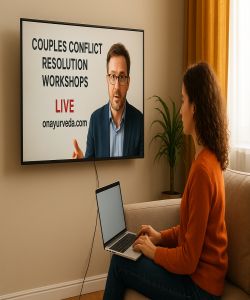
1. Overview of Couples Conflict Resolution Workshops
Couples Conflict Resolution Workshops represent a structured, psycho-educational intervention designed to equip partners with the strategic competencies required to navigate interpersonal disputes effectively and constructively. Far from being a remedial measure reserved for relationships in terminal decline, these workshops serve as a proactive forum for enhancing relational dynamics through the acquisition of empirically validated communication and problem-solving techniques. The fundamental premise is that conflict, while an inevitable component of any intimate partnership, need not be destructive. Instead, when managed with skill and mutual understanding, it can function as a catalyst for deeper connection and growth. Within a professionally facilitated and controlled environment, couples are guided through a curriculum that deconstructs the anatomy of their disagreements, identifying cyclical patterns of negative interaction and replacing them with more adaptive behaviours. The process is rigorous, demanding both intellectual engagement and emotional vulnerability from participants. It systematically dismantles ineffective, often instinctual, responses to discord—such as defensiveness, criticism, and withdrawal—and instals a framework for dialogue grounded in respect, empathy, and collaborative negotiation. The ultimate objective is not the eradication of conflict, but its transformation from a source of distress and division into a manageable and even productive aspect of a resilient and mature partnership. This is achieved by moving couples away from a paradigm of adversarial confrontation towards one of mutual inquiry and shared responsibility for the relationship’s well-being. Participation is therefore an investment in the operational capacity of the partnership, fortifying it against future challenges and fostering a sustainable culture of emotional safety and mutual regard.
2. What are Couples Conflict Resolution Workshops?
Couples Conflict Resolution Workshops are intensive, skills-based training programmes meticulously designed to provide partners with a practical toolkit for managing disagreements. These are not unstructured therapy sessions; they are highly structured learning environments with a defined curriculum, clear objectives, and a focus on behavioural change. The core function of a workshop is to move couples beyond the cycle of recurring, unresolved arguments by teaching them a new, more effective methodology for engaging with one another during moments of tension. The environment is deliberately neutral and managed by a qualified facilitator, whose role is not to act as a referee or judge, but as an educator and coach. This expert guidance ensures that discussions remain productive and that participants are correctly implementing the new techniques they are learning. The content of these workshops is typically grounded in established psychological theories and evidence-based models of relationship therapy.
Key components of these workshops invariably include:
- Theoretical Instruction: Participants are first educated on the fundamental principles of conflict theory and relationship dynamics. This provides a cognitive framework for understanding why their conflicts escalate and what psychological mechanisms are at play, such as attachment theory, emotional triggers, and cognitive distortions.
- Practical Skill Development: The majority of the workshop is dedicated to the active practice of specific techniques. This includes structured communication protocols, active listening exercises, methods for emotional self-regulation, and frameworks for collaborative problem-solving and negotiation.
- Live Practice and Feedback: Couples are given opportunities to apply these new skills to their own specific issues in a controlled setting. The facilitator provides real-time feedback, correcting misapplications and reinforcing successful implementation, thereby bridging the gap between theory and real-world application.
- Pattern Identification: A significant element involves helping couples recognise their specific ‘negative cycle’ or destructive pattern of interaction. By mapping out this recurring sequence of actions and reactions, partners can learn to identify its onset and consciously choose to interrupt it with more constructive behaviours learned in the workshop.
3. Who Needs Couples Conflict Resolution Workshops?
-
Couples experiencing a definitive breakdown in communication, where conversations about sensitive topics consistently devolve into arguments, silent withdrawal, or mutual accusation. This includes partners who feel misunderstood, unheard, or perpetually on the defensive, indicating that their existing communication methods are fundamentally flawed and require a systematic overhaul.
-
Partners trapped in a cycle of recurring, identical arguments that remain perpetually unresolved. These cyclical disputes, often concerning core issues such as finances, parenting, intimacy, or household responsibilities, signify an inability to move past a specific point of contention and necessitate a structured framework for achieving resolution.
-
Couples navigating significant life transitions or external stressors that are introducing new and potent sources of conflict into the relationship. This encompasses challenges such as career changes, relocation, financial hardship, chronic illness, or the complexities of managing blended families, all of which demand a higher level of conflict resolution capability.
-
Partners seeking to rebuild trust and establish a new foundation for interaction following a significant relational breach, such as infidelity or a profound betrayal. The workshop provides a secure and mediated environment to process the aftermath and learn the non-negotiable skills required to foster repair and ensure future relational security.
-
Pre-marital or newly committed couples who wish to proactively establish a strong foundation for their future. These partners recognise the inevitability of future conflict and wisely choose to equip themselves with the necessary tools and a shared language for dispute resolution before entrenched negative patterns can form.
-
Couples who report a loss of emotional intimacy and connection, where conflict is either avoided entirely—leading to a sterile, distant partnership—or is so harsh that it erodes any sense of warmth and affection. The workshop aims to make difficult conversations safe, thereby allowing for the vulnerability required for emotional reconnection.
-
Partners in high-conflict professions, such as law enforcement, medicine, or senior corporate roles, who may bring an adversarial or overly analytical communication style into their personal lives. They require specific training to shift from a professional to a personal communication modality that is collaborative rather than combative.
4. Origins and Evolution of Couples Conflict Resolution Workshops
The genesis of Couples Conflict Resolution Workshops can be traced back to the mid-20th century, emerging from the confluence of family systems theory, communication theory, and the burgeoning field of marital therapy. Initially, relationship distress was viewed through a psychoanalytic lens, focusing on the individual pathologies of each partner. The paradigm shift occurred when practitioners began to conceptualise the couple as a single, dynamic system, wherein the dysfunctional interaction patterns, rather than individual neuroses, were the primary target for intervention. This systemic view posited that conflict was not merely a symptom of individual failure but a product of the couple's unique relational 'dance'.
During the 1970s and 1980s, this evolution was significantly advanced by the work of researchers and clinicians who began to apply behavioural principles to marital therapy. The focus sharpened onto observable behaviours and communication deficits. The work of pioneers who conducted empirical, longitudinal studies of married couples was instrumental. By meticulously observing how successful and unsuccessful couples navigated disagreement, they were able to identify specific, teachable behaviours that correlated with long-term relational stability. This research demystified marital success, transforming it from an abstract ideal into a set of learnable skills. It was this transformation that laid the direct groundwork for the workshop model: a structured, educational format designed to teach these very skills.
The evolution continued into the late 20th and early 21st centuries with the integration of emotion-focused and attachment-based theories. This added a crucial layer of depth, moving beyond mere behavioural modification to address the underlying emotional needs and attachment fears that drive conflict. The understanding evolved to recognise that destructive conflict is often a protest against perceived emotional disconnection. Consequently, modern workshops are not just about changing what couples say, but about understanding the emotional subtext beneath the words. The contemporary workshop is therefore a sophisticated hybrid, integrating cognitive-behavioural techniques for communication, systemic insights into interactional patterns, and an emotion-focused understanding of the attachment bonds that are at the heart of intimate partnerships. The delivery has also evolved, with online formats now making these structured interventions more accessible than ever before.
5. Types of Couples Conflict Resolution Workshops
The typologies of Couples Conflict Resolution Workshops can be categorised based on their theoretical underpinnings, structural format, and specific area of focus. A clear understanding of these distinctions is imperative for selecting the most appropriate intervention.
-
Workshops Based on Theoretical Modality: These are defined by the specific psychological framework that informs their content and techniques.
- Gottman Method Based: These workshops are highly structured and data-driven, based on decades of empirical research. They focus on teaching couples the "Seven Principles for Making Marriage Work," with an emphasis on building friendship, managing conflict constructively, and creating shared meaning. Techniques include gentle start-ups, accepting influence, and physiological self-soothing.
- Emotionally Focused Therapy (EFT) Based: These workshops, such as the "Hold Me Tight" programme, are grounded in attachment science. The primary goal is to help couples de-escalate conflict by recognising and articulating the underlying attachment needs and fears that fuel their negative interactional cycles. The focus is less on specific communication scripts and more on fostering secure emotional bonding.
- Imago Relationship Therapy Based: This modality centres on a specific structured dialogue process called the "Imago Dialogue." The workshop teaches couples to use mirroring, validation, and empathy to transform conflicts into opportunities for healing and growth, positing that current conflicts are often rooted in unresolved childhood experiences.
-
Workshops Based on Format and Structure: These types are distinguished by their duration and delivery method.
- Intensive Weekend Retreats: These are immersive, multi-day workshops, often held at a dedicated venue away from home. The format allows for deep, concentrated work without the distractions of daily life, facilitating significant progress in a condensed timeframe.
- Weekly Session Series: This format consists of a series of shorter sessions, typically held once a week over several weeks. It allows couples to practice and integrate skills between sessions, addressing challenges as they arise in their everyday lives.
- Private vs. Group Workshops: Private workshops involve one couple working exclusively with a facilitator. Group workshops involve several couples learning together, which can normalise their struggles and create a sense of shared community, though with less individual attention.
6. Benefits of Couples Conflict Resolution Workshops
- Acquisition of a Shared, Constructive Vocabulary: Participants learn a specific, non-inflammatory language for discussing conflict. This replaces accusatory and critical terminology with a neutral, structured lexicon focused on observable behaviours and personal feelings, thereby immediately lowering the emotional temperature of disagreements.
- De-escalation and Emotional Regulation Mastery: Workshops provide explicit training in identifying the physiological and psychological signs of emotional flooding. Couples acquire concrete techniques to self-soothe and to request and grant pauses in conversation, preventing discussions from spiralling into destructive, unproductive arguments.
- Transformation of Destructive Patterns: The core benefit is the ability to identify, interrupt, and replace ingrained negative interaction cycles (e.g., pursue-withdraw, criticise-defend). Couples learn to see their pattern as the common enemy, rather than each other, fostering a sense of teamwork against a shared problem.
- Enhanced Empathy and Perspective-Taking: Through structured listening and dialogue exercises, partners are compelled to move beyond their own perspective and genuinely hear and validate their partner’s experience, even when they do not agree with it. This fosters a profound increase in empathy and mutual understanding.
- Development of Collaborative Problem-Solving Skills: Couples are taught a systematic, multi-step process for tackling solvable problems. This moves them away from unilateral decision-making or gridlock and towards a collaborative model where solutions are co-created to meet both partners’ needs.
- Increased Relational Resilience: By successfully navigating conflict in a controlled environment, couples build confidence in their ability to handle future disagreements. This fortifies the relationship, making it more resilient to external stressors and internal challenges.
- Strengthened Emotional Bond and Intimacy: When conflict becomes a safe and even productive process, it ceases to be a threat to the emotional connection. The vulnerability and mutual understanding required to resolve disputes effectively often lead to a deeper sense of intimacy, trust, and security in the partnership.
- Proactive Skill-Building for Future Health: Participation is a preventative measure. The skills learned are not merely for resolving current issues but serve as a permanent upgrade to the couple's relational operating system, equipping them to manage all future conflicts more effectively.
7. Core Principles and Practices of Couples Conflict Resolution Workshops
- Structure Supersedes Spontaneity: The foundational principle is the imposition of structure onto chaotic, emotional conversations. All communication during exercises is governed by specific rules and protocols, removing the damaging ad-libbing, interruptions, and escalations that characterise naturalistic arguments.
- Focus on Process, Not Just Content: The workshop’s primary concern is how a couple argues, not necessarily what they argue about. The practice involves teaching a new process for dialogue that can be applied to any topic, based on the principle that a functional process can resolve any content.
- Behaviour Over Blame: The practice is to shift the focus from assigning blame or debating the "truth" of past events to identifying and altering observable, unhelpful behaviours. Participants learn to describe their partner’s actions rather than assigning malicious intent.
- Neutrality and Facilitation, Not Judgment: The facilitator’s role is strictly neutral. They do not take sides or decide who is right. Their practice is to enforce the communication structure, teach the skills, and ensure both partners feel safe and respected throughout the process.
- Emotional Regulation as a Prerequisite: A core practice is teaching participants to monitor and manage their own physiological and emotional states. The principle is that productive dialogue is impossible when either partner is in a state of emotional flooding (diffuse physiological arousal). Techniques for self-soothing are taught as a non-negotiable first step.
- Validation Before Persuasion: The principle of "validate, then validate, and then validate some more" is paramount. The practice requires each partner to demonstrate that they understand and can articulate their partner's perspective and feelings before they are permitted to present their own. This ensures both parties feel heard.
- Shared Responsibility for the 'Negative Cycle': The workshop operates on the principle that dysfunctional interaction patterns are co-created. The practice involves helping couples map out their specific cycle and see their own contribution to it, moving them from a "you are the problem" to a "we have a problem" mindset.
- Commitment to Practice: A fundamental principle is that skills are not acquired through passive learning but through deliberate, repeated practice. The workshop is a training ground, and the core practice is the active, and often difficult, repetition of new communication behaviours until they become second nature.
8. Online Couples Conflict Resolution Workshops
- Unparalleled Accessibility: Online workshops eliminate geographical barriers, granting access to high-calibre facilitators and specialised programmes irrespective of a couple's physical location. This is particularly advantageous for those in remote areas or with mobility limitations.
- Enhanced Discretion and Privacy: Engaging from one's own home provides a level of privacy that is impossible in a group setting or even when travelling to a physical office. This can reduce the stigma some individuals feel and encourage more open participation.
- Controlled and Familiar Environment: Couples can create a physically and emotionally comfortable setting for their participation. Being in a familiar space can lower anxiety and defensiveness, potentially making it easier to engage with sensitive material.
- Integration into the Home Context: A significant benefit is the immediate applicability of learned skills. Couples practice new communication techniques in the very environment where their conflicts typically occur, which can facilitate a more direct and effective transfer of learning into their daily lives.
- Logistical and Financial Efficiency: The online format eradicates the time and costs associated with travel, accommodation, and childcare that are often required for in-person, particularly intensive, workshops. This makes the intervention more financially and logistically feasible for a wider range of couples.
- Structured Digital Resources: Online platforms often provide a wealth of supplementary materials, such as downloadable worksheets, video demonstrations of techniques, and session recordings (with consent), which participants can review at their own pace to reinforce learning.
- Facilitates Participation for Certain Personalities: For individuals who are more introverted or initially hesitant, the slight psychological distance afforded by a screen can sometimes lower the barrier to sharing, a phenomenon known as the online disinhibition effect.
- Scheduling Flexibility: Online workshops often offer more flexible scheduling options, including evening and shorter-duration sessions, making it easier for couples with demanding professional or family commitments to participate consistently.
9. Couples Conflict Resolution Workshop Techniques
-
Step One: Initiate the Dialogue with a 'Gentle Start-Up'.
The initiating partner must consciously avoid blame, criticism, or contempt. The technique requires phrasing the issue as a personal experience using an "I" statement, followed by a clear, positive need. For example, instead of "You never help with the finances, it's so irresponsible," the structured technique is: "I feel worried when I look at our accounts alone. I would really appreciate it if we could set aside time to review them together." This immediately frames the conversation as a collaborative request rather than an attack.
-
Step Two: Implement Active Listening with 'Speaker-Listener' Roles.
The couple designates one person as the Speaker and the other as the Listener. The Speaker has the floor for a set period without interruption. The Listener's sole responsibility is to listen, not to formulate a rebuttal. The Listener's task is to understand, not to agree. This structure forces a halt to the common pattern of partners speaking over one another and planning their own response instead of hearing what is being said.
-
Step Three: The Listener Practices 'Reflective Paraphrasing'.
After the Speaker has finished, the Listener must paraphrase what they have heard back to the Speaker. The formula is: "What I think I heard you say is... Is that correct?" This is not a mechanical repetition. It is a genuine attempt to summarise the core message and emotional content. This step serves two functions: it confirms to the Speaker that they have been accurately heard, and it clarifies any misunderstandings for the Listener before they proceed.
-
Step Four: The Listener Provides 'Validation'.
Once the Speaker confirms they have been heard correctly, the Listener must validate some part of the Speaker's perspective. Validation is not agreement. It is the acknowledgement that the Speaker's feelings make sense from their point of view. A validation statement might be: "It makes sense that you would feel worried looking at the accounts alone, given your perspective on our financial goals." This step is critical for de-escalation and fostering empathy.
-
Step Five: Switch Roles and Repeat the Process.
After the first partner has been fully heard and validated, the roles are formally switched. The original Listener now becomes the Speaker, and they proceed through the same structured steps. This ensures that the conversation is balanced and that both partners have the equal opportunity to express themselves within a safe and structured framework.
10. Couples Conflict Resolution Workshops for Adults
Couples Conflict Resolution Workshops are exclusively designed for adults due to the sophisticated cognitive and emotional capacities their rigorous curriculum demands. The entire process is predicated on the participants' ability to engage in metacognition—the capacity to think about one's own thinking and emotional processes. An adult participant is expected to move beyond simplistic, egocentric viewpoints and engage with abstract concepts such as systemic dynamics, attachment theory, and the co-creation of conflict patterns. They must be capable of holding two contradictory ideas simultaneously: their own perspective and their partner's, validating the latter without negating the former. This requires a level of cognitive maturity and emotional regulation that is characteristic of adult development. Furthermore, the work demands a high degree of personal accountability. Participants must be able to reflect on their own behaviour, identify their contributions to negative cycles, and take volitional responsibility for implementing change. This is a far cry from a simplistic blame-and-shame paradigm; it is a complex process of self-assessment and behavioural modification that necessitates a developed sense of self and personal agency. The emotional challenges are equally significant. The workshops require participants to approach highly charged, often painful, topics with a degree of intentionality and restraint, consciously choosing to apply learned techniques in moments of intense emotional arousal. This ability to override instinctual, defensive reactions in favour of a more deliberate, skilled response is a hallmark of adult emotional intelligence. It is this combination of abstract reasoning, self-regulation, personal accountability, and the volitional commitment to arduous psychological work that firmly situates these workshops within the domain of adult education and development.
11. Total Duration of Online Couples Conflict Resolution Workshops
The total duration of an Online Couples Conflict Resolution Workshop is a highly variable parameter, contingent upon the specific model, depth of curriculum, and intended outcome. Programmes range from condensed, intensive formats delivered over a single weekend to more extended, semester-style courses that unfold over several months. However, a prevalent and highly effective structure within the online modality is the weekly session model. In this format, the core instructional and practice-based unit is typically a single, focused session. The industry standard for such a live, facilitator-led online session is designed to last approximately 1 hr. This duration is not arbitrary; it is strategically calibrated to optimise adult learning and engagement within a digital environment. A session of 1 hr is long enough to introduce a new concept, demonstrate a related technique, and facilitate a structured practice exercise for the couple, allowing for real-time feedback. Simultaneously, it is short enough to prevent the onset of significant screen fatigue or cognitive overload, ensuring that participants remain focused and able to absorb the material effectively. A complete workshop course would therefore be composed of a series of these modules, often ranging from six to twelve consecutive weekly sessions. This spaced repetition model allows couples the crucial intervening period to practice the week’s skills in their real-life environment, report back on their experiences in the following session, and progressively build upon their competencies. The cumulative duration is therefore substantial, but the component structure, built around the focused 1 hr session, makes the learning process manageable, digestible, and conducive to lasting behavioural change.
12. Things to Consider with Couples Conflict Resolution Workshops
Before committing to a Couples Conflict Resolution Workshop, a number of critical factors must be rigorously evaluated to ensure the intervention is both appropriate and likely to succeed. Foremost among these is the unequivocal commitment of both partners to the process. Participation under duress or with a passive, sceptical mindset from one party will almost certainly sabotage the endeavour. The workshop is not a magic bullet; it is a training programme that demands active, willing, and sustained effort from both individuals. Another vital consideration is the facilitator's qualifications and the workshop's theoretical orientation. It is imperative to verify the facilitator’s credentials, including their academic background, clinical licensure, and specific certifications in recognised couples therapy modalities. Understanding the workshop’s underlying philosophy—be it Gottman, EFT, or another evidence-based model—is crucial to ensure it aligns with the couple's values and specific issues. The format of the workshop also warrants careful thought. An intensive weekend retreat may foster a deep, immersive experience but can be overwhelming, while a weekly format allows for gradual integration but requires sustained commitment over time. Couples must honestly assess their learning styles, schedules, and emotional capacity to determine which structure is most suitable. Finally, it is essential to manage expectations. A workshop is not designed to solve every problem or erase past hurts. Its purpose is to provide a set of tools. The ultimate success of the intervention rests not on the workshop itself, but on the couple's consistent and long-term application of the skills learned within the complex reality of their daily lives.
13. Effectiveness of Couples Conflict Resolution Workshops
The effectiveness of Couples Conflict Resolution Workshops is not a matter of anecdotal success but is firmly substantiated by a significant body of empirical research in the fields of clinical psychology and marital therapy. When these workshops are based on evidence-based models, such as the Gottman Method or Emotionally Focused Therapy, and are conducted by qualified, certified facilitators, they demonstrate a high degree of efficacy in producing positive and lasting change. The success is measurable across several key domains: participants consistently report statistically significant reductions in destructive conflict behaviours, marked improvements in communication skills, and an increased sense of relationship satisfaction and emotional intimacy. The structured, skills-based nature of the workshop is a key determinant of this effectiveness. Unlike more amorphous therapies, the workshop provides couples with concrete, actionable, and repeatable techniques that can be immediately applied. This behavioural focus allows for clear metrics of success; either the couple learns and implements the de-escalation and dialogue strategies, or they do not. The effectiveness is, however, conditional. It is contingent upon the pre-existing motivation of both partners, their willingness to engage vulnerably and honestly with the material, and their commitment to practising the skills outside the workshop environment. In cases where there is active, untreated substance abuse, ongoing violence, or a fundamental lack of commitment from one partner, the efficacy is severely compromised. For motivated couples in non-abusive relationships, however, these workshops represent one of the most potent and efficient interventions available for systematically improving relational functioning and long-term stability.
14. Preferred Cautions During Couples Conflict Resolution Workshops
It is imperative that participants approach Couples Conflict Resolution Workshops with a high degree of caution and self-awareness to prevent the misuse of techniques and to safeguard the emotional integrity of the process. A primary caution is against the weaponisation of the learned material. The structured language and psychological concepts taught are designed to foster understanding and empathy; they must never be deployed as sophisticated tools for criticism, winning arguments, or diagnosing one’s partner. Using phrases like "You're not using a gentle start-up" or "You're clearly emotionally flooded" as a form of attack is a perversion of the workshop's purpose and is profoundly counterproductive. Furthermore, participants must be prepared for the possibility of a temporary increase in emotional distress. The process of dismantling long-standing defensive patterns and addressing deeply buried issues can be unsettling and painful. This cathartic discomfort is often a necessary precursor to growth, but couples should be cautioned that things may feel worse before they feel better and must not abandon the process prematurely. Confidentiality, especially in group settings, is a non-negotiable principle. What is shared within the workshop space is sacrosanct and must not be discussed with outside parties. Finally, couples must be cautioned against expecting immediate perfection. Skill acquisition is a gradual process. There will be relapses into old patterns. The goal is not flawless execution but a consistent, good-faith effort to apply the new skills, coupled with a commitment to repair and try again when mistakes are inevitably made.
15. Couples Conflict Resolution Workshop Course Outline
-
Module 1: The Anatomy of Conflict and the State of Our Union
- Introduction to the theoretical framework: Why we fight and what it means.
- Assessment of the couple's current relational dynamics: Identifying strengths and areas for growth.
- Mapping the 'Negative Interaction Cycle': A diagnostic exercise to pinpoint the couple’s specific destructive pattern.
- Establishing workshop ground rules and a shared commitment to the process.
-
Module 2: Halting Escalation and Mastering Emotional Regulation
- Understanding the physiology of conflict: The science of emotional flooding and its impact on rational thought.
- Techniques for physiological self-soothing and de-escalation.
- The structured 'Time-Out': Learning how to pause a conflict constructively and how to re-engage effectively.
- Practical exercises in recognising personal triggers and managing emotional reactivity.
-
Module 3: The Foundations of Constructive Dialogue
- The 'Gentle Start-Up': A formula for raising issues without criticism or blame.
- The 'Speaker-Listener' Technique: A structured protocol for ensuring one partner speaks without interruption while the other listens to understand.
- Mastering the skills of reflective paraphrasing and validation.
- Role-playing exercises using non-critical, observable behavioural descriptions.
-
Module 4: Deepening Understanding and Fostering Empathy
- Moving from content to process: Exploring the underlying dreams, needs, and fears that fuel gridlocked conflicts.
- Advanced empathy-building exercises.
- Techniques for accepting influence and finding common ground.
- Addressing the impact of external stressors and individual histories on current conflicts.
-
Module 5: Collaborative Problem-Solving and Negotiation
- Distinguishing between solvable and perpetual problems.
- A step-by-step framework for negotiating solutions to solvable problems.
- Brainstorming and compromise strategies that honour both partners' core needs.
- Applying the problem-solving model to a current, real-life issue.
-
Module 6: Repair, Reconnection, and Future-Proofing the Relationship
- The art and science of effective apologies and making repairs after a conflict.
- Strategies for rebuilding intimacy, trust, and affection.
- Creating shared meaning and rituals of connection.
- Developing a personalised relapse prevention plan to maintain and build upon the skills learned.
16. Detailed Objectives with Timeline of Couples Conflict Resolution Workshops
-
Phase One: Foundation and De-escalation (Initial 25% of Workshop Duration)
- By the end of this phase, participants will be able to articulate the theoretical model of conflict presented.
- Participants will successfully map their specific negative interactional cycle with facilitator guidance.
- Each partner will be able to identify at least three of their personal, physiological signs of emotional flooding.
- The couple will demonstrate the ability to successfully call for and execute a structured ‘Time-Out’ during a practice exercise.
-
Phase Two: Structured Communication Skill Acquisition (Mid-Workshop: 25%-75% of Duration)
- By the midpoint, participants will consistently demonstrate the ability to initiate a complaint using the 'Gentle Start-Up' formula.
- Participants will be proficient in the mechanics of the 'Speaker-Listener' technique, correctly executing the roles without interruption.
- Each partner will demonstrate the ability to accurately paraphrase their partner’s stated position and feelings.
- Participants will be able to offer a statement of validation that is accepted as genuine by their partner.
-
Phase Three: Application and Integration (Final 25% of Workshop Duration)
- By the end of this phase, the couple will apply the full structured dialogue process to one of their genuine, low-to-medium intensity conflicts.
- Participants will successfully utilise the collaborative problem-solving framework to brainstorm and agree upon a trial solution for a solvable issue.
- Each partner will be able to articulate the underlying, deeper needs or values that fuel one of their perpetual problems.
- Upon completion of the workshop, the couple will co-create a written plan for continuing the practice of their new skills and for repairing potential relapses into old patterns.
17. Requirements for Taking Online Couples Conflict Resolution Workshops
Successful participation in an Online Couples Conflict Resolution Workshop is contingent upon meeting a set of non-negotiable technical, environmental, and personal requirements. These prerequisites are essential to maintain the integrity and effectiveness of the therapeutic process.
-
Technical and Equipment Requirements:
- A reliable, high-speed internet connection capable of sustaining uninterrupted video streaming.
- A desktop or laptop computer with a functional webcam and microphone. The use of mobile phones or tablets is strongly discouraged due to their instability and smaller screen size.
- Proficiency in using the specified video conferencing software (e.g., Zoom, Microsoft Teams), including the ability to manage mute/unmute functions and camera settings.
- Headphones or a headset for each participant to ensure audio clarity and privacy.
-
Environmental Requirements:
- A private, secure, and completely confidential physical space for the full duration of each session. This space must be free from any potential interruptions from other family members, pets, or colleagues.
- Participants must be in the same physical room, positioned so that they are both clearly visible on a single screen. Participating from separate locations or devices is generally prohibited as it undermines the relational focus of the work.
- Adequate lighting and a neutral background to ensure clear visibility for the facilitator.
-
Personal Commitment Requirements:
- An absolute commitment to punctuality and full attendance for all scheduled sessions.
- A pre-agreed pact between partners to eliminate all distractions during session time. This includes silencing mobile phones, closing other applications on the computer, and refraining from any form of multitasking.
- Completion of any assigned pre-session reading or preparatory exercises as directed by the facilitator.
- A shared, explicit agreement to engage with the process in good faith, with a willingness to be vulnerable, respectful, and open to learning new skills.
18. Things to Keep in Mind Before Starting Online Couples Conflict Resolution Workshops
Before commencing an online couples conflict resolution workshop, it is imperative to move beyond mere technical preparation and engage in deliberate mental and environmental structuring. The transition from a domestic or professional space to a therapeutic one, while remaining in the same physical location, is a significant psychological challenge that must be proactively managed. Couples must collaboratively establish the session space as a form of 'sanctuary'. This means agreeing that for the duration of the workshop, and for a short period before and after, the room is a dedicated zone for this specific work, free from everyday arguments or distractions. It is also crucial to create a distinct ritual to mark the beginning and end of each session, such as making a cup of tea together or taking a few moments of silence to mentally prepare. This helps to create the psychological boundary that would otherwise be provided by travelling to a physical office. Furthermore, partners must have an explicit conversation about managing the potential for technological failures. Deciding in advance on a protocol—what to do if the connection drops, how to communicate, and how to resume without letting the frustration derail the session—is a mark of mature commitment to the process. Finally, both individuals must acknowledge the unique intensity of doing this work in their own home. The emotions and insights generated will not be left behind in a therapist's office; they will continue to resonate in the very space where the couple lives. A conscious plan for self-care and mutual support in the hours following each session is not an indulgence, but a necessity for successful integration and long-term success.
19. Qualifications Required to Perform Couples Conflict Resolution Workshops
The performance and facilitation of a credible Couples Conflict Resolution Workshop demand a stringent and specific set of professional qualifications. It is a specialised discipline that extends far beyond generic counselling skills. The baseline academic requirement is typically a master's degree or doctorate in a relevant mental health field, such as clinical psychology, marriage and family therapy, professional counselling, or clinical social work. This foundational education provides the essential theoretical knowledge of human development, psychopathology, and therapeutic principles. However, this is merely the starting point. The crucial differentiator for a competent workshop facilitator is advanced, specialised training and certification in a particular evidence-based model of couples therapy. This means the individual must have completed rigorous, postgraduate training in a recognised modality such as; certification as a Gottman Method Couples Therapist, which involves multiple levels of training and supervised practice; qualification as a certified Emotionally Focused Couples Therapist, a process requiring extensive clinical supervision and submission of work for review; or accreditation in another established model like Imago Relationship Therapy. Beyond these specific certifications, a qualified facilitator must possess significant, documented clinical experience working directly with couples. This hands-on experience is non-negotiable. Finally, they must be licensed to practice by a relevant professional governing body (e.g., BACP, UKCP, AFT in the UK), which ensures they adhere to a strict code of ethics, engage in ongoing professional development, and are accountable for their clinical practice. The absence of any of these qualifications should be considered a significant red flag.
20. Online Vs Offline/Onsite Couples Conflict Resolution Workshops
Online
The online modality for couples conflict resolution workshops offers a distinct set of advantages and challenges centred on accessibility and environment. Its primary strength lies in its capacity to transcend geographical and logistical barriers. Couples in remote locations, those with conflicting travel schedules, or individuals with mobility issues can access elite-level facilitation that would otherwise be unavailable. This format provides an unparalleled level of discretion, as participation occurs within the privacy of one's own home, eliminating concerns about being seen entering a therapist's office or a group workshop venue. Furthermore, learning and practising conflict resolution skills within the actual home environment can enhance the transfer of these skills into daily life. The primary drawback, however, is the potential for technological disruption and the inherent limitation of a two-dimensional interface. The facilitator's ability to perceive subtle, non-verbal cues—such as shifts in posture, foot-tapping, or other physiological signs of distress—is diminished. There is also a greater onus on the couple to create and maintain a focused, confidential, and interruption-free space, a task which can prove challenging in a busy household. The slight psychological distance of the screen can be a double-edged sword: for some, it may lower inhibition and facilitate disclosure, while for others, it may hinder the development of a strong therapeutic alliance.
Offline
The traditional, offline or onsite workshop provides a powerful, immersive experience defined by physical presence and a controlled environment. The act of travelling to a neutral, third-party location creates a clear psychological separation from daily life, signalling that this time is dedicated solely to the relationship. Within this setting, the facilitator can observe the full spectrum of the couple's interaction, including all non-verbal communication, allowing for more nuanced and immediate interventions. The physical presence of the facilitator and, in group settings, other couples, can foster a potent sense of accountability and shared human experience that is difficult to replicate online. The structured environment is guaranteed to be free from the domestic or professional distractions that can plague online sessions. The principal limitations of the offline format are logistical and financial. They require travel, which incurs costs of time and money, and often necessitate arrangements for childcare or time off from work. The lack of geographical accessibility can severely limit a couple's choice of facilitators or programmes. For some individuals, the prospect of engaging in emotionally vulnerable work in an unfamiliar physical setting, particularly in a group, can be more intimidating than doing so from the comfort and perceived safety of their own home.
21. FAQs About Online Couples Conflict Resolution Workshops
Question 1. Is an online workshop as effective as an in-person one?
Answer: Research indicates that for motivated couples, online workshops based on evidence-based models can be just as effective as their in-person counterparts in improving communication and relationship satisfaction. The key success factors are participant commitment and facilitator skill, not the modality itself.
Question 2. How is our privacy protected online?
Answer: Reputable workshops use secure, HIPAA or GDPR-compliant video conferencing platforms. Facilitators are bound by strict professional codes of confidentiality, and group workshops have explicit rules prohibiting the sharing of any personal information outside the session.
Question 3. What if we have a poor internet connection?
Answer: A stable, high-speed connection is a non-negotiable prerequisite. It is the participants' responsibility to ensure their technical setup is adequate before committing to the workshop. Most providers will not offer refunds for sessions missed due to a participant's technical issues.
Question 4. Do we have to be on the same screen?
Answer: Yes, this is a standard and firm requirement. The workshop focuses on your interaction as a couple. Being in the same physical space and on the same screen is essential for the facilitator to observe and guide your dynamic effectively.
Question 5. What if my partner is sceptical about the workshop?
Answer: Mutual, willing participation is crucial for success. If one partner is deeply sceptical or feels coerced, it is advisable to address this directly with the facilitator in a preliminary consultation before enrolling.
Question 6. Will we have to share our deepest problems with a group?
Answer: In group workshops, sharing is encouraged but is ultimately voluntary. The focus is on learning and practising skills, and you will not be forced to disclose anything you are uncomfortable with. Private workshops are an option for those who prefer complete privacy.
Question 7. Is this a substitute for couples therapy?
Answer: Workshops are psycho-educational and skills-based, not therapy. They are excellent for learning tools but may not be sufficient for addressing deep-seated individual trauma or severe relational crises, which may require ongoing therapy.
Question 8. What is the facilitator's role?
Answer: The facilitator is an educator and a coach, not a referee. Their role is to teach the curriculum, structure the exercises, ensure a safe environment, and provide feedback on your application of the skills.
Question 9. What if we get into a big fight during a session?
Answer: The workshop is a structured environment specifically designed to handle this. The facilitator will intervene to de-escalate the situation and use it as a real-time opportunity to apply the techniques being taught.
Question 10. How much "homework" is involved?
Answer: Most workshops involve practising the skills learned between sessions. This is not arduous academic work but rather the deliberate application of communication techniques in your daily life.
Question 11. Can we participate if we are not married?
Answer: Absolutely. The workshops are for any committed adult couple, regardless of marital status, sexual orientation, or length of relationship.
Question 12. What specific model or theory is the workshop based on?
Answer: This is a critical question to ask the provider. Credible workshops will be transparent about their theoretical foundation, such as the Gottman Method, Emotionally Focused Therapy (EFT), or Imago.
Question 13. What happens if we miss a session?
Answer: Policies vary. In a group workshop, you will likely forfeit the session. Some providers of private workshops may allow for rescheduling with sufficient notice, but this is not guaranteed.
Question 14. Is the workshop suitable if there has been infidelity?
Answer: It can be, but often as a component of a broader therapeutic process. It is essential to discuss this specific situation with the facilitator beforehand to ensure the workshop is appropriate for your stage of recovery.
Question 15. What is the single most important factor for success?
Answer: The unwavering commitment of both partners to learn, practice, and apply the skills with a spirit of good faith, both during and, most importantly, after the workshop concludes.
22. Conclusion About Couples Conflict Resolution Workshops
In conclusion, Couples Conflict Resolution Workshops must be understood not as a remedial intervention for failing relationships, but as an essential, strategic programme of professional development for any committed partnership. The assertion that conflict is an inevitable and potentially constructive element of intimacy is unequivocal. Therefore, the acquisition of a systematic, evidence-based methodology for navigating that conflict is not an optional extra but a core competency for relational success. These workshops provide a rigorous, structured, and expertly facilitated environment in which couples can dismantle destructive, instinctual patterns and deliberately install more sophisticated and adaptive modes of interaction. They systematically replace the chaos of emotional reactivity with the discipline of skilled communication, collaborative problem-solving, and mutual empathy. To engage in such a workshop is a definitive statement of commitment and maturity, reflecting an understanding that a successful partnership, like any other significant endeavour, requires not just love and intention, but also skill and practice. The frameworks and techniques acquired are a permanent asset, fortifying the couple against future challenges and transforming their approach to disagreement from a source of erosion into a mechanism for profound and lasting connection. The decision to participate is a proactive investment in the operational integrity and emotional resilience of the relationship