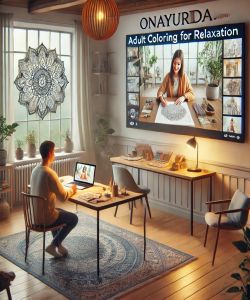
1. Overview of Adult Coloring for Relaxation
Adult colouring for relaxation is a structured, non-clinical intervention designed to mitigate the physiological and psychological symptoms of stress and anxiety through focused, creative engagement. It is not to be conflated with expressive art therapy, which is a diagnostic and therapeutic discipline requiring a qualified practitioner. Instead, this practice operates on the principle of mindfulness, demanding a high degree of concentration on a repetitive, low-stakes task. By engaging the participant in the meticulous selection of colours and the precise act of filling in predefined patterns, the activity deliberately diverts cognitive resources away from ruminative or anxious thought patterns. This process facilitates a state of mental quietude, akin to meditation, by anchoring the mind in the present moment. The inherent structure of colouring, with its clear boundaries and simple objectives, provides a predictable and controllable environment, which is profoundly calming for an overstimulated nervous system. The practice systematically de-emphasises artistic outcome and elevates the importance of the procedural experience. It is a rigorous mental exercise in focus and sensory grounding, engineered to induce a state of calm by commandeering the brain’s attention mechanism. The ultimate purpose is not the creation of an aesthetic object, but the deliberate cultivation of internal equilibrium and the reduction of cognitive noise through a disciplined, methodical activity. It is a tool for self-regulation, providing a tangible and accessible method for individuals to actively manage their own mental state without recourse to more complex therapeutic modalities. This overview unequivocally positions adult colouring as a serious technique for mental self-management, far removed from any notion of trivial pastime.
2. What are Adult Coloring for Relaxation?
Adult colouring for relaxation constitutes a specific, process-oriented activity designed to induce a state of calm and focused attention. It is fundamentally a form of structured mindfulness, where the act of colouring within prescribed lines serves as a meditative anchor. The practice is defined not by the artistic merit of the final product, but by the psychological and physiological effects experienced during the engagement. It functions by narrowing the participant's attentional focus to a simple, repetitive motor task, thereby interrupting the cycle of intrusive or stress-inducing thoughts. This deliberate redirection of cognitive energy from abstract worries to a tangible, immediate activity is the core mechanism through which relaxation is achieved.
It is imperative to distinguish this practice from childhood colouring or professional art. Its defining characteristics include:
- Complex and Intricate Designs: The patterns are typically more detailed than those intended for children, featuring mandalas, geometric shapes, or elaborate natural scenes. This complexity demands a higher level of concentration, which is essential for achieving a state of flow and mental absorption.
- Emphasis on Process over Outcome: The primary objective is the experience of colouring itself—the methodical selection of hues, the steady motion of the hand, and the visual feedback of filling a space. The aesthetic quality of the completed page is secondary to the mental state cultivated during its creation.
- Non-Judgmental Engagement: The activity is structured to minimise performance anxiety. As the outlines are already provided, the user is liberated from the pressure of creation and can engage with the task without fear of failure, fostering a safe psychological space for relaxation.
- Accessibility: It requires no prior artistic training or inherent talent. This low barrier to entry makes it an immediately available tool for stress management for a broad demographic, positioning it as a practical self-regulation technique rather than an exclusive artistic pursuit.
3. Who Needs Adult Coloring for Relaxation?
- High-Pressure Professionals: Individuals operating in demanding corporate, legal, or medical fields who are subject to constant cognitive load and decision fatigue. The practice provides a necessary and structured disengagement from work-related mental churn, compelling the brain to enter a non-analytical state, thereby preventing burnout and restoring executive function.
- Individuals Managing Chronic Stress or Anxiety: Persons experiencing persistent feelings of unease, worry, or physiological stress symptoms. The methodical and repetitive nature of colouring actively counteracts the chaotic and forward-projecting nature of anxiety, grounding the individual in the present moment and helping to regulate heart rate and breathing.
- Those Seeking to Enhance Focus and Concentration: Individuals who find their attention fragmented by digital distractions or a racing mind. Adult colouring acts as a form of mental training, conditioning the brain to sustain focus on a single, intricate task for an extended period, which can translate to improved concentration in other areas of life.
- People Undergoing Significant Life Transitions: Individuals navigating stressful life events such as career changes, relocation, or personal loss. The predictable, controllable nature of colouring offers a stable and secure activity amidst external chaos, providing a sense of agency and a temporary sanctuary from overwhelming circumstances.
- Individuals Seeking Non-Pharmaceutical Aids for Sleep Hygiene: Persons who struggle to quiet their minds before sleep. Engaging in colouring for a period before bedtime can serve as a powerful wind-down ritual, signalling to the brain a transition away from the day's stressors and facilitating a state of calm conducive to rest.
- Adults Experiencing Creative Blocks or Monotony: Those who feel stuck in a routine or creatively uninspired. Whilst not a form of free expression, the act of engaging with colour and pattern can stimulate dormant creative faculties in a low-pressure context, breaking mental rigidity and re-opening pathways to novel thinking.
4. Origins and Evolution of Adult Coloring for Relaxation
The concept of colouring as a therapeutic tool for adults is not a recent invention; its roots are embedded in the principles of early 20th-century psychoanalysis. Carl Jung, a prominent figure in analytical psychology, famously prescribed the creation and colouring of mandalas to his patients. He identified these intricate, circular designs as symbolic representations of the self and believed that engaging with them could facilitate psychological integration and a meditative state of wholeness. This early application established a crucial precedent: the use of structured, non-representational art forms as a pathway to internal order and psychological exploration, divorcing the act of colouring from a purely juvenile or artistic context and framing it as a valid tool for adult self-reflection.
For much of the 20th century, however, this practice remained confined to niche therapeutic circles and was not recognised as a mainstream activity. The cultural perception of colouring was overwhelmingly associated with childhood development. The evolution towards its modern, popularised form began in the early 2010s, catalysed by a confluence of societal trends. Increasing public awareness of mental health and wellness, coupled with a growing desire for "digital detox" activities in an ever-connected world, created fertile ground for a simple, analogue solution to modern stressors.
The tipping point occurred when publishers began marketing intricately designed colouring books explicitly to an adult audience. Books by artists such as Johanna Basford, with their sophisticated and beautiful illustrations, transformed the medium. They reframed colouring not as a remedial or childish activity, but as an elegant and legitimate form of adult leisure and self-care. This commercial success triggered a global phenomenon, with the market expanding to include a vast array of themes, from complex geometric patterns to detailed fantasy landscapes. The evolution was complete: from a specialist psychoanalytic technique to a globally accessible, mainstream practice for stress management, firmly establishing adult colouring as a recognised and respected tool for promoting relaxation and mental well-being in the contemporary world.
5. Types of Adult Coloring for Relaxation
- Mandala Colouring: This is arguably the most traditional and recognised form. Mandalas are complex, circular geometric configurations that represent the cosmos or the self in various spiritual traditions. Colouring them requires a high degree of focused attention, drawing the mind inward. The repetitive, symmetrical nature of the patterns is specifically designed to induce a meditative, trance-like state, calming the nervous system and promoting a sense of psychological balance and completeness.
- Geometric and Pattern-Based Colouring: This type involves the colouring of tessellations, abstract patterns, fractals, and other non-representational designs. Unlike mandalas, these patterns may not be circular but are defined by their repetition and mathematical precision. The objective here is to engage the logical, pattern-recognising parts of the brain, providing a structured and predictable activity that is highly effective at quieting anxious or chaotic thoughts by imposing order.
- Nature and Botanical Illustration Colouring: This category features detailed and intricate depictions of flora and fauna, such as secret gardens, enchanted forests, and elaborate floral arrangements. It appeals to a desire to connect with the natural world. The complexity of rendering organic forms—the delicate veins of a leaf or the intricate feathers of a bird—demands meticulous attention, serving as a grounding mechanism that draws focus away from internal stressors to the beauty of the external world.
- Narrative and Scene-Based Colouring: These designs depict complex scenes, often from fantasy, literature, or stylised cityscapes. They offer a more immersive, almost escapist experience, allowing the participant to become absorbed in the creation of a world. This type engages both concentration and a mild form of imagination in interpreting the scene through colour, providing a temporary diversion from real-world concerns.
- Mindfulness and Affirmation Colouring: This modern iteration integrates colouring with positive psychology. Designs incorporate uplifting words, phrases, or affirmations directly into the artwork. The act of colouring these words is intended to reinforce positive cognitive patterns, combining the meditative benefits of the physical act with the conscious repetition of beneficial mantras, creating a dual-layered approach to mental well-being.
6. Benefits of Adult Coloring for Relaxation
- Reduces Stress and Anxiety: The primary and most rigorously asserted benefit. The act of focusing on a detailed, repetitive task displaces anxious and ruminative thought patterns. This structured activity engages the brain's prefrontal cortex in a way that can calm the amygdala, the brain's fear centre, leading to a measurable decrease in physiological stress markers.
- Induces a Meditative State: The intense focus required for colouring within intricate lines mimics the principles of mindfulness and meditation. It anchors the participant firmly in the present moment, fostering a state of flow that silences mental chatter and promotes a profound sense of calm and mental clarity.
- Improves Motor Skills and Hand-Eye Coordination: The precise movements required to stay within the lines engage fine motor skills. This practice strengthens the muscles in the hands and fingers and enhances the connection between visual information and motor execution, an often-neglected skill set in the digital age.
- Enhances Focus and Concentration: Regular engagement with adult colouring serves as a training exercise for the brain's attention centres. It conditions the mind to maintain focus on a single task for an extended period, which can translate into improved concentration and productivity in professional and personal life.
- Promotes Digital Detoxification: As an inherently analogue activity, it mandates a complete disengagement from screens and digital notifications. This provides a necessary respite for the brain from the constant stimulation of the online world, reducing mental fatigue and eye strain.
- Liberates from the Pressure of Creative Performance: Because the structure and outlines are pre-defined, the participant is freed from the anxiety of "blank page syndrome." The activity is about process, not invention, which eliminates the fear of failure and allows for creative engagement in a psychologically safe, non-judgmental context.
- Facilitates Emotional Regulation: The selection of colours and the physical act of applying them can serve as a non-verbal outlet for emotions. It provides a contained and constructive method for processing feelings without the need for verbal articulation, acting as a form of emotional self-soothing.
7. Core Principles and Practices of Adult Coloring for Relaxation
- Primacy of Process over Product: The fundamental principle is that the value of the activity lies exclusively in the act of colouring itself, not in the aesthetic quality of the finished page. The objective is to achieve a state of mental calm and focus during the engagement. Any attachment to creating a "perfect" image is counter-productive and must be consciously relinquished. The practice is a means to an internal state, not an external artefact.
- Mindful Engagement: The participant must approach the task with deliberate and focused attention. This entails concentrating fully on the chosen section, the movement of the hand, the texture of the medium against the page, and the selection of colours. The mind must be anchored to the present moment and the sensory experience, actively redirecting focus away from intrusive thoughts whenever they arise.
- Acceptance and Non-Judgement: A core tenet is the cultivation of a non-judgemental attitude towards one's own work. There are no "mistakes" in this context. Going outside the lines or choosing a "wrong" colour are irrelevant distractions. The practice demands self-acceptance and the letting go of perfectionism, which is itself a major source of stress.
- Structured Freedom: The activity operates within a framework of pre-defined boundaries (the printed lines) which provide psychological safety and eliminate decision anxiety about composition. Within this structure, however, there is complete freedom in the choice of colour and application technique. This balance of structure and freedom is critical for inducing relaxation.
- Sensory Grounding: The practice is an exercise in sensory awareness. It requires attention to the visual input of the pattern, the tactile sensation of the pencil or pen, and the auditory feedback of the instrument on the surface. This focus on physical sensation is a powerful technique for grounding the individual and pulling them out of abstract, anxiety-producing thought loops.
- Deliberate Pace and Rhythm: Rushing is antithetical to the purpose of the exercise. The participant should adopt a slow, deliberate, and rhythmic pace. This methodical speed helps to regulate breathing and heart rate, further enhancing the physiological relaxation response. The practice is a deliberate slowing-down of an otherwise fast-paced existence.
8. Online Adult Coloring for Relaxation
- Unparalleled Accessibility and Convenience: Digital platforms eliminate the need for physical materials such as books, pencils, or markers. An individual requires only a compatible digital device and an internet connection to access a vast library of designs. This removes barriers of cost and physical space, making the practice instantly available at any time and in any location, which is crucial for immediate stress management.
- Infinite Creative Tools and Experimentation: Online colouring applications provide an almost limitless palette of colours, gradients, and textures that would be impractical or prohibitively expensive to replicate with physical media. Features like "undo" buttons and the ability to re-colour sections without consequence remove the fear of making permanent "mistakes," fostering a more relaxed and experimental creative process.
- Structured Guidance and Thematic Programmes: Many online platforms are not merely repositories of images but are structured as guided programmes. They may offer daily colouring challenges, themed collections based on specific relaxation goals (e.g., "Calm," "Focus"), or curated progressions. This structure provides motivation and direction, transforming a casual activity into a more disciplined and goal-oriented practice for well-being.
- Enhanced Focus through Zoom Functionality: Digital interfaces allow users to zoom in on highly intricate parts of a design. This capability enables a level of meticulous detail work that can be difficult to achieve on a physical page, demanding an even greater degree of concentration. This intense focus is highly effective at commandeering cognitive resources and blocking out intrusive thoughts.
- Integration with Calming Auditory Elements: A significant advantage of the online format is the ability to integrate the visual activity with curated audio. Many applications pair the colouring experience with calming soundscapes, ambient music, or guided meditation audio. This multi-sensory approach creates a deeply immersive relaxation environment that is far more difficult to orchestrate in an offline setting.
- Progress Tracking and Gamification: Some platforms incorporate elements of progress tracking or subtle gamification, such as unlocking new palettes or designs upon completion of others. When implemented correctly, this can enhance motivation and provide a sense of accomplishment, reinforcing the practice as a positive and rewarding habit without inducing performance pressure.
9. Adult Coloring for Relaxation Techniques
- Initial Grounding and Intention Setting: Before commencing, it is imperative to establish a conducive environment, free from distraction. The first step is not to colour, but to take several deep, deliberate breaths. Consciously set the intention for the session: the goal is relaxation and process-focus, not artistic production. This mental preparation frames the activity correctly from the outset.
- Systematic Colour Palette Selection: Avoid haphazard colour choices. A methodical approach is to pre-select a limited, harmonious palette of three to five colours before beginning. This minimises decision fatigue during the activity itself, allowing the mind to remain in a state of flow rather than being constantly interrupted by choices. The selection process itself should be calm and deliberate.
- The "Centre-Outward" Mandala Method: When colouring a mandala or any symmetrical design, begin at the absolute centre. Work on one ring or layer at a time, moving methodically outwards. This technique creates a rhythmic and predictable workflow, mirroring the unfolding of the pattern and enhancing the meditative quality of the practice. It imposes a clear, logical progression on the task.
- Sectional Blocking Technique: For non-symmetrical or scene-based designs, mentally divide the image into four or five distinct sections. Complete one entire section before moving to the next. This approach prevents the eye from darting across the page and breaks down a complex image into manageable, achievable tasks, reducing any sense of overwhelm.
- Consistent Stroke Direction: Within any given enclosed shape, apply all colour using unidirectional strokes (e.g., all vertical, all horizontal, or all diagonal). This practice demands a high level of control and mindfulness. It creates a visually clean and uniform texture, and the repetitive, controlled motion is itself deeply calming and hypnotic.
- Mindful Colour Transition: Pay close attention to the boundaries between different coloured sections. Slow down as you approach a line. This act of deliberate precision is a core mindfulness exercise. Focus entirely on the point where the colouring tool meets the paper and the black line. This intense, micro-level focus is exceptionally effective at silencing mental chatter.
- Concluding with Observation: Once the session is complete, do not immediately discard the work. Spend a moment observing the finished piece without judgement. Notice the interplay of the chosen colours and the filled spaces. This final step of detached observation reinforces the sense of accomplishment and concludes the practice with a moment of quiet reflection.
10. Adult Coloring for Relaxation for Adults
Adult colouring for relaxation is an activity unequivocally tailored for the mature mind, addressing psychological and neurological needs specific to adulthood. Unlike the developmental purpose of colouring for children—which focuses on motor skills and colour recognition—the adult application is a sophisticated tool for cognitive management. The modern adult is perpetually besieged by a high-velocity stream of information, decision-making demands, and future-oriented anxieties. This practice directly counters such pressures by compelling the brain to disengage from complex, abstract thought and instead immerse itself in a simple, structured, sensory-based task. It leverages the adult capacity for sustained focus, channelling it into a non-productive, non-competitive activity, which is a radical departure from the goal-oriented imperatives that dominate adult life. The intricate and complex designs found in adult colouring books are deliberately chosen to engage a fully developed cognitive system, requiring a level of patience and precision that is beyond the scope of a child. It is a voluntary regression to a state of simple focus, but one that is undertaken with the conscious adult intention of achieving mental quietude. This is not play in the juvenile sense; it is a disciplined exercise in mental self-regulation, providing a tangible method for de-escalating the nervous system, mitigating the effects of chronic stress, and reclaiming a sense of control in a world that often feels overwhelmingly complex and demanding. It is a strategic retreat, not an escape, designed to restore the mental resources necessary to navigate the rigours of adult responsibility.
11. Total Duration of Online Adult Coloring for Relaxation
The prescribed total duration for a single, effective session of online adult colouring for relaxation is unequivocally 1 hr. This specific timeframe is not arbitrary; it is predicated on established principles of attention, cognitive immersion, and practical integration into a daily routine. A session of this length is sufficiently long to allow the participant to move past initial restlessness and mental chatter, and to fully enter a state of "flow"—that deep, meditative absorption where relaxation benefits are maximised. Shorter durations are often inadequate, failing to provide enough time for the nervous system to de-escalate and for the mind to become fully anchored in the present task. Conversely, sessions extending significantly beyond this one-hour mark risk inducing mental fatigue, eye strain from the digital interface, or physical discomfort in the hand and wrist, which would be counter-productive to the goal of relaxation. The 1 hr duration represents an optimal balance. It is substantial enough to facilitate a meaningful psychological shift and achieve the desired state of calm, yet it remains a manageable commitment that can be realistically scheduled into a busy adult life without becoming a source of pressure itself. Therefore, adherence to this one-hour parameter is not merely a suggestion but a core component of the methodology, ensuring the practice is engaged with the seriousness and structure required to yield its intended therapeutic outcomes. It transforms the activity from a casual pastime into a deliberate, time-bound intervention for mental well-being, demanding a commitment that underscores its purpose and efficacy.
12. Things to Consider with Adult Coloring for Relaxation
It is imperative to approach adult colouring for relaxation with a clear and disciplined mindset, as several considerations directly influence its effectiveness. Primarily, one must rigorously separate this practice from the pursuit of artistic excellence. The objective is internal calm, not the creation of an aesthetically pleasing artefact for external validation. Any emergent perfectionism or self-criticism regarding colour choice or precision is a corruption of the process and must be actively identified and dismissed. The activity is a tool for mental quietude; it is not a performance. Furthermore, the selection of designs is critical. An overly simplistic pattern may fail to engage the mind sufficiently to block intrusive thoughts, whilst an excessively complex design may induce frustration and stress, thereby negating the purpose. The individual must select patterns that present a manageable challenge, demanding focus without causing anxiety. The physical environment is also a non-negotiable factor. The practice must be undertaken in a space free from interruptions and digital distractions to facilitate the necessary state of deep focus. Finally, it must be understood that this is not a panacea. It is a potent tool for in-the-moment stress reduction and focus training, but it is not a substitute for professional therapeutic intervention for significant mental health conditions. It is a self-management technique to be integrated into a broader strategy for well-being, and its limitations must be respected. Approaching the practice with these considerations ensures it remains a powerful and effective aid for relaxation, rather than becoming another source of pressure.
13. Effectiveness of Adult Coloring for Relaxation
The effectiveness of adult colouring for relaxation is firmly established, grounded in its capacity to systematically engage cognitive and neurological mechanisms that counteract the physiological state of stress. Its efficacy does not stem from any mystical property, but from a pragmatic application of mindfulness and attentional control. The practice forces a redirection of focus from abstract, often anxious, internal narratives to a concrete, external, and highly structured task. This deliberate cognitive shift is not trivial; it actively interrupts the brain's default mode network, which is heavily implicated in rumination and worry. By demanding concentration on the precise motor actions of selecting colours and filling defined spaces, the activity engages the prefrontal cortex, which in turn helps to regulate the amygdala—the brain’s primary threat-detection centre. This neurological modulation results in tangible physiological changes: a reduction in heart rate, a decrease in cortisol levels, and a regulation of breathing patterns. The effectiveness is further enhanced by the low-stakes, non-competitive nature of the task, which eliminates performance anxiety and fosters a state of psychological safety. The predictable, repetitive motions induce a state of "flow," akin to meditation, where self-consciousness recedes and time perception alters. Therefore, the practice is not merely a distraction but a robust, active intervention that leverages fundamental brain processes to induce a state of calm. Its effectiveness lies in its simplicity and accessibility, providing a direct and repeatable method for individuals to exert control over their own mental state.
14. Preferred Cautions During Adult Coloring for Relaxation
It is critical to engage in adult colouring for relaxation with a disciplined awareness of potential counter-productive pitfalls. The primary caution is the absolute prohibition of perfectionism. The user must actively resist any impulse to judge their work, agonise over colour selection, or feel frustration at straying outside a line. Such tendencies transform a relaxing activity into a source of stress, fundamentally defeating its purpose. The objective is process, not a flawless product. Secondly, physical ergonomics must be strictly observed. The participant must maintain proper posture, ensure adequate lighting to prevent eye strain, and take periodic breaks to stretch the hands, wrists, and neck. Prolonged, uninterrupted sessions without attention to the body can lead to physical discomfort and repetitive strain injuries, which will negate any mental benefits. Furthermore, one must be cautious not to use this practice as a form of chronic avoidance. While it is an effective tool for temporary stress relief, it must not become a mechanism for consistently disengaging from necessary problem-solving or for avoiding professional help when warranted by more severe psychological distress. It is a supplement to a healthy lifestyle, not a substitute for it. Finally, in an online context, the user must be vigilant about screen time. The session should be time-bound, and the user should employ blue-light filters where possible to mitigate the negative effects of prolonged screen exposure, particularly if colouring before sleep. These cautions are not suggestions; they are necessary protocols to ensure the integrity and benefit of the practice.
15. Adult Coloring for Relaxation Course Outline
- Module 1: Foundational Principles and Mindset Calibration
- Introduction to the psychology of structured mindfulness.
- Deconstructing the process vs. product dichotomy.
- Techniques for active non-judgement and relinquishing perfectionism.
- Establishing a conducive physical and mental environment for practice.
- Module 2: The Science of Colour and Emotional Regulation
- Overview of basic colour theory in a non-artistic context.
- Guided exercises in selecting colour palettes to influence mood (e.g., calming vs. energising palettes).
- The practice of using colour choice as a non-verbal emotional outlet.
- Developing an intuitive, rather than analytical, approach to colour.
- Module 3: Core Techniques for Deep Focus
- Mastering unidirectional stroking for rhythmic consistency.
- The sectional blocking method for managing complex designs.
- The centre-outward technique for mandalas and symmetrical patterns.
- Micro-focus exercises for boundary precision and enhanced mindfulness.
- Module 4: Application to Specific Stressors
- Utilising pattern-based designs to counter chaotic thinking.
- Employing nature-based designs for grounding and escapism.
- Integrating affirmation colouring to challenge negative self-talk.
- Developing a personalised "go-to" colouring strategy for acute stress moments.
- Module 5: Advanced Practice and Integration
- Techniques for managing frustration with highly intricate designs.
- Integrating the practice with other relaxation modalities (e.g., soundscapes, breathwork).
- Developing a sustainable, long-term colouring routine.
- Transitioning from guided practice to self-directed, intuitive engagement.
- Module 6: Digital Platform Mastery (Online Course Specific)
- Navigating the interface: tools, palettes, and layers.
- Utilising zoom and rotation functions for ergonomic comfort and precision.
- Managing digital files and curating a personal design library.
- Best practices for minimising digital eye strain and maintaining good posture.
16. Detailed Objectives with Timeline of Adult Coloring for Relaxation
- Weeks 1-2: Foundational Skill Acquisition and Mindset Re-Calibration
- Objective: The participant will demonstrate an understanding of the core principle of process over product by completing three distinct designs without expressing self-criticism.
- Objective: The participant will establish and adhere to a protocol for creating a distraction-free environment for each session.
- Objective: The participant will master the basic unidirectional stroke technique on simple geometric patterns.
- Weeks 3-4: Cultivation of Deep Focus and Rhythmic Practice
- Objective: The participant will successfully apply the sectional blocking and centre-outward techniques to at least two complex designs (one narrative, one mandala).
- Objective: The participant will maintain a state of focused colouring for a continuous period of no less than twenty minutes without succumbing to distraction.
- Objective: The participant will create and utilise three different limited colour palettes based on emotional intention (e.g., calm, focus, energy).
- Weeks 5-6: Application and Emotional Regulation
- Objective: The participant will identify a personal stress trigger and proactively use a 30-minute colouring session as a management tool, documenting the perceived effect.
- Objective: The participant will complete two affirmation-based designs, consciously reflecting on the meaning of the words during the process.
- Objective: The participant will demonstrate the ability to integrate guided breathwork with the rhythmic motion of colouring.
- Weeks 7-8: Autonomy and Sustainable Integration
- Objective: The participant will independently select appropriate designs based on their current mental state and relaxation needs.
- Objective: The participant will develop and articulate a personal, sustainable weekly routine for incorporating colouring practice into their lifestyle.
- Objective: The participant will successfully complete a highly intricate design of their choice, managing any emergent frustration through learned mindfulness techniques without abandoning the task.
17. Requirements for Taking Online Adult Coloring for Relaxation
- Requisite Technology and Connectivity: A stable, high-speed internet connection is non-negotiable to ensure uninterrupted access to the online platform, download designs, and participate in any guided sessions. The participant must possess a compatible digital device, such as a tablet with a stylus, a touchscreen laptop, or a desktop computer with a mouse or drawing tablet. A smartphone is generally considered inadequate due to its limited screen size.
- Software and Platform Competency: The individual must possess basic digital literacy. This includes the ability to navigate a web-based or application interface, understand tool selection (e.g., brush type, colour picker, eraser), and manage digital files. No advanced graphic design skills are required, but a foundational comfort with digital tools is essential.
- A Dedicated and Conducive Environment: Participants must commit to establishing a physical space that is free from auditory and visual distractions for the duration of each session. This is not a casual activity to be performed amidst other tasks. It requires a quiet, private setting to facilitate the necessary focus for relaxation.
- Unyielding Commitment to the Process: A willingness to rigorously adhere to the core principles of the practice is mandatory. This includes a commitment to non-judgement, a focus on process over outcome, and the discipline to engage for the prescribed duration. A passive or cynical approach will yield no benefits.
- Ergonomic Preparedness: The participant must have a chair that supports correct posture and a setup that allows for comfortable engagement with the digital device. This is a critical requirement to prevent physical strain in the back, neck, and wrists, which would directly undermine the goal of relaxation.
- Time Commitment: The individual must be capable of allocating and protecting the required time for the course and practice sessions without interruption. This demonstrates a serious commitment to the process and is a prerequisite for achieving the stated objectives.
18. Things to Keep in Mind Before Starting Online Adult Coloring for Relaxation
Before embarking on an online adult colouring programme, it is imperative to conduct a rigorous self-assessment and set realistic expectations. This is not a passive form of entertainment; it is an active, disciplined practice that demands commitment. You must first evaluate your own readiness to disengage from the pervasive culture of perfectionism and productivity. If you are intrinsically driven by a need for flawless outcomes or tangible achievements, you must consciously prepare to suspend these impulses, as they are toxic to the relaxation process. Furthermore, assess your digital environment. While convenient, the online format presents its own unique challenges, including the potential for digital distraction and eye strain. You must have a firm strategy in place to mitigate these risks, such as disabling all notifications on your device and committing to a strict, time-bound session. It is also crucial to understand that while the platform provides the tools, the internal work is entirely your own responsibility. The software cannot force you into a state of mindfulness; it merely facilitates it. You must be prepared to actively and repeatedly guide your attention back to the task when it wanders. Finally, do not mistake this for a substitute for professional mental health care. It is a powerful tool for managing everyday stress and cultivating focus, but it is not a clinical treatment. Acknowledging these realities is not a deterrent but a necessary prerequisite for engaging with the practice effectively and deriving its full, intended benefits.
19. Qualifications Required to Perform Adult Coloring for Relaxation
To be clear, the end-user, the individual engaging in the practice of adult colouring for their own relaxation, requires absolutely no formal qualifications. The practice is predicated on its accessibility and its independence from prior skill or artistic talent. The very absence of a need for qualification is what makes it a potent, non-intimidating tool for stress reduction.
However, the context changes entirely when an individual positions themselves as a facilitator, guide, or instructor of an Adult Colouring for Relaxation course or workshop, particularly one that makes claims related to mental well-being. In this professional capacity, a specific set of qualifications and expertise becomes ethically and professionally mandatory. These individuals are not merely providing images and tools; they are guiding others through a process with psychological implications.
The minimum qualifications for such a facilitator should include:
- Certified Expertise in Mindfulness or Meditation: A formal certification as a mindfulness instructor (e.g., MBSR - Mindfulness-Based Stress Reduction) is paramount. This ensures the facilitator possesses a deep, theoretical, and practical understanding of the core principles of attentional control, non-judgement, and emotional regulation that underpin the practice.
- Knowledge of Positive Psychology or Coaching: A background or qualification in coaching, counselling, or positive psychology is highly desirable. This equips the facilitator to frame the practice effectively, guide participants through mental blocks like perfectionism, and manage group dynamics in a supportive and psychologically safe manner.
- Demonstrable Experience in the Practice: A facilitator must have an extensive personal history with the practice themselves. They must be able to speak authoritatively from experience about the challenges, benefits, and nuanced techniques involved.
- Exclusion of Therapeutic Claims: A qualified facilitator must be rigorously trained to understand the boundary between a wellness practice and clinical therapy. They must explicitly and consistently state that they are not providing art therapy or any form of psychological treatment, and be able to recognise when a participant may need a referral to a licensed mental health professional.
Without these qualifications, an instructor is merely a hobbyist, and their guidance lacks the professional authority and ethical grounding required to lead others in a practice tied to mental well-being.
20. Online Vs Offline/Onsite Adult Coloring for Relaxation
Online
The online modality of adult colouring for relaxation is defined by its unparalleled convenience and technological augmentation. Its primary advantage is absolute accessibility; an individual can engage with the practice at any moment, in any location, requiring only a digital device and internet access. This immediacy is critical for in-the-moment stress management. The digital platform offers a functionally infinite set of tools, including limitless colour palettes, gradients, and textures, which would be financially and logistically prohibitive in the physical world. Critically, features such as the 'undo' button and non-destructive layering eliminate the "fear of mistakes," fostering a more relaxed and experimental environment conducive to the core principle of non-judgement. Furthermore, online programmes can be structured and guided, integrating calming soundscapes, progress tracking, and curated thematic content to create a highly immersive, multi-sensory experience. The primary drawbacks, however, are the lack of tactile sensation—the physical resistance of pencil on paper—and the inherent risk of digital eye strain and distraction from notifications if not managed with rigorous discipline. It is a highly efficient, versatile, and controlled environment for the practice.
Offline/Onsite
The offline, or onsite, practice of adult colouring is a fundamentally analogue and sensory experience. Its chief virtue lies in its capacity to facilitate a complete digital detox. The engagement is tactile and tangible: the texture of the paper, the scent of wood pencils, the subtle sound of lead on the page. These sensory inputs serve as powerful grounding anchors, deepening the meditative state in a way that a smooth glass screen cannot replicate. The offline medium introduces an element of permanence and finality; colour choices are committed, fostering a different, perhaps more deliberate, form of mindfulness. Participating in an onsite workshop adds a communal dimension, creating a shared space of quiet focus that can be motivating and validating. The limitations are logistical: the need to purchase and store physical materials, the finite colour choices, and the lack of portability. The result is a physical artefact of the process, a tangible record of the time spent in focused relaxation. It is a more visceral, traditional, and ceremonious approach to the practice, prioritising sensory engagement over digital convenience.
21. FAQs About Online Adult Coloring for Relaxation
Question 1. Is this a form of art therapy? Answer: No. It is a structured relaxation and mindfulness technique. Art therapy is a clinical discipline conducted by a licensed therapist to address psychological disorders.
Question 2. Do I need any artistic skill or talent? Answer: Absolutely not. The practice is strictly process-oriented. A lack of artistic training is irrelevant as the focus is on relaxation, not creating art.
Question 3. What specific equipment is required? Answer: A stable internet connection and a suitable digital device, preferably a tablet with a stylus or a computer with a mouse, for optimal control and viewing.
Question 4. Can I use my own images? Answer: No. The programmes utilise specifically curated designs whose complexity and structure are engineered to facilitate the intended mindfulness outcomes.
Question 5. How is this better than colouring on paper? Answer: It is not "better," but different. It offers convenience, infinite tools, and features like 'undo' which remove the pressure of making mistakes.
Question 6. Will this cure my anxiety? Answer: No. It is a powerful tool for managing symptoms of stress and anxiety in the moment, but it is not a cure and not a substitute for professional medical advice.
Question 7. What if I get frustrated with a complex design? Answer: The course teaches specific techniques to manage frustration, framing it as part of the mindfulness practice itself. The goal is to observe and work through the feeling.
Question 8. Is there a community aspect to the online version? Answer: Some platforms may have optional forums or galleries, but the core practice is a solitary, introspective activity.
Question 9. How do I avoid eye strain from the screen? Answer: Adhere to the prescribed session duration, use blue-light filters, ensure proper lighting, and take short breaks to look away from the screen.
Question 10. What if I don't feel relaxed immediately? Answer: This is normal. Relaxation is a state that is cultivated. Consistent practice is required to train your mind to respond to the activity.
Question 11. Are the sessions live or pre-recorded? Answer: Most programmes are based on self-paced access to a library of designs and tools, not live, scheduled sessions.
Question 12. How is progress measured? Answer: Progress is measured internally by your increased ability to focus, remain non-judgemental, and achieve a state of calm, not by the number of pictures completed.
Question 13. Is it suitable for all adults? Answer: Yes, provided the individual is willing to engage with the principles of the practice and has the necessary technological access.
Question 14. What if I don't like the available colours? Answer: Digital platforms offer vast colour pickers, allowing you to create and save any custom colour you desire.
Question 15. Is my work private? Answer: Yes. Your work is stored in your personal account and is not shared unless you explicitly choose to do so on platforms with that feature.
Question 16. Can this help with focus for work? Answer: Yes. The practice is a form of attention training. The enhanced ability to focus can translate to other areas of your life, including professional tasks.
22. Conclusion About Adult Coloring for Relaxation
In conclusion, adult colouring for relaxation must be unequivocally understood as a disciplined, mindfulness-based intervention, not as a trivial or juvenile pastime. Its efficacy is rooted in established neurological and psychological principles, whereby the engagement in a structured, repetitive, and low-stakes task systematically diverts cognitive resources from anxiety-producing rumination. The practice forces an anchoring in the present moment, leveraging the intricate demands of the patterns to induce a meditative state of flow that calms the central nervous system. It is a pragmatic and highly accessible tool for self-regulation in a world saturated with stress and digital overstimulation. The distinction between process and product is the absolute cornerstone of this modality; the objective is the cultivation of internal equilibrium, not the creation of an aesthetic object. Whether pursued through the tactile, analogue medium of paper or the versatile, convenient format of a digital platform, the core purpose remains immutable: to provide a structured sanctuary for the mind. Therefore, it commands a serious and intentional approach. When stripped of the pressures of perfectionism and performance, adult colouring emerges as a potent and legitimate technique for enhancing focus, managing stress, and reclaiming a measure of control over one's own mental state. It is a rigorous exercise in deliberate calm.