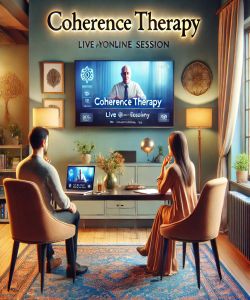
1. Overview of Coherence Therapy
Coherence Therapy represents a formidable and highly structured methodology within the psychotherapeutic domain, distinguished by its unwavering focus on symptom eradication through the principle of emotional coherence. It operates from the foundational premise that psychological symptoms, far from being arbitrary malfunctions, are in fact logical and necessary productions of the mind, generated and sustained by specific, non-conscious emotional learnings or constructs. The therapeutic process is therefore not a battle against the symptom but a methodical excavation of its underlying purpose and necessity for the individual. This approach posits that for a symptom to manifest, there must exist a compelling, albeit implicit, reason for its existence which renders it coherent from the psyche's perspective. The therapist’s role is to guide the client in an experiential process to uncover this ‘pro-symptom position’—the deeply held emotional truth that makes the symptom indispensable. Once this construct is brought fully into conscious awareness, the therapy facilitates a 'juxtaposition experience', where the client holds both the problematic emotional learning and a superseding, contradictory piece of knowledge in mind simultaneously. This process is engineered to trigger the brain's innate mechanism of memory reconsolidation, which does not merely suppress the old learning but permanently dissolves its neural encoding. Consequently, the symptom, now rendered incoherent and without a supporting emotional framework, ceases to be generated. This modality is therefore not concerned with coping strategies or symptom management; its objective is the complete and permanent transformation of the core constructs that necessitate the symptom's existence, demanding a rigorous, systematic, and deeply experiential engagement from both therapist and client to achieve profound and lasting resolution.
2. What are Coherence Therapy?
Coherence Therapy is a system of psychotherapy fundamentally grounded in the principle of symptom coherence. This principle asserts that a person's persistent, unwanted behaviours, moods, or thoughts are not random pathologies but are, in fact, the logical and necessary consequences of specific, non-conscious, and deeply held emotional constructions of reality. These constructions, formed from potent past experiences, serve an adaptive function, making the symptom essential for the individual's perceived emotional safety or well-being. The therapy is therefore a process of discovery, not suppression. Its primary function is to guide the individual to experientially unearth the precise emotional learning that necessitates their symptom. This is often referred to as identifying the ‘pro-symptom position’.
The therapeutic work is distinctly experiential. It moves beyond mere cognitive insight and requires the client to emotionally re-engage with the feelings and implicit knowledge that give the symptom its power. Once this core emotional truth is brought into conscious awareness, the methodology proceeds to the critical phase of transformation. This is achieved through a specific technique designed to unlock and update the original learning. The process involves creating a 'juxtaposition experience', where the old, symptom-producing emotional learning is activated and held in consciousness simultaneously with a new, vividly experienced piece of knowledge that directly contradicts and disconfirms it. According to the neuroscience of memory reconsolidation, this specific sequence is the key to unlocking the neural circuit holding the problematic learning, allowing it to be permanently dissolved and overwritten. Hence, Coherence Therapy is not about developing coping skills to manage a symptom; it is about methodically and permanently removing the underlying emotional cause, leading to the effortless and complete cessation of the symptom itself. It is a precise, targeted, and transformative psychological practice.
3. Who Needs Coherence Therapy?
- Individuals with Treatment-Resistant Symptoms: Those who have undergone other forms of therapy, such as cognitive-behavioural or psychodynamic approaches, without achieving lasting resolution. Their persistence suggests the symptom serves a powerful, unaddressed emotional purpose that Coherence Therapy is specifically designed to uncover and dismantle.
- Clients Seeking Definitive Symptom Cessation: Individuals who are unwilling to settle for mere symptom management, coping mechanisms, or a reduction in severity. They require a therapeutic process that aims for the complete and permanent eradication of the presenting problem by targeting its foundational cause.
- Persons Experiencing Deeply Ingrained, Inexplicable Patterns: This includes individuals locked in repetitive and self-sabotaging behaviours, emotional reactions, or thought loops that feel alien, involuntary, and contrary to their conscious goals and values. The therapy provides a direct pathway to understanding the hidden logic behind these patterns.
- Those with a Sense of Being 'Stuck': Clients who can articulate their problem, understand its negative impact, and possess a strong conscious will to change, yet find themselves utterly incapable of doing so. This internal conflict is a hallmark indicator of a powerful, non-conscious 'pro-symptom position' at work.
- Individuals Ready for Deep Experiential Work: This modality is not for the passive participant. It is for those who are prepared to engage in a rigorous, emotionally demanding process of self-discovery, moving beyond intellectual analysis to confront the core emotional truths that govern their internal world.
- Clients with Symptoms Rooted in Implicit Emotional Schemas: Many conditions, such as chronic anxiety, low self-worth, depression, or compulsive behaviours, are maintained by non-verbal, non-conscious schemas about self, others, and the world. Coherence Therapy is purpose-built to access and transform these implicit, emotionally-charged constructs directly.
4. Origins and Evolution of Coherence Therapy
The genesis of Coherence Therapy can be traced to the clinical work and theoretical research of psychotherapists Bruce Ecker and Laurel Hulley in the late 1980s and early 1990s. Initially operating under the name Depth-Oriented Brief Therapy (DOBT), their work was born from a rigorous, empirical investigation into what precipitated profound and lasting change in their clients. Through meticulous session-by-session analysis, they observed a consistent pattern: transformational change occurred only when a client's specific, symptom-requiring emotional schema was first brought into full, conscious, experiential awareness and then directly contradicted by a lived, undeniable experience. This observation led them to formulate the core principle of symptom coherence—the assertion that symptoms are not dysfunctions but are necessary expressions of the client's existing mental models.
As their methodology was refined, it evolved beyond a collection of effective techniques into a comprehensive, unified therapeutic system. The name was changed to Coherence Therapy to reflect its central organising principle. A pivotal moment in its evolution was the integration of contemporary neuroscience, specifically the research on memory reconsolidation that emerged in the early 2000s. This body of research provided a powerful neurobiological explanation for the lasting change Ecker and Hulley had been observing and facilitating for years. It demonstrated that under specific conditions—namely, the reactivation of an old emotional learning followed by the introduction of mismatching or prediction error information—the brain’s neural circuits could be fundamentally and permanently re-written.
This scientific validation solidified Coherence Therapy's standing as a distinct and potent form of psychotherapy. It was no longer just a clinical theory but a methodology directly aligned with the brain's own innate mechanisms for profound change. This evolution has cemented its position not as a derivative of other schools of thought, but as a unique, neuroscience-informed approach that offers a clear, systematic, and repeatable process for achieving the permanent dissolution of targeted psychological symptoms, shifting its focus from mere clinical observation to a robust, evidence-grounded practice.
5. Types of Coherence Therapy
Whilst Coherence Therapy is a unified and singular therapeutic system with a consistent set of core principles, its application can be understood through different modes of focus and delivery, rather than distinct "types" in the way other psychotherapies are categorised. The methodology itself remains constant; however, its implementation is adapted to the context.
- Individual Coherence Therapy: This is the primary and most common application. It involves a one-to-one engagement between a qualified therapist and a client. The entire process is tailored specifically to the individual's unique symptom, history, and underlying emotional constructs. The focus is an intensive, personalised journey of discovery and transformation, targeting the specific schemas that necessitate the client's presenting problem, whether it be anxiety, depression, compulsion, or low self-esteem.
- Coherence-Informed Couples Therapy: In this modality, the principles of Coherence Therapy are applied to the dynamics within a romantic relationship. The "symptom" is often a recurring, destructive pattern of interaction. The therapist guides the couple to uncover the individual, non-conscious emotional learnings that each partner brings to the relationship. The goal is to discover how these separate, implicit schemas clash and interlock to create the relational distress, revealing the hidden coherence behind their seemingly irrational conflicts and facilitating mutual understanding and change.
- Coherence-Informed Supervision and Training: This is not a therapeutic application for clients but a professional one. It involves using the principles of Coherence Therapy to guide and train other therapists. Supervisors help trainees identify their own emotional schemas or "blocks" that may be interfering with their clinical work. It uses the same discovery process to enhance a therapist's effectiveness, self-awareness, and mastery of the Coherence Therapy model itself.
- Online Coherence Therapy: This refers to the delivery of the therapy via secure digital platforms. The core methodology, techniques, and principles are identical to in-person sessions. The focus remains on experiential discovery and memory reconsolidation. This application is not a different type of therapy but a different mode of access, requiring specific competencies in establishing a strong therapeutic alliance and facilitating deep emotional work within a virtual environment.
6. Benefits of Coherence Therapy
- Symptom Eradication, Not Management: The primary benefit is its explicit goal of permanent symptom cessation. Unlike modalities focused on developing coping strategies, Coherence Therapy targets the underlying emotional learning that necessitates the symptom, aiming to dissolve it completely, which results in the symptom disappearing naturally and effortlessly.
- Profound and Lasting Change: By leveraging the neurobiological process of memory reconsolidation, the therapy achieves transformative change at the neural level. The erasure of the core, symptom-generating schema is permanent, preventing relapse and the need for ongoing therapeutic maintenance for that specific issue.
- Increased Self-Compassion and Understanding: The process of discovering the coherent, adaptive purpose behind a distressing symptom fundamentally reframes the client's self-perception. It replaces self-criticism and confusion with a deep understanding of why the symptom made sense, fostering self-acceptance and dissolving internal conflict.
- Empowerment and Agency: Clients are active participants in a process of discovery, not passive recipients of advice. They unearth their own emotional truths, which fosters a profound sense of agency and self-efficacy. The change feels authentic and internally generated because it is.
- Efficiency and Focus: The methodology is highly structured and targeted. It does not meander through a client's entire life history but focuses with precision on identifying and transforming the specific constructs linked to the presenting problem, often leading to significant results in a comparatively brief timeframe.
- Broad Applicability: The therapy is agnostic to symptom content. Because it focuses on the underlying process of how all symptoms are generated and maintained by implicit learnings, its principles can be effectively applied to a vast range of psychological issues, including anxiety, depression, trauma-related responses, compulsions, and self-esteem problems.
- Alignment with Neuroscience: The methodology is rigorously grounded in the established science of memory and emotional learning. This provides a robust, evidence-based framework that explains exactly how and why the therapeutic process works, offering credibility and clarity to both therapist and client.
7. Core Principles and Practices of Coherence Therapy
- The Principle of Symptom Coherence: This is the foundational axiom. It posits that every psychological symptom, however distressing or seemingly irrational, is being produced because it is the necessary consequence of a client's existing, non-conscious emotional learnings and constructs. The symptom has a coherent purpose. The practice is to presume this coherence and seek it out, never treating the symptom as a mistake.
- Discovery of the Pro-Symptom Position: The primary therapeutic task is not to challenge or remove the symptom, but to guide the client to experientially discover the specific, implicit knowledge that makes the symptom necessary. This is the ‘pro-symptom position’—the emotional truth that demands the symptom's existence for perceived well-being or safety. This is achieved through specific, empathic, and phenomenological questioning.
- Experiential Methodology: The entire process must be experiential, not merely intellectual. The client must re-access and feel the emotional reality of the symptom-generating construct in the present moment. Mere cognitive insight is insufficient for transformation; the emotional learning must be activated in the session for it to be amenable to change.
- Integration Before Transformation: The therapy demands that the pro-symptom construct is fully unearthed, understood, and integrated into the client’s conscious awareness before any attempt at change is made. The therapist and client must arrive at a shared, visceral understanding of precisely how the symptom is a coherent solution to the problem defined by the underlying schema.
- Juxtaposition for Erasure: The core mechanism for change is the creation of a 'juxtaposition experience'. This involves having the client hold the activated, symptom-requiring emotional learning in one hand, whilst simultaneously holding a vividly experienced piece of knowledge or awareness that directly contradicts and disconfirms it in the other. This mismatch is the critical ingredient for triggering memory reconsolidation.
- Leveraging Memory Reconsolidation: The ultimate goal is to utilise the brain’s innate process for updating emotional memory. The practice of juxtaposition is precisely engineered to meet the neurological requirements for reconsolidation: reactivating a target memory, and then introducing new, prediction-error information within a specific timeframe, leading to the permanent erasure of the original emotional response.
- Verification of Transformation: The final practice involves verifying that the targeted emotional learning has been nullified. This is done by inviting the client to try to retrieve the old emotional response or belief in various contexts. The successful outcome is not an ability to 'cope' with the old feeling, but a consistent inability to retrieve it at all. The symptom simply ceases to be generated.
8. Online Coherence Therapy
- Unaltered Core Methodology: Online Coherence Therapy is not a diluted version of the practice; it is the rigorous application of its full methodology within a digital environment. The foundational principles of symptom coherence, experiential discovery, and memory reconsolidation remain uncompromisingly central to the process. The objective is identical: the permanent eradication of the symptom-generating emotional schema.
- Enhanced Accessibility and Reach: The online format removes geographical barriers, granting individuals access to highly specialised Coherence therapists irrespective of their physical location. This is critical for a niche modality, ensuring that clients can connect with a practitioner who possesses the required expertise, rather than settling for a less suitable local option.
- Requirement for a Secure and Stable Environment: The efficacy of online sessions is contingent upon a non-negotiable technological framework. This includes a high-speed, reliable internet connection, a secure and encrypted video conferencing platform to ensure absolute confidentiality, and a private, quiet physical space for the client, free from any potential interruptions for the full duration of the session.
- Facilitation of Deep Experiential States: Contrary to scepticism, a skilled online therapist can effectively facilitate the profound experiential states necessary for this work. Through focused attention, precise verbal guidance, and keen observation of subtle non-verbal cues via video, the therapist creates a contained and potent therapeutic space that allows the client to safely access and engage with deep emotional material.
- Client Comfort and Control: For some individuals, engaging in deep emotional work from the safety and familiarity of their own home can be a distinct advantage. This can lower initial resistance and anxiety, potentially accelerating the process of building rapport and trust, which are essential for uncovering vulnerable emotional truths.
- Therapist Competence is Paramount: The online format demands an even higher level of skill from the therapist. They must be adept not only in Coherence Therapy itself but also in the nuances of digital communication—maintaining presence, tracking somatic responses through a screen, and managing the therapeutic frame without physical co-presence. The onus is on the therapist to bridge the digital divide effectively.
9. Coherence Therapy Techniques
- Symptom Deprivation and Phenomenological Inquiry: The process often begins by asking the client to imagine, experientially, what it would feel like to be completely free of the symptom. The therapist then guides a meticulous inquiry into any emergent anxiety, dread, or unease. The question is repeatedly posed: "What feeling or thought arises now, as you imagine not having [the symptom]?" This technique is designed to bypass intellectualisation and directly access the emotional consequences of the symptom's absence, revealing its hidden protective function.
- Sentence Completion: To bring the non-conscious, pro-symptom construct into explicit language, the therapist offers sentence stems for the client to complete viscerally and spontaneously. For example, "If I didn't have this anxiety, then I might..." or "This feeling of worthlessness is necessary in order to..." These prompts are designed to elicit the core emotional logic that underpins the symptom.
- Activation of the Target Schema: Once a potential construct is verbalised, it must be activated experientially. The therapist will guide the client to find a specific memory or imagined scenario where this construct feels completely true and alive. The goal is to bring the emotional reality of the schema into the present moment, making it palpable and ready for the process of reconsolidation.
- Discovery and Articulation of the Contradictory Knowledge: The next step is to search for and identify a piece of knowledge, also held by the client, that directly disconfirms the symptom-requiring schema. This is not a manufactured affirmation but a deeply held, lived truth. The therapist assists the client in finding and articulating this contradictory knowledge with emotional and somatic resonance.
- Executing the Juxtaposition Experience: This is the pivotal technique. The therapist instructs the client to hold the fully activated, symptom-producing schema in their awareness, whilst simultaneously bringing the contradictory knowledge into the same field of awareness. The client must vividly experience the collision of these two incompatible truths. This experiential mismatch is held for several minutes, creating the 'prediction error' signal required by the brain to unlock the original learning.
- Verification Testing: Following the juxtaposition, the therapist systematically tests for the erasure of the old learning. This involves inviting the client to access the original triggering situation or feeling. A successful outcome is not a new coping skill, but a genuine inability to produce the old symptomatic response. The emotional logic for it has been permanently nullified.
10. Coherence Therapy for Adults
Coherence Therapy offers a uniquely potent and respectful framework for adult psychotherapy, predicated on the foundational assumption that the adult client possesses all the necessary resources for profound and lasting change within themselves. It treats the adult psyche not as a broken mechanism in need of fixing, but as a coherent, meaning-making system that has developed specific, albeit now problematic, strategies for emotional survival. The therapy engages the adult's capacity for self-reflection and abstract thought, yet rigorously guides them beyond mere intellectual insight into the realm of direct emotional and somatic experience, where true transformation occurs. For adults burdened by long-standing issues such as chronic anxiety, persistent low mood, imposter syndrome, or intractable relationship patterns, this modality provides a direct and systematic path to uncovering the original, often childhood-based, learnings that have solidified into rigid, symptom-generating schemas. The process respects the adult's intelligence and autonomy; the therapist acts as a skilled guide, not an authority figure dispensing advice. They collaboratively unearth the hidden logic that sustains the symptom, honouring it as a once-adaptive strategy. This validation is profoundly dignifying and often dissolves the shame and self-blame that adults carry. The core transformational work, the juxtaposition experience, leverages the adult's accumulated life wisdom—the contradictory knowledge used to overwrite the old schema is often derived from subsequent life experiences and mature understanding. Ultimately, Coherence Therapy for adults is an empowering process that dissolves the remnants of past emotional necessities, liberating the individual to function with greater freedom, authenticity, and alignment with their present-day values and goals, free from the involuntary constraints of outdated emotional programming.
11. Total Duration of Online Coherence Therapy
The standard and required duration for an individual session of online Coherence Therapy is a precisely demarcated 1 hr period. This timeframe is not arbitrary but is deliberately structured to maximise therapeutic potency whilst respecting the cognitive and emotional demands of the work. The 1 hr session provides a necessary container for the deep, experiential processes central to the modality. It allows sufficient time for the essential phases of the therapeutic arc to unfold without feeling rushed or truncated. This includes establishing a secure therapeutic presence, collaboratively identifying the session's focus, guiding the client into the necessary experiential state to access the target emotional schema, and, crucially, allowing adequate space for the juxtaposition experience to occur and integrate. The intensity of uncovering and transforming core emotional learnings requires this focused, bounded period. A shorter session would risk superficiality or, more dangerously, activating profound emotional material without sufficient time to process it and ensure the client is well-regulated before concluding. A significantly longer session risks emotional and cognitive fatigue, which can diminish the client's capacity for the sharp, lucid awareness needed for the juxtaposition process to be effective. The online context further reinforces the importance of this clear 1 hr boundary. It provides a reliable and consistent structure that helps to frame the therapeutic encounter, manage expectations, and contain the powerful work being undertaken, ensuring that the integrity and rigour of the Coherence Therapy model are upheld within the digital domain. This duration is a functional imperative for effective and responsible practice.
12. Things to Consider with Coherence Therapy
Engaging with Coherence Therapy demands a particular disposition and a clear understanding of its unique operational framework. It is imperative for prospective clients to recognise that this is not a supportive, talk-based therapy focused on narrative exploration or the venting of feelings. Its nature is highly structured, targeted, and demanding. The process requires a robust willingness to move beyond cognitive analysis and to directly engage with, and even temporarily intensify, distressing emotional states in a controlled, therapeutic setting. This is a non-negotiable component of the work, as the symptom-generating schemas must be experientially activated to be transformed. Individuals seeking a purely consoling or advisory role from a therapist will find this modality unsuitable. Furthermore, one must consider that the therapy's success hinges on the client's capacity to eventually access a contradictory, superseding piece of knowledge. Whilst the therapist is skilled at facilitating this discovery, the resource for change ultimately resides within the client's own experience. A commitment to radical honesty with oneself is paramount. The methodology is precise and, when followed, powerful; however, any internal resistance to confronting the pro-symptom position or an unwillingness to fully participate in the experiential exercises will render the process inert. It is a collaborative but rigorous undertaking. Potential clients must therefore assess their own readiness for a process that is less about being soothed and more about a systematic and courageous deconstruction and reconstruction of the very emotional logic that, until now, has governed their internal world.
13. Effectiveness of Coherence Therapy
The effectiveness of Coherence Therapy is rooted in its direct and uncompromising alignment with the neuroscience of transformational change. Its efficacy is not a matter of conjecture or anecdotal success but is predicated on its capacity to reliably orchestrate the conditions required for memory reconsolidation, the brain's own mechanism for fundamentally erasing old emotional learnings. Unlike therapies that aim for the development of new, competing neural pathways to override a symptom, Coherence Therapy works by unlocking and permanently dissolving the original, symptom-producing neural circuit itself. This results in a qualitatively different and more definitive outcome: the complete and effortless cessation of the targeted symptom. The evidence for its effectiveness is therefore twofold. Clinically, it is observed in the profound and lasting resolution of a wide array of long-standing, treatment-resistant psychological issues. Clients consistently report not that they are 'coping better' with their anxiety or depression, but that the underlying feeling or impulse is simply no longer there. The problem has vanished because its emotional cause has been erased. Neurobiologically, its effectiveness is explained by its precise procedural fidelity to the three-step process of reconsolidation: reactivating the target schema, creating a mismatch or 'prediction error' experience through juxtaposition, and allowing the new, updated learning to be encoded. Consequently, when the methodology is implemented with precision by a skilled practitioner, its effectiveness is not merely probable but is a predictable outcome of engaging the brain's innate capacity for profound, lasting, and revolutionary change.
14. Preferred Cautions During Coherence Therapy
It is imperative to approach Coherence Therapy with a clear and unwavering understanding of its potent nature and the inherent demands it places upon the client. This is not a passive or gentle process. The primary caution is against any attempt to bypass or rush the discovery phase. The temptation to prematurely 'fix' the problem must be resisted absolutely; the pro-symptom position must be fully unearthed, respected, and consciously integrated before any transformational work is attempted. A failure to honour this sequence will not only render the therapy ineffective but could also reinforce the client's sense of being flawed or broken. Furthermore, clients must be prepared for the temporary intensification of emotional distress. To transform a core emotional learning, it must first be brought into conscious, felt experience. This can be profoundly uncomfortable, and individuals must possess a baseline level of emotional regulation and stability to navigate this phase without becoming overwhelmed. This therapy is contraindicated for individuals in an acute state of crisis or psychosis. The therapeutic relationship must be one of robust trust and security, as the client will be guided into states of deep vulnerability. Any ambiguity or lack of confidence in the therapist’s competence is a significant contraindication. Finally, one must guard against the intellectualisation of the process. The work is fundamentally experiential and somatic; treating it as a mere cognitive puzzle to be solved will completely subvert its power. The process demands courage, not just intellect.
15. Coherence Therapy Course Outline
- Module 1: Foundational Principles and Theoretical Framework
- The Core Premise: Introduction to Symptom Coherence.
- Distinction from Other Modalities (CBT, Psychodynamic, etc.).
- The Neuroscience of Change: Memory Reconsolidation as the Mechanism for Erasure.
- The Therapist’s Stance: Empathy, Attunement, and Phenomenological Inquiry.
- Module 2: The Discovery Phase - Unearthing the Pro-Symptom Position
- Techniques for Accessing Implicit Constructs (Symptom Deprivation, Sentence Completion).
- Mapping the Emotional Logic: Identifying the Problem and the Symptom as its Solution.
- Working with Emotional and Somatic Experience.
- Achieving Full Integration and Conscious Awareness of the Target Schema.
- Module 3: The Transformation Phase - Facilitating Erasure
- Identifying and Articulating Contradictory, Disconfirming Knowledge.
- The Art and Science of the Juxtaposition Experience.
- Pacing, Timing, and Holding the Experiential Mismatch.
- Navigating Client Resistance and Blocks During Transformation.
- Module 4: Integration and Verification
- Post-Juxtaposition Processing and Integration of New Learning.
- Systematic Verification Techniques: Testing for Erasure of the Schema.
- Identifying and Addressing Related, Unresolved Schemas.
- Consolidating Gains and Concluding the Therapeutic Work for the Target Symptom.
- Module 5: Advanced Applications and Clinical Practice
- Applying Coherence Therapy to Complex Cases (Trauma, Personality Disorders).
- Adapting the Methodology for Couples and Relational Work.
- Ethical Considerations and Best Practices in Coherence Therapy.
- Case Formulation and Session-by-Session Strategy.
- Module 6: Practical Application and Supervision (Online Context)
- Role-Playing Discovery and Transformation Techniques.
- Peer and Instructor Feedback on Practical Skills.
- Specific Competencies for Delivering Coherence Therapy Online.
- Case Presentation and Group Supervision.
16. Detailed Objectives with Timeline of Coherence Therapy
- Sessions 1-2: Assessment and Framework Establishment.
- Objective: To establish a secure therapeutic alliance and introduce the client to the Coherence Therapy framework. The therapist will clearly articulate the principle of symptom coherence and the experiential nature of the work. The timeline involves collaboratively identifying a single, specific target symptom for the initial phase of therapy and securing the client's explicit agreement to the methodology.
- Sessions 2-4: Discovery of the Symptom-Requiring Construct.
- Objective: To guide the client to experientially discover and articulate the specific pro-symptom position—the emotional truth that necessitates the target symptom. The timeline for this phase is dedicated to using techniques like symptom deprivation and phenomenological inquiry to bring the non-conscious schema into full, conscious, and felt awareness. This phase is complete only when both client and therapist can clearly state the emotional logic.
- Sessions 5-6: Integration and Activation.
- Objective: To fully integrate the discovered construct and prepare for transformation. The timeline involves reinforcing the client's understanding of why the symptom is coherent from this construct's perspective. The key objective is to practice activating the schema on demand within the session, ensuring it can be brought into a live, experiential state, which is a prerequisite for the next stage.
- Session 7 (or subsequent): Juxtaposition and Transformation.
- Objective: To facilitate the memory reconsolidation experience. The timeline for this pivotal session is focused on guiding the client to hold the activated schema in awareness while simultaneously experiencing a powerful, contradictory piece of knowledge. The primary objective is to create and sustain this 'mismatch' experience until the original emotional charge is nullified.
- Subsequent Session: Verification and Consolidation.
- Objective: To rigorously test for the erasure of the symptom-generating schema and consolidate the change. The timeline involves systematically attempting to trigger the old response in various imagined contexts. A successful outcome is the client's consistent inability to do so. The objective is to confirm that the change is robust and permanent.
- Final Sessions: Addressing Further Constructs or Concluding.
- Objective: To determine the next steps. The timeline depends on the client's goals. If the initial symptom was part of a larger constellation, the objective is to repeat the process with the next target construct. If the primary goal has been achieved, the objective is to review the process and formally conclude the therapy.
17. Requirements for Taking Online Coherence Therapy
- Technological Competency and Equipment: The client must possess and be proficient in using a computer or tablet with a functional webcam, microphone, and speakers. Access to a high-speed, stable, and reliable internet connection is non-negotiable to ensure uninterrupted sessions and maintain the integrity of the therapeutic process.
- A Secure and Confidential Environment: It is the client's absolute responsibility to secure a private, enclosed space for the full duration of each session. This environment must be free from any possibility of being overheard or interrupted by other household members, pets, or external disturbances. This is critical for client safety and therapeutic effectiveness.
- Commitment to the Therapeutic Process: The client must understand and explicitly consent to the demanding, experiential nature of Coherence Therapy. This includes a readiness to engage with uncomfortable emotions directly and a commitment to completing any agreed-upon introspective tasks between sessions. Passive participation is not an option.
- Emotional and Psychological Stability: Whilst the therapy is designed to resolve distress, the client must possess a baseline level of psychological stability. They must have sufficient emotional regulation skills to manage the temporary distress that can arise during the activation of target schemas without becoming dangerously overwhelmed. This modality is not suitable for individuals in acute crisis.
- Punctuality and Full Engagement: The client is required to be present and ready at the scheduled time for every session. Full engagement means being free from distractions such as mobile phones, email notifications, or other work. The client must dedicate their full, undivided attention to the therapeutic work for the entire session.
- A Collaborative and Honest Stance: Success is contingent upon the client’s willingness to be radically honest with both the therapist and themselves. This requires a commitment to reporting internal experiences—thoughts, feelings, and bodily sensations—with as much accuracy as possible, even if they seem strange or illogical. This is the raw data upon which the therapy operates.
18. Things to Keep in Mind Before Starting Online Coherence Therapy
Before committing to online Coherence Therapy, it is imperative to conduct a rigorous self-assessment of one's suitability and readiness for this specific modality in its digital format. This is not a passive undertaking. One must recognise that the perceived comfort of one's own home can also be a source of significant distraction, and the onus of creating and maintaining a sacrosanct, confidential therapeutic space falls entirely upon the client. This responsibility is absolute and non-negotiable. It is critical to understand that the therapeutic relationship will be built through a screen; prospective clients must honestly evaluate their ability to form a trusting, robust connection and feel safe enough to be deeply vulnerable without physical co-presence. The process will be intense and emotionally demanding. You must be prepared to confront the very core of your distress, not merely talk about it. This requires a level of emotional fortitude and a willingness to tolerate discomfort in the service of profound, lasting change. Furthermore, the effectiveness of the therapy is directly proportional to your level of active engagement and radical honesty. Any tendency towards intellectualisation, emotional avoidance, or withholding of information will render the process inert. You are not a patient being treated; you are an active collaborator in a meticulous process of self-discovery. Therefore, you must be ready to commit your time, focused energy, and courage to a structured, systematic, and challenging journey that demands much but offers the potential for complete and permanent freedom from the targeted symptom.
19. Qualifications Required to Perform Coherence Therapy
The performance of Coherence Therapy demands a rigorous and specific set of qualifications that extend far beyond a basic license to practice psychotherapy. It is a specialised modality, and proficiency requires dedicated, post-graduate training and supervised practice directly in the model. A practitioner must hold a foundational qualification in a recognised mental health profession, such as clinical psychology, psychiatry, counselling, or social work, which provides the essential grounding in ethics, diagnostics, and basic therapeutic principles. However, this is merely the prerequisite.
The essential qualification is the successful completion of a comprehensive training programme in Coherence Therapy, specifically one recognised and endorsed by the Coherence Psychology Institute or its founders, Bruce Ecker and Laurel Hulley. This training is structured and intensive, and must cover:
- Theoretical Mastery: A deep, ingrained understanding of the principle of symptom coherence, memory reconsolidation theory, and the specific therapeutic map used in the modality.
- Practical Competency: Demonstrated proficiency in the core techniques, including phenomenological inquiry, symptom deprivation, facilitating the juxtaposition experience, and verification of erasure. This is typically assessed through video-recorded session reviews and direct supervision.
- Experiential Learning: Certified practitioners are expected to have undergone their own experience of the therapy, to understand the process from the client's perspective and to have identified their own emotional schemas that could interfere with their clinical work.
Furthermore, ongoing supervised practice is critical. True mastery is not conferred by a certificate alone but is honed through continuous application of the model with feedback from a certified Coherence Therapy supervisor. A therapist claiming to offer Coherence Therapy without having undergone this specific, model-dedicated training and supervision is not qualified to do so, regardless of their years of experience in other therapeutic approaches.
20. Online Vs Offline/Onsite Coherence Therapy
Online
The delivery of Coherence Therapy through an online format offers distinct operational characteristics. Its primary advantage is the dissolution of geographical constraints, providing clients with access to a small pool of highly specialised practitioners regardless of location. The client engages from within their own chosen environment, which can, for some, lower the initial threshold of anxiety and foster a sense of safety that encourages vulnerability. However, this modality places the full responsibility for creating a secure, private, and interruption-free space squarely on the client. The therapeutic interaction is mediated entirely through technology, demanding that both therapist and client are proficient with the required hardware and software. The therapist must possess a heightened ability to read subtle non-verbal cues and maintain a strong therapeutic presence through a screen, a skill set distinct from in-person practice. The entire process is contingent on the unwavering stability of an internet connection, the failure of which can abruptly fracture the therapeutic container, particularly during critical experiential work. The online format demands a high degree of client autonomy and self-discipline to be effective.
Offline/Onsite
Offline, or onsite, Coherence Therapy is the traditional format, conducted with both therapist and client physically present in the same room. This co-presence allows for the transmission of a vast spectrum of non-verbal data—subtle shifts in posture, breathing, and energy—which a skilled therapist can utilise to deepen the experiential work. The therapeutic space is professionally controlled and maintained by the therapist, guaranteeing a confidential, purpose-built environment free from the domestic distractions and potential interruptions inherent in online work. This physical container can feel more robust and holding for many clients, particularly when engaging with deeply challenging emotional material. The risk of technological failure is eliminated, ensuring a seamless and uninterrupted session flow. However, this format is geographically limited. The client’s choice of therapist is restricted to those within a commutable distance, which can be a significant barrier given the specialised nature of Coherence Therapy. For some, the act of travelling to a clinical setting may also induce a level of formality or anxiety that is not present in the familiarity of their own home.
21. FAQs About Online Coherence Therapy
Question 1. Is online Coherence Therapy as effective as in-person? Answer: Yes, when conducted by a skilled therapist with a committed client, the core methodology and its effectiveness are identical. The transformational mechanism of memory reconsolidation is the same.
Question 2. What technology do I need? Answer: A reliable computer or tablet with a webcam and microphone, and a stable, high-speed internet connection.
Question 3. Is it confidential? Answer: Absolutely. Sessions are conducted on secure, encrypted platforms, and the therapist is bound by the same strict professional ethics of confidentiality as in-person practice.
Question 4. What if my internet connection fails? Answer: A clear contingency plan will be established with your therapist beforehand, typically involving an immediate switch to a telephone call to safely conclude the session.
Question 5. Can the therapist really 'read' me over video? Answer: A therapist trained in online delivery is skilled at tracking subtle facial expressions, vocal tone, and other cues to remain deeply attuned to your emotional state.
Question 6. Do I need to be technically savvy? Answer: You need basic proficiency to operate a video call. The therapist will guide you through the specific platform used.
Question 7. Is it suitable for severe trauma? Answer: This depends on the individual's stability. A thorough assessment with the therapist is required to determine suitability.
Question 8. What is my main responsibility as the client? Answer: To secure a completely private, quiet, and interruption-free space for the entire session. This is non-negotiable.
Question 9. How do I find a qualified online therapist? Answer: Seek practitioners who are explicitly certified by the Coherence Psychology Institute.
Question 10. Is it more or less intense than in-person therapy? Answer: The intensity of the experiential work is the same. The subjective experience varies by individual.
Question 11. Can I do it from a public place like an office or café? Answer: No. Absolute privacy is required for confidentiality and therapeutic effectiveness.
Question 12. What if someone enters my room during a session? Answer: You are responsible for ensuring this does not happen. An interruption can compromise the work.
Question 13. How is payment handled? Answer: Typically via secure online payment systems, discussed and agreed upon prior to the first session.
Question 14. Is it just 'talk therapy' over video? Answer: No. It is a highly structured, experiential process that goes far beyond talking about problems.
Question 15. Will I have tasks between sessions? Answer: Sometimes. You may be asked to notice specific internal patterns, but there is no formal 'homework'.
Question 16. Can I record the sessions? Answer: No. Recording by the client is strictly prohibited to protect the integrity and confidentiality of the process.
22. Conclusion About Coherence Therapy
In conclusion, Coherence Therapy stands as a robust, systematic, and uncompromisingly direct psychotherapeutic modality. Its entire structure is built upon the foundational and transformative principle that psychological symptoms are not aberrations to be suppressed, but coherent and necessary expressions of deeply held, non-conscious emotional truths. The therapeutic endeavour is therefore a precise and methodical process of discovery and erasure, not of coping or management. It demands a high level of engagement, courage, and collaboration from the client, and a sophisticated degree of skill and precision from the therapist. By moving beyond mere cognitive insight to facilitate direct, experiential access to the symptom-generating schema, the therapy creates the exact conditions required by the brain's own neurobiology for profound change. The specific facilitation of a juxtaposition experience, designed to trigger memory reconsolidation, is what distinguishes it from other approaches and accounts for its capacity to produce permanent symptom cessation. It is not a panacea, nor is it suitable for every individual or every presentation of distress. It is, however, a formidable and highly effective methodology for those who are prepared for its rigour and who seek not just relief, but the complete and lasting resolution of specific, deeply ingrained psychological problems. Its contribution is a clear, replicable, and neuroscience-grounded pathway to genuine transformation.