1. Overview of Mandala Art Therapy
Mandala Art Therapy is a rigorous and structured therapeutic modality that leverages the symbolic and psychological power of the mandala—a universal symbol of wholeness, integration, and the Self. This practice is not a mere artistic endeavour; it is a profound clinical tool designed to facilitate non-verbal communication with the subconscious, enabling individuals to externalise and process complex emotional and psychological states within a safe, contained circular boundary. Rooted in the pioneering psychoanalytic work of Carl Jung, who identified the mandala as an archetypal representation of the psyche's quest for coherence, this therapy provides a direct conduit to the inner world. It functions as both a diagnostic and a therapeutic instrument, allowing a qualified practitioner to observe the client's internal landscape as it is projected onto the page, whilst simultaneously offering the client a means of self-soothing, emotional regulation, and psychological reordering. The act of creating a mandala—whether through drawing, painting, or other media—demands focus and intention, drawing the individual into a meditative state that quiets the conscious mind's defences and allows deeper truths to surface. It is an assertive intervention, compelling the individual to confront their internal chaos and structure it within a unifying form, thereby catalysing the innate human drive towards psychic equilibrium and personal integration. This is not a passive or recreational activity but a disciplined undertaking in self-discovery and healing, demanding respect, professional guidance, and a commitment to the therapeutic process. It stands as a potent, evidence-supported approach for addressing a spectrum of psychological challenges, from anxiety and trauma to the existential search for meaning.
2. What is Mandala Art Therapy?
Mandala Art Therapy is a specialised form of art therapy that employs the creation and analysis of mandalas as its central mechanism for psychological exploration and healing. A mandala, from the Sanskrit word for ‘circle’, is a geometric design that is symbolically understood to represent the cosmos, the self, and the principle of wholeness. Within a therapeutic context, it serves as a protected, non-verbal space where an individual can project their innermost thoughts, feelings, and conflicts. The process is profoundly structured; the circle itself acts as a container, providing a sense of safety and boundary that allows for the safe expression of otherwise overwhelming or chaotic internal states. It is fundamentally a projective technique, whereby the colours, shapes, symbols, and structural decisions made by the client during the creation process are not arbitrary but are direct reflections of their current psychological condition. A trained therapist analyses these elements not to provide definitive interpretations, but to guide the client towards their own understanding and insight.
The key characteristics that define this modality are:
- A Focus on Process, Not Product: The therapeutic value lies in the act of creation—the choices made, the emotions experienced, and the physical engagement with the materials. The aesthetic quality of the final artwork is entirely secondary to the psychological work undertaken during its formation.
- Non-Verbal Self-Expression: It provides a critical outlet for individuals who struggle to articulate their experiences verbally, whether due to trauma, developmental challenges, or profound emotional distress. The mandala becomes the client's voice, speaking a symbolic language that transcends words.
- Psychological Integration: The act of organising disparate elements within a unified circle mirrors the psyche's own innate drive towards integration and wholeness, known in Jungian psychology as the process of individuation. It is an active, creative engagement with this fundamental human process.
3. Who Needs Mandala Art Therapy?
- Individuals Experiencing Acute Psychological Distress: Those contending with significant anxiety, depression, or overwhelming stress find in mandala creation a powerful tool for emotional regulation. The structured, repetitive nature of the activity induces a state of mindfulness, centring the mind and providing immediate, tangible relief from chaotic internal states. The circle acts as a psychological container, making overwhelming feelings manageable by giving them a defined boundary.
- Survivors of Trauma and Post-Traumatic Stress Disorder (PTSD): Trauma is often stored non-verbally in the body and psyche. Mandala Art Therapy offers a safe and indirect method for processing traumatic memories and emotions without the necessity of direct verbal narration, which can be re-traumatising. The act of creating a mandala allows for the externalisation and integration of fragmented aspects of the self in a controlled, therapeutic environment.
- Clients with Communication Barriers: This includes individuals with selective mutism, autism spectrum conditions, or those who are culturally or linguistically diverse and may find verbal therapy challenging. The mandala provides a universal, non-verbal language through which they can express their inner world, build a therapeutic alliance, and communicate complex experiences effectively to the practitioner.
- Persons Navigating Life Transitions or Existential Crises: Major life changes, grief, or a search for personal meaning can create profound internal disquiet. Mandala Art Therapy facilitates a deep, introspective journey, helping individuals to connect with their core Self, clarify their values, and find a sense of order and purpose amidst uncertainty. The mandala becomes a map of their evolving psyche.
- Individuals in Recovery from Addictive Behaviours: The practice is highly effective in addiction recovery by promoting self-awareness, improving impulse control, and offering a healthy coping mechanism. It helps individuals identify and manage triggers, process underlying emotional pain that fuels addiction, and rebuild a coherent sense of self-identity separate from the addictive behaviour.
4. Origins and Evolution of Mandala Art Therapy
The genesis of the mandala as a tool for psychological inquiry is inextricably linked to the work of the Swiss psychiatrist Carl Gustav Jung in the early 20th century. Whilst the mandala itself has ancient roots as a spiritual and ritualistic symbol in Eastern traditions, particularly Hinduism and Buddhism, where it represents the cosmos and a focal point for meditation, its transition into a Western therapeutic modality was a direct result of Jung’s self-analysis. During a period of intense personal disorientation, Jung began to spontaneously sketch circular drawings each day. He observed that the form and content of these drawings reflected his inner state on that particular day, acting as a visual diary of his psychic condition. He hypothesised that the mandala was an archetypal symbol of the Self—the organising principle of the total psyche—and that its creation was part of the natural process of individuation, the journey towards psychological wholeness.
Jung’s profound personal and clinical insights laid the foundational framework. He saw the mandala not merely as a symbol, but as an active, compensatory mechanism of the psyche. When the inner world is in a state of chaos or fragmentation, the psyche instinctively produces the unifying image of the circle to restore order and balance. He encouraged his patients to draw mandalas, viewing their creations as snapshots of their unconscious processes, providing invaluable diagnostic and therapeutic material that circumvented the limitations of purely verbal analysis. This marked a revolutionary shift, transforming an ancient spiritual instrument into a legitimate tool for modern depth psychology.
The formalisation of Jung’s work into what is now recognised as Mandala Art Therapy occurred through the subsequent development of the art therapy profession. Pioneers in the field integrated Jung's theories with established art-making practices and psychotherapeutic principles. They developed structured methodologies for using mandalas in clinical settings, establishing protocols for facilitation, interpretation of symbolic content, and application across diverse client populations. This evolution has solidified its status from a component of Jungian analysis into a distinct, respected, and evidence-supported therapeutic discipline, utilised globally to address a wide spectrum of psychological issues with a focus on non-verbal expression and the innate human capacity for self-healing and integration.
5. Types of Mandala Art Therapy
- Projective and Spontaneous Mandalas: This is the most common and diagnostically rich form. The client is provided with a pre-drawn circle and a range of art materials and is instructed to fill the circle in any way that feels authentic to them at that moment, without conscious planning. The resulting image is a direct, unfiltered projection of their current subconscious state, emotions, and conflicts. The therapist's role is to facilitate the client's own interpretation of the work, exploring the symbolism, colour choices, and spatial organisation as a map of their inner world.
- Structured and Thematic Mandalas: In this approach, the therapist provides a specific theme, instruction, or a pre-designed template for the client to complete. For instance, a client might be asked to create a "mandala of fear" or a "mandala of strength." This type is less about spontaneous projection and more about focused exploration of a particular issue. It is particularly effective for clients who feel overwhelmed by complete freedom, as the structure provides containment and a clear objective, guiding them to confront and process a specific psychological challenge.
- Communal and Group Mandalas: This variant involves a group of individuals working together to create a single, large-scale mandala. It is a powerful tool for exploring group dynamics, communication patterns, and interpersonal relationships. The process highlights issues of collaboration, boundary setting, and shared ownership. It is frequently utilised in family therapy, corporate team-building, and community healing settings to foster a sense of unity, shared purpose, and collective identity.
- Contemplative and Meditative Mandalas: This type focuses less on psychological expression and more on the meditative and calming benefits of the process itself. Clients may be guided to colour intricate, pre-printed mandala patterns or to create simple, repetitive designs. The primary goal is to induce a state of mindfulness, reduce anxiety, and improve concentration. It functions as a form of active meditation, centring the individual and promoting a state of mental clarity and emotional equilibrium.
6. Benefits of Mandala Art Therapy
- Facilitates Non-Verbal Communication: Provides a potent and articulate voice for experiences, traumas, and emotions that are too complex, painful, or deeply buried to be expressed through conventional language. It bypasses the cognitive defences associated with verbal communication.
- Promotes Psychological Integration: The act of organising thoughts, feelings, and symbols within a unified circle mirrors the psyche's innate drive towards wholeness. It actively engages the individual in the process of integrating fragmented parts of the self, fostering a more coherent self-identity.
- Induces a State of Mindfulness and Focus: The focused, repetitive, and contained nature of creating a mandala demands full attention. This process naturally quiets internal chatter, reduces rumination, and grounds the individual in the present moment, functioning as a powerful form of active meditation.
- Enhances Emotional Regulation: By providing a safe and contained outlet for intense emotions, it allows individuals to externalise and observe their feelings without being overwhelmed. This act of objectification is the first step towards understanding and managing emotional responses more effectively.
- Provides a Safe Container for Chaos: The boundary of the circle is a powerful psychological symbol of safety and protection. It allows clients to explore and express chaotic or frightening internal states within a defined, manageable space, thereby reducing the perceived threat of these feelings.
- Reduces Stress and Anxiety: The rhythmic and structured process of mandala creation has been demonstrated to lower cortisol levels, decrease heart rate, and calm the nervous system. It offers a tangible and immediately accessible tool for self-soothing and stress reduction.
- Fosters Self-Discovery and Insight: The symbols, colours, and structures that emerge in a spontaneous mandala are direct messages from the subconscious. Guided by a therapist, clients can decode these messages, leading to profound insights, increased self-awareness, and a deeper understanding of their own psychological patterns.
7. Core Principles and Practices of Mandala Art Therapy
- The Primacy of the Circle as a Container: The fundamental principle is the use of the circle as a therapeutic boundary. This is not merely a shape but a psychological construct representing safety, wholeness, and focus. All therapeutic work occurs within this protected space, which allows the client to safely express and confront difficult emotions and experiences without fear of psychic disintegration or overwhelm. The boundary contains the chaos.
- Process Over Product: The therapeutic emphasis is unequivocally on the act of creation, not the aesthetic merit of the final artwork. The practitioner directs attention to the client's choices, physical gestures, emotional shifts, and resistances during the process. The finished mandala is a record of this journey, but the healing occurs within the dynamic engagement of its making.
- Non-Directive Facilitation: The therapist's role is not to interpret the mandala for the client but to facilitate the client's own journey of discovery. The practitioner must adopt a stance of "unknowing," using Socratic questioning and reflective observation to guide the client to uncover the personal meaning embedded in their creation. The client is the sole expert on their inner world.
- Commitment to Non-Verbal Expression: The practice operates on the core belief that the subconscious communicates more directly and honestly through symbols and images than through words. It requires a disciplined trust in this symbolic language. Verbal processing is used to support and integrate the insights gained from the image, but it must not be allowed to dominate or rationalise away the primary non-verbal experience.
- Jungian Theoretical Framework: The practice is deeply rooted in Jungian psychology. This involves understanding the mandala as a symbol of the Self, recognising the emergent imagery as archetypal, and viewing the therapeutic journey as a facet of the individuation process—the lifelong human quest for psychological wholeness and integration of the conscious and unconscious.
- Creation of a Safe and Ritualised Space: The session itself must be structured as a safe, predictable ritual. This includes the consistent setup of materials, a clear beginning and end to the creative process, and a protected time for reflection. This ritualistic framework enhances the feeling of safety and respect for the profound work being undertaken.
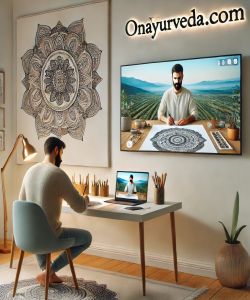
8. Online Mandala Art Therapy
- Enhanced Accessibility and Anonymity: The online format dismantles geographical and physical barriers, making this specialised therapy accessible to individuals in remote locations, those with mobility issues, or those whose schedules preclude traditional appointments. Furthermore, the perceived distance of a screen can foster a sense of psychological safety, encouraging clients who may be hesitant or socially anxious to engage more openly and with less inhibition than they might in a face-to-face setting.
- Client-Centred Environment Control: The client participates from their own chosen environment—typically their home. This grants them a significant degree of control, which can be profoundly therapeutic, particularly for individuals who have experienced trauma or a loss of agency. They curate their own physical space, select their own materials, and can manage sensory input, creating a therapeutic container that is inherently familiar and secure.
- Integration of Digital and Traditional Media: Online therapy is not limited to traditional art supplies. It allows for the seamless integration of digital mandala creation tools, apps, and software. This broadens the creative possibilities and can be particularly engaging for a technologically-inclined clientele. It also provides a different sensory and cognitive experience, which can unlock new avenues of expression and insight.
- Creation of a Digital Archive: Every mandala created during online sessions can be easily photographed or saved as a digital file. This creates an immediate, high-fidelity, and permanent visual record of the client's therapeutic journey. This digital archive can be reviewed by both client and therapist over time, allowing for a clear and powerful method of tracking progress, identifying recurring themes, and observing psychological shifts.
- Requirement for Increased Client Autonomy: The remote nature of the modality necessitates a higher degree of self-discipline and autonomy from the client. They are responsible for preparing their space, managing their materials, and containing their own emotional experience without the physical presence of the therapist. Whilst a challenge for some, for many this fosters a powerful sense of self-reliance, resourcefulness, and ownership over their therapeutic process.
9. Techniques Used in Mandala Art Therapy
- Initial Grounding and Intention Setting: Before any art-making begins, the practitioner must guide the client through a brief grounding exercise. This may involve deep breathing, a body scan meditation, or a moment of quiet reflection. The client is then instructed to set a silent intention for the session, focusing their mind on a particular feeling, question, or state of being. This initial step is non-negotiable; it transitions the client from their external world into the internal, therapeutic space and ensures the subsequent creative work is focused and purposeful.
- Spontaneous Mandala Creation: The core technique involves providing the client with a pre-drawn circle on a piece of paper and a diverse array of art materials (e.g., pastels, coloured pencils, paint). The instruction is deliberately minimal and non-directive: "Fill the circle in a way that expresses how you are feeling right now." The client must be encouraged to work spontaneously, without pre-planning or judging their work. The therapist observes the process silently, noting pace, pressure, colour choices, and any emotional shifts.
- Symbol Amplification and Dialogue: Once the mandala is complete, the reflective phase begins. The therapist does not interpret the image. Instead, they facilitate a process of "amplification." They might ask the client to give the mandala a title or to identify the part of the image that holds the most energy. The practitioner will then use targeted questions like, "If this shape could speak, what would it say?" or "What does this colour feel like in your body?" This technique treats the mandala as a living entity, allowing the client to dialogue with the projected parts of their own psyche.
- Thematic Mandala Directives: For more focused work, the therapist will issue a specific directive. For instance, "Create a mandala that represents your anxiety," followed by, "Now, create a mandala that represents a resource to help you with that anxiety." This structured, comparative technique allows the client to externalise a problem and then actively create a visual representation of a solution, thereby internalising a sense of agency and resourcefulness.
10. Mandala Art Therapy for Adults
Mandala Art Therapy offers a uniquely potent and sophisticated modality for the adult population, addressing the complex psychological landscapes that define adult life. For adults, the pressures of career, relationships, and societal expectations often lead to a disconnect from their authentic inner selves, resulting in stress, burnout, anxiety, or a pervasive sense of meaninglessness. This therapy provides a direct, non-verbal pathway to bypass the over-intellectualised defences and rationalisations that adults typically employ. The structured containment of the mandala circle creates a secure psychological space where it becomes safe to confront and process deeply ingrained patterns, unresolved grief, and complex trauma without the need for immediate, and often difficult, verbalisation. The process itself demands a level of focus and introspection that serves as a powerful antidote to the fragmentation and distraction of modern adult existence. It is not a childish pursuit of colouring but a rigorous, disciplined engagement with the subconscious. The symbols and narratives that emerge within an adult's mandala are often rich with the archetypal themes of life's journey: career transitions, relational dynamics, existential questions, and the integration of shadow aspects of the personality. It facilitates the critical work of individuation—the Jungian concept of becoming a whole, integrated individual—which is the central psychological task of adulthood. It empowers adults to reclaim their own inner authority, find order within their internal chaos, and cultivate a more profound and resilient sense of self. It is a mature therapeutic undertaking for those committed to genuine self-examination and growth.
11. Total Duration of Mandala Art Therapy
The established clinical standard for a single session of Mandala Art Therapy is rigorously structured to last for a total duration of 1 hr. This timeframe is not arbitrary; it is a deliberately calibrated therapeutic container designed to maximise psychological safety and efficacy. Within this one-hour period, a complete therapeutic arc can be experienced, beginning with a grounding phase where the client and therapist establish focus and intention for the work ahead. The central portion of the session is dedicated to the creative process itself—the non-verbal act of creating the mandala, which allows sufficient time for the client to become fully immersed and for subconscious material to surface without undue pressure or haste. The final, and equally critical, part of the hour is reserved for reflection and integration. This is the period where the client, guided by the therapist, can process the experience of creation and begin to explore the meaning of the finished artwork. An hour provides the necessary space for this dialogue to unfold meaningfully without being rushed, and to ensure the client is sufficiently grounded before the session concludes. Extending beyond this duration risks emotional fatigue and psychological overwhelm, whilst a shorter period would truncate the process, preventing the depth of exploration required for genuine therapeutic work. This consistent, one-hour structure, repeated over a course of therapy, builds a reliable and predictable rhythm that is fundamental to the establishment of a secure therapeutic relationship and the facilitation of profound and lasting change.
12. Things to Consider with Mandala Art Therapy
Engaging with Mandala Art Therapy is a serious undertaking that demands careful consideration of its inherent nature and requirements. It is imperative to understand that this is not a recreational art class or a simple relaxation technique; it is a profound and often intense form of psychotherapy. Prospective clients must be prepared for the possibility of confronting difficult and uncomfortable emotions, as the non-verbal process can bypass conscious defences and bring suppressed material to the surface with considerable force. The efficacy of the therapy is fundamentally dependent on the therapeutic alliance; therefore, the selection of a properly qualified and credentialed art therapist, specifically trained in Jungian and symbolic approaches, is non-negotiable. One must also consider the commitment required. This is not a quick fix; meaningful change necessitates consistent engagement over a period of time. Furthermore, individuals must be willing to suspend judgement about their artistic ability. The value of the therapy lies in authentic expression, not aesthetic skill, and a preoccupation with creating a "good" drawing will only serve as a form of resistance that impedes the therapeutic process. The client must be willing to trust the process, embrace ambiguity, and engage honestly with the symbolic language of their own subconscious. It is a journey into the self that requires courage, patience, and a genuine desire for self-discovery, and it should only be commenced with a clear understanding of its depth and potential challenges.
13. Effectiveness of Mandala Art Therapy
The effectiveness of Mandala Art Therapy as a clinical intervention is robust and well-documented across a spectrum of psychological applications. Its potency stems from its unique capacity to integrate somatic, emotional, and cognitive processes within a single, contained activity. By engaging in the structured creation of a mandala, individuals can achieve a demonstrable reduction in symptoms of anxiety and stress. This is not merely a subjective report; physiological markers such as reduced cortisol levels and lowered heart rates have been observed. The process induces a state of mindfulness akin to meditation, which disrupts ruminative thought patterns and calms the autonomic nervous system. For trauma survivors, its effectiveness lies in its non-verbal methodology, providing a safe and indirect means to process traumatic memories that are often inaccessible to or overwhelming for talk-based therapies. It allows for the externalisation and re-integration of fragmented psychic material, fostering a renewed sense of wholeness and control. Furthermore, in clinical populations dealing with depression or emotional dysregulation, the practice serves to enhance self-awareness and improve coping skills. By translating abstract internal states into tangible, symbolic forms, clients gain a clearer understanding of their own emotional landscape and develop a greater capacity for self-compassion and insight. Its effectiveness is not contingent on artistic talent but on the universal, archetypal power of the circle to contain, organise, and heal the human psyche. When facilitated by a qualified practitioner, it is an unequivocally powerful and valid therapeutic modality.
14. Preferred Cautions During Mandala Art Therapy
It is imperative that both practitioner and client approach Mandala Art Therapy with rigorous and unwavering caution. This is not a benign activity and must be treated with the respect due to any potent psychotherapeutic intervention. The primary caution concerns the potential for abreaction or the sudden, intense re-experiencing of traumatic memories, which can be triggered by the symbolic, non-verbal nature of the work. A practitioner must be clinically skilled in managing such events, ensuring the client's immediate safety and psychological stability without exception. A further critical caution is against simplistic or prescriptive interpretation of the mandala's symbols. The therapist must never impose their own meaning onto the client's work; this is a gross violation of the therapeutic process. The meaning of the symbols is deeply personal and can only be authentically uncovered by the client. The practitioner's role is to facilitate this discovery, not to act as a soothsayer. Additionally, this therapy may be contraindicated for individuals in an active state of psychosis, as the deep dive into symbolic and unconscious material could risk further destabilisation. A thorough clinical assessment prior to commencing therapy is therefore non-negotiable. Finally, caution must be exercised regarding the therapeutic environment, especially online. The space must be private, secure, and free from interruptions to protect client confidentiality and the sanctity of the therapeutic container. Disregarding these cautions transforms a powerful healing tool into a potential source of harm.
15. Mandala Art Therapy Course Outline
- Module 1: Foundational Principles and Historical Context
- Introduction to the core tenets of Art Therapy.
- In-depth study of the historical and cross-cultural origins of the mandala as a spiritual and cosmological symbol.
- Detailed examination of Carl Jung's discovery and integration of the mandala into Western psychology, focusing on concepts of the Self, archetypes, and the individuation process.
- Ethical considerations and professional boundaries specific to this modality.
- Module 2: The Mandala as a Diagnostic and Therapeutic Tool
- Analysis of the structural elements of a mandala: the centre, the boundary, symmetry, and asymmetry.
- Exploration of colour theory and symbolism within a psychodynamic framework.
- Techniques for observing and documenting the creative process (process-over-product).
- Introduction to working with spontaneous, projective mandalas for assessment and initial exploration.
- Module 3: Advanced Techniques and Clinical Applications
- Application of structured and thematic mandala directives to target specific clinical issues (e.g., anxiety, grief, trauma).
- Methodologies for using mandalas with diverse populations: adults, children, and groups.
- Techniques for facilitating verbal processing and symbolic amplification post-creation.
- Integration of Mandala Art Therapy with other therapeutic modalities.
- Module 4: Facilitation, the Therapeutic Relationship, and Contraindications
- Developing skills in non-directive facilitation and active listening.
- Managing the therapeutic alliance within the context of non-verbal expression.
- Recognising and managing intense emotional responses, including abreaction and transference.
- Identifying clinical contraindications and knowing when to refer clients to other specialists.
- Module 5: Supervised Practicum and Case Study Analysis
- Mandatory supervised clinical practice with real or simulated clients.
- Detailed case study formulation and presentation, linking theory to practice.
- Peer review and group supervision to refine clinical skills and self-awareness.
- Development of a personal framework for ongoing professional development and ethical practice.
16. Detailed Objectives with Timeline of Mandala Art Therapy
- Initial Phase (Sessions 1-4): Establishment of Safety and Assessment
- Objective: To establish a secure therapeutic alliance and a predictable session structure. The client will be familiarised with the materials and the non-judgemental nature of the process. The therapist will conduct a non-verbal assessment by observing the client’s initial spontaneous mandalas, noting baseline emotional states, recurring symbols, and structural patterns.
- Timeline: By the end of the first month, the client must feel safe within the therapeutic container and the therapist shall have a foundational understanding of the client's primary psychological landscape.
- Middle Phase (Sessions 5-12): Deep Exploration and Processing
- Objective: To move beyond surface-level expression and engage with deeper, core psychological material. The client will be guided to explore specific themes, conflicts, and emotions that emerge in their mandalas. The work will focus on processing this material, fostering insight, and connecting the symbolic content of the mandalas to real-life experiences and patterns.
- Timeline: Within this two-month period, the client is expected to demonstrate an increased capacity for self-reflection and to begin making explicit connections between their artwork and their internal and external worlds.
- Integration Phase (Sessions 13-20): Consolidation of Gains and Skill Building
- Objective: To consolidate insights and translate them into actionable change. The client will use mandala creation to practice new emotional regulation skills, visualise desired outcomes, and reinforce a more integrated sense of self. The focus shifts from exploration of the problem to the active creation and internalisation of solutions and resources.
- Timeline: During this phase, the client shall exhibit improved coping mechanisms and a greater sense of personal agency, as reflected in both the content of their mandalas and their verbal processing.
- Termination Phase (Sessions 21-24): Review and Closure
- Objective: To prepare for the end of the therapeutic relationship in a structured and meaningful way. The client will review their collection of mandalas created throughout the therapy, charting their journey and acknowledging their growth. The final sessions focus on creating mandalas that represent future intentions and solidifying the client's internalised therapeutic gains.
- Timeline: By the final session, the client must be able to articulate their therapeutic progress and feel equipped to continue their journey of self-discovery independently, using the mandala as a personal tool if desired.
17. Requirements for Practicing Mandala Art Therapy
- Secure and Private Physical Space: The participant must ensure they are in a location that is completely private and free from any potential interruptions for the full duration of the session. This is non-negotiable for maintaining confidentiality and the integrity of the therapeutic container.
- Stable and High-Speed Internet Connection: A reliable internet connection is imperative. Technical disruptions can severely compromise the therapeutic flow and erode the sense of safety and connection. A poor connection is not merely an inconvenience; it is a clinical impediment.
- Functional Audio-Visual Equipment: The participant must have access to a device (computer, tablet) with a high-quality webcam and microphone. The therapist must be able to clearly see the participant and their artwork in progress, and communication must be clear and intelligible at all times.
- Acquisition of Core Art Materials: Prior to the first session, the participant is required to have a specific set of art materials available. This typically includes, at a minimum: A4 or larger paper, a compass or large circular object for drawing circles, graphite pencils, an eraser, and a comprehensive set of coloured media, such as oil pastels, chalk pastels, or coloured pencils. The specific list will be provided by the therapist.
- Dedicated and Uncluttered Workspace: A clear, flat surface, such as a table or desk, is required. This space should be large enough to accommodate the paper and art materials comfortably. The workspace must be prepared in advance of the session to avoid delays and to signal a clear transition into the therapeutic mode.
- Commitment to the Therapeutic Protocol: The participant must agree to adhere to the established protocols of the online therapy, which includes being punctual, preparing the space and materials beforehand, and engaging actively and honestly in the therapeutic process as guided by the practitioner.
18. Things to Keep in Mind Before Starting Mandala Art Therapy
Before embarking on an online course of Mandala Art Therapy, it is critical to adopt a mindset of disciplined commitment and realistic expectation. You must understand that this is a formal psychotherapeutic process, not a casual hobby or a simple distraction. The online environment, while convenient, places a greater onus of responsibility upon you, the client. You are solely responsible for creating and protecting your therapeutic space; this means ensuring absolute privacy, eliminating all distractions, and preparing your materials diligently before each session begins. Any failure in this regard directly compromises the efficacy of the work. Furthermore, you must be prepared to engage with technology as a conduit for, not a barrier to, deep emotional work. This requires a degree of technological competence and a willingness to troubleshoot issues calmly. Be prepared for the intensity of the process. The screen does not dilute the power of the mandala to excavate profound and sometimes challenging subconscious material. You must be ready to confront what emerges with courage and honesty. Finally, and most importantly, you must thoroughly vet the credentials of the practitioner. The anonymity of the internet can harbour unqualified individuals. Ensure your therapist holds a recognised master's degree in Art Therapy and is registered with a credible professional body, such as the British Association of Art Therapists (BAAT). Commencing this work without these considerations is not only unproductive but potentially unsafe.
19. Qualifications Required to Perform Mandala Art Therapy
The performance of Mandala Art Therapy is restricted to highly qualified mental health professionals and is unequivocally not a practice for untrained artists, coaches, or lay enthusiasts. The foundational, non-negotiable qualification is a Master's degree in Art Therapy or Art Psychotherapy from a recognised and accredited institution. This rigorous postgraduate education ensures the practitioner is trained not only in art-making techniques but, more critically, in psychodynamic theory, developmental psychology, clinical assessment, and ethical practice. Within this broader qualification, a competent practitioner must possess specialised knowledge and training in specific areas relevant to this modality. These include:
- Jungian Psychology: A deep and comprehensive understanding of Carl Jung's analytical psychology is imperative. This includes mastery of concepts such as the archetypes, the Self, the collective unconscious, the process of individuation, and, most specifically, Jung’s theories on the mandala as a symbol of psychic wholeness.
- Symbolism and Symbolic Process: The practitioner must be extensively trained in understanding and working with symbolic language. This is not about using a "dictionary" of symbols but about possessing the clinical skill to facilitate a client's unique and personal exploration of the meaning that emerges from their own unconscious.
- Clinical Experience and Supervision: A substantial number of supervised clinical hours working directly with clients using art-based modalities is essential. This experience must be documented and overseen by a senior, accredited supervisor. This ensures the therapist can safely manage complex clinical situations, such as abreaction, transference, and severe psychological distress.
- Professional Registration: The practitioner must be registered with a relevant professional governing body, such as the Health and Care Professions Council (HCPC) in the United Kingdom, which regulates art therapists. This registration confirms they meet national standards for proficiency and ethics and are accountable for their practice.
20. Online Vs Offline/Onsite Mandala Art Therapy
Online
Online Mandala Art Therapy offers unparalleled accessibility, removing geographical, mobility, and scheduling constraints that often prevent individuals from seeking specialised therapy. The participant engages from their own chosen environment, which can foster a profound sense of safety, control, and agency over the therapeutic process. This perceived distance can also lower inhibition, allowing for a more rapid and candid expression of difficult material. The digital format facilitates the easy creation of a high-fidelity visual archive of the client's work, providing a clear and powerful tool for tracking progress over time. It demands a higher degree of client autonomy in preparing the space and materials, which can be an empowering aspect of the therapy itself, fostering self-reliance. However, the online modality is fundamentally mediated by technology. The therapist's capacity to observe subtle, non-verbal cues like body language and somatic responses is significantly limited. The therapeutic container is also more vulnerable to external disruptions, and the tangible, sensory experience of being in a shared physical space with a containing practitioner is absent.
Offline/Onsite
Offline, or onsite, Mandala Art Therapy provides a uniquely contained and sensory-rich therapeutic environment. The physical presence of the therapist offers an immediate and palpable sense of safety and containment that cannot be fully replicated remotely. The practitioner has an unobstructed view of the client's entire process, including body language, posture, and pace, providing a wealth of additional clinical information. The client has access to a wide range of professional-grade art materials provided by the therapist, and the shared, ritualised act of setting up and clearing away the workspace is itself part of the therapeutic process. The boundaries of the session are physically defined by the therapy room, creating a powerful and protected space free from the distractions of the client's home environment. The primary limitation is one of logistics; it requires physical travel, is bound by geography, and may present challenges for individuals with physical disabilities, social anxiety, or demanding schedules. The choice between modalities is not one of superiority but of suitability to the individual client's specific needs, circumstances, and therapeutic goals.
21. FAQs About Mandala Art Therapy
Question 1. Do I need any artistic talent?
Answer: Absolutely not. Mandala Art Therapy is about psychological expression, not aesthetic skill. Your willingness to engage honestly is the only requirement.
Question 2. What if I do not know what to draw?
Answer: That is a common and valid starting point. The therapist is trained to guide you through this, and often the most powerful work emerges from a state of not knowing.
Question 3. Is online therapy as effective as in-person?
Answer: For many individuals, it is equally effective. Its success depends on your specific needs, comfort with technology, and ability to create a private space.
Question 4. What technology do I need?
Answer: A computer or tablet with a stable internet connection, a functioning webcam, and a microphone.
Question 5. What art supplies are required?
Answer: Your therapist will provide a specific list, but it typically includes paper, something to draw a circle, and a medium like pastels or coloured pencils.
Question 6. How will the therapist interpret my mandala?
Answer: A qualified therapist will not interpret it for you. They will facilitate your own process of discovering the meaning your mandala holds for you.
Question 7. Is this therapy suitable for severe trauma?
Answer: Yes, it can be highly effective for trauma as it allows for non-verbal processing, but it must be conducted by a trauma-informed art therapist.
Question 8. Is everything I share confidential?
Answer: Yes. Online sessions are bound by the same strict codes of confidentiality and data protection as in-person therapy.
Question 9. What happens in a typical session?
Answer: A session usually involves a brief check-in, a period of quiet mandala creation, and then a reflective dialogue about the process and the finished image.
Question 10. How long does a course of therapy last?
Answer: This varies greatly depending on individual goals and needs. It can range from a few months to a longer-term engagement.
Question 11. Can I do this if I am already in talk therapy?
Answer: Yes, it can be an excellent complement to talk therapy, provided both therapists are aware and consent to the concurrent treatment.
Question 12. Is it just for spiritual people?
Answer: No. While it has spiritual roots, in a clinical context it is a secular psychological tool focused on the psyche, not spirituality.
Question 13. What if I become very emotional during a session?
Answer: That is a natural part of the process. The therapist is trained to provide a safe and supportive space to help you manage and process these emotions.
Question 14. Can children benefit from this therapy?
Answer: Yes, it is a highly effective modality for children, as it aligns with their natural inclination for non-verbal and symbolic play.
Question 15. What is the circle for?
Answer: The circle acts as a psychological container, providing a boundary of safety that makes it feel more manageable to express difficult feelings.
Question 16. Will I have to talk about my past?
Answer: Only if it emerges naturally through the artwork and you feel ready to discuss it. The process is led by what is present for you now.
22. Conclusion About Mandala Art Therapy
In conclusion, Mandala Art Therapy stands as a formidable and highly specialised psychotherapeutic discipline, grounded in rigorous psychological theory and extensive clinical application. It is unequivocally more than an artistic exercise; it is a structured, evidence-based intervention that harnesses the archetypal power of the circle to bring order, insight, and integration to the human psyche. Its unique strength lies in its capacity to facilitate profound non-verbal communication, allowing individuals to access, process, and give form to the deepest and most complex aspects of their inner world that often remain inaccessible to purely verbal therapies. Rooted in the pioneering work of Carl Jung, it provides a direct, tangible method for engaging with the fundamental human drive towards wholeness—the process of individuation. The disciplined practice of creating a mandala within a secure therapeutic container serves as a powerful mechanism for emotional regulation, stress reduction, and the safe processing of trauma. Its adaptability to both online and onsite delivery ensures its relevance and accessibility in the contemporary clinical landscape. When conducted by a fully qualified and ethically bound practitioner, Mandala Art Therapy is not merely a supportive tool but a potent agent of transformation, compelling individuals to confront their internal reality and actively participate in their own healing and self-realisation. It holds a distinct and powerful place within the pantheon of legitimate psychotherapeutic modalities