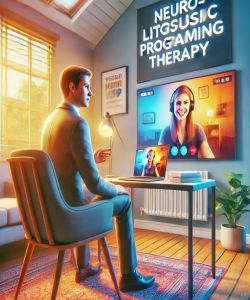
1. Overview of Neuro Linguistic Programming Therapy
Neuro-Linguistic Programming (NLP) Therapy constitutes a rigorous and pragmatic approach to understanding and modifying human experience and behaviour. It is not a singular, monolithic theory but rather a sophisticated methodology that models the mechanics of subjective reality, communication, and behavioural excellence. Originating from the meticulous study of pre-eminent psychotherapists, NLP operates on the fundamental premise that all human action is structured and that this structure can be identified, modelled, and subsequently altered to achieve specific, desired outcomes. The discipline’s name delineates its core components: ‘Neuro’ pertains to the nervous system, through which experience is received and processed via the five senses; ‘Linguistic’ refers to the language and non-verbal communication systems through which our neural representations are coded, ordered, and given meaning; and ‘Programming’ denotes the ability to organise our communication and neurological systems to achieve specific results. At its heart, NLP is an epistemology of excellence, providing a set of tools and skills for developing states of individual resourcefulness. It is an active, directive, and goal-oriented intervention that empowers individuals by decoding the patterns of thought and behaviour that either enhance or inhibit their potential. This therapeutic model eschews prolonged, speculative analysis of historical causes, focusing instead on the present structure of a problem and implementing precise techniques to dismantle unhelpful patterns and construct more effective ones. It is an assertive framework for personal change, demanding a proactive engagement from the client to recode their internal maps of the world, thereby transforming their responses, capabilities, and overall life trajectory. Its application is not confined to clinical settings but extends into any domain where human communication and performance are paramount.
2. What is Neuro Linguistic Programming Therapy?
Neuro-Linguistic Programming (NLP) Therapy is a potent and systematic method of psychotherapy and communication designed to influence brain-behaviour patterns through the strategic use of language and other non-verbal systems. It operates on the core assertion that there exists a definitive connection between neurological processes ('neuro'), language ('linguistic'), and behavioural patterns learned through experience ('programming'). The therapeutic application of NLP focuses on identifying and altering these connections to address and resolve specific problems. It is fundamentally a pragmatic model concerned with structure rather than content; it is less interested in why a problem exists and more focused on how its structure is maintained in the client’s mind and how that structure can be re-patterned.
It is a methodology built on several key operational assumptions:
- The Map is Not the Territory: Individuals respond not to reality itself, but to their own internal representations, or ‘maps’, of reality. NLP therapy works on changing these maps, not the external world.
- Mind and Body are a Unified System: Thoughts, feelings, and physical states are inextricably linked and influence one another. A change in one will invariably affect the others.
- Modelling Excellence: If one person can achieve a certain result, it is possible to model their internal and external processes and replicate that result. NLP provides the tools to deconstruct and transfer this competence.
Therefore, NLP therapy is an active and directive process. The practitioner acts as a facilitator, guiding the client through specific techniques and language patterns to help them access their internal resources, change limiting beliefs, resolve internal conflicts, and reorganise their subjective experience. It is not a passive, talk-based therapy but an experiential one, where the client actively participates in exercises designed to produce tangible and rapid change in their perceptions, emotions, and behaviours.
3. Who Needs Neuro Linguistic Programming Therapy?
- Individuals exhibiting specific, well-defined phobias, anxieties, or compulsive behaviours. NLP provides a battery of swift and precise techniques designed to dismantle the neurological structure of such responses, offering a direct and efficient pathway to resolution without necessitating protracted analysis of the issue’s origin.
- Professionals in leadership, sales, education, or any field demanding superior communication and influence. NLP offers a robust framework for establishing profound rapport, understanding and utilising different communication styles, and structuring language to achieve persuasive and clear outcomes, thereby enhancing professional efficacy.
- Persons experiencing the debilitating after-effects of trauma or significant negative past events. Techniques such as Timeline Therapy or the Visual-Kinesthetic Dissociation process are specifically engineered to re-process traumatic memories, detaching the emotional charge from the event and integrating it as a neutral historical fact.
- Individuals constrained by deep-seated limiting beliefs and a negative self-concept. NLP is exceptionally adept at identifying the linguistic and submodality structure of such beliefs, and subsequently employing reframing patterns to challenge and replace them with empowering and resourceful alternatives.
- Those suffering from internal conflict, where one part of their personality is at odds with another, leading to procrastination, indecision, or self-sabotage. The Visual Squash or Parts Integration techniques are designed to negotiate a resolution between these conflicting parts, fostering internal alignment and congruence.
- High-performers, such as athletes, artists, or executives, who seek to overcome performance plateaus and achieve a state of consistent excellence. NLP’s core methodology of modelling allows for the deconstruction and installation of the strategies employed by top performers in their field.
- Individuals struggling with interpersonal relationships, whether professional or personal. NLP provides critical skills in understanding different perspectives (perceptual positions) and building the sensory acuity required to respond with greater empathy, flexibility, and effectiveness in social interactions.
4. Origins and Evolution of Neuro Linguistic Programming Therapy
The genesis of Neuro-Linguistic Programming (NLP) can be traced to the early 1970s at the University of California, Santa Cruz. It was here that Richard Bandler, then a student of mathematics and computer science, and John Grinder, a professor of linguistics, embarked on a collaborative project born of intellectual curiosity. Their primary inquiry was deceptively simple: what is the discernible difference between an average therapist and a truly exceptional one? They sought to codify the "magic" of therapeutic genius into a replicable model. Their initial subjects for this modelling project were three of the most acclaimed and effective psychotherapists of the era: Fritz Perls, the founder of Gestalt therapy; Virginia Satir, the pioneering family therapist; and later, Milton H. Erickson, the founding president of the American Society for Clinical hypnosis.
Bandler and Grinder did not study the theories these therapists espoused; instead, they meticulously observed their behaviour, language patterns, tonality, and non-verbal cues. They sought the underlying structure of their therapeutic interventions. From Perls, they modelled a focus on present-moment awareness and personal responsibility. From Satir, they learned about congruent communication and the dynamics of family systems, particularly the power of reframing and accessing internal resources. From Erickson, they decoded the art of indirect, permissive hypnosis and the use of metaphor, developing what would become known as the Milton Model of hypnotic language. This initial phase of modelling resulted in their first publications, "The Structure of Magic I & II," which laid out the Meta-Model—a linguistic tool for challenging and clarifying a client's distorted, generalised, or deleted language.
The evolution of NLP from this point was rapid and pragmatic. It expanded beyond a therapeutic model into a broader epistemology of communication and excellence. Subsequent developers, including Robert Dilts, Leslie Cameron-Bandler, Judith DeLozier, and Steve and Connirae Andreas, contributed significantly by developing new techniques and refining existing ones. They introduced concepts like neurological levels, submodalities, and advanced reframing patterns. NLP thus evolved from a model of therapy into a comprehensive toolkit for personal and professional development, applicable to business, education, sales, and health. Its evolution has been characterised by a continuous process of modelling successful human strategies, maintaining its core identity as a practical, results-driven methodology for understanding and influencing subjective experience, rather than a rigid, theoretical dogma.
5. Types of Neuro Linguistic Programming Therapy
While NLP is a unified methodology rather than a collection of disparate therapies, its application can be categorised based on the primary focus and set of techniques employed. These are not mutually exclusive types but represent distinct operational frameworks within the broader discipline.
- Remedial NLP: This is the most widely recognised therapeutic application, focusing on resolving specific problems, dysfunctions, and unwanted states. It directly addresses issues such as phobias, traumas, anxieties, compulsions, and limiting beliefs. This type heavily utilises techniques like the Fast Phobia Cure, Visual-Kinesthetic Dissociation for trauma, Swish Patterns for changing habits, and various forms of reframing to alter the client's perception of a problem. The objective is unequivocal: to guide the client from a problem state to a solution state with maximum efficiency.
- Generative NLP: This type of application moves beyond merely fixing problems to creating new possibilities and enhancing overall performance. It is employed with clients who are already functional but seek to achieve states of excellence, creativity, and higher levels of personal evolution. Generative NLP works on installing new capabilities, aligning values with goals, and fostering a deeper connection with one's core identity and purpose. Techniques often involve modelling excellence, future-pacing desired outcomes, advanced timeline work, and utilising trance states to access deeper resources. This is the domain of peak performance coaching.
- Systemic NLP: This application extends the principles of NLP to understand and influence the dynamics of larger systems, such as families, teams, or entire organisations. It views problems and solutions not as isolated to an individual, but as emergent properties of the interactions within the system. Systemic NLP utilises tools like Perceptual Positions to understand different viewpoints, the SCORE Model for project management, and modelling the communication patterns of high-performing teams. The practitioner's focus is on altering the communication loops and relational dynamics that maintain the systemic status quo, thereby facilitating change at a group level.
- Somatic NLP: This framework places a heightened emphasis on the mind-body connection, asserting that beliefs, emotions, and memories are encoded not just neurologically but also physically within the body. It integrates NLP principles with body-awareness practices. The practitioner pays close attention to somatic cues—posture, breathing, muscle tension—as indicators of internal states and as levers for change. Techniques may involve anchoring states through physical touch (self-anchoring), using movement to break state, and guiding clients to process emotions through bodily sensations, making it particularly effective for stress-related physical symptoms and psychosomatic conditions.
6. Benefits of Neuro Linguistic Programming Therapy
- Rapid and Targeted Problem Resolution: NLP provides a suite of precise and structured techniques designed to dismantle the architecture of specific problems such as phobias, anxieties, and traumatic memories, often yielding significant change in a remarkably short timeframe compared to traditional talk therapies.
- Enhanced Communication Efficacy: It delivers a sophisticated understanding of verbal and non-verbal communication, empowering individuals to build profound rapport, articulate their intentions with clarity and impact, and influence outcomes ethically in both personal and professional contexts.
- Increased Behavioural Flexibility: By revealing the underlying structure of thoughts and behaviours, NLP equips individuals with the ability to move beyond rigid, automatic responses, granting them a wider range of choices in how they react to life’s challenges.
- Empowerment Through Self-Regulation: The techniques learned, such as state management and anchoring, provide clients with a tangible toolkit for controlling their own emotional and psychological states, reducing dependency on external factors for well-being and confidence.
- Transformation of Limiting Beliefs: NLP offers powerful reframing and submodality techniques that directly challenge and restructure core limiting beliefs that sabotage success and happiness, replacing them with empowering and resourceful convictions.
- Goal Achievement and Performance Enhancement: Through processes like well-formed outcome specification and modelling excellence, NLP provides a clear and actionable roadmap for defining and achieving personal and professional goals, moving individuals towards a state of peak performance.
- Resolution of Internal Conflict: It supplies methods for identifying and integrating conflicting parts of an individual's personality, leading to greater internal congruence, decisiveness, and a reduction in self-sabotaging behaviours.
- Improved Interpersonal Relationships: By teaching skills such as sensory acuity and perceptual positions, NLP fosters a deeper understanding of others' perspectives, leading to greater empathy, reduced conflict, and more harmonious relationships.
7. Core Principles and Practices of Neuro Linguistic Programming Therapy
- The Map is Not the Territory: This is the foundational principle. It asserts that human beings do not and cannot know reality directly. Instead, we operate in the world using our subjective interpretations and internal representations—our 'maps'—of reality. Therapeutic change, therefore, comes not from altering the world, but from enriching or changing the individual's map.
- The Meaning of Communication is the Response You Get: This principle places absolute responsibility on the communicator. The intention behind a communication is irrelevant if the response it elicits is not the one desired. Effective communicators are flexible and change their behaviour until they achieve their intended outcome, rather than blaming the recipient for 'misunderstanding'.
- There is No Failure, Only Feedback: Every outcome, whether desired or not, provides valuable information. Instead of labelling an undesired result as a 'failure', it is to be treated as feedback. This reframes mistakes as learning opportunities, fostering resilience and a continuous improvement mindset. The core question becomes "What can I learn from this?" not "Why did I fail?".
- Every Behaviour Has a Positive Intention: This principle mandates a search for the positive purpose behind any behaviour, no matter how dysfunctional or negative it may appear. The behaviour itself may be problematic, but the intention behind it (e.g., for safety, for recognition) is positive for the individual at some level. Acknowledging this positive intention is the first step toward finding more effective and constructive ways to fulfil it.
- People Have All the Resources They Need: NLP operates from the presupposition that individuals already possess, within themselves, all the internal resources (e.g., creativity, courage, focus) necessary to achieve their desired outcomes. The role of the practitioner is not to bestow these resources, but to help the client access, strengthen, and apply them in the contexts where they are needed.
- Mind and Body are a Single System (A Cybernetic Loop): Thoughts, emotions, posture, breathing, and health are inextricably linked. A change in one part of the system will inevitably affect the others. Practice involves utilising this link, for example, by changing physiology to change a mental state, or using language to influence a physical response.
- Modelling Excellence: This is the core practice from which NLP was born. It involves the process of identifying the sequence of internal representations and external behaviours of an expert in any given field, and then breaking that sequence down into replicable chunks that can be taught to others. The goal is to make excellence transferable.
8. Online Neuro Linguistic Programming Therapy
- Enhanced Accessibility and Convenience: The online modality removes geographical barriers, granting individuals access to highly specialised NLP practitioners irrespective of their physical location. This democratises expertise and eliminates the time and resource expenditure associated with travel, allowing sessions to be integrated seamlessly into demanding schedules.
- Contextual Therapeutic Application: Conducting therapy within the client's own environment (e.g., home or office) can be strategically advantageous. It allows the practitioner to anchor resourceful states directly into the physical context where they are most needed, making the integration of change more immediate and potent. The client learns to manage their state within the very environment that may have previously triggered problems.
- Heightened Client Disinhibition and Candour: For many individuals, the perceived distance and controlled environment of an online platform fosters a greater sense of psychological safety. This can lead to increased openness and a willingness to address sensitive or deeply personal issues more readily than in a face-to-face setting, thereby accelerating the therapeutic process.
- Focused and Distraction-Free Engagement: The structure of a video-conferencing session necessitates a focused field of attention for both practitioner and client. This directed engagement can amplify sensory acuity, forcing a greater reliance on observing subtle shifts in facial expression, tonality, and language patterns, which are central to the NLP process. The usual distractions of a clinical office environment are eliminated.
- Facilitation of Specific NLP Techniques: The digital environment is uniquely suited to certain NLP interventions. Screen sharing can be used for visual aids, digital whiteboards can map out strategies, and the controlled visual frame of the camera can be expertly manipulated for techniques involving dissociation, perspective shifts, or guided visualisation, sometimes with greater control than in a physical room.
- Recordability for Reinforcement: With explicit client consent, online sessions can be recorded. This provides the client with an invaluable resource to review, allowing them to study the practitioner's language patterns, re-experience the installation of resourceful states, and reinforce the learnings between sessions. This serves as a powerful tool for consolidating change.
9. Neuro Linguistic Programming Therapy Techniques
- Step 1: Rapport Establishment and Calibration: The practitioner first establishes a state of profound connection with the client by subtly matching and mirroring their physiology, tonality, and language patterns. Simultaneously, they calibrate—observing and noting the non-verbal cues associated with the client's internal states—to gain a baseline understanding of their responses.
- Step 2: Outcome Specification and Information Gathering: The practitioner uses the Meta-Model, a series of precise questions, to challenge the client’s generalisations, deletions, and distortions regarding their problem. This clarifies the issue and helps the client define a Well-Formed Outcome—a positive, specific, measurable, and ecological goal for the therapy.
- Step 3: State Elicitation and Anchoring: The practitioner guides the client to access a powerful, resourceful internal state (e.g., confidence, calm). At the peak of this state’s intensity, a unique stimulus (an anchor) is applied—it can be a specific touch on the knuckle, a particular word, or a visual cue. This anchor is now neurologically linked to the resourceful state.
- Step 4: Pattern Intervention (Example: Swish Pattern): To change a minor compulsive behaviour or thought, the practitioner has the client create a large, bright image of the unwanted behaviour (the cue). They then have the client create a small, dark image of their desired self-image or state. The client is instructed to rapidly 'swish' the images, making the desired image explode in size and brightness, completely replacing the problem image. This is repeated several times to re-pattern the neural response.
- Step 5: Reframing: The practitioner identifies the limiting belief or problematic frame of reference. For a 'content reframe', they change the meaning of the situation ("It's not a failure, it's feedback"). For a 'context reframe', they find a different context where the behaviour would be useful ("Your attention to detail, which causes anxiety here, would be invaluable in proofreading").
- Step 6: Future-Pacing and Integration: Once a change has been made, the practitioner has the client mentally rehearse future situations where the old problem might have occurred. The client is guided to experience themselves responding automatically with their new, resourceful patterns. This integrates the change into their future timeline and tests its robustness.
10. Neuro Linguistic Programming Therapy for Adults
Neuro-Linguistic Programming Therapy for adults is a commanding and results-oriented framework that respects the complexity and established patterns of the mature mind. Unlike therapeutic models that may require extensive regression into childhood, NLP operates on the pragmatic principle that the adult client possesses all the internal resources necessary for profound change, and that the primary task is to unlock and reorganise these resources effectively. The adult experience is characterised by a deeply ingrained set of beliefs, values, and behavioural strategies, some of which are empowering and others which have become significant impediments to progress and well-being. NLP directly confronts these established neural pathways, not through blame or endless analysis, but through precise, surgical interventions. It provides a toolkit for deconstructing the 'how' of a problem—how an adult maintains a phobia, perpetuates a limiting belief about their career potential, or engages in a recurring conflict pattern in a relationship. Techniques such as anchoring, reframing, and timeline work are particularly potent for adults, as they allow for the rapid re-evaluation and re-coding of significant life events and decisions. The therapy empowers the adult to take full ownership of their subjective reality, teaching them to manage their emotional states, communicate with greater influence, and align their actions with their most important goals. It is an educational process as much as a therapeutic one, equipping the individual with a sophisticated understanding of their own mind’s operating system. The focus is unequivocally on generating new choices, enhancing behavioural flexibility, and moving the client from a state of being stuck towards a future of their own conscious design.
11. Total Duration of Online Neuro Linguistic Programming Therapy
Defining a standardised total duration for an engagement in online Neuro-Linguistic Programming therapy is professionally untenable and fundamentally misaligned with the bespoke nature of the discipline. The therapeutic process is not a pre-packaged commodity but a dynamic, emergent collaboration between practitioner and client. The overall timeframe is dictated entirely by the specific objectives of the client, the complexity of the presenting issue, and the individual's rate of integration and change. A highly specific and isolated issue, such as a simple phobia, may be resolved with remarkable speed, whereas a comprehensive overhaul of deep-seated limiting beliefs or the pursuit of generative, peak-performance outcomes will necessarily mandate a more extended engagement. The fundamental unit of this engagement is the therapeutic session itself. To maintain focus, intensity, and optimal cognitive processing, a single online session is often structured around a dedicated and finite timeframe, for instance 1 hr. This structure ensures that each interaction is purposeful and moves the client measurably forward. The total duration is therefore a composite of these individual sessions, determined not by an arbitrary schedule, but by the client's progress towards their well-formed outcome. It is a process that concludes when the therapeutic goals have been met, tested, and integrated ecologically into the client's life. Any practitioner who presumes to prescribe a fixed total duration from the outset demonstrates a misunderstanding of NLP’s client-centred and results-driven ethos. The duration is as long as it needs to be, and no longer.
12. Things to Consider with Neuro Linguistic Programming Therapy
Before engaging with Neuro-Linguistic Programming Therapy, a prospective client must undertake a rigorous and discerning evaluation. It is imperative to recognise that NLP is not a panacea, but a powerful and specific methodology that demands active and willing participation. The onus of change rests squarely on the individual's commitment to implementing the strategies and insights gained. One must consider the nature of the practitioner's qualifications; the field of NLP is largely unregulated, and thus the market contains a wide spectrum of competence, from master practitioners with extensive clinical experience to those with only a superficial weekend certification. Due diligence in vetting a practitioner's lineage, training, and professional standing is not merely advisable but essential. Furthermore, one must be prepared for the direct and often confronting nature of the process. NLP eschews circuitous, speculative discussion in favour of direct intervention in cognitive and behavioural patterns. This can be an intense and challenging experience for those accustomed to more passive therapeutic modalities. It is also crucial to assess the ecological impact of the desired change. A significant personal transformation will invariably affect one's relationships and professional life, and the potential consequences of this systemic shift must be carefully considered and planned for. Finally, a client must disabuse themselves of any notion of a 'magic pill'. While NLP is renowned for its potential for rapid change, this change is contingent on the client’s neurological and psychological flexibility and their resolute focus on executing the mental tasks required by the practitioner. It is a collaborative endeavour, not a passive cure.
13. Effectiveness of Neuro Linguistic Programming Therapy
The effectiveness of Neuro-Linguistic Programming Therapy is a subject of considerable debate, contingent largely upon the context of its application and the skill of the practitioner. When applied correctly by a well-trained and ethical professional, NLP can be exceptionally effective for a specific range of issues. Its strength lies in its procedural and structured approach to problems that are maintained by cognitive-behavioural loops, such as phobias, anxieties, unwanted habits, and limiting beliefs. The techniques are designed to be precise interventions that disrupt these patterns at a neurological level, often yielding rapid and lasting change where other methods have failed. The effectiveness in these domains stems from NLP’s focus on the structure of the problem rather than its historical content, allowing for a more direct and efficient resolution. In the realms of communication, coaching, and performance enhancement, its effectiveness is widely acknowledged. The models for rapport, influence, and goal-setting provide a robust and practical framework that delivers tangible results. However, the empirical validation of NLP as a whole is inconsistent. Many of its foundational claims are difficult to test under rigorous scientific conditions, and the field's lack of regulation has led to variable quality in its application. Consequently, its effectiveness is often demonstrated through case studies and anecdotal evidence rather than broad, peer-reviewed research. Ultimately, the effectiveness of an NLP intervention is a direct function of the practitioner’s ability to accurately diagnose the structure of a client's problem and to select and apply the correct technique with precision and ecological awareness.
14. Preferred Cautions During Neuro Linguistic Programming Therapy
It is imperative that any engagement with Neuro-Linguistic Programming Therapy be approached with stringent caution and critical awareness. The primary caveat concerns the unregulated nature of the field. A practitioner's title is no guarantee of competence or ethical grounding. The client bears the absolute responsibility of verifying the practitioner's training, lineage, and adherence to a professional code of conduct. One must remain vigilant for practitioners who make grandiose or guaranteed claims of 'cures', as this is a hallmark of unprofessionalism and a contravention of the discipline's own principles. Caution must be exercised against the misapplication of techniques, particularly those involving trauma or deeply rooted psychological issues. An unskilled practitioner attempting complex procedures like the Visual-Kinesthetic Dissociation can risk re-traumatising the client or creating abreactions. The client should never feel coerced into any process and must maintain the right to halt any technique that feels uncomfortable or inappropriate. Another significant caution is the potential for creating unintended negative consequences, known as a lack of ecology. A change, even a positive one, can have disruptive ripple effects on a person's relationships, career, or identity. A competent practitioner will always conduct a thorough ecology check, but the client must also remain the ultimate guardian of their own well-being, questioning how the desired change will impact their life system as a whole. Finally, one must be cautious of developing an over-reliance on the practitioner, viewing them as a guru. The unequivocal goal of NLP is to empower the client with their own tools for self-management and change, fostering independence, not dependence.
15. Neuro Linguistic Programming Therapy Course Outline
- Module One: Foundations and Presuppositions
- Introduction to the History and Origins of NLP.
- The Core Presuppositions of NLP as a Framework for Change.
- The Communication Model: Deletion, Distortion, and Generalisation.
- The Principle of 'The Map is Not the Territory'.
- Module Two: Sensory Acuity and Rapport
- Developing Sensory Acuity: Calibrating Visual, Auditory, and Kinaesthetic Cues.
- The Technology of Rapport: Matching, Mirroring, and Pacing.
- Building and Maintaining Pacing and Leading in Communication.
- Recognising Representational Systems (VAKOG).
- Module Three: Language of Precision and Influence
- The Meta Model: Precision Questioning to Recover Information and Challenge Limitations.
- The Milton Model: The Art of Vague Language for Influence and Accessing Unconscious Resources.
- Introduction to Metaphor and Storytelling in a Therapeutic Context.
- Module Four: Anchoring and State Management
- The Mechanics of Anchoring: Eliciting and Setting Anchors.
- Techniques for State Elicitation and Control.
- Stacking Anchors for Resourcefulness.
- Collapsing Anchors to Neutralise Negative States.
- Module Five: Reframing and Belief Change
- Content and Context Reframing.
- The Structure of Beliefs: Identification and Analysis.
- Submodality Interventions for Belief Change.
- The Swish Pattern for Changing Unwanted Habits and Responses.
- Module Six: Strategies and Modelling
- Understanding Strategies: The T.O.T.E. Model.
- Eliciting, Utilising, and Designing Strategies.
- Introduction to the Principles of Modelling Excellence.
- Applying Models for Personal and Professional Development.
- Module Seven: Advanced Intervention and Integration
- Timeline Therapy: Re-coding Past Events and Creating the Future.
- Parts Integration: Resolving Internal Conflict (Visual Squash).
- The Fast Phobia/Trauma Cure (Visual-Kinaesthetic Dissociation).
- Ecology Checks and Future-Pacing for Sustainable Change.
16. Detailed Objectives with Timeline of Neuro Linguistic Programming Therapy
- Initial Phase (Sessions 1-2): Assessment and Foundation
- Objective: To establish profound rapport and create a safe, collaborative therapeutic alliance. To conduct a detailed information-gathering process using Meta-Model questioning to deconstruct the presenting problem and its structure. To collaboratively define a specific, measurable, achievable, relevant, and time-bound (SMART) Well-Formed Outcome for the therapy.
- Timeline: Completion by the end of the second session.
- Phase Two (Sessions 3-5): Resource Installation and Foundational Re-Patterning
- Objective: To teach the client fundamental state management skills. To elicit and anchor powerful resourceful states (e.g., confidence, calm, focus) that can be accessed on demand. To begin challenging surface-level limiting beliefs and cognitive distortions using basic reframing techniques. To introduce and install simple behavioural change patterns like the Swish Pattern for minor habits.
- Timeline: To be achieved over a period of three sessions, with the client demonstrating independent use of anchors.
- Phase Three (Sessions 6-9): Core Intervention and Deep Change Work
- Objective: To address the central presenting issue using advanced NLP protocols. This may involve Timeline Therapy to re-imprint past negative events, Parts Integration to resolve deep internal conflicts, or the Fast Phobia Cure for specific phobias. The objective is the complete dismantling of the problem’s neurological structure.
- Timeline: This intensive work is the core of the therapy, undertaken across several sessions to ensure thoroughness and ecological integration.
- Phase Four (Session 10 onwards): Integration, Generalisation, and Future-Pacing
- Objective: To ensure the changes made are robust and generalised across all relevant life contexts. To conduct thorough ecology checks to confirm the changes are wholly positive. To future-pace the client, having them mentally rehearse successfully navigating future challenges using their new resources and strategies. To solidify the client's new identity and sense of self.
- Timeline: This final phase is flexible, continuing until both practitioner and client are certain that the changes are permanent and the client is fully empowered to continue their progress independently.
17. Requirements for Taking Online Neuro Linguistic Programming Therapy
- Technological Competence and Equipment: The client must possess a stable, high-speed internet connection capable of sustaining uninterrupted video conferencing. A functional computer, tablet, or smartphone equipped with a high-quality webcam and microphone is mandatory. The client must be proficient in operating the chosen communication software (e.g., Zoom, Skype).
- A Private and Secure Environment: The client is required to secure a physical space for the duration of each session that is completely private, confidential, and free from any potential interruptions from other people, pets, or background noise. This is non-negotiable for maintaining therapeutic integrity and focus.
- Unyielding Commitment to the Process: The client must demonstrate a resolute commitment to active participation. This includes being punctual for all scheduled sessions, completing any agreed-upon mental exercises or tasks between sessions, and engaging with the therapeutic process with candour and a genuine desire for change.
- Mental and Emotional Readiness: The client must be in a stable enough psychological state to engage with direct and sometimes challenging therapeutic interventions. This modality is not suitable for individuals in acute crisis or with severe psychiatric conditions that require more intensive clinical oversight, unless it is part of an integrated care plan.
- A Clear and Actionable Objective: The prospective client must be able to articulate, with the practitioner's help, a clear objective for the therapy. A vague desire to 'feel better' is insufficient. The client must be willing to work towards a specific, well-defined outcome.
- Financial and Time Commitment: The client must have the necessary financial resources to cover the professional fees for the agreed-upon number of sessions and the ability to dedicate the required, uninterrupted time for each session.
18. Things to Keep in Mind Before Starting Online Neuro Linguistic Programming Therapy
Before embarking on an online Neuro-Linguistic Programming therapeutic engagement, it is crucial to adopt a mindset of rigorous self-assessment and informed diligence. You must understand that the digital medium, while convenient, places a greater onus of responsibility upon you, the client. Your environment is your own to control; you are solely responsible for ensuring the sanctity and privacy of your session space, free from all distractions that could compromise the focus required for deep change work. It is not the practitioner's role to manage your surroundings. Furthermore, you must critically evaluate your own suitability for this format. Assess your comfort level with technology and your ability to build a connection and rapport through a screen. For some, the lack of physical co-presence can be a barrier to the kinaesthetic elements of the therapy. You must also be prepared to engage with an intensity that may feel more concentrated than in-person work; the focused nature of video communication can amplify the directness of NLP interventions. Vet your practitioner with extreme prejudice. Investigate their credentials, their specific training in NLP, and their experience in delivering therapy via an online platform. Do not be swayed by slick marketing; demand evidence of competence. Finally, recognise that your progress is directly proportional to your active participation. This is not a passive experience. You will be required to perform mental exercises, manipulate your internal imagery, and be fully present. Success is contingent on your unwavering commitment to executing the instructions given.
19. Qualifications Required to Perform Neuro Linguistic Programming Therapy
The qualifications required to perform Neuro-Linguistic Programming Therapy with professional integrity and competence are multi-faceted, extending beyond mere certification. As the field is largely unregulated globally, the onus is on the practitioner to pursue a rigorous and comprehensive educational path and on the client to verify it. A credible practitioner must possess a clear and verifiable lineage of training from a reputable and established NLP training institute. The minimum acceptable standard is a formal NLP Practitioner Certification, but for therapeutic application, this must be considered foundational, not final.
A genuinely qualified therapeutic practitioner will have pursued advanced training, leading to qualifications such as:
- NLP Master Practitioner Certification: This indicates a deeper level of skill, a mastery of the core techniques, and the ability to design bespoke interventions. It involves a significantly more intensive and lengthy training period than the practitioner level.
- NLP Trainer Certification: While focused on teaching NLP, this qualification demonstrates a profound understanding of the material, often required for those who supervise or mentor other practitioners.
Beyond these core NLP credentials, a practitioner applying NLP in a therapeutic context must possess supplemental knowledge and qualifications. This includes a robust understanding of psychology, ethics, and counselling principles. They should be affiliated with a professional body that has a clear code of conduct and complaints procedure. A history of supervised practice and continuous professional development is not merely desirable but essential. Therefore, a truly qualified individual is one who combines certified NLP expertise with a strong ethical framework, a background in human psychology, and a demonstrable commitment to ongoing learning and supervision. A weekend course certificate is unequivocally insufficient for professional therapeutic practice.
20. Online Vs Offline/Onsite Neuro Linguistic Programming Therapy
Online
The online delivery of Neuro-Linguistic Programming Therapy offers a distinct set of operational advantages and characteristics. Its primary strength is unparalleled accessibility, removing all geographical constraints and allowing clients to engage with elite practitioners from anywhere in the world. This modality demands a heightened focus on specific communication channels; with the physical dimension absent, the practitioner and client must develop exceptional sensory acuity in the auditory and visual domains, paying meticulous attention to tonality, predicate usage, and micro-expressions. The controlled environment of the client's own space can be leveraged strategically for anchoring new resources directly into their daily context. Furthermore, the perceived psychological distance of the screen can foster a sense of safety for some clients, encouraging greater candour. However, it presents challenges in establishing kinaesthetic rapport (where physical touch might be used for anchoring) and is entirely dependent on the stability of technology. The responsibility for creating a confidential, distraction-free environment rests solely with the client.
Offline/Onsite
Offline, or onsite, therapy provides a rich, multi-sensory environment that the online format cannot fully replicate. The practitioner has access to the full spectrum of the client's non-verbal communication, including subtle shifts in posture, breathing patterns, and other physiological cues that are critical for calibration. This co-presence facilitates the seamless establishment of kinaesthetic rapport and allows for the use of spatial anchoring, where different locations in the room can be linked to different states. The therapeutic space is controlled and maintained by the practitioner, guaranteeing a professional, confidential, and purpose-built environment free from external interruptions. This modality may feel more containing and grounded for clients who are less comfortable with technology or who process information more kinaesthetically. The primary limitations are geographical dependency, requiring physical proximity to the practitioner, and the associated costs and time of travel, which can be significant barriers for many.
21. FAQs About Online Neuro Linguistic Programming Therapy
Question 1. Is online NLP therapy as effective as in-person? Answer: Yes, for most issues. Its effectiveness is contingent on practitioner skill and client engagement, not the medium. Some kinaesthetic techniques require adaptation, but the core principles remain potent.
Question 2. What technology is required? Answer: A stable, high-speed internet connection, a computer or tablet with a functional webcam and microphone, and proficiency with a standard video-conferencing platform.
Question 3. How is rapport built without being in the same room? Answer: Rapport is built through meticulous matching of vocal tonality, tempo, language patterns, and observable physiology like breathing rate and posture.
Question 4. Is my session confidential? Answer: Professional practitioners use secure, encrypted platforms and adhere to strict confidentiality protocols. The client is responsible for securing their own end of the communication.
Question 5. Can complex issues like trauma be handled online? Answer: Yes, a skilled practitioner can effectively use techniques like the V-K Dissociation online. However, this requires a high level of practitioner competence.
Question 6. What if my internet connection fails? Answer: A protocol for handling technical disruptions should be established with your practitioner beforehand, typically involving rescheduling or continuing via telephone.
Question 7. How does anchoring work without physical touch? Answer: Anchors can be auditory (a specific word or sound), visual (a specific hand gesture or image), or self-applied kinaesthetically (e.g., touching your own knuckle).
Question 8. Do I need a quiet space? Answer: It is mandatory. A private, secure, and interruption-free environment is essential for the therapy to be effective.
Question 9. Can I record the sessions? Answer: This is subject to the practitioner's policy and requires explicit, mutual consent. If permitted, it can be a valuable tool for reinforcement.
Question 10. Is this suitable for everyone? Answer: No. It requires a degree of technological comfort and is not suitable for individuals in acute psychiatric crisis who need in-person clinical care.
Question 11. How do I choose a practitioner? Answer: Vet their qualifications rigorously. Demand to see evidence of Practitioner and Master Practitioner certifications from a reputable institute and inquire about their experience with online delivery.
Question 12. What is the practitioner's main focus online? Answer: The focus is on precise language, tonality, and observable physiology. The practitioner listens and watches with heightened intensity.
Question 13. Can NLP help with professional goals online? Answer: Absolutely. It is highly effective for online coaching in areas like public speaking, leadership, and sales communication.
Question 14. What is the Meta-Model? Answer: It is a set of specific questions used to clarify a client’s language, challenging the generalisations, distortions, and deletions in their internal map of the world.
Question 15. What is the Milton Model? Answer: It is a set of intentionally artful, vague language patterns, modelled from Milton Erickson, used to induce resourceful states and communicate with the unconscious mind.
Question 16. How quickly can results be expected? Answer: While NLP is known for speed, this varies. Simple phobias may resolve in one session; deep-seated belief change takes longer.
22. Conclusion About Neuro Linguistic Programming Therapy
In conclusion, Neuro-Linguistic Programming Therapy stands as a formidable and unequivocally pragmatic methodology for enacting targeted change in human consciousness and behaviour. It operates not as a speculative philosophy but as a precise, operational toolkit derived from modelling patterns of excellence. Its core strength lies in its assertive focus on the structure of subjective experience, eschewing the often-interminable search for historical causes in favour of direct intervention in the 'how' of a problem's persistence. The discipline provides a robust framework for enhancing communication, resolving internal conflict, dismantling limiting beliefs, and installing strategies for success. However, its power and efficacy are inextricably bound to the competence and ethical grounding of the practitioner. The unregulated nature of the field mandates extreme diligence from any individual seeking its benefits. When wielded by a master practitioner, NLP is a powerful lever for personal evolution, empowering individuals with the means to take command of their own neurological and linguistic programming. It is not a passive cure but an active and demanding collaboration, offering those willing to engage rigorously the potential to rewrite their own internal maps and, in doing so, redefine the boundaries of their potential. It is, ultimately, a science and an art of personal freedom.