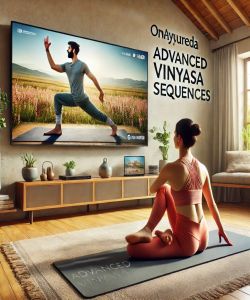
1. Overview of Advanced Vinyasa Sequences
Advanced Vinyasa Sequences represent the pinnacle of dynamic yoga practice, a sophisticated discipline reserved for the seasoned practitioner who has moved far beyond the rudimentary mechanics of foundational asana. This is not a system for the novice; it is an exacting paradigm of movement that demands an absolute and unwavering synthesis of physical power, mental fortitude, and profound somatic awareness. The practice is characterised by its intricate, non-linear, and often relentless flow, where transitions between complex postures are as significant as the postures themselves. It is a domain where the breath (pranayama) is no longer a mere accompaniment but the very engine of movement, dictating the pace, rhythm, and energetic quality of the entire sequence. Practitioners are required to demonstrate not only exceptional strength, flexibility, and balance but also a deep, intuitive understanding of biomechanics and proprioceptive feedback. The objective transcends mere physical execution; it is about cultivating a state of moving meditation, where the mind is fully absorbed in the continuous, challenging, and intelligently choreographed flow. This requires a level of concentration that silences internal and external distractions, transforming the practice into a powerful tool for neurological conditioning and heightened consciousness. It is, in essence, the deliberate orchestration of complexity to achieve a state of sublime simplicity, where the body and mind operate as a single, indivisible, and highly proficient unit. This is the ultimate expression of Vinyasa: the artful and intelligent placement of body and mind in a seamless, uninterrupted continuum of form and energy, pushing the boundaries of human potential.
2. What are Advanced Vinyasa Sequences?
Advanced Vinyasa Sequences are meticulously constructed choreographies of yoga postures (asanas) that are linked together in a continuous, flowing manner, driven by the synchronisation of breath. The term ‘advanced’ signifies a quantum leap in complexity, intensity, and requisite skill compared to standard or intermediate Vinyasa classes. These sequences are defined by several key characteristics that set them apart as a distinct and formidable discipline.
They incorporate highly challenging asanas, including deep backbends, complex arm balances, inversions, and intricate binding postures, which demand a superior level of strength, stability, and flexibility. The transitions between these postures are themselves complex and dynamic, often requiring airborne movements, subtle weight shifts, and a profound command of core stability. There is no pause or reset; the flow is seamless and demands uninterrupted focus and physical endurance.
Furthermore, the pacing of an advanced sequence can vary dramatically, from a swift, powerful, and almost acrobatic rhythm to a slow, controlled, and intensely deep burn, with the practitioner expected to adapt flawlessly. The sequencing is non-linear and unpredictable, designed to challenge the body and mind by breaking habitual movement patterns and demanding constant adaptation. This intelligent sequencing is not arbitrary; it is purposefully designed to build towards a specific peak posture or to explore a particular biomechanical or philosophical theme. Ultimately, an Advanced Vinyasa Sequence is a holistic system. It is a physical crucible that forges resilience, a mental labyrinth that hones focus, and a moving meditation that integrates body, breath, and mind into a single, potent expression of controlled power and dynamic grace. It is the application of yoga theory in its most fluid and demanding practical form.
3. Who Needs Advanced Vinyasa Sequences?
- The Seasoned Yoga Practitioner. Individuals with a long-standing and consistent yoga practice who have attained mastery over foundational and intermediate asanas. Their bodies are conditioned for the physical demands, and their minds are prepared for the requisite focus. They seek to progress beyond their current plateau and explore more complex physical and energetic territory.
- Yoga Teachers and Instructors. Professionals who teach yoga require a continuous deepening of their own practice. Engaging with advanced sequences provides them with new insights, techniques, and a richer understanding of biomechanics and sequencing, which directly enhances their teaching capabilities and allows them to guide more experienced students with authority.
- Dancers, Gymnasts, and Elite Athletes. Individuals from disciplines that already cultivate high levels of body awareness, strength, and flexibility. They can utilise advanced Vinyasa to enhance their proprioception, improve mobility in a dynamic context, refine their breath control under physical stress, and introduce a powerful element of mental conditioning and focus to their training regimen.
- Practitioners Seeking Deeper Meditative States. Those who find that static meditation is challenging but can achieve profound states of mindfulness through intense physical engagement. The relentless flow and high demand for concentration in advanced sequences effectively silence mental chatter, inducing a state of ‘flow’ or moving meditation that is both deep and transformative.
- Individuals Committed to Somatic Exploration. Practitioners who are no longer content with simply executing postures but are driven by a desire to understand the intricate interplay of their own anatomy, neurology, and energetic systems. Advanced sequences provide a dynamic laboratory for this deep, internal exploration of the body’s full potential.
4. Origins and Evolution of Advanced Vinyasa Sequences
The genesis of Advanced Vinyasa Sequences is not a singular event but an evolution, rooted in the foundational principles established in the early twentieth century. The primary progenitor of this dynamic style is Tirumalai Krishnamacharya, often hailed as the father of modern yoga. He tailored practices to individuals, and for his stronger, younger students, he developed vigorous, flowing sequences that linked posture with breath—the very essence of Vinyasa. This method was designed to build internal heat and purify the body, a far cry from the more static forms of yoga prevalent at the time.
This powerful system was most famously codified and propagated by one of Krishnamacharya’s most notable students, K. Pattabhi Jois, through the creation of the Ashtanga Vinyasa Yoga system. The rigid, set sequences of the Ashtanga Primary, Intermediate, and Advanced series provided the definitive blueprint for a physically demanding, breath-synchronised practice. The progressive difficulty of these series laid the groundwork for what a structured, advanced practice could entail, demanding immense dedication and physical prowess to master. For decades, Ashtanga was the pre-eminent form of rigorous Vinyasa.
However, as yoga migrated and flourished in the West, practitioners began to diverge from the strict, unvarying sequences of Ashtanga. Influential teachers, themselves masters of the Ashtanga system, started to apply its core principles of breath-movement synchronisation to more creative, non-linear sequences. This gave birth to what is now broadly termed ‘Vinyasa Flow’ or ‘Power Yoga’. The evolution into Advanced Vinyasa Sequences represents the maturation of this creative movement. It is a deliberate return to a high level of rigour and complexity, but without the fixed structure of Ashtanga. Contemporary advanced sequences are the product of decades of anatomical research, somatic exploration, and creative choreography, representing a sophisticated, intelligent synthesis of tradition and innovation.
5. Types of Advanced Vinyasa Sequences
- Peak Pose Sequences. These sequences are intelligently and methodically structured to prepare the body for a single, highly challenging apex posture (the ‘peak pose’), such as an advanced arm balance like Eka Pada Koundinyasana II or a deep backbend like Kapotasana. Every preceding posture and transition is strategically chosen to open, strengthen, and activate the specific muscle groups and energetic lines required for the final asana, ensuring the practitioner is optimally prepared and reducing the risk of injury. The flow builds in a logical, progressive crescendo.
- Mandala Vinyasa. A circular and multi-directional flow, where the practitioner moves 360 degrees around their mat. These sequences break the linear, front-to-back orientation of traditional practice. They are exceptionally demanding on spatial awareness and proprioception. A Mandala sequence is often thematically linked to an element (earth, water, fire, air) and targets specific muscle groups and energetic centres from all angles, creating a holistic and disorienting challenge that requires absolute mental presence.
- Inversion and Arm Balance-Centric Flows. These sequences are characterised by a high density of inversions (e.g., handstands, forearm stands) and arm balances, with the transitions between them being a primary focus. Practitioners may move from a handstand into an arm balance, then back to an inversion without their feet touching the floor. This type demands phenomenal upper body and core strength, precise balance, and the courage to embrace instability.
- Thematic and Biomechanical Explorations. This category encompasses sequences designed around a specific anatomical theme, such as fascial line mobilisation, spinal articulation, or psoas release. The flow is a deep, investigative journey into a particular aspect of the body’s mechanics. It is less about performative postures and more about cultivating a sophisticated, internalised understanding of functional movement patterns under a dynamic load.
6. Benefits of Advanced Vinyasa Sequences
- Superior Physical Conditioning. Engages the entire musculoskeletal system, cultivating an exceptional integration of strength, endurance, and flexibility. The dynamic and compound nature of the movements builds functional power that is directly transferable to other physical disciplines.
- Enhanced Proprioception and Kinaesthetic Intelligence. The complex transitions and non-linear movements demand a highly refined sense of body position, movement, and spatial awareness. This hones the nervous system’s ability to receive and process feedback, leading to superior motor control and coordination.
- Profound Mental Fortitude and Concentration. The relentless pace and high degree of difficulty require unwavering focus. The practice becomes a form of high-intensity mindfulness, training the mind to remain present and calm under significant physical and mental pressure, thereby building immense resilience.
- Mastery of Breath Control (Pranayama). The breath is the driving force of the sequence. Practitioners learn to maintain a deep, steady, and powerful Ujjayi breath even during the most strenuous exertions, which significantly improves respiratory efficiency and capacity, and calms the autonomic nervous system.
- Neurological Adaptation and Rewiring. By consistently breaking habitual movement patterns and challenging the body in unpredictable ways, these sequences stimulate neuroplasticity. The brain is forced to create new neural pathways, enhancing adaptability, learning capacity, and cognitive function.
- Cathartic Energetic and Emotional Release. The intensity of the practice, combined with deep, rhythmic breathing, acts as a powerful purifying agent. It can unlock and release stored physical tension, stagnant energy, and suppressed emotional patterns, leading to a profound sense of clarity and psychological liberation.
- Cultivation of Self-Trust and Confidence. Successfully navigating a demanding advanced sequence builds a deep and enduring sense of self-efficacy. Overcoming formidable physical and mental challenges on the mat instils a powerful belief in one’s own capabilities, strength, and resilience.
7. Core Principles and Practices of Advanced Vinyasa Sequences
- Unyielding Breath-Movement Synchronisation. This is the non-negotiable foundation. Every single movement, no matter how subtle or explosive, must be inextricably linked to either an inhalation or an exhalation. In advanced practice, the breath dictates the rhythm and quality of the movement, not the other way around. Mastery of Ujjayi pranayama, maintained under extreme duress, is paramount.
- Seamless and Intelligent Transitions (Vinyasa). The spaces between the postures are as important as the postures themselves. Transitions must be executed with control, precision, and grace. The practice is not a series of disconnected poses but a continuous, uninterrupted stream of motion. This includes complex transitions like floating, press-ups into handstands, and fluid entries into arm balances.
- Cultivation of Internal Heat (Tapas). The practice is designed to be vigorous enough to generate a strong internal fire. This heat is considered a purifying agent that detoxifies muscles and organs, burns away physical and mental impurities, and makes the body more pliable for deep stretching. It requires sustained, strenuous effort without rest.
- Application of Energetic Locks (Bandhas). The consistent engagement of Mula Bandha (root lock) and Uddiyana Bandha (abdominal lock) is essential. These are not mere muscular contractions but subtle energetic seals that provide core stability, protect the lumbar spine, and contain and direct the flow of prana (life force energy) upwards, making complex movements feel lighter and more integrated.
- Focused Gaze (Drishti). For every posture and transition, there is a prescribed point of focus. Maintaining a steady gaze stabilises the body, concentrates the mind, and prevents a wandering attention. This practice internalises the awareness, turning the physical practice into a profound meditative experience by drawing the senses inward.
- Intelligent Sequencing (Vinyasa Krama). Sequences are not random. They are constructed with anatomical and energetic intelligence, following the principle of Vinyasa Krama, or a "wise progression." They build logically towards a peak pose or a specific outcome, ensuring the body is systematically and safely prepared for the challenges presented.
8. Online Benefits of Advanced Vinyasa Sequences
- Cultivation of Extreme Self-Discipline and Autonomy. In the absence of a physical instructor and the group energy of a studio, the practitioner is solely responsible for their motivation, focus, and integrity of practice. This environment rigorously forges an unparalleled level of self-reliance and internal discipline, which is the hallmark of a truly advanced practitioner.
- Unhindered Personal Exploration and Pacing. The online format grants the practitioner the freedom to pause, rewind, and deconstruct highly complex transitions or postures without disrupting a class flow. This facilitates a deeper, more analytical understanding of personal biomechanics and allows for repeated, focused attempts at mastery on one’s own terms.
- Development of Heightened Internal Awareness (Interoception). Without the external cueing and hands-on adjustments of an in-person class, the practitioner is compelled to rely entirely on their own internal feedback systems. This significantly sharpens interoception—the sense of the internal state of the body—leading to a more intuitive and safer practice guided by deep listening.
- Elimination of External Comparison and Ego. Practising in solitude removes the subconscious tendency to compare one’s own physical expression of a posture with others in the room. This fosters a non-competitive and internally-focused mindset, allowing the practice to become a pure, unadulterated dialogue between the self and the body, free from ego-driven performance.
- Absolute Control Over the Practice Environment. The practitioner can meticulously control all sensory inputs—lighting, temperature, sound, and scent—to create an optimal sanctuary for deep focus. This minimises external distractions to a degree that is impossible in a public studio, facilitating a more profound state of meditative absorption and concentration during the demanding sequences.
- Access to Elite, Specialised Instruction. The digital platform removes geographical barriers, providing access to world-renowned instructors and highly specialised workshops in advanced Vinyasa that would otherwise be inaccessible. This allows practitioners to learn from the absolute best in the field, regardless of their location.
9. Advanced Vinyasa Sequences Techniques
- Establishment of the Foundational Breath. Before any movement commences, establish a deep, resonant, and audible Ujjayi pranayama. The breath must be consistent, with equal duration for the inhalation and exhalation. This is the metronome for the entire sequence. This breath must be maintained without fail throughout the most strenuous exertions.
- Systematic Body Activation. Initiate the sequence with targeted movements that activate the core and engage the energetic locks (Bandhas). This includes dynamic core work and sun salutations (Surya Namaskar A and B) executed with absolute precision, focusing on the seamless linkage of breath to each transition. This phase builds the internal heat (Tapas) necessary for the practice.
- Integration of Complex Standing and Balancing Transitions. Progress into a standing series that weaves together challenging postures. The key technique here is not the posture itself, but the fluid transition between them. For example, moving from Warrior III directly into a bound Half Moon pose, and then into a standing split, all without the grounded hand leaving the floor or the gaze wavering.
- Execution of Inversion and Arm Balance Chains. This is the core of the advanced sequence. A typical chain might involve pressing from Downward-Facing Dog into a handstand, lowering the legs into Bakasana (Crow Pose), shooting back to Chaturanga Dandasana, flowing through Upward-Facing Dog, and back to Downward-Facing Dog, all as a single, uninterrupted Vinyasa.
- Climactic Peak Pose Integration. Following the chains, the sequence builds towards the designated peak posture. All prior work has prepared the body. The technique involves entering the pose with control, holding it with stability and calm breath, and exiting with equal grace and precision. There is no collapsing out of the posture.
- Counter-Posing and Neurological De-escalation. After the peak intensity, execute a series of counter-postures to neutralise the spine and release deeply worked muscles. The pace slows deliberately. This phase transitions the nervous system from a sympathetic (fight-or-flight) state to a parasympathetic (rest-and-digest) state.
- Complete Surrender in Savasana. The final technique is absolute stillness. After the immense physical and mental effort, the practitioner must lie in Savasana and completely release control over body and breath, allowing the nervous system to integrate the effects of the practice.
10. Advanced Vinyasa Sequences for Adults
Advanced Vinyasa Sequences for adults represent a formidable physical and psychological undertaking, designed exclusively for individuals who possess a mature and well-established yoga practice. This discipline is predicated on the assumption that the practitioner has already cultivated a deep understanding of their own body’s capabilities and limitations, a prerequisite that typically comes only with age and consistent long-term practice. The adult body, while potentially possessing less natural elasticity than a younger one, can compensate with superior proprioceptive awareness, muscular control, and mental endurance. These sequences demand this maturity, requiring an adult practitioner to move with intelligence and precision rather than relying on youthful momentum or hypermobility. The practice challenges the adult mind to remain focused and resilient in the face of intense physical exertion, transforming the sequence into a powerful tool for maintaining cognitive sharpness and stress regulation. Furthermore, for the adult practitioner, these sequences are not about achieving an aesthetic ideal but are a profound method for exploring and maintaining functional strength, dynamic mobility, and neurological health. It is a proactive engagement with the ageing process, a declaration that physical and mental decline are not inevitable. By navigating these complex flows, the adult practitioner demonstrates a mastery over their physical form and a command over their mental state that is the hallmark of a disciplined and evolved individual. It is a sophisticated practice for a sophisticated practitioner.
11. Total Duration of Online Advanced Vinyasa Sequences
The total duration of a standard online Advanced Vinyasa Sequence session is rigorously structured to be exactly 1 hr. This timeframe is not arbitrary; it is a deliberately calibrated period designed for maximum efficacy and sustainable practice. The 1 hr duration allows for a comprehensive and unhurried progression through all essential phases of an advanced practice without inducing excessive physical exhaustion or mental fatigue that could compromise form and lead to injury. Within this 1 hr block, a practitioner can expect a logical and thorough sequence, typically comprising an initial five-to-ten-minute period for breathwork and foundational activation, followed by approximately forty minutes of intense, peak-level Vinyasa flow that constitutes the core of the practice. This central section is where the most demanding transitions, arm balances, and inversions are explored. The final ten to fifteen minutes are critically reserved for a systematic cool-down, incorporating counter-poses, gentle stretching, and a mandatory Savasana (corpse pose) for nervous system integration and complete physical and mental assimilation of the practice’s benefits. Adherence to this 1 hr structure ensures a balanced and complete session, providing sufficient time for challenge and intensity whilst respecting the body’s need for preparation and recovery. It is a container of time that demands focus and commitment, ensuring every minute is purposefully utilised towards the goal of profound physical and mental transformation.
12. Things to Consider with Advanced Vinyasa Sequences
Engaging with Advanced Vinyasa Sequences demands a level of sober self-assessment and strategic consideration that far exceeds that required for conventional yoga. Foremost, a practitioner must conduct an honest and unflinching inventory of their existing physical capabilities. This is not a domain for aspiration to outpace reality; a solid foundation in intermediate postures, demonstrable core and upper body strength, and a clear understanding of personal anatomical limitations are non-negotiable prerequisites. To ignore this is to court injury. Secondly, the psychological component cannot be overstated. These sequences are mentally taxing and can provoke frustration, self-doubt, and fear. One must consider their own mental resilience and possess the maturity to approach the practice with an attitude of patient, non-attached exploration rather than aggressive, goal-oriented conquest. The ego must be checked at the door. Furthermore, consideration must be given to the environment. A safe, spacious, and distraction-free area is essential, particularly when practising complex inversions and transitions. The choice of instructor or online platform is also critical; one must select a guide who demonstrates profound anatomical knowledge, provides clear, precise cueing, and champions safety above all else. Finally, practitioners must commit to consistency whilst respecting the need for adequate recovery. This level of intensity cannot be sustained daily without a strategic approach to rest, which is as vital to progress as the practice itself.
13. Effectiveness of Advanced Vinyasa Sequences
The effectiveness of Advanced Vinyasa Sequences is unequivocal and multi-faceted, provided the practitioner possesses the requisite foundational skill and mental fortitude. On a purely physical level, its efficacy in sculpting a supremely conditioned body is unparalleled within the yoga world. The continuous, high-intensity flow functions as a form of metabolic conditioning, enhancing cardiovascular health and endurance, whilst the complex asanas and transitions build integrated, functional strength across the entire kinetic chain. This is not isolated muscle development but the cultivation of a body that moves with intelligent, coordinated power. Mentally, the practice is a formidable crucible for forging concentration and resilience. The demand for unwavering focus to navigate intricate sequences and maintain balance in precarious positions effectively trains the mind to be present and unshakeable, a skill that translates directly to enhanced performance and composure in all other areas of life. From a neurological standpoint, the effectiveness lies in its capacity to stimulate neuroplasticity. By constantly introducing novel and complex movement patterns, the practice forces the brain to create new neural pathways, improving motor learning, proprioception, and cognitive adaptability. The synthesis of intense physical exertion, precise breath control, and deep focus makes it a uniquely potent system for achieving a state of dynamic equilibrium, where the practitioner experiences not just physical prowess but a profound sense of integrated, embodied intelligence. Its effectiveness is, therefore, holistic, forging a practitioner who is not only stronger and more flexible but also mentally sharper, more resilient, and more deeply connected to their own physical and mental processes.
14. Preferred Cautions During Advanced Vinyasa Sequences
The practice of Advanced Vinyasa Sequences is a high-stakes endeavour, and a cavalier attitude towards safety is an invitation for significant injury. It must be approached with the utmost caution and respect. The primary and most critical caution is the absolute prohibition of ego-driven practice. Attempting postures or transitions that are clearly beyond one’s current capacity due to pride or a desire to keep up is the most common path to harm. One must cultivate the wisdom to modify or bypass a challenge when necessary. Secondly, a thorough and specific warm-up is not optional; it is a mandatory protocol. The body must be systematically prepared for the extreme ranges of motion and high loads it will be subjected to. Neglecting this is a dereliction of duty to oneself. Practitioners must exercise extreme caution with vulnerable joints, particularly the wrists, shoulders, and lower back. This involves meticulous attention to alignment, the active engagement of stabilising muscles, and the refusal to force any movement that elicits sharp pain. Hydration and fatigue levels must be monitored; practising in a state of exhaustion significantly compromises motor control and judgement. Furthermore, when practising inversions or complex arm balances, particularly when alone, one must ensure the practice space is clear of hazards. Falling is a possibility, and one must have a strategy for falling safely. Finally, do not mistake pain for productive discomfort. A deep stretch or muscle fatigue is acceptable; a sharp, shooting, or joint-related pain is an unequivocal command to stop immediately.
15. Advanced Vinyasa Sequences Course Outline
- 1: Foundational Integrity and Breath Mastery
- Principle: Reinforcement of Ujjayi Pranayama under duress.
- Practice: Dynamic Surya Namaskar A & B with a focus on Bandha engagement and breath-to-movement precision.
- Anatomy Focus: The diaphragm, intercostals, and the mechanics of core stability.
- 2: The Art of Seamless Transition
- Principle: Treating the space between postures as the primary practice.
- Practice: Drills for floating forward and back (Lolasana, jump-throughs), and fluid transitions between standing postures without pause.
- Anatomy Focus: Pelvic floor engagement, hip flexor control, and kinetic chain sequencing.
- 3: Deconstructing Arm Balances
- Principle: Understanding the physics and anatomy of balancing on the hands.
- Practice: Focused workshop on Bakasana (Crow), Parsva Bakasana (Side Crow), and Eka Pada Koundinyasana, including entries and exits.
- Anatomy Focus: Wrist and shoulder girdle stability, serratus anterior activation.
- 4: Inversion Immersion
- Principle: Cultivating stability and calm while upside down.
- Practice: Drills for handstand (Adho Mukha Vrksasana) and forearm stand (Pincha Mayurasana) against a wall and freestanding. Introduction to press-up techniques.
- Anatomy Focus: Scapular mechanics, core control in an inverted orientation.
- 5: Advanced Sequencing and Flow Integration
- Principle: Weaving individual elements into a cohesive, challenging flow.
- Practice: Execution of a full-length advanced sequence incorporating arm balances, inversions, and complex transitions.
- Focus: Stamina, mental endurance, and maintaining breath integrity throughout.
- 6: Spinal Articulation and Deep Backbends
- Principle: Safe and intelligent opening of the thoracic spine.
- Practice: Preparatory postures leading towards Urdhva Dhanurasana (Wheel Pose) and its variations, with a focus on shoulder and hip flexor opening.
- Anatomy Focus: Spinal extensors, psoas, and quadriceps flexibility.
- 7: Integration, Counter-Posing, and Recovery
- Principle: The importance of neurological down-regulation.
- Practice: Gentle counter-poses, deep restorative stretches, and extended Savasana.
- Focus: Transitioning the nervous system to a parasympathetic state for optimal recovery and integration.
16. Detailed Objectives with Timeline of Advanced Vinyasa Sequences
Weeks 1-2: Foundational Mastery.
Objective: To demonstrate unwavering Ujjayi pranayama and consistent Mula/Uddiyana Bandha engagement throughout a 60-minute, moderately paced Vinyasa flow. The practitioner will execute ten consecutive, precise Surya Namaskar B sequences without breath degradation or loss of form.
Weeks 3-4: Transitional Control.
Objective: To achieve a controlled "float" from Downward-Facing Dog to a forward fold and a controlled "shoot-back" from Bakasana to Chaturanga Dandasana. The objective is fluid motion, eliminating heavy landings and reliance on momentum.
Weeks 5-6: Arm Balance Stabilisation.
Objective: To hold a stable Bakasana (Crow Pose) for a minimum of ten full breaths and to execute a clean entry and exit into Parsva Bakasana (Side Crow) on both sides. The focus is on stability and controlled transitions, not merely entry.
Weeks 7-8: Inversion Acclimatisation.
Objective: To hold a handstand against a wall for 30 seconds with correct alignment (open shoulders, engaged core). To execute five controlled kick-ups to handstand in the centre of the room, focusing on balance and control rather than duration.
Weeks 9-10: Peak Flow Endurance.
Objective: To execute a complete 45-minute, non-stop advanced sequence that links standing postures, arm balances, and inversion attempts. The primary goal is to maintain breath quality and mental focus without significant pause, demonstrating enhanced stamina.
Weeks 11-12: Synthesis and Application.
Objective: To successfully integrate a peak pose, such as Eka Pada Koundinyasana II, into a flowing sequence. This includes demonstrating the preparatory postures, a controlled entry into the peak pose, a brief, stable hold, and a graceful exit, synthesising all skills learned.
17. Requirements for Taking Online Advanced Vinyasa Sequences
- Demonstrable Proficiency in Intermediate Vinyasa. The practitioner must possess unquestionable mastery of all foundational and intermediate yoga postures. This includes, but is not limited to, stable and correctly aligned execution of Warrior series, Triangle, Half Moon, Chaturanga Dandasana, and basic backbends like Urdhva Dhanurasana.
- Pre-existing Core and Upper Body Strength. A non-negotiable requirement is the physical capacity to support one's own body weight on the hands. The practitioner should be able to hold a plank pose with correct form for an extended period and perform multiple, correct Chaturanga push-ups. An inability to do so makes participation unsafe.
- A High-Speed, Stable Internet Connection. The online format is entirely dependent on technology. A reliable, high-bandwidth connection is mandatory to ensure a smooth, uninterrupted video stream. Buffering or freezing during a complex transition is not only disruptive but also dangerous.
- Adequate and Safe Practice Space. The practitioner must have access to a private, uncluttered space that is large enough to allow for a full range of motion in all directions, including falling safely out of inversions. The floor surface must be stable and non-slip.
- High-Quality Audio and Video Equipment. A device with a clear screen and functional speakers is essential to see and hear the instructor's demonstrations and cues accurately. A webcam is often required for courses that offer personalised feedback, and it must be positioned to provide a full-body view.
- Sober Self-Assessment and Bodily Awareness. The practitioner must possess a mature and honest understanding of their own physical limits. The ability to distinguish between challenging discomfort and injurious pain is critical in an environment without hands-on instructor supervision.
- Essential Yoga Props. At a minimum, the practitioner must possess a high-quality, non-slip yoga mat. It is strongly recommended to also have blocks and a strap available to assist with alignment and to modify postures safely when required.
18. Things to Keep in Mind Before Starting Online Advanced Vinyasa Sequences
Before embarking upon the demanding journey of online Advanced Vinyasa Sequences, a period of rigorous and honest self-appraisal is not merely recommended; it is imperative. One must first internalise the profound difference between practising in a supervised studio and practising in solitude. The online environment places the full onus of safety, discipline, and integrity squarely upon the practitioner. There is no instructor to provide a physical adjustment, to offer a word of caution when your form degrades from fatigue, or to temper an overzealous ego. Therefore, you must resolve to become your own most vigilant teacher. This requires cultivating an acute level of interoception—the ability to listen to your body’s subtle and overt signals—and the wisdom to heed them without question. Furthermore, understand that progress in this domain is not linear. You will encounter plateaus and moments of intense frustration. You must possess the mental fortitude to persist through these challenges without succumbing to discouragement or, conversely, pushing your body into the red zone of injury. Prepare your physical space meticulously; it is your sanctuary and your training ground, and its safety is your direct responsibility. Finally, select your online guide with extreme discernment. Scrutinise their credentials, teaching philosophy, and emphasis on anatomical precision. In the digital realm, your instructor's voice is your primary guide; ensure it is one of wisdom, clarity, and uncompromising authority on safe, intelligent practice.
19. Qualifications Required to Perform Advanced Vinyasa Sequences
To perform Advanced Vinyasa Sequences with the requisite degree of safety, efficacy, and integrity, an individual must possess a multi-faceted set of qualifications that extend far beyond casual experience. These are not formal certifications but earned, demonstrable attributes. The primary qualification is a deep and consistent history of yoga practice, typically measured in years, not months. This long-term dedication ensures the body is thoroughly conditioned and the mind is familiar with the principles of Vinyasa. Within this practical experience, specific proficiencies must be evident:
- Mastery of Foundational Asanas: The practitioner must exhibit effortless and precise alignment in all standard yoga postures. This forms the bedrock upon which complexity is built.
- Significant Core and Upper Body Strength: There must be a proven ability to support and control one's own body weight. This is objectively demonstrated by the capacity to hold postures like Bakasana (Crow Pose) and to execute a series of correct Chaturanga Dandasana push-ups.
- Advanced Proprioceptive Awareness: The individual must possess a highly developed internal sense of their body's position in space, enabling them to make micro-adjustments for balance and alignment without external cues or mirrors.
- Breath Control Under Physical Stress: The ability to maintain a steady, deep Ujjayi breath during strenuous and complex movements is a non-negotiable qualification. The breath must lead the practice, not become a casualty of it.
Beyond the physical, the practitioner must be psychologically qualified, demonstrating patience, resilience, and a mature, non-egoistic approach to challenge. This synthesis of physical conditioning, technical skill, and mental fortitude constitutes the true qualification for this demanding discipline.
20. Online Vs Offline/Onsite Advanced Vinyasa Sequences
Online
The online modality for Advanced Vinyasa Sequences is a paradigm of autonomy and intense self-discipline. Its primary characteristic is the complete removal of external variables, placing the locus of control entirely within the practitioner. This environment demands and forges a heightened state of internal awareness, as there are no hands-on adjustments or immediate verbal corrections from an instructor. The practitioner must learn to rely exclusively on their own proprioceptive and interoceptive feedback, cultivating a sophisticated dialogue with their own body. This fosters an unparalleled sense of ownership and self-reliance. Logistically, it offers supreme flexibility and accessibility, removing geographical and scheduling constraints, and providing access to a global pool of elite instructors. However, this autonomy comes with the significant responsibility of ensuring personal safety, as the practitioner is their own sole supervisor. The online format is the crucible for the self-motivated individual who seeks to refine their practice in a solitary, focused environment, free from the distraction of group dynamics and external comparison. It is the ultimate test of internal integrity.
Offline/Onsite
The offline, or onsite, experience of Advanced Vinyasa is defined by its communal energy and the direct presence of the instructor. The key advantage lies in the immediate, tactile, and personalised feedback loop. A skilled instructor can provide precise hands-on adjustments that can unlock a new level of understanding in a posture and prevent injury by correcting subtle misalignments. The shared energy of a group (satsang) can be a powerful motivator, pushing practitioners to sustain their effort and focus in ways that can be challenging to replicate alone. The instructor can also dynamically modify the sequence in real-time based on the energy and capability of the room. This direct human interaction provides a layer of safety, guidance, and accountability that is absent online. The potential drawback is the risk of ego-driven comparison with other practitioners and a potential dependency on the instructor's cues, which can sometimes inhibit the development of deep internal awareness. The onsite class is the ideal environment for practitioners who thrive on community energy and who value the immediate, expert guidance and physical correction that only a present teacher can provide.
21. FAQs About Online Advanced Vinyasa Sequences
Question 1. Is online advanced Vinyasa safe without an instructor present? Answer: It is safe only if the practitioner possesses a high degree of self-awareness, an honest understanding of their limits, and a commitment to prioritising safety over ambition. The risk is inherently higher than in a supervised setting.
Question 2. What are the absolute prerequisite skills? Answer: Demonstrable mastery of intermediate yoga, the ability to hold a stable Crow Pose (Bakasana), and the capacity to perform at least five consecutive, correct Chaturanga push-ups.
Question 3. How do I know if I am ready? Answer: If you can comfortably and confidently navigate a standard, fast-paced intermediate Vinyasa class without confusion or excessive fatigue, and you possess the prerequisite strength, you may be ready to attempt an advanced class.
Question 4. What technology is essential? Answer: A stable, high-speed internet connection, a device with a large, clear screen, and functional audio. A webcam is necessary for any class that offers personalised feedback.
Question 5. How much space do I need? Answer: You require enough space to extend your limbs fully in all directions from a central point on your mat, plus extra clearance in case you lose balance during an inversion.
Question 6. Can I get personalised feedback online? Answer: Yes, some premium online platforms and instructors offer live classes via two-way video, where they observe and provide verbal corrections. This is a superior option for safety.
Question 7. What if I cannot do a specific pose? Answer: A mature practitioner will either take a sensible modification offered by the instructor or rest in a neutral pose like Child's Pose. Never force a posture.
Question 8. How does it compare to an in-person class? Answer: It demands more self-discipline and internal awareness but offers greater flexibility and autonomy. It lacks the community energy and hands-on adjustments of an in-person class.
Question 9. What is the biggest risk of practicing online? Answer: The biggest risk is an ego-driven injury, caused by attempting a pose that is beyond your capacity without the immediate cautionary guidance of an instructor.
Question 10. How often should one practise at this level? Answer: This depends on individual recovery capacity. Two to four times per week is a common and sustainable frequency. Daily practice at this intensity is not recommended for most.
Question 11. Do I need props? Answer: Yes. A non-slip mat is mandatory. Blocks and a strap are highly recommended for modifications and alignment support.
Question 12. How do I choose a good online instructor? Answer: Look for instructors with extensive experience (E-RYT 500 or equivalent), a clear emphasis on anatomy and safety, and precise, unambiguous cueing.
Question 13. Will I build as much strength online? Answer: Yes, provided you practise with the same intensity and integrity as you would in a studio. Strength development is a result of effort, not location.
Question 14. What if I feel pain during the class? Answer: Stop the specific movement immediately. Sharp, shooting, or joint pain is a signal to cease. Muscular fatigue is different; learn to distinguish between the two.
Question 15. Can I progress to handstands just by practicing online? Answer: Yes, it is possible with disciplined, consistent, and intelligent practice, but progress may be slower and requires extreme caution compared to learning with a spotter.
Question 16. What is the primary benefit of the online format? Answer: The primary benefit is the forging of extreme self-reliance, discipline, and a heightened internal awareness (interoception).
22. Conclusion About Advanced Vinyasa Sequences
In conclusion, Advanced Vinyasa Sequences constitute a formidable and elite tier of yoga practice, reserved for the disciplined, experienced, and dedicated individual. It is a paradigm that decisively shifts the focus from the static holding of postures to the intelligent, fluid, and powerful art of transition. This discipline demands a complete and unwavering synthesis of superior physical strength, refined flexibility, and profound mental concentration. The practice is not merely a workout; it is a sophisticated system of somatic and neurological conditioning, designed to challenge the practitioner on every level. It pushes the boundaries of physical capacity while simultaneously demanding a state of deep meditative absorption. The successful execution of these intricate choreographies requires a foundation built upon years of consistent practice, an intimate understanding of one’s own anatomical landscape, and a mature, ego-less mindset. Whether pursued in the communal energy of a studio or the autonomous crucible of an online setting, the goal remains the same: to achieve a state of dynamic equilibrium where body, breath, and mind function as a single, powerful, and intelligent unit. It is the ultimate expression of Vinyasa, a testament to the limitless potential that can be unlocked through disciplined and intelligent movement.