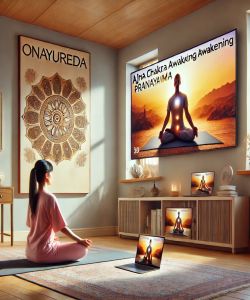
Overview of Ajna Chakra Awakening Pranayama
Ajna Chakra Awakening Pranayama represents a highly specialised and potent discipline within the vast corpus of yogic science, engineered with the singular objective of activating the sixth primary energy centre, the ‘third eye’. Located between the eyebrows, this chakra is regarded as the seat of intuition, higher consciousness, and direct perception, transcending the limitations of the ordinary sensory apparatus. This is not a practice for the dilettante or the casually curious; it is a rigorous system of controlled respiration designed to purify and direct prana, or life-force energy, to this specific locus of consciousness. The methodology involves systematic and advanced breathing techniques that manipulate the flow of breath through the Ida and Pingala nadis—the primary energy channels—to stimulate the dormant potential within the Sushumna nadi, the central channel that culminates at the Ajna Chakra. Mastery of these techniques facilitates a profound shift in awareness, moving the practitioner from a state of intellectual analysis to one of experiential wisdom. The ultimate aim is to dissolve the veils of illusion (maya) and to cultivate an unwavering state of mental clarity, insight, and inner command. This endeavour demands absolute precision, unwavering discipline, and a deep commitment to internal purification, serving as a direct and powerful conduit to elevated states of perception and self-realisation. It is an uncompromising path that requires the practitioner to confront and transcend psychological conditioning, thereby unlocking the latent cognitive and spiritual faculties governed by the Ajna centre. The practice is therefore a foundational pillar for any serious student of advanced yoga and meditation seeking to establish command over the mind and its perceptual faculties.
What are Ajna Chakra Awakening Pranayama?
Ajna Chakra Awakening Pranayama are a specific and advanced category of yogic breathing exercises meticulously designed to stimulate and awaken the Ajna Chakra, also known as the third eye or the 'command centre'. These are not merely breathing exercises for relaxation or general well-being; they are targeted energetic practices. The entire system is predicated on the yogic understanding of prana (vital life force) and its circulation through a subtle network of energy channels called nadis. By consciously regulating the breath—its pace, depth, rhythm, and points of retention—a practitioner can direct the flow of prana towards the point between the eyebrows, the physical locus of the Ajna Chakra. This process serves to purify the energetic pathways and systematically dismantle psychic knots or blockages that impede higher states of awareness.
The core components of this discipline can be understood as follows:
Pranayama: The term itself is a composite of 'Prana' (life force) and 'Yama' (control or mastery). It is the science of breath regulation to influence the flow of prana within the pranic body.
Ajna Chakra: This is the sixth of the seven primary chakras in the subtle body. It is the epicentre of intuition, foresight, wisdom, and the ability to perceive truths beyond the grasp of the five conventional senses. Its activation is considered a critical milestone in spiritual evolution.
Awakening: This refers to the process of activating the dormant potential of the chakra. An unawakened Ajna Chakra results in a consciousness bound by logic, confusion, and external conditioning. An awakened state confers clarity, decisive insight, and a connection to universal consciousness.
Therefore, Ajna Chakra Awakening Pranayama are the precise techniques—such as Nadi Shodhana (Alternate Nostril Breathing) with specific ratios and retentions, Bhramari (Humming Bee Breath), and others combined with focused intention (dharana) and energetic locks (bandhas)—that collectively work to concentrate a critical mass of refined prana at this centre, thereby catalysing its functional awakening.
Who Needs Ajna Chakra Awakening Pranayama?
Individuals Seeking Profound Intuitive Development. Those who operate in fields requiring sharp, non-linear insight—such as strategists, artists, innovators, and leaders—find this practice indispensable. It cultivates the capacity to perceive underlying patterns and truths, moving beyond reliance on purely empirical data to a state of direct, intuitive knowing that informs superior decision-making.
Practitioners Aiming to Transcend Intellectual Limitations. Advanced students of yoga, meditation, and other esoteric disciplines who have reached a plateau in their progress require this practice. It serves as the key to unlock deeper states of meditation (dhyana) and absorption (samadhi) by moving awareness from the discursive, thinking mind to the silent, perceiving consciousness.
Those Experiencing Chronic Mental Fog and Indecisiveness. Individuals plagued by persistent mental confusion, lack of focus, and an inability to make clear, confident decisions will derive immense benefit. The practice systematically purifies the mental and energetic fields, dispelling the psychic clutter that obstructs clarity and resolute action.
Leaders and Decision-Makers Requiring Enhanced Strategic Foresight. Corporate executives, military commanders, and governmental leaders who must navigate complex and volatile environments need the heightened perception this practice affords. It fosters the ability to anticipate future trends and make incisive judgements unclouded by emotional bias or limited information.
Individuals Seeking to Overcome Psychological and Emotional Blockages. Those who feel constrained by ingrained belief systems, past traumas, or limiting psychological conditioning can use this practice to gain the perspective and energy needed to dissolve these internal barriers, fostering true mental and spiritual freedom.
Healers and Therapists. Professionals who rely on deep empathy and perceptual acuity to diagnose and treat others must possess a clear and unburdened Ajna Chakra. This practice enhances their ability to perceive the subtle energetic and psychological states of their clients, leading to more effective and profound therapeutic interventions.
Origins and Evolution of Ajna Chakra Awakening Pranayama
The origins of Ajna Chakra Awakening Pranayama are deeply embedded within the ancient esoteric traditions of Indian Tantra and Vedanta. These practices were not conceived as isolated techniques but as integral components of a comprehensive system for spiritual realisation. Early Tantric texts, some dating back over a millennium, articulated the concept of the subtle body, mapping out the network of chakras (energy centres) and nadis (energy channels). The Ajna Chakra was consistently identified as a critical nexus of consciousness, the 'gateway' to higher states of awareness. The techniques to awaken it were, however, highly guarded, transmitted directly from guru to a worthy disciple and rarely committed to public scripture. These early forms were often interwoven with complex visualisations, mantra recitations (specifically the Bija Mantra ‘Om’), and yantra meditation, all aimed at concentrating consciousness at the third eye centre.
With the codification of Hatha Yoga in medieval texts such as the Hatha Yoga Pradipika and the Shiva Samhita, these pranayama techniques began to be more systematically documented, albeit often in cryptic or symbolic language. Texts described practices like Nadi Shodhana (alternate nostril breathing) not merely as a purification exercise but as the essential preparatory step to awaken the central energy channel, the Sushumna Nadi, which is a prerequisite for activating Ajna. The emphasis shifted slightly towards a more structured approach focused on the mastery of breath retention (kumbhaka), which was understood to generate the necessary pranic heat and pressure to stimulate the higher chakras. Practices were refined to establish perfect equilibrium between the Ida (lunar, passive) and Pingala (solar, active) nadis, as this balance was deemed non-negotiable for prana to enter Sushumna and ascend to Ajna.
In the modern era, the evolution of these practices has been marked by their demystification and wider dissemination by influential yogic masters who brought these teachings to a global audience. Contemporary instruction often places a greater emphasis on physiological and psychological benefits, linking the practice to the stimulation of the pineal and pituitary glands, which are considered the physical counterparts of the Ajna Chakra. While the esoteric core remains, the methodology has been adapted for practitioners who may not be living a monastic life. The evolution has thus been from a highly secretive, guru-centric Tantric ritual to a systematised Hatha Yoga discipline, and finally to a more accessible, though no less potent, practice available to dedicated modern aspirants seeking to unlock the profound capabilities of human consciousness.
Types of Ajna Chakra Awakening Pranayama
Nadi Shodhana Pranayama (Alternate Nostril Breathing) – Advanced Variation. This is the foundational practice. In its advanced form for Ajna awakening, it involves specific, elongated ratios of inhalation (puraka), internal retention (antar kumbhaka), and exhalation (rechaka). The focus is not merely on balancing Ida and Pingala nadis but on using the prolonged breath retention to build a significant charge of prana, which is then mentally directed with intense concentration to the Ajna Chakra during the retention phase.
Bhramari Pranayama (Humming Bee Breath). This technique involves creating a deep, resonant humming sound during a slow, controlled exhalation, with fingers often placed in Shanmukhi Mudra to block external sensory input. The vibration generated by the hum is directed to resonate within the skull, specifically targeting the area of the Ajna Chakra. This vibrational energy is exceptionally effective at dissolving mental tension and stimulating the pineal gland, directly activating the dormant energies of the third eye.
Anulom Vilom with Antar Kumbhaka and Ajna Focus. A variation of Nadi Shodhana, this practice places supreme emphasis on the phase of breath retention after inhalation (Antar Kumbhaka). During this retention, the practitioner’s entire awareness, unwavering and absolute, is fixed upon the point between the eyebrows. Often, this is combined with the silent repetition of the Bija Mantra ‘Om’ at the Ajna centre, further concentrating pranic energy at the target location.
Kapalbhati Pranayama (Skull Shining Breath) with Ajna Dharana. While primarily a shatkarma (cleansing technique), when performed with a specific intention, Kapalbhati becomes a powerful tool for Ajna awakening. The forceful, rapid exhalations vigorously cleanse the frontal sinuses and stimulate the frontal lobes of the brain. Following a round of Kapalbhati, the practitioner enters a state of natural breath suspension, during which all attention is directed with force and precision to the Ajna Chakra to perceive the resulting energetic surge.
Ujjayi Pranayama (Victorious Breath) with Shambhavi Mudra. Ujjayi involves a gentle constriction at the back of the throat, creating an audible, ocean-like sound. For Ajna activation, this is practised in conjunction with Shambhavi Mudra, where the eyes are focused upwards and inwards towards the eyebrow centre. The combination of the subtle sound, the physical gaze, and the breath itself creates a powerful tripartite lock of attention and energy at the Ajna Chakra, compelling its awakening.
Benefits of Ajna Chakra Awakening Pranayama
Cultivation of Profound Intuition: Systematically dismantles reliance on external data and linear logic, fostering a direct and unerring channel to intuitive wisdom and innate knowing.
Enhanced Mental Clarity and Focus: Eradicates mental fog, intellectual ambiguity, and psychic clutter, resulting in a state of sharp, single-pointed concentration and crystalline mental clarity.
Development of Willpower and Command: The Ajna Chakra is the ‘command centre’. Its activation strengthens volition, enabling the practitioner to direct their thoughts and actions with unwavering resolve and self-mastery.
Transcendence of Dualistic Thinking: Facilitates the dissolution of the subject-object dichotomy, leading to a state of non-dual awareness where the practitioner perceives the underlying unity of existence.
Access to Higher States of Consciousness: Serves as a direct gateway to deeper meditative states, providing access to subtle realms of consciousness and experience that are inaccessible to the ordinary mind.
Increased Insight and Wisdom: Promotes the ability to perceive the root cause of life situations and personal challenges, moving beyond superficial understanding to a state of profound, experiential wisdom.
Stimulation of Latent Psychic Abilities: The awakening of the third eye is traditionally associated with the emergence of latent perceptual capacities, such as clairvoyance and heightened sensory perception.
Decisive and Confident Decision-Making: By fostering a connection to inner guidance, the practice eliminates vacillation and self-doubt, leading to swift, confident, and accurate decision-making.
Emotional and Psychological Equilibrium: By operating from a higher centre of perception, the practitioner becomes less susceptible to the turbulence of lower emotions, establishing a stable and detached inner equilibrium.
Spiritual Liberation: The ultimate benefit is the unravelling of the egoic structure and the dawning of self-realisation, which is the principal objective of all authentic yogic practices.
Core Principles and Practices of Ajna Chakra Awakening Pranayama
Pranic Accumulation and Direction. The paramount principle is the generation and accumulation of a substantial quantum of prana through controlled breathing, particularly through breath retention (kumbhaka). This accumulated energy must then be consciously and forcefully directed, using focused intention (dharana), to the precise location of the Ajna Chakra between the eyebrows. Without this deliberate direction, the energy dissipates without effect.
Nadi Shuddhi (Channel Purification). It is an absolute prerequisite that the Ida and Pingala nadis—the lunar and solar energy channels corresponding to the left and right nostrils—are thoroughly purified and balanced. The practice of Nadi Shodhana is non-negotiable. An imbalance or blockage in these channels prevents prana from entering the central channel (Sushumna), rendering any attempt to awaken Ajna futile.
Mastery of Kumbhaka (Breath Retention). The suspension of breath, especially after inhalation (antar kumbhaka), is the critical phase where pranic energy is intensified and made available for assimilation by the higher chakras. The ability to hold the breath for extended periods without strain or agitation is a core competency that must be developed systematically and patiently.
Integration of Mudra and Bandha. The practice must incorporate specific hand gestures (mudras) and energetic locks (bandhas). Shambhavi Mudra (eyebrow centre gazing) physically and energetically directs focus to Ajna. Jalandhara Bandha (throat lock) and Mula Bandha (root lock) are employed during kumbhaka to prevent pranic leakage and to amplify the upward pressure of energy towards the head.
Unwavering Dharana (Concentration). The practitioner's concentration must be absolute and single-pointed. Throughout the practice, the mind must remain unwaveringly fixed on the Ajna Chakra. Any mental distraction, emotional turbulence, or lapse in focus will immediately sever the energetic connection and nullify the technique’s efficacy.
Use of Bija Mantra. The silent, internal repetition of the seed-sound mantra for Ajna, which is ‘Om’ (A-U-M), is a core practice. This sonic vibration resonates at the specific frequency of the chakra, acting as a key to unlock its dormant potential and amplify the effects of the pranayama.
Systematic and Progressive Application. This is not a discipline to be approached haphazardly. Practitioners must follow a structured, progressive path, beginning with basic pranayama to build lung capacity and nervous system stability, before proceeding to the advanced ratios, retentions, and energetic locks required for genuine Ajna awakening.
Online Ajna Chakra Awakening Pranayama
Unparalleled Accessibility and Consistency. The online modality removes all geographical and logistical barriers to accessing highly specialised instruction. It enables practitioners to engage with qualified mentors regardless of physical location, fostering a level of consistency in practice that is often difficult to maintain with location-dependent, in-person sessions. This consistency is paramount for achieving tangible results in such a subtle and demanding discipline.
Cultivation of Absolute Self-Discipline. Without the physical presence of an instructor to enforce discipline, the online environment places the onus of commitment squarely upon the practitioner. This dynamic is not a weakness but a strength; it forces the cultivation of profound self-reliance, internal motivation, and unwavering personal discipline—qualities that are themselves central to the mastery of advanced yoga and the command signified by the Ajna Chakra itself.
Creation of a Controlled and Personalised Practice Environment. Practitioners can construct their own ideal environment for practice, free from the potential distractions and social dynamics of a group studio setting. This allows for absolute silence, controlled lighting, and a personalised space that is energetically consecrated for the sole purpose of this deep internal work, thereby enhancing focus and minimising external interference.
Enhanced Focus on Internal Experience. The absence of external physical adjustments and the visual presence of other practitioners compels a deeper inward turn. The student is forced to rely entirely on the instructor’s verbal cues and their own internal, proprioceptive feedback. This sharpens subtle energetic perception and accelerates the development of self-awareness, which is the very essence of Ajna-focused work.
Opportunity for Repetition and Review. Digital sessions can be recorded (subject to agreement), providing the practitioner with an invaluable resource for review. The ability to revisit specific instructions, nuanced cues, and guided practices allows for a level of detailed study and refinement that is impossible to achieve from memory alone after a single, transient offline class. This reinforces correct technique and deepens understanding.
Ajna Chakra Awakening Pranayama Techniques
Preparation (Asana and Centring): Assume a stable, erect meditative posture such as Padmasana (Lotus Pose) or Siddhasana (Accomplished Pose), ensuring the spine is perfectly straight. Close the eyes and stabilise the body and mind. Spend several moments observing the natural flow of breath to establish a baseline of calm and focus. The posture must be non-negotiably firm and comfortable for the duration of the practice.
Nadi Shodhana (Channel Purification): Perform at least twelve rounds of basic Alternate Nostril Breathing without retention. Use the right thumb to close the right nostril and inhale through the left. Close the left nostril with the ring finger, release the thumb, and exhale through the right. Inhale through the right, close it, and exhale through the left. This constitutes one round. This initial phase is mandatory to balance the Ida and Pingala nadis.
Anulom Vilom with Antar Kumbhaka (Alternate Nostril Breathing with Retention): Progress to the advanced form. Inhale through the left nostril for a count of four. Close both nostrils and retain the breath (Antar Kumbhaka) for a count of sixteen. During this entire retention phase, fix your unwavering concentration on the Ajna Chakra. Exhale through the right nostril for a count of eight. Inhale through the right for four, retain for sixteen with Ajna focus, and exhale through the left for eight. This 1:4:2 ratio is critical. Commence with five rounds and increase systematically over time.
Bhramari Pranayama (Humming Bee Breath): Following the retention practice, perform seven rounds of Bhramari. Close the ears with the thumbs and rest the fingers lightly over the eyes. Inhale deeply through the nose. On exhalation, produce a deep, steady, and resonant humming sound like a bee. Direct the entirety of this vibration into the centre of the head, feeling it resonate precisely at the Ajna Chakra.
Shambhavi Mudra with Kevala Kumbhaka (Eyebrow Gazing with Spontaneous Retention): Conclude the active pranayama. Sit in complete stillness. Gently raise the gaze of the closed eyes upwards and inwards, focusing on the point between the eyebrows without any strain. Allow the breath to become extremely subtle and calm. Do not force the breath to stop, but be aware of the natural pauses that occur. In these moments of spontaneous suspension (Kevala Kumbhaka), immerse your entire being into the Ajna Chakra. Maintain this state for as long as it remains effortless.
Ajna Chakra Awakening Pranayama for Adults
Ajna Chakra Awakening Pranayama for adults is an exceptionally rigorous and mature discipline, demanding a level of psychological stability and focused intent that is generally absent in younger individuals. The adult practitioner, often burdened by years of conditioned thought patterns, societal programming, and intellectual calcification, requires a systematic method to dismantle these ingrained structures. This pranayama serves as that precise tool. It is not a palliative measure for stress relief but a direct and potent intervention designed to overhaul the very faculty of perception. The practice mandates that the adult confronts their own mental limitations and egoic constructs head-on. The sustained concentration required, coupled with advanced breath retention, forces a shift from the discursive mind to a state of pure, detached awareness. This process can be profoundly unsettling initially, as it challenges the foundational beliefs and identity structures built over a lifetime. However, it is precisely this challenge that yields the greatest reward: the cultivation of genuine wisdom, as opposed to mere accumulated knowledge. For the adult who has navigated the complexities of life, the awakening of the Ajna Chakra offers the capacity for unparalleled insight, intuitive clarity in decision-making, and a deep sense of inner authority that is independent of external validation. It is a path of self-mastery, requiring the discipline and life experience of a mature individual to fully comprehend and integrate its transformative power. The practice is, therefore, the preserve of the serious adult aspirant committed to profound self-inquiry and spiritual evolution, not a casual pursuit. It is the definitive method for turning the accumulated experience of a lifetime into a foundation for transcendent wisdom.
Total Duration of Online Ajna Chakra Awakening Pranayama
The total duration of a formal online session dedicated to Ajna Chakra Awakening Pranayama is rigorously structured and non-negotiable, demanding a practitioner's complete and undivided commitment for precisely 1 hr. This specific timeframe is not arbitrary; it is a carefully calibrated duration essential for progressing through the necessary stages of the practice with the requisite depth and focus. A shorter period would be insufficient to prepare the nervous system, purify the energy channels, and build the necessary pranic charge for effective chakra stimulation. Conversely, a significantly longer session could lead to mental fatigue or energetic overstimulation for those not yet conditioned to such intense work. The 1 hr session is systematically partitioned. It commences with a preparatory phase of stabilisation and centring, followed by preliminary pranayama such as Nadi Shodhana to establish energetic equilibrium. The central and most substantial portion of the hour is dedicated to the core awakening techniques themselves, involving advanced breath retentions and focused concentration. The final segment is reserved for integration, allowing the profound energetic and consciousness shifts to be assimilated calmly and safely within the practitioner's system. This structured 1 hr container ensures a safe, systematic, and potent energetic process. Adherence to this full duration is not a recommendation; it is a fundamental requirement for anyone serious about engaging with this advanced practice in a manner that is both effective and responsible. To curtail this period is to compromise the integrity of the practice and to nullify its potential for genuine transformation.
Things to Consider with Ajna Chakra Awakening Pranayama
Engaging with Ajna Chakra Awakening Pranayama requires a sober and thorough consideration of its profound nature and stringent demands. This is not a casual wellness exercise; it is an advanced esoteric practice with the potential to induce significant shifts in consciousness and psychological states. Prospective practitioners must first assess their own mental and emotional stability. Individuals with a history of serious psychological disorders, including psychosis or severe anxiety, should approach this discipline with extreme caution, if at all, and only under the direct supervision of a highly experienced and qualified guide. The practice is designed to dismantle existing perceptual frameworks, which can be disorienting and destabilising for a fragile psyche. Furthermore, one must possess a robust physical foundation. The advanced techniques, particularly those involving extended breath retention (kumbhaka), place considerable stress on the cardiovascular and respiratory systems. A commitment to prerequisite physical purification and strengthening through asana and basic pranayama is not optional but mandatory. The practitioner must also understand the imperative of a systematic, gradual approach. Impatience and ambition are the greatest obstacles; attempting to force the awakening process through excessive or overly aggressive practice can lead to severe energetic imbalances, headaches, insomnia, and heightened emotional volatility. Finally, the importance of proper guidance cannot be overstated. Without a competent teacher to provide context, correct technique, and manage potential adverse effects, the practitioner navigates treacherous territory alone. Self-instruction from books or unqualified sources is a recipe for failure and potential harm. This is a serious path for disciplined, stable, and patient individuals only.
Effectiveness of Ajna Chakra Awakening Pranayama
The effectiveness of Ajna Chakra Awakening Pranayama is absolute and unequivocal, provided the practitioner adheres to its core principles with unwavering discipline and precision. Its potency is not a matter of belief but a direct consequence of its systematic manipulation of the human energetic and nervous systems. The practice operates on a simple yet profound premise: where attention goes, energy flows. By combining controlled respiration (pranayama), focused intention (dharana), and energetic locks (bandhas), the practitioner creates a powerful, concentrated current of prana directed at the Ajna Chakra. This sustained energetic stimulation systematically purifies and activates this dormant centre. The results are not ambiguous; they manifest as tangible and verifiable shifts in the practitioner’s state of being. The primary marker of its effectiveness is a discernible increase in mental clarity and the emergence of a powerful, non-discursive intuition. Decision-making becomes sharp and decisive, and the mind ceases its habitual vacillation. Practitioners report a heightened ability to perceive subtle energies and underlying truths in situations where they were previously blind. The effectiveness is directly proportional to the rigour of the application. Half-hearted, inconsistent, or technically incorrect practice will yield negligible results. However, for the dedicated individual who approaches the discipline with the requisite seriousness, patience, and correct technique under proper guidance, its capacity to unlock higher perceptual faculties and induce a profound state of inner command is not a possibility but an inevitability. It is a science of consciousness, and like any science, its outcomes are repeatable and certain when the established protocols are followed without deviation.
Preferred Cautions During Ajna Chakra Awakening Pranayama
It is imperative to approach Ajna Chakra Awakening Pranayama with the utmost gravity and an uncompromising commitment to safety protocols. This practice is not without significant risks if undertaken improperly. The primary caution is against excessive force or strain. Never should the breath be held to the point of gasping, dizziness, or severe discomfort. Such aggressive efforts do not accelerate progress; they damage the nervous system, create pranic imbalances, and can induce severe headaches or pressure in the head. Any sensation of sharp pain, visual distortion, or intense emotional disturbance is an unequivocal signal to cease the practice immediately and regress to more foundational techniques. Practitioners must exhibit supreme patience, understanding that this is a gradual unfolding, not a violent conquest. Furthermore, this discipline is to be conducted on an empty stomach, with a minimum of three to four hours having passed since the last substantial meal. Practising with a full digestive system diverts prana downwards and can cause significant physical distress and energetic disruption. Individuals with hypertension, heart conditions, glaucoma, or recent brain surgery are strictly contraindicated from attempting any advanced pranayama involving extended breath retention without explicit clearance from both a medical professional and a highly senior yoga therapist. Finally, one must be acutely aware of the potential for psychological upheaval. The activation of Ajna can release suppressed psychic material. Without the grounding of a stable lifestyle and the guidance of a competent mentor, such experiences can be profoundly disorienting. Prudence, patience, and expert supervision are not optional—they are absolute requirements.
Ajna Chakra Awakening Pranayama Course Outline
Module 1: Foundational Principles and Preparation
Theoretical Framework: The Science of Pranayama, Chakras, and Nadis.
Anatomy of the Subtle Body: In-depth study of Ida, Pingala, and Sushumna.
The Role and Function of the Ajna Chakra.
Asana for Pranayama: Establishing a Stable and Erect Meditative Posture.
Mandatory Preparatory Kriya: Kapalbhati and Trataka for initial purification and concentration.
Module 2: Mastery of Basic Pranayama
Technique and Practice of Full Yogic Breathing.
Systematic Instruction in Ujjayi Pranayama (Victorious Breath).
Introduction to Nadi Shodhana Pranayama (Alternate Nostril Breathing) – Basic Ratio.
Developing Breath Awareness and Control.
Module 3: Introduction to Kumbhaka (Breath Retention)
The Theory and Energetics of Breath Retention.
Safe and Progressive Practice of Antar Kumbhaka (Internal Retention).
Introduction to Jalandhara Bandha (Throat Lock) to support retention.
Systematic Development of a 1:1:2 (Inhale:Hold:Exhale) ratio in Nadi Shodhana.
Module 4: Advanced Pranayama for Ajna Stimulation
Progression to a 1:4:2 Ratio in Nadi Shodhana with Antar Kumbhaka.
Intensive Practice of Bhramari Pranayama (Humming Bee Breath).
Integration of Mula Bandha (Root Lock) with Kumbhaka.
Techniques for Directing Prana to the Ajna Chakra during retention.
Module 5: Integration of Mudra and Dharana
Mastery of Shambhavi Mudra (Eyebrow Centre Gazing).
Shanmukhi Mudra (Closing the Seven Gates) for deep internalisation.
Techniques of unwavering Dharana (Concentration) on the Ajna centre.
The use of the Bija Mantra ‘Om’ for sonic resonance.
Module 6: Synthesis and Advanced Practice
Combining Pranayama, Bandha, Mudra, and Dharana into a single, seamless practice.
Guidance on establishing a consistent and disciplined personal sadhana.
Managing Energetic Phenomena and Psychological Effects.
Techniques for integrating heightened awareness into daily life.
Detailed Objectives with Timeline of Ajna Chakra Awakening Pranayama
Weeks 1-4: Establish Foundational Stability and Purification.
Objective: To achieve absolute stability in a chosen meditative asana for a minimum of 30 minutes without physical or mental distraction. To master the mechanics of diaphragmatic and full yogic breathing. To purify the primary nadis through consistent daily practice of at least 20 rounds of basic Nadi Shodhana.
Timeline: By the end of week 4, the practitioner must demonstrate effortless postural stability and a smooth, controlled, and balanced breath flow through both nostrils.
Weeks 5-8: Develop Competency in Breath Retention.
Objective: To safely and systematically introduce and extend Antar Kumbhaka (internal retention). To master the Jalandhara Bandha (throat lock) to support retention.
Timeline: By the end of week 8, the practitioner must be able to comfortably practise Nadi Shodhana with a 1:2:2 ratio (e.g., 4-second inhale, 8-second retention, 8-second exhale) for a minimum of 10 rounds without any strain.
Weeks 9-12: Intensify Pranic Accumulation and Direction.
Objective: To progress towards the potent 1:4:2 ratio in Nadi Shodhana. To integrate unwavering Dharana (concentration) on the Ajna Chakra during every moment of retention. To master Bhramari Pranayama with precise vibrational focus.
Timeline: By the end of week 12, the practitioner must be proficient in performing 10-15 rounds of Nadi Shodhana at the 1:4:2 ratio and 11 rounds of Bhramari, with demonstrable capacity for sustained mental focus on the target chakra.
Weeks 13-16: Integrate Mudra and Consolidate the Practice.
Objective: To seamlessly integrate Shambhavi Mudra into the seated practice. To introduce Shanmukhi Mudra to deepen internalisation. To synthesise all components—Asana, Pranayama, Kumbhaka, Bandha, and Mudra—into a cohesive and potent daily sadhana.
Timeline: By the end of week 16, the practitioner will have established a self-sufficient, disciplined personal practice. The primary objective is no longer technical mastery but the consistent application of the integrated technique to perceive the initial, subtle signs of Ajna activation, such as increased clarity, intuitive flashes, and sensations of energy at the eyebrow centre.
Requirements for Taking Online Ajna Chakra Awakening Pranayama
Absolute Environmental Control: A dedicated, private, and silent space is non-negotiable. This area must be free from any potential interruptions from family members, pets, or external noise for the entire duration of the session. This is a mandatory condition to facilitate the deep concentration required.
High-Fidelity Technical Apparatus: A stable, high-speed internet connection is imperative to ensure uninterrupted audio and video transmission. The use of a high-quality webcam and microphone is required so the instructor can accurately observe the practitioner’s posture and breathing subtleties and provide precise verbal correction.
Unwavering Personal Commitment and Discipline: The practitioner must possess a high degree of self-motivation and personal discipline. The online format demands accountability from the individual, who is responsible for showing up on time, prepared, and ready to engage fully without the external pressure of a physical group setting.
Prerequisite Yogic Experience: This is not a course for novices. A minimum verifiable history of consistent Hatha Yoga practice is required, with existing proficiency in stable meditative postures and basic pranayama techniques. The applicant must be physically and mentally prepared for the rigours of advanced breathwork.
A Mature and Stable Psychological Disposition: The practitioner must be psychologically robust and emotionally stable. A full disclosure of any pre-existing mental health conditions is required during the screening process. The course is unsuitable for individuals currently undergoing acute psychological distress.
Commitment to Non-Interference: The practitioner must agree to follow the instructions precisely as they are given, without modification or combination with other techniques from different traditions unless explicitly sanctioned by the instructor. This ensures the integrity and safety of the process.
Appropriate Attire and Equipment: The practitioner must be dressed in non-restrictive clothing that allows for free movement of the diaphragm and abdomen. A firm meditation cushion or bench to ensure an erect spine is also a mandatory piece of equipment.
Things to Keep in Mind Before Starting Online Ajna Chakra Awakening Pranayama
Before embarking upon the online practice of Ajna Chakra Awakening Pranayama, it is crucial to understand that the digital medium fundamentally alters the student-teacher dynamic and places an immense degree of responsibility upon the practitioner. You must recognise that the instructor's ability to perceive your subtle energetic state is limited by the technology. Consequently, you are required to cultivate a heightened level of self-awareness and absolute honesty in your feedback. There is no room for ego or for pushing past your genuine capacity in an attempt to impress. The online environment demands that you become your own primary supervisor, monitoring for signs of strain, dizziness, or emotional agitation with rigorous self-scrutiny. It is imperative to establish an inviolable, sacred space for your practice, one that is not merely quiet but energetically clean and insulated from the mundane flow of daily life. Your computer screen must be viewed not as a mere monitor but as a portal for transmission, demanding the same respect and focus you would afford a teacher in a physical room. You must also commit to a disciplined lifestyle outside of the sessions themselves; the effects of this potent pranayama are easily dissipated by a chaotic life, poor diet, or lack of adequate sleep. The convenience of the online format is a double-edged sword: it offers access but demands a far greater measure of internal discipline, self-reliance, and integrity than a traditional setting. This is a serious undertaking for the self-possessed individual, not a digital wellness commodity.
Qualifications Required to Perform Ajna Chakra Awakening Pranayama
The authority to guide others in the intricate and potent practice of Ajna Chakra Awakening Pranayama is not conferred by superficial certifications or weekend training courses. It is earned through years of dedicated, personal practice and deep theoretical immersion under the direct tutelage of a credible and established lineage. The qualified instructor must possess a comprehensive and nuanced understanding of yogic physiology, including the complex interplay of the pancha pranas (five vital airs), the nadis (energy channels), and the chakra system. This is not mere academic knowledge but a living, experiential wisdom.
The essential qualifications are as follows:
Demonstrable Personal Mastery: The instructor must have a long-standing personal practice (sadhana) of advanced pranayama. They must have personally navigated the energetic and psychological phenomena that arise during the awakening process and achieved a state of demonstrable stability and clarity themselves. One cannot lead another where one has not gone.
Lineage and Direct Transmission: Authentic instruction in these esoteric arts is traditionally passed down through a recognised Guru-shishya parampara (teacher-student lineage). The instructor should be able to trace their training to a verifiable and respected source, ensuring the teachings have not been diluted or distorted.
Advanced Yogic Knowledge: A deep scholarly and practical knowledge of core yogic texts—such as the Hatha Yoga Pradipika, Gheranda Samhita, and the Yoga Sutras of Patanjali—is non-negotiable. They must understand the context, contraindications, and philosophical underpinnings of the practice.
Capacity for Subtle Perception: A competent guide must possess a heightened sensitivity to perceive the energetic state of their students, even in an online setting. They must be able to discern signs of blockage, over-stimulation, or imbalance through subtle cues in breath, posture, and verbal feedback.
Impeccable Ethical Standards: The instructor must operate with the highest degree of integrity, prioritising student safety above all else. They must possess the wisdom to know when a student is not ready for a particular technique and the authority to enforce a slow, systematic progression.
In essence, the true qualification is not a piece of paper but the embodiment of the practice itself.
20. Online Vs Offline/Onsite Ajna Chakra Awakening Pranayama
Online
The online modality for Ajna Chakra Awakening Pranayama is the ultimate crucible for self-discipline. It strips away the external scaffolding of a group environment and places the entire responsibility for focus, commitment, and integrity upon the individual practitioner. This format demands and therefore cultivates a superior level of internal motivation and self-reliance. It offers unparalleled convenience, eliminating geographical constraints and allowing the student to connect with a highly specialised instructor from anywhere in the world. The practitioner benefits from a controlled, personalised environment, free from the distractions and subtle competitive energies that can arise in a physical class. The focus is driven entirely inwards, honing the faculty of subtle self-perception, as one must rely on internal cues rather than the instructor's physical adjustments. While it lacks the direct energetic transmission (shaktipat) that can occur in a teacher's presence, it compensates by compelling the student to generate and command their own pranic field with greater autonomy and precision. The online path is therefore ideal for the mature, self-motivated practitioner who requires flexibility and is committed to forging a path of profound self-mastery.
Offline/Onsite
The offline, or onsite, method of instruction offers an irreplaceable dimension of direct transmission and immediate, nuanced feedback. Being in the physical presence of a master practitioner allows for a subtle energetic transference that can significantly accelerate a student's progress. The instructor can provide hands-on adjustments to posture and can perceive the student’s pranic state with a level of accuracy that technology cannot replicate. They can immediately detect signs of strain or incorrect technique and intervene before they become ingrained habits or cause harm. The collective energy of a dedicated group (sangha) practising together can also create a powerful, supportive field that helps individuals to transcend their personal limitations. This environment is particularly beneficial for those who are newer to advanced practices or who thrive on the structure and accountability provided by a physical group setting. The primary drawback is the logistical demand of time, travel, and a fixed schedule. The onsite method is the traditional and arguably most potent path, prioritising direct energetic impartation and meticulous, in-person supervision above all else.
FAQs About Online Ajna Chakra Awakening Pranayama
Question 1. Is this practice safe to learn online?
Answer: It is safe only under the guidance of a highly qualified and experienced instructor who implements a rigorous screening process and insists on a gradual, systematic progression. Self-learning is strongly discouraged.
Question 2. What are the technological requirements?
Answer: A stable, high-speed internet connection, a quality webcam, a clear microphone, and a device with a large enough screen to see the instructor clearly are all mandatory.
Question 3. Do I need prior experience in yoga or pranayama?
Answer: Yes. This is an advanced practice. A solid foundation in basic asana and foundational pranayama techniques like Nadi Shodhana is an absolute prerequisite. This is not for beginners.
Question 4. How will the instructor correct my technique online?
Answer: Correction is delivered through precise verbal cues, observation of your posture and breathing patterns via webcam, and your own detailed verbal feedback. It requires your full cooperation.
Question 5. What if I experience uncomfortable sensations?
Answer: You must communicate this to your instructor immediately. A competent teacher will guide you to modify or cease the practice and return to grounding techniques.
Question 6. Can this practice cause headaches?
Answer: Yes, if performed incorrectly, with excessive force, or if you are not adequately prepared. This is a sign to stop and seek guidance.
Question 7. How long until I see results?
Answer: This is not a results-oriented commodity. Progress depends entirely on your discipline, consistency, and a non-attached attitude. Some feel clarity quickly; for others, it is a longer process.
Question 8. Is a special diet required?
Answer: A light, sattvic (pure) diet is strongly recommended to support the purification process. Heavy, processed, or stimulating foods will impede progress.
Question 9. Can I practise this every day?
Answer: You must follow the schedule prescribed by your instructor. Overtraining is counterproductive and potentially harmful.
Question 10. What is the ideal time of day to practise?
Answer: The early morning hours, before sunrise (Brahma Muhurta), are traditionally considered the most conducive time for such practices.
Question 11. Will this make me psychic?
Answer: The goal is spiritual insight and clarity, not the development of psychic powers for their own sake. While heightened perception may occur, it is a byproduct, not the objective.
Question 12. What if I have high blood pressure?
Answer: You must declare this condition. Advanced pranayama with long retentions is generally contraindicated. Modifications or an alternative practice will be necessary.
Question 13. Can I combine this with other spiritual practices?
Answer: You must not combine this with other potent energy practices without the explicit consent of your instructor to avoid energetic conflicts.
Question 14. Is it necessary to believe in chakras for this to work?
Answer: Belief is irrelevant. The techniques work on the nervous and energetic systems regardless of your conceptual framework. Consistent, correct practice is what matters.
Question 15. What is the most common mistake practitioners make online?
Answer: Impatience and trying to progress too quickly without mastering the fundamentals, leading to strain and a lack of tangible progress.
Question 16. Is a private one-on-one session better than a group class online?
Answer: For this level of practice, one-on-one instruction is vastly superior as it allows for personalised guidance and maximum safety.
Conclusion About Ajna Chakra Awakening Pranayama
In conclusion, Ajna Chakra Awakening Pranayama stands as a formidable and uncompromising discipline within the higher echelons of yogic science. It is a direct and systematic methodology for moving human consciousness beyond the narrow confines of sensory input and conditioned thought, into the luminous realm of direct perception and intuitive wisdom. This is not a practice to be undertaken lightly or as a panacea for fleeting modern anxieties. Its pursuit demands a rare combination of courage, discipline, patience, and profound respect for the subtle yet powerful forces it manipulates. The path is rigorous, and the requirements are absolute: a stable mind, a prepared body, and the guidance of a truly qualified mentor. For those who meet these demands, the rewards are not trivial. The practice offers nothing less than the keys to self-mastery, conferring an unshakeable inner authority, crystalline mental clarity, and the capacity to navigate life with insight and purpose. It is the definitive tool for transforming the intellect into a servant of a higher, intuitive faculty. Ultimately, the awakening of the Ajna Chakra is a pivotal step in the journey of human evolution, a deliberate and powerful act of reclaiming the latent sovereignty of one's own consciousness. It remains one of the most potent and transformative practices available to the serious spiritual aspirant today, a direct route to the command centre of the self.