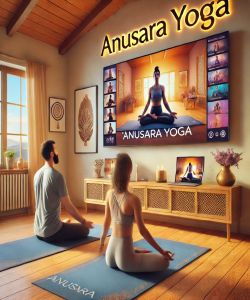
Overview of Anusara Yoga
Anusara Yoga is a modern, potent school of Hatha yoga, distinguished by its sophisticated integration of non-dual Tantric philosophy with a highly structured system of biomechanical alignment principles. It is not merely a sequence of physical postures but a comprehensive methodology designed to facilitate a profound connection between the practitioner's body, mind, and spirit. The foundational premise of Anusara is that every individual possesses an intrinsic goodness, a divine light that the practice seeks to reveal and express. This heart-oriented approach permeates every aspect of the discipline, encouraging practitioners to move from a place of inner awareness and self-acceptance. The practice is underpinned by the Universal Principles of Alignment™, a set of precise biomechanical guidelines that inform the execution of every asana, ensuring safety, therapeutic benefit, and the cultivation of optimal energy flow. This systematic approach allows for a deep exploration of physical capabilities while simultaneously fostering an attitude of reverence and joy. Anusara classes are renowned for their uplifting themes, which are skilfully woven into the physical practice, transforming the yoga mat into a crucible for personal growth and spiritual expression. The discipline demands both intellectual engagement with its philosophical concepts and rigorous physical application of its alignment principles, thereby creating a powerful, cohesive, and transformative experience. It is a robust system that challenges the body, informs the mind, and celebrates the heart, compelling practitioners to align their outer actions with their innermost intentions. Ultimately, Anusara Yoga serves as a powerful conduit for recognising and manifesting the inherent beauty and divinity within oneself and the world at large.
What is Anusara Yoga?
Anusara Yoga is a modern, principle-based system of Hatha yoga established to promote a deep sense of self-awareness and personal expression through physical practice. Its name, derived from Sanskrit, translates as ‘flowing with Grace,’ ‘following your heart,’ or ‘going with the flow of nature,’ which encapsulates its core philosophical orientation. It is a method that systematically integrates a life-affirming, non-dual Tantric philosophy with a set of elegant biomechanical principles known as the Universal Principles of Alignment™ (UPAs). This integration is the defining characteristic of the practice, differentiating it from other yoga styles that may focus more singularly on either physical execution or philosophical contemplation. Anusara is not a fixed series of postures; rather, it is an adaptable methodology that can be applied to any asana, empowering both teachers and students with a clear and effective framework for practice.
The practice is built upon three primary pillars:
Attitude (Iccha Shakti): This is the first principle, representing the power of the heart and the intention set for the practice. Every class and posture begins with the aspiration to connect with the divine spark within, fostering a spirit of love, reverence, and celebration.
Alignment (Jnana Shakti): This pillar involves the knowledgeable application of the Universal Principles of Alignment™. These precise biomechanical instructions guide the practitioner into a safe, stable, and optimally energised form in each posture, respecting the structural integrity of the human body.
Action (Kriya Shakti): This refers to the natural flow of energy and the physical expression that arises from the balanced interplay of Attitude and Alignment. It is the muscular engagement and energetic expansion that brings the posture to life, allowing the body to become a conduit for the expression of the heart’s intention.
Through this tripartite structure, Anusara Yoga provides a comprehensive and sophisticated pathway for practitioners to explore their potential, both on and off the mat.
Who Needs Anusara Yoga?
Practitioners Seeking Anatomical Precision: Individuals who desire a profound understanding of biomechanics and safe postural alignment will find Anusara’s Universal Principles of Alignment™ to be an invaluable framework. It is essential for those who wish to move beyond imitative practice and learn the underlying structural logic of asanas, thereby minimising risk and maximising therapeutic benefit.
Students Desiring Philosophical Depth: Those who are unfulfilled by purely physical yoga practices and seek a meaningful integration of philosophy will benefit from Anusara’s non-dual Tantric teachings. It is designed for individuals who wish to explore concepts of intrinsic goodness, divine play, and self-expression within the context of their physical practice.
Yoga Teachers and Trainees: Aspiring and established yoga instructors who require a systematic, non-dogmatic methodology for teaching asana will find the Anusara system exceptionally robust. Its clear principles provide a reliable foundation for effective cueing, sequencing, and the creation of thematically cohesive classes.
Individuals Recovering from Minor Physical Limitations: Under the guidance of a qualified instructor, the meticulous focus on alignment can be therapeutic. It is suitable for those who need to cultivate greater body awareness and rebuild strength and stability in a controlled, mindful, and structurally intelligent manner.
Practitioners Feeling Stagnant in Their Practice: Those who have reached a plateau in other yoga styles and seek renewed inspiration will find Anusara’s heart-oriented approach and alignment-based challenges invigorating. It offers a fresh perspective that can unlock new levels of physical and energetic expression.
Individuals Seeking a Stronger Mind-Body Connection: Anusara’s methodology demands focused attention on the subtle energetic and physical shifts within the body. It is therefore highly effective for anyone wishing to cultivate deep proprioception, interoception, and a more integrated state of being, where thought, feeling, and action are harmonised.
Origins and Evolution of Anusara Yoga
Anusara Yoga was founded in the late 1990s, emerging as a distinct and sophisticated system of Hatha yoga. Its originator, a charismatic American yoga teacher with a deep background in the alignment-focused tradition of Iyengar Yoga, sought to create a new methodology. This new system was designed to fuse the precise biomechanical principles of therapeutic alignment with the life-affirming and heart-centred philosophy of non-dual Tantra. The initial vision was to offer a practice that was not only physically rigorous and safe but also spiritually uplifting and emotionally resonant, grounded in the core tenet that every practitioner possesses an inherent, divine goodness.
During its first decade, Anusara experienced meteoric growth, attracting a substantial global following. This expansion was driven by its highly structured teacher training programmes and the codification of its core tenets: the ‘Three A’s’ (Attitude, Alignment, Action) and the Universal Principles of Alignment™ (UPAs). These principles provided teachers with a clear, replicable, and effective language for instruction, leading to a consistent and high-quality experience in Anusara classes worldwide. The system was celebrated for its intellectual rigour, its therapeutic efficacy, and its ability to foster a strong sense of community amongst its practitioners and teachers. It established itself as a powerful force in the modern yoga landscape, respected for its depth and integrity.
A significant turning point occurred which led to a crisis of leadership and a subsequent period of profound re-evaluation within the community. In the aftermath, the system underwent a critical evolution. Rather than collapsing, the dedicated senior teachers and the global community rallied to reform the organisation. This process led to the establishment of the Anusara School of Hatha Yoga (ASHY), a non-profit, teacher-led organisation. This democratisation marked a pivotal shift from a founder-centric model to a collaborative, community-governed one. Today, ASHY is responsible for maintaining the curriculum's standards, certifying teachers, and guiding the continued evolution of the Anusara methodology, ensuring its legacy of sophisticated alignment and heart-centred philosophy endures with enhanced transparency and collective stewardship.
Types of Anusara Yoga
Anusara Yoga is a singular, cohesive system rather than a style with disparate sub-types. However, classes are structured and designated based on intensity, focus, and practitioner level, all while adhering to the core Anusara methodology. These classifications represent different applications of the universal principles.
Anusara Basics/Foundations: This class type is meticulously designed for individuals new to Anusara Yoga or those who wish to reinforce their understanding of its foundational elements. The pacing is deliberate, with a strong emphasis on learning and applying the Universal Principles of Alignment™ (UPAs) in basic postures. The primary objective is to build a solid base of knowledge and physical awareness, ensuring a safe and intelligent progression into more complex practices. Verbal instruction is paramount, and the use of props is actively encouraged to support optimal alignment.
Anusara Mixed-Level/All-Levels: This is the most common format for an Anusara class. It is structured to accommodate a range of experience levels within a single session. The teacher presents a sequence of asanas with a clear progression, offering foundational versions of poses for less experienced students and more challenging variations for advanced practitioners. The unifying factor is the consistent application of the Anusara principles and the cohesive class theme, allowing everyone to explore their potential within a supportive group environment.
Anusara Advanced/Level 2-3: These classes are intended for seasoned practitioners who possess a robust understanding of the UPAs and a consistent physical practice. The sequencing is more complex, often building towards challenging peak poses such as inversions, arm balances, or deep backbends. A greater degree of stamina, strength, and flexibility is assumed. The philosophical themes are often explored with more nuance, and there is a greater expectation of student autonomy and self-awareness in applying the alignment principles.
Anusara Therapeutics: This application of the Anusara method focuses specifically on addressing physical imbalances, injuries, or chronic conditions. The practice is slow, mindful, and highly individualised, with an exacting focus on using the UPAs to restore structural integrity, release chronic tension, and re-educate neuromuscular patterns. It is less about athletic expression and entirely about using the principles of alignment as a tool for healing and functional restoration.
Benefits of Anusara Yoga
Enhanced Physical Safety and Stability: The rigorous application of the Universal Principles of Alignment™ provides a sophisticated biomechanical framework that significantly reduces the risk of injury. It educates the practitioner on creating stable foundations and balanced muscular engagement, promoting long-term joint health and structural integrity.
Therapeutic Physical Realignment: Through its precise focus on posture and form, Anusara Yoga systematically addresses and corrects common musculoskeletal imbalances. Consistent practice can alleviate chronic pain, improve posture, and restore more efficient and functional movement patterns throughout the body.
Cultivation of Intrinsic Strength and Flexibility: The methodology fosters a balanced development of physical capacities. Muscular Energy builds deep, integrated strength, while Organic Energy encourages safe and intelligent expansion and flexibility. This dual focus creates a body that is both powerful and supple.
Profound Mind-Body Integration: The practice demands a high level of concentration and interoception to apply its detailed alignment cues. This deep focus forges a powerful connection between mental intention and physical action, leading to a more unified and present state of being.
Philosophical Enrichment and Positive Outlook: The integration of non-dual Tantric philosophy provides a meaningful context for the physical practice. The core principle of recognising one’s intrinsic goodness serves to cultivate self-acceptance, resilience, and a more joyful and optimistic perspective on life.
Empowerment and Self-Expression: Anusara encourages practitioners to express themselves authentically through their physical form. By aligning the body with the intentions of the heart, the practice becomes a powerful vehicle for personal empowerment, creativity, and the confident expression of one’s unique spirit.
Systematic and Progressive Learning: The clear, principle-based structure of Anusara provides a logical and coherent path for student development. This systematic approach ensures that practitioners can build their skills and understanding progressively, leading to sustained growth and mastery over time.
Core Principles and Practices of Anusara Yoga
Attitude (Iccha Shakti): This is the foundational principle, establishing the heart's intention as the primary force behind the practice. It involves consciously setting a purpose that aligns with the highest aspects of the self, such as reverence, devotion, or celebration. This principle ensures that the physical practice is infused with meaning and serves a purpose beyond mere exercise.
Alignment (Jnana Shakti): This principle encompasses the body of knowledge related to the optimal positioning of the body in space. It is primarily executed through the Universal Principles of Alignment™, a sophisticated set of biomechanical instructions that guide the practitioner towards a state of balanced and integrated physical form.
Action (Kriya Shakti): This refers to the physical execution and energetic expression that arises from the harmonious interplay of Attitude and Alignment. It is the dynamic and balanced effort that brings the posture to life, ensuring that action is a direct and authentic expression of the heart’s intention and the mind’s knowledge.
Universal Principle 1: Open to Grace and Set the Foundation: This is the initial step in any posture. It involves consciously softening and expanding to connect with a greater universal power, while simultaneously establishing a stable and well-aligned physical base from which to build the asana.
Universal Principle 2: Muscular Energy: This principle involves consciously engaging muscles by drawing them from the periphery towards the core and onto the bone. This action creates stability, integration, and strength, compacting the body’s energy to a central focal point and providing the necessary support for safe movement and expression.
Universal Principle 3: Inner Spiral (Expanding Spiral): An upward and widening spiral of energy that runs from the feet up through the legs and pelvis. It involves an inward rotation of the upper thighs, which widens the back of the pelvis and creates space in the sacral region, serving to broaden and expand the body’s foundation.
Universal Principle 4: Outer Spiral (Contracting Spiral): A downward and narrowing spiral of energy that realigns the legs and pelvis. It involves an outer rotation that draws the tailbone down and narrows the sitting bones, creating length in the lower back and returning the pelvis and legs to a neutral, stable position.
Universal Principle 5: Organic Energy: An outward and expansive flow of energy from the core line of the body out to the periphery. This final principle is an act of expression, extending through the limbs and radiating outward from the established foundation of muscular stability, allowing the practitioner to fully inhabit and express the form of the posture.
Online Anusara Yoga
Unrivalled Accessibility and Geographic Neutrality: The online format dismantles all geographical barriers, granting practitioners access to highly qualified, certified Anusara instructors from anywhere in the world. This democratises instruction, allowing individuals in remote locations or those without local studios to engage directly with the authentic methodology without the requirement for travel.
Emphasis on Precise Verbal Cueing and Auditory Learning: In the absence of hands-on adjustments, online Anusara instruction places an absolute premium on the clarity and precision of verbal commands. This environment forces a heightened level of auditory focus from the student, fostering a deeper, more internalised understanding of the alignment principles as they learn to translate complex instructions into physical action.
Facilitation of Self-Reliance and Bodily Autonomy: The online space necessitates that practitioners take greater ownership of their practice. They must learn to feel and interpret the alignment within their own bodies, cultivating profound proprioception and self-awareness. This builds a robust internal compass for safe and intelligent practice that transcends dependency on an external instructor’s physical touch.
Opportunity for Repetition and In-Depth Study: A significant advantage of online platforms is the ability to record and replay sessions. This allows dedicated students to revisit complex instructions, deconstruct challenging sequences, and repeat classes to master specific techniques or principles at their own pace. This archival function transforms a single class into a lasting educational resource.
Creation of a Focused and Controlled Practice Environment: Practising from a personal space allows the individual to meticulously control environmental factors such as lighting, temperature, and ambient noise. This eliminates the potential distractions of a public studio, facilitating a more insular, concentrated, and meditative experience where the focus remains squarely on the internal process of the practice.
Fostering of a Disciplined and Intentional Global Community: While physically separate, online Anusara communities connect through a shared commitment to the practice’s disciplined methodology. Interactive elements like live-stream chats and dedicated forums create a virtual sangha, uniting practitioners globally through a common language of alignment and philosophy, thereby maintaining the crucial element of community support.
Anusara Yoga Techniques
The execution of any posture within the Anusara system follows a methodical application of its core techniques, specifically the Universal Principles of Alignment™. This step-by-step process ensures that each asana is built from a stable foundation and expressed with energetic integrity.
Establish the Intention (Attitude): Before entering the physical form, the practitioner must first establish the ‘Attitude’. This involves consciously connecting to the heart and setting a qualitative intention for the pose—be it one of reverence, strength, or joyful expansion. This mental and emotional preparation provides the energetic blueprint for the physical action to follow.
Set the Foundation and Open to Grace: The second step is to arrange the parts of the body that are in contact with the floor into a stable and well-aligned base. Simultaneously, the practitioner cultivates a receptive quality, a conscious softening and opening that acknowledges a universal force or intelligence. This creates a balanced state of active grounding and receptive spaciousness.
Engage Muscular Energy: From the established foundation, the practitioner must actively engage the muscles, drawing energy from the periphery of the body (hands, feet) inward towards a central point in the core of the pelvis. This action creates a powerful sense of integration, stability, and centralised strength, protecting the joints and preparing the body for deeper expression.
Activate the Inner Spiral: The next technique involves initiating an upward, expanding spiral of energy through the legs and pelvis. This is achieved through a subtle internal rotation of the thighs, which widens the sitting bones and creates more space and freedom in the lower back and hips. This spiral broadens the body’s base from within.
Initiate the Outer Spiral: To counterbalance the Inner Spiral and bring the body back to a neutral alignment, the practitioner then applies the Outer Spiral. This is a downward, contracting spiral that narrows the sitting bones and lengthens the tailbone towards the floor. This action brings strength and stability back into the pelvic girdle and legs.
Extend with Organic Energy: With the foundation and core fully stabilised, the final technique is to extend Organic Energy from the core outward through the limbs. This is an expressive, expansive action that radiates energy through the arms, legs, and crown of the head, allowing the practitioner to fully and freely express the ultimate form of the asana with both power and grace.
Anusara Yoga for Adults
Anusara Yoga is an exceptionally well-suited discipline for adults due to its inherent sophistication, adaptability, and emphasis on sustainable, intelligent practice. It moves far beyond the purely athletic pursuits that may appeal to a younger demographic, offering a multi-layered system that engages the mature practitioner on physical, intellectual, and philosophical levels. Its core methodology, the Universal Principles of Alignment™, provides a clear and logical framework for understanding and executing postures safely, which is of paramount importance for the adult body. This systematic approach allows for a highly nuanced practice that can be precisely modified to accommodate a wide spectrum of physical capacities, from the highly conditioned athlete to the individual managing chronic stiffness or pre-existing injuries. The emphasis is not on achieving an idealised external shape but on creating optimal internal alignment, which fosters long-term joint health and functional strength. Furthermore, the integration of non-dual Tantric philosophy offers a rich intellectual and spiritual dimension that resonates deeply with adult learners. It provides a meaningful context for the physical practice, encouraging self-reflection, acceptance, and the cultivation of a more positive and resilient outlook. This philosophical underpinning respects the adult’s capacity for abstract thought and introspection, transforming the practice from a mere physical regimen into a profound path of self-discovery. Anusara empowers adults to take ownership of their well-being, providing them with the tools to build a practice that is not only therapeutic and strengthening but also deeply enriching and personally expressive, honouring the wisdom and experience of a mature life.
Total Duration of Online Anusara Yoga
The standard total duration of a comprehensive online Anusara Yoga class is precisely structured to be one hour (1 hr). This timeframe is not arbitrary but is meticulously allocated to ensure that every essential component of the Anusara methodology is addressed with sufficient depth and without undue haste. The session is engineered to provide a complete and balanced experience, guiding the practitioner through a logical and coherent arc of practice. An instructor will typically commence the 1 hr session with a brief period of centering, followed by the introduction of a heart-oriented philosophical theme that will serve as the guiding intention for the practice. This is followed by a systematic warm-up, often incorporating preparatory movements that awaken the body and introduce the specific alignment principles to be focused on during the class. The central portion of the hour is dedicated to a progressively challenging sequence of asanas, where the Universal Principles of Alignment™ are applied with increasing complexity, often building towards a designated peak posture. This segment is the most physically demanding and requires sustained concentration. Following the peak of the practice, the instructor allocates time for a carefully designed cool-down sequence, which includes counter-poses and gentle stretches to neutralise the spine and soothe the nervous system. The final, non-negotiable segment of the 1 hr duration is dedicated to Savasana, or final relaxation, allowing for the complete integration of the physical, mental, and energetic work undertaken. This rigorous one-hour structure ensures a thorough, safe, and transformative practice.
Things to Consider with Anusara Yoga
Engaging with Anusara Yoga requires a considered approach, as its depth and precision demand more than a casual commitment. Foremost, a prospective practitioner must recognise that this is a highly technical system. The Universal Principles of Alignment™ are sophisticated biomechanical concepts that require focused mental engagement and a willingness to learn a specific, detailed vocabulary. It is not a practice that can be mastered through passive imitation; it demands active intellectual participation and a patient, methodical application of its principles. One must also consider the philosophical underpinnings of the practice. Anusara is inextricably linked to non-dual Tantra, and its classes are explicitly thematic and heart-oriented. Individuals seeking a purely physical, exercise-based form of yoga may find this philosophical integration either distracting or unappealing. Furthermore, due to the detailed nature of the alignment instructions, it is imperative to source a properly qualified and certified Anusara instructor. The efficacy and safety of the practice are contingent upon the teacher's ability to communicate the principles with clarity and accuracy. A poorly trained instructor can misinterpret or misapply the principles, leading to confusion or potential injury. Finally, practitioners must be prepared to cultivate profound self-awareness and honesty. The Anusara method encourages deep physical exploration, and it is the individual's ultimate responsibility to honour their body's limitations and work with intelligence and self-compassion, rather than aggressively pursuing an external form.
Effectiveness of Anusara Yoga
The effectiveness of Anusara Yoga is unequivocally established through its systematic and integrative methodology, which yields consistent and measurable results on physical, mental, and energetic levels. Its efficacy is not a matter of anecdotal success but is rooted in a logical and coherent structure that combines sophisticated biomechanical principles with a powerful philosophical framework. Physically, the Universal Principles of Alignment™ provide a reliable blueprint for creating postures that are both structurally sound and therapeutically potent. This precise, alignment-based approach is exceptionally effective at correcting postural imbalances, building deep, functional strength, and cultivating a safe and sustainable range of motion, thereby mitigating injury and enhancing physical performance. The results are tangible: improved posture, increased strength and flexibility, and a marked reduction in chronic pain for many practitioners. Mentally, the practice is highly effective in developing concentration and focus. The demand for meticulous attention to detail in applying the alignment principles trains the mind to remain present and engaged, fostering a state of mindful awareness that extends beyond the yoga mat. Philosophically, the integration of its heart-oriented teachings provides a powerful tool for psychological and emotional well-being. By consistently framing the practice within a context of self-acceptance and intrinsic goodness, Anusara is effective in cultivating resilience, a positive self-concept, and a more joyful engagement with life. The synthesis of these elements makes Anusara a profoundly effective discipline for holistic human development.
Preferred Cautions During Anusara Yoga
Practitioners must approach Anusara Yoga with a heightened state of vigilance and uncompromising self-responsibility. The sophistication of the Universal Principles of Alignment™, while therapeutic when applied correctly, carries an inherent risk of misapplication if approached with ego or inattention. It is imperative to understand that these principles are not rigid commands but intelligent guidelines to be adapted to one’s unique anatomy. The primary caution is to unequivocally prioritise internal sensation over external form; any instruction that elicits sharp, sudden, or unnerving pain must be immediately disregarded, regardless of the teacher’s directive. The practitioner’s own sensory feedback is the ultimate authority. Furthermore, there is a tendency in a principle-based system to become overly analytical, which can lead to a disconnect from the body’s innate wisdom. One must remain grounded in felt experience and avoid intellectualising the practice to the point of physical dissociation. For individuals with significant pre-existing injuries, particularly concerning the spine, sacroiliac joints, or shoulders, it is not merely advisable but mandatory to secure clearance from a qualified medical professional before commencing practice. Moreover, these conditions must be communicated clearly and without reservation to the instructor prior to every single session. The onus is on the individual to be the primary guardian of their own safety, employing the Anusara system as a tool for intelligent self-enquiry, not as a protocol to be followed blindly.
Anusara Yoga Course Outline
An introductory course to Anusara Yoga would be structured systematically to ensure a solid and progressive understanding of its core components.
Module 1: Introduction to the Three A’s and the First Principle:
Defining Attitude, Alignment, and Action.
Exploring the non-dual Tantric philosophy of intrinsic goodness.
Detailed instruction on the First Universal Principle of Alignment™: Open to Grace and Set the Foundation in basic standing and seated postures.
Module 2: Building Stability with Muscular Energy:
In-depth exploration of the Second Universal Principle™: Muscular Energy.
Practical application in foundational postures like Tadasana (Mountain Pose) and Adho Mukha Svanasana (Downward-Facing Dog).
Understanding the relationship between muscular engagement and joint stability.
Module 3: Creating Space with Inner Spiral:
Introduction to the Third Universal Principle™: Inner Spiral (Expanding Spiral).
Application in standing poses such as Virabhadrasana I & II (Warrior I & II) to create space in the hips and pelvis.
Focus on broadening the back body.
Module 4: Re-integration with Outer Spiral:
Understanding the Fourth Universal Principle™: Outer Spiral (Contracting Spiral) as a complementary force to Inner Spiral.
Applying the spiral actions together in twisting poses and lunges to achieve pelvic neutrality and power.
Module 5: Expression through Organic Energy:
Learning the Fifth Universal Principle™: Organic Energy.
Practising the outward extension of energy from a stable core in poses like Trikonasana (Triangle Pose).
Focus on creating the full, energetic expression of an asana.
Module 6: Integration and Flow:
Synthesising all Five Universal Principles of Alignment™ within a flowing sequence.
Practising smooth transitions between postures while maintaining integrity of alignment.
Introduction to basic Anusara sequencing and thematic weaving.
Module 7: Introduction to Loops:
Brief overview of the Seven Pairs of Energy Loops as refinements of the core principles.
Focus on the Shoulder Loop and Pelvic Loop to refine alignment in backbends and forward bends.
Module 8: Culmination and Personal Practice:
A full-length practice integrating all learned principles and a cohesive philosophical theme.
Guidance on how to apply the principles to develop a safe and intelligent personal practice.
Question and answer session to consolidate learning.
Detailed Objectives with Timeline of Anusara Yoga
A structured immersion into Anusara Yoga is designed to achieve specific, measurable objectives within a defined timeline, ensuring a deep and integrated learning experience.
Objective 1: Conceptual Mastery of the Foundational Philosophy (Weeks 1-2): By the end of the second week, the student will be able to articulate the meaning of the ‘Three A’s’ (Attitude, Alignment, Action) and the core philosophical tenet of intrinsic goodness. This objective will be met through thematic instruction, assigned readings, and group discussion, demonstrating a clear intellectual grasp of the system’s philosophical bedrock.
Objective 2: Proficient Application of Foundational Alignment (Weeks 3-4): During this period, the student will demonstrate consistent and correct application of the first two Universal Principles of Alignment™—Open to Grace and Muscular Energy—in all foundational standing and seated postures without prompting. Progress will be assessed through direct observation by the instructor, focusing on the student’s ability to create a stable and integrated base in asanas.
Objective 3: Integration of the Pelvic Spirals (Weeks 5-6): By the end of the sixth week, the student must exhibit a functional understanding of Inner and Outer Spirals. They will be able to actively apply these principles to create space and subsequent stability in the pelvic region during standing poses, lunges, and basic twists. This demonstrates a move from static stability to dynamic, nuanced alignment.
Objective 4: Embodiment of Full Energetic Expression (Weeks 7-8): In this phase, the objective is for the student to consistently integrate the fifth principle, Organic Energy, into their practice. They will demonstrate the ability to extend energy outwards from a stable, aligned core, moving from a technically correct posture to one that is also expressive and vibrant. Assessment will focus on the qualitative expression of the asana.
Objective 5: Autonomous Application in Novel Poses (Weeks 9-10): The student will be expected to apply the complete sequence of all five Universal Principles to postures they have not been explicitly taught. This objective tests their ability to generalise their knowledge and use the Anusara methodology as an analytical tool for intelligent and safe self-practice.
Objective 6: Basic Thematic Weaving (Weeks 11-12): The final objective is for the student to be able to connect their physical practice back to a philosophical theme. They will be able to articulate how a specific alignment instruction or physical sensation relates to the overarching heart quality introduced at the beginning of the practice, demonstrating full integration of the system’s components.
Requirements for Taking Online Anusara Yoga
To participate effectively and safely in an online Anusara Yoga class, the fulfilment of several non-negotiable requirements is essential. These stipulations ensure technical functionality, a conducive environment, and the student's readiness to engage with the discipline’s rigour.
A Reliable, High-Speed Internet Connection: A stable and robust broadband connection is paramount. Intermittent connectivity, lagging video, or poor audio quality will severely compromise the ability to receive and process the precise verbal cues that are central to online Anusara instruction, rendering the practice ineffective and potentially unsafe.
A Functional Electronic Device with Camera and Microphone: A laptop, tablet, or desktop computer with a clear, well-positioned camera and a functional microphone is required. The camera must be enabled so the instructor can provide essential visual feedback on alignment. The microphone is necessary for any communication or clarification.
A Dedicated and Unobstructed Practice Space: The practitioner must allocate a specific area for practice that is free from furniture, hazards, and clutter. The space must be large enough to accommodate the full range of motion required by the asanas, including extending the limbs fully in all directions without obstruction.
Possession of Essential Yoga Props: A non-slip yoga mat, two yoga blocks, a yoga strap, and at least one firm blanket are considered standard equipment. These props are not optional accessories; they are integral tools used in Anusara Yoga to support the body, facilitate correct alignment, and ensure accessibility of postures.
An Environment Free from Distraction: The practitioner is responsible for creating a sacrosanct environment for the duration of the class. This requires ensuring that family members, pets, and electronic notifications will not cause interruptions. The focus required for Anusara practice demands a quiet and self-contained setting.
Commitment to Punctuality and Full Attendance: The practitioner must commit to logging in several minutes before the scheduled start time to resolve any technical issues. The entire class, from the initial centering and theme-setting to the final Savasana, constitutes a complete arc. Partial attendance is disruptive and diminishes the integrity of the practice.
A Baseline of Physical Health: Individuals must be in a state of health that permits moderate physical exertion. It is the student’s responsibility to be aware of their physical limitations and to have sought medical clearance if they have any significant pre-existing health conditions.
Things to Keep in Mind Before Starting Online Anusara Yoga
Before commencing an online Anusara Yoga practice, it is critical to adopt a mindset of heightened self-discipline and proactive engagement. The virtual format fundamentally shifts the dynamic of responsibility from a shared space with the instructor to the individual practitioner. One must be prepared to function as the primary guardian of one's own safety and learning. This necessitates cultivating profound interoception—the ability to feel and interpret the body’s internal signals—as you will not have the immediate benefit of a teacher’s hands-on adjustment to correct misalignment. You must be your own first line of defence against overexertion or incorrect form. Furthermore, the sanctity of the practice space is entirely your own creation. You must be rigorous in establishing a physical and temporal boundary around your session, ensuring that the domestic environment does not intrude upon your focus. This includes managing all potential technological disruptions in advance. Be prepared to be an active, not passive, participant. The online medium requires you to be confident in using the technology to ask for clarification when a cue is unclear. Your progress will be directly proportional to your willingness to take ownership of your practice, to listen with exceptional acuity, and to translate complex verbal instructions into precise physical action with integrity and unwavering self-awareness.
Qualifications Required to Perform Anusara Yoga
The instruction of Anusara Yoga is a highly regulated and professional undertaking, governed exclusively by the Anusara School of Hatha Yoga (ASHY). To be qualified to teach Anusara is not a matter of informal apprenticeship but requires the successful completion of a rigorous, standardised training curriculum and subsequent certification. This ensures that any individual presenting themselves as an Anusara teacher possesses a deep, authentic understanding of its complex methodology, encompassing its Tantric philosophy, the Universal Principles of Alignment™, anatomy, and teaching techniques. The qualification structure is tiered, reflecting a teacher's level of experience, training, and assessment. The primary, officially recognised tiers are as follows:
Anusara Elements™ Yoga Teacher (AET): This is the entry-level qualification. It signifies that the teacher has completed a 200-hour Anusara Teacher Training programme, which includes a 100-hour Anusara Immersion and a 100-hour Teacher Training component. They are qualified to teach basic Anusara classes, explicitly referencing the Universal Principles of Alignment.
Anusara-Inspired™ Yoga Teacher: This is the next level of qualification. To achieve this status, a teacher must have completed the 200-hour training, accumulated a requisite number of teaching hours, and submitted a class video for review and approval by an official assessor. This designation indicates a more refined and integrated understanding of the methodology.
Certified Anusara® Yoga Teacher: This is the highest level of teaching credential within the Anusara system. It is a rigorous and demanding process that requires completion of a 300-hour advanced teacher training (for a total of 500 hours), extensive teaching experience, and passing a comprehensive certification exam and a formal, in-depth teaching assessment. This qualification denotes a high degree of mastery, skill, and dedication to the Anusara method.
Only teachers holding one of these official designations from ASHY are genuinely qualified to perform and instruct Anusara Yoga.
Online Vs Offline/Onsite Anusara Yoga
Online
The online modality of Anusara Yoga is characterised by its emphasis on auditory learning and the cultivation of profound practitioner autonomy. In this format, instruction is delivered primarily through highly precise and descriptive verbal cueing. The absence of physical, hands-on adjustments from the instructor compels the student to develop a heightened sense of internal awareness, or interoception, learning to interpret and apply the complex Universal Principles of Alignment™ based on their own felt sense. This environment inherently fosters self-reliance and deepens the practitioner’s personal understanding of their own body’s mechanics. The primary advantages are unparalleled accessibility, allowing students to connect with master teachers globally, and the convenience of practising in a controlled, personal environment. Furthermore, the potential to record and review sessions provides a powerful tool for dedicated study and refinement. The challenge lies in the requirement for intense self-discipline and the potential for subtle misalignments to go unnoticed if the practitioner’s camera is not optimally positioned or their self-awareness is not sufficiently developed. The sense of community, while present, is virtual and mediated through technology, lacking the tangible, energetic presence of a group practising in unison.
Offline/Onsite
Offline, or onsite, Anusara Yoga offers a multi-sensory and communal learning experience that cannot be fully replicated online. The most significant differentiator is the instructor's physical presence, which allows for direct, hands-on adjustments. These tactile cues can communicate subtleties of alignment and energetic flow that verbal instructions alone cannot convey, often leading to breakthroughs in understanding a posture. The instructor can also provide immediate, individualised visual feedback from multiple angles, ensuring a higher degree of safety and precision. The energy of a shared physical space—the collective breath, focus, and effort of the group—creates a powerful, supportive, and motivating atmosphere known as sangha. Students benefit from the direct use of a full range of studio props and the clear, unobstructed demonstration of postures by the teacher. The primary limitation of the onsite format is its geographical dependency; one is limited to the expertise available in their immediate vicinity. It also requires the logistical commitments of travel and adherence to a fixed studio schedule. The direct physical presence of a teacher, while beneficial, can sometimes foster a greater dependency, potentially slowing the development of the practitioner’s own internal guidance system.
FAQs About Online Anusara Yoga
Question 1. Is online Anusara Yoga suitable for absolute beginners?
Answer: Yes, provided they enrol in a designated ‘Basics’ or ‘Foundations’ course with a certified instructor who can provide clear, step-by-step guidance.
Question 2. What technology is essential for an online class?
Answer: A stable internet connection, a device with a screen (laptop or tablet is ideal), and a functional camera and microphone are non-negotiable.
Question 3. How can a teacher correct me online?
Answer: Instructors provide precise verbal cues and observe your alignment through your camera, offering real-time verbal adjustments and feedback.
Question 4. What are the Universal Principles of Alignment™ (UPAs)?
Answer: They are a set of five core biomechanical principles that provide a framework for safe and effective alignment in every yoga posture.
Question 5. Will I need to buy yoga props?
Answer: Yes. A mat, two blocks, a strap, and a blanket are considered essential equipment for a proper and safe practice.
Question 6. How does online Anusara differ from a pre-recorded yoga video?
Answer: Live online classes are interactive, allowing for real-time feedback and a connection with a teacher and community, unlike static, one-way video content.
Question 7. Is there a risk of injury when practising online?
Answer: Any physical activity carries risk. Anusara’s focus on alignment mitigates this, but you must practise with self-awareness and honour your body’s limits.
Question 8. What is the ‘heart quality’ or ‘theme’ in a class?
Answer: It is a philosophical concept from Tantra, such as ‘courage’ or ‘reverence,’ that provides a qualitative focus for the physical practice.
Question 9. Do I need to have my camera on?
Answer: It is strongly required. Without it, the instructor cannot provide any visual feedback, which compromises the safety and integrity of your practice.
Question 10. How long is a typical online class?
Answer: The standard duration is one hour, meticulously structured to cover all components of the practice.
Question 11. Can I ask questions during an online class?
Answer: This depends on the instructor’s protocol. Some allow for questions during class, while others reserve time before or after the session.
Question 12. What makes Anusara Yoga different from other Hatha yoga styles?
Answer: Its unique integration of non-dual Tantric philosophy with the specific Universal Principles of Alignment™ is its defining characteristic.
Question 13. Will online Anusara Yoga help with my posture?
Answer: Yes, its meticulous focus on biomechanical alignment is highly effective for improving postural awareness and correcting imbalances.
Question 14. Is it a physically demanding practice?
Answer: It can be. The intensity is scalable, but the precise muscular engagement required can be challenging and builds significant strength.
Question 15. What does ‘Anusara’ mean?
Answer: It is a Sanskrit term meaning ‘flowing with Grace,’ ‘following your heart,’ or ‘to be in the flow with nature.’
Question 16. How do I find a qualified online Anusara teacher?
Answer: You must consult the official teacher directory on the Anusara School of Hatha Yoga (ASHY) website to find certified and licensed instructors.
Question 17. Can I get certified to teach Anusara Yoga online?
Answer: Yes, the Anusara School of Hatha Yoga offers official online teacher training and certification programmes.
Conclusion About Anusara Yoga
In conclusion, Anusara Yoga stands as a formidable and highly sophisticated system within the landscape of modern Hatha yoga. It is a discipline of profound integrity, distinguished by its rigorous and intelligent synthesis of life-affirming Tantric philosophy with a precise, principle-based biomechanical methodology. Its value is not confined to the achievement of complex physical postures; rather, it resides in its power to facilitate a deep and authentic connection between the body, mind, and spirit. The Universal Principles of Alignment™ provide an unparalleled framework for safe, therapeutic, and powerful physical practice, empowering individuals with the knowledge to cultivate a structurally sound and sustainable relationship with their bodies. Simultaneously, its heart-oriented philosophical foundation provides a meaningful context that transforms the practice from a physical exercise into a potent vehicle for self-exploration and expression. Anusara demands intellectual rigour, physical discipline, and an open heart, and in return, it offers a clear and coherent path toward realising one’s highest potential. It is an uncompromising and comprehensive methodology designed for the discerning practitioner who seeks not an escape, but a deeper and more vibrant engagement with themselves and the world, grounded in the unshakeable premise of intrinsic goodness.