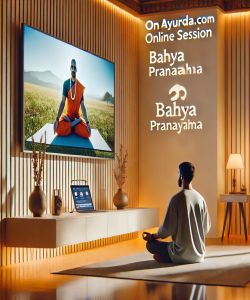
1. Overview of Bahya Pranayama
Bahya Pranayama represents a formidable and advanced yogic breathing technique, fundamentally centred on the external retention of breath. Its designation, derived from the Sanskrit terms ‘Bahya’ (meaning external or outer) and ‘Pranayama’ (meaning breath regulation or control), accurately describes its core mechanism. The practice is not a mere respiratory exercise but a sophisticated procedure involving the complete and forceful exhalation of all air from the lungs, followed by a deliberate and sustained suspension of breathing whilst the lungs remain empty. This state of external breath retention, known as Bahya Kumbhaka, is the critical phase of the technique. It is invariably accompanied by the simultaneous and powerful engagement of three specific muscular and energetic locks, or ‘bandhas’: the chin lock (Jalandhara Bandha), the abdominal lock (Uddiyana Bandha), and the root lock (Mula Bandha). This tripartite engagement, referred to as Tri-Bandha, serves to contain, concentrate, and redirect vital energy, or ‘prana’, within the body’s core. The practice demands considerable physiological control, mental fortitude, and a foundational understanding of yogic principles. It is unequivocally positioned within the higher echelons of Hatha Yoga, intended for seasoned practitioners who have already achieved mastery over more basic forms of pranayama. Its purpose is multi-faceted, targeting the purification of the physical body by stimulating the abdominal organs, the refinement of the mind by cultivating intense focus and stillness, and the awakening of dormant spiritual energies. Consequently, its application must be approached with profound respect, discipline, and the non-negotiable guidance of a competent instructor to ensure both its safety and its efficacy. It is a rigorous discipline designed to produce profound transformative effects on the practitioner's entire being.
2. What is Bahya Pranayama?
Bahya Pranayama is a highly specific and potent form of yogic breath control that is defined by the conscious and controlled suspension of breath after complete exhalation. This practice is also commonly referred to as External Retention Breathing, a literal translation that captures its essential action. Unlike pranayama techniques that focus on internal retention (Antara Kumbhaka), the defining characteristic of Bahya Pranayama is the deliberate creation of a pulmonary vacuum, a state where the lungs are devoid of air for a sustained period. This practice is invariably performed in a stable and upright meditative posture, such as Padmasana or Siddhasana, to facilitate correct diaphragmatic movement and spinal alignment. The technique is executed through a precise, multi-stage process that must be followed without deviation for it to be considered authentic Bahya Pranayama.
The core components of the practice can be delineated as follows:
- Rechaka (Complete Exhalation): The process commences with a deep inhalation followed by a forceful and total exhalation, expelling every possible particle of air from the lungs. This is not a passive release but an active and powerful muscular contraction of the abdomen and diaphragm.
- Bahya Kumbhaka (External Retention): Immediately following the complete exhalation, the practitioner suspends the breath. This holding of the breath externally, with empty lungs, is the central pillar of the technique. The duration of this retention is dictated by the practitioner’s capacity and must never be forced to the point of distress.
- Tri-Bandha (The Three Locks): During the phase of external retention, three specific bodily locks are engaged simultaneously. The chin is lowered to the chest to perform Jalandhara Bandha (chin lock), the abdomen is drawn inwards and upwards towards the spine to perform Uddiyana Bandha (abdominal lock), and the perineal muscles are contracted to perform Mula Bandha (root lock). The application of these three locks in unison is a non-negotiable aspect of the practice, serving to lock and channel pranic energy.
After holding for a comfortable duration, the locks are released in reverse order, and a slow, controlled inhalation follows, completing one cycle.
3. Who Needs Bahya Pranayama?
-
Advanced Yoga Practitioners Seeking Deeper Mastery: Individuals who have already established a consistent and proficient practice in foundational pranayama techniques (such as Nadi Shodhana and Kapalabhati) and asana require Bahya Pranayama to progress. It serves as a gateway to the more subtle and potent aspects of yogic discipline, challenging their physiological and mental control beyond intermediate levels.
-
Individuals Aiming to Master the Bandhas: The practice is an indispensable tool for those specifically focused on understanding and perfecting the three primary energetic locks (Mula, Uddiyana, and Jalandhara Bandha). Bahya Pranayama provides the most effective context for their simultaneous application, forcing a deep and integrated engagement that is difficult to achieve through other means.
-
Practitioners Seeking to Enhance Digestive and Abdominal Health: Those experiencing sluggish digestion, constipation, or other minor abdominal disorders may find the practice beneficial. The powerful contraction of Uddiyana Bandha during the breath hold creates a profound internal massage for the abdominal organs, stimulating peristalsis, improving blood circulation to the viscera, and toning the entire gastrointestinal system.
-
Individuals Cultivating Intense Mental Focus and Concentration: The act of holding the breath externally whilst maintaining three complex muscular locks demands absolute, unwavering concentration. This makes Bahya Pranayama a formidable training tool for the mind, sharpening focus, eliminating mental chatter, and preparing the practitioner for deeper states of meditation (Dhyana).
-
Those Engaged in Energetic or Spiritual Practices: For practitioners working with the concepts of prana, chakras, and kundalini, this pranayama is a critical technique. It is believed to powerfully purify the lower energy centres, stimulate the dormant kundalini energy at the base of the spine, and facilitate its upward movement through the central energy channel (Sushumna Nadi).
-
Individuals with Specific Reproductive System Concerns: Under strict expert guidance, the practice, particularly through the application of Mula and Uddiyana Bandha, can be utilised to tone and strengthen the muscles and organs of the pelvic floor and reproductive system, addressing certain non-acute functional issues. It is a powerful technique for regulating and sublimating sexual energy for spiritual purposes.
4. Origins and Evolution of Bahya Pranayama
The origins of Bahya Pranayama are deeply embedded within the classical texts of Hatha Yoga, a tradition that codified and systematised practices aimed at purifying the body to achieve higher states of consciousness. Its doctrinal and technical roots are most clearly articulated in seminal yogic scriptures such as the Hatha Yoga Pradipika and the Gheranda Samhita. These texts, composed several centuries ago, do not treat pranayama as a mere collection of breathing exercises but as a sophisticated science for the manipulation of prana, the universal life force. Within this framework, Bahya Pranayama was presented as an advanced and powerful technique, reserved for dedicated aspirants who had already achieved a significant degree of physical and mental purification through other preliminary practices like asana, shatkarma (cleansing techniques), and simpler forms of breath control.
Historically, the transmission of such potent knowledge was strictly governed by the guru-shishya parampara, the direct lineage of teacher to disciple. The technique was not public knowledge; it was imparted orally and demonstrated directly by a qualified master to a worthy student. This secretive approach was deemed necessary due to the practice's inherent power and potential for harm if performed incorrectly. The emphasis was on direct, experiential learning, with the guru closely monitoring the student's progress and making precise adjustments. The focus was less on the purely physiological benefits and more on its profound capacity to still the fluctuations of the mind and awaken dormant spiritual potential, specifically the kundalini shakti.
In the modern era, the evolution of Bahya Pranayama has mirrored the global dissemination of yoga. As yoga moved from secluded ashrams to a worldwide audience, knowledge of the technique became more accessible. Pioneering masters in the 20th century began to teach it more openly, albeit with stern warnings about its advanced nature. This shift has led to its inclusion in advanced teacher training curricula and workshops globally. However, this wider availability has also necessitated a renewed emphasis on its contraindications and the absolute requirement for qualified instruction. Whilst its form has remained largely unchanged, its modern presentation often places a greater initial emphasis on its verifiable physiological benefits, such as the toning of abdominal organs and the regulation of the endocrine system, serving as a more tangible entry point for the contemporary practitioner before they delve into its more subtle, energetic dimensions.
5. Types of Bahya Pranayama
Whilst Bahya Pranayama is a singular, specific technique, its application can be modified or focused to emphasise different aspects of the practice, which can be understood as distinct types or stages of application. These are not fundamentally different techniques but rather variations in intensity, duration, and internal focus, prescribed according to the practitioner’s level and objective.
-
Preparatory Bahya Pranayama (Sahita Kumbhaka): This is the foundational stage, intended for practitioners who are new to external retention. In this application, the duration of the Bahya Kumbhaka (external hold) is kept deliberately short and comfortable. The primary focus is on mastering the sequence of complete exhalation followed by the smooth, simultaneous application of the Tri-Bandha (the three locks). The objective is not to push physiological limits but to build the neuromuscular coordination and confidence required for the full practice. The emphasis is on correctness of form over the length of the breath hold.
-
Intensive Bahya Pranayama (Bandha Dridhata): This type is for the intermediate to advanced practitioner who has mastered the basic mechanics. Here, the central focus shifts to intensifying the engagement of the three bandhas and gradually increasing the duration of the Bahya Kumbhaka. The abdominal lock (Uddiyana Bandha) is pulled in more deeply, the root lock (Mula Bandha) is engaged with greater force, and the chin lock (Jalandhara Bandha) is secured firmly. The objective is to maximise the physiological and energetic effects of the practice by creating a powerful internal pressure system that stimulates the abdominal organs and pranic channels more profoundly.
-
Meditative Bahya Pranayama (Antar Mouna Sahita): This represents the most advanced application of the technique. The practitioner has already achieved complete comfort and stability in the physical aspects of the practice. The external mechanics become secondary, and the primary focus shifts entirely to the internal state of consciousness during the breath hold. The objective is to maintain a state of profound mental silence and witness-consciousness (sakshi bhava) within the stillness and void of the empty-lung state. The Bahya Kumbhaka phase is used as a direct portal into a meditative state, exploring the nature of consciousness when the normally ceaseless process of respiration is temporarily suspended. This type is purely for psycho-spiritual development and the attainment of higher states of awareness.
6. Benefits of Bahya Pranayama
-
Profound Stimulation of Abdominal Organs: The powerful contraction of the abdomen during Uddiyana Bandha provides a vigorous massage to the entire digestive system, including the stomach, intestines, liver, spleen, and pancreas. This action stimulates peristalsis, alleviates chronic constipation, and enhances the secretion of digestive enzymes, leading to improved overall digestive function.
-
Strengthening of the Core and Diaphragm: The forceful exhalation and the subsequent abdominal lock constitute an intense workout for the diaphragm and the deep core muscles. This leads to increased diaphragmatic strength and control, which is beneficial for all other respiratory functions and provides enhanced stability to the lumbar spine.
-
Endocrine System Regulation: The practice exerts significant pressure on various endocrine glands. Jalandhara Bandha (chin lock) stimulates the thyroid and parathyroid glands, helping to regulate metabolism. The pressure in the abdominal cavity is believed to positively influence the adrenal glands and the pancreas, contributing to better stress response and blood sugar regulation.
-
Enhancement of Mental Concentration and Stillness: The requirement to maintain a state of external breath retention while simultaneously holding three distinct muscular locks demands absolute and unwavering focus. This rigorous mental discipline trains the mind to remain one-pointed, effectively reducing mental chatter and preparing the practitioner for deep states of meditation.
-
Purification of Energetic Channels (Nadis): From a yogic perspective, Bahya Pranayama is a powerful tool for purifying the network of nadis, or subtle energy channels. By creating an energetic vacuum and then locking the prana within the core, the practice is believed to clear blockages and facilitate a more balanced and potent flow of vital energy throughout the system.
-
Stimulation of Psycho-Spiritual Energies: The combined application of the three bandhas is designed to contain and build pranic pressure at the base of the spine. This is considered a fundamental practice for awakening the dormant spiritual energy known as kundalini and encouraging its upward ascent through the central energy channel (Sushumna Nadi), leading to higher states of consciousness.
-
Toning of the Pelvic Floor and Reproductive System: The firm engagement of Mula Bandha (root lock) tones the muscles of the perineum and pelvic floor. This can improve the health and function of the reproductive and excretory organs, and is a key practice in the yogic tradition of Brahmacharya for the sublimation of sexual energy.
7. Core Principles and Practices of Bahya Pranayama
-
Primacy of Complete Exhalation (Rechaka): The foundational principle is the absolute and forceful expulsion of all residual air from the lungs. This is not a passive sigh but an active, muscular effort, engaging the abdominal muscles to press the diaphragm upwards. The practice's efficacy is directly contingent upon the emptiness of the lungs; any remaining air compromises the integrity of the subsequent locks and the intended physiological vacuum.
-
Mandatory External Retention (Bahya Kumbhaka): The core of the technique is the suspension of breath after exhalation. This principle dictates that the practitioner must hold this state of emptiness without strain. The duration is governed by individual capacity (yatha shakti), not ambition. The principle of non-violence (ahimsa) towards oneself is paramount; forcing the hold leads to physiological stress and negates the benefits.
-
Non-Negotiable Application of Tri-Bandha: Bahya Pranayama is defined by the simultaneous engagement of the three energetic locks during external retention. The practice is incomplete and potentially unsafe without them. The sequence is critical: first, the Jalandhara Bandha (chin lock) to seal the upper thoracic region; second, the Uddiyana Bandha (abdominal lock) to create the abdominal vacuum; and third, the Mula Bandha (root lock) to seal the pelvic floor. These locks must be held with firm, consistent pressure throughout the retention phase.
-
Unwavering Postural Integrity (Asana Sthira): The practice must be performed in a stable, upright meditative posture, such as Siddhasana, Padmasana, or a comfortable cross-legged position with a straight spine. This principle ensures that the diaphragm can move freely, the spine can remain elongated, and the body can remain perfectly still, preventing energy dissipation and allowing the practitioner to focus exclusively on the breath and the locks.
-
Systematic and Gradual Progression (Abhyasa): A core principle is that mastery is achieved through patient and consistent practice, not aggressive effort. The practitioner must first master the individual components—the exhalation and each bandha separately—before combining them. The duration of the breath hold and the number of rounds should be increased incrementally over a prolonged period, allowing the body and nervous system to adapt safely.
-
Prerequisite of an Empty Stomach: The practice must only ever be performed on a completely empty stomach, typically a minimum of four to five hours after a full meal. Performing this technique with food in the digestive system places extreme and dangerous pressure on the abdominal organs and can lead to severe discomfort or injury. This is an absolute and inviolable rule.
8. Online Bahya Pranayama
-
Requirement for Expert, Real-Time Instruction: The online delivery of Bahya Pranayama is viable only under the direct, synchronous supervision of a highly qualified and experienced instructor. Pre-recorded videos are wholly inadequate and dangerous for this advanced practice. The instructor must be able to observe the practitioner's posture, facial expressions, and abdominal movements in real-time via high-definition video to provide immediate corrective feedback and ensure safety.
-
The Practitioner's Unmitigated Responsibility for a Safe Environment: Unlike a controlled studio environment, the onus of safety falls squarely upon the online participant. This mandates the creation of a private, quiet, and entirely distraction-free space. The presence of other people, pets, or potential interruptions poses a significant risk during the intense concentration and breath-holding phases of the practice. The physical space must be clear of obstacles.
-
Inherent Limitations of Remote Anatomical Correction: The online format, by its very nature, precludes any form of physical adjustment from the instructor. Consequently, the practitioner must possess a heightened degree of self-awareness and proprioception. They must be able to interpret verbal cues with extreme precision and honestly assess their own physical limitations and sensations without the safety net of hands-on guidance. This demands a pre-existing level of bodily intelligence.
-
Accessibility to Specialised Global Expertise: A significant advantage of the online model is its capacity to transcend geographical barriers. Practitioners are no longer limited to local teachers and can access instruction from globally recognised masters of pranayama. This allows for a higher standard of teaching and the opportunity to learn from authentic lineage-holders, irrespective of the practitioner's physical location.
-
Necessity of Robust Technological Infrastructure: The efficacy of an online session is entirely dependent on the quality of the technology employed. This includes a stable, high-speed internet connection to prevent lag or disconnection, a high-quality webcam that provides a clear and well-lit view of the practitioner, and a sensitive microphone to ensure clear two-way communication. Any failure in this infrastructure compromises the safety and integrity of the instruction.
-
Structured and Disciplined Self-Practice: The online environment necessitates a greater degree of personal discipline. The practitioner must commit to a regular schedule and approach the practice with the same seriousness as an in-person session. The convenience of practising from home must not lead to a dilution of focus or a casual attitude towards this powerful and demanding yogic technique.
9. Bahya Pranayama Techniques
-
Assume the Correct Posture: Begin by seating yourself in a stable and comfortable meditative posture, such as Padmasana (Lotus Pose) or Siddhasana (Accomplished Pose). Ensure the spine is erect, the head is aligned with the spine, and the hands are resting on the knees in either Jnana or Chin mudra. The body must be completely still and prepared for the practice.
-
Prepare with Diaphragmatic Breathing: Close your eyes and take several deep, slow diaphragmatic breaths. Inhale to expand the abdomen and exhale to contract it. This serves to calm the nervous system, centre the mind, and establish a conscious connection with the respiratory muscles before commencing the main technique.
-
Deep Inhalation (Puraka): Take one slow, deep, and full inhalation through both nostrils, filling the lungs completely from the abdomen up to the clavicle. Ensure the inhalation is smooth and controlled, without any jerking motions.
-
Forceful and Complete Exhalation (Rechaka): Immediately following the full inhalation, exhale forcefully and completely through both nostrils. Actively contract the abdominal muscles to press the diaphragm upwards, expelling all possible air from the lungs. The exhalation should be swift but controlled, aiming to create a total pulmonary vacuum.
-
Engage the Three Locks (Tri-Bandha) During External Retention: With the breath fully expelled and held out (Bahya Kumbhaka), immediately engage the three bandhas in sequence. First, lower the chin to the hollow of the throat, engaging Jalandhara Bandha (Chin Lock). Second, pull the abdominal wall inwards and upwards towards the spine, engaging Uddiyana Bandha (Abdominal Lock). Third, contract the muscles of the perineum, drawing them upwards, to engage Mula Bandha (Root Lock).
-
Sustain the Hold with Awareness: Hold this state—breath suspended externally with all three locks firmly engaged—for a duration that is comfortable and well within your capacity. Do not strain or struggle. Maintain complete awareness of the sensations in the body and the stillness in the mind.
-
Release the Locks Systematically: When you are ready to inhale, release the locks in the reverse order of their application. First, release Mula Bandha. Second, release Uddiyana Bandha. Third, raise the head to a neutral position, releasing Jalandhara Bandha.
-
Slow, Controlled Inhalation (Puraka): After releasing all three locks, inhale slowly and deeply through both nostrils. The inhalation must be exceptionally smooth and controlled to avoid gasping, allowing the nervous system to remain calm. This completes one full round of Bahya Pranayama. Rest for several normal breaths before commencing the next round.
10. Bahya Pranayama for Adults
Bahya Pranayama is a practice exclusively suited for physically mature adults who possess a significant degree of self-discipline and prior yogic training. It is not a technique to be approached casually or without a solid foundation in both asana and simpler forms of pranayama. The intense physiological demands, specifically the forceful exhalation and the powerful contraction of the abdominal and pelvic muscles during the Tri-Bandha, require a developed and resilient musculoskeletal system. Furthermore, the practice exerts considerable pressure on the cardiovascular and nervous systems, which presupposes a healthy and stable adult physiology, free from any significant underlying medical conditions. The mental fortitude required to remain calm and focused during the suspension of breath—a state that can trigger primal survival anxieties—is typically developed through life experience and dedicated meditative practice, attributes more commonly found in a mature individual. For the adult practitioner, Bahya Pranayama offers a potent method for managing stress, enhancing metabolic function, and cultivating a profound sense of inner stillness that can counteract the pressures of modern professional and personal life. It serves as a powerful tool for self-regulation, enabling adults to gain mastery over their autonomic nervous system and emotional responses. However, this is contingent upon a realistic self-assessment of one's physical health and a commitment to learning the technique from a qualified instructor who can provide the necessary guidance and safety protocols appropriate for an adult's specific physiological context. It is a rigorous discipline, and its benefits are directly proportional to the maturity and respect with which it is practised.
11. Total Duration of Online Bahya Pranayama
A comprehensive and professionally conducted online session dedicated to the practice of Bahya Pranayama is typically structured to last for a total duration of 1 hr. It is imperative to understand that this does not imply a continuous, sixty-minute performance of the core technique itself, which would be both impossible and exceedingly dangerous. Instead, the 1 hr timeframe is a meticulously allocated period designed to ensure a safe, effective, and holistic practice. The session is systematically divided into distinct phases. It commences with a preparatory stage of approximately fifteen to twenty minutes, involving gentle limbering exercises (sukshma vyayama) and specific asanas, such as Marjaryasana (Cat-Cow Pose) and Pavanamuktasana (Wind-Relieving Pose), which are essential for warming up the spine and releasing any tension in the abdominal region. This is followed by a period of basic pranayama, such as Nadi Shodhana (Alternate Nostril Breathing), to calm the nervous system and prepare the mind for the intense focus required. The central part of the session, dedicated to the actual practice of Bahya Pranayama, would typically last for around twenty minutes. During this time, the practitioner would be guided through a limited number of rounds, perhaps between three and seven, with adequate periods of normal breathing and rest in between each round to allow the system to normalise. The final portion of the 1 hr session is non-negotiably reserved for a period of deep relaxation in Savasana (Corpse Pose) for at least ten to fifteen minutes, which is critical for integrating the profound energetic and physiological effects of the practice and ensuring the nervous system returns to a state of equilibrium.
12. Things to Consider with Bahya Pranayama
Engaging in the practice of Bahya Pranayama necessitates a number of critical considerations that are absolutely non-negotiable for safety and efficacy. Foremost among these is the imperative for qualified instruction. This is not a technique to be learned from a book, an article, or a pre-recorded video; it demands the real-time guidance of a seasoned instructor who can assess an individual's readiness and provide immediate, corrective feedback. Secondly, a thorough and honest self-assessment of one's physical health is mandatory. The practice is strictly contraindicated for individuals with high blood pressure, heart disease, hernias, stomach or intestinal ulcers, glaucoma, and epilepsy. It is also absolutely forbidden during pregnancy. Ignoring these contraindications is not merely inadvisable; it is an invitation to serious physical harm. Furthermore, one must consider the prerequisite level of experience. Practitioners must have already developed proficiency in foundational asanas and simpler pranayama techniques. Attempting Bahya Pranayama without this preparatory grounding is to build a complex structure on an unstable foundation. The timing of the practice is another crucial factor; it must only ever be performed on a completely empty stomach, typically waiting at least four hours after a main meal. Finally, practitioners must cultivate an attitude of patience and non-aggression towards their own bodies. The impulse to push limits and extend the breath hold prematurely must be rigorously resisted. The true progress in Bahya Pranayama is measured not by the length of the hold, but by the quality of stillness and control achieved within one's comfortable capacity.
13. Effectiveness of Bahya Pranayama
The effectiveness of Bahya Pranayama, when executed with precision under qualified supervision, is unequivocal and profound. Its potency stems from its direct and powerful influence on the body's core physiological and energetic systems. Physiologically, its effectiveness is most pronounced in the abdominal cavity. The forceful application of Uddiyana Bandha during the breath-hold phase creates a significant negative pressure, which acts as a powerful vacuum. This action vigorously tones the muscles of the abdominal wall, stimulates the liver, pancreas, and intestines, and drastically improves circulation to the visceral organs. This results in enhanced digestive fire (agni), improved peristalsis, and the efficient elimination of toxins, making it a highly effective practice for addressing a range of digestive and metabolic sluggishness. On a neurological level, the technique is exceptionally effective at toning the autonomic nervous system. The intense concentration required, coupled with the controlled suspension of breath, shifts the nervous system towards a parasympathetic-dominant state, inducing a state of deep calm and mental clarity. This makes it a formidable tool for managing stress and anxiety. Energetically, within the yogic framework, its effectiveness is considered paramount. The simultaneous application of the three bandhas effectively locks prana within the trunk of the body, preventing its dissipation and redirecting it into the central energy channel, the Sushumna Nadi. This is the fundamental mechanism for awakening higher states of consciousness, rendering Bahya Pranayama a supremely effective technique for the serious spiritual aspirant. Its results are not theoretical but are a direct, tangible consequence of its rigorous and systematic application.
14. Preferred Cautions During Bahya Pranayama
It is imperative that the practice of Bahya Pranayama is approached with the utmost caution and an uncompromising respect for its potency. This is an advanced technique, and any deviation from established safety protocols can lead to severe adverse effects. The primary caution is an absolute prohibition of the practice for any individual suffering from cardiovascular conditions, including high blood pressure, coronary artery disease, or a history of stroke. The significant shifts in intrathoracic and intra-abdominal pressure generated during the breath hold and bandha application can place an intolerable strain on a compromised circulatory system. Similarly, individuals with any form of hernia (hiatal, inguinal, or umbilical), stomach or intestinal ulcers, or recent abdominal surgery must strictly avoid this practice, as the powerful suction of Uddiyana Bandha can exacerbate these conditions to a dangerous degree. Glaucoma and other conditions involving high pressure in the eyes or brain are also absolute contraindications. The practice is to be completely avoided during pregnancy and menstruation. It is crucial to never force the breath hold; the retention must always remain within a comfortable capacity, and any sign of dizziness, light-headedness, or undue pressure in the head or chest is an immediate signal to cease the practice and rest. The practitioner must never undertake this pranayama when feeling physically unwell, fatigued, or emotionally agitated. The guidance of a competent and experienced teacher is not merely preferred; it is a mandatory prerequisite to ensure these cautions are understood and rigorously adhered to, safeguarding the practitioner from harm.
15. Bahya Pranayama Course Outline
-
Module 1: Theoretical Foundations and Ethical Considerations
- Introduction to the concept of Pranayama within the Eight Limbs of Yoga.
- Detailed explanation of Prana, Nadis, Chakras, and Kundalini.
- The specific role and purpose of Bahya Pranayama in Hatha Yoga.
- Comprehensive review of all contraindications, cautions, and safety protocols.
- The principle of Ahimsa (non-harming) in pranayama practice.
-
Module 2: Preparatory Physical Practices (Asana)
- Mastery of a stable and sustainable meditative posture (Siddhasana/Padmasana).
- Asanas for spinal flexibility and core awareness (e.g., Marjaryasana-Bitilasana).
- Practices to strengthen the diaphragm and abdominal muscles.
- Asanas for releasing tension in the pelvic region to prepare for Mula Bandha.
-
Module 3: Foundational Breathwork and Introduction to Bandhas
- Proficiency in deep diaphragmatic breathing.
- Practice of Nadi Shodhana (Alternate Nostril Breathing) to balance energy.
- Techniques for achieving complete exhalation (Purna Rechaka).
- Systematic, isolated instruction and practice of each of the three bandhas: Jalandhara Bandha, Uddiyana Bandha, and Mula Bandha, without breath retention.
-
Module 4: The Technique of Bahya Pranayama
- Step-by-step instruction on integrating the complete exhalation with external breath retention (Bahya Kumbhaka).
- Guided practice of combining Bahya Kumbhaka with the simultaneous application of Tri-Bandha (all three locks).
- Focus on the correct sequence of engagement and release of the bandhas.
- Techniques for establishing a comfortable and safe duration for the breath hold.
-
Module 5: Integration, Progression, and Advanced Application
- Developing a consistent personal practice routine.
- Methods for gradually and safely increasing the duration of retention and the number of rounds.
- Exploring the meditative and subtle energetic aspects of the practice.
- Integrating Bahya Pranayama into a broader meditation and spiritual practice.
- Final assessment of competence and safety in personal practice.
16. Detailed Objectives with Timeline of Bahya Pranayama
-
Weeks 1-2: Establishing the Foundation.
- Objective: To achieve absolute stability and comfort in a chosen meditative posture (e.g., Siddhasana) for a minimum of 15 minutes without physical distraction. To master full diaphragmatic breathing and develop the capacity for complete, forceful exhalation (Purna Rechaka).
- Timeline: By the end of week two, the practitioner must demonstrate a perfectly straight spine, controlled breathing, and the ability to fully empty the lungs on command.
-
Weeks 3-4: Mastery of Individual Bandhas.
- Objective: To learn and achieve proficiency in the isolated engagement of each of the three bandhas. The practitioner must be able to hold Jalandhara Bandha, Uddiyana Bandha, and Mula Bandha independently with precision and control, without incorporating breath retention.
- Timeline: By the end of week four, the practitioner must be able to demonstrate a clear and strong engagement of each lock upon verbal instruction and hold it for a short duration.
-
Weeks 5-6: Integration of Bandhas with External Retention.
- Objective: To successfully combine the complete exhalation, external breath hold (Bahya Kumbhaka), and the simultaneous application of Tri-Bandha into a single, fluid sequence. The initial focus is on the correctness of the technique, not the duration of the hold.
- Timeline: By the end of week six, the practitioner must be able to flawlessly execute 3-5 rounds of Bahya Pranayama with a short, comfortable hold, demonstrating correct sequencing of bandha engagement and release.
-
Weeks 7-8: Consolidation and Gradual Extension.
- Objective: To solidify the practice and begin a safe, incremental increase in the duration of the Bahya Kumbhaka. The practitioner will learn to monitor their own capacity (yatha shakti) and avoid any form of strain, focusing on maintaining stillness and composure during the hold.
- Timeline: By the end of week eight, the practitioner should have established a consistent daily practice and be able to comfortably hold the breath for a modestly extended duration, determined in consultation with their instructor.
17. Requirements for Taking Online Bahya Pranayama
-
Verifiable Prerequisite Yogic Experience: The participant must provide evidence of a consistent and established yoga practice, including proficiency in basic asanas and foundational pranayama techniques such as Nadi Shodhana and Kapalabhati. This is not a course for novices.
-
A High-Speed, Uninterrupted Internet Connection: A stable and robust broadband connection is non-negotiable. Any latency, freezing, or disconnection during a live instructional session poses a significant safety risk, as the instructor would lose visual contact at a critical moment.
-
High-Definition Video and Audio Equipment: The participant must use a high-quality webcam capable of transmitting a clear, well-lit image of their entire upper body and abdomen. A functional, clear microphone is equally essential for instantaneous two-way communication and feedback.
-
A Secure, Private, and Distraction-Free Practice Space: The practitioner must have access to a dedicated area where they will be completely undisturbed for the full duration of the session. The space must be quiet, clean, and free from any potential hazards or interruptions from family members, pets, or notifications.
-
Appropriate Attire and Equipment: The participant must wear clothing that is non-restrictive and allows the instructor to clearly observe the movements of the abdomen and chest. A yoga mat is required, and a firm cushion or block to ensure correct posture is highly recommended.
-
Full and Honest Disclosure of Medical History: Prior to commencement, the participant is required to complete a detailed health questionnaire and disclose any and all pre-existing medical conditions, particularly those relating to cardiovascular, respiratory, or digestive health. This is a mandatory safety protocol.
-
Commitment to Discipline and Self-Accountability: The online format demands a high level of personal responsibility. The participant must commit to attending all sessions punctually and to approaching the practice with the seriousness and focus it demands, understanding the inherent limitations of remote instruction.
18. Things to Keep in Mind Before Starting Online Bahya Pranayama
Before embarking on the online study of Bahya Pranayama, it is imperative to adopt a mindset of rigorous scrutiny and profound self-responsibility. The digital medium, while convenient, introduces variables that demand careful consideration. Firstly, you must meticulously vet the credentials and experience of the online instructor. Ascertain their lineage, their years of dedicated practice in advanced pranayama, and their experience in teaching this specific technique in a remote format. Do not accept superficial qualifications at face value. Secondly, you must acknowledge the inherent limitations of online learning for such a potent practice. There will be no hands-on adjustments; your safety is contingent upon your ability to precisely interpret verbal cues and, most critically, to listen to the subtle signals of your own body. This requires a pre-existing high level of proprioceptive awareness. You must commit to creating an environment that is not merely quiet but sacrosanct—a space free from any potential intrusion that could break your concentration during a vulnerable state of breath suspension. Furthermore, you must approach the technology as a tool, not a given. Test your internet connection, camera, and audio thoroughly before every session. A technological failure at a critical moment is not just an inconvenience; it is a safety breach. Finally, you must abandon any competitive or goal-oriented mindset. The objective is not to achieve a record-breaking breath hold, but to safely and correctly master a profound technique. Your progress must be measured by the quality of your practice, not its quantity.
19. Qualifications Required to Perform Bahya Pranayama
The authority to guide others in the practice of Bahya Pranayama is not conferred lightly; it is earned through rigorous training, extensive personal experience, and a deep theoretical understanding. It is a responsibility that far exceeds the purview of a standard yoga instructor certificate. An individual qualified to teach this advanced technique must possess a specific and verifiable set of credentials and attributes. Primarily, they must demonstrate a profound and long-term personal practice of Bahya Pranayama itself. This is not a technique that can be taught effectively from intellectual knowledge alone; the instructor must have an embodied understanding of its subtle effects, challenges, and energetic nuances, which can only be cultivated over years of dedicated self-practice.
Furthermore, the following qualifications are considered mandatory:
- Advanced Formal Certification: The instructor must hold an advanced certification from a reputable and recognised yoga institution, typically at the 500-hour level or higher (e.g., RYT-500), with a specific, documented specialisation in the science of Pranayama. General teaching certificates are insufficient.
- In-Depth Anatomical and Physiological Knowledge: A comprehensive, university-level understanding of the human respiratory, cardiovascular, and nervous systems is non-negotiable. The instructor must be able to clearly articulate the precise physiological mechanisms of the practice and, most importantly, understand the contraindications in anatomical terms.
- Verifiable Lineage and Mentorship: Ideally, the instructor should have learned the technique directly from a recognised master or within an established yogic lineage (parampara). This ensures that the transmission of knowledge is authentic and adheres to traditional safety protocols, rather than being a modern, potentially diluted interpretation.
- Proven Ability to Assess Practitioners: The qualified instructor must possess the diagnostic skill to accurately assess a student's physical and mental readiness for the practice, both initially and on an ongoing basis. They must have the authority and discernment to refuse instruction to individuals for whom the practice would be unsafe or inappropriate.
20. Online Vs Offline/Onsite Bahya Pranayama
Online
The primary advantage of engaging with Bahya Pranayama online is the unprecedented access it provides to world-class, specialised instructors, irrespective of geographical location. A practitioner in a remote area can receive direct, live instruction from a master based on another continent, something that was previously impossible. This format also offers a degree of scheduling flexibility and the convenience of practising within one's own familiar and private space, which can be conducive to deep focus for some individuals. However, the online modality carries significant and unavoidable limitations. The most critical drawback is the complete absence of physical touch and hands-on adjustments. An instructor cannot physically correct a practitioner’s posture or feel the subtle muscular engagements of the bandhas. This places a much heavier burden of self-awareness and accurate interpretation of verbal cues on the practitioner. Furthermore, the practice is entirely dependent on the flawless functioning of technology. A lagging video feed or a dropped connection at a crucial moment can disrupt the practice and compromise safety. The onus is also on the practitioner to create and maintain a truly sacred and distraction-free environment, a level of discipline that can be challenging to uphold at home.
Offline/Onsite
The traditional, offline method of learning Bahya Pranayama in the physical presence of an instructor remains the superior and safer modality. The foremost benefit is the instructor's ability to provide direct, immediate, and nuanced feedback, including subtle physical adjustments to posture and alignment that are impossible to convey verbally. The instructor can observe the practitioner's breath, skin tone, and minute physical cues for strain far more accurately in person, providing an unparalleled layer of safety. The dedicated environment of a yoga shala or studio is specifically designed to be free of distractions, fostering a collective energy of focus and discipline that can be highly supportive for such an intense practice. The practitioner is also able to ask questions and receive clarification in a more organic and immediate manner. The primary disadvantages of the offline model are its inherent limitations of geography and time. One is restricted to the qualified instructors available within a commutable distance, and must adhere to a fixed class schedule, offering less flexibility than the online alternative. This can make accessing high-calibre instruction difficult for those not living in major yoga centres.
21. FAQs About Online Bahya Pranayama
Question 1. Is online Bahya Pranayama safe for a complete beginner to yoga?
Answer: No. It is unequivocally unsafe and inappropriate. This is an advanced practice requiring a solid foundation in asana and basic pranayama, which must be established first.
Question 2. What is the most critical piece of equipment I need?
Answer: A stable, high-speed internet connection. Without it, the real-time link to your instructor is compromised, negating the safety and effectiveness of the session.
Question 3. Can I learn from a pre-recorded YouTube video?
Answer: Absolutely not. This is extremely dangerous. You require live, real-time feedback from a qualified instructor who can observe you and prevent you from performing the technique incorrectly or unsafely.
Question 4. How does an instructor correct my posture online?
Answer: Through precise verbal cues and by observing you from multiple angles if possible. They cannot physically adjust you, so your ability to listen and self-correct is paramount.
Question 5. What if I feel dizzy or light-headed during the online class?
Answer: You must immediately and safely stop the practice, rest in a relaxed position, and use the microphone to inform your instructor of your symptoms at once. Do not continue.
Question 6. Do I need a lot of space?
Answer: You need enough space to sit comfortably on a yoga mat with an unobstructed view for your webcam, in a room where you can be completely private and undisturbed.
Question 7. What happens if my internet connection drops during a breath hold?
Answer: You must immediately release the hold and breathe normally. Do not attempt to continue the practice. Wait for the connection to be re-established and for instruction from your teacher.
Question 8. Is an online course as good as an in-person one?
Answer: While online offers great accessibility, the in-person format is superior for safety due to the possibility of physical adjustments and more nuanced observation by the teacher.
Question 9. How do I know if an online instructor is qualified?
Answer: Scrutinise their credentials. Look for advanced certifications (e.g., RYT-500) with a specialisation in pranayama, ask about their personal experience with the practice, and seek testimonials from other students.
Question 10. Can I practise on a chair if I cannot sit on the floor?
Answer: This must be discussed with your instructor. While a firm, upright chair is a possible modification, it changes the dynamics of the pelvic floor and must be approved and guided by your teacher.
Question 11. What is the main benefit of the Tri-Bandha (three locks)?
Answer: The locks prevent the dissipation of pranic energy, create internal pressure to massage organs, and redirect subtle energy upwards along the spine.
Question 12. Must I keep my camera on the entire time?
Answer: Yes. It is a non-negotiable safety requirement. The instructor must be able to see you at all times to supervise your practice.
Question 13. Can this practice help with anxiety?
Answer: Yes, when performed correctly under guidance, its powerful effect on the parasympathetic nervous system can be highly effective in reducing anxiety.
Question 14. How many rounds should I do in a session?
Answer: This will be determined by your instructor based on your capacity. You will typically start with a very low number, such as 3 rounds, and build up gradually over time.
Question 15. Is it okay to practise if I have a mild cold?
Answer: No. Any nasal congestion or respiratory compromise makes this practice inadvisable and potentially harmful. You must be in good respiratory health.
Question 16. Why must the stomach be empty?
Answer: The powerful abdominal lock (Uddiyana Bandha) places intense pressure on the digestive organs. Performing this with food in your stomach can cause severe discomfort, indigestion, or even injury.
22. Conclusion About Bahya Pranayama
In conclusion, Bahya Pranayama stands as a formidable and highly specialised discipline within the vast science of Hatha Yoga. It is not to be misconstrued as a simple breathing exercise but must be recognised as a powerful technique for profound physiological, neurological, and energetic transformation. Its rigorous methodology, centred on complete exhalation, external breath retention, and the unwavering application of the three bandhas, demands a level of physical control, mental fortitude, and preparatory training that places it firmly in the domain of the advanced and dedicated practitioner. The benefits, ranging from the tangible toning of the abdominal viscera to the more subtle purification of the pranic body, are directly commensurate with the precision and discipline with which the practice is approached. Consequently, the role of a qualified, experienced instructor is not merely beneficial but absolutely indispensable. To attempt this practice without expert, real-time guidance is to court risk and forgo efficacy. Bahya Pranayama is a potent tool for self-mastery, offering a direct pathway to enhanced health, sharpened concentration, and deeper states of consciousness, but it yields its profound rewards only to those who approach it with the requisite seriousness, preparation, and profound respect for its inherent power