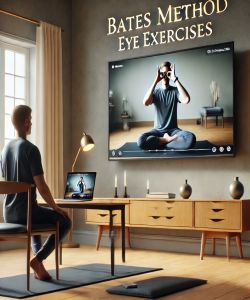
Overview of Bates Method Eye Exercises
The Bates Method is a system of alternative therapy predicated on the radical assertion that most functional sight defects, including myopia, hyperopia, and astigmatism, are not caused by permanent organic deformities of the eye but are the direct result of habitual mental and physical strain. Proposed by ophthalmologist William Horatio Bates, the methodology constitutes a comprehensive re-education of visual habits, seeking to restore the eye's natural function through the conscious elimination of this strain. It is not merely a collection of physical exercises; rather, it is a holistic discipline that integrates mental relaxation, controlled eye movement, and enhanced perceptual awareness. The core philosophy posits that the eye, like any other part of the body, functions optimally when it is free from tension. Consequently, its practices are designed to reacquaint the individual with the innate, relaxed state of seeing that, according to Bates, is characteristic of perfect vision. Techniques such as 'palming' for deep relaxation, 'shifting' to encourage natural saccadic eye movements, and 'centralisation' to refine focus are central to this process. The method operates entirely outside the paradigms of conventional ophthalmology, fundamentally rejecting the use of corrective lenses as a passive crutch that perpetuates the underlying habits of strain. Instead, it demands active, conscious participation from the individual to dismantle poor visual behaviours and cultivate new, correct ones. Its ultimate objective is not simply to exercise the ocular muscles but to fundamentally reprogramme the mind-eye connection, asserting that clear vision is a skill that can be relearned and maintained through diligent, mindful practice. The entire framework rests on three pillars: relaxation, movement, and centralisation, which together are believed to allow the visual system to revert to its intended state of effortless and clear function. This makes it a demanding, self-directed regimen requiring profound commitment.
What is Bates Method Eye Exercises?
The Bates Method is a disciplined system of visual re-education designed to improve eyesight by eliminating the purported root cause of most refractive errors: chronic, unconscious strain. It is fundamentally not a set of 'exercises' in the conventional sense of muscular exertion, which would be contrary to its core tenets. Instead, it is a series of practices and principles aimed at restoring the natural, relaxed, and mobile state of the visual system. Developed by William Horatio Bates, it is based on the heterodox premise that the shape of the eyeball, and thus its focal length, is dynamically altered by the action of the external eye muscles, which are themselves controlled by the state of the mind. According to this theory, mental stress manifests as physical tension in these muscles, leading to the elongation or shortening of the eyeball that results in conditions like myopia or hyperopia.
The method can be understood through its primary components:
A Counter-Orthodox Philosophy: It directly challenges the established ophthalmological view that refractive errors are caused by permanent, unchangeable defects in the eye's structure. It posits vision as a dynamic, trainable sense, akin to posture or coordination.
Relaxation as the Cornerstone: The absolute, non-negotiable prerequisite for clear vision within this system is the complete absence of strain. Techniques like 'palming', which involves covering the closed eyes with the palms of the hands to induce deep mental and physical relaxation, are central.
The Cultivation of Natural Movement: The method teaches that healthy eyes are in constant, minute, involuntary motion. Practices like 'shifting' and 'swaying' are employed to break the habit of staring, which is considered a primary form of visual strain, and to encourage the natural, dynamic scanning of the visual field.
The Principle of Centralisation: This refers to the natural law of vision where an individual sees best at the precise point of focus, with clarity diminishing towards the periphery. The method teaches techniques to enhance this central fixation, asserting that straining to see the whole field clearly at once leads to visual degradation.
In essence, the Bates Method is a self-directed mental and physical discipline aimed at unlearning poor visual habits and relearning the innate, effortless functioning of the eyes.
Who Needs Bates Method Eye Exercises?
Individuals Experiencing Digital Eye Strain: Those who spend prolonged periods engaged with digital screens and suffer from the resultant fatigue, dryness, headaches, and blurred vision. The method’s emphasis on relaxation, blinking, and dynamic focus is directed squarely at mitigating the effects of this modern occupational hazard.
Persons with Functional Refractive Errors: Individuals diagnosed with common vision conditions such as myopia (short-sightedness), hyperopia (long-sightedness), astigmatism (irregular corneal shape), and presbyopia (age-related focus difficulty) who are seeking an alternative approach to managing their vision.
Those Seeking to Reduce Dependence on Corrective Lenses: Individuals who view spectacles and contact lenses as an inconvenient or undesirable crutch and are motivated to invest significant personal effort in a system that purports to address the underlying causes of their visual deficiency.
Proponents of Holistic and Alternative Health: People who subscribe to a wellness philosophy that prioritizes natural, non-invasive methods and who believe in the body's inherent capacity for self-healing and improvement. They are drawn to the method’s focus on the mind-body connection and its rejection of purely mechanical interventions.
Professionals in Visually Demanding Fields: Pilots, surgeons, designers, artists, and other professionals whose livelihood depends on superior visual acuity and stamina. They may seek the method as a means of maintaining or enhancing their visual performance and preventing occupational strain.
Individuals with Light Sensitivity (Photophobia): The practice of 'sunning', a controlled exposure to light with closed eyes, is specifically intended to reduce flinching and discomfort associated with bright light, thereby normalising the eye's response to its environment.
Parents Seeking Non-Invasive Options for Children: Parents who are concerned about their children's developing eyesight, particularly the onset of myopia, and are exploring preventative or remedial techniques that do not immediately resort to corrective lenses, in the belief that early habits can be positively influenced.
Anyone Committed to Proactive Vision Health: Individuals without significant diagnosed issues who wish to engage in a preventative regimen to maintain healthy visual function, improve ocular comfort, and cultivate a greater awareness of their visual habits throughout their lives.
Origins and Evolution of Bates Method Eye Exercises
The genesis of the Bates Method lies in the unorthodox work of William Horatio Bates, a credentialed American ophthalmologist practising in the late 19th and early 20th centuries. Dissatisfied with the prevailing medical consensus, Bates began to question the Helmholtz theory of accommodation, which held that the eye focuses by changing the shape of the crystalline lens. Through his own observations, including retinoscopy on both human and animal subjects, Bates formulated a radical alternative. He contended that focus was primarily achieved by the action of the extrinsic oblique muscles, which alter the axial length of the eyeball itself. This led to his foundational and most controversial assertion: refractive errors like myopia and hyperopia were not the result of permanent organic malformations but were functional, caused by chronic strain on these external eye muscles, which in turn was a direct manifestation of mental tension.
Bates systematically dismantled the conventional wisdom of his time, arguing that spectacles, far from being a cure, were a harmful crutch that locked the eye into a state of strain, thereby preventing any possibility of natural recovery. He published his findings and proposed solutions in his 1920 book, "Perfect Sight Without Glasses," and through his self-published "Better Eyesight Magazine." His proposed remedy was not medical intervention but a system of re-education based on achieving mental and physical relaxation to allow the eye to resume its natural, effortless function. This marked a profound schism with the established ophthalmological community, which largely dismissed his theories as unscientific and unsubstantiated.
Following Bates's death, his work was carried forward and, in some cases, reinterpreted by a number of dedicated proponents. His most prominent successor was Margaret Darst Corbett, who established schools of vision education across the United States, popularising the method and training a new generation of teachers. Perhaps the most famous advocate was the author Aldous Huxley, who detailed his purported success with the method in his 1942 book, "The Art of Seeing," lending it significant intellectual credibility and public visibility. Over the decades, the Bates Method has evolved from its original formulation, with various instructors and schools refining techniques and placing different emphasis on its core components. Despite never gaining acceptance from mainstream science and medicine, it has persisted as a significant and enduring discipline within the realm of alternative health, continually adapted for new challenges such as the rise of digital eye strain in the modern era.
Types of Bates Method Eye Exercises
Palming: This is the cornerstone relaxation technique of the entire method. The practitioner vigorously rubs their hands together to generate warmth, then gently places the cupped palms over their closed eyes, ensuring no pressure is applied to the eyeballs. The objective is to block out all light and achieve a state of profound mental and physical relaxation, focusing on the perception of a perfectly black visual field, which Bates considered an indicator of complete relaxation.
Sunning: This practice is designed to normalise the eye's relationship with light and reduce photophobia. With the eyes closed, the practitioner faces towards the sun or a strong artificial light source. They then slowly and gently turn their head from side to side, allowing the light to fall evenly across the closed lids. This is never to be performed by looking directly at the sun with open eyes, which is unequivocally dangerous. The aim is to accustom the visual system to bright light, promoting relaxation rather than reflexive tensing.
Shifting and Swinging: These are dynamic relaxation techniques intended to break the habit of staring, which Bates identified as a primary cause of visual strain. Shifting involves moving the eyes and attention rapidly from one point to another in the visual field without attempting to see anything clearly. Swinging, such as the 'Long Swing', involves the practitioner standing with feet apart and gently twisting the entire body from side to side, allowing the visual world to flow past without fixing on any object. This induces a state of dynamic relaxation and encourages natural, saccadic eye movements.
Centralisation (Central Fixation): This is less an exercise and more a principle to be cultivated through practice. It involves learning to see the point of focus with maximum clarity while accepting that the periphery is less clear. Practitioners are taught to direct their attention to smaller and smaller parts of an object, consciously acknowledging that the part they are looking at directly is seen best. This combats the mental strain of trying to see an entire scene with equal clarity simultaneously.
Blinking: The method places significant emphasis on re-establishing a frequent, light, and effortless blinking pattern. Staring and infrequent blinking lead to eye strain and dryness. Practitioners are encouraged to blink regularly and without force to keep the eyes lubricated, cleansed, and relaxed, interrupting moments of fixed attention.
Benefits of Bates Method Eye Exercises
Reduction of Subjective Eye Strain and Fatigue: The method’s primary focus on relaxation and the elimination of staring habits is purported to lead to a significant decrease in the feelings of tiredness, tension, and discomfort commonly associated with prolonged visual tasks, particularly screen use.
Increased Awareness of Visual Habits: Practitioners develop a heightened consciousness of their own ingrained visual behaviours, such as squinting, staring, or furrowing the brow. This self-awareness is the first and most critical step toward consciously replacing detrimental habits with beneficial ones.
Enhanced Ocular Comfort: By promoting regular, gentle blinking and relaxing the muscles around the eyes, the method claims to improve eye lubrication and reduce symptoms of dryness and irritation, leading to greater overall physical comfort.
Cultivation of Mental Relaxation: Techniques such as palming are designed not only to relax the eyes but also to calm the central nervous system. Proponents report that regular practice contributes to a general reduction in mental stress and anxiety.
Improved Dynamic Visual Function: Practices like shifting and swinging are intended to restore the eye's natural, minute, saccadic movements. This is said to enhance the ability to scan the environment efficiently and to switch focus smoothly between different objects and distances.
Purported Improvement in Visual Acuity: The ultimate and most controversial claimed benefit is the improvement of sight itself. Adherents believe that by eliminating the root cause of strain, the eye can gradually return to its natural state of clear vision, potentially reducing the need for corrective lenses for conditions like myopia and hyperopia.
Reduced Sensitivity to Light: The practice of 'sunning' is specifically aimed at decreasing photophobia, allowing for greater comfort in bright environments and reducing the reflexive, strain-inducing habit of squinting in sunlight.
Enhanced Mind-Body Connection: The discipline requires a conscious and deliberate engagement with one's own perceptual processes, fostering a stronger connection between mental states and physical sensations, which extends beyond vision into general somatic awareness.
Core Principles and Practices of Bates Method Eye Exercises
Strain as the Sole Cause of Poor Vision: The foundational principle of the Bates Method is that all functional refractive errors—myopia, hyperopia, astigmatism—are caused by mental strain that manifests as chronic, improper tension in the extrinsic eye muscles. The method unequivocally rejects the orthodox view that these conditions are primarily due to permanent, organic defects in the eye’s structure. Consequently, the entire system is geared towards identifying and eliminating this strain.
Relaxation as the Absolute Prerequisite for Clarity: Perfect vision, according to Bates, is effortless. It cannot be achieved through force, effort, or trying to see. The primary practice, therefore, is the cultivation of profound relaxation in both mind and body. Techniques like palming are not merely for resting the eyes but are a means to teach the nervous system to let go of the deep-seated tension that is believed to distort the eyeball's shape and impair focus. All other practices are subservient to this state of relaxation.
Movement as Essential to Visual Vitality: The method asserts that healthy eyes are never still. They are in a state of constant, minute, involuntary motion (saccades). The habit of staring—fixing the eyes rigidly on a single point—is considered a primary manifestation of strain that paralyses this natural movement and degrades vision. Practices such as shifting and swinging are designed to break the stare and re-establish this essential, dynamic quality of sight.
Centralisation as the Law of Natural Vision: The visual system is designed to see one point with maximum clarity, with the perception of the periphery being less distinct. Bates called this 'central fixation'. Straining to see a large area with uniform clarity at once violates this natural law and leads to visual confusion and tension. The practice of centralisation involves consciously accepting this principle, directing attention to progressively smaller parts of an object to enhance clarity at the point of regard.
The Critical Role of Memory and Imagination: Bates held that vision is not a purely mechanical process but is intrinsically linked to mental faculties. Memory and imagination are considered essential for clear sight. If one can perfectly remember or imagine an object, the eyes will be relaxed enough to see it clearly when it is present. Therefore, visualisation techniques are employed to support and enhance the physical act of seeing, using the mind to guide the eyes into a state of relaxed function.
Online Bates Method Eye Exercises
Unrestricted Geographical Accessibility: An online format systematically dismantles all geographical barriers. Individuals in remote locations or in regions with no qualified local instructors gain direct access to expert guidance that would otherwise be entirely unavailable. This democratises access to the method on a global scale.
Enhanced Learning Flexibility: Online courses provide unparalleled scheduling flexibility. Sessions can be accessed from any location with an internet connection, eliminating travel time and associated costs. This allows for the seamless integration of visual re-education into demanding professional and personal schedules, promoting consistency of practice.
Self-Paced and Repetitive Learning: The digital nature of the content allows participants to progress at their own individual pace. Complex techniques or core principles can be revisited as many times as necessary through recorded sessions or supplementary materials, ensuring a thorough understanding and correct application, which is critical in a self-directed discipline.
Access to a Wider Range of Expertise: The online environment provides access to a global pool of instructors. A prospective student is no longer limited to the one or two practitioners in their vicinity but can select an instructor whose specialisation, teaching style, and philosophy best align with their specific needs and learning preferences.
Structured and Comprehensive Resource Libraries: Reputable online programmes offer a wealth of curated digital resources, including high-definition video tutorials, downloadable charts, written guides, and audio instructions. This repository of materials provides a robust support structure for learning and practice that often exceeds what is available in a typical offline setting.
Increased Anonymity and Comfort: For individuals who may feel self-conscious about their vision problems or are hesitant to participate in a group setting, the relative anonymity of an online course provides a more comfortable and private learning environment, which can be more conducive to the deep relaxation the method requires.
Direct Instructor Interaction and Community Support: Modern online platforms facilitate robust interaction. Live sessions allow for real-time questions and answers via video conferencing, while dedicated forums or community groups provide a platform for peer support and ongoing dialogue with the instructor and fellow students between scheduled sessions.
Bates Method Eye Exercises Techniques
Palming: The Technique for Deep Relaxation
Step 1: Preparation. Sit upright in a comfortable chair, ensuring your spine is straight but not rigid. Rest your elbows on a table or a cushion on your lap to avoid any strain in the shoulders or neck. Generate warmth by rubbing your palms together briskly for several seconds.
Step 2: Application. Close your eyes gently. Place your cupped hands over your eye sockets, with the heel of the palm resting on the cheekbone and the fingers on the forehead. The left palm should cover the left eye and the right palm the right eye, with the palms slightly overlapping at the bridge of the nose. Ensure no direct pressure is placed on the eyeballs themselves.
Step 3: Exclusion of Light. Adjust your hands to ensure that all light is completely excluded. The objective is to perceive a field of pure, uniform black. Do not force this perception; simply allow it to develop as you relax.
Step 4: Mental Focus. Breathe deeply and evenly. Direct your attention to the feeling of warmth from your palms. Recall a pleasant, relaxing memory or imagine a perfectly black object, such as a piece of velvet. The aim is to achieve a state of complete mental and physical passivity.
Step 5: Conclusion. After a minimum of five minutes, or longer if desired, gently remove your hands but keep your eyes closed. Allow your eyes a moment to readjust before slowly and gently opening them, blinking several times.
The Long Swing: The Technique for Dynamic Relaxation
Step 1: Stance. Stand with your feet approximately shoulder-width apart, with your knees slightly bent. Your arms should hang loosely at your sides.
Step 2: The Movement. Keeping your head and shoulders aligned with your torso as a single unit, begin to pivot your entire body from the ankles and hips, twisting gently from side to side like a pendulum. Do not turn your head independently.
Step 3: Visual Perception. As you swing, allow your eyes to remain open but passive. Do not attempt to focus on any specific object. Let the visual world appear to stream past in the opposite direction of your swing. The apparent motion of the room is the key feedback mechanism.
Step 4: Rhythm and Breathing. Maintain a smooth, continuous, and rhythmic swing. Breathe naturally and deeply in time with the movement. The goal is to induce a state of profound dynamic relaxation and to break the habit of a fixed stare. Continue for several minutes until you feel a sense of release and mental quietude.
Bates Method Eye Exercises for Adults
The application of the Bates Method for adults is a highly specific and demanding endeavour, fundamentally distinct from its use with children. The adult visual system is typically encumbered by decades of ingrained, suboptimal habits, often compounded by years of reliance on corrective lenses. These spectacles or contact lenses, within the Bates framework, are seen not as a solution but as a mechanism that perpetuates and even exacerbates the underlying condition of strain by providing a rigid, artificial focus. The primary challenge for the adult practitioner is therefore not simply to learn new skills, but to systematically dismantle a lifetime of deeply conditioned neuromuscular and mental patterns. This involves confronting the psychological dependence on corrective aids and the pervasive belief that visual decline is an immutable consequence of ageing or genetics. The method requires adults to engage in a rigorous process of self-observation, identifying subtle, unconscious habits of strain such as squinting during concentration, staring at digital screens, or tensing the neck and shoulders. The practices are tailored to address the consequences of modern adult life, particularly the intense visual demands of professional work environments. Relaxation techniques like palming become crucial tools for managing occupational eye fatigue, while dynamic movement exercises like swinging are employed to counteract the static, fixed gaze characteristic of prolonged computer use. For adults, the Bates Method is less a set of simple exercises and more a profound re-engineering of their entire perceptual relationship with the world, demanding a level of discipline, patience, and introspective commitment that is both its greatest challenge and, according to its proponents, its greatest strength. It is an active, not passive, path to visual improvement.
Total Duration of Online Bates Method Eye Exercises
The standard instructional unit for a live, interactive online Bates Method session is structured to have a total duration of approximately 1 hr. This specific timeframe is deliberately calibrated to be substantial enough to allow for the thorough introduction, demonstration, and guided practice of several core principles and techniques without inducing mental or visual fatigue in the participant. Within this 1 hr block, a skilled instructor can effectively deliver a balanced curriculum, typically comprising a brief theoretical overview, intensive practice of a primary relaxation technique such as palming, the introduction of a dynamic movement exercise, and a period for direct, personalised feedback and responses to participant queries. This duration is considered optimal for maintaining peak engagement and ensuring that the concepts presented can be absorbed and practised correctly under supervision. It is critical to understand, however, that this 1 hr session represents only the formal, instructional component. The Bates Method is not a regimen confined to discrete time slots; it is a holistic re-education of habits that must be integrated into all waking moments. The ultimate success of the method is therefore not contingent on the mere completion of these sessions but on the practitioner’s consistent, diligent application of the learned principles throughout their daily life. The 1 hr online class serves as the essential, foundational cornerstone for this continuous, self-directed practice, providing the necessary knowledge, guidance, and motivation required to pursue the long-term objective of visual improvement. It is the catalyst, not the entirety of the work.
Things to Consider with Bates Method Eye Exercises
Before embarking on the Bates Method, a number of critical factors demand sober consideration. Firstly, it is imperative to recognise its status as an alternative therapy. The method’s foundational principles and claimed efficacy exist entirely outside of, and in direct opposition to, mainstream ophthalmological science. It has not been validated by rigorous, large-scale, peer-reviewed clinical trials, and its tenets are firmly rejected by the established medical community. Consequently, one must manage expectations accordingly; this is not a medically sanctioned treatment but a self-directed programme of visual re-education. Secondly, the method demands a profound and unwavering commitment of time and personal effort. It is not a passive cure or a quick fix. Success, as defined by its proponents, is contingent upon consistent, daily practice and the conscious integration of its principles into every aspect of daily life. This requires a significant level of self-discipline and patience, as any perceived results are typically gradual and cumulative. Furthermore, the quality and integrity of instruction can vary enormously in an unregulated field. It is essential to conduct thorough due diligence to find a certified and experienced instructor who adheres to the core, safety-conscious principles of the method. Finally, and most importantly, the Bates Method should never be considered a substitute for professional medical care for eye diseases such as glaucoma, macular degeneration, or cataracts. Any individual with a diagnosed eye pathology must remain under the care of a qualified ophthalmologist, and should discuss any intention to start a new regimen, however non-invasive, with their medical provider.
Effectiveness of Bates Method Eye Exercises
The effectiveness of the Bates Method remains a subject of profound and deeply entrenched controversy, representing a fundamental schism between the paradigms of alternative wellness and conventional medical science. From a strictly empirical standpoint, the method lacks validation. The body of evidence produced by mainstream ophthalmology and optometry overwhelmingly concludes that there is no robust, scientific proof to support its claims of curing or improving refractive errors. Rigorous, controlled clinical trials are conspicuously absent, and the method's core theory regarding the mechanism of accommodation and the cause of refractive error is in direct contradiction to over a century of established biological and optical science. Consequently, the global medical and scientific consensus is that the method is ineffective for its primary purpose of correcting sight. Conversely, the system is sustained by a vast and persistent body of anecdotal evidence. For over a century, a continuous stream of individuals, including public figures like Aldous Huxley, have produced testimonials claiming significant, life-altering improvements in their vision, a reduction in eye strain, and a decreased dependence on corrective lenses. Proponents argue that the method's effectiveness cannot be measured by conventional clinical trials because its success is contingent on subjective, long-term factors such as the individual's state of mental relaxation, diligence in practice, and willingness to change ingrained habits—variables that are notoriously difficult to control in a laboratory setting. Therefore, its effectiveness must be understood as being unproven and unsubstantiated by scientific standards, while simultaneously being perceived as highly effective by a committed community of practitioners who value its holistic approach to visual wellness and report tangible personal benefits.
Preferred Cautions During Bates Method Eye Exercises
It is imperative to approach the practice of Bates Method techniques with rigorous caution and an uncompromising commitment to personal safety. Under no circumstances must this method be considered a replacement for professional ophthalmological diagnosis, treatment, or management of any eye disease. Conditions such as glaucoma, cataracts, retinal detachment, or macular degeneration require immediate and ongoing medical supervision, and any attempt to self-manage these pathologies with vision exercises is both irresponsible and exceedingly dangerous. Furthermore, the core principle of the method is the absolute elimination of strain; therefore, any technique that induces pain, discomfort, dizziness, or a sensation of increased pressure in the eyes must be ceased immediately. Such symptoms are a direct contravention of the method’s purpose and indicate incorrect application. A particularly stern warning must be issued regarding the practice of 'sunning'. While the technique involves exposure to light with closed eyelids, it must never be misinterpreted as an instruction to look directly at the sun. Gazing at the sun, even for a moment, can cause severe and irreversible retinal damage, including solar retinopathy and permanent blindness. This practice, if undertaken at all, must be performed with extreme care, for very brief periods, and with a full understanding of the inherent risks. Individuals must operate with a high degree of self-awareness, listening intently to their body’s signals and refusing to push beyond the limits of comfort. A consultation with a medical professional prior to commencing any new regimen is not merely advisable; it is a mandatory prerequisite for responsible self-care.
Bates Method Eye Exercises Course Outline
Module 1: Foundational Theory and Paradigm Shift
Introduction to the core principles of Dr. William Bates.
Deconstruction of the concept of 'strain' as the root cause of functional vision problems.
Understanding the philosophy of relaxation versus effort in seeing.
Initial self-assessment of personal visual habits and tension patterns.
Module 2: Mastering Deep Relaxation
Intensive instruction and guided practice of 'Palming'.
Techniques for achieving a perfect black field as an indicator of relaxation.
Integration of proper breathing techniques to enhance mental and physical calm.
Application of palming for immediate relief from eye fatigue and digital strain.
Module 3: Cultivating Dynamic Movement
Detailed instruction on 'Shifting' to break the habit of staring.
Practice of the 'Long Swing' and other swinging techniques to induce dynamic relaxation.
Understanding the importance of frequent, effortless blinking and re-establishing a natural blink reflex.
Exercises to encourage saccadic eye movements and improve visual tracking.
Module 4: The Principle of Centralisation
Theoretical understanding of 'Central Fixation' as the natural law of perfect vision.
Practical exercises using vision charts and real-world objects to enhance centralisation.
Techniques for focusing on progressively smaller details to improve acuity at the point of regard.
Application of centralisation to specific tasks such as reading text without strain.
Module 5: Integrating Light, Memory, and Imagination
Safe and correct practice of 'Sunning' (with closed eyes) to reduce light sensitivity.
Instruction on 'Visualisation' and the use of memory to aid clear sight.
Techniques for recalling familiar objects perfectly in the mind's eye to promote ocular relaxation.
Combining memory with physical seeing to produce moments of improved clarity ('flashes').
Module 6: Practical Application and Habit Integration
Strategies for applying Bates principles to demanding visual tasks: reading, driving, and computer work.
Developing a personalised daily practice routine.
Techniques for maintaining relaxed vision in stressful or challenging environments.
Long-term strategies for making the new visual habits unconscious and automatic.
Detailed Objectives with Timeline of Bates Method Eye Exercises
Initial Phase: The First Fortnight
Objective: To establish a consistent daily practice routine and break the primary habit of staring. The practitioner will master the correct technique of 'Palming' and perform it for a minimum of two dedicated sessions per day. The objective is to achieve a demonstrable reduction in subjective eye strain and to cultivate an acute awareness of personal tension habits, such as furrowing the brow or clenching the jaw during visual tasks. Success is measured by the ability to induce a state of relaxation consciously.
Foundational Phase: The First Month
Objective: To integrate dynamic movement into the visual repertoire. The practitioner will incorporate 'Shifting' and the 'Long Swing' into their daily routine, aiming to eliminate the static gaze. The goal is to make frequent, gentle blinking an automatic reflex. By the end of this period, the practitioner should be able to apply the principles of relaxation and movement during routine activities, such as walking or conversing, not just during formal practice sessions.
Consolidation Phase: Three Months
Objective: To apply the principle of 'Centralisation' to specific, demanding visual tasks. The practitioner will focus on seeing the point of regard with superior clarity while accepting the periphery as less distinct, particularly when reading. The key objective is to experience and learn to reproduce moments of spontaneously clearer vision, known as 'flashes'. This phase aims to build confidence that vision is not fixed and can be influenced by one's mental and physical state.
Advanced Application Phase: Six Months
Objective: To challenge the reliance on corrective lenses in safe, controlled environments. Under the guidance of an instructor, the practitioner may begin to spend short periods without glasses, applying the Bates principles to see. The goal is not complete abandonment of lenses but to prove the functional applicability of the method and reduce the psychological dependence on them. The practitioner will also master visualisation techniques, using memory to support and clarify sight.
Integration Phase: Ongoing
Objective: To make the principles of relaxed, dynamic vision unconscious and automatic. The distinction between 'practice time' and 'daily life' should dissolve. The correct visual habits become the default state, requiring minimal conscious thought. The long-term objective is the sustained maintenance of visual comfort and the highest level of natural acuity achievable for the individual, managed entirely through ingrained, healthy habits.
Requirements for Taking Online Bates Method Eye Exercises
A Reliable, High-Speed Internet Connection: Uninterrupted connectivity is non-negotiable. The service must be robust enough to handle high-quality, two-way video streaming without lag or disconnection, as this is essential for effective real-time instruction and interaction.
A Fully Functional Computing Device: A modern desktop computer, laptop, or large-format tablet is required. The device must be equipped with a high-resolution webcam, a clear microphone, and functional speakers to facilitate seamless communication with the instructor. A smartphone is generally considered suboptimal due to its small screen size.
A Dedicated and Controlled Physical Environment: The participant must have access to a private, quiet space that is free from any potential interruptions for the full duration of each session. The ability to control the ambient lighting within this space—to dim it for relaxation exercises or to access a window for natural light—is a mandatory requirement.
Technical Proficiency and Software Access: The individual must possess the basic technical competence to install, configure, and operate the specific video conferencing platform (e.g., Zoom, Skype) or learning management system designated by the instructor. This includes managing camera and microphone settings and navigating the software interface.
Commitment to Independent Practice: The online format necessitates a high degree of self-discipline. The participant must be prepared to implement the techniques and perform the practices independently and consistently between the guided online sessions, as there is no direct physical supervision to enforce this.
Appropriate Seating and Support: A comfortable, ergonomic chair that supports an upright posture is essential. Additionally, a table or stack of cushions of the correct height is required to support the elbows during 'Palming', ensuring that no strain is introduced into the neck or shoulders during this critical relaxation practice.
Access to Basic Materials: The participant may be required to have simple materials on hand, such as printed eye charts (which are typically provided digitally for self-printing), a pen, and a notebook for recording observations and progress as directed by the instructor.
Things to Keep in Mind Before Starting Online Bates Method Eye Exercises
Before committing to an online Bates Method course, it is crucial to understand that this format fundamentally shifts the locus of responsibility squarely onto the individual. The absence of an instructor’s physical presence demands a far greater degree of self-motivation, discipline, and introspective honesty than an in-person setting. You must be prepared to function as your own primary supervisor, meticulously structuring your environment to be conducive to learning and rigorously adhering to a schedule of independent practice. The convenience of remote learning is counterbalanced by the imperative for unwavering personal accountability. It is also essential to conduct exhaustive due diligence on the prospective instructor. In an unregulated digital marketplace, credibility is paramount. Scrutinise their certifications, teaching lineage, testimonials, and overall professional demeanour before any commitment is made. Be prepared for a process of gradual re-education, not an instantaneous remedy. The online format may make it tempting to seek rapid results, but the method’s success hinges on patient, consistent application over an extended period. You must approach this discipline with a mindset of active, critical engagement, prepared to observe your own visual habits with precision and to experiment with the techniques to understand how they apply to your unique condition. The screen that serves as your portal to learning can also be a source of the very strain you seek to eliminate; therefore, you must be prepared to manage your digital life with newfound consciousness and discipline, applying the principles learned even as you learn them.
Qualifications Required to Perform Bates Method Eye Exercises
The successful and safe instruction of the Bates Method demands a specific and multifaceted set of qualifications from the practitioner, often referred to as a Bates Method teacher or coach. It is critical to understand that this field operates largely outside the purview of governmental regulation, making the onus of vetting credentials fall entirely upon the prospective student. A credible instructor should possess a demonstrable and verifiable portfolio of qualifications. The primary credential to seek is:
Certification from a Recognised Training Body: The instructor should have successfully completed a comprehensive and lengthy training programme from an established and reputable organisation, such as the Bates Association for Vision Education (BAVE) in the United Kingdom or other similar international bodies. Such certification typically requires hundreds of hours of study in theory, practice, and pedagogy.
Beyond formal certification, several other qualifications are non-negotiable for a competent instructor:
Extensive Personal Experience: A teacher must have profound personal experience applying the method to their own vision. They should be able to speak with authority not just on the theory but on the practical, subjective experience of the journey, including its challenges and breakthroughs.
A Thorough Understanding of Ocular Anatomy and Physiology: While not medical doctors, qualified instructors must possess a robust working knowledge of the eye's structure and function. This is essential for communicating concepts clearly and for recognising situations or symptoms that fall outside the scope of the method and require referral to a medical professional.
Exceptional Pedagogical Skills: The ability to explain abstract concepts, demonstrate subtle physical techniques, and provide individualised, compassionate guidance is paramount. A teacher must be an excellent communicator and an astute observer, capable of adapting their approach to meet the unique needs of each student.
An instructor's qualification is therefore a composite of formal training, deep personal immersion, solid anatomical knowledge, and refined teaching ability. The absence of any of these components should be considered a significant disqualifier.
Online Vs Offline/Onsite Bates Method Eye Exercises
Online
The primary advantage of engaging with the Bates Method online is its profound accessibility. It entirely removes geographical constraints, granting individuals in any location access to a global roster of specialist instructors. This provides a breadth of choice that is impossible in a purely local context, allowing a student to select a teacher based on expertise and compatibility rather than mere proximity. The online format offers unparalleled flexibility in scheduling, enabling the integration of vision work into complex professional and personal lives without the logistical burdens of travel. Furthermore, digital platforms often provide a rich library of supplementary resources, such as recorded sessions for review, downloadable charts, and video tutorials, which can be accessed at any time to reinforce learning. The environment is self-paced and can feel more private and less intimidating for some individuals. However, the online model is not without its significant drawbacks. The instructor is unable to provide direct, hands-on physical feedback, which can be critical for correcting posture or the subtle application of techniques like palming. The method’s success is heavily dependent on the student's self-discipline and motivation, as the structure is inherently less rigid. Finally, the entire experience is mediated through a screen—the very device often responsible for the visual strain the method seeks to alleviate.
Offline/Onsite
The definitive strength of offline, in-person instruction is the immediacy and quality of feedback. An instructor can physically observe a student’s posture, subtle signs of tension in the face and neck, and the precise application of techniques, offering immediate, tactile corrections that are impossible to replicate remotely. This hands-on guidance can significantly accelerate the learning process and prevent the formation of incorrect habits. The shared energy and camaraderie of a group class can provide powerful motivation and a sense of community, fostering mutual support among participants. The environment is controlled and dedicated solely to the practice, free from the domestic and digital distractions inherent in a home setting. The disadvantages, however, are considerable. Access is strictly limited by geography, restricting choice to only those instructors who are physically present in the local area. Sessions are bound by a rigid schedule, offering little flexibility for those with demanding lifestyles. Onsite instruction is also typically associated with higher costs, factoring in venue overheads and travel expenses for both instructor and student. The choice between formats is therefore a direct trade-off between the unparalleled accessibility and flexibility of the online model and the high-fidelity, immediate feedback of the offline experience.
FAQs About Online Bates Method Eye Exercises
Question 1. Is the Bates Method scientifically proven?
Answer: No. Its core principles contradict established medical science, and it lacks validation from large-scale, peer-reviewed clinical trials.
Question 2. Can this method cure myopia or other refractive errors?
Answer: The method claims to improve vision by eliminating strain, but there is no scientific evidence it can cure or permanently reverse diagnosed refractive errors.
Question 3. Is it safe to do without supervision?
Answer: While many techniques are gentle, incorrect application, particularly 'sunning', can be dangerous. Professional guidance is strongly recommended.
Question 4. How long does it take to see results?
Answer: This is highly individual. Proponents report some benefits like reduced strain quickly, while changes in acuity are claimed to be gradual and cumulative over months or years.
Question 5. Do I have to stop wearing my glasses completely?
Answer: No. A responsible instructor will advise a gradual, cautious reduction in glasses use only in safe situations as comfort and clarity improve, never for critical tasks like driving.
Question 6. What technology do I need for an online course?
Answer: A reliable internet connection, a computer or tablet with a webcam and microphone, and proficiency with standard video conferencing software.
Question -7. Can the Bates Method help with eye diseases like glaucoma?
Answer: Absolutely not. It is not a medical treatment and must never be used as a substitute for professional ophthalmological care for any eye disease.
Question 8. Is it just a set of eye exercises?
Answer: No. It is a holistic system of visual re-education focusing on relaxation, movement, and mental habits, not muscular strengthening.
Question 9. Will I have to practise every day?
Answer: Yes. Consistency is considered essential for success. Daily practice and integration into daily habits are fundamental to the method.
Question 10. Are online courses as effective as in-person ones?
Answer: They offer greater accessibility but lack the direct, hands-on feedback of in-person instruction. Effectiveness depends on individual discipline.
Question 11. Can children benefit from this method?
Answer: Proponents believe it can be beneficial for children, but it requires a playful approach and significant parental involvement and supervision.
Question 12. What is 'palming'?
Answer: It is the core relaxation technique, involving covering the closed eyes with the cupped palms to block out light and induce deep mental relaxation.
Question 13. Is looking at the sun part of the method?
Answer: No. 'Sunning' involves facing the sun with closed eyes. Looking directly at the sun is extremely dangerous and must never be done.
Question 14. Why is blinking so important in the method?
Answer: Frequent, gentle blinking is emphasised to keep eyes lubricated, relaxed, and to prevent the strain caused by staring.
Question 15. Can it help with digital eye strain?
Answer: This is one of its most common applications. The focus on relaxation, blinking, and dynamic focus directly addresses the causes of computer-related eye fatigue.
Question 16. How do I find a qualified online instructor?
Answer: Seek instructors with certification from a recognised body like the Bates Association for Vision Education (BAVE) and scrutinise their experience and testimonials.
Question 17. Does the method work for astigmatism?
Answer: The method claims to address all functional refractive errors, including astigmatism, by reducing the strain believed to cause it. This claim is not medically substantiated.
Conclusion About Bates Method Eye Exercises
In conclusion, the Bates Method represents a fundamental and uncompromising dissent from the established doctrines of modern ophthalmology. It stands as a self-contained, holistic system of visual re-education, predicated entirely on the heterodox principle that functional sight defects are the consequence of habitual mental and physical strain, rather than immutable organic flaws. Its proposed solution is not surgical or prosthetic intervention, but a demanding, long-term process of unlearning detrimental visual habits and reinstating the natural, relaxed function of the eye-mind system. The schism between the method's complete lack of validation from empirical science and its century-long persistence through a dedicated community of practitioners and their anecdotal reports of success is profound and irreconcilable. It must therefore be appraised not as a medical treatment, but as an alternative, self-directed wellness discipline. Its utility and value are ultimately contingent upon an individual's philosophical alignment with its core tenets, their capacity for profound self-discipline and patience, and their willingness to assume total personal responsibility for their own perceptual habits. The Bates Method remains a compelling, if deeply controversial, path for those who seek to actively engage with and improve their vision outside the confines of conventional medical paradigms, demanding a commitment that is as much psychological and philosophical as it is physical.