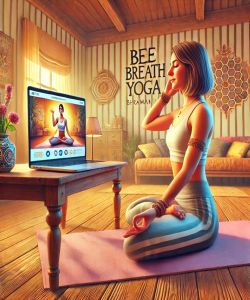
1. Overview of Bee Breath
Bee Breath, known formally as Bhramari Pranayama, constitutes a formidable and highly effective yogic breathing technique engineered to induce a state of profound mental tranquillity and physiological equilibrium. Its designation is derived from the Sanskrit term 'Bhramari', meaning 'bee', which accurately describes the characteristic low-pitched humming sound produced during exhalation. This resonant sound is not merely an auditory phenomenon; it is the core mechanism through which the practice exerts its powerful influence upon the human nervous system. By generating subtle yet pervasive vibrations throughout the cranium, Bee Breath directly stimulates the vagus nerve, promoting a rapid shift from a state of sympathetic arousal—characterised by stress and alertness—to one of parasympathetic dominance, which facilitates rest, digestion, and systemic restoration. The practice typically incorporates the Shanmukhi Mudra, a specific hand gesture that seals the sensory portals of the head, thereby intensifying the internalisation of focus and amplifying the vibratory effects. This deliberate sensory withdrawal, or Pratyahara, forces the practitioner’s awareness inwards, disengaging the mind from external distractions and dissolving the cyclical patterns of agitated thought. Consequently, Bhramari is not to be misconstrued as a simple relaxation exercise; it is a sophisticated psycho-physiological tool designed for the specific purposes of calming cerebral activity, mitigating anxiety, alleviating anger, and preparing the consciousness for deeper, more advanced states of meditation. Its application is therefore strategic, serving as a cornerstone practice for any individual committed to mastering the faculties of the mind and cultivating a resilient inner composure against the incessant pressures of the external environment. This technique stands as a testament to the profound understanding of mind-body interconnectedness inherent within classical yogic science, offering a direct and accessible pathway to immediate and demonstrable calm.
2. What is Bee Breath?
Bee Breath, or Bhramari Pranayama, is a specific category of controlled breathing exercise originating from the classical traditions of yoga. The practice is fundamentally defined by the conscious production of a deep, steady humming sound from the back of the throat during a prolonged and controlled exhalation. This sound is engineered to emulate the resonant drone of a black Indian bee, hence its Sanskrit name. The purpose of this unique vocalisation is to generate consistent vibrations that permeate the skull, directly acting upon the brain and nervous system to induce a state of calm and mental quietude. It is a potent technique for Pratyahara, the yogic principle of sensory withdrawal, as the internal sound and vibration command the practitioner’s full attention, effectively insulating the mind from external stimuli and internal chatter.
The practice can be executed in various postures, though a stable, seated position with an erect spine is standard for maximising efficacy. A critical component often integrated with the breath is a specific hand gesture, or mudra.
- Shanmukhi Mudra: This is the most common accompaniment to Bee Breath. It involves using the fingers to gently close the sensory openings of the head: the thumbs on the tragus of the ears, the index fingers on the eyelids, the middle fingers on the nostrils, the ring fingers above the upper lip, and the little fingers below the lower lip. This systematic closure drastically enhances the internalisation of the vibratory experience, making the humming resonate more profoundly within the practitioner's consciousness.
- Mechanism of Action: The sustained vibration is not arbitrary. It is understood to stimulate the parasympathetic nervous system, counteracting the body's stress response. This neurological shift is responsible for the immediate calming effects reported by practitioners, such as a reduction in heart rate, blood pressure, and mental agitation.
In essence, Bee Breath is a non-pharmacological, self-administered intervention for down-regulating the nervous system. It is a precise and powerful tool for managing stress, anxiety, and insomnia, whilst simultaneously cultivating a state of focused awareness essential for progressing into deeper meditative practices. Its simplicity belies its profound impact, making it a cornerstone technique in the yogic repertoire for mental and emotional regulation.
3. Who Needs Bee Breath?
- Individuals Experiencing High-Stress Environments: Professionals, executives, and any person subjected to constant high-pressure situations who require an immediate and effective tool for de-escalating mental and physiological stress responses during or after demanding periods. The practice provides a rapid method to reset the nervous system.
- Persons Afflicted with Anxiety and Panic Disorders: Those who suffer from generalised anxiety, social anxiety, or are prone to panic attacks shall find this technique indispensable. Its capacity to swiftly induce parasympathetic dominance directly counters the physiological cascade of an anxiety response.
- Sufferers of Insomnia and Sleep Disturbances: Individuals who struggle with initiating or maintaining sleep. Practicing Bee Breath prior to retiring for the night actively quiets the mind, disengages racing thoughts, and prepares the brain for a smooth transition into a restful state.
- Those with Hypertension: Patients diagnosed with high blood pressure must consider this a vital complementary practice. Regular and correct application has been demonstrated to contribute to the reduction of systolic and diastolic pressure by mitigating chronic stress, a key contributing factor.
- Practitioners Seeking to Deepen Meditative States: Yogis and meditators aiming to progress their practice. Bee Breath serves as an essential preparatory technique (a preparatory kriya) to achieve Pratyahara (sensory withdrawal), silencing the mind and making it adequately receptive for profound states of concentration (Dharana) and meditation (Dhyana).
- Individuals with Anger Management Issues: Persons who experience frequent bouts of anger, frustration, or irritability. The immediate soothing effect of the vibrations on the brain and nerves provides a non-destructive outlet and a mechanism for regaining emotional composure.
- Students and Academics: Those requiring enhanced concentration and memory retention. By calming mental agitation, the practice improves cognitive function, allowing for greater focus during study and a more efficient consolidation of information.
- Vocal Professionals: Singers, public speakers, and teachers who wish to improve the quality and resonance of their voice. The vibrations generated during the practice can help to relax the vocal cords and surrounding musculature, leading to a clearer and more sonorous vocal tone.
- Individuals Experiencing Tinnitus: For some sufferers, the internal, self-generated sound of Bee Breath can provide a form of sound therapy, masking the internal ringing and promoting a sense of calm and control over the condition.
4. Origins and Evolution of Bee Breath
The origins of Bee Breath, or Bhramari Pranayama, are firmly embedded within the ancient and esoteric canon of Hatha Yoga. Foundational references to this potent breathing technique appear in seminal yogic scriptures, most notably the Hatha Yoga Pradipika, a classical text dating back to the 15th century. Within this authoritative manual, Bhramari is described with concise yet powerful instruction, presented as a method for experiencing a profound internal resonance and for achieving a state of mental absorption. The text elucidates its practice as a means to awaken subtle inner sounds (Nadas), which are considered manifestations of a deeper consciousness. In its original context, Bhramari was not merely a tool for relaxation but a sophisticated technique for Pratyahara (sensory withdrawal) and a gateway to the higher limbs of Raja Yoga, including concentration and meditation. The humming was a sacred act, a way to connect the individual consciousness with the universal, vibratory nature of existence.
Over the centuries, as the teachings of Hatha Yoga were transmitted from guru to disciple, the practice of Bhramari was preserved, often as part of a more extensive and secretive system of pranayama. Its application remained largely within the confines of dedicated ashrams and monastic orders, intended for serious spiritual aspirants committed to the rigorous path of self-realisation. The emphasis was squarely on its capacity to pacify the restless mind, making it a critical preparatory step for entering the profound stillness required for Samadhi, or union with the divine. The integration of Shanmukhi Mudra, the gesture of sealing the senses, was an integral part of this advanced practice, underscoring its purpose as a tool for profound introversion.
In the modern era, the evolution of Bee Breath has seen its transition from a purely esoteric practice to a widely recognised therapeutic modality. As yoga disseminated globally throughout the 20th century, certain techniques were extracted and adapted for secular and wellness-oriented applications. Medical and psychological research began to validate the profound physiological effects of Bhramari, particularly its impact on the autonomic nervous system, stress reduction, and blood pressure regulation. Consequently, its evolution has been one of adaptation and wider accessibility. Whilst its spiritual objectives remain paramount for traditionalists, it is now also prescribed by therapists, taught in corporate wellness programmes, and practised by laypeople worldwide as a powerful, evidence-informed method for managing the stresses of contemporary life. This modern iteration, however, must not be divorced from its origins; its efficacy is rooted entirely in the ancient principles that first defined it.
5. Types of Bee Breath
The practice of Bee Breath, whilst appearing singular in its core objective, can be executed through several distinct variations. These types are differentiated by factors such as the audibility of the hum, the posture of the practitioner, and the inclusion or exclusion of specific mudras. Mastery of these variations allows for a tailored application of the technique, suited to different environments, intentions, and levels of practitioner experience. Each type retains the fundamental principle of generating a resonant humming sound on the exhalation.
- Silent Bhramari (Nira Shabda Bhramari): This is an advanced and subtle form of the practice. Instead of producing an audible external hum, the practitioner generates the humming sensation purely internally, imagining the sound and feeling its vibration without any vocalisation. This requires a high degree of concentration and is typically undertaken by experienced meditators to cultivate deep states of inner quietude. It is exceptionally discreet and can be performed in any setting without drawing attention.
- Loud Bhramari (Sa Shabda Bhramari): This is the most common and foundational type, where a distinct, audible humming sound is produced. The volume and pitch can be modulated, from a low-frequency drone to a higher-pitched resonance. This externalised sound provides immediate auditory feedback, making it easier for beginners to maintain focus and feel the physical vibrations. It is highly effective for expelling agitated energy and clearing the mind.
- Bhramari with Shanmukhi Mudra: This variation integrates the standard audible hum with the Shanmukhi Mudra, the "seven-gated seal." The practitioner uses their fingers to gently close the ears, eyes, and nostrils. This act of sensory closure dramatically amplifies the internal resonance of the hum, creating an intensely immersive experience. It is the most powerful type for achieving Pratyahara (sensory withdrawal) and is considered a direct precursor to deep meditation.
- Bhramari without Mudra: This is a simplified version where the practitioner performs the audible hum whilst keeping their hands resting on their knees or thighs. This type is ideal for beginners who may find the Shanmukhi Mudra distracting or for situations where a quick, uncomplicated calming practice is required. It focuses solely on the breath and the sound, making it highly accessible.
- Supine Bhramari (Shavasana Bhramari): In this variation, the practice is performed whilst lying flat on the back in the corpse pose (Shavasana). This is particularly beneficial for individuals who cannot sit upright for extended periods or for use as a technique to induce sleep. The physical posture promotes maximum relaxation, although maintaining alertness to prevent falling asleep during the practice is a key challenge.
6. Benefits of Bee Breath
- Immediate Neurological Regulation: Directly stimulates the parasympathetic nervous system, inducing a rapid shift from a 'fight-or-flight' state to a 'rest-and-digest' state. This provides an immediate and palpable reduction in feelings of stress and anxiety.
- Mitigation of Hypertension: Regular and sustained practice contributes to the lowering of high blood pressure. By calming the nervous system and reducing chronic stress levels, it addresses one of the primary drivers of hypertension.
- Alleviation of Mental Agitation: The resonant vibrations have a profoundly soothing effect on the mind and nerves. It is exceptionally effective in dissipating feelings of anger, frustration, and irritability, promoting a state of emotional equilibrium.
- Enhanced Sleep Quality: When practised before sleep, it actively quiets the incessant stream of thoughts (vrittis) that often impedes the onset of sleep. It is a formidable tool for combating insomnia and improving the overall depth and restfulness of sleep.
- Improvement in Concentration and Memory: By clearing the mind of distracting mental clutter and inducing a state of calm focus, the practice sharpens cognitive functions. This leads to improved concentration, enhanced learning capacity, and better memory retention.
- Facilitation of Pratyahara: As a core technique for sensory withdrawal, it prepares the mind for advanced yogic states. The internalised sound and vibration draw awareness inward, making it an essential preparatory practice for deep concentration (Dharana) and meditation (Dhyana).
- Relief from Tinnitus Symptoms: For certain individuals suffering from tinnitus, the self-generated internal sound of Bhramari can provide a form of therapeutic masking, reducing the perceived intensity of the ringing and offering a sense of control.
- Sinus and Respiratory Clearance: The vibrations generated in the cranial passages can help to clear congestion in the sinuses. The practice also strengthens the diaphragm and improves the efficiency of the respiratory system through controlled exhalation.
- Vocal Cord Health and Voice Improvement: The gentle, resonant humming can act as a massage for the vocal cords and larynx. This is beneficial for singers, public speakers, and teachers, helping to create a clearer, more resonant, and less strained vocal quality.
- Headache and Migraine Relief: Due to its calming effect on the nerves and its ability to improve circulation within the head, the practice can be effective in alleviating the intensity of tension headaches and, for some, mild migraines.
7. Core Principles and Practices of Bee Breath
- Postural Integrity (Asana): The practitioner must assume a stable and comfortable seated posture, preferably a traditional meditative pose such as Padmasana, Siddhasana, or Sukhasana. For those unable, sitting on a chair with a straight spine is acceptable. The spine must remain erect and the head, neck, and shoulders relaxed. This alignment is non-negotiable as it facilitates unobstructed breath flow and nervous system signalling.
- Controlled Inhalation (Puraka): The inhalation must be slow, deep, and silent, performed through both nostrils. The lungs should be filled to a comfortable capacity without any strain. The focus is on a smooth, controlled intake of air in preparation for the extended, resonant exhalation.
- Sustained, Resonant Exhalation (Rechaka): The core of the practice. The exhalation is performed whilst producing a continuous, low-pitched humming sound from the back of the throat, akin to that of a bee. The sound must be steady, smooth, and even throughout the entire duration of the exhalation. The mouth is to remain closed. The exhalation should be significantly longer than the inhalation, a key principle for activating the parasympathetic nervous system.
- Sensory Sealing (Shanmukhi Mudra): For the intensified version of the practice, the Shanmukhi Mudra must be applied correctly. The ears are sealed with the thumbs, the eyes with the index fingers, the nostrils are partially managed with the middle fingers (applied only during breath retention, if practised, or resting beside), and the lips are sealed by the ring and little fingers. This closure is gentle but firm, designed to block external sensory input and amplify the internal vibrations.
- Internalised Focus (Dharana): The practitioner’s awareness must be resolutely fixed upon the sound and the sensation of vibration within the cranium. The mind should not be allowed to wander. This unwavering focus on the internal phenomena is what drives the process of Pratyahara (sensory withdrawal) and silences mental chatter.
- Absence of Strain: At no point should there be any strain in the face, throat, jaw, or respiratory muscles. The hum should emerge effortlessly from a relaxed throat. Any tension is counterproductive and will negate the calming effects of the practice. The entire process must be one of controlled release, not forceful expulsion.
- Appropriate Environment: The practice must be conducted in a quiet, tranquil environment where disturbances are minimal. This allows the practitioner to tune into the subtle internal sounds and vibrations without being distracted by external noise, optimising the efficacy of the technique.
8. Online Bee Breath
- Unparalleled Accessibility and Convenience: The online modality removes all geographical and logistical barriers to accessing expert instruction. Practitioners can engage in guided sessions from any location with a stable internet connection, eliminating the time and expense associated with travel to a physical studio. This allows for the seamless integration of the practice into demanding personal and professional schedules.
- Creation of a Personalised Sanctuary: Practising online empowers the individual to create and control their own environment. One can curate a space that is personally tranquil, secure, and free from the potential social anxieties or distractions of a group class. This personal sanctuary enhances the ability to surrender to the practice and achieve profound states of introversion.
- Consistent and Repetitive Learning: Online platforms often provide access to recorded sessions. This facility allows the practitioner to revisit instructions, refine their technique, and practise at their own pace. The ability to repeat a guided session on demand reinforces correct methodology and accelerates the development of proficiency in a way that a single, ephemeral in-person class cannot.
- Access to Specialised, Global Expertise: The digital landscape provides access to a global pool of highly qualified and specialised instructors. A practitioner is no longer limited to the teachers available in their immediate vicinity but can seek out and learn from a master practitioner located anywhere in the world, ensuring the highest quality of guidance.
- Anonymity and Reduced Self-Consciousness: For individuals who may feel self-conscious about producing the humming sound or performing the mudras in the presence of others, the online format offers a degree of anonymity. This psychological comfort can lead to a less inhibited and more authentic practice, allowing for a deeper exploration of the technique's effects without fear of judgement.
- Enhanced Auditory Focus: Utilising high-quality headphones during an online session can create a uniquely immersive auditory experience. The instructor's guidance is delivered with clarity directly into the practitioner’s ears, and the practitioner's own humming sound can be perceived more intensely, thereby deepening the focus and the internal vibratory effect.
- Cost-Effectiveness: Online courses and sessions are frequently more economically viable than their in-person counterparts. The reduced overhead for the instructor often translates into more accessible pricing for the participant, making sustained, long-term practice a more feasible financial commitment.
9. Bee Breath Techniques
- Step One: Assume the Correct Posture. Sit erect in a stable meditative posture, such as Sukhasana (Easy Pose), Siddhasana (Accomplished Pose), or on a chair with your feet flat on the floor and spine straight. Ensure the head and neck are aligned with the spine. Rest your hands on your knees with palms facing upwards. Maintain a state of physical stillness and composure.
- Step Two: Centre the Mind and Body. Gently close your eyes. Take a few moments to bring your awareness to your physical body and your natural breath. Release any conspicuous tension in the shoulders, jaw, and facial muscles. The objective is to establish a baseline of calmness before commencing the formal technique.
- Step Three: Adopt the Shanmukhi Mudra (Optional but Recommended). Raise your hands to your face. Gently place your thumbs on the tragus cartilage of your ears to seal the ear canals. Rest your index fingers lightly over your closed eyelids. Place your middle fingers to the sides of your nostrils, ready to apply gentle pressure if needed, though typically they rest without pressure. Position your ring fingers above your upper lip and your little fingers below your lower lip. This gesture systematically closes the sensory gates.
- Step Four: Perform a Controlled Inhalation. Keeping your mouth closed, inhale slowly and deeply through both nostrils. Fill your lungs comfortably, but without creating any strain or tension in the chest or abdomen. The inhalation should be silent and smooth, a calm preparation for the vocalised exhalation.
- Step Five: Execute the Humming Exhalation. Keeping your mouth closed and your jaw relaxed, exhale slowly and steadily whilst producing a deep, low-pitched humming sound from the back of your throat. The sound should be continuous and even, resembling the resonant drone of a bee. Strive to make the exhalation as long and controlled as possible.
- Step Six: Focus on the Internal Vibration. Throughout the humming exhalation, direct your entire focus of attention to the sensation of the vibrations. Feel the resonance in your teeth, jaw, nasal passages, and throughout your entire cranium. This internal focus is the critical element of the practice.
- Step Seven: Complete the Round and Repeat. Once the exhalation is fully complete, this constitutes one round of Bee Breath. Lower your hands back to your knees if you were using the mudra, or keep them in place to begin the next round immediately. Commence again with the slow, deep inhalation. Perform a designated number of rounds, typically between five and ten, or for a set period.
- Step Eight: Conclude the Practice in Stillness. After your final round, remain seated with your eyes closed for a few minutes. Observe the residual effects of the practice—the stillness, the silence, and the subtle vibrations within. Absorb this state of quietude before gently opening your eyes.
10. Bee Breath for Adults
The application of Bee Breath for the adult demographic is of paramount strategic importance, serving as a potent and sophisticated tool for navigating the complex stressors inherent to modern adult life. In adulthood, the accumulation of professional, financial, and relational pressures frequently leads to a state of chronic sympathetic nervous system activation, manifesting as persistent anxiety, hypertension, mental fatigue, and compromised cognitive function. Bee Breath intervenes directly at this neuro-physiological nexus. It is not a passive relaxation method but an active self-regulation technique that empowers the adult to reclaim command over their own autonomic responses. For the professional contending with high-stakes decision-making and relentless deadlines, a few rounds of Bhramari can serve as an immediate circuit-breaker, dispelling mental fog and restoring the clarity required for effective performance. It functions as a non-pharmacological, readily accessible antidote to the adrenal fatigue that plagues the contemporary workforce. Furthermore, as adults age, they often face challenges related to sleep quality and cognitive decline. Bhramari offers a robust defence; its pre-sleep practice actively combats insomnia by calming the 'monkey mind', whilst its capacity to enhance concentration and soothe the nerves can support cognitive resilience. It is an exercise in mental hygiene, as critical for the adult mind as physical exercise is for the body. The practice requires a level of maturity and discipline that aligns well with the adult capacity for focused intention, moving beyond simple stress relief to become a foundational pillar for long-term mental and emotional well-being. It is, in essence, a master technique for the mature practitioner seeking not an escape from responsibility, but the inner fortitude and equilibrium required to meet it with unwavering composure and enhanced capacity. Its utility is not merely remedial; it is a proactive strategy for cultivating a resilient and high-functioning mind.
11. Total Duration of Online Bee Breath
The standard total duration for a comprehensive, instructor-led online Bee Breath session is precisely calibrated to be one hour (1 hr). This specific timeframe is not arbitrary but is methodically structured to ensure maximum efficacy and integration for the practitioner. A session of this length allows for a complete and unhurried pedagogical arc, beginning with essential preparatory instructions that establish the correct physical posture and mental disposition. A significant portion of the initial phase is dedicated to a detailed breakdown of the technique's mechanics, including the nuances of the breath, the production of the resonant hum, and the correct application of the Shanmukhi Mudra, if utilised. This foundational instruction is critical and cannot be rushed. Following this, the central part of the 1 hr session is devoted to guided practice, where participants engage in multiple rounds of Bhramari under the real-time supervision of the instructor. This extended practice period is vital for moving beyond a purely mechanical execution of the technique into a deeper, more embodied experience of its calming and vibratory effects. The one-hour duration provides ample time to build momentum and achieve a state of profound mental quietude. The concluding segment of the session is reserved for a period of silent observation and integration, where the practitioner can absorb the benefits in stillness. This final phase of stillness is as important as the practice itself, allowing the nervous system to settle completely into its newly established state of equilibrium. A shorter duration would compromise this essential structure, risking a superficial or incomplete experience, whilst a longer session could lead to fatigue for those new to the practice. Therefore, the 1 hr block is the optimal container for thorough instruction, deep practice, and complete integration.
12. Things to Consider with Bee Breath
Before engaging in the practice of Bee Breath, a number of critical factors must be rigorously considered to ensure both safety and efficacy. Foremost among these is the imperative to practise on an empty or near-empty stomach. Performing Bhramari after a substantial meal can cause physical discomfort and indigestion, as the practice involves diaphragmatic control that may exert pressure on a full abdomen, thereby distracting from and undermining the entire process. Furthermore, the selection of the environment is not a trivial matter. The practice must be conducted in a quiet, secluded space, free from the possibility of sudden interruptions or loud noises. The core purpose of Bhramari is to facilitate profound introversion and sensory withdrawal; an unpredictable environment will perpetually disrupt this process, rendering the technique ineffective. One must also consider the time of day. Whilst it can be practised at any time, its effects are most pronounced when performed in the early morning, to clear the mind for the day ahead, or late at night, to aid the transition into sleep. The practitioner's physical state is another key consideration. It is contraindicated to practise Bhramari during any active illness, particularly a fever, a severe cold, or an acute ear infection, as the vibrations and pressure changes could exacerbate these conditions. Finally, it is crucial to approach the practice with the correct mindset. Bee Breath is a powerful tool, not a panacea. It requires consistency, patience, and a respect for its subtleties. Approaching it with forceful effort or unrealistic expectations for immediate, miraculous results will only lead to frustration. The focus must remain on the process itself—the breath, the sound, the vibration—rather than on an aggressive pursuit of an outcome. Proper consideration of these factors is non-negotiable for anyone serious about harnessing the full potential of this formidable technique.
13. Effectiveness of Bee Breath
The effectiveness of Bee Breath is not a matter of subjective belief but a demonstrable psycho-physiological reality, rooted in its direct and powerful influence on the human autonomic nervous system. Its efficacy stems from a sophisticated mechanism involving controlled respiration and sustained cranial vibration. The prolonged exhalation, a core component of the technique, is a well-established method for stimulating the vagus nerve, the primary conduit of the parasympathetic nervous system. Vagal stimulation is the body's intrinsic mechanism for inducing a state of calm, actively countermanding the 'fight-or-flight' response governed by the sympathetic nervous system. This results in a measurable decrease in heart rate, a reduction in blood pressure, and a general down-regulation of the body’s stress-induced chemical cascade. The unique addition of the humming sound amplifies this effect exponentially. The constant, low-frequency vibration generated during the hum resonates throughout the skull, providing a gentle but pervasive massage to the brain and neural pathways. This vibratory action has a profoundly soothing effect, helping to disrupt the ruminative, high-frequency brainwave patterns associated with anxiety and mental agitation, and encouraging the emergence of slower, more coherent brainwave states like alpha and theta, which are correlated with relaxation and meditative consciousness. When combined with the sensory withdrawal of Shanmukhi Mudra, the practitioner is effectively insulated from external distractions, forcing the mind into a state of deep, focused introversion. The effectiveness of Bee Breath is therefore immediate, tangible, and profound. It is a precision-engineered tool that leverages the body's own neurological pathways to dismantle stress and cultivate a resilient state of mental equilibrium with an efficiency that few other non-pharmacological techniques can match. Its power lies in its directness; it does not merely suggest relaxation, it biochemically and neurologically commands it.
14. Preferred Cautions During Bee Breath
It is imperative that the practice of Bee Breath be approached with stringent adherence to specific cautions to prevent adverse effects and ensure its application remains safe and beneficial. This technique, whilst profoundly effective, is not universally appropriate without due consideration. Individuals suffering from an active and severe ear infection must abstain from the practice entirely. The vibrations and subtle pressure changes created within the cranial and Eustachian tubes can significantly exacerbate the condition, leading to increased pain and potential complications. Similarly, it is strictly ill-advised to perform Bhramari whilst experiencing a high fever, a severe head cold, or acute sinusitis, as the internal resonance can intensify discomfort and pressure within the head and sinus cavities. Practitioners diagnosed with extremely low blood pressure (hypotension) must exercise extreme caution; given that Bhramari is designed to lower blood pressure, its practice could potentially lead to dizziness or fainting in susceptible individuals. Such persons should only practise under the direct guidance of an experienced and knowledgeable instructor who can monitor their response. Furthermore, while Bee Breath is a powerful tool for managing general anxiety, those diagnosed with major clinical depression or other severe psychiatric conditions must not use this or any other advanced pranayama technique as a substitute for professional medical and psychological treatment. It can be a complementary therapy, but only with the explicit approval and supervision of their primary healthcare provider. Pregnant women, particularly in the later stages, should approach the practice with mindfulness, avoiding any form of breath retention or abdominal strain. The cardinal rule is the complete avoidance of any physical strain. The humming sound must be produced gently and without force; a strained or forced exhalation is counterproductive and places undue stress on the throat, lungs, and heart. Any sensation of pain, dizziness, or significant discomfort is a clear directive to cease the practice immediately.
15. Bee Breath Course Outline
1: Foundational Principles and Postural Alignment
- Point 1.1: Theoretical Framework: A comprehensive introduction to the origins, etymology, and neuro-physiological mechanisms of Bhramari Pranayama.
- Point 1.2: The Importance of Asana: Detailed instruction on achieving and maintaining a stable, erect, and comfortable seated posture (Sukhasana, Siddhasana, or chair-based). Focus on spinal alignment and physical stillness as non-negotiable prerequisites.
- Point 1.3: Breath Awareness: Foundational exercises in diaphragmatic breathing to establish conscious control over the mechanics of inhalation and exhalation, independent of the humming technique.
2: The Mechanics of Sound and Exhalation
- Point 2.1: The Art of Humming: Precise instruction on producing the correct resonant sound—a low-pitched, steady drone originating from the back of the throat. Exercises to modulate pitch and volume without strain.
- Point 2.2: The Extended Exhalation: Techniques for prolonging the exhalation phase significantly beyond the inhalation. Understanding the ratio of inhalation to exhalation and its direct impact on the parasympathetic nervous system.
- Point 2.3: Integrated Practice (Basic): Combining the controlled inhalation with the humming exhalation in simple, guided rounds without the use of mudras.
3: Mastery of Shanmukhi Mudra and Sensory Withdrawal
- Point 3.1: Anatomy and Application of the Mudra: A detailed, step-by-step guide to the correct and gentle placement of the fingers in Shanmukhi Mudra to seal the sensory gates. Emphasis on avoiding excessive pressure.
- Point 3.2: The Principle of Pratyahara: A deeper exploration of the yogic concept of sensory withdrawal and how Shanmukhi Mudra serves as the primary tool for achieving this state.
- Point 3.3: Integrated Practice (Advanced): Performing full rounds of Bhramari Pranayama incorporating the Shanmukhi Mudra, focusing on the amplified internal vibrations.
4: Refinement, Integration, and Autonomous Practice
- Point 4.1: Troubleshooting and Refinement: Addressing common challenges such as facial tension, inconsistent humming, and wandering attention. Techniques for refining the practice for a smoother, deeper experience.
- Point 4.2: Structuring a Personal Practice: Guidance on determining the appropriate duration and frequency of personal practice based on individual needs and goals (e.g., for stress, sleep, or meditation).
- Point 4.3: The Concluding Stillness: Instruction on the critical importance of the post-practice period of silent observation to integrate the effects and solidify the state of calm before concluding the session.
16. Detailed Objectives with Timeline of Bee Breath
Phase One: Foundational Mastery (Initial Quarter of the Course)
- Objective 1: By the end of this phase, the participant shall demonstrate complete proficiency in establishing and maintaining a stable, erect meditative posture for the full duration of the practice period without physical strain or distraction.
- Objective 2: The participant will have mastered the technique of deep, silent, diaphragmatic inhalation, demonstrating conscious control and the ability to fill the lungs to a comfortable capacity.
- Objective 3: The participant shall be able to produce a consistent, low-pitched humming sound during exhalation, maintaining a steady tone and volume for a minimum sustained duration. Initial focus is on sound production, not length.
Phase Two: Technique Integration and Extension (Median Half of the Course)
- Objective 4: The participant will achieve a controlled exhalation-to-inhalation ratio where the humming exhalation is demonstrably longer than the inhalation, a key requirement for parasympathetic activation.
- Objective 5: The participant shall master the correct, gentle, and precise application of Shanmukhi Mudra, being able to assume and hold the position comfortably without exerting undue pressure on any sensory organ.
- Objective 6: By the culmination of this phase, the participant will be able to seamlessly integrate posture, breath, sound, and mudra into a fluid sequence, performing multiple consecutive rounds of the complete Bhramari Pranayama technique under guidance.
Phase Three: Internalisation and Autonomy (Final Quarter of the Course)
- Objective 7: The participant’s primary focus will have shifted from external mechanics to the internal experience. They will demonstrate the ability to maintain unwavering concentration on the cranial vibrations throughout the practice.
- Objective 8: The participant will have developed the capacity for self-correction, able to identify and rectify common faults such as facial tension or inconsistency in the hum without instructor prompting.
- Objective 9: Upon course conclusion, the participant shall be fully capable of structuring and executing an autonomous personal Bee Breath practice, tailored to their specific needs (e.g., stress reduction, sleep preparation), and will understand the critical role of the post-practice integration period of silence. They will be an independent, proficient practitioner.
17. Requirements for Taking Online Bee Breath
- A Stable and High-Speed Internet Connection: This is a non-negotiable technical requirement. An intermittent or slow connection will disrupt the flow of instruction, prevent real-time feedback, and compromise the immersive quality of the guided practice, rendering the session ineffective.
- A Functional Audio-Visual Device: The participant must possess a computer, tablet, or smartphone equipped with a functioning camera and microphone. The camera is essential for the instructor to observe posture and technique for correction, while the microphone is necessary for communication and for the instructor to potentially assess the quality of the hum.
- A Private, Quiet, and Undisturbed Space: The participant is required to secure a physical space where they will be completely free from interruptions for the entire duration of the session. The presence of other people, pets, or background noise such as televisions or phones is strictly prohibited as it fundamentally undermines the core objective of sensory withdrawal.
- Appropriate Seating and Attire: The participant must have a yoga mat and cushion, or a suitable chair that allows for an erect spine with feet flat on the floor. Attire must be comfortable, non-restrictive, and modest, allowing for free movement of the diaphragm and abdomen without causing distraction.
- Commitment to Punctuality and Full Attendance: Engagement in an online course demands discipline. The participant is required to log in several minutes prior to the scheduled start time to resolve any technical issues. Full attendance is mandatory to benefit from the structured, progressive nature of the instruction.
- A State of Mental Receptivity and Discipline: The participant must approach each session with a mindset of focused intention and a willingness to follow instructions precisely. A disposition of impatience, scepticism, or distraction is counterproductive. The online environment requires a higher degree of self-discipline than an in-person class.
- Pre-Session Preparation: The participant is required to have an empty or near-empty stomach before the session begins, having avoided heavy meals for a significant period prior. This is a physiological necessity for the correct and comfortable practice of pranayama.
18. Things to Keep in Mind Before Starting Online Bee Breath
Before embarking upon an online course in Bee Breath, it is imperative to adopt a mindset of rigorous self-discipline and managed expectations. The online modality, while offering unparalleled convenience, places a greater onus of responsibility squarely upon the practitioner. One must understand that the instructor's guidance, however expert, is mediated through a screen; the ultimate integrity of the practice rests upon one's own commitment to creating a sacred and insulated space. This requires a non-negotiable pact with oneself to eliminate all potential digital and physical distractions for the designated session time. The temptation to multi-task or remain mentally tethered to notifications and emails must be decisively severed. Furthermore, one must be prepared for the nuances of learning a subtle, somatic technique remotely. Without the possibility of direct, physical adjustment from an instructor, the practitioner must cultivate a heightened state of self-awareness and be meticulously attentive to verbal cues, learning to feel the correct alignment and resonance from within. It is crucial to select a highly reputable and qualified instructor with specific experience in teaching pranayama online, as their ability to communicate with precision and clarity is paramount. Do not mistake convenience for a lack of rigour. An online Bee Breath course is not a passive webinar; it is an active, disciplined training that demands your full presence and focused effort. The results of the practice are cumulative and directly proportional to the consistency and quality of your engagement. Therefore, approach this endeavour not as a casual undertaking, but as a formal commitment to a profound practice of self-regulation, fully prepared to uphold your end of the pedagogical contract. Your success in the digital classroom is contingent upon your own sovereign command of your environment and your attention.
19. Qualifications Required to Perform Bee Breath
The authority to guide others in the practice of Bee Breath is not to be assumed lightly and demands a specific and robust set of qualifications far exceeding a casual familiarity with the technique. A proficient instructor must possess a foundational certification from a reputable and internationally recognised yoga institution. This initial certification, typically at a minimum of a 200-hour level, is merely the entry point. The essential qualification is advanced, specialised training specifically in pranayama. This entails a deep, scholarly, and practical understanding of the respiratory system's anatomy and physiology, the subtle energetics of prana (life force), and the intricate neurological mechanisms that pranayama techniques, particularly Bhramari, influence. The instructor must be able to articulate these complex concepts with precision and clarity.
Beyond formal certification, the following qualifications are non-negotiable:
- Extensive Personal Practice: An instructor must have a long-standing, dedicated, and consistent personal practice of Bee Breath. They must have moved beyond a mechanical understanding to an embodied wisdom, having personally experienced the full spectrum of its effects, nuances, and potential challenges. This depth of personal experience is the true source of authentic teaching.
- Comprehensive Knowledge of Contraindications: The instructor must possess an exhaustive understanding of all contraindications and necessary precautions. They must be capable of identifying individuals for whom the practice may be unsuitable or require modification, such as those with severe ear infections, extreme blood pressure variations, or certain psychological conditions.
- Skill in Modification and Adaptation: A qualified instructor will be adept at modifying the practice for diverse populations, including beginners, the elderly, and individuals with physical limitations. This includes knowing when to recommend variations, such as practising without the mudra or in a supine position.
- Pedagogical Skill: The ability to provide clear, concise, and unambiguous instruction is paramount, especially in an online setting. This includes a commanding use of language and the ability to guide students into subtle internal states through verbal cues alone.
In essence, the performance of instructing Bee Breath is a serious responsibility. It requires a formidable combination of certified knowledge, profound personal experience, a cautious and safety-oriented mindset, and highly developed teaching skills. Anything less is a disservice to both the student and the integrity of this powerful yogic practice.
20. Online Vs Offline/Onsite Bee Breath
Online
The primary advantage of engaging with Bee Breath in an online format is one of supreme logistical efficiency and accessibility. It eradicates geographical constraints, granting practitioners access to elite instructors from across the globe whom they would otherwise be unable to reach. This modality allows for the practice to be integrated seamlessly into complex schedules, eliminating travel time and associated costs. The practitioner is empowered to construct a highly personalised and controlled environment, a personal sanctuary that can be optimised for quiet and comfort, which may be more conducive to the profound introversion required by Bhramari than a public studio. For those who feel self-conscious, the anonymity of the online space can foster a more uninhibited and therefore more authentic practice. Furthermore, the use of high-quality headphones can create a uniquely immersive auditory experience, intensifying the focus on the instructor's voice and one's own internal humming. However, this format demands a high degree of self-discipline. The practitioner is solely responsible for creating a distraction-free space, and the absence of direct physical correction from the instructor requires a heightened level of self-awareness and meticulous attention to verbal instruction.
Offline/Onsite
The defining strength of offline, in-person instruction is the immediacy and tangibility of the teaching environment. The instructor can provide direct, hands-on adjustments to posture and mudra placement, ensuring a level of technical precision that is difficult to replicate remotely. This direct feedback loop accelerates the learning curve for beginners and helps to prevent the formation of incorrect habits. The collective energy of a group practising together can also be a powerful motivating factor, creating a palpable atmosphere of shared focus and intention that can deepen the individual's experience. The presence of a teacher in the room provides an immediate resource for questions and clarification, fostering a dynamic and responsive learning process. The offline setting also enforces a commitment; being physically present in a dedicated space naturally strips away the domestic and digital distractions that can plague online practice. The disadvantages, however, are logistical. The practitioner is limited by geography, studio schedules, and the potential for the group environment itself to be a source of distraction or social discomfort for some individuals. The cost of in-person sessions is also typically higher due to the overheads of a physical location.
21. FAQs About Online Bee Breath
Question 1. Is prior yoga or meditation experience required to start online? Answer: No. A well-structured online course for Bee Breath will cater to absolute beginners, providing foundational instruction on posture and breath control before introducing the core technique.
Question 2. How can an instructor correct my technique online? Answer: Instructors use clear verbal cues and visual demonstration. They will observe you via your camera to provide real-time feedback on your posture and the positioning of your hands for the mudra.
Question 3. What if I cannot hum correctly? Answer: This is a common initial challenge. A qualified instructor will provide specific exercises to help you find a relaxed, resonant hum from the throat, not the nasal passages. Consistency is key.
Question 4. Is an online session as effective as an in-person one? Answer: Its effectiveness is contingent on your discipline. If you create a distraction-free environment and focus intently, it can be equally, if not more, effective due to the personalised setting.
Question 5. What technology do I absolutely need? Answer: A device with a stable internet connection, a camera, and a microphone. High-quality headphones are highly recommended for an immersive experience.
Question 6. Can I practise if I have a headache? Answer: For mild tension headaches, the practice can be very beneficial. For severe migraines, it is best to exercise caution or abstain.
Question 7. How long until I notice benefits? Answer: The calming effects on the nervous system are often noticeable from the very first session. Cumulative benefits, such as improved sleep, require consistent practice over a period of time.
Question 8. Is it safe to practise daily? Answer: Yes, once the technique is mastered correctly, a short daily practice is highly beneficial and recommended for sustained well-being.
Question 9. What if I feel dizzy during the practice? Answer: Cease the practice immediately, lie down, and breathe normally. Dizziness can indicate you are breathing too forcefully. Always prioritise gentleness over effort.
Question 10. Can I do this practice lying down? Answer: Yes, a supine variation exists, which is excellent for relaxation and before sleep. However, the seated posture is standard for alertness.
Question 11. Will this practice make me feel sleepy during the day? Answer: No. It induces a state of calm alertness. It calms agitation but does not cause drowsiness unless you are already sleep-deprived.
Question 12. Does the pitch of the hum matter? Answer: A lower-pitched hum is generally recommended as it is more grounding and resonant. However, the most important factor is that the sound is relaxed and steady.
Question 13. Is Shanmukhi Mudra mandatory? Answer: No. It is an advanced component that intensifies the practice. Beginners can start without it, focusing solely on the breath and hum.
Question 14. Can I practise with background music? Answer: Absolutely not. The practice requires focusing on the internal sound you are creating. External music is a distraction that negates the purpose.
Question 15. What if my internet connection fails mid-session? Answer: Remain calm. Attempt to reconnect. If unable, continue the practice on your own for the remaining time, and contact the provider later.
Question 16. Are recorded sessions available? Answer: Many online providers offer access to recordings, which is a significant benefit for reviewing instructions and practising at your convenience.
22. Conclusion About Bee Breath
In conclusion, Bee Breath, or Bhramari Pranayama, must be recognised not as a mere relaxation exercise, but as a formidable and precise instrument of psycho-physiological engineering. Its standing within the yogic sciences is that of a cornerstone practice, indispensable for any serious practitioner dedicated to the mastery of the mind and the regulation of the autonomic nervous system. The technique's efficacy is rooted in an elegant yet powerful mechanism: the deliberate generation of cranial vibration through a controlled, humming exhalation. This process directly interfaces with the body's neural architecture to command a shift from a state of chaotic stress to one of profound, ordered calm. It is a direct and assertive intervention against the corrosive effects of anxiety, mental agitation, and insomnia. The practice demands discipline, precision, and an unwavering inward focus, qualities that themselves cultivate mental fortitude. Whether utilised as a preparatory tool to silence the mind for deeper meditation or as a standalone technique for immediate stress de-escalation, its value is unequivocal. The modern validation of its benefits by contemporary neuroscience only serves to confirm the profound wisdom inherent in the ancient yogic texts from which it originates. Therefore, to neglect or underestimate Bhramari is to overlook one of the most potent, accessible, and efficient tools available for cultivating mental clarity, emotional equilibrium, and a resilient, unshakable inner composure. It is an essential component in the arsenal of anyone committed to navigating the complexities of life with authority and grace.