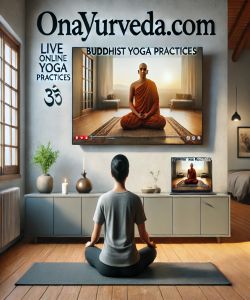
Overview of Buddhist Yoga Practices
Buddhist Yoga Practices constitute a rigorous and profound system of psycho-physical discipline aimed squarely at the attainment of enlightenment, or liberation from suffering (Dukkha). It is a fundamental misapprehension to conflate this tradition with the modern, often secularised, postural yoga prevalent in Western societies. Whereas the latter frequently prioritises physical fitness and stress reduction, Buddhist Yoga is an integrated soteriological path wherein the body serves as a direct vehicle for cultivating mindfulness (Sati), concentration (Samadhi), and insight wisdom (Prajñā). The practices are inextricably woven into the philosophical fabric of Buddhism, drawing their authority and purpose from core doctrines such as the Four Noble Truths and the Noble Eightfold Path. The physical postures and movements, where they exist, are not ends in themselves but are meticulously designed to facilitate deep states of meditation, to purify mental and energetic channels, and to provide a tangible domain for observing the impermanent, unsatisfactory, and selfless nature of all phenomena. This is not a practice of mere bodily contortion; it is the yoga of the mind, using the corporeal form as its primary laboratory. The ultimate objective is not a flexible body but a liberated consciousness, one that has uprooted the mental defilements of greed, hatred, and delusion. It demands unwavering discipline, ethical integrity, and a profound commitment to self-inquiry. The practitioner is not simply 'doing yoga'; they are engaging in a comprehensive methodology for the radical transformation of their being, a path that engages every facet of human experience—body, speech, and mind—in the singular pursuit of awakening. This path is demanding, uncompromising, and oriented entirely towards the highest spiritual goal recognised within the Buddhist tradition.
What is Buddhist Yoga Practices?
Buddhist Yoga is a comprehensive term for the diverse array of contemplative, physical, and energetic disciplines within Buddhist traditions that utilise the body-mind complex as the primary field for spiritual cultivation and the realisation of enlightenment. Fundamentally, it represents a path of integration, a systematic method for unifying mental focus, ethical conduct, and physical experience to dismantle the illusion of a separate, permanent self. Unlike its Hindu counterparts, which may focus on uniting the individual soul (Atman) with the universal consciousness (Brahman), Buddhist Yoga is grounded in the doctrine of Anatta (no-self) and is aimed at directly perceiving this truth, thereby severing the roots of suffering. Its application is not limited to specific postures or breathing exercises but encompasses a holistic approach to being.
The core components of this practice can be articulated as follows:
Embodied Mindfulness: The practice relentlessly anchors awareness in the present moment, using the physical sensations of the body—the breath, posture, and movement—as the primary objects of meditation. This is not a passive observation but an active investigation into the nature of corporeal experience, revealing its transient and impersonal qualities.
Ethical Foundation (Sīla): All authentic Buddhist Yoga is predicated upon a non-negotiable ethical framework, typically the Five Precepts. The purification of conduct is considered an essential prerequisite for the purification of mind, as unethical actions create mental agitation that directly obstructs meditative progress.
Cultivation of Concentration (Samādhi): Through techniques such as Anapanasati (mindfulness of breathing) and specific meditative postures, the practitioner develops a stable, unwavering attention. This concentrated mind becomes a powerful instrument capable of penetrating the superficial layers of reality.
Development of Wisdom (Prajñā): The ultimate purpose of the practice is to generate direct, non-conceptual insight into the three marks of existence: impermanence (Anicca), suffering (Dukkha), and no-self (Anatta). The physical practices serve to make these truths viscerally apparent, moving them from intellectual concepts to lived realities.
Who Needs Buddhist Yoga Practices?
Individuals Seeking Profound Mental Liberation: Those who have exhausted superficial stress-management techniques and demand a rigorous, systematic methodology for confronting the root causes of mental suffering. This practice is for those committed to the radical overhaul of their consciousness, not merely the temporary alleviation of symptoms.
Practitioners of Formal Meditation Requiring Embodiment: Meditators who find their practice becoming overly intellectual or disassociated from their physical experience. Buddhist Yoga provides the essential bridge, grounding abstract understanding in the felt sense of the body and dismantling the false dichotomy between mind and matter.
Those Confronting Existential Disquietude: Persons grappling with fundamental questions of meaning, mortality, and the nature of existence. The practice offers a direct, experiential path of inquiry, providing tools to investigate these ultimate concerns rather than relying on received dogma or belief.
Individuals Seeking to Overcome Destructive Habitual Patterns: Those ensnared in cycles of addiction, aversion, and compulsive behaviour. The discipline cultivates the acute self-awareness and mental fortitude necessary to observe and intercept these ingrained patterns at their source, leading to genuine and lasting transformation.
Ethical Professionals Demanding Greater Equanimity: Leaders, caregivers, and others in high-stakes professions who require an unshakeable inner stability to perform their duties effectively and compassionately without succumbing to burnout or emotional reactivity.
Students of Buddhist Philosophy Demanding an Experiential Dimension: Scholars and students of the Dharma who recognise that intellectual comprehension alone is insufficient for liberation. Buddhist Yoga provides the practical, somatic dimension necessary to turn philosophical knowledge into transformative wisdom.
Ascetics and Committed Spiritual Aspirants: Individuals who are prepared to dedicate their lives to the most profound spiritual pursuits. This is not a casual hobby but a demanding path for those who are uncompromising in their quest for awakening and the complete cessation of suffering.
Origins and Evolution of Buddhist Yoga Practices
The origins of Buddhist Yoga are embedded within the very fabric of early Buddhism, predating the formalised postural systems commonly associated with the term 'yoga' today. The Buddha himself was a master yogi, whose path to enlightenment was forged through rigorous meditative disciplines that fall squarely under the umbrella of yogic practice. The early Pali Canon is replete with references to yogic techniques, most notably the practice of dhyāna (meditative absorption) and Anapanasati (mindfulness of breathing). These practices formed the core of the Buddha's methodology for calming the mind, developing profound concentration, and generating the insight necessary to sever the fetters of existence. The emphasis was unequivocally on the 'yoga of the mind'—the yoking of attention to a chosen object to achieve liberation. The body was understood as the first foundation of mindfulness (Satipaṭṭhāna), the primary domain in which the truths of impermanence and suffering could be directly observed.
As Buddhism evolved and spread, these foundational practices were elaborated upon, particularly within the Mahāyāna and Vajrayāna traditions. The Mahāyāna schools introduced complex visualisation yogas, where practitioners would mentally generate and identify with deities or mandalas as a sophisticated means of transforming consciousness and cultivating qualities such as compassion and wisdom. This represented a significant expansion of the internal, mental yogas taught in earlier periods.
The most explicit development of physical yoga practices occurred within the Vajrayāna, or Tantric, traditions of Tibet. Here, systems such as Trul Khor ('magical wheel' or Yantra Yoga) and Lu Jong (body training) emerged. These were not developed for physical fitness but as powerful methods to work directly with the subtle body—the channels (nadis), winds (prana), and essences (bindus). The physical movements, postures, and breath control techniques were designed to untie energetic knots within the subtle body, which were seen as the direct physical correlates of mental and emotional obscurations. By manipulating the subtle energies through these yogic practices, practitioners could accelerate the process of meditative realisation, achieving in a single lifetime what might otherwise take aeons. This evolution marks a shift from using the body primarily as an object of passive observation to actively using it as a dynamic instrument for energetic and mental transformation.
Types of Buddhist Yoga Practices
Anapanasati and Kaya-gata-sati (Yoga of Breath and Body): This is the foundational yoga of the early Buddhist tradition. Anapanasati involves the sustained, mindful observation of the natural process of inhalation and exhalation. It is a powerful technique for cultivating deep concentration (Samadhi) and mental stability. This is often integrated with Kaya-gata-sati, or mindfulness directed towards the body, which involves systematically scanning the body to observe sensations, postures, and activities with non-reactive awareness. Its primary aim is to reveal the impermanent and impersonal nature of the body and its processes.
Satipaṭṭhāna (The Four Foundations of Mindfulness): While encompassing the body, this practice represents a more comprehensive yoga of the mind. It is a systematic training in applying mindfulness to four domains: the body (kāya), feelings or sensations (vedanā), mind or consciousness (citta), and mental objects (dhammā). The practitioner learns to observe the arising and passing of all phenomena within these domains without clinging or aversion, leading directly to the development of insight wisdom (Vipassanā).
Trul Khor (Tibetan Yantra Yoga): A dynamic and vigorous form of yoga originating from the Tibetan Vajrayāna tradition. Trul Khor combines specific physical movements (yantras), held postures, and precise methods of breath control (pranayama) to work directly with the subtle energy system of the body. The objective is to purify the subtle channels (nadis), balance the vital winds (prana), and release energetic blockages, thereby facilitating advanced meditative states and providing a powerful support for practices such as Dzogchen and Mahamudra.
Kum Nye (Tibetan Healing Yoga): A gentle yet profound system of yoga developed within the context of Tibetan medicine and meditation. Kum Nye involves slow, deliberate movements, self-massage techniques, and the holding of simple postures to release physical, mental, and energetic tensions. Its primary function is to harmonise the practitioner’s internal energies, calm the mind, and open the senses, creating an integrated state of being that is conducive to both deep relaxation and clear awareness.
Lu Jong (Tibetan Body Training): A series of specific movements developed to promote health and support spiritual practice. Based on principles of Tibetan medicine, Lu Jong focuses on opening the body's channels and releasing blockages to improve physical vitality and mental clarity. The movements are designed to benefit the spine, joints, and internal organs, and are considered an essential preliminary practice for deeper meditative work by enhancing the body's capacity to hold a stable and comfortable posture.
Benefits of Buddhist Yoga Practices
Cultivation of Unshakeable Equanimity: The practice systematically trains the mind to observe all experiences—pleasant, unpleasant, and neutral—without reflexive craving or aversion. This develops a profound inner balance that remains stable amidst the inevitable vicissitudes of life.
Development of Penetrative Insight (Vipassanā): By grounding awareness in the direct experience of the body and mind, the practitioner gains non-conceptual wisdom into the three marks of existence: impermanence (Anicca), unsatisfactoriness (Dukkha), and no-self (Anatta).
Eradication of Mental Defilements (Kilesas): The sustained application of mindfulness and concentration acts as a purifying agent, gradually weakening and ultimately uprooting the deep-seated mental toxins of greed, hatred, delusion, and their various offshoots.
Profound Integration of Mind and Body: The practice systematically dissolves the perceived duality between mental and physical experience. This leads to a state of holistic presence, where the body is no longer an object to be controlled but a living field of awareness.
Enhanced Concentration and Mental Clarity (Samādhi): Rigorous training in techniques such as mindfulness of breathing forges a powerful, stable, and lucid state of attention, which is an indispensable tool for both deep meditation and effective daily functioning.
Somatic Release of Trauma and Habitual Tension: Physical and energetic practices like Trul Khor and Kum Nye work directly to release long-held tensions and traumas stored within the body’s tissues and subtle energy system, which are often inaccessible to purely cognitive therapies.
Establishment of an Unshakeable Ethical Foundation: The practice is inseparable from ethical conduct (Sīla). The clarity gained through meditation reinforces the practitioner’s commitment to harmlessness and compassionate action, creating a virtuous feedback loop.
Progress on the Path to Liberation: The ultimate and unequivocal benefit is progress towards the final goal of the Buddhist path: Nirvana, the complete and irreversible cessation of suffering and the cycle of rebirth. All other benefits are secondary to this primary objective.
Core Principles and Practices of Buddhist Yoga Practices
The Primacy of Mind (Citta): The foundational principle is that the mind is the forerunner of all states. The physical body and its energies are treated not as the primary focus, but as a direct reflection of mental states and a tangible field in which the mind can be trained. All physical techniques are subservient to the ultimate goal of purifying and liberating the mind.
The Imperative of Mindfulness (Sati): The core practice is the continuous application of bare, non-judgmental attention to the present moment's experience. This includes mindfulness of the body's posture and movements, the flow of breath, the arising of feelings, and the ceaseless activity of the mind itself. Sati is the instrument that illuminates the nature of reality.
The Unwavering Foundation of Ethical Conduct (Sīla): No authentic practice can proceed without a firm commitment to ethical principles, such as the Five Precepts. Ethical transgressions create mental agitation (remorse, fear) which directly poisons the capacity for concentration and insight. Sīla is not an arbitrary moral code but a pragmatic necessity for creating a stable mental environment.
The Cultivation of Stable Concentration (Samādhi): The practitioner systematically trains the mind to unify and remain steadfast on a chosen object of meditation, such as the breath. This collected, one-pointed state of mind is essential for suppressing the mental hindrances and provides the power required for wisdom to penetrate the deepest layers of existence.
The Aspiration for Wisdom and Insight (Prajñā/Vipassanā): The culmination of the practice is the direct, experiential understanding of the ultimate nature of reality—specifically, the three marks of existence: impermanence, suffering, and no-self. The entire structure of the yoga is designed to lead the practitioner to this liberating, non-conceptual insight.
The Practice of Non-Attachment (Nekkhamma): A central tenet is the systematic relinquishment of craving and clinging. Through observing the transient nature of all phenomena, the practitioner learns to let go of attachment to pleasant experiences and aversion to unpleasant ones, thereby starving the root of suffering.
Integration with the Noble Eightfold Path: Buddhist Yoga is not a standalone system but a practical embodiment of the Noble Eightfold Path. Right Mindfulness, Right Concentration, and Right Effort are its direct practices, which are supported by Right View, Right Intention, Right Speech, Right Action, and Right Livelihood.
Online Buddhist Yoga Practices
Unprecedented Accessibility to Authentic Lineages: Online platforms demolish geographical barriers, granting practitioners access to highly qualified teachers from established and often remote Buddhist traditions. This democratises the transmission of esoteric knowledge that was once confined to monastic settings or specific geographic locations, enabling serious students to connect with genuine lineage holders irrespective of their physical location.
Structured, Self-Paced Learning Environments: Digital courses offer a meticulously structured curriculum that participants can engage with at their own pace. This allows for the repeated viewing of instructional material and the thorough digestion of complex philosophical concepts, a level of review often unavailable in a single, in-person session. This systematic approach is highly conducive to building a solid foundation.
Cultivation of Self-Discipline and Internal Reliance: The online format necessitates a higher degree of personal accountability. Without the external pressure of a physical group setting, the practitioner is compelled to cultivate intrinsic motivation and unwavering self-discipline. This forges a more resilient and self-reliant practice, which is an essential quality for any serious spiritual aspirant.
A Controlled and Private Practice Sanctuary: Practicing from one's own space provides a controlled environment free from the social dynamics and potential distractions of a public class. This privacy can be crucial when engaging in deep inner work that may bring forth challenging emotional or psychological material, allowing the practitioner to process such experiences without self-consciousness.
The Non-Negotiable Challenge of Embodiment: The primary limitation of the online format is the absence of direct physical presence. The instructor cannot provide hands-on adjustments or directly read the subtle energetic state of the practitioner. This demands that the participant develop a heightened level of somatic intelligence and self-awareness to ensure that practices are being performed correctly and safely, placing the onus of embodiment squarely on the individual.
Reinforcement through Digital Sangha: Modern platforms can facilitate the creation of dedicated online communities (sanghas). Through forums, live Q&A sessions, and group discussions, practitioners can connect with peers, share insights, ask questions, and receive mutual support, mitigating the potential isolation of a solitary home practice and fostering a sense of shared purpose and commitment.
Buddhist Yoga Practices Techniques
Herein is a systematic breakdown of a foundational technique: Mindfulness of the Body in a Seated Posture.
Step One: Establishing the Physical Foundation. Assume a stable and dignified seated posture. This may be on a cushion on the floor in a traditional cross-legged position or upright in a chair with both feet planted firmly on the ground. The spine must be erect but not rigid, allowing for the free flow of energy and breath. The hands rest comfortably. This posture is not a casual arrangement; it is an external expression of internal alertness and resolve.
Step Two: Initial Body Sweep and Release. Close the eyes and bring awareness to the totality of the physical form. Conduct a deliberate, sweeping scan of the body from the crown of the head to the soles of the feet. Intentionally identify and release any gross areas of unnecessary tension—in the jaw, the shoulders, the hands, the abdomen. This is a conscious act of letting go of superfluous physical holding.
Step Three: Anchoring Awareness in the Breath. Direct and fix your attention at a single point where the sensation of the breath is most distinct. This may be at the tip of the nostrils, feeling the passage of air, or at the abdomen, observing its rise and fall. Do not control the breath. Your sole task is to observe its natural, uninhibited rhythm with unwavering, one-pointed focus. This is the anchor for the mind.
Step Four: Expanding Awareness to Bodily Sensations. Once the mind has achieved a degree of stability on the breath, expand the field of awareness to include the entire physical body as a unified field of sensation. Experience the body directly, not as a mental concept, but as a vibrant, constantly changing constellation of pressures, tingles, temperatures, and vibrations. Maintain this broad, inclusive awareness.
Step Five: Contemplating the Nature of the Body. Within this field of awareness, actively investigate the qualities of the bodily experience. Notice how sensations arise, persist for a moment, and then vanish without your command. Observe the inherent instability of the body. Contemplate that this physical form is not a solid, permanent 'me' or 'mine', but a dynamic, conditioned process. This is the transition from mere concentration to the cultivation of insight wisdom.
Buddhist Yoga Practices for Adults
Buddhist Yoga Practices are eminently suited to the mature adult practitioner, as they directly address the complex existential and psychological challenges that characterise adult life. This is not a discipline for the callow or for those seeking mere recreational diversion; it is a profound and demanding path for individuals who have encountered the inherent limitations and dissatisfactions of worldly pursuits and are seeking a more substantive basis for meaning and well-being. The adult mind, shaped by years of responsibility, professional demands, and intricate interpersonal relationships, often carries a significant burden of stress, habitual mental patterns, and deep-seated conditioning. Buddhist Yoga provides a precise and powerful toolkit for systematically dismantling this accumulated burden. It moves beyond simplistic stress-reduction models to offer a root-cause analysis of suffering, guiding the practitioner to investigate the very structure of their own consciousness. The physical components of the practice serve to ground this inquiry in the tangible reality of the body, preventing it from becoming a purely intellectual exercise. For the adult grappling with the realities of ageing, loss, and the search for a legacy beyond material acquisition, the practice offers a direct, experiential engagement with the principles of impermanence and non-attachment. It cultivates the resilience, clarity, and equanimity required to navigate life’s inevitable challenges with wisdom and grace rather than with fear and reactivity. It is a path of radical self-responsibility, demanding the discipline and commitment that a mature individual is uniquely positioned to offer, and providing in return a depth of peace and liberation that superficial pastimes cannot approach.
Total Duration of Online Buddhist Yoga Practices
The designated total duration for a single, focused session of Online Buddhist Yoga Practices is precisely calibrated at 1 hr. This specific timeframe is not an arbitrary allocation but a deliberately structured period designed to maximise efficacy whilst acknowledging the unique constraints of the digital medium. A session of this length is sufficient to move beyond superficial engagement, allowing the practitioner adequate time to transition from the distractions of their external environment into a state of heightened internal awareness. It provides the necessary scope to include a preliminary settling period, a phase of intensive formal practice—be it mindful movement, breathwork, or seated meditation—and a concluding period for integration and reflection. A duration shorter than this risks truncating the practice, preventing the mind from achieving the requisite depth of concentration (Samādhi) needed for genuine insight to arise. Conversely, extending the session significantly beyond this point in an online context can lead to digital fatigue, diminished focus, and a decline in the quality of attention, thereby yielding diminishing returns. The 1 hr container is therefore an optimal balance, providing a robust and substantial period for profound work without over-straining the practitioner's capacity for sustained, screen-mediated concentration. It is a rigorous yet manageable commitment, demanding discipline and presence, and serving as a potent and complete module of practice within the practitioner's daily or weekly schedule. This duration transforms the session from a casual interlude into a significant, dedicated act of mental and spiritual cultivation.
Things to Consider with Buddhist Yoga Practices
Engaging with Buddhist Yoga Practices demands a level of consideration far exceeding that required for conventional exercise or wellness activities. It is imperative for the prospective practitioner to understand that they are embarking on a soteriological path, a comprehensive system for mental liberation, not merely a physical regimen. The philosophical underpinnings drawn from Buddhist doctrine are not optional adornments; they are the very heart of the practice. To engage with the techniques whilst disregarding the principles of non-attachment, ethics, and the pursuit of wisdom is to fundamentally misunderstand and corrupt the process, risking the inflation of ego rather than its dissolution. One must also be prepared for the potential emergence of challenging psychological material. Deep, embodied practice can dislodge long-suppressed emotions, traumas, and conditioning. Without the guidance of a qualified teacher and a stable mental disposition, this process can be disorienting and even destabilising. Therefore, the authenticity and lineage of the instructor are of paramount importance. It is crucial to investigate a teacher's credentials, their own depth of practice, and their authorisation to transmit these teachings. Furthermore, the practitioner must distinguish between authentic practice and its commercialised, watered-down appropriations. The goal is not to achieve an aesthetically pleasing posture or a blissfully vacant mind, but to cultivate a clear, unwavering awareness of reality as it is. This is an arduous, non-linear path that requires patience, unwavering commitment, and the courage to confront the deepest truths of one's own existence.
Effectiveness of Buddhist Yoga Practices
The effectiveness of Buddhist Yoga Practices must be measured against its own explicit and uncompromising objective: the complete and utter liberation of the mind from suffering and its causes. Judged by this metric, its efficacy is profound and absolute, contingent only upon the diligence and integrity of the practitioner. To assess this system by the superficial standards of physical flexibility, weight loss, or temporary stress relief is to commit a categorical error. Whilst such ancillary benefits may accrue, they are mere by-products of the central work. The true effectiveness of the practice is demonstrated in the practitioner's observable, progressive dis-identification with the egoic self. It is measured by a steady decrease in reactivity to life’s provocations, a radical uprooting of greed and aversion, and the blossoming of unconditioned compassion and wisdom. The practice is effective when the individual begins to experientially grasp the impermanent, unsatisfactory, and selfless nature of all phenomena, not as a philosophical concept, but as a direct, lived reality. Its success is not found in achieving blissful meditative states, which are themselves transient, but in the cultivation of an unshakeable equanimity that persists amidst both blissful and painful experiences. Ultimately, the system’s effectiveness is total; it provides a comprehensive, time-tested methodology for the radical transformation of consciousness. It is not a therapeutic intervention to make an individual a more well-adjusted participant in samsara; it is a liberation vehicle designed to facilitate a complete exit from samsara. Its effectiveness is therefore not palliative, but curative and final.
Preferred Cautions During Buddhist Yoga Practices
It is imperative that any practitioner of Buddhist Yoga proceeds with extreme caution and unwavering self-awareness, for this path is potent and not without its perils. A primary danger is that of spiritual bypassing: using meditative states or philosophical concepts to avoid engaging with unresolved psychological issues, emotional wounds, and practical life responsibilities. The practice must be a means of confronting reality, not escaping it. Another significant risk is the subtle inflation of the ego, which can appropriate spiritual accomplishments as its own, leading to a pernicious form of pride known as 'spiritual materialism'. The practitioner may become attached to their identity as a 'yogi' or 'meditator', a state that is antithetical to the core teaching of no-self. Furthermore, undertaking advanced energetic practices, such as those found in the Vajrayāna tradition, without the direct, in-person supervision of a qualified lineage holder is extraordinarily hazardous. Misapplication of these techniques can lead to severe physical and psychological disturbances, including what is known as 'lung' or 'prana' disorder. One must also be wary of misinterpreting ordinary mental phenomena as signs of profound spiritual attainment, or becoming attached to pleasant meditative states, which is a subtle form of craving that obstructs further progress. The path demands rigorous honesty, humility, and a healthy scepticism towards one’s own experiences. It is not a gentle pursuit of relaxation; it is a radical deconstruction of the self, and such a process must be navigated with the utmost diligence and respect for its inherent power and potential for misapplication.
Buddhist Yoga Practices Course Outline
Module One: The Foundation of Conduct and View (Sīla & Ditthi)
Comprehensive instruction on the Noble Eightfold Path as the unshakeable framework for practice.
In-depth analysis and commitment to the Five Precepts as the non-negotiable basis for mental purification.
Clarification of Right View: Understanding the core doctrines of the Four Noble Truths, Karma, and Dependent Origination.
Establishing Right Intention: Aligning motivation with the ultimate goal of liberation, not worldly gain.
Module Two: The Yoga of Breath and Posture (Ānāpānasati & Kāyagatāsati)
Systematic training in establishing a stable and mindful seated posture.
Detailed, step-by-step instruction in Ānāpānasati (mindfulness of breathing) to cultivate concentration (Samādhi).
Introduction to Kāyagatāsati (mindfulness of the body), including body-scanning techniques and mindful awareness of daily postures (walking, standing, sitting, lying down).
Practices for integrating bodily awareness throughout daily life.
Module Three: The Yoga of Sensation and Mind (Vedanā & Citta)
Training in the second foundation of mindfulness: observing the arising and passing of pleasant, unpleasant, and neutral sensations (Vedanā) without reaction.
Developing the capacity to dis-identify from feelings, understanding their impermanent and impersonal nature.
Training in the third foundation of mindfulness: observing the state of the mind (Citta) itself—whether it is lustful, angry, deluded, or concentrated.
Techniques for working with difficult emotions and mental states with clarity and non-aversion.
Module Four: The Yoga of Insight (Dhammā & Vipassanā)
Training in the fourth foundation of mindfulness: contemplating mental objects (Dhammā) in relation to Buddhist doctrine.
Systematic investigation of the Five Hindrances and the Seven Factors of Enlightenment as they manifest in one's own experience.
Directing the concentrated mind to penetrate the three marks of existence: Anicca (Impermanence), Dukkha (Unsatisfactoriness), and Anattā (No-Self).
Practices designed to generate profound, liberating insight.
Module Five: Integration and Embodiment
Guidance on integrating formal practice insights into all aspects of daily life.
Techniques for maintaining mindfulness during communication, work, and relationships.
Exploration of the Bodhisattva ideal: dedicating one's practice to the benefit and awakening of all beings.
Establishing a sustainable, lifelong discipline of practice.
Detailed Objectives with Timeline of Buddhist Yoga Practices
Initial Phase: Foundation Establishment (First Month)
Objective: To establish a consistent and disciplined daily practice routine without exception. The practitioner shall master a stable seated posture and demonstrate unwavering commitment to the allocated practice time.
Objective: To gain a robust intellectual and practical understanding of the Five Precepts (Sīla) and the Noble Eightfold Path, integrating them as the guiding framework for both on-cushion and off-cushion conduct.
Objective: To develop the rudimentary ability to sustain attention on the breath (Ānāpānasati) for progressively longer periods, successfully recognising and returning from instances of mind-wandering.
Intermediate Phase: Deepening Concentration and Awareness (Months Two to Six)
Objective: To cultivate access concentration (upacāra samādhi), a state where the Five Hindrances are consistently suppressed and the mind remains steadily with the object of meditation.
Objective: To achieve proficiency in systematically observing bodily sensations (vedanā) without habitual reactivity, clearly distinguishing between a raw sensation and the subsequent mental proliferation.
Objective: To develop the capacity to observe mental states (citta) as impersonal phenomena, identifying the presence of states like aversion or craving without identifying with them.
Advanced Phase: Cultivation of Insight (Month Seven and Ongoing)
Objective: To utilise the sharpened instrument of the concentrated mind to systematically investigate the three marks of existence (Anicca, Dukkha, Anattā) within one’s own direct experience of the mind-body process.
Objective: To experience moments of profound, non-conceptual insight (Vipassanā) into the nature of reality, leading to a palpable weakening of ego-clinging and attachment.
Objective: To integrate the wisdom gained from formal practice into every aspect of daily life, resulting in a demonstrable increase in equanimity, compassion, and skillful action. This phase is continuous, representing a lifelong deepening of insight and purification.
Perpetual Objective: Embodiment and Liberation
Objective: The ultimate and ongoing aim is the complete embodiment of the Dharma and the irreversible uprooting of the mental defilements (kilesas), culminating in the final liberation of Nirvana. This objective transcends any fixed timeline and constitutes the guiding purpose of the entire path.
Requirements for Taking Online Buddhist Yoga Practices
Unwavering Personal Commitment: An absolute, non-negotiable commitment to rigorous self-discipline and consistent practice is the primary requirement. The online format offers no external enforcement; progress is entirely contingent upon the practitioner's intrinsic motivation and integrity.
A Dedicated and Sacrosanct Space: The practitioner must designate a physical space that is private, quiet, and exclusively used for practice during the allotted time. This space must be free from all potential interruptions, including family members, pets, and electronic notifications.
Stable and Reliable Technology: A high-speed, uninterrupted internet connection and a functional device with a camera and microphone are mandatory. Technical failures are the practitioner's responsibility to mitigate and do not constitute an excuse for non-participation.
Capacity for Autonomous Learning: The practitioner must possess the ability to absorb complex instructions and philosophical concepts through a digital medium without direct, in-person clarification. This requires a high degree of attentiveness and the willingness to engage in independent study.
Somatic Self-Awareness and Responsibility: Without a teacher present to provide physical adjustments, the onus is entirely on the practitioner to listen to their own body, respect its limitations, and take full responsibility for their physical safety. Any propensity to push beyond sensible limits is a contraindication.
A Foundation in Ethical Conduct (Sīla): The practitioner is expected to be living in accordance with, or be sincerely aspiring to live in accordance with, the Five Precepts. A life of ethical disarray creates mental turbulence that renders deep practice impossible.
Mental and Emotional Stability: This is not a therapeutic intervention for acute psychological crises. The practitioner must possess a baseline of mental stability sufficient to engage with potentially challenging inner experiences without becoming overwhelmed.
Willingness to Engage with Core Buddhist Doctrine: A resolute willingness to study and contemplate foundational Buddhist teachings is essential. Attempting to engage with the practice while rejecting its philosophical framework is a futile and contradictory exercise.
Things to Keep in Mind Before Starting Online Buddhist Yoga Practices
Before commencing any online course in Buddhist Yoga Practices, it is imperative to conduct a rigorous self-assessment and logistical preparation. This is not a casual undertaking to be initiated on a whim. Firstly, you must scrutinise your own motivation. Ascertain whether you are seeking a profound path of liberation or merely a novel form of spiritual entertainment or stress relief. The practice will demand more than you expect, and only a sincere aspiration for genuine transformation will provide the requisite fuel to persevere through its inherent difficulties. Secondly, you must thoroughly vet the credentials and lineage of the online instructor. The digital world is rife with self-proclaimed gurus; it is your non-negotiable responsibility to verify that the teacher has received authentic transmission and possesses the depth of experience to guide others safely. Do not be swayed by charismatic presentation or marketing prowess. Thirdly, you must manage your expectations with uncompromising realism. Progress on this path is not linear, and there are no quick fixes. You will encounter periods of frustration, boredom, and doubt. Expecting constant blissful experiences is a guarantee for disappointment and a fundamental misunderstanding of the work. Finally, recognise that the online format demands a heightened degree of personal accountability. You alone are responsible for creating a consecrated practice space, eliminating distractions, and maintaining the discipline to show up fully for every session. The screen provides a veil of anonymity that can easily be exploited for laxity. You must resolve to practice with the same integrity and seriousness as if you were sitting directly in front of your teacher in a monastery.
Qualifications Required to Perform Buddhist Yoga Practices
The authority to perform, and more importantly to teach, Buddhist Yoga Practices is not conferred by any simple certification process or weekend workshop. It is earned through a lifetime of dedicated practice, deep study, and direct transmission within an established and verifiable lineage. An authentic instructor must possess a formidable and integrated combination of qualities that render them a suitable vessel for the Dharma. These qualifications are absolute and non-negotiable for anyone claiming to guide others on this profound path. The essential prerequisites include:
Verifiable Lineage and Authorised Transmission: The individual must have received the teachings directly from a qualified master within an unbroken lineage that traces back to the source. They must have been explicitly authorised by their own teacher to transmit these specific practices. This is the cornerstone of authenticity.
Extensive Personal Retreat Experience: The instructor cannot teach from a book. They must have spent a substantial amount of time—often years—in intensive, silent meditation retreats, directly experiencing the states of mind they are teaching and confronting the full spectrum of challenges that arise in deep practice.
Profound Scholastic Understanding of Doctrine: A deep and nuanced understanding of Buddhist philosophy, psychology, and ethics (the Dharma) is imperative. The physical practices are meaningless without their correct philosophical context. The teacher must be able to articulate this context with precision and clarity.
Embodiment of Ethical Conduct (Sīla): The teacher must be an exemplar of the ethical principles they espouse. Their personal life must be a clear reflection of the teachings. Any significant discrepancy between their words and actions immediately invalidates their authority.
Pedagogical Skill and Compassion: Beyond personal realisation, the individual must possess the skill to communicate complex, subtle concepts effectively to a diverse range of students. This requires patience, empathy, and the compassionate wisdom to meet each student where they are, without compromising the integrity of the teachings.
Online Vs Offline/Onsite Buddhist Yoga Practices
Online
The online modality for Buddhist Yoga Practices offers unparalleled accessibility and convenience. It eradicates geographical and logistical barriers, allowing dedicated practitioners to connect with world-class teachers and authentic lineages that would otherwise be entirely out of reach. This format facilitates a highly structured and self-paced learning environment, where complex instructions and philosophical discourses can be reviewed repeatedly to ensure thorough comprehension. Furthermore, the privacy of one's own space can be conducive to deep inner work, removing the social pressures and potential for self-consciousness that can arise in a group setting. However, this distance is also its most significant liability. The instructor is incapable of offering direct, hands-on physical adjustments, placing the entire burden of somatic safety and correct alignment upon the practitioner. The vital, energetic transmission (shaktipat or its equivalent) that can occur in the physical presence of a master is largely absent. Moreover, the online environment is rife with potential distractions, and it demands an exceptionally high level of self-discipline and accountability from the student to maintain the sanctity and focus of the practice.
Offline/Onsite
The traditional offline, or onsite, method of instruction provides an irreplaceable depth of experience. The direct physical presence of a qualified teacher allows for immediate, nuanced feedback, including subtle energetic readings and precise physical corrections that are impossible to convey through a screen. The collective energy of a group (Sangha) practicing together creates a powerful, supportive field that can amplify individual effort and provide a palpable sense of shared commitment. This communal context is a cornerstone of the Buddhist path. The immersive environment of a retreat centre or monastery, free from the demands and distractions of daily life, allows for a level of focus and depth that is exceedingly difficult to replicate at home. The disadvantages, however, are significant. Onsite teachings are often geographically inaccessible, expensive, and require substantial time commitments that are impractical for many. The availability of authentic, high-quality instruction can be severely limited depending on one's location, making the online alternative a necessary and valuable resource despite its inherent limitations.
FAQs About Online Buddhist Yoga Practices
Question 1. Do I need to be a Buddhist to practise?
Answer: No, but you must be willing to engage seriously with core Buddhist principles, as they are the inseparable foundation of the practice.
Question 2. Is this the same as the yoga at my local gym?
Answer: Absolutely not. This is a rigorous spiritual discipline focused on mental liberation, not a form of physical exercise.
Question 3. What equipment is essential?
Answer: A meditation cushion or bench, a quiet room, and a reliable internet-connected device. Nothing more is required.
Question 4. How physically demanding is the practice?
Answer: The emphasis is on mindfulness and inner energy, not athleticism. However, a baseline of physical health is necessary to hold postures.
Question 5. Can this practice cure my anxiety?
Answer: It is not a medical treatment. It is a method for uprooting the fundamental causes of all mental suffering, of which anxiety is one manifestation.
Question 6. What if my internet connection fails during a session?
Answer: You are expected to continue the practice independently for the remainder of the session. Technical issues are your responsibility.
Question 7. Is there chanting involved?
Answer: Some traditions may incorporate mantra or chanting as a method of concentrating the mind, but it is not universal.
Question 8. Can I practise if I have a physical injury?
Answer: You must consult a medical professional and take full responsibility for adapting the practice to your limitations.
Question 9. How do I know if a teacher is authentic?
Answer: Investigate their lineage, their own retreat experience, and their authorisation to teach. Look for substance over charisma.
Question 10. Will I experience visions or special powers?
Answer: The goal is liberation, not psychic phenomena. Any such experiences are to be noted and let go of without attachment.
Question 11. Is it suitable for absolute beginners?
Answer: Yes, provided the beginner possesses the requisite maturity, discipline, and willingness to learn.
Question 12. How much time must I commit each day?
Answer: Consistency is more critical than duration. A disciplined daily commitment is mandatory for progress.
Question 13. What is the role of the online community or 'sangha'?
Answer: To provide mutual support, clarify understanding, and reinforce commitment to the path.
Question 14. Can I interact with the teacher directly?
Answer: Most online courses will have structured Q&A sessions for direct interaction.
Question 15. Is the objective to stop thinking?
Answer: No. The objective is to see thoughts clearly for what they are—impersonal, transient mental events—without being controlled by them.
Question 16. Why is ethical conduct so important?
Answer: Unethical actions create mental agitation that makes deep concentration impossible. Sīla is a pragmatic necessity.
Conclusion About Buddhist Yoga Practices
In conclusion, Buddhist Yoga Practices represent a complete, profound, and uncompromising path to the ultimate goal of human existence: liberation from suffering. This system must be resolutely distinguished from the superficialities of contemporary wellness culture, which it predates and surpasses in both scope and intention. It is not a method for mere self-improvement but a radical technology for self-transcendence, employing the body-mind complex as a direct laboratory for investigating the fundamental nature of reality. The physical postures, breathing techniques, and energetic manipulations are not ends in themselves; they are potent, skillful means subservient to the singular aim of cultivating a mind that is stable, clear, and wise enough to sever the chains of conditioned existence. The path demands nothing less than the practitioner's total commitment, unwavering discipline, and the courage to confront the deepest truths of impermanence, unsatisfactoriness, and no-self. It is an arduous and often confronting journey, ill-suited for the dilettante or the seeker of facile comforts. For those who are prepared to engage with its rigour and depth, however, Buddhist Yoga offers a time-tested, authentic, and effective methodology for the radical transformation of consciousness. It is, in the final analysis, not something one simply 'does', but a way of being that reorients every facet of one's existence towards the supreme attainment of wisdom, compassion, and irreversible freedom.