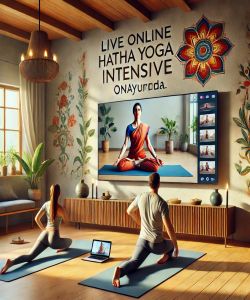
Overview of Hatha Yoga Intensive
A Hatha Yoga Intensive represents a formidable and undiluted immersion into the foundational principles of classical yoga, designed explicitly for the serious practitioner who seeks to transcend superficial engagement. It is not a casual series of classes but a structured, rigorous, and demanding programme engineered to accelerate physical proficiency, deepen physiological understanding, and fortify mental discipline. This format deliberately compresses a significant volume of study and practice into a concentrated period, forcing the participant to confront and overcome physical and psychological limitations. The core curriculum invariably revolves around a meticulous exploration of asana (postures), with an uncompromising focus on anatomical alignment, stability, and endurance. This is systematically integrated with pranayama (breath control), where the vital life force is consciously regulated to purify the nervous system and steady the mind. Furthermore, an intensive programme often incorporates elements of meditation, yogic philosophy, and Shatkarma (cleansing techniques), providing a holistic framework that addresses the practitioner in their entirety. The objective is not merely to learn new postures but to deconstruct and rebuild one's entire approach to the practice, instilling a level of self-awareness and autonomy that is simply unattainable through sporadic, less demanding instruction. It is a crucible, a period of intense, focused effort that catalyses profound and lasting transformation, stripping away superfluous habits and revealing the practitioner’s latent potential for strength, clarity, and unwavering self-possession. This is the definitive pathway for those who demand substance over style and are prepared to invest the requisite effort to achieve mastery.
What is Hatha Yoga Intensive?
A Hatha Yoga Intensive is a structured and highly disciplined course of study that offers a deep, concentrated immersion into the theory and practice of Hatha Yoga. Unlike standard drop-in classes, which provide a generalized experience, an intensive programme is a systematic, curriculum-based undertaking designed to produce significant and measurable progress in a compressed timeframe. It is defined by its rigour, its depth, and its uncompromising demand for commitment from the participant. The core purpose is to move beyond the purely physical execution of postures and to cultivate a sophisticated understanding of the interconnected principles that form the bedrock of the yogic tradition. This is achieved through a multi-faceted approach that fundamentally challenges the practitioner on physical, mental, and intellectual levels.
Its primary components include:
Prolonged and In-Depth Asana Practice: Sessions are substantially longer and more demanding than typical classes. There is a forensic focus on precise anatomical alignment, the cultivation of stability and strength through extended posture holds, and the fluid, conscious transition between poses. The aim is to build muscular intelligence and somatic awareness.
Systematic Pranayama Instruction: The intensive format provides the necessary time to explore the science of breath control in detail. Participants are guided through various pranayama techniques, learning to manipulate the breath to influence the nervous system, enhance energy levels, and prepare the mind for meditation.
Integration of Yogic Philosophy: An intensive course is not merely a physical workout; it is an academic and introspective pursuit. Key philosophical texts and concepts are studied and discussed, providing the essential context for the physical practices and encouraging a life of greater purpose and self-awareness.
Cultivation of Discipline and Self-Reliance: By its very nature, the demanding schedule of an intensive programme instils discipline. Participants are required to manage their energy, focus their minds, and take full responsibility for their practice, fostering a sense of autonomy that extends far beyond the yoga mat.
Who Needs Hatha Yoga Intensive?
Serious Practitioners Seeking to Break Plateaus: Individuals who have maintained a consistent yoga practice for a significant duration yet find their progress has stagnated. The intensive format provides the focused stimulus and expert guidance necessary to deconstruct ingrained habits, refine technical understanding, and push beyond self-imposed physical and mental boundaries, thereby catalysing a new phase of development.
Aspiring or Current Yoga Teachers: Those intending to teach, or who are already teaching, require a depth of understanding that cannot be acquired from superficial study. An intensive provides the rigorous anatomical, philosophical, and pedagogical foundation essential for instructing with authority, integrity, and safety. It solidifies personal practice, which is the non-negotiable bedrock of authentic teaching.
Individuals Demanding a Foundational Reset: Persons experiencing significant life transitions, chronic stress, or a sense of disconnection can utilise the intensive programme as a powerful mechanism for a complete physical and mental reset. The all-encompassing, disciplined structure removes external distractions and forces a profound internal focus, recalibrating the nervous system and re-establishing a robust sense of self-command.
Practitioners of Other Physical Disciplines: Athletes, dancers, and martial artists who wish to enhance their performance, prevent injury, and cultivate superior mind-body control will find the intensive’s focus on alignment, breath control, and mental focus to be exceptionally beneficial. It provides a sophisticated system of cross-training that addresses flexibility, stability, and concentration in a uniquely integrated manner.
Students of Philosophy and Introspection: Those with a sincere intellectual or spiritual interest in yogic philosophy who seek to move beyond theoretical knowledge. The intensive programme provides the essential experiential context, allowing philosophical concepts to be tested, understood, and embodied through the direct and uncompromising laboratory of dedicated physical practice. It bridges the gap between knowing and being.
Origins and Evolution of Hatha Yoga Intensive
The concept of a Hatha Yoga Intensive, while a modern construct in its packaging, is rooted deeply in the ancient yogic tradition of dedicated, immersive study. The origins of Hatha Yoga itself are codified in seminal texts such as the Hatha Yoga Pradipika (circa 15th century CE), which outlines a systematic path of physical and energetic purification to prepare the body and mind for higher states of consciousness. This was never intended as a casual pursuit but as a rigorous, all-encompassing discipline undertaken with unwavering commitment, often under the direct tutelage of a guru. The relationship was one of total immersion, where the student’s life revolved around the practice.
The evolution towards the modern intensive format began in the early 20th century with pioneering figures like Tirumalai Krishnamacharya, often called the father of modern yoga. He was instrumental in reviving and adapting these classical practices for contemporary society. His pedagogical approach, which he passed on to influential students such as B.K.S. Iyengar, Pattabhi Jois, and T.K.V. Desikachar, was demanding and highly structured. Iyengar, in particular, developed a methodology characterised by its meticulous attention to anatomical detail and alignment, a perfect foundation for the intensive study model. His long, focused classes and workshops laid the conceptual groundwork for what would become the modern intensive course.
The subsequent popularisation of yoga in the West during the latter half of the 20th century created a demand for more profound study beyond the scope of a standard weekly class. Serious students sought to replicate the immersive experience of studying with a master. This led to the development of residential retreats, workshops, and structured, multi-day or multi-week intensive courses. These programmes formalised the immersive model, creating a curriculum that combines rigorous asana practice with pranayama, philosophy, and meditation. The evolution continues with the advent of online platforms, which have adapted this demanding format for a global audience, preserving its rigour while removing geographical barriers, thus making this profound path of accelerated learning accessible to any practitioner with the requisite discipline.
Types of Hatha Yoga Intensive
Alignment and Anatomy Focused Intensive: This type of intensive places a forensic emphasis on the precise biomechanics of asana. It is a technical and intellectually rigorous programme dedicated to deconstructing each posture to its core anatomical principles. Participants learn about skeletal structure, muscular engagement, joint safety, and the use of props to achieve optimal and therapeutic alignment. The objective is to build a foundation of physical intelligence that prioritises safety, stability, and long-term structural integrity over superficial flexibility. This is essential for serious practitioners and aspiring teachers.
Pranayama and Subtle Body Intensive: Here, the primary focus shifts from the gross physical body to the subtle energetic systems. While asana is still practised, it serves principally as a preparation for deep, extended sessions of pranayama (breath control), bandha (energy locks), and mudra (gestures). The curriculum delves into the theory of prana, the nadis (energy channels), and the chakras (energy centres). The aim is to purify the nervous system, cultivate a stable and concentrated mind, and gain experiential understanding of the body’s energetic anatomy.
Philosophical and Textual Immersion Intensive: This programme balances physical practice with a deep, scholarly dive into yoga’s foundational philosophical texts, such as the Yoga Sutras of Patanjali, the Bhagavad Gita, and the Hatha Yoga Pradipika. Asana and pranayama are framed as the practical application of the philosophical principles being studied. The goal is to provide a robust intellectual and ethical framework for one’s practice and life, moving beyond physical exercise to embrace yoga as a complete path of self-realisation.
Teacher Training Preparatory Intensive: This intensive is specifically designed for students who are considering undertaking a formal yoga teacher training course. It serves as a preparatory crucible, ensuring that prospective trainees possess the required level of personal practice, discipline, and foundational knowledge to succeed in a rigorous certification programme. It focuses on refining personal asana technique, introducing teaching methodology, and instilling the self-discipline necessary for the demands of a professional training environment.
Benefits of Hatha Yoga Intensive
Accelerated Skill Acquisition and Physical Mastery: The concentrated and repetitive nature of an intensive programme bypasses the slow, incremental progress of sporadic practice. It forces the neuromuscular system to adapt rapidly, leading to significant and clearly observable gains in strength, flexibility, balance, and postural integrity in a compressed timeframe.
Profound Development of Mental Discipline and Focus: The demanding schedule and prolonged periods of concentration required during an intensive forge an unwavering mental fortitude. Participants are compelled to discipline their attention, manage discomfort with equanimity, and sustain focus for extended durations, skills that translate directly into enhanced cognitive control in all areas of life.
Comprehensive Integration of Theory and Practice: Unlike isolated classes, an intensive programme systematically weaves together the physical practice of asana with the subtle art of pranayama and the intellectual rigour of yogic philosophy. This holistic approach ensures that the practitioner develops not just a capable body, but also a sophisticated and embodied understanding of the entire yogic system.
Deconstruction of Ingrained Physical and Mental Habits: Immersion in a disciplined environment under expert guidance reveals and dismantles habitual patterns of movement, posture, and thought. The intensity of the practice brings these unconscious tendencies to the surface, providing a unique opportunity to consciously overwrite them with more efficient, healthy, and supportive alternatives.
Cultivation of True Self-Reliance and Practice Autonomy: A primary outcome of an intensive is the empowerment of the individual. By providing a deep and comprehensive toolkit of techniques and principles, the programme equips the practitioner to continue their development independently. They cease to be merely a class attendee and become a self-sufficient and knowledgeable custodian of their own practice.
Core Principles and Practices of Hatha Yoga Intensive
Tapas (Austerity and Discipline): This is the foundational principle. An intensive is an exercise in disciplined, focused effort. It requires the participant to consciously embrace challenge and discomfort as a catalyst for purification and transformation. It involves a commitment to the rigorous schedule, a willingness to work at one’s physical and mental edge, and the austerity of setting aside distractions to fully immerse in the practice.
Asana (Postural Integrity): The physical practice is approached with meticulous precision. The focus is not on simply achieving a shape, but on understanding and embodying the underlying biomechanical and energetic principles of each posture. This involves extended holds to build strength and stability, a forensic attention to alignment to ensure safety and efficacy, and a conscious awareness of the body’s internal state throughout the practice.
Pranayama (Breath and Energy Regulation): The breath is recognised as the critical link between the body and the mind. The practice involves the systematic study and application of various breathing techniques to calm and purify the nervous system, increase vital energy (prana), and develop the capacity for deep, unwavering concentration. Pranayama is not an adjunct; it is a core, co-equal practice integrated with asana.
Svadhyaya (Self-Study): An intensive is a laboratory for self-observation. Participants are continuously guided to turn their awareness inward, observing their physical sensations, emotional reactions, and mental chatter without judgment. This practice of introspection is often supplemented by the study of classical yogic texts, which act as a mirror for understanding the human condition and one’s own place within it.
Ishvara Pranidhana (Surrender to a Higher Principle): While not necessarily religious, this principle involves the cultivation of humility and the surrender of the ego. It is the recognition that progress comes not from aggressive striving but from dedicated effort combined with a letting go of attachment to the results. It is about performing the practice with full commitment and then accepting the outcome with equanimity, trusting the transformative process.
Online Hatha Yoga Intensive
Unprecedented Accessibility to Elite Instruction: The online format eradicates all geographical constraints, granting practitioners access to world-class instructors and specialised lineages that would otherwise be entirely inaccessible. This democratises high-level yogic education, allowing a dedicated student in any location to study directly with a master, provided they possess the requisite self-discipline.
Cultivation of Extreme Self-Discipline and Autonomy: Without the physical presence of an instructor and the motivating energy of a group, the onus of commitment falls squarely upon the individual. The online intensive is therefore a powerful crucible for forging self-reliance. The practitioner must create their own sacred space, manage their own schedule, and generate their own motivation, thereby developing a level of inner discipline that is robust and self-sustaining.
The Advantage of a Controlled Practice Environment: Practising from one's own space allows for the complete control of environmental variables. There are no external distractions from other students, no commuting time, and the ability to set temperature, lighting, and sound to one’s precise preference. This controlled environment can facilitate a deeper state of inward focus and concentration than is often possible in a public studio.
Resource Availability and Repeatable Learning: A significant benefit of the online format is the provision of recorded sessions and digital supplementary materials. This allows the practitioner to review complex instructions, revisit specific techniques, and study the curriculum at their own pace outside of the live sessions. This capacity for repetition reinforces learning and allows for a more thorough and granular assimilation of the material presented.
<strong>Development of Heightened Somatic Awareness:</strong> While the lack of hands-on adjustments is a challenge, it forces the online practitioner to develop a far more refined sense of internal awareness. They must learn to interpret verbal cues with exceptional precision and cultivate a highly attuned proprioceptive and interoceptive sense to self-correct and refine their alignment. This cultivates a profound and intelligent relationship with one’s own body.
Hatha Yoga Intensive Techniques
Establishment of Foundational Stillness and Breath Awareness: The practice commences not with immediate movement, but with a deliberate period of seated stillness. The practitioner is instructed to assume a stable, upright posture (such as Sukhasana or Virasana), systematically release physical tension, and bring the entirety of their attention to the natural, unforced rhythm of their own breath. This initial phase is non-negotiable; it quiets the discursive mind and establishes the inner focus required for the demanding work ahead.
Systematic and Progressive Warm-Up (Pawanmuktasana Series): The body is prepared for intensive asana through a methodical sequence of joint rotations and dynamic stretches. The focus is on mobilising every major joint, from the ankles and wrists to the hips and shoulders. This is performed with conscious breath synchronisation, ensuring the body is thoroughly and safely prepared, minimising the risk of injury and enhancing neuromuscular communication.
Intensive Asana holds with Forensic Alignment Cues: The core of the practice involves entering and holding foundational Hatha postures for extended durations. The instructor provides a constant stream of precise, direct verbal cues related to anatomical alignment, muscular engagement, and energetic action. The practitioner’s task is to absorb these instructions and make micro-adjustments in real-time, building endurance, stability, and a deep, cellular understanding of the pose. The emphasis is on quality and integrity, not quantity.
Integration of Vinyasa Krama for Dynamic Transition: Movement between the static holds is executed with deliberate and conscious control, a technique known as Vinyasa Krama. Each transition is precisely linked to an inhalation or an exhalation. This transforms the practice from a series of disconnected poses into a continuous, flowing meditation in motion, maintaining the integrity of the breath and the focus of the mind throughout the entire sequence.
Deliberate Cool-Down, Pranayama, and Final Relaxation (Savasana): Following the peak of the asana practice, a specific sequence of counter-poses and gentle stretches is employed to neutralise the spine and calm the nervous system. This is typically followed by a seated pranayama technique to consolidate the body's energy. The session concludes with a mandatory and complete surrender in Savasana (Corpse Pose), allowing the body and mind to fully absorb and integrate the profound effects of the practice.
Hatha Yoga Intensive for Adults
A Hatha Yoga Intensive is an exceptionally potent modality for the adult practitioner, aligning perfectly with the mature capacity for discipline, introspection, and the pursuit of substantive change. Adults, often burdened by the cumulative stresses of professional and personal responsibilities, require more than mere physical exercise; they require a systematic methodology for recalibrating the nervous system, managing mental load, and rebuilding physical resilience. The intensive format provides exactly this—a structured, no-nonsense framework that respects the adult intellect and leverages life experience as a tool for deeper self-understanding. Unlike younger students, adults typically possess a greater appreciation for the long-term benefits of disciplined effort over the fleeting gratification of easy achievement. They can grasp the complex interplay between physical alignment, breath control, and mental states, and are better equipped to engage with the philosophical underpinnings of the practice. The rigour of an intensive course offers a powerful antidote to the fragmentation of modern adult life, demanding a singular focus that cultivates profound mental clarity. It is a mature undertaking for individuals who have moved beyond the desire for superficial fitness and are seeking a robust, transformative discipline. The intensive commands a level of commitment and mental fortitude that adults are uniquely positioned to provide, and in return, it delivers unparalleled results in terms of physical vitality, psychological equilibrium, and a commanding sense of self-possession. It is the definitive path for the adult who is ready to take absolute ownership of their well-being.
Total Duration of Online Hatha Yoga Intensive
The total duration of an Online Hatha Yoga Intensive cannot be adequately defined by a single metric, as its efficacy is a product of cumulative impact rather than isolated sessions. While a core instructional module or a single live practice session may be structured around a 1 hr block for reasons of focus and digital practicality, this figure is merely a single component within a much larger, more demanding architecture of commitment. The true duration is the entire designated period of the intensive—be it one week, one month, or longer—during which the participant is expected to maintain a state of heightened focus and dedication. This period encompasses not only the scheduled live sessions but also the requisite self-study, personal practice, and integration time that must be scheduled around them. The intensive’s structure is deliberately designed so that each session builds methodically upon the last, creating a powerful, compounding effect that is only achievable through uninterrupted, consistent engagement over the course’s full timespan. Therefore, to conceptualise the duration as simply a collection of one-hour classes would be a grave misinterpretation of the format’s intent. The total duration is the entire immersive timeframe, a sustained period of rigorous application where the practitioner’s commitment is tested and their progress is forged through unwavering daily discipline, both on and off the screen. It is this total, unbroken period of focused effort that defines the intensive and facilitates its transformative potential, rendering the length of any single session secondary to the overarching commitment.
Things to Consider with Hatha Yoga Intensive
Before embarking upon a Hatha Yoga Intensive, a prospective participant must engage in a sober and thorough self-assessment, as this undertaking is fundamentally incompatible with a casual or unprepared approach. The foremost consideration is one’s physical readiness; the programme is inherently demanding and presupposes a baseline of good health and some familiarity with foundational yoga postures. It is not a suitable entry point for the absolute novice or for individuals managing acute or serious injuries without prior medical clearance. Equally critical is mental and emotional preparedness. An intensive is designed to challenge an individual on all levels, and one must possess the resilience to navigate physical discomfort, mental fatigue, and the potential emergence of suppressed emotional states with equanimity. Logistical considerations are also paramount, particularly for an online format. A private, quiet, and spacious area, free from any potential interruption, is non-negotiable. One must also evaluate the instructor and the specific lineage or style being offered. Due diligence requires a thorough investigation into the teacher’s qualifications, experience, and philosophical alignment to ensure the programme is a suitable fit. Finally, one must possess absolute clarity regarding their personal objectives. An intensive demands a significant investment of time, energy, and resources; it must be undertaken with a clear and resolute purpose, whether that is to deepen personal practice, prepare for teacher training, or catalyse a significant life change. Without this clarity, motivation will inevitably falter when confronted with the course’s inherent rigours.
Effectiveness of Hatha Yoga Intensive
The effectiveness of a Hatha Yoga Intensive as a vehicle for profound and accelerated transformation is unequivocal. Its potency stems from the fundamental principle of immersion, a concentrated application of stress and stimulus that compels the practitioner’s body and mind to adapt at a rate far exceeding that of intermittent practice. Sporadic classes may maintain a certain baseline, but the intensive format is designed to fundamentally restructure it. Physically, the consistent, high-volume practice forces rapid neuromuscular adaptation, building tangible strength, increasing functional range of motion, and encoding refined movement patterns into the body’s intelligence. This process of deconstruction and reconstruction of one's physical habits is rigorous but yields unparalleled results in postural integrity and somatic awareness. Mentally, the sustained demand for focus acts as a powerful form of cognitive training. By repeatedly directing and sustaining attention for extended periods, the practitioner forges a mind that is less susceptible to distraction and more capable of deep concentration. The inherent difficulty of the programme serves as a crucible for psychological resilience, teaching the individual to remain centred and composed while navigating physical and mental challenges. Its effectiveness is therefore not merely additive, providing a few new skills; it is catalytic, triggering a systemic upgrade in the practitioner's physical capacity, mental discipline, and overall self-command. It works because it demands work, replacing passive reception with active, engaged, and total commitment.
Preferred Cautions During Hatha Yoga Intensive
A paramount and non-negotiable caution during any Hatha Yoga Intensive is the absolute subordination of ego to intelligence. The intensive environment, by its very nature, can foster a competitive mindset, yet any attempt to force the body into postures beyond its current capacity out of pride or comparison is an explicit invitation for serious injury. The practitioner must maintain a state of vigilant self-awareness, recognising the critical distinction between the productive discomfort of a muscle lengthening and the sharp, definitive signal of pain that indicates strain or impending damage. It is imperative to communicate any pre-existing medical conditions, injuries, or physical limitations to the instructor before the commencement of the course, and to provide updates if any issues arise during the programme. The body’s need for rest and recovery is not a sign of weakness but a biological necessity; ignoring fatigue and neglecting adequate sleep and hydration will degrade performance and exponentially increase the risk of harm. The principle of Ahimsa (non-harming) must be applied inwardly with unwavering discipline. Pushing to the edge is required, but tumbling over it is reckless and counterproductive. The ultimate goal is the cultivation of a sustainable, intelligent, and lifelong practice, an objective that is immediately compromised by any act of ego-driven physical aggression against oneself. Self-command, not self-punishment, is the mark of a serious practitioner.
Hatha Yoga Intensive Course Outline
Module One: Establishing the Foundation. This initial phase is dedicated to the core principles of stability and structure. It involves a meticulous breakdown of Tadasana (Mountain Pose) as the blueprint for all other postures. Extensive work is focused on grounding through the feet, engaging the legs, and establishing a neutral pelvis and spine. Foundational breathwork is introduced, with a primary focus on mastering Dirga (Three-Part Breath) and the victorious sound of Ujjayi Pranayama.
Module Two: The Art of Standing Postures and Forward Bends. Building upon the established foundation, this module explores the major standing asanas (e.g., Virabhadrasana series, Trikonasana). The emphasis is on cultivating strength, endurance, and balance. This is paired with an in-depth exploration of seated forward bends (e.g., Paschimottanasana), teaching the crucial principles of hip-hinging, spinal lengthening, and the art of surrender within an intense stretch.
Module Three: Exploring Twists and Backbends. This section focuses on spinal mobility and health. Participants learn the safe and effective mechanics of spinal twisting postures, which detoxify the internal organs and release deep-seated tension. This is followed by a progressive and intelligent introduction to backbends, starting with preparatory poses (e.g., Bhujangasana, Salabhasana) and building towards deeper expressions, with an uncompromising focus on safety and spinal integrity.
Module Four: Introduction to Inversions and Arm Balances. This module challenges the practitioner's perspective and builds upper-body strength. It provides a systematic and safe introduction to foundational inversions such as Sirsasana (Headstand) and Sarvangasana (Shoulderstand), including contraindications and preparatory work. This is complemented by foundational arm balances (e.g., Bakasana), focusing on core engagement and weight distribution.
Module Five: Integration, Pranayama, and Philosophy. The final phase consolidates the physical practice and deepens the internal experience. Asana practice becomes more fluid, integrating the principles from all previous modules. A significant portion of time is dedicated to exploring more advanced pranayama techniques (e.g., Nadi Shodhana). This is interwoven with lectures and discussions on key concepts from yogic philosophy, providing the essential context for the entire practice.
Detailed Objectives with Timeline of Hatha Yoga Intensive
Week One Objective: Foundational Embodiment and Breath Mastery. By the conclusion of the first week, the practitioner will demonstrate consistent and correct alignment in all foundational standing postures. They will have mastered the mechanics of Ujjayi pranayama, maintaining it as a stable anchor throughout the entire asana practice. The objective is to shift from intellectually understanding alignment cues to physically embodying them, establishing a robust and intelligent base for all subsequent work. The practitioner will be able to hold key postures with stability and mental quietude.
Week Two Objective: Cultivation of Stamina and Introduction to Bandhas. During the second week, the focus shifts to building physical and mental endurance. Asana holds will be progressively lengthened, and the transitions between them will be executed with greater precision and control. The practitioner will be introduced to and expected to integrate Mula Bandha (Root Lock) and Uddiyana Bandha (Abdominal Lock) into their practice. The objective is to develop a deeper internal control, transforming the practice from a purely musculoskeletal exercise into a more potent energetic one.
Week Three Objective: Expansion into Intermediate Asanas and Deeper Pranayama. The practitioner will be guided safely into more complex postures, including foundational backbends and preparations for inversions. The prerequisite strength and awareness cultivated in the preceding weeks will be put to the test. Pranayama sessions will expand to include Nadi Shodhana (Alternate Nostril Breathing) and Kapalabhati (Skull Shining Breath). The objective is to broaden the practitioner's physical and technical repertoire while maintaining the integrity of the foundational principles.
Week Four Objective: Integration, Autonomy, and Philosophical Application. In the final week, the objective is consolidation. The practitioner will be expected to move through sequences with minimal instruction, demonstrating a high degree of self-correction and internal awareness. They will be guided in developing a short, balanced personal practice sequence. The philosophical concepts discussed throughout the course will be reviewed, with the objective of creating a clear and practical strategy for integrating these principles into daily life beyond the intensive.
Requirements for Taking Online Hatha Yoga Intensive
Technical and Environmental Provisioning: The participant must possess a reliable, high-speed internet connection capable of sustaining uninterrupted, high-quality video streaming. A functional computer or tablet with a clear webcam and microphone is mandatory. The camera must be positioned to provide the instructor with a full, unobstructed view of the participant's entire body on their yoga mat. A dedicated, private, and consistently available practice space is non-negotiable; it must be free from all domestic and professional distractions for the full duration of every session.
Baseline Physical Competency: A prospective participant must have a pre-existing and consistent yoga practice. This is not a programme for absolute beginners. A functional understanding and physical capacity to perform foundational yoga postures—including Sun Salutations, basic standing poses, and seated poses—is a strict prerequisite. The individual must be in good physical health and free from any acute injuries that would be exacerbated by intensive physical exertion.
Psychological Fortitude and Commitment: An unwavering commitment to attending every scheduled session, punctually and fully prepared, is required. The participant must possess a high degree of self-discipline, intrinsic motivation, and personal accountability. The capacity to receive and implement direct, critical feedback without defensiveness is essential. A robust and resilient mindset, prepared to confront and work through significant physical and mental challenges, is a core psychological requirement.
Essential Practice Equipment: The participant is required to have their own personal yoga equipment. This includes, at a minimum, a high-quality, non-slip yoga mat. Depending on the specific lineage and curriculum of the intensive, the mandatory equipment list will almost certainly include yoga blocks, a sturdy strap or belt, and several firm blankets. Lack of the required props is not an acceptable reason for modifying the practice in a way that compromises safety or efficacy.
Things to Keep in Mind Before Starting Online Hatha Yoga Intensive
Before committing to an Online Hatha Yoga Intensive, it is imperative to conduct rigorous due diligence and internal preparation. This is not a passive digital consumption experience; it is an active, demanding, and reciprocal engagement that requires absolute readiness. First, you must meticulously vet the instructor and the programme. Investigate their lineage, their years of dedicated practice and teaching, and their expertise in conducting training in a remote format. Scrutinise the curriculum to ensure it aligns with your personal development goals. Secondly, you must be brutally honest in your self-assessment. Acknowledge the profound level of self-discipline required to show up fully in a remote setting without the external pressure of a physical group. You are solely responsible for your focus and effort. Prepare your environment with military precision; your practice space must be treated as a sacred, inviolable sanctuary for the duration of the course. Inform family, flatmates, or colleagues of your schedule and establish firm boundaries to prevent any form of interruption. Finally, adopt the mindset of a dedicated student, not a customer. Be prepared to be challenged, to be corrected, and to work harder than you expect. Your progress will be a direct reflection of the rigour and sincerity you bring to every single session. The digital screen is a mere conduit; the real work is entirely internal and demands your undivided commitment.
Qualifications Required to Perform Hatha Yoga Intensive
The authority to lead a Hatha Yoga Intensive is not conferred by a standard, entry-level certification; it is earned through years of profound dedication, advanced study, and demonstrated pedagogical mastery. An instructor entrusted with guiding students through such a rigorous process must possess a qualification portfolio that unequivocally establishes their expertise and ensures participant safety. This extends far beyond the baseline credentials and is evidenced by a confluence of deep, multi-faceted knowledge. The non-negotiable qualifications include:
Advanced Certification and Direct Lineage: The instructor must hold an advanced certification, such as a 500-hour registration (E-RYT 500) or an equivalent or superior qualification from a recognised and reputable yoga institution. Crucially, this formal training must be supported by evidence of prolonged study under a senior, respected teacher within a clear philosophical and practical lineage. This ensures a depth of knowledge that is transmitted, not merely learned from a book.
Extensive and Continuous Personal Practice: A true qualification is a deep, abiding, and long-term personal practice. The instructor must have spent years, if not decades, exploring the depths of asana, pranayama, and meditation within their own body and mind. This embodied wisdom is what allows them to teach from a place of authentic experience rather than rote memorisation, and to understand the student’s journey intimately.
Expert-Level Anatomical and Kinesiological Knowledge: A sophisticated, functional understanding of human anatomy, physiology, and biomechanics is absolutely critical. The instructor must be able to provide precise alignment cues based on sound scientific principles, offer intelligent and safe modifications for diverse body types, and recognise and prevent potential sources of injury, especially when observing students remotely.
Demonstrated Pedagogical Skill: The ability to articulate complex concepts with clarity, precision, and authority is paramount. This includes exceptional communication skills, the capacity to command a room (whether physical or virtual), and the skill to sequence practices intelligently and progressively. They must be a teacher in the truest sense, capable of inspiring discipline while fostering a safe and focused learning environment.
Online Vs Offline/Onsite Hatha Yoga Intensive
Online
The online Hatha Yoga Intensive is an exercise in absolute autonomy and self-discipline. Its principal advantage is its complete transcendence of geography, offering access to elite instructors from anywhere in the world. This format demands an exceptionally high level of intrinsic motivation, as the participant is solely responsible for creating a conducive practice environment and remaining focused without the direct energetic presence of a teacher or group. Feedback is primarily verbal and visual, requiring the student to cultivate a heightened state of interoception and to translate spoken cues into precise physical action without hands-on correction. The online intensive is therefore best suited to the already disciplined practitioner who possesses a strong degree of body awareness and is capable of working independently with rigour. It builds unparalleled self-reliance, but offers fewer safety nets for the unfocused or unmotivated individual. Digital resources like session recordings provide a valuable tool for review and reinforcement, a benefit not typically available in an onsite setting.
Offline
The offline, or onsite, Hatha Yoga Intensive offers an immersive, distraction-free environment and the potent power of sangha (community). Being physically present in a dedicated space removes the practitioner from the demands and interruptions of their daily life, allowing for a singular, deep focus on the practice. The most significant advantage is the immediacy and precision of instructor feedback, including direct, hands-on physical adjustments that can communicate alignment principles in a way that verbal cues cannot. The shared energy of a group working together with intense focus creates a powerful, supportive, and motivating atmosphere that can help individuals push past perceived limitations. The direct, personal interaction with the teacher allows for more nuanced communication and relationship building. While it lacks the convenience of the online format and is limited by geography, the offline intensive provides a more contained and directly guided experience, which can be particularly beneficial for practitioners who thrive on group energy and direct physical feedback.
FAQs About Online Hatha Yoga Intensive
Question 1. Is an online intensive suitable for a complete beginner?
Answer: No. An online intensive requires a pre-existing foundational practice and a degree of body awareness to safely interpret verbal cues without direct physical supervision.
Question 2. What technology is absolutely essential?
Answer: A stable, high-speed internet connection, a computer or tablet, and a high-quality webcam positioned for a full-body view are non-negotiable.
Question 3. How much space do I need?
Answer: You require sufficient space to extend your arms and legs fully in all directions from the centre of your mat without obstruction.
Question 4. Will I receive personal feedback?
Answer: Yes, a reputable intensive will involve the instructor observing students via webcam and providing direct, specific verbal corrections and guidance.
Question 5. What if I have a pre-existing injury?
Answer: You must disclose this to the instructor before enrolling. They will determine if the course is appropriate and provide guidance on necessary modifications.
Question 6. Are sessions recorded?
Answer: Often, yes. This is a key benefit, allowing you to review material. Confirm this policy before enrolling.
Question 7. What is the expected time commitment outside of live sessions?
Answer: Expect to dedicate time to self-practice, reading, and reflection as specified by the course curriculum.
Question 8. How do I stay motivated without a group?
Answer: The format demands a high level of self-discipline. Your motivation must be intrinsic and your commitment unwavering.
Question 9. What props are required?
Answer: A mat, blocks, a strap, and blankets are standard requirements. The specific list will be provided upon enrolment.
Question 10. Can I miss a session?
Answer: This is strongly discouraged. The curriculum is cumulative, and absence will disrupt your progress and the group dynamic.
Question 11. How is this different from a regular online class?
Answer: It is a structured, progressive curriculum with a fixed group of students, demanding a far higher level of commitment and rigour.
Question 12. Is there any interaction with other students?
Answer: Some courses facilitate this through dedicated forums or breakout sessions, but the primary focus is on individual practice and instructor feedback.
Question 13. What if my internet connection fails?
Answer: You must have a contingency plan. The responsibility for technical stability rests with the participant.
Question 14. Is an online intensive as effective as an in-person one?
Answer: It is differently effective. It builds greater self-reliance but lacks hands-on adjustments. Its effectiveness depends entirely on your discipline.
Question 15. How do I choose the right online intensive?
Answer: Research the instructor’s lineage and experience extensively. Seek testimonials and ensure their teaching philosophy aligns with your goals.
Question 16. Will I be able to ask questions?
Answer: Yes, dedicated time for Q&A is a standard feature of any professionally run intensive course.
Conclusion About Hatha Yoga Intensive
In conclusion, the Hatha Yoga Intensive stands as a formidable and uncompromising path for the practitioner who is resolutely committed to substantive advancement. It must be unequivocally understood that this is not a recreational activity or a casual wellness pursuit; it is a rigorous, demanding, and transformative discipline. The intensive format, by its very design, functions as a crucible, employing the principles of concentrated effort and total immersion to systematically deconstruct weaknesses and forge a new foundation of physical strength, mental fortitude, and profound self-awareness. It deliberately strips away the comfort of sporadic practice and confronts the individual with the unvarnished reality of their own limitations, providing them with the expert tools and the disciplined environment necessary to transcend them. Whether undertaken online, demanding supreme self-reliance, or onsite, leveraging the power of direct mentorship, the core principle remains the same: significant results demand significant investment. For those prepared to meet its stringent demands with unwavering discipline and sincere effort, the Hatha Yoga Intensive offers a direct and potent method for catalysing a quantum leap in one’s practice and, by extension, in one’s capacity to navigate life with greater power, clarity, and unwavering self-command. It is, quite simply, the definitive undertaking for the serious student.