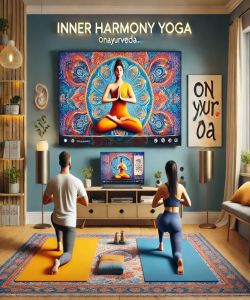
Overview of Inner Harmony Yoga
Inner Harmony Yoga represents a formidable and structured discipline engineered for the explicit purpose of forging an indomitable connection between mind and body. It is not a practice of passive stretching or gentle relaxation; rather, it is an assertive methodology for cultivating profound internal equilibrium through rigorous, deliberate action. This system transcends conventional yoga by integrating principles of psychosomatic alignment, controlled breathwork, and unwavering mental focus into a unified practice. Practitioners are not merely guided through postures but are commanded to dissect and master the intricate relationship between physical tension, emotional states, and cognitive patterns. The objective is absolute self-mastery, achieved by systematically dismantling the internal conflicts that manifest as physical and mental distress. Its philosophy posits that true harmony is not a state of placid stillness but a dynamic balance achieved through strength, discipline, and the conscious command of one's own physiological and psychological resources. The practice demands unwavering commitment and an intolerance for mediocrity, challenging the individual to confront their limitations and systematically overcome them. It is a direct and uncompromising path towards building resilience, mental fortitude, and a state of integrated strength, where every movement and every breath is a calculated step towards achieving a robust and unshakeable core of inner stability. This is not a pursuit for the faint-hearted but a crucible for forging a truly harmonised and powerful self. The rigour of the practice is its primary virtue, ensuring that the resulting state of inner balance is earned, authentic, and profoundly enduring, capable of withstanding the considerable pressures of modern existence.
What is Inner Harmony Yoga?
Inner Harmony Yoga is a sophisticated and exacting discipline that systematically unifies physical postures (asanas), meticulous breath control (pranayama), and intensive mindfulness to achieve a state of profound and stable internal equilibrium. It fundamentally operates on the principle that the mind and body are not separate entities but are an interconnected system, where dysfunction in one domain invariably manifests in the other. Unlike practices that prioritise flexibility or spiritual abstraction, Inner Harmony Yoga is grounded in the tangible and the methodical. Its primary objective is to empower the practitioner with the tools to actively regulate their own nervous system, manage emotional responses, and cultivate a state of unshakeable mental clarity.
The practice can be deconstructed into three core, indivisible components:
Somatic Intelligence: This involves the development of an acute awareness of the body's physical state. Practitioners learn to identify and release deep-seated muscular tension, correct postural imbalances, and understand how physical sensations correlate with mental and emotional states. The asanas are executed with surgical precision, focusing on alignment and internal sensation rather than aesthetic form.
Breath Sovereignty: This is the conscious and deliberate control of the breath as the primary mechanism for regulating the autonomic nervous system. Techniques are employed not merely for relaxation but to energise, focus, or calm the system on command. The breath becomes a powerful tool for anchoring awareness in the present moment and severing the loop of reactive, stress-driven thought patterns.
Mental Fortitude: This component involves training the mind to remain focused, objective, and resilient. Through sustained concentration during physically demanding postures and controlled breathing, the practitioner cultivates an unwavering mental state, capable of observing thoughts and emotions without becoming entangled by them. This is not a passive meditation but an active, disciplined forging of mental strength.
Ultimately, Inner Harmony Yoga is a pragmatic and powerful system for self-mastery, demanding discipline, precision, and an unwavering commitment to forging a resilient, integrated, and fully functional self.
Who Needs Inner Harmony Yoga?
High-Pressure Professionals and Executives: Individuals operating in demanding corporate or leadership environments who require robust tools for stress mitigation, enhanced cognitive function, and superior emotional regulation. The discipline provides a systematic framework for maintaining peak performance under duress.
Individuals Experiencing Psychosomatic Symptoms: Those who manifest psychological stress as physical ailments, including chronic tension, digestive issues, or persistent fatigue. This practice directly addresses the mind-body interface, providing a methodology to deconstruct and resolve these deeply ingrained patterns.
Athletes and Performance Artists: Practitioners in fields demanding supreme physical control and mental focus. Inner Harmony Yoga cultivates a heightened state of somatic awareness, refines motor control, and builds the mental fortitude necessary to perform consistently at an elite level.
Those Seeking Disciplined Self-Development: Individuals who are dissatisfied with superficial wellness trends and demand a rigorous, structured path to genuine self-mastery. This system is for those who seek not temporary relief but a permanent and fundamental shift in their internal operating system.
Practitioners of intensive cognitive disciplines: Academics, analysts, strategists, and others whose work demands sustained mental exertion. The practice serves as a powerful counterbalance, preventing cognitive burnout and restoring the mental clarity essential for complex problem-solving and innovation.
Individuals Recovering from Mental Exhaustion: Those who have experienced burnout or significant mental fatigue and require a structured methodology to rebuild their psychological resilience and regain a sense of control over their internal state.
Anyone Seeking to Break Cycles of Reactive Behaviour: Individuals trapped in patterns of anxiety, irritability, or emotional volatility. The discipline provides the practitioner with the direct means to interrupt these cycles and install a new baseline of calm, deliberate responsiveness.
Mature Individuals Demanding a Sustainable Practice for Longevity: Those who recognise the imperative of maintaining not just physical health but also cognitive and emotional vitality throughout their lifespan. This practice is a long-term strategy for integrated well-being.
Origins and Evolution of Inner Harmony Yoga
The genesis of Inner Harmony Yoga is not rooted in ancient mysticism but in the pragmatic necessities of the mid-twentieth century. It emerged in post-war Europe as a direct response to a widespread societal need for psychological resilience and a means to process collective trauma. Its founders were a collective of physiologists, neurologists, and disenfranchised philosophers who observed the limitations of purely psychoanalytic or purely physical rehabilitation methods. They sought to create a unified system that addressed the human organism as a whole, positing that true stability could only be achieved by resolving the deep-seated conflicts between mind and body that had been exacerbated by years of turmoil.
Initial formulations were clinical and austere, drawing heavily on German and Scandinavian traditions of therapeutic gymnastics and early somatic theories, whilst integrating the disciplined breathwork found in classical yogic texts, which were then becoming more accessible in the West. The crucial distinction was the deliberate secularisation and systematisation of these practices. The objective was not spiritual enlightenment but functional, demonstrable self-regulation. The early practice was rigorous, methodical, and focused on measurable outcomes, such as the regulation of heart rate variability and the reduction of chronic muscular tension. It was a discipline born of necessity, designed to forge functional and resilient individuals from the crucible of profound societal stress.
Over subsequent decades, the practice evolved. As the initial clinical focus on trauma recovery broadened, its principles were found to be exceptionally effective for managing the chronic stresses of modern corporate and urban life. The system was refined, its philosophical underpinnings were articulated more clearly, and a formalised instructor training protocol was established to ensure its integrity and prevent dilution. The evolution was not one of simplification but of sophistication. Techniques were honed for greater precision, and the psychological framework was expanded to incorporate contemporary understandings of neuroscience and emotional regulation. Inner Harmony Yoga today remains true to its origins: it is a tough, uncompromising, and highly effective discipline for forging internal stability in a demanding world.
Types of Inner Harmony Yoga
Static Alignment Practice (Sthira Abhyasa): This foundational type is an uncompromising exploration of stability and structure. Practitioners are required to hold specific, challenging postures for extended durations. The objective is not passive endurance but an active, intelligent engagement with the body's architecture. Each posture is a precise tool used to deconstruct deep-seated patterns of muscular tension and skeletal misalignment. The sustained holds demand absolute mental focus, forcing the practitioner to confront and master the mind's tendency to wander or surrender. This practice systematically builds physical and mental fortitude, cultivating an unshakeable foundation of internal strength and somatic awareness. It is the bedrock upon which all other forms of Inner Harmony Yoga are built.
Dynamic Flow Synthesis (Gati Samyoga): This type introduces controlled, deliberate movement, synchronising each physical transition with the rhythm of the breath. It is not a rapid or performative "vinyasa" flow; rather, it is a methodical and powerful sequence where the transition between postures is as important as the postures themselves. The practice demands immense concentration and control, transforming movement into a form of dynamic meditation. Its purpose is to cultivate seamless integration between mind, breath, and body, fostering a state of fluid resilience. This type challenges the practitioner to maintain internal stability whilst in motion, a critical skill for navigating the unpredictable demands of life.
Restorative Integration (Prashamana Kriya): This is the most subtle yet arguably the most advanced type of Inner Harmony Yoga. It utilises supported, passive postures held for significant periods to facilitate the deep release of the nervous system. However, it is not a practice of mere relaxation. The practitioner is commanded to maintain a state of alert, non-judgmental awareness, observing the subtle energetic and physiological shifts occurring within the body. The objective is to consciously guide the nervous system from a state of sympathetic (fight-or-flight) dominance to parasympathetic (rest-and-digest) activation. This is a strategic practice for deep recovery, stress dissolution, and the integration of the strength and awareness cultivated in the more dynamic forms.
Benefits of Inner Harmony Yoga
Enhanced Cognitive Function: The practice's demand for sustained, unwavering focus directly strengthens the prefrontal cortex, leading to demonstrable improvements in concentration, executive function, and mental clarity.
Superior Emotional Regulation: By mastering breath control and cultivating objective self-awareness, practitioners gain the capacity to modulate their emotional responses, replacing reactive patterns with calm, deliberate action.
Profound Stress Reduction: The systematic regulation of the autonomic nervous system down-regulates the production of stress hormones like cortisol, leading to a significant and lasting reduction in physiological and psychological stress.
Increased Physical Resilience: The precise focus on structural alignment and the strengthening of deep stabilising muscles creates a robust and resilient physical form, less prone to injury and chronic pain.
Heightened Somatic Intelligence: Practitioners develop an acute and sophisticated awareness of their internal bodily state, enabling them to identify and address physical and energetic imbalances before they become problematic.
Improved Postural Integrity: The discipline rigorously corrects ingrained postural defects, leading to improved biomechanical efficiency, reduced strain on the spine and joints, and a more commanding physical presence.
Cultivation of Mental Fortitude: The consistent practice of remaining steady through physical and mental challenges forges an unshakeable sense of inner strength and self-discipline that extends to all areas of life.
Disruption of Negative Thought Patterns: The intensive focus on the present moment through breath and sensation serves as a powerful mechanism for interrupting habitual, ruminative, and self-defeating cognitive loops.
Enhanced Autonomic Nervous System Control: Practitioners learn to consciously influence bodily functions typically considered involuntary, such as heart rate and circulatory patterns, leading to greater overall systemic health and balance.
Unshakeable Inner Stability: The ultimate benefit is the forging of a deep and enduring sense of inner harmony—a dynamic state of balance that is not dependent on external conditions but is generated and maintained from within.
Core Principles and Practices of Inner Harmony Yoga
Unwavering Conscious Alignment (Sajagata Sthiti): This principle dictates that every posture and movement must be executed with meticulous, conscious attention to anatomical and energetic alignment. It is an absolute rejection of superficial or aesthetic imitation. The practitioner is required to internally sense and adjust their structure for optimal stability and energy flow, transforming each asana into an exercise in profound somatic intelligence. This is not about achieving a perfect external shape but about mastering the internal architecture of the body.
Breath Sovereignty (Prana Swarajya): The breath is recognised and utilised as the primary tool for regulating the psycho-physiological state. This principle asserts that mastery of the breath is mastery of the self. Practices involve deliberate, controlled breathing techniques designed not merely to accompany movement but to actively direct the nervous system, focus the mind, and manage the body's energy. The breath is never automatic; it is always a conscious, commanded instrument.
Dynamic Stillness (Gatishila Sthirata): This core practice involves cultivating a state of profound mental quietude amidst intense physical exertion. The body may be under significant strain in a challenging posture, but the mind is trained to remain calm, observant, and centred. This principle forges resilience, teaching the practitioner to maintain internal equilibrium regardless of external pressures or physical discomfort. It is the practice of finding the eye of the storm within oneself.
Objective Self-Observation (Nirapeksha Sakshi): Practitioners are trained to observe their physical sensations, thoughts, and emotions without judgment, attachment, or aversion. This principle cultivates a powerful state of mental detachment, allowing the individual to see their internal processes clearly without being controlled by them. It is the foundation of emotional regulation and the dismantling of reactive, habitual behaviour.
Systematic Tension Deconstruction (Granthi Vibhedana): This practice involves the methodical identification and release of chronic patterns of physical and emotional tension stored in the body's tissues. Through precise postures and focused breathwork, the practitioner actively engages with these areas of holding, systematically breaking them down to restore fluidity, energy flow, and functional integrity to the entire system. This is a direct and uncompromising confrontation with one's own history as stored in the body.
Online Inner Harmony Yoga
Cultivation of Absolute Self-Reliance: The online format removes the external dependency on an instructor for constant physical adjustments. This forces the practitioner to develop a heightened level of internal awareness and somatic intelligence. They must learn to interpret the body's signals and make their own precise corrections, fostering a powerful sense of autonomy and self-mastery that is the core objective of the discipline.
Creation of a Controlled, Distraction-Free Environment: Practising in one's own designated space allows for the complete elimination of external distractions common in a group setting, such as social comparison, performance anxiety, or ambient noise. This creates a sanctuary for deep, focused work, enabling the practitioner to direct their full attention inward, where the fundamental practice of Inner Harmony truly occurs.
Unwavering Consistency and Discipline: The accessibility of the online platform removes common logistical barriers to practice, such as travel time and class schedules. This places the onus of discipline squarely on the individual. Adherence to the practice becomes a pure act of will and commitment, reinforcing the mental fortitude that the discipline is designed to build.
Opportunity for Unfiltered Self-Assessment: Without the presence of others, the practitioner is confronted solely with their own capabilities and limitations. This removes the egoic impulse to perform or compete, facilitating an honest and objective assessment of one's own progress. The practice becomes a purely internal dialogue between the individual and their own state of being.
Enhanced Auditory and Cognitive Focus: The online medium prioritises clear, concise verbal instruction. This trains the practitioner to listen with acute attention and to translate auditory commands directly into precise physical action. This strengthens the neural pathways between auditory processing centres and the motor cortex, enhancing overall cognitive-motor integration and sharpening the mind's ability to direct the body.
Inner Harmony Yoga Techniques
Establish the Foundation (Adhara Sthapana): Begin in a seated or standing position of absolute stability. The initial command is to consciously connect with the points of contact between your body and the ground. Actively press down, engaging the musculature of the legs or pelvis to create an unshakeable base. This is not a passive settling but an active rooting, establishing a secure physical and energetic foundation from which all subsequent action will originate. The spine must be elongated, creating a direct line of energy from the earth to the crown of the head.
Initiate Sovereign Breath (Prana Niyantrana): Commence a controlled diaphragmatic breathing pattern. The inhalation must be slow, deep, and deliberate, expanding the abdomen and lower ribcage. The exhalation must be equally controlled, fully emptying the lungs by drawing the navel towards the spine. The rhythm is precise and non-negotiable. This breath is the metronome for the entire practice, anchoring the mind and regulating the nervous system. Maintain this unwavering breath pattern throughout.
Engage Core Integration (Kendra Bandha): Activate the deep core musculature. This is not a superficial tensing of the abdominal wall but a subtle yet powerful engagement of the transverse abdominis and pelvic floor. This creates a corset of internal support around the lumbar spine, stabilising the body's centre of gravity. This core integration must be maintained continuously, providing the central point of stability from which all movements will be initiated and controlled.
Execute Postural Command (Asana Nirdesha): Move into the chosen posture with slow, deliberate, and fully controlled action. Every part of the movement is conscious; there are no wasted or automatic motions. Upon reaching the full expression of the posture, perform a systematic scan of the body, ensuring every limb and joint is in its precise alignment as instructed. Hold the posture with active energy, not passive collapse, maintaining the integrated core and sovereign breath.
Observe and Neutralise (Sakshi Bhava): Whilst holding the posture under tension, command the mind to become a neutral observer. Witness the physical sensations, the urge to exit the pose, and any arising thoughts or emotions. Do not engage with them. Acknowledge their presence and immediately return the full force of your concentration to the breath and the physical sensations of the alignment. This is the active practice of mental fortitude, maintaining stillness within the storm.
Inner Harmony Yoga for Adults
Inner Harmony Yoga is a discipline exclusively designed for the mature adult practitioner. This exclusivity is not a matter of ageism but a frank recognition of the psychological and emotional maturity required to engage with the practice's rigorous demands. It presupposes a level of life experience that enables an individual to grasp the profound necessity for self-regulation and internal discipline. The techniques demand an unwavering capacity for introspection and a willingness to confront and dismantle deeply ingrained physical and mental patterns—a task for which the adolescent or young adult mind is often ill-equipped. The practice is not concerned with achieving acrobatic postures or a superficial aesthetic; its focus is on the methodical deconstruction of internal conflict and the forging of unshakeable resilience. This requires patience, a long-term perspective, and the self-awareness to work with one's own limitations without frustration or ego. Adults, having contended with the complexities of professional and personal responsibilities, are uniquely positioned to appreciate the pragmatic power of a system that delivers tangible results in stress management, cognitive clarity, and emotional stability. The practice commands a level of self-responsibility and internal authority that is the hallmark of adulthood. It is a tool for those who have moved beyond the search for external validation and are committed to the formidable, internal work of building a truly integrated and self-possessed life. It is, therefore, a practice not merely for adults, but for the adult mindset itself.
Total Duration of Online Inner Harmony Yoga
The total duration of each online Inner Harmony Yoga session is fixed and non-negotiable. Every module is precisely structured to last exactly 1 hr. This specific timeframe is not arbitrary; it is the result of a deliberate and methodical calibration designed to ensure maximum efficacy without inducing systemic fatigue. The 1 hr duration provides the necessary scope to move through the essential phases of the practice—foundational grounding, intensive core work, peak postural expression, and integrative restoration—without compromise or undue haste. A shorter period would necessitate the truncation of one or more of these critical components, thereby diluting the potent, synergistic effect of the complete sequence. Conversely, extending the practice beyond this point risks pushing the nervous system into a state of diminishing returns, where physical and mental fatigue begin to degrade the quality of focus and precision required. The 1 hr container is a crucible; it demands absolute presence and commitment from the practitioner for its entire duration. It is a structured appointment with the self, a delimited period carved out for the explicit and undiluted purpose of forging inner coherence. This unwavering consistency in duration is a core tenet of the discipline, reinforcing the principles of structure, reliability, and commitment that are fundamental to achieving genuine and lasting inner harmony.
Things to Consider with Inner Harmony Yoga
Engaging with Inner Harmony Yoga demands a far greater commitment than merely attending a class; it is an undertaking that requires rigorous self-assessment and uncompromising preparation. Prospective practitioners must first consider their own psychological readiness for a discipline that actively confronts internal discord rather than placating it. This is not a palliative or a form of escapism; it is a direct and demanding methodology for self-mastery that will challenge one's comfort zones. One must possess the fortitude to remain present with physical discomfort and mental resistance without succumbing to avoidance or frustration. Furthermore, the environment for practice is of paramount importance. A dedicated, quiet, and uncluttered space is not a recommendation but a strict prerequisite. This physical space must be treated as a laboratory for internal work, free from the interruptions and distractions of daily life, which would otherwise sabotage the deep focus required. It is also imperative to understand that progress within this discipline is not linear and is measured by internal shifts in awareness and regulation, not by external achievements in flexibility or postural complexity. The practitioner must therefore abandon ego-driven goals and cultivate the patience to engage in a methodical, long-term process. Finally, one must be prepared to assume absolute responsibility for their own practice. Inner Harmony Yoga provides the tools and the framework, but the discipline, consistency, and unwavering commitment must come entirely from within the individual.
Effectiveness of Inner Harmony Yoga
The effectiveness of Inner Harmony Yoga is rooted in its uncompromising, systematic approach to integrating the human organism's key regulatory systems. Its efficacy is not a matter of belief or subjective experience but a direct consequence of its core mechanics. By enforcing precise musculoskeletal alignment and engaging deep stabilising muscles, the practice corrects chronic postural imbalances that are a primary source of physical pain and energetic blockage. This structural re-patterning has a profound and direct impact on the functioning of the nervous system. The discipline's rigorous emphasis on controlled, diaphragmatic breathing is a powerful and scientifically validated method for shifting the autonomic nervous system from a state of chronic sympathetic (stress-induced) activation to one of parasympathetic (rest and recovery) dominance. This shift is the fundamental mechanism for reducing stress, anxiety, and their myriad physiological consequences. Furthermore, the demand for sustained, unwavering focus during physically challenging states trains the brain's executive functions, demonstrably improving concentration, emotional regulation, and cognitive resilience. The practice effectively rewires neural pathways, dismantling reactive, habitual thought and behaviour patterns and replacing them with calm, deliberate responsiveness. Its effectiveness, therefore, is not accidental; it is an engineered outcome of a discipline that systematically addresses the intricate feedback loops between the body, the breath, and the mind, forging a state of high-functioning, resilient, and stable equilibrium. The results are not temporary; they are deeply embodied and enduring.
Preferred Cautions During Inner Harmony Yoga
The practice of Inner Harmony Yoga, whilst profoundly beneficial, demands an unwavering respect for its intensity and precision; complacency is not an option. It is imperative that practitioners resist the ego-driven impulse to force the body into postures beyond its current functional capacity. Injury is the inevitable outcome of such impatience. All movements must be initiated from a place of deep core stability and executed with deliberate control, never with momentum or brute force. A sharp or shooting pain is an unequivocal command to cease the action immediately and reassess. Furthermore, individuals with pre-existing medical conditions, particularly those relating to the spine, cardiovascular system, or joint instability, must approach the practice with extreme caution and seek professional medical clearance before commencing. The powerful breathwork techniques can have a significant impact on blood pressure and the nervous system; they must be learned and applied precisely as instructed, without deviation. The psychological intensity of the practice must also be acknowledged. The process of dismantling long-held physical and emotional tension can occasionally bring suppressed emotional content to the surface. Practitioners must be prepared to observe these phenomena with the same neutral objectivity applied to physical sensation, without becoming overwhelmed. This is a potent discipline, and its power must be wielded with intelligence, awareness, and an uncompromising commitment to self-preservation.
Inner Harmony Yoga Course Outline
Module 1: The Foundation – Structural and Breath Integration
Principle of Unwavering Conscious Alignment.
Mastery of Diaphragmatic Breathing: The Sovereign Breath.
Activation and Sustenance of Core Integration (Kendra Bandha).
Execution of fundamental static postures with focus on grounding and stability.
Module 2: Deconstruction of Tension – Addressing Core Holdings
Systematic identification of personal tension patterns.
Application of targeted postures for the hips, shoulders, and spine.
Techniques for using the breath to release deep fascial restrictions.
Introduction to the principle of Objective Self-Observation under physical stress.
Module 3: Dynamic Synthesis – Stability in Motion
Principle of Dynamic Stillness: Integrating movement and breath.
Execution of controlled, precise transitions between foundational postures.
Maintaining core stability and alignment throughout fluid sequences.
Developing unwavering focus during complex, multi-step movements.
Module 4: Neurological Regulation – Mastering the Internal State
Advanced pranayama techniques for nervous system modulation (energising and calming).
Introduction to Restorative Integration postures for deep parasympathetic activation.
The practice of sustaining alert, non-judgmental awareness during prolonged stillness.
Application of techniques to real-world stress scenarios.
Module 5: Full Integration – Autonomy in Practice
Synthesis of all principles into a coherent, self-directed practice.
Developing the ability to intelligently sequence postures based on internal feedback.
Mastery of the mental state: sustaining harmony amidst maximum challenge.
Final assessment of physical control, breath sovereignty, and mental fortitude.
Detailed Objectives with Timeline of Inner Harmony Yoga
Within the Initial Phase (Modules 1-2): Practitioners shall achieve complete mastery of the foundational sovereign breath, being able to sustain it without conscious effort during basic static postures. They will demonstrate the ability to activate and maintain core integration consistently. A primary objective is to develop the initial somatic intelligence required to identify and begin addressing major areas of personal physical tension in the hips and shoulders.
By the Midpoint of the Course (Module 3): Practitioners must demonstrate the capacity to maintain flawless alignment and breath-synchronisation during dynamic transitions. The objective is to move from a state of static stability to one of fluid, controlled strength. They shall exhibit a marked improvement in focus, capable of sustaining concentration throughout an entire dynamic sequence without significant mental distraction.
Approaching the Final Phase (Module 4): The practitioner will have acquired the technical skill to utilise specific breathwork techniques to consciously alter their psycho-physiological state on command—to energise or to calm the nervous system deliberately. A key objective is the ability to enter a state of deep, restorative stillness whilst maintaining full mental alertness, demonstrating control over the parasympathetic nervous system.
Upon Completion of the Course (Module 5): Practitioners shall possess the full toolkit to conduct an autonomous and intelligent Inner Harmony Yoga practice. The final objective is complete integration: the ability to seamlessly blend dynamic flow, static holds, and restorative postures into a practice tailored to their own daily needs. They will exhibit a state of embodied resilience, demonstrating unwavering mental fortitude and emotional regulation both within the practice and in their daily lives.
Requirements for Taking Online Inner Harmony Yoga
Unwavering Personal Commitment: An absolute, non-negotiable dedication to consistent practice and the disciplined application of the course principles.
A Dedicated and Sanctified Practice Space: A specific, permanently designated area that is quiet, private, and entirely free from household, family, or professional interruptions. This space is not optional.
High-Speed, Stable Internet Connection: A reliable, uninterrupted broadband connection is mandatory. Technical failures due to inadequate connectivity are the sole responsibility of the practitioner.
A High-Quality-Viewing Device: A laptop, tablet, or monitor with a screen large enough to clearly observe the instructor's demonstrations of precise alignment. A smartphone is unacceptable.
Functional Audio Equipment: The device's internal speakers or external headphones must be capable of rendering verbal instructions with absolute clarity. Misunderstanding due to poor audio quality is not a valid excuse.
A Standard Yoga Mat: A non-slip yoga mat of good quality is required to ensure a stable and safe foundation for all postures.
Appropriate Attire: Form-fitting, unrestrictive clothing that allows for a full range of motion and enables clear self-observation of bodily alignment. Excessively loose or cumbersome garments are forbidden.
Bodily and Mental Sobriety: The practitioner must be free from the influence of alcohol, narcotics, or any substance that impairs judgment, coordination, or sensory perception.
A Mature and Receptive Mindset: The willingness to receive and execute instructions with precision and without egoic resistance. The capacity for honest self-assessment is essential.
Things to Keep in Mind Before Starting Online Inner Harmony Yoga
Before commencing the online practice of Inner Harmony Yoga, it is imperative to conduct a rigorous internal audit of one's intentions and readiness. This discipline is not a casual fitness regimen or a passive relaxation technique; it is a formidable system of self-mastery that demands unwavering discipline and psychological fortitude. You must understand that the online format places the burden of responsibility squarely upon your shoulders. There will be no instructor to physically correct your posture or to motivate you when your resolve wanes. Your progress will be a direct and unfiltered reflection of your own commitment. Therefore, you must establish an inviolable schedule for your practice and defend that time with absolute ferocity against all other competing demands. It is essential to approach each session not as a task to be completed, but as a deliberate engagement with the deepest strata of your own being. You must be prepared to confront physical limitations and mental resistance with a calm, analytical mind, viewing them not as failures but as critical data points on the path to mastery. Abandon any preconceived notions of what yoga should be and prepare to engage with a highly structured, demanding, and profoundly transformative methodology. The screen is merely a conduit for instruction; the real practice occurs within the non-negotiable boundaries of your own body, your own mind, and your own will.
Qualifications Required to Perform Inner Harmony Yoga
The authority to instruct Inner Harmony Yoga is not easily obtained and is reserved exclusively for individuals who have demonstrated complete mastery of the discipline in both theory and practice. The qualification process is intentionally arduous, designed to filter out all but the most dedicated and competent candidates. A certified instructor must hold a foundational qualification from a recognised yoga alliance, but this is merely the entry point. The primary qualification is the successful completion of the Inner Harmony Yoga advanced certification, a rigorous training programme that far exceeds industry standards. This involves:
Extensive Anatomical and Physiological Knowledge: A deep, clinical understanding of biomechanics, kinesiology, and neurophysiology is non-negotiable. Instructors must be able to articulate precisely how each posture and breathing technique affects the body's musculoskeletal, nervous, and endocrine systems.
Demonstrated Personal Mastery: Candidates must undergo a practical examination in which they demonstrate flawless execution of the entire advanced Inner Harmony Yoga syllabus. This is not a test of flexibility but of control, precision, and the embodiment of the core principles under intense scrutiny.
Philosophical and Psychological Proficiency: A comprehensive examination is required on the philosophical underpinnings of the system and its application to modern psychological stressors. Instructors must be articulate in the precise language of the discipline and capable of guiding practitioners through the psychological challenges that may arise.
Pedagogical Skill: Qualification requires passing a teaching practicum, where candidates are assessed on their ability to deliver clear, concise, and commanding instruction. They must demonstrate the capacity to identify subtle misalignments through observation and to provide effective verbal cues for correction.
Only those who satisfy every one of these stringent requirements are granted the qualification to lead others in this demanding practice, ensuring the integrity and potency of the system are preserved without compromise.
Online Vs Offline/Onsite Inner Harmony Yoga
Online
The online modality for Inner Harmony Yoga is an environment of profound self-reliance and focused introspection. It strips away the external elements of a group class, compelling the practitioner to cultivate a heightened state of internal awareness. Lacking the immediate potential for physical adjustment from an instructor, the individual must learn to interpret their own bodily feedback with supreme accuracy, fostering a powerful and enduring somatic intelligence. This format demands and builds immense personal discipline, as the commitment to practice is not upheld by the social contract of a physical class but by the practitioner's solitary will. The controlled, private environment eliminates distractions and the potential for social comparison, creating a pure crucible for the internal work that is the core of the discipline. It is the preferred modality for the self-motivated individual who seeks to forge an autonomous practice and to master their internal state without external dependencies. The focus is entirely on translating precise verbal commands into embodied action, sharpening the mind-body connection to a razor's edge.
Offline/Onsite
The offline, or onsite, practice of Inner Harmony Yoga offers a different but equally rigorous dynamic. The primary advantage is the direct, hands-on guidance of a qualified instructor, who can provide immediate, tactile feedback and precise physical adjustments. This can accelerate the understanding of complex alignments and help to break through long-standing physical blockages more efficiently. The shared space generates a palpable energy of collective focus and discipline, which can serve as a powerful motivating force, holding practitioners to a higher standard of effort and presence. Furthermore, the onsite setting provides access to a community of like-minded individuals who are equally committed to this demanding practice, creating a network of mutual support and shared purpose. It allows for direct dialogue with the instructor, enabling a deeper exploration of the practice's nuances. This modality is ideal for those who benefit from structured, external accountability and the dynamic energy of a focused group environment to drive their practice forward.
FAQs About Online Inner Harmony Yoga
Question 1. Is this practice suitable for beginners?
Answer: It is suitable for individuals who are new to yoga but not new to discipline. A beginner's mindset is welcome; a lack of commitment is not. The practice is demanding, and success depends on mental fortitude, not prior experience.
Question 2. Do I need to be flexible to start?
Answer: No. Flexibility is a potential outcome, not a prerequisite. The practice is focused on structural alignment, stability, and mental control. An obsessive focus on flexibility is counterproductive to the core principles.
Question 3. What if I have a pre-existing injury?
Answer: You must obtain clearance from a qualified medical professional before commencing. You are required to take absolute responsibility for your own physical safety and to modify postures as necessary.
Question 4. How is the online format different from a generic yoga video?
Answer: This is live, structured instruction within a rigorous, systematic curriculum. It is not a passive follow-along video. It is an interactive, demanding training module requiring your full, active participation and focus.
Question 5. Can I ask questions during the online session?
Answer: No. The 1 hr session is a period of unbroken, focused practice. Questions are to be submitted for designated Q&A sessions or support channels outside of the active practice time to maintain the integrity of the container.
Question 6. What results can I realistically expect?
Answer: With consistent and disciplined practice, you can expect enhanced mental clarity, superior emotional regulation, reduced stress levels, and a significant increase in physical resilience and postural integrity.
Question 7. Why is the session duration exactly 1 hr?
Answer: The duration is scientifically calibrated to achieve the maximum physiological and neurological benefit without causing systemic exhaustion. It is a non-negotiable structural element of the discipline.
Question 8. What if I miss a live online session?
Answer: Accountability is paramount. Depending on the course structure, a recording may be provided, but consistent attendance at the live session is expected.
Question 9. Is there any chanting or spiritual dogma involved?
Answer: No. Inner Harmony Yoga is a secular, pragmatic discipline grounded in physiology and neuroscience. The focus is on demonstrable self-regulation, not spiritual belief.
Question 10. How physically demanding is the practice?
Answer: It is highly demanding. The challenge comes not from speed or acrobatics, but from sustained holds, precise control, and unwavering mental focus. It is designed to build fortitude.
Question 11. What kind of technical setup is mandatory?
Answer: A stable high-speed internet connection, a large-screen device, and clear audio. Technical inadequacy is not an acceptable excuse for poor practice.
Question 12. Can I practise on a carpeted floor?
Answer: It is strongly discouraged. A hard, level surface with a non-slip yoga mat is required for proper stability and alignment.
Question 13. How will I know if my alignment is correct without a teacher present?
Answer: The online format forces you to develop acute internal awareness, or somatic intelligence. You learn to feel the correct alignment from within, based on precise verbal cues. This builds self-reliance.
Question 14. Is this practice related to mindfulness?
Answer: It incorporates principles of intensive, focused attention, which is a core component of mindfulness. However, it is an active, commanding practice, not a passive, accepting one.
Question 15. What if I find the practice too difficult?
Answer: The practice is designed to be challenging. The objective is to work at your edge with intelligence and discipline, not to retreat when confronted with difficulty.
Question 16. Are there different levels available online?
Answer: Courses are structured progressively. You must master the foundational module before you are permitted to advance.
Question 17. Is there a community aspect to the online course?
Answer: Often, a dedicated online forum or group is provided for practitioners to engage with one another outside of the formal practice sessions, but the core work is solitary.
Conclusion About Inner Harmony Yoga
In conclusion, Inner Harmony Yoga stands as a formidable and uncompromising discipline, engineered for the explicit purpose of forging a resilient and fully integrated self. It systematically rejects the superficiality and passivity prevalent in many modern wellness practices, demanding instead a rigorous and intelligent application of will, focus, and physical control. The practice is not a gentle retreat but a direct, methodical engagement with the core sources of internal friction—be they physical, mental, or emotional. Its principles of conscious alignment, breath sovereignty, and dynamic stillness are not abstract ideals but practical, potent tools for achieving demonstrable self-mastery. The unshakeable internal stability it cultivates is not a fleeting state of relaxation but an enduring quality of being, earned through consistent effort and an unwavering commitment to personal excellence. It provides a robust framework for navigating the pressures of a complex world, equipping the practitioner with the internal resources to remain centred, clear, and effective under any circumstances. Ultimately, Inner Harmony Yoga is a testament to the fact that true harmony is not found, but forged. It is the product of discipline, the reward for courage, and the rightful possession of those who are willing to undertake the profound and necessary work of commanding their own internal state.