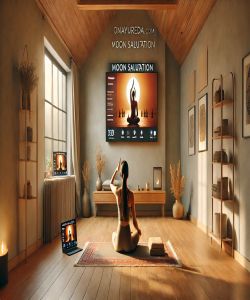
Overview of Moon Salutation
Moon Salutation, or Chandra Namaskar, is a deeply meditative and cooling yoga sequence designed to align practitioners with the calming and reflective energy of the moon. Unlike Sun Salutation (Surya Namaskar), which is more energizing and warming, Moon Salutation is a slower, introspective practice that helps relax the body and mind. It is particularly beneficial for individuals looking to cultivate mindfulness, balance emotions, and reduce stress.
The Moon Salutation sequence consists of a series of yoga postures that flow together seamlessly, emphasizing deep breathing and gentle stretching. Traditionally, it is performed in the evening or at night to honor the moon’s energy and create a state of inner tranquility. In ancient yoga traditions, the moon is associated with feminine energy, intuition, and the subconscious mind. Practicing Moon Salutation allows individuals to connect with these aspects of themselves, fostering a sense of harmony and self-awareness.
The Significance of Moon Salutation
Moon Salutation is more than just a physical exercise; it is a spiritual and meditative practice that brings practitioners in sync with the natural rhythms of the universe. Just as the moon influences tides and emotions, it is believed to affect human energy levels. Many yogis practice Moon Salutation to balance their energies, especially when they feel overstimulated or overwhelmed. The gentle movements and mindful breathing techniques help release tension, improve flexibility, and promote a state of deep relaxation.
Another important aspect of Moon Salutation is its connection to the lunar cycle. Many practitioners choose to perform this sequence during the full moon or new moon phases, as these are considered powerful times for introspection and renewal. In various spiritual traditions, the full moon is seen as a time of heightened energy and transformation, making it an ideal time to practice this sequence.
The Structure of Moon Salutation
The sequence of Moon Salutation varies slightly depending on the yoga tradition or instructor, but it typically includes a combination of forward bends, gentle backbends, lateral stretches, lunges, and grounding postures. Each pose is linked with deep, rhythmic breathing to enhance relaxation and mindfulness. Some common postures in the Moon Salutation sequence include:
-
Tadasana (Mountain Pose): A grounding posture that promotes stability and presence.
-
Urdhva Hastasana (Upward Salute): A gentle stretch to open the chest and lengthen the spine.
-
Uttanasana (Standing Forward Bend): Encourages deep relaxation and releases tension from the lower back.
-
Anjaneyasana (Low Lunge): Opens the hips and strengthens the legs.
-
Malasana (Garland Pose): A deep squat that enhances flexibility in the hips and groin.
-
Ardha Chandrasana (Half Moon Pose): A balancing pose that symbolizes the moon and promotes stability.
Unlike the fast-paced and repetitive nature of Sun Salutation, Moon Salutation is performed slowly and mindfully, focusing on breath awareness and inner stillness. The practice is often accompanied by calming music, candlelight, or even meditation to enhance the experience.
Who Can Benefit from Moon Salutation?
Moon Salutation is suitable for individuals of all ages and fitness levels, making it an accessible practice for beginners and experienced yogis alike. It is especially beneficial for:
-
People dealing with stress and anxiety: The gentle and meditative nature of Moon Salutation helps activate the parasympathetic nervous system, reducing stress hormones and promoting relaxation.
-
Women’s health and hormonal balance: Many women find Moon Salutation helpful in balancing hormones, easing menstrual discomfort, and supporting reproductive health.
-
Individuals with sleep disturbances: Since Moon Salutation has a calming effect on the nervous system, it is a great pre-bedtime practice for those struggling with insomnia.
-
Athletes and dancers: The deep stretches in the sequence help improve flexibility and prevent injuries.
Practicing Moon Salutation Online
With the rise of online yoga platforms, Moon Salutation can be learned and practiced from the comfort of home. On www.onayurveda.com, detailed Moon Salutation sessions are available, guiding practitioners through the sequence with expert instructions and video demonstrations. These online sessions cater to different levels, from beginners to advanced practitioners, ensuring that everyone can experience the benefits of this practice.
Moon Salutation is a beautiful, meditative, and deeply restorative yoga sequence that brings balance, relaxation, and mindfulness into one’s practice. Whether practiced in a group or alone, it offers an opportunity to connect with the self, honor nature, and cultivate a sense of inner peace.
What are Moon Salutation?
Moon Salutation, or Chandra Namaskar, is a sequence of yoga postures that flow together in a meditative and calming manner. It is designed to honor the cooling, introspective energy of the moon, balancing the body’s natural rhythms and fostering relaxation. Unlike Sun Salutation (Surya Namaskar), which is practiced to energize the body, Moon Salutation helps release tension, promote flexibility, and cultivate mindfulness.
The Meaning Behind Moon Salutation
The word "Chandra" in Sanskrit means "moon," while "Namaskar" means "salutation" or "greeting." Together, Chandra Namaskar is a yogic practice that allows practitioners to bow to the moon, symbolizing gratitude, inner peace, and reflection. This sequence is rooted in traditional yoga philosophy, which views the moon as a representation of feminine energy (Shakti), intuition, and the subconscious mind.
In ancient yogic traditions, the sun and moon represent two complementary forces:
-
The sun (Surya) represents activity, heat, and outward energy.
-
The moon (Chandra) represents rest, coolness, and inward energy.
Just as day and night create balance in nature, Moon Salutation complements Sun Salutation to maintain physical, emotional, and spiritual well-being. While Sun Salutation is typically practiced in the morning to awaken the body, Moon Salutation is best practiced in the evening to promote calmness and relaxation.
The Structure of Moon Salutation
Moon Salutation consists of a series of flowing postures, often performed in a circular sequence to symbolize the cyclical nature of the moon. While variations exist across different yoga schools, a standard Moon Salutation includes:
-
Tadasana (Mountain Pose) – Standing tall with feet together, grounding into the earth.
-
Urdhva Hastasana (Upward Salute) – Raising arms overhead, stretching the spine.
-
Chandrasana (Side Stretch Pose) – Bending sideways to enhance flexibility.
-
Uttanasana (Standing Forward Bend) – Folding forward to release tension in the back.
-
Anjaneyasana (Low Lunge Pose) – Stretching the legs and opening the hips.
-
Malasana (Garland Pose) – Squatting to improve hip mobility.
-
Ardha Chandrasana (Half Moon Pose) – Balancing on one leg to develop stability.
-
Parsvottanasana (Pyramid Pose) – A deep stretch for the hamstrings and back.
-
Prasarita Padottanasana (Wide-Legged Forward Bend) – A posture that relaxes the spine and hamstrings.
-
Returning to Tadasana (Mountain Pose) – Completing the cycle with stillness and gratitude.
Each movement is synchronized with slow, controlled breathing, creating a meditative rhythm that allows practitioners to stay present in the moment.
Why Practice Moon Salutation?
Moon Salutation is ideal for individuals seeking a gentle and reflective yoga practice. It is particularly beneficial for:
-
Reducing stress and anxiety – The slow, mindful movements activate the parasympathetic nervous system, lowering cortisol levels and promoting relaxation.
-
Enhancing flexibility and mobility – The deep stretches in Moon Salutation help improve range of motion in the spine, hips, and legs.
-
Promoting emotional balance – This sequence encourages self-reflection, helping to release emotional blockages.
-
Supporting women's health – Moon Salutation is believed to help balance hormones and ease menstrual discomfort.
Practicing Moon Salutation Online
With the availability of online yoga classes, Moon Salutation can be learned and practiced from anywhere. On www.onayurveda.com, expert instructors guide students through live and recorded sessions, ensuring that practitioners understand the correct alignment, breathing techniques, and variations of the sequence.
Whether performed as part of a daily yoga practice or as a standalone evening routine, Moon Salutation is a powerful tool for relaxation, self-awareness, and well-being.
Who Needs Moon Salutation?
Moon Salutation, or Chandra Namaskar, is a gentle and meditative yoga sequence that offers numerous benefits for people from all walks of life. Unlike Sun Salutation, which is invigorating and dynamic, Moon Salutation is calming, introspective, and deeply restorative. It is especially beneficial for those seeking balance, relaxation, and a deeper connection with their inner self. But who exactly should incorporate Moon Salutation into their routine?
People Who Experience Stress and Anxiety
One of the primary reasons people turn to Moon Salutation is its stress-relieving effects. The slow and mindful movements, combined with deep breathing, help activate the parasympathetic nervous system, which is responsible for relaxation and recovery. Individuals who suffer from high stress, anxiety, or nervous tension can benefit from practicing Moon Salutation regularly, especially in the evening. It helps:
-
Reduce cortisol (stress hormone) levels
-
Promote mental clarity and emotional balance
-
Encourage mindfulness and self-awareness
For those who lead busy lives or experience frequent emotional ups and downs, practicing Moon Salutation can be a powerful tool for self-care and relaxation.
Women’s Health and Hormonal Balance
Moon Salutation is particularly beneficial for women, as it is believed to support hormonal balance and reproductive health. The moon is often associated with feminine energy (Shakti), intuition, and cycles, making this practice ideal for:
-
Easing menstrual discomfort – The gentle stretches help relieve cramps and promote circulation.
-
Balancing hormones – The sequence helps regulate the endocrine system, which controls hormone production.
-
Supporting fertility and pregnancy – Certain modifications of Moon Salutation can be beneficial during pregnancy, helping to open the hips and relax the nervous system.
Many women find that practicing Moon Salutation during different phases of their menstrual cycle brings greater awareness of their body's natural rhythms and helps manage symptoms of PMS (premenstrual syndrome) and menopause.
Individuals with Sleep Disorders
Since Moon Salutation is a calming and meditative practice, it is highly recommended for those struggling with insomnia or poor sleep quality. The deep breathing and gentle forward bends in the sequence help:
Performing Moon Salutation before bedtime can create a sense of peace and relaxation, preparing the body for deep, restful sleep. Those who suffer from chronic insomnia may find that incorporating Moon Salutation into their nightly routine significantly improves sleep quality over time.
People Looking to Improve Flexibility and Mobility
For individuals who have a sedentary lifestyle or limited mobility, Moon Salutation is an excellent way to improve flexibility without putting excessive strain on the body. The sequence includes gentle stretches that target the spine, hips, hamstrings, and shoulders, helping to:
-
Increase joint mobility
-
Release muscle stiffness
-
Enhance range of motion
Since Moon Salutation is low-impact and adaptable, it is suitable for beginners, older adults, and those recovering from injuries. Unlike intense workouts that may strain the body, Moon Salutation focuses on gradual improvement and mindful movement.
Athletes and Dancers
Athletes and dancers often experience muscle tightness, tension, and fatigue from intense training. Moon Salutation serves as an excellent post-workout recovery practice, helping to:
By integrating Moon Salutation into their routine, athletes can develop better balance, flexibility, and injury prevention strategies.
Yoga Practitioners Seeking Balance
For those already practicing Sun Salutation (Surya Namaskar) or other dynamic yoga sequences, incorporating Moon Salutation provides balance. Just as the sun and moon complement each other in nature, these two practices create harmony within the body and mind. Many yoga practitioners use Moon Salutation as a way to wind down after an intense practice or to enhance their meditative state.
Anyone Seeking a Mindful and Meditative Practice
Moon Salutation is not just a physical exercise; it is a deeply spiritual and meditative practice. It is ideal for individuals who:
-
Want to cultivate inner peace and mindfulness
-
Enjoy quiet, reflective movement
-
Are interested in yoga as a tool for emotional healing and self-awareness
Since Moon Salutation connects practitioners with the natural cycles of the moon, it is often performed during full moon or new moon phases to enhance introspection and renewal.
Practicing Moon Salutation Online
With the rise of online wellness platforms, Moon Salutation can now be learned and practiced from anywhere. On www.onayurveda.com, expert-led online Moon Salutation classes provide:
-
Step-by-step guidance for all skill levels
-
Live and recorded sessions for flexibility
-
Personalized modifications for individual needs
Origins and Evolution of Moon Salutation
Moon Salutation, or Chandra Namaskar, has its roots in ancient yogic traditions, though it is not as old or widely practiced as Sun Salutation (Surya Namaskar). While Sun Salutation has been a well-documented part of Hatha yoga for centuries, Moon Salutation emerged later as a complementary sequence that emphasizes restorative, cooling, and introspective qualities.
The Ancient Influence of the Moon in Yoga and Ayurveda
In traditional Indian philosophy, the moon (Chandra) holds significant spiritual and symbolic meaning. It represents:
-
Feminine energy (Shakti) – The nurturing, intuitive, and calming aspects of life.
-
The subconscious mind – Linked to emotions, inner wisdom, and dreams.
-
Cooling and restorative energy – Opposing the fiery energy of the sun (Surya).
The concept of balancing solar and lunar energies has always been fundamental in Hatha Yoga. The term “Hatha” itself is derived from:
-
“Ha” (Sun) – Representing activity, heat, and outward energy.
-
“Tha” (Moon) – Representing calmness, coolness, and inward energy.
Although Surya Namaskar (Sun Salutation) has been widely practiced for energizing and strengthening the body, ancient yogis recognized the need for a balancing sequence—thus, Moon Salutation was developed as a complementary practice to encourage introspection, relaxation, and emotional balance.
The Development of Moon Salutation
Unlike Sun Salutation, which has been traced back to Vedic rituals and early yoga practices, Moon Salutation is a more recent addition to modern yoga traditions. It is believed to have been formally structured in the 20th century by contemporary yoga teachers who sought a gentler, more reflective counterpart to the energizing Sun Salutation.
Though different yoga schools interpret Moon Salutation differently, it generally consists of a circular, flowing sequence of postures that:
-
Encourage fluidity and grace (reflecting the moon’s cycles).
-
Focus on gentle stretching, lateral movements, and grounding postures.
-
Incorporate breath awareness to create a meditative experience.
Some variations of Moon Salutation include modified standing poses, hip openers, and gentle forward bends, all performed with slow, controlled breathing.
The Evolution of Moon Salutation in Modern Yoga
Today, Moon Salutation is widely practiced in different forms, depending on the yoga tradition. Some of the major influences on its modern development include:
-
Hatha Yoga – Emphasizing the balance of solar and lunar energies.
-
Yin Yoga – Encouraging deep relaxation and meditative movement.
-
Vinyasa Yoga – Incorporating smooth, flowing sequences that mirror the rhythmic nature of the moon’s cycles.
Many yoga instructors integrate Moon Salutation into their classes as a cooling, grounding, and restorative sequence. It is often practiced:
-
During the evening or night to promote relaxation and better sleep.
-
On full moon or new moon days as a way to connect with natural cycles.
-
After an intense yoga session or workout to aid recovery.
Moon Salutation in Ayurveda and Traditional Healing
In Ayurveda, the ancient Indian system of holistic healing, the moon is associated with:
-
The Kapha dosha – Representing stability, nurturing, and fluidity.
-
The Pitta dosha – Cooling and soothing excessive heat in the body.
Practicing Moon Salutation is recommended for individuals who have excess Pitta (fire energy), as it helps calm the nervous system, reduce stress, and restore inner harmony. Ayurvedic practitioners often suggest Moon Salutation as part of a wellness routine for people experiencing:
-
Overactive mind and stress-related imbalances.
-
Insomnia and difficulty unwinding at night.
-
Hormonal fluctuations and menstrual discomfort.
Practicing Moon Salutation Today
With the growing popularity of online yoga classes, Moon Salutation is now accessible to practitioners worldwide. On www.onayurveda.com, individuals can learn the practice through expert-led virtual sessions, making it easy to incorporate into a daily wellness routine.
Types of Moon Salutation
Moon Salutation, or Chandra Namaskar, is a fluid and meditative yoga sequence that exists in several variations, each designed to promote relaxation, flexibility, and inner balance. Unlike Sun Salutation (Surya Namaskar), which follows a more structured sequence across yoga traditions, Moon Salutation has been adapted differently by various schools of yoga.
While the core philosophy remains the same—honoring the moon's cooling and introspective energy—the variations of Moon Salutation may differ in posture selection, breathing patterns, and flow intensity. Below are some of the most commonly practiced types of Moon Salutation and their key characteristics.
Traditional Moon Salutation
The classic version of Moon Salutation consists of a circular sequence of movements that emphasize side stretches, lunges, and deep hip openers. This version is often practiced in Hatha Yoga and follows a slower pace, making it ideal for:
-
Beginners looking for a gentle introduction to yoga.
-
Individuals needing a meditative and grounding practice.
-
Evening yoga routines that help unwind and promote restful sleep.
A standard traditional Moon Salutation sequence includes:
-
Tadasana (Mountain Pose) – Standing still and centering the body.
-
Urdhva Hastasana (Upward Salute) – Lifting arms overhead with a deep breath.
-
Chandrasana (Standing Side Stretch Pose) – Leaning side to side for flexibility.
-
Uttanasana (Standing Forward Bend) – Folding forward to stretch the hamstrings.
-
Anjaneyasana (Low Lunge) – Stretching the hips and thighs.
-
Malasana (Garland Pose) – Deep squat to enhance hip mobility.
-
Ardha Chandrasana (Half Moon Pose) – Balancing pose symbolizing lunar energy.
-
Prasarita Padottanasana (Wide-Legged Forward Bend) – Releasing tension in the spine and legs.
-
Returning to Tadasana (Mountain Pose) – Completing the sequence with stillness.
Each movement is performed mindfully and slowly, with deep inhales and exhales, allowing the body to release stress and tension.
Vinyasa-Style Moon Salutation
This variation is based on the Vinyasa Yoga tradition, where breath and movement are synchronized in a flowing sequence. Unlike the traditional style, which focuses on holding postures, the Vinyasa version incorporates seamless transitions between poses.
Key features of the Vinyasa-style Moon Salutation include:
-
A continuous flow of movements, creating a dance-like rhythm.
-
The addition of Chaturanga (Four-Limbed Staff Pose) for strength.
-
The use of Ujjayi breath, a deep and controlled breathing technique.
This style is suitable for intermediate and advanced practitioners who enjoy a more dynamic and creative practice while still experiencing the cooling effects of Moon Salutation.
Yin Yoga Moon Salutation
Yin Yoga is a slow, passive practice where poses are held for longer durations (1-5 minutes), allowing the deep connective tissues to stretch and release tension. The Yin version of Moon Salutation is highly therapeutic and meditative, often practiced in dim lighting or candlelit settings to enhance relaxation.
Characteristics of Yin Moon Salutation include:
-
Holding each pose for extended periods to release deep-seated tension.
-
Emphasizing hip-opening and forward-bending postures.
-
Using props like bolsters or blocks for added support.
This version is ideal for:
-
People with tight muscles or stiffness.
-
Individuals recovering from injuries.
-
Those seeking deep relaxation and mindfulness.
Restorative Moon Salutation
A Restorative Yoga-inspired Moon Salutation is even slower and gentler than the Yin variation. It focuses on completely relaxing the muscles, using props and modifications to make poses comfortable and accessible.
This version is best for:
-
People experiencing fatigue or burnout.
-
Older adults or individuals with limited mobility.
-
Practitioners looking for a soothing, stress-relief practice.
Kundalini Moon Salutation
In Kundalini Yoga, Moon Salutation is performed with an emphasis on breathwork (pranayama), mantra chanting, and meditation. This style integrates:
-
Specific breathing techniques (such as alternate nostril breathing) to activate lunar energy.
-
Chanting of mantras associated with the moon’s calming influence.
-
Gentle, rhythmic movements to stimulate energy flow through the chakras.
This type of Moon Salutation is ideal for individuals seeking a spiritual experience, as it focuses on awakening inner awareness and connecting with higher consciousness.
Modified Chair-Based Moon Salutation
For individuals with limited mobility, joint pain, or physical disabilities, a chair-based version of Moon Salutation is an excellent alternative. In this variation, the poses are modified and performed while seated, allowing practitioners to experience the benefits of Moon Salutation without strain or discomfort.
This version is particularly helpful for:
-
Seniors and individuals with chronic pain.
-
Those recovering from surgery or injury.
-
Anyone who requires a gentle and accessible practice.
Which Type of Moon Salutation is Right for You?
The choice of which Moon Salutation variation to practice depends on personal preferences, physical condition, and wellness goals.
-
If you prefer a structured, meditative practice, go for the traditional version.
-
If you enjoy flowing movement and breath coordination, try the Vinyasa-style version.
-
If you need deep relaxation and flexibility, explore the Yin or Restorative versions.
-
If you are interested in spiritual awakening, practice the Kundalini version.
-
If you require a gentle and accessible approach, choose the Chair-based version.
Practicing Different Types of Moon Salutation Online
With the availability of online yoga sessions, individuals can explore different styles of Moon Salutation from the comfort of their homes. On www.onayurveda.com, expert instructors offer customized online classes that cater to practitioners of all skill levels, allowing them to:
-
Experience various types of Moon Salutation based on their needs.
-
Receive personalized guidance on alignment and breathing techniques.
-
Develop a consistent practice with live and recorded sessions.
Benefits of Moon Salutation
Moon Salutation, or Chandra Namaskar, is a powerful yoga sequence that provides physical, mental, and emotional benefits. Unlike Sun Salutation (Surya Namaskar), which is energizing and heat-building, Moon Salutation is cooling, calming, and introspective. It is particularly effective for stress relief, flexibility, emotional balance, and relaxation.
Regular practice of Moon Salutation can bring a sense of harmony and mindfulness, making it an ideal addition to an evening yoga routine. Below are some of the key benefits of practicing Moon Salutation.
Physical Benefits of Moon Salutation
1. Improves Flexibility and Mobility
Moon Salutation consists of fluid and stretching movements that help open up the body. The poses focus on:
-
Hip flexibility – Postures like Low Lunge (Anjaneyasana) and Garland Pose (Malasana) gently stretch the hips, reducing tightness.
-
Spinal mobility – Side stretches and forward bends increase the range of motion in the spine.
-
Hamstring and calf flexibility – Poses like Wide-Legged Forward Fold (Prasarita Padottanasana) help lengthen tight leg muscles.
This makes Moon Salutation excellent for athletes, dancers, and individuals with a sedentary lifestyle who need to improve mobility.
2. Enhances Strength and Stability
Although Moon Salutation is gentle and meditative, it still requires muscular engagement. The sequence strengthens:
-
Legs and lower body – Lunges and squats help build strength in the thighs, calves, and glutes.
-
Core muscles – Holding poses like Half Moon Pose (Ardha Chandrasana) improves core stability and balance.
-
Shoulders and arms – Raising the arms overhead in Upward Salute (Urdhva Hastasana) engages the upper body.
Over time, regular practice enhances stability, balance, and overall body control.
3. Supports Joint Health
Since Moon Salutation is a low-impact practice, it is gentle on the joints while still keeping them active. Movements are performed slowly and mindfully, which helps:
-
Lubricate the joints and prevent stiffness.
-
Reduce the risk of joint pain and inflammation.
-
Improve circulation to promote healthy joint function.
This makes it ideal for seniors and individuals with arthritis or joint issues.
4. Helps with Posture and Alignment
The sequence encourages mindful body awareness, helping practitioners develop better posture. Over time, it can:
-
Correct slouching and poor spinal alignment.
-
Strengthen the back and shoulders to support upright posture.
-
Reduce neck and lower back strain caused by long hours of sitting.
This benefit is particularly useful for office workers, students, and individuals with sedentary lifestyles.
Mental and Emotional Benefits of Moon Salutation
5. Reduces Stress and Anxiety
Moon Salutation is designed to activate the parasympathetic nervous system, which is responsible for relaxation. The combination of slow movements, deep breathing, and meditative focus helps:
-
Lower cortisol (stress hormone) levels.
-
Promote a sense of inner peace and relaxation.
-
Reduce symptoms of anxiety, restlessness, and nervous tension.
Practicing before bed can help individuals unwind from a stressful day and sleep more peacefully.
6. Enhances Mindfulness and Self-Awareness
The meditative nature of Moon Salutation helps practitioners:
-
Develop a deeper connection with their body and breath.
-
Become more aware of emotions and inner thoughts.
-
Cultivate a sense of gratitude and introspection.
Many practitioners find that Moon Salutation is a grounding and centering experience, helping them feel more present and balanced.
7. Helps with Sleep and Insomnia
Since Moon Salutation is cooling and calming, it is an excellent practice for individuals struggling with insomnia or poor sleep quality. The deep stretches and breathwork:
-
Relax the nervous system.
-
Release physical tension from the body.
-
Prepare the mind for restful sleep.
For best results, it is recommended to practice Moon Salutation 30–60 minutes before bedtime.
8. Balances Emotions and Hormones
Moon Salutation is associated with the lunar cycle and feminine energy, making it beneficial for:
-
Women’s health – Helps regulate menstrual cycles and ease PMS symptoms.
-
Hormonal balance – Reduces mood swings, anxiety, and emotional imbalances.
-
Emotional healing – Encourages self-reflection and emotional release.
For individuals experiencing stress-related hormonal imbalances, Moon Salutation can be a natural way to restore balance.
Spiritual and Energetic Benefits of Moon Salutation
9. Aligns with Lunar Energy and Cycles
Moon Salutation is traditionally practiced on full moon or new moon days to connect with the natural rhythms of the universe. Many practitioners believe that it:
-
Enhances intuition and inner wisdom.
-
Encourages self-reflection and renewal.
-
Promotes a deeper connection with nature and cosmic energy.
Some yoga schools integrate mantras and affirmations into the practice to further amplify these benefits.
10. Balances Solar and Lunar Energies in the Body
According to Hatha Yoga philosophy, the body contains both solar (Surya) and lunar (Chandra) energies. While Sun Salutation activates the solar energy, Moon Salutation helps balance the lunar energy, creating harmony between:
This balance is essential for maintaining emotional and energetic stability.
Who Can Benefit from Moon Salutation?
Moon Salutation is suitable for:
✔ Beginners looking for an accessible yoga practice.
✔ Individuals dealing with stress, anxiety, or insomnia.
✔ Women seeking hormonal balance and menstrual relief.
✔ People recovering from injuries or needing low-impact movement.
✔ Anyone looking for a gentle, meditative yoga experience.
Practicing Moon Salutation Online
With the availability of online yoga sessions, practitioners can learn and practice Moon Salutation from anywhere. On www.onayurveda.com, individuals can access:
-
Expert-led online classes tailored for all levels.
-
Live and recorded sessions for flexibility and convenience.
-
Guided meditation and breathing techniques to enhance relaxation.
Core Principles and Practices of Moon Salutation
Moon Salutation, or Chandra Namaskar, is a holistic yoga practice that emphasizes grace, mindfulness, and inner balance. Unlike Sun Salutation (Surya Namaskar), which is energetic and dynamic, Moon Salutation follows a slower, meditative flow designed to cool the body and calm the mind.
To fully experience the benefits of Moon Salutation, it is important to understand its core principles and essential practices. These principles serve as the foundation for a deeper and more meaningful practice, ensuring that each movement and breath is performed with awareness and intention.
Core Principles of Moon Salutation
1. Slow, Fluid Movements
One of the defining characteristics of Moon Salutation is its smooth, flowing transitions between poses. Unlike fast-paced yoga sequences, Moon Salutation encourages:
-
Gentle and deliberate movements to prevent strain or tension.
-
A steady rhythm that mirrors the natural cycles of the moon.
-
Graceful posture alignment to promote fluidity and balance.
Each movement is performed mindfully, creating a meditative and calming experience.
2. Deep, Rhythmic Breathing
Breath control, or pranayama, is an essential part of Moon Salutation. The practice incorporates slow, deep inhalations and exhalations, which help to:
-
Activate the parasympathetic nervous system, reducing stress.
-
Enhance oxygen circulation, improving energy levels and relaxation.
-
Promote mindfulness, allowing practitioners to stay present in each movement.
Many yoga teachers encourage using Ujjayi breath (ocean breath)—a slow and controlled breathing technique that helps deepen concentration and relaxation.
3. Awareness of Lunar Energy
Moon Salutation is spiritually connected to the moon’s cycles. Traditionally, it is practiced:
-
On full moon and new moon days to harness lunar energy.
-
During the evening or night when the moon’s influence is strongest.
-
As a way to balance emotions and cultivate inner stillness.
By aligning with the moon’s rhythm, practitioners can tap into their intuitive and reflective nature.
4. Balance Between Strength and Softness
Although Moon Salutation is gentle and calming, it still requires physical strength and stability. The practice balances:
-
Grounding postures (e.g., Mountain Pose, Low Lunge) to build strength.
-
Flowing movements (e.g., Side Stretch, Half Moon Pose) to enhance flexibility.
-
Stillness and breath awareness to create a meditative state.
This balance ensures that the practice is both energizing and restorative.
5. Grounding and Centering the Mind
A key principle of Moon Salutation is stability and grounding. Unlike Sun Salutation, which moves the body in an upward, expansive direction, Moon Salutation emphasizes:
-
Rooting into the earth through strong, stable poses.
-
Creating a sense of inner peace and stability.
-
Encouraging self-reflection and introspection.
By staying connected to the present moment, practitioners can cultivate mental clarity and emotional balance.
Essential Practices of Moon Salutation
To deepen the practice, Moon Salutation incorporates specific postures, breathing techniques, and meditation practices.
1. Preparatory Practices
Before practicing Moon Salutation, it is beneficial to:
-
Perform light warm-up stretches to loosen the muscles.
-
Create a calm environment (dim lighting, candlelight, or soft music).
-
Set an intention for the practice (e.g., relaxation, self-awareness, healing).
Since Moon Salutation is a cooling and introspective sequence, it is best practiced in a quiet and peaceful setting.
2. Postures and Flow
A standard Moon Salutation sequence includes:
-
Tadasana (Mountain Pose) – Grounding and centering.
-
Urdhva Hastasana (Upward Salute) – Stretching and opening the heart.
-
Chandrasana (Standing Side Stretch) – Expanding and increasing flexibility.
-
Uttanasana (Standing Forward Bend) – Releasing tension in the spine.
-
Anjaneyasana (Low Lunge) – Opening the hips and strengthening the legs.
-
Malasana (Garland Pose) – Grounding and improving hip mobility.
-
Ardha Chandrasana (Half Moon Pose) – Balancing and cultivating stability.
-
Prasarita Padottanasana (Wide-Legged Forward Bend) – Relaxing the back and legs.
Each pose is linked with breath awareness, creating a fluid and harmonious movement pattern.
3. Meditation and Reflection
To enhance the meditative aspect of Moon Salutation, practitioners often:
-
End with a short meditation in a seated or lying position.
-
Focus on the breath and observe any changes in energy or emotions.
-
Use affirmations or mantras related to peace, balance, and inner stillness.
Some common mantras and affirmations include:
-
"I flow with the rhythm of the moon."
-
"I embrace stillness and serenity."
-
"I release stress and welcome peace."
Meditation after Moon Salutation helps deepen relaxation and promote a sense of emotional balance.
4. Cooling and Closing Practices
Since Moon Salutation is designed to calm the nervous system, it is important to end the session gradually. Recommended closing practices include:
-
Savasana (Corpse Pose) – Lying down in stillness for 5–10 minutes.
-
Chandra Bhedana Pranayama (Left Nostril Breathing) – A cooling breathwork technique.
-
Journaling or self-reflection to observe thoughts and emotions after the practice.
These final steps help integrate the benefits of the practice into daily life.
Online Moon Salutation
With the growing popularity of online yoga classes, practicing Moon Salutation (Chandra Namaskar) has become more accessible than ever. Whether you are a beginner looking to learn the basics or an experienced yogi wanting to deepen your practice, online Moon Salutation sessions provide the flexibility and guidance needed to practice from the comfort of your home.
Moon Salutation is a meditative and calming yoga sequence that can be especially beneficial when practiced under the guidance of a skilled instructor. Online platforms, such as www.onayurveda.com, offer structured courses, live classes, and recorded sessions that allow individuals to integrate this practice into their daily routine with ease.
Why Choose Online Moon Salutation?
Practicing Moon Salutation online offers several advantages over in-person sessions, making it an excellent option for modern yoga practitioners.
1. Convenience and Flexibility
One of the biggest advantages of online Moon Salutation is the ability to practice anytime, anywhere. Whether you have a busy schedule or limited access to yoga studios, online sessions allow you to:
-
Choose a time that fits your routine – morning, evening, or before bed.
-
Practice in the comfort of your home without the need for travel.
-
Access recorded sessions in case you miss a live class.
This flexibility makes it easier for individuals to develop a consistent yoga practice without disruptions.
2. Personalized Learning and Self-Paced Practice
Online Moon Salutation classes often come with customized learning options, allowing you to:
-
Follow beginner-friendly sessions if you are new to yoga.
-
Explore advanced variations for deeper practice.
-
Pause and replay instructions as needed for better understanding.
This self-paced learning environment ensures that practitioners can move at their own speed without feeling rushed.
3. Access to Expert Guidance
Many online platforms, including www.onayurveda.com, offer:
-
Live instructor-led sessions for real-time feedback.
-
Detailed video tutorials with proper alignment and breathing techniques.
-
Q&A sessions where students can ask questions and receive guidance.
This expert support helps prevent injuries and enhance the overall experience of Moon Salutation.
4. Cost-Effective Alternative
Online yoga sessions tend to be more affordable than in-person studio classes. Many platforms offer:
-
Monthly or yearly memberships with unlimited access.
-
Single-class options for those who prefer to pay per session.
-
Free introductory classes to help beginners get started.
This affordability makes Moon Salutation accessible to a wider audience, regardless of budget constraints.
What to Expect in an Online Moon Salutation Session?
Online Moon Salutation classes typically include a structured format that guides practitioners through the sequence in a smooth and organized manner. Here’s what a standard online session might look like:
1. Warm-Up Exercises (5–10 minutes)
-
Gentle stretching to loosen the muscles.
-
Deep breathing exercises (pranayama) to prepare the body and mind.
-
Short meditation to set an intention for the practice.
2. Guided Moon Salutation Flow (30–40 minutes)
-
Step-by-step instruction on each pose.
-
Breath awareness cues to synchronize movement with breathing.
-
Slow, meditative pacing to enhance relaxation.
Depending on the instructor, the session may include variations of Moon Salutation, such as:
-
Traditional Hatha-style Moon Salutation for a gentle practice.
-
Vinyasa-style flow for a more dynamic experience.
-
Yin or Restorative Moon Salutation for deep relaxation.
3. Cooling Down and Meditation (10–15 minutes)
-
Seated stretches to release tension.
-
Guided meditation to enhance mindfulness.
-
Savasana (Corpse Pose) for deep relaxation.
This structured approach ensures that practitioners receive a complete experience, balancing movement, breathwork, and meditation.
How to Prepare for an Online Moon Salutation Class
To make the most of an online Moon Salutation session, it’s essential to create a peaceful and focused environment. Here are some preparation tips:
1. Find a Quiet Space
Choose a calm and clutter-free area in your home where you can move freely. A quiet environment helps enhance focus and relaxation during the practice.
2. Use the Right Equipment
Although Moon Salutation doesn’t require any special equipment, having the following can improve your experience:
-
Yoga mat for comfort and stability.
-
Bolsters or pillows for support (especially for restorative variations).
-
A small towel to wipe off sweat if needed.
3. Adjust the Lighting and Atmosphere
Since Moon Salutation is a calming, nighttime practice, consider:
-
Dimming the lights or using candles for a soothing ambiance.
-
Playing soft instrumental or nature sounds to enhance relaxation.
-
Practicing near an open window to feel fresh air and natural energy.
4. Dress Comfortably
Wear loose, breathable clothing that allows free movement. Avoid tight or restrictive outfits that might cause discomfort during stretches.
5. Set an Intention
Before starting your session, take a moment to set an intention for your practice. This could be:
Having an intention helps deepen the experience and makes the practice more meaningful.
Who Can Benefit from Online Moon Salutation?
Online Moon Salutation is suitable for:
✔ Beginners looking for an introduction to a gentle yoga practice.
✔ Busy professionals who need a convenient way to relax after work.
✔ Individuals with anxiety or stress seeking a calming routine.
✔ Those with limited access to yoga studios or in remote locations.
✔ People with sleep issues wanting a bedtime practice.
✔ Yoga practitioners looking to complement their Sun Salutation practice.
Since online sessions allow for customization and flexibility, they are ideal for all ages and fitness levels.
Moon Salutation Techniques
Moon Salutation (Chandra Namaskar) is more than just a sequence of postures—it is a mindful, breath-centered practice that helps balance the body’s energies. To fully experience the benefits of Moon Salutation, it is essential to understand the key techniques involved in this practice. These techniques focus on breathwork, alignment, and movement flow, ensuring that each posture is performed safely and effectively.
Whether practiced in a traditional, Vinyasa, Yin, or Restorative style, mastering these techniques can deepen your connection to the meditative and cooling aspects of Moon Salutation.
1. Breath Awareness and Control (Pranayama Techniques)
Breathwork is a crucial component of Moon Salutation, as it helps:
-
Synchronize movement with breath, creating a smooth flow.
-
Calm the nervous system, promoting relaxation.
-
Improve oxygen circulation, enhancing flexibility and focus.
Key Breathing Techniques Used in Moon Salutation:
✅ Ujjayi Breath (Ocean Breath)
-
Involves deep, slow inhalations and exhalations through the nose.
-
Creates a soft "ocean-like" sound at the back of the throat.
-
Helps maintain mental focus and energy flow.
✅ Chandra Bhedana Pranayama (Left Nostril Breathing)
-
Inhale through the left nostril and exhale through the right nostril.
-
Activates the cooling lunar energy, reducing stress and body heat.
-
Best practiced before or after Moon Salutation to enhance relaxation.
✅ Deep Diaphragmatic Breathing
-
Encourages belly expansion on inhale and gentle contraction on exhale.
-
Increases oxygen supply to muscles, improving flexibility.
-
Enhances mindfulness and self-awareness.
2. Correct Alignment and Posture Techniques
Maintaining proper posture and alignment ensures that each pose is performed safely, preventing injuries and maximizing benefits.
Key Alignment Principles for Moon Salutation:
✔ Grounding the Feet – Start with a strong base in Mountain Pose (Tadasana), keeping feet hip-width apart and firmly pressing into the ground.
✔ Engaging the Core – Keep the abdominal muscles slightly engaged to support the lower back, especially in forward bends and lunges.
✔ Aligning the Spine – Maintain a neutral spine in standing postures, avoiding excessive rounding or arching.
✔ Relaxing the Shoulders – Avoid unnecessary tension in the upper body, especially during Upward Salute (Urdhva Hastasana) and Half Moon Pose (Ardha Chandrasana).
✔ Softening the Knees – Avoid locking the knees in standing postures to protect the joints.
3. Flow and Transition Techniques
Moon Salutation is performed in a continuous, flowing motion, mirroring the gentle and cyclical nature of the moon. Unlike Sun Salutation, which is dynamic, Moon Salutation follows a graceful and meditative rhythm.
Techniques for a Smooth Flow:
🌙 Slow, Controlled Movements – Avoid rushing through poses; instead, focus on fluid transitions that encourage relaxation.
🌙 Consistent Breath-to-Movement Coordination – Every movement should be guided by the breath.
-
Inhale when extending the body (Upward Salute, Side Stretch).
-
Exhale when folding or grounding (Forward Bend, Lunge, Squat).
🌙 Circular Motion Concept – Some variations of Moon Salutation follow a circular flow, symbolizing the moon’s cyclical nature. This involves moving side to side rather than forward and back.
🌙 Balanced Left and Right Movements – Unlike Sun Salutation, Moon Salutation often involves performing poses on one side first, then repeating them on the opposite side for symmetry.
4. Key Techniques for Individual Poses in Moon Salutation
Each pose in Moon Salutation has specific techniques to maximize effectiveness and prevent strain.
Tadasana (Mountain Pose) – Grounding and Centering
-
Stand tall, feet hip-width apart.
-
Engage the thighs and lift the chest.
-
Keep arms relaxed or raised overhead.
Urdhva Hastasana (Upward Salute) – Expanding Energy
-
Stretch the arms upward while keeping the shoulders relaxed.
-
Lengthen the spine without over-arching the lower back.
-
Gaze gently upward or keep the chin neutral.
Chandrasana (Standing Side Stretch) – Opening the Side Body
-
Bend to one side, keeping the hips squared.
-
Avoid collapsing into the stretch—engage the core for support.
-
Breathe deeply into the ribcage.
Uttanasana (Standing Forward Bend) – Releasing Tension
-
Hinge from the hips rather than rounding the back.
-
Keep knees slightly bent if the hamstrings are tight.
-
Let the head and neck relax completely.
Anjaneyasana (Low Lunge) – Hip and Heart Opener
-
Keep the front knee directly above the ankle.
-
Engage the back leg to prevent sinking into the hips.
-
Lift the chest slightly for an added heart-opening stretch.
Malasana (Garland Pose) – Grounding and Hip Opening
-
Keep feet slightly wider than hip-width.
-
Lower into a deep squat, bringing palms together at the heart.
-
Maintain a straight spine instead of rounding forward.
Ardha Chandrasana (Half Moon Pose) – Balance and Stability
-
Engage the core and standing leg for balance.
-
Keep the lifted leg parallel to the ground.
-
Use a block under the lower hand if needed for support.
Prasarita Padottanasana (Wide-Legged Forward Fold) – Relaxation and Release
-
Keep feet parallel and hip-width apart.
-
Hinge forward from the hips rather than rounding the back.
-
Let the upper body relax completely toward the floor.
5. Meditation and Closing Techniques
To fully integrate the calming effects of Moon Salutation, it is recommended to end the practice with meditation and deep relaxation techniques.
Recommended Closing Practices:
✅ Seated Meditation (5–10 Minutes)
-
Sit in a comfortable position with a straight spine.
-
Focus on deep breathing and stillness.
-
Optionally, repeat a moon-related mantra ("I embrace stillness and serenity").
✅ Savasana (Corpse Pose) – Deep Relaxation
-
Lie flat on the mat with arms relaxed.
-
Let the breath slow down naturally.
-
Stay in stillness for 5–10 minutes to absorb the practice’s benefits.
✅ Journaling or Reflection
-
Write down any thoughts, feelings, or insights after the practice.
-
Observe any mental clarity, emotional shifts, or physical sensations.
Moon Salutation for Adults
Moon Salutation (Chandra Namaskar) is a deeply calming and introspective yoga sequence that is highly beneficial for adults of all ages. Unlike the dynamic and energizing Sun Salutation (Surya Namaskar), Moon Salutation is slow, meditative, and grounding, making it ideal for adults looking to manage stress, improve flexibility, and cultivate mindfulness.
Whether you are a working professional, parent, senior, or someone dealing with stress or sleep issues, integrating Moon Salutation into your daily routine can enhance overall well-being.
Why Should Adults Practice Moon Salutation?
As adults navigate busy schedules, workplace stress, family responsibilities, and physical health challenges, finding a practice that offers both relaxation and physical benefits is essential. Moon Salutation provides:
✔ A natural way to reduce stress and anxiety.
✔ A gentle method to improve flexibility and mobility.
✔ A soothing practice to enhance sleep and relaxation.
✔ A low-impact exercise suitable for all fitness levels.
Unlike high-intensity workouts, Moon Salutation allows adults to experience movement, breathwork, and meditation in a gentle yet effective manner.
Key Benefits of Moon Salutation for Adults
1. Relieves Stress and Anxiety
Adults often experience high levels of mental stress due to work pressure, financial concerns, and personal responsibilities. The slow, rhythmic breathing in Moon Salutation activates the parasympathetic nervous system, helping to:
-
Lower cortisol (stress hormone) levels.
-
Promote a sense of inner peace and emotional stability.
-
Reduce symptoms of anxiety and nervous tension.
Practicing before bedtime can be particularly effective in calming an overactive mind.
2. Improves Flexibility and Mobility
Many adults suffer from stiffness, back pain, and joint discomfort, often due to:
-
Prolonged sitting at work.
-
Aging and reduced physical activity.
-
Chronic muscle tightness.
Moon Salutation includes gentle stretches and side bends that help:
-
Loosen tight muscles and joints.
-
Increase spinal flexibility and posture alignment.
-
Enhance range of motion without strain.
Since the sequence is low-impact, it is suitable even for those with limited mobility or joint issues.
3. Enhances Sleep Quality
Many adults struggle with insomnia and irregular sleep patterns due to stress and screen exposure before bed. Since Moon Salutation is a calming and grounding practice, it helps:
-
Slow down brain activity, preparing the body for rest.
-
Relax tense muscles, reducing restlessness at night.
-
Balance the nervous system, improving sleep cycles.
Practicing Moon Salutation 30–60 minutes before bed can significantly enhance sleep duration and quality.
4. Supports Heart Health and Blood Circulation
Regular physical movement is essential for heart health and circulation, especially as adults age. Moon Salutation helps:
-
Improve blood circulation, delivering oxygen to tissues.
-
Regulate blood pressure through deep, mindful breathing.
-
Reduce the risk of cardiovascular issues caused by stress and inactivity.
Since the sequence is gentle on the heart and joints, it is a great option for adults looking for a safe and sustainable way to stay active.
5. Boosts Mental Clarity and Focus
Moon Salutation incorporates meditative movement and breathwork, which help improve concentration and cognitive function. Regular practice:
-
Increases mindfulness and present-moment awareness.
-
Reduces mental fatigue and brain fog.
-
Enhances problem-solving and decision-making skills.
This is particularly beneficial for working professionals and adults with demanding responsibilities.
6. Supports Women’s Health and Hormonal Balance
For adult women, Moon Salutation offers hormonal and emotional benefits, especially for:
-
Menstrual health – Reduces PMS symptoms and discomfort.
-
Menopause relief – Helps balance mood swings and body temperature.
-
Fertility support – Creates a relaxing environment for reproductive health.
Since Moon Salutation is deeply connected to the lunar cycle, it is often practiced by women to align their energy with natural rhythms.
Best Time for Adults to Practice Moon Salutation
While Moon Salutation can be practiced at any time, the best time for adults depends on their lifestyle and goals:
🌓 Evening (Before Bed) – Ideal for stress relief and better sleep.
🌕 Full Moon or New Moon Days – Helps with emotional balance and introspection.
🌙 After Work – Great for relaxing after a busy or stressful day.
☀ Morning (For Gentle Movement) – Suitable for those who prefer a slow, mindful start to the day.
Many adults find that practicing just 10–15 minutes of Moon Salutation daily helps them feel more balanced and refreshed.
Moon Salutation Variations for Adults
Depending on fitness level and flexibility, adults can choose from different variations of Moon Salutation:
1. Traditional Hatha Yoga Moon Salutation
-
Slow, steady, and meditative.
-
Best for beginners and those seeking relaxation.
2. Vinyasa-Style Moon Salutation
3. Yin or Restorative Moon Salutation
-
Holds poses for longer periods for deep relaxation.
-
Ideal for stress relief, emotional healing, and bedtime practice.
4. Chair-Based Moon Salutation
Practicing Moon Salutation Online for Adults
With online yoga platforms like www.onayurveda.com, adults can access:
✔ Guided Online Sessions – Live and recorded classes led by expert instructors.
✔ Beginner to Advanced Levels – Classes suited for different flexibility levels.
✔ Customizable Schedules – Choose a time that fits your lifestyle.
✔ Breathwork and Meditation Integration – Enhances relaxation and mindfulness.
Online Moon Salutation classes remove barriers to practice, allowing adults to experience the full benefits of this ancient yoga sequence from the comfort of home.
Getting Started: Tips for Adults Practicing Moon Salutation
🔹 Find a Quiet Space – Create a peaceful environment free from distractions.
🔹 Use a Yoga Mat – Helps maintain stability and support.
🔹 Wear Comfortable Clothing – Loose, breathable fabrics allow easy movement.
🔹 Start Slowly – Begin with 1–2 rounds and gradually increase.
🔹 Focus on Breath – Deep breathing enhances relaxation and movement flow.
🔹 Be Consistent – Regular practice (even 10–15 minutes daily) leads to lasting benefits.
Who Should Try Moon Salutation?
Moon Salutation is perfect for:
✔ Busy professionals needing relaxation after work.
✔ Parents and caregivers seeking a self-care routine.
✔ Adults with stress, anxiety, or sleep issues.
✔ Individuals with stiffness, joint pain, or limited mobility.
✔ Women looking for hormonal balance and emotional well-being.
✔ Seniors who need a gentle, accessible exercise option.
By incorporating Moon Salutation into daily life, adults can experience greater physical ease, mental clarity, and emotional balance, helping them navigate life’s demands with calmness and energy.
Total Duration of Online Moon Salutation (1 Hour per Day)
Practicing Moon Salutation (Chandra Namaskar) for one hour per day can be a transformative experience, allowing individuals to fully immerse themselves in physical movement, breathwork, and meditation. A structured 60-minute online Moon Salutation session provides ample time to explore the sequence deeply, integrate relaxation techniques, and enhance overall well-being.
On www.onayurveda.com, online Moon Salutation classes are designed to accommodate both beginners and advanced practitioners, ensuring a well-rounded session that includes warm-up, the main sequence, breathwork, and closing relaxation.
Breakdown of a 1-Hour Online Moon Salutation Session
A one-hour Moon Salutation practice is divided into different phases to ensure a balanced and effective experience. Each phase serves a unique purpose, helping practitioners achieve physical, mental, and emotional relaxation.
1. Warm-Up and Breathwork (10–15 Minutes)
Before starting the full Moon Salutation sequence, it is important to warm up the body and prepare the mind.
✔ Gentle Stretching Exercises (5–7 minutes)
-
Neck Rolls – Relieves tension in the neck and shoulders.
-
Spinal Twists – Loosens the back and improves spinal mobility.
-
Side Stretches – Prepares the body for lateral movements in Moon Salutation.
-
Hip Circles – Opens the hips and enhances flexibility.
✔ Breathwork (Pranayama) Techniques (5–8 minutes)
Breathing techniques help calm the mind and activate the cooling lunar energy. Some common pranayama techniques include:
-
Ujjayi Breath – Deep, ocean-like breath to enhance focus.
-
Chandra Bhedana Pranayama (Left Nostril Breathing) – Activates cooling energy, reducing stress.
-
Deep Diaphragmatic Breathing – Encourages relaxation and mindfulness.
This prepares the body and mind for a smooth and effective Moon Salutation practice.
2. Guided Moon Salutation Flow (30–35 Minutes)
The core of the session consists of multiple rounds of Moon Salutation, performed in a slow, meditative manner.
✔ Standard Moon Salutation Sequence (Traditional Hatha Style)
Each round includes:
1️⃣ Tadasana (Mountain Pose) – Standing tall and centering energy.
2️⃣ Urdhva Hastasana (Upward Salute) – Raising arms to open the chest.
3️⃣ Chandrasana (Standing Side Stretch Pose) – Stretching the sides to enhance flexibility.
4️⃣ Uttanasana (Standing Forward Bend) – Folding forward to release tension.
5️⃣ Anjaneyasana (Low Lunge Pose) – Strengthening the legs and opening the hips.
6️⃣ Malasana (Garland Pose) – Deep squat for grounding energy.
7️⃣ Ardha Chandrasana (Half Moon Pose) – Balancing posture for stability.
8️⃣ Prasarita Padottanasana (Wide-Legged Forward Fold) – Stretching and relaxation.
🔄 Repeat on the opposite side to maintain balance.
✔ How Many Rounds in a 1-Hour Session?
-
Beginner Level: 4–6 rounds, with longer holds in each posture.
-
Intermediate Level: 8–10 rounds, with slow transitions and breath focus.
-
Advanced Level: 12+ rounds, incorporating variations for deeper flexibility.
Each round of Moon Salutation takes about 3–5 minutes, making it possible to complete multiple rounds within a 30-minute time frame.
✔ Variations Based on Individual Needs
Depending on the practitioner’s goal, the instructor may introduce different variations, such as:
-
Vinyasa-style Moon Salutation for a more fluid, dynamic flow.
-
Yin-style Moon Salutation for deeper relaxation and longer-held stretches.
-
Restorative Moon Salutation with supportive props for relaxation.
3. Cooling Down and Meditation (10–15 Minutes)
After completing the active portion of the session, it is essential to cool down the body and relax the nervous system.
✔ Seated Stretching (5–7 minutes)
-
Butterfly Pose (Baddha Konasana) – Opens the hips and inner thighs.
-
Seated Forward Fold (Paschimottanasana) – Calms the nervous system.
-
Spinal Twist (Ardha Matsyendrasana) – Relieves tension in the spine.
✔ Guided Meditation or Relaxation (5–8 minutes)
-
Chandra Dhyan (Moon Meditation) – A silent or guided meditation focused on inner peace.
-
Savasana (Corpse Pose) – Lying still to absorb the benefits of the practice.
-
Affirmations & Reflection – Using mantras like “I embrace calmness and balance.”
This final phase helps integrate the effects of Moon Salutation, leaving the practitioner calm, refreshed, and centered.
Benefits of a 1-Hour Moon Salutation Session
Practicing Moon Salutation for one hour per day can offer long-term benefits, including:
✔ Deep stress relief and mental clarity.
✔ Increased flexibility and reduced muscle stiffness.
✔ Better sleep quality and relaxation.
✔ Emotional balance and improved mood.
✔ Enhanced mindfulness and self-awareness.
Unlike intense workouts, a one-hour Moon Salutation practice is gentle yet deeply effective, making it suitable for all fitness levels.
Who Can Benefit from a 1-Hour Online Moon Salutation Class?
A 60-minute online session is ideal for:
✔ Beginners – Learning the sequence at a relaxed pace.
✔ Yoga Practitioners – Deepening flexibility and meditation skills.
✔ Busy Professionals – Managing work-related stress.
✔ Women Seeking Hormonal Balance – Easing PMS or menopause symptoms.
✔ Individuals with Sleep Issues – Using Moon Salutation as a bedtime routine.
Since online classes allow practitioners to follow at their own pace, they provide a flexible and accessible way to practice regularly.
Things to Consider With Moon Salutation
Moon Salutation (Chandra Namaskar) is a gentle, meditative, and cooling yoga practice that brings deep relaxation and emotional balance. While it is suitable for practitioners of all ages and fitness levels, there are several important considerations to ensure a safe, effective, and rewarding experience.
By keeping these factors in mind, individuals can enhance their practice, avoid injuries, and fully experience the benefits of Moon Salutation.
1. Best Time to Practice Moon Salutation
Moon Salutation is traditionally practiced in the evening or nighttime, as it helps:
✔ Calm the mind and body after a long day.
✔ Prepare for restful sleep and relaxation.
✔ Align with the cooling, introspective energy of the moon.
However, it can also be practiced during other times depending on individual preferences:
☀ Morning – If performed in the morning, it should be done slowly and gently, as the body is still waking up.
🌙 Evening/Night – The best time for deep relaxation, stress relief, and pre-bedtime mindfulness.
🌕 Full Moon or New Moon Days – Some practitioners choose to perform Moon Salutation during lunar phases, believing that it enhances introspection and emotional balance.
2. Creating the Right Environment for Practice
Since Moon Salutation is a meditative and reflective practice, it is essential to create a peaceful atmosphere. Consider the following:
🌙 Dim Lighting or Candlelight – Helps set a calming mood.
🌿 Quiet Space – Minimize distractions to stay focused.
🎶 Soft Music or Nature Sounds – Enhances relaxation and mindfulness.
💨 Fresh Air – Practicing near an open window or outdoors connects you with nature.
These elements deepen the experience, making the practice more soothing and enjoyable.
3. Proper Warm-Up Before Practicing
Although Moon Salutation is gentle, it involves deep stretches and lunges. To prevent injuries, it is recommended to warm up the body before starting.
✔ Gentle Neck and Shoulder Rolls – Loosens stiffness.
✔ Side Bends and Twists – Prepares the spine for movement.
✔ Hip Circles and Forward Bends – Increases flexibility in the hips and legs.
A 5–10 minute warm-up ensures that the body is ready for smooth, safe movement.
4. Focus on Breath Control (Pranayama)
Breathwork plays a crucial role in Moon Salutation, as it:
✔ Enhances relaxation and mindfulness.
✔ Regulates energy levels.
✔ Supports deeper flexibility and movement flow.
Best Breathwork Practices for Moon Salutation:
🌀 Deep Diaphragmatic Breathing – Expanding the belly on inhale, contracting on exhale.
🌙 Ujjayi Breath (Ocean Breath) – Controlled, rhythmic breath that maintains focus.
❄ Chandra Bhedana Pranayama (Left Nostril Breathing) – Cooling breath that aligns with lunar energy.
Syncing each movement with breath allows practitioners to stay present and deepen relaxation.
5. Moving at Your Own Pace
Unlike Sun Salutation (Surya Namaskar), which is often performed at a faster, energizing pace, Moon Salutation should be slow and intentional.
✔ Beginners should start with 2–4 rounds, moving at a steady pace.
✔ Intermediate/Advanced practitioners can complete 8–12 rounds, focusing on fluid transitions.
✔ Modifications and props (like yoga blocks) should be used if needed to maintain comfort and safety.
There is no need to rush—the key is to fully experience each pose and breath.
6. Listening to Your Body and Avoiding Strain
Although Moon Salutation is a gentle practice, it is important to listen to your body’s limits.
✔ Avoid overstretching – Move within a comfortable range of motion.
✔ Modify poses if needed – Use props or adjust postures for ease.
✔ If feeling fatigued, rest – It’s okay to pause and resume when ready.
The goal is to cultivate relaxation and ease, not strain or discomfort.
7. Hydration and Nutrition Before Practice
🌊 Stay hydrated – Drink water at least 30 minutes before practice.
🥗 Eat light – Avoid heavy meals 1–2 hours before practicing.
☕ Avoid stimulants (caffeine/alcohol) – These can interfere with the calming effects of Moon Salutation.
Keeping the body light and hydrated ensures a smooth and comfortable experience.
8. Post-Practice Relaxation and Integration
After completing Moon Salutation, it is beneficial to wind down further with:
✔ Savasana (Corpse Pose) – Lying still to absorb the practice’s benefits.
✔ Chandra Dhyan (Moon Meditation) – Focusing on inner peace and breath.
✔ Affirmations & Gratitude Reflection – “I embrace peace and stillness.”
This helps integrate the calming energy of Moon Salutation into the rest of the day or night.
9. Who Should Take Caution While Practicing Moon Salutation?
While Moon Salutation is generally safe and accessible, certain individuals should practice with modifications or medical guidance:
🚫 Pregnant Women – Should avoid deep forward bends and lunges or consult a prenatal yoga expert.
🚫 People with Knee, Hip, or Joint Issues – Should use props or perform chair-based variations.
🚫 Individuals with Severe Back Pain – Should modify forward bends to avoid strain.
🚫 Anyone Experiencing Dizziness or Fatigue – Should pause and resume as needed.
If unsure, it’s best to consult a yoga instructor or healthcare provider before starting.
Effectiveness of Moon Salutation
Moon Salutation (Chandra Namaskar) is an effective and holistic yoga practice that enhances physical flexibility, mental relaxation, and emotional balance. Unlike Sun Salutation (Surya Namaskar), which is energizing and heat-building, Moon Salutation is cooling, meditative, and deeply restorative.
Regular practice of Moon Salutation has been shown to:
✔ Reduce stress and anxiety by calming the nervous system.
✔ Improve flexibility and mobility without intense strain.
✔ Enhance sleep quality by preparing the body for rest.
✔ Balance emotions and hormones, particularly for women.
✔ Increase mindfulness and self-awareness, fostering inner peace.
By integrating breath control, gentle movement, and meditation, Moon Salutation becomes a highly effective tool for achieving physical and mental well-being.
1. How Effective Is Moon Salutation for Physical Health?
Moon Salutation provides a full-body stretch and mobility routine, making it an excellent practice for flexibility, joint health, and posture correction.
✅ Improves Flexibility and Mobility
The gentle stretching postures in Moon Salutation help:
✔ Open the hips and shoulders.
✔ Improve spinal flexibility.
✔ Lengthen and relax the hamstrings and calves.
This is especially effective for individuals who experience stiffness due to a sedentary lifestyle or aging.
✅ Strengthens the Muscles
Although Moon Salutation is gentle, it still requires muscular engagement. The low lunges, squats, and balancing poses:
✔ Strengthen the legs and core.
✔ Improve posture and spinal support.
✔ Enhance joint stability and body awareness.
Practitioners often notice an improvement in strength and endurance after consistent practice.
✅ Promotes Better Circulation and Joint Health
Moon Salutation’s slow, controlled movements help improve:
✔ Blood circulation, delivering oxygen to muscles and tissues.
✔ Joint lubrication, reducing stiffness and discomfort.
✔ Heart health, lowering blood pressure through deep breathing.
For those with arthritis or joint pain, modified Moon Salutation variations can be practiced safely.
2. How Effective Is Moon Salutation for Stress Relief?
One of the most powerful benefits of Moon Salutation is its ability to reduce stress and promote relaxation.
✅ Activates the Parasympathetic Nervous System
Moon Salutation shifts the body into a relaxed, restful state by:
✔ Lowering cortisol levels (the stress hormone).
✔ Reducing tension in the muscles.
✔ Calming the mind through deep breathing and mindful movement.
Practicing in a quiet, dimly lit environment further enhances these calming effects.
✅ Enhances Emotional Balance and Mental Clarity
Moon Salutation encourages self-reflection and mindfulness, helping practitioners:
✔ Feel more grounded and centered.
✔ Develop emotional awareness and stability.
✔ Reduce feelings of restlessness and anxiety.
Since Moon Salutation is associated with the lunar cycle, many practitioners use it as a self-care ritual for emotional healing.
✅ Supports Mental Focus and Concentration
The meditative aspect of Moon Salutation helps sharpen focus and attention span.
✔ The slow, intentional movements require mental presence.
✔ Deep breathing improves oxygen supply to the brain, enhancing clarity.
✔ The practice encourages mind-body coordination, helping individuals feel more present.
Many professionals find that practicing Moon Salutation after work helps them unwind and reset the mind.
3. How Effective Is Moon Salutation for Sleep Improvement?
Since Moon Salutation is a cooling and calming practice, it is highly effective for those who experience insomnia, sleep disturbances, or restless nights.
✅ Promotes Relaxation Before Bedtime
Practicing Moon Salutation 30–60 minutes before bed:
✔ Lowers heart rate and blood pressure.
✔ Releases physical and mental tension.
✔ Prepares the mind and body for restful sleep.
When combined with meditation and soft music, it creates the perfect nighttime ritual.
✅ Reduces Nighttime Anxiety and Restlessness
For those who struggle with racing thoughts or overactive minds, Moon Salutation:
✔ Slows down brain activity.
✔ Encourages deep breathing and mindfulness.
✔ Shifts focus from stress to relaxation.
This makes it an effective natural remedy for individuals who have difficulty falling asleep or staying asleep.
4. How Effective Is Moon Salutation for Women’s Health?
Moon Salutation is deeply connected to feminine energy and is widely used for hormonal balance, menstrual health, and menopause relief.
✅ Helps Regulate Menstrual Cycles and PMS
Practicing Moon Salutation regularly can:
✔ Reduce menstrual cramps and lower back pain.
✔ Help regulate irregular cycles.
✔ Ease mood swings and irritability.
Some women choose to practice on full moon days to align their body’s natural rhythms with lunar cycles.
✅ Supports Hormonal Balance
Since Moon Salutation reduces stress and improves circulation, it indirectly supports hormone regulation. It is particularly beneficial for:
✔ Women experiencing perimenopause or menopause.
✔ Individuals with PCOS or hormonal imbalances.
✔ Those looking to boost fertility through relaxation.
Gentle hip-opening poses in the sequence are especially helpful for reproductive health.
5. How Effective Is Moon Salutation for Spiritual and Energetic Balance?
Moon Salutation is more than just physical movement—it is a meditative and spiritual practice that promotes inner peace and emotional healing.
✅ Aligns with Lunar Energy
In yoga philosophy, the moon represents intuition, reflection, and self-awareness.
✔ Practicing during full or new moon phases enhances spiritual connection.
✔ The sequence’s circular, flowing movements mirror the cycles of nature.
✔ Breathwork and meditation create a sense of harmony with the universe.
For those interested in energy work, Moon Salutation can be a sacred self-care ritual.
✅ Balances Yin and Yang Energies
According to Hatha Yoga philosophy, the body has both:
-
Solar (Yang) energy – Dynamic, outward energy (linked to Sun Salutation).
-
Lunar (Yin) energy – Calm, inward energy (linked to Moon Salutation).
Balancing these energies prevents burnout and restores inner equilibrium.
6. Scientific Evidence Supporting the Effectiveness of Moon Salutation
Although Moon Salutation has deep yogic and spiritual roots, modern research supports its benefits:
🔹 A 2019 study published in The Journal of Ayurveda and Integrative Medicine found that slow, mindful yoga practices (like Moon Salutation) significantly reduced stress and improved emotional resilience.
🔹 A 2021 study in The International Journal of Yoga Therapy showed that gentle yoga sequences helped improve sleep quality and relaxation response in individuals with insomnia.
🔹 Studies on mindfulness-based movement practices (like yoga and Tai Chi) highlight their effectiveness in reducing anxiety, depression, and cortisol levels—all of which align with the benefits of Moon Salutation.
Practicing Moon Salutation Online at www.onayurveda.com
For those looking to experience the full effectiveness of Moon Salutation, online classes on www.onayurveda.com offer:
🔹 Live guided sessions with expert instructors.
🔹 Customized routines for different goals (stress relief, sleep, flexibility, etc.).
🔹 Recorded classes to practice anytime.
🔹 Meditation and breathwork integration to enhance results.
By practicing Moon Salutation consistently, individuals can enjoy its deep healing effects—leading to better physical health, emotional balance, and inner peace.
Preferred Cautions During Moon Salutation
While Moon Salutation (Chandra Namaskar) is a gentle, cooling, and meditative practice, certain precautions should be followed to ensure safety and effectiveness. Although it is suitable for all levels, including beginners, it is essential to be mindful of body limitations, health conditions, and proper technique.
By taking the necessary cautions and modifications, practitioners can experience the full benefits of Moon Salutation without risk of discomfort or injury.
1. Avoid Practicing on a Full Stomach
Since Moon Salutation involves deep forward bends, lunges, and twisting postures, it is important to:
✔ Practice on an empty stomach or at least 2–3 hours after a meal.
✔ Avoid heavy meals before practice, as they can cause discomfort during deep stretches.
✔ Drink only a small amount of water before practice to stay hydrated without bloating.
💡 Tip: If practicing at night, have a light, easily digestible dinner at least 90 minutes before your session.
2. Move Slowly and Avoid Rushing Through the Sequence
Unlike Sun Salutation (Surya Namaskar), which is dynamic and fast-paced, Moon Salutation is meant to be:
✔ Slow, controlled, and mindful.
✔ Synchronized with deep breathing.
✔ Performed without rushing transitions between poses.
⚠️ Caution: Moving too fast can:
-
Disrupt breath awareness.
-
Cause strain or muscle tightness.
-
Prevent the body from fully experiencing relaxation.
💡 Tip: If you feel unstable or out of breath, slow down and focus on smooth, steady movements.
3. Listen to Your Body – Don’t Overstretch
Moon Salutation includes deep stretches for the spine, hips, and hamstrings, which can be challenging for beginners or those with tight muscles.
✔ Keep knees slightly bent in forward bends if hamstrings feel tight.
✔ Avoid forcing deep lunges—keep movements gentle and gradual.
✔ Engage core muscles in balancing poses to avoid straining the lower back.
⚠️ Caution:
💡 Tip: Use yoga blocks or props to support your flexibility level.
4. Modify Poses If You Have Joint or Knee Pain
Certain lunges and deep squats in Moon Salutation can put pressure on the knees, hips, or ankles.
✔ If you have knee pain, place a folded blanket or cushion under the knee in Low Lunge (Anjaneyasana).
✔ For hip tightness, keep the stance wider in Garland Pose (Malasana).
✔ If you have ankle discomfort, perform the sequence with slight modifications or try a chair-based version.
⚠️ Caution:
💡 Tip: If experiencing chronic joint pain, consult a yoga instructor or therapist for adjustments.
5. Be Careful with Balancing Poses (Avoid Falls)
Moon Salutation includes Ardha Chandrasana (Half Moon Pose), which requires balance and coordination. If you struggle with stability:
✔ Use a wall for support while practicing.
✔ Place a yoga block under the lower hand to maintain balance.
✔ Focus on a fixed point (drishti) to improve steadiness.
⚠️ Caution:
-
If you feel dizzy or unstable, come out of the pose slowly.
-
Avoid practicing on a slippery surface—use a non-slip yoga mat.
💡 Tip: Start by holding the pose for a few seconds and increase gradually as balance improves.
6. Avoid Overheating – Practice in a Cool, Quiet Space
Since Moon Salutation is a cooling practice, it is best performed in a calm, peaceful environment.
✔ Choose a quiet, dimly lit room to enhance relaxation.
✔ If practicing outdoors, avoid direct sun exposure—practice in the shade or during evening hours.
✔ Wear comfortable, breathable clothing to allow smooth movement.
⚠️ Caution:
-
Practicing in a hot, stuffy room can reduce the cooling effects of Moon Salutation.
-
Using excessive artificial light (such as bright LED lights) may interfere with relaxation.
💡 Tip: If practicing indoors, adjust the lighting or play soft music for a more meditative experience.
7. Pregnant Women Should Modify Certain Poses
Moon Salutation is generally safe during pregnancy when modified correctly. However, certain deep forward bends, twists, and intense lunges should be avoided.
✔ Use a wider stance in Low Lunge (Anjaneyasana) to create space for the belly.
✔ Avoid deep backbends or compressing the abdomen.
✔ Replace Half Moon Pose with a gentle side stretch.
⚠️ Caution:
-
Avoid any pose that causes discomfort, dizziness, or pressure on the belly.
-
Always consult a prenatal yoga instructor before starting.
💡 Tip: A modified, gentle version of Moon Salutation can be beneficial for relaxation and circulation during pregnancy.
8. Be Mindful of Existing Medical Conditions
If you have any pre-existing medical conditions, it is important to consult a doctor or yoga expert before practicing.
🚫 Avoid or Modify Moon Salutation If You Have:
-
Severe back pain (avoid deep forward bends).
-
High blood pressure (move slowly and avoid excessive strain).
-
Recent injuries or surgeries (consult a doctor before practicing).
💡 Tip: If unsure, start with a gentle, modified version under the guidance of a certified instructor.
9. Do Not Skip the Final Relaxation (Savasana)
Moon Salutation is a calming and meditative practice, and ending with Savasana (Corpse Pose) is essential for full-body integration.
✔ Lie flat on your back with arms relaxed.
✔ Breathe deeply and let go of any remaining tension.
✔ Stay in Savasana for at least 5–10 minutes to allow the body to absorb the benefits.
⚠️ Caution:
💡 Tip: Use a blanket or eye pillow to make Savasana even more relaxing.
10. Practicing Moon Salutation Online – Ensuring Safety & Effectiveness
For safe and guided practice, online classes on www.onayurveda.com offer:
✔ Expert Instruction – Learn correct alignment and modifications.
✔ Customized Sessions – Tailored to your fitness level and needs.
✔ Live & Recorded Classes – Practice at your own pace.
✔ Guided Breathwork & Meditation – Enhance relaxation and focus.
Moon Salutation Course Outline (Don’t Write Modules)
A Moon Salutation (Chandra Namaskar) course provides a structured approach to learning and mastering this gentle, meditative yoga sequence. Whether taken online or in person, a well-designed course helps practitioners understand the fundamentals, techniques, variations, and benefits of Moon Salutation.
On www.onayurveda.com, Moon Salutation courses are tailored for beginners, intermediate, and advanced practitioners, ensuring that each student gains a comprehensive and immersive experience.
Overview of the Course Structure
A Moon Salutation course typically follows a progressive learning path, covering:
✅ Foundational concepts – Understanding the origins and significance of Moon Salutation.
✅ Step-by-step posture breakdown – Learning the correct alignment and breathwork.
✅ Breathwork and meditation integration – Enhancing the practice with mindfulness.
✅ Practical applications – Using Moon Salutation for stress relief, flexibility, and emotional balance.
✅ Customizable variations – Adjusting the sequence for different fitness levels.
Each session builds upon the previous one, allowing practitioners to develop confidence and a deep connection to their practice.
Key Components of the Moon Salutation Course
1. Introduction to Moon Salutation
-
Understanding the philosophy and origins of Chandra Namaskar.
-
Differences between Moon Salutation and Sun Salutation.
-
The importance of lunar energy and its impact on physical and emotional well-being.
2. Warm-Up and Preparatory Movements
-
Essential warm-up exercises to prepare the body for Moon Salutation.
-
Stretching techniques for the spine, hips, hamstrings, and shoulders.
-
Breath awareness exercises to develop mind-body coordination.
3. Breakdown of Each Pose in Moon Salutation
-
Tadasana (Mountain Pose) – Grounding and centering the body.
-
Urdhva Hastasana (Upward Salute) – Expanding and lengthening the spine.
-
Chandrasana (Standing Side Stretch) – Opening the side body.
-
Uttanasana (Standing Forward Bend) – Releasing tension in the back and hamstrings.
-
Anjaneyasana (Low Lunge) – Strengthening the legs and hips.
-
Malasana (Garland Pose) – Enhancing hip mobility.
-
Ardha Chandrasana (Half Moon Pose) – Improving balance and stability.
-
Prasarita Padottanasana (Wide-Legged Forward Bend) – Relaxing the spine and shoulders.
Each pose is explained in detail, focusing on alignment, modifications, and breath synchronization.
4. Learning the Full Moon Salutation Sequence
-
Practicing the entire sequence step by step.
-
Understanding the flow and transitions between poses.
-
Learning how to synchronize breath with movement.
-
Adjusting pace and intensity based on individual needs.
5. Variations of Moon Salutation
-
Traditional Hatha-style Moon Salutation (slow and meditative).
-
Vinyasa-style Moon Salutation (flowing and dynamic).
-
Yin or Restorative Moon Salutation (deep relaxation and longer holds).
-
Chair-based Moon Salutation (modified for seniors or limited mobility).
6. Breathwork (Pranayama) Techniques for Moon Salutation
-
Ujjayi Breath (Ocean Breath) – Enhancing focus and energy control.
-
Chandra Bhedana Pranayama (Left Nostril Breathing) – Activating cooling, lunar energy.
-
Diaphragmatic Breathing – Promoting relaxation and mindfulness.
7. Meditation and Mindfulness Practices
-
Guided Chandra Dhyan (Moon Meditation) for relaxation and self-awareness.
-
Using affirmations and mantras to enhance emotional balance.
-
Developing a personalized moon-focused mindfulness practice.
8. Modifications and Safety Guidelines
-
Adjusting poses for different body types and limitations.
-
Avoiding common mistakes and alignment errors.
-
Using props (blocks, cushions, straps) for enhanced support.
9. Applications of Moon Salutation for Well-Being
-
Using Moon Salutation for stress relief and emotional healing.
-
How to integrate it into a daily routine for flexibility and relaxation.
-
Practicing during specific lunar phases for energetic balance.
10. Closing Practices and Self-Reflection
-
Final relaxation (Savasana) to absorb the benefits of practice.
-
Guided self-reflection exercises to track progress and experiences.
-
Developing a consistent home practice routine.
Who Can Benefit from a Moon Salutation Course?
✔ Beginners – Those new to yoga who want to learn a gentle, structured sequence.
✔ Intermediate Yogis – Practitioners looking to deepen their understanding of Moon Salutation.
✔ Busy Professionals – Individuals needing stress relief and mindfulness techniques.
✔ Women Seeking Hormonal Balance – Beneficial for PMS, menopause, and reproductive health.
✔ Seniors or Limited Mobility Practitioners – Those needing a gentle, low-impact yoga option.
✔ Meditation and Wellness Seekers – Individuals interested in spiritual and emotional healing.
Course Duration and Format
The course can be taken in different formats, including:
🌓 Short Workshops (1–2 hours) – Focused on key poses and techniques.
🌕 4–6 Week Programs – Step-by-step guided learning.
🌙 Ongoing Online Classes – Flexible live and recorded sessions.
On www.onayurveda.com, Moon Salutation courses include:
✅ Live instructor-led sessions for real-time feedback.
✅ Recorded lessons for self-paced learning.
✅ Detailed posture breakdowns with alignment tips.
✅ Breathwork and meditation integration for holistic benefits.
By enrolling in a structured Moon Salutation course, practitioners can build a strong foundation, refine their technique, and experience deep relaxation and mindfulness.
Detailed Objectives with Timeline of Moon Salutation
A structured Moon Salutation (Chandra Namaskar) practice is most effective when approached with clear objectives and a well-defined timeline. Whether you are a beginner looking to learn the basics or an experienced practitioner aiming to deepen your practice, setting a progressive timeline ensures steady improvement and a more fulfilling experience.
On www.onayurveda.com, the Moon Salutation training program follows a step-by-step progression, allowing practitioners to develop a strong foundation, proper alignment, breath control, and mindfulness techniques over time.
Overall Objectives of Moon Salutation Practice
✔ Master the Moon Salutation sequence with proper alignment and breath synchronization.
✔ Develop flexibility, balance, and body awareness through gentle movements.
✔ Enhance relaxation, reduce stress, and promote emotional well-being.
✔ Incorporate breathwork and meditation for a deeper, mindful practice.
✔ Adapt the practice based on personal goals—flexibility, sleep, stress relief, or mindfulness.
Timeline for Learning and Mastering Moon Salutation
A well-structured timeline allows practitioners to learn Moon Salutation progressively, improving their technique, strength, and awareness over time.
Week 1: Introduction and Foundations
Objective: Understand the fundamentals of Moon Salutation and develop proper body awareness.
✔ Learn the history and significance of Moon Salutation in yoga.
✔ Explore the differences between Moon Salutation and Sun Salutation.
✔ Practice breath control (pranayama) techniques to enhance relaxation.
✔ Begin with gentle warm-up exercises to prepare the body.
✔ Break down the key poses step by step with a focus on alignment.
✔ Complete the full sequence at a slow, mindful pace (2–4 rounds).
By the end of Week 1, practitioners should be comfortable with the basic postures and breath awareness.
Week 2: Building Strength and Coordination
Objective: Develop fluidity and coordination in the Moon Salutation sequence.
✔ Refine posture alignment and deepen body awareness.
✔ Improve transitions between poses for a smooth flow.
✔ Increase practice rounds to 4–6, focusing on breath-to-movement synchronization.
✔ Introduce gentle variations for better flexibility.
✔ Begin incorporating guided meditation before or after practice.
By the end of Week 2, practitioners should feel more confident moving through the sequence with stability and control.
Week 3: Deepening the Practice and Exploring Variations
Objective: Explore different variations of Moon Salutation to suit personal needs.
✔ Increase practice rounds to 6–8, depending on comfort level.
✔ Practice variations such as:
-
Traditional Hatha-style Moon Salutation (slow and meditative).
-
Vinyasa-style Moon Salutation (flowing and continuous).
-
Yin or Restorative Moon Salutation (longer holds for deep relaxation).
✔ Refine balance and stability in Half Moon Pose (Ardha Chandrasana).
✔ Enhance flexibility and strength through deeper lunges and stretches.
✔ Extend meditation and breathwork practice to enhance relaxation.
By the end of Week 3, practitioners should be able to customize the sequence to fit their needs—whether for stress relief, flexibility, or mindfulness.
Week 4: Mastery and Personalization
Objective: Achieve mastery and consistency in Moon Salutation practice.
✔ Perform the sequence confidently at a steady pace.
✔ Increase practice rounds to 8–12, depending on ability.
✔ Integrate Moon Salutation into a personal routine (morning or evening practice).
✔ Explore practicing under different conditions (full moon, night practice, or meditation-based sessions).
✔ Focus on long-term benefits—emotional balance, flexibility, and relaxation.
✔ Use Moon Salutation as a self-care tool for ongoing well-being.
By the end of Week 4, practitioners should feel comfortable with a personalized practice that aligns with their physical, emotional, and spiritual goals.
Long-Term Progression (Beyond 4 Weeks)
After one month of consistent practice, practitioners can:
✔ Continue practicing daily or at least 3–4 times a week to maintain benefits.
✔ Experiment with deeper variations for flexibility and strength.
✔ Combine Moon Salutation with other yoga practices for a holistic routine.
✔ Use Moon Salutation as a meditative practice for emotional healing.
Advanced practitioners can integrate breath retention (kumbhaka), mantra chanting, or visualization techniques for a deeper experience.
Who Can Benefit from a Structured Timeline?
✅ Beginners – Those learning Moon Salutation for the first time.
✅ Yoga Enthusiasts – Practitioners looking to deepen their practice.
✅ Individuals with Stress & Anxiety – Using Moon Salutation for relaxation.
✅ People with Limited Mobility – Modifying postures for comfort.
✅ Meditation Seekers – Incorporating Moon Salutation for mindfulness.
Practicing Moon Salutation with Online Guidance on www.onayurveda.com
For a step-by-step, guided Moon Salutation experience, www.onayurveda.com offers:
✔ Live and recorded classes with expert instructors.
✔ Customizable learning paths for different skill levels.
✔ Detailed posture breakdowns with modifications.
✔ Guided breathwork and meditation sessions.
✔ Flexible schedules to fit individual routines.
By following a structured timeline, practitioners can experience steady improvement, physical ease, and emotional balance, making Moon Salutation a transformative part of daily life.
Requirements for Taking Online Moon Salutation
Practicing Moon Salutation (Chandra Namaskar) online offers a flexible, accessible, and guided experience for practitioners of all levels. However, to ensure a safe and effective practice, it is important to meet certain requirements related to physical space, equipment, internet access, and personal preparedness.
On www.onayurveda.com, online Moon Salutation classes are structured to provide step-by-step guidance, ensuring that practitioners get the most out of their sessions from the comfort of their homes.
1. A Quiet and Comfortable Practice Space
Since Moon Salutation is a calming and meditative yoga practice, creating a peaceful atmosphere enhances the experience.
✔ Choose a clutter-free space with enough room to move freely.
✔ Practice on a yoga mat to prevent slipping and provide cushioning.
✔ Ensure soft, dim lighting to create a relaxing environment.
✔ Play soothing music or nature sounds (optional) to enhance mindfulness.
✔ Avoid distractions (turn off mobile notifications, inform family members).
Tip: If possible, practice near an open window or outdoors during the evening to connect with the natural lunar energy.
2. Basic Yoga Equipment
Although Moon Salutation does not require extensive props, having the right yoga accessories can enhance comfort and alignment.
✔ Yoga Mat – Provides stability and support.
✔ Yoga Blocks (Optional) – Helps with balance in poses like Half Moon Pose (Ardha Chandrasana).
✔ Cushion or Bolster – Useful for seated meditation and relaxation.
✔ Blanket (Optional) – Provides warmth during final relaxation (Savasana).
✔ Strap (Optional) – Assists in deep stretches for hamstrings and shoulders.
Tip: If you don’t have yoga props, household items like a firm pillow or a stack of books can be used as alternatives.
3. Stable Internet Connection & Device
Since online Moon Salutation classes involve live instruction or recorded videos, having a good internet connection ensures a smooth, uninterrupted session.
✔ Internet Speed: Minimum of 5 Mbps for smooth video streaming.
✔ Device Options: Laptop, tablet, or smartphone with a clear display and speakers.
✔ Video Access: Ensure your device supports Zoom, YouTube, or streaming platforms.
Tip: If using a mobile phone, place it at eye level or use a stand for better viewing.
4. Comfortable Clothing
Since Moon Salutation involves gentle stretching and movement, wearing the right clothing ensures comfort and ease.
✔ Choose loose, breathable clothing for unrestricted movement.
✔ Avoid tight or restrictive outfits that limit flexibility.
✔ Opt for barefoot practice to improve grip and stability.
Tip: If practicing in a cool environment, wear light layers to stay warm during relaxation.
5. Time Commitment and Scheduling
Although Moon Salutation is a gentle practice, consistency is key to experiencing its physical and emotional benefits.
✔ Decide on a practice duration: 30–60 minutes per session.
✔ Choose a practice time:
Tip: If joining live online sessions, set a reminder to avoid missing your scheduled practice.
6. Basic Knowledge of Yoga (Not Mandatory but Helpful)
Moon Salutation is beginner-friendly, but having basic yoga awareness can enhance the experience.
✔ Familiarity with yoga postures (especially standing and stretching poses).
✔ Understanding of breath control (pranayama) and mindfulness techniques.
✔ Awareness of alignment and safety tips to prevent strain.
Tip: If you’re completely new to yoga, start with a beginner-friendly class on www.onayurveda.com before progressing to more advanced sessions.
7. Health Considerations and Medical Clearance
Although Moon Salutation is gentle and accessible, certain individuals should take precautions before practicing.
🚫 Consult a doctor before practicing if you have:
-
Chronic knee, hip, or back issues.
-
Recent injuries or surgeries.
-
Severe arthritis or osteoporosis.
-
Pregnancy (modifications may be needed).
Tip: If you have physical limitations, consider a modified version of Moon Salutation, such as chair-based yoga.
8. A Positive Mindset and Openness to Learning
Since Moon Salutation is not just a physical exercise but a meditative and emotional practice, having the right mindset is essential.
✔ Approach the practice with patience and self-compassion.
✔ Avoid comparing yourself to others—focus on your personal journey.
✔ Be open to exploring breathwork and meditation alongside movement.
✔ Embrace the cooling and introspective nature of the practice.
Tip: Set a personal intention or affirmation before practice (e.g., “I welcome peace and balance into my life”).
9. Access to Guided Online Instruction (Live or Recorded)
To ensure proper learning and guidance, an expert-led online class is recommended.
On www.onayurveda.com, online Moon Salutation sessions offer:
✔ Live guided classes with experienced instructors.
✔ Recorded videos for flexible self-paced learning.
✔ Step-by-step breakdown of postures and modifications.
✔ Meditation and breathwork integration for relaxation.
✔ Personalized feedback for alignment corrections.
Tip: Beginners should start with guided sessions before practicing independently.
10. Journal or Notebook for Self-Reflection (Optional)
Keeping a Moon Salutation practice journal helps track progress, emotions, and insights.
✔ Record how you feel before and after each session.
✔ Note physical improvements (flexibility, balance, relaxation).
✔ Reflect on emotional and mental shifts over time.
✔ Track full moon/new moon practices and how they influence your energy.
Tip: Writing a one-line reflection after each practice (e.g., “Today I felt more centered”) helps create a deeper connection to the practice.
Who Can Join an Online Moon Salutation Class?
✅ Beginners looking for a gentle, structured yoga practice.
✅ Yoga practitioners wanting to deepen flexibility and mindfulness.
✅ Busy professionals needing stress relief and relaxation.
✅ Women seeking hormonal balance and emotional well-being.
✅ Seniors or individuals with limited mobility (with modifications).
✅ Meditation and mindfulness seekers exploring lunar energy practices.
Things to Keep in Mind Before Starting Online Moon Salutation
Before beginning an online Moon Salutation (Chandra Namaskar) practice, there are a few essential factors to consider. Since Moon Salutation is a gentle, meditative, and introspective yoga sequence, preparing properly ensures maximum benefits, comfort, and safety.
On www.onayurveda.com, online Moon Salutation classes provide structured guidance, helping practitioners develop proper technique, breath awareness, and a consistent routine.
1. Understand the Purpose of Moon Salutation
Unlike Sun Salutation (Surya Namaskar), which is energizing and heat-building, Moon Salutation is:
✔ Cooling and restorative – Helps relax the body and mind.
✔ Slow and meditative – Encourages mindfulness and deep breathing.
✔ Best suited for evening practice – Aids in stress relief and sleep improvement
2. Choose the Right Time for Practice
Moon Salutation is most effective when practiced at the right time3. Create a Peaceful and Distraction-Free Environment
Since Moon Salutation is a meditative practice, a calm and soothing atmosphere enhances the experience.
✔ Find a quiet space where you won’t be disturbed.
✔ Dim the lights or use candles to create a relaxing ambiance.
✔ Play soft instrumental or nature sounds to deepen mindfulness.
✔ Keep your phone on silent mode to stay fully present.
💡 Tip: If possible, practice near an open window or outdoor space to connect with nature’s energy.
4. Wear Comfortable Clothing
Since Moon Salutation involves gentle stretching and slow movements, wearing the right clothing is important.
✔ Loose, breathable fabrics allow free movement.
✔ Avoid restrictive or tight clothing that may hinder flexibility.
✔ Practice barefoot to improve balance and stability.
💡 Tip: If practicing in a cool environment, wear a light sweater or socks for comfort.
5. Ensure a Stable Internet Connection for Online Practice
For online Moon Salutation sessions, a good internet connection ensures smooth streaming and uninterrupted learning.
✔ Check your WiFi or data speed to avoid buffering during the session.
✔ Use a device with a clear screen (laptop, tablet, or phone).
✔ Position your screen at eye level for easy viewing of instructions.
💡 Tip: If using a mobile phone, use a stand or place it securely for hands-free viewing.
Average Pricing Per Session for Online and Onsite Moon Salutation
The pricing for Moon Salutation sessions varies based on factors such as session format, duration, instructor expertise, and the level of personalization. Online classes tend to be more affordable due to reduced overhead costs, while onsite sessions may have higher pricing due to studio rentals, in-person guidance, and additional facilities.
For online live group sessions on www.onayurveda.com, the structured Moon Salutation program is designed to be accessible and affordable while maintaining high-quality instruction. The program details include:
Format: Live Group Sessions
Total Duration: 60 Days
Total Sessions: 35 Days
Schedule Per Week: 4 Days (Sunday, Tuesday, Thursday, Saturday)
Session Duration: 1 Hour
Timing Slots: 6:00-7:00 AM, 8:00-9:00 AM, 5:00-6:00 PM, 7:00-8:00 PM
Total Slots: 40 (Person Per Slot: 10)
Available Slots: 40
Total Price: INR 4190
Price Per Session: INR 120
Compared to onsite sessions, online Moon Salutation classes offer cost-effectiveness, flexibility, and the ability to practice from the comfort of home. Onsite classes, which may range from INR 200 to INR 500 per session, often include additional benefits such as hands-on adjustments and an immersive yoga studio experience.
For individuals looking for personalized instruction, private Moon Salutation sessions may cost more, typically ranging from INR 500 to INR 1500 per session, depending on the instructor’s expertise and level of customization. These sessions cater to specific goals, such as improving flexibility, managing stress, or adapting the practice for physical limitations.
Subscription-based models provide another affordable option, allowing practitioners to access unlimited sessions for a fixed monthly or yearly fee. This structure benefits those looking for consistent practice while maintaining affordability.
Workshops and retreats that incorporate Moon Salutation as part of a holistic wellness program tend to have higher pricing, ranging from INR 5000 to INR 20000 for multi-day experiences. These events often include guided meditation, Ayurvedic consultations, and in-depth yoga training.
By comparing different pricing models, practitioners can select the most suitable option based on their budget, learning preferences, and availability. Online classes, like those offered on www.onayurveda.com, provide an affordable and flexible way to integrate Moon Salutation into daily life while ensuring expert guidance and structured learning.
Qualifications Required to Perform Moon Salutation
Moon Salutation (Chandra Namaskar) is a gentle and accessible yoga sequence that can be practiced by individuals of all experience levels. Unlike high-intensity yoga flows, Moon Salutation focuses on slow movements, breath awareness, and mindfulness, making it suitable for beginners as well as advanced practitioners. However, to practice safely and effectively, certain physical, mental, and instructional qualifications can enhance the experience.
On www.onayurveda.com, Moon Salutation classes cater to different levels, ensuring that both beginners and experienced yoga practitioners can benefit from guided instruction.
Basic Qualifications for Practicing Moon Salutation
Although Moon Salutation does not require formal training, a basic level of physical awareness, breath control, and consistency can help practitioners get the most out of their sessions.
1. Physical Readiness and Body Awareness
-
Basic mobility and flexibility to perform gentle stretches and lunges.
-
Awareness of body alignment to avoid strain or discomfort.
-
Ability to move at a slow, controlled pace without rushing transitions.
-
Willingness to listen to the body and modify poses as needed.
Since Moon Salutation is low-impact, it is accessible to individuals with varying fitness levels. Those with physical limitations can still practice with modified versions of the sequence.
2. Breath Awareness and Mindfulness
-
Comfort with deep breathing techniques such as diaphragmatic breathing or Ujjayi breath.
-
Ability to maintain steady inhales and exhales while moving.
-
Openness to mindfulness practices, such as meditation or breath-focused movement.
Since breath control is a key component of Moon Salutation, beginners should focus on synchronizing breath with movement for a more fluid and relaxing experience.
3. Consistency and Commitment to Practice
-
Regular practice (at least 2–4 times per week) for noticeable benefits.
-
Patience to progress gradually, especially for beginners.
-
Openness to learning modifications and adjustments based on body needs.
Since yoga is a progressive discipline, consistency leads to greater flexibility, relaxation, and self-awareness over time.
Qualifications for Teaching Moon Salutation
For those interested in leading Moon Salutation sessions, additional training and certification are recommended. A qualified yoga instructor should have knowledge of:
1. Formal Yoga Training and Certification
-
A 200-hour or 300-hour yoga teacher training certification from a recognized yoga school.
-
Specialization in Hatha, Vinyasa, Yin, or Restorative Yoga, as these styles incorporate Moon Salutation.
-
Understanding of yoga philosophy, including the significance of lunar energy and the balance of Yin and Yang.
Certified instructors are equipped with the skills to guide students safely, provide alignment cues, and offer modifications based on individual needs.
2. In-Depth Knowledge of Moon Salutation Postures
-
Mastery of each pose in the sequence, including alignment and transitions.
-
Understanding how to modify poses for different body types and abilities.
-
Knowledge of common mistakes and how to correct them.
Since Moon Salutation involves deep stretching and balance poses, an instructor should be able to demonstrate each movement clearly and ensure students are practicing safely.
3. Experience with Breathwork and Meditation Techniques
-
Ability to lead students in breathwork (pranayama) exercises before or after practice.
-
Knowledge of meditative practices that complement Moon Salutation, such as Chandra Dhyan (Moon Meditation).
-
Understanding how to use breath to enhance relaxation and movement flow.
Since Moon Salutation is deeply meditative and introspective, an instructor should be able to guide students through breath-focused and mindful movement practices.
4. Awareness of Contraindications and Safety Guidelines
-
Knowledge of who should modify or avoid certain poses (pregnant women, individuals with knee issues, etc.).
-
Ability to provide gentle adjustments and alternatives for students with limitations.
-
Understanding of injury prevention techniques, ensuring a safe practice environment.
A well-trained instructor should be able to adapt the practice to accommodate students with different needs and physical conditions.
Who Can Practice Moon Salutation Without Prior Experience?
Moon Salutation is an accessible practice, and beginners can start without formal training if they:
-
Follow guided instruction from a certified yoga teacher.
-
Move at a comfortable pace, prioritizing safety and body awareness.
-
Use modifications if flexibility or balance is a challenge.
-
Develop breath awareness to enhance movement flow.
On www.onayurveda.com, online Moon Salutation sessions provide:
-
Step-by-step guidance for beginners.
-
Modifications and alignment cues for safe practice.
-
Breathwork and meditation techniques for a deeper experience.
By following expert-led instruction, anyone can develop the skills needed to practice Moon Salutation confidently and effectively.
Online vs Offline Onsite Moon Salutation
Moon Salutation (Chandra Namaskar) can be practiced both online and in onsite yoga studios or wellness centers. Each format offers unique advantages and challenges, depending on individual preferences, lifestyle, and learning style. Choosing between online and offline sessions depends on factors such as accessibility, cost, instructor interaction, and personal comfort.
On www.onayurveda.com, practitioners can access structured online Moon Salutation classes with expert-led guidance, flexible scheduling, and personalized modifications.
Comparison Between Online and Offline Moon Salutation
1. Accessibility and Convenience
Online Classes:
-
Available from any location, allowing practitioners to practice at home.
-
Offers flexible timing options, making it easier to fit into busy schedules.
-
No need to travel, making it ideal for those with limited mobility or time constraints.
Offline Onsite Classes:
-
Requires commuting to a yoga studio or wellness center.
-
Offers a structured environment with scheduled in-person sessions.
-
Limited by location and availability, which may not be accessible to everyone.
Which is better? Online classes are more convenient and accessible, while offline classes provide a dedicated learning environment.
2. Instructor Interaction and Guidance
Online Classes:
-
Offers live instructor-led sessions with real-time guidance.
-
Some sessions allow personalized feedback through virtual interaction.
-
Limited hands-on adjustments, requiring practitioners to be self-aware.
Offline Onsite Classes:
-
Provides physical adjustments and posture corrections from instructors.
-
Offers immediate feedback on alignment and technique.
-
Allows for direct interaction with the teacher, which can improve learning.
Which is better? Offline classes provide in-person corrections, while online classes rely on verbal and visual instructions.
3. Cost and Affordability
Online Classes:
-
More affordable due to lower overhead costs.
-
Offers subscription plans, one-time payments, or free introductory sessions.
-
No travel expenses, making it a budget-friendly option.
Offline Onsite Classes:
-
Generally more expensive, as studios have rental and operational costs.
-
May include additional fees for materials, props, or memberships.
-
Transportation and travel costs add to the overall expense.
Which is better? Online classes are more cost-effective, while offline classes may have higher fees for in-person benefits.
4. Learning Experience and Atmosphere
Online Classes:
-
Allows practitioners to create a peaceful home environment.
-
Requires self-discipline and motivation to follow through.
-
May lack the group energy and atmosphere of a yoga studio.
Offline Onsite Classes:
-
Provides a dedicated space for practice, reducing distractions.
-
Allows students to connect with a yoga community and share experiences.
-
Encourages group energy and motivation that may enhance practice.
Which is better? Offline classes offer a community experience, while online classes allow for self-paced learning in a private setting.
5. Customization and Flexibility
Online Classes:
-
Offers recorded sessions for self-paced practice.
-
Allows practitioners to choose timing that fits their schedule.
-
Some platforms provide one-on-one virtual coaching for personalized learning.
Offline Onsite Classes:
-
Follows a fixed schedule, requiring commitment to class timings.
-
Limited in customization, as group sessions cater to multiple students at once.
-
Private offline sessions are available but can be costly.
Which is better? Online classes offer greater flexibility, while offline classes provide structured learning.
6. Safety and Modifications
Online Classes:
-
Instructors provide verbal modifications, but practitioners must self-adjust.
-
No hands-on adjustments, requiring self-awareness to avoid strain.
-
Suitable for those familiar with basic yoga alignment.
Offline Onsite Classes:
-
Instructors can physically adjust postures for better alignment.
-
Easier to modify poses with real-time instructor assistance.
-
Recommended for beginners who need hands-on corrections.
Which is better? Offline classes are safer for absolute beginners, while online classes require self-awareness and listening to verbal cues.
Choosing the Right Format Based on Your Needs
Online Moon Salutation is best for:
-
Those who prefer flexibility and convenience.
-
Individuals with busy schedules or limited access to studios.
-
People looking for budget-friendly options.
-
Practitioners comfortable with self-paced learning.
Offline Onsite Moon Salutation is best for:
-
Beginners who need hands-on adjustments.
-
Individuals who enjoy group energy and community learning.
-
People who prefer direct instructor interaction.
On www.onayurveda.com, online Moon Salutation sessions offer:
-
Live and recorded classes for all levels.
-
Flexible scheduling for busy practitioners.
-
Expert-led guidance to ensure proper alignment.
FAQs About Online Moon Salutation
General Questions
Q: What is Moon Salutation, and how is it different from Sun Salutation?
A: Moon Salutation (Chandra Namaskar) is a gentle, cooling, and meditative yoga sequence that honors lunar energy. Unlike Sun Salutation (Surya Namaskar), which is invigorating and heat-building, Moon Salutation is slow and relaxing, making it ideal for stress relief and evening practice.
Q: Who can practice Moon Salutation?
A: Moon Salutation is suitable for all levels, including beginners, intermediate, and advanced practitioners. It is a low-impact sequence, making it accessible even for those with limited flexibility or joint concerns.
Q: What are the key benefits of Moon Salutation?
A: Moon Salutation offers numerous benefits, including:
-
Stress reduction and relaxation
-
Improved flexibility and mobility
-
Better sleep and emotional balance
-
A meditative, breath-focused practice
Q: What is the best time to practice Moon Salutation?
A: The ideal time is in the evening or nighttime, as it helps calm the body and mind. Some practitioners also perform it on full moon or new moon days for spiritual and meditative benefits.
Online Class-Related Questions
Q: How do online Moon Salutation classes work?
A: Online classes are conducted through live video sessions or recorded lessons. Participants can follow along with an instructor, receive verbal cues, and practice at their own pace. Platforms like www.onayurveda.com provide structured step-by-step guidance.
Q: Do I need prior yoga experience to join an online Moon Salutation class?
A: No, online classes are designed for all levels, including complete beginners. Instructors provide modifications and adjustments to suit different flexibility levels.
Q: What equipment do I need for an online Moon Salutation session?
A: Basic equipment includes:
-
A yoga mat for comfort and stability
-
Yoga blocks or cushions for support in deeper stretches
-
A quiet space with enough room for movement
Q: Are live online sessions better than recorded classes?
A: Live sessions provide real-time guidance and instructor interaction, while recorded classes allow for self-paced learning. Many practitioners prefer using both for flexibility and consistent practice.
Q: Can I interact with the instructor during an online class?
A: Yes, in live classes, instructors provide verbal corrections, modifications, and answer participant questions. Some platforms also offer Q&A sessions or chat support.
Q: How long does a typical online Moon Salutation class last?
A: Standard sessions are one hour long, but some shorter variations (30–45 minutes) are available. On www.onayurveda.com, structured programs follow a 60-day plan with 35 guided sessions.
Physical and Health-Related Questions
Q: Is Moon Salutation safe for people with joint pain or injuries?
A: Yes, but modifications may be needed. Practitioners with knee, back, or joint issues should use props like yoga blocks and cushions or opt for a chair-based version. Consulting a yoga instructor or healthcare professional is recommended.
Q: Can pregnant women practice Moon Salutation?
A: Yes, with modifications. It is recommended to avoid deep forward bends, intense twists, and poses that put pressure on the abdomen. Pregnant women should practice under expert guidance or with prenatal yoga modifications.
Q: Can Moon Salutation help with sleep problems?
A: Yes, Moon Salutation is highly effective for calming the nervous system and reducing stress, making it an ideal practice before bedtime. Many practitioners report improved sleep quality with consistent practice.
Q: Can I practice Moon Salutation daily?
A: Yes, it can be performed daily or at least three to four times a week for optimal benefits.
Technical and Registration Questions for Online Classes
Q: How do I register for an online Moon Salutation class?
A: Registration is typically done through the website of the yoga platform. On www.onayurveda.com, practitioners can sign up for live or recorded sessions and choose their preferred schedule.
Q: What are the pricing options for online Moon Salutation classes?
A: The structured program costs INR 4190 for a 60-day course with 35 live sessions. Each session costs INR 120, making it an affordable option for guided learning.
Q: What happens if I miss a live session?
A: Most platforms provide recorded classes, allowing participants to catch up on missed sessions. Some also offer make-up sessions for registered students.
Q: Can I access online classes from different devices?
A: Yes, online sessions can be accessed via laptops, tablets, or smartphones. A stable internet connection is required for uninterrupted streaming.
Choosing Between Online and Offline Moon Salutation Classes
Q: How do online Moon Salutation classes compare to in-person studio sessions?
A: Online classes provide flexibility, affordability, and convenience, while in-person sessions offer hands-on adjustments and group energy. The choice depends on individual preferences.
Q: Do online classes provide enough guidance for beginners?
A: Yes, structured online classes provide step-by-step posture breakdowns, modifications, and breathwork guidance to ensure safe practice.
Q: What should I look for in an online Moon Salutation course?
A: Consider:
-
Instructor expertise and experience
-
Live or recorded format options
-
Modifications for all levels
-
Integration of breathwork and meditation
Conclusion About Moon Salutation
Moon Salutation (Chandra Namaskar) is a gentle, meditative, and introspective yoga practice that promotes relaxation, flexibility, and emotional balance. Unlike Sun Salutation (Surya Namaskar), which energizes and activates the body, Moon Salutation offers a cooling and calming experience, making it an excellent choice for evening practice, stress relief, and mindfulness.
By integrating breath control, slow movements, and mindful awareness, Moon Salutation helps practitioners enhance flexibility, improve circulation, reduce anxiety, and prepare for restful sleep. It is particularly beneficial for women’s health, emotional stability, and spiritual alignment, as it is often linked to the lunar cycle and feminine energy.
Whether practiced online or in-person, Moon Salutation is accessible to individuals of all ages and experience levels. Online platforms like www.onayurveda.com offer structured courses, live classes, and recorded sessions, providing a flexible and guided learning experience.
Practicing Moon Salutation regularly can lead to deep physical relaxation, mental clarity, and a profound sense of well-being. With its adaptability and therapeutic benefits, this sequence serves as a powerful self-care tool that harmonizes the body, mind, and spirit.