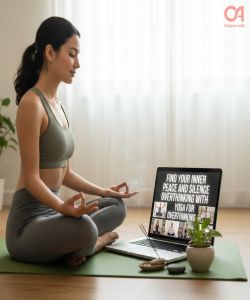
1. Overview of Morning Mobility Yoga
Morning Mobility Yoga represents a rigorous and systematic discipline, strategically implemented upon waking to prepare the physical vessel for the day’s functional and athletic demands. It is fundamentally distinct from general stretching or conventional yoga practices, focusing with clinical precision on enhancing articular range of motion, improving neuromuscular potentiation, and conditioning the body’s fascial network. This modality is not an exercise in passive flexibility; rather, it is an active and controlled methodology designed to awaken the proprioceptive systems, lubricate the synovial joints, and establish robust motor control patterns before the imposition of daily stressors. The practice delineates a clear boundary between remedial suppleness and genuine, usable mobility, which is defined as the intersection of strength and flexibility through a full, unimpeded range of movement. Its core objective is to dismantle the physiological constraints imposed by nocturnal stasis—such as spinal stiffness, fascial adhesion, and diminished nerve signalling—thereby mitigating the risk of injury and optimising physical performance. By systematically addressing key kinetic chains, from the cervical spine down to the plantar fascia, Morning Mobility Yoga serves as a foundational pillar for somatic integrity. It is an indispensable preparatory protocol for any individual committed to long-term physical sovereignty, ensuring that the body does not merely function, but functions with exceptional efficiency, resilience, and control from the very start of the day. This proactive approach to physical readiness is non-negotiable for achieving peak states of performance and maintaining structural health across a lifetime. It is the definitive standard for intelligent, purposeful morning movement, establishing a physiological baseline of excellence upon which all subsequent activity is built.
2. What are Morning Mobility Yoga?
Morning Mobility Yoga is a specialised physical discipline that synthesises principles of traditional yoga with modern kinesiology and sports science. Its primary function is to systematically enhance the body's active, usable range of motion immediately upon waking. Unlike practices that prioritise passive stretching or static holds, this modality employs dynamic, controlled movements to achieve its objectives. The core purpose is to address the physiological state of the body after a period of prolonged rest, specifically targeting nocturnal stiffness, reduced synovial fluid in the joints, and a temporarily dampened neuromuscular system. It operates on the principle of active engagement, requiring the practitioner to move their own limbs through their full range of motion, thereby building strength and control at the end ranges. This is fundamentally different from simply pushing or pulling a limb into a stretched position. The practice incorporates specific sequences designed to articulate the spine, mobilise the hip and shoulder girdles, and activate the core stabilising musculature. It is a preparatory, not a restorative, practice. Its goal is to prime the body for the physical demands of the day, whether they involve high-intensity athletic training or the cumulative stress of a sedentary occupation. By improving proprioception—the body's awareness of its position in space—and stimulating the central nervous system, it effectively 'switches on' the musculoskeletal system. This ensures that movement throughout the day is more efficient, coordinated, and significantly less prone to injury. In essence, Morning Mobility Yoga is a form of proactive somatic maintenance; a daily protocol for ensuring the body moves with optimal function, freedom, and resilience.
3. Who Needs Morning Mobility Yoga?
- Athletes and Fitness Professionals: Individuals engaged in high-intensity training or professional sports who require optimal joint function, neuromuscular efficiency, and injury resilience to meet peak performance demands. The practice serves as an essential preparatory phase for subsequent training loads.
- Sedentary Office Workers and Professionals: Personnel whose occupations involve prolonged periods of sitting, which leads to chronic postural dysfunction, hip flexor shortening, thoracic spine rigidity, and gluteal amnesia. This practice directly counteracts these deleterious adaptations.
- Ageing Individuals: Persons experiencing age-related decline in joint mobility, muscle elasticity, and balance. The controlled, low-impact nature of the discipline provides a safe yet effective means to maintain functional independence and mitigate the risk of falls.
- Individuals in Physical Rehabilitation: Patients recovering from musculoskeletal injuries, under the guidance of a qualified practitioner, who need to restore controlled range of motion and re-establish correct motor patterns without compromising tissue repair.
- Manual Labourers and Skilled Tradespersons: Workers whose occupations involve repetitive movements, heavy lifting, or awkward physical positions. This practice helps to offset occupational wear and tear, improve biomechanics, and reduce the incidence of chronic strain injuries.
- Practitioners of Strength Disciplines: Powerlifters, weightlifters, and bodybuilders for whom specific mobility is a prerequisite for executing key lifts (e.g., squats, deadlifts, overhead presses) with correct form and maximal force output. It directly addresses mobility restrictions that limit performance.
- Individuals with Chronic Stiffness or Discomfort: Those who regularly experience non-pathological morning stiffness, generalised bodily aches, or a sense of physical restriction upon waking. The practice provides a structured method for alleviating these symptoms and improving overall somatic well-being.
4. Origins and Evolution of Morning Mobility Yoga
The conceptual framework of Morning Mobility Yoga is not derived from a single ancient lineage but is a sophisticated modern synthesis. Its origins are twofold, drawing from the ancient wisdom of Hatha yoga and the rigorous, evidence-based principles of contemporary sports science, biomechanics, and physical therapy. From classical yoga, it inherits the foundational concepts of asana (posture) and pranayama (breath control) as tools for influencing the body and mind. The yogic emphasis on mindful movement, body awareness (proprioception), and the connection between breath and physical state provides the discipline's qualitative and philosophical backbone. Poses that encourage spinal articulation, hip opening, and shoulder girdle mobilisation have been selectively adapted and repurposed for a more dynamic and functionally-oriented application.
The evolution from traditional practice to a targeted mobility discipline occurred as our scientific understanding of the human body deepened. The latter half of the twentieth century saw a paradigm shift in physical preparation, moving away from generalised, passive stretching towards more specific, active modalities. Kinesiologists and physical therapists began to champion the concept of "mobility" as distinct from "flexibility," defining it as strength and control through a complete range of motion. This scientific perspective introduced critical concepts that now form the core of the practice: fascial mechanics, neuromuscular activation, joint capsule mobilisation, and motor control theory. Influential systems like Functional Range Conditioning (FRC) provided methodologies for systematically improving articular health and function, which were then integrated into a yoga-like flow.
This fusion created Morning Mobility Yoga as we understand it today: a discipline that uses yoga-derived postures not as static end-goals, but as dynamic vehicles for exploring and expanding active range of motion. It discarded the elements of traditional yoga that were not directly conducive to the specific goal of morning preparation, such as prolonged static holds or esoteric philosophy, in favour of a direct, results-oriented approach. Its evolution continues as research in sports medicine and human movement science progresses, ensuring the practice remains at the forefront of effective, intelligent physical preparation, tailored specifically to counteract nocturnal stasis and prime the body for optimal daily function.
5. Types of Morning Mobility Yoga
- Dynamic Articular Rotational (DAR) Flow: This type focuses on controlled, active rotations of every major joint in the body, from the neck and shoulders down to the hips, knees, and ankles. The practice is systematic and methodical, designed to stimulate synovial fluid production and gently expand the joint capsule's capacity. It is less about traditional yoga poses and more about isolated, multi-planar joint movements linked together in a smooth, continuous sequence.
- Restorative Spinal Articulation: This specialised practice is dedicated almost exclusively to the mobilisation of the vertebral column. It employs techniques such as cat-cow variations, spinal waves, and segmental flexion, extension, and rotation. The objective is to decompress the intervertebral discs after nocturnal loading, hydrate the surrounding tissues, and re-establish fluid, controlled movement throughout the entire length of the spine.
- Proprioceptive Priming and Activation: This form uses movements that challenge balance and body awareness to heighten the connection between the brain and the muscles. It often incorporates single-leg stances, slow and deliberate transitions between postures, and quadrupedal patterns (e.g., bird-dog). The goal is to 'wake up' the central nervous system and improve motor unit recruitment, preparing the body for more complex and reactive tasks.
- Fascial Release and Integrated Movement: This type addresses the body's web of connective tissue (fascia), which can become stiff and adhered overnight. It utilises long-chain, multi-planar movements that stretch and load the fascial lines, such as dynamic lunges with thoracic rotation or sweeping side-bends. The practice aims to restore elasticity and slide-and-glide capacity between tissue layers, promoting a feeling of whole-body integration and freedom.
- Functional Range Expansion: Borrowing heavily from modern mobility systems, this rigorous type involves actively resisting movement at the end range of motion. Practitioners use isometric contractions to build strength in these extended positions, effectively 'owning' a new range of motion. It is a highly demanding practice focused on creating permanent, usable improvements in mobility rather than temporary flexibility.
6. Benefits of Morning Mobility Yoga
- Enhanced Joint Health and Function: Systematically moves major joints through their full range of motion, stimulating the production of synovial fluid. This lubricates the articular surfaces, nourishes the cartilage, and mitigates the risk of degenerative conditions.
- Reduction of Morning Stiffness and Discomfort: Directly counteracts the effects of nocturnal stasis by mobilising the spine, hips, and shoulders. This alleviates the common sensations of rigidity and aches experienced upon waking, promoting immediate physical relief.
- Improved Posture and Bodily Alignment: Activates and strengthens key postural muscles, such as the core stabilisers and spinal erectors, whilst releasing chronically tight muscles like the hip flexors and pectorals. This fosters a more balanced and efficient upright posture throughout the day.
- Mitigation of Injury Risk: Prepares muscles, tendons, and ligaments for the day's demands by improving their elasticity and load-bearing capacity. Enhanced proprioception and motor control lead to more efficient movement patterns, reducing the likelihood of strains, sprains, and overuse injuries.
- Optimised Neuromuscular Activation: Primes the central nervous system, improving the speed and efficiency of signals sent between the brain and the muscles. This leads to better coordination, balance, and reactivity in all subsequent physical activities.
- Increased Functional Range of Motion: Develops active, controlled mobility rather than passive flexibility. This translates directly into improved performance in athletic endeavours, daily tasks, and occupational duties by allowing for greater, safer movement potential.
- Alleviation of Chronic Pain Patterns: Addresses the biomechanical root causes of many common pain syndromes, such as lower back pain and shoulder impingement, by correcting movement dysfunctions and muscular imbalances.
- Enhanced Breath Control and Regulation: Integrates conscious breathing techniques with movement, which helps to regulate the autonomic nervous system, reduce physiological stress responses, and increase oxygenation of the body's tissues.
7. Core Principles and Practices of Morning Mobility Yoga
- Primacy of Active Range of Motion: The core principle is the development of usable, controlled mobility. The practitioner must actively move their own limbs through a range of motion, without external force or momentum. This distinguishes it from passive stretching, as the focus is on building strength and neurological control at the end ranges.
- Control and Intentionality Over Depth: The quality of movement is paramount. Each repetition must be performed with maximal control, precision, and conscious intent. The objective is not to achieve the deepest possible position but to execute the movement with perfect form, engaging the correct musculature throughout.
- Systematic Joint-by-Joint Preparation: The practice follows a logical and comprehensive sequence, addressing all major articular systems of the body. A typical session methodically mobilises the spine, neck, shoulders, elbows, wrists, hips, knees, and ankles, ensuring no area is neglected. This is often executed via Controlled Articular Rotations (CARs).
- Integration of Breath with Movement: Every movement is synchronised with the breath. Inhalation is typically paired with expansive or preparatory movements, whilst exhalation is paired with deepening or engaging movements. This synchronisation enhances neuromuscular control, regulates the nervous system, and facilitates tissue release.
- Neuromuscular Priming: The practice is deliberately designed to 'wake up' the nervous system. Techniques are employed to enhance proprioception (the body’s sense of its position in space) and interoception (the sense of the body's internal state), thereby improving motor control and physical readiness for the day.
- Consistency as a Non-Negotiable: The benefits of Morning Mobility Yoga are cumulative and dependent on consistent daily practice. It is positioned as a fundamental aspect of daily physical hygiene, akin to brushing one's teeth, rather than an occasional workout. Sporadic engagement will not yield the desired structural and neurological adaptations.
- Absence of Pain as a Guiding Rule: The practitioner is mandated to operate within a pain-free range of motion. Any sensation of sharp, pinching, or nervy pain is an immediate signal to reduce the range or intensity of the movement. The goal is to challenge the body's limits, not to force them and cause injury.
8. Online Morning Mobility Yoga
- Unparalleled Accessibility and Autonomy: Online platforms remove geographical and logistical barriers to entry. Practitioners can engage with high-calibre instruction from any location with an internet connection, granting them complete autonomy over their training environment and schedule. This structure demands self-discipline but offers supreme convenience.
- Requirement for Heightened Self-Awareness: Without the direct, hands-on correction of an instructor, the practitioner is compelled to develop a superior level of proprioception and interoception. They must become the primary arbiter of their own form, alignment, and intensity, fostering a deeper, more robust mind-body connection. This is a demanding but ultimately rewarding responsibility.
- Access to Specialised, Niche Instruction: The online domain provides access to a global pool of elite instructors and highly specialised methodologies that would otherwise be unavailable locally. This allows discerning practitioners to select a programme that aligns precisely with their specific goals, be it athletic performance, rehabilitation, or postural correction.
- Cost-Effectiveness and Resource Efficiency: Online programmes typically represent a more financially viable alternative to in-person studio memberships or private tuition. They eliminate costs associated with travel and often provide a library of pre-recorded sessions, offering exceptional value and replayability for reinforcing technique.
- Controlled and Private Practice Environment: Engaging online allows the individual to practise in a private, non-judgemental space. This can be critical for focusing entirely on the internal sensations of movement without the distraction or perceived pressure of a group class setting, facilitating more concentrated and effective work.
- Mandatory Technical Proficiency: The successful execution of an online practice necessitates a baseline level of technical competence. The practitioner is responsible for ensuring a stable internet connection, adequate audio-visual hardware, and a suitably arranged physical space. This operational requirement is a prerequisite for effective participation.
- Structured Progression and Accountability: Reputable online courses offer structured curricula with clear progression pathways. Digital tracking tools, community forums, and scheduled live sessions can provide a framework for accountability, ensuring the practitioner remains consistent and adheres to the programme's rigorous demands.
9. Morning Mobility Yoga Techniques
- Step One: Foundational Breathwork and Centring: Initiate the practice in a stable, seated, or supine position. Execute five to ten deep, diaphragmatic breaths. Inhale through the nose, expanding the abdomen and ribcage. Exhale fully, contracting the core. The objective is to down-regulate the nervous system from its sleep state and establish a rhythm to which all subsequent movement will be synchronised.
- Step Two: Segmental Spinal Articulation (Cat-Cow): Transition to a quadrupedal position (hands under shoulders, knees under hips). On an exhalation, press the floor away, rounding the entire spine from tailbone to neck into flexion (Cat). On an inhalation, reverse the movement, articulating vertebra by vertebra into extension (Cow). Perform this with deliberate, slow control, aiming to mobilise each segment of the spine independently.
- Step Three: Controlled Articular Rotations (CARs) of the Shoulder: Remaining in a stable position (quadrupedal or kneeling), extend one arm. Keeping the rest of the body rigid, slowly rotate the arm through its largest possible pain-free circle. Move forward, up, externally rotating at the top, then back and down. Reverse the direction. The goal is to explore the absolute limits of active shoulder motion without compensation from the torso. Repeat on the other side.
- Step Four: Hip CARs and Mobilisation: From a standing or quadrupedal position, brace the core to prevent lumbar movement. Lift one knee towards the chest. Abduct the knee out to the side, then internally rotate the femur to bring the foot back and around, completing the circle. The movement must originate purely from the hip socket. Perform slowly in both directions on each leg.
- Step Five: Dynamic Hip Hinge and Thoracic Rotation: Stand with feet hip-width apart. Hinge at the hips, maintaining a neutral spine, as if performing a Romanian deadlift. At the bottom of the hinge, place one hand on the floor or a block. Rotate the torso, reaching the opposite arm towards the ceiling, following the hand with your gaze. This integrates hip mobility with thoracic spine extension and rotation. Alternate sides.
- Step Six: Integrated Full-Body Flow (World's Greatest Stretch): Step into a deep lunge. Place the hand on the same side as the front foot on the floor, inside the foot. Sink the hips. Rotate the torso towards the front leg, reaching the outside arm to the ceiling. Hold briefly, then return the hand to the floor. Step back and repeat on the opposite side. This single sequence mobilises the hips, thoracic spine, and shoulders simultaneously.
10. Morning Mobility Yoga for Adults
Morning Mobility Yoga is an exceptionally potent and necessary discipline for the adult population, addressing the specific physiological challenges that accrue with age, occupational stress, and lifestyle habits. For adults, this practice transcends mere exercise, becoming a critical form of daily somatic maintenance. It directly confronts the insidious onset of postural decay—such as thoracic kyphosis and forward head posture—wrought by years of desk work or physical labour. The techniques are designed to systematically deconstruct the patterns of stiffness and restriction that can lead to chronic pain syndromes in the lower back, shoulders, and hips. It is not about forcing the body into extreme shapes, but about restoring the fundamental, controlled ranges of motion that are essential for functional independence and a high quality of life. The emphasis on active control and neuromuscular re-education helps to preserve joint integrity, mitigating the risk of osteoarthritis and other degenerative conditions. Furthermore, by improving balance, coordination, and proprioceptive feedback, the practice serves as a powerful defence against the increased risk of falls in later adulthood. It is a proactive strategy, empowering adults to reclaim ownership over their physical wellbeing, ensuring that their bodies remain resilient, capable, and pain-free. The discipline demands mental focus and physical precision, making it a robust tool for maintaining not only physical vitality but also cognitive engagement. For any adult committed to ageing with strength and grace, a consistent Morning Mobility Yoga practice is not an option; it is an imperative for long-term structural and functional sovereignty.
11. Total Duration of Online Morning Mobility Yoga
The designated total duration for a complete and effective online Morning Mobility Yoga session is precisely 1 hr. This specific timeframe is not arbitrary; it is a calculated necessity driven by the physiological objectives of the practice. A full hour is required to move beyond a superficial warm-up and engage in the deep, systematic work that produces meaningful and lasting adaptations. The session is structured with rigorous intentionality. The initial phase is dedicated to foundational breathwork and neurological priming, setting the stage for focused movement. The subsequent, and largest, portion of the hour is allocated to the comprehensive, joint-by-joint mobilisation sequence, including Controlled Articular Rotations for the shoulders, spine, hips, and other key articulations. This methodical approach cannot be rushed; each joint requires sufficient time and repetition to ensure thorough lubrication and stimulation of the mechanoreceptors. The latter part of the 1 hr session is then used to integrate these newly accessed ranges of motion into more complex, multi-joint movement patterns, solidifying the neuromuscular learning. A final, brief period is reserved for down-regulation and somatic integration, allowing the nervous system to process the session’s inputs. Attempting to condense this robust protocol into a shorter period would inevitably compromise its integrity, forcing the practitioner to skip essential components or rush through movements, thereby negating the benefits and increasing the risk of injury. Therefore, the 1 hr duration stands as a non-negotiable standard for anyone serious about achieving the full spectrum of results offered by this powerful discipline.
12. Things to Consider with Morning Mobility Yoga
Before embarking on a Morning Mobility Yoga regimen, it is imperative to conduct a rigorous self-assessment and acknowledge several critical considerations. Firstly, this is a discipline of precision, not intensity. The primary objective is motor control and the quality of movement, not the pursuit of sweat or muscular fatigue. One must approach the practice with patience and an unwavering focus on form over depth or speed. Secondly, a clear distinction must be made between the discomfort of muscular engagement or fascial stretching and the signal of sharp, pinching, or injurious pain. The practitioner must cultivate the somatic intelligence to recognise this difference and operate strictly within a pain-free range of motion. Ignoring this directive is a direct path to injury. Thirdly, consistency is the master principle; sporadic engagement will yield negligible results. The practice must be integrated as a non-negotiable daily ritual for its cumulative benefits to manifest. Consider your personal schedule and commit to a protected, non-negotiable time slot each morning. Furthermore, one must assess their current physical state. Individuals with pre-existing injuries, pathologies, or significant movement restrictions must exercise extreme caution and should seek guidance from a qualified physiotherapist or instructor before commencing. Finally, the environment for practice must be suitable: a quiet space with sufficient room to move unimpeded, free from distractions. The surface should be firm but comfortable. Disregarding these foundational considerations will undermine the effectiveness of the practice and compromise safety.
13. Effectiveness of Morning Mobility Yoga
The effectiveness of Morning Mobility Yoga is unequivocally high, provided it is executed with the requisite consistency, precision, and intent. Its efficacy is rooted in its direct application of fundamental principles of human physiology and biomechanics. The practice systematically targets the primary factors limiting movement quality and contributing to chronic musculoskeletal issues: restricted joint capsules, fascial adhesions, poor neuromuscular control, and postural imbalances. By employing active, controlled movements, it does more than temporarily increase flexibility; it re-educates the nervous system to accept and control a greater range of motion. This process, known as neuromuscular adaptation, results in permanent, usable mobility that translates directly to improved performance in all other physical activities and a marked reduction in injury risk. Its effectiveness is most pronounced in its ability to directly counteract the deleterious effects of a sedentary lifestyle and the natural ageing process. Practitioners consistently report a significant decrease in morning stiffness, alleviation of chronic aches in areas like the lower back and shoulders, and a profound sense of improved posture and physical freedom. The discipline's success lies in its proactive, rather than reactive, approach. It is not a remedy to be applied after dysfunction has set in, but a daily foundational practice that builds a resilient, efficient, and highly functional physical structure from the ground up. When adhered to as a core component of a physical regimen, its effectiveness in enhancing long-term somatic health and performance is not a matter of debate but a predictable physiological outcome.
14. Preferred Cautions During Morning Mobility Yoga
It is imperative that all practitioners adhere to a stringent set of cautions to ensure both the safety and efficacy of the Morning Mobility Yoga practice. The foremost directive is the absolute avoidance of pain. A clear and non-negotiable distinction must be maintained between the challenging sensation of a deep stretch or muscular effort and any sharp, pinching, shooting, or nervy pain. The latter is a definitive signal to cease the movement immediately and regress to a less intense variation. Forcing movement through such pain is a direct contravention of the practice's principles and will invariably lead to injury. Individuals with pre-existing conditions, particularly joint hypermobility, instability, disc herniations, or recent surgeries, must exercise extreme caution. For these populations, certain movements may be contraindicated, and professional medical or physiotherapeutic clearance is not merely recommended but mandatory before commencement. Furthermore, ballistic or uncontrolled, momentum-driven movements are strictly forbidden. Every action must be deliberate, slow, and managed throughout its entire range. The goal is controlled articulation, not flailing. Practitioners must also guard against compensation; for instance, when mobilising the shoulder, the torso and spine must remain rigid. Allowing other body parts to contribute to the movement negates the targeted benefit and reinforces poor motor patterns. Finally, one must resist the ego-driven impulse to push for maximal range on any given day. Mobility levels fluctuate, and the practice must honour the body’s state on that day, not an idealised goal. Ignoring these cautions transforms a potent tool for health into a potential mechanism for harm.
15. Morning Mobility Yoga Course Outline
- 1: Foundational Principles and Safety Protocols
- Core Concepts: Defining Mobility vs. Flexibility.
- The Principle of Active Range of Motion and Motor Control.
- Breath Synchronisation: Diaphragmatic Breathing Mechanics.
- Safety Mandates: Recognising Pain vs. Discomfort; Establishing Pain-Free Ranges.
- Setting Up the Practice Environment.
- 2: Spinal Articulation and Core Activation
- Anatomy of the Vertebral Column.
- Technique: Segmental Cat-Cow.
- Technique: Supine Spinal Waves and Twists.
- Core Bracing and Intra-Abdominal Pressure.
- Integration: Linking Breath to Spinal Movement.
- 3: Mobilisation of the Shoulder Girdle and Thoracic Spine
- Anatomy of the Glenohumeral and Scapulothoracic Joints.
- Technique: Controlled Articular Rotations (CARs) for the Shoulders.
- Technique: Scapular Protraction, Retraction, Elevation, and Depression.
- Thoracic Extension and Rotation Drills.
- Integration: Linking Arm Movements with Thoracic Mobility.
- 4: Mobilisation of the Pelvic Girdle and Hips
- Anatomy of the Hip Socket and Surrounding Musculature.
- Technique: Controlled Articular Rotations (CARs) for the Hips.
- Technique: 90/90 Hip Switches and Transitions.
- Activation Drills for Gluteal Muscles and Hip Flexors.
- Integration: Hip Hinging and Squat Patterning.
- 5: Mobilisation of the Lower Limbs
- Knee and Ankle Joint Mechanics.
- Technique: Knee Rotation and Flexion/Extension Control.
- Technique: Ankle CARs and Dorsiflexion/Plantar Flexion Drills.
- Foot and Toe Articulation for Proprioceptive Feedback.
- 6: Integrated Full-Body Sequences
- Principles of Sequencing: From Isolation to Integration.
- Practice: The Foundational Morning Flow Sequence.
- Practice: Dynamic Sequences for Athletic Preparation.
- Developing a Personalised Daily Practice.
- Long-Term Progression Strategies.
16. Detailed Objectives with Timeline of Morning Mobility Yoga
- Weeks 1-2: Foundational Neuro-Muscular Connection and Safety
- Objective: To establish a profound mind-body connection and master the core safety protocols. The practitioner will learn to differentiate between productive discomfort and injurious pain.
- Action: Master diaphragmatic breathing and its synchronisation with basic movements. Learn to perform segmental spinal articulation (Cat-Cow) with precise, vertebra-by-vertebra control. Successfully establish a daily, non-negotiable practice habit.
- Weeks 3-4: Isolation and Control of Major Joints
- Objective: To develop proficient control over isolated joint movements, specifically in the shoulder and hip girdles.
- Action: Execute Controlled Articular Rotations (CARs) for both the shoulders and hips with zero compensation from the spine or pelvis. The practitioner will demonstrate the ability to maintain full-body tension while mobilising a single joint through its greatest active range of motion.
- Weeks 5-8: Expanding Active Range of Motion and Thoracic Mobility
- Objective: To begin demonstrably increasing active range of motion in key joints and to specifically target the thoracic spine.
- Action: Consistently achieve a greater pain-free range in hip and shoulder CARs. Master thoracic rotation and extension drills, showing improved ability to separate movement of the upper back from the lumbar spine. Begin integrating these components into simple, two-part sequences.
- Weeks 9-12: Integration into Complex Movement Patterns
- Objective: To seamlessly integrate isolated joint mobility into complex, multi-planar, full-body movements.
- Action: Execute compound sequences like the 'World's Greatest Stretch' with fluid control and correct form. Demonstrate proficiency in transitioning between mobility drills (e.g., from a 90/90 hip position to a deep squat) while maintaining spinal integrity and core control.
- Week 13 and Beyond: Autonomy and Advanced Application
- Objective: To achieve autonomy in practice, enabling the individual to self-assess and tailor their daily routine to their specific needs.
- Action: The practitioner will be able to construct their own effective morning mobility sequence based on how their body feels. They will begin exploring more advanced techniques, such as end-range isometric contractions, to solidify and expand their functional mobility for specific athletic or life demands.
17. Requirements for Taking Online Morning Mobility Yoga
- Unwavering Self-Discipline and Personal Accountability: The practitioner must possess the intrinsic motivation to adhere to a daily schedule without external supervision. Success is contingent on consistency.
- A Suitable and Unobstructed Physical Space: A clear, flat area sufficient to lie down and extend all limbs fully in every direction is non-negotiable. This space must be free of hazards and distractions.
- Stable, High-Speed Internet Connection: A reliable internet service is mandatory to stream high-definition video content without interruption or buffering, which would disrupt the flow and focus of the practice.
- Adequate Technology and Hardware: A device with a screen large enough to clearly observe the instructor's demonstrations (e.g., a laptop, tablet, or television) is required. Functional audio is essential for hearing instructional cues.
- A High-Quality Yoga Mat: A non-slip mat is a requisite piece of equipment to provide cushioning, hygiene, and a stable surface for performing all movements safely.
- Somatic Intelligence and Honesty: The individual must possess or be willing to cultivate a heightened sense of body awareness to monitor their own form and, critically, to work within a pain-free range of motion. Personal honesty in self-assessment is paramount.
- Willingness to Learn and Apply Anatomical Concepts: A commitment to understanding the basic principles of movement and anatomy being taught is necessary for correct execution and long-term success.
- Props as Required by the Programme: While not always mandatory, having access to basic props such as yoga blocks or a resistance band may be required for specific drills or to assist with modifications.
- Complete Medical Clearance: For any individual with pre-existing injuries, chronic health conditions, or who is post-operative, documented clearance from a qualified medical professional or physiotherapist is an absolute prerequisite.
18. Things to Keep in Mind Before Starting Online Morning Mobility Yoga
Before commencing an online Morning Mobility Yoga programme, it is critical to internalise that you are assuming the ultimate responsibility for your own safety and progress. The online format, for all its convenience, removes the immediate, corrective presence of a live instructor. This demands that you cultivate an uncompromising level of self-awareness and honesty. You must become your own most rigorous critic, prioritising perfect form over perceived depth and instantly regressing any movement that elicits sharp or injurious pain. It is not a competitive sport; your only benchmark is your own body's capacity on any given day. You must also commit to creating a sanctified practice space—an environment free from digital and domestic distractions that allows for complete mental and physical immersion. The temptation to multi-task or rush through the session must be decisively resisted. Furthermore, understand that tangible results are not instantaneous; they are the cumulative product of unwavering, daily consistency. You are not simply performing an exercise routine; you are engaging in a long-term project of structural and neurological re-education. This requires patience and a process-oriented mindset. Critically assess the credibility and qualifications of the online instructor or programme you choose. Seek out those with a strong foundation in anatomy, biomechanics, and functional movement, not merely social media popularity. Finally, accept that technology can fail. Have a backup plan or a pre-downloaded session available to ensure that a poor internet connection does not derail your non-negotiable daily commitment. Approaching the practice with this level of seriousness is the only way to harness its profound benefits safely.
19. Qualifications Required to Perform Morning Mobility Yoga
To competently and safely instruct Morning Mobility Yoga, an individual must possess a robust and multi-faceted qualification profile that extends far beyond a basic yoga teacher certification. The foundational requirement is a deep, demonstrable understanding of functional anatomy, kinesiology, and biomechanics. The instructor must not only know the names of muscles and bones but must comprehend their integrated function within kinetic chains, the mechanics of joint articulation, and the principles of motor control. This knowledge is non-negotiable.
Consequently, the following qualifications and areas of expertise are considered essential:
- Advanced Yoga Teacher Training (500-hour or higher): A certification that includes significant s on anatomy, physiology, and therapeutic applications provides a solid base.
- Specialised Mobility Certifications: Credentials from reputable, science-based systems are paramount. Examples include Functional Range Conditioning (FRC) specialist, Kinstretch Instructor, or equivalent certifications that focus specifically on joint health, articular control, and mobility development.
- Relevant Academic Background: A degree in Kinesiology, Exercise Science, Sports Science, or Physiotherapy provides the rigorous scientific underpinning necessary to teach this discipline with authority and safety.
- Demonstrable Practical Experience: A significant history of personal practice and, critically, extensive experience in coaching individuals with diverse physical capacities and limitations. The ability to accurately assess movement patterns and provide precise, effective cues is a skill honed only through practice.
An instructor merely certified to lead a generic yoga class is unqualified to teach this specialised modality. They must be able to articulate why a specific movement is being performed, what its biomechanical purpose is, and how to modify it safely for different bodies. They must be able to differentiate between productive stress and injurious strain and communicate this distinction with absolute clarity. The qualification is not a single certificate but a confluence of rigorous academic knowledge, specialised practical training, and extensive hands-on experience.
20. Online Vs Offline/Onsite Morning Mobility Yoga
Online
The online delivery of Morning Mobility Yoga prioritises autonomy, accessibility, and personal accountability. Its primary advantage is the elimination of geographical and temporal constraints, permitting practitioners to engage with elite-level instruction from any location at a time that suits their schedule. This format necessitates a high degree of self-discipline, as the onus for consistency, form-checking, and creating a conducive environment falls squarely on the individual. It compels the development of superior proprioceptive awareness, as there is no instructor present for hands-on adjustments. The practitioner must learn to interpret their body's internal signals with heightened acuity. Furthermore, online platforms often provide a vast library of content, allowing for replay and reinforcement of complex techniques. Whilst it lacks the communal energy and immediate feedback of an in-person class, it offers a private, focused environment free from distraction or social pressure, which can be highly beneficial for deep, internal work. It is the superior choice for the self-motivated, experienced individual who values convenience and sovereignty over their practice.
Offline/Onsite
Offline, or onsite, Morning Mobility Yoga offers the distinct and invaluable benefit of direct, real-time feedback from a qualified instructor. This hands-on guidance is critical for correcting subtle errors in form, providing tactile cues for muscular engagement, and ensuring movements are performed with maximum safety and efficacy. The instructor can offer immediate, personalised modifications based on their direct observation of the practitioner’s unique biomechanics and limitations. The onsite environment also fosters a sense of community and shared purpose, which can be a powerful motivator for maintaining consistency. The structured time and location enforce a level of discipline that some individuals may find difficult to replicate on their own. The energy of a group setting can be potent, encouraging participants to remain focused and engaged. However, this format is constrained by geographical location, fixed schedules, and potentially higher costs. It is the optimal choice for beginners who require foundational guidance, individuals with specific injuries or concerns needing close supervision, and those who thrive on the structure and camaraderie of a group class.
21. FAQs About Online Morning Mobility Yoga
Question 1. Is this just a fancy term for stretching? Answer: No. Stretching focuses on passive flexibility. This is a rigorous discipline focused on active, controlled mobility, which builds strength and control through your entire range of motion.
Question 2. Do I need to be flexible to start? Answer: No. This practice is designed to build mobility. You start from your current physical capacity. The only prerequisite is a commitment to consistent practice.
Question 3. How is this different from a regular online yoga class? Answer: It is highly specialised. It targets joint health and neuromuscular activation specifically for morning preparation, using principles from modern kinesiology. It is not a general wellness or vinyasa flow class.
Question 4. What equipment is absolutely necessary? Answer: A non-slip yoga mat is mandatory. Some programmes may require props like yoga blocks, but the primary tool is your own body.
Question 5. Can I do this practice in the evening? Answer: It is designed specifically for the morning to counteract nocturnal stiffness and prime the body for the day. Whilst movement is always beneficial, its specific purpose is lost if performed at other times.
Question 6. Is it safe if I have a bad back? Answer: You must obtain clearance from a medical professional first. The practice can be highly beneficial, but you must learn to move without pain and may require specific modifications.
Question 7. How soon will I see results? Answer: You will feel an immediate reduction in stiffness after the first session. Tangible, lasting changes in your range of motion and control require several weeks of consistent, daily practice.
Question 8. What if I can't do a certain movement? Answer: A good online programme provides regressions and modifications. The principle is to work within your current capacity, not to force a position you cannot control.
Question 9. Is an online format effective without a teacher to correct me? Answer: It is highly effective if you are disciplined. It forces you to develop superior body awareness. However, it requires absolute honesty in self-assessment of your form.
Question 10. What kind of technology do I need? Answer: A device with a clear screen (laptop, tablet), a stable internet connection, and functional speakers or headphones.
Question 11. How do I know if the instructor is qualified? Answer: Look for qualifications beyond basic yoga certification, such as degrees in exercise science or certifications in systems like Functional Range Conditioning (FRC).
Question 12. Is this a cardio workout? Will I lose weight? Answer: No. It is not a cardiovascular workout. Its purpose is structural and neurological. Weight loss is not a primary objective.
Question 13. What if I feel pain during a movement? Answer: Stop immediately. Pain is a signal to cease, not to push through. Regress the movement or skip it. This is a non-negotiable rule.
Question 14. How much space do I need? Answer: Enough space to lie down with your arms and legs fully extended in all directions without hitting any furniture or walls.
Question 15. Can I practise on carpet? Answer: A firm surface is better. If you only have carpet, ensure it is not excessively plush, as this can affect balance and stability. A mat is still required.
Question 16. Is it suitable for complete beginners to exercise? Answer: Yes, provided the beginner is committed to moving slowly, prioritising form over depth, and adhering strictly to safety cues.
22. Conclusion About Morning Mobility Yoga
In conclusion, Morning Mobility Yoga stands as an indispensable and non-negotiable discipline for any individual serious about achieving and maintaining long-term physical sovereignty. It is not a lifestyle trend or a casual form of exercise; it is a strategic, science-informed methodology for optimising the human machine from the moment of waking. By systematically addressing joint health, neuromuscular control, and fascial integrity, the practice directly counteracts the deleterious effects of both sedentary living and intense physical training. It builds a foundational layer of resilience and functional competence upon which all other physical activities can be safely and more effectively performed. The principles of active, controlled motion and unwavering consistency are paramount, demanding a level of discipline and self-awareness that fosters a profound connection between mind and body. Whether undertaken in an online or onsite format, the core objective remains the same: to transform the body from a state of nocturnal stiffness into a state of optimal readiness. It is a proactive investment in future health, mitigating injury risk, alleviating chronic pain, and preserving functional independence across the lifespan. Ultimately, Morning Mobility Yoga is the definitive standard for intelligent morning movement, a rigorous protocol that empowers the practitioner to take absolute ownership of their physical state and command their day with a body that is not merely awake, but fully prepared, capable, and controlled.