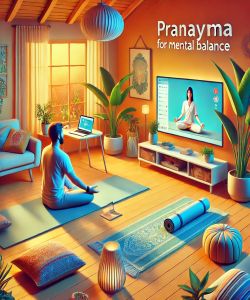
1. Overview of Pranayama For Mental Balance
Pranayama for mental balance is not a passive meditative pursuit but a rigorous and systematic discipline of physiological self-regulation. It is fundamentally concerned with the intentional modulation of the breath—the vital life force or prana—to exert direct and measurable influence over the autonomic nervous system, and by extension, one’s psychological and emotional state. This practice transcends mere deep breathing exercises, constituting a sophisticated methodology rooted in ancient yogic science, now increasingly validated by contemporary neuroscientific investigation. Its core objective is to restore and maintain homeostasis within the body’s intricate systems, particularly the delicate interplay between the sympathetic (fight-or-flight) and parasympathetic (rest-and-digest) neural pathways. By mastering specific patterns of inhalation, exhalation, and breath retention, the practitioner learns to de-escalate states of hyper-arousal, anxiety, and mental agitation, whilst simultaneously cultivating focus, clarity, and emotional resilience. It is an active, commanding intervention designed to reclaim executive control over a mind susceptible to internal turmoil and external stressors. The practice demands precision, discipline, and an unwavering commitment to a structured regimen, positioning it as a powerful tool for any individual serious about achieving a state of profound and enduring mental equilibrium. It is not a panacea, but a formidable technique for forging a robust and stable inner environment, enabling one to navigate the complexities of modern existence with enhanced composure and cognitive fortitude. The ultimate aim is not transient relaxation, but a fundamental recalibration of one’s psycho-physiological baseline, leading to a state of unshakable mental balance. This is the uncompromising purpose of the discipline.
2. What are Pranayama For Mental Balance?
Pranayama for mental balance comprises a specific set of controlled breathing techniques derived from the yogic tradition, engineered explicitly to regulate mental and emotional states. The term itself is a composite of two Sanskrit words: prana, which translates to vital life force energy, and ayama, meaning to extend, regulate, or control. Therefore, Pranayama is the methodical discipline of mastering one’s vital energy through the primary vehicle of the breath. It operates on the principle that the quality and rhythm of respiration are inextricably linked to the state of the mind. Erratic, shallow breathing correlates with a disturbed, agitated mind, whilst slow, deep, and rhythmic breathing fosters a calm, focused, and balanced mental state. These are not arbitrary exercises; they are precise physiological interventions designed to influence the autonomic nervous system.
Specific techniques within this discipline serve distinct purposes:
- Some are designed to activate the parasympathetic nervous system, inducing a state of calm and reducing the physiological markers of stress. These techniques are profoundly effective in mitigating anxiety, anger, and mental turbulence.
- Others are calibrated to create a state of equilibrium between the body’s energising and calming systems, fostering a sense of centredness and clarity. They work to synchronise the right and left hemispheres of the brain, enhancing cognitive function and emotional stability.
- A further category of techniques can be gently stimulating, designed to elevate energy and mood, combating lethargy and mental fog without inducing agitation.
Ultimately, Pranayama for mental balance is a practical, somatic approach to psychological self-management. It empowers the individual to move beyond being a passive recipient of their emotional weather patterns and become an active agent in cultivating a stable, resilient, and clear internal environment. It is a science of breath that provides a direct pathway to mastering the mind.
3. Who Needs Pranayama For Mental Balance?
High-Performance Professionals: Executives, entrepreneurs, surgeons, and legal professionals operating under immense and sustained pressure require this discipline. The constant cognitive load, decision-making fatigue, and high-stakes environment necessitate a robust tool for managing stress, maintaining sharp focus, and preventing burnout. Pranayama provides a direct method to regulate the nervous system, ensuring peak mental performance is maintained.
Individuals in High-Stakes Roles: Military personnel, emergency first responders, and air traffic controllers face acute, often life-or-death, stressors. The ability to remain calm, think clearly, and execute precise actions under extreme duress is non-negotiable. This practice equips them with the capacity to down-regulate the fight-or-flight response in real-time, preserving cognitive function when it matters most.
Those Experiencing Chronic Anxiety and Stress: Individuals diagnosed with or experiencing symptoms of generalised anxiety, panic disorders, or chronic stress find a powerful, non-pharmacological intervention in Pranayama. It directly addresses the physiological underpinnings of these conditions, teaching the body and mind to exit the cycle of hyper-vigilance and return to a state of equilibrium.
Academics and Creatives: Scholars, researchers, writers, and artists whose work demands deep concentration, mental clarity, and innovative thinking benefit significantly. The practice dispels mental clutter, overcomes creative blocks, and enhances the capacity for sustained periods of focused intellectual or artistic labour.
Individuals Recovering from Emotional Trauma: For those navigating the complexities of post-traumatic stress, Pranayama offers a safe and structured method to manage emotional dysregulation. It helps to soothe a hyper-aroused nervous system and re-establish a sense of safety and control within one’s own body, a critical component of trauma recovery.
Anyone Seeking Proactive Mental Health Management: In an era of constant digital stimulation and societal pressure, any adult committed to proactively maintaining their mental and emotional wellbeing requires such a tool. It is a fundamental life skill for cultivating resilience, emotional intelligence, and a lasting sense of inner stability, irrespective of external circumstances.
4. Origins and Evolution of Pranayama For Mental Balance
The origins of Pranayama are deeply embedded in the ancient philosophical and spiritual traditions of India, with its earliest mentions found in sacred texts like the Vedas and the Upanishads, dating back thousands of years. In these initial contexts, Pranayama was not primarily a therapeutic tool for mental balance as understood today, but rather a sophisticated practice for spiritual advancement. It was a critical component of Yoga, designed to purify the subtle energy channels (nadis) of the body, control the life force (prana), and prepare the mind for higher states of consciousness and meditation (dharana and dhyana). The classical treatise, Patanjali's Yoga Sutras, codifies Pranayama as the fourth of the eight limbs of Yoga, positioning it as a pivotal bridge between the external, physical practices and the internal, meditative states.
Throughout the mediaeval period, Hatha Yoga texts such as the Hatha Yoga Pradipika and the Gheranda Samhita greatly expanded upon the techniques of Pranayama. They detailed numerous specific breathing methods, their procedures, and their intended effects on both the physical body and the subtle energetic anatomy. The focus remained largely esoteric, aimed at awakening dormant spiritual energy (kundalini) and achieving states of liberation (samadhi). The connection to mental calm was implicit; a purified and controlled energetic system was understood to result in a steady and serene mind, but it was a means to a spiritual end.
The evolution of Pranayama towards its contemporary application for mental balance marks a significant shift in the twentieth and twenty-first centuries. As yogic practices migrated to the West and came under the scrutiny of scientific and medical inquiry, the profound physiological effects of controlled breathing became a subject of intense interest. Researchers began to map its influence on the autonomic nervous system, brainwave patterns, heart rate variability, and stress hormone levels. This demystification process repositioned Pranayama from a purely esoteric art to a verifiable, evidence-based modality for stress reduction, anxiety management, and cognitive enhancement. Today, it has been integrated into various therapeutic and performance-based contexts, from clinical psychotherapy to corporate wellness programmes and elite athletic training. It has evolved from a tool for the spiritual ascetic into a pragmatic and powerful discipline for anyone seeking to master their own mind in the face of modern challenges.
5. Types of Pranayama For Mental Balance
Nadi Shodhana (Alternate Nostril Breathing): This is a cornerstone practice for achieving mental equilibrium. It involves the sequential blocking of one nostril while inhaling or exhaling through the other. The primary function of Nadi Shodhana is to balance the sympathetic and parasympathetic nervous systems, which are metaphorically linked to the right and left nostrils and the corresponding brain hemispheres. This harmonising effect reduces anxiety, calms the mind, and promotes a state of profound clarity and focus. It is a preparatory practice for deeper states of meditation.
Ujjayi Pranayama (Victorious or Ocean Breath): Characterised by a soft, audible sound created by a gentle constriction at the back of the throat, Ujjayi breath is both calming and focusing. The sound provides an auditory anchor for the mind, preventing distraction. The slight resistance to airflow during inhalation and exhalation slows the respiratory rate, which in turn activates the parasympathetic nervous system via the vagus nerve. This induces a state of "alert-calm," making it ideal for maintaining composure during physically or mentally demanding situations.
Bhramari Pranayama (Humming Bee Breath): This technique involves producing a low-pitched humming sound during a slow exhalation, typically whilst gently blocking the ears. The vibrations created by the hum have a direct soothing effect on the nervous system, rapidly dissipating agitation, anger, and anxiety. It is exceptionally effective for calming a turbulent mind, releasing cerebral tension, and preparing for sleep or deep relaxation. The resonance has been shown to stimulate nitric oxide production, a vasodilator and neurotransmitter that promotes calmness.
Sitali and Sitkari Pranayama (Cooling Breaths): These practices are specifically designed to have a cooling and pacifying effect on both the body and mind. Sitali involves inhaling through a curled tongue, whilst Sitkari involves inhaling through clenched teeth. Both methods cool the air as it enters the body, which helps to reduce feelings of irritation, frustration, and mental heat. They are particularly useful for managing anger and quelling excessive internal fire or agitation.
6. Benefits of Pranayama For Mental Balance
Direct Regulation of the Autonomic Nervous System: The practice facilitates a conscious shift from a state of sympathetic dominance (fight-or-flight) to one of parasympathetic activation (rest-and-digest). This results in a measurable reduction in heart rate, blood pressure, and the production of stress hormones like cortisol.
Enhancement of Vagal Tone: Specific techniques, particularly those involving slow exhalations, directly stimulate the vagus nerve. A higher vagal tone is intrinsically linked to better stress resilience, reduced inflammation, and improved emotional regulation, forming a physiological foundation for mental balance.
Improved Emotional Resilience: By repeatedly and intentionally guiding the mind and body into a state of calm, the practitioner develops a greater capacity to handle external stressors without becoming emotionally dysregulated. It builds a psychological ‘buffer’ against life’s challenges.
Increased Mental Clarity and Focus: By calming the mental chatter and physiological noise that accompanies stress and anxiety, Pranayama clears the mind. This allows for improved concentration, enhanced cognitive function, and more effective problem-solving and decision-making.
Synchronisation of Brain Hemispheres: Practices such as Nadi Shodhana (Alternate Nostril Breathing) are specifically designed to create equilibrium between the left (logical, analytical) and right (creative, intuitive) hemispheres of the brain, leading to a state of whole-brain functioning and heightened awareness.
Mitigation of Anxiety and Depressive Symptoms: The discipline provides a powerful, non-pharmacological tool for actively managing the symptoms of anxiety and mild to moderate depression. It interrupts the feedback loop of negative thoughts and physiological arousal that characterises these conditions.
Improved Sleep Quality: By calming the nervous system and reducing mental agitation before rest, Pranayama practices can significantly improve the ability to fall asleep and enhance the overall quality and restorative nature of sleep.
Cultivation of Mind-Body Awareness: The practice demands a high degree of focus on the subtle sensations of the breath and body. This cultivates a profound state of interoception—the awareness of one’s internal state—which is fundamental to emotional intelligence and self-regulation.
7. Core Principles and Practices of Pranayama For Mental Balance
Postural Integrity (Asana): A stable, comfortable, and erect posture is non-negotiable. The spine must be straight to allow for the unobstructed flow of breath and energy through the central channel. A seated position, whether on a cushion or a chair with feet flat on the floor, is imperative to prevent physical discomfort from distracting the mind and to facilitate full diaphragmatic movement.
Diaphragmatic Breathing as the Foundation: Before any advanced technique is attempted, mastery of deep, diaphragmatic breathing is essential. The practice must shift from shallow, chest-based breathing to a full, abdominal breath. This ensures maximum lung capacity is utilised and provides the physiological basis for calming the nervous system.
Conscious Awareness and Intention (Dharana): Pranayama is not a mechanical act. Each breath must be accompanied by focused, unwavering attention. The mind must be trained to observe the entire respiratory cycle—the inhalation, the exhalation, and any pauses between. The intention must be fixed on achieving a state of balance.
Rhythmic and Measured Pacing: The essence of Pranayama is the establishment of a controlled rhythm. This involves regulating the length, depth, and pace of both inhalation and exhalation. Specific ratios may be introduced under qualified guidance, but the fundamental principle is the replacement of erratic breathing patterns with a deliberate, steady cadence.
Gradual and Systematic Progression: One must not rush into complex techniques involving extended breath retention (kumbhaka). The practice must be built systematically, starting with simple awareness exercises and gradually incorporating more sophisticated methods. Attempting advanced practices prematurely can over-stimulate the nervous system and create imbalance rather than resolve it.
Practice in a Conducive Environment: The chosen space for practice must be clean, quiet, well-ventilated, and free from distractions. This external stillness supports the cultivation of internal stillness. Practising at a consistent time each day, preferably in the morning on an empty stomach, establishes a powerful routine.
Guidance from a Qualified Instructor: Self-teaching from unreliable sources is strongly discouraged. The subtleties of these powerful techniques require the oversight of an experienced instructor who can provide correct instruction, observe the practitioner, and offer necessary modifications to ensure the practice is safe and effective.
8. Online Pranayama For Mental Balance
- Unparalleled Accessibility and Consistency: Online platforms dismantle geographical barriers, providing access to expert instruction regardless of the participant's location. This allows individuals in remote areas or with demanding schedules to engage in a consistent practice, which is paramount for achieving tangible results. The ability to maintain a daily regimen without the need for travel fosters discipline and accelerates progress.
- Creation of a Private, Controlled Environment: Practising within one's own home offers a level of privacy and comfort that a group studio setting cannot. This is particularly beneficial for individuals who may feel self-conscious or are dealing with significant anxiety. It allows the practitioner to create a sanctum, free from external judgment or distraction, enabling a deeper and more introspective experience.
- Personalised Instruction and Tailored Pacing: Reputable online courses offer structured s that allow participants to progress at their own pace. Live sessions often include opportunities for direct interaction with the instructor via video and chat, allowing for personalised feedback and modification. This tailored approach ensures the practitioner fully comprehends and correctly executes techniques before moving on.
- Access to a Curated Body of Resources: Digital platforms provide a library of recorded sessions, instructional materials, and theoretical knowledge that can be accessed at any time. This enables the practitioner to revisit specific techniques, deepen their understanding of the underlying principles, and reinforce their learning outside of scheduled class times, fostering greater autonomy and mastery.
- Cost and Time Efficiency: The online modality eliminates the time and financial costs associated with commuting to a physical location. This makes the discipline more sustainable for individuals with tight budgets or packed schedules. The focus is entirely on the practice itself, rather than the logistics surrounding it, which enhances commitment and reduces potential barriers to entry.
- Global Connection to Niche Expertise: The internet allows participants to seek out and learn from highly specialised and renowned instructors from anywhere in the world. An individual seeking a specific lineage or approach to Pranayama is no longer limited to local teachers but can connect with a global authority, ensuring the highest quality of instruction.
9. Pranayama For Mental Balance Techniques
This is a precise, step-by-step guide to Nadi Shodhana (Alternate Nostril Breathing), a fundamental technique for establishing mental balance. Execution must be exact.
Assume the Correct Posture: Sit erect on a cushion or chair, ensuring the spine is straight and the head and neck are aligned. The body must be stable and comfortable. Rest the left hand on the left knee, palm facing up, with the thumb and index finger lightly touching (jnana mudra). The posture is not optional; it is integral to the practice.
Prepare the Right Hand (Vishnu Mudra): Raise the right hand. Fold the index and middle fingers down to touch the palm. The thumb, ring finger, and little finger remain extended. This specific hand gesture, or mudra, is used to operate the nostrils with precision.
Commence the Initial Exhalation: Close your eyes and take a deep, full breath in and out through both nostrils to centre yourself. At the end of the exhalation, use the right thumb to gently close the right nostril.
Inhale through the Left Nostril: Inhale slowly, deeply, and without strain through the open left nostril. Fill the lungs completely from the diaphragm upwards. Maintain a steady, silent pace. At the peak of the inhalation, focus the mind.
Close the Left Nostril and Exhale through the Right: Close the left nostril with the ring and little fingers of the right hand. Simultaneously, release the thumb from the right nostril. Exhale slowly and completely through the now-open right nostril. The exhalation should ideally be longer than the inhalation.
Inhale through the Right Nostril: Keeping the left nostril closed, inhale slowly and deeply through the right nostril. Maintain the same steady, controlled pace as before, filling the lungs entirely.
Close the Right Nostril and Exhale through the Left: At the peak of this inhalation, close the right nostril again with the thumb. Release the fingers from the left nostril and exhale slowly and completely through the left side. This completes one full, non-negotiable cycle.
Continue the Cycle: Without pausing, proceed directly into the next cycle by inhaling through the left nostril again. Continue this alternating pattern for a designated duration, ensuring the breath remains smooth, rhythmic, and effortless. Conclude the practice by exhaling through the left nostril.
10. Pranayama For Mental Balance for Adults
Pranayama for mental balance presents a uniquely potent discipline for the adult mind, which is often conditioned by years of accumulated stress, ingrained thought patterns, and the relentless pressures of career and personal responsibilities. Unlike the more malleable consciousness of youth, the adult psyche requires a robust and direct intervention to disrupt its habitual cycles of anxiety, rumination, and reactivity. The practice is not a passive relaxation technique but an active form of neurological and psychological re-education. It provides adults with a tangible, somatic tool to exert executive control over their internal state, a capacity that is fundamental to mature emotional regulation. The discipline’s emphasis on precision, consistency, and self-awareness resonates with the adult capacity for focused effort and a deeper understanding of cause and effect. It directly addresses the physiological underpinnings of mental distress—an overactive sympathetic nervous system, elevated cortisol, and poor vagal tone—which are common consequences of adult life. For adults grappling with burnout, decision fatigue, or the existential weight of their obligations, Pranayama offers a method to systematically discharge accumulated tension and restore cognitive clarity. It moves beyond mere coping mechanisms, providing a proactive strategy for building a resilient and stable mental foundation. The practice empowers the adult to reclaim a sense of agency over their own wellbeing, transforming them from a reactor to their circumstances into a composed and deliberate architect of their inner peace. It is, in essence, a sophisticated life skill for navigating the complexities of adulthood with fortitude and equanimity.
11. Total Duration of Online Pranayama For Mental Balance
The standard and most effective total duration for a dedicated online Pranayama session for mental balance is precisely one hour. This specific timeframe is not arbitrary; it is structured to allow for a complete and effective physiological and psychological cycle. A session of 1 hr provides the necessary space to move through distinct, non-negotiable phases without being rushed, which is critical for achieving a deep state of equilibrium. The initial portion of the hour is dedicated to preparation: settling the body into a stable posture, centring the mind, and establishing a baseline of diaphragmatic breathing. This grounding phase is essential and cannot be truncated. The central, most substantial part of the one-hour session is allocated to the core Pranayama techniques themselves. This allows for sufficient repetitions of specific practices like Nadi Shodhana or Ujjayi to genuinely influence the autonomic nervous system and induce the desired calming or balancing effect. A shorter duration would fail to achieve the requisite physiological shift. The final segment of the 1 hr period is reserved for integration. This involves a period of silent observation or a guided relaxation (Savasana), allowing the effects of the practice to permeate the entire system. This integration is where the recalibration of the nervous system is consolidated. Attempting to condense this entire process into a shorter period would be counterproductive, potentially leaving the practitioner in an agitated or unresolved state. Therefore, the one-hour duration is the professional standard, ensuring a thorough, safe, and profoundly effective experience designed for maximal impact on mental balance.
12. Things to Consider with Pranayama For Mental Balance
Engaging with Pranayama for mental balance is a serious undertaking that demands careful consideration of several critical factors. It is imperative to approach this discipline not as a casual hobby but as a potent intervention with direct effects on one’s physiological and psychological systems. Foremost, one must conduct a frank assessment of their current physical and mental health. Individuals with pre-existing conditions—particularly severe respiratory ailments like asthma or COPD, cardiovascular issues such as high or low blood pressure, or acute psychiatric conditions like psychosis or severe clinical depression—must not commence practice without explicit clearance from a qualified medical professional. Certain techniques, especially those involving vigorous breathing or prolonged breath retention, are strictly contraindicated for these populations and can be dangerous if misapplied. Furthermore, the source of instruction is paramount. The proliferation of unqualified instructors online presents a significant risk. One must rigorously vet the credentials and experience of any teacher, ensuring they possess a deep, certified understanding of both the techniques and the underlying anatomy and physiology. The environment for practice is another key consideration; it must be a quiet, private, and stable space, free from interruption, to allow for the necessary concentration. Finally, one must be psychologically prepared for the process. Pranayama can sometimes bring suppressed emotions or unresolved mental patterns to the surface. A practitioner must be ready to face this with equanimity and have the support of their instructor, and potentially a therapist, to navigate such experiences constructively.
13. Effectiveness of Pranayama For Mental Balance
The effectiveness of Pranayama for mental balance is unequivocal and grounded in its direct, mechanistic impact on human physiology. Its power does not reside in esoteric belief but in its capacity to systematically modulate the autonomic nervous system, the body's primary control system for stress and relaxation responses. Through the deliberate regulation of respiratory rate, depth, and rhythm, the practice acts as a powerful lever on the vagus nerve. Stimulating this crucial nerve pathway is the most direct method of activating the parasympathetic nervous system, which acts as a brake on the body’s fight-or-flight response. This activation leads to a cascade of measurable physiological changes: heart rate slows, blood pressure decreases, and the production of the stress hormone cortisol is inhibited. On a neurological level, this shift from sympathetic to parasympathetic dominance is mirrored by changes in brainwave activity, moving from agitated beta waves to calmer alpha and theta waves, which are associated with states of relaxed alertness and deep calm. This process is not a matter of placebo or simple distraction; it is a fundamental recalibration of one's psycho-physiological baseline. By consistently engaging in this practice, an individual effectively retrains their nervous system to be less reactive and more resilient. The result is a profound and lasting reduction in subjective feelings of anxiety, a heightened sense of clarity, improved emotional stability, and an enhanced capacity to maintain composure in the face of adversity. Its effectiveness lies in its ability to empower the individual to become the master of their own internal state.
14. Preferred Cautions During Pranayama For Mental Balance
It is imperative that the practice of Pranayama be approached with uncompromising caution and respect for its potency. This is not a benign activity to be undertaken lightly or without due diligence. Under no circumstances should any technique be forced; the breath must never be strained, and any experience of dizziness, light-headedness, shortness of breath, or sharp pain is an absolute signal to cease the practice immediately and rest. Pregnant individuals must exercise extreme caution and should only practice specific, gentle forms of Pranayama under the direct guidance of an instructor who is an expert in prenatal yoga; techniques involving breath retention (kumbhaka) or vigorous abdominal movements are strictly forbidden. Those with uncontrolled high blood pressure, heart conditions, epilepsy, or a history of stroke must avoid any practice that significantly alters intra-thoracic pressure, particularly forceful exhalations or extended retentions. The practice must always be performed on a relatively empty stomach to avoid placing undue pressure on the diaphragm and internal organs. Furthermore, individuals undergoing treatment for severe psychological conditions, such as major depressive disorder, bipolar disorder, or schizophrenia, must only engage with this practice as an adjunct to their primary therapy and with the full knowledge and consent of their treating psychiatrist or psychologist. The unsupervised practice of advanced Pranayama can be destabilising for a fragile psyche. The guiding principle must always be one of caution, gradual progression, and listening intently to the body’s signals, prioritising safety above all else.
15. Pranayama For Mental Balance Course Outline
1: Foundational Principles and Postural Alignment
- Introduction to the core concepts of Prana and the autonomic nervous system.
- Establishing a stable and correct seated posture (Siddhasana/Sukhasana).
- Mastery of foundational diaphragmatic (abdominal) breathing.
- The principle of conscious awareness in breath.
2: Calming and Centring Techniques
- Introduction to and guided practice of Ujjayi Pranayama (Victorious Breath).
- Understanding the role of Ujjayi in calming the mind and focusing attention.
- Detailed instruction and practice of Bhramari Pranayama (Humming Bee Breath).
- Application of Bhramari for rapid stress and anxiety reduction.
3: The Science of Balancing
- Detailed instruction in Nadi Shodhana (Alternate Nostril Breathing) without retention.
- Understanding the neurological basis for balancing the brain hemispheres.
- Systematic practice to develop rhythm and smoothness in the technique.
- Integration of Nadi Shodhana into a daily mental hygiene routine.
4: Introduction to Breath Retention (Antara Kumbhaka)
- The theory and safety protocols of gentle inhalation retention.
- Guided practice of Nadi Shodhana with a brief, comfortable pause after the inhale.
- Understanding the purpose of Kumbhaka in amplifying the effects of Pranayama.
- Strict guidelines on avoiding strain and respecting individual capacity.
5: Cooling and Pacifying Practices
- Instruction and practice of Sitali and Sitkari Pranayama (The Cooling Breaths).
- Application of these techniques for managing anger, frustration, and mental ‘heat’.
- Understanding the contraindications for these specific practices.
6: Integration and Developing a Personal Practice
- Sequencing different Pranayama techniques for specific outcomes (e.g., for morning energy or evening calm).
- Strategies for establishing a consistent and sustainable personal practice.
- Advanced concepts of breath ratios (as appropriate to the group).
- Final review, Q&A, and guidance for continued self-mastery.
16. Detailed Objectives with Timeline of Pranayama For Mental Balance
Phase One: Foundation (Initial Period)
- Objective: By the end of this initial phase, the participant shall demonstrate complete proficiency in maintaining a stable, erect posture for an extended duration without physical strain.
- Objective: The participant will master full diaphragmatic breathing, replacing habitual shallow chest breathing as their default respiratory pattern during practice.
- Objective: The participant shall be able to sustain unbroken, conscious awareness of their natural breath cycle for a minimum continuous period.
Phase Two: Technique Acquisition (Median Period)
- Objective: The participant will execute Ujjayi and Bhramari Pranayama with correct form and acoustic quality, and be able to articulate their respective calming effects.
- Objective: By the midpoint of this phase, the participant shall demonstrate the correct hand mudra and nostril sequencing for Nadi Shodhana, performing the technique smoothly and without rhythmic interruption.
- Objective: The participant will be able to report a subjective decrease in baseline mental agitation and an increased ability to self-soothe using the learned techniques.
Phase Three: Refinement and Application (Latter Period)
- Objective: The participant shall be able to safely incorporate brief, comfortable breath retention (Antara Kumbhaka) into their Nadi Shodhana practice, following strict instructional guidelines.
- Objective: The participant will demonstrate the ability to correctly identify and apply the appropriate Pranayama technique (e.g., Sitali for frustration, Bhramari for anxiety) in response to a specific emotional state.
- Objective: The participant shall be capable of independently structuring and completing a balanced, self-guided Pranayama session incorporating multiple techniques.
Phase Four: Integration (Concluding Period)
- Objective: By the conclusion of the course, the participant will have established a consistent personal practice regimen.
- Objective: The participant will articulate a comprehensive understanding of the core principles and safety cautions governing the discipline.
- Objective: The participant shall demonstrate a measurably enhanced capacity for emotional self-regulation and mental composure in their daily life, as evidenced by self-reporting and observational feedback.
17. Requirements for Taking Online Pranayama For Mental Balance
A Stable, High-Speed Internet Connection: This is a non-negotiable technical requirement. An intermittent or low-bandwidth connection will disrupt the instructional flow, compromise the ability to receive clear guidance, and frustrate the entire purpose of the session. A wired Ethernet connection is superior to Wi-Fi.
A Functional Computing Device with Camera and Microphone: The participant must possess a laptop, tablet, or desktop computer with a high-quality, front-facing camera and a clear microphone. The instructor must be able to visually observe the participant's posture and breathing mechanics and hear them clearly for any necessary verbal feedback.
A Dedicated, Private, and Uncluttered Practice Space: The participant must commit to establishing a consistent location for practice that is free from all potential distractions. This means no pets, no family members interrupting, and no background noise. The space must be clean, sufficiently large for comfortable seating, and conducive to a focused, internal state.
Appropriate Seating Support: A firm cushion, meditation bench, or a straight-backed chair that allows the feet to be flat on the floor is mandatory. Attempting to practice on a soft sofa or bed is unacceptable as it compromises the required spinal alignment.
Unwavering Commitment to Punctuality and Attendance: Online sessions are as formal and structured as their in-person counterparts. The participant is required to log in several minutes prior to the scheduled start time to resolve any technical issues and be ready to commence practice promptly.
Full and Frank Disclosure of Health Conditions: Prior to commencement, the participant must disclose any and all relevant medical or psychological conditions to the instructor. This is a critical safety protocol to ensure that the practices can be modified or that contraindications are respected.
A Mindset of Discipline and Receptivity: The participant must approach the course with a serious commitment to learning and consistent practice. A passive or sceptical attitude is counterproductive. The requirement is one of active engagement, a willingness to follow precise instructions, and the discipline to practice independently as guided.
18. Things to Keep in Mind Before Starting Online Pranayama For Mental Balance
Before commencing an online course in Pranayama for mental balance, it is critical to adopt a mindset of rigorous self-discipline and intentionality. The digital medium, whilst convenient, demands a higher degree of personal accountability than an in-person setting. You must understand that you are solely responsible for creating and protecting the sanctity of your practice space. This means proactively eliminating all potential digital and physical distractions: disabling notifications on your device, informing household members that you are not to be disturbed, and ensuring your environment is quiet and orderly. The screen is a portal to your instructor, not a passive entertainment device. It is imperative to treat each session with the gravity of a formal appointment, arriving prepared in both mind and body. Furthermore, cultivate an attitude of patience and non-judgment towards your progress. The benefits of Pranayama are cumulative and unfold over time; do not expect an instantaneous transformation. There will be days when focus is difficult to achieve, and you must meet these challenges with persistent effort rather than frustration. Trust in the structured process laid out by your qualified instructor. Actively listen to their guidance, apply their corrections meticulously, and communicate any physical or psychological difficulties clearly and promptly. The online format requires you to be your own supervisor to a large extent; your success will be directly proportional to the seriousness and commitment you bring to every single session.
19. Qualifications Required to Perform Pranayama For Mental Balance
The performance of Pranayama for mental balance, specifically in the capacity of an instructor guiding others, demands a stringent and verifiable set of qualifications. It is a profound disservice and a potential danger for an individual to teach this discipline without a deep, multifaceted foundation of knowledge and experience. The instructor is not merely demonstrating breathing exercises; they are guiding individuals through a process that directly interfaces with the nervous, respiratory, and psychological systems. Therefore, a qualified instructor must possess:
Verifiable Certification from a Recognised Authority: They must hold an advanced certification (often designated as RYT-500 or higher, with a specific focus on Pranayama) from a globally recognised yoga or Pranayama institution. A weekend workshop certificate is wholly insufficient. This certification must attest to hundreds of hours of training in technique, theory, anatomy, and teaching methodology.
In-Depth Knowledge of Anatomy and Physiology: A comprehensive understanding of the respiratory system, the autonomic nervous system, the vagus nerve, and the cardiovascular system is non-negotiable. The instructor must be able to explain the physiological mechanisms of each technique and understand all potential contraindications.
Extensive Personal Practice: An instructor cannot effectively teach what they do not embody. They must have a long-standing, dedicated, and advanced personal Pranayama practice. This personal experience provides the nuanced understanding that cannot be gleaned from textbooks alone.
Proven Teaching Experience: They must have a demonstrable history of safely and effectively guiding students. This includes the ability to clearly articulate complex instructions, observe students (even through a screen), and offer precise, individualised modifications.
Knowledge of Yogic Philosophy and Psychology: A purely mechanical understanding is inadequate. The instructor must be well-versed in the philosophical context from which Pranayama originates, including concepts from the Yoga Sutras of Patanjali, to provide a holistic and authentic transmission of the practice. This ensures the practice is taught with the appropriate respect and intention.
20. Online Vs Offline/Onsite Pranayama For Mental Balance
Online
The online delivery of Pranayama instruction offers a distinct set of advantages defined by accessibility and personal control. Its primary strength lies in its ability to transcend geographical limitations, granting participants access to elite instructors from anywhere in the world. This modality provides unparalleled flexibility, allowing individuals to integrate the practice into demanding schedules without the logistical burden and time-cost of travel. The home environment offers a guaranteed level of privacy, which can be crucial for those dealing with anxiety or who feel inhibited in a group setting. This personal sanctuary can be curated by the participant to be an ideal space for introspection. Furthermore, online platforms often provide a repository of recorded sessions and learning materials, enabling the participant to review techniques and deepen their understanding at their own pace. The primary challenge, however, lies in the absence of direct physical presence. The instructor's ability to make subtle postural corrections is limited, and the participant must possess a higher degree of self-discipline and technological competence to ensure a focused and effective practice session.
Offline/Onsite
The traditional offline, or onsite, model of Pranayama instruction provides an immersive experience characterised by direct human interaction and a shared group dynamic. The instructor’s physical presence allows for immediate, hands-on adjustments to posture and alignment, which can be critical for safety and efficacy, particularly for beginners. The collective energy of a group practising together can create a powerful, focused atmosphere that many find supportive and motivating. This format eliminates all technological variables and potential distractions, as the studio or shala is a space dedicated solely to the practice. It also fosters a direct sense of community and connection with both the teacher and fellow practitioners. The principal limitations of the onsite model are its inherent rigidity. It is bound by a fixed location and schedule, which may be inconvenient or inaccessible for many. Class sizes can sometimes be large, potentially reducing the amount of individual attention a participant receives. The environment, while controlled by the studio, is not as private as one’s own home, which may be a consideration for some individuals.
21. FAQs About Online Pranayama For Mental Balance
Question 1. Is online Pranayama as effective as in-person practice? Answer: Yes, provided the participant is disciplined and the instructor is highly qualified. The physiological mechanisms remain the same. Effectiveness depends on correct execution and consistency, both achievable online.
Question 2. What technology do I absolutely need? Answer: A reliable computer or tablet with a functional camera and microphone, and a stable, high-speed internet connection. These are non-negotiable.
Question 3. Can a beginner learn Pranayama online? Answer: Yes. A structured beginner's course with a live, observant instructor is designed to build foundational skills safely and effectively.
Question 4. How does the instructor correct my posture online? Answer: Through clear verbal cues and visual demonstration. They will watch you on camera and provide precise instructions for you to self-adjust.
Question 5. Is it safe to practice breath retention learned online? Answer: Only when introduced gradually by a certified, experienced instructor who provides clear safety protocols. It should never be attempted without expert guidance.
Question 6. What if I feel dizzy during an online session? Answer: You must stop the practice immediately, assume a resting posture, and signal your instructor through the chat or verbally if possible. Safety is paramount.
Question 7. How do I create a suitable practice space at home? Answer: Choose a quiet, private area. Ensure it is clean and uncluttered. Inform others you are not to be disturbed. Eliminate all digital and physical distractions.
Question 8. What should I wear for an online session? Answer: Comfortable, non-restrictive clothing that allows for full diaphragmatic movement and enables the instructor to observe your posture.
Question 9. Do I need any special equipment besides a computer? Answer: A firm cushion or a straight-backed chair is essential for correct posture. A yoga mat can define your space but is not strictly necessary.
Question 10. How long is a typical online session? Answer: The professional standard is one hour to allow for proper preparation, core practice, and integration.
Question 11. Can I practice if I have asthma? Answer: You must consult your medical doctor first and receive clearance. You must then inform your Pranayama instructor before the course begins.
Question 12. Will this practice make me feel emotional? Answer: It can. Releasing physiological tension can sometimes release suppressed emotions. A professional instructor will guide you to observe this without judgment.
Question 13. How often should I practice? Answer: Consistency is key. A short, daily practice is more effective than one long, weekly session. Follow your instructor's guidance.
Question 14. Are the sessions recorded? Answer: This depends on the provider. Many offer recordings for participants to review, which is a significant benefit of the online format.
Question 15. How do I know if an online instructor is qualified? Answer: Scrutinise their credentials. Look for advanced certifications (e.g., RYT-500), extensive teaching experience, and deep knowledge of anatomy and philosophy. Do not trust unverified claims.
Question 16. Can I eat before a session? Answer: It is strongly advised to practice on an empty stomach, waiting at least two to three hours after a main meal.
22. Conclusion About Pranayama For Mental Balance
In conclusion, Pranayama for mental balance must be recognised for what it is: a rigorous, science-based discipline for commanding the autonomic nervous system and, consequently, the state of the mind. It is fundamentally distinct from and superior to vague notions of simple relaxation or mindfulness. The practice demands precision, unwavering consistency, and a profound respect for its physiological and psychological potency. Its effectiveness is not a matter of belief but of direct, mechanistic action on the body’s core regulatory systems. Through the structured control of respiration, the practitioner gains a powerful, non-negotiable tool for de-escalating stress, mitigating anxiety, and forging a state of unshakable inner composure. Whether pursued through the focused privacy of an online platform or the direct guidance of an onsite class, the core principles remain immutable. The path to mental equilibrium via Pranayama is not an easy one; it requires discipline, intelligence, and the guidance of a genuinely qualified instructor. However, for those willing to commit to its stringent demands, the reward is nothing less than the mastery of one’s own internal environment, a critical capacity for navigating the complexities of modern existence with fortitude, clarity, and enduring balance. It is a formidable skill set for a formidable world.