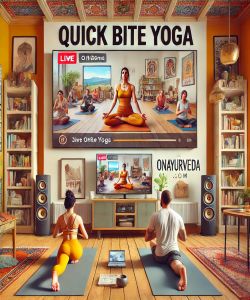
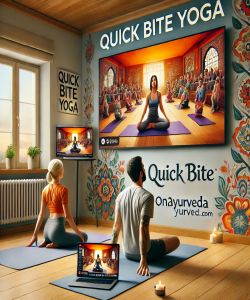
Overview of Quick Bite Yoga
Quick Bite Yoga represents a disciplined and highly strategic adaptation of classical yogic practice, engineered specifically to address the acute time constraints and high-stress environments of the contemporary professional world. It is not a diluted or compromised form of yoga; rather, it is a potent, concentrated methodology that isolates the most impactful elements of physical postures (asanas), breath control (pranayama), and mindfulness to deliver measurable benefits in minimal time. This modality operates on the core principle of maximum efficacy, rejecting the notion that profound physiological and psychological shifts require extensive, time-consuming sessions. Instead, it leverages precision-targeted sequences designed to achieve specific outcomes, such as immediate nervous system regulation, enhanced cognitive clarity, or the swift alleviation of postural strain accumulated during sedentary work. The practice demands absolute focus and intentionality from the participant, transforming brief intervals of time into powerful opportunities for physical and mental realignment. It is an assertive, no-nonsense approach to well-being, designed for individuals who demand tangible results and recognise that consistency, not duration, is the ultimate determinant of a practice’s value. Quick Bite Yoga serves as a critical intervention tool, enabling practitioners to proactively manage their state of being, maintain peak performance, and build resilience against the relentless pressures of modern life. It is the definitive answer for the discerning individual who lacks the luxury of time but refuses to sacrifice their physical and mental equilibrium. This is yoga, refined and repurposed for maximum impact in a world that will not wait. It stands as a testament to the idea that true power lies not in the quantity of time spent, but in the quality and focus of the attention invested. The methodology is uncompromising, efficient, and unequivocally effective.
What is Quick Bite Yoga?
Quick Bite Yoga is a structured, results-oriented system of condensed yogic practice. Its fundamental purpose is to deliver the core physiological and psychological benefits of traditional yoga within severely abbreviated timeframes, typically ranging from five to twenty minutes. It must be understood not as a truncated version of a standard class, but as a complete, self-contained practice architected for supreme efficiency. The methodology is built upon the strategic selection and sequencing of asanas, pranayama techniques, and meditative focal points to elicit a specific, predetermined response from the body and mind. For instance, a sequence may be designed exclusively to counteract the effects of prolonged sitting by targeting the spine and hip flexors, while another might be engineered to stimulate the sympathetic nervous system for a pre-presentation boost in energy and alertness.
The core characteristics of this practice are as follows:
Targeted Intentionality: Every session has a singular, clear objective. There is no extraneous movement or philosophical meandering; each component serves the session’s primary goal, whether that is stress reduction, postural correction, or an increase in mental focus.
High-Impact Techniques: The practice prioritises poses and breathing exercises that are known to produce the most significant neurophysiological effect in the shortest possible time. This involves an emphasis on dynamic movements, powerful breathwork, and postures that engage major muscle groups simultaneously.
Emphasis on Transition: Given the brevity of the sessions, the transitions between postures are as important as the postures themselves. They are executed with mindfulness and control, ensuring the practice remains a seamless, integrated flow rather than a disjointed series of exercises.
Accessibility: The practice is designed to be performed with minimal space and no specialised equipment, making it viable in an office, a hotel room, or a small home study. This removes common barriers to consistent practice, reinforcing its utility as a tool for modern life.
In essence, Quick Bite Yoga is the application of strategic precision to an ancient discipline. It is a formal recognition that for many, the choice is not between a long practice and a short one, but between a short practice and no practice at all.
Who Needs Quick Bite Yoga?
The Corporate Executive and Senior Manager: This demographic operates under immense, unyielding pressure, where time is the most valuable and scarcest commodity. Quick Bite Yoga provides a tactical tool for managing cognitive load, regulating emotional responses before critical negotiations, and mitigating the severe postural strain caused by countless hours spent at desks and in boardrooms. It is a performance-enhancement tool, not merely a relaxation exercise.
The Time-Constrained Parent or Carer: Individuals with significant domestic responsibilities often find their own well-being completely subsumed by the needs of others. This practice offers a realistic, achievable method to reclaim moments for physical and mental restoration, preventing burnout and enhancing their capacity to manage their duties with resilience and composure.
The Frequent Business Traveller: Constant changes in time zones, prolonged periods of immobilisation on aircraft, and the inherent stress of navigating unfamiliar environments take a significant physical and mental toll. Quick Bite Yoga provides a portable, equipment-free solution to combat travel-related stiffness, regulate sleep patterns, and maintain mental sharpness while on the move.
The Dedicated Athlete and Fitness Enthusiast: For those engaged in high-intensity training programmes, this practice serves as an essential supplementary tool. It can be used as a focused warm-up to activate specific muscle groups, a cool-down to improve flexibility and aid recovery, or a method to enhance the mind-muscle connection, thereby improving overall athletic performance.
The Academic and Knowledge Worker: Professionals whose work is predominantly cognitive are highly susceptible to mental fatigue, burnout, and the physical manifestations of stress. Quick Bite Yoga offers a powerful intervention to reset the nervous system, improve concentration, and stimulate creativity by breaking cycles of intense, unbroken mental exertion.
The Individual in High-Stress Professions: Emergency service workers, medical professionals, legal practitioners, and others in high-stakes roles require robust tools for immediate de-escalation of stress. This practice delivers a method for rapidly down-regulating the body’s fight-or-flight response, essential for clear decision-making under pressure and long-term career sustainability.
Origins and Evolution of Quick Bite Yoga
The conception of Quick Bite Yoga is not rooted in ancient scripture but is a direct, pragmatic response to the socio-economic realities of the late 20th and early 21st centuries. Its origins are intertwined with the rise of corporate culture, the acceleration of technological advancement, and the subsequent compression of personal time. As the traditional nine-to-five workday dissolved into an ‘always-on’ culture of connectivity, the luxury of attending a full 90-minute yoga class became an untenable proposition for a vast segment of the professional population. The practice therefore emerged organically, born out of necessity as individuals sought to integrate moments of yogic practice into the fragmented pockets of their demanding schedules.
Initially, these were informal, self-directed efforts: a few spinal twists at a desk, some deep breaths before a daunting meeting, or a series of sun salutations in a hotel room. These isolated acts were the precursors to a more formalised system. The evolution from disparate personal habits to a structured modality was driven by pioneering yoga instructors and wellness consultants who recognised this growing, unmet need. They began to deconstruct traditional, lengthy sequences and re-engineer them for maximum impact within a minimal timeframe. This required a profound understanding of physiology and biomechanics to identify the most potent elements of the practice.
The advent of digital technology and online platforms acted as a powerful catalyst in its evolution. The ability to deliver high-quality, guided instruction directly to a laptop or smartphone liberated the practice from the confines of a physical studio. This democratised access, allowing a corporate executive in London to engage in the same focused, five-minute postural reset as a software developer in Silicon Valley. The methodology was refined further, with sessions becoming increasingly specialised to target specific modern ailments, from ‘tech neck’ to cognitive fatigue. Quick Bite Yoga has thus evolved from a simple coping mechanism into a sophisticated, highly specialised discipline. It represents the intelligent adaptation of an ancient wisdom to serve the non-negotiable demands of the modern world, proving that the principles of yoga are not rigid artefacts but are dynamic and profoundly relevant.
Types of Quick Bite Yoga
The Postural Reset: This is a precision-engineered sequence designed explicitly to counteract the deleterious physical effects of prolonged sedentary activity. Its focus is on spinal mobilisation, the release of tension in the cervical and thoracic spine, and the activation of the posterior chain muscles which become weakened from sitting. A typical sequence includes seated cat-cow variations, spinal twists, and targeted stretches for the neck, shoulders, and hip flexors. It is a non-negotiable tool for the modern desk-bound professional.
The Cognitive Energiser: This type is a dynamic, invigorating practice architected to combat mental lethargy and enhance cognitive function. It employs vigorous, controlled breathing techniques (such as Bhastrika or a modified Breath of Joy) synchronised with flowing movements. The objective is to increase oxygen flow to the brain, stimulate the central nervous system, and create a state of heightened alertness and focus. It is strategically deployed before meetings, presentations, or periods of intense analytical work.
The Stress De-escalation Sequence: This modality is designed for rapid nervous system regulation. It is a quiet, internally-focused practice that heavily prioritises extended exhalations and gentle, restorative postures that activate the parasympathetic (rest-and-digest) response. Techniques include diaphragmatic breathing, forward folds, and gentle neck releases to signal safety to the body and immediately reduce circulating stress hormones. Its purpose is immediate de-stressing in high-pressure situations.
The Pre-Performance Primer: Utilised by athletes, public speakers, or anyone preparing for a high-stakes performance, this type focuses on grounding and centring the mind and body. It combines strong, stable standing postures like Mountain Pose (Tadasana) and Warrior poses (Virabhadrasana) with focused breathing to cultivate a sense of stability, confidence, and unwavering presence. It is not a workout, but a deliberate preparation for optimal performance.
The Digital Detox Flow: This practice specifically targets the physical and mental strain associated with excessive screen time. It incorporates movements to relieve tension in the hands, wrists, and forearms (from typing and device use), as well as eye exercises (palming) to soothe strained ocular muscles. The meditative component focuses on drawing awareness away from the digital world and back into the physical self, providing a crucial mental reset.
Benefits of Quick Bite Yoga
Immediate Regulation of the Autonomic Nervous System: Through the targeted use of specific pranayama (breathing techniques), the practice enables the practitioner to consciously shift from a state of sympathetic (fight-or-flight) dominance to one of parasympathetic (rest-and-digest) activation, leading to an instantaneous reduction in perceived stress and physiological arousal.
Enhanced Cognitive Function and Mental Acuity: By increasing cerebral blood flow and oxygenation, dynamic sequences can demonstrably improve focus, concentration, and executive function. This provides a tangible competitive advantage in professional settings, enabling clearer decision-making and heightened problem-solving capabilities.
Proactive Mitigation of Musculoskeletal Disorders: Regular, targeted practice directly counteracts the postural damage inflicted by sedentary lifestyles. It alleviates chronic tension in the neck, shoulders, and back, improves spinal mobility, and corrects muscular imbalances, thereby reducing the risk of developing debilitating conditions associated with desk work.
Unparalleled Accessibility and Consistency: The brevity of the practice removes the most significant barrier to regular exercise: lack of time. This fosters a high level of consistency, which is neurologically and physiologically more impactful than infrequent, longer sessions. It can be executed in any location with minimal space, ensuring the practice is never compromised by schedule or geography.
Improved Interoceptive Awareness: The intense focus required during these short bursts of practice cultivates a heightened awareness of the body’s internal signals. This self-awareness is a critical skill, enabling individuals to better recognise and respond to the early signs of stress, fatigue, and physical discomfort before they escalate.
Increased Emotional Resilience and Regulation: By providing a structured, physical outlet for processing stress and a tool for calming the mind, the practice builds greater emotional resilience. It equips individuals with a proactive method to manage their emotional state, rather than being passively subject to external pressures.
Efficient Energy Management: The practice can be strategically deployed throughout the day to manage energy levels. An invigorating morning sequence can replace the need for stimulants, while a calming afternoon sequence can prevent the common mid-afternoon energy slump, leading to more consistent productivity and performance.
Core Principles and Practices of Quick Bite Yoga
Principle of Singular Intent: Every Quick Bite session is executed with a single, pre-defined objective. Whether the goal is to energise, calm, or realign, every posture, breath, and moment of stillness is selected and sequenced to serve that one purpose. This principle eliminates superfluous elements and ensures maximum impact from every second of practice.
Practice of Breath-Movement Primacy: The conscious synchronisation of breath with movement is non-negotiable. The breath initiates and dictates the pace and quality of every physical action. This ensures the practice remains a mindful, internal experience rather than a mere set of mechanical exercises, and is the primary mechanism for influencing the nervous system.
Principle of Anatomical Precision: Correct alignment and form are paramount. Due to the condensed timeframe, there is no room for error. Practitioners must focus on the precise execution of each posture to maximise its physiological benefit and, more importantly, to prevent injury. Quality of movement categorically supersedes quantity or range of motion.
Practice of Mindful Transition: The movements between postures are considered as integral to the practice as the postures themselves. Each transition is performed with deliberate control and awareness. This maintains the integrity of the meditative state throughout the session and trains the mind to remain present and focused, even during dynamic change.
Principle of Minimum Effective Dose (MED): The methodology is built on identifying the minimum amount of targeted effort required to produce a desired physiological or psychological outcome. The practice is not about exhaustion but about efficiency, applying just enough stressor or relaxation technique to trigger a positive adaptation.
Practice of Immediate Integration: The session concludes with a brief but mandatory moment of stillness and integration. This allows the nervous system to absorb the effects of the practice. Practitioners are encouraged to consciously carry the state of calm, focus, or energy cultivated during the session into their next activity, thereby bridging the gap between practice and daily life.
Principle of Absolute Consistency: The efficacy of the Quick Bite method is contingent upon consistent, frequent application. The core philosophy dictates that five minutes of focused practice performed daily yields exponentially greater results than a single, lengthy session performed once a week. Consistency is the engine of transformation in this modality.
Online Quick Bite Yoga
Supreme Locational and Temporal Independence: The online format eradicates all geographical and scheduling constraints. It provides practitioners with the absolute autonomy to engage in a session at the precise moment of need—be it in a private office before a critical negotiation, in an airport lounge between flights, or at home to decompress after a demanding day. This on-demand accessibility ensures that the practice becomes a seamlessly integrated tool for life management, rather than another appointment to be scheduled.
Enhanced Privacy and Psychological Safety: For many, particularly beginners or those in high-profile positions, the public environment of a yoga studio can be intimidating. The online platform offers a secure, private space where individuals can practise without fear of judgment or comparison. This psychological safety encourages authentic engagement and a deeper focus on the internal experience of the practice, which is critical for its efficacy.
Access to Elite, Specialised Instruction: The digital realm transcends local limitations, providing access to a global pool of highly specialised instructors. A practitioner can select a teacher who is an expert in yoga for stress reduction, postural correction, or athletic performance, regardless of their physical location. This allows for a level of curated, expert guidance that would be otherwise unattainable.
Curated and Targeted Content Libraries: Online platforms offer extensive libraries of sessions, meticulously categorised by duration, objective, and intensity. This enables the user to select the exact practice required at any given moment. Whether in need of a seven-minute energy boost or a twelve-minute spinal decompression, the perfect session is instantly available, representing a level of personalisation and responsiveness that scheduled in-person classes cannot match.
Cultivation of Self-Discipline and Bodily Autonomy: Without the physical presence of an instructor to provide corrections, the online practitioner is compelled to cultivate a higher degree of self-awareness, discipline, and personal responsibility. They must learn to interpret verbal cues with precision and listen intently to their body’s feedback. This fosters a deeper, more empowered relationship with their own practice and physical being.
Quick Bite Yoga Techniques
This is a representative 10-minute sequence designed for cognitive enhancement and postural relief, executable in a standard office chair.
Step 1: Foundational Anchoring and Breath Initiation (2 minutes): Sit upright, away from the back of the chair, with feet planted firmly on the floor. Place hands on the thighs, palms down. Close your eyes. Begin a cycle of diaphragmatic breathing: inhale deeply through the nose, allowing the abdomen to expand, for a count of four. Exhale slowly through the nose, drawing the navel towards the spine, for a count of six. The extended exhalation is critical for calming the nervous system. Repeat for the full duration, establishing a rhythm and centring your awareness.
Step 2: Spinal Mobilisation and Awakening (3 minutes): On an inhalation, arch the spine, drawing the chest forward and lifting the gaze (Seated Cow Pose). On an exhalation, round the spine, tucking the chin to the chest and pressing the mid-back towards the chair (Seated Cat Pose). Synchronise this movement perfectly with your breath for five complete rounds. Following this, inhale to lengthen the spine. Exhale and twist gently to the right, placing your left hand on your right knee and your right hand on the chair behind you. Hold for three breaths. Repeat on the left side.
Step 3: Upper Body Decompression (3 minutes): Interlace your fingers and press the palms away from you, rounding the upper back. Then, inhale and lift the arms overhead, lengthening the sides of the body. Exhale and release. Clasp the hands behind your back, squeeze the shoulder blades together, and open the chest forward to countermand forward slouching. Hold for three deep breaths. Finally, perform gentle neck releases: slowly drop your right ear towards your right shoulder, hold for three breaths, and repeat on the left side. Do not force the stretch.
Step 4: Re-Centring and Integration (2 minutes): Return to the initial upright seated position. Close your eyes and place your hands on your abdomen. Reconnect with the diaphragmatic breath, observing the effects of the practice. Notice the increased space in your spine, the openness in your chest, and the clarity in your mind. Set a clear, concise intention for the remainder of your workday. Take one final, deep, invigorating breath, and open your eyes.
Quick Bite Yoga for Adults
Quick Bite Yoga for adults is a strategic, non-negotiable intervention designed to combat the specific physiological and psychological challenges endemic to modern adult life. The adult practitioner is typically contending with a confluence of stressors: the relentless demands of a career, the complexities of familial and financial responsibilities, and the cumulative physical toll of a sedentary or repetitive lifestyle. This modality directly addresses these realities by providing a potent, time-efficient tool for state management. It is not an escape, but a method for building the resilience required to thrive within these demanding environments. For the adult professional, the practice functions as a critical performance tool, enabling the rapid resetting of the nervous system to mitigate chronic stress, the sharpening of cognitive function for high-stakes decision-making, and the active prevention of musculoskeletal issues that can lead to chronic pain and decreased productivity. It acknowledges the adult’s lack of discretionary time and instead integrates seamlessly into the existing structure of their day. Whether performed in the ten minutes before the first morning meeting or the five minutes after a contentious conference call, it provides an immediate and tangible return on a minimal investment of time. For adults, this form of yoga is the epitome of pragmatic self-care; it is a disciplined application of ancient techniques to solve distinctly modern problems, ensuring that physical vitality and mental equilibrium are not casualties of a demanding adult life but are actively maintained as the very foundation upon which success and well-being are built. It is a mature practice for a mature world, demanding focus and delivering profound, measurable results.
Total Duration of Online Quick Bite Yoga
The defining characteristic of an individual Quick Bite Yoga session is its deliberate brevity, with practices typically lasting between five and twenty minutes. However, a comprehensive online course or programme designed to instill a deep and lasting understanding of the methodology is often structured around a total commitment of approximately 1 hr per week. This 1 hr is not delivered in a single, unbroken session, as that would contradict the core philosophy of the practice. Instead, this total duration is strategically partitioned into multiple, digestible ‘bites’ of learning and practice spread throughout the week. For example, a weekly module might consist of one twenty-minute instructional video detailing new techniques and principles, followed by four separate ten-minute guided practice sessions intended for daily application. This structure is pedagogically sound, leveraging the principles of spaced repetition and consistent reinforcement to ensure maximum skill acquisition and habit formation. The 1 hr framework provides a container for a complete learning arc—encompassing instruction, application, and integration—without ever demanding an overwhelming block of time from the participant. It respects the practitioner's schedule while providing a robust, structured pathway to mastering the art of efficient, high-impact yoga. Therefore, while the individual application is short, the cumulative educational experience is comprehensive, with the 1 hr metric representing the total weekly time investment required to move from novice to a proficient, autonomous practitioner of this powerful discipline.
Things to Consider with Quick Bite Yoga
Before embarking on a Quick Bite Yoga practice, it is imperative to understand that its brevity must not be mistaken for a lack of depth or a license for carelessness. The compressed nature of the sessions demands a heightened level of mental presence and physical self-awareness. One must consider that the primary objective is not to achieve complex postures, but to execute simple, targeted movements with absolute precision and intentionality. The temptation to rush through a sequence to ‘get it done’ must be actively resisted; this would negate the mindfulness aspect, which is the very source of its neurological benefits. Furthermore, creating a sanctum for practice, however small, is non-negotiable. This involves a conscious decision to disengage from all digital distractions—disabling notifications, closing email clients, and setting devices to silent. The five or ten minutes dedicated to the practice must be inviolable. Practitioners must also cultivate an honest relationship with their own physical limitations. Without an instructor present for physical adjustments, the onus of safety rests entirely on the individual. This requires a mature approach, prioritising safe alignment and the body’s intrinsic signals over any external ambition or ego. Finally, one must commit to consistency. The profound effects of this modality are unlocked not through a single, intense session, but through the cumulative power of regular, frequent practice. It is a discipline built on the aggregation of small, intelligent efforts over time.
Effectiveness of Quick Bite Yoga
The effectiveness of Quick Bite Yoga is rooted not in its duration, but in its strategic precision and neurological impact. Its potency derives from its ability to act as a direct, targeted intervention for the body’s physiological systems, particularly the autonomic nervous system. A short, focused session of controlled breathing and mindful movement can, in minutes, trigger a tangible shift from a state of high-alert, sympathetic nervous system dominance (the ‘fight-or-flight’ response) to a restorative, parasympathetic state (the ‘rest-and-digest’ response). This is not a subtle or imagined effect; it is a measurable physiological event that lowers heart rate, reduces blood pressure, and decreases the production of stress hormones like cortisol. From a musculoskeletal perspective, its effectiveness lies in its consistency. By repeatedly interrupting long periods of static posture with targeted movements, the practice prevents the gradual accumulation of muscular tension and postural imbalances that lead to chronic pain. A five-minute spinal mobilisation sequence performed twice daily is demonstrably more effective at preventing back pain than a single, 60-minute class once a week. Cognitively, the practice acts as a ‘hard reset’ for the brain, interrupting cycles of mental rumination and attentional fatigue. By drawing focus inward to the breath and body, it clears the mental slate, allowing for improved concentration and enhanced executive function upon returning to a task. Its effectiveness, therefore, is that of a precise, potent, and readily available tool for state management, delivering a significant and immediate return on a minimal investment of time.
Preferred Cautions During Quick Bite Yoga
The condensed nature of Quick Bite Yoga demands an uncompromising and vigilant approach to personal safety. The foremost caution is to categorically reject the impulse to rush. Time pressure can create a tendency to force movements or push beyond the body’s safe range of motion, which is a direct path to injury. Every movement must be deliberate, controlled, and initiated from a place of deep physical awareness. It is imperative that the practitioner understands this is a practice of precision, not of speed or athletic extremity. Secondly, one must never sacrifice correct alignment for perceived depth in a posture. In the absence of a physically present instructor to offer corrections, the responsibility for maintaining anatomical integrity falls solely upon the individual. This requires an honest and humble assessment of one’s own capabilities on any given day. Pain is a non-negotiable signal to cease or modify a posture, not a barrier to be aggressively pushed through. Furthermore, individuals with pre-existing medical conditions, particularly spinal, cardiovascular, or joint issues, must seek professional medical clearance before commencing any new physical practice, however brief. Quick Bite Yoga is a powerful wellness tool, but it is not a substitute for qualified medical diagnosis or treatment. Finally, one must be cautious of the practice environment. Ensure the space is clear of hazards and that the chair or floor surface is stable. The focused, internal nature of the practice can reduce awareness of one’s immediate surroundings, making a pre-session safety check essential.
Quick Bite Yoga Course Outline
Module 1: The Philosophy and Neuroscience of Yogic Efficiency: This foundational module establishes the core principles of the practice. It details why and how short, focused sessions can elicit profound physiological and psychological change. Topics include an overview of the autonomic nervous system, the concept of the Minimum Effective Dose (MED) in practice, and the non-negotiable importance of singular intent.
Module 2: Mastering Pranayama for Instant State Control: This section is dedicated entirely to the science and application of breathwork. Participants will learn and master three core techniques: diaphragmatic breathing for baseline calm, the 4-7-8 breath for acute stress de-escalation, and Bhastrika (Bellows Breath) for controlled energy enhancement. The focus is on executing these techniques with precision for immediate, predictable results.
Module 3: The Desk-Bound Body—Anatomical Rescue Sequences: This practical module provides a toolkit of sequences specifically designed to combat the negative effects of sedentary work. It covers precise, safe movements for spinal decompression, neck and shoulder tension release, and hip flexor mobilisation. Each posture is broken down with a focus on correct alignment and common contraindications.
Module 4: Dynamic Flows for Cognitive and Energy Enhancement: Participants will learn short, dynamic, and flowing sequences designed to be deployed before demanding mental tasks. This module explores the link between specific movements, increased circulation, and heightened cognitive function. It teaches how to build energy safely without creating anxiety or jitteriness.
Module 5: Micro-Meditations and Mindfulness Integration: This module focuses on the mental component. It introduces techniques for one-to-three-minute mindfulness practices that can be done anywhere. The objective is to train the mind to re-centre and refocus quickly, cultivating a state of calm presence amidst a chaotic environment.
Module 6: Strategic Application and Habit Formation: The final module synthesises all learned material. It guides participants in creating a personalised weekly schedule of Quick Bite practices, tailored to their specific professional and personal demands. It provides strategies for overcoming common obstacles to consistency and for integrating the practice so that it becomes an automatic, indispensable part of the daily routine.
Detailed Objectives with Timeline of Quick Bite Yoga
Week 1: Foundational Competency and Body Awareness.
Objective: By the end of this week, the practitioner will demonstrate proficient execution of foundational diaphragmatic breathing and be able to articulate the physical sensations associated with correct spinal alignment in a neutral, seated posture. They will successfully complete a guided five-minute Postural Reset sequence daily, focusing on precision over depth.
Week 2: Mastering Breath-Led Stress Regulation.
Objective: The practitioner will be able to independently initiate and sustain a three-minute cycle of 4-7-8 breathing in response to a self-identified moment of stress. They will log at least three instances where this technique was successfully deployed to mitigate an acute stress response, demonstrating a tangible application of the course material in a real-world context.
Week 3: Autonomous Application of Physical Sequences.
Objective: By the end of this week, the practitioner will be able to perform a ten-minute Desk-Bound Body sequence from memory, relying on internal cues for alignment rather than constant visual guidance. They will report a discernible reduction in work-related physical discomfort, such as neck strain or lower back tightness.
Week 4: Strategic Deployment for Performance Enhancement.
Objective: The practitioner will strategically deploy the Cognitive Energiser sequence prior to at least two significant professional events (e.g., a presentation, a complex problem-solving task). They will be able to articulate the perceived difference in their mental clarity and focus during these events, demonstrating a sophisticated understanding of how to use the practice as a performance tool.
Week 5: Integration of Micro-Meditations.
Objective: The practitioner will successfully integrate a two-minute mindfulness practice into their daily routine, independent of any physical asana sequence. They will demonstrate the ability to use this technique to create mental space and reset their focus during transitional moments of the day, such as between meetings or tasks.
Week 6: Synthesis and Personalised Protocol Development.
Objective: The practitioner will design and implement a personal, sustainable weekly protocol of Quick Bite Yoga, selecting appropriate techniques to meet the predictable demands of their schedule. This final objective confirms the transition from guided student to autonomous, self-sufficient practitioner.
Requirements for Taking Online Quick Bite Yoga
Uninterrupted, High-Fidelity Connectivity: A stable, high-speed internet connection is non-negotiable. The practitioner requires the capacity to stream video content without buffering or disconnection. Lag or poor-quality visuals can disrupt the flow of the practice and, more critically, obscure the fine details of anatomical alignment demonstrated by the instructor, thereby compromising both efficacy and safety.
A Suitable Visual and Auditory Device: A device with a screen large enough to clearly discern the instructor's posture and movements is essential. Attempting to follow instruction on a small smartphone screen is suboptimal and potentially hazardous. Equally, the device must possess clear audio output, as precise verbal cuing is the primary method of guidance in an online format.
A Dedicated, Inviolable Physical Space: The practitioner must designate a physical area, however minimal, that is exclusively for their practice. This space must be free from physical clutter and potential hazards. It must be a zone where interruptions from colleagues, family members, or pets are strictly prohibited for the duration of the session.
Appropriate, Non-Restrictive Attire: While specialised yoga wear is not required, clothing must allow for a full and unrestricted range of motion. Business attire, jeans, or other constrictive garments are unacceptable as they inhibit movement, restrict breathing, and prevent the practitioner from fully engaging in the postures.
A Foundational Level of Physical Self-Honesty: In the absence of in-person supervision, the practitioner must possess the maturity and self-awareness to work within their own limits. This involves a commitment to listening to the body's signals and the discipline to modify or abstain from any movement that causes pain or sharp discomfort.
Unyielding Commitment to Digital Disengagement: The practitioner must commit to creating a digital sanctuary for the session. This requires the silencing of all notifications, the closing of all other applications and browser tabs, and the absolute refusal to multitask. The full attention of the practitioner must be dedicated to the practice alone.
Things to Keep in Mind Before Starting Online Quick Bite Yoga
Before commencing an online Quick Bite Yoga regimen, it is crucial to adopt a mindset of rigorous self-discipline and radical personal responsibility. The convenience of the online format is counterbalanced by the absence of an instructor’s direct, physical oversight. Therefore, the onus of ensuring a safe and effective practice rests squarely upon your shoulders. You are not a passive consumer of content; you are an active participant and the sole guardian of your own well-being. This requires you to cultivate a heightened state of interoception—the ability to listen intently to your body’s internal feedback—and to respect its signals without question. You must be prepared to create and defend your practice space, transforming a corner of an office or a room at home into a temporary sanctuary, free from both physical and digital incursions. This is not merely a physical exercise but a mental discipline that begins with the conscious act of closing email clients and silencing your phone. Understand that the goal is not to replicate a studio experience but to master a different and more autonomous skill set. You must approach the instructor's verbal cues with the focus of a technician, translating auditory instruction into precise physical action. There is no room for ambiguity or assumption. Ultimately, success in this modality is determined by your commitment to being fully present in the brief time you have allotted, treating those few minutes with the same seriousness and focus you would a critical business meeting.
Qualifications Required to Perform Quick Bite Yoga
The instruction of Quick Bite Yoga demands a level of expertise that significantly exceeds the baseline qualifications for teaching a general public class. A certified instructor in this specialised modality must possess a sophisticated, integrated understanding of anatomy, kinesiology, and the psychology of high-stress environments. It is a field reserved for experienced professionals, not newly qualified teachers. The foundational, non-negotiable qualifications must include:
Advanced Yoga Teacher Certification: A minimum of a 500-hour Registered Yoga Teacher (RYT-500) designation or an equivalent, internationally recognised advanced certification. This ensures a deep and comprehensive knowledge of asana, pranayama, anatomy, and yogic philosophy, providing the essential bedrock upon which specialisation can be built.
Specialised Training in Adaptive or Corporate Yoga: The instructor must hold a specific certification in a relevant field such as corporate yoga, yoga for sedentary populations, or therapeutic yoga. This training provides the critical skills needed to modify postures for an office environment and to understand the unique physical and mental challenges faced by the target demographic.
Demonstrable Proficiency in Biomechanics: A deep, practical understanding of biomechanics is paramount. The instructor must be capable of deconstructing complex postures into their core components and re-engineering them into safe, effective, and brief sequences. They must be able to anticipate common misalignments and provide clear, preventative verbal cues.
Exceptional Verbal Communication Skills: In the online format, where physical adjustments are impossible, the instructor’s ability to communicate with absolute clarity and precision is their most vital tool. They must be masters of concise, unambiguous language that guides the practitioner safely and effectively through each movement and breath.
A simple 200-hour certification is unequivocally insufficient for the safe and effective delivery of this targeted, high-stakes practice. The qualified instructor is a specialist who combines the wisdom of yoga with a modern, scientific understanding of the human body and mind.
Online Vs Offline/Onsite Quick Bite Yoga
Online
The online delivery of Quick Bite Yoga is defined by its unparalleled autonomy and accessibility. Its primary advantage is the complete dissolution of logistical barriers. The practitioner is not bound by studio timetables or geographical proximity, enabling them to integrate the practice with surgical precision into the fluid, often unpredictable, modern workday. A session can be executed in the precise moment it is needed—a five-minute de-stress sequence immediately following a contentious call, or a ten-minute energy boost just before a major presentation. This format promotes a high degree of personal responsibility and self-awareness, as the practitioner must serve as their own monitor for alignment and safety. Furthermore, the online space provides access to a global repository of elite, specialist instructors and a vast library of pre-recorded sessions tailored to every conceivable need, offering a level of choice and personalisation that a physical location cannot match. The inherent privacy of the online format also provides a psychologically safe environment, free from the perceived judgment or competition that can exist in a group setting. It is the ideal format for the self-motivated, disciplined individual who values efficiency and discretion above all.
Offline/Onsite
Offline, or onsite, Quick Bite Yoga offers the distinct and irreplaceable benefit of direct human interaction and immediate, expert feedback. In this setting, an instructor can provide real-time verbal cues and, where appropriate, hands-on adjustments to correct subtle misalignments that a practitioner may not perceive on their own. This direct oversight significantly enhances the safety and efficacy of the practice, particularly for beginners. The onsite format also cultivates a powerful sense of community and shared energy. Practising within a group can foster a potent sense of accountability and motivation, encouraging a level of focus and effort that can sometimes be challenging to sustain when practising in isolation. For corporate environments, offering onsite sessions serves as a clear, tangible demonstration of a company's commitment to employee well-being. It removes the guesswork for the employee, providing a structured, scheduled opportunity to reset and recharge. This format is superior for organisations and individuals who thrive on structured accountability and value the nuanced guidance that only a physically present expert can provide.
FAQs About Online Quick Bite Yoga
Question 1. Is this a legitimate form of yoga?
Answer: Yes. It is a concentrated, modern application of core yogic principles—asana, pranayama, and dhyana—engineered for maximum efficiency.
Question 2. Is it suitable for absolute beginners?
Answer: Yes, provided the beginner commits to following instructions with absolute precision and prioritises safety over ambition.
Question 3. Do I need any special equipment?
Answer: No. The practice is designed to be performed with just your body, a stable chair, or a small patch of floor space.
Question 4. Can this replace a full-length yoga class?
Answer: It serves a different purpose. It is a tool for daily maintenance and state management, not a replacement for a longer, more comprehensive practice if you have time for one.
Question 5. How quickly will I see results?
Answer: The neurological benefits, such as reduced stress and increased focus, can be experienced immediately after the first session. Physical benefits accrue with consistency.
Question 6. What should I wear?
Answer: Comfortable, non-restrictive clothing that allows for a full range of movement.
Question 7. Is there a risk of injury?
Answer: As with any physical activity, a risk exists. It is mitigated by listening to your body, never pushing into pain, and adhering strictly to alignment cues.
Question 8. Can I do this if I have a medical condition?
Answer: You must consult with a qualified medical professional before starting any new physical practice.
Question 9. How is this different from just stretching at my desk?
Answer: It is distinguished by the mandatory integration of conscious breathing and mindful awareness, which are essential for its profound nervous system benefits.
Question 10. Will I lose weight?
Answer: While it can support a healthy metabolism, its primary objectives are stress reduction, improved posture, and mental clarity, not weight loss.
Question 11. Must I be flexible to start?
Answer: No. The practice will improve your flexibility. A lack of flexibility is a reason to start, not a barrier.
Question 12. Can I practise more than once a day?
Answer: Yes. Multiple short sessions throughout the day can be extremely effective.
Question 13. Is an online instructor as good as an in-person one?
Answer: The formats offer different benefits. Online provides unparalleled access and convenience; in-person offers direct feedback.
Question 14. What if I do not have a private office?
Answer: A quiet corner, an empty conference room, or even a private space at home during a break is sufficient.
Question 15. How do I stay motivated to practise alone?
Answer: Focus on the immediate, tangible benefits. The feeling of calm and focus after a session becomes its own powerful motivation.
Question 16. Can I eat before a session?
Answer: It is best to practise on a relatively empty stomach, but a light snack is acceptable.
Question 17. What is the most important part of the practice?
Answer: The breath. The conscious control of your breath is the engine that drives the practice’s effects.
Conclusion About Quick Bite Yoga
In conclusion, Quick Bite Yoga must be understood not as a fleeting wellness trend, but as a necessary and intelligent evolution of an ancient discipline, rigorously adapted for the unforgiving demands of the 21st century. It stands as a definitive refutation of the belief that meaningful self-care requires vast, uninterrupted swathes of time. This methodology asserts, with uncompromising clarity, that consistency and precision are infinitely more powerful than duration. By isolating the most potent elements of yogic practice and delivering them in concentrated, targeted sessions, it provides a pragmatic and profoundly effective tool for high-performing individuals. It is a system designed for proactive state management, enabling practitioners to actively regulate their nervous systems, sharpen their cognitive faculties, and mitigate the physical damage of a sedentary existence. The practice demands focus, self-awareness, and discipline, but the return on this minimal investment of time is immediate, measurable, and substantial. Quick Bite Yoga is not yoga-lite; it is yoga-optimised. It represents the strategic integration of physical and mental conditioning into the very fabric of a busy professional life, ensuring that well-being is not a luxury to be pursued when time permits, but a foundational pillar of sustained performance and resilience. It is the definitive, no-excuses solution for the modern professional who demands results and respects the profound power of focused, consistent effort.